Category: News

Poland: Pedophilia, Bestiality Scandal Hits Tusk’s Party
Poland: Pedophilia, Bestiality Scandal Hits Tusk’s Party
The Kłodzko scandal could bring down the Civic Coalition (KO).
This is the view of PiS candidate for prime minister, Przemysław Czarnek, despite the localized nature of the crime.
“This is a group of people who really have a lot on their minds,” the politician says.
A pedophilia and zoophilia scandal in the Lower Silesian Voivodeship has shocked Poland. Przemysław L., 45, was sentenced to 25 years in prison for sexual offenses committed against underage girls, bestiality, and recording these acts on film and in photographs.
According to Do Rzeczy, his ex-wife, Kamila L., a former Civic Platform activist, was sentenced to 6.5 years in prison for failing to provide assistance to her minor daughter from a previous relationship, who was a victim of rape, and for complicity in animal abuse.
Przemysław Czarnek, the PiS candidate for prime minister, commented on the shocking case and its possible political consequences on Telewizja Republika on Wednesday.
“This is a very serious scandal that will, in my opinion, sink the Civic Platform. I spoke about the Civic Platform and their absolutely scandalous behavior three years ago, when there was a debate on the vote of no confidence in me. And I shouted from the parliamentary podium that these people should be feared, because these people from the Civic Platform, the mayors of cities from the Civic Platform, finance associations and organizations with enormous public funds—over a billion złoty a year—that simply deal with dramatic issues,” said the former Minister of Education and Science.
“I mentioned programs that were simply perverted by their very name,” he added.
As Czarnek pointed out, “this is a community of people who really have a lot going for them, financing these kinds of communities that commit these kinds of shameless, dramatic, criminal, anti-human actions against children, and against animals as well, because we are dealing with zoophilia there as well.”
Politicians from the Civic Coalition also commented on the situation.
“It’s difficult to hold someone accountable; it’s a situation that can happen to anyone. Anyone can have a neighbor like that whom they know nothing about until the police and prosecutors get involved,” one Civic Coalition MP told Wirtualna Polska.
The interviewees emphasize that the case involves a former Civic Coalition (KO) activist and a very low-level figure. The police and prosecutors acted, and the perpetrators were brought to justice, so it’s difficult to speak of the scandal’s political context. “It’s a local issue, perhaps also highlighted by local disputes between the mayor and the Civic Coalition,” notes the Civic Coalition politician.
Word has surfaced that Prime Minister Tusk is offering clarification.
“It’s more likely at the local level, not the central level, not from Deputy Marshal Monika Wielichowska; it’s hard to blame her,” says a senior Civic Coalition (KO) politician.
Wielichowska supported Kamila L. when she was campaigning for the regional position.
“This is certainly an inconvenient matter for Monika. She’s not handling it well,” the source adds.
Tyler Durden
Sat, 04/04/2026 – 08:10
https://www.zerohedge.com/political/poland-pedophilia-bestiality-scandal-hits-tusks-party

Navy’s Top Officer Admits Ford Carrier Fire Halted Its Combat Sorties For Two Days
Navy’s Top Officer Admits Ford Carrier Fire Halted Its Combat Sorties For Two Days
More details continue to belatedly come out in piecemeal fashion related to the Navy’s largest and most expensive supercarrier, the USS Gerald R Ford. It has withdrawn from the Iran theatre of operations and Mideast regional waters, now anchored in Croatia (Split) for largescale emergency repairs, after a March 12 fire which the Pentagon has said was non-combat related left some sailors with minor injuries.
New information has been disclosed by no less than the US Navy’s top officer. He has described in fresh remarks that the USS Ford was unable to fly sorties for two days due to (the alleged) laundry fire, which took over a full day to extinguish.
CNN has underscored that this marks the “first indication that the blaze hindered combat operations against Iran.” So the incident has been confirmed to have resulted in a complete halt to two days of combat operations against Iran – which is hugely significant given that only two carriers were launching operations at that time (the other was the USS Lincoln). And now the USS George HW Bush is en route across the Atlantic in a scheduled deployment.
Chief of Naval Operations Adm. Daryl Caudle, addressed the Washington-based think tank the Center for Strategic and International Studies (CSIS) on Tuesday. While praising the crew’s response to the fire, he stated the following:
“They fought that, put it out, and started flying sorties two days after that, so I’m very proud of that crew,” he said.
Caudle described that they ended up battling the blaze – and cleaned up the water damage and fire-fighting substances, for a total of 30 hours.
He also confirmed prior reports of some 600 sailors being displaced from their sleeping quarters due to the damage.
As for the precise cause of the blaze, the last official word was a March 28 statement from 6th Fleet saying, “military and federal civilian law enforcement continued investigations into a fire aboard the ship originating in the ship’s laundry facilities.”
This comes amid an avalanche of speculation that the Ford might have been hit by an Iranian missile or drone – but this remains just theorizing and speculation.
It’s problems run deeper, Bloomberg writes…
The USS Gerald R. Ford aircraft carrier arrived at a port in Crete on Monday after it had to leave the Middle East — and the war against Iran — when a fire broke out in its laundry area. But the massive ship’s problems run a lot deeper. https://t.co/B9odzYd9UY
— Bloomberg (@business) March 24, 2026
Adm. Caudle did make another important admission in his Tuesday remarks. He said: “The challenge … is how do you buy down risk in other parts of the world while you’re focusing a lot of resources in one area.” Already major US military assets have been diverted from southeast Asia, where China’s pressure campaign on Taiwan continues, toward the Middle East in relation to Operation Epic Fury.
Tyler Durden
Sat, 04/04/2026 – 07:35
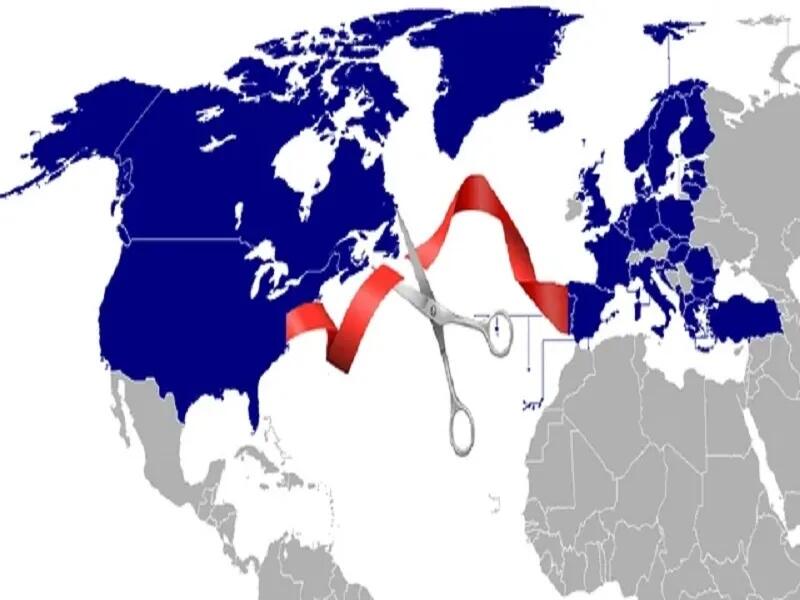
What Might Transatlantic Security Look Like If The US Leaves NATO?
What Might Transatlantic Security Look Like If The US Leaves NATO?
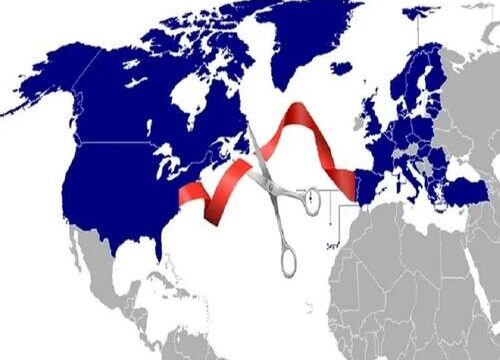
If NATO as a whole remains more or less intact upon the US’ hypothetical exit, and the US then reaches bilateral security deals with Poland, the Baltic States, and Turkiye, then not much would change from Russia’s perspective.
Trump’s latest talk about the US leaving NATO is being taken seriously by many Europeans owing to his rage over their refusal to help him reopen the Strait of Hormuz, not to mention them denying the US access to its own bases on their territory and even their airspace for use in the Third Gulf War.
It’s possible that this is just a bluff, however, to usher in the radical reforms that he envisages and which were described here in connection with a prior report about his supposed “pay to play” plans.
Nevertheless, it’s also possible that he’s indeed serious and that the US will ultimately end up leaving NATO, in which case it’s useful to analyze the future of transatlantic security.
For starters, the headquarters of both EUCOM and AFRICOM are in Germany, and it would be very difficult and inconvenient to relocate them.
Therefore, the US might reach a bilateral security deal with Germany in this scenario, which could set the basis for other such deals with other NATO members.
Such arrangements would likely include terms that are advantageous to the US such as its allies committing 5% of their GDP to defense like has already been demanded of them as well as giving a preference to American companies for military-technical procurement.
The US might also demand that its troops be granted immunity for any crimes that they might commit while based in their allied nation.
Trump could seek to enshrine trade privileges for the US into any security deal too knowing him.
The only countries that would likely agree to such terms are those whose leaders either sincerely fear Russia or manipulate the public on this pretext, thus Poland and the Baltic States for sure, but Finland and Romania can’t be ruled out either.
They and the other NATO members would still enjoy Article 5 assurances amongst themselves, but it’s also possible that larger members like France, Germany, Italy, and/or the UK might follow the US’ lead in making demands of the smaller ones for ensuring this.
In that event, the European security system could fundamentally change, but concerns about Russia exploiting the optics of infighting (even if only for soft power purposes and not by initiating hostilities against post-US NATO) could deter the aforementioned larger members from doing this.
If NATO as a whole remains more or less intact upon the US’ hypothetical exit, and the US then reaches bilateral security deals with Poland and the Baltic States, then not much would change from Russia’s perspective.
The same goes for if the US reaches such a deal with Turkiye, which enjoys pragmatic ties with Russia unlike Poland and the Baltic States but is poised to take the lead in expanding Western influence along its southern periphery through the “Trump Route for International Peace and Prosperity”.
If the US remains committed to Turkiye’s defense, any potential clash with Russia could risk World War III. If no such deal is reached, however, then Russia might be more proactive in pushing back against Turkish influence there.
All in all, transatlantic security isn’t expected to change much if the US leaves NATO so long as it retains Article 5-like obligations to several of the bloc’s key members, namely Poland, the Baltic States, and Turkiye.
If it doesn’t, then Russia might consider preventive military action against post-US NATO to eliminate security threats emanating from it, but it could be deterred by nuclear-armed France and/or the UK reaffirming their Article 5 obligations to the bloc’s members.
Nothing would really change then.
Tyler Durden
Sat, 04/04/2026 – 07:00
https://www.zerohedge.com/geopolitical/what-might-transatlantic-security-look-if-us-leaves-nato

Has Concern Over Hormuz Made Us Forget The Red Sea?
Has Concern Over Hormuz Made Us Forget The Red Sea?
Authored by Gregory Copley via The Epoch Times,
Wartime concerns about the security of maritime energy traffic through the Strait of Hormuz—connecting the Indian Ocean/Gulf of Oman with the Persian Gulf—have overshadowed the fact that the related issue of Red Sea security is far from resolved and is, in fact, becoming more dynamic.
The Red Sea–Suez link between the Mediterranean and the Indian Ocean is of equal strategic importance to global trade as the Hormuz choke point and is, through geography and common players, intrinsically linked with the Persian Gulf conflict.
But it is Ethiopia’s civil war, brewing with different factions and with varying intensity since the coup against Emperor Haile Selassie I in 1974, which is again moving in ways that could prove decisive.
Always, in the background, is the reality that Ethiopia could revive its historical influence over the Red Sea–Suez sea line of communication (SLOC).
Inside Ethiopia, the conflicts that have been raging since 1974 between different governments and different factions are at a new level.
The four different Fano opposition militia groups, representing different areas of the Amhara heartland, have been fighting against the central government of Prime Minister Abiy Ahmed Ali for several years. In early 2026, they came together with a united manifesto of their intentions. This has revived the momentum of the threat to Abiy’s Prosperity Party government.
A statement issued by a united Fano on Jan. 17, 2026 (Tir 9, 2018, in the Ethiopian calendar) noted:
“So that the Amhara struggle may become one, the leaders of the Amhara Fano National Force and the Amhara Fano People’s Organization, through a historic decision that demanded courage, open-heartedness, decisiveness, and trust in the people, have been able to make Fano unity a reality. … We have designated one leader, one organization.”
Significantly, the leadership of the united Fano all titled themselves as “Arbegna,” a nod to the Arbegnoch, the Patriots, who, under the banner of Emperor Haile Selassie I, fought against the Italian invaders of Ethiopia from 1935 to 1941. This led to the ouster of the Italians at the Battle of Gondar, in late November 1941, the first major Allied victory of World War II, in the ouster of an Axis power (Italy) from territory it had seized.
Today, the result of the four separate Amhara Fano groups fighting against the Abiy government over the past several years was the creation—finally—of the Amhara Fano National Movement (AFNM) as an umbrella for all civil and military operations. AFNM, however, described itself as working on behalf of all Ethiopians desirous of the restoration of the multi-ethnic empire. (Ethiopia is home to some 80 ethnic and linguistic groups.)
Prime Minister Abiy, half-Amhara and half-Oromo, has consistently identified with Oromo causes and first fought against a Tigrean-dominated government of Ethiopia, and then against the Tigrean People’s Liberation Front (TPLF) militia, which was forced into a ceasefire—essentially a military surrender by the TPLF—in November 2022.
Abiy’s Prosperity Party government has increasingly been rejected by his original Oromo militant supporters, who regard him as “insufficiently Oromo” in outlook, and the government’s writ—or its area of focus—now rarely extends beyond the capital, Addis Ababa. The exception for Abiy’s travels is to some major projects such as the Grand Ethiopian Renaissance Dam in the Benishangul-Gumuz Region of western Ethiopia. The dam has been the subject of some hostility from Egypt, which sees its existence as infringing on Egypt’s “right” to control the waters of the Blue Nile, even though they originate in Lake Tana in the Amhara Highlands of Ethiopia, outside Egypt’s territories.
The AFNM designated its first chairman as Arbegna Zemene Kasse, and its military commander as Brigadier General Tefera Mamo.
Meanwhile, Abiy’s government has become increasingly dependent on support from the governments of the United Arab Emirates, Saudi Arabia, and, to an extent, Turkey and the PRC, each of which has a strong interest in dominating the Red Sea–Suez sea line of communication.
To a key extent, Abiy has focused on modernizing the capital, Addis Ababa—which now resembles a Dubai skyline—but has less control over the broader hinterland of Ethiopia.
At the same time, the government of Egypt is working to support various Ethiopian regional independence groups to destabilize Ethiopian control of the Blue Nile waters, which Egypt claims are critical to its national security and economic well-being. Egypt has maintained an on-and-off war approach to Ethiopia since the late 19th century and lost several major military confrontations with Ethiopia during the late 19th century. All of the supporting nations, as far as Abiy is concerned, also have interests that are inimical to Ethiopia’s revival of Red Sea influence.
It is important to note that Abiy has consistently ensured there is very little foreign news reporting from Ethiopia, which has had the positive benefit for the government that the civil wars, and the massive loss of life, have not been widely known around the world.
On the other hand, it has also prevented international investor and tourism interest in the country.
Now, Turkey, in particular, is vying for control of the region. It now actively controls the Somalian government and uses Somalian coastal territory for its military testing of ballistic missiles, among other things. It was particularly hostile to Israel’s diplomatic recognition of independent Somaliland, on the Red Sea coastline, in late December 2025.
Internally, in Ethiopia, the AFNM has been speaking—in its initial unity document—about representing the interests of all Ethiopian ethnicities and regions, not just the Amhara people and regions. It has been gathering significant military momentum, with additions to its ranks coming from defecting government forces. It did not, however, mention the restoration of Ethiopia’s last constitution from the pre-coup era, given that this was the last democratic reference point for the country.
All subsequent “constitutions” have been designed in the divide-and-conquer mode to keep ethnic groups separate and competitive, keeping various Ethiopian peoples as second-class citizens.
But what the AFNM has failed to do is to address meaningful international support or define the future shape of Ethiopia if it were to attain power. There has been no public discussion of its proposed economic or strategic policies. Only the adoption of the name of the Patriots—the Arbegnoch—gives any indication of its reflection of traditional Ethiopian values or historical Ethiopian geopolitical aspirations, which would include a reunification with Eritrea and the reacquisition of Ethiopia’s traditional Red Sea coastline.
It is significant, however, that Eritrea has been supporting the AFNM groups with arms and other support, and some Tigrean elements from the now-split TPLF have also supported Fano groups.
The AFNM operates freely in Amhara areas close to Addis Ababa and could certainly challenge Abiy’s forces in the capital. The other factor is the reporting that Abiy himself may be closer to the end of his leadership than the start of it. Change may not be imminent, but Abiy is becoming somewhat embattled.
But no wonder the world is oblivious to the wars of the Horn of Africa: The prime minister has consistently kept foreign journalists out of the country.
Views expressed in this article are opinions of the author and do not necessarily reflect the views of The Epoch Times or ZeroHedge.
Tyler Durden
Fri, 04/03/2026 – 23:00
https://www.zerohedge.com/geopolitical/has-concern-over-hormuz-made-us-forget-red-sea

America Dependent On Chinese Electrical Parts For AI Build-Out
America Dependent On Chinese Electrical Parts For AI Build-Out
The race for U.S. leadership in AI is hitting a tangible wall made of steel, copper, and imported circuit breakers. Trillions in planned spending on data centers are running up against chronic shortages of transformers, switchgear, and batteries, the unglamorous gear that actually delivers power to the racks.
AI Takeover Complete: Data Center Construction Surpasses Office Construction For The First Time https://t.co/g5WxE9glY3
— zerohedge (@zerohedge) February 27, 2026
Domestic production has not scaled anywhere near fast enough, leaving developers with little choice but to lean on overseas suppliers, predominantly from China. The result is lengthening lead times that threaten to push back or cancel projects already baked into corporate budgets and national strategy.
Bloomberg reports electrical equipment, though a small slice of total project costs, is the component that can bring everything to a halt. Their leading example is the massive facility under construction in Abilene, TX, expected to draw as much as 1.2 gigawatts once it serves OpenAI.
For comparison, that’s more energy than a Westinghouse AP1000 reactor can provide…
We previously pointed out exactly this vulnerability back in August 2025 when Wood Mackenzie sounded the alarm on transformer shortages. The consultancy projected demand would exceed supply by 30 percent that year alone, with U.S. manufacturers able to cover only a fraction of needs and roughly 80 percent of units imported. We warned then that the AI boom was colliding with a grid already buckling under failed green policies and surging electricity loads, a dynamic that has only intensified since.
In January, we highlighted America’s aging power infrastructure, showing how data-center demand is now a measurable slice of national consumption and exposing decades of underinvestment that no amount of policy rhetoric can paper over.
The current administration is doing what they can to try and ensure costs are not passed on to household consumers, with the recent agreement made between the White House and some of the biggest hyperscalers. But with news from Constellation that no matter how hard new energy generation is pushed onto the grid, long connection queues will destroy any possibility of the national grid finding balance.
Tyler Durden
Fri, 04/03/2026 – 22:15
https://www.zerohedge.com/energy/america-dependent-chinese-electrical-parts-ai-build-out

Forget Minnesota – The Amount Of Fraud Uncovered In California Is Staggering
Forget Minnesota – The Amount Of Fraud Uncovered In California Is Staggering
Authored by Christopher F. Rufo, Ryan Thrope, Kenneth Schrupp & Haley Strack via City Journal,
California is a cash machine. The state collects some of the country’s highest income, business, and fuel taxes, and now spends more than $300 billion per year. And yet, everywhere you look, California seems to be falling apart.
The roads are crumbling. Mismanaged wildfires have turned neighborhoods into ash. Drug addiction and homelessness have metastasized, turning parts of Los Angeles and San Francisco into no-go zones. And the cost-of-living crisis is pricing middle-class taxpayers out of basic necessities like groceries and gas, even as the state spends billions on welfare programs that never seem to lift anyone out of poverty.
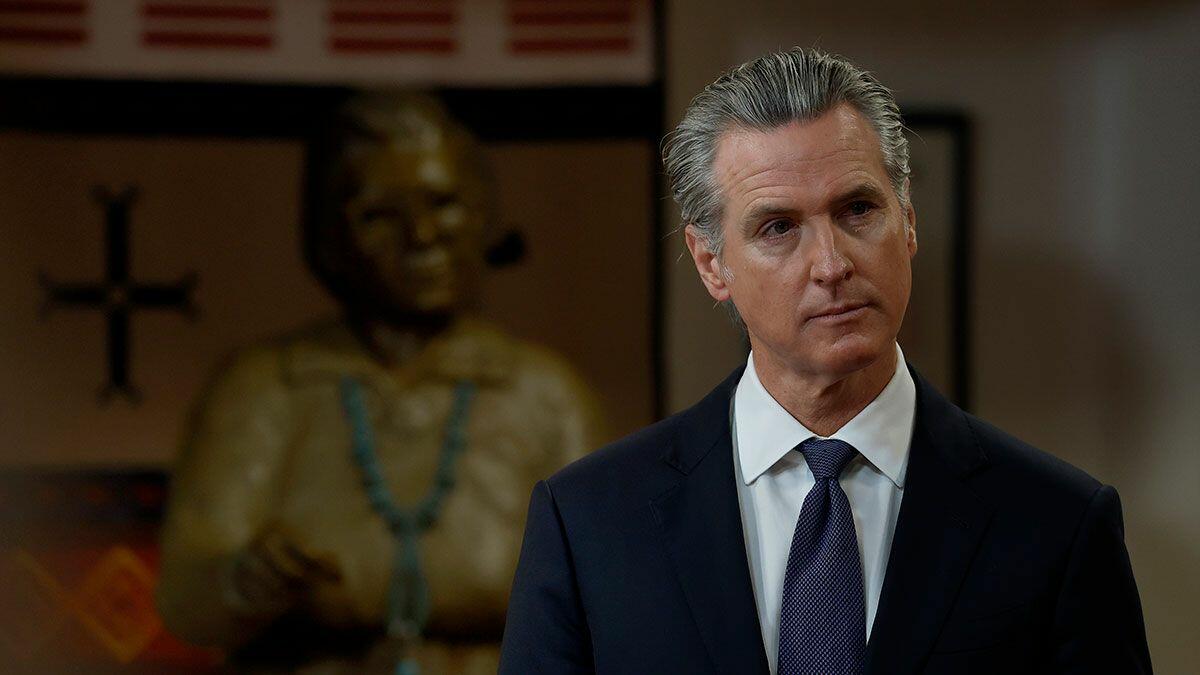
Californians are beginning to ask: Where is all this money going? On paper, it funds hospitals, universities, schools, prisons, infrastructure, and other public services. But beneath the surface, something else is happening that California Governor Gavin Newsom does not want you to see: massive, systematic, brazen fraud.
We conducted interviews with public officials, fraud experts, and political figures, and reviewed hundreds of pages of government reports, state audits, criminal indictments, and other public records on California fraud. From unemployment insurance and Medicaid to failed homeless initiatives and welfare programs, seemingly every state program has been compromised by criminals. The best estimates suggest that, on the governor’s watch, fraudsters, scammers, and organized crime rings have stolen at least $180 billion from taxpayers.
Welcome to Gavin Newsom’s empire of fraud.
Fourteen months after Newsom began his first term as governor of California, the Covid-19 pandemic swept the world. Roughly 2.7 million Californians eventually lost their jobs. The state’s economy went into freefall as its leaders imposed some of the country’s most restrictive public-health measures. In response to the crisis, Newsom sought to dump pallets of cash across the state—as quickly as possible.
One way to inject money was through California’s massive unemployment insurance program (UI). Unemployment insurance is administered by the state’s Employment Development Department (EDD), which can process billions of dollars in payments monthly. Before the state turned on the cash machine, however, experts had warned that the system was ripe for fraud.
Haywood Talcove, one of America’s leading fraud specialists and CEO of LexisNexis Risk Solutions for Government, was one such expert. “I was begging [federal officials] not to let the money go out like that, because it was going to be the biggest fraud in the history of our country,” he said. “Obviously, I wasn’t successful.”
For many reasons, California was particularly susceptible to the large-scale fraud schemes Haywood Talcove saw on the horizon. Not only did the state have some of the most generous welfare programs in the country; its bureaucrats had also failed to implement some basic fraud controls during Newsom’s tenure.
“They literally suspended all of the rules for the [unemployment insurance] program,” Talcove said. “[That made] it possible for anyone to get that benefit even if they weren’t entitled to it. It was very intentional. They knew what they were doing. But it caught up to them because it just got so out of control.”
The scams began almost immediately, with criminals from around the world reportedly siphoning cash from the program. In one case, a Romanian-led fraud ring orchestrated a $5 million unemployment-insurance scheme. Members allegedly “recruited potential [EDD-benefit] applicants through Facebook” and met them at “parks throughout Southern California to complete the application process,” according to the U.S. Attorney’s Office for the Southern District of California. “Applicants paid . . . a partial fee up front for assisting with fraudulent applications and another fee after applicants received EDD payments,” the office said. Many of the fraudsters wired the stolen funds to Romania.
Around September 2020, Fontrell Antonio Baines, a rapper from Memphis known as Nuke Bizzle, released a music video on YouTube entitled “EDD.” In the song, Baines bragged about ripping off California’s UI program. “Go to the bank with a stack of these,” Baines rapped, holding up EDD envelopes. Another rapper can be heard saying: “You gotta sell cocaine, I just file a claim.” All told, Baines obtained more than $700,000 in stolen funds using preloaded EDD debit cards. He pleaded guilty to federal charges.
Nor were these isolated incidents. A member of the SFV Peckerwoods, a California-based neo-Nazi gang, allegedly ran an unemployment scam during the pandemic. So did Michael Thompson, a one-time leader of the Aryan Brotherhood, who was eventually convicted. California’s prison population apparently got in on the action, too: the EDD allegedly paid out hundreds of millions of dollars in fraudulent claims in prisoners’ names, including those of at least 133 inmates on death row.
Remarkably, EDD not only failed regularly to cross-reference its unemployment payouts with a list of state prisoners, but it also had just two bureaucrats assigned manually to inspect reports of suspected fraud. State officials eventually admitted to having paid out approximately $20 billion in fraudulent claims during the pandemic, and to making an estimated $55 billion in improper payments. Talcove claims those figures don’t even tell the full story. “The state lost $32.6 billion dollars of taxpayer money to fraudulent applications,” he said. “In California, at one point, you had more people applying for unemployment insurance benefits than you had people over the age of 18.”
While Newsom has conceded that “bad actors” took advantage of the UI program, he has also defended his government’s record, saying they took swift action as soon as the alleged prison scheme surfaced. The EDD, for its part, has a webpage documenting its anti-fraud efforts. But any suggestion that California has fraud under wraps is contradicted by findings from its non-partisan state auditor.
Last December, the auditor reported that EDD’s UI program—which remains on the auditor’s “High Risk” list—had a fraud rate of 7.6 percent in 2023 and 7.9 percent in 2024. Applied to the state’s UI spending, those figures suggest more than $1 billion in stolen taxpayer funds since the pandemic. “EDD continues to have high rates of improper UI payments, including fraudulent payments,” the auditor wrote. “These inadequacies have resulted in a substantial risk of serious detriment to the State and its residents.”
While many states dealt with UI scams during the pandemic, California stands in a class of its own. At best, the EDD’s performance amounted to mass government incompetence; at worst, it reflects total indifference to fraud.
“This happens in every single state,” Talcove concluded, “but it happens a lot more in California.”
Newsom came to power vowing to pursue “guaranteed health care” for Californians. Under his leadership, the state extended Medi-Cal coverage to illegal aliens, covered sex-change surgeries for Medi-Cal enrollees, and offered “gender-affirming care services” to enrollees of “all ages.”
Total budgeted Medi-Cal spending—which includes federal, state, and local contributions—has more than doubled on the governor’s watch, rising from $93.5 billion the year before he took office to $196.7 billion in the current annual budget. During the same period, California’s resident population declined by 0.2 percent.
Experts have long warned of Medi-Cal’s vulnerabilities to fraud. The state auditor first designated “Medi-Cal Eligibility” as a “high-risk” issue in 2007 and has applied that label to it ever since. But the state government has made little progress in addressing what the auditor calls “eligibility discrepancies” that present a “substantial risk of serious financial detriment to the State.” California’s attorney general has conceded that “Medi-Cal fraud could reach billions of dollars annually.”
Newsom may have inherited a bad situation, but his actions have made it worse. During the Biden administration, California received federal approval to “increase, and eventually eliminate, asset limits” for some Medi-Cal recipients, a change that, according to Talcove, resulted in flood of improper payments. In addition, Medi-Cal suspended prior authorization requirements for certain health-care services and medications, creating yet another vulnerability for fraudsters to exploit.
In some cases, prosecutors say, that is precisely what happened. In one instance, Paul Richard Randall, Kyrollos Mekail, and Patricia Anderson allegedly “took advantage” of Medi-Cal’s loosened restrictions as part of a scheme that defrauded taxpayers of more than $178 million. The conspirators allegedly used a business called Monte Vista Pharmacy to process fraudulent prescriptions; Randall and others allegedly laundered the proceeds through third parties to fund kickbacks to Anderson and obscure the operation from law enforcement, according to a 2025 Department of Justice press release. Mekail had pleaded guilty to criminal charges in August 2024, and Randall is reportedly expected to do the same this year.
In-Home Supportive Services, a Medi-Cal sub-program, has also presented major fraud concerns. In 2009, former Governor Arnold Schwarzenegger estimated that IHSS fraud could be as high as 25 percent. That same year, a Sacramento grand jury report on the county’s IHSS program claimed IHSS fraud was “reported to be rampant and out-of-control.”
Yet, even in light of these worries, Newsom has dramatically increased funding for IHSS. Between Newsom’s first budget and his most recent proposal, the state legislative analyst estimates that total IHSS costs will have swollen by around 170 percent, with $33.4 billion proposed for the next fiscal year, including $12.5 billion from the state. According to recent estimates, taxpayers are funding nearly 800,000 IHSS providers, who offer caregiving, cooking, shopping, cleaning, and laundry services to elderly and disabled people. In about 70 percent of cases, providers and recipients are family members. According to co-author Schrupp’s reporting, the IHSS program is responsible for 41 percent of all “job gains” during the Newsom administration.
The IHSS program almost seems designed to facilitate scams. According to sworn testimony summarized in the Sacramento report, IHSS participants have falsely represented recipients’ needs; misrepresented hours worked timecards; and even secured payment after a recipient has died. The system operates largely on trust, with providers “working” in the privacy of the recipient’s home. The state’s IHSS protocols explicitly prohibit random unannounced home visits, which would be the best tool to uncover any potential rackets.
Oversight of the IHSS program is woefully inadequate. A 2021 Riverside County audit of the local IHSS program, for example, found county social workers had failed to process and report “integrity referrals” in a “timely” fashion. When complaints did reach county regulators, many, apparently, were reviewed by people with financial ties to IHSS. The report found that 41 of the 68 county staff at the Department of Public Social Services, which the auditor claimed is responsible for program oversight, were also IHSS providers—that is, they had a vested interest in protecting the system.
Beginning in 2024, federal officials announced multiple prosecutions for IHSS fraud. In one case, prosecutors alleged that Cindy Lynn Fromm claimed to have provided services for more than a year while the recipient was incarcerated. In others, prosecutors said that IHSS caregivers falsified timesheets and claimed to have provided services while beneficiaries were in hospitals, care homes, other facilities—or dead.
Experts who have studied the Medicaid system say that it has long been rife with fraud. Malcolm Sparrow, a Harvard professor who has advised the federal government on health-care fraud, suggested to Congress that “fraud and abuse” might represent somewhere between 10 percent and 20 percent of Medicaid spending. (Sparrow noted difficulties in attempting to calculate accurate “loss rates,” due to the fact that government studies “have been sadly lacking in rigor” and have “produced comfortingly low and quite misleading estimates.”) Brian Blase, president of the nonpartisan Paragon Health Institute, estimates a current Medicaid fraud rate of “15 to 20 percent of the entire program.”
Talcove estimates that the Medicaid fraud rate in California is 20 percent, which he calls a “very conservative” figure. Federal officials, however, believe that the current Medi-Cal fraud rate is even higher—and, given the state’s oversight failures and massive Medi-Cal expansion under Newsom, they are almost certainly right. Multiple high-ranking sources at the U.S. Department of Health and Human Services, which is currently probing fraud in California, told City Journal on the condition of anonymity that their initial estimate for Medi-Cal’s fraud rate since 2019 is 25 percent.
Based on state experts’ best guesses of annual Medi-Cal expenditures and applying a conservative, 15 percent fraud rate to each fiscal year since 2019, Medi-Cal has lost some $146 billion in taxpayer funds to fraud on Gavin Newsom’s watch.
Meantime, in Sacramento, state legislators have begun sounding the alarm. In February, Leticia Castillo, a Republican in the California State Assembly, proposed a bill that would create a Medi-Cal “fraud assessment task force” to “review current fraud prevention tools” and “evaluate how best practices from the federal government and other states could be applied in California.”
To date, Newsom has not supported the bill publicly.
The other major target for fraudsters is California’s expansive welfare state. As governor, Newsom has sought to project an image of a compassionate California that cares for its most vulnerable residents. The state is famously home to enormous wealth, but also to millions living in poverty, and, as of 2024, to more than 180,000 homeless people.
Responding to these realities, Newsom has unleashed a wave of spending on welfare initiatives. He has overseen much of a $24 billion state spend on homelessness projects, roughly doubled food-stamp benefits during the pandemic, and has maintained high levels of cash assistance. Just like unemployment insurance and Medi-Cal, though, these welfare programs proved easy targets for swindlers. The homelessness spending, for example, was a massive transfer of funds into a complicated web of non-profits and other contractors, with apparently little oversight. Unsurprisingly, fraud cases followed.
Cody Holmes served as chief financial officer of Shangri-La Industries, a Los Angeles–based affordable-housing developer. His company reportedly received nearly $26 million from the state to develop properties under a program aimed at housing the homeless. Prosecutors reportedly allege that Holmes, who pleaded not guilty, embezzled roughly $2.2 million to pay for “exotic cars” and monthly rent for a “6,500-square-foot mansion.” A City Journal review of political donations revealed Holmes was a frequent contributor to Democratic politicians and causes in California.
In a separate case, Steven Taylor was charged for having allegedly used “fake bank statements and false cash representations” to secure loans to fund his real-estate business. Taylor then allegedly used those illegitimately obtained loans to purchase an $11.2 million home, which he sold for $27.3 million to a publicly funded homeless-housing developer.
Earlier this year, Alexander Soofer, who served as the CEO of Abundant Blessings, a Los Angeles-based homelessness charity, was charged for having allegedly pocketed at least $10 million in homelessness funding to bankroll a “luxury lifestyle that included lavish vacations and designer clothes.”
None of these cases should come as a surprise. A 2024 report from the Inspector General Office for the United States Department of Housing and Urban Development found that California’s housing agency was not “adequately prepared to prevent, detect, and respond to fraud due to the lack of focus it placed on fraud risks and establishing a robust fraud risk management framework.” In addition, a 2024 report from California’s state auditor highlighted the government’s limited data on homelessness programs. For three of the five initiatives the auditor examined, it was “unable to fully assess” their success because of a lack of outcome data.
For many California watchers, the 2024 audit came years too late. In 2020, Representative Kevin Kiley, then serving in the California State Assembly, requested a similar report, he told City Journal, but state legislative Democrats rejected the proposal after Newsom intervened. “I brought the proposal to the state’s joint legislative audit committee, and it fell one vote short of approval after the administration came and testified against doing the audit,” Kiley said. “They likely knew what the audit would show and didn’t want taxpayers to get that window into how their money is, quite frankly, being squandered.”
Officials have also raised concerns about fraud in California’s SNAP benefits, officially known as CalFresh and more commonly called food stamps. As of last year, the state auditor had designated CalFresh as a “high risk” program. Annual state spending on food stamps has risen from roughly $8 billion in 2015 to nearly $16 billion under Newsom.
That expansion coincided with several fraud cases. In 2023, 15 people associated with a Romanian criminal ring were arrested for allegedly stealing CalFresh and other welfare funding, at least one of whom later pleaded guilty. The following year, seven people were charged for allegedly making “fraudulent cash withdrawals” as part of a multi-hundred-thousand-dollar theft of welfare benefits. In March, more than 50 people were charged as part of “a yearslong crackdown on organized theft rings” that included “many with ties to Romania.” The defendants allegedly stole millions in public funds by exploiting California’s Electronic Benefit Transfer system, which distributes benefits for programs like CalFresh.
Notwithstanding this steady drumbeat of fraud cases, at least one California Democratic lawmaker is pushing to lower penalties for those who steal from state welfare programs. In April 2025, State Senator Lola Smallwood-Cuevas sponsored a bill that would raise the threshold for felony welfare fraud from $950 to $25,000. The measure would also make it more difficult to charge perjury based on misstatements to county welfare departments. Republican State Assemblyman Carl DeMaio has said that if the bill becomes law, it will effectively “legalize welfare fraud” in California.
Federal prosecutors, however, are stepping up enforcement. Last year, Bill Essayli, first assistant U.S. attorney for the Central District of California, announced the creation of a federal task force to combat fraud and corruption in the state’s homelessness programs. The task force has already brought charges in several multimillion-dollar homelessness-fraud cases—and Essayli has vowed that more are coming. “California has spent $24 billion in the last five years on homelessness, and no one can account for where that money has really gone,” Essayli said in January. Gavin Newsom, he added, is the “king of fraud.”
We reached out to Newsom’s office for comment on this story. A spokesperson, whose signature featured “she/her” pronouns, called Kiley’s claims “ridiculous,” accused the Trump administration of “mak[ing] up numbers,” and suggested, remarkably, that California had “no missing homelessness funds.”
The culture of fraud in California is so pervasive that it has allegedly reached the governor’s own office. Between 2022 and December 2024, Newsom’s chief of staff was Dana Williamson. In November 2025, she was charged with fraud for allegedly “siphoning campaign and COVID-19 recovery funds into her and an associate’s pockets.” Two other “well-connected aides in state politics were also charged” and struck plea deals that reportedly confirmed the scheme’s existence.
Newsom’s office said they were made aware of an investigation into Williamson in late 2024 and immediately moved to place her on leave. When she officially left the governor’s office a month later, though, Newsom’s send-off message applauded her “insight, tenacity, and big heart,” while making no mention of the investigation against her. And even with the charges against her, Williamson walked away from government with a $50,000 payout for unused vacation time.
Williamson, who has pleaded not guilty, is not the only state official to be charged with fraud during the Newsom administration. In January, Phyllis Hope Stitt, a former EDD employee responsible for determining UI claimant eligibility during the pandemic, pleaded guilty to defrauding the program of more than $750,000. That same month, former Madera County benefits eligibility worker Leticia Mariscal was charged for allegedly embezzling $40,000 in food stamp benefits.
The pattern that emerges in California is not one of isolated breakdowns in oversight but of a vast system that almost seems to invite fraud. From widespread failures in unemployment insurance to alleged schemes targeting Medi-Cal to mounting concerns over homelessness spending, each case points to significant lapses by state officials charged with stewarding public funds. According to California Assemblyman David Tangipa, “Sacramento is pervaded by a culture of corruption.” And he points the finger right to the top: Newsom, he says, has helped “create[] an environment where corruption thrives.”
Still, California’s fraud crisis is not a lost cause, nor is it beyond correction. On March 16, President Donald Trump signed an executive order creating the Task Force to Eliminate Fraud. The effort, led by Vice President J.D. Vance, will “coordinate government-wide efforts to combat widespread fraud, waste, and abuse in Federal benefit programs.” A fact sheet released by the White House highlighted California as a state where “insufficient safeguards and weak oversight increase the risk of large-scale fraud.”
The Minnesota fraud scandal, brought to national attention by City Journal, offers a revealing case study of what can happen when a seemingly hidden problem—one long in plain sight—finally comes into view. The extent of fraud in Minnesota had been an open secret for years. But once the scandal drew national attention, investigations snowballed, ultimately derailing the political career of Tim Walz. It may seem unlikely today, but a similar outcome is possible for Newsom in California.
Newsom is not untouchable, and the scale of fraud in California appears far larger than in Minnesota. Despite his claim to have taken “decisive action” against one form of fraud, the broader problem is real and ongoing, and taxpayers, in California and across the country, have reason to be furious. Newsom will no doubt rely on charisma and partisan appeal to downplay the extent of these abuses. But listen closely, and you can still hear the California cash machine, steadily dispensing untold billions to criminals, scammers, and organized crime rings—funds taken from taxpayers and diverted from those most in need.
Christopher F. Rufo is a senior fellow at the Manhattan Institute, a contributing editor of City Journal, and the author of America’s Cultural Revolution. Ryan Thorpe is a technical writer at the Manhattan Institute. Kenneth Schrupp and Haley Strack are investigative reporters at City Journal.
Tyler Durden
Fri, 04/03/2026 – 21:30
https://www.zerohedge.com/political/forget-minnesota-amount-fraud-uncovered-california-staggering
Colorado Forces Lawyers To Swear They Won’t Help Feds Nab Illegals
Colorado Forces Lawyers To Swear They Won’t Help Feds Nab Illegals
Lawyers in the Mile High State are now being strong-armed by Democrats into signing a radical anti-immigration-enforcement pledge just to do their jobs.
Starting March 30, 2026, every private attorney logging into Colorado’s official Courts E-Filing system (CCE) must certify – under penalty of perjury – that they will never use or share non-public personal information from court records to assist federal immigration authorities. Refuse? You’re shut out of the system entirely. No filing lawsuits, no checking case files, no representing clients in state court. Period.
The certification reads in part: “I certify under penalty of perjury that I will not use personal identifying information obtained from the database… for the purpose of investigating for, participating in, cooperating with, or assisting in federal immigration enforcement, including enforcement of civil immigration laws and 8 U.S.C. sec. 1325 or 1326, unless required by federal or state law or to comply with a court-issued subpoena, warrant, or order.”
Colorado is now requiring lawyers in the State, as a condition of logging into its court e-filing system, to promise not to cooperate with federal authorities in enforcing federal immigration law.
Please understand:
– I do not practice immigration law.
– I do not practice… pic.twitter.com/khYDf5TkQd
— Ian Speir (@IanSpeir) April 2, 2026
It’s not optional for immigration lawyers only. It hits every practicing attorney in Colorado – divorce attorneys, personal injury lawyers, estate planners, the works. Government employees get a free pass. Everyone else? Sign or sit on the sidelines.
The order comes straight from Senate Bill 25-276, the “Protect Civil Rights Immigration Status” act rammed through by Democrats and signed by Gov. Jared Polis on May 23, 2025. The bill expanded Colorado’s already aggressive sanctuary-style rules by slapping the Judicial Branch with the same restrictions as other state agencies – all in the name of blocking “federal civil immigration enforcement.”
The Colorado Judicial Branch openly admits the move is designed to keep state resources from helping ICE. On its official website, officials wrote: “This legislation seeks to prevent the use of state resources for federal civil immigration enforcement.” They even acknowledged the backlash, saying, “We recognize that some people may be frustrated by the requirements of this new legislation. However, the judiciary is required to comply with the laws as enacted by the legislature.”
Why isn’t this OBSTRUCTION of JUSTICE ⁉️ @TheJusticeDept https://t.co/BwJxmFwIJR
— Sidney Powell 🇺🇸 Attorney, Author, Gladiator (@SidneyPowell1) April 3, 2026
A brief version of the same popup appeared last September before being yanked for “further discussion.” Now it’s back for good.
Critics say the policy doesn’t just create a massive headache for lawyers trying to meet filing deadlines – it raises serious questions about compelled speech, access to the courts, and whether the state can force officers of the court to swear off cooperating with federal law on pain of professional paralysis.
I’ll be damned. I practice law here in Colorado as well. Just logged in. Here’s the text of their “announcement.” This is indefensible. pic.twitter.com/XPPIFHLasT
— Matt Barber (@ThatMattBarber) April 2, 2026
Colorado has positioned itself as one of the nation’s most defiant sanctuary states, repeatedly slapping limits on local cooperation with ICE. The new certification is just the latest example of Democrats putting ideology over basic functionality of the justice system.
This is blatantly illegal. https://t.co/R5auplUKRy
— Sean Davis (@seanmdav) April 2, 2026
A federal judge this week tossed a Trump administration lawsuit challenging some of these same policies, ruling the feds can’t force states to play along. But for thousands of Colorado lawyers just trying to file a motion or check a docket, the message from the state is crystal clear: Help enforce immigration laws? Not on our watch — and not in our courts.
Tyler Durden
Fri, 04/03/2026 – 20:45
https://www.zerohedge.com/markets/colorado-forces-lawyers-swear-they-wont-help-feds-nab-illegals
Micro AI Sentry Guns May Be Next Layer Of Defense For Data Centers Against Kamikaze Drones
Micro AI Sentry Guns May Be Next Layer Of Defense For Data Centers Against Kamikaze Drones
Submitted by Cameron Rowe, Co-Founder and CEO of Sentradel,
Most people don’t think about what the “cloud” actually is. It’s a physical building full of servers storing everything from your medical records to your social media. Every Google search, every ChatGPT query, every hospital pulling up your health history routes through a data center. Right now, those buildings have about as much aerial protection as your local Costco.
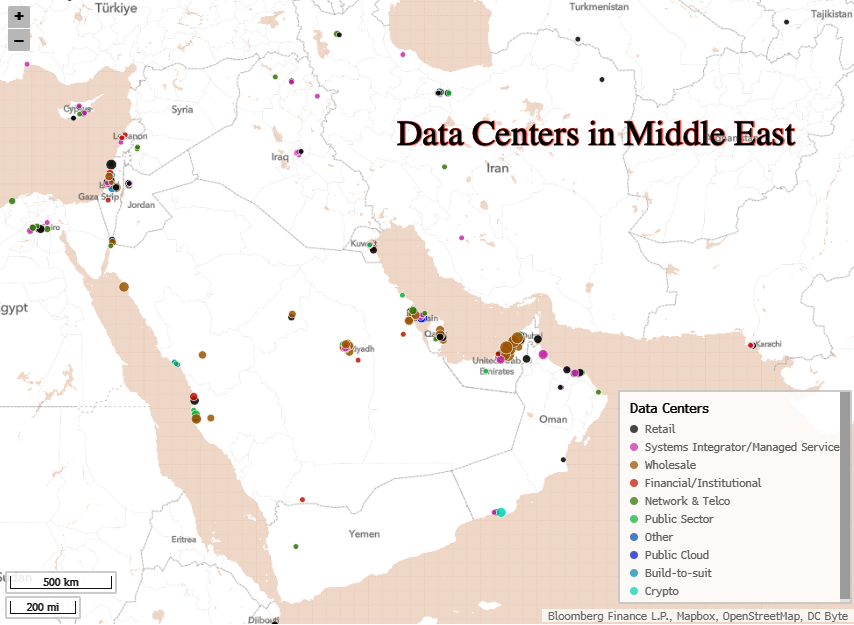
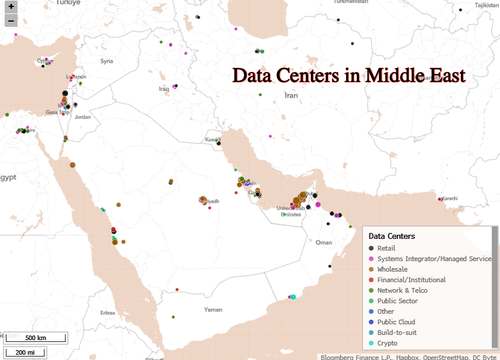
In March 2026, Iranian Shahed drones struck three AWS data centers in the UAE and Bahrain. Multiple availability zones went down simultaneously, taking core services like EC2, S3, and Lambda offline, cascading outages to banks, payment platforms, and ride-hailing apps across the region. It was the first confirmed kinetic attack on a hyperscale data center run by a U.S. company. Shortly after, Iranian state media published a list of “Enemy Technology Infrastructure,” including Microsoft, Google, and Oracle facilities, painting targets on every major cloud provider in contested regions.
Yes, the cloud is distributed. Workloads can fail over. But data still lives somewhere physical, and partial corruption or destruction can be devastating in ways a temporary outage doesn’t capture. Medical records, financial transactions, and AI training datasets are worth hundreds of millions. When those are gone, they’re gone.
Global data center capex is approaching $1 trillion in 2026. The top four hyperscalers are collectively spending nearly $600 billion on infrastructure this year. That’s the physical backbone of modern life, sitting behind chain-link fences, with no ability to stop a drone costing between $30,000 and $80,000.
These facilities were never built to survive military threats. Security was designed around physical intrusion and cyberattacks, not one-way attack drones that cost a fraction of what they destroy.
Decentralization helps at the margins, but hundreds of billions of dollars poured into existing mega facilities can’t be shifted overnight. The real answer is layered detection and intercept: radar, RF sensors, EO/IR tracking, and kinetic or electronic defeat systems working together around these sites.
Autonomous counter-drone system
Watch: Autonomous counter-drone system
The military may eventually provide coverage for the most critical nodes, but they’ll prioritize their own assets first. And human life should come before server racks. That’s exactly why data centers need to be more proactive about protecting their own infrastructure rather than waiting for someone else to do it. Sentradel is already marketing counter-drone solutions to data center operators; it’s likely to become more important over the next year as these kamikaze drones continue to improve rapidly in AI, speed, and payload.
Tyler Durden
Fri, 04/03/2026 – 20:00
February Net Trailer Orders Down 43% As Bookings Fall 26%
February Net Trailer Orders Down 43% As Bookings Fall 26%
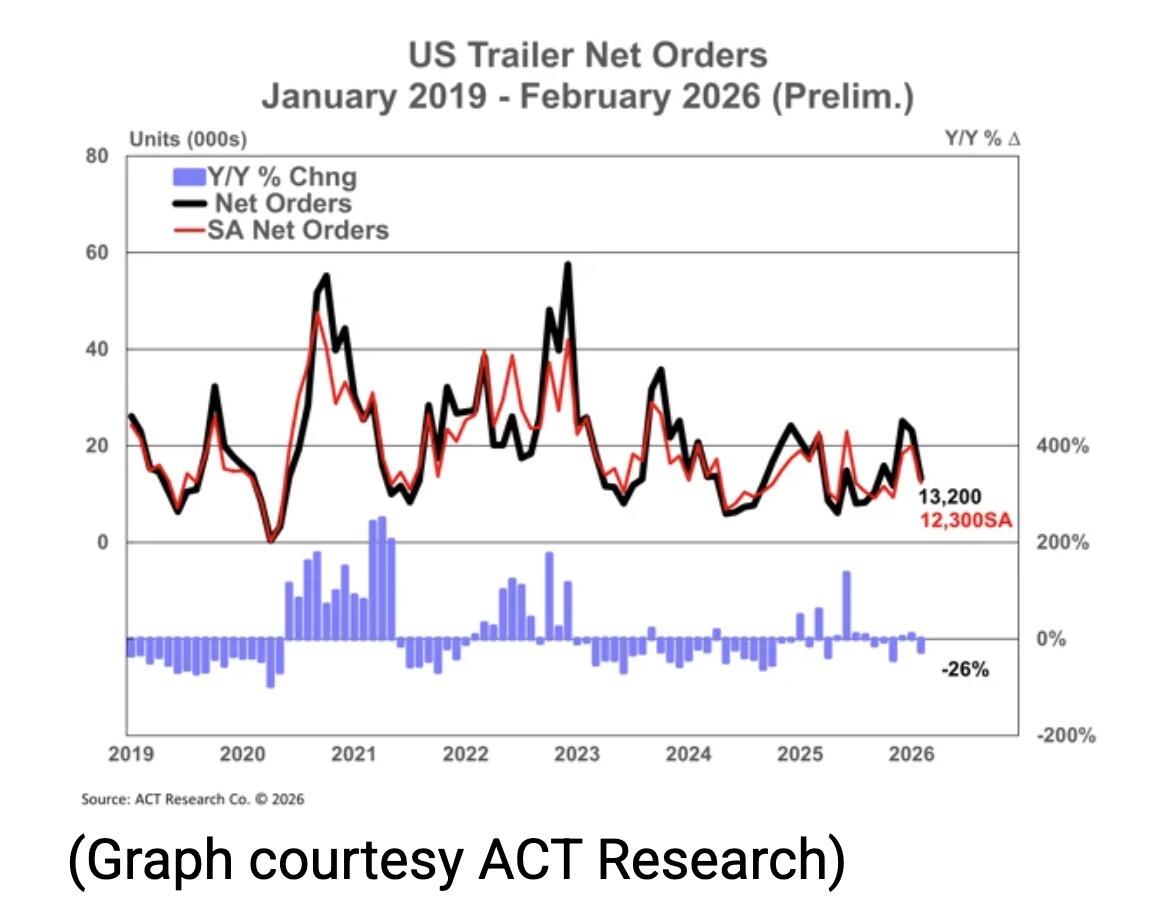
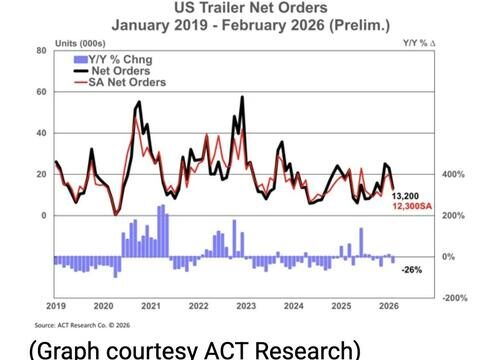
Preliminary February net trailer orders fell by about 10,000 units from January’s 23,300, a 43% month-over-month decline, according to TheTrucker.com.
“Sequentially, a drop in net orders was expected, as the industry transitions from the strongest to the weakest order months of the annual cycle,” said Jennifer McNealy, director CV market research & publications at ACT Research.
“Trailer makers now will begin to take fewer orders and start to work down the backlog that grew during the peak of order season at the end of the previous year, which in this year’s cycle started and ended later than usual, as fleet decision-making hesitance into late 2025 delayed the cycle a bit and caused a high-side surprise in January.”
The report notes that February bookings totaled 13,200 units—26% lower than February 2025. After seasonal adjustment, orders come to 12,300 units. Final figures will be released later this month, with preliminary estimates typically within ±5% accuracy.
“We now question when we will see 20k-plus-unit order intake months again, and how quickly trailer OEMs will build down the still-thin backlog, particularly given concerns about the level of activity in the key freight-generating economic sectors that drive transportation demand,” McNealy said.
Tyler Durden
Fri, 04/03/2026 – 19:20
https://www.zerohedge.com/markets/february-net-trailer-orders-down-43-bookings-fall-26
FBI Issues Public Alert On Americans Using Foreign Apps
FBI Issues Public Alert On Americans Using Foreign Apps
Authored by Naveen Athrappully via The Epoch Times (emphasis ours),
The FBI identified data security risks from foreign-developed mobile apps used in the United States, the agency warned in a March 31 public service announcement.
“As of early 2026, many of the most downloaded and top-grossing apps in the United States are developed and maintained by foreign companies, particularly those based in China,” the FBI said, without naming any apps.
“The apps that maintain digital infrastructure in China are subject to China’s extensive national security laws, enabling the Chinese government to potentially access mobile app users’ data.”
In the Google Play store, the most popular apps include short-form video platform TikTok, video editor CapCut, artificial intelligence video generator PixVerse, and communication app Telegram X. China-based ByteDance maintains ownership of TikTok and CapCut. PixVerse is owned by a Singaporean company, and the developer of Telegram X is based in the United Arab Emirates.
On Apple’s App Store, the top free apps include CapCut, TikTok, and Chinese shopping apps Temu and Shein.
In its alert, the FBI warned users to be aware of the types of data the foreign apps request access to when they are downloaded.
“When access is permitted by the user, the app can persistently collect data and users’ private information throughout the device, not just within the app or while the app is active,” the bureau said.
The privacy policy of an app, which can typically be accessed on the company website, reveals where the harvested data, including system prompts and personal info, are stored. Some of the apps store data in servers located in China. Some apps do not allow users to run them unless they consent to data sharing, the FBI said.
Certain apps offer options to invite friends or other contacts to use the apps. Once an app is downloaded, the default permissions may allow the developer to collect and store information about users’ names, email IDs, physical addresses, user IDs, and stored contacts’ phone numbers.
“Some apps may also contain malware that could collect data beyond what is authorized by the user. This could include malicious code and hard-to-remove malware designed to exploit known vulnerabilities in various operating systems and insert a backdoor for escalated privileges,” the agency said.
“Downloading apps from unfamiliar websites or third-party app stores runs a higher risk of embedding malware. Official apps stores scan for malicious content, lowering the risk of malware or malicious code on devices.”
The FBI advised people to disable unnecessary data sharing on apps, stick to downloading verified apps from official app stores, perform regular device software updates, and change passwords regularly.
U.S. authorities have taken action against Chinese apps that pose privacy risks to citizens.
In February, Texas Attorney General Ken Paxton filed a lawsuit against Shein, stating: “Not only is Shein harming consumers with toxic synthetic materials, but it’s also exposing Americans’ data to Communist China. This must come to an end.”
The same month, Paxton sued Temu over suspected ties to the Chinese Communist Party (CCP).
In 2025, President Donald Trump issued an executive order for the United States to acquire TikTok from Chinese parent company ByteDance. In January, a deal was finalized that set up a U.S. majority-owned joint venture to oversee TikTok’s American operations.
AI, VPN Risks
In 2025, Florida Chief Financial Officer Jimmy Patronis banned the Chinese artificial intelligence model DeepSeek from the state’s Department of Financial Services. New York and Texas also banned DeepSeek from state government devices and networks last year.
“Texas will not allow the Chinese Communist Party to infiltrate our state’s critical infrastructure through data-harvesting AI and social media apps,” Texas Gov. Greg Abbott said at the time. “Texas will continue to protect and defend our state from hostile foreign actors.”
In a June 2025 report, the Tech Transparency Project, a research initiative that seeks to hold big tech companies accountable, warned that Apple and Google app stores were allowing virtual private networks (VPNs) owned by Chinese companies on their platforms, thus presenting security risks.
“Chinese-owned VPNs raise serious privacy and security concerns for Americans because Chinese companies can be forced to share user data with the Chinese government under the country’s national security laws,” the report warned. “VPNs have access to particularly sensitive user data since they see all of a person’s web activity.”
Earlier this year, Republican lawmakers introduced the Securing Federal Devices from Chinese Applications Act to block apps controlled by the CCP from U.S. government devices, according to a Jan. 16 statement from the office of Rep. Jefferson Shreve (R-Ind.).
“If an app is controlled by the CCP, it does not belong on a U.S. government device,” Shreve said. “This bill shuts the door on CCP spyware and makes clear the federal government will not aid China’s surveillance state.”
Tyler Durden
Fri, 04/03/2026 – 18:40
https://www.zerohedge.com/political/fbi-issues-public-alert-americans-using-foreign-apps