Category: News

High Taxes, Power Bill Crisis Send Maryland Gov. Moore’s Poll Numbers To Record Low
High Taxes, Power Bill Crisis Send Maryland Gov. Moore’s Poll Numbers To Record Low
Left-wing Maryland Gov. Wes Moore’s approval rating has slid to a new record low as the Democrat darling, seen as Soros-friendly and as having aspirations to become the Democratic Party’s 2028 nominee, increasingly looks dimmer by the month.
Moore and Alex Soros.
Moore’s approval rating tumbled to 48% for the first time since he took office two years ago, as the Democratic Party is likely freaking out that even in one of the bluest states in America, ruled by the kings and queens of the progressive party in a one-party fashion, their rising star (now sinking star) is seeing mounting voter backlash as the state descends into multiple crises, from a fisical mess to power bills to crime and even a massive exodus of residents.
High taxes breaking the pocketbooks of working poor, horrible leadership, dishonesty, terrible fiscal management by the state, and the power bill crisis are the top reasons for the growing resentment captured in the new UMBC poll, which surveyed 804 Marylanders in mid-March, 731 of whom indicated they were registered voters.
In October 2024 and February 2025 polls, Moore’s approval ratings stood around 52%. In another October 2024 poll, he had a rating of around 54%.
Last Thursday, Moore was greeted with a stadium full of boos at Camden Yards on Opening Day for Orioles baseball. At the time, we noted that this was one of the clearest indicators of growing backlash against a governor operating under the failed Democratic Party framework, which is sending the state into financial ruin, and risks creating an ‘Illinois 2.0.’
Gov. Wes Moore was booed by the crowd ahead of the Orioles home opener on Thursday. https://t.co/KdJaF2jx68 pic.twitter.com/pA0p6G2z8m
— FOX Baltimore (@FOXBaltimore) March 26, 2026
“I am not surprised he was booed, given his poor job performance. He raised our taxes to record levels, blew through a $5 billion budget surplus, increased state spending to record levels, assaulted local control over zoning matters, and made our streets less safe by ending cooperation with ICE and allowing violent illegal immigrants to roam our streets,” said Republican council candidate, State Delegate Nino Mangione.
He added, “Wes Moore is, without question, the worst governor in the history of Maryland. I am not surprised he was booed. The boos were well deserved.”
Local outlet Fox Baltimore noted, “The governor’s approval numbers mark a double-digit decline in public polling since the first-term Democrat took office almost four years ago. Previous surveys show approval ratings in the mid-50s and low 60s.”
Maryland is a one-party-ruled state of Democratic kings and queens, where Republicans are nonexistent in any sizeable political power, which has resulted in absolutely no balance and no accountability. The financial implosion in the state, sparking a mass exodus of residents and multiple other crises, is the direction Democrats have proudly chosen, driven by a failed woke framework under the governor.
Republican State Delegate Robin Grammer Jr. said, “Moore’s approval rating is tanking because he is destroying Maryland’s middle class, chasing retirees from our state and making the American Dream impossible for our youth.”
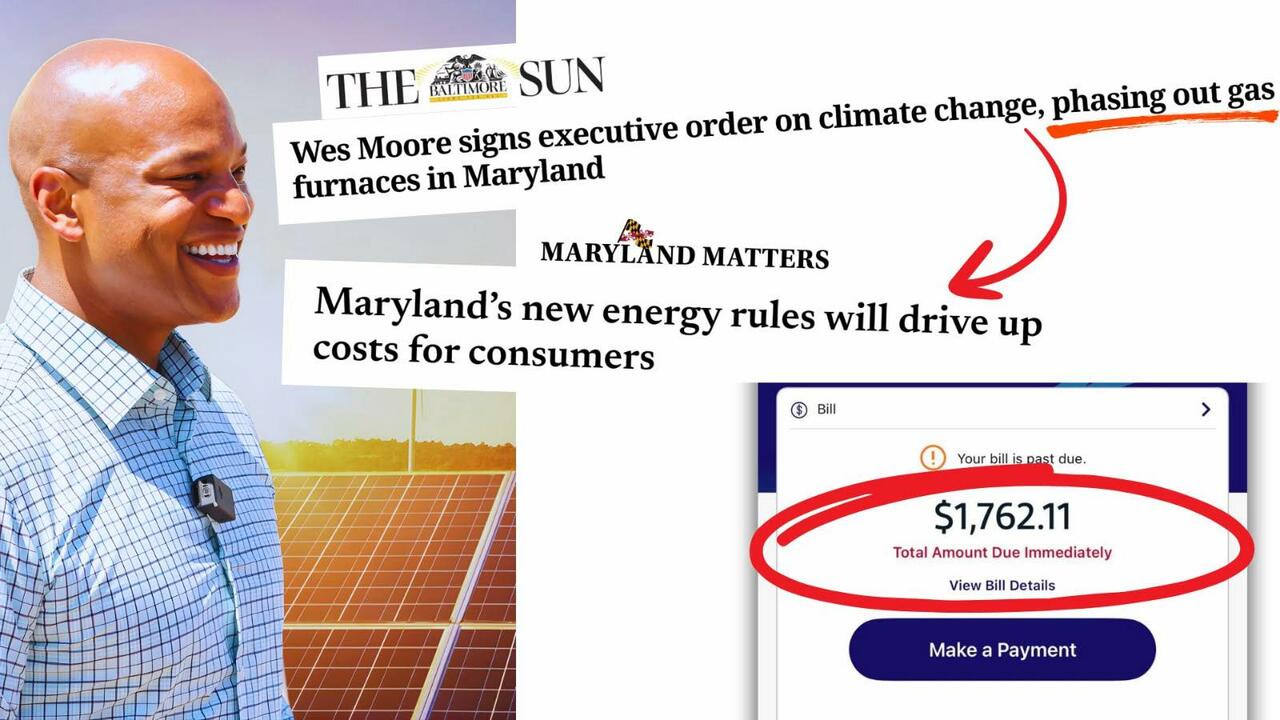
We have spoken with the heads of local financial institutions and wealth advisors who have been strategizing with their high-net-worth clients about leaving the state since Moore took office. The decline of Maryland is a byproduct of one-party rule by the Democratic Party’s DEI leadership… but betting markets remain convinced…
…no matter how bad it gets?
Tyler Durden
Fri, 04/03/2026 – 18:00
It’s Past Time To Privatize The Post Office
It’s Past Time To Privatize The Post Office
Submitted by QTR’s Fringe Finance
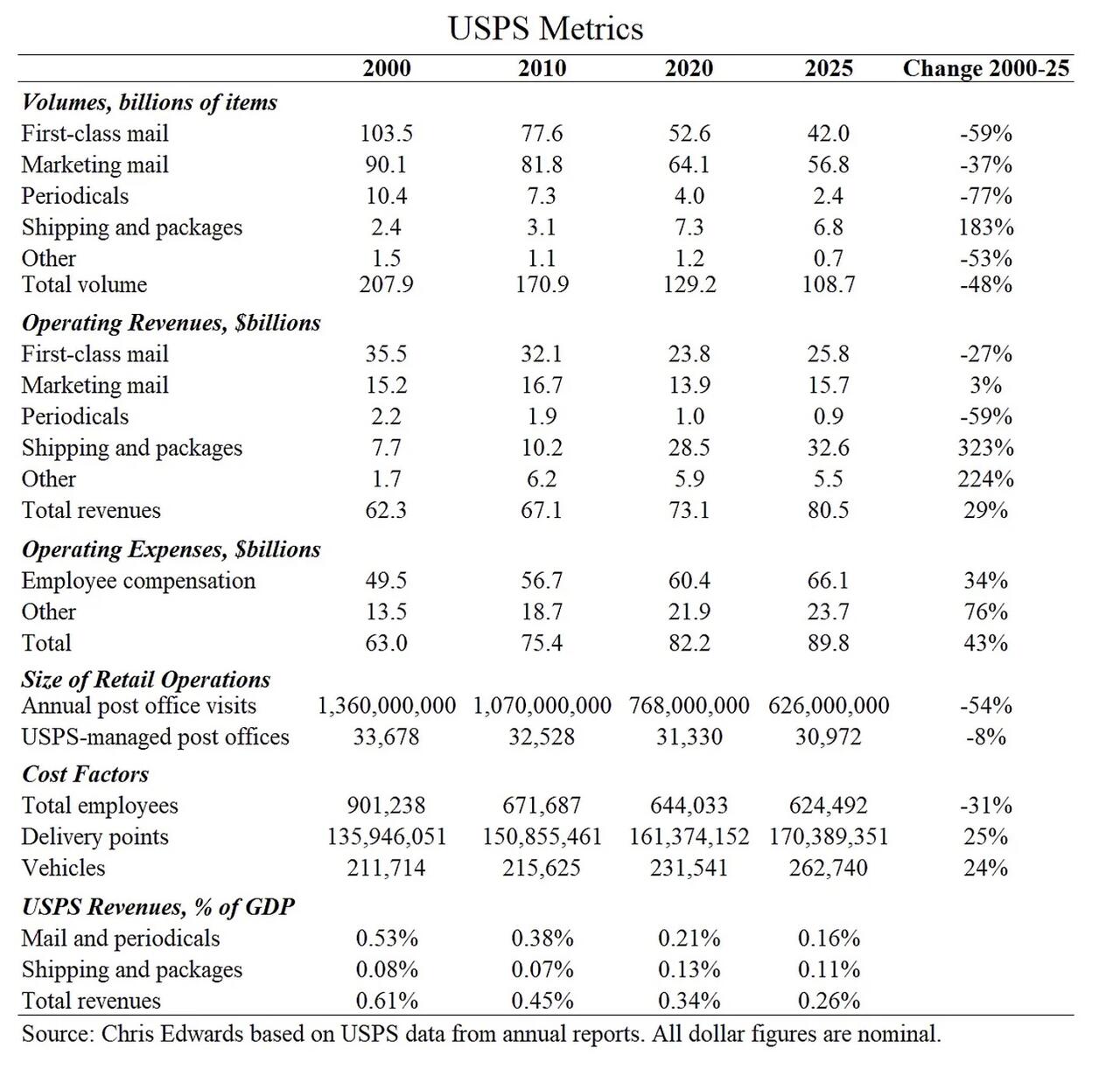
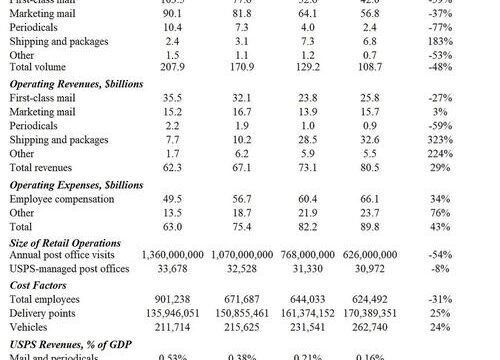
A new piece from the Cato Institute lays out how bad things have gotten at the post office, arguing that the United States Postal Service is facing a severe and worsening financial crisis. According to the article, USPS has been losing billions of dollars annually for well over a decade and is now at a point where it cannot realistically fix its problems without major structural changes. I could have told you this after the horror show I lived through at the post office back in September of 2025.
The USPS now is the predictable outcome of trying to run a massive logistics operation through a government bureaucracy that moves slowly, resists change, and answers more to politics than to performance. The piece makes clear that USPS was built for a world that no longer exists, yet it continues operating as if nothing has changed because, as usual, government institutions are the last to notice reality.
The problems outlined are extensive and, frankly, not surprising. Mail volumes have collapsed as Americans switched to faster, cheaper digital alternatives, yet USPS continues to behave like it’s still 1995. What mail remains is increasingly dominated by low-value marketing material, while the agency struggles to compete in package delivery against companies that actually specialize in logistics.
Even Amazon, a company that started as an online bookstore (what could be less efficient to ship than godd*mn books — bricks?), has figured out how to build a better delivery network.
Meanwhile, visits to post offices have fallen off a cliff, but the system has barely shrunk its footprint. Labor costs remain enormous, productivity lags, and the workforce is structured in ways that prioritize stability over efficiency.
The result is exactly what you would expect when there is no real pressure to perform: bitchy apathetic staff, declining output, rising inefficiency, and billions in annual losses that just keep piling up. In the private sector, that kind of performance would trigger a full-scale overhaul or bankruptcy.
In government, it triggers a Congressional hearing and maybe a strongly worded memo, in addition to switching the Postmaster General and paying the new guy even more than the last guy got paid.
This is why privatization is not some radical idea but a logical response to a system that clearly is not working. A privatized USPS would finally be allowed to operate like a business instead of a political artifact. It could close unprofitable locations without needing a congressional debate, adjust delivery schedules based on actual demand, and invest in technology that improves service instead of maintaining outdated systems because “that’s how it’s always been done.”
Most importantly, it would have to make money (or at least stop losing it) which is a constraint that tends to focus the mind in ways government management never quite experiences. When survival depends on efficiency, organizations tend to discover it very quickly.
The contrast with private carriers like FedEx and UPS could not be clearer. These companies operate in a world where excuses don’t pay the bills. They optimize routes, invest in automation, analyze data, and constantly refine their operations because if they don’t, their competitors will. They have built systems that deliver packages faster, track them more precisely, and adapt to changing demand almost in real time. None of this happened because a committee approved it after years of debate. It happened because the profit motive demands results.
Meanwhile, USPS is stuck navigating layers of regulation and political oversight, where even obvious changes can take years to implement, if they happen at all.
🔥 50% OFF FOR LIFE: Using this coupon entitles you to 50% off an annual subscription to Fringe Finance for life: Get 50% off forever
There is also the small matter of accountability. Private companies cannot run losses indefinitely and expect someone else to quietly cover the gap. They either fix the problem or they go under. USPS, on the other hand, operates with the understanding that there will always be some form of backstop, explicit or not. That safety net removes urgency and allows inefficiencies to persist far longer than they would anywhere else. It is the classic government model: spend more, deliver less, and call it a “challenge” instead of a failure. Privatization would replace that dynamic with one where performance actually matters, where bad decisions have consequences, and where efficiency is not optional.
Of course, defenders of the status quo often argue that privatization would undermine public service, but that assumes the current system is delivering high-quality service to begin with. Other countries have already shown that it is possible to maintain universal delivery while still operating under private or semi-private models. Targeted subsidies can ensure rural access without requiring the entire system to function inefficiently. The difference is that those systems are designed around outcomes, not inertia.
At some point, it becomes difficult to ignore the obvious. Government agencies are notoriously bad at adapting, innovating, or even cutting costs, because they are not structured to do any of those things well. The USPS is not an exception; it is a textbook example. Continuing down the current path means more losses, more inefficiency, and more attempts to patch over structural problems with temporary fixes. Privatization, by contrast, offers a way to align incentives with reality, bringing the postal system into the same competitive, performance-driven environment that has already transformed the rest of the logistics industry. And if that means admitting that the government is not particularly good at running a nationwide delivery business, that is less a controversial statement than an overdue acknowledgment of what the evidence has been showing for years.
QTR’s Disclaimer: Please read my full legal disclaimer on my About page here. This post represents my opinions only. In addition, please understand I am an idiot and often get things wrong and lose money. I may own or transact in any names mentioned in this piece at any time without warning. Contributor posts and aggregated posts have been hand selected by me, have not been fact checked and are the opinions of their authors. They are either submitted to QTR by their author, reprinted under a Creative Commons license with my best effort to uphold what the license asks, or with the permission of the author.
This is not a recommendation to buy or sell any stocks or securities, just my opinions. I often lose money on positions I trade/invest in. I may add any name mentioned in this article and sell any name mentioned in this piece at any time, without further warning. None of this is a solicitation to buy or sell securities. I may or may not own names I write about and are watching. Sometimes I’m bullish without owning things, sometimes I’m bearish and do own things. Just assume my positions could be exactly the opposite of what you think they are just in case. If I’m long I could quickly be short and vice versa. I won’t update my positions. All positions can change immediately as soon as I publish this, with or without notice and at any point I can be long, short or neutral on any position. You are on your own. Do not make decisions based on my blog. I exist on the fringe. If you see numbers and calculations of any sort, assume they are wrong and double check them. I failed Algebra in 8th grade and topped off my high school math accolades by getting a D- in remedial Calculus my senior year, before becoming an English major in college so I could bullshit my way through things easier.
The publisher does not guarantee the accuracy or completeness of the information provided in this page. These are not the opinions of any of my employers, partners, or associates. I did my best to be honest about my disclosures but can’t guarantee I am right; I write these posts after a couple beers sometimes. I edit after my posts are published because I’m impatient and lazy, so if you see a typo, check back in a half hour. Also, I just straight up get shit wrong a lot. I mention it twice because it’s that important.
Tyler Durden
Fri, 04/03/2026 – 17:20
https://www.zerohedge.com/markets/its-past-time-privatize-post-office

Tiger Woods Flexes Call With Trump Before DUI Arrest; Pardon Odds Remain Low
Tiger Woods Flexes Call With Trump Before DUI Arrest; Pardon Odds Remain Low
Bodycam footage shows Tiger Woods telling local authorities on Jupiter Island that he spoke with President Trump shortly after he flipped his Land Rover SUV and was arrested for DUI.
“You got it. Thank you, bye… I was just talking to the President,” Woods told a local police officer seen in the bodycam footage. The officer was asking Woods to remain on the scene. Bodycam video was obtained by the New York Post.
Tiger Woods flexes his call with Trump to law enforcement after DUI:
“You got it. Thank you, bye… I was just talking to the President.” pic.twitter.com/El9GDw6SWJ
— Headquarters (@HQNewsNow) April 3, 2026
Last Friday, Woods crashed his Land Rover into another vehicle, resulting in his $100,000-plus SUV turning onto its driver’s side.
Unfortunately for Woods, he failed a on-scene sobriety test administered by police after what they say he showed “signs of impairment” and appeared “lethargic.” Woods blew “triple-zeroes” on a breathalyzer but failed to submit a urine test.
Woods told officers he was “hoping to” play in the upcoming Masters Tournament, but in a statement posted on X on Tuesday, he told the golfing world that he would pause tournament play for the foreseeable future and “seek treatment.”
“I know and understand the seriousness of the situation I find myself in today. I am stepping away for a period of time to seek treatment and focus on my health. This is necessary in order for me to prioritize my well-being and work toward lasting recovery,” Woods stated (or perhaps his layer stated).
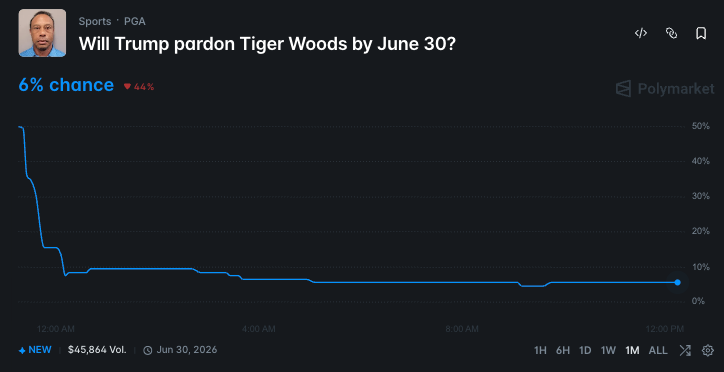
A new Polymarket bet, “Will Trump pardon Tiger Woods by June 30?” showed about a 6% chance as of Friday around lunchtime that the pro golfer would be pardoned by Trump.
Woods admitted he took “a few pills” before the crash. Officers also found hydrocodone pills at the crash scene.
This incident marks the second DUI in the Jupiter Island area over the last decade.
Will Trump pardon Tiger Woods? Polymarket is already taking bets…
Tyler Durden
Fri, 04/03/2026 – 16:40
https://www.zerohedge.com/political/tiger-woods-flexes-call-trump-dui-arrest-pardon-odds-remain-low
DOJ Is Done Releasing Epstein Files
DOJ Is Done Releasing Epstein Files
Authored by Steve Watson via modernity.news,
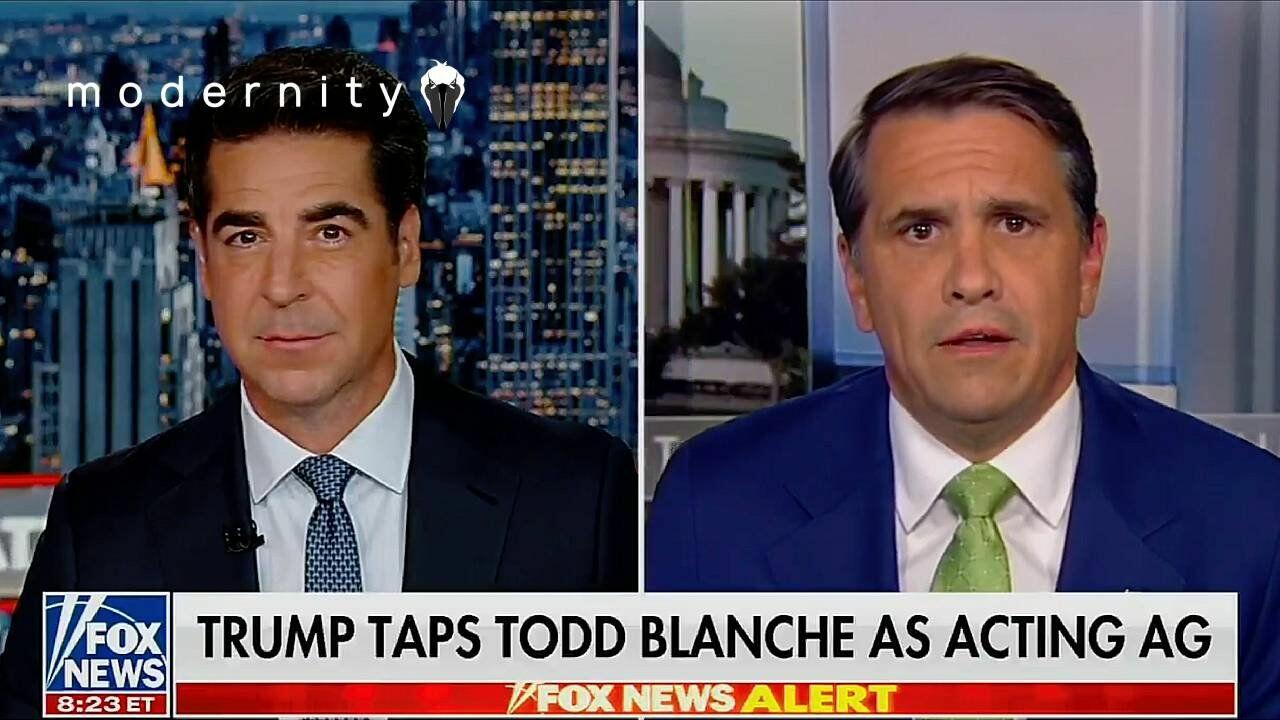
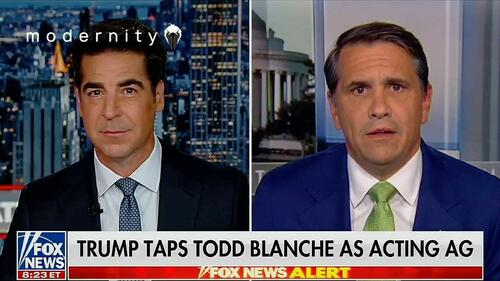
In a move sparking fresh skepticism among Americans demanding full accountability, the new acting Attorney General Todd Blanche has declared the Jeffrey Epstein files chapter closed. This came just hours after President Trump reassigned Pam Bondi, with Blanche – Trump’s former personal attorney – stepping in as acting AG and signaling it’s time to move on from the scandal.
“The DOJ has now released ALL the files with respect to the Epstein saga,” Blanche stated on Fox News. He added, “I think that to the extent the Epstein files was a part of the past year of this Justice Department, it should not be a part of anything going forward.”
Jesse Watters pressed Blanche directly on whether he thought Bondi mishandled the Epstein files. Blanche responded, “First of all, I have never heard President Trump say that the Attorney General was, that anything that happened to her had anything to do with the Epstein files. So look, the Epstein files has been a saga that’s lasted for the entire for the past year.” He further defended the process, noting that Bondi and he “appeared in front of Congress voluntarily a couple weeks ago to answer any questions they had” and made documents available for review.
🚨 IT’S OFFICIAL: The Epstein Files are DONE, acting AG Todd Blanche announces
“The DOJ has now released ALL the files with respect to the Epstein saga.”pic.twitter.com/dT9dLvoASd
— Eric Daugherty (@EricLDaugh) April 3, 2026
When Watters asked, “Who was Epstein spying for?” Blanche replied, “I don’t know that he was spying for anybody. Nobody’s ever said that.” He claimed there is “no evidence in the Epstein files” suggesting Epstein worked for a foreign country.
Todd Blanche wastes no time covering up for the Epstein child trafficking network and says he has no idea which country Jeffrey Epstein was working for or spying for.
He says there is no evidence in the Epstein files that proves Epstein was a spy.
JESSE WATTERS: Who was Epstein… pic.twitter.com/EtyHPLakVN
— Shadow of Ezra (@ShadowofEzra) April 3, 2026
On the question of releasing names of men who abused girls, Blanche previously pushed back, asking “What does that mean? I don’t understand what that means.” He also stated plainly, “It’s not a crime to party with Mr. Epstein.”
Reporter: Will we learn the identities of the men in the Epstein files?
Todd Blanche, Trump’s Attorney General: “What does that mean?”
🤬It means: Who raped children, who enabled it, and who’s still being shielded?
Stop pretending the question is unclear. The cover-up is the… pic.twitter.com/i6nGtX9P74
— Truthseeker (@Xx17965797N) April 3, 2026
Blanche doubled down on the administration’s position: “When Trump said let’s release the Epstein files… we did it.”
The timing aligns with Trump’s decision to move Bondi to the private sector amid reported frustrations over her pace on key matters, including the Epstein files. Critics had highlighted her earlier claims of possessing a client list and distributing repetitive binders, followed by a DOJ memo stating no such list existed.
Yet the assertion that “all files” are out faces immediate pushback. The DOJ reviewed roughly six million potentially responsive documents but released only about 3.5 million publicly, leaving millions still unreleased, redacted, or withheld.
This latest development deepens concerns over an Epstein cover up. FBI officers have raised alarms, with suspicions of document shredding after his death.
Separately, a foreign hacker who cracked into the FBI’s Epstein files in 2023 was reportedly disgusted at the scale of child sexual abuse material uncovered, underscoring how much sensitive content may still remain hidden.
Epstein survivor reactions and ongoing victim calls for transparency continue to highlight the stakes.
Annie Farmer, a survivor of Jeffrey Epstein and Ghislaine Maxwell, reacts to President Trump firing Pam Bondi as U.S. attorney general. Trump said Deputy Attorney General Todd Blanche will be acting attorney general. pic.twitter.com/MrysNjbVOA
— CBS News (@CBSNews) April 2, 2026
Blanche has remained guarded on specifics. His responses often circled back to congressional access rather than new public disclosures, while emphasizing a pivot to other fraud cases nationwide.
The Epstein operation represented far more than one man’s crimes — it exposed a network that reached the highest levels of power, protected for years by institutional gatekeepers. Declaring the files “done” while millions of pages stay locked away does little to rebuild trust in a system long accused of shielding the elite.
Americans who supported Trump’s mandate expect genuine sunlight on these matters, not a premature shutdown dressed as completion. The deep state’s habits of concealment die hard, and the demand for full disclosure — for the victims and the public’s right to know — will not fade quietly.
Your support is crucial in helping us defeat mass censorship. Please consider donating via Locals or check out our unique merch. Follow us on X @ModernityNews.
Tyler Durden
Fri, 04/03/2026 – 16:00
https://www.zerohedge.com/political/doj-done-releasing-epstein-files
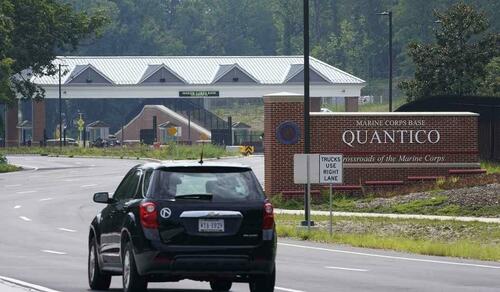
Hegseth: Military Bases Are No Longer Gun-Free Zones
Hegseth: Military Bases Are No Longer Gun-Free Zones
Authored by Catherine Salgado via PJMedia.ocm,
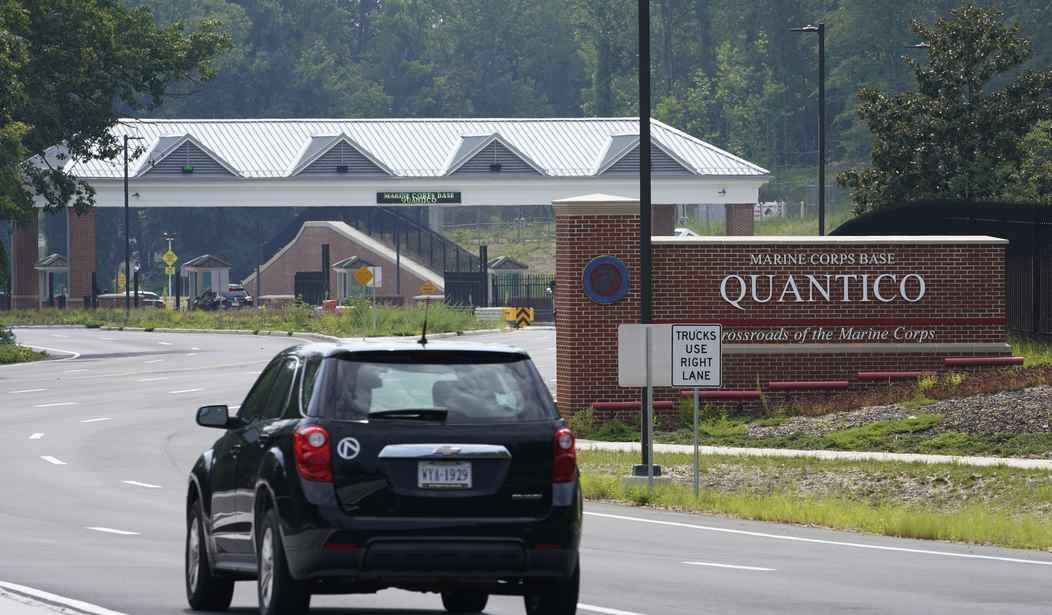
Secretary of War Pete Hegseth has overturned the controversial rule banning firearms from military installations.
Up until now, it was nearly impossible for servicemen to obtain permission to carry personal firearms on military posts and bases. That is about the change.
“Not all enemies are foreign, nor are they all outside our borders,” said Hegseth in an April 2 video.
“Some are domestic. Confirming your God-given right to self protection is what I’m signing into action today. And I’m proud to do so.”
Our military installations have been turned into gun-free zones—leaving our service members vulnerable and exposed.
That ends today. pic.twitter.com/IQ204YepZ0
— Secretary of War Pete Hegseth (@SecWar) April 2, 2026
There have been multiple murders or mass casualty events on bases in the last decade, numerous drone incursions on military property, and a growing trend of foreigners breaching military bases, so there is good reason to think servicemen should be able to carry firearms on installations. Besides which, the overwhelming majority of mass shootings occur in gun-free zones. But Hegseth above all based his argument on the Constitution.
“Our great republic was founded on a simple yet bold idea: our rights, as citizens, are not granted to us by government, but instead, by God,” the secretary said.
“250 years ago, the Revolutionary War was fought to secure our God-given rights. The Second Amendment to our Constitution enshrines the right of all citizens to carry weapons to protect themselves, their families, and their fellow countrymen.”
And if any citizens can be trusted with guns, Hegseth argued, it is servicemen.
“The War Department’s uniformed service members are trained at the highest and unwavering standards. These war fighters, entrusted with the safety of our nation, are no less entitled to exercise their God-given right to keep and bear arms than any other American,” he emphasized.
Indeed, Hegseth stated, “Our warfighters defend the right of others to carry, they should be able to carry themselves. Recent events like what happened at Fort Stewart, Holloman Air Force Base, or Pensacola Naval Air Station have made clear that some threats are closer to home than we would like.”
In 2019, a member of the Royal Saudi Air Force committed a terrorist attack at Pensacola’s Naval Air Station that killed three sailors and injured multiple others. In August 2025, Sgt. Quornelius Radford shot five fellow soldiers at Georgia’s Fort Stewart. Most recently, on March 17, civilian Ashanti Stewart killed herself after shooting and injuring a service member at Holloman Air Force Base in New Mexico.
Hegseth reflected, “In these instances, minutes are a lifetime. And our service members have the courage and training to make those precious short minutes count. Before today, it was virtually impossible — most people probably don’t know this — it was virtually impossible for War Department personnel to get permission to carry and store their own personal weapons, aligned with the state laws where we operate our installations. I mean, effectively, our bases across the country were gun free zones, unless you’re training, or unless you are a military policeman, you couldn’t carry.”
That is a potentially dangerous state of affairs, Hegseth argued. “You couldn’t bring your own firearm for your own personal protection onto post. Well, that’s no longer. The memo I’m signing today directs installation commanders to allow requests for personal protection, to carry a privately owned firearm, with the presumption that it is necessary for personal protection.”
He clarified, “If a request is for some reason denied, the reason for that denial will be in writing and will explain in detail the basis for that direction. Again, the presumption is, service members will be able to have their Second Amendment right on post.”
That way, if there are more attempted terrorists and mass shooters, servicemen will have their personal firearms ready.
Tyler Durden
Fri, 04/03/2026 – 15:00
https://www.zerohedge.com/military/hegseth-military-bases-are-no-longer-gun-free-zones

Trump Proposes $1.5 Trillion In War Spending, ‘Largest In Decades’
Trump Proposes $1.5 Trillion In War Spending, ‘Largest In Decades’
US President Donald Trump is asking Congress to boost military spending to $1.5 trillion for 2027, the largest such request in decades, while demanding cuts to domestic spending on social programs, AP reported Friday.
The White House released details of the desired spending increase on Friday as part of Trump’s 2027 budget proposal. The proposal comes amid the US-Israeli war on Iran, which is costing US taxpayers over $11 billon for each week it continues.
Last month, the Pentagon proposed receiving an additional $200 billion to backfill munitions and supplies used in the war, which has killed 3,527 Iranians, including 1,606 civilians and at least 244 children.
While the White House is demanding huge sums for war, Trump’s proposal would reduce non-defense spending by 10 percent, primarily by shifting some responsibility for social programs to state and local governments.
“We’re fighting wars. We can’t take care of day care,” Trump said at a private White House event on Wednesday. “It’s not possible for us to take care of day care, Medicaid, Medicare – all these individual things,” he said. “They can do it on a state basis. You can’t do it on a federal.”
According to AP, “The president’s annual budget more broadly is considered a reflection of the administration’s values,” but does not carry the force of law.
For Trump’s spending proposal to take effect, Congress would have to approve it. The US is already heavily in debt, with the federal government spending nearly $2 trillion more than it receives in tax receipts each year. This year, the national debt surpassed $39 trillion, while the debt-to-Gross Domestic Product (GDP) ratio now exceeds 120 percent, surpassing the peak reached after World War II.
While Trump ran for president on a platform of ending US wars abroad and putting the needs of US citizens first, he has instead prioritized initiating foreign wars in support of Israel’s project to expand its hegemony and territory in West Asia.
The war on Iran is providing a boon to US and Israeli weapons firms, who stand to earn hundreds of billions in additional profits. After meeting with major defense contractors at the White House in early March, Trump said the companies had agreed to quadruple production of “exquisite” and sophisticated defense systems that can repel ballistic missile attacks, such as Patriot missile batteries and Terminal High Altitude Area Defense (THAAD) interceptors.
Each THAAD interceptor missile costs roughly $12.7 million, and each Patriot PAC-3 interceptor costs about $3.7 million. The interceptors have been used in large quantities to intercept Iran’s retaliatory missile and drone attacks on Israel and US bases in the Gulf.
Among the weapons firms that stand to benefit most from the war are RTX (Raytheon), which makes Tomahawk missiles; Boeing, which builds F-15 and Growler warplanes; and Lockheed Martin, which produces F-35 warplanes and Patriot and THAAD interceptors.
Other firms that benefit include Northrop Grumman, which builds B-2 stealth bombers and radar technology; General Dynamics, which produces submarines, bombs, and warheads for missiles; and L3/Harris, which makes solid rocket motors for THAAD missiles and electronics and sensors for reconnaissance aircraft.
US defense stocks have rallied strongly since February 2022, when Russia invaded Ukraine. Israel’s genocide of Palestinians in Gaza starting on 7 October 2023 provided an additional boost, as did the US and Israeli war on Iran in June of last year and the anticipation of the second US-Israeli war on the Islamic Republic that began in February.
* * *
Tyler Durden
Fri, 04/03/2026 – 13:30
https://www.zerohedge.com/military/trump-proposes-15-trillion-war-spending-largest-decades
Acting AG Todd Blanche: Investigating ActBlue Allegations Is A Top Priority
Acting AG Todd Blanche: Investigating ActBlue Allegations Is A Top Priority
The Democratic Party’s premier fundraising machine is in serious legal jeopardy, and the new man running the Justice Department just made clear he intends to do something about it.
The New York Times reported on Thursday that ActBlue’s own lawyers had warned its leadership in early 2025 that it may have lied to Congress about how it screens out illegal foreign donations.
In 2023, ActBlue CEO Regina Wallace-Jones sent a letter to Republican congressional investigators assuring them the platform used rigorous safeguards. The letter described “multilayered” screenings that helped “root out” overseas contributions. What the platform’s own legal team later discovered was considerably more inconvenient: those protections weren’t consistently applied in practice.
“This presents a substantial risk for ActBlue,” the law firm, Covington & Burling, wrote in one of two memos expressing legal concerns. One memo raised the specter of a criminal investigation if prosecutors believed that ActBlue had tried to conceal facts about its efforts to prevent foreign contributions.
Federal election law prohibits foreign citizens or people who are not permanent residents from donating directly to federal candidates or political action committees. Lying to or obstructing Congress is a crime.
The memos instigated a meltdown at the highest levels of ActBlue, one of the Democratic Party’s most vital financial organs.
Acting Attorney General Todd Blanche, freshly installed at the helm of the DOJ after Pam Bondi’s departure, went on Jesse Watters’ Fox News show Thursday and left little ambiguity about where this investigation stands.
“I can tell you that that is a priority of this administration and this Department of Justice,” Blanche said. “And it’s something that a lot of people have been worried about it for a very long time. And you should rest assured that it includes the Department of Justice, and it includes me.”
🚨 BREAKING: Todd Blanche indicates the DOJ is ACTIVELY INVESTIGATING ActBlue getting foreign donations and lying about it
“That’s a priority of this admin and DOJ. People have been worried about it for a VERY long time. Rest assured it includes the DOJ, and it includes ME.”… pic.twitter.com/yCGKiysWkW
— Eric Daugherty (@EricLDaugh) April 3, 2026
The New York Post added fuel to the fire with a separate exclusive, revealing that ActBlue changed its fraud prevention policy twice during the 2024 campaign cycle — both times in a more permissive direction. The platform modified standards in April 2024 and again in September, with the relaxed guidelines allowing more fraudulent contributions per month to slip through. Under the updated policy, up to 6.4% of total ActBlue donations that should have been rejected for fraud were instead processed without issue.
Foreign donors who paid through third-party apps like Apple Pay, PayPal, or Venmo were not asked for passport information — a significant gap in a system that ActBlue had represented to Congress as comprehensive and multi-tiered. The platform sent a follow-up letter to Congress in June 2025, claiming it had “recently implemented additional restrictions” to reject contributions from foreign countries, including those made through third-party processors.
“Did Democrats use ActBlue to funnel foreign money in American elections and then LIE to Congress about it?” Sen. Bernie Moreno asked in a post on X. “The Senate must immediately renew investigations into ActBlue, their lawyers, and their entire leadership team.”
ActBlue board chair Kimberly Peeler-Allen attempted to tamp down the story, telling the Times that “less than 1 percent” of contributions in the 2024 cycle showed signs of foreign origin. That number, however small it may sound, represents potentially millions of dollars on a platform that processed over $7 billion in the past five years. A Covington spokesman said the firm has “complete confidence in the legal advice our lawyers provided to ActBlue” — a carefully worded non-denial that speaks volumes about the legal exposure now facing the organization.
In addition to the Department of Justice, the House Oversight Committee revealed that congressional investigations into ActBlue will continue.
🚨 BREAKING: Reporting confirms what we’ve been investigating.
ActBlue’s own lawyers warned it may have misled Congress about safeguards against foreign donations. @GOPoversight, @HouseAdmin & @JudiciaryGOP will continue getting answers. https://t.co/nZS04x99lF
— Oversight Committee (@GOPoversight) April 2, 2026
With DOJ scrutiny and congressional Republican probes accelerating ahead of the midterms, ActBlue is running out of runway.
Tyler Durden
Fri, 04/03/2026 – 13:00
Oil Shocks & Recessionary Outcomes
Oil Shocks & Recessionary Outcomes
Authored by Lance Roberts via RealInvestmentAdvice.com,
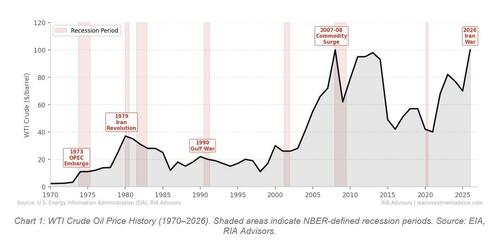
After more than three decades of watching oil markets upend economies, one pattern keeps repeating: investors learn the wrong lessons from the last shock. The 1973 OPEC embargo taught us that geopolitical disruptions are temporary. That lesson then got everyone killed, financially speaking, in 1979. The 2003 Iraq War produced only a mild oil bump and no recession, so traders got comfortable. Then 2008 happened. Today, with Brent crude having spiked over 60% since U.S. and Israeli strikes on Iran began in late February, the same dangerous reasoning is circulating again. That narrative is that this “event” is manageable and will resolve quickly. If that is the case, then the economy will absorb it.
That may indeed be the case. However, the conditions that determine whether an oil shock becomes a full recession are specific, quantifiable, and worth examining with clear eyes. That is what this analysis does.
Not All Oil Shocks Are The Same
The post-World War II era has produced a half-dozen oil price crises significant enough to reshape the global economy. They share a surface-level similarity: prices spike, headlines scream, and politicians rage. However, beyond those commonalities, they diverge dramatically in their underlying causes and economic consequences. (Read Energy Price as an Economic Indicator)
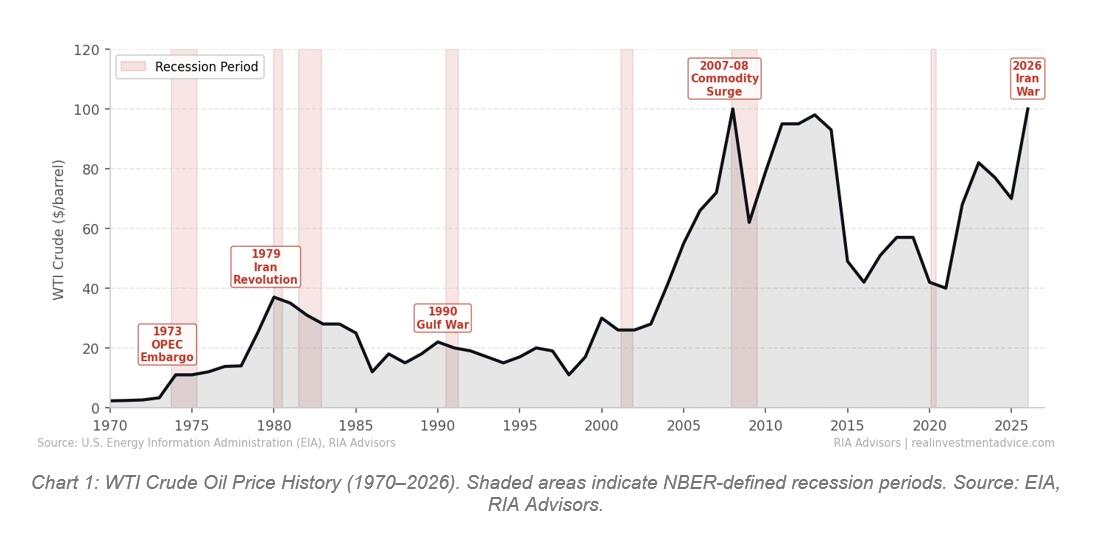
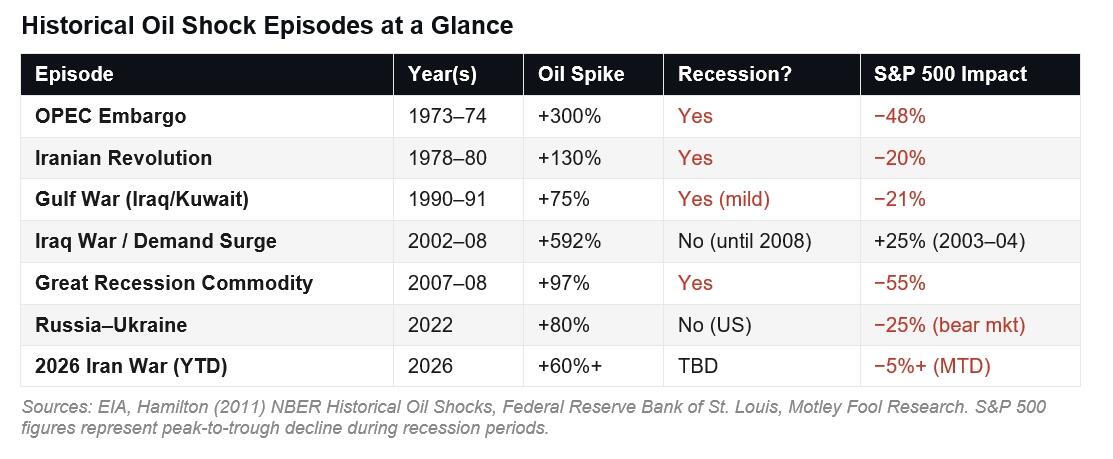
The 1973 OPEC Embargo stands alone as the archetype. OAPEC nations cut production and placed a deliberate embargo on the United States in response to U.S. support for Israel during the Yom Kippur War. In roughly 4 months, the price of crude oil rose from $3 per barrel to nearly $12 globally, a 300% surge. The U.S. economy, already running hot with inflation at 3.4%, could not absorb the blow. GDP contracted 0.5% in 1974. Unemployment climbed from 4.6% to 9% by May 1975. The Fed raised its benchmark rate from 5.75% in 1972 to 12% by 1974 and still could not contain prices. The result was stagflation: high inflation (above 9%), high unemployment, and slow economic growth. Those THREE factors are the ugliest combination in economics.
Note: That last sentence is crucially important. Headlines are currently filled with the term “stagflation.” As discussed in the linked article above, current economic data does not meet the definition of stagflation.
The 1979 Iranian Revolution delivered a second shock to an economy still bruised from the first. Iran’s oil exports, then running at roughly 5 million barrels per day, collapsed as internal chaos overtook the country. Unlike the 1973 embargo, this was not a deliberate strategy; it was a production collapse driven by revolution. The oil supply only dropped about 4% globally, but the market’s reaction doubled crude prices to nearly $40 per barrel within 12 months. The Iran-Iraq War, which began in 1980, compounded the disruption. The U.S. entered another recession. Fed Chairman Paul Volcker ultimately had to drive interest rates to 20% to break the inflation spiral.
The 1990 Gulf War shock was sharper but shorter. Iraq’s invasion of Kuwait removed roughly 4.3 million barrels per day from the market. Oil went from $15 to $42 per barrel in two months, a 75% spike. The U.S. entered a mild recession, with the S&P 500 falling about 21% from its peak. Crucially, the disruption lasted only months. Once coalition forces pushed Iraq back and Kuwaiti fields resumed production, prices fell sharply, and the economic damage was contained. This episode is the key comparative reference point for why duration matters so much.
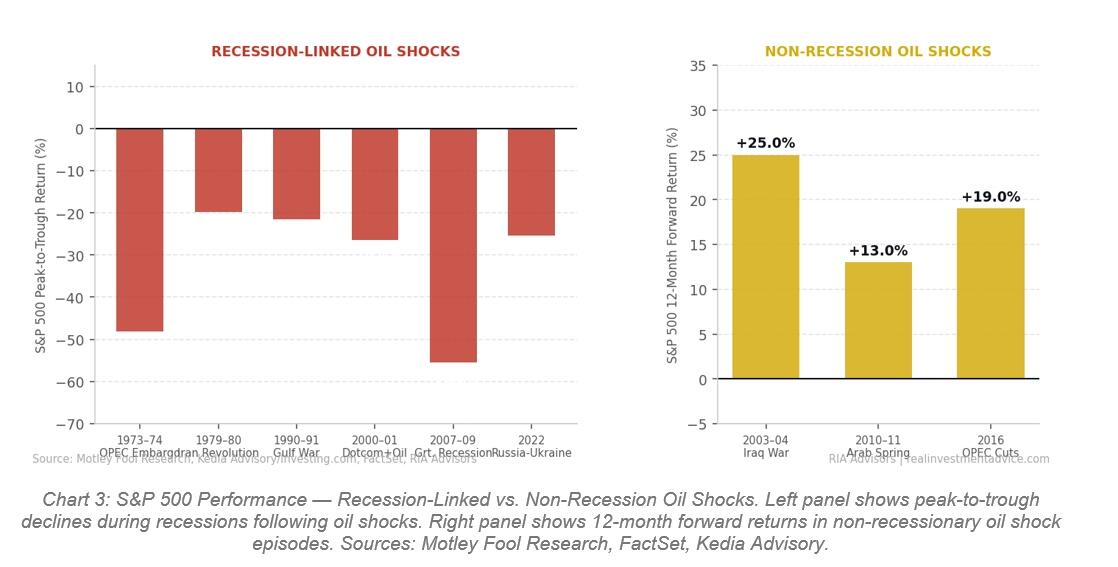
The 2007-2008 oil surge is more complex. Prices rose nearly 100%, from roughly $50 to a peak of $147 per barrel in July 2008. The cause was not primarily a supply disruption; it was demand-driven, driven by a decade of explosive growth in China and by hoarding commodities in an unprecedented manner. But the shock landed on an economy already fracturing from the housing and credit collapse. The S&P 500 would go on to lose 55% from peak to trough. Attributing that devastation primarily to oil prices misreads the episode. The financial system’s breakdown amplified every other economic stress factor.
The Russia-Ukraine oil shock of 2022 drove Brent crude to $139 per barrel by March before falling back. The U.S. never officially entered a recession by the traditional two-quarter GDP definition, though it suffered a significant corrective event. The key difference was that the U.S. had by then become a net exporter of petroleum products, blunting the direct impact of prior shocks. However, the Fed was aggressively hiking interest rates to combat the surge in inflation resulting from the Pandemic-driven stimulus.
So, what does this mean?
What Separates The Killers From The Scares
The Federal Reserve Board’s own researchers concluded that there is no mechanical link between net oil price increases and subsequent recessions, even controlling for the magnitude of the spike. That statement sounds almost reassuring; however, what it actually means is more sobering. The same oil shock that causes a deep recession in one environment may barely register in another. The conditions surrounding the shock determine the outcome.
Five variables differentiate the recession-inducing shocks from the ones that economies absorbed:
Duration and persistence of the disruption. The 1973 embargo lasted six months. The Iranian Revolution removed Iranian supply for much of 1979, then extended it by the Iran-Iraq War into the 1980s. These were multi-year disruptions that forced structural change, manufacturers to reprice inputs, households to slash consumption, and central banks to make crisis decisions in real time. The 1990 Gulf War spike lasted two months before Kuwait came back online. The economy absorbed a body blow, but not a sustained one. The difference between a broken rib and a severed artery is time and severity.
Inflation conditions before the shock. The 1973 and 1979 shocks both hit economies where inflation was already elevated, and inflation expectations were untethered. The St. Louis Fed’s research found that the average real energy price increase preceding the four recessions between 1973 and 1991 was 17.5%, and in each case, the shock compounded pre-existing inflation dynamics. When workers expect prices to keep rising, they demand higher wages. When companies expect input costs to keep rising, they raise prices pre-emptively. The wage-price spiral becomes self-reinforcing. The 2004 to 2005 oil price increase was actually larger than the one that preceded the 2007 to 2009 recession, yet it did not trigger a recession. The difference was that inflation expectations were anchored in the mid-2000s, unlike in the 1970s.
The role of monetary policy and its timing. Paul Volcker’s decision to raise rates to 20% was the necessary kill shot on 1970s stagflation, but it also pushed the economy into a severe 1981 to 1982 recession. The Fed’s response to an oil shock matters as much as the shock itself. An accommodative Fed that lets oil-driven inflation embed in the broader economy risks a worse outcome. A hawkish Fed that overreacts to supply-side inflation can trigger a recession independent of the oil shock itself. Neither 2003 nor 2010 saw the Fed forced into a crisis tightening cycle specifically because of oil.
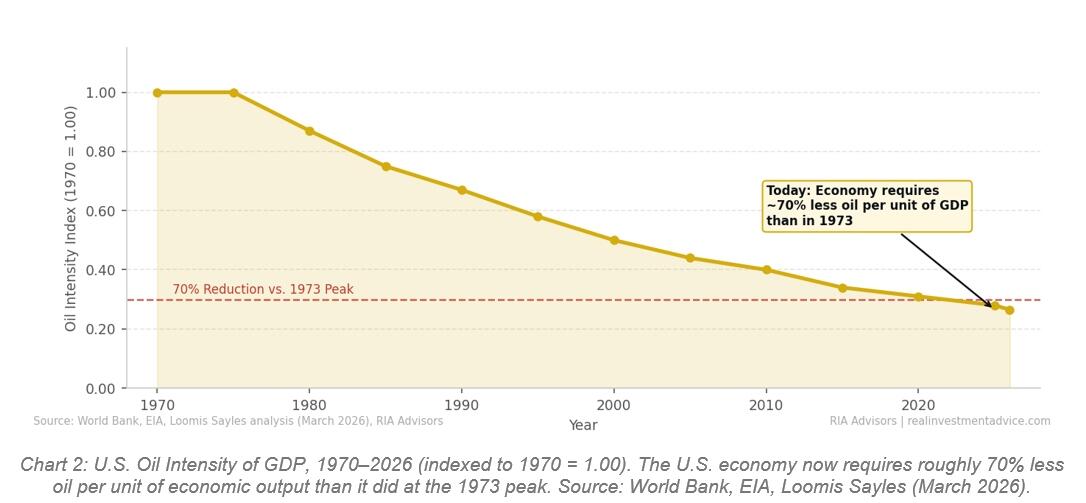
Energy intensity of the economy. This is the most structurally important factor for the current period. The amount of oil required to produce one unit of U.S. GDP has declined by more than 70 percent since the 1970s, according to World Bank data. As Paul Krugman noted in a recent analysis, the U.S. economy has roughly tripled in size since the late 1970s while consuming approximately the same total volume of oil. Every dollar of GDP today requires dramatically less energy than it did in 1973. As the IMF estimated, a sustained 30% increase in oil prices would reduce global GDP by up to 0.5%, which is serious but not catastrophic. The same shock in 1973 could cause damage multiple times that amount.
U.S. net energy position. In 1973, the United States imported nearly everything it consumed. Today, the U.S. runs a net petroleum trade surplus — $58 billion in 2025, per Census Bureau data. Higher oil prices are a direct tax on importers. They’re a revenue windfall for exporters. The U.S. is now partially both, which fundamentally changes the calculus. Energy companies and the states where they operate benefit from price spikes even as consumers are hurt. That offset did not exist in any meaningful way before the shale revolution.
The 2026 Oil Shock – How Does It Compare?
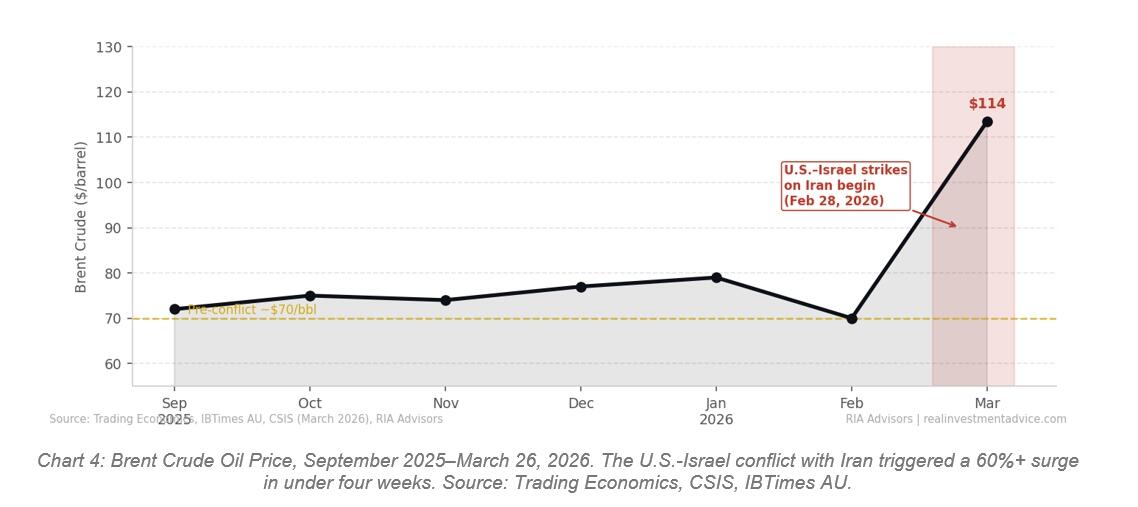
On February 28, 2026, the United States and Israel launched coordinated strikes on Iran targeting leadership, security forces, and missile infrastructure. Within days, Iran retaliated with missile strikes targeting oil vessels and infrastructure throughout the Gulf region. The Strait of Hormuz, through which roughly 20 million barrels per day of crude oil and refined products normally flow, representing about 20% of global seaborne oil trade, effectively closed to normal traffic. Such headlines generally provide a springboard for more catastrophic views.
Those actions caused Brent crude to surge from around $70 per barrel before the conflict to $113.52 as of March 23. That is a 60-plus percent spike in under four weeks. In nominal terms, this is approaching the 2008 peak of $147 per barrel. The IEA’s 32 member nations coordinated the largest emergency drawdown of strategic reserves in the agency’s 52-year history, releasing 400 million barrels, more than double the volume deployed after the Russia-Ukraine outbreak in 2022.
So is this time different? In some ways, yes — and in ways that cut both directions.
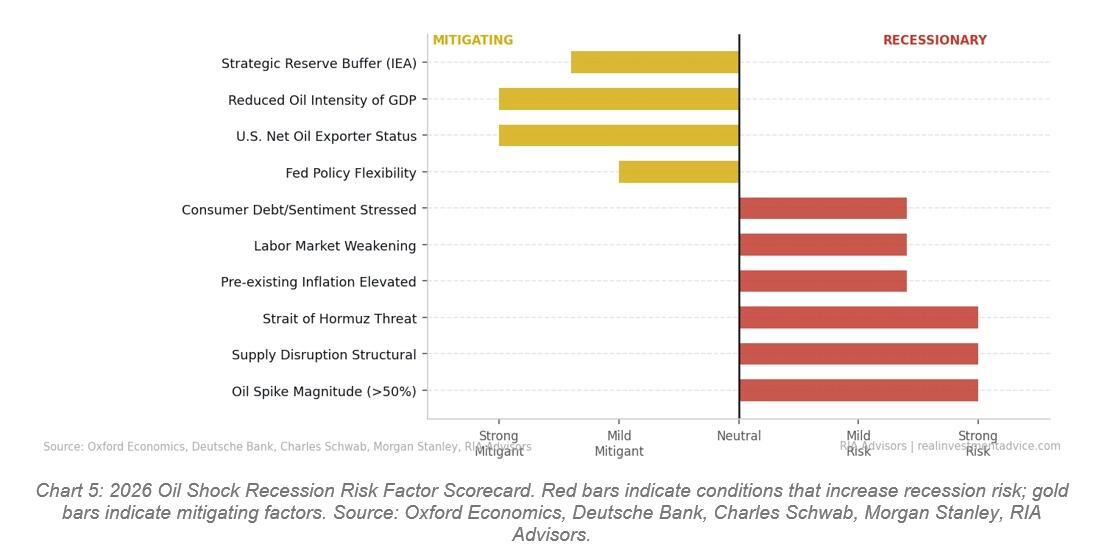
The structural arguments for a more muted impact are real.
The U.S. oil intensity of GDP has fallen roughly 70% since 1973.
The U.S. is a net petroleum exporter.
The strategic reserve architecture now exists specifically for scenarios like this.
And inflation expectations, while elevated, are nowhere near the unanchored levels of the late 1970s.
Given this backdrop, Oxford Economics modeling suggests that global oil prices would need to average $140 per barrel for two months, alongside significant financial market tightening and deteriorating consumer confidence, to pose a clear recessionary risk.
On the other hand, the arguments for this being a more dangerous shock are equally serious. The Strait of Hormuz presents a physical chokepoint that cannot be bypassed through rerouting or sanctions workarounds, the way Russian supply was redirected after 2022. Roughly 80% of Asia’s oil imports transit that strait. Vietnam holds fewer than 20 days of reserve supply. The European Central Bank has already postponed planned rate cuts, raised its 2026 inflation forecast, and warned of the risk of stagflation for energy-intensive economies. Germany, the UK, and Italy face the highest recession exposure in Europe. And the U.S. economy entered this shock with a soft labor market, elevated consumer debt, declining consumer sentiment, and a stock market trading at historically expensive valuations before the conflict began.
Capital Economics recently projected that even in a contained three-month conflict scenario, Brent could average $150 per barrel over the next six months. In such a prolonged scenario, the IMF Managing Director warned of a meaningful global inflationary impact. Morgan Stanley also flagged that a conflict lasting longer than a few weeks would meaningfully raise recession probabilities through multiple channels: energy costs, inflation persistence, and tightening financial conditions.
This shock is bigger in scope than 1990, comparable in speed to 1973, structurally more like the physical supply shock of 1979 than the demand-driven surge of 2007, and occurring in an economy that is better insulated in some ways but already stressed in others.
The honest answer is that the outcome is genuinely uncertain and a situation that investors should not entirely ignore.
MARKET BEHAVIOR AND THE INVESTOR PLAYBOOK
History draws a sharp line between market outcomes in oil shocks that became recessions and those that did not. That line does not disappear just because it’s uncomfortable.
In the four oil-linked recessions between 1973 and 1991, the S&P 500 experienced average peak-to-trough declines of 20-48%. The 2007 to 2009 Great Recession, where elevated oil prices compounded financial system collapse, saw the index fall 55% from its highs. Recovery in these recession scenarios took anywhere from 126 trading days (post-COVID) to 895 trading days (post-Great Recession) to reclaim prior levels. That dispersion matters to any investor thinking about sequence-of-returns risk or near-term liquidity needs.
The non-recession oil shock episodes tell a different story. After the 2003 Iraq War oil spike, the S&P 500 delivered roughly 25% gains over the following year. Following the 2016 OPEC production cut cycle and resulting price rebound, equities posted approximately 19% returns in the subsequent 12 months. Kedia Advisory’s analysis of 7 oil spike episodes since 1986 found that the S&P 500 averaged a 24% return in the year following a major oil surge, with 6 of the 7 episodes producing positive forward returns. The one exception was 2008, when oil’s spike coincided with total financial system breakdown.
The critical investor lesson is that the oil shock itself rarely determines the market outcome. The recession does. And the recession typically follows when the shock is persistent, when it combines with pre-existing economic weakness, and when monetary policy cannot respond flexibly. That is precisely the risk matrix investors need to monitor right now.
What should investors do differently given this analysis? Three principles apply regardless of how the current conflict resolves.
Manage duration risk in fixed income carefully. If this shock persists and inflation re-accelerates, the Fed will face pressure to keep rates higher for longer. That means Treasuries with long maturities carry more risk than they appear. Short-duration Treasuries and I-bonds remain the cleaner defensive position.
Review energy exposure deliberately. Energy stocks historically outperform during sustained oil price shocks. The 2022 experience confirmed this as energy was the only S&P 500 sector to post positive returns for the year. But energy stocks often reverse sharply when the shock resolves, so this is a tactical, not a structural, position.
Most importantly, do not let the shock force reactive decisions. The S&P 500 is already down about 7% month-to-date as of late March. A further 10 to 15% correction would not be historically unusual, even in a non-recessionary oil-shock scenario. For investors with properly structured portfolios, that kind of volatility is noise. For investors concentrated in high-multiple, rate-sensitive growth stocks, it may be the beginning of a more serious repricing.
The data across 50 years of oil shocks says this: if it’s a scare, markets often recover quickly, and investors who sold regret it. If it’s the beginning of a recession, the damage compounds for months before the bottom is clear. The difference between those two outcomes is driven by factors that are still unfolding and questions that need to be answered.
How long will the Strait of Hormuz remain disrupted?
Will inflation expectations remain anchored or begin to drift higher?
And, most critically, will the Fed maintain its policy flexibility or lose it?
I’m watching all three closely, and so should you.
Tyler Durden
Fri, 04/03/2026 – 12:30
https://www.zerohedge.com/markets/oil-shocks-recessionary-outcomes

Senior Iranian Official Involved In Reaching Out To Vance Severely Wounded In Airstrike
Senior Iranian Official Involved In Reaching Out To Vance Severely Wounded In Airstrike
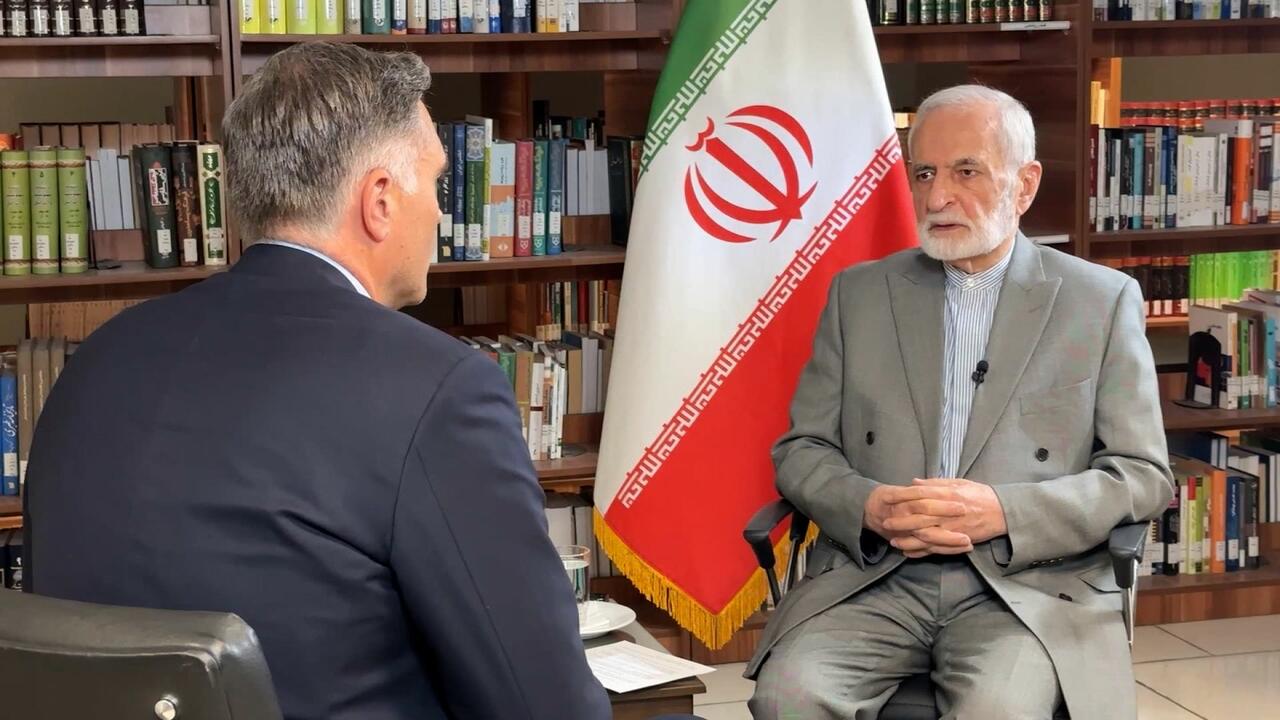
A top Iranian official who was involved in diplomatic outreach and indirect talks or messaging with the United States and Pakistani mediators was reportedly critically wounded in a US-Israeli strike. Kamal Kharazi, an 81-year-old senior adviser to Tehran and former foreign minister, lost his wife in the Wednesday strike on his home, state media has said.
Kharazi chairs Iran’s Strategic Council on Foreign Relations and has been viewed as a potential backchannel negotiator involving Islamabad, but now he’s been hospitalized with serious injuries, state media has also said.
“We have seen what looks like an assassination attempt against the former foreign minister, Kamal Kharazi … We don’t know why he’s been targeted. He has been gravely wounded, and his wife was killed,” said an Al Jazeera correspondent in Tehran.
Iranian officials described to Mehr News Agency that Kharazi was overseeing outreach to Pakistan tied to a possible meeting with US Vice President JD Vance. A potential Vance trip to Pakistan was initially reported as possibly being in the works late last month.
But Middle East Eye has reported that Kharazi was not seeing much room for diplomacy as US-Israeli actions escalate to attacks on Iranian infrastructure and energy:
He told CNN in March, “I don’t see any room for diplomacy anymore. Because Donald Trump had been deceiving others and not keeping with his promises, and we experienced this in two times of negotiations – that while we were engaged in negotiation, they struck us.”
If he succumbs to his wounds, Kharrazi would be the latest senior Iranian official killed since the war began.
In addition to Khamenei, top security adviser Ali Shamkhani, Revolutionary Guard commander Mohammad Pakpour, Armed Forces Chief of Staff Abdolrahim Mousavi, and Defence Minister Aziz Nasirzadeh were all killed on the first day of the war.
Ali Larijani, secretary of the Supreme National Security Council, was killed on 17 March, along with his son and one of his deputies. Intelligence minister and head of civilian monitoring, Esmail Khatib, was killed in an Israeli strike a day later.
Some analysts and pundits have accused Israel in particular of trying to sabotage any US-Iran talks, as the Netanyahu government wants to see complete regime collapse in the Islamic Republic.
“While we were engaged in negotiations, they struck us,” #Iran’s Kamal Kharazi told CNN on Mar. 9. Today his home was struck, wife killed, he sustained serious injuries. NYT reports Kharazi was discussing w Pakistan possible US-Iran negotiations w VP Vance pic.twitter.com/fv61PK8ES0
— Joyce Karam (@Joyce_Karam) April 1, 2026
Israel has also stood accused of seeking to create the conditions to lure the White House into authorizing ‘limited’ strikes which would inevitably become an open-ended war with no timeline.
Tyler Durden
Fri, 04/03/2026 – 12:00

Poison Ivey: Chicago Bulls Release Forward After He Speaks Out Against Pride Month
Poison Ivey: Chicago Bulls Release Forward After He Speaks Out Against Pride Month
This week, the Chicago Bulls waived guard Jaden Ivey for “conduct detrimental to the team.”
No, Ivey did not assault anyone or gamble on games.
He did not call for violence.
Ivey expressed his opposing religious beliefs, including criticizing the NBA’s Pride Month celebrations.
There is no question that private companies have the right to control employees’ on-the-job speech, including barring demonstrations such as kneeling during the national anthem. However, the Ivey controversy exposes the hypocrisy of sports associations and teams in the combination of corporate virtue signaling and athlete speech limitations.
Companies in various fields have asserted the right to condition contracts on the possibility of termination due to public behavior or comments that are detrimental to the company.
Notably, this was a player speaking off the basketball court who was deemed “detrimental” to the brand. The main concern is the lack of consistency. Actors such as Rachel Zegler have tanked their own movies to use their platforms to advance their own political viewpoints. Likewise, athletes have routinely espoused controversial views on racial divisions or law enforcement without losing their contracts. Recently, teams supported athletes espousing anti-ICE sentiments. In other words, it is not advocacy but the cause that these companies focus on when allowing or punishing speech.
At the same time, the NFL and NBA require players to wear and espouse views that some of them — like some in the nation — may oppose. Ivey was objecting that he does not feel that Pride Month is espousing “righteous” lifestyles. Ivey was not attacking the Bulls or the game. He was asserting that he does not support the virtues or values being endorsed by the company.
Many of us were offended by social media postings by Ivey in referring to Catholicism as a “false religion.” He also drew the ire of many by telling a fan that “God does not hear your prayer if you are a sinner.”
However, it appears that it was his criticism of the LGBTQ community and Pride Month that ended the matter with the NBA. Ivey objected to the advocacy required by the NBA, objecting “they proclaim it. They show it to the world. They say, ‘Come join us for Pride Month,’ to celebrate unrighteousness.”
The issue of “talent” becoming notorious has long been a focus of sports and entertainment contracts. Hateful or divisive public comments can impact a brand or corporate image. For example, a team does not have to continue an association with a racist spewing hateful remarks about fans.
The Ivey controversy should force a discussion of the countervailing responsibilities of the teams and the NBA. Some of us have previously criticized the virtue-signaling of associations like the NFL, with giant statements in the end zones and on players’ helmets. Many fans would like these teams to stop lecturing them and simply play sports. We do not need morality or civics lessons from the likes of NFL Commissioner Roger Goodell.
However, if the NFL and NBA are going to get into the business of shaping fans’ values, they may need to accept greater leeway for athletes who hold opposing values. Instead, they are expecting athletes like Ivey to effectively endorse approved values while barring them from expressing dissenting views.
This is not the first such controversy. Years ago, former coach Tony Dungy was the subject of a cancel campaign because he expressed his faith at a pro-life rally.
Former Washington Commanders defensive coordinator Jack Del Rio was punished for expressing a dissenting view of what happened on January 6th and what he viewed as the different treatment given to these cases, including excessive sentences.
Likewise, recently, Chicago Cubs player Matt Shaw was the target of a campaign to trade him after he attended the funeral of Charlie Kirk.
Sports organizations, like other businesses, have every right to bar protests and political statements at games. They should, however, apply the same standard to themselves. It is time to get virtue signaling and social statements out of sports. Teams need to stop picking sides on social and political issues while blocking opposing views from their athletes. Once out of the business of shaping public values and views, these teams will be in a better position to demand that athletes avoid controversial public statements that alienate fans or harm a brand.
Otherwise, teams could simply bar such commentary during games and allow athletes the same freedom of expression outside of the game that the teams enjoy during games.
None of this means that Jaden Ivey is right or admirable in his specific statements. It only means that, if teams want him to just play basketball, they should do the same.
Jonathan Turley is a law professor and the best-selling author of “Rage and the Republic: The Unfinished Story of the American Revolution.”
* * *
Tyler Durden
Fri, 04/03/2026 – 11:30