Category: News
Washington’s F-35 Sale To Saudi Arabia Might Be Part Of Trump’s Ultimate Plan To Revive IMEC
Washington’s F-35 Sale To Saudi Arabia Might Be Part Of Trump’s Ultimate Plan To Revive IMEC
Authored by Andrew Korybko via Substack,
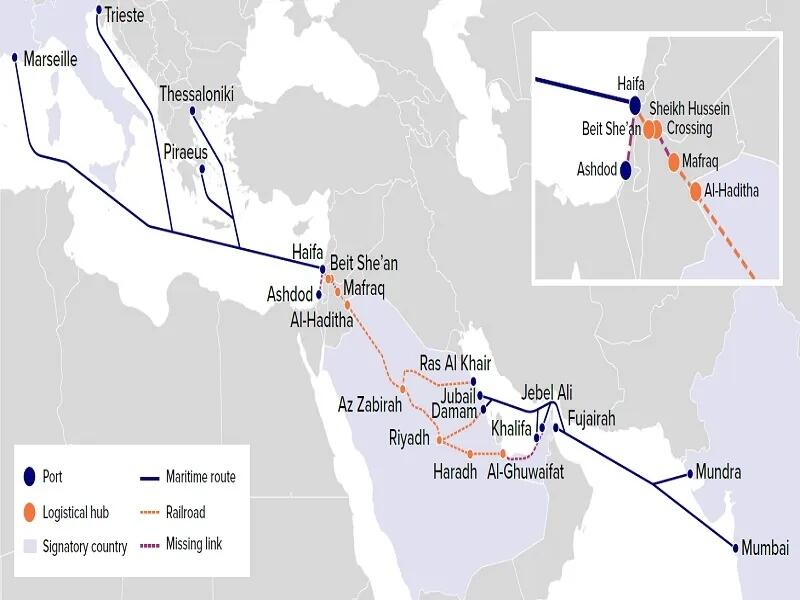
This could make it easier for Saudi Arabia to normalize relations with Israel even in the absence of Palestinian independence and thus restore the political viability of this geo-economic megaproject.
The announcement that the US will sell F-35s to Saudi Arabia is a monumental development. Israel is the only country in West Asia to field these cutting-edge fighter jets so its “qualitative military edge” could be eroded as a result, ergo why the IDF officially objected to this.
Axios reported that Israel wants the sale conditional on Saudi Arabia normalizing their relations, ideally through the Abraham Accords, or at least the US guaranteeing that the F-35s won’t be deployed in Saudi Arabia’s western regions near Israel.
It remains unclear whether the US will comply with these requests, but what’s much clearer is that Saudi Arabia will occupy a greater role in the US’ regional strategy, which brings the Kingdom back into the US’ orbit after it diversified its partnerships in recent years by expanding ties with Russia and China. Saudi Arabia was already moving towards a rapprochement with the US after the last four years of troubled ties under Biden, however, as proven by its reluctance to formally join BRICS after being invited in 2023.
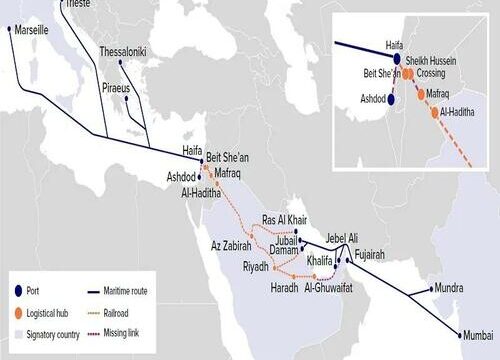
The latest Gaza War that broke out shortly afterwards, which evolved into the first West Asian War between Israel and the Iranian-led Resistance Axis and ended in the latter’s defeat, derailed progress on the “India-Middle East-Europe Economic Corridor” (IMEC) from that year’s G20. IMEC’s geo-economic scope importantly necessitates the normalization of Israeli-Saudi ties for facilitating this, which the US might now try to broker after ending the Gaza War that disrupted this previously fast-moving process.
Saudi Arabia’s commitment to invest nearly $1 trillion in the US economy, up from the $600 billion that it agreed to during Trump’s visit in May, can be interpreted as a bribe for obtaining the best terms possible. Trump might therefore try to coerce Bibi into at least making superficial concessions on Palestinian sovereignty in the West Bank so that Crown Prince Mohammad Bin Salman (MBS) doesn’t “lose face” by agreeing to the normalization of their countries’ relations without Palestine first becoming independent.
At the same time, selling F-35s to Saudi Arabia and bestowing it “Major Non-NATO Ally” status might suffice for MBS abandoning even the minimal aforesaid implied demand, especially since IMEC is indispensable to his Kingdom’s post-oil future and associated “Vision 2030” development program. If the US brokers an Israeli-Saudi deal that leads to swift progress being made on implementing IMEC, then it can push IMEC as a replacement for India’s North-South Transport Corridor (NSTC) with Iran and Russia.
The US already revoked India’s Chabahar sanctions waiver before reinstating it, correspondingly as a form of pressure amidst their trade talks and then as a goodwill gesture therein as they made progress, but it arguably aims to redirect India from the NSTC to IMEC as a means of containing Russia. After all, the NSTC enables India to help Russia counterbalance the expansion of Turkish influence in Central Asia via TRIPP, so an indefinite waiver is extremely unlikely even in the event of an Indo-US trade deal.
It would be easier for India to accept this geo-economic concession, which might be reciprocated by tariff concessions on the US’ part, if IMEC is once again viable and could thus replace the NSTC. For that to happen, the US must first mediate the normalization of Israeli-Saudi ties, which it might now prioritize after brokering an end to the Gaza War and reaching its latest series of agreements with the Kingdom. The US’ F-35 deal with Saudi Arabia might therefore be part of Trump’s ultimate plan to revive IMEC.
Tyler Durden
Fri, 12/05/2025 – 05:00
Zelensky’s Jet Reportedly In Near-Miss With Military Grade Drones In Ireland
Zelensky’s Jet Reportedly In Near-Miss With Military Grade Drones In Ireland
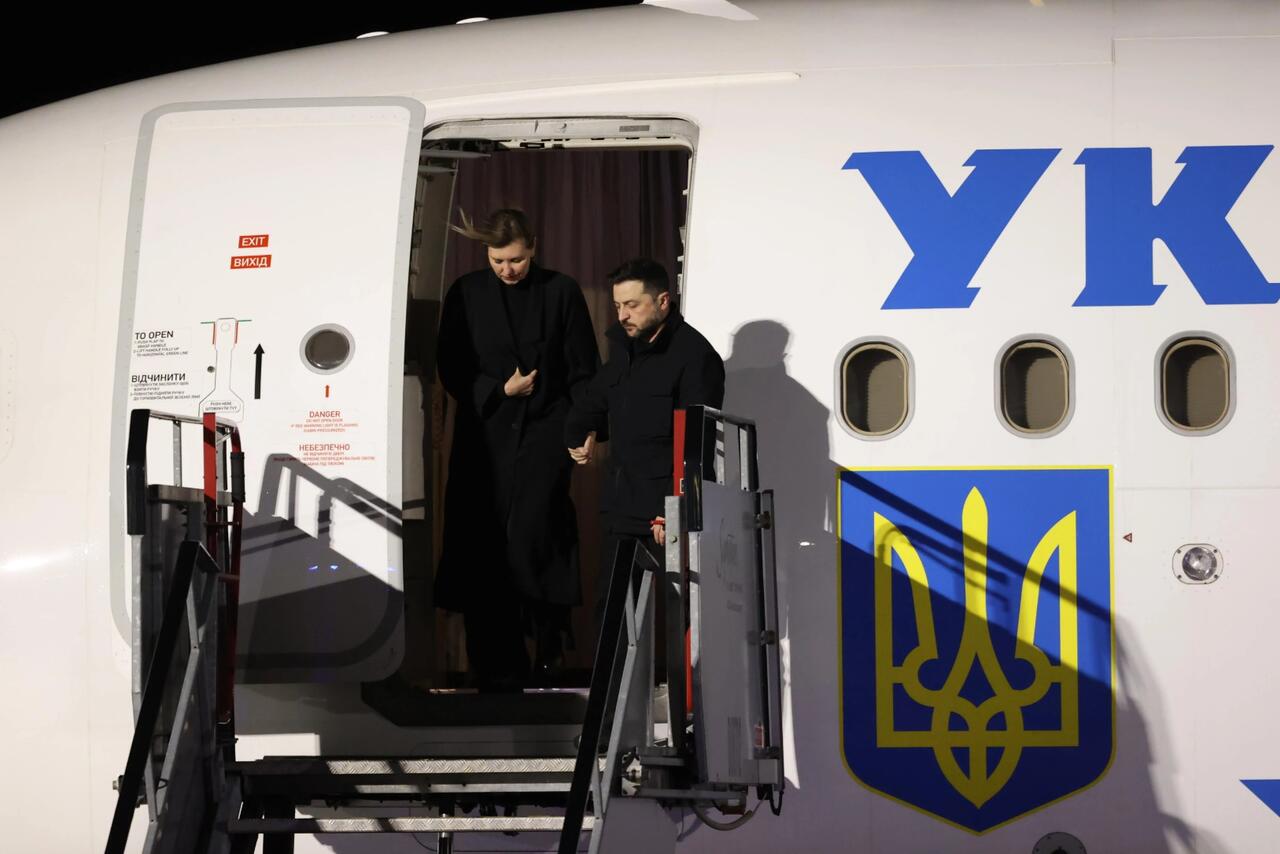
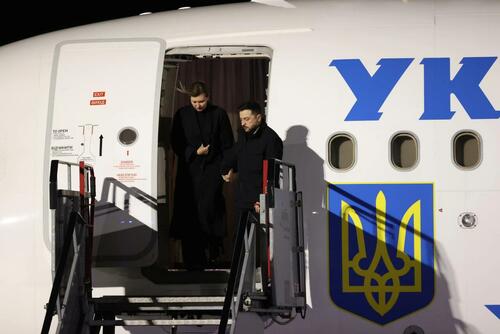
Various major publications including The Telegraph and Newsweek are reporting claims that military-grade drones threatened Ukrainian President Volodymyr Zelensky’s plane shortly before it landed at Dublin Airport on Monday.
The mystery drones reportedly reached the coordinates where the Ukrainian president’s plane had been expected, but Zelensky is said to have arrived a little earlier than scheduled, touching down at around 11 pm, thus missing the drones.
Irish security officials believe the drones were intended to interfere with Zelensky’s arrival, noting that they were flying with their lights on, also given the UAVs were military-spec. The episode is being presented in Irish and UK press reports as a form of hybrid warfare.
Afterward, the unidentified aircraft circled above an Irish Navy vessel that had been covertly positioned in the Irish Sea and which was patrolling there related to providing security for Zelensky’s visit.
In all the drones were reportedly airborne for roughly two hours – which again would suggest are more sophisticated or even military drone technology, and the drone operators are unknown, amid an investigation.
Conflicting reports have suggested that four or up to five drones were involved in the incursion. Their operators and current whereabouts remain unknown.
According to more details via The Daily Mail:
The Dublin intrusion occurred inside a no-fly zone ordered by the Irish Aviation Authority for the duration of Zelenskyy’s visit. Ahead of the visit, Irish MEP Barry Andrews posted a graphic on social media showing the no-fly zone which was imposed.
The drones then entered Irish-controlled waters and circled above the LÉ William Butler Yeats, which did not have air-search radar and was unable to disable them. An Irish Air Corps aircraft was airborne at the time but did not engage.
One security official has been cited in press reports as describing of the UAVs, “They had their lights on. They wanted to be seen. They had both the capability and the intent. They could have acted at any time.”
Western officials have suspected that this is an extension of alleged Russia-backed ‘hybrid warfare’ targeting Europe’s skies.
However, there is cause for skepticism to these ‘Russia did it!’ allegations and mystery incursions…
Well colour me shocked. The Dutch magazine Trouw analysed 60 drone incidents throughout Europe and found “hardly any evidence of Russian involvement”. The most obvious NATO psy-op ever.
Link to article: https://t.co/7jPA8tzWJE pic.twitter.com/I7nc6kHEok
— Thomas Fazi (@battleforeurope) December 1, 2025
Suspicious drone sightings have of late disrupted air traffic at key hubs in places like Denmark, Germany, and other places in northern Europe. EU officials are pushing forward with plans to invest in a collective ‘drone wall’ defense.
Tyler Durden
Fri, 12/05/2025 – 04:15

Caos en aeropuertos en India tras cancelación de vuelos de la mayor aerolínea del país
Por RAJESH ROY
NUEVA DELHI (AP) — El caos se apoderó de los principales aeropuertos de India el viernes, mientras los pasajeros de la aerolínea más grande del país, IndiGo, trataban de hacer frente a las interrupciones y cancelaciones generalizadas de vuelos provocadas por una nueva legislación que limitan las horas de trabajo de las tripulaciones y los pilotos.
Se vivieron escenas de frustración, con pasajeros durmiendo en el piso en los aeropuertos, haciendo fila durante horas en los mostradores de atención al cliente y esperando sin recibir información clara por parte de la aerolínea.
La del viernes fue la cuarta jornada consecutiva de interrupciones, mientras la compañía de bajo costo enfrenta nuevas regulaciones que exigen períodos de descanso más largos y limitan las horas de vuelo nocturno para abordar las preocupaciones sobre el cansancio y la seguridad.
La primera fase de la nueva legislación entró en vigor en julio y la segunda en noviembre. IndiGo tuvo dificultades para adaptar sus horarios a tiempo, lo que provocó cancelaciones e interrupciones generalizadas.
El jueves se cancelaron más de 300 vuelos de IndiGo, y varios cientos se retrasaron. Un aviso a pasajeros en el aeropuerto de Delhi el viernes indicaba que todos los vuelos nacionales de IndiGo permanecerán cancelados hasta la medianoche. Otras aerolíneas importantes, como Air India, no han tenido problemas similares hasta la fecha.
IndiGo opera alrededor de 2.300 vuelos diarios y controla casi el 65% del mercado de aviación doméstica en India.
Sajal Bose tenía previsto viajar con su esposa, Senjuti Bose, temprano el viernes de Kolkata a Nueva Delhi para asistir a las bodas de plata de un amigo. Su vuelo se canceló una hora antes del despegue.
Bose contó a The Associated Press que ahora tomará un tren de nueve horas a la ciudad de Bagdogra, donde planea embarcar hacia la capital en un avión de otra aerolínea. “Es muy irresponsable y una negligencia total. Muy difícil para personas mayores como nosotros”, declaró.
En un correo electrónico interno enviado a los empleados esta semana, visto por The Associated Press, el director general de IndiGo, Pieter Elbers, se disculpó y citó fallos tecnológicos, cambios de horario, condiciones climáticas adversas, aumento de la congestión y la implementación de las nuevas reglas como los motivos de las interrupciones de vuelos.
El Ministerio de Aviación Civil dijo en un comunicado que las interrupciones se produjeron principalmente por errores de juicio y fallos de planificación mientras la aerolínea ponía en marcha la segunda fase de las normas, y que la aerolínea reconoció que los efectos de las medidas sobre su tripulación superó sus expectativas.
IndiGo solicitó una moratoria en la aplicación de la ley y le dijo al gobierno que estaba tomando medidas correctivas. Sus operaciones estarán completamente restauradas para el 10 de febrero dijo.
Se esperan más cancelaciones a lo largo de las próximas semanas. La aerolínea dijo que reduciría sus operaciones de vuelo a partir del 8 de diciembre para minimizar las interrupciones.
___
El video periodista de Associated Press Piyush Nagpal contribuyó a este despacho.
___
Esta historia fue traducida del inglés por un editor de AP con la ayuda de una herramienta de inteligencia artificial generativa.

WHO–Gates Unveils Blueprint For Global Digital ID, AI-Driven Surveillance, & Life-Long Vaccine Tracking For Everyone
WHO–Gates Unveils Blueprint For Global Digital ID, AI-Driven Surveillance, & Life-Long Vaccine Tracking For Everyone
Authored by Jon Fleetwood via Substack,
In a document published in the October Bulletin of the World Health Organization and funded by the Gates Foundation, the World Health Organization (WHO) is proposing a globally interoperable digital-identity infrastructure that permanently tracks every individual’s vaccination status from birth.
The dystopian proposal raises far more than privacy and autonomy concerns: it establishes the architecture for government overreach, cross-domain profiling, AI-driven behavioral targeting, conditional access to services, and a globally interoperable surveillance grid tracking individuals.
It also creates unprecedented risks in data security, accountability, and mission creep, enabling a digital control system that reaches into every sector of life.
The proposed system:
integrates personally identifiable information with socioeconomic data such as “household income, ethnicity and religion,”
deploys artificial intelligence for “identifying and targeting the unreached” and “combating misinformation,”
and enables governments to use vaccination records as prerequisites for education, travel, and other services.
What the WHO Document Admits, in Their Own Words
To establish the framework, the authors define the program as nothing less than a restructuring of how governments govern:
“Digital transformation is the intentional, systematic implementation of integrated digital applications that change how governments plan, execute, measure and monitor programmes.”
They openly state the purpose:
“This transformation can accelerate progress towards the Immunization agenda 2030, which aims to ensure that everyone, everywhere, at every age, fully benefits from vaccines.”
This is the context for every policy recommendation that follows: a global vaccination compliance system, digitally enforced.
1. Birth-Registered Digital Identity & Life-Long Tracking
The document describes a system in which a newborn is automatically added to a national digital vaccine-tracking registry the moment their birth is recorded.
“When birth notification triggers the set-up of a personal digital immunization record, health workers know who to vaccinate before the child’s first contact with services.”
They specify that this digital identity contains personal identifiers:
“A newborn whose electronic immunization record is populated with personally identifiable information benefits because health workers can retrieve their records through unique identifiers or demographic details, generate lists of unvaccinated children and remind parents to bring them for vaccination.”
This is automated, cradle-to-grave traceability.
The system also enables surveillance across all locations:
“[W]ith a national electronic immunization record, a child can be followed up anywhere within the country and referred electronically from one health facility to another.”
This is mobility tracking tied to medical compliance.
2. Linking Vaccine Records to Income, Ethnicity, Religion, & Social Programs
The document explicitly endorses merging vaccine status with socioeconomic data.
“Registers that record household asset data for social protection programmes enable monitoring of vaccination coverage by socioeconomic status such as household income, ethnicity and religion.”
This is demographic stratification attached to a compliance database.
3. Conditioning Access to Schooling, Travel, & Services on Digital Vaccine Proof
The WHO acknowledges and encourages systems that require vaccine passes for core civil functions:
“Some countries require proof of vaccination for children to access daycare and education, and evidence of other vaccinations is often required for international travel.”
They then underline why digital formats are preferred:
“Digital records and certificates are traceable and shareable.”
Digital traceability means enforceability.
4. Using Digital Systems to Prevent ‘Wasting Vaccine on Already Immune Children’
The authors describe a key rationale:
“Children’s vaccination status is not checked during campaigns, a practice that wastes vaccine on already immune children and exposes them to the risk of adverse events.”
Their solution is automated verification to maximize vaccination throughput.
The digital system is positioned as both a logistical enhancer and a compliance enforcer:
“National electronic immunization records could transform how measles campaigns and supplementary immunization activities are conducted by enabling on-site confirmation of vaccination status.”
5. AI Systems to Target Individuals, Identify ‘Unreached,’ & Combat ‘Misinformation’
The WHO document openly promotes artificial intelligence to shape public behavior:
“AI… demonstrate[s] its utility in identifying and targeting the unreached, identifying critical service bottlenecks, combating misinformation and optimizing task management.”
They explain additional planned uses:
“Additional strategic applications include analysing population-level data, predicting service needs and spread of disease, identifying barriers to immunization, and enhancing nutrition and health status assessments via mobile technology.”
This is predictive analytics paired with influence operations.
6. Global Interoperability Standards for International Data Exchange
The authors call for a unified international data standard:
“Recognize fast healthcare interoperability resources… as the global standard for exchange of health data.”
Translated: vaccine-linked personal identity data must be globally shareable.
They describe the need for “digital public infrastructure”:
“Digital public infrastructure is a foundation and catalyst for the digital transformation of primary health care.”
This is the architecture of a global vaccination-compliance network.
7. Surveillance Expansion Into Everyday Interactions
The WHO outlines a surveillance model that activates whenever a child interacts with any health or community service:
“CHWs who identify children during home visits and other community activities can refer them for vaccination through an electronic immunization registry or electronic child health record.”
This means non-clinical community actors participating in vaccination-compliance identification.
The authors also describe cross-service integration:
“Under-vaccinated children can be reached when CHWs and facility-based providers providing other services collaborate and communicate around individual children in the same electronic child health records.”
Every point of contact becomes a checkpoint.
8. Behavior-Shaping Through Alerts, Reminders, & Social Monitoring
The WHO endorses using digital messaging to overcome “intention–action gaps”:
“Direct communication with parents in the form of alerts, reminders and information helps overcome the intention–action gap.”
They also prescribe digital surveillance of public sentiment:
“Active detection and response to misinformation in social media build trust and demand.”
This is official justification for monitoring and countering speech.
9. Acknowledgment of Global Donor Control—Including Gates Foundation
At the very end of the article, the financial architect is stated plainly:
“This work was supported by the Gates Foundation [INV-016137].”
This confirms the alignment with Gates-backed global ID and vaccine-registry initiatives operating through Gavi, the World Bank, UNICEF, and WHO.
Bottom Line
In the WHO’s own words:
“Digital transformation is a unique opportunity to address many longstanding challenges in immunization… now is the time for bold, new approaches.”
And:
“Stakeholders… should embrace digital transformation as an enabler for achieving the ambitious Immunization agenda 2030 goals.”
This is a comprehensive proposal for a global digital-identity system, permanently linked to vaccine status, integrated with demographic and socioeconomic data, enforced through AI-driven surveillance, and designed for international interoperability.
It is not speculative, but written in plain language, funded by the Gates Foundation, and published in the World Health Organization’s own journal.
Tyler Durden
Fri, 12/05/2025 – 03:30
Putin y Modi discutirán su relación comercial y de defensa ante la presión de EEUU
Por RAJESH ROY y AIJAZ HUSSAIN
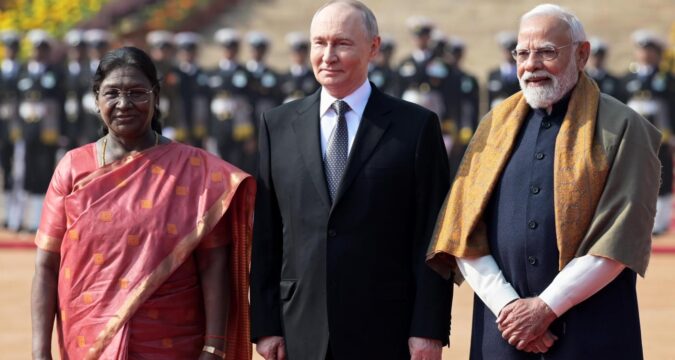
NUEVA DELHI (AP) — El presidente de Rusia, Vladímir Putin, mantendrá conversaciones con el primer ministro de India, Narendra Modi, el viernes en una cumbre anual que busca reforzar los lazos bilaterales entre Moscú y Nueva Delhi en el segundo día de su visita de Estado.
La 23ra Cumbre Rusia-India se celebra en un momento crucial en el que Estados Unidos presiona para lograr un acuerdo de paz para Ucrania mientras busca cooperación global. Pondrá a prueba los esfuerzos de Nueva Delhi para equilibrar su relación con Moscú y Washington durante la guerra que comenzó hace casi cuatro años en Ucrania.
Putin fue recibido por Modi en un aeropuerto de Nueva Delhi el jueves, quien le dio un fuerte abrazo y un firme apretón de manos con el entusiasmo de un viejo amigo.
Según funcionarios indios que participaron en los preparativos de la cumbre, la agenda incluye conversaciones sobre defensa, energía y movilidad laboral.
Aunque históricamente India ha mantenido profundos lazos con Rusia, los críticos dicen que la visita de Putin podría tensar la relación de Nueva Delhi con la Unión Europea y Estados Unidos, y podría poner en peligro las negociaciones para importantes acuerdos comerciales con ambos, que se consideran críticos para las exportaciones indias.
El presidente de Estados Unidos, Donald Trump, elevó los aranceles a los productos indios al 50% en agosto, citando la compra de petróleo rebajado ruso. India ha sido el segundo mayor importador de crudo ruso después de China.
Washington sostiene que esas adquisiciones ayudan a financiar la maquinaria de guerra del Kremlin. En octubre, Estados Unidos sancionó a dos de los mayores productores de petróleo de Rusia para obligar a países como India a reducir sus importaciones. Funcionarios indios indicaron que el país siempre ha respetado las sanciones internacionales y que también lo hará en el caso del crudo ruso.
India y Estados Unidos se fijaron como objetivo alcanzar el primer tramo de un acuerdo comercial en otoño, pero el pacto no se ha materializado aún debido a sus tensas relaciones.
Nueva Delhi está también en las últimas fases de las conversaciones para un acuerdo comercial con la UE, que considera la guerra de Rusia en Ucrania como una gran amenaza.
En su reunión con Putin, es probable que Modi presione para acelerar la entrega de dos sistemas adicionales de misiles tierra-aire S-400 rusos. Ya ha recibido tres en virtud de acuerdo de 2018 por un importe aproximado de 5.400 millones de dólares. La demora se ha vinculado a las interrupciones en la cadena de suministro relacionadas con la guerra.
Moscú y Nueva Delhi firmaron un pacto en febrero para mejorar la cooperación militar, maniobras, visitas a puertos, asistencia en desastres y apoyo logístico. La Duma Estatal rusa ratificó el acuerdo antes de la visita de Putin a India.
Además, se esperan conversaciones sobre la modernización de los aviones de combate indos Su-30MKI, de fabricación rusa, y la aceleración de las entregas de hardware militar crítico.
El comercio también ocupará un lugar destacado en la cumbre.
El comercio bilateral entre los dos países alcanzó los 68.700 millones de dólares en el último año fiscal que terminó en marzo, y el objetivo es incrementarlo hasta los 100.000 millones de dólares para 2030. La balanza comercial está fuertemente inclinada a favor de Rusia, con un profundo déficit que India busca acortar impulsando las exportaciones.
India está interesada en incrementar las exportaciones de productos farmacéuticos, agricultura y textiles y busca la eliminación de las barreras no arancelarias con Rusia. Nueva Delhi también busca suministros a largo plazo de fertilizantes de su socio.
Otro aspecto clave donde se espera que los dos países lleguen a un acuerdo es en seguridad y regulación de la migración de trabajadores calificados indios a Rusia.
Putin visitó India por última vez en 2021. Modi estuvo en Moscú el año pasado, y los dos líderes se reunieron brevemente en septiembre en China durante una cumbre de la Organización de Cooperación de Shanghái.
___
Hussain informó desde Srinagar, India.
___
Esta historia fue traducida del inglés por un editor de AP con la ayuda de una herramienta de inteligencia artificial generativa.
Presuntos piratas atacan un barco en el estrecho de Bab el-Mandeb, según autoridades
Associated Press
DUBÁI, Emiratos Árabes Unidos (AP) — Presuntos piratas atacaron el viernes un barco que navegaba a través del estrecho de Bab el-Mandeb, informaron las autoridades.
La embarcación fue perseguida por barcos más pequeños que abrieron fuego contra ella, explicó la Agencia de Operaciones de Comercio Marítimo (UKMTO, por sus siglas en inglés), que depende del ejército británico.
La empresa de seguridad privada Diaplous Group dijo que el buque fue atacado dos veces y que los guardias armados a bordo respondieron abriendo fuego. La tripulación estaba a salvo, agregó indicando que el barco era un granelero.
El estrecho de Bab el-Mandeb conecta el mar Rojo con el golfo de Adén, separando África de la península Arábiga.
En la zona se han registrado ataques de los rebeldes hutíes de Yemen debido a la guerra entre Israel y Hamás, así como un repunte de la piratería desde Somalia. Los hutíes han suspendido sus ataques mientras se mantenga el frágil alto el fuego en la Franja de Gaza.
___
Esta historia fue traducida del inglés por un editor de AP con la ayuda de una herramienta de inteligencia artificial generativa.

Hawkish Baltic States Lead Europe’s Race Back To The Draft
Hawkish Baltic States Lead Europe’s Race Back To The Draft
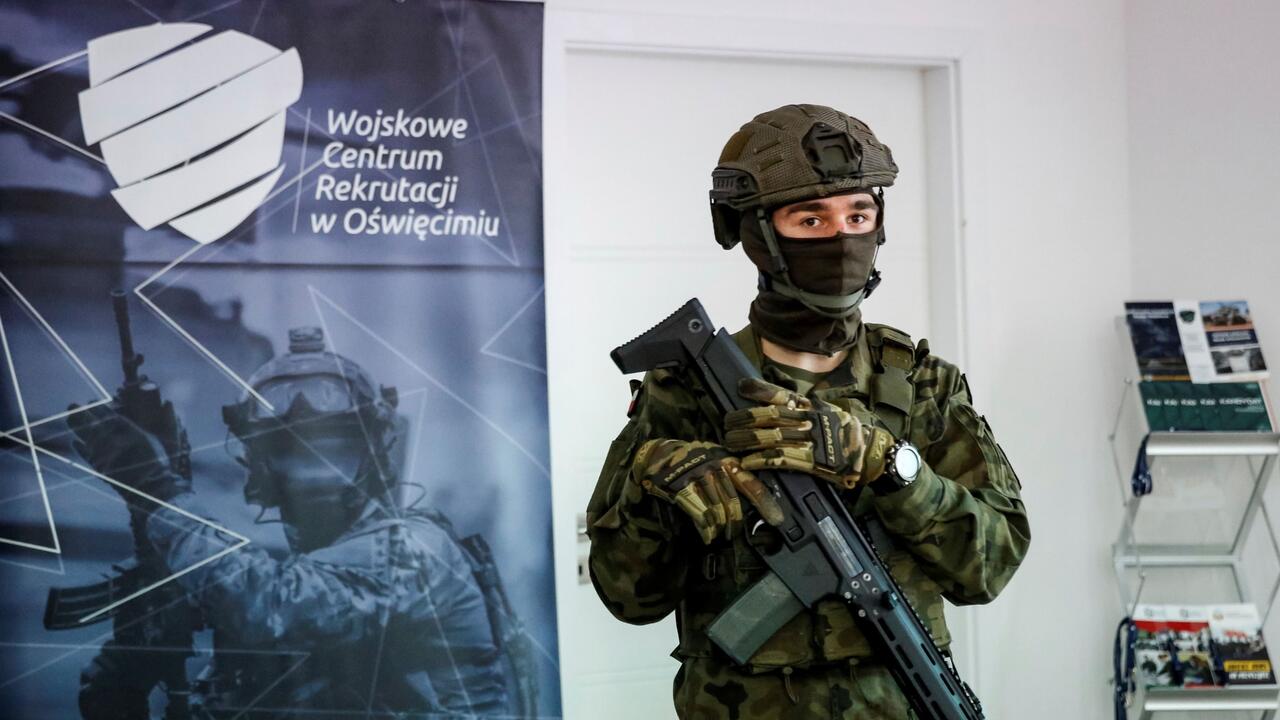
We’ve been documenting new efforts of European countries to drastically ramp up their defense readiness as the proxy war in Ukraine persists with no end in sight. For example, French President Emmanuel Macron last week announced a new avenue of voluntary military service for 18- and 19-year olds with the goal of gradually bolstering both active duty and reserve strength. This is part of a trend of the return of military conscription across the continent.
And this week Lithuania announced it will call up 5,000 conscripts in 2026, a significant increase from previous years. Years ago, Lithuania was the first EU country to restore mandatory military service in the wake of the Ukraine crisis centered on Crimea in 2014. The small Baltic country has also committed 5-6% of GDP to defense through 2030, more than double the existing NATO 2% guideline. It is now expected to expand its conscription plan to run year-round from 2026. Latvia too had been among the first to restore mandatory service based on concerns Russia could expand action beyond Ukraine.
A regional publication reviews the recent history as follows:
Lithuania reinstated conscription in March 2015 after suspending it in 2008, becoming the first EU country to reverse course following Russia’s seizure of Crimea, according to the US Library of Congress. Sweden followed in March 2017 with a gender-neutral conscription system.
Russia’s full-scale invasion of Ukraine in February 2022 prompted Latvia to restore mandatory service in 2023, with mandatory service beginning January 2024. Croatia followed suit in October 2025, with the first conscripts expected in January 2026.
This is also consistent with a pattern of smaller Baltic and northern European states being some of the most outspoken hawks when it comes to Russia.
But broadly, more and more European governments racing to find the quickest and least expensive ways to expand their forces to face down the ‘Russian menace’. One European source says bolstering military personnel – whether active or reserve – is increasingly being seen as an “emergency back-up plan”.
“As defense budgets swell, governments are quietly rebuilding the human backbone of their militaries. It’s not just about guns and tanks. In 2024, EU member states collectively spent a record €343 billion on defence (1.9% of GDP), and much of that went to personnel and readiness,” Euractiv writes in a fresh report.
The report suggests that at a moment Washington seems to be taking more of a wait on the sidelines approach to militarily supporting Ukraine, the Europeans are scrambling to make up for a potential future major lack of NATO manpower.
“NATO currently has 3.44 million military personnel, according to the latest data. But if you take the US out of the equation, the Western military alliance is left with roughly 2.11 million active troops, only 1.5 million of which belong to EU countries,” Euractiv continues.
The report breaks things down as follows:
Across the bloc, 9 EU countries have mandatory military service: Austria, Cyprus, Denmark, Estonia, Finland, Greece, Latvia, Lithuania, and Sweden.
France and Germany have recently followed suit in a bid to bulk up their reserves without reverting to full-blown conscription. Paris has moved to roll out a 10-month voluntary national service program by 2026, and Berlin is openly weighing a return to mandatory service, after years of ruling it out.
The models, however, are anything but uniform. In the Nordics, Sweden and Norway use selective, gender-neutral drafts. They screen entire age groups but call up only the numbers they need, roughly 6,000-8,000 people a year, to avoid draining reserves. Denmark relies on a hybrid lottery. Militarily neutral Austria maintains traditional male conscription but provides conscripts with the option to participate in civilian volunteer activities instead of traditional military ones.
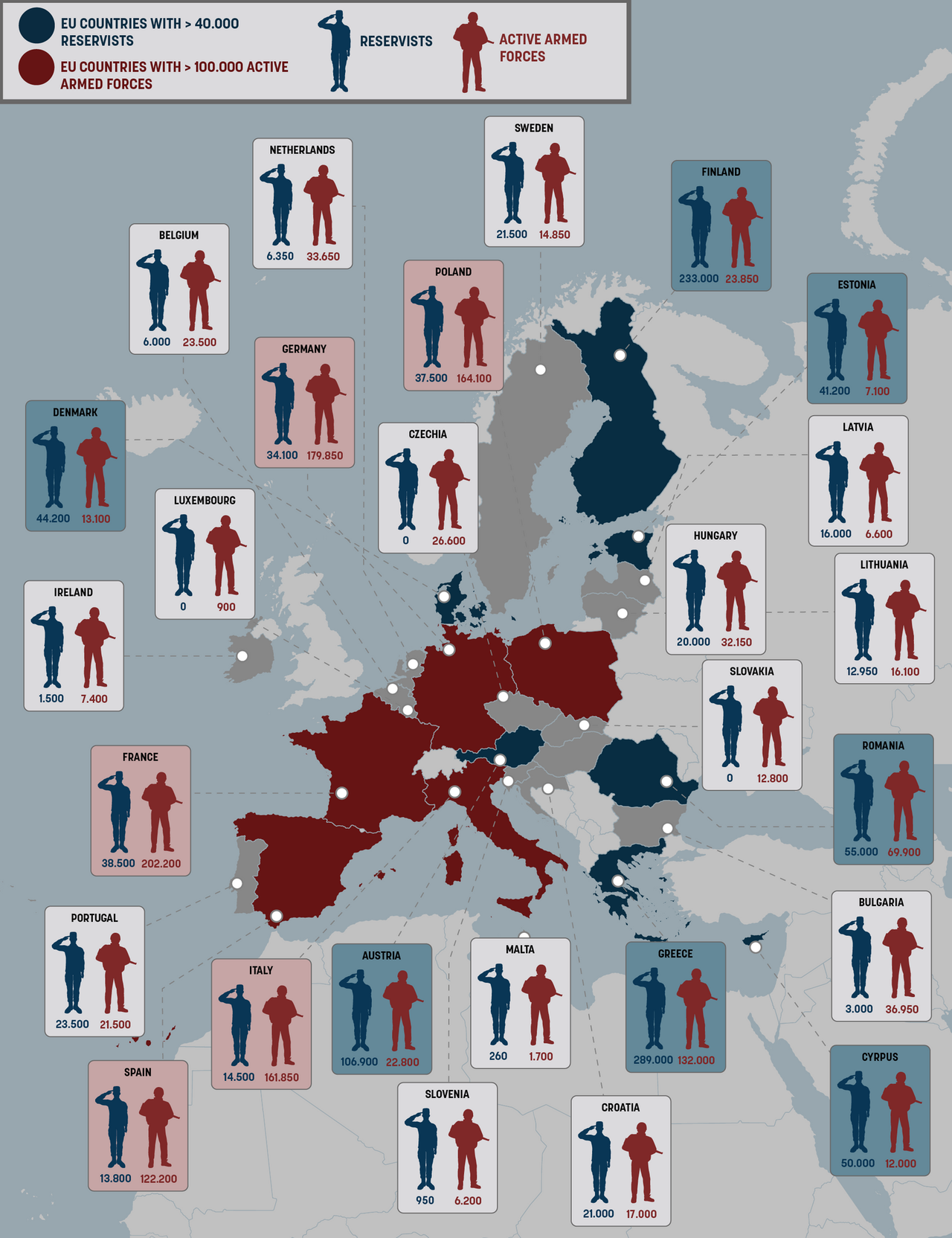
The report further provides the following helpful infographic map:
Source: The Military Balance 2025 – International Institute for Strategic Studies (IISS)/Euractiv
As for reserve programs, a system of part-time service members who are civilians which can be mobilized quickly if called upon helps countries keep defense spending down during times of peace. European nations are trying to bolster these numbers of trained personnel as well.
Tyler Durden
Fri, 12/05/2025 – 02:45
https://www.zerohedge.com/geopolitical/hawkish-baltic-states-leading-europes-race-back-draft

Redadas migratorias en Luisiana vacían los establecimientos en un barrio hispano
Por JACK BROOK y SARA CLINE
KENNER, Luisiana, EE.UU. (AP) — Las puertas de la taquería de Carmela Díaz están cerradas, las mesas están vacías de clientes y no hay nadie trabajando en la cocina. Es uno de los muchos negocios hispanos que prosperaron en su día, desde restaurantes nicaragüenses a hondureños, y que en las últimas semanas se han vaciado en vecindarios con muchos carteles en español pero cada vez con menos gente en las calles.
En Kenner, una ciudad con la mayor concentración de residentes hispanos en Luisiana, una campaña migratoria federal que tiene como objetivo la detención de 5.000 personas ha devastado una economía que ya atravesaba dificultades debido al aumento de las medidas de control este año, según algunos empresarios, y ha tenido repercusiones de gran alcance tanto para migrantes como para ciudadanos estadounidenses.
“Cada vez venía menos gente”, dijo llorando Díaz, cuya Taquería La Conquistadora lleva varias semanas cerrada ante el temor de clientes y trabajadores a salir de casa. Hubo días en que no vendían nada, explicó, por eso tomó la decisión de cerrar el local, “porque no había negocio”.
El miércoles, convoyes de vehículos federales comenzaron a recorrer las principales calles comerciales de Kenner mientras el Departamento de Seguridad Nacional iniciaba su última campaña migratoria, como las que supusieron un aumento de las redadas en Los Ángeles, Chicago y Charlotte, Carolina del Norte. Los transeúntes publicaron en internet videos de agentes federales deteniendo a gente fuera de comercios en Kenner y en obras.
El comandante de la Patrulla Fronteriza, Gregory Bovino, también hizo acto de presencia en la ciudad, rodeado de agentes ataviados con equipos tácticos, para anunciar a los reporteros el inicio de la operación denominada Catahoula Crunch, como el gran perro de caza que es el perro oficial del estado de Luisiana.
Una comunidad en tensión
La población hispana del estado ha crecido en las últimas dos décadas y muchos llegaron tras el huracán Katrina de 2005 para ayudar en la reconstrucción. En Kenner, justo al oeste de Nueva Orleans, entre el río Misisipi y el lago Pontchartrain, son aproximadamente el 30% de los residentes.
Díaz, natural de El Salvador, llegó en 2006 tras años trabajando en el campo en Texas. Abrió camiones de comida, ganó lo suficiente para comprarse una casa en Kenner, y su negocio ha crecido desde entonces a una flota de camiones y dos restaurantes físicos.
Pero casi todos sus negocios están cerrados debido a la redada, y Díaz se las arregla haciendo entregas a domicilio a personas que temen ser detenidas por los agentes.
“No respetan a nadie”, declaró Díaz, agregando que las autoridades no piden la documentación a los sospechosos ni realizan investigaciones, sino que les ponen los grilletes y se los llevan.
Autoridades dicen que buscan a delincuentes violentos
La portavoz del Departamento de Seguridad Nacional, Tricia McLaughlin, señaló el jueves que los agentes federales ya efectuaron docenas de arrestos, aunque la agencia no ha hecho público el listado completo de detenidos.
“Los estadounidenses deberían poder vivir sin miedo a que delincuentes extranjeros ilegales violentos les hagan daño a ellos, a sus familias o a sus vecinos”, afirmó McLaughlin en un comunicado. “En solo 24 horas sobre el terreno, nuestros agentes han arrestado a criminales violentos con antecedentes que incluyen homicidio, secuestro, abuso de menores, robo, hurto y agresión”.
La oficina del alcalde, Michael Glaser, quien en su día fue jefe de policía, se negó a comentar su postura acerca de la operación. Pero dijo que la redada “está bajo jurisdicción federal” y que espera que todas las agencias que operan en la ciudad se comporten “de manera profesional, legal y con respeto por nuestra comunidad”. La ciudad “no participa ni asesora” en la campaña, agregó.
La policía de la ciudad es una de los cientos de agencias de seguridad locales y estatales que han firmado acuerdos para formar parte de un programa del servicio de Inmigración y Control de Aduanas que les autoriza a retener a los detenidos para una posible deportación.
Temor por familiares vulnerables
Sergio Pérez, migrante guatemalteco y ciudadano estadounidense que vive en Kenner desde 2010, dijo que tiene seres queridos allí que carecen de permiso legal para estar en el país y podrían ser detenidos o deportados. También le preocupa que cualquier persona hispana pueda sufrir abusos por parte de los agentes federales, independientemente de su estatus migratorio.
Aunque Pérez considera Kenner com su hogar, un lugar donde es fácil encontrar sus platos favoritos, como el “caldo de res”, un abundante guiso de carne y verduras, está dispuesto a abandonar Estados Unidos si se deporta a sus familiares.
“No nos quieren aquí”, manifestó Pérez. “Es como si estuvieras en casa de alguien y no te sientes bienvenido”.
___
Cline informó desde Baton Rouge, Luisiana. La periodista de The Associated Press Valerie González en McAllen, Texas, contribuyó a este despacho.
___
Brook forma parte de la iniciativa The Associated Press/Report for America Statehouse News Initiative. Report for America es un programa nacional sin ánimo de lucro que coloca periodistas en redacciones locales para informar sobre temas poco cubiertos.
___
Esta historia fue traducida del inglés por un editor de AP con la ayuda de una herramienta de inteligencia artificial generativa.
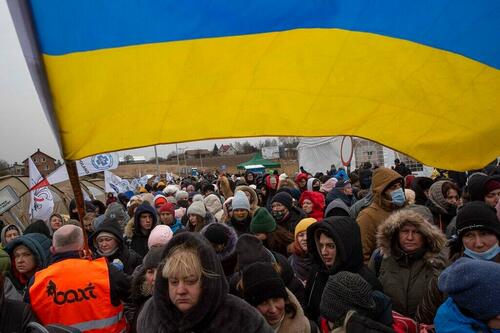
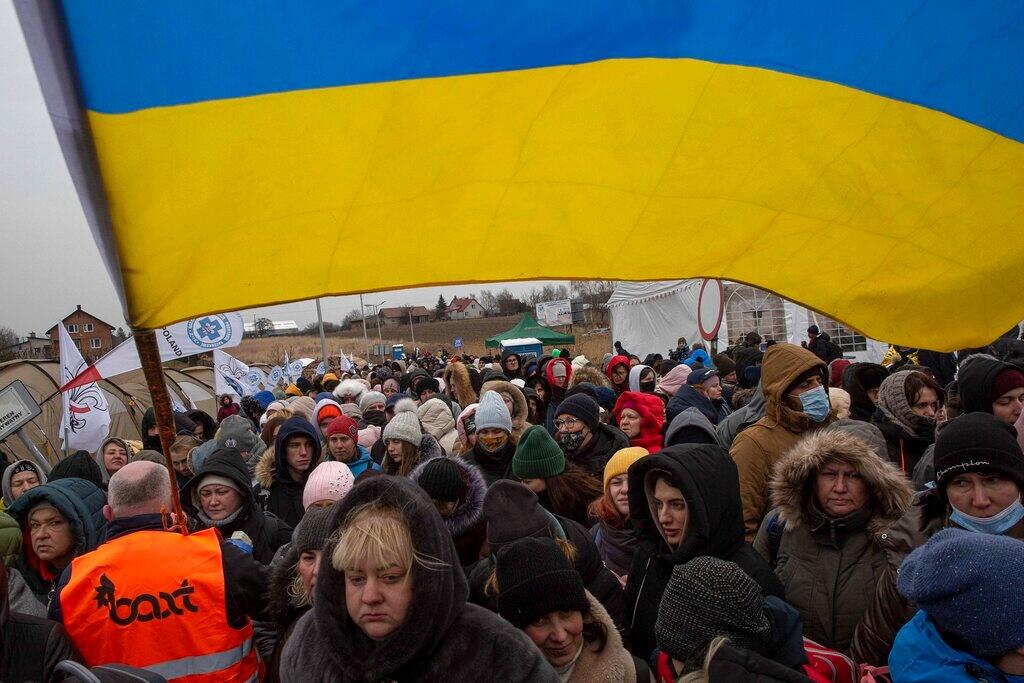
Nearly 50,000 Ukrainians Have Applied For Asylum In Poland Since August
Nearly 50,000 Ukrainians Have Applied For Asylum In Poland Since August
In the wake of Kyiv’s decision to allow men aged 18-22 to legally leave Ukraine last August, Poland has seen one of the largest waves of young Ukrainians flooding its borders.
From Aug. 26 to Nov. 10, 49,700 Ukrainian citizens have applied for protection status (UKR), linked to a PESEL number, in Poland in recent weeks. As a comparison, for the January-February period of 2025, there were only 16,000 such applications, reports Do Rzeczy, citing data from “Rzeczpospolita.”
Asylum status for Ukrainians provides the right to legal residence (currently until March 4, 2026), work, access to education, and benefits.
It is lost upon leaving Poland for more than 30 days, but can be reapplied for.
In total, over 2 million Ukrainians have applied for refugee status in Poland since 2022, but as of Nov. 12, only 964,400 had active status.
Over the past few months, the share of men aged 18-65 among new applicants has increased from 16.6 percent to 17.4 percent, while the share of women has fallen from 48.3 percent to 47.7 percent.
According to Polish Border Guard data, from Aug. 29 to Nov. 24, 121,000 Ukrainians aged 18-22 entered Poland, of whom 59,000 returned to Ukraine.
This means that approximately 62,000 young men remained in Poland or departed for the EU. Experts emphasize that this is the first such large wave of young Ukrainians in this age group in Poland.
According to Kyiv, the change in regulations is intended to enable young people to study and work abroad. At the same time, men aged 18-22 are exempt from the mandatory mobilization process, which begins at age 25. However, according to data from the Polish Economic Institute, only 39 percent of young men take up employment, primarily in construction, transport, and industry. They often work in closed environments, which, as the Institute points out, hinders linguistic and social integration.
Meanwhile, crime and sabotage perpetrated by Ukrainians have become a problem.
Police indicate that in the first half of 2025, 8,994 foreigners committed crimes in Poland, of which approximately 60 percent were Ukrainians. The most common offenses were drunk driving and fraud, including cybercrime. At the same time, Polish services emphasize that some Ukrainians are being used by Russian intelligence for sabotage activities. In Ukraine alone, 2,800 investigations into espionage and sabotage are ongoing.
Tyler Durden
Fri, 12/05/2025 – 02:00
https://www.zerohedge.com/geopolitical/nearly-50000-ukrainians-have-applied-asylum-poland-august

Garber no descarta el descenso en la MLS, pero aclara que está a años o décadas de distancia
WASHINGTON (AP) — El comisionado de la MLS Don Garber no descarta adoptar el sistema de descenso y ascenso, aunque deja claro que tal decisión está a años o décadas de distancia.
La MLS se lanzó en 1996 con diez equipos y actualmente cuenta con 30 en un sistema cerrado. El equipo más reciente, San Diego, pagó una tarifa de expansión de 500 millones de dólares para comenzar a jugar en 2025.
Garber ha dicho que el descenso y ascenso no funcionan para la MLS debido a las enormes cantidades de dinero que los propietarios han gastado en estadios, complejos de entrenamiento y academias juveniles.
“No tiene mucho sentido decir nunca porque no sé cómo será el futuro. Ciertamente nunca pensé que nos adaptaríamos al calendario internacional”, afirmó el jueves por la noche durante una conferencia de prensa en el Audi Stadium de D.C. United, en el marco del sorteo de la Copa del Mundo.
“Tal vez a medida que el desarrollo de las divisiones inferiores continúe creciendo, como lo han estado haciendo tan bien a lo largo de los años, habrá un ecosistema adecuado, no estoy seguro. Francamente, no creo que ese ecosistema pueda existir hoy, pero ¿quién sabe?”, añadió. “He aprendido a nunca decir nunca. Eso no significa que vayamos a tener descenso y ascenso en el corto plazo”.
La United Soccer League informó este año que planea iniciar una liga de primer nivel en 2027-28 y un sistema de descenso/ascenso. Lo que ahora es el Campeonato de la Liga USL ha sido sancionado como la división de segundo nivel desde 2017 y cuenta con 24 equipos. La Liga Uno de tercer nivel comenzó a jugar en 2019. La Liga Dos de la USL es un nivel semiprofesional que incluye 144 equipos en 19 divisiones regionales y cuatro conferencias.
Sucesión planificada
Garber, quien cumplió 68 años en octubre, ha sido comisionado desde agosto de 1999 y en 2024 firmó un contrato vigente hasta la temporada 2027.
“La MLS ha estado operando casi como una empresa incipiente durante 30 años, así que nunca pensamos en la planificación de una sucesión, en absoluto”, comentó. “Las empresas de alto rendimiento necesitan hacer eso. Así que el inicio de esto es tener un proceso de sucesión adecuado no sólo para el próximo comisionado, sino para el próximo líder de nuestro negocio comercial o el próximo líder de nuestro negocio deportivo”.
Garber dijo que no ha pensado en quedarse más allá de 2027.
“En este momento estoy enfocado en los próximos años y pensaré en eso y tendré una conversación con los propietarios de la MLS en el momento adecuado”, expresó.
Los propietarios de la MLS votaron el mes pasado para cambiar, a partir de 2027-28, a un calendario de verano a primavera, similar al de la mayoría de las ligas europeas. La MLS ha tenido una temporada anual que va de febrero a diciembre en los últimos años.
“Ciertamente no estaba pensando en la renovación de mi último contrato con miras al cambio de calendario porque no teníamos idea en ese entonces de que lo haríamos”, dijo. “Pero lo resolveremos”.
Estadio de Vancouver
Antes de que Vancouver juegue contra el Inter Miami por el título de la MLS el sábado, Garber fue crítico por la falta de progreso en la planificación del estadio.
Los Whitecaps quisieran mudarse de B.C. Place, donde son inquilinos, a un nuevo estadio.
“El equipo de la MLS, sus propietarios, sus aficionados, sus jugadores han hecho todo para ganarse el apoyo que no están recibiendo hoy de la ciudad y de la provincia, y ésa es una situación insostenible”, manifestó. “Lo que tenemos allí tiene que cambiar. Y en este momento, no estamos necesariamente en un camino para lograr eso. … Tuvimos una reunión muy positiva con el alcalde. Estamos buscando obtener un mejor contrato de arrendamiento en B.C. Place en este momento. No ha habido movimiento en eso y ha pasado un mes.
“Estamos en el negocio de cumplir ante aquellas personas que realmente quieren tener un equipo de la MLS que puedan amar y abrazar. Y no son sólo los aficionados. Ellos lo han hecho”, añadió. “Necesitas que las ciudades y las provincias hagan eso, y todavía estamos esperando si podrán cumplir. Y si no lo hacen, tendremos que tomar decisiones difíciles”.
Los propietarios de Vancouver anunciaron en diciembre que el club estaba a la venta. Greg Kerfoot ha sido dueño del equipo desde 2002, 11 años antes de que comenzó a jugar en la MLS. Steve Luczo, Jeff Mallett y el exastro de la NBA Steve Nash se unieron a Kerfoot en 2008.
Mallett sugirió en agosto que la estrategia del grupo podría haber cambiado para agregar un nuevo socio.
___
La escritora de deportes de AP, Anne M. Peterson, contribuyó a este informe.
______
Deportes AP: https://apnews.com/hub/deportes