Category: News

Suspected Pirates Swarm Bulk Carrier In Critical Red Sea Maritime Chokepoint
Suspected Pirates Swarm Bulk Carrier In Critical Red Sea Maritime Chokepoint
This week’s maritime focus, mostly centered on Ukraine’s drone strikes against Russia’s shadow-fleet tankers, has shifted to the Bab el-Mandeb Strait, the critical chokepoint linking the Red Sea and the Gulf of Aden, where reports now indicate a bulk carrier has come under attack.
UK Maritime Trade Operations (UKMTO) said it received a report that a bulk carrier transiting the Bab el-Mandeb Strait was attacked by a swarm of 15 small craft.
“A vessel reports sighting approximately 15 small craft; some of the small craft closed to within a range of 1–2 cables, and there was an exchange of fire,” UKMTO wrote in a warning notice.
Maritime analytics provider MarineTraffic posted an update on X stating that the bulk carrier was approximately 14 nautical miles west of Yemen when the captain issued the first distress call.
MarineTraffic provided further details about the attack:
A bulk carrier transiting the Bab el-Mandeb Strait came under attack early Friday, according to incident reports shared by UKMTO. #MarineTraffic data shows the vessel Bobic maintaining speed while altering course at 03:32 UTC, approximately 14 nautical miles west of Yemen, when the first distress call was issued. The ship reported being approached by up to 15 small craft, prompting its onboard security team to return fire. A second attack followed shortly afterward, involving two skiffs and a suspected mothership several miles away.
Another vessel, the Globe Aliki, was also transiting the area at the time and crossed paths with the Bobic at 03:35 UTC. According to reports, the Globe Aliki observed the small boats from roughly 1 nautical mile away, describing them as fishing-type craft. The vessel itself was not targeted.
Prior to the incident, AIS data shows that on 3 December at 17:55 UTC, the Bobic’s AIS destination was changed to “Armed Guard Onboard.” On 5 December at 05:47 UTC, the AIS destination changed again to “Chinese Crew.” The Bobic is now continuing toward its next port of call, with all crew reported safe and the security team having successfully repelled both attacks.
Bulk carrier attacked by suspected pirates in Bab el-Mandeb Strait
A bulk carrier transiting the Bab el-Mandeb Strait came under attack early Friday, according to incident reports shared by UKMTO. #MarineTraffic data shows the vessel Bobic maintaining speed while altering course… pic.twitter.com/Y8hhisPGKX
— MarineTraffic (@MarineTraffic) December 5, 2025
Shipping journal Lloyd’s List posted exclusive footage showing security personnel on the ship firing long rifles at the small boats.
Lloyd’s List noted: “The lack of serious intent from the attackers, as well as the location of the incident, suggest the perpetrators are as likely to be local fishermen protecting their nets and lines as they are to be Somali pirates or Houthi militants.”
Tyler Durden
Fri, 12/05/2025 – 06:55

UE multa a X con 120 millones de euros por violar la ley de redes sociales del bloque
Associated Press
LONDRES (AP) — Los reguladores de la Unión Europea multaron el viernes a la plataforma de redes sociales de Elon Musk, X, con 120 millones de euros (140 millones de dólares) por no cumplir con las regulaciones digitales del bloque.
La Comisión Europea emitió su decisión tras una investigación a abierta a X hace dos años bajo la Ley de Servicios Digitales del bloque de 27 naciones. También conocida como DSA, es un amplio conjunto de normas que exige a las plataformas asumir más responsabilidad para proteger a los usuarios europeos y retirar contenidos y productos dañinos o ilegales en sus sitios, bajo la amenaza de fuertes multas.
La Comisión afirmó que las sanciones a X, antes conocido como Twitter, derivan de tres incumplimientos de los requisitos de transparencia de la DSA. La decisión podría irritar al presidente de Estados Unidos, Donald Trump, cuyo gobierno ha arremetido contra las regulaciones digitales de Bruselas y ha prometido tomar represalias si las tecnológicas estadounidenses son penalizadas.
Los reguladores dijeron que las marcas de verificación azul de X infringían las normas debido a su “diseño engañoso”, que podría exponer a los usuarios a estafas y manipulaciones.
X tampoco cumplió los requisitos en su base de datos de anuncios y para proporcionar acceso a los investigadores a datos públicos.
___
Esta historia fue traducida del inglés por un editor de AP con la ayuda de una herramienta de inteligencia artificial generativa.

Holiday book guide 2025: The best gift books of the season, paired to some very specific people
My favorite part of the holidays is giving someone a book. I’m that person who gives everyone on my list a wrapped book then I joke it’s a box of socks. My least favorite part of the holidays, however, is realizing months later they still have not opened that book.
The secret to a happy pairing?
Being honest about who that person is, not who you want them to be. With this in mind, what follows are the best gift books of the season, paired to some very specific people.
For the Constant Reader
Folio Society books with slipcases “Hamnet,” by Maggie O’Farrell, left, and “The Binti Trilogy,” by Nnedi Okorafor. (Stacey Wescott/Chicago Tribune)
It’s hard to beat a Folio Society edition of a favorite book. They are to literature what the Criterion Collection is to movies, only much older, offering contemporary classics and established landmarks in keepsake editions ripe for posterity. Their latest includes “The Binti Trilogy,” the great sci-fi epic from Flossmoor-native Nnedi Okorafor, featuring illustrations by David Palumbo that cement the series in a long history of genre fiction. Even nicer: The elegant linocuts by British artist Becca Thorne that spot a new edition of Maggie O’Farrell’s modern classic “Hamnet.” For children: A vibrant reissue of “Pippi Longstocking,” quirkily manic as its heroine.
For Chicagoans Not From Chicago
“Clout City: The Rise and Fall of the Chicago Political Machine,” by Columbia College’s Dominic A. Pacyga, is an accessible one-stop history that returns the familiar story of how Chicago works to its cultural, street-level roots, from the Great Fire to the “rusted-out remnant” of Mike Madigan. If that sounds too familiar, might I suggest a newer epic about doing the same thing and expecting a different result: Danish writer Solvej Balle’s “On the Calculation of Volume,” a cult smash with “Groundhog Day” vibes, the story of a woman trapped in Nov. 18 who meets others lost in the same time. (Volume III just came out and it’s addicting.)
For the Museum Fiend Who Can’t Make it to Everything
The catalog for Wrightwood 659’s “The First Homosexuals: The Birth of a New Identity 1869-1939” is as ambitious and absorbing as the exhibition, a vast internationally-minded study of how fine art portrayed homosexuality for centuries; what packed the Lincoln Park gallery earlier this year is now tucked alongside deeper dives into Russia, Japan, Brazil. “Yoko Ono: Music of the Mind” is the catalog you needed after the moving new exhibit at Museum of Contemporary Art Chicago, a way to slow down and read all of those instructions on many of Ono’s works, prompts for creating your own art. One catalog for an exhibition that never made it to Chicago: “3-D Doings: The Imagist Object in Chicago Art 1964-1980,” organized by Skidmore College, is great fun, a roundup of the objects, the pop irons, stools, mannequins, tiny diners and more, constructed by the fabled Hairy Who art collective and Barbara Rossi, Ed Paschke, etc.
For the Restlessly Creative
Elizabeth McCracken’s “A Long Game: Notes on Writing Fiction” boils 35 years of teaching creative writing into 280 practical points, from the siren’s song of punctuation to the danger in striving for perfection. It’d make a nice companion to “Nature Notes of an Edwardian Lady,” an elegant illustrated diary from 1905 by the English artist Edith Holden, pairing her watercolors with daily thoughts about the moors, the grass, the birds… If you fear hand’s-on life lessons are being lost to iPads, try “Little Woodchucks: Offerman Woodshop’s Guide to Tools and Tomfoolery,” which Nick Offerman wrote as a step-by-step manual for kids to make toys and little libraries, but hmmm, I know an adult who might benefit even more…
For Your Debby Downer
I can barely write this, I’m so hypnotized by “The Penguin Book of Cults,” a fascinating batch of news accounts, papers, Roman tales, forming a first-person history of Branch Davidians, Jonestown, Kansas City “vampires,” even a sect in the late 19th century formed around a Rockford man who said he was Jesus Christ. Sound too peppy? “Wish We Weren’t Here: Postcards From the Apocalypse” collects Peter Kuper’s celebrated four-panel editorial comics for the Washington Post and others, explaining our existential threats — sea-level rise, plastic waste — in a blink.
For the Indomitable Swiftie
“Taylor Swift: All The Songs: The Story Behind Every Track” is not authorized, and landed too late to include “Life of a Showgirl,” but here’s nearly 500 nicely illustrated pages on every track, all the boyfriend clapbacks, all the backstories, all the hidden messages. After that, if you can no longer see the Swiftie forest from the Swiftie trees, Gus Morais’ “Taylor Swift: Unofficial Search & Find Biographies” will finish off your eyesight: Think “Where’s Waldo” with Lollapalooza-dense scenes inspired by Taylor, harboring, somewhere, tiny cartoon Taylors.
For the Owner of a New Coffee Table Who Wants to Seem Interesting
“Air Jordan,” by Assouline Publishing, “Meaning Matter Memory: Selections from the Studio Museum in Harlem Collection,” “Martha Graham Dance Company 100 Years,” by Ken Browar and Deborah Ory, “The Complete Peanuts 1969-1970″ and “The Complete Peanuts 1997-1998,” by Charles M. Schulz. (Stacey Wescott/Chicago Tribune)
The key to a good coffee table book is very large, offbeat images of a deceptively obvious subject. Take the sculpture of “Haas Brothers: Uncanny Valley,” the exhibition catalog for the Texas-born millennials’ Cranbrook Art Museum show outside Detroit. You think furniture, and then no, wait — brains, corral, Muppets… “Wild Ocean: A Journey to the Earth’s Last Wild Coasts” is a doorstop with actual coral, then comes the twist: cattle on a beach, a volcano of chub off Ecuador. A lack of explanation here only enhances the mystery. “Martha Graham Dance Company: 100 Years” is a large portrait of poise, yet, really, it’s a study of great costuming, spotlighting 25 seminal productions. “Italy: In the Footsteps of the Great Artists” comes across like a travelogue but zeroes in cleverly on the art of altars, palazzos and villas, straying from museums to tell the stories of many lesser-known great works tucked away into the everyday country.
For Blockheads
Is there a person alive who doesn’t like “Peanuts”? From 2004 to 2016, Fantagraphics republished all 17,000 Charles Schulz newspaper strips in 26 volumes, with introductions by Matt Groening, John Waters, Barack Obama… This holiday all 26 are being reissued — including “The Complete Peanuts 1969-1970” and “The Complete Peanuts 1997-1998” — to mark the 75th anniversary of “Peanuts,” and I can’t think of a nicer tribute to tangible media. For the newbie: “The Essential Peanuts” is a best-of wrapped around an often touching history, with appreciations, dives into the TV specials and old paperbacks, plus a set of stickers and postcards and a Snoopy patch.
For the Armchair Chicago Architect
Robert Loerzel, online man about town, terrific historian, has gathered, with James A. Pierce, “The Uptown: Chicago’s Endangered Movie Palace,” as thoughtful a revival as that seemingly-stalled Northside marvel itself may ever receive. (Finger’s crossed.) “Chicago’s Fine Arts Building: Music, Magic and Murder,” by Keir Graff, one of the building’s resident writers, is a mountain of archival insight, coupled with a sweet set of portraits of contemporary tenants. Pointedly more prosaic: “Chicago Homes: A Portrait of the City’s Everyday Architecture,” by Carla Bruni and Phil Thompson, is a richly illustrated taxonomy, and a readable explainer, of every brick flat, apartment courtyard and pre-fab dwelling in Cook County.
For the Cousin Who’d Rather Be Hooping in the Driveway
“Air Jordan,” by art book publisher Assouline, starts with a sneaker fetish, then covers so much cultural ground — from Michael Jordan-branded french fry packets to a foldout of seemingly every rap lyric namecheck of Air Jordans — the shoe plays like a pebble in an ongoing ripple. A must for Bulls obsessives. Stephen Curry’s “Shot Ready,” certainly pretty, is closer to self-help than revelatory. Far more insightful is “Masters of the Game,” a collaboration between former Tribune sports writer Sam Smith and former Bulls coach Phil Jackson, who essentially chat about NBA legends — sports history as bull session.
For a Fresh Look at Classic American Artists
“South Africa, 1977/1978,” reminiscent of Gordon Parks and Robert Frank, collects images of everyday segregation and resistance, mundane and epic. The photographer is Chatham native Jeanne Moutoussamy-Ashe, who spent decades obscured by her better-known husband, Arthur Ashe. If you’re looking for a compact, lively art education in a single book, “Meaning Matter Memory: Selections from the Studio Museum in Harlem” gathers 250 artists (including Chicagoans Dawoud Bey and Theaster Gates) in the collection of this venerable Manhattan museum, which just relocated after 57 years. Much broader: “The American Art Book” updates a classic Phaidon best-of survey, pulling together 500 representative pieces, from 17th-century portraiture to conceptual performance, into a reminder of how American art only thrives with American diversity.
For a More Playful Art Book
There’s no shortage of coffee-table appreciations of Kerry James Marshall. “Kerry James Marshall: Rythm Mastr — This is How it Begins” is the first focused squarely on the Chicago-based artist’s 25-year-long sidebar into comics, placing them in the context of his fine art and the history of Black characters in comics. Speaking of lesser-known side gigs: “Garbage Pail Kids” compiles all 206 stickers that Art Spiegelman (with a smaller team at Topps) created in the mid-80s, clearly inspired by underground comix. (The book even includes a bonus pack of stickers.) OK, now this is super fun: “Drawn to MOMA: Comics Inspired by Modern Art,” created by the New York City institution, asks 25 cartoonists to make an original piece about a visit to MOMA. Chris Ware, being constitutionally unable to do anything easy, contributed a whole poster (which is folded and included at the back).
For Comedy-Obsessed Chicago
“Comedy Nerd: A Lifelong Obsession in Stories and Pictures,” Judd Apatow’s sweet scrapbook of candids and anecdotes, from “Freaks and Geeks” to “Anchorman” to seemingly every stage appearance and producer credit, is a heap of charm; whoever receives this will curl into it for hours. Same for “John Candy: A Life in Comedy,” Paul Myers’ just-the-facts biography, with a nice delve into Candy’s Second City stint in Chicago. Speak of the devil: Anne Libera, Second City’s director of comedy studies, has “Funnier: A New Theory for the Practice of Comedy,” a trove of practical advice for anyone thinking about going pro.
For Someone Edgy yet Approachable
Diane DiMassa’s “Hothead Paisan: Homicidal Lesbian Terrorist,” a zine staple of the early ‘90s Chicago, returns not having aged an inch: Here are the first 20 comics, made as “rage therapy,” DiMassa says, addressing gender and mental health, yearning for community. Speaking of creatively activist: Ben Passmore’s furious graphic novel “Black Arms to Hold You Up: A History of Black Resistance” finds the author forced to time travel through moments — the Black Liberation Army, 1900 Louisiana — when Black Americans picked up guns and fought back. Nothing, though, is as surprising as “The Complete C Comics,” writer Joe Brainard’s brief delve into abstract, free-associative ‘60s comic books, with parodies of “Nancy” and “Archie” and collaborations with Frank O’Hara, John Ashbery …
For Those Without Enough Time in the Day
Anything from The Best American series, still going at 110 years old. Six volumes now, including “The Best American Short Stories,” “The Best American Food and Travel Writing” and “The Best American Essays.” A nice way of catching up over winter, finding new voices, reading a must-read piece you missed. Okorafor edited “The Best American Science Fiction and Fantasy,” and Susan Orlean assembled “The Best American Science and Nature Writing.”
For the Sibling Itching to Sneak Out to a Movie
“Godzilla: The First 75 Years,” co-written by Chicago-area kaiju know-it-all Ed Godziszewski, is the absolute last word on the ageless monster, a history full of storyboards and interviews and charming backstage production stills. Genuinely fascinating, even if your speed is more… “Making Mary Poppins,” Todd James Pierce’s concept-to-premiere tell-all, so thorough that now I know songwriters Bob and Dick Sherman, who wrote “Supercalifragilisticexpialidocious,” also came up with “You’re Sixteen,” which Ringo Starr later turned into a creepy smash. Too earnest? Cartoonist Nathan Gelgud’s “Reel Politik” asks a question you never considered: What if there was a casual Sunday-comics-esque strip about insufferable movie snobs? (Yes, that’s a recommendation.)
For the Recently Radicalized
Turn to the Library of America. Their new edition of “The Origins of Totalitarianism” expands Hannah Arendt’s first major book, including excised chapters and annotating a prescient map of why Stalinism and Nazism rose simultaneously. Impossible to set aside: “Jim Crow: Voices From a Century of Struggle, 1876 to 1976,” a two-volume collection of speeches, congressional testimony, Chicago Defender reporting, pamphlets by Ida B. Wells — a first-hand account of Reconstruction, Chicago’s 1919 “Red Summer,” the Boston busing crisis…
For Dad Rockers of the ‘70s-‘80s
Paul McCartney’s “Wings: The Story of a Band on the Run” offers a welcome breather from Liverpool, a collaboration between McCartney, filmmaker Morgan Neville and presidential speechwriter Ted Widmer, who gathered a sometimes juicy oral retelling of the disorienting, platinum years after the Beatles. “Iron Maiden: Infinite Dreams” is light on reading material but heavy on everything else, a huge visual history of the 50-year-old metal institution, from early diaries of its founders to a truly cool gallery of fans’ denim vests. “The Grateful Dead: Photos and Stories from the Formative Years, 1966-1977” is a coffee-table love-in, a decade of candids by Jim Marshall, music’s most Zelig-like of documentarians. He shot the iconic Johnny Cash middle-finger picture, Dylan album covers, and he was there before there were Deadheads — here’s 300 pages of proof, culled from 52,000 images.
For Original Stocking Stuffers
“The Mistress in Black: A Ghost Story for Christmas,” by Rosemary Timperley, part of Biblioasis’s series “A Ghost Story For Christmas,” “The Nature Notes of an Edwardian Lady,” by Edith Holden, The Best American Short Stories 2025,” edited by Celeste Ng, “The Best American Essays 2025,” edited by Jia Tolentino, “Doctor Strange: A Decade of Dark Magic,” by Stuart Moore, “Daredevil: Born Again,” by Chris Ryall and “Reel Politik,” by Nathan Gelgud. (Stacey Wescott/Chicago Tribune)
Bloomsbury Publishing brings the historical, critical approach to superheroes it did for albums in its “33 1/3” series, inviting smart writers to the “Marvel Age of Comics.” The first three, small and colorful, turn a critical eye on the Avengers in ‘70s, Doctor Strange in the ‘60s and, best, Frank Miller’s “Daredevil: Born Again.” Even tinier: Biblioasis’ ongoing “A Ghost Story For Christmas” series, an addicting revival of the Victorian-born tradition of reading scary stories at holidays.
For the Reader Who’s Read Everything
”Song of Solomon” and “Beloved,” by Toni Morrison, “Wings: The Story of a Band on the Run,” by Paul McCartney, “South Africa, 1977/1978,” by Jeanne Moutoussamy-Ashe and “The American Art Book,” by Phaidon Press. (Stacey Wescott/Chicago Tribune)
It’s hard being disappointed by a smart new edition of what they already love, and who doesn‘t love “Pride and Prejudice”? Rizzoli’s “British Library Facsimile Edition,” made for the 250th anniversary of Jane Austen’s birth, is a lovely reproduction of the 1813 first edition in three volumes, in an eggshell blue case, with a bundle of Austen’s letters. For more contemporary taste: Vintage, to counter censorship challenges to Toni Morrison‘s works, is reissuing 11 classics, with new covers and introductions. The first includes “Sula” with an essay by Jesmyn Ward and “Beloved” with an appreciation by Honoree Fanonne Jeffers.
For a Nostalgic Christmas Vibe
I can’t begin to say how happy I am to see a new reissue of “Norman Rockwell’s Christmas,” which an aunt gave me in the 1970s and I somehow misplaced. It’s the 1977 original, same O. Henry stories, same poems, same letters to Santa — without any updating. Same goes for Lee Friedlander’s “Christmas,” 70 years of slightly seedy, kind of ironic, charming black-and-whites of iffy nativities and roadside yuletides. The joyous commercialism that Friedlander finds is unabashedly celebrated in “The Mattel Archive,” a decade-by-decade cataloging of forgotten toys and Barbie makeovers. Ideal for anyone who misses the old Sears holiday catalogs. If you need a reminder that not all of the great holiday traditions have been discontinued, “Chicago’s Holiday Train” by Daniel Moreno is a modest, gentle photo celebration.
For the Impossible to Buy For
Think rando. They were a teenager once (or still are). The new reissue of 1995’s “Teenagers in Their Bedrooms,” shot by Adrienne Salinger after graduating from the School of the Art Institute of Chicago, remains a powerful, disarmingly revealing set of portraits of kids in their domains, their anxieties and obsessions pasted to their walls. “Stuff: A New York Life of Cultural Chaos” could almost be a grown-up sequel: Kim Hastreiter, co-founder of the hipster mag PAPER, shows off the hidden charm of a hoarding impulse, grouping decades of sweaters, ceramic peanuts, newspapers, Obama tchotchkes, brand knockoffs. Every few pages, she pauses to tell stories about her famous friends, whom she also collects.
None of that seems promising?
“It’s Snowing!: Fashion, Art, Design and Winter Sports,” with its irresistible bright blue and pink cover, collects centuries of examples of how winter sports influenced wallpaper and tin toys and ski jackets and ski boots and ceramic figurines and tourism posters and fashion design. Here is the ideal gift book: Nothing about it sounds interesting, but then hours later, they’re still flipping.
cborrelli@chicagotribune.com
https://www.chicagotribune.com/2025/12/05/holiday-gift-books-2025/

Stevenson High School’s 41st annual Give-A-Thon assists hundreds of Lake County children and their families
The annual Give-A-Thon is a four-decade-plus tradition at Adlai E. Stevenson High School in Lincolnshire.
In its 41st year, Give-A-Thon for 2025 included the Wednesday, Dec. 3 distribution day when students helped to load bags of wrapped gifts, baby items and food for delivery. Bicycles and trikes, totaling 48, were either assembled, some donning bright bows, or the large boxes of bikes were wrapped with festive holiday paper for later assembly by mystical helping hands.
Give-A-Thon is a student project of the National Honor Society (NHS). During November, students networked to raise funds to purchase items such as clothing, food, toys, baby needs, plus more.
Right, in lightbulb festive headband, Logan Trojan, 17, a senior from Hawthorn Woods, is among student volunteers bringing holiday donations to trucks parked outside during the Give-A-Thon distribution day at Adlai E. Stevenson High School in Lincolnshire on Dec. 3, 2025. (Karie Angell Luc/Pioneer Press)
Approximately 200 boxes of food were brought to the Vernon Township Food Pantry in Buffalo Grove. Baby items, including 83 boxes of diapers and wipes, were delivered to PADS Lake County in Vernon Hills. Catholic Charities of Lake County (with a warehouse in Libertyville) provided household wish lists for gifts. The project’s philanthropy benefited 328 families, resulting in 1,135 children being assisted.
Give-A-Thon directors this season were Tanvi Shitole, 17, a senior from Buffalo Grove and Aaron Wu, 17, a senior from Lake Zurich.
“Stevenson really strives to give back to not only our community but the community surrounding us,” Shitole said.
Adlai E. Stevenson High School is home of the Patriots.
“I think that being a Patriot, that if you are a Patriot, that you really care about the community,” Wu said. “In Stevenson, we’re all taught a lot of good values, but now you get to put these good values in place by helping communities in need and these underprivileged families.”
Cam Jacobs, a senior from Buffalo Grove, was among the student volunteers braving the deep cold to load donations on a box truck.
“People that need it are getting food,” Jacobs said.
Examples of food donations at Give-A-Thon distribution day at Adlai E. Stevenson High School in Lincolnshire on Dec. 3, 2025. (Karie Angell Luc/Pioneer Press)
Wearing holiday reindeer antlers, Hannah Diab, 18, a senior from Long Grove, said, “It’s a lot of gratitude to think that I am able to contribute.”
Alexa Segovia, 17, a junior of Vernon Hills, appreciated the collaborative philanthropy, saying, “I get to be a part of it.”
Wearing a festive holiday light bulb headband was Logan Trojan, 17, a senior from Hawthorn Woods.
“I think it’s just the aspect that we know that this is going to a great place,” Trojan said.
“All this stuff that we worked so hard to donate and we worked so hard to raise, we all know that it’s going to a great place, to families in need,” Trojan added.
Some of the bikes were ridden for fun to the hallway leading to the dock for loading to awaiting trucks during the Give-A-Thon distribution day at Adlai E. Stevenson High School in Lincolnshire on Dec. 3, 2025. (Karie Angell Luc/Pioneer Press)
“And so the fact that when we’re loading it into trucks when we know that’s where it’s going, that’s the destination, it’s all this hard work and dedication that all the Stevenson students put in to help all the families involved, it just feels so good to us and me and … all of the other NHS members to be able to help fulfill the need in the community,” Trojan said.
Among students bringing bicycles to an awaiting truck in a frigid outside dock was Grace Shin, 16, of Buffalo Grove, who said, “I really like to help others. I think it’s really nice.”
Also transporting a child’s bicycle was Kaitlyn Jiang, 15, a sophomore from Long Grove, who said, “I feel like it’s very cute and I love it.”
From left to right, bringing bicycles to an awaiting truck are Grace Shin, 16, of Buffalo Grove, who said, “I really like to help others. I think it’s really nice.” Kaitlyn Jiang, 15, a sophomore from Long Grove, said, “I feel like it’s very cute and I love it.” Taken at the Give-A-Thon distribution day at Adlai E. Stevenson High School in Lincolnshire on Dec. 3, 2025. (Karie Angell Luc/Pioneer Press)
Courtney Zabrin, among National Honor Society sponsors and Stevenson’s community service coordinator, agreed that owning a bicycle empowers a child.
“A bike gives them freedom, flexibility, time to spend with their friends around the neighborhood,” Zabrin said with a smile.
The packed gift staging area is being quickly cleared during the Give-A-Thon distribution day at Adlai E. Stevenson High School in Lincolnshire on Dec. 3, 2025. (Karie Angell Luc/Pioneer Press)
Head National Honor Society Sponsor Jennifer McBride also summed up distribution day with a smile.
“It’s so fun,” McBride said. “It’s like the best day.”
See https://connect.stevensonschool.org/portal/stevenson-giving-day
Karie Angell Luc is a freelancer for Pioneer Press.
https://www.chicagotribune.com/2025/12/05/stevenson-high-school-give-a-thon/
Carreteras dañadas y escombros ralentizan labores de ayuda tras las letales inundaciones en Asia
Por BINSAR BAKKARA y NINIEK KARMINI
ACEH TAMIANG, Indonesia (AP) — Los equipos de emergencias trabajaban contrarreloj el viernes tras las catastróficas inundaciones y deslizamientos de tierra que la semana pasada azotaron partes de Asia y se cobraron la vida de más de 1.500 personas. Las operaciones de socorro estaban en marcha, pero la magnitud de las necesidades supera la capacidad de los rescatistas.
Las autoridades confirmaron la muerte de 867 personas en Indonesia, 486 en Sri Lanka y 185 en Tailandia, además de otras tres en Malasia.
Muchas aldeas en Indonesia y Sri Lanka siguen enterradas bajo el lodo y los escombros, con casi 900 desaparecidos en ambos países. Las labores de recuperación están más avanzadas en Tailandia y Malasia.
A medida que las aguas retroceden, los sobrevivientes descubren que el desastre ha inutilizado las vías de subsistencia de sus aldeas. Las carreteras que antes conectaban las ciudades y distritos con el mundo exterior están cortadas, y algunas zonas son accesibles solo en helicóptero. Las torres de transmisión colapsaron debido a los deslaves, sumiendo a comunidades enteras en la oscuridad y causando cortes en el acceso a internet.
En Aceh Tamiang, la zona más afectada de la provincia indonesia de Aceh, la infraestructura está en ruinas. Aldeas enteras en el distrito de colinas exuberantes están enterradas en una espesa capa de lodo. Más de 260.000 residentes huyeron de unos hogares que alguna vez estuvieron en tierras de cultivo verdes.
Con los pozos contaminados y las tuberías destrozadas, las crecidas han convertido las necesidades en lujos. La comida escasea y el hedor de la descomposición se nota en el aire.
Los helicópteros comenzaron a movilizarse para lanzar alimentos, medicinas y mantas en puntos aislados de Aceh Tamiang, donde el agua potable, el saneamiento y la vivienda encabezan la lista de prioridades urgentes. Para muchos, la supervivencia depende de la rapidez con la que llegue la ayuda.
Los camiones que transportan suministros de primera necesidad avanzan lentamente por las carreteras que conectan la ciudad de Medan, en Sumatra del Norte, con Aceh Tamiang, que reabrieron casi una semana después del desastre, pero la distribución se ralentiza por los escombros en las vías, señaló el portavoz de la Agencia Nacional de Gestión de Desastres, Abdul Muhari.
Los reportes en televisión mostraron una devastación generalizada en Aceh Tamiang después de que las inundaciones repentinas arrasaran la zona, con autos volcados y casas gravemente dañadas. Los cadáveres de animales estaban esparcidos entre los escombros.
Dos hospitales y 15 centros de salud comunitarios siguen cerrados. Los equipos médicos improvisan en refugios abarrotados, luchando contra la escasez de fármacos y personal mientras las enfermedades transmitidas por el agua acechan.
En un puente maltrecho que cruza el desbordado río Tamiang, las familias se aferran a la supervivencia bajo lonas improvisadas. Los niños tiemblan vestidos con prendas húmedas. Una de las sobrevivientes, Vira, rompió a llorar: “No nos queda nada”, dijo.
“Bebimos agua de la inundación de botellas desechadas y rebuscamos entre los restos… lo que sea que la corriente nos trajera”, agregó Vira, que usa un solo nombre, en una entrevista en televisión el jueves.
Otro residente, Angga, relató cómo él y 13 familiares y vecinos se agarraron al techo de hojalata de un edificio destrozado durante cuatro noches.
“Incluso ahora, ocho días después de que las inundaciones borraran nuestra aldea, no ha llegado ayuda, ni helicópteros, ni equipos de rescate”, contó. “No tuvimos más remedio que beber el mismo agua que destruyó nuestros hogares”.
___
Karmini informó desde Yakarta, Indonesia. El periodista de Associated Press Krishan Francis en Colombo, Sri Lanka, contribuyó a este despacho.
___
Esta historia fue traducida del inglés por un editor de AP con la ayuda de una herramienta de inteligencia artificial generativa.

6 Reasons Jack Dorsey Is Definitely Satoshi… And 5 Reasons He’s Not
6 Reasons Jack Dorsey Is Definitely Satoshi… And 5 Reasons He’s Not
Authored by Felix Ng via CoinTelegraph.com,
Over the years, we’ve explored some intriguing theories about who (or what) created Bitcoin, ranging from the top government spy agency in America to a time-traveling AI and even the lizard people.
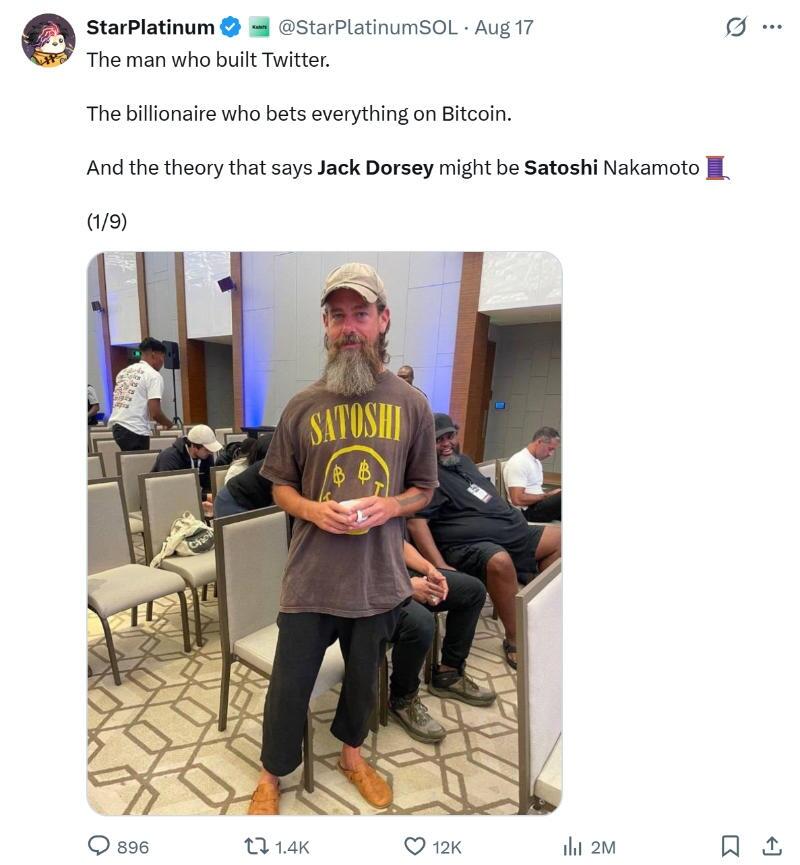
However, some are adamant that the creator of Bitcoin is much more human and has been under our noses this whole time, sporting a guru beard, sandals, and wearing a T-shirt with Satoshi written on it in large letters: the billionaire Twitter and Block founder Jack Dorsey.
“I believe that Jack has been outwardly signaling that he’s Satoshi for more than a decade,” deBanked chief editor Sean Murray tells Magazine.
“I don’t think his actions over the past decade are of someone saying ‘don’t find me’ but rather someone building on to the lore of how it’s him, why it’s him, that each blatant but indirect admission is part of the art, the brand of poetic terrorism that he subscribes to.”
So what makes some intelligent and respected people — including VanEck’s head of digital assets research Matthew Sigel — so confident that Dorsey is the creator of Bitcoin?
1. Jack Dorsey was one of the original cypherpunks in the 1990s and wanted to end dependence on the dollar
Like any good murder mystery, a killer requires a motive. Dorsey has this in spades.
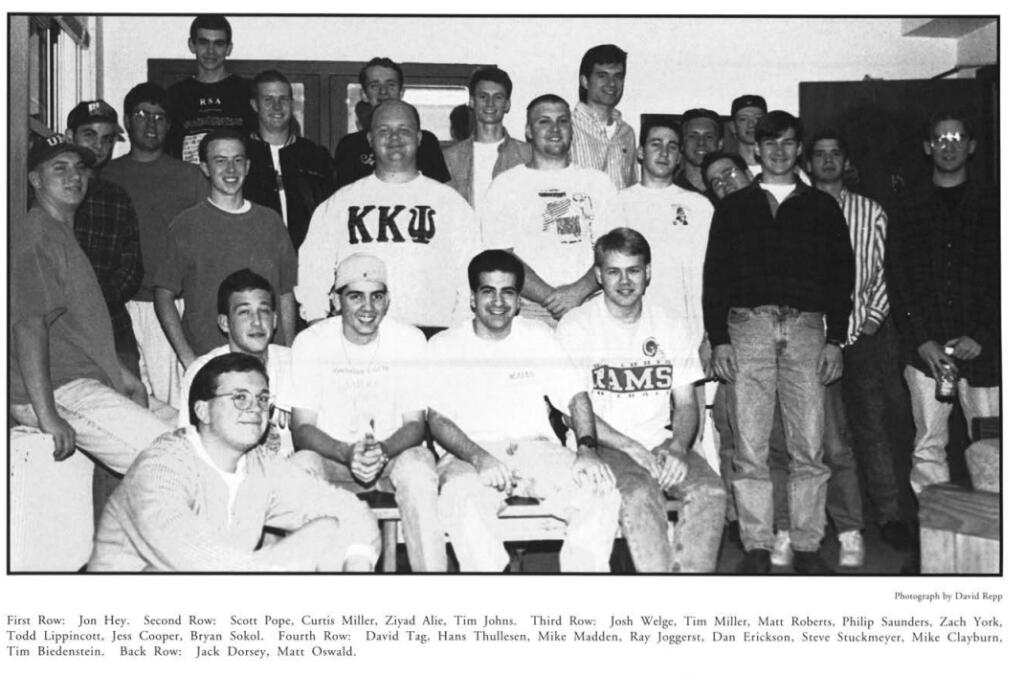
Dorsey was one of the original 1,300 members of the famed Cypherpunk mailing list — a foundational online community founded in 1992 that prized privacy and digital freedom and laid the groundwork for Bitcoin as money outside the control of the state. He joined the list in 1996 while a student at the University of Missouri–Rolla at around 20 years of age.
Jack Dorsey wearing an RSA shirt designed by Dr Adam Back in protest of the US government’s ban on the export of RSA encryption. (Sean Murray)
Dorsey even created a website that promoted the cyberpunks’ mission using his university domain. It’s safe to say he was a massive fan of the movement and familiar with Adam Back and Hal Finney and DigiCash long before they became well known.
Fun fact: In 2003, Dorsey reportedly blogged, “I also wish to end my dependence on the American Dollar ($) and in that vein am setting up a bartering network.”
2. Dorsey’s ventures are about Bitcoin and decentralization
Dorsey’s alignment with the cypherpunk movement persists to today. In 2009, he founded the now crypto-forward payments company, Square (now known as Block), which has just rolled out Bitcoin payments to over 4 million merchants.
In 2019, after his second return as CEO of Twitter, he created Bluesky, a decentralized Twitter alternative that embodies some of Bitcoin’s decentralized ideals. It didn’t live up to his ideals of decentralization so he focused his efforts on supporting Nostr instead.
Then, earlier this year, Dorsey launched Bitchat. This decentralized communications platform enables people to contact each other without the need for the internet, which has proven particularly valuable amid government protests and natural disasters, much like Bitcoin has in the past.
Screenshot of Jack Dorsey’s early cypherpunk website. Credit to Sean Murray
His charity, Start Small, donated a whopping $21 million to OpenSats, a nonprofit that supports the developers of Bitcoin Core and other projects related to Bitcoin.
No matter which way you slice it, Dorsey is a cypherpunk OG who has the motivation, and as we will see, the know-how to create and support the growth of Bitcoin.
3. See? Plus, plus: Jack Dorsey had the know-how to code Bitcoin
So, if Dorsey wanted to create Bitcoin, did he have the skills to code it?
The answer to this is also a resounding probably. Dorsey was obsessed with computers since his father brought home an IBM PC Junior, when he was around 8 years old. They later got a Macintosh, and by the age of 11, he had taught himself to code.
What an IBM PCjr looked like (Wikimedia Commons)
“I was enthralled by both of them, mainly the ability to just change what they do. So I learned how to program in BASIC, and I played with HyperCard, and little by little I got better and better at newer programming languages like C,” said Dorsey in a Harvard Business School podcast in 2014.
By around the age of 15, Dorsey was already writing dispatch software for taxi cabs, couriers and emergency services that would later be used for decades.
When deBanked’s Murray Dorsey uncovered Dorsey’s early cypherpunk website from the late 90s, it showed Dorsey already knew coding languages including C, Python, Java, Perl, PHP, OCaml, JoCaml, Lisp, ObjC and more. And yes, it did show he knew how to code in C++, the language the original Bitcoin client was written in.
So, it’s not a giant leap to think that Dorsey would have had an even firmer grasp of programming by the time he was 32, which was how old he was when the Bitcoin white paper was released.
4. Dorsey was focused on other things outside his day job in the lead up to the BTC white paper
The theory becomes even more intriguing once you realize that Dorsey, who founded and ran Twitter from 2006 to 2008, happened to have some downtime just weeks before the Bitcoin white paper was released — downtime potentially related to spending too much time away from his day job.
Writing Bitcoin would not have been an easy task. Nakamoto once told early Bitcoin user and developer Mike Hearn in 2010 that it took him two years of development before releasing the Bitcoin paper and code, “and I could only spend so much time on each of the many issues.”
This would have been precisely the time frame that Dorsey was working as the CEO of Twitter before he was fired in October 2008.
Why did he get fired? Many reports pin it to Dorsey’s failure to address the platform’s frequent service disruptions and perceived leadership issues.
However, some suggest that part of the reason is that he would leave the office early to “de-stress and attend night courses in fashion and drawing.”
Satoshi Nakamoto would go on to share the Bitcoin white paper for the first time on Oct. 31, 2008, with the message:
I’ve been working on a new electronic cash system that’s fully peer-to-peer, with no trusted third party.”
Bitcoin officially launched a few months later on Jan. 3, 2009.
5. The coincidences
Then, there are the many “coincidences” aligning specific dates in Bitcoin with aspects of Dorsey’s personal life. Believers are convinced these Easter eggs were made to subtly point toward Dorsey.
Here are some key ones, with credit to Murray and Sigel; however, there are countless more that we didn’t cover, which can be found here.
Oct. 31, 2008: Bitcoin white paper comes out / Oct. 31, 2008: Neal Stephenson, author of “Snow Crash,” birthday. Dorsey is a fan of the book.
Jan. 9, 2009: Dorsey attends an award show in San Francisco / Jan. 10, 2009: Nakamoto accidentally logged into IRC from an IP address in California
Jan. 11, 2009: Nakamoto’s first recorded transaction / Jan. 11, 2009: Dorsey’s mother’s birthday
Nov. 19, 2009: Nakamoto registers for the Bitcoin forum as “satoshi” / Nov. 19, 2009: Dorsey’s birthday / Nov. 19, 2015: Square (now Block)’s IPO / Block Investors Day, Nov.19 2025.
May 3, 2010: Nakamoto’s last mined Bitcoin / May 3, 2010: Dorsey’s father’s birthday.
Then there’s the coincidence that his good friend Alyssa Milano wrote a graphic novel called Hacktivist about a billionaire character based on Dorsey who runs a social media company but is a secret hacker who develops a decentralized encrypted peer to peer network. Hmmm.
6. Jack Dorsey bankrolled the case against Faketoshi
Another circumstantial piece of evidence is what Jack Dorsey did when he saw a man parading around the world claiming to be Satoshi Nakamoto.
For years, Australian computer scientist Dr. Craig Wright claimed to be the inventor of Bitcoin. He ultimately lost the battle last year and was forced to admit he was not.
But before that, his lawyer, Anthony Grabiner, had argued that it was “striking” that no one else had publicly claimed to be the creator of Bitcoin.
“If Dr Wright were not Satoshi, the real Satoshi would have been expected to come forward to counter the claim,” said Grabiner.
Jack Dorsey answered the call.
In May 2020, 145 ancient Bitcoin addresses signed a message stating that Craig Wright was not Satoshi and a liar and a fraud. The oldest Bitcoin address that signed the message started with 1jak — Jack’s old pseudonym.
Through Block, Dorsey co-founded and bankrolled the Crypto Open Patent Alliance (COPA), which sued Wright in 2021 to legally declare he is not the creator of Bitcoin.
Dorsey began wearing the Satoshi T-shirt in February 2022, in the midst of the saga.
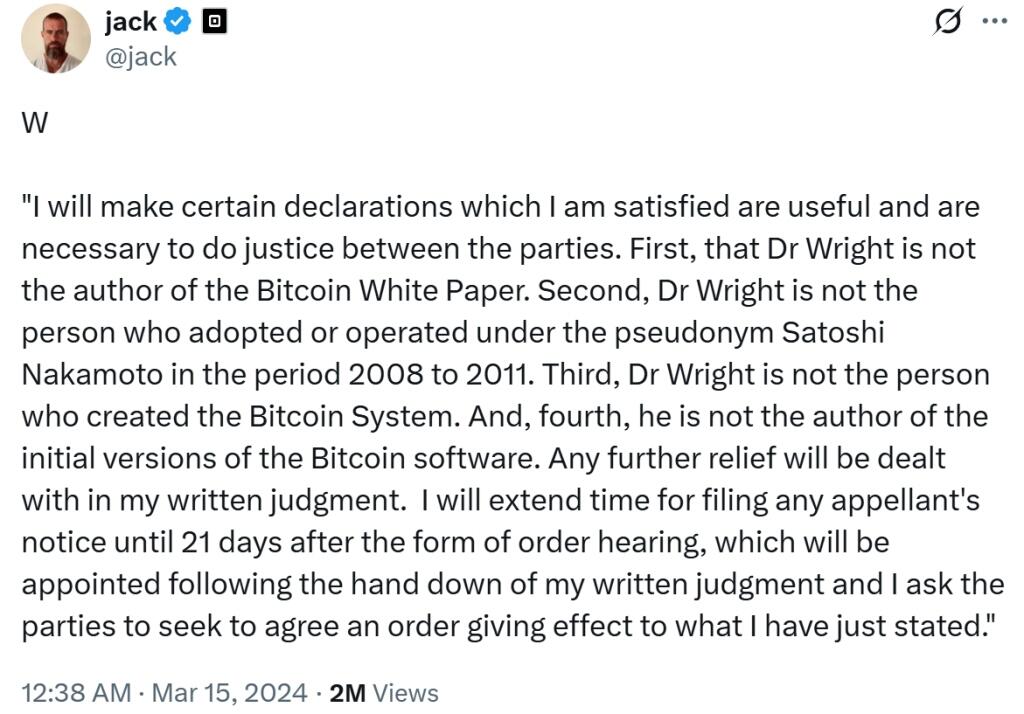
The case concluded with a High Court ruling in March 2024 in their favor. Dorsey simply and humbly labeled it a “W” after the verdict was announced.
5 good reasons why Jack Dorsey isn’t Satoshi Nakamoto
While none of the evidence above could be considered bulletproof, supporters of the theory say there’s more than enough circumstantial evidence to seriously point toward Dorsey. Not everyone agrees, though.
Knowing how to code and being a member of the Cypherpunk mailing list is probably just the bare minimum to be a Nakamoto candidate. Julian Assange was also on the list, along with Adam Back and Wei Dai, for example.
Critics of the theory argue that there’s no single piece of evidence that concretely links Dorsey to Nakamoto.
Jameson Lopp, the co-founder of crypto security company Casa, is one of these people, calling the theory a “half baked narrative.”
“It’s true that Jack was a cypherpunk and a programmer, but that’s the strongest ‘evidence’ available to support this theory. Everything else is circumstantial if not outright mental gymnastics via numerology,” says Lopp.
1. Dorsey would have had to juggle Bitcoin, Square and Twitter
“I think Jack is by far one of the least plausible theories because there’s so much evidence that he was too busy doing other things (traveling, building, and promoting Twitter) to be deep in the weeds on a project as novel as Bitcoin,” Lopp tells Magazine.
Common sense says that Dorsey wouldn’t have had the time to work to grow Bitcoin, argues Lopp. While Dorsey was indeed fired as Twitter’s CEO in 2008, just before Nakamoto released the Bitcoin white paper, Dorsey remained chairman of the board.
Then a year later, Dorsey founded Square, a company that allows anyone to accept credit card payments on a mobile device. It would be pretty challenging for Dorsey to have assembled a brand new company while steering the Bitcoin ship.
2014: “We found Satoshi. Turns out he was hiding in plain sight and was listed in the phone book.”
2025: “We found Satoshi. Turns out he was hiding in plain sight and appearing on national television wearing a Satoshi shirt.” pic.twitter.com/Vs7suPUCZI
— Jameson Lopp (@lopp) February 18, 2025
“It’s quite clear that he was an extremely busy person not only overseeing multiple companies, but traveling around the world meeting important people, doing press interviews, speaking at conferences, promoting philanthropic causes, and more,” argues Lopp.
His activities do not fit the profile of someone who had the time and mental bandwidth to also be building a completely new financial system from scratch while maintaining perfect anonymity.”
But Murray argues that this is precisely why Nakamoto complained about being “really busy” on several occasions between 2009 and 2011, eventually leaving the Bitcoin project, posting on April 23, 2011 that “I’ve moved on to other things. It’s in good hands with Gavin and everyone.”
2. Satoshi wary of government, Dorsey worked with them
Another piece of evidence that suggests Dorsey is not Nakamoto is that the creator of Bitcoin comes across almost as a cautious recluse and wasn’t a fan of the government or government control.
Lopp argues that, in contrast, Dorsey is a highly public figure.
“The funny thing about Jack is that, unlike most cypherpunks, he was an extremely public individual who posted what he was up to on nearly an hourly basis,” he explains.
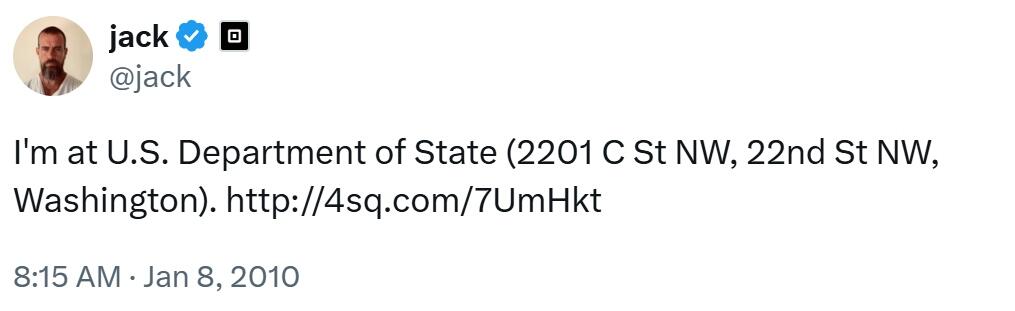
Dorsey also reportedly spent 2008 and 2015 engaged with the US State Department as part of several delegations to Iraq, Iran and Russia with other representatives from the tech sector, which would appear to be out of character for Nakamoto.
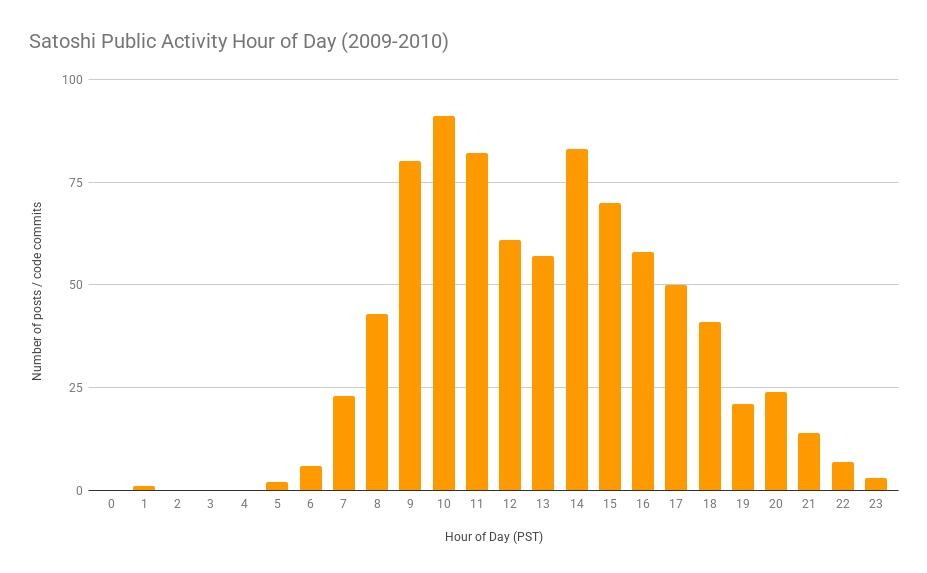
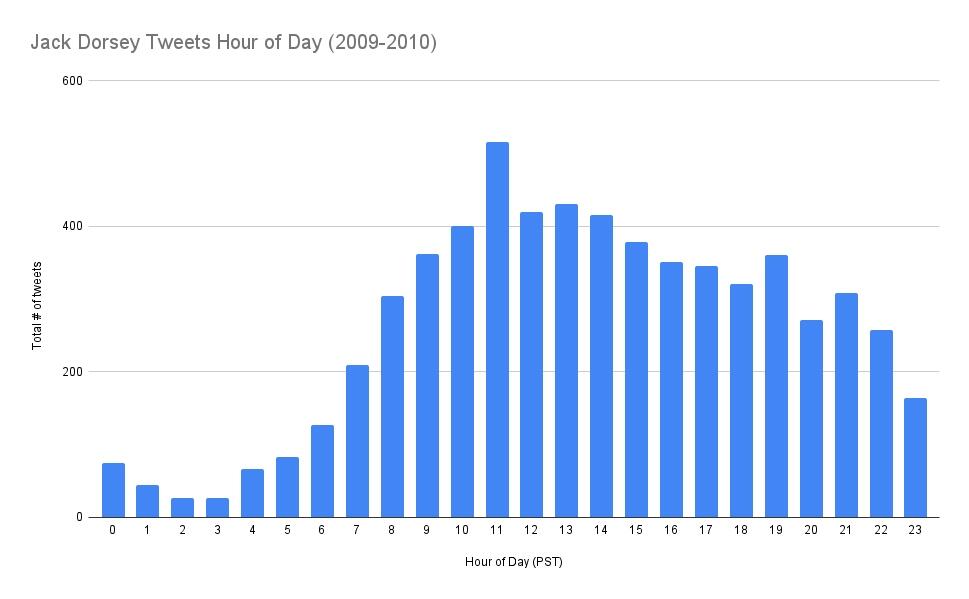
3. Satoshi Nakamoto had regular PT posting patterns
Lopp also noted that Satoshi’s online activity suggests a consistent sleeping pattern in the Pacific timezone. Cities in this timezone include Los Angeles, San Francisco, Seattle, Vancouver and Tijuana.
In contrast, Dorsey’s tweets were far more erratic — consistent with someone who is constantly travelling between different time zones. However, it is worth noting that Dorsey was based in San Francisco around the time Bitcoin was created.
Satoshi Nakamoto and Jack Dorsey had different online activity patterns (Jameson Lopp)
4. Dorsey and Nakamoto had conflicting activities
A related point is that Lopp argues that there are specific event conflicts that make it doubtful that Dorsey and Nakamoto are the same person.
For example, in November 2009, Dorsey tweeted he was having a “late lunch” with venture capitalist Fred Wilson, but only five minutes later, Nakamoto committed code to the SourceForge repository.
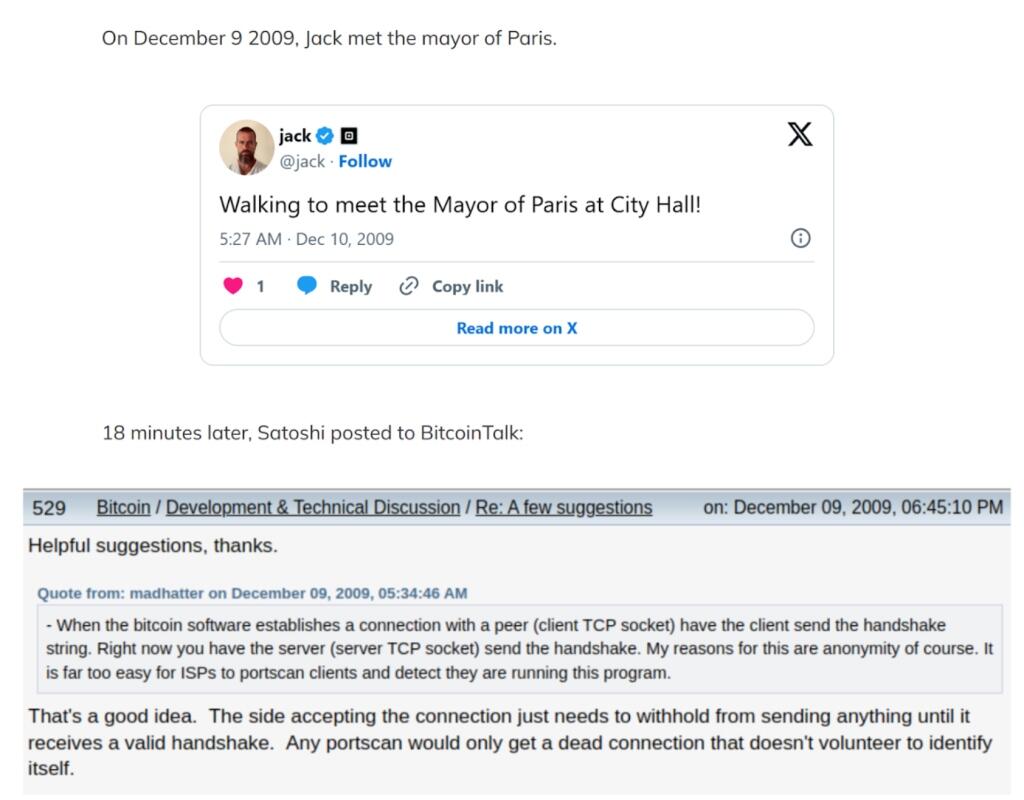
In another instance, Jack said he was walking to meet the mayor of Paris at City Hall on Dec. 9, 2009, and only 18 minutes later, Satoshi posted several responses to a technical suggestion thread about Bitcoin.
Satoshi Nakamoto’s post to BitcoinTalk, as Jack Dorsey was set to meet the mayor of Paris (Jameson Lopp)
Another potential conflict arose in July 2010, when Jack tweeted that he was getting ready to go on stage to present at the Square headquarters, and posted “Boom” around 28 minutes later, presumably when he had finished the presentation.
During this time, Satoshi posted to the Bitcoin talk forum.
Of course, if you can design an entirely new monetary system in your spare time, you can probably schedule in a few posts to throw people off the scent.
Lopp acknowledges that it’s not impossible that Dorsey pre-timed certain posts on Bitcointalk or posted with his mobile phone while on the go, but argues that if that was the case, Dorsey would have picked much more public events and settings to set his pre-timed posts as Nakamoto.
5. Coincidental dates are meaningless
Lopp also argues the so-called “numerology” — like Nakamoto signing up for BitcoinTalk on the same day as Dorsey’s birthday is “absolute junk.”
“You can find patterns in anything,” Lopp tells Magazine. “It preys upon our monkey brain’s innate desire to find patterns in random noise and try to make sense of them.”
There’s actually a scientific term for this called “Apophenia” — the psychological phenomenon of perceiving meaningful patterns or connections between unrelated or random things. It’s seen as one of the key reasons why humans can navigate the world in the way we do.
Apophenia could be why people keep accidentally finding Jesus Christ in their grilled cheese toast (YouTube)
Famed physicist Neil deGrasse Tyson once made a similar observation.
“Over centuries of evolution, humans’ pattern recognition skills determined natural selection. Hunters skilled at spotting prey and predator and telling poisonous plants from healthy ones offered them a better chance of survival than those blind to the patterns. It enabled the survivors to pass on those pattern-friendly genes to future generations.”
The debate goes on
The evidence pointing to Dorsey is certainly fascinating, but is far from irrefutable. Murray remains convinced that Dorsey is Nakamoto.
“I believe that the Satoshi character is a Jack Dorsey story, that the circumstantial evidence, skillset, timeline, background, and modus operandi are a perfect match,” he tells Magazine.
“Prior to my research, there were very few people, if any, that were even aware Jack was one of the original cypherpunks or that he was obsessed with cryptography as a youth, that he knew of Adam Back and Hal Finney and DigiCash by name.”
The pieces were intentionally put there to be found, even if we may never be afforded the satisfaction of him directly coming out and saying it’s him.”
Lopp thinks it’s more likely to be someone other than Dorsey — but argues that for the sake of Bitcoin, we would be better off not looking.
“I find the aggregate of all the evidence to provide so much doubt that a reasonable person would conclude that it’s far more likely that Satoshi was someone else,” says Lopp in a blog post.
Bitcoin is better off with Satoshi’s identity remaining unknown. A human can be criticized and politically attacked. A myth will withstand the test of time.
Tyler Durden
Fri, 12/05/2025 – 06:30
https://www.zerohedge.com/crypto/6-reasons-jack-dorsey-definitely-satoshi-and-5-reasons-hes-not
Reguladores de la UE multan a X, de Elon Musk, con 120 millones de euros por violar normas digitales
LONDRES (AP) — Reguladores de la UE multan a X, de Elon Musk, con 120 millones de euros por violar normas digitales.
León cancela comisión de recaudación del Vaticano anunciada en circunstancias cuestionables
Por NICOLE WINFIELD
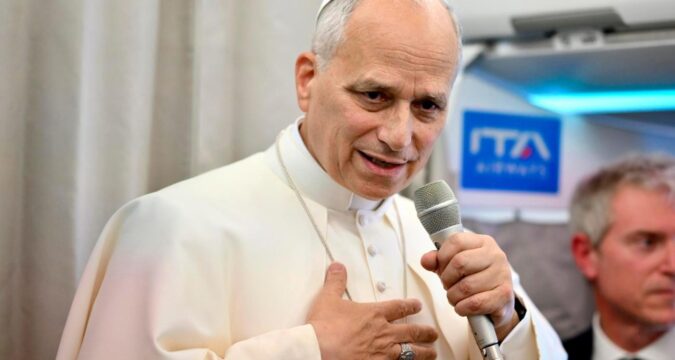
ROMA (AP) — León XIV ha dado el paso más significativo hasta la fecha para corregir una de las medidas financieras más controvertidas del papa Francisco, al cancelar una comisión especial de recaudación de fondos de la Santa Sede que se anunció en circunstancias cuestionables durante la hospitalización del religioso argentino.
El pontífice suprimió oficialmente el jueves la comisión de recaudación, derogó sus estatutos y despidió a sus miembros. Además, decretó que sus activos pasarán a la Santa Sede en su conjunto, y que la oficina de patrimonio vaticana supervisará la disolución de la comisión.
Se formará un nuevo grupo de trabajo, con miembros aprobados por el papa, para elaborar propuestas de recaudación de fondos y una estructura adecuada para el futuro, según el decreto.
El decreto fue la última señal de que el primer papa estadounidense de la historia está cerrando los cabos sueltos del pontificado de Francisco. En la recta final del año, León está corrigiendo los problemas a medida que es necesario y cumple con las obligaciones del Año Santo de Francisco con la vista puesta en 2026, cuando podrá centrarse más en su propia agenda.
El Vaticano anunció la creación de la comisión, sus estatutos y sus miembros el 26 de febrero, mientras Francisco estaba ingresado luchando contra una neumonía bilateral. En aquel momento, el papa recibía la visita de los principales funcionarios de la secretaría de Estado.
La comisión estaba formada únicamente por italianos sin experiencia profesional en recaudación de fondos. Su presidente era el asesor de la secretaría de Estado, la misma oficina a la que Francisco había despojado previamente de su capacidad para gestionar activos tras perder decenas de millones de euros en un escandaloso acuerdo inmobiliario en Londres.
La concentración de poder en la secretaría de Estado, la falta de recaudadores de fondos calificados y la ausencia de estadounidenses en la junta —Estados Unidos es el mayor donante del Vaticano— generaron de inmediato dudas acerca de la credibilidad de la comisión. Para algunos, parecía que la secretaría, dirigida por italianos, estaba aprovechando la enfermedad del papa para anunciar un nuevo flujo de donaciones sin control hacia sus arcas después de que Francisco le quitara el fondo soberano de 600 millones de euros (684 millones de dólares) y se lo diera a otra oficina para gestionarlo como castigo por el fiasco de Londres.
El decreto del papa estadounidense parece un esfuerzo por empezar desde cero. Las donaciones son una fuente crucial de ingresos para la Santa Sede, y los donantes estadounidenses adinerados, en particular, esperaban que León, licenciado en matemáticas, impusiera una mayor transparencia financiera y responsabilidad en las cuentas del Vaticano.
___
La cobertura de religión de Associated Press recibe apoyo a través de la colaboración de AP con The Conversation US, con financiación de Lilly Endowment Inc. AP es el único responsable de este contenido.
___
Esta historia fue traducida del inglés por un editor de AP con la ayuda de una herramienta de inteligencia artificial generativa.

Review: ‘Elf’ at the Auditorium Theatre has a fine Buddy in a middling musical
“Elf the Musical” is the theatrical equivalent of pouring maple syrup on spaghetti; kids may love it, but nostalgia aside, it’s too sickly sweet to have broad appeal for adults. Based on the 2003 film starring Will Ferrell, the 2010 stage adaptation returned to Broadway last year, directed by Philip Wm. McKinley, and a new national tour based on this production is now playing a limited run at the Auditorium Theatre.
With music by Matthew Sklar and lyrics by Chad Beguelin, the Christmas cheer is dialed up to 11 in the familiar story of Buddy, a human raised in the North Pole who travels to New York to find his birth father. The title of the opening number, “Happy All the Time,” pretty much sums up the mood. Performed by Santa Claus (Andrew Hendrick) and the elves (average-height adult ensemble members shuffling around on their knees), the song introduces Jack Ducat’s Buddy, the happiest elf of them all.
This production didn’t change my mind about the key problem with this musical: it’s not as funny as the movie, because Buddy’s song-and-dance schtick doesn’t seem as incongruous in a setting where all the characters, even the jaded New Yorkers, regularly break into song. Most of the tunes aren’t particularly memorable, with the exception of a few unwelcome earworms. However, I’ll concede one element that kind of works in musical form: it makes sense that Buddy is the one egging on the company in many of the major numbers, because this emphasizes his role in helping his newfound family and community rediscover their love for Christmas and each other.
Ducat makes an endearing Buddy, with childlike enthusiasm that comes off as more believable than Ferrell’s performance, thanks in part to his youthful look and mannerisms. Buddy’s complete oblivion to innuendo adds a note of adult humor to this overall family-friendly comedy, and his exaggerated physicality should play well with younger viewers. The rest of the cast does fine with the material at hand, though many of the roles are underdeveloped or caricature-like. Buddy does share a few sweet moments with love interest Jovie (Felicia Martis), but she doesn’t get nearly as much stage time.
The production design is suitably loud and jolly, from the rainbow palette of the elf costumes to the tinsel-bedecked halls of Macy’s (scenic and costume designs adapted from the original by Tim Goodchild). As with most Broadway tours in recent years, the visuals rely heavily on video projections, in this case designed by Ian William Galloway. The opening scenes at the North Pole evoke the animated elements of the film — a style that Galloway unfortunately retains when the action moves to New York, resulting in an unrealistic and busy look. However, it’s a nice touch that Santa’s sleigh physically flies in the end, while fake snow sprinkles the house.
The cast of the touring production of “Elf the Musical” at the Auditorium Theatre. (Evan Zimmerman)
Even though I enjoyed the movie as much as most millennials, the musical makes me feel a bit Grinch-like, so take my grumpiness with a grain of salt. On opening night, the audience included people in festive holiday sweaters, T-shirts with quotes from the film and at least one pair of elf ears. Based on the ovation, it seemed that a good time was had by most.
Emily McClanathan is a freelance critic.
Review: “Elf the Musical” (2 stars)
When: Through Dec. 14
Where: Auditorium Theatre, 50 E. Ida B. Wells Drive
Running time: 2 hours, 25 minutes
Tickets: $40.00-$110.00 at broadwayinchicago.com
https://www.chicagotribune.com/2025/12/05/review-elf-auditorium-theatre/

Ataque de dron ruso mata a un niño en Ucrania mientras sigue el secreto sobre conversaciones de paz
Por ILLIA NOVIKOV
KIEV, Ucrania (AP) — Aviones no tripulados rusos alcanzaron una vivienda en el centro de Ucrania y mataron a un niño de 12 años, dijeron las autoridades, y se reportaron ataques ucranianos de largo alcance contra un puerto y una refinería de petróleo rusas, mientras los esfuerzos de paz de Estados Unidos continuaban fuera de la vista del público.
Estaba previsto que Steve Witkoff, el enviado especial del presidente estadounidense, Donald Trump, y el yerno del mandatario, Jared Kushner, se reunieran el jueves con una delegación ucraniana en Miami, pero no hubo confirmación oficial del encuentro.
Estas conversaciones programadas seguían a la reunión que mantuvieron el presidente de Rusia, Vladímir Putin, y los enviados de la Casa Blanca en el Kremlin el martes.
Los esfuerzos diplomáticos previos para romper el estancamiento no arrojaron resultado y la guerra, que comenzó hace casi cuatro años, no da signos de detenerse. Las autoridades han mantenido en gran medida en secreto el desarrollo de las últimas conversaciones, aunque se filtró el plan inicial de 28 puntos de Trump.
El presidente de Ucrania, Volodymyr Zelenskyy, apuntó que la delegación de su país en Miami quería escuchar la versión estadounidense de lo ocurrido en la reunión en el Kremlin.
Zelenskyy y los líderes europeos que lo apoyan han acusado repetidamente a Putin de demorar las conversaciones de paz mientras el ejército ruso intenta avanzar sobre el terreno.
En un mensaje en video el jueves por la noche, Zelenskyy indicó que los funcionarios querían saber “qué otros pretextos ha ideado Putin para prolongar la guerra y presionar a Ucrania”.
Mientras, el asesor de asuntos exteriores del Kremlin, Yuri Ushakov, quien acompañaba a Putin en una visita a India el viernes, repitió las recientes críticas del liderazgo ruso a la postura de Europa en las conversaciones de paz. Los aliados europeos de Kiev están preocupados por una posible agresión rusa más allá de Ucrania y quieren que el posible acuerdo de paz incluya sólidas garantías de seguridad.
Los socios europeos de Kiev están “constantemente presentando demandas que son inaceptables para Moscú”, dijo Ushakov a la televisión estatal rusa Zvezda. “Dicho suavemente, los europeos no ayudan a Washington y Moscú a llegar a un acuerdo sobre los asuntos ucranianos”.
En la región de Dnipropetrovsk, en el centro de Ucrania, un ataque con drones rusos destruyó el jueves por la noche una casa donde falleció el menor y otras dos mujeres resultaron heridas, según el jefe de la administración militar regional, Vladyslav Haivanenko.
La fuerza aérea ucraniana dijo que Rusia disparó 137 drones de varios tipos durante la noche.
Aviones no tripulados ucranianos atacaron un puerto en la región fronteriza rusa de Krasnodar. La ofensiva causó un incendio en el puerto de Temryuk y dañó la infraestructura portuaria, indicaron las autoridades.
Los drones ucranianos también apuntaron a objetivos más adentro en Rusia, atacando la ciudad de Syzran, en el río Volga, explicó el alcalde, Sergei Volodchenkov, que no dio más detalles.
Informes de prensa no confirmados señalaron que drones ucranianos golpearon una refinería de petróleo en Syzran, a unos 800 kilómetros (500 millas) al este de la frontera con Ucrania.
El Ministerio de Defensa ruso dijo que sus defensas antiaéreas interceptaron 85 drones ucranianos sobre regiones rusas y Crimea, la península anexionada ilegalmente por Moscú, durante la noche.
___
Esta historia fue traducida del inglés por un editor de AP con la ayuda de una herramienta de inteligencia artificial generativa.