Category: News

Netflix to acquire Warner Bros. studio and streaming business for $72 billion
NEW YORK — Netflix has struck a deal with Warner Bros. Discovery to buy the legacy Hollywood giant’s studio and streaming business for $72 billion.
The acquisition, announced Friday, would bring two of the industry’s biggest players in film and TV under one roof. Beyond its namesake television and motion picture division, Warner owns HBO Max and DC Studios. And Netflix has rose to dominance as a household name ubiquitous to on-demand content, while building of its own production arm to release popular titles like “Stranger Things” and “Squid Game.”
The cash and stock deal is valued at $27.75 per Warner share, giving it a total enterprise value of approximately $82.7 billion. The transaction is expected to close after Warner separates Discovery Global into a new publicly-traded company in the third quarter of 2026.
https://www.chicagotribune.com/2025/12/05/netflix-warner-bros-studio-streaming/
“Instinctually Programmed To Lie”: CNN’s Jake Tapper Mislabels D.C. Pipe-Bomb Suspect As “White Man”
“Instinctually Programmed To Lie”: CNN’s Jake Tapper Mislabels D.C. Pipe-Bomb Suspect As “White Man”
Leftist CNN anchor Jake Tapper was blasted online as “an NPC programmed to lie” after he falsely identified the accused D.C. pipe-bomber Brian Cole Jr. as “a white man.”
“Brian Cole Jr., a 30-year-old white man from the D.C. suburbs, is charged with transporting an explosive device in interstate commerce and with malicious destruction by means of explosion. CNN observed local and federal law enforcement outside his home in Woodbridge, Virginia, this morning,” Tapper told viewers – a statement that now appears grossly misleading and suggests the unhinged anchor is upholding a political and racial bias simply because the facts don’t fit the fake-news narrative mainstream media has pushed for years.
Just so instinctually programmed to lie. Literally an NPC. Programmed to lie.
— Autism Capital 🧩 (@AutismCapital) December 5, 2025
Tapper’s segment refers to pipe bombs found near the Republican and Democratic National Committee headquarters on January 5, 2021, the night before the Capitol riot.
In a separate report, the New York Post noted: “Cole’s father is also Black and once enlisted the services of Ben Crump, an attorney best known for his racial discrimination cases.”
According to an FBI affidavit filed on Wednesday, Cole works in the office of a bail bondsman in northern Virginia. He resides in a single-family home in Woodbridge with his mother and other relatives.
The current scene outside the J6 pipe bomber suspect Brian Cole’s Virginia homepic.twitter.com/3CptZpuxsD
— Benny Johnson (@bennyjohnson) December 4, 2025
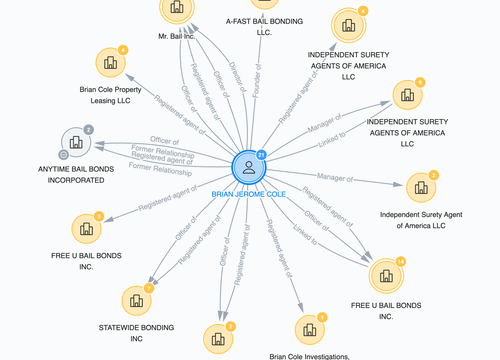
Public records indicate that Brian Cole is connected to a wide network of bail-bonds companies.
When corporate media’s manufactured narratives collapse like a house of cards, their immediate reaction is always the same: lie. But this time, the fake news isn’t sticking – ordinary people see through the bullshit, and trust in mainstream media continues plunging to record lows.
Tyler Durden
Fri, 12/05/2025 – 07:45
Best camera flashes to brighten every shot
Which camera flash is best?
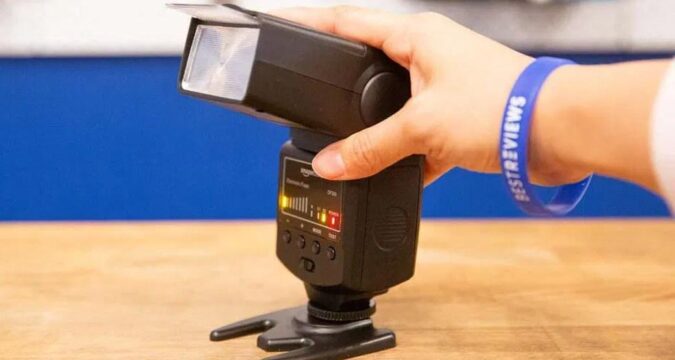
To oversimplify, a camera works by recording the light that enters through its lens. If there isn’t enough light entering the lens, then you record a poor image — if you record an image at all. Many cameras, such as the ones in phones, have a built-in flash that’s just strong enough to take a simple photo in low light conditions. Professional-grade flashes like the Canon Speedlite 430EX III-RT Flash are much more powerful and can be minutely adjusted to take the best possible pictures.
What to know before you buy a camera flash
Compatibility
Compatibility comes down to how a camera flash physically connects to the camera and how its software connects. You should also consider the brand.
Physical: Camera flashes typically connect using something called a hot-shoe bracket. Most professional-grade cameras have a hot-shoe bracket panel directly above the lens on top of their body. If they don’t have this panel, you may be able to connect it with a cable or wirelessly.
Software: Even flashes that fit your camera may not have their full suite of functions available to you, though you should at least have access to its basic functions. Most flashes include a list of cameras they’re compatible with.
Brand: When in doubt, consider buying a flash that matches your camera’s brand. Except in rare cases, it should work perfectly. Don’t be afraid to buy branded or generic flashes that don’t match your camera — just check its compatibility first.
Guide number
The guide number essentially relates to how powerful a flash is, and higher numbers mean higher power. You use the guide number to determine what your camera’s settings — namely its aperture and ISO — need to be in order to light your subject properly at varying distances.
Battery
Camera flashes run on their own battery or through your camera’s battery. Usually the largest and most powerful flashes require their own battery power, using either replaceable or rechargeable batteries. Flashes that use the camera’s battery access it through the hot-shoe bracket.
What to look for in a quality camera flash
Screen
The best camera flashes have screens that show the flash’s current settings, making it much easier to adjust them.
Through-the-lens and exposure compensation
Both of these optional modes make using your flash much easier.
TTL mode lets the camera automatically adjust the flash for optimal picture quality.
Exposure compensation mode adds a small amount of manual control when using a TTL mode. Typically, it gives you control over the flash’s intensity and your camera’s exposure.
How much you can expect to spend on a camera flash
Camera flashes typically cost $25-$750. Basic flashes for simple jobs cost less than $100 with better midrange options costing roughly $100-$200. The best flashes start at around $200.
Camera flash FAQ
Does the flash need to be connected to the camera to use it?
A. Some need to be directly connected to the camera. Others can be used remotely if connected by a cable, and a few can be used completely wirelessly.
Can I use multiple camera flashes at once?
A. Absolutely. In fact, it’s considered a standard practice to do so — if you have the time to set up a shot. In situations where you need to be relatively candid, one flash should still be enough. Take wedding photography, for example. You can set up multiple flashes for official photos after the ceremony and wander the reception with one attached flash.
How should I transport my camera flashes?
A. Cameras and their accessories are delicate, so you should transport everything in a good camera bag. Some camera flashes are compact enough to fit in a pocket, which may be necessary if your current job needs you to move around and change flashes quickly. You can also leave your flash attached to the camera. Just make sure to turn it off when you’re done with it.
What’s the best camera flash to buy?
Top camera flash
Canon Speedlite 430EX III-RT Flash
What you need to know: It offers excellent features and works with many camera brands.
What you’ll love: The body is small and lightweight, making it easy to travel with. Settings are easily adjusted, thanks to a dot-matrix LCD screen and multidial control button. The zoom flash head has a range of 24-105 millimeters, and it has a maximum guide number of 141 feet at ISO 100.
What you should consider: The flash may work with non-Canon cameras, but not all settings are available to them. Some consumers report issues with overheating, regardless of camera brand.
Top camera flash for the money
Powerextra Flash Speedlite, 2.4G Wireless Flash Trigger Transmitter Kit
What you need to know: It’s wireless and affordable, and it works with most cameras.
What you’ll love: The kit includes the wireless camera flash, a miniature stand, a 2.4G wireless flash trigger and a user manual. The flash has a vertical and horizontal rotation angle of -7 to 90 degrees and 0 to 270 degrees, respectively. The flash trigger has a maximum range of 160 feet.
What you should consider: It isn’t compatible with most Canon cameras. Some customers had issues with battery life. Others struggled to contact customer support when issues arose.
Worth checking out
Neewer NW625 GN54 Speedlite Flash
What you need to know: The digital display makes it a breeze to control.
What you’ll love: It’s compatible with most cameras that use a standard hot shoe mount. The flash recharges in 3.5 seconds. It has overheat protection, a power-saving mode and PC synchronization. It has vertical and horizontal rotation angles of -7 to 90 degrees and -90 to 180 degrees.
What you should consider: Some people had issues with the flash breaking.
Prices listed reflect time and date of publication and are subject to change.
Check out our Daily Deals for the best products at the best prices and sign up here to receive the BestReviews weekly newsletter full of shopping inspo and sales.
BestReviews spends thousands of hours researching, analyzing and testing products to recommend the best picks for most consumers. BestReviews and its newspaper partners may earn a commission if you purchase a product through one of our links.
Distributed by Tribune Content Agency, LLC.
https://www.chicagotribune.com/2025/12/05/best-camera-flashes-to-brighten-every-shot/

Daywatch: Cook County property taxpayers get another shot at appeals
Good morning, Chicago.
Citing this year’s record property tax hikes, the Cook County Board of Review is giving taxpayers another brief shot at knocking down their bills for next year.
Every Cook County township will reopen for appeals to property tax assessments, the county’s estimate of a home or business’ value, through Dec. 12.
Successful appeals won’t offer any immediate relief on the bills that just landed, however. Any savings would apply to next year’s second installment bills, which typically land in the summer. People who already appealed aren’t eligible.
Read the full story from the Tribune’s A.D. Quig.
Here are the top stories you need to know to start your day, including: what a lawyer for the Trump administration said about the dismissal of an Operation Midway Blitz suit, a historic settlement approved by the Chicago school board and our holiday book guide.
Today’s eNewspaper edition | Subscribe to more newsletters | Asking Eric | Horoscopes | Puzzles & Games | Today in History
People walk through the snow along North Michigan Avenue as a winter storm passes through the area on Nov. 29, 2025, in Chicago. (Armando L. Sanchez/Chicago Tribune)
A snowy, cold start to winter follows a very warm fall. How are Illinois seasons changing?
After years of little snow across the Chicago area, recent record-breaking snowfall and below-freezing temperatures might seem to contradict scientific reports of winters getting warmer. But climate change is still transforming how locals experience the changing seasons, including this fall, one of the top 10 warmest recorded in Illinois.
Chicago weather: How our 2025-26 seasonal snowfall compares with previous years
Angry crowds face off with federal agents after a raid at the Discount Mall on West 26th Street in Chicago’s Little Village neighborhood on Oct. 23, 2025. (Antonio Perez/Chicago Tribune)
Trump lawyer claims dismissal of Operation Midway Blitz suit would block future use-of-force claims
An attorney for the Trump administration claimed in court yesterday that the dismissal of a lawsuit over the use of force by immigration agents in Chicago would bar journalists and protesters from bringing similar claims of constitutional violations in the future.
Mayor Brandon Johnson, right, shakes hands with Matthew Brewer, interim board chairman of the Chicago Housing Authority, during a ribbon cutting event for the Edith Spurlock Sampson Apartments in Lincoln Park on Feb. 27, 2025. (Eileen T. Meslar/Chicago Tribune)
Chicago Housing Authority head told HUD ‘we do not recommend’ Mayor Brandon Johnson ally as CEO
The Chicago Housing Authority board told the federal government this fall that Mayor Brandon Johnson was pressuring the agency behind the scenes to install a close political ally to lead the nation’s third-largest public housing agency.
CHA board Chair Matthew Brewer wrote to the U.S. Department of Housing and Urban Development on Oct. 1 laying out what he said were Johnson’s attempts to influence the agency to name former Ald. Walter Burnett Jr. as CEO, according to a copy of the letter obtained by the Tribune.
Perplexity cofounder and CEO Aravind Srinivas speaks during during a technology conference in Washington on Oct. 28, 2025. (Jim Watson/Getty-AFP)
Chicago Tribune sues Perplexity AI for copyright infringement
The Chicago Tribune filed a copyright infringement lawsuit yesterday in New York federal court against Perplexity AI, alleging the California-based startup has been unlawfully profiting off the newspaper’s content in building its AI-driven search engine.
The complaint challenges the unauthorized use of often fully reproduced Tribune reporting to provide answers on the Perplexity AI platforms – both a chatbot and newly launched search engine – essentially bypassing the need to link to the newspaper’s website.
Brian Crowder gets into a vehicle after leaving the Leighton Criminal Court Building in Chicago on July 1, 2025. (Chris Sweda/Chicago Tribune)
Chicago school board approves $17.5 million sex abuse settlement for former student
The Chicago Board of Education approved a historic $17.5 million settlement over the sexual abuse of a student by a former Little Village high school dean.
The settlement is believed to be the largest school-related sexual abuse settlement in state history, according to the former student’s legal team.
Park Forest police Officer Timothy Jones, who was shot in the line of duty in March 2016 and suffered life-threatening injuries, was released from Marianjoy Rehabilitation Hospital in Wheaton, May 26, 2017. (Zak Koeske/Daily Southtown)
Park Forest police Officer Tim Jones dies nearly a decade after shooting
Tim Jones, a Park Forest police officer and the son of the Country Club Hills Police chief William Jones, died Wednesday, nearly 10 years after he was shot multiple times in a nearly deadly confrontation with an intruder in a vacant house.
Chicago Bears passing game coordinator/defensive backs coach Al Harris, left, works with cornerback Kyler Gordon before the game against the Eagles on Nov. 28, 2025, at Lincoln Financial Field in Philadelphia. (Brian Cassella/Chicago Tribune)
Column: Al Harris has made an impact on the Chicago Bears for years — and wherever he goes, takeaways follow
Al Harris had a profound impact on the Chicago Bears long before being hired as defensive backs coach/passing game coordinator, writes Brad Biggs.
A two-time Pro Bowl cornerback for the Green Bay Packers, Harris is the assistant who was tasked with piecing things together while Jaylon Johnson and Kyler Gordon missed much of the season. He’s the guy who vouched for Nahshon Wright before the Bears signed him in April — seven months before he was named NFC Defensive Player of the Month for November.
Bears CB Jaylon Johnson says fasting and faith helped in recovery from season-threatening groin injury
Sign up for the Bears Insider newsletter
Ohio State wide receiver Jeremiah Smith, Indiana quarterback Fernando Mendoza and Ohio State quarterback Julian Sayin are the finalists for the Chicago Tribune Silver Football award. (Ryan Sun and Barry Reeger/AP, Luke Hales/Getty)
Meet the 3 finalists for the 2025 Chicago Tribune Silver Football, awarded to the Big Ten’s best player
The three finalists for the Chicago Tribune Silver Football will share a field tomorrow night during the Big Ten championship game in Indianapolis.
“Lee Friedlander: Christmas,” by Lee Friedlander, “Norman Rockwell’s Christmas,” by Norman Rockwell, “The Uptown: Chicago’s Endangered Movie Palace,” by Robert Loerzel and James A. Pierce and “Chicago’s Holiday Train,” by Daniel Moreno. (Stacey Wescott/Chicago Tribune)
Holiday book guide 2025: The best gift books of the season, paired to some very specific people
The secret to a happy pairing? Being honest about who that person is, not who you want them to be.
With this in mind, what follows are the best gift books of the season, paired to some very specific people.
Felicia Martis (Jovie) and Jack Ducat (Buddy) in the touring production of “Elf the Musical” at the Auditorium Theatre. (Evan Zimmerman)
Review: ‘Elf’ at the Auditorium Theatre has a fine Buddy in a middling musical
“Elf the Musical” is the theatrical equivalent of pouring maple syrup on spaghetti; kids may love it, but nostalgia aside, it’s too sickly sweet to have broad appeal for adults, writes Emily McClanathan. Based on the 2003 film starring Will Ferrell, the 2010 stage adaptation returned to Broadway last year, directed by Philip Wm. McKinley, and a new national tour based on this production is now playing a limited run at the Auditorium Theatre.

Trump avanza en su retórica antimigración al llamar “basura” a personas procedentes de Somalia
Por LAURIE KELLMAN
o dijo cuatro veces en siete segundos: los migrantes somalíes en Estados Unidos son “basura”.
No fue un error. De hecho, los ataques verbales del presidente Donald Trump contra los migrantes han ido en aumento desde que dijo que México estaba enviando “violadores” a través de la frontera durante el anuncio de su campaña presidencial hace una década. También se ha hecho eco de la retórica utilizada en su día por Adolf Hitler y dijo que las 54 naciones de África eran “países de mierda”. Pero con la floritura con la que puso fin a una reunión de dos horas de su gobierno el martes, el republicano intensificó aún más su retórica contra los migrantes y abandonó cualquier afirmación de que su ejecutivo solo quería expulsar a las personas que están en Estados Unidos sin los permisos adecuados.
“No los queremos en nuestro país”, dijo Trump en cinco ocasiones refiriéndose a las 260.000 personas de ascendencia somalí que hay en el país. “Que regresen al lugar de donde vinieron y lo arreglen”.
Los miembros del gobierno vitorearon y aplaudieron las palabras del mandatario. Se pudo ver al vicepresidente, JD Vance, levantando un puño. El secretario de Defensa, Pete Hegseth, sentado a la izquierda de Trump, le dijo ante las cámaras: “Bien dicho”.
Esos dos últimos minutos ofrecieron un espectáculo fascinante en una nación que se enorgullece de haber sido fundada y enriquecida por emigrantes, junto a su horrible historial esclavizando a millones de ellos y las limitaciones a quienes pueden entrar. Las redadas y deportaciones del Servicio de Inmigración y Control de Aduanas (ICE, por sus siglas en inglés) ordenadas por Trump han reavivado un antiguo debate —y ampliado las división de la nación— acerca de quién puede ser estadounidense. Trump les ha dicho a decenas de miles de ciudadanos estadounidenses, entre otros, que no los quiere por su origen familiar.
“Lo que ha hecho es llevar este tipo de lenguaje a la conversación diaria, a lo habitual”, dijo Carl Bon Tempo, profesor de historia de la Universidad Estatal de Nueva York en Albany. “De alguna manera, ha legitimado este tipo de lenguaje que, para muchos estadounidenses durante mucho tiempo, se consideraba fuera de los límites”.
Una pregunta que llega al núcleo de la identidad estadounidense
Algunos estadounidenses llevan mucho tiempo sintiendo que las personas procedentes de ciertas partes del mundo nunca llegan a integrarse realmente. Ese sentimiento de rechazo a los extranjeros se ha manifestado durante períodos difíciles, como la campaña de miedo a los chinos a finales del siglo XIX y el encarcelamiento de unos 120.000 japoneses-estadounidenses durante la Segunda Guerra Mundial.
Trump, que fue reelegido para un segundo mandato con más de 77 millones de votos el año pasado, ha puesto en marcha una campaña gubernamental integral para limitar la inmigración. Su orden de eliminar la ciudadanía por nacimiento —declarando que los hijos de padres que están en Estados Unidos en situación irregular o temporalmente no son ciudadanos estadounidenses a pesar de la 14ª Enmienda— está siendo evaluada por la Corte Suprema. Ha congelado en gran medida el sistema de asilo del país y ha reducido drásticamente el número de refugiados admitidos. Y esta semana, su ejecutivo suspendió las solicitudes de inmigración para personas de las 19 naciones sujetas a un veto de viaje.
La inmigración sigue siendo un tema prioritario para Trump, y obtiene calificaciones ligeramente más altas en este aspecto que en la valoración general de su labor. Según una encuesta de AP-NORC de noviembre, aproximadamente cuatro de cada 10 adultos, o el 42%, aprobaron la forma en la que el mandatario gestiona el tema, un descenso desde la mitad que lo respaldaba en marzo. Y Trump ha impulsado su agenda con medidas represivas casi a diario. El miércoles, agentes federales lanzaron redadas migratorias en Nueva Orleans.
Hay algunos indicios de que Trump utiliza una retórica antimigratoria más contundente que muchos miembros de su propio partido. Un estudio que abarcó 200.000 discursos en el Congreso y 5.000 comunicaciones presidenciales relacionadas con la inmigración entre 1880 y 2020 encontró que las palabras “más influyentes” sobre el tema eran términos como “aplicar”, “terrorismo” y “política” desde 1973 hasta el primer mandato de Trump.
Los autores escribieron en las Actas de la Academia Nacional de Ciencias que Trump es “el primer presidente en la historia moderna de Estados Unidos que expresa un sentimiento hacia la inmigración que es más negativo que el del miembro promedio de su propio partido”. Y eso fue antes de llamar “basura” a miles de somalíes en Estados Unidos.
El mandatario, acosado por otros acontecimientos durante la reunión del gobierno y las conversaciones entre su homólogo ruso, Vladímir Putin, y los enviados estadounidenses, optó por un discurso duro en su intervención final.
Los somalíes-estadounidenses, dijo, “vienen del infierno” y “no contribuyen en nada”. No hacen “nada más que quejarse” y “su país apesta”. A continuación, se dirigió a un objetivo conocido: la representante demócrata Ilhan Omar, de Minnesota, crítica habitual de Trump, de quien dijo que “es basura”. “Sus amigos son basura”, agregó.
Sus comentarios sobre Somalia causaron conmoción y condena desde Minneapolis hasta Mogadiscio.
“Mi visión de Estados Unidos y de vivir allí ha cambiado drásticamente. Nunca pensé que un presidente, especialmente en su segundo mandato, hablaría con tanta dureza”, dijo Ibrahim Hassan Hajji, un residente en la capital de Somalia, a The Associated Press. “Por eso, no tengo planes de viajar a Estados Unidos”.
Omar calificó la “obsesión” de Trump con ella y con los somalíes-estadounidenses como “espeluznante e insana”.
“No somos, y yo no soy, personas que se dejen intimidar”, manifestó. “Y no vamos a ser chivos expiatorios”.
La influencia de Trump en estos temas es potente
Pero desde el púlpito más importante de la mayor economía del mundo, Trump ha tenido una influencia innegable en la forma en la que la gente ve a los migrantes.
“Trump es especialista en traspasar los límites de lo que otros han hecho antes”, dijo César Cuauhtémoc García Hernández, profesor de derecho civil en la Universidad Estatal de Ohio. “Está lejos de ser el primer político en abrazar la xenofobia racial. Pero como presidente de Estados Unidos, tiene más impacto que la mayoría”.
A nivel nacional, cuenta con “una lealtad admirable” entre los republicanos, agregó. “A nivel internacional, encarna una aspiración para políticos e intelectuales de ideas afines”.
En Reino Unido, las actitud hacia los migrantes se han endurecido en la década transcurrida desde el Brexit, una votación motivada en parte por la hostilidad hacia quienes llegaban al país desde Europa del Este. Nigel Farage, líder del partido de ultraderecha Reform U.K., calificó la migración no autorizada de “invasión” y advirtió sobre desórdenes civiles inminentes.
La francesa Marine Le Pen y su padre construyeron su imperio político sobre el lenguaje antimigratorio décadas antes de que Trump entrara en política. Pero su formación, Agrupación Nacional, ha suavizado su retórica en favor de lograr un mayor apoyo. Le Pen suele plantear el tema como una cuestión administrativa o política.
De hecho, los calificativos de Trump a los somalíes probablemente serían ilegales en Francia si los dijera alguien que no fuera un jefe de Estado, ya que los insultos públicos basados en el origen nacional, la etnia, la raza o la religión de un grupo son ilegales según sus leyes contra los discursos de odio. Pero la legislación francesa otorga inmunidad a los jefes de Estado.
Un abogado expresó su preocupación porque las palabras de Trump alienten a otros jefes de Estado a usar un discurso de odio similar.
“Comentarios que dicen que una población apesta, procedentes de un jefe de Estado extranjero, una potencia militar y económica mundial de primer nivel, eso nunca ha sucedido antes”, indicó el abogado parisino Arié Alimi, quien ha trabajado en casos de discurso de odio. “Así que estamos cruzando un umbral muy, muy, muy importante en términos de expresar comentarios racistas…”.
Pero el presidente del “Estados Unidos primero” dijo que no le preocupa lo que otros piensen de su retórica cada vez más divisiva sobre la inmigración.
“Escucho a alguien decir: ‘Oh, eso no es políticamente correcto’”, dijo Trump, concluyendo su resumen el martes. “No me importa. No los quiero”.
___
Los periodistas de The Associated Press Will Weissert y Linley Sanders en Washington, John Leicester en París, Jill Lawless en Londres, Evelyne Musambi en Nairobi, Kenia, y Omar Faruk en Mogadiscio, Somalia, contribuyeron a este despacho.
___
Esta historia fue traducida del inglés por un editor de AP con la ayuda de una herramienta de inteligencia artificial generativa.

As AI Booms, US Ignores One Threat That Could Turn Off Everything
As AI Booms, US Ignores One Threat That Could Turn Off Everything
Authored by Richard Porter via RealClearPolitics.com,
We are now well past dawn in the age of artificial intelligence: According to a recent survey by Pew Research Center 62% of respondents say they interact with AI a least several times a week. Nearly every company in the U.S. is now urgently evaluating the ways in which AI can be deployed to lower costs, improve products and services, and ultimately to increase profits. Some, such as Elon Musk, are predicting AI and robots will generate such abundance that in 10 to 20 years, work will become optional and money irrelevant.
Hundreds of billions of dollars are being poured into building new data centers to house the computers to meet expected demand as AI becomes ubiquitous, not just in the U.S., but around the world. Some see a 25% growth in U.S. electricity demand over the next five years as these data centers come online, and predict consumer electricity prices will go at least 40% higher, too.
Our economy, our money, our livelihoods, our lives are increasingly virtual and online; our dependence on electricity and access to data processing cannot be overstated. Just over 140 years since the commercialization of electricity, just 75 years after the first commercial computer was introduced, and just over 30 years since the Internet was opened to the public, human civilization in the U.S. and much of the world depends on the continuous flow of electrons through circuits.
While there’s been much handwringing over the risk that AI will take over the world, as in “The Terminator” series of movies (Google’s AI estimates there have been hundreds of thousands or more articles on this topic), perhaps we should focus more attention on the opposite risk.
What if AI, the computers, indeed all electricity and electric circuits are suddenly turned off? What happens if the continuous flow of electrons through circuits upon which our civilization increasingly depends just – ends?
How could this happen? Wires and circuits are designed to carry a certain voltage and amperage: Volts measure pressure on electrons and amps measure the volume or flow of electrons. When volts or amps are too high for the wire or circuit, it overheats, melts, or catches fire. So, for example, when lightning strikes an electronic device, the wires in the device act as antennae and pick up the electric charge from the lightning, which causes the voltage on the wire to surge millions of times higher than typical voltage.
Lightning rods, invented by Ben Franklin in 1753, and Faraday cages, invented by Michael Faraday in 1836, have long been used to protect structures and electronic devices from the regularly and naturally occurring risk of lightning and ambient electromagnetic waves from the sun or other sources, by redirecting the electricity caused by these phenomenon.
So, how might the entire flow of electricity upon which our civilization depends ever just be turned off? There are two types of relatively low-probability events that could cause a massive electromagnetic pulse directing millions of volts onto wires, thereby destroying unprotected electronic devices in the U.S.
The first is a massive solar storm called a “Carrington event” after the astronomer who observed the largest geomagnetic storm ever recorded in 1859 – a storm hundreds of times larger than “typical” solar storms – that destroyed telegraph systems in Britain and the U.S.
The second is the creation of electromagnetic pulses by detonating a nuclear device high in the atmosphere above the U.S., called a HEMP, or high-altitude electromagnetic pulse.
While no one knows for sure the odds of either event occurring in the next 10 years, some have put the odds for each at 10-12%. In any event, the risk is non-trivial and the consequences to life in the United States of either event continue to grow every day as our reliance on AI, computers, robots, and the electricity that makes it all possible, grows.
Our government formed a commission to assess this risk in 2001, which reported in 2008 that 90% of Americans would likely be dead 6 months after a HEMP attack on the U.S. – because our modern civilization operates as a system of systems, but all of the systems require electricity and electric components to function.
Americans are even more dependent on electricity today than we were 17 years ago, and our dependence on electricity will grow even deeper as we integrate AI into our lives.
So, as we depend more on electricity and AI, the policy question is: Are we actually implementing strategies for mitigating EMP risk, as the expected cost of this known risk is massive and continues to grow?
Note in this regard that triggering a HEMP is actually the easiest type of nuclear attack a rogue state or actor could launch against us – because a missile only has to go up and explode over the U.S. and does not have to be targeted back to a particular location on earth. It’s also relatively “clean” in that radiation fallout to the ground is lower the higher the bomb is detonated. Some scholars believe that HEMP weapons are central to China’s nuclear and cyber strategy against the U.S.
It’s uncomfortable to consider this risk, and it’s human nature to sometimes ignore small risks with major consequences, but a rational policymaker should increase investments to mitigate this risk as the expected cost of the risk increases.
Are we doing this? How many of the new, massive data centers are incorporating protections against EMP in their design and construction? As utilities build new power plants and upgrade the aging, unprotected grid, are they planning and designing to mitigate EMP risk? And what of our transportation equipment and infrastructure?
Ubiquitous, reliable, low-cost electric energy has been our greatest strength, but it’s also become our Achilles heel in the nuclear age. We know this to be true.
Last March, President Trump ordered the creation of a National Resilience Strategy by July and a National Critical Infrastructure Policy by October to address risks such as these, but neither the follow-up strategy nor the policy contemplated by the order appears to have been published. While empowering states and localities to deal with these risks may be efficient, it’s unclear whether states are seriously taking on this task either.
In Aesop’s fable of the wild boar and the fox, the fox questions why the boar sharpens its tusks, and the boar replies it would be foolish not to get ready when you can for what comes. I fear we are not giving this well-known, truly-existential, but oft-ignored risk the attention, planning, oversight, and investment it deserves as electric infrastructure spending soars in pursuit of AI.
Views expressed in this article are opinions of the author and do not necessarily reflect the views of ZeroHedge.
Tyler Durden
Fri, 12/05/2025 – 07:20
https://www.zerohedge.com/technology/ai-booms-us-ignores-one-threat-could-turn-everything

Montgomery holiday event to include tree lighting, Santa and more
The village of Montgomery will hold its annual tree lighting and Santa visit, a centerpiece of the village’s Merry & Bright Holiday Events series, on Sunday, Dec. 7.
Santa and Mrs. Claus will arrive aboard a Montgomery-Countryside Fire Protection District truck and at 5 p.m., Santa and Montgomery Village President Matt Brolley will lead the ceremonial tree lighting and opening of this year’s Festival of Trees display in front of Village Hall at 200 N. River St.
Inside Village Hall, children can attend the craft room where they can write letters to Santa, draw pictures and involve themselves in crafts. Santa will stay to visit with families at Village Hall until 7 p.m., village officials said.
Musical performances from local elementary and high school groups will take place inside the Village Hall Board Room, and the professional caroling ensemble The Festive Singers will be performing both indoors and outdoors at the festival.
During the fest, participants can drop by Grey’s Mill Estate at 211 N. River St., where the Rotary Club of Montgomery will host cookies and crafts for families.
A DJ will be providing music in front of Village Hall as well during the festival.
The Festival of Trees, which opens during Sunday’s event, will run through Dec. 27 and includes trees decorated by residents, families, businesses and organizations both indoors at Village Hall and outdoors along River Street between Webster and Mill streets.
The trees inside Village Hall will be available for viewing during regular business hours from 8 a.m. to 4:30 p.m. Monday through Friday.
Judy Pochel is a freelance reporter for The Beacon-News.
Ohio State and Indiana clash for Big Ten crown in rare title game featuring nation’s top-ranked teams
INDIANAPOLIS — Indiana coach Curt Cignetti has been here before. Twice.
His second-ranked Hoosiers, just like top-ranked Ohio State, have not.
For the first time in more than a decade and just the third time since conference championship games were standardized, the nation’s top-ranked teams will play for a title.
The two previous top-ranked conference title games were in the SEC in 2008-09 when Florida and Alabama went back to back.
Cignetti was on Nick Saban’s Alabama coaching staff. And, yes, experience could matter.
“A year late,” Cignetti joked after Indiana punched its ticket by routing Purdue. “I had the opportunity to be part of a couple of those at Alabama when we played Florida and (Tim) Tebow and Urban (Meyer) two years in a row. It’s going to be a great atmosphere. I think — no, I know — you’re playing this game for a reason. A Big Ten championship means an awful lot.”
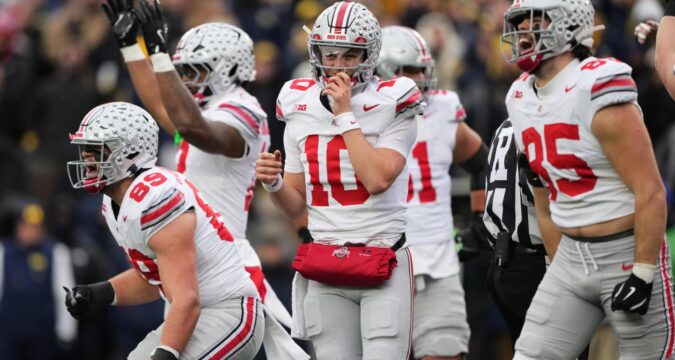
The Buckeyes (12-0) and Hoosiers (12-0) are in similar positions. The are playoff locks, with good chances at a first-round bye no matter what happens Saturday in Indianapolis.
But the contrast between these programs couldn’t be starker.
Ohio State owns eight national championships, is closing in on program win No. 1,000 and has claimed at least three Big Ten crowns in every decade from the 1930s through 2010s.
Despite the steady parade of players from Columbus to the NFL, the Buckeyes watched the last four Big Ten title games from home — a drought that coincided with their four-game losing streak to dreaded Michigan. That streak ended last week, and this week the defending national champs hope to fulfill another preseason goal by hoisting their first Big Ten trophy in five years.
“We’re excited we put ourselves in a position to have a chance to play for the Big Ten championship,” All-American Caleb Downs said. “We’re going to go at it with a lot of energy and put everything into it this week and then go play as well as we can Saturday.”
As a program, the Hoosiers are relative newcomers to the big stage.
They finally shed the label of the FBS’ losingest program last month, then completed the first perfect regular season in school history and are now seeking their third Big Ten title. The first came in 1945, the last in 1967, leaving Indiana tied with Minnesota for the conference’s longest active title drought.
The Hoosiers have an experienced roster with key players who have played for championships in previous stops and, oh, yeah, Cignetti. They also can rely on the lessons learned from their only losses last season — at Ohio State and at national runner-up Notre Dame.
“We fell short in the moment,” first team all-conference linebacker Aiden Fisher said, reflecting on those defeats. “Coach Cignetti said it kind of got a little too big for us, and I think we went in with too much of an underdog mentality. This year, every single game we’ve been in there’s been no doubt at all. It’s never crept in that, ‘Oh, we might lose this game.’”
There’s no reason to change that philosophy now in a contest that features the nation’s two stingiest scoring defenses, two of the nation’s top-15 scoring offenses, the nation’s two most efficient quarterbacks and major college football’s last two unbeaten teams.
“I don’t expect any handouts,” Cignetti said. “We’ve earned everything up to this point, and we’ve got to earn it on Saturday.”
Heisman battle
Indiana quarterback Fernando Mendoza and Ohio State quarterback Julian Sayin are going head to head as top Heisman Trophy contenders. Some believe this game could determine the trophy’s winner. Though nobody wants to talk about the race, there is some mutual admiration between the two.
“Julian Sayin and I never officially met, however, through high school we used a similar quarterback coach,” Mendoza said. “And this year we had a lot of overlap games, and we were able to watch their film. I really respect Julian. He is effective and he fits the offense perfectly.”
On the move
Buckeyes offensive coordinator coach Brian Hartline accepted his first head coaching job, at South Florida, on Wednesday. But unlike other coaches, Hartline isn’t going anywhere yet. Coach Ryan Day said Wednesday that Hartline would stay with his alma mater through the playoffs.
“The timing isn’t great, but that’s not Brian’s fault,” Day said. “Instead of being upset about it, we’re going to embrace it. I’m really happy for he and his family. He’s put in a lot of hard work here.”
Red-banner day
The football game serves as the nightcap of a rare, red-themed tripleheader in Indiana.
In addition to the scarlet-clad Buckeyes and crimson-colored Hoosiers, there are two Top 25 men’s basketball games too. At noon, No. 1 Purdue hosts No. 10 Iowa State, whose colors include cardinal red, and at 2 p.m. No. 22 Indiana plays another red-colored team, No. 6 Louisville, just a few blocks away from Lucas Oil.
https://www.chicagotribune.com/2025/12/05/ohio-state-indiana-big-ten-championship-preview/
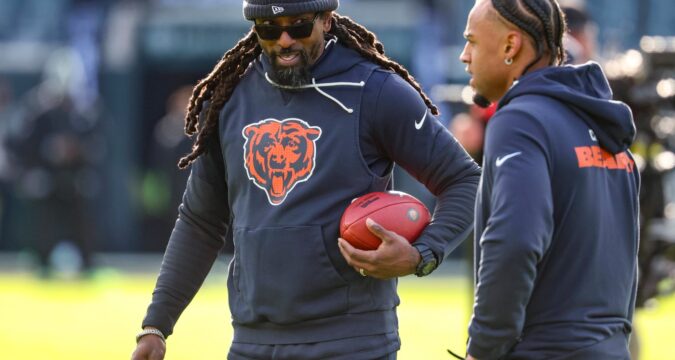
Column: Al Harris has made an impact on the Chicago Bears for years — and wherever he goes, takeaways follow
Al Harris had a profound impact on the Chicago Bears long before being hired as defensive backs coach/passing game coordinator.
A two-time Pro Bowl cornerback for the Green Bay Packers, Harris is the assistant who was tasked with piecing things together while Jaylon Johnson and Kyler Gordon missed much of the season. He’s the guy who vouched for Nahshon Wright before the Bears signed him in April — seven months before he was named NFC Defensive Player of the Month for November.
Defensive coordinator Dennis Allen put a wire cage — the kind you see in a physical education class — in the unit’s meeting room to fill with footballs as the defense collected takeaways this season. With five games remaining, there isn’t a lot of room left. The Bears have 26 takeaways and 17 interceptions — tops in the NFL in both categories — with Harris’ defensive backs accounting for 13 of the picks and six fumble recoveries.
The story of Harris would have taken a much different direction if it weren’t for Bobby DePaul and Indianapolis Colts general manager Chris Ballard, who in turn had their careers launched at Halas Hall because of their relationship with the player.
DePaul, now the college director for SumerSports evaluating NCAA football, was a young pro scout in Philadelphia when roster cuts were looming in August 1998. The Eagles were hurting for cornerbacks as Bobby Taylor was sidelined with a broken scapula. The Tampa Bay Buccaneers, who drafted Harris in the sixth round out of Texas A&M-Kingsville the previous year, were heavy at the position. DePaul figured a cornerback or two would be cut loose.
One young player got just a few snaps all of preseason. He rarely left the sideline.
“Very accurate,” said that player, who happened to be Harris.
The Bucs were planning to waive Harris with the goal of re-signing him to their practice squad for the second straight year. A bump-and-run cornerback, he wasn’t a great fit for coach Tony Dungy’s scheme, but the team, and especially director of player personnel Jerry Angelo, liked Harris.
“Tampa had overdrafted so someone good was going to be cut,” DePaul said. “Now, I am watching the tape and I got my eyes on them. I think Al may have played five snaps all of preseason. It was very few. It just so happened one of the plays was a go route. He was in press man. The guy tries to shake him. Al, who is over 6 feet and has the length, flips his hips and he turns and runs the guy out of bounds. Plays the ball. The whole thing. I said, ‘Oh, my god, there is no way they are cutting this guy.’”
Director of pro personnel Mike McCartney, now a Downers Grove-based agent, was involved. DePaul said he floated the idea of offering a late-round pick to the Bucs for Harris. He described an almost Abbott-and-Costello routine in talking with Eagles GM Tom Modrak about a deal.
Bears defensive backs coach/passing game coordinator Al Harris celebrates with players late in the game against the Eagles on Nov. 28, 2025, at Lincoln Financial Field in Philadelphia. (Brian Cassella/Chicago Tribune)
“I’ve never heard of this guy,” Modrak said.
“Tom, everybody is looking for corners right now,” DePaul said.
“Nobody knows who this guy is,” Modrak said. “You got any tape?”
“I got a couple plays,” DePaul said.
“What do you mean?” Modrak said.
“Well, he didn’t really play,” DePaul said.
“So now you’re telling me the guy never really plays?” Modrak said.
“I only needed one play,” DePaul said. “It just happened to be the play that showed me he could do it.”
Modrak came up in the business as a scout for the Steelers in the 1970s when Dungy was a player in Pittsburgh. They had a relationship. There was a phone conversation, according to McCartney, also involving Eagles coach Ray Rhodes. Dungy recommended Harris as a good fit for the Eagles. Modrak decided to place a waiver claim.
“I’ve got the anxiety of a scout because I’ve got to wait it out,” DePaul said. “On the one hand, I hope 10 teams claim this guy just to shove it up (Modrak’s rear) because I’m pissed off he didn’t trade fore the guy, right? These are the emotions you go through. Then, I am thinking, ‘No, I want the guy.’”
Eagles cornerback Al Harris (31) knocks a pass away from Buccaneers receiver Keyshawn Johnson on Oct. 20, 2002, at Veterans Stadium in Phladelphia. (Michael Kubel/Allentown Morning Call)
The Eagles wound up being the only team to claim Harris, leading Modrak to deliver a very direct “I told you so” to DePaul. Harris hit the practice field. Defensive coordinator Emmitt Thomas instructed a receiver to run a go route. Harris was in his hip pocket all the way downfield.
“Emmitt comes over to me and Harold (Carmichael) and he says, ‘He’s starting on Sunday,’” DePaul said. “It’s a true story.”
Rhodes and his staff were fired after the season. Andy Reid took over and with defensive coordinator Jim Johnson, Harris’ career took off playing slot cornerback for one of the first defenses in the league to really lean into sub packages.
‘A special place’
Fast forward to June 2001.
Angelo was hired as GM of the Bears and in one of his first moves, he chose DePaul to be the pro personnel director based on the time he sniped Harris from the Bucs. DePaul worked for the Bears for nine seasons and was instrumental in helping build the offensive line of the Super Bowl XLI team around center Olin Kreutz.
At the same time, Angelo hired Ballard as a college scout, giving him his first NFL job. Ballard had been the secondary coach at Texas A&M-Kingsville. Ruston Webster was the Tampa scout who covered the area, but the Bucs were pulling so many players out of the school — at one point in the late ’90s, they had five Kingsville players on their roster — that Angelo started making the visit too. He was impressed by the work Ballard did with Harris and another cornerback, Floyd Young, who spent time in Tampa.
“Al made a big difference for a lot of us in our careers,” said Ballard, who spent 12 seasons with the Bears.
A year later, the Bears nearly engineered a trade for Harris when Reid called looking to move up during the draft. DePaul and Ballard were excited, knowing he would be a good fit for defensive coordinator Greg Blache, but it didn’t come to fruition.
The Eagles, stocked with cornerbacks in 2003, finally dealt Harris, knowing they soon would owe him a big raise. Reid shared with Harris a list of teams interested in him.
“He said, ‘You can go to these other teams and there’s no doubt that you will play,’” Harris recalled. “‘But if you go to Green Bay, that is a special place.’ I said, ‘Say less, Coach.’”
Packers cornerback Al Harris points to the end zone in front of Seahawks receiver Alex Bannister in overtime of their NFC wild-card playoff game Jan. 4, 2004, in Green Bay. Harris returned the interception for the game–winning touchdown in the Packers’ 33–27 win. (Darren Hauck/AP)
He moved to outside corner in Green Bay and his play took off. Harris intercepted the Seattle Seahawks’ Matthew Hasselbeck and returned it for a touchdown in overtime of a wild-card playoff game at the end of his first season. He had 64 pass breakups in his first four years with the Packers and was named to the Pro Bowl in his fifth and sixth seasons.
What is the first name Hall of Fame Detroit Lions wide receiver Calvin Johnson mentioned when asked who the toughest cornerback he faced in his career was?
“When I first came into the league, nobody liked playing Al Harris,” Johnson told the “Pardon My Take” podcast. “We played him twice a year. We had Roy Williams at the time and he always hated play Al. And I didn’t know nothing about Al until I heard Roy talking about him in the week before we played him. He was like, ‘Man, all he does is put his hands in your face. The referee will let him get away with it.’ I’m thinking, ‘OK, I ain’t got to worry about that. You’re the No. 1 receiver. You got his ass.’
“Lo and behold, halfway through the game, they switch him over to me and I got a good taste of it. He was the one who I, not modeled my game after, but as far as the aggressiveness that it came with, the fight at the line of scrimmage, it was all tailored after playing against Al Harris because I knew the kind of fight and nastiness I had to come with.”
Packers cornerback Al Harris runs back an interception in front of Bears receiver Johnny Knox late in the fourth quarter on Sept. 13, 2009, at Lambeau Field in Green Bay. (Nuccio DiNuzzo/Chicago Tribune)
Harris finished a seven-year run with the Packers in 2009, intercepting Jay Cutler in his first start with the Bears to seal a 21-15 victory at Lambeau Field in the season opener and, by that time, he knew he wanted to pursue coaching when his playing days were over even if it wasn’t something those around him could foretell.
“I never thought he would be coaching,” said Hall of Fame cornerback Charles Woodson, whom Harris teamed with for four seasons. “I joke with him all the time that I can’t believe that the guy who only worried about who he was guarding in a particular game, or just playing right corner, would be one day leading a whole secondary and now is a passing game coordinator to go along with it.
“Not only that, but it shocks me that he would want to be a coordinator and/or head coach at some point. But judging by what his players say about him and the results he has gotten everywhere he has been, I now do not put anything past him.”
Harris was inducted into the Packers Hall of Fame in 2020, one of four teams he played for over 14 NFL seasons. That’s when he reached out to DePaul to thank him for the role he played in his career.
“Al said, ‘I know what you went through as a scout,’” DePaul said. “‘And for that to happen, it took a tremendous amount of faith in my ability not knowing who I was but it just reinforces to me how much the DNA on that tape matters. And that helps me as a coach.’”
Said Harris: “Anybody that took a chance on me, I am extremely grateful. Being in this business for so long, you know how it goes. Sometimes guys just need someone to believe in them or see the vision. I was grateful for that.”
‘A beautiful mind’
After an unpaid internship with the Miami Dolphins in 2012, Harris hooked on with the Kansas City Chiefs as an assistant defensive backs coach in 2013, reuniting with Reid, Thomas and Ballard, who was the Chiefs director of player personnel at the time. Harris became the secondary coach in 2016.
“It has been very rewarding to watch him from being a player in Kingsville to where he is now,” Ballard said. “He worked very hard at becoming a great coach. The success he is having in Chicago is no surprise.”
Harris landed in Dallas in 2020 with his former Packers coach, Mike McCarthy, and ran the secondary before adding the title of assistant head coach last year. His contract expired after the season, and before new Cowboys coach Brian Schottenheimer could consider retaining him, the Bears pounced. The connection? GM Ryan Poles was in Kansas City to witness Harris’ coaching career take off.
Bears defensive backs coach Al Harris, left, jokes with Ben Johnson as players stretch at training camp on July 28, 2025, in Lake Forest. (Stacey Wescott/Chicago Tribune)
The Bears considered it a coup, a huge addition for Ben Johnson’s staff, and at Halas Hall, one source said Harris possesses “a beautiful mind.” His physical playing style, after all, was a perfect fit for the vision Allen has for the secondary.
Wherever Harris goes, the takeaways follow. From 2013-18, the Chiefs ranked second in takeaways, tied for third in interceptions and first in defensive touchdowns. Over the last five seasons, the Cowboys were second in takeaways, third in interceptions and first in defensive touchdowns.
Asked for a commonality in the three teams and the takeaways, Harris launched into a long answer.
“No, no, no, no,” he said. “If you’re not coaching takeaways, you’re not going to get takeaways. Everybody has good scheme. Everybody thinks they have good scheme. Places that I have been, I have been fortunate to work in a variety of different schemes — all good ones. But if you are consistently coaching scheme, all you’re going to get is a bunch of guys that know the check to three-man, two-man and know the verbiage. You’re going to teach that anyways. Once we get the initial teaching of the scheme, now from there on out I am never teaching guys to couple wideouts ever.
“I have a saying in the room: Unless you see somebody that was at the Last Supper, he’s got an (offensive) scheme he has to run. So everything I am doing, I am defending their system. If you watch from Kansas City to Dallas to now, a lot of the times we’re beating the receivers to the route, to the ball. It’s because we’re defending the scheme not so much the wide receiver. … That way I’m never talking about knocking the ball down or anything like that. That’s a given. If your eyes are in the right place and the mindset of taking the ball away is there, you’re going to get the pass breakup. That’s a given. The ending to each drill, the ending to each play in our minds is the takeaway.”
‘He’s that guy for me now’
Harris began fostering a relationship with Wright before the Cowboys drafted him in the third round in 2021 with the cornerback sharing details of a phone conversation that covered everything but football.
“When I got drafted, I called him back and I’m like, ‘You didn’t tell me nothing or give him no hint,” Wright said. “He said, ‘The phone call in itself should have told you how I felt about you.’”
Related Articles
Chicago Bears CB Nahshon Wright, once buried on the depth chart, wins NFC Defensive Player of the Month
Chicago Bears CB Jaylon Johnson says fasting and faith helped in recovery from season-threatening groin injury
NFL mandates playing surfaces for all stadiums meet new standards by 2028 to enhance player safety
Chicago Bears Q&A: Could Ben Johnson win Coach of the Year? When should fans panic about Caleb Williams?
Rarely have Chicago Bears and Green Bay Packers been this good in long rivalry. Here’s what the numbers say.
While Wright dealt with injuries in Dallas and other young cornerbacks emerged, Harris still believed in him. The coach was bummed when the team traded Wright to the Minnesota Vikings in August 2024. Wright occasionally sent Harris clips of him from practice last season in search of pointers.
When the Vikings released Wright on April 7, the first call he received was from Harris.
“He told me to call my agent and tell him to call Poles,” Wright said. “They had a conversation and later that night I was on a plane.”
On April 8, Wright signed with the Bears. As soon as one door closed, another opened. Sure, Harris had a lot of personal experience with Wright, but he was vouching for a player who had a thin resume, just like Harris once did when he was released in Tampa.
“He’s that guy for me now,” Wright said.
Twenty-four years later, Harris is still making an impact on the Bears.
Scouting report
Packers defensive end Micah Parsons sacks Lions quarterback Jared Goff on Nov. 27, 2025, in Detroit. (Paul Sancya/AP)
Micah Parsons, Packers defensive end
Information for this report was obtained from NFL scouts.
Parsons, 6-foot-3, 250 pounds, is in his first season in Green Bay after the Packers engineered a blockbuster trade in August, sending two first-round picks and defensive tackle Kenny Clark to the Cowboys for him. Parsons received a four-year, $188 million extension in Green Bay.
He ranks third in the NFL with 12½ sacks and has been a closer for defensive coordinator Jeff Hafley, with eight of them coming in the fourth quarter or overtime. Parsons leads the NFL with 70 QB pressures.
“He’s got the best closing speed in the entire NFL,” the scout said. “When he gets on the edges of offensive tackles, the play is over. Everyone thinks about speed but he does have power. The get-off is the thing with him, and offensive tackles just cannot open fast enough against him. It forces them to set deeper than they want to, and when you do that, Parsons has a two-way go.
“He is relentless. There are some guys that make a lot plays late in the down because it takes them a while to get there. It does not take Micah long to get there. If you try to run out of the pocker and he’s got a line — you’re going down. He’s a rare athlete and he’s not Myles Garrett because that guy is Reggie White and there’s no one else like him. But if you’re talking about the second-best rusher in the league, it’s this guy. I’d expect the Bears to try to help with tight ends, maybe use a lot of 12 personnel. They have to. The best thing for Green Bay will be is Rashan Gary and Parsons can get home and they can sit in zone coverage and then dare Caleb Williams to run out of the pocket, move with him and force him to throw into tight windows. That’s got to be what they want to do.”
https://www.chicagotribune.com/2025/12/05/chicago-bears-al-harris-takeaways/
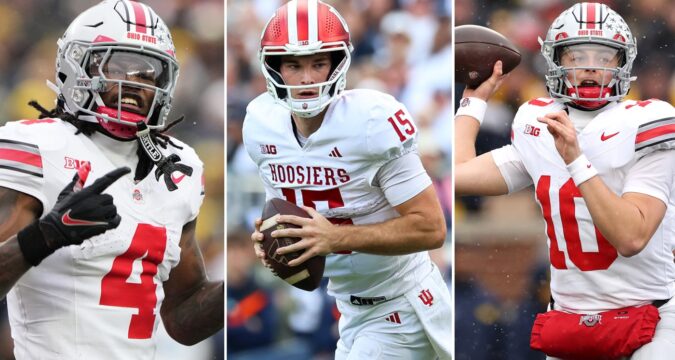
Meet the 3 finalists for the 2025 Chicago Tribune Silver Football, awarded to the Big Ten’s best player
The three finalists for the Chicago Tribune Silver Football will share a field Saturday night during the Big Ten championship game in Indianapolis.
Indiana quarterback Fernando Mendoza, Ohio State quarterback Julian Sayin and Ohio State wide receiver Jeremiah Smith (listed alphabetically) helped lead their teams to 12-0 regular seasons and the conference title game between the No. 1 Buckeyes and No. 2 Hoosiers.
Their extraordinary play this season made them the top vote-getters for the Silver Football, which is awarded to the Big Ten’s best player as voted on by the conference’s head coaches. The winner of the award, presented by the Tribune in partnership with the Union League Club of Chicago, will be revealed Tuesday on Big Ten Network.
Chicago Tribune Silver Football: Winners of the annual award for best Big Ten football player
The trio has been among the best players not only in the conference, but also the nation.
Mendoza’s 32 touchdown passes lead all FBS quarterbacks, while Sayin is third with 30. Sayin leads the nation with a 184.9 passing efficiency rating, while Mendoza is second at 183.7.
While sharing the load with wide receiver Carnell Tate, Smith has averaged 85.6 receiving yards per game, ranked 13th in the FBS, and is tied for fifth with 11 receiving touchdowns.
All are also Heisman Trophy candidates.
Mendoza, a redshirt junior transfer from California, has completed 72% of his passes for 2,758 yards with 32 touchdowns and five interceptions and has rushed for six scores. He has topped 200 passing yards in nine games, has thrown four or more touchdown passes five times and has completed more than 90% of his passes in three games.
His play led the Hoosiers to their first undefeated regular season since 1945.
In his first season starting for the defending national champion Buckeyes, Sayin has completed 78.9% of his passes — also best in the FBS — for 3,065 yards with 30 touchdowns and five interceptions. The redshirt freshman has thrown for more than 300 yards six times and completed more than 80% of his passes in five games.
Smith has followed up his All-America freshman season in 2024 by totaling 72 catches for 942 yards and 11 touchdowns in 11 games. He reached 2,000 career receiving yards (24 games), 100 catches (20) and 25 touchdown catches (25) faster than any player in Ohio State history, and he has topped 100 receiving yards in four games this season.
Sayin and Smith have helped Ohio State to a 16-game winning streak that dates to last season. The Buckeyes haven’t trailed in the second half during the streak.
All three players have a huge month ahead of them: the Big Ten championship Saturday, the Heisman announcements next week and then the start of the College Football Playoff, in which both teams are likely to receive first-round byes.
They’ll also find out who won the Silver Football, which is in its 101st year. Illinois’ Red Grange was the inaugural winner in 1924, and the award has continued uninterrupted through Oregon quarterback Dillon Gabriel last season.
Each of the 18 Big Ten coaches selects a first- and second-place choice, and they are not allowed to vote for their own players. First-place votes are worth two points and second-place votes are worth one.
What to know about the Silver Football
How the Silver Football was born — and how the selection process has evolved over 100 years
Chicago Tribune Silver Football: Winners of the annual award for best Big Ten football player
Catching up with Jim Grabowski, the 1965 Silver Football winner from Illinois
Catching up with Lee Gissendaner, the 1992 Silver Football winner from Northwestern
Remembering Ken Rouse, the 1927 Silver Football winner from University of Chicago
Catching up with Bob Timberlake, the 1964 Silver Football winner from Michigan
Column: Silver Football winners, from Red Grange to Marvin Harrison Jr., are the definition of greatness
What to know about the Silver Football, the Big Ten’s highest honor
https://www.chicagotribune.com/2025/12/05/big-ten-silver-football-finalists/