Category: News

El Mundial 2026 define sus grupos con el sorteo en el Centro Kennedy de Washington
Por RONALD BLUM, HOWARD FENDRICH y NOAH TRISTER
WASHINGTON (AP) — El sorteo de la Copa del Mundo 2026 se realiza el viernes con un ambiente invernal, ya que la nieve caía fuera del Centro Kennedy para las Artes Escénicas, a 189 días de un torneo ampliado a 48 naciones.
Había largas colas fuera del complejo incluso a las 7 de la mañana, mientras trabajadores y medios de comunicación cumplían con los controles de seguridad del Servicio Secreto. Se esperaba la asistencia del presidente Donald Trump de Estados Unidos y la presidenta Claudia Sheinbaum de México, junto con el primer ministro de Canadá, Mark Carney.
Frustrado por no haber recibido un Premio Nobel de la Paz, era probable que Trump recibiera el primer premio de la paz de la FIFA durante la ceremonia para determinar los grupos de la primera ronda del torneo de 104 partidos, que se jugará en Estados Unidos, México y Canadá del 11 de junio al 19 de julio.
Se colocó una alfombra roja fuera del centro de artes, tomado este año por Trump y sus seguidores. Estrellas retiradas como Tom Brady de la NFL, Shaquille O’Neal de la NBA y Wayne Gretzky de la NHL, junto con el beisbolista Aaron Judge, asistirán en una ceremonia conducida por Rio Ferdinand, ex capitán de la selección de Inglaterra.
Las 48 selecciones serán repartidas en cuatro bombos distintos basándose en su actual ranking FIFA, y entonces se conformarán 12 grupos de cuatro equipos cada uno. Italia, actualmente en el puesto 12 del ranking, quedó entre las 22 naciones que disputarán repechajes que definirán las últimas seis plazas, algo que acabará de decidirá el 31 de marzo.
Además, por primera vez, la FIFA asignó favoritos de antemano. Tal es el caso de Argentina, la campeona defensora y la selección de Lionel Messi, no se podría enfrentar a España, la monarca europea que lidera ranking , sino hasta la final en el MetLife Stadium, cerca de Nueva York, siempre y cuando ganen su zona. Lo mismo se repite con Inglaterra y Francia, las dos siguientes en el ranking.
El torneo será inaugurado el 11 de junio en el estadio Azteca de la Ciudad de México. El Tri nunca ha superado la fase de cuartos de final en su historia mundialista.
Estados Unidos, que nunca ha avanzado más allá de las semifinales, debutará el día siguiente en Inglewood, California, y Canadá arrancará su andadura en Toronto.
Todos los partidos desde los cuartos de final en adelante se jugarán en Estados Unidos, que utilizará 11 estadios de la NFL. Los sitios para la mayoría de los partidos y los horarios se anunciarán el sábado.
___
Deportes AP: https://apnews.com/hub/deportes

Iran Launches Live Fire Drills In Gulf, Flexing Reconstituted Missile Arsenal
Iran Launches Live Fire Drills In Gulf, Flexing Reconstituted Missile Arsenal
Iran’s elite Revolutionary Guards (IRGC) Navy launched ballistic and cruise missiles at mock targets in the Persian Gulf on Friday as part of an announced two-day military drill designed to demonstrate its readiness against external threats, state media indicates, at a time the region is still on edge following the last June 12-day war involving Iran, Israel, and the United States.
Tehran is seeking to signal to its enemies that it has both regrouped and reconstituted its missiles and military assets after many hundreds of drones and ballistic missiles – including potentially hypersonic projectiles – were expended against Israel.
The new exercise includes ‘live fire’ drills, as the navy is launching volleys of ballistic and cruise missiles aimed at targets in the Oman Sea, state media reported on Friday. State media has identified that Qadr 110, Qadr 380 and Qadir cruise missiles, along with the 303 ballistic missile, have also been fired from inside Iran against sea targets off the coast.
Drone waves are also being deployed again mock enemy bases and targets, with part of the exercises focused on how to quickly respond to aerial threats against fast boats and coastal positions. One new aspect to the drills is that commanders are now touting AI-based operational capabilities.
Iran’s military has been busy seeking to demonstrate its capabilities of late, as earlier this week Iran conducted an anti-terrorism exercise in East Azerbaijan province alongside members of the Shanghai Cooperation Organization. Press TV said the drills are a warning to adversaries that “any miscalculation would receive a decisive response.“
According to some recent conclusions in the wake of the June war, the establishment think tank Soufan Center writes:
Iran shows no signs of altering its core policies despite the damage done by Israel and the United States to Iran’s strategic architecture.
A continuation of Iran’s existing policies is unlikely to bring the sanctions relief that moderate leaders such as elected President Masoud Pezeshkian deem vital to addressing economic deterioration.
Iran is resisting Trump’s pressure to dismantle its uranium enrichment infrastructure while leaving the door open to renewed diplomacy with the U.S. and its European allies.
Tehran is developing new methods and routes to resupply its Axis of Resistance partners, particularly Lebanese Hezbollah and the Houthis in Yemen.
On Friday Iranian lawmaker Fada-Hossein Maleki was quoted in international press reports as saying that the Trump administration had reached out, saying the US is open to new negotiations. He said whether to engage or not is the Supreme Leader’s final decisions, while noting that “we tried every path, but in the end it led to war and the wall of distrust only grew higher.”
Iranian state media put out footage of the new Gulf area drills Friday:
Iran’s Revolutionary Guards Navy fired ballistic and cruise missiles at simulated targets in the Gulf during a two-day exercise meant to counter foreign threats.
The drills included mass launches of Qadr-series cruise and ballistic missiles, along with drone strikes on mock… pic.twitter.com/fUWN5d1tHp
— Clash Report (@clashreport) December 5, 2025
Maleki warned that Iran remains ready for any possible escalation. “We are far more prepared than before,” he said. Maleki admitted that while Iran suffered significant losses in the opening hours of the June surprise attack from Israel, at least “the enemy knows our readiness now.”
Tyler Durden
Fri, 12/05/2025 – 11:20

US vaccine advisers say not all babies need a hepatitis B shot at birth
NEW YORK — A federal vaccine advisory committee voted on Friday to end the longstanding recommendation that all U.S. babies get the hepatitis B vaccine on the day they’re born.
A loud chorus of medical and public health leaders decried the actions of the panel, whose current members were all appointed by U.S. Health Secretary Robert F. Kennedy Jr. — a leading anti-vaccine activist before this year becoming the nation’s top health official.
“This is the group that can’t shoot straight,” said Dr. William Schaffner, a Vanderbilt University vaccine expert who for decades has been involved with ACIP and its workgroups.
For decades, the government has advised that all babies be vaccinated against the liver infection right after birth. The shots are widely considered to be a public health success for preventing thousands of illnesses.
But Kennedy’s Advisory Committee on Immunization Practices decided to recommend the birth dose only for babies whose mothers test positive, and in cases where the mom wasn’t tested.
For other babies, it will be up to the parents and their doctors to decide if a birth dose is appropriate. The committee voted to suggest that when a family decides not to get a birth dose, then the vaccination series should begin when the child is 2 months old.
The vote passed 8-3.
“We are doing harm by changing this wording, and I vote no,” said committee member Dr. Cody Meissner.
The acting director of the Centers for Disease Control and Prevention, Jim O’Neill, is expected to decide later whether to accept the committee’s recommendation.
The decision marks a return to a public health strategy that was abandoned more than three decades ago.
Asked why the newly-appointed committee moved quickly to reexamine the recommendation, committee member Vicky Pebsworth on Thursday cited “pressure from stakeholder groups wanting the policy to be revisited.” She did not say who was pressuring the committee, and a spokesman for Kennedy did not respond to a question about it.
Committee members said the risk of infection for most babies is very low and that earlier research that found the shots were safe for infants was inadequate.
They also worried that in many cases, doctors and nurses don’t have full conversations with parents about the pros and cons of the birth-dose vaccination.
The committee members voiced interest in hearing the input from public health and medical professionals, but chose to ignore the experts’ repeated pleas to leave the recommendations alone.
Dr. Peter Hotez of the Texas Children’s Hospital Center for Vaccine Development in Houston declined to present before the group “because ACIP appears to have shifted its mission away from science and evidence-based medicine,” he said in an email to The Associated Press.
The committee gives advice to the director of the Centers for Disease Control and Prevention on how approved vaccines should be used. CDC directors almost always adopted the committee’s recommendations, which were widely heeded by doctors and guide vaccination programs. But the agency currently has no director, leaving acting director O’Neill to decide.
In June, Kennedy fired the entire 17-member panel earlier this year and replaced it with a group that includes several anti-vaccine voices.
Hepatitis B is a serious liver infection that, for most people, lasts less than six months. But for some, especially infants and children, it can become a long-lasting problem that can lead to liver failure, liver cancer and scarring called cirrhosis.
In adults, the virus is spread through sex or through sharing needles during injection drug use. But it can also be passed from an infected mother to a baby.
In 1991, the committee recommended an initial dose of hepatitis B vaccine at birth. Experts say quick immunization is crucial to prevent infection from taking root. And, indeed, cases in children have plummeted.
Still, several members of Kennedy’s committee voiced discomfort with vaccinating all newborns. They argued that past safety studies of the vaccine in newborns was limited and it’s possible that larger, long-term studies could uncover a problem with the birth dose.
But two members said they saw no documented evidence of harm from the birth doses and suggested concern was based on speculation.
The panel was to vote Thursday, but voted to postpone after some members said they had just received the densely-worded vote proposals and wanted clarification and more time to consider it.
Three panel members asked about the scientific basis for saying that the first dose should be delayed for two months for many babies.
“This is unconscionable,” said committee member Dr. Joseph Hibbeln, who repeatedly voiced opposition to the proposal during the sometimes-heated two-day meeting.
The committee’s chair, Dr. Kirk Milhoan, said two months was chosen as a point where infants had matured beyond the neonatal stage. Hibbeln countered that there was no data presented that two months is an appropriate cut-off.
Meissner also questioned a second proposal — which passed 6-4 — that said parents should talk to pediatricians about blood tests meant to measure whether hep B shots have created protective antibodies.
Such testing is not standard pediatric practice after vaccination, but proponents said it could be a new way to see if fewer shots are adequate.
A CDC hepatitis expert, Adam Langer, said results could vary from child to child and would be an erratic way to assess if fewer doses work. He also noted there’s no good evidence that three shots pose harm to kids.
Meissner attacked the proposal, saying the language “is kind of making things up.”
“It’s like never-neverland,” he said.
Health experts have noted Kennedy’s hand-picked committee is focused on the pros and cons of shots for the individual getting vaccinated, and has turned away from seeing vaccinations as a way to stop the spread of preventable diseases among the public.
The second proposal “is right at the center of this paradox,” said committee member Dr. Robert Malone.
Some observers criticized the meeting, noting recent changes in how they are conducted. CDC scientists no longer present vaccine safety and effectiveness data to the committee. Instead, people who have been prominent voices in anti-vaccine circles were given those slots.
The committee “is no longer a legitimate scientific body,” said Elizabeth Jacobs, a member of Defend Public Health, an advocacy group of researchers and others that has opposed Trump administration health policies.
In a statement, she described the meeting this week as “an epidemiological crime scene” — a slaughter of how disease control professionals usually examine and act on evidence.
https://www.chicagotribune.com/2025/12/05/us-vaccine-babies-hepatitis-b/
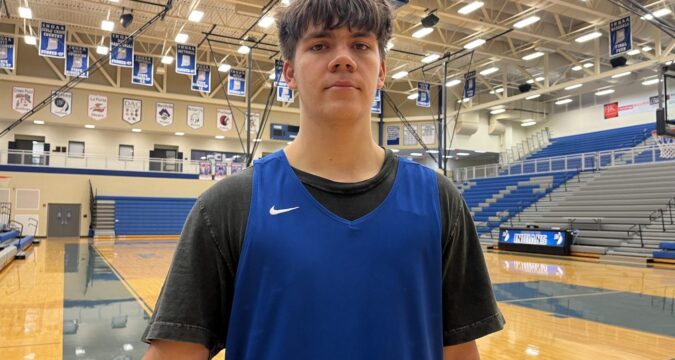
A 2nd torn ACL tests Lake Central’s Evan Geller. But the 6-foot-6 forward decides ‘I can’t give up.’
Lake Central senior Evan Geller experienced slight jitters more than out-and-out nerves.
But when Geller stepped on the court for the Indians’ season-opening victory at Hanover Central on Tuesday, the 6-foot-6 forward’s predominant emotion was clearcut.
“Just more joy than anything,” he said. “I was really happy to be out there again. I just knew that if I left it all out there this season, nothing bad will happen.”
Geller already has endured plenty of bad during his high school career. He has suffered ACL tears in each knee and missed the better part of the past two seasons, including all of last season.
After the second injury, Geller hit a particularly low point.
“I really thought I wasn’t going to play again,” he said.
But Geller has persevered and is poised to pack a lot of good into his final season with the Indians. He got the ball rolling with nine points against Hanover Central.
“I feel like my game is at a good place right now,” he said. “Throughout the season, I’m going to keep improving, especially with the motivation of my team. I have all the trust behind me with my coaches. Everyone believes in me.
“It’s more just about getting the rhythm back. Basketball is a rhythm game. You just need time to play. I have the skill. I just need to get the touch back, the rhythm back. That’s all it is.”
Lake Central coach Ryan Sexson knows full well how hard Geller has worked to come back.
“Just a guy that loves basketball as much as he does, to have to go through what he went through, it was rough,” Sexson said. “He was in a bad spot for a while, and understandably so. When your identity is as a basketball player and it has been your whole life, and all of a sudden it gets taken away from you for two years, it was devastating. Some things suffered outside of basketball within his life that normally wouldn’t have because he was in that situation.
“But he has grinded his way back. He’s here. He’s healthy. His grades are good. He’s setting himself up for a good senior year. If he can be productive and show that he can stay healthy for a year, there’s a lot of small colleges that would be interested in him.”
Geller’s comeback means a lot to Sexson too.
“I’m just really happy for him,” Sexson said. “I think about him every day and just hope he can make it through. Not only is he going to help us, obviously, but just for him to be able to get through a whole year and see some success and get to do it with his buddies his senior year, it’s pretty cool.”
Geller suffered a torn left ACL in May after his freshman season. Sidelined for eight months, he expedited a return in late January of his sophomore season and played for the final month-plus.
Geller then suffered a torn right ACL, as well as a torn MCL and torn meniscus, in July after his sophomore season. Taking a more cautious approach that sidelined him for 14 months, including all of the AAU season this past summer, Geller didn’t return to full contact until workouts with the Indians in September.
“It was devastating,” he said. “I was at such a high point — we were at such a high point — during my sophomore summer. I was a vocal leader. We had a ton of pieces. We had everything we were looking forward to, and it all went away in a split second. It was sad.
“But I knew the team still needed me. I still had to be a vocal leader last year even though I was bummed not to be out there.”
Sexson reflected on what might have been with Geller in the lineup. Lake Central went 9-14 overall and 3-4 in the Duneland Athletic Conference.
“He would’ve changed everything for us last year,” Sexson said.
Geller believes in the Indians’ prospects for this season. He said he has “channeled my mental strength” to get back on the court and relied on support from Sexson and his teammates, particularly his classmates, throughout the process. He’s part of an all-senior starting five along with forward Noah Enyeart, guard/forward Jakob Billmeyer, guard Cooper Kroncke and guard David Aguilera.
“We have a good squad right now,” Geller said. “We’ve been playing together since like fourth grade. We’ve all played through the feeder program, through AAU. We all are very vocal. We’re good students in class. We try to hold ourselves to a high standard. We know if we talk, if we communicate, we’re going to be a good team. We’re big, we have shooters, we have drivers — we have everything.
“I’m just very excited for this year. If we stay true to our team and stay true to our concepts, we’re going to have a very good year. I’m very confident in our team. I’m very confident in our coaching.”
Teammates such as Aguilera also have confidence in Geller.
“He’s shown how resilient he is and how much he really wants it,” Aguilera said. “He wants to be here and be a part of this team and make us No. 1.
“The start of senior year, coach said we need vocal leaders, people who want to talk and lead the team. He’s one of them. He’s up there. He’s a leader of the team. When he’s not talking, the team’s doing bad. That’s how much of a role he plays. Without him, we wouldn’t be as good of a communicating team.”
Aguilera also appreciates the measured pace with which Geller plays.
“When he catches in the paint, he takes his time and doesn’t try to rush to the bucket,” Aguilera said. “He doesn’t try to score right away. He takes his time and makes the right play, scoring or passing.”
Aguilera is familiar with Geller’s game. But a number of the younger players in the program weren’t, and they were somewhat surprised by his skill set. During preseason practice, they were taken aback as Geller hit deep 3-pointers and connected on nifty back-door cuts, according to Sexson.
“He’s very talented,” Sexson said. “He’s a great passer. He’s a very good shooter for his size. He can rebound in traffic.”
Sexson also respects Geller’s personality traits.
“He’s really mature beyond his years,” Sexson said. “He’s really intelligent. When he speaks, the guys listen to him. Not only is he a great player, but just from a leadership standpoint, we missed him so badly last year.
“He has this fatherly thing. He just takes care of all of us. He’s the voice of reason with the players, and he and I can have adult conversations about what’s going on with our basketball program. That’s nice to have.”
It’s all part of the package with Geller, who is relishing the ride.
“I’m just excited to play,” he said. “I’m just happy to play basketball. I’ve missed too much due to injuries. So I’m just happy to get out there and be with the squad again. It’s not something I take for granted at all. I know it’s a privilege, so I’m trying to make the most of it.
“I want to play great this year, just leave it all out there. I know if I play well enough, coach will get the right people in front of me. I do, if possible, want to play basketball in college. I do want to explore those opportunities. I’ve been playing basketball since birth, since I was like 1 or 2. I can’t give up. I’ve been through too much. I want to go through this journey. I don’t want to give up on it yet.”
https://www.chicagotribune.com/2025/12/05/basketball-lake-central-evan-geller/

Music Box, an immersive, interactive art piece, coming to downtown Naperville
An interactive outdoor art piece designed to delight the senses and evoke a childlike sense of wonder will be set up on a temporary basis in downtown Naperville.
The unveiling of Naperville’s Music Box — a sound and light experience — will take place at 4 p.m. Tuesday in the alley between the Apple and Sephora stores on West Jefferson Avenue. It is to be on display through late January.
The project is a partnership between the creative production company Freightwood, ArtForum Naperville, the city of Naperville and the Special Events and Cultural Amenities, or SECA, commission.
Artists behind the piece include Naperville native Maddie Peterson, Freightwood’s creative scenic lead, whose work spans costume design, scenic artistry and fabrication across theater, film, festivals and live events, and Joshua Carr, Freightwood’s structural and technical lead, who has been nominated for a Tony Award for lighting design.
The two, who recently moved to Naperville, have worked around the world, bringing their creative works to places such as New York, London and South Africa.
Without revealing too much about the piece, the three-dimensional art uses a hot air balloon motif, fully fills the space and is immersive, whimsical, musical and magical, Peterson and Carr said.
“You’ll be able to walk through it and experience it, or you can interact with it, or sit and enjoy it,” Carr said.
“Rather than being decorative in nature, it’s a full environment,” Peterson said.
The Naperville Music Box is a foray into immersive art for Naperville, they said.
Freightwood’s goal is to design and create art pieces, events and experiences that are outside the norm, Carr said.
“For us it’s about creating experiences that remind people why we’re alive,” he said. “Sometimes we forget some of the wonder or silliness or joy in life. Wherever we are, we like to create things that are different, that take away from the normal way of thinking.”
The art is free to access and for all ages to enjoy.
“There’s a way for everybody to engage with it however they want to,” Peterson said.
Though the piece will be unveiled this month, it is not holiday-themed.
The focus on lights, family and friends makes the winter season a great time for the art to be installed, Peterson said, adding that the hustle and bustle of people holiday shopping and enjoying downtown further encourages people to stop and wonder at the artwork.
“There’s a thoughtfulness and attention to the world around us because of the holidays that make us appreciate this a bit more,” she said. “There’s an energy to this time of year.”
The temporary nature of the piece only adds to its intrigue, ensuring it doesn’t become another staple in the community or taken for granted, Peterson and Carr said.
“The reality is there’s nothing better than when the circus comes to town,” Carr said. “For that small section of time, they come, they bring this kind of wonder and then they disappear.
“It’s great for things to be temporary, to be fleeting,” he said. “They are there for a moment and then they are gone and they exist in our memories. There’s a beauty in that nostalgia.”
Shannon Greene Robb, vice chair of ArtForum, said the artwork will bring mystery and wonder to the downtown.
“This is a great time of year to add some magic,” Greene Robb said. “It’s exciting. It’s bringing something different to the city of Naperville. … When was the last time you were truly surprised?”
Adding a temporary piece allows residents to be tourists in their own community and take advantage of seeing something new, she said. Residents through surveys have indicated their enthusiasm towards public art, she said.
ArtForum’s mission helps connect local artists, cultural organizations and civic partners to foster a vibrant and inclusive creative landscape throughout the city.
“Naperville’s Music Box reflects our city’s commitment to creating public spaces that engage, inspire, and bring people together,” Michael Gold, president of ArtForum Naperville, said in a statement. “Through the support of SECA and the city of Naperville, we’re continuing to build a legacy of accessible, meaningful public art.”
Michelle Mullins is a freelance reporter for the Naperville Sun.
https://www.chicagotribune.com/2025/12/05/naperville-music-box-balloon-art/

Sin helicóptero: Kirsty Coventry, presidente del COI, usará transporte terrestre en Milán-Cortina
Por ANDREW DAMPF
ROMA (AP) — Para sus primeros Juegos Olímpicos como presidenta del COI, Kirsty Coventry probablemente podría pedir un helicóptero si así lo deseara para trasladarse de una sede lejana a otra en los próximos Juegos de Invierno de Milán-Cortina.
Después de todo, con grupos de deportes repartidos por el norte de Italia abarcando un área de más de 22.000 kilómetros cuadrados (casi 10.000 millas cuadradas), los Juegos de 2026 serán los Juegos Olímpicos de Invierno más extensos de la historia.
Sin embargo, Coventry, la primera mujer y la primera africana (es de Zimbabue) elegida para uno de los trabajos más poderosos en el deporte mundial, se apegará a métodos de viaje más convencionales.
“Vamos a ir en auto o autobús o como sea que se utilice el transporte”, dijo Coventry a The Associated Press el viernes después de asistir a una ceremonia de encendido del pebetero en el palacio presidencial en la capital italiana.
El plan de sedes para los Juegos del 6 al 22 de febrero incluye: deportes de patinaje en Milán; freestyle y snowboard en Livigno; esquí alpino masculino y esquí de montaña en Bormio; deportes nórdicos en Val di Fiemme; biatlón en Anterselva; y esquí alpino femenino, curling y deslizamiento en Cortina d’Ampezzo.
Coventry espera verlos todos.
“Vamos a hacer nuestro mejor esfuerzo y creo que ahora mismo, donde estamos en el programa en la agenda, sí, ese es el plan”, expresó.
Retrasos en la construcción de sedes
Aunque partes de la controvertida sede de deslizamiento en Cortina y el principal estadio de hockey aún no están listas, Coventry no expresó preocupación por los preparativos del comité organizador local para los Juegos, faltando dos meses para la ceremonia de apertura.
“Estamos trabajando muy bien y muy de cerca con el comité organizador y con todo el equipo aquí”, manifestó. “Así que estamos muy contentos con el progreso y todo lo que vemos y nos estamos emocionando para las próximas semanas”.
Lidiando con Trump
También el viernes, se llevaba a cabo el sorteo del Mundial de fútbol en Washington, en un contexto en el que el presidente Donald Trump ampliaba las restricciones de viaje a Estados Unidos y endurecía su retórica contra los inmigrantes.
Dos años después de la Copa del Mundo de 2026, Estados Unidos albergará los Juegos Olímpicos de Verano en Los Ángeles y Coventry aún no se ha reunido con Trump.
“Siempre aprendemos de los eventos deportivos que nos preceden y hasta ahora ha habido mucha buena voluntad positiva que avanza en la dirección correcta”, comentó Coventry sobre las relaciones del COI y la FIFA con la administración Trump.
Los Juegos Olímpicos de Milán-Cortina también se llevarán a cabo en medio de prohibiciones en curso para la mayoría de los atletas rusos debido a la guerra en Ucrania, y con la guerra en Gaza aún fresca en la mente.
“Reconocemos el poder que el deporte tiene para derribar barreras y construir puentes y fortalecer comunidades”, dijo Coventry anteriormente durante su discurso en el encendido del pebetero del relevo de la antorcha.
“La llama simboliza el verdadero espíritu de los Juegos Olímpicos. Uno que solo puede florecer cuando cada atleta, equipo y oficial elegible puede participar sin ninguna discriminación”, añadió Coventry. “Los Juegos Olímpicos existen para unir a las personas, para derribar los muros que nos dividen y para inspirar los sueños y esperanzas de la próxima generación”.
___
Deportes AP: https://apnews.com/hub/deportes

Work begins on expansion/renovation of Century Oaks school in Elgin
After being serenaded by a quartet of students singing Katy Perry’s “Roar,” School District U-46 officials, staff and students ceremonially broke ground Tuesday on the $28.5 million expansion/renovation of Century Oaks Elementary School in Elgin.
“At Century Oaks, our mission is to provide all students a safe, rich learning environment that nurtures social-emotional and academic growth. And that is what these planned improvements will help us continue to do,” Century Oaks Principal Cheryl Frederickson said.
District Superintendent Suzanne Johnson said the project was launched more than five years ago when U-46 developed a new facilities master plan. That led to a $179 million bond proposal approved by voters to fund multiple capital initiatives, including the construction of new schools and the renovation and expansion of others.
School District U-46 Superintendent Suzanne Johnson speaks Tuesday at an event to mark the start of expansion and renovation work at Century Oaks Elementary School on Elgin’s northwest side. (Mike Danahey/The Courier-News)
“Because of the community’s support of the Unite U-46 initiative, we’ve had groundbreaking ceremonies at four sites across the district over the past two years,” Johnson said. “But those were all focused on the middle school experience and the new construction and renovations underway as the district moves to a true middle school model.”
Tuesday marked the first referendum-related update of an elementary school, bringing a modern style to the 55-year-old building, she said.
Board President Melissa Owens said that over the next 18 months, Century Oaks will undergo 35,000 square feet of interior renovations. The work will include expanded instructional and collaboration spaces, upgrades to mechanical, electrical and plumbing systems, and a new 19,000-square-fee addition that will create space for dedicated preschool classrooms, she said.
Century Oaks was designed in the late 1960s with an open concept, which was in vogue at the time, Owens said. The multimedia center is in the middle of the building and connected classrooms surround it.
Deputy Superintendent of Operations Ann Williams said that the renovations will address the school’s layout, which isn’t conducive to how children learn today.
“Students often have to walk through one classroom to reach their own, which is disruptive and can cause safety, security and learning challenges,” she said.
Much of the construction work this school year will be on the north side of the school’s campus, Williams said. It will include construction of the addition, drilling for new geothermal wells and installing new underwater storm water detention.
In June, the focus will turn to renovation of the existing building’s instructional area, she said. During the 2026-27 school year, Century Oaks will use six mobile classrooms to keep students and employees on site during construction so disruptions to instructional time are minimized.
“In August 2027, we expect that students and employees will be able to enjoy their newly renovated building,” Williams said.
Following the indoor comments, participants headed outside for symbolic groundbreaking ceremony.
Frederickson in an interview following the event said the building’s spoke-and-hub design, which some have described as a spaceship, was very outdated.
“That was a workshop model where it was sit-and-get learning,” she said. “Today’s model is about retrieval. It’s authentic learning in busy spaces.”
As such, the remodel will keep the round multimedia space, but build a hallway around it so that classrooms have more privacy and more light is brought into the building, Frederickson said.
When done, Century Oaks building will still house about 450 students but they will include sixth-graders — who are moving into middle schools under the Unite U-46 plan — and preschoolers, she said. There also will be 36 teachers and 34 other employees.
Mike Danahey is a freelance reporter for The Courier-News.
https://www.chicagotribune.com/2025/12/05/century-oaks-school-expansion-renovation-elgin/

Supreme Court Allows Texas To Use A Congressional Map Favorable To Republicans In 2026
Supreme Court Allows Texas To Use A Congressional Map Favorable To Republicans In 2026
Via Headline USA,
A divided Supreme Court on Thursday came to the rescue of Texas Republicans, allowing next year’s elections to be held under the state’s congressional redistricting plan favorable to the GOP and pushed by President Donald Trump.
With conservative justices in the majority, the court acted on an emergency request from Texas for quick action because qualifying in the new districts already has begun, with primary elections in March.
The Supreme Court’s order puts the 2-1 ruling blocking the map on hold at least until after the high court issues a final decision in the case.
Justice Samuel Alito had previously temporarily blocked the order while the full court considered the Texas appeal.
The justices cast doubt on the lower-court finding that race played a role in the new map, saying in an unsigned statement that Texas lawmakers had “avowedly partisan goals.”
In dissent, Justice Elena Kagan wrote for the three liberal justices that her colleagues should not have intervened at this point. Doing so, she wrote, “ensures that many Texas citizens, for no good reason, will be placed in electoral districts because of their race. And that result, as this Court has pronounced year in and year out, is a violation of the Constitution.”
The Texas congressional map enacted last summer was engineered to give Republicans five additional House seats.
The effort to preserve a slim Republican majority in the House in next year’s elections touched off a nationwide redistricting battle.
Texas was the first state to meet Trump’s demands in what has become an expanding national battle over redistricting.
Republicans drew the state’s new map to give the GOP five additional seats, and Missouri and North Carolina followed with new maps adding an additional Republican seat each. To counter those moves, California voters approved a ballot initiative to give Democrats an additional five seats there.
The redrawn maps are facing court challenges in California and Missouri.
A three-judge panel allowed the new North Carolina map to be used in the 2026 elections.
The Trump administration is suing to block the new California maps, but it called for the Supreme Court to keep the redrawn Texas districts in place.
The justices are separately considering a case from Louisiana that could further limit race-based districts under Section 2 of the Voting Rights Act. It’s unclear how the current round of redistricting would be affected by the outcome in the Louisiana case.
Texas Attorney General Ken Paxton said the Supreme Court’s order “defended Texas’s fundamental right to draw a map that ensures we are represented by Republicans.” He called the redistricting law “the Big Beautiful Map.”
“Texas is paving the way as we take our country back, district by district, state by state,” Paxton said in a statement.
“This map reflects the political climate of our state and is a massive win for Texas and every conservative who is tired of watching the left try to upend the political system with bogus lawsuits.”
Texas Gov. Greg Abbott issued a statement saying: “We won! Texas is officially — and legally — more red.”
U.S. Attorney General Pam Bondi hailed Thursday’s Supreme Court stay, posting on X, “Federal courts have no right to interfere with a State’s decision to redraw legislative maps for partisan reasons.”
Tyler Durden
Fri, 12/05/2025 – 10:45

Cloudflare restablece servicios tras una falla que afectó sitios como Zoom y LinkedIn
Associated Press
MADRID (AP) — La empresa de infraestructura de internet Cloudflare dijo el viernes que había restaurado los servicios tras una interrupción que tuvo lugar en la mañana y que afectó a varios sitios web globales, incluidos LinkedIn, Zoom y otros. Este fue el segundo incidente de este tipo que afectó a la empresa en menos de tres semanas.
Cloudflare afirmó que el problema había sido resuelto y que no se debió a un ataque. Un cambio en la forma en que su firewall maneja las solicitudes “causó que la red de Cloudflare estuviera no disponible durante varios minutos esta mañana”, dijo la empresa.
La compañía expresó que estaba “investigando problemas con el Panel de Control de Cloudflare y las API relacionadas”, o interfaz de programación de aplicaciones que permite que los sistemas de software se comuniquen entre sí.
Expertos en ciberseguridad dicen que generalmente lleva tiempo identificar la causa exacta de una interrupción.
Pero, según las declaraciones iniciales de Cloudflare, el incidente del viernes se debió “a un cambio en la base de datos que habían realizado como parte de un mantenimiento planificado que simplemente salió un poco mal”, según Richard Ford, director de tecnología de Integrity360, una empresa de ciberseguridad con sede en Europa y África.
“Sobrecargó efectivamente sus sistemas”, manifestó.
El aeropuerto de Edimburgo tuvo que cerrar brevemente el viernes por la mañana. Sin embargo, el aeropuerto posteriormente dijo que la interrupción fue un problema localizado que no estaba relacionado con Cloudflare.
En noviembre, una interrupción de tres horas de Cloudflare afectó a usuarios de todo, desde ChatGPT y el juego en línea “League of Legends”, hasta el sistema de tránsito de Nueva Jersey.
El mes pasado, Microsoft tuvo que implementar una solución para abordar una interrupción de su servicio en la nube Azure que dejó a los usuarios sin poder acceder a Office 365, Minecraft y otros servicios. La empresa tecnológica escribió en su página de estado de Azure que un cambio de configuración en su infraestructura de Azure causó la interrupción.
Amazon también experimentó una interrupción masiva de su servicio de computación en la nube en octubre.
“Esto es una de las cosas que vamos a ver cada vez más”, dijo el experto en ciberseguridad Ford. “Estamos viendo que la frecuencia aumenta a medida que las organizaciones ponen más huevos en menos cestas, y a medida que la complejidad y el tamaño y la escala (crecen) de operaciones como AWS, Google Cloud, Microsoft Azure, Cloudflare”. _____
Esta historia fue traducida del inglés por un editor de AP
con la ayuda de una herramienta de inteligencia artificial generativa.

Corte de apelaciones rechaza plan de Trump de frenar fondos para empleados de salud mental escolar
Associated Press
SAN FRANCISCO (AP) — Una corte federal de apelaciones rechazó la solicitud del gobierno del presidente Donald Trump de detener una orden que le exige liberar millones de dólares en subvenciones destinadas a abordar la escasez de trabajadores de salud mental en las escuelas.
El programa de salud mental, que fue financiado por el Congreso después del tiroteo escolar de 2022 en Uvalde, Texas, incluía subvenciones destinadas a ayudar a las escuelas a contratar más consejeros, psicólogos y trabajadores sociales, con un enfoque en las áreas rurales y desatendidas del país. Sin embargo, el gobierno de Trump se opuso a aspectos de los programas de subvenciones que tocaban el tema de la raza, argumentando que eran perjudiciales para los estudiantes y comunicó a los beneficiarios que no recibirán fondos después de diciembre de 2025.
La jueza federal de distrito Kymberly K. Evanson falló en octubre que la decisión del gobierno de cancelar las subvenciones para la salud mental en las escuelas era arbitraria y caprichosa.
El Departamento de Educación de Estados Unidos y la secretaria de Educación, Linda McMahon, solicitaron una suspensión de emergencia y el jueves, un panel de la Corte Federal de Apelaciones del 9no Circuito denegó esa moción.
El panel escribió en su fallo que el gobierno no había demostrado que tendría éxito basándose en sus afirmaciones de que la corte de distrito no tiene jurisdicción o que sufrirá un “daño irreparable en ausencia de una suspensión”.
Las subvenciones fueron otorgadas por primera vez durante el gobierno del presidente demócrata Joe Biden. El Departamento de Educación priorizó otorgar el dinero a los solicitantes que mostraran cómo aumentarían el número de consejeros de diversos orígenes o de comunidades directamente atendidas por el distrito escolar.
El gobierno de Trump señaló en un comunicado después del fallo en octubre que las subvenciones se usaron “para promover ideologías divisivas basadas en la raza y el sexo”.
El fallo preliminar de Evanson, jueza de la Corte Federal de Distrito en Seattle, se aplica sólo a algunos beneficiarios en los 16 estados liderados por demócratas que impugnaron la decisión del Departamento de Educación. En el condado Madera, California, por ejemplo, el fallo restaura aproximadamente 3,8 millones de dólares. En el condado Marin, California, restaura ocho millones de dólares.
___
Esta historia fue traducida del inglés por un editor de AP con la ayuda de una herramienta de inteligencia artificial generativa.