Category: News

Experts debate new infants in the workplace policy in Indiana government
Taking care of a newborn child is a “full-time job,” said a women’s health professional.
“Coupling that with returning to work could be really difficult for some people to do,” said Usha Ranji, associate director of KFF’s Women’s Health Policy Program. “Getting work done while you’re caring for anything is difficult.”
Indiana Gov. Mike Braun, on Tuesday, announced a “Family First Workplace” policy that would allow some state employees to bring their infants to work until they are six months old.
The program will start in the governor’s office, Indiana Department of Health and the State Personnel Department, according to a Tuesday news release, and state government officials believe it can generate higher morale, increase job satisfaction and motivate higher productivity.
Kirollos Barsoum, spokesperson for the state personnel department, said the state government doesn’t operate a child care or nursery program, and the pilot doesn’t create new work-from-home programs.
“The policy was developed to give State of Indiana agencies a structured way to support new parents during the earliest months of their child’s life without compromising workplace productivity,” Barsoum said in a Friday email. “The pilot includes three agencies … and aims to ease employees’ transition back to work, keep experienced staff engaged, reduce turnover, and reflect practices that have been effective in other states looking to strengthen family-supportive workplaces.”
Infants can be any child, biological or adoptive, according to the program policy, and eligible employees must be full-time and employed by the state at the time of the child’s birth. A coworker must also be an alternative care provider who can care for the infant for up to one hour each workday if a parent cannot.
“Indiana is going to lead the nation in pro-family policy,” Braun said in a Tuesday news release. “The parental bonding that happens in the first months of life are irreplaceable, and our new Family First Workplace pilot program helps parents stay connected to their newborns while continuing their careers. Indiana is building a culture that puts families first.”
According to the Economic Policy Institute, the annual cost of child care in Indiana is $14,471, or $1,206 per month. Indiana is also one of 38 states, including Washington, D.C., where the cost of child care is more expensive than college.
Infant care costs are also 11.7% higher than the average rent, according to the Economic Policy Institute, and care for one child would take up about 16% of a median family income.
In Indiana, about 10.3% of families can afford child care, according to the organization.
Ranji hasn’t seen other states create a policy allowing infants in the workplace, she said. Through KFF’s research, Ranji has found that child care is the leading service that women find the most difficult to get.
“The policy sounds like it might be helping some people for a very limited time, but obviously, child care needs to go well beyond six months or even the first year of life,” Ranji said.
Affordability, availability, and quality make child care more difficult for families to get, she said. For working parents, child care must extend until children go to school, and even then, they might have to get after school help as well.
In addition to child care concerns, Ranji said pro-family policies also include paid parental leave.
“I think, for more than 30 years now, the Family Medical Leave Act has guaranteed unpaid leave to many new parents,” Ranji said. “But, very relatively few people still have access to paid leave, which is really important for families who are taking care of a new family member and require child care.”
In March, Braun signed an executive order that would allow all full-time state employees to receive up to 150 hours of paid new parent leave, and part-time employees can receive up to 75 hours of paid leave. All employees are eligible for up to six weeks paid leave post-childbirth, and those who delivered through a cesarean section, according to the executive order.
“Parents are really part of the major engine that runs the state government,” Ranji said. “Policies that support parents being able to stay in the workplace and do their jobs really help make the state government run.”
Michael Hicks, director of the Center for Business and Economic Research at Ball State University, said he doesn’t have an objection to parents to the workplace for about six months, but he questions how productive it would be with an infant.
Indiana’s population growth hovers near zero, Hicks said, and he believes it will continue for several years before it drops into negative numbers.
“Having policies that make it easier for families to form, have children, stay here and participate in the labor force are part of the integral health of our economy and healthy for families as well,” Hicks said.
Child care subsidies were defunded earlier this year, Hicks said, which were available for households with a total yearly income of $56,000 or less. This was directed towards younger families and would make child care affordable statewide.
The program opened up child care facilities that might not have been open otherwise, Hicks said.
“The ending of that meant that we’re seeing a wave of closures of child care facilities,” he said. “I think maybe as many as one in four in Indiana will close some time in 2026, and prices for child care are going up across the state.”
Ending remote work for state workers is another policy that Hicks considers to be anti-family, he said, adding that remote work is popular among college graduates and remote workers were more productive than those in-person.
“I think what the governor has done is introduce one very modest workplace policy that might help a few dozen families each year, while eliminating policies that affect hundreds of thousands each year,” Hicks said.
Hicks doesn’t believe that the family workplace policy by itself would push women out of the workplace, but reducing child care and eliminating remote work will.
Although the policies themselves are not large, Hicks believes that when combined, they create a state government that’s not family-friendly and will make young parents leave the workforce.
“In the long run, over a decade, the anti-family policies of the Braun administration are going to slow economic growth,” he said. “They’re going to make it more difficult for businesses to have access to the workforce that they need, and I think most importantly, it’s going to cause families to leave and not return.”

Is A Backdoor Gold Standard Coming?
Is A Backdoor Gold Standard Coming?
Authored by Jeffrey Tucker via The Epoch Times,
For decades, I’ve been vexed over a monetary issue. How can we transition from the present fiat money system to a sound-money standard like we once had in the United States and the world?
Clearly the gold standard was superior whereas we now have a fiat standard that has mired the world in debt and big government. A central-bank digital currency with programmable debt-based money and omnipresent surveillance is the dystopian nightmare of which many dream.
But this would pile calamity on top of disaster.
What we really need is the gold standard back. But how could it happen? There has never been a viable transition plan.
Rather, I’ve seen many such plans but they all have their limits. A clean redefinition of the dollar as a title for physical gold has huge transition problems and probable pricing chaos. We don’t even know for sure how much gold the federal government owns now. President Trump had spoken of auditing Fort Knox but that hasn’t happened.
Many other plans for a new Bretton Woods falter on grounds that they depend on sound management by the central bank. Such a system does not allow for domestic convertibility and will therefore lack a mechanism of discipline and a proof of credibility. It would also plunge us back to the very problem that ruined that system in its first try: gold flows break when governments overextend.
A purely pricing model—whereby the Fed targets the gold price—requires a level of precision, judgment, and knowledge that the Fed lacks. If it cannot manage the system now, why should we think it could manage a gold-price standard well?
There is a political problem that afflicts even the best reform plan. Any transition to a sound system requires the cooperation of many parties that benefit from the status quo: government, industry, finance, and banks. They are all nuts for the fiat system despite how it has eroded the standard of living for the middle class and fueled endless rounds of booms and busts.
We are relying on government to reform itself. This problem is intractable.
Keep in mind that the 19th-century gold standard was itself codified in the form of legislation. The Coinage Act of 1873 recognized that gold was money. This was not so much an imposition but a bow to reality. Forty years later, the central bank came along and that began the long process of destroying sound money.
It’s hard to shake the idea that a new gold standard would be a wonderful idea. How do we get from here to there?
Recent trends in gold and silver prices provide a strong hint that we could be slouching our way toward hard money in any case, with or without official planning.
Both gold and silver are experiencing a stunning renaissance. You would have to be naive not to observe the significance of these moves. These trends amount to a vote of confidence in the real over the financial fictions of the fiat world.
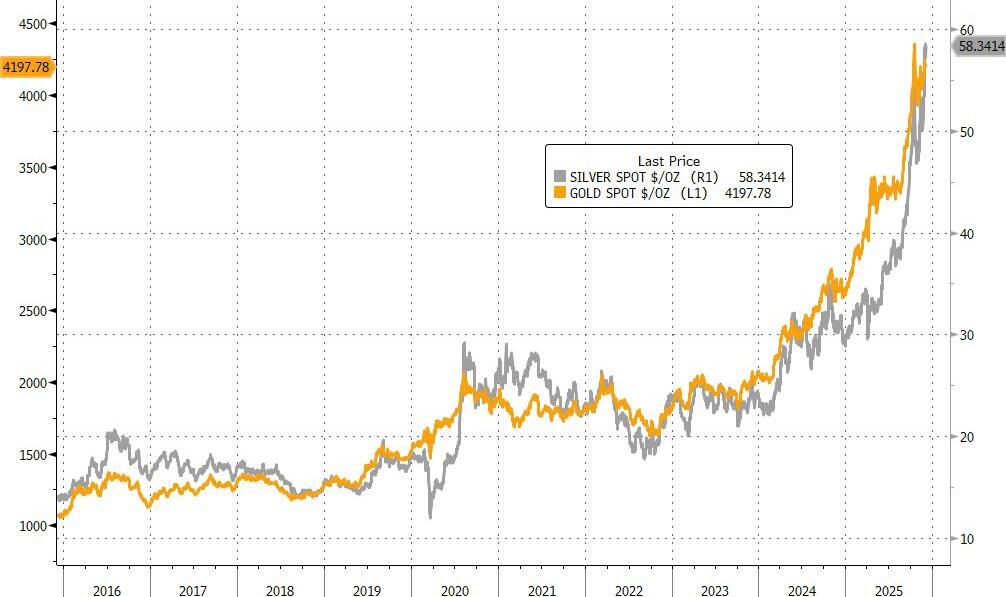
Source: Bloomberg
Over 10 years, the price of gold has moved from $1.1K per ounce to $4.2K, a 256 percent increase. The price of silver has moved from $13 to $57 per ounce, a 315 percent increase.
This beats both the Dow Jones Industrial Average and the S&P 500. This is an outstanding investment, one that beats dollar depreciation.
To be sure, the silver demand is driven by industrial interest. Gold is being pushed by investors. Still, to see the two move together suggests tremendous insecurity in the financial system. It could portend some significant moves in the future.
Demand has also increased based on new purchases from central banks and the new stablecoins (with a $308 billion market cap, up 50 percent in a year). Stable coins are trying to balance out their debt-dominated portfolios with some hard-money backing. This alone is remarkable, especially since intellectuals have been calling gold a “barbarous relic” for nearly one hundred years. Still to this day, these metals are considered to be safe havens.
The Basel III rules that took full effect in 2022 explicitly reclassified allocated gold as a zero-risk-weight asset again.
This is the first time since the 1970s. The timing is significant because this took place when the world economy was locked down and suffering from pandemic-related attacks.
Another crucial fact: more banks are today accepting gold and silver as collateral for dollar-based loans. This is a form of backdoor monetization. It is a small step for a liquid and portable metal to serve as money, with on and off ramps being provided by the banks themselves. Gold is already allowed to be used this way, and silver is on the way toward this status.
This path is consistent with F.A. Hayek’s speculations on the denationalization of money. He was an economist who had been writing for sound money since the 1930s. His plans were continually foiled by governments and the trends of his time. For his work on this topic, he was awarded the Nobel Prize in Economics in 1974.
After this, he decided it was time to say the unthinkable. He wrote that governments would never reform the money in a good way because governments love bad money. He said that the best path forward would be for the banks to shepherd the change themselves. He posited that banks could create a new currency based on their own assets or on a commodity basket of real goods.
Hayek speculated that when the money fails, the banks’ own hard money could serve as the monetary safe haven.
To some extent, his vision for choice in currency is being realized within the crypto sector. It was designed to be a non-state money. Bitcoin itself took a different direction when the core developers refused to allow it to scale, as Roger Ver explains.
This led to forks of new tokens. Now there are thousands of them, many with privacy protection that far exceeds Bitcoin. They are the go-to choice for people who actually use crypto for transactions.
But now we are seeing the advent of hybrid models, such as stablecoins backed by physical gold, thus uniting the soundness of gold with the speed and low cost of blockchain exchange of ownership titles.
If the money fails this time, and even if government defaults on its debt, these monetary instruments could immediately swing into action.
If the dollar actually degrades to the point that it is not useful, new pricing structures could emerge rooted in crypto and/or hard money like gold and silver.
Would that not be fascinating if we eventually end up with a gold standard as fact even without legislation?
As in 1873, Congress can come along later and recognize reality after the fact.
Such a path would be consistent with the long history of money. It was never a creation of the state but rather emerged from markets. A new and better path to sound money in our times might travel the same trajectory.
Tyler Durden
Sat, 12/06/2025 – 10:30
https://www.zerohedge.com/precious-metals/backdoor-gold-standard-coming

Aston Villa sorprende y vence al Arsenal con un gol tardío de Emiliano Buendía
Por JAMES ROBSON
Arsenal sufrió un revés el sábado en su intento de ganar el título de la Liga Premier después de que un gol del argentino Emiliano Buendía en el tiempo de descuento sellara la victoria el sábado 2-1 del Aston Villa.
Villa redujo la diferencia con el líder Arsenal a tres puntos y le dio a Manchester City la oportunidad de acercarse al equipo de Mikel Arteta.
Buendía disparó al techo de la red en el quinto minuto del tiempo añadido en el Villa Park. Fue la tercera vez consecutiva que Arsenal pierde puntos fuera de casa tras empates con Sunderland y Chelsea.
Villa logró su novena victoria en los últimos diez partidos para moverse provisionalmente al segundo lugar en la clasificación.
Matty Cash adelantó al equipo de Unai Emery a los 36 minutos, pero Arsenal igualó a través de Leandro Trossard siete minutos después del inicio del complemento.
Buendía entró como suplente al 87 y resultó ser un cambio inspirador al lanzar un potente disparo que superó al portero del Arsenal, David Raya.
___
Deportes AP: https://apnews.com/hub/deportes
Arrestan a manifestantes que untaron comida a la vitrina donde está la corona del rey Carlos
Associated Press
LONDRES (AP) — Cuatro manifestantes fueron arrestados el sábado después de salpicar comida en la vitrina de una invaluable corona incrustada con diamantes en la Torre de Londres.
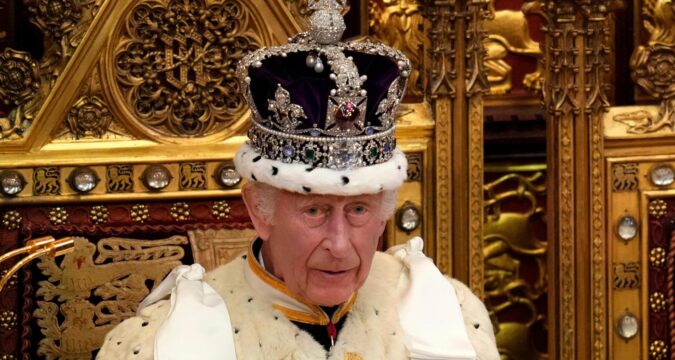
La exhibición de las Joyas de la Corona fue cerrada temporalmente después de que miembros de un grupo llamado Recuperar el Poder untaron crumble de manzana y vertieron natillas amarillas —dos básicos de los postres británicos— sobre la vitrina donde se encuentra la Corona Imperial del Estado que usó el rey Carlos III al salir de su ceremonia de coronación en 2023 y durante su discurso de apertura del Parlamento en 2024.
La pesada corona, que contiene 2.868 diamantes, 17 zafiros, 11 esmeraldas, cuatro rubíes y 269 perlas, fue elaborada para la coronación del abuelo de Carlos, Jorge VI, en 1937.
La policía dijo que los manifestantes fueron arrestados bajo sospecha de daño criminal. Pero las joyas invaluables que son una gran atracción turística no sufrieron daños, informó Historic Royal Palaces.
El grupo de desobediencia civil que aboga por una asamblea ciudadana permanente y quiere gravar la riqueza extrema dijo que dos de sus miembros habían lanzado la comida y otros dos también fueron arrestados y llevados a “custodia”.
El acto es uno de muchos que ha tenido como objetivo tesoros y obras de arte valiosos para llamar la atención sobre una causa política. Manifestantes contra el petróleo fueron encarcelados el año pasado por lanzar una lata de sopa de tomate sobre el vidrio que protege los “Girasoles” de Van Gogh en la Galería Nacional de Londres.
Un video del acto en la Torre de Londres, que una vez fue un palacio también conocido como la prisión donde Ana Bolena, Tomás Moro y otros fueron ejecutados, mostró a dos manifestantes atacando la vitrina mientras otros visitantes retrocedían conmocionados.
Después de que un empleado intervino y pidió ayuda por radio, los dos manifestantes desplegaron un cartel que decía: “La democracia se ha desmoronado. Impuestos a los ricos”.
_____
Esta historia fue traducida del inglés por un editor de AP con la ayuda de una herramienta de inteligencia artificial generativa.

Max Verstappen se queda con la pole para el decisivo GP de la F1 en Abu Dabi
ABU DABI, Emiratos Árabes Unidos (AP) — Max Verstappen se quedó con la pole para el decisivo Gran Premio de Abu Dabi. Quedó por delante de sus rivales por el título de Fórmula 1, Lando Norris y Oscar Piastri, en la clasificación del sábado.
La emocionante batalla a tres bandas se decidirá el domingo en el Circuito Yas Marina. El piloto de McLaren, Lando Norris, está 12 puntos por delante de Verstappen de Red Bull y 16 de su compañero de equipo de McLaren, Piastri.
Verstappen aspira a su quinto título consecutivo de F1, mientras que Norris y Piastri persiguen su primero. Los tres pilotos han ganado siete carreras.
Salir desde la primera posición de la parrilla es crucial en Abu Dabi, ya que todos los pilotos han ganado desde la pole desde 2015.
Verstappen ya había marcado la vuelta más rápida en su primer intento, pero fue aún más veloz en su segundo intento y estableció un tiempo de vuelta de 1 minuto, 22,207 segundos, siendo 0,201 más rápido que Norris y 0,230 que Piastri.
“Eso fue una locura”, dijo Verstappen por radio al equipo después de su octava pole de la temporada y la 48ma de su carrera. “Sí. Encantador”.
Verstappen besó a su pareja, Kelly Piquet, y estrechó la mano del CEO de McLaren, Zak Brown.
Norris ganará el título si sube al podio en Abu Dabi. Incluso si Verstappen gana, el holandés necesita que Norris sea cuarto o inferior. Si Piastri gana, requiere que Norris termine fuera de los cinco primeros.
El siete veces campeón de F1, Lewis Hamilton, fue eliminado en la Q1 por tercera carrera consecutiva. Esto después de que chocó en la tercera práctica debido a un error de conducción. El británico no se ha clasificado dentro de los 10 primeros en cuatro carreras consecutivas.
“Lo siento mucho”, dijo Hamilton por radio al equipo. “No hay palabras para expresar cómo me siento”.
A la pregunta sobre su futuro en el 2026, Hamilton dijo: “No estoy mirando tan lejos en el futuro”.
___
Deportes AP: https://apnews.com/hub/deportes

Anti-Free-Speech War Escalates As EU Unleashes DSA On Musk’s X
Anti-Free-Speech War Escalates As EU Unleashes DSA On Musk’s X
For years, many in the free speech community (most vehemently, Jonathan Turley) have warned about the threat of the European Union to free speech, particularly in the enactment of the infamous Digital Services Act (DSA).
The EU has virtually declared war on free speech and is targeting American companies.
That war just began with the first DSA fine.
Not surprisingly, X was the chosen target – a company blamed by many in the EU and the U.S. for rolling back free-speech protections.
In essence, it’s punishment for not bending the knee to the EU’s iron-fisted control over online content.
As Modernity.news’ Steve Watson points out, the fine reeks of the same vindictive playbook the EU has used since Musk took over Twitter in 2022. It’s no coincidence; Brussels has been gunning for him precisely because he’s turned the platform into a haven for unfiltered discourse, refusing to censor at the whim of unelected technocrats.
This isn’t a one-off slap; it’s the culmination of years of threats and harassment. Back in January 2023, EU Commission Vice-President Vera Jourová openly warned Musk that his “freedom of speech absolutism” wouldn’t fly, declaring the “time of the Wild West is over” and threatening sanctions if Twitter didn’t comply with DSA rules. She conflated illegal content with anything the elites deem offensive, setting the stage for today’s fine.
At the WEF annual meeting, the EU regulator threatens Twitter and Elon Musk with sanctions.
She is very unhappy about unapproved thoughts being expressed freely on Twitter.
Your thoughts are too dangerous for the EU bureaucrats to handle! pic.twitter.com/M27cykXqtF
— Igor Chudov (@ichudov) January 23, 2023
In October 2023, EU Commissioner Thierry Breton fired off a letter demanding X address “illegal content and disinformation” related to the Gaza conflict. Musk fired back, demanding a specific list of violations so the public could judge for themselves.
Breton’s vague accusations—citing repurposed images and unverified claims—highlighted the EU’s preference for opacity over accountability. Musk called it out: “List the violations you allude to on X, so that the public can see them.” The EU’s response was not forthcoming, but the threats continued.
Our policy is that everything is open source and transparent, an approach that I know the EU supports.
Please list the violations you allude to on ?, so that that the public can see them.
Merci beaucoup.
— Elon Musk (@elonmusk) October 10, 2023
We take our actions in the open.
No back room deals.
Please post your concerns explicitly on this platform.
— Elon Musk (@elonmusk) October 11, 2023
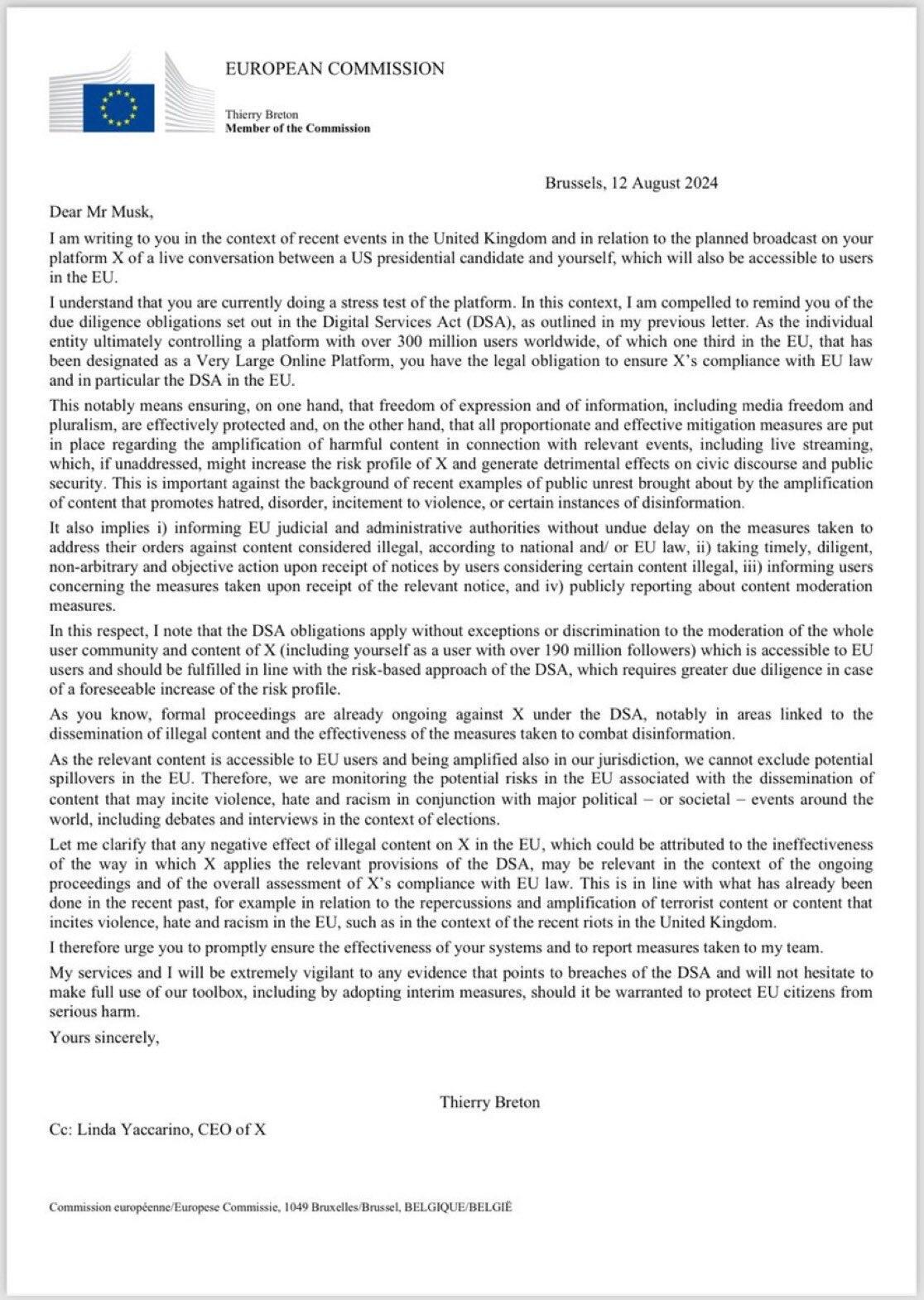
Further, Musk brings receipts showing the European Union sent him a formal letter demanding that he censor Donald Trump during the 2024 US presidential election.
Since Musk’s acquisition, X has become a battleground for free expression, reinstating accounts banned under the old regime and prioritizing user-driven content over algorithmic suppression. But for the EU, that’s the problem.
Their DSA empowers regulators to dictate what platforms promote or demote, under the guise of fighting “hate speech” and “misinformation.” In reality, it’s a tool to silence dissent against open borders, climate hysteria, or any narrative challenging the globalist agenda.
This fine doesn’t exist in a vacuum – it’s part of a chilling pattern of EU overreach that threatens privacy and free speech across the continent.
Take the proposed Chat Control law, which would mandate backdoors into encrypted messages on apps like WhatsApp and Signal.
Sold as a child protection measure, it would scan billions of private conversations, exposing users to hacking, fraud, and government spying. Signal’s CEO Meredith Whittaker slammed it as a “catastrophic about-face” that betrays Europe’s privacy commitments, while experts warn of mass false positives and geopolitical abuse.
Then there’s Brussels’ aggressive enforcement tactics. In May of this year, the European Commission sued Czechia, Spain, Cyprus, Poland, and Portugal for dragging their feet on DSA implementation—specifically for not appointing national coordinators or setting penalties. Critics see this as forcing member states into a surveillance straitjacket, where platforms must over-censor to avoid fines, stifling smaller voices and user privacy.
At the heart of it all is the EU’s obsession with controlling information flows. In a January 2024 speech at Davos, Commission President Ursula von der Leyen declared disinformation the “top concern” for the coming years, calling for a “new global framework” where governments and Big Tech collaborate to police AI and online content.
She praised the DSA for defining platform responsibilities, but the subtext was clear: crush platforms like X that don’t toe the line. Jourová echoed this, meeting with Meta and YouTube execs to ensure compliance while targeting Musk’s “absolutism.”
These moves expose the hypocrisy: the EU claims to champion democracy but builds an Orwellian apparatus that monitors, scans, and punishes speech. It’s not about safety—it’s about power.
This latest EU assault on X has infuriated US Vice President JD Vance, who yesterday, as rumors of the impending penalty circulated, took to X and posted:
“The EU should be supporting free speech not attacking American companies over garbage.”
Rumors swirling that the EU commission will fine X hundreds of millions of dollars for not engaging in censorship. The EU should be supporting free speech not attacking American companies over garbage.
— JD Vance (@JDVance) December 4, 2025
Vance’s previously blistering critiques of European tyranny sent shockwaves through Brussels. In a February 2025 speech at the Munich Security Conference, Vance tore into EU leaders for preaching democracy while arresting citizens for silent prayer, canceling elections, and ignoring voters on mass migration.
“No voter on this continent went to the ballot box to open the floodgates to millions of unvetted immigrants,” he declared, labeling Europeans as more than “interchangeable cogs in a global economy.”
German Defense Minister Boris Pistorius called Vance’s opinions “unacceptable,” proving Vance’s point about normalized authoritarianism.
Vance’s words were prescient—today’s fine on X exemplifies how the EU weaponizes laws to crush free speech platforms, treating them as threats to their controlled narrative. With Trump back in the White House and Vance as a key ally, expect pushback: America won’t stand idly by as allies erode the very freedoms that define the West.
The $140 million hit on X isn’t just a fine—it’s a declaration of war on uncensored dialogue.
Musk’s platform remains one of the last major outposts where ideas flow freely, unhampered by globalist filters. As the EU tightens its grip, the message is clear: comply or be crushed.
As Jonathan Turley concludes, this is the first fine under the DSA and the EU officials acknowledged that it will lay the foundation for additional penalties to come to force companies to comply with EU “values” on free speech.
Specifically, the European Commission has imposed a €120 million ($140 million) fine on X after finding that it misled users with its paid-for blue checkmark verification symbol, failed to provide researchers with access to data, and did not properly set up an advertising repository.
Bingo https://t.co/JRrMjn1UfO
— Elon Musk (@elonmusk) December 6, 2025
X has 60 days to develop solutions to address the issues and 90 days to implement the changes, or it may face additional fines.
The “EU” imposed this crazy fine not just on @X, but also on me personally, which is even more insane!
Therefore, it would seem appropriate to apply our response not just to the EU, but also to the individuals who took this action against me. https://t.co/n2LE0eZiI7
— Elon Musk (@elonmusk) December 5, 2025
Under the DSA, the EU can impose fines of up to 6% of an online platform’s annual global revenue for failing to address illegal content, disinformation, or transparency requirements.
It is still investigating X as well as several other major US tech firms, including Apple, Google, and Meta, under the DSA and the Digital Markets Act.
This includes investigations for failing to carry out demands for censorship, including of American citizens.
The EU woke Stasi commissars are about to understand the full meaning of the “Streisand Effect” https://t.co/2XgsSzwJ7z
— Elon Musk (@elonmusk) December 5, 2025
This is just the first salvo in a war that some of us have warned is coming. We cannot be passive at this moment. The EU is threatening the very indispensable right that has long defined us as a people. Many in the United States are rooting for the Europeans to roll back free-speech protections at X and Meta. Some have appeared before the EU to call for this type of action. They could use the EU to achieve abroad what they have failed to accomplish in the United States. The results will be the same for Americans, who will find themselves subject to European censors and “values.”
Tyler Durden
Sat, 12/06/2025 – 09:55
https://www.zerohedge.com/geopolitical/anti-free-speech-war-escalates-eu-unleashes-dsa-musks-x

Germany Scales Back Offshore Wind Auctions After Latest Flop
Germany Scales Back Offshore Wind Auctions After Latest Flop
By Tsvetana Paraskova of OilPrice.com
Germany moved to reduce the capacity it will auction in its offshore wind tender in 2026, following the flop in the latest auction without a single bid made.
The German Parliament approved legislation narrowing the capacity in the 2026 tender to just 2.5 gigawatts (GW) to 5 GW, compared with an earlier plan of auctioning off 6 GW of offshore wind capacity and with as much as 10 GW offered in the auction in August.
The August offshore wind auction without government subsidies failed to attract a single bid, alarming the local offshore wind sector, which is calling for a fundamental redesign of Germany’s renewable energy auctions.
The Federal Network Agency’s auction for 10.1 GW offshore wind farms in the German part of the North Sea ended with no investor submitting a bid for any of the two proposed sites, the Federal Association for Offshore Wind Energy, BWO, said.
The auction flop signals that offshore wind power developers are wary of taking on riskier, zero-subsidy projects amid rising costs and supply chain issues.
In response to the failure in the August auction, Germany’s ruling coalition proposed reduced capacity up for grabs, and the proposal was approved by Parliament in a package also aimed at speeding up permitting and other approvals for offshore wind projects and power grid upgrades.
“Offshore wind is facing a difficult market environment, both internationally and in Germany,” the Economy Ministry said in a statement carried by Bloomberg. Surging costs and tight supply chains deter offshore wind expansion, the ministry noted.
Germany is expanding onshore wind installations but offshore wind capacity additions are nowhere near its targets.
Days before the flop in the August auction, German industry associations said that offshore wind power installations had stagnated in the first half of 2025. For offshore wind to reach the ambitious government targets of boosting capacity to 70 GW by 2045, policy makers need to fundamentally revise the tenders and ensure additional revenue and planning security, the German wind energy association, Bundesverband WindEnergie (BWE), and several other sector groups said.
Tyler Durden
Sat, 12/06/2025 – 09:20
https://www.zerohedge.com/markets/germany-scales-back-offshore-wind-auctions-after-latest-flop

Llamadas al 911 revelan súplicas desesperadas y trágicos desenlaces durante inundación en Texas
Por JIM VERTUNO
KERRVILLE, Texas, EE.UU. (AP) — Muchas de las voces son frenéticas y desesperadas. Algunas son firmes y calmadas en medio de un peligro creciente y aterrador, y en algunos casos, un destino ineludible.
Provenían de familias acurrucadas en los tejados para escapar de las aguas crecientes y turbulentas, madres aterrorizadas por el bienestar de sus hijos y gente que escuchó a personas pedir ayuda a gritos en la oscuridad mientras se aferraban a las copas de los árboles.
Un hombre atrapado en lo alto de un árbol que comenzaba a romperse bajo la presión de las aguas de la inundación pidió a los despachadores de emergencia un rescate en helicóptero que nunca llegó.
Sus súplicas estaban entre más de 400 llamadas de auxilio en todo el condado Kerr, en Texas, el verano pasado, cuando devastadoras inundaciones golpearon la madrugada del 4 de julio. Las grabaciones de las llamadas al 911 fueron publicadas el viernes.
El volumen abrumador de llamadas desbordó a dos despachadores de emergencia del condado de guardia en la región montañosa de Texas mientras las inundaciones catastróficas inundaban cabañas y campamentos juveniles a orillas del río Guadalupe.
“Hay agua subiendo superrápido, no podemos salir de nuestra cabaña”, dijo un consejero de campamento a un despachador por encima de los gritos de los campistas en el fondo. “No podemos salir de nuestra cabaña, entonces, ¿cómo llegamos a los botes?”.
Asombrosamente, todos en la cabaña y el resto de los campistas en Camp La Junta fueron rescatados.
Las inundaciones mataron al menos a 136 personas en todo el estado durante el fin de semana feriado por el Día de la Independencia, incluidas al menos 117 solo en el condado Kerr. La mayoría eran de Texas, pero otros provenían de Alabama, California y Florida, según una lista publicada por las autoridades del condado.
Una mujer pidió ayuda mientras el agua se acercaba a su casa cerca de Camp Mystic, un campamento de verano centenario para niñas, donde murieron 25 campistas y dos consejeros adolescentes.
“Estamos bien, pero vivimos a una milla de Camp Mystic y dos niñas pequeñas bajaron por el río. Y hemos llegado a ellas, pero no estoy segura de cuántas más están allá afuera”, dijo con voz temblorosa.
Un portavoz de los padres de los niños y consejeros que murieron en Camp Mystic declinó comentar sobre la publicación de las grabaciones.
Las llamadas provenían de personas en tejados y en árboles
Muchos residentes en la región montañosa de Texas, duramente golpeada, han dicho que fueron tomados por sorpresa y no recibieron ninguna advertencia cuando las inundaciones sobrepasaron el río Guadalupe. Los líderes del condado Kerr han enfrentado escrutinio sobre si hicieron lo suficiente en ese momento. Dos funcionarios dijeron a los legisladores de Texas este verano que estaban dormidos durante las horas iniciales de la inundación, y un tercero estaba fuera de la ciudad.
Utilizando grabaciones de comunicaciones de los primeros en responder, advertencias del servicio meteorológico, videos de sobrevivientes y testimonios oficiales, The Associated Press armó una cronología del caótico esfuerzo de rescate. La AP fue uno de los medios que presentó solicitudes de información pública para que se publicaran las grabaciones de las llamadas al 911.
Muchas personas fueron rescatadas con botes y vehículos de emergencia. Algunas súplicas desesperadas provenían de personas que se alejaban flotando en casas rodantes. Algunos sobrevivientes fueron encontrados en árboles y en tejados.
Pero algunas de las llamadas publicadas el viernes provenían de personas que no sobrevivieron, dijo el jefe de policía de Kerrville, Chris McCall, quien advirtió que el audio era inquietante.
“El árbol en el que estoy está empezando a inclinarse y va a caer. ¿Hay un helicóptero cerca?”, dijo calmadamente Bradley Perry, un bombero, a un despachador, agregando que vio a su esposa, Tina, y su casa rodante ser arrastradas.
“Probablemente me quedan tal vez cinco minutos”, dijo.
Bradley Perry no sobrevivió. Su esposa fue encontrada más tarde aferrada a un árbol, aún con vida.
Subiendo cada vez más alto para sobrevivir
En otra llamada desgarradora, una mujer que se hospedaba en una comunidad de cabañas junto al río dijo a un despachador que el agua estaba inundando su sitio.
“Nos estamos inundando, y tenemos personas en cabañas a las que no podemos llegar”, dijo. “Nos estamos inundando casi hasta el techo”.
La persona que llamó habla lenta y deliberadamente. Las voces tenues de lo que parecen ser niños se pueden escuchar en el fondo.
Algunas personas llamaron varias veces, subiendo cada vez más alto en las casas para informar a los rescatistas dónde estaban y que sus situaciones se volvían más graves. Las familias llamaron desde los segundos pisos, luego los áticos, luego los tejados, a veces en el transcurso de 30 o 40 minutos, revelando cuán rápido y cuán alto subieron las aguas.
A medida que comenzaba a amanecer, el volumen de llamadas aumentó, con personas avisando de sobrevivientes en árboles o atrapados en tejados, o autos flotando río abajo.
Britt Eastland, el codirector de Camp Mystic, pidió que se llamara a la Guardia Nacional, diciendo que hasta 40 personas allí estaban desaparecidas. “Estamos sin electricidad. Apenas tenemos servicio de celular”, dijo.
Las grabaciones del 911 muestran que familiares y amigos que no estaban allí y aquellos que ya estaban a salvo llamaron para pedir ayuda para sus seres queridos atrapados en la inundación.
Una mujer dijo que un amigo, un anciano, estaba atrapado en su casa con agua hasta la cabeza. Se dio cuenta de que su teléfono se cortó mientras hablaba con un operador del 911.
Los despachadores dieron consejos y consuelo
Abrumados por las interminables llamadas, los despachadores intentaban consolar a los que llamaban aterrorizados, pero se veían obligados a pasar al siguiente. Aconsejaron a muchos de los que estaban atrapados que subieran a sus tejados o corrieran a terrenos más altos. En algunas llamadas, se podían escuchar niños gritando en el fondo.
“Hay agua por todas partes, no podemos movernos. Estamos arriba en una habitación y el agua está subiendo”, dijo una mujer que llamó desde Camp Mystic.
La misma mujer llamó más tarde.
“¿Cómo llegamos al techo si el agua está tan alta? ¿Pueden ya enviar a alguien aquí? ¿Con los botes?”.
Preguntó al despachador cuándo llegaría la ayuda.
“No lo sé”, respondió el despachador. “No lo sé”.
______
Los reporteros de The Associated Press Claudia Lauer en Filadelfia; Heather Hollingsworth en Mission, Kansas; Ed White en Detroit; Safiyah Riddle en Montgomery, Alabama; John Seewer en Toledo, Ohio; y Mike Catalini en Trenton, Nueva Jersey, contribuyeron a esta historia.
______
Esta historia fue traducida del inglés por un editor de AP con la ayuda de una herramienta de inteligencia artificial generativa.

Valparaiso man sentenced to 48 years in murder of mother
A Valparaiso man who pleaded guilty but mentally ill in the February 2024 murder of his mother after she filed eviction papers against him was sentenced Dec. 4 to 48 years in prison, according to court documents.
Under the terms of the plea agreement, prosecutors dropped a Level 3 felony charge of aggravated battery against Conner Kobold, 21, who killed his mother, Shanelle Burns, 43, in their home on Valparaiso’s north side in the 1300 block of Diamond Boulevard, according to court documents.
Porter Superior Court Judge Michael Fish found as mitigating factors in the sentencing Kobold’s lack of a criminal history, his cooperation with law enforcement, his “significant mental health concerns,” and that the crime is unlikely to reoccur, per the sentencing order.
Burns was taken to Northwest Health-Porter, where medical staff found small ligature marks on her neck, according to charging documents. The medical staff believed she had suffered substantial brain damage.
Burns died at the hospital around 3:27 p.m. on Feb. 7, 2024. Results of an autopsy performed by the Porter County Coroner’s Office showed the cause of death as asphyxiation secondary to manual strangulation and ruled the death a homicide.
Kobold was served with an eviction notice in the days before the crime, according to court records, after Burns sent Kobold a Dec. 26, 2023, letter outlining conditions he needed to meet during a 30-day timeframe to avoid being evicted from their home.
Among the conditions listed were securing full-time employment and keeping his room clean, and contributing to the cleanliness of the residence’s common areas.
Valparaiso Police were dispatched to the 1300 block of Diamond Boulevard at 3:48 p.m. on Feb. 5, 2024, after Kobold, according to court documents, made a call stating, “I need you to send a police car right now.” When police arrived, Kobold was waving them down at the intersection of Goodrich Road and Diamond Boulevard.
Kobold “immediately asked to be placed into handcuffs and in the back seat of the patrol vehicle,” charging documents state.
Unprovoked, Kobold told police, “There is a dead person inside of the house on the corner,” according to the charges. When an officer asked to confirm there was a dead person, Kobold said, “yeah, I killed somebody in that house,” which the officer also confirmed.
An officer observed superficial scratches on Kobold’s face, documents said.
Police conducted a protective sweep of the residence and found Kobold’s mother in the living room, unconscious and unresponsive, with no pulse and not breathing.
She was transported to Northwest Health-Porter while Kobold was taken to the Valparaiso Police Department for questioning. Police said in the charging documents that there was a sign of a struggle where Burns was located, including furniture that was disturbed.
https://www.chicagotribune.com/2025/12/06/valparaiso-man-sentenced-to-48-years-in-murder-of-mother/

French Soldiers ‘Open Fire’ On Drones Threatening High-Secure Nuclear Submarine Base
French Soldiers ‘Open Fire’ On Drones Threatening High-Secure Nuclear Submarine Base
A major security breach of French military airspace has been revealed Friday at a moment European officials have been hyping the ‘hybrid warfare’ threat from Russia, which has of late centered on many dozens of ‘mystery’ drone breaches in EU airspace especially near sensitive locations like airports.
French Marines opened fire on five unidentified drones that breached restricted airspace above a key nuclear submarine base Thursday evening, military officials said, according to EuroNews. But one official has said a “jammer” was hot and not necessarily live ammunition.
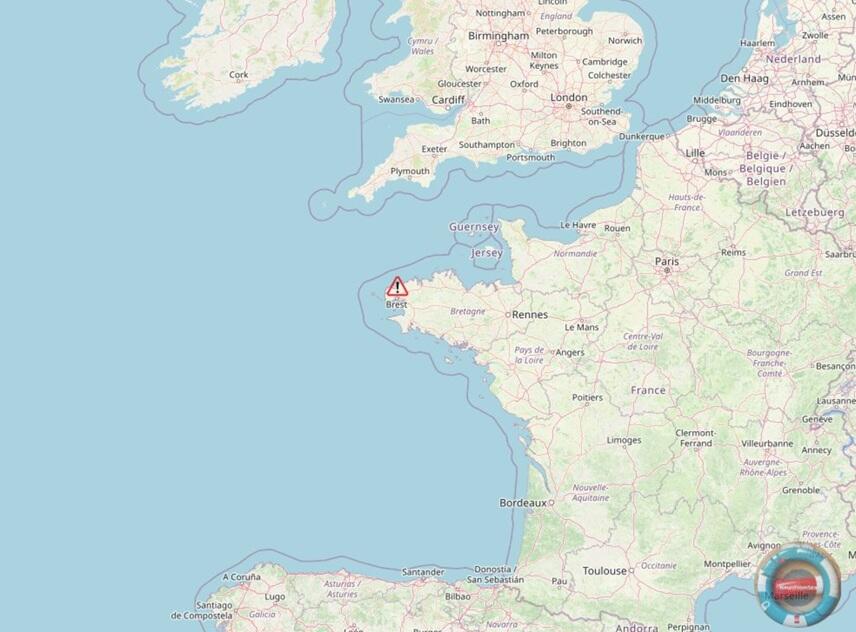
At around 7:30pm local at the Île Longue naval base in Brittany, which importantly is the command center for France’s fleet of nuclear-armed ballistic missile submarines, radar detected incoming unauthorized UAVs at the high-secure facility.
The marine infantry battalion responsible for protecting the site immediately deployed anti-drone procedures, which included firing several shots at the aircraft in an effort to disable and bring them down.
As it wasn’t confirmed whether the drones were actually hit, the security forces initiated a large-scale search operation. Authorities still haven’t confirmed that any drones were brought down or recovered.
The drones may have been electronically thwarted or intercepted, based on vague references from French military officials, but not much in the way of details have been offered:
Defense Minister Catherine Vautrin confirmed that troops at the base intercepted an overflight, without detailing whether they fired shots, used electronic jamming or other means against the aerial intruders. It wasn’t clear who was responsible.
“Any overflight of a military site is prohibited in our country,” Vautrin said. “I want to commend the interception carried out by our military personnel at the Île Longue base.”
The installation is located near Brest in western France, and is guarded by more than 120 maritime forces alongside naval security forces, according to French media.
It hosts four ballistic missile submarines — Le Triomphant, Le Téméraire, Le Vigilant, and Le Terrible — and provides maintenance for the vessels which support the nation’s nuclear deterrent. According to official policy, at least one nuclear submarine is deployed on patrol at all times.
“No link with foreign interference has been established,” Frédéric Teillet, the public prosecutor in Rennes, was quoted in AFP as saying. He also indicated that no operators behind the drones have been apprehended or identified.
European officials have of late and without firm evidence been pointing the finger at Russian intelligence for a series of drone incidents near commercial and military airports and installations in northern Europe.
Tyler Durden
Sat, 12/06/2025 – 08:45