Category: News

Iran’s Executions Reach Decade High
Iran’s Executions Reach Decade High
Iranian authorities have executed over 1,000 people between January and September 2025, the highest number of yearly death penalties conducted in Iran that Amnesty International has recorded in at least 15 years.
As Statista’s Tristan Gaudiat shows in the chart below, within less than nine months, the number of people executed by the regime has already surpassed last year’s grim total of 972 executions.
You will find more infographics at Statista
These figures are likely low estimates due to the Iranian authorities not publishing such data publicly.
According to Amnesty, the Iranian regime has increased its use of the death penalty since the 2022 “Woman, Life, Freedom” movement uprising, as a tool of state repression and to crush dissent.
In 2025, the authorities have further intensified executions in the aftermath of the escalating hostilities between Israel and Iran, under the guise of national security.
Tyler Durden
Sun, 12/07/2025 – 07:35
https://www.zerohedge.com/geopolitical/irans-executions-reach-decade-high
Un detenido tras agresión con gas lacrimógeno en estacionamiento del aeropuerto Heathrow de Londres
Associated Press
LONDRES (AP) — La policía arrestó el domingo a un hombre en Londres después de que un grupo de personas fuera agredido con gas lacrimógeno en un estacionamiento del Aeropuerto de Heathrow.
Equipos de ambulancias atendieron a 21 personas en el lugar y cinco fueron llevadas al hospital, aunque las autoridades dijeron que no se creía que sus lesiones fueran graves.
La Policía Metropolitana informó que el incidente en el estacionamiento de la Terminal tres ocurrió después de que una discusión entre dos grupos que se conocían escalara. No se estaba investigando como un acto de terrorismo.
Un hombre estaba detenido bajo sospecha de agresión. La policía buscaba a otros sospechosos que abandonaron el lugar.
El incidente causó varias horas de retrasos para los pasajeros que utilizaban la terminal.
___
Esta historia fue traducida del inglés por un editor de AP con la ayuda de una herramienta de inteligencia artificial generativa.
Will they acquire a top-of-the-rotation arm? 3 questions facing the Chicago Cubs ahead of the winter meetings.
The Chicago Cubs still have a lot of work to do on their roster.
As the Cubs head to the winter meetings this week in Orlando, Fla., they have made only two moves: signing veteran reliever Phil Maton to a two-year deal and signing infielder Scott Kingery to a minor-league deal with an invitation to big-league spring training. The Cubs still need multiple relievers and ideally another significant starting pitcher while figuring out how they might replace Kyle Tucker.
There are multiple avenues the Cubs can take to improving a roster that fell one win shy of the National League Championship Series. They face three questions with the winter meetings approaching.
1. Will the Cubs give another reliever a multiyear contract?
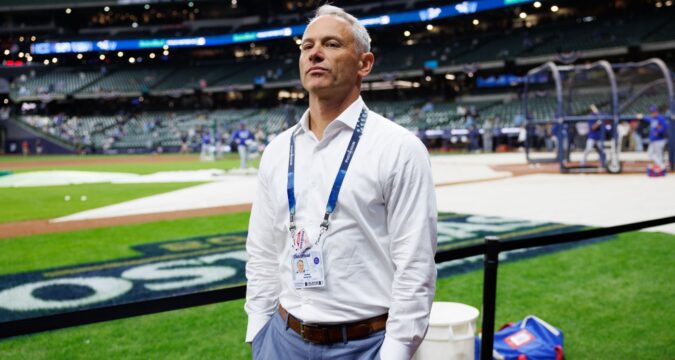
President of baseball operations Jed Hoyer has been on the record about preferring to avoid giving relievers multiyear contracts.
Bullpens are notoriously volatile, and while the Cubs struggled to put together a reliable group, especially their back-end arms, year to year, their 2025 pen became a strength. The Cubs built the group without committing multiple years to their high-leverage arms. That gives them flexibility for how they want to construct the 2026 version but also means they came into the offseason having only one or two puzzle pieces in place to envision what the bullpen could look like for manager Craig Counsell.
The Cubs gave Maton a two-year contract for the team’s first move of the offseason during the last week of November. Will Hoyer and the front office be willing to give out another multiyear deal for a proven reliever? A willingness to do so would indicate the Cubs want fewer question marks in a bullpen that essentially returns only Daniel Palencia.
“It’s not my favorite thing to do. I prefer shorter commitments in the bullpen, but I’ll never say never,” Hoyer said of multiyear contracts for relievers at the general manager meetings last month. “We offered some last year (and) we didn’t win the bidding. So it’s not a hard and fast rule, but you can guess that we’re probably going to be more focused on shorter commitments.”
2. How will they acquire an effective starting pitcher?
Left-hander Framber Valdez points to the dugout during a game against the Rockies on Aug. 27, 2025, in Houston. (Ashley Landis/AP)
Shota Imanaga’s decision to accept the Cubs’ $22.025 million qualifying offer sets up the 2026 rotation to look very similar to last season.
With Imanaga, Jameson Taillon, Cade Horton, Matthew Boyd and Colin Rea back plus Justin Steele on track to be ready early in the season following left-elbow surgery, the rotation on paper doesn’t appear to be a need. The Cubs, however, could use an uptick in stuff from their starters. While they also will be looking to address pitching depth, there are paths the Cubs can take to acquire a top-of-the-rotation arm.
Ultimately, the Cubs must decide whether to pursue that in free agency or through a trade. Dylan Cease’s seven-year, $210 million contract with the Toronto Blue Jays proved to be a level the Cubs didn’t want to go to, though deferrals in the deal reduce the value of Cease’s contract to $184.6 million.
They still have intriguing options. Japanese right-hander Tatsuya Imai, 27, was posted on Nov. 18 following a dominant run in Nippon Professional Baseball with the Saitama Seibu Lions. Among free-agent starters, left-handers Framber Valdez and Ranger Suárez and right-hander Michael King could fit what the Cubs need. In a trade, the Cubs have the pieces to make a potential move for Twins right-hander Joe Ryan and Nationals left-hander MacKenzie Gore happen — if those teams are willing to find more common ground than the high demands at the trade deadline.
A trade might make more sense for the Cubs to allow them to use their prospect capital and allocate their financial resources elsewhere on the roster.
3. Are they truly willing to roll with two rookies to replace Tucker?
Moisés Ballesteros rounds second base against the Mets on Sept. 24, 2025, at Wrigley Field. (Chris Sweda/Chicago Tribune)
As Tucker explores his options in free agency and the Cubs not considered among the front-runners for him to return to Chicago, the organization sounds willing to give the star’s at-bats to a pair of rookies.
Moisés Ballesteros and Owen Caissie are in line to get big-league at-bats should Tucker sign elsewhere. By shifting Seiya Suzuki back to right field, it would open at-bats for the young duo at designated hitter. It certainly would be a gamble for the Cubs to go with less proven options rather than acquire someone with a better major-league track record. Ballesteros impressed the Cubs by his approach in his limited action, while Caissie’s dominance for two consecutive seasons with Triple-A Iowa has the team believing he is ready for the challenge.
As the Cubs continue to evaluate the free-agency and trade markets, they could instead look to find a way to better close the gap between Tucker and whomever they give his at-bats to. If the Cubs don’t want to rely solely on prospects, third baseman Alex Bregman makes a lot of sense. Both sides were interested in each other during his free agency last offseason that landed him in Boston on a multiyear deal that had an opt-out he took after the season. Signing Bregman, 31, would allow the Cubs to move Matt Shaw around the field or make him a key piece of a trade to land a top starting pitcher.
Despite initially sounding inclined to look internally to replace Tucker, the Cubs have the flexibility to pivot and find a way to improve a lineup that was at its best when their star hitter was healthy and locked in.
https://www.chicagotribune.com/2025/12/07/chicago-cubs-winter-meetings-questions/
Chicago Bears at Green Bay Packers: Everything you need to know about the Week 14 game before kickoff
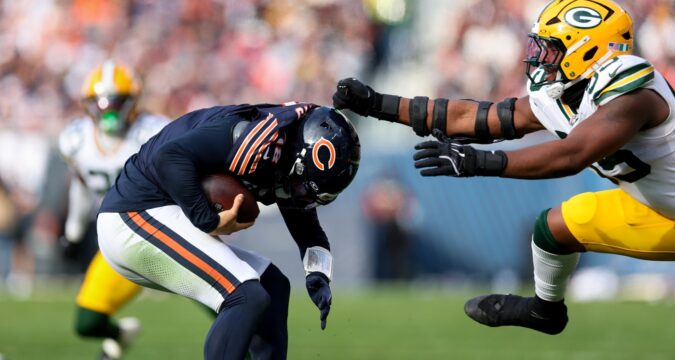
The 9-3 Chicago Bears will play the 8-3-1 Green Bay Packers at Lambeau Field in a Week 14 matchup. Here’s what you need to know before kickoff (3:25 p.m., Fox-32).
Want the latest Bears news? Subscribe to the Chicago Tribune to read it all — and sign up for our free Bears Insider newsletter.
5 things to watch at Lambeau Field — plus our Week 14 predictions
Bears players stand during the national anthem before playing the Packers at Lambeau Field on Jan. 5, 2025, in Green Bay, Wis. (Armando L. Sanchez/Chicago Tribune)
It’s not like the semiannual grudge match between the Bears and the Packers needed higher stakes, but the football gods bestowed them anyway.
To the winner goes the lead in the NFC North and possibly maintaining the top seed in the conference. Read more here.
Bears LB T.J. Edwards set to return after missing 4 games — but WR Rome Odonze ruled out for Sunday
Stats show troubling trend in Caleb Williams’ accuracy, but Ben Johnson says to ‘throw those out the window’
Micah Parsons making history in his 1st season with the Packers as his sack totals climb
Al Harris has made an impact for years. And wherever he goes, takeaways follow.
Bears pass game coordinator/defensive backs coach Al Harris celebrates with players late in the game against the Philadelphia Eagles on Nov. 28, 2025, at Lincoln Financial Field in Philadelphia. (Brian Cassella/Chicago Tribune)
Al Harris had a profound impact on the Bears long before being hired as defensive backs coach/passing game coordinator.
Defensive coordinator Dennis Allen put a wire cage — the kind you see in a physical education class — in the unit’s meeting room to fill with footballs as the defense collected takeaways this season. With five games remaining, there isn’t a lot of room left. The Bears have 26 takeaways and 17 interceptions — tops in the NFL in both categories — with Harris’ defensive backs accounting for 13 of the picks and six fumble recoveries. Read more here.
Nahshon Wright’s ’emotional’ breakout season for Bears comes as he mourns his JUCO coach John Beam
How did the Bears’ Jaylon Johnson recover from a season-threatening injury? Fasting — and faith.
Every point the Bears lose by, he runs a mile. But Sunday’s stakes are higher: His fiancée is a Packers fan.
Bears fan Chase Bandolik and fiancee Rylee Jade Ollearis, a Packers fan, run together in suburban Northbrook on Dec. 4, 2025. The couple has a bet that whosever team loses the upcoming game will have to run a mile for every point lost by their team. (Chris Sweda/Chicago Tribune)
Chase Bandolik caught everyone’s attention when he ran 31 miles, in a row, for every point lost by the Bears against the Lions in early September — including the Bears.
Star quarterback Caleb Williams and wide receiver DJ Moore have interacted with his social media accounts. Last month, the Bears sent Bandolik a gift package filled with Bears socks, pajamas, blankets and other gear.
For Bandolik, who has been running a mile for every point the Bears lose by in games since 2024, the challenge has become personal — his fiancée, Rylee Jade Ollearis, is a die-hard Packers fan. Read more here.
6 reasons Ben Johnson may be right about Bears playing their best ball in December
Bears coach Ben Johnson watches his team warm up to face the Ravens on Oct. 26, 2025, at M&T Bank Stadium in Baltimore. (Brian Cassella/Chicago Tribune)
It was on the heels of a 31-point beatdown in Detroit that Ben Johnson predicted the Chicago Bears would be playing their best football in December.
The wins indeed have come rapidly — nine in the last 10 games — and now Johnson looks like some sort of football oracle. Read more here.
Kyle Monangai laughs about fan’s ‘Lion King’ parody: ‘Everybody’s been sending it to me,’ Bears RB says
NFL division races tighten after surprises and upsets — and the Bears own the NFC’s top seed now
4 things we learned from the Bears, including why the NFC lead ‘doesn’t mean anything’
Bears Q&A: Could Ben Johnson win Coach of the Year? When should fans panic about Caleb Williams?
By the numbers: Rarely have Bears and Packers been this good in long rivalry
Packers fans push Bears players off the wall as they celebrate Cairo Santos’ game-winning 51-yard field goal at Lambeau Field on Jan. 5, 2025. (Eileen T. Meslar/Chicago Tribune)
The stakes are higher than they’ve been in a long time. Not since 2019 have the rivals squared off in the months of December or January when both teams had a winning record.
Taking that a little deeper, according to Stathead, this will be just the second time the Bears and Packers were both five games over .500 entering a regular-season meeting in December or January. The only other instance was Dec. 9, 2001. That afternoon, coach Mike Sherman’s 8-3 Packers beat Dick Jauron’s 9-2 Bears 17-7 at Lambeau Field.
The NFL often schedules these division games for late in the season, but rarely in the Bears-Packers rivalry have both teams been this good this late in the season. Read more here.
Bears and Packers have played 210 times in the past 100 years. Here’s how the rivalry has unfolded.
Bears’ Week 16 matchup with Packers scheduled for prime-time kickoff
Bears fans line up again for free Wieners Circle hot dogs
The marquee promoted Bears coach Ben Johnson as fans line up for free hot dogs, Dec. 2, 2025, at The Wieners Circle in Chicago’s Lincoln Park neighborhood after Johnson took his shirt off in a postgame celebration for a win over the Eagles. (Brian Cassella/Chicago Tribune)
Everyone was there Tuesday for the big day at The Wieners Circle — the guy wearing 1985 Bears drip, people dressed like hot dogs and plastic mustard containers, various shirtless men, and, of course, a dog in a Caleb Williams jersey.
Ben Johnson’s “good, better, best” mantra was repeatedly uttered by those in line on Tuesday, and someone even managed to give it a Wieners Circle twist.
“Good. Better. Best get your (bleeping bleep) out the (bleeping) way, you Green Bay (bleeps).”
It was enough to make a grown man cry. Read more here.
Photos: Bears fans line up — again — for free hot dogs at Wieners Circle
Why did Bears’ Ben Johnson go shirtless? ‘Anytime you get a chance to feed a city, you want to do it.’
About last week
An exuberant Kyle Monangai returned to the locker room underneath Lincoln Financial Field with a silver platter stacked with gourmet sandwiches.
The Prime Video postgame crew rewarded Monangai and D’Andre Swift with the sandwiches during their appearance Friday night after the Bears bulldozed the Eagles 24-15 to improve to 9-3.
Monangai was looking to feed his offensive linemen, the guys who paved the way on a historic rushing day for a franchise with great history running the ball. Read more here.
Bears’ D’Andre Swift and Kyle Monangai ‘electric’ in 1st dual 100-yard performances since 1985
‘He went and got it’: How Bears CB Nahshon Wright stole the ball from Jalen Hurts on the Tush Push
Week 13 photos: Bears 24, Eagles 15
https://www.chicagotribune.com/2025/12/07/chicago-bears-green-bay-packers-week-14/
Chicago Bulls Q&A: Did they make a mistake in drafting Noa Essengue? Who will be the starting center in 2026?
The first quarter of the Chicago Bulls season doled out equal portions of hope and pessimism.
After a 5-0 start, the Bulls are four games under .500 at 9-13. This head-spinning plummet from the top of the Eastern Conference to below the play-in cutoff line is enough to leave any fan with a litany of questions.
Here are a few of the most pressing.
Do you think the Bulls’ flaws have a lot to do with injuries and therefore rotations out of order? When fully healthy do you see this team looking more like the 5-0 team rather than the team losing to sub-4-win teams? — Cody B.
Injuries are certainly a driving factor in the severity of this team’s results over the last three weeks. The Bulls were destined for a crash back to reality. Their 5-0 start was defined by a decent amount of luck, including injured stars and horrific 3-point shooting from opponents. But without injuries, I don’t believe they would have dropped significantly below .500, even when their good fortune ran out.
When the Bulls begin to get some of their starters back, they will be better equipped to run their ideal style of play. This doesn’t mean they’ll immediately start breaking off 5-0 runs again. But the way they play will feel more familiar to that season-opening streak.
However, the “when” we’re discussing is not guaranteed — at least not anytime soon. The Bulls have piled up a mess of soft-tissue injuries that don’t offer simple timelines or trajectories for a return. Zach Collins returned Friday, but other players, such as Isaac Okoro, Coby White, Kevin Huerter, Tre Jones and Jalen Smith, do not have target return dates, which adds to the uncertainty around the team’s preparedness.
Okoro is a particular source of concern. Although coach Billy Donovan has never given a specific explanation for his injury, the medical definition provided by the team translates to a pinched nerve in his left lower back. Okoro still can’t flex his back into a recumbent position without radiating pain, and the Bulls don’t know when he will be cleared for play. And without their sole stopper, the Bulls defense dropped off a cliff — an issue that won’t be fully solved until his return.
Is Donovan’s future as head coach being questioned? — César U.
Bulls coach Billy Donovan throws the ball to an official in the first quarter against the Pacers on Dec. 5, 2025, at the United Center. (John J. Kim/Chicago Tribune)
No. Donovan just signed a contract extension in July. He commands strong buy-in from his players and staff. And the Bulls front office has never tied Donovan’s worth as a coach to the wins and losses of any given season, valuing instead his ability to develop young players and adapt the team’s style of play to the needs of the roster. That has not changed in the last five months and likely will not change over the course of the season, barring a dramatic development.
Who will be the starting center for the Bulls in December 2026? — @asinwreck on BlueSky
Almost certainly, it will not be Nikola Vučević. The center has been open with his desire to move to a team that better fits the timeline of his career. At 36, Vučević will still be able to offer valuable minutes off the bench, but that type of impact wouldn’t make sense in Chicago given the team’s youth.
The Bulls have a few options. They can promote Zach Collins to the position — he’s still a solid rim protector who’s still on the right side of 30 but also needs to prove he can stay healthy and hold down a bigger role in Chicago. There’s also the (still relatively low) possibility the Bulls take a major swing on a center in need of relocation — such as Anthony Davis.
A potentially strong option for the Bulls is to draft their next center. They could have done so this summer — more on that in a second — but will have another opportunity next year with their first-round pick and the potential to add an additional selection from the Portland Trail Blazers. Next year’s draft is not as replete in center options, but a concentrated effort to improve the frontcourt through young talent would fit the team’s rebuilding timeline.
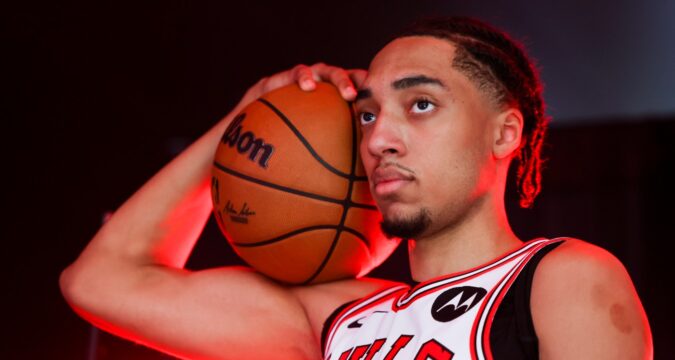
Did the Bulls make a mistake in drafting Noa Essengue? Other teams such as the New Orleans Pelicans and Charlotte Hornets are having similarly awful seasons, but they’re at least able to enjoy the silver lining of a rookie showing promise for the future. The Bulls don’t even have that. Would this year feel different if they took Derik Queen or another option? — Samantha C.
Bulls forward Noa Essengue poses for photos during media day Sept. 29, 2025, at the United Center. (Eileen T. Meslar/Chicago Tribune)
Losing Essengue this week to a season-ending shoulder injury was one of those cherry-on-top blows that the Bulls weren’t really built to sustain.
Ultimately, I don’t think a player’s worth should be judged based on whether they get injured in their rookie season. Essengue always was going to be a long-term play for the Bulls. He would not have seen extended minutes, even in the latter half of the season (unlike Matas Buzelis, who had a slow rollout last season before becoming a starter after the All-Star break).
The Bulls certainly could use extra bodies, especially at center. And Queen — who was available when the Bulls were on the clock before ultimately going at No. 13 to the Pelicans — is an example of a pro-ready player who could’ve immediately redefined the Bulls in the middle. His 12.3 points and 6.1 rebounds per game are enough to drive some envy at this point in the season.
However, the necessities of this season’s injury-laden roster don’t outweigh the value of developing young talent. It all depends on whether Essengue can develop into a high-level two-way star. At 18, it’s still impossible to make that discernment.
Related Articles
Time to press the panic button? 3 takeaways from Chicago Bulls’ 6th straight loss.
Photos: Indiana Pacers 120, Chicago Bulls 105
Michael Jordan testifies at NASCAR antitrust trial: ‘Someone had step forward and challenge the entity’
Photos: Brooklyn Nets 113, Chicago Bulls 103
3 takeaways from Chicago Bulls’ 5th consecutive loss, including another triple-double from Josh Giddey
It is notable that the Bulls — both management and coaching staff — have most vocally praised Essengue’s defense since he arrived in Chicago. This appears to have been a defensive-minded draft pick, even if it still required a multiyear development timeline to see the fruit of that investment.
So the front office (in some capacity) acknowledged this team’s greatest shortcoming and tried to address it in the draft. But defense can only be built and proven in live-game situations, something Essengue hasn’t gotten the chance to experience — he played six minutes before suffering his season-ending injury.
Is this the most forgettable Bulls team in living memory? The Bulls have been mediocre for a long while, but even in the recent past the likes of DeRozan, Caruso and LaVine had individual performances to admire. — Alan L.
It’s early, but I’m going to say no.
The Bulls’ brutal stretch from 2017-20 won’t be outdone for a while. The team should have provided every season ticket holder with a neuralyzer from “Men in Black” at the conclusion of each game during that era. Maybe — a huge, huge maybe — the Bulls will sink to that level of hopelessness, but we haven’t hit that point yet.
It seems more likely that this season will slip into the mediocre malaise of the last few years. They’ll put up a fight in the play-in tournament, perhaps slip into the first round of the playoffs and head to vacation by early May. There are still a few notable highlights to watch — Josh Giddey is putting up triple-doubles that should garner All-Star attention, and Buzelis is looking to make his sophomore leap.
So forgettable, yes. But we still haven’t reached the worst of the worst.
https://www.chicagotribune.com/2025/12/07/chicago-bulls-mailbag-noa-essengue-billy-donovan/
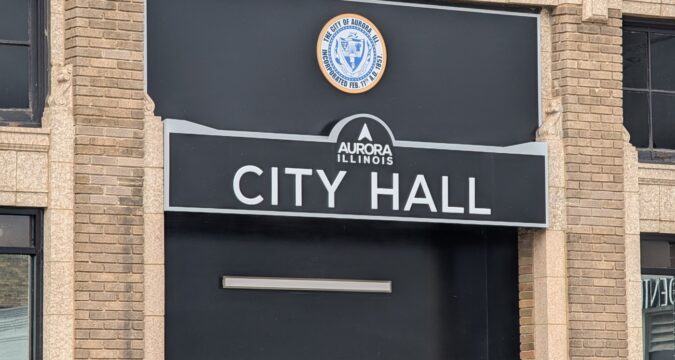
Aurora’s proposed 2026 budget, with controversial cuts, heads to final approval
Aurora’s proposed 2026 budget, which includes controversial staffing cuts to public safety departments, is heading towards final approval by the City Council on Tuesday.
The city is proposing a $680.8 million budget for 2026, which is $78.8 million less than this year’s. While most of the year-to-year change could be attributed to a one-time increase in revenue from bonds the city took out this year for big construction projects, the general operating fund proposed for 2026 also saw cuts, including to roughly 140 positions.
Mayor John Laesch has been putting a particular focus on the city’s budget since the first moments he took office. During his inauguration speech in May, he said the city was left in “serious debt” because of past mayors’ investment in revitalizing Aurora’s downtown, and that his administration’s number one priority would be to get the city’s “financial house in order.”
Then, at a town hall meeting with residents in July, Laesch said the city was facing a “significant hole” between revenue and expenses in 2026 based on early budget analysis. That gap was later said to be nearly $30 million.
City officials have said that expenses have outpaced revenue, but past budgets were balanced by moving money typically set aside for long-term needs like insurance and capital projects into the city’s main operating fund, called the general fund. That means the “fundamental financial structure of the city” doesn’t work, according to Aurora Director of Fiscal Integrity and Operations Management Brian Caputo.
Leaders of Aurora city departments over the past several weeks have presented their budgets for 2026 to a committee of the Aurora City Council — and large parts of those discussions have been about where cuts are being made.
The City Council is set to vote on final approval of the proposed budget on Tuesday.
Public safety departments to have fewer positions
Laesch has said, both to reporters and in public statements, that budget cuts won’t mean a reduction in services for residents. But these cuts, particularly those to public safety departments, have been sparking concern among the public, city staff and elected officials.
“There is no scenario where fewer firefighters, less training support, fewer officers and fewer trucks on the street equates to the same level of safety, readiness or service,” said a recent statement from the International Association of Firefighters Local 99, which represents Aurora firefighters. “To claim otherwise is irresponsible.”
Although the 2026 budget proposed for the fire department is actually higher than this year’s, it saw a roughly $2.8 million reduction during the budgeting process for 2026, according to a presentation given by Aurora Chief Financial Officer Stacey Peterson at a meeting of the Aurora City Council’s Committee of the Whole on Tuesday.
The Mayor’s Office gave the Aurora Fire Department a dollar amount to cut from the budget, and those cuts weren’t possible without personnel since that makes up about 92% of the department’s budget, said Fire Chief David McCabe, who has since retired, at a meeting of the City Council Finance Committee on Nov. 20.
In total, the 2026 proposed budget would reduce the fire department’s staff by 18 firefighters, three battalion chiefs and one training officer. Although those positions are being cut from the budget, the people currently in them won’t be laid off — the positions just won’t be filled when those employees retire or leave.
Just before his retirement, McCabe told The Beacon-News that he didn’t want to lose positions but that he realized the financial constraints the city had put on the department. Plus, he and Deputy Fire Chief Kevin Nickel had multiple meetings with the Mayor’s Office to fight to get some positions back and push back against discussed layoffs of some recruits, he said at the time.
When there are fewer positions, a decision has to be made to either staff vehicles with people working overtime or to not staff some vehicles at all, according to McCabe. Laesch has previously said that two of the department’s four ladder trucks could go unstaffed under the proposed 2026 budget.
The last time the fire department had just two ladder trucks was around 2010, and since then calls have gone up by about 50%, McCabe said at the Nov. 20 Finance Committee meeting.
In a statement opposing the cuts, International Association of Firefighters Local 99 President Rob Deubel said that the proposed budget would mean “an increase in unnecessary risk to every citizen and firefighter.”
“These cuts do not save money; they simply shift costs into overtime, injury leave, workers’ compensation and preventable operational failures,” Deubel said in the statement.
State Rep. Stephanie Kifowit, D-Oswego, whose district includes part of Aurora, recently put out a news release standing with Local 99 on this issue.
“Every firefighter removed from a shift and every truck taken out of service slows response and increases risk. Suggesting otherwise is simply irresponsible,” she said in the release. “When our firefighters tell us these cuts are unsafe, we should listen.”
Laesch, at the Committee of the Whole meeting Tuesday, said this was one of his bigger areas of concern. The city will be staying on top of both overtime and response times, he said.
Protecting core services and public safety was a priority during the 2026 budgeting process, according to a joint statement from Laesch, McCabe and Police Chief Matt Thomas addressing claims that the city was making “significant cuts to public safety.” All departments saw some level of budget cuts, the statement said, but police and fire saw the smallest percentage reductions.
“Our residents will not see a reduction in the services they depend on,” Laesch said in the statement. “Response times, emergency services and fire protection remain fully secured. Correcting our financial course is difficult, but we are doing it in a responsible manner that does not compromise safety.”
Thomas said in the statement directly, “the Aurora Police Department is not being gutted.”
Reductions were made, he said, but those decisions were made to make sure the police department still had the staff and resources needed to keep the community safe.
The Aurora Police Department’s proposed 2026 budget, like the fire department’s proposed budget, is higher than last year’s. Still, it would have 35 less positions, among other cuts.
Of those cut positions, nine are sworn police officers while the rest are non-sworn professional staff, including the department’s 12-person cadet program, according to the police department’s budget presentation to the Finance Committee on Nov. 13.
Also like in the fire department, these staffing reductions won’t mean layoffs for any police officer or for nearly any professional staff member — if employees in those cut positions retire or leave, the city just won’t hire someone new to take their place. Only one professional staff member in the police department would be laid off.
Of the 35 positions proposed to be cut from the police department’s budget, 20 were already vacant, including seven of the nine sworn officer positions being cut. However, those positions are only vacant because the department paused hiring practices in the last six months, Deputy Chief of Police Steven Stemmet said during the presentation on Nov. 13.
Staffing isn’t the only place the Aurora Police Department’s budget is proposed to be cut in 2026. Stemmet’s presentation showed that it would also be getting around $800,000 less for general overtime pay and $400,000 less for training, among other cuts.
At that meeting, Thomas said he hopes all cuts to his department’s budget are temporary. While the department can make the sacrifice for next year, Stemmet said, they aren’t sustainable beyond that.
Before his retirement, McCabe told The Beacon-News something similar about the fire department: he is hoping that, in the new year, the city’s “financial picture” changes and any cut positions are able to be restored as soon as possible.
Although some may think the fire department grew too much, he said at the time, fire staff has grown only 20% over the last eight years as compared to a 31% increase in calls over that same period.
Aurora’s budget situation
The joint statement from McCabe, Thomas and Laesch said the reductions in funding to city departments were made to “correct a longstanding structural deficit.” But Richard Irvin, who was mayor for eight years before Laesch, told The Beacon-News that is “absolutely incorrect.”
As evidence, Irvin pointed to the fact that Laesch appointed Stacey Peterson, who under Irvin served as director of Financial Operations, to the top finance spot in the city. Laesch wouldn’t have done that if he thought something was going on with the budget, Irvin said.
Laesch’s philosophy, Irvin said, is to manufacture a crisis and fall back on that “as an excuse to not do anything.”
“If he just stood back and just let the Irvin administration’s successes take place instead of fighting against them, the city would continue to grow,” Irvin said. “But he’s working very hard fighting against all the growth and prosperity and the pride that we built over the last eight years.”
When asked about Irvin saying that the budget crisis was manufactured, Laesch told The Beacon-News that “numbers don’t lie.” The city under Irvin moved funds around to support operations, Laesch said, and “on his way out the door negotiated lucrative contracts with many of the unions that only compounded the problem.”
This 100% is a budget crisis, he said, and the city’s taken as balanced of an approach as possible to address it.
Laesch said that, although he wanted to fix the whole budget this year and be “more aggressive with right-sizing the ship,” he didn’t think aldermen were prepared to do that. The proposed budget won’t take the city “out of this mess,” he said.
The reason for trying to fix it as soon as possible is because the problem compounds and gets more complicated as the city continues paying yearly salary increases, Laesch said.
David Merriman, a professor of public administration at the University of Illinois Chicago, said that while he has no specific knowledge of Aurora’s budget, it is very possible to cover up holes in operating expenses by moving money from funds used for long-term activities into short-term uses.
“I’ve seen it happen in other budgets,” he said.
But also, there is some difference of opinion around the level at which certain long-term funds should be supported, Merriman said, especially around post-employment benefits. And change in leadership’s funding philosophy can put pressure on a budget, he said.
In cases where operational deficits were covered up by moving money around, that typically isn’t something that would need to be addressed immediately, according to Merriman. In general, he said, it’s the kind of thing that someone would develop a plan to fix over a number of years, maybe five years or longer.
That is, unless there is some kind of emergency to point to, he said.
On Tuesday, Chief Financial Officer Peterson outlined some of the funds officials have said haven’t been getting enough support.
One such fund, the Property and Casualty Fund, was budgeted to receive around $5.2 million this year, her presentation showed. However, nearly $9.7 million has been spent from the fund this year, wiping out its starting balance of $3.4 million and putting it over $1 million in the hole.
Another fund she showed, Employee Compensated Benefits, was budgeted to receive $1.1 million in 2025 but has seen $4.3 million in expenses this year, which has taken the balance of that fund into the negative, too.
However, the Employee Health Insurance Fund was actually budgeted for more support than it needed, and is set to end the year with a $3.6 million balance, according to Peterson’s presentation.
Director of Fiscal Integrity and Operations Management Caputo said that these funds are different from a pension fund, where it can be supported at a lower level over 20 or 30 years. There needs to be money to cover the liabilities, since they aren’t so long-term, he said at Tuesday’s meeting.
Further changes in the proposed budget
The 2026 budget for the city’s general fund, which is where its main operating expenses are paid from, is proposed at around $253 million — which is roughly $2 million less than this year’s, Peterson’s presentation showed. Still, that fund is looking at a deficit of around $3.3 million.
The development services, law and public facilities departments are proposed for the largest percentage cuts over this year’s budget, with reductions of around 20% to 30% to the portion of their budgets coming from the general fund, Peterson’s presentation showed.
The fire department and police department saw increases to their budgets year-over-year — as did the Mayor’s Office, community services department and communications department, but those increases may be misleading.
That’s because the proposed budget totally eliminates the community affairs department, splitting its functions between the community services and communications departments, plus moves economic development and the clerk’s office under the Mayor’s Office.
Public facilities would also move to be under the public works department.
The figures presented by Peterson included carryovers from this year’s budget, which are expenses that were budgeted for but weren’t paid during this year for various reasons. Without including those carryovers, the proposed 2026 general fund budget is almost $5.7 million less than this year’s and does not have a deficit.
The numbers shown on Tuesday also include late changes made to the proposed budget. That includes $2 million that Aurora is hoping to get back from the Aurora Regional Economic Alliance, an organization the city last year helped set up with a $3 million payment.
Half of the funds Aurora wants to get back from the Alliance is set to help pay for $2 million the city has promised to the Aurora Civic Center Authority, which operates the Paramount Theatre and other local venues, to plug a hole in that organization’s 2026 budget, Caputo said at a Nov. 18 meeting of the Finance Committee.
The rest of the funds are set to come from the city’s tax on gaming. Revenue projections for that tax were updated during the late changes to consider the expected opening of the new Hollywood Casino location in the city.
The Aurora City Council this year has taken a number of steps to increase or stabilize revenue across its various funds, including an increase to the city’s hotel tax, an increase to parking fees at the city’s two Metra stops, an increase in the number of gambling machines businesses are allowed to operate and the local continuation of a grocery tax set to otherwise expire statewide at the end of the year.
A major source of revenue for the city is property taxes. The levy this year is proposed for $103.7 million, an increase of $11.1 million over the previous year’s.
However, the part of that levy going towards city operations isn’t seeing an increase. Instead, the rising property taxes were attributed to required funding levels for police and firefighter pensions plus to higher debt payments.
The levy was raised in years past, but the currently-proposed increase would also raise the tax rate for the first time in years. The tax levy is the total amount the city of Aurora would be looking to get in property tax revenue next year, but the rate is the percentage of a property’s assessed value that the owner has to actually pay in taxes.
While the budget is up for final approval on Tuesday, the tax levy won’t be considered for final approval by the City Council until Dec. 16.
rsmith@chicagotribune.com
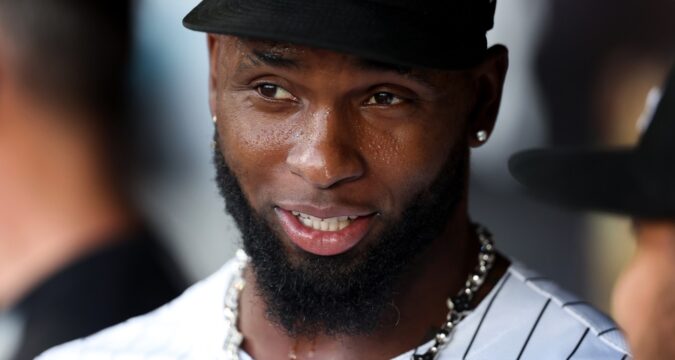
Will any familiar faces be on the move? 3 questions facing the Chicago White Sox ahead of the winter meetings.
General manager Chris Getz sees the makings of a more competitive Chicago White Sox team in 2026.
“We were able to make a significant jump from 2024 (to 2025),” Getz said during the GM meetings last month in Las Vegas, “and obviously it wasn’t too difficult, given where our win total was.”
The Sox collected 41 victories — while suffering an MLB modern-day record 121 losses — in 2024. They made a 19-game improvement to 60 wins in 2025.
“If you look at some of the production we’ve gotten from some of these players that have just gotten to the big leagues: (shortstop) Colson Montgomery and (catchers) Kyle Teel and Edgar Quero and (third/first baseman Miguel) Vargas taking a step forward and (starter) Shane Smith, their continued development is vital for us to add wins,” Getz said. “And (in) addition to that, finding some free agents or other players from other organizations to help is a way to boost that win total.”
Opportunities might arise for additions Monday-Wednesday at the winter meetings. Here are three questions facing the Sox ahead of the gathering in Orlando, Fla.
1. Will any familiar faces be on the move?
One conversation repeatedly has popped up in recent offseasons: Will the Sox hold on to Luis Robert Jr. or will the center fielder be traded?
The subject came up again after the Sox exercised Robert’s $20 million club option in November.
“To be able to have a player like that in your organization — and on the other end of the spectrum, that’s why he’s attractive (to teams), because they feel like they can use that boost as well,” Getz said during a Nov. 19 videoconference call.
“It’s very truthful that we are not shopping him, because we’re very comfortable having him in a White Sox uniform, knowing what he’s capable of doing. Now if it makes sense for both parties to work out a deal, then so be it. But we’re planning on him being in uniform for us next year.”
Every team aims to be strong up the middle, and Robert helps the Sox in that department. The team also has depth behind the plate, headlined by Teel and Quero.
White Sox catcher Kyle Teel reacts after hitting an RBI single against the Twins on Aug. 22, 2025, at Rate Field. (Chris Sweda/Chicago Tribune)
Korey Lee rejoined the Sox from Triple A in late August. That gave the team the flexibility to start both Lee and Quero — one at catcher, the other at designated hitter — while having another catching option on the bench.
Lee was mentioned in trade speculation during the season. And Quero and Teel have drawn trade interest repeatedly.
Before that chatter, the topic of moving a catcher came up during the GM Meetings.
“Those are all conversations that we have,” Getz said. “I can’t say that there’s a perfect answer right now other than catching is gold, and I’ve always felt that way. Nothing has changed on that front because catching markets on a regular basis — you guys have seen the names and teams that haven’t been able to find production in that position.
“To have three guys who can be quality catchers at the major-league level. There could be a time for reallocation or repurpose to make the roster a little bit more functional. Is that time now? I don’t think so. I don’t. But down the road, you never know.”
2. How is the pitching staff shaping up?
The Sox have added a pair of left-handers to their staff this offseason, acquiring Chris Murphy in a trade from the Boston Red Sox and reportedly coming to terms on a two-year deal with Anthony Kay, who most recently pitched in Japan.
White Sox starter Shane Smith pumps his fist after the top of the sixth inning against the Marlins on May 10, 2025, at Rate Field. (Chris Sweda/Chicago Tribune)
Smith and Davis Martin led the way for the Sox in terms of innings pitched in 2025. Sean Burke and Jonathan Cannon were next on the list, and Getz said the pair — who both saw some time late in the season in Triple A — will be competing for spots in the rotation.
“We have faith that both of those guys can be helpful and help us win games,” Getz said of Burke and Cannon.
While it remains to be seen how the rotation shakes out, Getz said both Mike Vasil and Grant Taylor will remain in their relief roles.
At some point during the season, the Sox anticipate right-hander Drew Thorpe returning from Tommy John surgery. And two of the organization’s highly touted prospects — lefties Noah Schultz and Hagen Smith — are inching closer to big-league debuts.
“You want to bring (Schultz and Smith) up when it’s appropriate for them,” Getz said.
3. What is the plan for the corner infield spots?
White Sox third baseman Miguel Vargas hits a two-run home run against the Cubs on May 16, 2025, at Wrigley Field. (Chris Sweda/Chicago Tribune)
The Sox have options for both first and third base.
Vargas led the Sox in starts at third (76) and first (55) in 2025. He topped the team with 80 runs, 32 doubles and 56 walks over a career-high 138 games.
Lenyn Sosa, who had a team-leading 22 home runs and 75 RBIs in 140 games, largely saw time at second base (99 games) and first (42).
The Sox acquired Curtis Mead from the Tampa Bay Rays on July 31, and he hit .240 with 11 RBIs in 41 games, playing mostly third base (22 games) and first (13).
Vargas, Sosa, Mead and second baseman Chase Meidroth are right-handed hitters. Montgomery is the only left-handed-hitting infielder on the 40-man roster.
The Sox would like to have a little more balance in the group and are vying for another left-handed-hitting option.
“We have an ability to cover those positions and be fairly productive,” Getz said of the corner spots, “but I think there’s going to be some opportunity in just balancing that attack a little bit better.
“We’ve got some potential production there, but I think we can position ourselves a little bit better.”
https://www.chicagotribune.com/2025/12/07/chicago-white-sox-winter-meetings-questions/

Column: Cubs might be ready for Hot Stove spending, while White Sox could be shopping in the bargain bins
The start of MLB’s winter meetings, the debate over Notre Dame-Miami for a College Football Playoff spot, the evolution of the World Cup into the Trump Cup and other things to ponder while counting down the minutes until the Chicago Bears hit the frozen tundra.
Baseball’s winter meetings begin Monday in Orlando, Fla., and the Cubs and White Sox are ready to make some noise … relatively speaking.
The Cubs reportedly made some news Saturday in their pursuit of starting pitching, but a viral tweet about closing in on an agreement with Zac Gallen was quickly retracted, and the Hot Stove League returned to its regularly scheduled crawl, already in progress.
Interest in Gallen makes sense, however, and his friendship with Cubs catcher Carson Kelly could pay off.
The Cubs missed out on the San Diego Padres’ Dylan Cease, the former prospect they traded to the White Sox, though at $210 million for seven years, it’s seemingly well beyond the Cubs’ budget, especially if they want to add another hitter, such as third baseman Alex Bregman.
Cease’s megadeal, and Devin Williams’ three-year, $51 million deal with the New York Mets, suggest teams aren’t all that worried about the possibility of a work stoppage after 2026, and are overpaying for pitching.
The Sox are reportedly bringing in left-hander Anthony Kay from Japan on a two-year, $12 million deal, so that’s more noise than usual on the South Side. Kay, 30, had a 1.74 ERA in 2025 for the Yokohama Bay Stars, with 130 strikeouts and 41 walks in 155 innings.
It’s a decent risk that at the very least could turn into some prospects at the trade deadline if he performs up to snuff and the Sox are out of contention. But if this is indicative of the kind of moves general manager Chris Getz plans on making, it’s probably going to be a slow winter as he waits for free-agent prices to come down.
Notre Dame should be in the College Football Playoff, regardless of the results of Saturday’s conference championship games.
For reasons not fully explained, the Fighting Irish dropped to No. 10 in the last regular-season CFP rankings despite a convincing win at Stanford, while Alabama moved up to No. 9. This was seen by many as a prelude to dropping Notre Dame out of the 12-team field as an at-large bid if BYU upset Texas Tech in the Big 12 title game to get an automatic bid.
Miami defensive lineman Armondo Blount (18) pressures Notre Dame quarterback CJ Carr during the second half Aug. 31, 2025, in Miami Gardens, Fla. (Lynne Sladky/AP)
That didn’t happen, but there’s still the outside chance Miami jumps over Notre Dame, based on their head-to-head matchup — a 27-24 Hurricanes win in Week 2 in Miami Gardens, Fla. Some prominent analysts are seemingly lobbying for it.
“They kicked Notre Dame’s ass in the game,” ESPN’s Nick Saban said Saturday on College GameDay. Actually, Miami had 339 total yards in the game to Notre Dame’s 314 and won on a late field goal with 64 seconds left, so it wasn’t much of an ass-kicking.
ESPN personality and SEC apologist Paul Finebaum insisted the CFP committee would be “making a major, colossal mistake” if they pick ND over Miami.
But Notre Dame has won 10 straight by double digits and is ranked ahead of Miami in every poll. Miami lost two conference games to unranked teams and didn’t make it to the ACC title game.
If the playoffs were held in September, Miami deserved to go ahead of ND. But this is December, and it would be criminal to drop Notre Dame for Miami, no pun intended.
President Donald Trump receives the FIFA Peace Prize from FIFA President Gianni Infantino during the draw for the 2026 World Cup on Friday, Dec. 5, 2025, at the Kennedy Center in Washington. (Jia Haocheng/Pool Photo via AP)
Sportswashing is coming to America in 2026. Thanks, President Trump.
If there was any question about what next summer’s World Cup celebration will look like, one only had to watch the World Cup draw Friday from the Kennedy Center in Washington.
The show reportedly was viewed by more than a billion people, most of whom waited an excruciatingly long time to find out which group their country or favorite team would wind up in for the 48-nation tournament that begins next summer in the United States, Mexico and Canada.
After awkward conversations between hosts Kevin Hart and Heidi Klum and unfunny video bits featuring FIFA President Gianni Infantino and retired English soccer player Rio Ferdinand, the world was subjected to an obscene display in which the obsequious Infante handed Trump a made-up peace prize.
The Trump administration has been blowing up Venezuelan boats accused of carrying drugs, leading to an investigation into possible war crimes, while also detaining at least 170 American citizens during raids and protests, according to Pro Publica, in its effort to deport illegal aliens.
FIFA handing Trump a peace prize would be like the NFL giving Antonio Brown its Man of the Year Award. It took sportswashing to a new level. The televised event was even partly sponsored by Aramco, the state-owned oil company that was part of the World Cup draw’s graphics.
As many recall, the term sportswashing came in vogue a few years ago after Saudi Arabia started the LIV Golf tour. Pouring tons of money into a new league with big-name golfers was one way to try to clean up its reputation after Crown Prince Mohammed bin Salman allegedly ordered the killing and dismemberment of Washington Post journalist Jamal Khashoggi.
“If sportswashing is going to increase my GDP by 1 percent, then we’ll continue doing sportswashing,” the crown prince told Fox in 2023.
The kingdom recently engaged in a cousin of sportswashing — comedywashing — inviting a few dozen prominent comedians, including Hart, to perform in the country where freedom of expression is limited and an American was once imprisoned for more than a year for an old tweet criticizing the kingdom.
Like Trump, Hart has the Saudi seal of approval, so expect to see a lot of him in Fox Sports’ World Cup coverage. With friends like Saudi Arabia and Infantino, rest assured this World Cup will turn into the Trump Cup, a monthlong infomercial next summer glorifying our stable genius on the world stage.
Tough day in the Big Ten. Top-ranked Purdue was throttled by No. 10 Iowa State 81-58 at Mackey Arena. No. 7 Michigan State was topped at home 66-60 by No. 4 Duke. Indiana, ranked No. 22, fell to No. 6 Louisville. With a few weeks left before conference play really heats up, it looks as if No. 3 Michigan is the team to beat.
https://www.chicagotribune.com/2025/12/07/cubs-white-sox-winter-meetings/
French Government Plan To ‘Label’ News Outlets Backfires Spectacularly
French Government Plan To ‘Label’ News Outlets Backfires Spectacularly
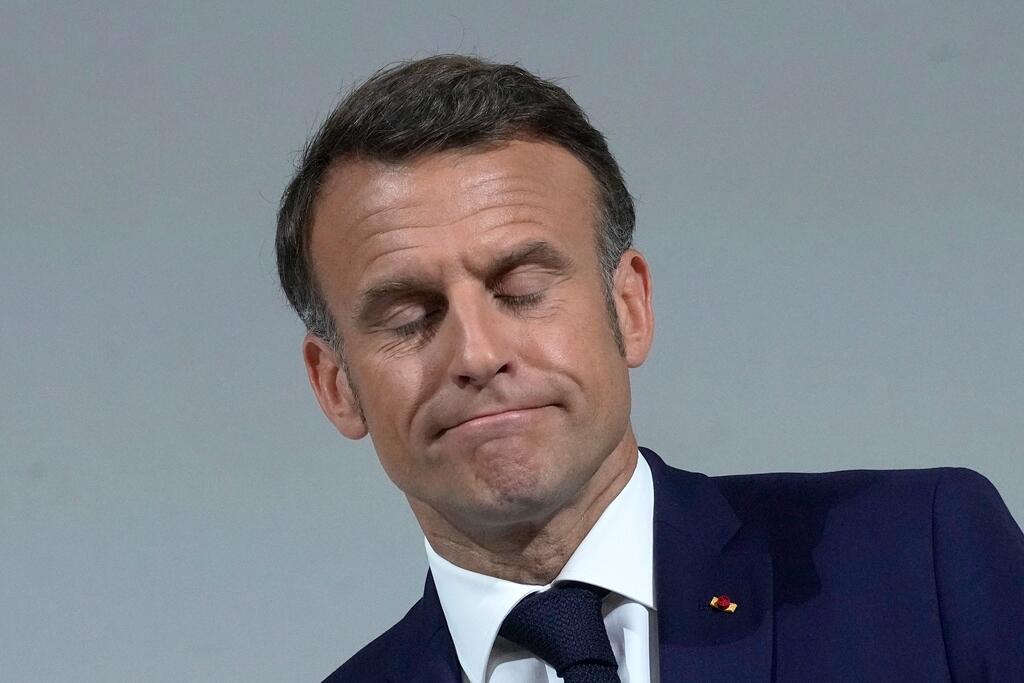
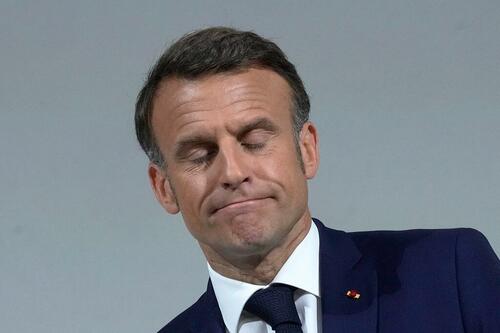
A few weeks back, French President Emmanuel Macron announced a new “media labeling” system, while also assuring citizens that this “media accreditation” will not include any sort of state-backed labeling.
Suffice it to say, these assurances have only stoked fears of an authoritarian creep into the media sphere.
Back in November, Macron had told La Voix du Nord that “a labeling process carried out by professionals” was in the works to highlight those media outlets that respected certain “ethical standards,” and thus also those it deems lacking.
Le Journal du Dimanche (JDD), owned by the conservative Bolloré group, denounced this development on its front page as a project for “information control,” reports France24.
Jordan Bardella, head of the right-wing National Rally, also posted on X about the news: ”The role of the State is not to “certify the truth” with an obscure label: it is to guarantee freedom of the press and freedom of expression. Let us reject Emmanuel Macron’s project, which is nothing less than to establish genuine control over information.”
Le rôle de l’État n’est pas de « certifier la vérité » avec un obscur label : il est de garantir la liberté de la presse et la liberté d’expression.
Refusons le projet d’Emmanuel Macron qui est d’instaurer, ni plus ni moins, un véritable contrôle de l’information. pic.twitter.com/ef0SnGiu1X
— Jordan Bardella (@J_Bardella) December 2, 2025
The Élysée posted itself in response to criticisms, with the message: “Pravda? Ministry of Truth? When talking about the fight against disinformation sparks disinformation…”
In response to this, Marion Marechal, president of Identity Liberty and niece of Marine Le Pen, noted, referencing Arcom, the French regulatory authority for audiovisual and digital communication.
“French people, rest assured, so it is therefore not the Élysée that will deliver the media truth label but a ‘Journalism Arcom,” held, once again, by socialists designated by the president?” she asked.
Bruno Retailleau, the leader of the Republicans, has now launched a petition entitled “Media: Yes to Freedom, No to Labeling!” which garnered over 40,000 signatures.
Éric Ciotti, now allied with the National Rally, published his own petition shortly thereafter, reaching the same number.
Tyler Durden
Sun, 12/07/2025 – 07:00
El golpe de Estado en Benín ha sido “frustrado”, según dice el ministro del Interior en un video en Facebook
COTONÚ, Benín (AP) — El golpe de Estado en Benín ha sido “frustrado”, según dice el ministro del Interior en un video en Facebook.