Category: News
Letters: My short encounter with Tribune editor Bruce Dold had a big impact on me
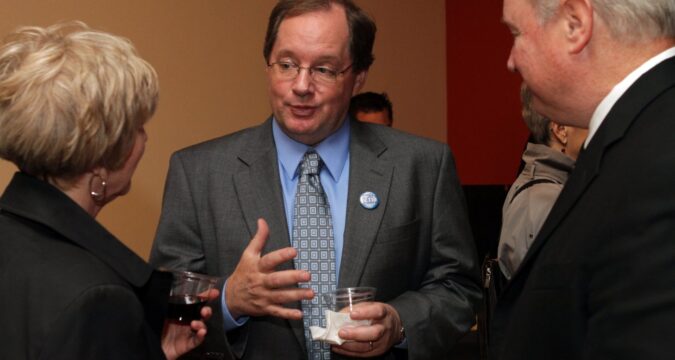
I was shocked and saddened to learn that Bruce Dold has died. For many years, I admired his work, and I was thrilled to meet him in person. It was at a reception following his appearance on a panel discussion that I worked up my nerve to introduce myself. While I no longer remember the content of my (probably half-baked) idea for improvement of the Tribune, I will never forget his genuine interest. He really listened! I was so impressed that I even complimented him on it. He graciously responded, something to the effect of getting good ideas from the readers, encouraged me to be in touch and handed me his business card. I still have it on my desk.
While that short encounter happened years ago, it had a big impact on me. I learned that Dold was not only a gifted journalist, but also someone who cared deeply about the Tribune and each of its readers. If he made that much of an impression on me in a five-minute encounter, I can only imagine what he meant to his family and friends.
My sincere condolences to them all.
— Sheryl Slone Tarkoff, Chicago
A passion we shared
I barely knew Dold, yet I grieve his untimely passing greatly. I, along with other loyal subscribers, accepted an invitation to a gathering of the Tribune Editorial Board at Tribune Tower, circa 2004. Besides Dold, columnist and editorial board member Steve Chapman was in attendance, and columnist and editorial board member Clarence Page sat in from Washington via the phone. After a long and vigorous discussion of current events — the invasion of Iraq was the hot topic — the meeting was adjourned.
As I was making my way to the door, Dold asked if I had a minute. We went to his office and kicked it around for another half an hour. I was completely lacking in clout and influence, but he sensed that we shared a common passion — newspapers. I will never forget that glorious half hour trading barbs and witticisms in Dold’s wood-paneled office. Rest in peace.
— John Knoerle, Shorewood, Wisconsin
What a privilege it was
I met Dold and talked with him during a Lake Michigan evening cruise with a group of communications professionals some years ago. Our conversation centered around the Chicago baseball scene, golf and jazz, all of which were of great interest to Dold and me. I was a journalist myself and had known his wife, Eileen, from working at Crain Communications’ Business Insurance magazine in the early 1980s.
Dold’s rise from reporter at the old Suburban Trib, competitor to my old newspaper the suburban Daily Herald, to the flagship paper was impressive. Even more so was his ascendency to the editorial page staff, his Pulitzer Prize and his rise to Tribune editor and publisher. It left me realizing I had been in the presence of budding journalistic greatness that night on that cruise.
I read the editorial (“R. Bruce Dold, editorial page maestro, believer in tradition and in upending same,” Dec. 5) about Dold’s career and influence, along with the wonderful legacy he left at the Tribune and the news profession at large. I can only say this. The little that I did know him — and being even remotely associated with his professional circle during my two years as a part-time correspondent for the Tribune’s northwest suburban bureau — was not just a nice thing. It was a privilege.
Thank you to him for all he did for newspaper journalism.
— John Maes, Austin, Texas
A clash in standards
As a longtime reader of the Tribune, I very much appreciated Robert Channick’s obituary for Dold (“Bruce Dold, former Chicago Tribune editor passes away at age 70,” Dec. 5). Channick rightly celebrated Dold’s passion for journalism and his high standards for the Tribune’s editorial page.
I saw the exact opposite in action in opinion pieces by Willie Wilson (“It’s time to make Chicago transit safe,” Dec. 4) and Paul Vallas (“What can be done to restore faith in Chicago’s justice system?” Dec. 4), whose only relevant accomplishments are multiple losing runs for mayor of Chicago. Their two essays restate the utterly obvious: The CTA should be safe! Cops and Chicagoans need to restore trust by thinking about the whole situation, not just crime and punishment! Ya think? The entire commentary page was pablum.
I wonder what Dold would think. On second thought, I know what he would think, but I bet he would be too civilized to use such language.
— Bill Savage, Chicago
City’s Mexican culture
My life has been heavily influenced by American culture, my town, my peers and my schools. They shaped my identity as a whole. But I knew deep down that I was missing an important aspect that I never paid much mind — and that was my Mexican heritage.
I experienced the disconnection firsthand watching my sisters communicate in perfect Spanish while I struggled with even forming a simple greeting. It was not until I came across Ballet Folklorico de Chicago in 2019 at age 10 that I was able to truly understand the meaning behind being Mexican American. From my first performance at a small local festival to performing for almost every Chicago sports team, it has been one of the greatest privileges of my life. And it would not have been possible without Chicago.
On Sept. 29, 2024, I danced for the Chicago Bears, and it was one of the most enlightening experiences of my life. The crowd, cameras and the crew made me realize how much our company and I had grown since our first performances.
I’m truly grateful for what Chicago not only has done for my company but also for my culture. I believe we’ve shown residents, especially Mexican Americans, that our culture is an important part of the city. I hope Chicago continues to allow us to make history and to let us proudly show our culture to the city.
Thank you, Chicago.
— Bella Martinez, Hinsdale Central High School, Hinsdale
Make effort for cards
I very much enjoyed the editorial praising handwritten Christmas cards (“In praise of the handwritten Christmas card,” Nov. 30). My wife and I send these cards to relatives and friends near and far because we enjoy knowing our relatives and friends, seeing them and doing things with them. For those who live far away, we want to keep a connection with them, hoping at some point we will see them again. We want to know what’s new in their lives, good experiences they have had and accomplishments, maybe a fond memory of something we experienced together. That is all part of our connection.
My wife and I send out more than 50 cards every year. Each card has a personal message. Some contain only a few sentences, others much, much more. So why do so many people just sign their name as if it is an obligation to send a card? Write a few sentences personal to me and my wife. We receive too many cards with only the name at the bottom.
One couple are now sending cards with their name printed at the bottom. I hope they don’t strain their hand writing out our address on the envelope. If you can’t do better than that, maybe you should save the stamp.
— Richard Dreger, Batavia
Submit a letter, of no more than 400 words, to the editor here or email letters@chicagotribune.com.
https://www.chicagotribune.com/2025/12/10/letters-121025-bruce-dold/

Trump On NATO: ‘They Call Me Daddy’
Trump On NATO: ‘They Call Me Daddy’
Among the more notable and amusing moments from President Trump’s newly published interview with Politico is when he stated that NATO officials refer to him as “Daddy” after being proven right on the need to bolster collective defense funding through increased European budgets.
This tough approach, heavily vocalized during his first term – and subject of immense pushback from European leaders at the time, is now by and large being belatedly (and now urgently) embraced as Europe ramps up defense investments amid the griding Russia-Ukraine war.
“NATO calls me Daddy,” Trump said in the interview, highlighting that Europe has relied much too heavily on American military might and funding for decades.
Trump’s “daddy” remark came in the following context:
Burns pressed Trump on whether he would get “involved in European elections” as a result of what he was seeing, to which the president said he was already involved in Europe but wants to “run” the U.S.
In the middle of the line of questioning, Trump joked: “NATO calls me daddy.”
He pointed out that it was his urgings alone which boosted projected NATO spending “from 2% to 5%” – far surpassing the longtime NATO benchmark of 2% of GDP on defense.
“I mean, I have a lot to say about it. Look, I raised, you know, GDP from 2 percent to 5%; the 2 % they weren’t paying and the 5% they are paying. And they’re paying it because when we send things over, NATO pays for it, and I assume they give it to Ukraine,” Trump explained.
Watch the comments on the US relationship to NATO unfold…
.@POTUS: “I want to run the United States. I don’t want to run Europe. I’m involved in Europe very much. NATO calls me ‘Daddy.'” 🤣 pic.twitter.com/FWjlkww4Xb
— Rapid Response 47 (@RapidResponse47) December 9, 2025
“But Europe is being destroyed,” he added in reference to his prior commentary on unchecked immigration, leftist censorship policies, and EU centralization which has brought about decline in democracies.
Previously, NATO Secretary General Mark Rutte somewhat awkwardly praised Trump as “a man of strength and peace” before awkwardly stating: “Sometimes, daddy has to use strong words.”
Rutte later tried to distance himself from his casual remarks at a NATO presser back in June, claiming he wasn’t directly talking about Trump in the daddy comments…
Tyler Durden
Wed, 12/10/2025 – 05:45
https://www.zerohedge.com/political/trump-nato-they-call-me-daddy
First Active British Soldier Dies In Ukraine In ‘Tragic Accident’
First Active British Soldier Dies In Ukraine In ‘Tragic Accident’
Britain’s military has announced the death of a member of the UK Armed Forces in what officials called a “tragic accident” on Tuesday. The accident happened during a weapons trial conducted by Ukrainian forces, and inside Ukraine.
The Ministry of Defence’s official statement described that the soldier “was injured in a tragic accident whilst observing Ukrainian forces test a new defensive capability, away from the front lines.”
No other related details were released, including about the weapons system involved or the precise location. The description of the system being a “new” defense capability is interesting, however.
“The tragedy occurred during training, and we extend our condolences to the family and loved ones,” the statement added, emphasizing that it was not combat related.
The British soldier may have been observing active combat from a distance, as Financial Times suggests:
An MoD spokesperson said the death was not believed to have been caused by hostile fire, and the soldier had been injured “whilst observing Ukrainian forces test a new defensive capability, away from the front lines”. The serviceman, whose name has not been released, died on Tuesday morning. His family has been informed.
While there have over the years of the Ukraine war been reports of British security contractors and volunteers dying while fighting Russia, this marks a rare – and possibly first – known death of an active UK service member in the country.
As The Guardian observes, “A Ukrainian memorial produced by the Kyiv war museum has counted that 40 Britons have died defending Ukraine, a higher number than previously thought. None are known to have been serving in the British military at the time of their death.”
According to more from FT:
In July, UK Defence Secretary John Healey told parliament that UK personnel were in Ukraine to scout new security arrangements to support Ukraine in the event of a ceasefire. He said planning included “reconnaissance in Ukraine, led by UK personnel”.
The circumstances of the accident remain unclear, including what was being tested and how the soldier came to be fatally injured. Ukrainian forces have been trialling a range of new defensive technologies — from counter-drone systems to new long-range missiles — as they continue to adapt to evolving battlefield threats.
Britain all the way back closer to the start of the war in 2022 became among the first Western countries to begin hosting Ukrainian troop training programs on its soil. In all probably tens of thousands of Ukrainian have been trained by UK advisers at this point.
A statement from the Ministry of Defence. pic.twitter.com/ChouhKNZSl
— Ministry of Defence 🇬🇧 (@DefenceHQ) December 9, 2025
As for foreign fighters near the front lines, France has also seen its citizens and foreign legion members go join the fight. At various times the Kremlin has condemned this trend, especially the rise in French mercenaries, and said it won’t refrain from actively targeting any combatants on or near the front lines. American volunteers have also been killed – on both sides it turns out.
Tyler Durden
Wed, 12/10/2025 – 05:45
https://www.zerohedge.com/geopolitical/first-active-british-soldier-dies-ukraine-tragic-accident
19 muertos en el derrumbe de un edificio en la segunda ciudad más grande de Marruecos
Associated Press
FEZ, Marruecos (AP) — Dos edificios de cuatro pisos se derrumbaron durante la noche en la ciudad marroquí de Fez, causando la muerte de 19 personas en el segundo colapso fatal en la ciudad este año, informaron las autoridades el miércoles.
La agencia estatal de noticias de Marruecos informó que los dos edificios residenciales albergaban a ocho familias. Dieciséis personas resultaron heridas en el colapso y fueron trasladadas a un hospital cercano. Las autoridades dijeron que el vecindario había sido evacuado y que los esfuerzos de búsqueda y rescate continuaban.
El miércoles por la mañana no estaba claro qué causó el colapso ni cuántas personas estaban desaparecidas.
Fez es la segunda ciudad más grande de Marruecos y una de las sedes de la Copa Africana de Naciones de este mes y del Mundial de fútbol masculino de 2030. Es conocida sobre todo por su ciudad amurallada llena de zocos medievales y curtidurías. Pero más allá del turismo, también es uno de los centros urbanos más pobres del país, donde la infraestructura envejecida es común en muchos vecindarios.
Otro colapso en mayo causó la muerte de 10 personas y dejó siete heridos en un edificio que ya había sido programado para evacuación, según el medio marroquí Le360.
Las normas de construcción a menudo no se aplican en Marruecos, especialmente en ciudades antiguas donde las viviendas multifamiliares envejecidas son comunes. Las deficiencias en los servicios básicos fueron un punto focal de las protestas que recorrieron el país a principios de este año, en las que los manifestantes criticaron al gobierno por invertir en nuevos estadios en lugar de abordar la desigualdad en la atención médica, la educación y otros servicios públicos.
___
Esta historia fue traducida del inglés por un editor de AP con la ayuda de una herramienta de inteligencia artificial generativa.
Today in History: Otis Redding killed in plane crash
Today is Wednesday, Dec. 10, the 344th day of 2025. There are 21 days left in the year.
Today in history:
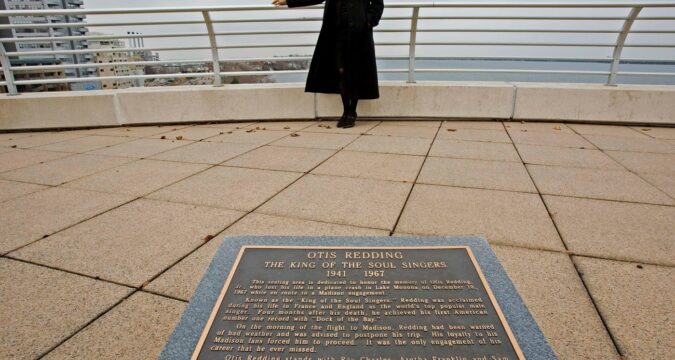
On Dec. 10, 1967, singer Otis Redding, 26, and six others were killed when their plane crashed into a Wisconsin lake; trumpeter Ben Cauley, a member of the group the Bar-Kays, was the only survivor.
Also on this date:
In 1861, the Confederacy admitted Kentucky as it recognized a pro-Southern shadow state government that was acting without the authority of the pro-Union government in Frankfort.
In 1898, a treaty was signed in Paris officially ending the Spanish-American War.
In 1906, President Theodore Roosevelt became the first American to win a Nobel Prize, winning the Nobel Peace Prize for helping to negotiate peace in the Russo-Japanese War.
In 1964, Martin Luther King Jr. received his Nobel Peace Prize in Oslo, saying he accepted it “with an abiding faith in America and an audacious faith in the future of mankind.”
In 1994, Yasser Arafat, Shimon Peres and Yitzhak Rabin were jointly awarded the Nobel Peace Prize for their efforts to advance the Middle East peace process.
In 2007, former Vice President Al Gore accepted the Nobel Peace Prize with a call to confront human-caused climate change and stop waging war on the environment.
In 2021, a two-day outbreak of tornadoes in the U.S. Midwest and South killed more than 90 people across five states, including 77 in Kentucky. The National Weather Service recorded more than 40 twisters Dec. 10 and Dec. 11.
Related Articles
Today in Chicago History: Nobel Peace Prize awarded to President Barack Obama
Today in Chicago History: ‘Empire’ actor Jussie Smollett found guilty for lying to police about purported attack
Today in History: ‘A Charlie Brown Christmas’ airs
Chicago weather: How our 2025-26 seasonal snowfall compares with previous years
Today in Chicago History: United flight crashes into bungalows on approach to Midway, killing 45 people
In 2022, Morocco became the first African country to reach the World Cup semifinals by beating Portugal 1-0.
Today’s Birthdays: Actor Fionnula Flanagan is 84. Actor-singer Gloria Loring is 79. Republican Sen. John Boozman of Arkansas is 75. Actor Susan Dey is 73. Jazz musician Diane Schuur is 72. Actor-director Kenneth Branagh (BRAH’-nah) is 65. Actor Nia Peeples is 64. TV chef Bobby Flay is 61. Rock musician Meg White (The White Stripes) is 51. Actor Emmanuelle Chriqui is 50. Actor Raven-Symone is 40. Actor/singer Teyana Taylor is 35. Actor Kiki Layne is 34. Cyclist Jonas Vingegaard is 29.
https://www.chicagotribune.com/2025/12/10/today-in-history-otis-redding-killed-in-plane-crash/
Today in Chicago History: Nobel Peace Prize awarded to President Barack Obama
Here’s a look back at what happened in the Chicago area on Dec. 10, according to the Tribune’s archives.
Is an important event missing from this date? Email us.
Vintage Chicago Tribune: Nobel Prize winners with Chicago connections
Weather records (from the National Weather Service, Chicago)
High temperature: 62 degrees (1879)
Low temperature: Minus 8 degrees (1978)
Precipitation: 2.18 inches (1971)
Snowfall: 10.9 inches (1934)
Nobel Prize-winning professor Albert A. Michelson of the University of Chicago in an undated photo. (University of Chicago)
1907: Albert A. Michelson, the first head of the physics department at the University of Chicago, won the first Nobel Prize ever presented to an American (though he was born in Prussia) in science. The U.S. Naval Academy graduate measured the speed of light with unsurpassed accuracy and built several machines for studying the length of light waves.
Charles Gates Dawes, circa June 15, 1924. (Chambers Studio)
1925: Vice President Charles Gates Dawes won the Nobel Peace Prize (shared with Sir Austen Chamberlain) for his Dawes Plan, which helped stabilize Germany’s finances and repay reparations after World War I. The award was accepted by Laurits Selmer Swenson, U.S. minister in Oslo, in 1926.
A heart attack killed Dawes in 1951. His home is now the Evanston History Center.
Jane Addams, right, with Mary McDowell, circa 1917. McDowell was the kindergarten teacher at Hull House and, among other things, a founder of the settlement Woman’s Club. (Chicago American)
1931: Hull House founder Jane Addams was presented the Nobel Peace Prize (shared with Nicholas Murray Butler) for her activities in the Women’s International League for Peace and Freedom, which she helped to found and served as its first president. Addams was the second woman — and the first American woman — to win the award.
1935: John Jacob “Jay” Berwanger, University of Chicago running back, received the first Heisman Memorial Trophy recipient, although the honor wasn’t called that until a year later. The trophy was named for club athletic director John W. Heisman after he died in 1936. Berwanger traveled to New York to accept “a special trophy at a luncheon,” the Tribune reported.
Berwanger, an Iowa native, was often dubbed the “one-man football team” for his ability to play offense, defense and special teams for the Maroons (the University of Chicago abandoned the sport just four seasons after Berwanger departed).
Finances are what might have persuaded the man with a blue-collar background to choose a career in sales over suiting up in the NFL.
Tom Harmon of Michigan with the College All-Stars, circa 1941. (Chicago Tribune historical photo)
1940: The Chicago Bears selected University of Michigan back Tom Harmon with the No. 1 pick in the NFL draft.
Harmon, a Gary native, was considered by many who covered college football — including the Tribune — to be its best player that year. He was a two-time All-American, was named The Associated Press’ athlete of the year in 1940 and received the Maxwell Award as the college football player of the year.
When the Tribune gave him its Silver Football trophy in early 1941, he said, “This moment is perhaps the happiest in my life.” That was just months after the Michigan running back became the school’s first Heisman Trophy winner.
But instead of signing with the Bears, Harmon signed one for $15,000 with Columbia Pictures — to star in a film called “Harmon of Michigan.” The Tribune called the movie’s storyline “a weak, stupid and incredible affair, punctuated with banal dialog and incident.” He followed that up with a sports director radio contract in Detroit.
Harmon did play football in Chicago in 1941 but not for the Bears — before more than 98,000 fans at Soldier Field as part of the Chicago Tribune All-Star Charity Football Game.
Lincoln Park Zoo Director R. Marlin Perkins, left, holds a red rat snake and “Zoo Parade” announcer Jim Hurlbut holds a common king or chain king snake as Perkins returns to the show following a snakebite on April 22, 1951. (Don Davenport/Chicago Park District)
1944: R. Marlin Perkins was named director of the Lincoln Park Zoo. The next year, Perkins began his career as a television animal show host. His ”Zoo Parade” went on the air live on NBC that year, when there were only 300 television sets in the city.
A large crowd attended the dedication ceremony for Merrill C. Meigs Field on June 30, 1950, in Chicago. (Howard Borvig/Chicago Herald American)
1948: Chicago’s downtown airport was officially opened on Northerly Island. A ”sky parade” of official planes and about 100 private planes emerged from overcast skies in subfreezing temperatures for the occasion, but its dedication as Meigs Field took place two years later.
Pickets outside the Chicago & North Western Railway Passenger Terminal on Dec. 10, 1970, represent Local 528. Their signs state the railroad workers are striking the line which serves 45,000 commuters daily. (Edward Smith/Chicago Tribune)
1970: A one-day national rail strike by the Brotherhood of Railway and Airline Clerks — the third of its kind in 50 years — was ended under threat of a federal judge who called the union in contempt of court. Some 40,000 union railroad workers in the Chicago area were involved in the short-lived strike.
Bill Veeck holds the keys to Comiskey Park after officially assuming control of the Chicago White Sox on Dec. 10, 1975. (Michael Budrys/Chicago Tribune)
1975: With American League owners set to move the Chicago White Sox to Seattle and allow Charlie Finley to move his A’s to Comiskey Park, Bill Veeck and his investors repurchased the club from John Allyn — keeping the Sox in Chicago.
Chicago White Sox owner Bill Veeck, right, leaves a giant Christmas card expressing his appreciation to Mayor Richard J. Daley, left, and all who played a role in keeping the team in Chicago which was presented to the City Council on Dec. 19, 1975. Veeck conceded the illustration might be optimistic. (George Quinn/Chicago Tribune)
Veeck sold the team to Skokie real estate developer Jerry Reinsdorf and New York television executive Eddie Einhorn in January 1981.
An approximately 400-year-old bell, weighing more than 600 pounds, was installed in the bell tower of Church of Our Saviour, 500 block of West Fullerton Parkway on Dec. 10, 1976. The Rev. J. Wilson Reed, left, and Episcopal Bishop of Chicago, the Rev. James W. Montgomery, right, blessed the bell before its installation. (Quentin C. Dodt/Chicago Tribune)
1976: A bronze bell dating back to the late 1500s and weighing 600 pounds was installed at Church of Our Saviour in Lincoln Park. It is the oldest known bell in Chicago.
The Chicago Tribune reported on Oct. 7, 1978, on the installment of the University of Chicago’s first female president, Hanna Gray. (Chicago Tribune)
1977: Hanna Holborn Gray was named the 10th president of the University of Chicago — the first woman to hold the position. She was installed in October 1978.
President Barack Obama talks with Nobel Institute Executive Director Geir Lundestad, left, as first lady Michelle Obama, second from right, and others look on during a Nobel Signing Ceremony at the Nobel Institute in Oslo, Norway, on Dec. 10, 2009. In a break with Nobel tradition, the former secretary of the Nobel Peace Prize committee, Lundestad, said that the 2009 award to Obama failed to live up to the panel’s expectations. Lundestad wrote in a 2015 book that the committee had expected the prize to deliver a boost to Obama. Instead the award was met with fierce criticism in the United States, where many argued Obama had not been president long enough to have an impact worthy of the Nobel. (Susan Walsh/AP)
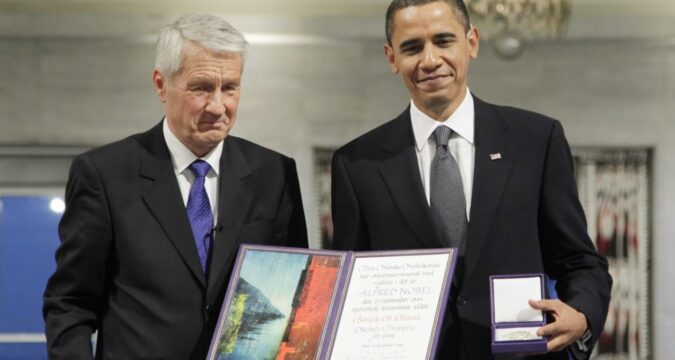
2009: Just 11 months after he celebrated his election as president in Grant Park and nine months after his inauguration, President Barack Obama became a Nobel laureate. He was the fourth U.S. president to win the Nobel Peace Prize and the third to do so while in office (the other two were Theodore Roosevelt and Woodrow Wilson).
The bestowal of one of the world’s top accolades on Obama, who had yet to score a major foreign policy success, was greeted with gasps from the audience at the announcement ceremony in Oslo, Reuters reported.
Obama, as if accepting the unusual circumstance of the award, accepted it “as a call to action” rather than a reward for accomplishments.
Chicago Cub general manager Jed Hoyer, left, and president Theo Epstein, right, introduce pitcher Jon Lester at Spiaggia restaurant in Chicago, on Dec. 15, 2014. (José M. Osorio/Chicago Tribune)
2014: Left-handed pitcher Jon Lester agreed to a six-year, $155 million deal with the Chicago Cubs.
Lester, who led the Cubs to five playoff appearances, three National League Central titles and the 2016 World Series title, received a $10 million buyout from the team in October 2020.
Want more vintage Chicago?
Subscribe to the free Vintage Chicago Tribune newsletter, join our Chicagoland history Facebook group, stay current with Today in Chicago History and follow us on Instagram for more from Chicago’s past.
Have an idea for Vintage Chicago Tribune? Share it with Kori Rumore and Marianne Mather at krumore@chicagotribune.com and mmather@chicagotribune.com
https://www.chicagotribune.com/2025/12/10/chicago-history-december-10/
Shellenberger: Civilizational Suicide Behind Europe’s Demand For Censorship Of X
Shellenberger: Civilizational Suicide Behind Europe’s Demand For Censorship Of X
Authored on Dec. by Michael Shellenberger via X,
Today Last week, the European Commission fined Elon Musk’s X €140 million for, it says, breaking laws requiring social media transparency. Specifically, said the Commission, which is the executive branch of the European Union, X broke the law by making its blue checkmarks available to anyone, failing to make its advertising repository transparent, and failing to provide researchers with special access to its data. “Today’s decision has nothing to do with content moderation,” insisted the Commission’s spokesperson.
Today, the European Commission fined Elon Musk’s X €140 million for, it says, breaking laws requiring social media transparency. Specifically, said the Commission, which is the executive branch of the European Union, X broke the law by making its blue checkmarks available to… pic.twitter.com/rEYHZfrOX3
— Michael Shellenberger (@shellenberger) December 5, 2025
In truth, the Commission’s fine has everything to do with “content moderation,” which is censorship. The EU wants X to give its data to government-selected “researchers” so they can identify which posts and advertisements should be censored. This is a censorship-by-proxy strategy. The US Department of Homeland Security (DHS) from 2020 to 2022, and Europe today, have authorized government-funded NGOs to demand censorship of social media platforms in an attempt to deceive the public.
As such, the European Commission is spreading disinformation in order to demand censorship, and is openly engaged in a deception campaign aimed at confusing the people of Europe and the United States about what it is doing.
Many Americans may rightly wonder why they should care about what the European government is doing. President Donald Trump shut down much of the US censorship industrial complex, including by the DHS.
The reason we should care is that the goal of the European Commission, like that of the governments of Britain, Brazil, and Australia, is to censor the American people. As Public was the first to report in October, a pro-censorship activist think tank, the Stanford Cyberpolicy Center, hosted a gathering of global censorship officials to censor American social media platforms and American citizens. The Stanford Cyberpolicy Center was home to the fake “researchers” who oversaw the DHS censorship-by-proxy effort from 2020 to 2022.
Moreover, the EU is now in direct violation of the NATO Treaty, under which the US is militarily obligated to defend Europe. The NATO Treaty requires member states to have free speech and free and fair elections. France and Germany are actively and illegally preventing political candidates from running for office for ideological reasons, namely their opposition to mass migration. And the Romanian high court, with the support of the European Commission, nullified election results under the thin and unproven pretext of Russian interference, after a nationalist and populist presidential candidate won.
The X fine comes in the wake of a renewed push for governments to break encryption and read private text messages, known as “Chat Control.” The ostensible goal of this is to combat child abuse, and yet there is little evidence that such a system is needed. The heads of Signal and Telegram have strongly opposed the effort as a violation of privacy and a backdoor that others could exploit.
And last month, the European Commission launched a “Democracy Shield” program consisting of more funding for NGOs and “fact checkers” to “ensure swift reactions to large-scale and potentially transnational information operations. An independent European Network of Fact-Checkers will be set up to boost fact-checking capacity in all EU official languages…” In the past, activist NGOs have demanded that social media companies censor content based on fact-checks, including false ones.
The European Digital Services Act (DSA) rests upon a model of censorship by proxy. The proxies are NGOs, law enforcement organizations, and industry groups designated “Trusted Flaggers.” Noted Lorcán Price of the Alliance Defending Freedom in his testimony to Congress in September of year, “When a Trusted Flagger speaks, the service provider must listen and prioritize the review of the flagged content before that of its regular users. The service provider must review the flagged content to determine whether it violates the law of an EU member state or the EU itself. If so, the service provider must remove or disable access to the content.”
Notably, the European Commission announced its X fine on the same day that the Trump administration released its new security strategy, which reads, “We will oppose elite-driven, anti-democratic restrictions on core liberties in Europe, the Anglosphere, and the rest of the democratic world, especially among our allies.” The document implicitly threatens US commitment to military security for Europe. “It is far from obvious whether certain European countries will have economies and militaries strong enough to remain reliable allies.”
The European Constitution states that “Everyone has the right to freedom of expression. This right shall include freedom to hold opinions and to receive and impart information and ideas without interference by public authority and regardless of frontiers.”
Why then is it now seeking to deny those rights?
Please subscribe now to support Public’s defense of free speech, read the full article, and watch the full video!
Tyler Durden
Wed, 12/10/2025 – 05:00

Los nuevos combates en la frontera entre Tailandia y Camboya desplazan a cientos de miles
Por JERRY HARMER y JINTAMAS SAKSORNCHAI
SURIN, Tailandia (AP) — Los renovados enfrentamientos fronterizos entre Tailandia y Camboya no parecían remitir el miércoles, mientras cientos de miles de personas desplazadas en ambos países vivían en condiciones difíciles y más personas se refugiaban en albergues temporales.
Reporteros de Associated Press en el lado tailandés de la frontera escucharon sonidos de fuego saliente el miércoles.
Aproximadamente 400.000 personas han sido evacuadas de las áreas afectadas en Tailandia y alrededor de 700 escuelas cerraron mientras los combates continuaban en cuatro provincias fronterizas, dijo el miércoles el portavoz militar tailandés, el contralmirante Surasant Kongsiri.
Camboya evacuó a más de 127.000 aldeanos y cientos de escuelas cerraron, informó el Ministerio de Defensa.
El Ejército de Tailandia anunció que las bajas esta semana incluyen cinco soldados muertos y decenas de heridos. Camboya dijo que siete civiles murieron y otros 20 resultaron heridos, aunque no actualizó esas cifras el miércoles.
Aún no hay un camino claro hacia la paz, ya que el primer ministro de Tailandia, Anutin Charnvirakul, prometió continuar luchando y el poderoso presidente del Senado de Camboya, Hun Sen, prometió una respuesta feroz.
Un efecto colateral de los combates y la mala sangre entre las naciones fue la retirada de Camboya de todo su equipo de los 33º Juegos del Sudeste Asiático, que comenzaron el martes en Tailandia. Un anuncio del miércoles del Comité Olímpico Nacional de Camboya dijo que lamentaba la acción, pero que las familias de los competidores estaban preocupadas por su seguridad.
Trump dice que restaurará la paz
Los nuevos y extendidos combates siguieron a un enfrentamiento el domingo que hirió a dos soldados tailandeses y descarriló un alto el fuego impulsado por el presidente de Estados Unidos, Donald Trump, que puso fin a los choques en julio.
Los cinco días de combates por disputas territoriales dejaron decenas de muertos en ambos lados y forzaron la evacuación de miles de civiles. El alto el fuego fue negociado por Malasia e impulsado por la presión de Trump, quien amenazó con retirar privilegios comerciales a las dos naciones a menos que aceptaran.
Tarde el martes, en un evento político en Pensilvania, Trump dijo que usaría su influencia para poner fin a los nuevos combates.
“Mañana tendré que hacer una llamada telefónica”, dijo Trump. “¿Quién más podría decir: ‘Voy a hacer una llamada telefónica y detener una guerra entre dos países muy poderosos, Tailandia y Camboya?’”.
El secretario de Estado de Estados Unidos, Marco Rubio, instó antes a las dos partes a cumplir con los compromisos hechos en una reunión de octubre en Malasia que reafirmó el alto el fuego de julio y pidió la eliminación de armas pesadas de la frontera, la coordinación para la eliminación de minas terrestres y otros pasos.
El portavoz del ministerio tailandés de Exteriores, Nikorndej Balankura, dijo el miércoles que aún no había habido contacto con Estados Unidos sobre el asunto. Agregó que Tailandia probablemente no aceptará si otra tercera parte propone mediar, ya que “se ha cruzado la línea”.
El alto el fuego fue frágil desde el principio, ya que ambas naciones continuaron una agria guerra de propaganda y continuaron los incidentes menores de violencia transfronteriza.
Tailandia desplegó aviones de combate para llevar a cabo ataques aéreos en lo que describe como objetivos militares, mientras que las armas más temidas de Camboya son los lanzacohetes BM-21 con un alcance de aproximadamente 30-40 kilómetros (19-25 millas). Pueden disparar salvas de 40 cohetes a la vez y están montados en camiones, lo que los hace menos vulnerables a los ataques.
Un comunicado del ejército tailandés dijo que Camboya lanzó el martes aproximadamente 125 salvas de lanzadores BM-21, totalizando alrededor de 5.000 cohetes, y que algunos habían alcanzado áreas civiles, aunque no se reportaron bajas.
Los refugios ofrecen cobijo, pero persisten las preocupaciones
Lejos de los frentes de batalla, los angustiados evacuados son la imagen más visible de la crisis.
En un gimnasio en la ciudad nororiental tailandesa de Surin, alrededor de 550 personas esperan a que termine la violencia, muchas tras huir apresuradamente después de comenzaran los disparos el domingo.
Las autoridades han proporcionado alimentos y distracciones para los niños. Las temperaturas más frescas del invierno han mantenido la situación en el refugio soportable, pero hay un aburrimiento inevitable y preocupación por lo que dejaron atrás, incluidos hogares, objetos de valor y animales.
Thidarat Homhual, una agricultora de 37 años en el refugio con su familia, dijo que su mente está en las vacas, patos, cuatro perros y nueve gatos que quedaron para valerse por sí mismos.
“Estamos detrás de la línea del frente. Podemos vivir así. Está bien”, dijo. “Pero quiero que termine. Extraño a mis mascotas. Realmente extraño a mis mascotas, todos los animales en casa. No puedo realmente expresarlo con palabras”.
___
Sopheng Cheang en Srei Snam, Camboya, Wasamon Audjarint en Bangkok y Matthew Lee y Lou Kesten en Washington contribuyeron a este despacho
___
Esta historia fue traducida del inglés por un editor de AP con la ayuda de una herramienta de inteligencia artificial generativa.

The Kitchn: Royal icing is the secret to the easiest cookie decorating
Every year as the holidays approach, I eagerly anticipate holiday baking and decorating sugar cookies. And every year, they don’t exactly turn out as planned. That’s because decorating cookies is a lot easier said than done — especially if you’re a perfectionist like me who likes straight lines and clean edges.
But this year, I’m prepared. I recently got to work developing a simple royal icing recipe that makes cookie decorating as stress-free (and mess-free!) as possible. It’s easy to make (no meringue powder necessary!), and its super-smooth texture makes it the very best icing for picture-perfect cookies. Here’s how to make it.
Why you’ll love it
Perfect for decorating cookies. Royal icing is a sweet icing that dries to a smooth, hard finish. It’s used to decorate cookies, cakes, and other baked goods. It’s made with egg whites and powdered sugar, plus flavorings like vanilla extract and food coloring for decorating.
So easy to make. Fuss-free cookie decorating is possible, and this recipe is the perfect place to start.
Key ingredients in royal icing
Egg whites: We’ve opted for egg whites rather than meringue powder (which you may see in other recipes) since meringue powder can be hard to source. We’ve also included measurements for using pasteurized liquid egg whites in our recipe. These are the egg whites that come in the carton near the shell eggs. They’re a bit easier to work with and will save you from having to separate your eggs.
Powdered sugar: I recommend using conventional powdered sugar rather than organic, which can give the icing an unwanted gray color.
Extracts and/or food colorings: Use extracts like vanilla or lemon, and your choice of food colorings.
The two types of royal icing for decorating
When you’re ready to decorate, you’ll need two types of royal icing: piping and flooding. You’ll want to split the icing into two bowls, one for each type. It’s important to note that royal icing dries out very quickly and forms a crusty skin if left uncovered, so make sure to cover it anytime you’re not working with it. If the surface does dry out, discard any dry pieces and give the icing a good mix to rehydrate it.
Piping icing: Piping icing is what you’ll use to pipe borders around the cookies. It should be relatively thick — like toothpaste. If you make the recipe as is, you should have the right consistency for piping.
Flooding icing: This icing is used to fill the piped border of icing with loose frosting that evenly “floods” from edge to edge. This icing should be the consistency of honey: pourable yet still relatively thick. The best way to achieve this is to add a few tablespoons of water. We recommend adding one tablespoon at a time — stirring between each addition — until your desired consistency is achieved. You can always add more water, but you can’t take it away, so go slow and don’t rush it. If there are any air bubbles on the surface of your icing, use a toothpick to pop them.
What’s the difference between royal icing and regular icing?
The biggest difference between royal icing and the type of icing you see drizzled over coffee cakes or spread onto cinnamon rolls is the texture. Royal icing dries into a hard, candy-like coating that crunches when you bite into it. It’s designed to harden so you can decorate on top of it with piped royal icing, or even paint it. If you’re looking for picture-perfect sugar cookies, royal icing is the way to go.
How long does royal icing take to dry?
While it might be tempting to stack your beautifully decorated cookies on a festive plate, rushing to do so will cause them to smear. Give your cookies at least four hours to dry before attempting to move them.
Royal Icing
Makes 3 cups
3 1/2 cups powdered sugar (1 pound), plus more as needed
4 large pasteurized egg whites, or 1/2 cup liquid egg whites
1 teaspoon extract of choice, such as vanilla or lemon (optional)
Food coloring (optional)
Water, as needed
1. Sift 3 1/2 cups (1 pound) powdered sugar through a fine-mesh strainer into a large bowl. If any lumps are left in the strainer, use your fingers to break them up and push them through the strainer.
2. Place four large pasteurized egg whites or 1/2 cup liquid egg whites in the bowl of a stand mixer fitted with a whisk attachment. (Alternatively, use an electric hand mixer and large bowl.)
3. Whip on medium-high speed until foamy, doubled in volume, and opaque, about 2 minutes.
4. Turn the mixer off and add half of the powdered sugar. Mix on low speed until the powdered sugar is completely dissolved and no large lumps remain, 1 to 2 minutes. Add the remaining powdered sugar and continue mixing until completely dissolved, 1 to 2 minutes more.
5. Increase the mixer speed to high and whip until the icing is completely smooth, glossy, and slightly thickened, 4 to 5 minutes. The icing should hold a soft peak and slowly run off of the whisk attachment. If the icing is too loose, add more powdered sugar, 1/4 cup at a time, and continue mixing until completely incorporated.
6. Decrease the mixer speed to low and add 1 teaspoon extract and a few drops of food coloring, if desired. Mix until the icing is smooth and evenly colored, 1 to 2 minutes.
7. The icing can be used as-is or thinned out with water to achieve a pourable consistency for flooding cookies. Add water in 1 teaspoon increments, stirring between each, until desired consistency is reached. If not using immediately, press a sheet of plastic wrap directly on the surface of the frosting to keep it from drying out until ready to use.
8. Decorate cookies with the icing and let completely dry before touching them, at least 4 hours.
Recipe notes
Storage: Royal icing can be refrigerated in an airtight container with a sheet of plastic wrap pressed directly onto the surface for up to one week. When ready to use, adjust the consistency as needed with water.
Raw egg whites: Consuming raw egg whites will always come with some inherent risks. That’s why we recommend using pasteurized eggs, which are gently heated, to reduce the risk of food-borne illnesses. All egg products in the United States are pasteurized as required by the USDA— so you’re good to go as long as you stick to eggs from the grocery store (don’t use ones that come straight from the farm).
(Jesse Szewczyk is a contributor to TheKitchn.com, a nationally known blog for people who love food and home cooking. Submit any comments or questions to editorial@thekitchn.com.)
©2025 Apartment Therapy. Distributed by Tribune Content Agency, LLC.
https://www.chicagotribune.com/2025/12/10/the-kitchn-royal-icing/

Turkey Plans Drone Facility In Pakistan
Turkey Plans Drone Facility In Pakistan
Turkey, long a pioneer in military drone development and production, plans to set up a facility in Pakistan to assemble combat drones, part of Ankara’s drive to boost its defense industry in international markets, Bloomberg reported citing Turkish officials.
Talks over the project, which would see Turkey export stealth and long-endurance drones to be put together in Pakistan, have advanced significantly since October.
The discussions are part of Turkey’s efforts to grow its defense industry, a strategy that underpins President Recep Tayyip Erdogan’s ambitions to strengthen his influence in the Middle East and further afield. The country has announced deals this year including an order by Indonesia for fighter planes and has plans to supply more arms to Saudi Arabia and Syria.
Turkey’s defense exports increased 30% in the first 11 months of this year to a record $7.5 billion, Haluk Gorgun, who heads the presidency’s defense-industry body, said last Thursday.
Turkey has long-standing ties with Pakistan and is building corvette warships for its navy under a co-production deal, according to both countries. Turkey has upgraded dozens of Pakistan’s F-16s and now wants Islamabad to join its Kaan fifth-generation fighter program, the people said.
The talks to bolster Pakistan’s military capabilities come in the wake of a ceasefire with India following a four-day military clash between the nuclear-armed neighbors in May. Tensions are also high between Pakistan and Afghanistan, leading to a series of clashes, ever since Islamabad accused the Taliban of hosting militant groups that plan attacks on the country.
Tyler Durden
Wed, 12/10/2025 – 04:15
https://www.zerohedge.com/military/turkey-plans-drone-facility-pakistan