Category: News

Sarkozy describe su estancia en prisión y aconseja cómo atraer a la ultraderecha en su nuevo libro
Por SYLVIE CORBET
PARÍS (AP) — El expresidente francés Nicolas Sarkozy describió la prisión donde pasó 20 días como un mundo “totalmente gris”, ruidoso y duro de “violencia inhumana” en un libro publicado el miércoles que también ofreció consejos políticos sobre cómo su partido conservador debería atraer a los votantes de extrema derecha.
En “Le journal d’un prisonnier” (“Diario de un prisionero”), el exmandatario de 70 años dice que su dura postura contra el crimen ha adquirido una nueva perspectiva, mientras relata el giro inusual en su vida después de ser declarado culpable de asociación delictiva por financiar su exitosa campaña de 2007 con fondos de Libia.
Una corte lo condenó en septiembre a cinco años de prisión, una sentencia que apeló. Se le concedió la libertad bajo supervisión judicial después de 20 días tras las rejas.
El libro ofrece una mirada poco común al interior de la prisión La Santé de París, donde Sarkozy estuvo retenido en confinamiento solitario y estrictamente alejado de otros reclusos por razones de seguridad. Su soledad sólo se rompía con las visitas regulares de su esposa, la supermodelo convertida en cantante Carla Bruni-Sarkozy, y sus abogados.
Sarkozy escribió que su celda parecía un “hotel barato, excepto por la puerta blindada y las rejas”, con un colchón duro, una almohada que parecía de plástico y una ducha que solo producía un fino chorro de agua. Describió el “ruido ensordecedor” de la prisión, en gran parte por la noche.
Al abrir la ventana en su primer día entre rejas, escuchó a un recluso que “golpeaba incansablemente las rejas de su celda con un objeto metálico”.
“El ambiente era amenazante. ¡Bienvenido al infierno!”.
Sarkozy dijo que rechazó las comidas servidas en pequeñas bandejas de plástico junto con una “baguette blanda y húmeda” —su olor, escribió, le provocaba náuseas. En su lugar, comía productos lácteos y barras de cereales. Se le permitía pasar una hora al día en una pequeña sala de gimnasio, donde principalmente usaba una cinta básica de correr.
Sarkozy dice que fue informado de varios incidentes violentos que ocurrieron durante su estancia, que calificó como “una pesadilla”.
“La violencia más inhumana era la realidad diaria de este lugar”, escribió, planteando preguntas sobre la capacidad del sistema penitenciario para reintegrar a las personas una vez que cumplen sus condenas.
Sarkozy, conocido por su retórica dura sobre las penas para criminales, dijo que se prometió a sí mismo que “al salir, mis comentarios serían más detallados y matizados que lo que había expresado anteriormente sobre todos estos temas”.
Reflexiones políticas
Más allá de relatar la vida en prisión, Sarkozy aprovechó el libro para ofrecer consejos políticos estratégicos para su partido conservador, los Republicanos, y reveló que habló por teléfono desde la prisión con la líder de ultraderecha Marine Le Pen, una vez una feroz rival.
El partido Agrupación Nacional de Le Pen “no es un peligro para la República”, escribió. “No compartimos las mismas ideas en cuanto a política económica, no compartimos la misma historia… y noto que aún puede haber algunas figuras problemáticas entre ellos. Pero representan a muchos franceses, respetan los resultados de las elecciones y participan en el funcionamiento de nuestra democracia”.
Sarkozy argumentó que la reconstrucción de su debilitado partido Republicano “sólo puede lograrse a través del espíritu de unidad más amplio posible”.
En los últimos años, el partido Republicano se ha ido alejando de una posición mantenida entre los partidos durante décadas de que cualquier estrategia electoral debe ir dirigida a contener a la extrema derecha, aunque eso suponga perder un distrito ante otro competidor.
Aun así, el analista político Roland Cayrol dijo que los comentarios de Sarkozy llegaron como “un trueno” en la posición tradicional de los conservadores franceses de que la Agrupación Nacional no “comparte los mismos valores” y “no es posible ninguna alianza electoral” con la extrema derecha.
El expresidente de 2007 a 2012 se ha retirado de la política activa durante años, pero sigue siendo muy influyente, especialmente en los círculos conservadores.
A raíz de los comentarios de Sarkozy, los principales líderes de los Republicanos se han abstenido de pedir cualquier acuerdo de cooperación real con el Agrupación Nacional, pero en cambio han indicado que quieren centrarse en formas de lograr que los votantes de ultraderecha elijan a candidatos conservadores.
Relaciones tensas con Macron
Sarkozy también mencionó su antigua amistad con el presidente centrista Emmanuel Macron. Los dos hombres se reunieron en el palacio presidencial del Elíseo pocos días antes de que Sarkozy ingresara en prisión.
Según Sarkozy, Macron planteó preocupaciones de seguridad en la prisión La Santé y ofreció trasladarlo a otra instalación, lo cual rechazó. En su lugar, se asignaron dos policías a la celda vecina para protegerlo las 24 horas.
Sarkozy dijo que perdió la confianza en Macron después de que el presidente no interviniera para evitar que le retiraran la Legión de Honor, la distinción más alta de Francia, en junio.
El mes pasado, Sarkozy fue condenado por financiamiento ilegal de campaña en su intento de reelección de 2012, en un duro golpe a su legado y reputación. Fue sentenciado a un año de prisión, la mitad de él suspendido, que ahora podrá cumplir en casa, monitoreado con un brazalete electrónico u otros requisitos que establecerá un juez.
El año pasado, el máximo tribunal de Francia confirmó una decisión de una corte de apelaciones que había encontrado a Sarkozy culpable de intentar sobornar a un magistrado a cambio de información sobre procedimientos legales en los que estaba involucrado.
___
Esta historia fue traducida del inglés por un editor de AP con la ayuda de una herramienta de inteligencia artificial generativa.

Europe’s Brown New Deal
Europe’s Brown New Deal
Authored by Dmitry Orlov via ForumGeopolitica.com,
As living standards in Europe decline, the elites are inventing a fictional enemy: Russia. With staged provocations and historical distortions, they want to divert people’s anger and justify higher military spending.
The result of the Green New Deal is steadily decreasing living standards throughout Europe stemming from the root cause of lower amounts of affordable energy per capita. In turn, it is superficially stable but steadily worsening living conditions, much more so than an outright crisis, that cause populations to rebel and to overthrow their ruling elites. The ruling elites of Europe know this, do not fancy being strung up on lampposts all over Europe, and seek to at least deflect the blame and, better yet, to engineer an outright crisis which they can then pretend to mitigate.
Their manufactured crisis of choice is the entirely fictional yet imminent attack on the European Union by the Russian Federation. The risible lie used to support this argument is that should the Ukrainian army be routed and should the Kiev regime fall, Russian tanks will then roll across Europe… just like they did in 1945! The thorny question of why Russia would ever be interested in such an escapade is avoided through anti-Russian bigotry: the very fact that the Russians happen to be Russian is taken as sufficient to guarantee their propensity for such insane and self-defeating behavior.
But we, not being irrational anti-Russian bigots, will take the time to answer this question. Let us consider Russia’s stated demands for the former Ukrainian Soviet Socialist Republic first created by Lenin and Stalin: its denazification, demilitarization, neutrality and guaranteeing the rights of the Russian-speaking majority (which remains a majority in spite of most heavy-handed official efforts to force people to speak Ukrainian). Note that “conquering all of Europe” or “restoring the USSR” is not on Russia’s to-do list.
Three years into Russia’s Special Military Operation, we can consider the results.
Denazification: where are the Ukraine’s neo-Nazi battalions which sported German Nazi-inspired flags and insignia and whose members were easily distinguished by swastikas and portraits of Hitler with which their limbs and torsos were tattooed? The ones regularly called out for the most war crimes are the Azov Battalion (now a regiment), the Aidar Battalion, the Kraken Regiment, and Right Sector. The Azov battalion was founded by far-right nationalist Andrey Biletsky, which used the Nazi Wolfsangel as its emblem. Pravy Sektor’s ultranationalist members played a major role in the Euromaidan revolution of 2014 and in the war in the Donbas in 2014-2015. Aidar battalion was charged with human rights abuses by Amnesty International and Human Rights Watch. Svoboda (Freedom) Party recruited fighters using ultranationalist and antisemitic rhetoric. All of them had a good run and caused much murder and mayhem, but by now much of their initial membership is dead, and although their names are still being used for propaganda purposes by the Kiev regime, the organizations themselves are half-dead. At this point, the Nazi battalions are mostly being used as barrier troops, blocking the raw recruits thrown at the advancing Russians from retreating and trying to kill them when they try to surrender.
Demilitarization: for the first year or so of the Special Military Operation, the Ukrainian forces had no shortage of volunteers, but now there are none. Instead, men are being grabbed off the streets and press-ganged into service (unless they can afford to pay a hefty bribe) while recruitment officers have become filthy rich and universally loathed and despised. Initially, Ukrainian troops were armed with Soviet-era weapons, left over from Ukrainian SSR, or scrounged from all over Eastern Europe by formerly Warsaw pact but now NATO-member countries. The Ukrainian military was organized and operated in accordance with Soviet-era field manuals and rule-books. And it posed a formidable threat and inflicted considerable casualties on the Russian side. The Soviet-vintage weapons supply was gradually depleted and replaced with NATO weapons, which proved much less effective and far easier for the Russians to destroy, designed, as they are, to maximize profits for American defense contractors rather than to provide adequate defense (since nobody is attacking America in any case). The NATO armories are by now substantially depleted as well, as are the funds available to procure more weapons. European leaders in Hungary, Slovakia, Czechia and elsewhere are starting to reject the idea of further military spending on behalf of the Kiev regime.
Meanwhile, back in the Ukraine, Soviet-era manuals and rule-books were replaced with “NATO standards” and training, which proved to be far less effective than the Soviet ones. NATO members learned the methodology from the Americans, who, in turn, learned it from former Nazi German officers, who, if you will recall, lost the war to the Red Army. NATO, and now the Ukrainian army, are thus reliant on military doctrines, organizational principles and operational practices of the losing side. NATO, which is mostly just the Americans, was able to achieve results (though never quite an outright victory) against such weak adversaries as Serbia and Libya, but its favorite technique — indiscriminate bombing campaigns —would have inevitably escalated to a nuclear exchange if it were ever attempted against Russia.
A truly ridiculous situation has emerged: the Ukrainians, role-playing as Nazi Germans, with NATO in a support role, is involved in a high-intensity conventional conflict with Russia, role-playing as the Red Army, and achieving the same end result. Since this implies extreme stupidity, a quick look at national IQ ratings seems warranted: Russia’s average is 103; the Ukraine’s is at 95.4 — the lowest in Europe. The US does a bit better with an IQ of 99.7 — still very far behind China’s 107. “Dumb and Dumber go to War” would have made a good movie title, if it weren’t for all the blood and the gore and the Ukrainian military graves stretching beyond the horizon.
From all of this, it is possible to draw the conclusion that Russia is, slowly but surely, succeeding in the stated goals of its SMO by winning a war of attrition against both the Ukraine (in manpower) and NATO (in weapons). With the Ukrainian ultranationalists mostly dead and the Ukrainian and NATO armories depleted, and more and more Ukrainian soldiers refusing to fight, the military operation will inevitably draw to a close, the Kiev regime will fall, the Russian-speaking majority in the Ukraine will reassert its rights and, if all goes well, there will be a return to constitutional order which was destroyed during the US-organized putsch in the spring of 2014.
Will Russia then go on to more Special Military Operations to denazify, demilitarize and defend the human rights of large Russian minorities living in Estonia, Latvia, Lithuania and Moldova? Russia is treating the plight of the Russians still living in these parts as a humanitarian rather than a military issue, easily absorbing the influx. For instance, there is half a million Moldovans now living in Russia while the total population of Moldova is now just two million and falling fast. The picture for the Baltics is similar, although the numbers are too small to matter.
But each of these semi-defunct former Soviet Socialist Republics, lovingly crafted out of bits of the Russian Empire and nurtured by internationalist-minded Bolsheviks to Russia’s lasting regret and chagrin, also has certain strategic considerations for Russia: Estonia, together with Finland, almost blocks the Gulf of Finland which provides critically important sea access to St. Petersburg and the nearby ports of Ust-Luga and Primorsk with a total cargo volume of around 170 million tonnes per year. Lithuania provides a land bridge to the Russian exclave of Kaliningrad. Moldova has a separatist region of Transnistria, inhabited by half a million actual Russian passport-holders whom the Russian state is theoretically sworn to defend.
But which of these issues would Russia ever attempt to solve by going on attack? A less than completely insane, deranged Europe should be able to resolve such issues amicably and without recourse to violence. We can only hope that a resounding NATO defeat in the Ukraine will cool the NATO-heads who are currently seeking to escalate the conflict.
If a military conflict involving the four countries mentioned above were to erupt, it is important to keep in mind that they would have to be defended by troops from elsewhere in Europe. All four of these countries are largely emptied of young people: since there are hardly any jobs there, young people leave as soon as they can, leaving behind countries sparsely populated by increasingly destitute pensioners, with more and more empty school buildings being converted to care for the old who can no longer take care of themselves.
In turn, how likely is it that American, British, French, German, Spanish and Italian youths can be drafted and sent to die in a futile conflict to defend Estonia, Latvia, Lithuania (NATO and EU members) and Moldova (not)? If just 16% of German men say that they would definitely be willing to take up arms to defend their own Fatherland, then what percentage of them would be willing to go and die for Lithuania? We can only guess, so let us guess 2% — and these would be the mentally defective, suicidal ones! We can also hope that a less than utterly insane German society would generate considerable political pressure to force their government to just give the Russians whatever they want, which isn’t much: open and secure highway and railway corridors to Kaliningrad and widened sea lanes and air corridors through the Gulf of Finland is all it would take to resolve the issue amicably as far as the Baltics.
Currently, however, there seems to be no interest in the West in resolving issues amicably, instead concentrating on staging provocations. On September 10, some number of drones entered Polish airspace. These were subsequently discovered to be Russian-made Gerbera drones —decoys which lack an explosive charge and are used to confuse and to deplete air defense systems. Based on their limited range, they were launched from Kiev regime-held territory. They overflew part of Belarus, where some of them were shot down, while others continued on to Poland. Belarus authorities issued a warning to their Polish counterparts: “Incoming, watch out!”
Polish and other NATO forces scrambled jets — but jets are useless for shooting down such small and slow-moving targets. The drones were Russian-made but there is no evidence that they were Russian-operated. Such drones regularly fall out of the skies in the Ukraine and can be patched up, refueled, reprogrammed and sent on. It is possible that the Russians were behind the provocation if their goal was to demonstrate that NATO is defenseless against even such primitive drones, in which case they did prove their point, but it is far more likely that it was the Kiev regime trying to keep the “Russian aggression” narrative alive.
Such plausibly deniable demonstrations do seem to take place. For example, there was the Chinese weather balloon which overflew continental United States from January 28 to February 4, 2023. Its flight path was a beautiful arc covering Alaska, Western Canada and then the contiguous United States from Washington State to Myrtle Beach, South Carolina. It flew too high for the US Air Force to shoot down but it gradually lost altitude and was shot down by an F-22 Raptor at an altitude of 18,000 meters. It was either an accident (the balloon blown off-course) or a demonstration of the Americans’ inability to defend their airspace against… weather balloons!
Just 10 days after the episode featuring unarmed Russian drones flying unhindered over Poland, there followed a scandal with Russian jets supposedly violating Estonian airspace. According to the Estonians, three Russian Mig-31 jets entered Estonian airspace “without permission and remained there for a total of 12 minutes.” The jets were on their way from Leningrad region to Kaliningrad region, following the air corridors over the Gulf of Finland and the Baltic which are frequented by air traffic between these two Russian regions and which circumvent the three Baltic countries. In particular, the international free passage corridor between Finland and Estonia is 370km long but only 11km wide and it is theoretically possible that the Migs strayed over the southern, Estonian edge of it. In any case, Mig-31s cruise at 2,500km/h, or 41km/min, and in 12 minutes would have covered 491km, overshooting the mark by some 122km. Essentially, there isn’t enough Estonian territory for them to have taken that long.
The Estonian side failed to present any evidence of such a transgression while Russia’s defense ministry said that the jets were on a “scheduled flight… in strict compliance with international airspace regulations and did not violate the borders of other states, as confirmed by objective monitoring”. That should have been the end of it, but noooo! Was it worth scrambling jets and calling an emergency NATO conference in accordance with Chapter 4 of the NATO charter over such a nonevent, be it intentional, accidental or fictional? Only if the intent was to create much ado about nothing and a tempest in a teacup.
Zooming out from the particulars, such provocations are necessary: the transition from the now defunct Green New Deal to the new Brown New Deal — European militarism, that is — requires an enemy. There are just no other candidates: North Korea is too hot to touch; Iran, if sufficiently provoked, would destroy Israel; and China already has the European and the American economies in a submission hold and will choke out the round-eyes if they don’t start to behave. The only safe enemy is Russia, but that is also a problem: Russia is not sufficiently threatening. It is therefore necessary to stage provocations in order to keep the myth of “Russian aggression” alive in the minds of Europeans, in the hopes of convincing, and, failing that, coercing them into accepting high levels of defense expenditure, just as they accepted high levels of spending on “green” energy — for the European ruling elites to pocket.
However, it turns out that halfhearted provocations are hardly enough to keep the myth of “Russian aggression” alive, never mind making it sufficiently compelling to motivate scores of true believers to queue up at recruitment centers, eager to die battling aggressive Russians Ukrainian style. Luckily, barely believable provocations are not all that the collective West has to offer: there are also efforts being made at constructing a compelling image of the enemy. These efforts are quite extensive and intricate and have been in the works for centuries. They include a fanciful rewriting of history that consigns to oblivion all the episodes that fail to portray Russia in an entirely negative light. We will take them up next.
Tyler Durden
Wed, 12/10/2025 – 02:00
https://www.zerohedge.com/geopolitical/europes-brown-new-deal
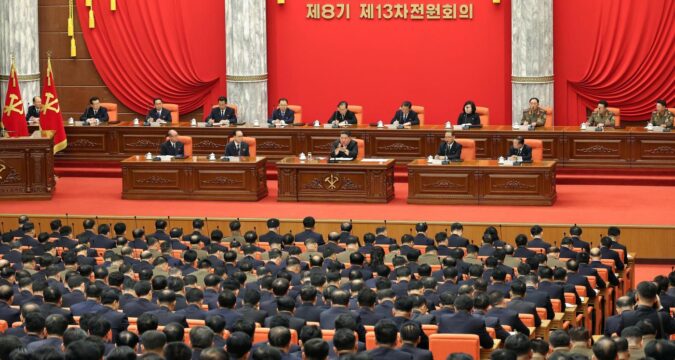
La élite gobernante de Corea del Norte se prepara para reunión del partido que ocurre cada 5 años
Por HYUNG-JIN KIM
SEÚL, Corea del Sur (AP) — El líder norcoreano, Kim Jong Un, y otros altos funcionarios se reunieron para abordar los preparativos del primer congreso completo del partido gobernante en cinco años, informó el miércoles la prensa estatal. La reunión de alto nivel establecerá nuevas prioridades mientras Estados Unidos y Corea del Sur buscan reanudar las conversaciones con Corea del Norte.
La Agencia Central de Noticias de Corea informó que Kim presidió el martes una reunión plenaria del Comité Central del Partido de los Trabajadores. Indicó que los participantes comenzaron a tratar temas clave no especificados relacionados con el congreso del partido y a revisar las políticas estatales de este año.
KCNA no dio más detalles, pero los analistas dicen que la reunión plenaria probablemente durará unos días y establecerá una agenda oficial para el congreso del partido, que se espera se celebre en enero o febrero.
El congreso, el principal órgano de toma de decisiones del Partido de los Trabajadores, fue revivido por Kim en 2016 después de una pausa de 36 años. Los expertos dicen que Kim buscaba aumentar la autoridad del partido como parte de los esfuerzos para consolidar su control del poder.
El foco de atención externa en el congreso es si Kim responderá a los esfuerzos de Estados Unidos y Corea del Sur para mejorar las relaciones. Corea del Norte ha rechazado firmemente los llamados de Estados Unidos y Corea del Sur para reanudar las conversaciones desde que la diplomacia nuclear de alto riesgo de Kim con el presidente Donald Trump colapsó en 2019, pero algunos expertos dicen que Kim podría volver a hablar con Estados Unidos el próximo año.
En una aparente respuesta a los repetidos acercamientos de Trump, Kim sugirió en septiembre que podría volver a las conversaciones si Estados Unidos abandona “su obsesión delirante con la desnuclearización” de Corea del Norte.
Mientras tanto, el ejército de Corea del Sur dijo que Corea del Norte disparó varias rondas de artillería frente a la costa oeste del Norte el martes. Los observadores dicen que el fuego de artillería probablemente formaba parte del entrenamiento invernal del ejército norcoreano.
Kim declaró el año pasado, que su país abandonaba su antiguo objetivo de reunificación pacífica con Corea del Sur y ordenó reescribir la constitución norcoreana para designar al Sur como un enemigo permanente.
___
Esta historia fue traducida del inglés por un editor de AP con la ayuda de una herramienta de inteligencia artificial generativa.

Asking Eric: How to acknowledge impending divorce
Dear Readers: On November 9, I answered a letter from someone who was trying to find a way to acknowledge her impending divorce in her Christmas cards, which would contain a photo of the letter writer and her kids, sans soon-to-be amicable ex. I made a few suggestions and invited you to lend your wisdom. Here are a few great suggestions and one that made me laugh.
Dear Eric: Try a short but sweet bulleted list:
What has changed:
My last name is now Smith
I finally got to France
Buffy graduated from cooking school
What hasn’t changed:
Still taking tap dance lessons
Our cat Dave is still with us at 17
We hope our paths will cross in the coming year
– Simple Greetings
Dear Simple: Succinct and rather poetic.
Dear Eric: We can never get the whole clan before Christmas, because college kids often don’t get Thanksgiving off. We often send a Happy New Year card.
Why not send a happy new year/new name card mentioning how amicable the situation is.
– New Year, New Me
Dear New Year: This is great and a lovely option for people who don’t want to mix holiday well wishes with news that might have a more mixed response.
Dear Eric: The first year, I included my soon-to-be ex in the card because I wanted to communicate that although dad and I were no longer a couple, we would still always be a family. It’s how he and I both felt and now, five years later, I’m glad we continue to hold that perspective.
I wrote, “What a doozy of a year. It started with a ‘radical change in our family structure’, ([ex’s name] and I split, but amicably), followed swiftly by the pandemic and its attendant economic meltdown descending on the entire world, which had the minor side benefit of putting our family drama in perspective.”
While the tone may sound informal to some, it was authentic for me.
– Transition Year
Dear Transition: Authenticity is really important here. Life can be difficult and confusing to navigate; we shouldn’t put on masks of formality or “being OK,” especially for our loved ones.
Dear Eric: When our divorce was finalized (very amicably) a couple of days before Christmas last year, we decided to use our annual New Year’s card to also announce our change of address. We included a photo of our dog and said that in the new year, he’d be hopping between his dog beds at two houses. We felt it was a good way to share our news without it being a downer. Who can resist a message coming from a very cute dog, right?
– Dog Days
Dear Dog Days: Animal cuteness always wins.
Dear Eric: Most of my friends knew of my separation and eventual divorce. My card that year was me in leather pants, sweater and boots all dolled up on the back of a motorcycle with three hot guys with a big smile and a thumbs up. The card said, “Life is good!” I got a lot of calls wanting to know who the guys were. My answer, “I don’t kiss and tell!”
My daughter thought I was crazy but was OK with it!
—Life Is Good
Dear Life: Wow, I laughed out loud at this. Love that you embraced your personality (and went through the trouble of staging a photoshoot)!
Dear Eric: We have two adult sons, one married, one not. They have never sent us a Christmas gift over the past 15 years, and they both live far away. Daughter-in-law
acts as if we don’t exist.
Can we feel OK about not sending them a gift?
– Parents That Aren’t Acknowledged
Dear Parents: Yes. Gifts aren’t going to get you any closer to resolving what’s going on with your sons. I’d forgo gift-giving and try to have an open, honest conversation about your relationship.
Dear Eric: My 60-year-old son and his 89-year-old father (my ex) had a horrible verbal blow up 10 months ago. They are both very strong-willed and neither will talk or apologize. I have talked with both of them to no avail. Is there any chance this standoff can be resolved?
– Caught in the Middle
Related Articles
Asking Eric: I don’t want any gifts
Terry Savage: How income can affect Medicare premiums
Answer Angel: Sequins all the time? Sure!
The Kid Whisperer: How to set a limit with another adult
Ask Anna: Is he wasting my time?
Dear Middle: There is a chance it can be resolved, but it all has to come from them. This can be hard to accept, as you have connections to both and presumably want the best for both of them. But they aren’t your responsibility. Focus on your relationship with your son and, if you have one, your relationship with your ex. They have to do the work of reconciling on their own. And if their blowup starts to infringe on your relationships with them, talk about that. You don’t have to suffer just because they’re not getting along.
(Send questions to R. Eric Thomas at eric@askingeric.com or P.O. Box 22474, Philadelphia, PA 19110. Follow him on Instagram and sign up for his weekly newsletter at rericthomas.com.)
https://www.chicagotribune.com/2025/12/10/asking-eric-how-to-acknowledge-impending-divorce/
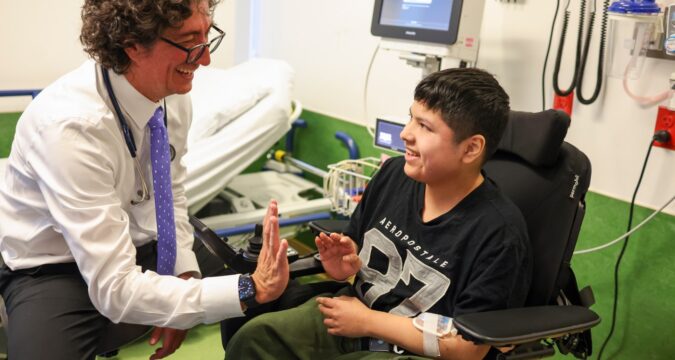
Couple donates $11 million to Lurie Children’s Hospital to support work in genetics, rare diseases
A couple with deep ties to the Chicago area is donating $11 million to Lurie Children’s Hospital in hopes of speeding research, treatment and diagnosis for children with rare and genetic disorders.
Don and Anne Edwards’ gift will support the Edwards Family Division of Genetics and Rare Diseases. Don Edwards is the founder and executive chairman of Flexpoint Ford, a private equity investment firm focused on financial services.
Don Edwards said his family has experience with genetic disorders and rare diseases. He is also on the board of trustees at Lurie, and was previously chairman of the University of Illinois board of trustees. Anne Edwards is on Lurie’s Founders’ Board, and the couple have three grown children.
“We know how much genetic diagnosis and potential therapies can change the lives of both the child (and) the entire family,” Don Edwards said. “We’d like to see a lot more treatment.”
Specifically, the money will go toward expanding training for doctors hoping to become pediatric geneticists. Now, there’s a shortage of geneticists, with only about one geneticist per million residents in Illinois, according to Lurie.
The money also will allow Lurie to do more genetic testing at the hospital, rather than through outside labs, meaning much quicker results. And the gift will be used to nearly triple the number of gene therapy and clinical research trials at Lurie over the next three to five years.
“That’s going to translate into more treatments and cures for patients with rare diseases,” said Dr. Carlos Prada, head of the newly renamed division at Lurie.
Now, rare diseases affect about 25 million to 30 million Americans, according to the National Human Genome Research Institute. Rare or unknown diseases affect about 1.5 million people in Illinois, according to a 2023 report by the Illinois Rare Disease Commission.
Prada called the gift “transformational.”
In many cases, it can take years for a child who may be experiencing early symptoms of a disorder, such developmental delays, to be diagnosed with a rare, genetic condition, Prada said. Prada hopes the gift allows more early testing to enable earlier treatment or better management of conditions, with supportive and preventive care.
Parent Carrie Pinkham, of Western Springs, is excited that the gift will enhance Lurie’s ability to help children with rare and genetic disorders. Pinkham’s family endured their own “diagnostic odyssey” for years trying to find answers about her son Jack’s condition.
Jack, now 12, was born prematurely, so, at first, everyone thought he was experiencing certain delays because of his prematurity, she said. But his speech and motor delays persisted. When Jack was 3 years old, he underwent genetic testing that revealed a rare genetic variance, but it was still unclear whether that variance was causing his issues.
It wasn’t until Jack was about 9 years old — after advances in research — that he was diagnosed with Spinocerebellar Ataxia Recessive Type 15, a rare genetic, neurological disorder that can affect movement and speech among other things.
Pinkham said it was a “relief” to have a name for Jack’s condition, and to no longer have to chase a diagnosis. In 2024, Pinkham and her family created the Jack Bear Foundation to raise awareness of the disorder and to fund research.
“This gift, to me, means everything as a Lurie family, that the technology is going to be advanced, that they have the best and brightest right here in our backyard working on these rare conditions,” Pinkham said. “It means a lot that we might be able to change the trajectory of our son’s life and others that have this condition.”
https://www.chicagotribune.com/2025/12/10/lurie-childrens-hospital-genetics-donation/

Taji Alexa comes back even better from broken wrist for Mother McAuley. The next step? ‘Pieces here and there.’
So, how is it going for junior guard Taji Alexa in her first high school action since breaking her wrist toward the end of last season for Mother McAuley?
Well, through her first seven games, she has scored 25 or more points three times.
“It took me a while to get back into the groove in the spring,” Alexa said. “But I think in the summer, I got back into the groove. I knew I was going to be OK, and if I kept working, I would be fine.”
The 5-foot-10 Alexa was definitely in the groove Tuesday night.
She scored eight of her team’s 11 points in the first quarter and finished with 26 to lead the host Mighty Macs to a 53-38 GCAC Red win over reigning Class 3A state champion Montini in Chicago.
Sophomore guard Nia Imala added 11 points and junior forward Emma Kenney came off the bench to score seven points and grab eight rebounds for Mother McAuley (5-2, 2-0).
Mother McAuley’s Taji Alexa (12) tries to get past Montini’s Nathalia Richardson (10) during a GCAC Red game in Chicago on Tuesday, Dec. 9, 2025. (Steve Johnston / Daily Southtown)
Four-year varsity guard Quinn Arundel missed the first game of her career due to illness.
In the final 45 seconds of the third quarter, Alexa made a 3-pointer and a layup, erasing a 32-31 deficit and building a 36-32 lead. McAuley then opened the fourth with 10 straight points to pull away.
It showed Alexa’s right shooting wrist is not only better but her all-around game keeps improving.
“She got stronger during the offseason,” McAuley coach Curtis Lewis said of Alexa. “Taji is someone who has been adding parts to her game even since her freshman year.
Mother McAuley’s Emma Kenney (25) and Montini’s Cedona Barrett (33) battle for control of the ball during a GCAC Red game in Chicago on Tuesday, Dec. 9, 2025. (Steve Johnston / Daily Southtown)
“She has added pieces here and there.”
Nathalia Richardson was here and there in leading Montini (1-6, 0-2) with 12 points. A rough beginning to the season for the Broncos has been caused by heavy graduation losses and a young roster with four freshmen, five sophomores, three juniors and only three seniors.
Alexa, meanwhile, was hurt Jan. 24 at St. Ignatius. She missed the final seven games.
“I was going up for a layup on a fast break and got pushed from behind,” Alexa said of the injury. “And I hurt it when I landed. I knew it was bad.”
Mother McAuley’s Delia Sullivan (10) brings the ball up the court against Montini during a GCAC Red game in Chicago on Tuesday, Dec. 9, 2025. (Steve Johnston / Daily Southtown)
Kenney confirmed that the Mighty Macs missed Alexa at the end of that season but they are glad to have her back.
“Taji is unbelievable — she’s just amazing,” Kenney said, beaming with praise. “Assists. Shots. Defense. Just an unbelievable teammate.”
Lewis also has been enjoying Alexa’s standout play this winter.
“One-on-one, she’s our most versatile player because she can score on so many different levels,” Lewis said of Alexa. “And she is always using her abilities to make her teammates better.
“As far as scoring, she’s one of the best and she brings that dimension to the team. She brings another level of toughness. Taji does a lot for us, and we rely on her quite a bit.”
Mother McAuley’s Taji Alexa (12) drives to the basket against Montini during a GCAC Red game in Chicago on Tuesday, Dec. 9, 2025. (Steve Johnston / Daily Southtown)
It seems that Alexa was born to play basketball. Her father, Graham, starred at Lyons and played for Troy. Her mother, Yolanda, nee Irby, played at Thornwood and Western Illinois.
“They have done a lot for me,” Taji said of her parents. “My dad was a point guard, so he is helping me with my ball-handling. My mom was a shooter and she is helping me with that.
“It’s the best of both worlds.”
That boost from her family has been apparent in a variety of ways. Her parents also make sure she has the right psychological approach to the game.
“They always want me to be confident in my shot,” she said. “If I’m missing some, they say to keep shooting if I’m open. They want me to be confident.”
Jeff Vorva is a freelance reporter for the Daily Southtown.
https://www.chicagotribune.com/2025/12/09/taji-alexa-mother-mcauley-montini-ihsa-girls-basketball/
Trump negó haber empleado un insulto sobre Haití y naciones africanas. Ahora se jacta de ello
Por JONATHAN J. COOPER
El presidente de Estados Unidos, Donald Trump, admitió el martes que utilizó el término despectivo “países de mierda” para referirse a Haití y a naciones africanas durante una reunión en 2018 con legisladores, jactándose de un comentario que provocó indignación global durante su primer mandato.
En aquel entonces, Trump había negado haber hecho la declaración despectiva durante una reunión a puerta cerrada, pero el martes mostró poco remordimiento al repetirla durante un mitin en Pensilvania. Continuó despreciando a Somalia como “inmundo, sucio, repugnante, plagado de crimen”.
Trump se jactaba en su discurso de que la semana pasada había “anunciado una pausa permanente en la migración del Tercer Mundo, incluyendo de lugares infernales como Afganistán, Haití, Somalia y muchos otros países”, cuando alguien en la multitud gritó el comentario de 2018.
Eso lo llevó a recordar el incidente de 2018. Su relato se ajustó estrechamente a la descripción ofrecida en ese momento por personas que tenían conocimiento sobre la reunión en la Oficina Oval.
“Tuvimos una reunión y dije: ‘¿Por qué es que sólo aceptamos gente de países de mierda, verdad? ¿Por qué no podemos tener a algunas personas de Noruega, Suecia?’”, dijo Trump a los asistentes al mitin.
“Pero siempre aceptamos gente de Somalia”, continuó. “Lugares que son un desastre. Inmundo, sucio, repugnante, plagado de crimen”.
La Casa Blanca en ese momento no negó los comentarios de Trump, pero el presidente publicó en Twitter al día siguiente de que se conociera la noticia que “este no fue el lenguaje que usé”. Añadió que “nunca dijo nada despectivo sobre los haitianos”.
En 2018, los comentarios de Trump denigrando a naciones predominantemente negras mientras buscaba más migración de países predominantemente blancos fueron ampliamente condenados como racistas. Algunos republicanos del Congreso condenaron los comentarios, y los líderes extranjeros se indignaron. El gobierno de Botsuana convocó al embajador de Estados Unidos, y el presidente de Senegal, Macky Sall, dijo que estaba sorprendido y señaló que “África y la raza negra merecen el respeto y la consideración de todos”.
Pero desde entonces, Trump ha rebasado muchas normas y tradiciones de decoro que habían guiado a sus predecesores, tanto en su primer mandato como en los años posteriores. A menudo salpica sus comentarios públicos con palabrotas, y este año ha empleado una en dos ocasiones mientras las cámaras estaban grabando.
En Acción de Gracias, en un par de extensas publicaciones en redes sociales quejándose sobre los inmigrantes, menospreció al gobernador de Minnesota, Tim Walz, usando un término despectivo anticuado para referirse a personas con discapacidad intelectual. Cuando un reportero le preguntó si mantenía un comentario que muchos estadounidenses consideran ofensivo, Trump no mostró arrepentimiento. “Sí. Creo que le pasa algo malo”, dijo.
___
Esta historia fue traducida del inglés por un editor de AP con la ayuda de una herramienta de inteligencia artificial generativa.

Piratas pactan por 1 año y 7,75 millones con el relevista Gregory Soto, según fuente de AP
Por WILL GRAVES
PITTSBURGH (AP) — Los Piratas de Pittsburgh y el relevista dominicano Gregory Soto llegaron a un acuerdo contractual por un año y 7,75 millones de dólares, dijo el martes una persona con conocimiento del acuerdo.
La fuente habló con The Associated Press bajo condición de anonimato porque el acuerdo estaba sujeto a un examen médico exitoso.
Soto ofrece a los Piratas una opción experimentada como lanzador zurdo en un bullpen que se renovará en 2026 un mes después de que los relevistas Colin Holderman y Dauri Moreta fueron dados de baja.
El quisqueyano de 30 años, tiene un récord de 15-34 con una efectividad de 4.26 y 56 salvamentos en siete temporadas con cinco equipos. Fue elegido al Juego de Estrellas en 2021 y 2022 con Detroit. Pasó 2025 con Baltimore y los Mets de Nueva York, quienes lo adquirieron a finales de julio justo antes de la fecha límite de canjes.
Soto tuvo dificultades en Nueva York, con un récord de 1-3 y una efectividad de 4.50 en 25 apariciones. Su salida es la segunda baja significativa del bullpen de los Mets en la agencia libre después de que el cerrador boricua Edwin Díaz firmó un contrato de tres años con los Dodgers de Los Ángeles, también el martes.
Pittsburgh parece estar consolidado en los últimos puestos del bullpen, donde el dominicano Dennis Santana tuvo un buen desempeño después de que David Bednar, dos veces elegido al Juego de Estrellas, fue traspasado a los Yankees de Nueva York la temporada pasada. Soto ofrece a los Piratas un lanzador que ha desempeñado una gran variedad de roles, incluido el de cerrador.
_____
Deportes AP: https://apnews.com/hub/deportes

Comienza la prohibición de redes sociales a menores de 16 años en Australia
Por ROD McGUIRK
MELBOURNE, Australia (AP) — El primer ministro australiano, Anthony Albanese, celebró la prohibición mundial pionera de las redes sociales para niños menores de 16 años que entró en vigor el miércoles, describiéndola como un momento en que las familias recuperan el poder de manos de las grandes empresas tecnológicas, aunque advirtió que la implementación sería difícil.
Algunos padres dijeron que sus hijos estaban angustiados al descubrir que habían sido excluidos de las plataformas cuando la ley histórica entró en vigor. Algunos niños pequeños indicaron haber engañado a la tecnología de estimación de edad de las plataformas dibujándose vello facial. También se espera que los padres y hermanos mayores ayuden a algunos niños a eludir las restricciones.
“Este es el día en que las familias australianas están recuperando el poder de estas grandes empresas tecnológicas y están afirmando el derecho de los niños a ser niños y de los padres a tener una mayor tranquilidad”, afirmó Albanese a la Australian Broadcasting Corp.
Más tarde, Albanese dijo en un encuentro en Sydney de partidarios de la reforma, incluidos padres que culpan a las redes sociales por el suicidio de un hijo: “Esta reforma cambiará vidas. Para los niños australianos… permitiéndoles simplemente tener su infancia. Para los padres australianos, permitiéndoles tener una mayor tranquilidad. Pero también para la comunidad global, que está mirando a Australia y diciendo: bueno, si Australia puede hacerlo, ¿por qué nosotros no?”.
Facebook, Instagram, Kick, Reddit, Snapchat, Threads, TikTok, X, YouTube y Twitch enfrentan multas de hasta 49,5 millones de dólares australianos (32,9 millones de dólares) desde el miércoles si no toman medidas razonables para eliminar las cuentas de niños australianos menores de 16 años.
Australia informará antes de Navidad si la prohibición de las redes sociales está funcionando
La prohibición será aplicada por la Comisionada de Seguridad Electrónica de Australia, Julie Inman Grant. Ella dijo que las plataformas ya tenían la tecnología y los datos personales sobre sus usuarios para hacer cumplir la restricción de edad con precisión.
El jueves, enviaría a las diez plataformas objetivo avisos exigiendo información sobre cómo se estaba implementando la restricción de edad y cuántas cuentas se habían cerrado.
“Proporcionaremos información al público antes de Navidad sobre cómo se están implementando estas restricciones de edad y si preliminarmente vemos que están funcionando”, dijo Inman Grant.
“Las respuestas a estos avisos formarán la base con la que mediremos el cumplimiento”, agregó.
La ministra de Comunicaciones, Anika Wells, dijo que las plataformas con restricción de edad “pueden no estar de acuerdo con la ley y ese es su derecho; no esperamos un apoyo universal del 100%”, pero que todas se habían comprometido a cumplir con la ley australiana. Dijo que más de 200.000 cuentas de TikTok en Australia ya habían sido desactivadas para el miércoles.
Wells también advirtió a los niños pequeños que hasta ahora habían evadido la detección que eventualmente serán identificados. Un niño que usara una red privada virtual para aparentar estar en Noruega sería descubierto si publicara rutinariamente imágenes de playas australianas, dijo Wells.
“Sólo porque hoy puedan haberlo evitado (la detección) no significa que podrán evitarlo en una semana o un mes porque las plataformas de redes sociales tienen que volver y revisar rutinariamente las cuentas de menores de 16 años”, señaló Wells.
“Estas plataformas de redes sociales tienen tantos datos sobre nosotros porque elegimos dárselos porque nos gusta las redes sociales y porque hoy tu hermano mayor escaneó su cara por ti, lo que te ha comprado un poco de tiempo, no significa que estas cuentas no te verán hablando con otros chicos de 14 años esta noche sobre el carnaval de fútbol para menores de 16 años el fin de semana, sobre tus próximas vacaciones escolares y quién será tu profesor de décimo grado el próximo año”, agregó.
Albanese dijo que la implementación sería difícil y “no será perfecta”.
“Esto se trata, de manera importante, de hacer frente a las grandes tecnológicas, diciendo que las empresas de redes sociales tienen una responsabilidad social”, afirmó.
El padre de una víctima de extorsión dice que el veto es un comienzo
Wayne Holdsworth, quien se convirtió en defensor de la restricción de edad porque su hijo Mac se quitó la vida tras ser víctima de una trama de extorsión sexual en línea, describió la nueva ley como un comienzo. Ahora los niños deben ser educados sobre los peligros en línea antes de cumplir 16 años.
“Nuestros hijos que hemos perdido no han muerto en vano porque hoy estarán mirando hacia abajo muy orgullosos del trabajo que todos hemos hecho”, dijo Holdsworth dijo en la reunión en Sydney.
Flossie Brodribb, una defensora de 12 años de la prohibición de las redes sociales para niños pequeños, dijo en la reunión que esperaba que otros países siguieran el ejemplo de Australia.
“Esta prohibición es audaz y valiente y creo que ayudará a niños como yo a crecer más saludables, seguros, amables y más conectados con el mundo real”, afirmó Flossie.
Simone Clements dijo que la prohibición de las redes sociales tendría un costo financiero para sus gemelos de 15 años, Carlee y Hayden Clements. Carlee es actriz, modelo, bailarina, cantante e influencer. Su hermano es actor y modelo.
“Sé que nuestra situación es única para nuestra familia porque los niños están en la industria del entretenimiento y las redes sociales van de la mano con la industria del entretenimiento”, dijo la madre a ABC. “Hemos usado las redes sociales de la manera más positiva. Y es una plataforma para que básicamente muestren su portfolio, y… esta es una fuente de ingresos para los niños”.
Clements dijo que el mayor impacto en sus hijos sería la pérdida de sus jóvenes seguidores en línea.
___
Esta historia fue traducida del inglés por un editor de AP con la ayuda de una herramienta de inteligencia artificial generativa.

DShaun Bolden, a sophomore call-up late last season, emerges as a junior for Oswego East. ‘Earn more minutes.’
As a sophomore late last season, Oswego East’s Dshaun Bolden got a taste of varsity experience that served to whet his appetite. And now, the 6-foot-5 junior wing is feasting on the competition.
He has bolted out of the gate this season, earning his place at the table.
“I got a little time in three or four games and was with the team at the regional,” Bolden said. “With great coaches, a great organization and great players last year, I just knew I had to get better, be consistent and work hard.
“It made me realize I had to earn more minutes.”
Bolden continued to make the most of his opportunity Tuesday night, scoring a game-high 25 points to go with 10 rebounds in a 75-62 win over Romeoville in a Southwest Prairie Conference crossover.
Senior guard Mason Lockett IV, a DePaul recruit and the lone returning starter for the Wolves, added 21 points and five assists for host Oswego East (6-0, 3-0).
Oswego East’s Dshaun Bolden (24) shoots a free throw against Romeoville during a Southwest Prairie Conference crossover game in Oswego on Tuesday, Dec. 9, 2025. (Sean King / The Beacon-News)
Bolden, meanwhile, learned the ropes in the Wolves’ summer program and expanded his game playing AAU. He entered Tuesday leading the team by averaging 21 points and 8.4 rebounds.
“He’s a phenomenal young man,” Oswego East coach Ryan Velasquez said of Bolden. “He understands what it takes to get it done in the classroom. He goes about his business in a workmanlike manner.
“He comes in ready to practice and is a good person ready to compete his tail off when he gets between those lines. He does that day in and day out.”
Sophomore guard Deon Grant and junior guard Jamarri Fears kept things interesting for Romeoville (3-3, 1-2) early when Oswego East threatened to pull away with ease.
Oswego East’s Dshaun Bolden (24) drives to the basket against Romeoville’s Keilan Winfield (14) during a Southwest Prairie Conference crossover game in Oswego on Tuesday, Dec. 9, 2025. (Sean King / The Beacon-News)
The Wolves led by as many as 14 points midway through the second but the Spartans cut the halftime deficit to 41-35 by making seven 3-pointers in the quarter.
“We knew they could shoot but not like that,” Lockett said. “There were some long rebounds and we weren’t boxing out like we should.”
Bolden led the way in the third quarter with seven points and four rebounds as Oswego East extended its lead back to a comfortable 57-47 entering the fourth.
“We have to clean up some things,” Velasquez said. “I can’t wait for practice. I think Mason did a really good job. Sometimes, we need him to facilitate. Sometimes, we need him to score.
Oswego East’s Dshaun Bolden (24) lays the ball in against Romeoville’s Daylyn Porter (1) during a Southwest Prairie Conference crossover game in Oswego on Tuesday, Dec. 9, 2025. (Sean King / The Beacon-News)
“He’s not going to think, ‘It’s all on me.’ He has guys around him and he knows how to make them better. That’s what I love about him.”
Also promoted with Bolden was 6-5 classmate Jacsen Tucker, who now joins him in the starting lineup. Joshua Ankumah-Saikoom, another 6-5 junior forward/center, gives the Wolves a formidable front line.
“I don’t think a lot of people really knew about Dshaun and Jacsen,” Lockett said. “I don’t think they knew what they bring to the table. I think we’re going to shock a lot of people.”
Bolden, whose mother Nashunda played Division I basketball at Howard, has big goals as well.
Oswego East’s Dshaun Bolden (24) drives to the basket against Romeoville’s Keilan Winfield during a Southwest Prairie Conference crossover game in Oswego on Tuesday, Dec. 9, 2025. (Sean King / The Beacon-News)
“I know for me the main thing is being consistent like with everything I do in school,” Bolden said. “Just maintain the habits I have and anything is possible.
“I like to think I bring whatever the team needs to the game. I want to make an impact with rebounds and assists along with scoring. That’s what we get from a great leader like Mason.”
The ceiling for Bolden is very high, according to Velasquez.
“He’s still learning — the kid is so raw he’s barely scratching the surface,” Velasquez said. “I’m lucky to be able to coach him and he takes coaching really well.
“That doesn’t always happen, but he understands how to be coached.”
https://www.chicagotribune.com/2025/12/09/dshaun-bolden-oswego-east-romeoville-ihsa-boys-basketball/