Category: News
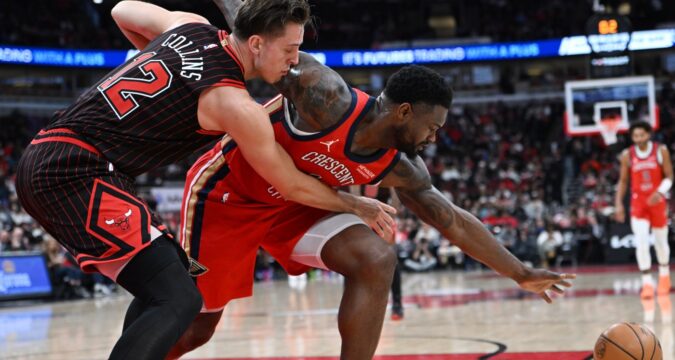
3 takeaways as the Chicago Bulls offense flounders in a 114-104 loss to the New Orleans Pelicans
It’s hard to win a basketball game when the ball isn’t falling through the net.
That was clear for the Chicago Bulls in Sunday’s 114-104 loss to the New Orleans Pelicans at the United Center.
The Bulls missed 36 shots from behind the arc in the loss, resulting in a dismal 26.5% clip from deep. This is the latest in an icy stretch of shooting after going 32.6% from behind the arc over the last 10 games — the second-worst in the entire league during that span. The hot-and-cold nature of this team’s shooting efficiency has been a key factor in keeping the Bulls from consistently winning this season.
Isaac Okoro went 1-for-8 from deep and Nikola Vučević went 2-for-6. Most notable was a rare 1-for-10 shooting night from Coby White, who led the Bulls in both attempts and misses from behind the arc.
White said the Bulls planned to take a higher volume of 3-pointers against the Pelicans, who pack the paint and limit opportunities at the rim. And a large bulk of that responsibility fell on White, who was playing in only his eighth game of the season as he continues to battle calf injuries. Despite the result, White — a career 36.8% shooter from behind the arc — expressed confidence in his shot selection against the Pelicans.
“I thought all but maybe two were great looks for me. A lot of them felt good coming off my hand, they were either short or long or in and out. I can’t control whether they go in. If I had to go back, I’d take those same shots again. I’ve just got to continue to work to find that rhythm from 3-point range.”
Coach Billy Donovan agreed. He emphasized the importance of increasing shot volume from higher efficiency players on the team: “If Coby White gets up 10 3-point shots, I’m fine with that.”
And despite the team’s lack of finishing, Donovan felt his players produced a more sustainable style of offense — something the Bulls have sought urgently throughout their free fall over the last three weeks.
“We moved the ball,” Donovan said. “We generated good shots. We’ve got to take those 3s. I thought we did a lot of really good things in terms of ball movement.”
A short streak of efficient shooting — going on an 11-for-24 flurry in the third quarter — powered the Bulls to rip off a 14-0 run and regain a 73-72 lead as the Pelicans failed to score a single point for more than four minutes in the third quarter. But that was fleeting for the Bulls, who were overpowered by the Pelicans bench and several ill-timed second-chance scoring opportunities in the fourth quarter.
It was not the worst offensive night of the season — that still belongs to a 91-point performance against the Golden State Warriors earlier this month. But still, winning didn’t last long for the Bulls, who have lost eight of their last nine games.
Here are three takeaways from the loss.
1. A quiet night from Matas Buzelis.
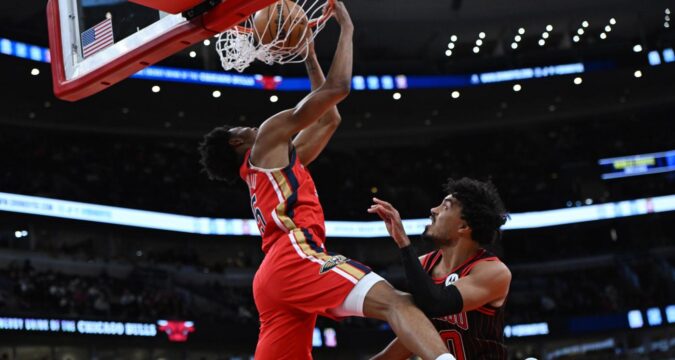
New Orleans Pelicans’ Herb Jones (2) goes up for a dunk against Chicago Bulls’ Matas Buzelis (14) during the first half on Sunday, Dec. 14, 2025, in Chicago. (AP Photo/Paul Beaty)
The Bulls offense could use a secondary spark — but it still isn’t coming from Matas Buzelis.
The second-year forward took only five shots in the loss to score nine points. Only two other players (Jalen Smith and Zach Collins) took fewer shots than Buzelis, a player the Bulls hope to position as a centerpiece of production for their offense in future seasons. This is his lowest shot attempt production since the second game of the season, when he logged fewer than 13 minutes after fouling out quickly in a win over the Orlando Magic.
Buzelis aims to develop a strong outside shot, but he’s shooting 32.4% from behind the arc this season — and still struggles to create his own shot from outside. Donovan noted that Buzelis played a lower rotation of minutes due to Chicago’s need to put a larger body on Zion Williamson, swapping in Patrick Williams and Isaac Okoro to avoid pulling a trap over to deal with the bigger body in the paint.
2. Dueling bigs
The Bulls continued to experiment with double-big rotations that played Jalen Smith at the four. But coach Billy Donovan did not stick with his closing changes from Friday’s win in Charlotte, when he benched Vučević in favor of Zach Collins down the stretch.
Despite Vučević’s poor shooting night, the Bulls stuck with their starter down the stretch while utilizing forwards to counter Williamson. Collins logged under 12 minutes and Smith logged just under 13 minutes. The pair combined for eight points and two rebounds.
3. A homecoming for Jeremiah Fears.
New Orleans Pelicans’ Jeremiah Fears (0) celebrates with teammates during the second half against the Chicago Bulls on Sunday, Dec. 14, 2025, in Chicago. (AP Photo/Paul Beaty)
Sunday’s game featured a cheering section for one Pelicans player — rookie Jeremiah Fears, a Joliet native playing in his first hometown game.
Fears played his first two years of high school ball for Joliet West, then transferred to AZ Compass Prep as a junior. His older brother, Jeremy, also played for Joliet West. He immediately drew draft speculation during his solo year in the NCAA playing for Oklahoma, ultimately going No. 7 overall this summer.
The rookie made an impact in front of his local crowd, tallying 20 points and three assists. Fears scored 10 of his points in the fourth quarter to clinch the fifth win of the season for the Pelicans.
https://www.chicagotribune.com/2025/12/14/chicago-bulls-new-orleans-pelicans-offense-flounders/

When You’re In A Hole, Stop Digging
When You’re In A Hole, Stop Digging
Authored by J. Peder Zane via RealClearPolitics,
President Trump was onto something when he replaced Joe Biden’s White House portrait with a mocking picture of an autopen. Given our recent history of failed leadership, why stop there?
To truly capture the impact of this century’s presidents, let’s replace George W. Bush’s photo with a picture of a small hole and a shovel. Instead of Barack Obama’s dazzling smile, how about a deeper hole with a longer shovel? And maybe an earth mover before a crater in Donald Trump’s first term. Maybe stick with Biden’s autopen as a tip of the cap to a great idea, although a shot of the Grand Canyon would fit as well. As for Trump’s second term, if things keep going in the same direction, the art department might start working on a drawing of Alfred E. Neumann with his famous tagline, “What, Me Worry”?
If this sounds harsh, consider the fiscal abyss these men have plunged us into. Since George W. Bush’s presidency, the national debt has been widely acknowledged as one of our nation’s chief challenges. In 2000, it was equal to 55% of our GDP; it now stands at 121%. The oxymoronically named Government Accountability Office projects that percentage will double by 2053.
It costs about $1 trillion per year just to service our $38.5 trillion debt, which is still growing at close to $2 trillion per year.
Presidents can’t do this alone. Congress passes the budgets, and the American people just go along with the charade. Everybody wants what they want; nobody is willing to sacrifice. The modern welfare state launched by Franklin Roosevelt’s New Deal, supercharged by Lyndon Johnson’s Great Society – and expanded by every president and Congress since the 1960s – has become a massive system of transfer payments that now sends some 72.5 million Americans government assistance.
Even if we cut our leaders some slack for making entitlement reform the Godot of modern politics, their intentional unwillingness to even pluck the low-hanging fruit of obvious fraud and abuse is impossible to defend.
When the ongoing investigation of massive fraud in Minnesota became big news in recent weeks, President Trump did not take the opportunity to focus the nation’s attention on the huge amount of federal dollars being swiped by con artists and grifters. Instead of calling for a top-to-bottom review of expensive programs, he cast the fraud as an immigration issue – falsely suggesting that all would be well if we hadn’t admitted so many Somali immigrants.
The truth is, most everybody has their snout in the trough.
Right now, Congress is debating the future of enhanced Obamacare subsidies passed in 2021: Democrats want to extend them, Republicans want to spend some of the money in other ways. What no one is addressing in any serious way is the strong evidence of massive fraud in the program. Earlier this year, RealClearInvestigations reported on a study that found that an estimated 12 million enrollees had not filed a single claim in 2024 – suggesting that brokers and insurance companies may be adding phantom patients to juice profits. In a separate effort, the GAO reports that it has tested Obamacare’s verification system by submitting 24 fictional applications during the last two years – almost all of them were approved for expensive benefits. Reason magazine reported that the GAO auditors also “found more than 66,000 Social Security numbers attached to records showing more than 366 days of health insurance coverage – an indicator that those Social Security numbers may have been used multiple times in the same year. Additionally, GAO found more than 58,000 Social Security numbers matching death records in the Social Security Administration’s database. More than $94 million in tax credits were delivered to those accounts.”
Meanwhile, a series of reports in the Washington Post suggests rampant fraud in benefits paid to veterans. Where a 100% disability rating used to be a relatively rare status given to those who suffered truly debilitating and disfiguring injuries, today 1.5 million of the roughly 6 million veterans receiving disability payments have that classification – “a nearly ninefold increase since 2021.” Part of this increase, the Post reports, is driven by a growing industry, “steeped in hucksterism and fraud,” that recruits and coaches “to pile on benefits,” through what appears to be a rubber-stamp government review system.
Meanwhile, a Wall Street Journal series has documented rampant fraud in Medicaid and Medicare. One article reportedthat health insurers “collected at least $4.3 billion over three years for [hundreds of thousands of] patients who were enrolled – and paid for – in other states.” Another article reported that “Medicare Advantage insurers diagnosed patients with conditions that triggered extra payments of $50 billion from 2019 to 2021, even though no doctor ever treated the diseases.”
Despite its crushing costs, America’s vast welfare state is not going away. Although it is more likely that fiscal catastrophe rather than courageous leadership will one day ignite necessary reforms, in the meantime we might soften that day of reckoning by addressing the bad actors sucking us dry.
Some advice to our future leaders: When you find yourself in a hole, stop digging.
Tyler Durden
Sun, 12/14/2025 – 23:20
https://www.zerohedge.com/political/when-youre-hole-stop-digging

Philip Rivers luce emocionado tras casi llevar a Colts a victoria en su regreso del retiro
Por LUKE OLSON
SEATTLE (AP) — Philip Rivers contuvo las lágrimas al considerar qué mensaje enviaría a sus hijos, o a los jóvenes después de casi llevar a los Colts de Indianápolis a la victoria a los 44 años.
“Hay dudas, y son reales”, expresó Rivers, emocionándose brevemente. “La apuesta segura garantizada es irse a casa y no intentarlo, y la otra es, ‘Veamos qué pasa’. Espero que en ese sentido pueda ser algo positivo para algunos jóvenes”.
Rivers terminó un retiro de casi cinco años para ser titular el domingo contra los Seahawks de Seattle y jugó en un nivel eficiente para los desesperados Colts, que recurrieron al futuro miembro del Salón de la Fama después de que Daniel Jones se perdiera la temporada por un desgarro del tendón de Aquiles.
Lanzó un pase de anotación en la primera mitad, jugó mayormente sin errores y movió a los Colts a la posición para el gol de campo de 60 yardas de Blake Grupe con 47 segundos restantes. Pero Jason Myers respondió con uno de 56 yardas que dio a los Seahawks una victoria de 18-16.
Fue un día notable para el veterano que ha pasado los últimos años entrenando fútbol americano de secundaria en su natal Alabama.
Rivers recibió algunos golpes duros de la sólida defensiva de los Seahawks, e incluso los disfrutó.
“Nunca me molestó esa parte”, comentó Rivers. “Mi esposa siempre me dice que estoy loco porque ha habido veces en los últimos tres o cuatro años que dije, ‘Desearía poder lanzar y ser golpeado, fuerte’”.
Esto no fue un acto de novedad, como podría haber parecido cuando los Colts firmaron al semifinalista del Salón de la Fama para su escuadra de práctica hace menos de una semana. Los Colts del entrenador Shane Steichen, que comenzaron la temporada 7-1 pero están tratando de detener un colapso en la segunda mitad, sabían lo que estaban obteniendo del veterano.
Rivers terminó 18 de 27 para 120 yardas con un touchdown y una intercepción, con la intercepción llegando en su último pase mientras intentaba forzar el balón por el campo en los segundos finales.
“Solo estaba agradecido, agradecido, de estar ahí”, manifestó Rivers. “Y fue una explosión, pero obviamente las emociones ahora son de decepción. Esto no se trata de mí. Tenemos un equipo luchando como locos para intentar mantenerse con vida y entrar en la postemporada”.
Los Colts (8-6) han perdido cuatro seguidos y cinco de seis, y están fuera de los playoffs de la Conferencia Americana con tres juegos restantes. Están detrás de Jacksonville y Houston en la AFC Sur.
Steichen llamó a un juego conservador, confiando en correr el balón y controlar el reloj. Rivers lanzó mayormente pases cortos hacia el exterior, pases de seguridad y pantallas.
“Salió y nos dio una oportunidad de ganarlo”, señaló Steichen.
Rivers sufrió dos capturas, y mostró su edad en la primera. Tropezó mientras evadía la presión de Boye Mafe, se levantó, y luego cayó de nuevo.
Rivers bombeó su puño derecho y soltó un rugido después de lanzar un pase de touchdown de siete yardas a Josh Downs con 1:33 restantes en la primera mitad para poner a los Colts arriba 13-3.
Fue el primer pase de touchdown de Rivers desde que lanzó uno de 27 yardas a Jack Doyle en la derrota de los Colts 27-24 ante Buffalo en un juego de comodines el nueve de enero de 2021. También se convirtió en el quinto jugador en la historia de la NFL en lanzar un pase de TD a los 44 años o más, uniéndose a Tom Brady, George Blanda, Steve DeBerg y Vinny Testaverde.
“Han pasado 1.800 días desde que lancé un touchdown, o una intercepción para el caso. Así que tenemos ambas (casillas) marcadas”, dijo Rivers.
Rivers fue elegido el mes pasado como uno de los 26 semifinalistas para la clase del Salón de la Fama de 2026, pero ahora tendrá su elegibilidad retrasada. Un jugador debe estar fuera de la liga durante al menos cinco años antes de que su candidatura pueda ser considerada. Lo más pronto que Rivers puede ser candidato es para la clase de 2031.
Se encuentra entre los diez mejores en la historia de la NFL en victorias, intentos, completaciones, yardas por pase, pases de touchdown y juegos de 300 yardas.
Desde su retiro, ha estado entrenando en la Escuela Secundaria Católica St. Michael en Fairhope, Alabama, donde el equipo organizó una fiesta para ver el partido el domingo. Los jugadores de Rivers estaban en su mente mientras regresaba a la NFL.
“Tal vez inspire o enseñe a no huir o tener miedo de lo que pueda o no pueda suceder”, expresó Rivers.
___
Deportes en español AP: https://apnews.com/hub/deportes

From the word go, Joe Niego comes up big for Brother Rice in the Team Rose Shootout. ‘Nobody could guard me.’
To Brother Rice’s Joe Niego, a second straight slow start would have been a worst-case scenario.
The 6-foot-7 senior forward wasn’t going to wait for the Crusaders to find their rhythm, either. He decided to become the catalyst his team needed early on by playing with increased aggression.
“We had a slow start in the loss Friday against St. Ignatius and that just haunted us the whole game,” Niego said. “The way the ball felt (Sunday), I knew nobody could guard me.
“When the ball was in my hand, I felt like we had a good chance to score.”
And score Niego did. He tallied 13 of his career-high 22 points in the first quarter Sunday, sparking a 51-38 win over Lincoln-Way East in the Team Rose Shootout at Mount Carmel in Chicago.
Junior guard Aiden Henderson chipped in with six points for Brother Rice (6-2), which put 11 consecutive points by Niego to good use in jumping out to a 16-2 lead in that first quarter.
Brother Rice’s Joe Niego (2) executes a hook shot against Lincoln-Way East during the Team Rose Shootout at Mount Carmel in Chicago on Sunday, Dec. 14, 2025. (Vincent D. Johnson / Daily Southtown)
Junior guard KaiJay Brown scored nine points for Lincoln-Way East (3-4). Senior guard Jaymon Hornsby and sophomore forward Marcus Gordon added eights points apiece.
Niego, meanwhile, used an early 3-pointer to ignite every facet of his game, according to senior guard Charlie Wizgird.
“That was a tough game against a very well-coached team Friday and we knew we had to come out fast,” Wizgard said of St. Ignatius. “And Joe’s a much more confident player this year.
“He takes most of our shots for a good reason. He’s great at setting up and making big plays.”
Brother Rice’s Aiden Henderson (1) tries to cut off Lincoln-Way East’s Jaymon Hornsby (11) on a drive during the Team Rose Shootout at Mount Carmel in Chicago on Sunday, Dec. 14, 2025. (Vincent D. Johnson / Daily Southtown)
Senior guard Zach Grabowski pointed out that Niego’s play was an adrenaline surge the Crusaders needed against the Griffins.
“Joe’s a jack-of-all-trades,” Grabowski said. “The threes or driving the paint, he can do it all. Everything he does just brings up the whole gym and the mood of the whole team.”
Last season, Niego saw action in 31 games for Brother Rice’s Class 3A state runner-up team, but he ended up scoring just 31 points.
“I played behind five college players last year,” Niego said. “They showed me how to do it and how to go after things. I mean, every game we played, the place was packed.
Brother Rice’s Charlie Wizgird (13) drives past Lincoln-Way East’s Bronson Bates (1) during the Team Rose Shootout at Mount Carmel in Chicago on Sunday, Dec. 14, 2025. (Vincent D. Johnson / Daily Southtown)
“That showed me what I had to do to get better and what I worked on over the summer.”
Niego is the last in the line — the fourth brother of his family to make his mark. Older brothers Josh and Quinn had standout careers at St. Xavier. Nick is a junior guard at St. Francis in Joliet.
His five cousins, all named Niego, created their own family dynasty at Lyons. Joe Niego has also embraced the lineage and expectations to go with his name at Brother Rice.
“I always think about the pressure I have,” Joe said. “I had my brothers and my cousins who played basketball and volleyball in college and I had to be the one to go to the next level.
“Pressure makes diamonds, and having all of those family members compete at that level showed me what I had to do.”
Brother Rice’s Joe Niego (2) pulls up for a jump shot against Lincoln-Way East during the Team Rose Shootout at Mount Carmel in Chicago on Sunday, Dec. 14, 2025. (Vincent D. Johnson / Daily Southtown)
The youngest of his cousins, Jackson, plays at Illinois Wesleyan, a program that has shown recruiting interest. Joe Niego is also interested in playing with his brother at St. Francis.
Whether bloodlines or personal friendships, the game is built on chemistry and connections. Niego, Grabowski and Wizgird are childhood friends who have played together since adolescence.
His father and his uncle are also identical twins, only deepening an elemental bond.
“Just growing up, seeing my brothers in the backyard, that just showed me what you put into the game is what you get out of it,” Niego said. “I’ve been super fortunate to have my family and basketball because I don’t know where I’d be without them.
“I love being a Niego.”
Patrick Z. McGavin is a freelance reporter for the Daily Southtown.
Toros del Este se acercan a la clasificación en la Liga Dominicana con triunfo sobre Tigres de Licey
Por The Associated Press
Los Toros del Este contaron con una sólida apertura de Aaron Brooks para vencer el domingo por 3-2 a los Tigres del Licey. Con su cuarta victoria consecutiva, los Toros redujeron su número mágico a dos para asegurar un lugar en la postemporada de la Liga Dominicana de Béisbol.
Brooks lanzó seis entradas en las que permitió apenas tres imparables y una carrera para acreditarse la victoria, mientras que Eloy Jiménez sacudió un cuadrangular con uno a bordo para convertirse en la figura ofensiva del encuentro.
En San Pedro de Macorís, Jerar Encarnación bateó de 5-3 con par de dobles, un cuadrangular y tres carreras remolcadas, y fue la figura en el triunfo de las Águilas Cibaeñas por 8-2 sobre las Estrellas Orientales.
En San Francisco de Macorís, Alexander Canario se fue de 5-2 con un jonrón, tres carreras anotadas y dos producidas, y Junior Lake bateó de 5-2 con un doble y dos empujadas, para destacarse en la victoria de los Leones del Escogido por 11-8 sobre los Gigantes del Cibao.
Leones de Ponce retoman el paso en Puerto Rico
Los Leones de Ponce contaron este domingo con una salida de calidad de Jackson Goddard para derrotar por 5-2 a los Criollos de Caguas y consolidarse en el segundo lugar del campeonato, al sumar su tercera victoria consecutiva en la Liga de Béisbol Profesional Roberto Clemente.
Goddard completó seis entradas en las que permitió solo tres imparables y una carrera para llevarse el triunfo. A la ofensiva destacó Dalton Guthrie, quien bateó de 4-3 con un doble y tres carreras producidas.
En San Juan, Andrew Velázquez negoció una base por bolas con las bases llenas para producir la carrera de la diferencia, y los Cangrejeros de Santurce superaron por 5-4 a los Indios de Mayagüez.
En Carolina, Josh Hacher bateó de 3-1 con tres carreras remolcadas y Jonathan Rodríguez se fue de 3-2 con dos anotadas, en la victoria de los Gigantes de Carolina por 7-3 sobre los Senadores de San Juan.
Jonrón de Salvador Pérez no evita paliza de Cardenales sobre Leones
Los Cardenales de Lara desplegaron una ofensiva de 18 imparables para imponerse este domingo por 14-5 a los Leones del Caracas, en la Liga Venezolana de Béisbol Profesional.
Jesús Bastidas bateó de 4-3 con dos dobles, un cuadrangular, tres carreras anotadas y cuatro producidas, mientras que Alejandro Mejía se fue de 5-3 con un jonrón y tres empujadas, para encabezar el ataque de los Cardenales. Por los Leones, el receptor de los Reales de Kansas City, Salvador Pérez, conectó un jonrón solitario en su único turno oficial al plato.
En Maracaibo, Aeverson Arteaga recibió una base por bolas con las bases llenas en el fondo del noveno episodio, y las Águilas del Zulia dejaron en el terreno a los Navegantes del Magallanes para llevarse una victoria por 4-3.
En Puerto La Cruz, Diego Infante conectó un jonrón solitario en el fondo del octavo capítulo para romper el empate y guiar a los Caribes de Anzoátegui a una victoria por 4-3 sobre los Tigres de Aragua.
En Caracas, Gabriel Arias sacudió un cuadrangular en el fondo del octavo episodio para destrabar un apretado encuentro, y los Tiburones de La Guaira derrotaron por 9-8 a los Bravos de Margarita.

National Trust Sues Trump Admin Over White House Ballroom Project
National Trust Sues Trump Admin Over White House Ballroom Project
The National Trust for Historic Preservation filed a lawsuit against President Donald Trump and federal agencies on Dec. 12 over the ballroom construction project at the White House.
Construction on the project, which involves demolishing part of the executive mansion and building a 90,000-square-foot ballroom, began in September.
The project is expected to cost about $300 million, all of which is expected to be funded by private donors, including Trump.
The Trump administration released a list of the private donors in October.
The legal complaint, filed with the U.S. District Court for the District of Columbia, seeks a declaration that the ongoing project violates several federal statutes.
The National Trust is also asking for an injunction to halt work on the project “until the necessary federal commissions have reviewed and approved the project’s plans; adequate environmental review has been conducted; and Congress has authorized the Ballroom’s construction,” according to the complaint.
The National Trust describes itself in the complaint as a private, charitable, educational nonprofit corporation that Congress chartered in 1949. Its purpose is “to further the historic preservation policy of the United States and to promote the public’s awareness of and ability to comment on any activity that might damage or destroy our nation’s architectural heritage.” The trust has filed preservation lawsuits against several presidential administrations, the complaint said.
As Matthew Vadum details below via The Epoch Times, the lawsuit lists several federal agencies and those who head them as defendants.
The defendants are: the National Park Service, and its acting director, Jessica Bowron; John Stanwich, superintendent of the White House and President’s Park; Department of the Interior, and its secretary, Douglas Burnum; General Services Administration, and its acting administrator, Michael Rigas; and Trump.
The complaint said the demolition of the East Wing of the White House to make room for the ballroom facility began in late October without congressional approval or approval from federal commissions responsible for development oversight in the nation’s capital.
The federal government did not carry out required environmental studies, nor did it give the public an opportunity for comment, the complaint said.
“Within days, the East Wing and its colonnade—a version of which was first built on the site during the presidency of Thomas Jefferson—were completely destroyed.” Last week a large construction crane was erected on White House grounds and Trump has said that work on the project was “audible all night,” the complaint said.
“No president is legally allowed to tear down portions of the White House without any review whatsoever—not President Trump, not President Biden, and not anyone else. And no president is legally allowed to construct a ballroom on public property without giving the public the opportunity to weigh in.”
The Trump administration has maintained the ballroom project is lawful.
White House spokesman Davis Ingle said that “President Trump has full legal authority to modernize, renovate, and beautify the White House—just like all of his predecessors did.”
On its website on Oct. 21, the White House listed structural changes that 13 presidents, including Trump, have made to the White House grounds since 1902.
The complaint said it is not unusual even for minor structures planned for the White House grounds to be subjected to extensive review. For example, in 2016, the National Park Service submitted plans to the National Capital Planning Commission for a new perimeter fence around the White House. During Trump’s first term in 2019, the National Park Service filed plans with the commission about a proposal to replace a small building on the grounds with a new tennis pavilion.
The ballroom project violates several federal statutes, including the Administrative Procedure Act and the National Environmental Policy Act, the complaint argues.
The Administrative Procedure Act is a federal statute enacted in 1946 that governs administrative law procedures for federal executive departments and independent agencies. The late Sen. Pat McCarran (D-Nev.) said the law was “a bill of rights for the hundreds of thousands of Americans whose affairs are controlled or regulated” in one way or another by agencies of the federal government.
The National Environmental Policy Act regulates federal agencies’ assessments of the potential environmental impacts of projects. The statute requires federal agencies to look at the “reasonably foreseeable” impact of major decisions.
The complaint also alleges that the ballroom project violates the separation of powers and the U.S. Constitution’s property clause, which gives Congress authority over federal property.
The separation of powers is a constitutional doctrine that divides the government into three branches to prevent any single branch from accumulating too much power.
The property clause reads in part: “The Congress shall have Power to dispose of and make all needful Rules and Regulations respecting the Territory or other Property belonging to the United States.”
The Department of Justice, which represents federal officials in court, did not respond to a request for comment from The Epoch Times.
Tyler Durden
Sun, 12/14/2025 – 22:45
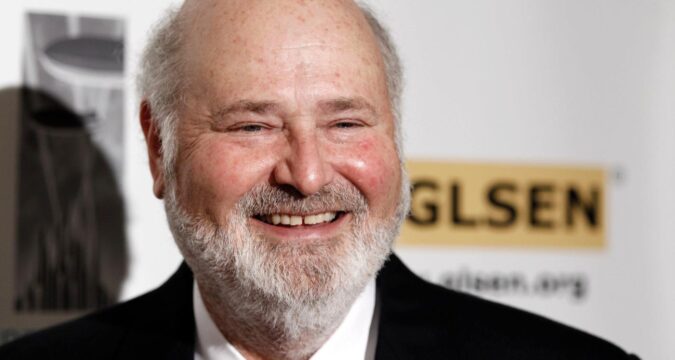
Fuente AP: Encuentran a dos personas muertas en casa propiedad del actor y director Rob Reiner
Por MIKE BALSAMO
LOS ÁNGELES (AP) — Dos personas fueron encontradas sin vida el domingo en una residencia propiedad del actor y director Rob Reiner en Los Ángeles, informó un funcionario de seguridad al tanto de la investigación.
El funcionario habló con The Associated Press bajo condición de anonimato al no estar autorizado a discutir públicamente detalles de la investigación.
El Departamento de Bomberos de Los Ángeles respondió la noche del domingo a un llamado de solicitud de ayuda médica y encontró sin vida a un hombre de 78 años y a una mujer de 68 años.
Reiner fue durante mucho tiempo uno de los directores más prolíficos de Hollywood, y su trabajo incluye algunas de las películas más memorables de las décadas de 1980 y 1990, como “This is Spinal Tap”, “When Harry Met Sally” y “The Princess Bride”.
Su papel como Meathead en el clásico de televisión de la década de 1970 “All in the Family” lo catapultó a la fama.
Cumplió 78 años en marzo, aunque las autoridades no han confirmado las identidades de las personas encontradas sin vida en la casa de Reiner, ubicada en el exclusivo vecindario de Brentwood, en el lado oeste de la ciudad.
Sus representantes no respondieron de momento a mensajes en busca de comentarios.
___
Esta historia fue traducida del inglés por un editor de AP con la ayuda de una herramienta de inteligencia artificial generativa.
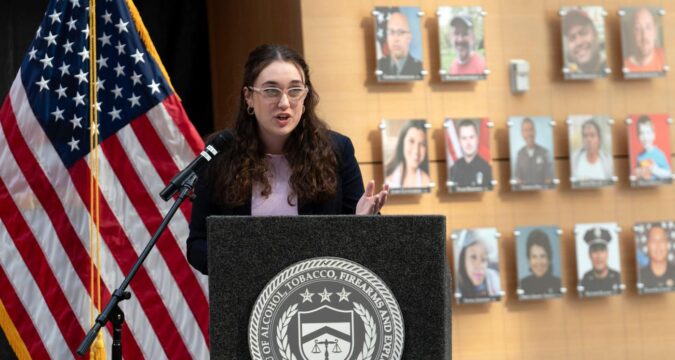
Estudiante de Brown sobrevivió a tiroteo en la secundaria. Luego llegaron las alertas a su teléfono
Por JONATHAN MATTISE
Cuando el teléfono de Mia Tretta, estudiante de tercer año en la Universidad de Brown, comenzó a vibrar con una alerta de emergencia, trató de convencerse de que no podía estar sucediendo de nuevo.
Tretta recibió un disparo en el abdomen durante una masacre escolar en la Escuela Secundaria Saugus, en Santa Clarita, California, en 2019. Dos estudiantes murieron, y ella y otras dos personas resultaron heridos. Tenía 15 años en ese momento.
El sábado, Tretta estudiaba con una amiga en su dormitorio cuando recibió el primer mensaje, el cual advertía de una emergencia en el edificio de ingeniería de la universidad. Algo debió pasar, pensó, pero seguramente no podría tratarse de un tiroteo.
A medida que recibía más alertas, instando a la gente a cerrar sus puertas y mantenerse lejos de las ventanas, algo se le hizo conocido, reviviendo el peor de sus miedos. Para el final del día, dos personas habían sido asesinadas y otras nueve resultaron heridas en un tiroteo que una vez más trastornó un campus.
“Nadie debería tener que pasar por un tiroteo, ya no digamos dos”, señaló Tretta en una entrevista telefónica el domingo. “Y como alguien que fue herida de bala en la escuela secundaria cuando tenía 15 años, nunca pensé que esto era algo por lo que tendría que volver a pasar”.
La experiencia de Tretta refleja la sombría realidad para una generación que ahora está en la universidad: estudiantes que crecieron entre simulacros de tirador activo, sólo para encontrarse con la misma violencia años después en campus que alguna vez parecieron un escape.
En los últimos años, pequeños grupos de estudiantes han tenido que lidiar con más de un tiroteo en distintas etapas de su educación, incluidos sobrevivientes de la masacre en la Escuela Secundaria Marjory Stoneman Douglas en Parkland, Florida, en 2018, quienes más tarde tuvieron que hacer frente a una masacre escolar en la Universidad Estatal de Florida en abril pasado.
Otra estudiante de Brown, Zoe Weissman, publicó en redes sociales que había asistido a la escuela secundaria ubicada a un costado de la escuela de Parkland durante la matanza. Dijo que estaba fuera de la escuela cuando ocurrió el tiroteo, escuchó disparos y gritos, vio a los socorristas y luego vio videos de lo que sucedió.
Ben Greenberg, hijo del alcalde de Louisville, Kentucky, estaba en su clase de biología en la escuela secundaria en 2022 cuando el director lo sacó de clase y dos agentes de policía lo escoltaron para encontrarse con su madre. Ella le contó que su padre acababa de sobrevivir a un intento de asesinato. Un hombre armado había irrumpido en su oficina y abrió fuego, y una bala pasó tan cerca de él que le rasgó el suéter.
Greenberg tuvo constantes episodios de tensión, aterrorizado de que la violencia pudiera arrebatarle a su familia en cualquier momento, dijo. Cuando se mudó a Providence para asistir a la Universidad de Brown, finalmente sintió que podía relajarse un poco.
Ahora de 20 años, Greenberg vive directamente al otro lado de la calle del edificio donde ocurrió el tiroteo del sábado. Él y sus compañeros de cuarto tenían miedo de que el tirador pudiera esconderse en su casa. Montaron una barricada en la parte superior de las escaleras con un mini refrigerador y una estantería, y pusieron botellas detrás de ella, por si alguien lograba derribarla, al menos pudieran ser alertados por el ruido de las botellas. Habló con sus padres por teléfono toda la noche, y ellos podían escuchar el terror en su voz, dijo su padre, el alcalde Craig Greenberg. El intento de asesinato cambió a su familia para siempre, dijo Craig Greenberg. Este tiroteo también lo hará.
“El impacto de la violencia armada va mucho más allá de los individuos que son heridos o asesinados, afecta a familias, amigos, comunidades enteras. Esos impactos son reales, no son heridas físicas, pero son heridas traumáticas”, dijo Greenberg, un demócrata. “Mi esperanza es que eventualmente nuestra nación se una para tomar medidas significativas, incluso si son pequeños pasos al principio, tenemos que hacer algo”.
Después de que Tretta fue baleada en la escuela secundaria, abogó por restricciones más estrictas para las armas de fuego y ascendió a un rol de liderazgo con el grupo Students Demand Action. Su activismo la llevó a la Casa Blanca durante la presidencia Joe Biden, y también se reunió con su ex secretario de Justicia Merrick Garland.
Se ha centrado particularmente en las “armas fantasma”, como la que se usó en su escuela secundaria, que pueden construirse a partir de piezas y dificultan el seguimiento o la regulación de sus propietarios.
Y en Brown, Tretta había estado trabajando en un proyecto sobre el recorrido educativo de los estudiantes que han vivido tiroteos escolares, un tema moldeado por su propia experiencia. El trabajo debía entregarse en unos días.
“Elegí Brown, un lugar que amo, porque sentí que era un lugar donde finalmente podría estar segura y finalmente, ya sabes, ser normal en esta nueva normalidad que vivo como sobreviviente de un tiroteo escolar”, dijo. “Y ha vuelto a suceder. Y no tenía que ser así”.
____
La periodista de Associated Press Claire Galofaro contribuyó con este despacho desde Louisville, Kentucky.
___
Esta historia fue traducida del inglés por un editor de AP con la ayuda de una herramienta de inteligencia artificial generativa.
A New Republican Vision For Health Care
A New Republican Vision For Health Care
Authored by Monique Yohanan via RealClearHealth,
The shutdown dispute offered a clear view into a problem that has shaped federal health policy for more than a decade. The Affordable Care Act (ACA) directs subsidies to insurance companies rather than to individual Americans. Democrats portrayed their position as a defense of middle-class families, but the system of subsidies they have created primarily protects and enhances insurance company profits.
The current ACA framework needs amendment to make structural reform possible. Republicans should state clearly what they are for: real choices for quality medical care that is affordable, secure, transparent, and accessible. There are three systemic reforms that can get us there.
The first reform is this: Americans should have a medical wallet on their phones. Instead of subsidies going to insurance companies, money would go into a medical wallet the patient owns and can directly control. It would resemble a Health Savings Account, but unlike current law, it wouldn’t be restricted to just those with high-deductible insurance plans. Families could use a medical wallet for routine needs or save for later expenses. Ownership changes behavior. People compare prices, judge value, and choose services based on their own priorities. None of this is possible when the subsidies bypass individuals and go directly to insurance companies.
The second reform Republicans should champion is portable coverage. Insurance should be centered around the individual, not the employer or the state. It is about freedom and security. Right now patients have neither. Americans want the freedom to make a fresh start, whether that’s a new job or a move to a new state. To do that, they need the security of stable insurance.
The ACA in its current form has made purchasing private insurance out of reach. Too often workers are stuck in jobs they would otherwise leave because losing employee-provided insurance is simply too risky and expensive. Insurance company subsidies have led to yearly rate hikes for everyone exacerbating the problem. The 9% of the population on ACA plans have been insulated from these price jumps, but the rest of the country has felt the full burden of these increases.
The third reform is essential to the first two (and to any truly functional healthcare system): full and real price transparency. In the 15 years after the ACA became law, people still do not know the exact cost of services before they receive them. Consumers should be able to shop for most medical care, but this currently is impossible. Real prices aren’t available up front, let alone whether those prices reflect high quality, high value care. While the ACA included language to improve price transparency, enforcement has at best been inconsistent. Clear prices are particularly important when consumers control their own dollars and have coverage that lets them act on that information. The Marshall-Hickenlooper bill accomplishes this, and must be a priority for passage.
Republicans have an opportunity to reframe the discussion. Right now the system benefits insurance companies and the middlemen who serve them. It’s time for a reset that puts Americans first. This can happen if we give taxpayers control over dollars intended for their care, offer them insurance that stays with them when their circumstances change, and let them know what they are paying before they receive a bill. These are practical expectations consistent with how every other sector of the economy functions.
Medical Wallet. Portable Coverage. Real Prices Up Front. These principles offer a direct and comprehensible alternative. They shift the debate away from defending a legacy architecture that has only one clear beneficiary – insurance companies – and towards a system that can make coverage affordable for everyone. The shutdown made the choice clear. Policymakers can continue to protect insurer subsidies or they can build a structure that gives people control. They cannot do both.
Monique Yohanan, MD, MPH, is a Senior Fellow for Health Policy at Independent Women.
Tyler Durden
Sun, 12/14/2025 – 22:10
https://www.zerohedge.com/political/new-republican-vision-health-care
Murphy y Fears lideran a Pelicans en victoria 114-104 sobre los Bulls, segunda consecutiva
CHICAGO (AP) — Trey Murphy III anotó 20 puntos con diez rebotes, el novato Jeremiah Fears añadió 20 unidades y los Pelicans de Nueva Orleans superaron 114-104 a los Bulls de Chicago el domingo por la noche.
Los Pelicans, que ocupan el último lugar, ganaron su segundo partido consecutivo tras una racha de siete derrotas, mejorando su récord a 5-22. Han vencido a los Bulls dos veces esta temporada.
Zion Williamson anotó 18 puntos, incluidos siete en los últimos momentos, en su regreso a la alineación para ayudar a los Pelicans a despegarse al final. Jordan Poole sumó 16 para Nueva Orleans, que superó a Chicago en rebotes 53-43 y anotó más puntos en la pintura, 60-46.
Coby White lideró a Chicago con 20 tantos, y Kevin Huerter conectó para 16 desde la banca en su regreso tras una distensión en el aductor izquierdo, mientras los Bulls perdieron por octava vez en nueve partidos.
Nueva Orleans lideraba 76-75 después de tres cuartos. Los Pelicans habían abierto una ventaja de 13 a los 5:14 del tercer cuarto, pero White comenzó a conectar y los Bulls utilizaron una racha de 16-2 para volver al juego.
Chicago tomó una ventaja de tres puntos al inicio del cuarto período. Luego, los Pelicans recuperaron el control, culminado por una volcada de Williamson con 37 segundos restantes.
Williamson, la primera selección del draft de la NBA en 2019, se perdió recientemente cinco partidos por una distensión en el aductor de la cadera derecha. Cuatro lesiones diferentes han limitado al dos veces All-Star a solo 11 partidos esta temporada con los Pelicans.
___
Deportes en español AP: https://apnews.com/hub/deportes