Category: News
Some Carl Sandburg students speak out against a Turning Point USA club
A pilot Club America program at Carl Sandburg High School, part of Turning Point USA, has stirred up an outcry online and brought a few students and one resident to the Orland High School District 230 board meeting Thursday.
But the school board said in a statement it can not deny the rights of students to organize on campus.
Club America is a national movement with more than 1,200 school chapters supported by Turning Point USA, a nonprofit organization founded in 2012 by Charlie Kirk that aims to identify, educate, train and organize students to promote the principles of fiscal responsibility, free markets and limited government, according to its national website.
The program at Carl Sandburg High School has received criticism on social media since its founding, with now over 1,200 petition signatures opposing the program’s existence. But students specifically said Thursday they are concerned with the club’s third-party influence and requirement for students to remain in regular communication with a Turning Point officer.
Several students argued the program’s outside influence violates a section of the Equal Access Act prohibiting people outside a school from directing conduct, controlling or regularly attending activities of student groups.
“Club America not only promotes a one sides agenda but actively speaks out against differing beliefs, which squashes out any ideas of having free thought,” said Kate Kanagy, a junior at Carl Sandburg.
“The students here today standing in front of you, telling you that without a place for every single student to be welcomed and represented and safe within our schools, this group is not an opportunity for free speech but is a forced narrative,” she said.
Kanagy said she would rather have an independent political club without outside influences at her school. She said she is working with school administration on forming a unity club, which she said would be an unbiased club governed by an executive board with diverse political viewpoints, instead of the Turning Point program.
The board issued a statement Thursday and said current law, such as the Equal Access Act, dictates schools cannot deny students’ access to meet on campus. The board also said a school can not disband a club based on the statements of its national affiliate that may create an “unsafe” environment, but only if the students themselves engage in targeted harassment or cause substantial disruption on campus.
“Our role is to support the students’ constitutional rights while upholding the law and maintaining a respectful learning environment,” the board said.
The statement did highlight a point Kanagy mentioned, that while some national organizations provide “club kits” or speakers, the club must remain a student-led group rather than being run by an “outside agent.”
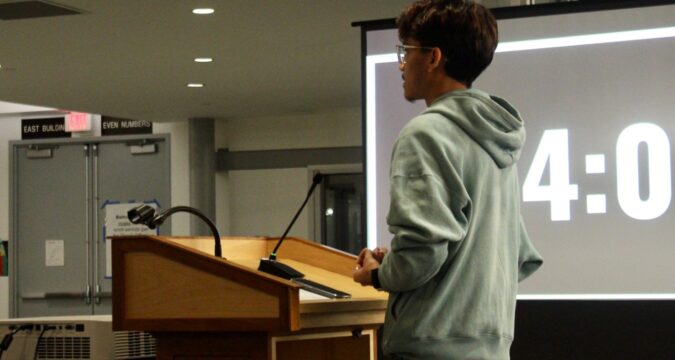
The Orland District 230 board listens Thursday to student criticism of a pilot program at Carl Sandburg High School that’s part of Turning Point USA. (Addison Wright/Daily Southtown)
The board also said a pilot club does not mean the school endorses the viewpoints of the organization.
Board member Tim Danlow spoke in support of the club, congratulating the students who founded it.
“They have taken on a tremendous undertaking of civic discussion and respectful dialogue,” Danlow said. “I have 100% faith in our student body that this club will be a positive opportunity for any who choose to participate and a constructive addition to our school community.”
District 230 board member Tim Danlow congratulates Carl Sandburg High School students Thursday for establishing a pilot program that’s part of Turning Point USA. (Addison Wright/Daily Southtown)
Caesar Gaytan, a Sandburg senior, said the club has made disruptive and hurtful comments toward students and alumni. He said in one instance, club members responded to an alumni’s criticism of one of the club’s posts by threatening to report the commenter to federal immigration enforcement officers.
He said that as a Latino and the president of the Latino Club, the program makes him feel unsafe, especially with the current climate of immigration politics in the Chicago area. He said even though he is graduating this year, he fears the club might increase hatred and division.
“I do not want future freshman and future people coming to Sandburg to feel like they do not belong and that they are not welcome,” Gaytan said.
Gaytan said it took several years to found the Latino Club, and that he is confused how Club America was established at his high school so quickly.
The board statement said a club is designated as a pilot when it is undergoing a probationary period to assess interest and sustainability. To become a pilot, the club needs to meet the requirements set for all student organizations, the board said.
Jennifer Waterman, director of communications, said it is a multiyear process for a pilot program to become an official school-sponsored club, contingent upon sustained student interest and resources.
Gaytan, Kanagy and another student who spoke Thursday, Noah Calhoun, said they met with school administrators regarding their questions and concerns.
But Gayton said a group of students that rallied outside administrative offices a couple weeks ago were given forms to fill out so they could individually talk with guidance counselors.
Gayton said Club America is scheduled to meet in January, and he has already heard a lot of students planning to attend that meeting in opposition, even showing up in their culture’s traditional clothes to represent diversity.
awright@chicagotribune.com
https://www.chicagotribune.com/2025/12/19/carl-sandburg-students-oppose-turning-point-usa-club/

Edmund Ewoldt, Wheaton high school teacher, coach and wrestling expert, dies at 97
Edmund Ewoldt taught biology at Wheaton Community High School, which became Wheaton Central High School, for nearly 30 years. He also was the school’s wrestling coach and then spent a decade as its athletic director.
An encyclopedic knowledge of state high school wrestling and an indefatigable spirit led him to work local and state wrestling tournaments long after he retired. Ewoldt, who sported glasses and crew cuts, later served as the historian for the Illinois Wrestling Coaches and Officials Association. His knowledge helped form the basis of a project aimed at giving state high school athletics officials a better picture of past tournament results.
“He was passionate about wrestling and passionate about people and passionate about taking care of people, and it showed,” said former Wheaton Central High School head wrestling coach John Fuller, who is now a Montana state representative. “Everybody knew it.”
Ewoldt, 97, died of natural causes on Sunday at the Brighton Gardens assisted living facility in Wheaton, said his son, Steve. He had been a longtime Wheaton resident.
Born Edmund Richard Ewoldt in 1928 in tiny Wall Lake, Iowa, Ewoldt graduated from Wall Lake High school in 1945 and enlisted in the Navy. He served in the Navy from 1945 until 1947, including on the USS Frank Knox from 1946 until 1947. He was discharged in mid-1947, and returned to Iowa. He eventually got a bachelor’s degree from the Iowa State Teachers College — now the University of Northern Iowa — in 1954.
From 1955 until 1958, Ewoldt taught high school in Maynard, Iowa. He moved to the Chicago area the following year, when he began teaching biology, ecology and life sciences at Wheaton Community High School, which was renamed Wheaton Central High School in 1964. Ewoldt’s reputation as a teacher was identical to the one he developed as a coach, Fuller said.
“What you saw was what you got, and you knew what to expect,” Fuller said. “He never pulled any surprises. He was straightforward and firm, fair, friendly and honest.”
At Wheaton Central, Ewoldt spent 14 years coaching wrestling, both as an assistant coach and then as a head coach. His teams won conference championships in 1963, 1965 and 1966, and his 1966 squad finished second in the state tournament.
At Wheaton Central, Ewoldt also coached football, soccer, baseball and softball, and he served as Wheaton Central’s athletic director from 1973 until 1983.
After retiring in 1988, Ewoldt stayed active, working unofficially as a wrestling coach at Wheaton Central and at its successor school, Wheaton Warrenville South High School, and also helping to run the state high school wrestling tournament, as well as college tournaments.
“He had incredible personal stamina and determination,” said former Wheaton Central and Wheaton Warrenville South High School Principal Charles Baker. “He retired, but he never left — that was the point. He was there all the time — he would keep the books for wrestling, he would show up for wrestling practice, he unofficially coached. He was everywhere, and there was no question that he was tough, he was determined and he was very much old-school.”
With now-retired Downers Grove South High School wrestling coach Larry Gassen and now-retired West Aurora High School wrestling coach George Dyche, Ewoldt worked at the state wrestling tournament for roughly four decades, Gassen said.
“He had a tremendous memory, and he kept track of all the wrestling results in the state of Illinois,” Gassen said. “He could tell you who the state champions were in which specific year.”
Dyche, who graduated from West Leyden High School in 1962, recalled wrestling against one of Ewoldt’s teams in the early 1960s but then later teaming up with him to try to unearth the results of nearly a century’s worth of Illinois state high school wrestling tournaments.
“The motivator for this project was Ed Ewoldt, and he kept the books as accurate as he possibly could,” Dyche said. “He was an excellent representative for the sport of wrestling, and he was instrumental in waking me up to the fact that we want to continue honoring the people who have come before us. He has been a hero of mine for a long period of time.”
Al Sears, a Wheaton Central graduate and four-time All-American wrestler at Southern Illinois University at Edwardsville, pointed to Ewoldt as an important, moderating influence on him. Sears went on to teach and coach wrestling in Belleville.
“He kept me in line, and he was a friend when we’re joking around, and he also was a coach — he did it all. He wore so many hats,” Sears said. “He was just good to be around. He helped me in every aspect of my life.”
Ewoldt served as chairman of the Illinois Wrestling Coaches and Officials Association’s Hall of Fame, into which he was inducted in 1975. He also was inducted into the National Junior College Wrestling Hall of Fame in February 1992.
In 1999, Wheaton Warrenville South High School renamed its wrestling gym after Ewoldt. He was inducted into that school’s Athletic Hall of Fame in 2011.
A former student, Ron Magruder, in 1992 endowed a $120,000, perpetual wrestling scholarship at Ewoldt’s alma mater, the University of Northern Iowa.
“I feel so great someone would think about doing this, particularly in the sport I love,” Ewoldt told the Tribune in 1992. “It’s just rewarding to think a student would do this. A lot of people pat you on the back and shake your hand, but you’re never sure if they mean it or not.”
Wheaton Warrenville South High School now hosts a wrestling tournament called the Ewoldt Invitational in his honor.
Ewoldt also was a longtime member of the board of Wheaton’s Center for History.
His wife of 46 years, Nancy, died in 2006. A daughter, Karen, died in 1992, and a son, Kurt, died in 2023. Ewoldt is survived by two other sons, Eric and Steve; five grandchildren; and three step-grandchildren.
A visitation will take place from 1 to 5 p.m. Dec. 28 at Hultgren Funeral Home, 304 N. Main St., Wheaton. A funeral service will take place at 10:30 a.m. Dec. 29 at Gary United Methodist Church, 224 N. Main St., Wheaton.
Goldsborough is a freelance reporter.
https://www.chicagotribune.com/2025/12/19/edmund-ewoldt-wheaton-wrestling-coach/

Regime Change Accomplished: Trump Officially Repeals ‘Caesar’ Sanctions On Syria
Regime Change Accomplished: Trump Officially Repeals ‘Caesar’ Sanctions On Syria
Syria is celebrating after President Trump signed a law on Thursday officially repealing the brutal economic sanctions imposed on the country under legislation known as the Caesar Act, which was designed to topple the government of former Syrian president Bashar al-Assad.
The sanctions have for many years effectively strangled millions of innocent people, and even impacted access to medicines, hospital equipment, fuel, and unleashed runaway inflation – sending prices for basic staples like eggs and meat soaring.
Sanctions have been on Syria going all the way back to the 1970s, with more piled on over the decades, especially after 2011, and then the most far-reaching, the Caesar sanctions, took effect in 2019 at a time that Assad was winning the war.
Coupled with the sanctions was a long-running CIA and Gulf-spearheaded proxy war, which flooded jihadist groups with weapons and cash – all for the sake of eventually installing a more pliant client ruler.
Now, one year after Washington accomplished its regime change, and with Bashar al-Assad in Moscow, has Washington chosen to remove the sanctions.
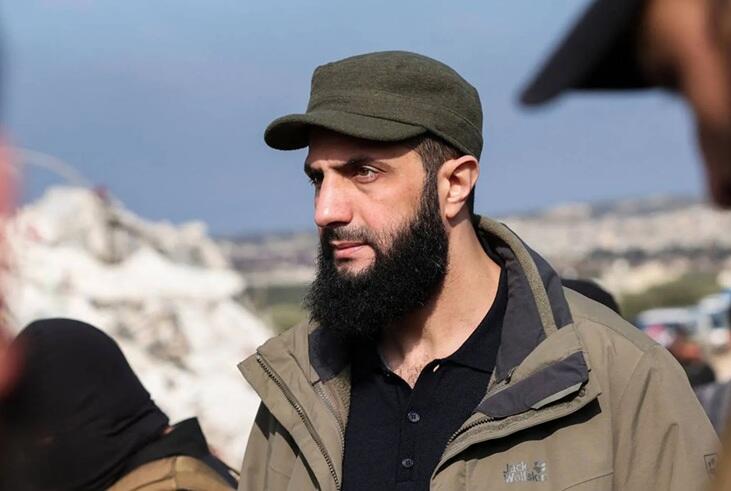
As Beirut-based The Cradle observes, “Trump removed the sanctions in an effort to help Syria’s new government, led by former Al-Qaeda commander Ahmad al-Sharaa, to attract foreign investment, foster economic growth, and rebuild infrastructure after 14 years of war.”
Some Congressional leaders are still calling for strict monitoring of the new Sharaa regime’s behavior, especially following prior months of massacres of Syrian Alawites, Christians, and Druze:
More than 100 House Republicans are demanding increased oversight of Syria as the U.S. prepares to repeal longstanding sanctions against the country.
Reps. Josh Brecheen, R-Okla., and Marlin Stutzman, R-Ind., are leading 134 fellow GOP lawmakers in calling for guarantees that the Syrian government will adhere to terms in the National Defense Authorization Act (NDAA) that set the stage for repealing those sanctions, while warning the U.S. needs to be prepared to reverse that if Syria falters on its progress.
“Many Members of Congress, committed to seeking peace, prosperity, and tolerance for religious minorities in the region, worked with the Trump Administration and House leadership to secure assurances that snapback conditions regarding the repeal of Syrian sanctions would be enforced if Syria does not comply with the terms highlighted in the repeal language,” their joint statement read.
Already, American and Gulf countries have signed deals with the new rulers in Damascus for oil and gas exploration, as well as rebuilding port infrastructure.
Syria’s Al-Sharaa THANKS Trump as country marks first day ‘FREE OF SANCTIONS’ pic.twitter.com/0nYNYkYnqX
— RT (@RT_com) December 19, 2025
“Lifting the sanctions was the frontrunner in our mission to revive Syria’s economy,” Abdulkader Husrieh, Syria’s central bank governor, said Friday in reaction to the news. “What has happened is nothing short of a miracle.”
Tyler Durden
Fri, 12/19/2025 – 17:20

Visiting the Trevi Fountain now will cost more than just a coin toss with a 2-euro tourist fee
ROME — Tourists visiting the Trevi Fountain are now going to pay more than just the legendary coin toss over their shoulder to get the Instagrammable selfie in front of one of the world’s most celebrated waterworks.
Starting Feb. 1, the city of Rome is imposing a 2-euro fee for tourists to get close to the fountain made famous by Federico Fellini’s “La Dolce Vita” during prime-time daylight hours. The view for those admiring the late Baroque masterpiece from the piazza above remains free.
The tourist fee announced Friday is part of the Eternal City’s efforts to manage tourist flows in a particularly congested part of town, improve the experience and offset the maintenance costs of preserving all of Rome’s cultural heritage. Officials estimate it could net the city 6.5 million euros extra a year.
The fee, which has been discussed and debated for more than a year, follows a similar ticketing system at Rome’s Pantheon monument and the more complicated tourist day-tripper tax that the lagoon city of Venice imposed last year in a bid to ease overtourism and make the city more liveable for residents.
In such cases, city residents have been exempt from the fees. The same holds true at Trevi, while the tourist tax and new 5-euro (nearly $6) tourist ticket fee for some city museums is being rolled out in conjunction with a plan to broaden the number of museums that are free for registered Roman residents.
“We believe that culture is a fundamental right of citizenship,” Rome Mayor Roberto Gualtieri told a news conference. “We think it’s correct and positive that the citizens of Rome can enjoy our museums free of charge.”
At the same time, he said, the 2-euro Trevi tourist fee is a minimal amount that shouldn’t discourage visitors, but rather allow for a more organized visit. The city decided to impose it after seeing positive results already from a yearlong experiment to stagger and limit the number of visitors who can reach the front basin edge of the fountain by imposing lines and an entrance and exit pathway.
So far this year, around 9 million people have waited in line to get that close-up visit, with some days as many as 70,000 passing through, Gualtieri said. That system now becomes permanent from 9 a.m.-9 p.m., with the fee to be paid by nonresidents. Visitors can either pay in advance online, while waiting in line or by buying tickets at tourist locations around town.
After nightfall, access is open and free.
Pope Urban VIII initially commissioned the fountain in 1640. In 1730, Pope Clement XII revived the project and the current fountain corresponds to the original designs of Roman architect Nicola Salvi.
The towering fountain features at the Titan god flanked by falls cascading down the travertine rocks into a shallow turquoise pool, where Marcello Mastroianni and Anita Ekberg famously took their nighttime dip in “La Dolce Vita.”
While bathing is prohibited nowadays, legend has it that visitors who toss a coin over their shoulders and make a wish will return to Rome.
https://www.chicagotribune.com/2025/12/19/trevi-fountain-fee/
Lake Forest Caucus officials schedule a second vote on proposed bylaw changes
Lake Forest Caucus officials have scheduled a second vote on a proposed bylaw change that would allow members to vote electronically.
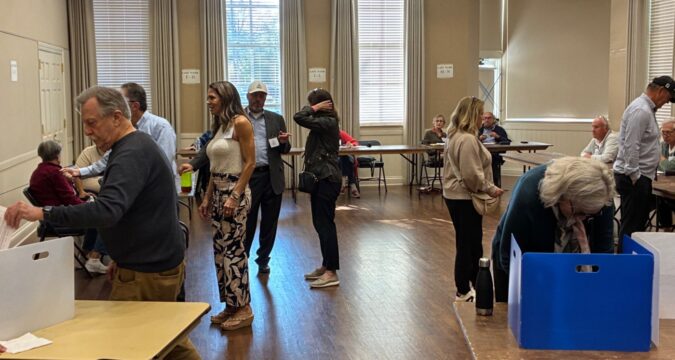
After the measure narrowly failed last October, the Caucus will again ask members to approve the change on Jan. 24. The vote will be held on a weekend day and includes revisions to the proposed amendment.
Caucus leadership has advocated for updating voting procedures to permit members to cast ballots electronically using devices such as phones or tablets. Under current rules, voting is limited to in-person participation.
In October, 427 members voted in favor of the change while 244 voted against it. However, Caucus bylaws require a two-thirds majority for approval, leaving the proposal 21 votes short.
Caucus leaders believe the measure would have passed on Oct. 14 if not for widespread delays on Metra that afternoon, which affected the entire commuter rail system and prevented some members from arriving at the Gorton Center in time to vote.
Caucus President Regina Etherton said she heard from numerous members who were upset that they were unable to participate.
“For two days I heard from people who were angry they didn’t get to vote,” Etherton said. “The issue is that people were deprived of voting on it. Whether they were yes or no, that isn’t the way Lake Forest is supposed to work.”
To address concerns about a repeat of the train delays, Caucus leadership moved the vote to a Saturday, with voting scheduled from 8 a.m. to 5 p.m at the Gorton Center.
“People said they want to be there and don’t want to run into the same issue,” Etherton said. “Do it on a Saturday so we know we won’t have this interference.”
Holding the vote in January could still affect turnout, as winter weather may deter participation and some residents may be away at second homes in warmer climates. Etherton said, however, she has heard from many residents who support the change.
“I understand that some people will be gone,” she said, “but it is much easier for people — particularly those with children and varied schedules — to find five minutes on a Saturday to come and vote.”
Ahead of the vote, some residents raised concerns about the wording of the amendment and how future voting would be conducted.
The revised proposal includes language changes intended to clarify that in-person voting would remain available, with electronic voting offered as an additional option.
“We didn’t want confusion going forward,” Etherton said.
The version of the amendment to be voted on in January states that “in-person voting shall be made available.”
However, John Trkla, co-founder of Lake Forest For Transparency, said the revised language still falls short.
“If they want to be clear, why not just say that in-person voting must or will always be there?” Trkla said. “But they choose not to do that.”
If the bylaw change is approved, Etherton said the Caucus has received two bids from vendors to implement an electronic voting system.
The Lake Forest Caucus was founded in 1935 and plays a central role in local governance by vetting residents interested in serving on boards and commissions. Candidates endorsed by the Caucus often run unopposed in municipal elections.
Daniel I. Dorfman is a freelance reporter for Pioneer Press.
https://www.chicagotribune.com/2025/12/19/lake-forest-caucus-second-vote-bylaw-changes/

Potempa: Madrigal dinners are rare opportunities for fun, feasting
At one time around the start of my newspaper writing career in 1991, Christmas madrigal dinners and concert feasts were fairly common, especially on college campuses.
From my own experience, my first recollection of “the royal treatment” while toasting the holidays was when I attended Valparaiso University from 1988 to 1992.
Students at St. Mary’s College at Notre Dame hoist the poles for a heavy-handled cauldron of “warm wassail punch,” adorned with floating spices and citrus fruits, during a fanfare processional at the 53rd annual madrigal dinner on Dec. 7, 2025. (Phil Potempa/Post-Tribune)
The first madrigal dinner at VU was held in 1977, a decade before my own arrival as a student on campus. Hosted in the “Great Hall” of what was then the previous student union building on the VU campus, it consisted of a multi-course feast accompanied by much fanfare by processionals of “lords and ladies of the manor.”
Musicians ranging from student masters of the harpsichord, lute and mandolin set the evening’s lit by candlelight tone as trumpeters blaring their notes signaled the arrival of each new course being served. Court jesters teased and taunted guests, while other entertainers such as jugglers, acrobats and fire-eaters captivated the entire royal court assembled in an elegant yesteryear era atmosphere decorated with fresh pine boughs, garlands, and large looming tapestries along every wall.
These exquisitely themed — but very labor intensive — dinners take their name “madrigal” from the medieval term which describes short songs originally performed without music incorporating several voices to share a tuneful, bright tale or story. Researchers say the first madrigals were performed “spontaneously” and only later, by the 16th and 17th centuries, were they written down.
The Italians are credited with first bringing madrigal songs to England in the 16th century as a popularized type of private entertainment presented at court in castles or at private country estates of the nobility.
Students at St. Mary’s College at Notre Dame dressed as “serving wenches” hoist the poles for a presentation platter featuring a head of roasted boar adorned with citrus fruits, cherries and floral accents during the 53rd annual madrigal dinner on Dec. 7, 2025. (Phil Potempa/Post-Tribune)
Our American incarnations of madrigal dinners are believed to have first started on college campuses in student unions after a group of eight Tudor student singers hosted a dinner at the University of Wisconsin in 1933. When one of the eight singers transferred to Indiana University, he decided to organize a madrigal dinner five years later.
Unfortunately, VU ceased hosting its madrigal dinners in 2003. Over the decades, my parents, as well as dinner years when we were joined by our farm neighbor friends the Scamerhorns, deemed the annual madrigal dinners (which always sold out quickly) a wonderful way to welcome the holiday season. In later years, I’d host a table and invite my reporter and editor friends from the newsroom to join us.
At the height of popularity, the VU madrigal dinners had to nightly prepare as many as 300 Cornish game hens, 50 pounds of carved ham with raisin sauce, and 10 gallons of warm wassail punch to satisfy appetites.
Chesterton High School began their madrigal dinners about the same time at Valparaiso University and in recent years, the dinners have been limited to just one weekend. This December’s event on Dec. 5-7 marked the school’s 53rd Annual Madrigal Dinner with the usual sold-out attendance. Other area high schools — including my own North Judson-San Pierre High School as well as Wheeler High School in Valparaiso and Highland High School — have all tried hosting madrigal dinners that lasted for several years.
St. Mary’s College in Notre Dame has been hosting Christmastime madrigal dinners for more than half a century. It had been at least 25 years since I attended their wonderful event. Earlier this month, I took a group of friends to feast at St. Mary’s 53rd Annual Madrigal Dinner, and it was just as memorable as I anticipated.
It was a welcome surprise to see Nancy Menk, chair of the music department for St. Mary’s, still waving her baton in full middle ages gown regalia as the coordinator for the annual madrigal dinner, just as she had been when I last attended a quarter of a century ago.
Menk led the 100-plus, all-volunteer member Northwest Indiana Symphony Chorus since 1998 before retiring in 2022. I shared the same loud applause and ovations for Menk as I did for student Abigail Wojtaszek, from Hammond and a graduate of Bishop Noll Institute. Wrapped in royal garb, Abby, who is a junior this year at St. Mary’s, performed as one of the actors during the dinner’s narrative tale.
I also lifted more than just one mug of wassail to toast all of the talent bowing before myself and the other appreciative guests sharing that Dec. 7 delicious menu gathered on the St. Mary’s campus.
Wassail is a very simple warm holiday punch to whip up. It is key to strike a balance for the spices tossed in as key flavor ingredients for the holiday cup of cheer.
Columnist Philip Potempa has published four cookbooks and is a weekly radio show host on WJOB 1230 AM. He can be reached at PhilPotempa@gmail.com or mail your questions: From the Farm, P.O. Box 68, San Pierre, IN 46374.
Madrigal Dinner Warm Wassail Punch
Serves 12
2 cups apple juice
3 cups cranberry juice
1.4 ounce whole cloves
1 stick of cinnamon
1 traditional teabag, which as Earl Grey
Directions:
1. In a large cooking pot, combine apple and cranberry juices.
2. Gather the spices together, along with the tea bag, and place in pouch of cheesecloth or a clean coffee filter and tie the opening tight to create a spice sachet.
3. Bring this mixture to a boil and cook for 2 minutes. Remove from heat and allow to cool to warm before serving.

Timeline: The Sabotage Of The Clinton Foundation Investigation
Timeline: The Sabotage Of The Clinton Foundation Investigation
Authored by Techno Fog via The Reactionary,
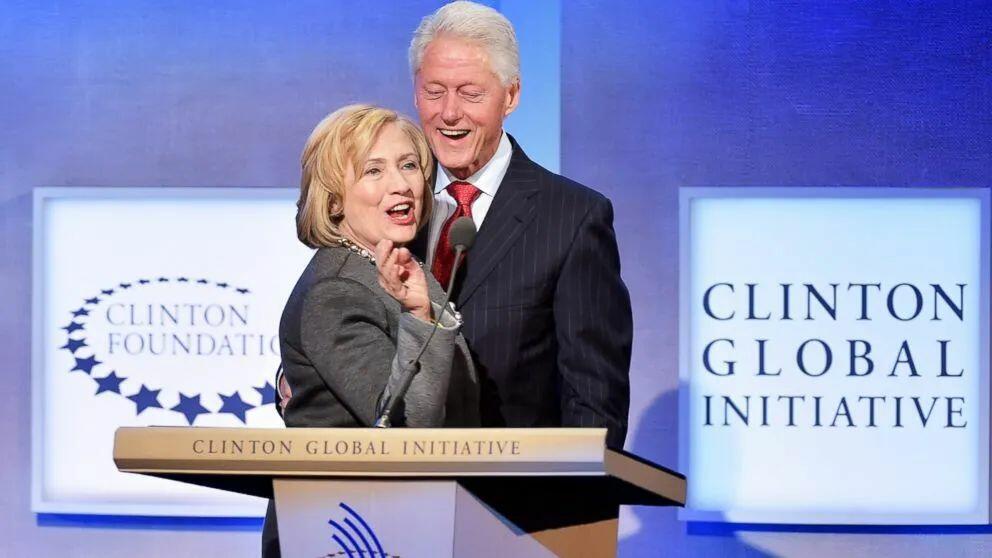
This week, Senator Chuck Grassley released Department of Justice and FBI records that provide a new look on how FBI and DOJ leadership sabotaged the investigation into the Clinton Foundation.
These records, which include internal emails, summaries of high-level meetings and calls, and intelligence from confidential human sources, reveal the Clinton Foundation investigation was sabotaged from the start.
During the Obama Administration, both DOJ and FBI leadership were openly hostile to the investigation. US Attorneys declined to cooperate, denying requests for subpoenas or other investigative support. And during the first Trump Administration, actors within the FBI and DOJ obstructed and delayed the development of the investigation by not approving the release of FBI materials and slowing the release of witness interviews to investigators. A frustrating tale of corruption and incompetence.
Relying on these new documents, as well as other public source materials and Special Counsel John Durham’s report, here is the comprehensive timeline of the Clinton Foundation investigation, as well as other parts of the overall Clinton corruption investigation that are relevant. It is an infuriating tale of corruption and incompetence from the highest levels of government which ultimately protected the Clinton’s schemes to trade on their political influence for millions of dollars.
Let’s get into it.
2010: Predication to investigate the Clinton Foundation is established. A call between Sant Singh Chatwal and foreign donors about giving to Hillary Clinton is monitored by the FBI. Chatwal is a wealthy NYC magnate and longtime friend of the Clintons. He served on the Clinton Foundation board and was a Clinton Foundation donor, as well as a Democratic fundraiser.
2014: “Beginning in late 2014, before Clinton formally declared her presidential candidacy, the FBI learned from a well-placed CHS that a foreign government was planning to send an individual to contribute to Clinton’s anticipated presidential campaign, as a way to gain influence with Clinton should she win the presidency.”
An FBI field office sought FISA coverage of the foreign person who would contribute to Hillary’s campaign. They sought expedited approval of the FISA application from FBI headquarters, who let the application linger “for approximately four months” because FBI headquarters was “scared with the big name Clinton involved”, as she may be the next President.
The FISA was approved on the condition that Clinton and her campaign be given a defensive briefing. The logic behind the defensive briefing was that “the investigation might interfere with a presumed future presidential campaign.” In other words, they didn’t want to spoil Hillary’s chances.
2015: Through a CHS, the FBI learns of another foreign government seeking to influence the Hillary Clinton campaign. The foreign government’s plan is to set up a meeting with Clinton to propose campaign contributions in exchange for the protection of the foreign government’s interests should Clinton become president.
The FBI learns that this CHS – a foreign national – made a $2,700 campaign contribution through another party, in violation of federal law. The FBI further learned through the CHS that the Clinton campaign was “aware” of the contribution and “okay” with it. Yet the FBI does not document the illegal contribution in its records and the handling agent instructed the CHS to “stay away from all events relating to Clinton’s campaign.”
2015: The FBI’s Washington Field Office takes notice of corruption by the Clinton Foundation, which was thoroughly documented by Peter Schweizer’s “Clinton Cash.” They hold a meeting with the DOJ to discuss the potential for an investigation.
January 2016: The New York FBI field office and the Washington FBI Field Office open preliminary investigations into the Clinton Foundation. The Little Rock Field Office opens a full field investigation.
The Little Rock and New York FBI field office investigations “included predication based on source reporting that identified foreign governments that had made, or offered to make, contributions to the Foundation in exchange for favorable or preferential treatment from Clinton.”
January 2016: FBI leadership told the field offices to “not take any investigative steps until the matter was discussed with DOJ.”
January 22, 2016: The FBI New York field office submits case opening regarding Clinton Foundation and Clinton/Giustra Enterprise Partnership.
January 27, 2016: FBI little Rock requests full investigation regarding the Clinton Foundation and Giustra Enterprise Partnership; Uranium One; Frank Giustra; and Ian Telfer.
January 29, 2016: The FBI Washington Field Office makes a request to Main Justice to open a preliminary investigation on the Clinton Foundation. The US Attorney’s Office for the District of Columbia and the Public Integrity Section (PIN) and the DOJ “support the initiation of a preliminary investigation.”
February 1, 2016: Andrew McCabe is appointed FBI Deputy Director.
February 2016:
The Washington Field Office briefs the DOJ, who “indicated they would not be supportive of an FBI investigation.” Records indicate that the DOJ implied the investigation was only “based on open source reporting and fishing through a book,” though the truth was that the FBI had Suspicious Activity Reporting and their own investigative work at the time.
The DOJ’s reaction to the briefing was “hostile.”
The three FBI field offices – New York, Washington DC, and Little Rock – are informed that investigative steps would require approval of FBI Deputy Director Andrew McCabe. They are further instructed “not to open or recruit any new confidential human sources, and no additional overt investigative steps were authorized.”
Discussing the Clinton Foundation investigation, Deputy Attorney General Sally Yates tells the Eastern District of Arkansas to “shut it down.”
February 17, 2016: McCabe was informed of a New York confidential human source who had possible information on the Clinton Foundation. McCabe directed that “no overt investigative steps” be taken on the Clinton Foundation investigation without his approval.
February 22, 2016: Deputy Director McCabe chairs an FBI headquarters meeting to discuss the Clinton Foundation investigations. McCabe initially directed the field offices to close their cases, but agreed to reconsider after the offices voiced their objections. McCabe was visibly “annoyed” and “negative” and “angry” at the meeting, asking “why are we even doing this?” McCabe then instructed that his approval was required for any overt steps.
February 24, 2016: Lisa Page and Peter Strzok exchange these emails regarding the investigation into Hillary Clinton’s email server while she was Secretary of State:
Page: One more thing: [Clinton] may be our next president. The last thing you need [is] going in there loaded for bear. You think she’s going to remember or care that it was more doj than fbi?
Strzok: Agreed . . .
March 2016: The Eastern District of New York is given permission by the DOJ to meet with a cooperating witness “to review transcripts of the recording between the cooperating witness and an individual associated with the Clinton Foundation.”
May 2016: The New York field office receives a call from FBI headquarters on behalf of Director Comey, instructing them to “cease and desist” from the Clinton Foundation investigation.
June 7, 2016: Hillary Clinton clinches the Democratic presidential nomination.
July 2016: Deputy Director McCabe tells the Eastern District of Arkansas to “shut it down.” A collateral investigation into the Clinton Foundation is “walled off” at the instructions of McCabe.
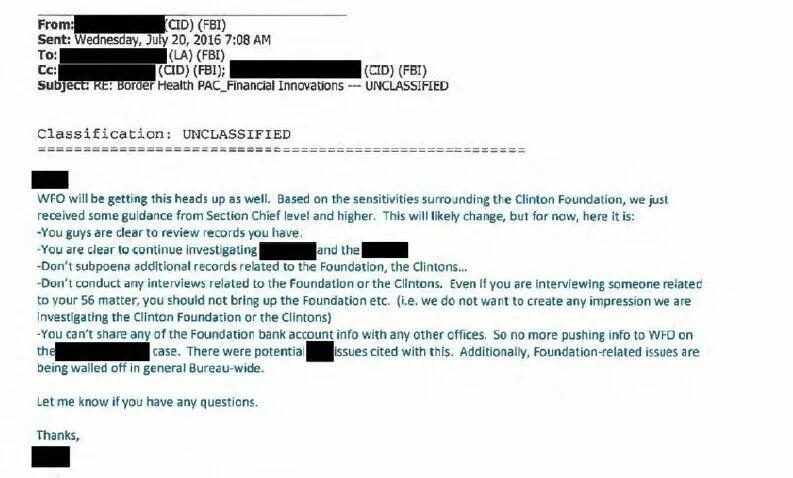
July 20, 2016: FBI emails document FBI leadership’s instructions to hold off on the Clinton Foundation investigation:
“Don’t subpoena additional records related to the Foundation, the Clintons…”
“Don’t conduct any interviews related to the Foundation or the Clintons.”
“We don’t want to create any impression we are investigating the Clinton Foundation or the Clintons”
August 1, 2016: The FBI makes the decision to consolidate the Clinton Foundation investigation into the New York Field Office due to its existing confidential human source and because “the majority of Clinton Foundation operations were based out of New York City.” At this time, the “FBI NYO was advised no overt investigation action was to take place unless authorized by Deputy Director McCabe.”
August 2016: The Eastern District of New York informs the FBI New York Field Office that it “would not support the investigation.” The New York Field Office reaches out to the Southern District of New York, which states “more than likely the decision will be not to proceed.” At this time, New York FBI agents had requested subpoenas for financial documents from several financial institutions.
August 25, 2016: FBI New York conducts interviews (number unknown) for a corruption probe related to Haiti. The subjects included Anthony Rodham (Hillary’s brother), Cheryl Mills (high level Hillary advisor), and the Clinton Foundation.
September 1, 2016: McCabe informs the Eastern District of New York (to whom the financial subpoenas had been requested) that there be “no overt action” on the Clinton Foundation investigation.
October 23, 2016: The Wall Street Journal breaks a story concerning donations from Terry McCauliffe-affiliated political action committees to the Virginia state senate campaign of Andrew McCabe’s wife.
October 25, 2016: There is a top-level FBI discussion which included McCabe where it is agreed that no subpoenas will be issued concerning the Clinton Foundation until after the election.
October 28, 2016: Director Comey informs Congress that the FBI discovered additional Clinton-related emails in the Weiner investigation. Also in the fall of 2016, FBI headquarters will refuse to allow Clinton Foundation investigators to review these emails or coordinate with the Midyear Investigation (the Hillary Clinton email investigation).
November 1, 2016: McCabe sends an email recusing himself from the Clinton Foundation investigation.
November 8, 2016: Donald Trump is elected President.
And then things get really interesting! Click here to subscribe and read the rest.
Tyler Durden
Fri, 12/19/2025 – 17:00
https://www.zerohedge.com/political/timeline-sabotage-clinton-foundation-investigation
Orland Park halts broadband installation, citing negative experiences by residents
Orland Park temporarily stopped all broadband installation after residents reported unsafe work that included a recent power outage.
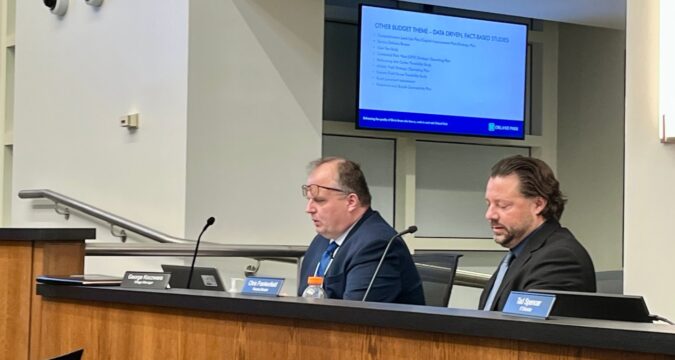
The Village Board determined it needed more regulatations on installation by contractors including Astound, a corporation that says it installs high-speed internet around the country.
The Illinois 2019 broadband investment program made $400 million in matching grants available to internet service providers for fiber optic construction throughout the state. Providers are under state regulation but receive permits from individual municipalities to complete the work.
Mayor Jim Dodge said Astound is working to build a fiber optic grid across Orland Park, dividing the village into zones. As part of the installation process, the company drills horizontally to lay pipe underground, disrupting residential areas.
“What they’re trying to do is hard,” Dodge said. “And everybody appreciates that this could be great for the residents when everything is done and constructed.”
But Dodge said the village has faced complaints from residents about installation leading to property damage, potholes, work outside of permitted hours and most recently, utility hits that created a power outage for about 300 homes lasting up to 10 hours.
Village Manager George Koczwara said Astound asked the village to allow it to finish fiber optic installation in the Cataline subdivision this winter, which has been permitted as the past several winters have been mild. But more snow this year created difficult conditions as workers were unable to see markers telling them where to drill, Koczwara said.
Orland Park Village Clerk Mary Ryan Norwell takes the oath of office May 5, 2025. (Troy Stolt for the Daily Southtown)
Village Clerk Mary Norwell said the power outage hit her home on a 20-degree day with snow on the ground, which was especially difficult on her husband, who is disabled.
“It was terrible in our house,” Norwell said. “It was warm for about the first hour and then it proceeded to get worse throughout the day.”
Norwell said Astound failed to reach out to her or her neighbors to notify them of the power outage and explain what happened.
Joe Bell, Astound vice president and general manager for Illinois and Indiana, said Friday the company reached out to Comed immediately after discovering its workers hit a power line. It had no way of knowing how many residents were affected by the power outage or how long the outage would last, he said.
Bell said the company is one of several installing fiber optic in Orland Park and prides itself on following strict standards.
“It was very surprising” to see the village’s news release Dec. 12 that listed other issues that needed to be addressed before resuming construction, he said.
“Of course, things can happen, but based on our strict standards and our local folks that are on the ground every day managing the build, that would not be us in terms of contractors being our there after work hours, out of uniform, not ID’d and badged,” Bell said.
Orland Park plans to allow for construction to resume after the board updates ordinances to give the village “more teeth” in its dealings with fiber optic companies like Astound, Koczwara said.
“At the end of the day, this is going to be very good for residents when they have additional high-speed internet access, but we’re limited in how much we can regulate,” Koczwara said.
“A lot of these companies are very aggressive — they want to get these things done as fast as possible,” he said. “So sometimes they overextend themselves when they’re moving at such a quick pace.”
Koczwara said the village plans to restrict the number of simultaneous active construction zones and require companies to directly inform residents of work that affects them.
Bell said Astound welcomes the village implementing stricter standards and encourages people who are concerned about their practices reach out to the company.
ostevens@chicagotribune.com
https://www.chicagotribune.com/2025/12/19/orland-park-halts-broadband-installation/

‘Patriot Games’: UFC Fight At White House To Celebrate America’s 250th Anniversary
‘Patriot Games’: UFC Fight At White House To Celebrate America’s 250th Anniversary
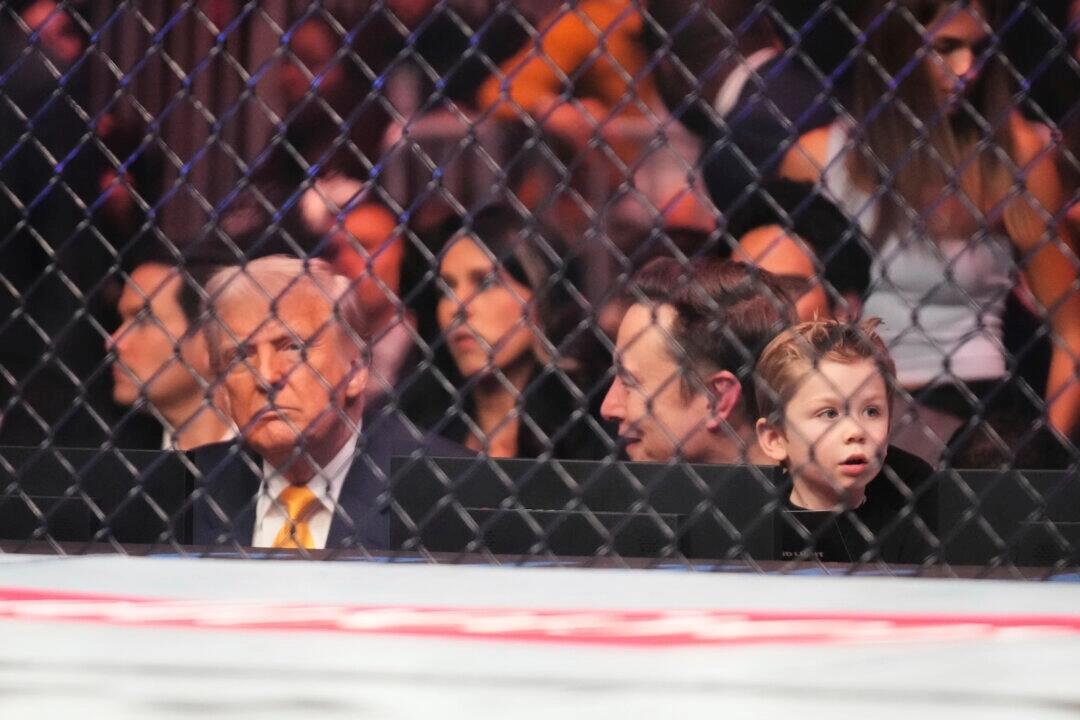
President Donald Trump announced on Dec. 18 that an athletic contest and a UFC fight will occur next year in honor of America’s 250th birthday.
The “Patriot Games” will span four days, featuring high school athletes – a male and a female from each state and territory, the president said.
He did not go into details as to what would be played or where.
Trump said that the men and women will compete separately.
“I promise there will be no men playing in women’s sports. You’re not going to see that. You’ll see everything but that.”
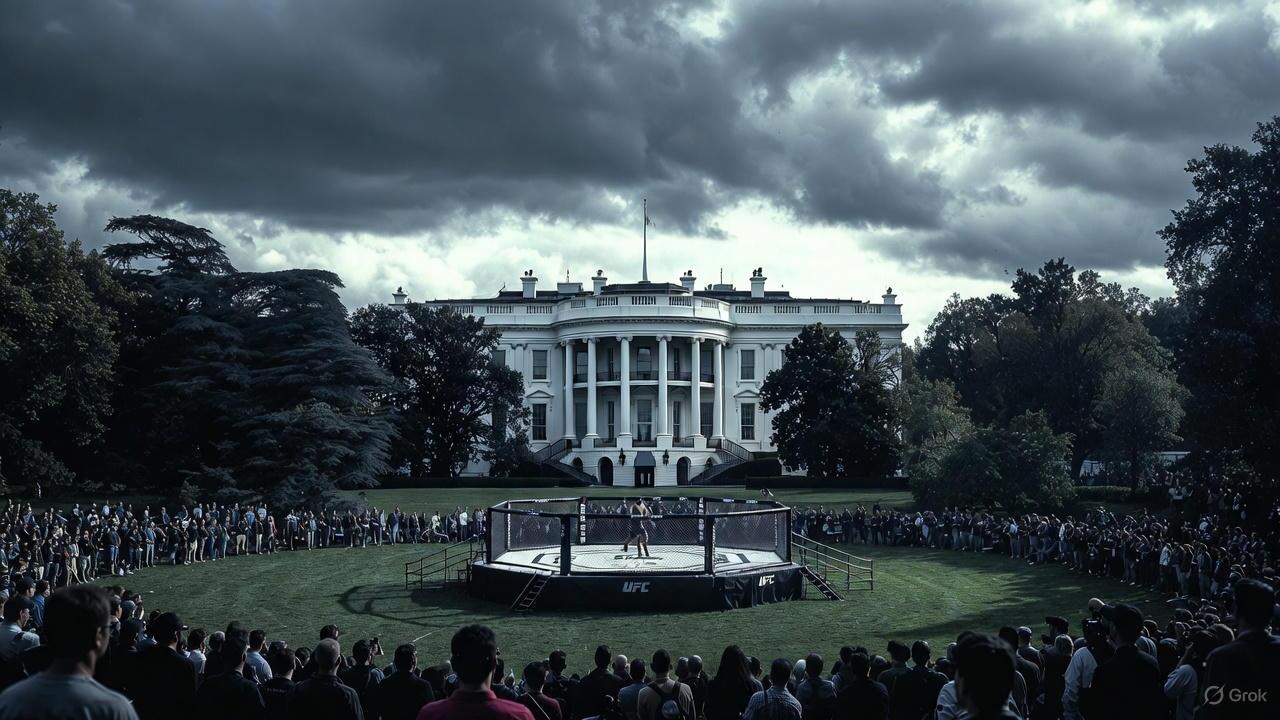
As Jackson Richman reports for The Epoch Times, the UFC fight will be at the White House on June 14, 2026.
“It’ll be the greatest champion fighters in the world all fighting that same night,” said Trump, noting that UFC CEO and President Dana White will be the host.
“And it’s going to be something special.”
Trump is a huge UFC fan and is a close friend of White.
He has been to numerous events, including one after winning the 2024 election.
The South Lawn at the White House will be the venue for the fight.
The Ellipse, across from the White House, might have jumbo screens for more people to watch.
The competitors have not been announced.
A press conference and the fighters’ weigh-ins will be at the Lincoln Memorial.
Other events to celebrate the 250th milestone include a state fair on the National Mall, a Memorial Day parade, and a national prayer event to “rededicate our country as One Nation Under God,” Trump said.
“We’re not changing that. A lot of people would like to see it. It’ll never happen,” he said.
Trump also announced a Fourth of July celebration called a “Salute to America” consisting of a presidential address, military flyover, and fireworks.
Additionally, the Washington Monument will be lit every night through Jan. 5.
Tyler Durden
Fri, 12/19/2025 – 16:40

Lake Historical Society packs up more than a century of memories
How do you move museum treasures that contain valuable history lessons and priceless memories of a bygone day in Lake County?
One piece at a time and very carefully but always keeping in mind a deadline of Dec. 31 when everything will have to be removed, Diane Gora said.
Signs and a chair await boxing up as volunteers pack up the Lake County Historical Society in downtown Crown Point on Tuesday, Dec. 16, 2025. (John Smierciak/for the Post-Tribune)
Gora serves as executive director at the Lake County Historical Society Museum. Earlier this week, Gora, board secretary Sharon Nault and volunteer Pat Putigna were busy putting items into large crates and moving boxes that will be moved to a storage facility located in Crown Point.
Gora remains hopeful that a new home will be found for all the items that were being moved temporarily to the storage facility.
“New things are good. I’m optimistic that we’ll find a new home. It’s exciting,” Gora said.
She added: “I’d definitely be more excited if we definitely had a place.”
John Dillinger memorabilia awaits securing as volunteers pack up the Lake County Historical Society in downtown Crown Point on Tuesday, Dec. 16, 2025. (John Smierciak/for the Post-Tribune)
All three women said that they are sad to be leaving, but a new location might be a good thing since the numerous steps leading to the museum in the Old Lake County Courthouse are difficult for the elderly and those with disabilities.
Plus, the two-hour parking restrictions, put back in place by the city earlier this year, make it difficult for those wanting to come to visit the museum for extended periods of time.
All agreed that moving out of the courthouse is certainly bittersweet.
“It won’t be the same,” Putinga said.
Diane Gora, Executive Director of the Lake County Historical Society, goes through some old record books as volunteers pack up the museum’s contents in downtown Crown Point on Tuesday, Dec. 16, 2025. (John Smierciak/for the Post-Tribune)
The museum, housed in 4,000 square feet on the second floor of the Old Lake County Courthouse in downtown Crown Point, was jammed with items that go back to the 1800s when both Crown Point and Lake County were in their infancy.
Those museum treasures include a circa mid-to-late-19th century painting by artist Charles Grey, who was famous for painting portraits of Edgar Allen Poe and former President Abraham Lincoln; a buggy, complete with foot warmer, donated by the Wheeler family; and an 1821 Gutenberg printing press.
Notice was given on July 31 from The Lake Court House Foundation, owners of the courthouse, that the museum had until Dec. 31 to vacate the space, Gora said.
No one from the foundation could be reached for comment.
A large painting done by artist Charles Grey of his wife around 1890 awaits to be moved as volunteers pack up the Lake County Historical Society in downtown Crown Point on Tuesday, Dec. 16, 2025. (John Smierciak/for the Post-Tribune)
The Lake County Historical Society, which had operated the museum, is one of the oldest continuously operating historical societies in Indiana.
The museum on Sept. 27 celebrated its 150th anniversary inside the “Grand Old Lady,” its longtime home.
The celebration included historical actors, live music, art displays and food courtesy of local businesses.
Gora said that the museum did not previously pay rent due to an Indiana state bill that was passed in 1975 that protected buildings that contained museums and cultural centers.
Diane Gora, Executive Director of the Lake County Historical Society, points to heavy items that need to be moved as volunteers pack up the Lake County Historical Society’s Museum in downtown Crown Point on Tuesday, Dec. 16, 2025. (John Smierciak/for the Post-Tribune)
Last year, the historical society applied for a grant, but it was denied because the grant application required that they have a lease for the space they’re operating in. The organization’s lawyer looked into acquiring a lease to qualify for grants, which led to the current situation, Gora explained.
“Our lawyer found out the state bill had been repealed, and we had no legal right to be here,” Gora said. “Then we tried to negotiate and went back and forth. We were ready to sign a lease. Then, on July 31, we found a formal notice to leave the building.”
Gora said shortly after, the society was presented with two options: Vacate the building as of January 1 or transfer ownership of the museum’s collection and operation to The Lake Court House Foundation.
“It is their building, and we recognize they have every right to do this,” Gora said. “But our collection — these things have been with society for decades. We feel we would be the better caretakers. We have a deep, vested interest in them.”
Sharon Nault checks out a National File Safe from the old Horst Hardware Store as volunteers pack up the Lake County Historical Society Museum in downtown Crown Point on Tuesday, Dec. 16, 2025. (John Smierciak/for the Post-Tribune)
Prior to the boxes and crates that now fill the museum’s space, there was plenty to see, including the astronaut spacesuit Crown Point native Jerry Ross wore on one of his many trips into space; “technology” from the early 1900s, such as typewriters and adding machines; and a German-made silent movie camera patented in the early 1900s.
Gora and her group earlier this year also reached out to a number of businesses, cities and historical societies to see if they wanted to be gifted or loaned items pertinent to them.
The Lake County Parks Department, including Deep River Mill and Buckley Homestead, has taken some of the museum’s items, as has the city of Gary and the Old Sheriff’s House Foundation in Crown Point.
“It (a new location) will never be as right as this is,” she said of the museum’s present location.
Those with questions about the museum or the society can call (219) 662-3975 or (219) 308-4407.
Freelance reporter Anna Ortiz contributed to this story.