Category: News

Los Angeles Dodgers to pay record $169.4 million luxury tax after winning 2nd straight World Series
NEW YORK — The Los Angeles Dodgers will pay a record $169.4 million luxury tax after winning their second straight World Series title, raising their two-year total to $272.4 million.
The New York Mets have the second-highest tax bill among the nine teams that pay at $91.6 million despite missing the 12-team playoffs, raising their tax owed to $320.3 million in the last four years under high-spending owner Steve Cohen.
The Dodgers will pay tax for the fifth straight season. The Dodgers’ total broke the previous high of $103 million they had set last year.
Their $417.3 million tax payroll included $949,244 in noncash compensation for Shohei Ohtani, whose contract calls for use of a suite for games at Dodger Stadium and an interpreter.
The Mets’ total payroll of $346.7 million included $369,886 in noncash compensation for Juan Soto, whose contract specified the team will pay for his use of a luxury suite, up to four premium tickets and personal team security for the All-Star outfielder and his family.
The Yankees owe $61.8 million, according to figures finalized Friday by Major League Baseball and the players association and obtained by The Associated Press. They were followed by the Philadelphia Phillies ($56.1 million), AL champion Toronto Blue Jays ($13.6 million), San Diego Padres (just under $7 million), Boston Red Sox and Houston Astros (both $1.5 million) and Texas Rangers (about $190,000).
The nine teams paying match the record set last year. The $402.6 million tax total topped the previous high of $311.3 million last year. Tax money is due to MLB by Jan. 21.
https://www.chicagotribune.com/2025/12/19/los-angeles-dodgers-record-luxury-tax/

Archivos de Epstein recién publicados incluyen fotos de Bill Clinton
Por STEVEN SLOAN
WASHINGTON (AP) — El expresidente Bill Clinton aparece de manera destacada en el primer lote de archivos publicados el viernes por el Departamento de Justicia de Estados Unidos, derivados de su investigación del delincuente sexual convicto Jeffrey Epstein, en un momento en que la Casa Blanca intenta impedir que el presidente Donald Trump sea objeto de atención en esos documentos tan esperados.
Entre los miles de documentos hechos públicos había varias fotos de Clinton. Algunas lo mostraban en un avión privado, incluida una con una mujer sentada en su regazo, cuyo rostro aparece censurado. Otra foto lo muestra en una piscina con la añeja confidente de Epstein, la socialité británica Ghislaine Maxwell, y una persona cuyo rostro también fue censurado.
Otra foto muestra a Clinton en un jacuzzi con una mujer cuyo rostro fue censurado. Los archivos no indican cuándo fueron tomadas las fotos, y había poco contexto en torno a ellas.
Varios funcionarios de la Casa Blanca, incluida la secretaria de prensa Karoline Leavitt y el alto asesor Steven Cheung, hicieron publicaciones en redes sociales el viernes destacando las fotos.
En un comunicado, el portavoz de Clinton, Angel Ureña, afirmó que la investigación sobre Epstein “no es acerca de Bill Clinton”.
“Hay dos tipos de personas aquí”, expresó. “El primer grupo no sabía nada y cortó relaciones con Epstein antes de que sus crímenes salieran a la luz. El segundo grupo continuó las relaciones después de eso. Nosotros estamos en el primero. Ninguna evasiva por parte de las personas en el segundo grupo cambiará eso”.
Las víctimas conocidas de Epstein nunca han acusado a Clinton de conducta ilegal.
——-
Esta historia fue traducida del inglés por un editor de AP con la ayuda de una herramienta de inteligencia artificial generativa.
Reversing Alzheimer’s: The Forgotten Causes And Cures Big Pharma Buried
Reversing Alzheimer’s: The Forgotten Causes And Cures Big Pharma Buried
Authored by A Midwestern Doctor via The Forgotten Side of Medicine,
•Due to Alzheimer’s research focusing on a symptom of it (amyloid plaques), rather than its actual cause, Alzheimer’s has remained “incurable” for decades.
•Rather than being a single disease, Alzheimer’s has multiple different subtypes (e.g., those due to insulin resistance, nutritional deficiencies, inflammation, infections, or concussions), each of which requires a different treatments.
•Impaired blood circulation to the brain and lymphatic drainage from the brain are often the primary trigger which initiates the degenerative process seen in Alzheimer’s disease.
•Factors which impair this circulation (e.g., poor sleep) hence roughly double the risk of dementia, while treatments which improve this circulation frequently produce remarkable improvements for cognitive decline and dementia.
•DMSO, an effective treatment for brain injuries like strokes is well suited to address many of the root causes of dementia and reverse the degenerative state dying neurons get trapped in. Because of this, there are many reports of it reversing dementia and clinical trials in both humans and animals corroborating these improvements.
•This article will review the actual causes of dementias like Alzheimer’s and the forgotten therapies many have successful used to cure them.
Alzheimer’s dementia is one of the greatest medical challenged our country faces (e.g., places an incredible burden upon society (e.g., last year it was estimated to cost the United States 360 billion dollars). Yet, despite spending billions for research each year, cures remain elusive, something many believe results from the flawed belief eliminating the amyloid plaques associated with Alzheimer’s will fix it.
In turn, as I showed here:
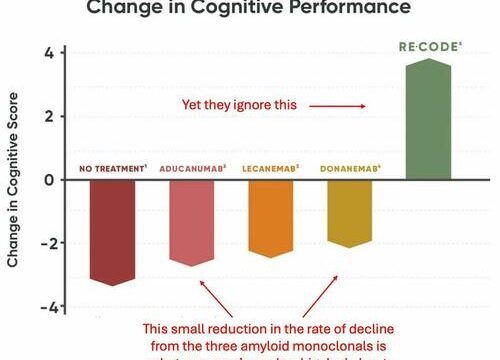
Decades of amyloid therapies have never produced a beneficial therapy.
The newest “breakthrough” amyloid eliminating monoclonal antibodies, at best, slightly slow the progression of Alzheimer’s while simultaneously causing a host of side effective including brain bleeding and swelling in over a quarter of recipients.
The entire amyloid industry rests upon a fraudulent study no one wanted to retract, likely due to how much was invested in the amyloid hypothesis.
In short, the money behind this juggernaut has caused research into the real causes of Alzheimer’s to be suppressed. For example, here I highlighted how coconut oil MCT’s (safely) do more than any of the costly amyloid drugs—yet virtually no one knows this.
Dale Bredesen’s Discovery
Many are also unaware a 2022 study that should have revolutionized the entire Alzheimer’s field:
That protocol was based on the insightful realizations that:
• Amyloid protein is a protective mechanism the brain uses to protect itself from stressors that endanger brain tissue—making attempt to treat Alzheimer’s by eliminating it doomed to fail.
• The brain is designed to be able to adapt to the needs of life, so it is always creating or pruning neural connections and brain cells. Alzheimer’s results from the loss of signals that sustain brain cells and the dismantling of neural connections outweighing the formation of new ones gradually compounding over the decades.
• Rather than there being one type of Alzheimer’s, there are actually multiple that each require different treatment approaches.
Note: beyond the 2022 trial which showed individually targeted therapies could shift the brain’s momentum from neurological degeneration to regrowth, a 2018 report of 100 patients from numerous providers also showed it treated Alzheimer’s, as did a 2024 case series of patients with remarkable results, and there are now neurologists around the country administering Bredesen’s protocol with success.
The Six Types of Alzheimer’s Disease
As this understanding of Alzheimer’s has produced real results, this suggests the causes of Alzheimer’s Bredesen identified indeed play a key role in the disease—particularly since many other datasets corroborate their contribution to Alzheimer’s. They are as follows:
Type 1 — Inflammatory
This form is driven by excessive inflammation, often metabolic or infectious in nature. Chronic activation of the immune system—due to factors such as insulin resistance, a poor diet, a leaky gut, or latent infections—leads the brain to engage in protective downsizing by removing synapses and neurons that are less essential for immediate survival. It often presents with classic Alzheimer’s memory loss and typically develops in the sixties to seventies.
Type 1.5 — Glycotoxic
This subtype arises from insulin resistance and chronically elevated blood sugar. It leads to both inflammatory and trophic deficiencies, and is driven by glycotoxicity and the accumulation of advanced glycation end products (AGEs), which impair cellular function and synaptic integrity. It typically appears in the late fifties to sixties.
Note: chronically elevated insulin promotes amyloid formation as the enzyme the body uses to break down insulin is the same enzyme it uses to break down amyloid plaques.
Type 2 — Atrophic
This type is caused by deficiencies in key nutrients, hormones, and other factors that provide trophic (supportive) signals to brain cells which then triggers a similar downsizing mechanism seen in Type 1. Type 2 tends to emerge about a decade later than Type 1.
Note: we find these nutritional deficiencies can result from poor circulation reducing existing nutrients reaching brain tissue, and hence often focus on improving circulation rather than extended supplementation.
Type 3 — Toxic
This subtype results from exposure to toxic substances that directly damage neurons. Common culprits include biotoxins, chronic infections, heavy metals, and industrial or household chemicals. Causative infections (discussed further here) include Cytomegalovirus, Human Herpesvirus 1 or 6, Lyme disease, dental bacteria that can travel to the brain (e.g. P. gingivalis) and various fungal infections (as mold toxins are notorious for causing cognitive impairment at all ages).
Type 3 uniquely causes widespread and often unpredictable neuronal death, occurs earlier in life—often between the forties and sixties—and is less strongly associated with genetic risk factors. Cognitive decline in this type is frequently accompanied by psychiatric symptoms, sensory changes, or executive dysfunction (e.g., difficulty with math, organization, executive tasks), rather than the more classic early Alzheimer’s memory loss.
Note: some of the most important neurotoxins to avoid are pharmaceuticals, and when I meet elderly individuals who have preserved their mental clarity, many report having largely avoided pharmaceuticals throughout their lives. Some of the most common problematic medications for brain health include certain high blood pressure medications (because they lower cerebral perfusion), statins (as they inhibit the production of compounds essential for brain function), acid reflux medications (which interfere with the absorption of vital brain nutrients—making it critical for everyone to have adequate stomach acid), antidepressants, antipsychotics, benzodiazepines, antihistamines (since, like many sleeping pills, they block restorative sleep), and anticholinergics (such as those prescribed for incontinence).
Type 4 — Vascular
In this form, chronic restriction of cerebral blood flow from existing vascular diseases leads to gradual neuronal injury and cognitive decline. Type 4 often appears in the seventies or beyond) and may overlap with other subtypes. It tends to affect processing speed, attention, and executive function rather than memory alone.
Note: rapid cognitive decline frequently followed COVID vaccination, and significantly overlapped with this type.
Type 5 — Traumatic
Severe head traumas or repeated concussions (e.g., in professional football players) sets off a cascade of chronic degenerative process which cause cognitive and emotional dysfunctional to appear years or decades after the injuries—making it critical to prevent these injuries and seek appropriate treatment when they happen.
Note: there are a variety of causes of dementia, many of which are frequently (roughly half the time1,2) misdiagnosed as Alzheimer’s. In many cases, these respond to the same treatments which reverse Alzhemer’s, but in other cases, require different treatments.
Healthy Fluid Circulation
Many practitioners I know who’ve successfully treating dementia with a variety of methods (listed here) all concluded it resulted from impairments of blood flow to the brain and lymphatic or venous drainage from it. For example:
•Zeta potential provides the disperse force which keeps constituents within fluids from agglomerating and clogging the circulatory vessels (e.g., vaccine frequently trigger detectable microstrokes by causing blood cells to clump together). In a myriad of illnesses, we find restoring the physiologic zeta potential (discussed here) is pivotal for restoring health—particularly those associated with aging, as zeta potential worsens with age (due to declining kidney function). In turn, one of the physicians who inspired my medical path did so because his practice revolved around treating zeta potential and he repeatedly achieved significant cognitive improvements for his aging patients.
Note: impaired zeta potential will also cause proteins (e.g., amyloids) to misfold and clump together.
•China recently developed a surgery (detailed here) to increase the lymphatic drainage from the brain. Due to its efficacy and low cost, it is being rapidly adopted around the country. In parallel, an American procedure was developed to increase venous drainage from the head and reported to greatly improve multiple sclerosis along with other chronic neuroimmune disorders (which distant colleagues witnessed).
Note: I have seen many other circulatory enhancing therapies (listed here) also improve cognitive decline and dementia.
Furthermore, beyond blood being vital for neuronal survival, the proper clearance of waste products from the brain is as well. Unfortunately, due to how limited space is for the brain within the skull, robust lymphatic vessels do not exist, and instead, lymphatic drainage is created by astrocytes creating temporary lymphatic vessels around blood vessels during deep sleep.
This system, in turn, is highly vulnerable to disruption and numerous studies have now linked impaired glymphatic drainage to dementia (e.g., TBIs impair glymphatic drainage and adequate glymphatic drainage is required to eliminate amyloid from the brain)—which likely inspired the Chinese surgical procedure for dementia.
Due to the fragility of this system, things which disrupt it are quite consequential (e.g., poor zeta potential thickens and slows the drainage of glymphatic fluids). For example, as glymphatic drainage only occurs during deep sleep, poor sleep has been extensively linked to dementia (e.g., one study found sleep disruption increased dementia by 104%, another by 22-50%, and a third found a 139% increase—along with another finding sleep disruption caused a 71% increase in mild cognitive impairment).
Likewise, disrupted sleep was recently shown to accelerate the accumulation of amyloid plaques, and, in another study, to mitigate the cognitive impairment created by Alzheimer’s plaques. Unfortunately, the pathologic proteins in Alzheimer’s have been shown to directly disrupt restorative sleep and to take away the ability to recognize one is suffering from impaired sleep—demonstrating why it is so important to restore your healthy sleep before the momentum of dementia has entrenched itself.
Note: sleeping pills block restorative sleep, and have a variety of issues (e.g., they make users 2-5 times as likely to die1,2). Regarding dementia, multiple studies have found that sleeping pills increase the risk of it by 17-84%.1,2,3,4
The Life of Cells and Neuroplasticity
One of the things I continually marvel at about nature is not only the ability of a species to genetically adapt to its environment, but the inherent adaptability each organism has within its own lifespan to adapt to its environment. Within the human body, there are many systems that are designed to change based on the needs of one’s environment (e.g. this is why weight training creates larger muscles), and among the most adaptable is the nervous system.
So, at any given moment, neural circuits that support certain activities are reinforced, while other circuits are pruned and eventually disabled, a process that allows the nervous system to adapt to the complex needs of its environment. At the same time, many complex neurological and psychiatric disorders arise from a momentum being established where dysfunctional neurological circuits perpetually reinforce themselves.
For these disorders to be treated, a momentum must instead be established behind a healthy circuit (for those interested, this is the best book I have seen on that subject). This momentum is a key reason why it is so important to have healthy thought patterns and regularly actively exercise your brain (another core component of programs for preventing Alzheimer’s). If you do the opposite (e.g., watch TV all day or passively consume online content), dysfunctional patterns can become established habits, while neurological damage occurs as parts of the brain you need but under utilize are pruned away.
A key way the brain accomplishes this adaptability is by eliminating neurons that are no longer deemed essential. Bredesen’s theory of Alzheimer’s is that it results from the balance between preserving and eliminating neurons being shifted towards eliminating them, which inevitably will result in cognitive decline (hence making it critical to protect your brain early in the process of cognitive decline so it does not progress to dementia).
Within Bredesen’s model, the amyloid protein plays a key role in this process, as when it is initially formed as amyloid precursor protein (APP), it has the choice to be then split into two or four parts. If it is divided into two parts, those parts protect the neurological function in the brain. In comparison, if it is divided into four parts, the neurological function of the brain is damaged, and brain cells are eliminated. Interestingly, its splitting into four parts causes future APPs also to be split into four parts (which creates a downhill spiral). As a result, Brenden’s approach focuses on regaining a healthy momentum towards the two-part splitting while also providing the signals cells within the body require to survive.
The Cell Danger Response
When cells are exposed to external stressors, they often enter a primitive defensive metabolic cycle where they partially or fully “turn off” (e.g. mitochondrial respiration and protein synthesis within the cell decline) to protect themselves. Many chronic diseases, in turn, result from cells being trapped in this degenerative cycle (which often leads to cell death) rather than exiting it and resuming their normal function. Likewise, many therapies in regenerative medicine function by taking cells out of this frozen metabolic state.
Because of this, many complex illnesses (e.g., COVID vaccine injuries, fibromyalgia or autism) can only be treated if the underlying trigger for the cell danger response is removed, and then a regenerative therapy is provided which signals cells to exit the Cell Danger Response (CDR).
Similarly:
The principle that blocking protein synthesis prevents long-term memory storage was discovered many years ago. With age there is a marked decline of protein synthesis in the brain that correlates with defects in proper protein folding. Accumulation of misfolded proteins can activate the integrated stress response (ISR), an evolutionary conserved pathway that decreases protein synthesis. In this way, the ISR may have a causative role in age-related cognitive decline.
In turn, much in the same way treatments for the CDR often facilitate treating dementia, therapies which inhibit the ISR have been found to restore the structure and function of cells within the brain and improve a variety of age-related memory deficits.1,2
DMSO
Dimethyl sulfoxide has a variety of unique therapeutic properties which allow it to treat a variety of diseases (e.g., it is miraculous for strokes and brain injuries), and in the year since I began publicizing this forgotten therapy, I have received thousands of remarkable reports of it treating numerous “incurable illnesses.”
Much of this results from DMSO’s ability to restore normal circulation, protect cells from lethal stressors, and revive shocked cells trapped in the CDR. As such, since start the series, in addition to receiving many reports from readers who saved themselves or a loved one from a disabling stroke with DMSO, many have also shared stories like this:
My uncle’s wife has dementia and has been unable to speak for over a year. My mom recently visited them and told them about DMSO. He began to give his wife DMSO orally. After two week she began to talk again.
Numerous studies (detailed here), have corroborated DMSO’s ability to treat dementia. These include:
•When cerebral blood flow was permanently reduced in rats, one study found DMSO prevented the neuronal and memory loss that otherwise resulted while another found DMSO given afterwards treated it.1,2 Similar benefits have also been seen after Alzheimer’s was induced by injecting toxins into the brain,1,2. Likewise, in mice (or nematodes) engineered to develop Alzheimer’s, DMSO has been repeatedly shown to prevent the expected neurological damage.1,2,3
•DMSO has also been shown to prevent the neuronal damage from experimentally induced Parkinson’s and preserve the cognitive function of mice bred to rapidly develop severe degeneration of the cerebellum and brainstem.1,2
Note: IV DMSO is one of the few therapies I have come across which can halt Parkinson’s. To some extent oral DMSO helps as well (e.g., see this reader’s comment).
•DMSO has also been shown to treat scrapie (a neurodegenerative prion disease from abnormal protein aggregates) in hamsters, to increase the activity of ALP, the intercellular enzyme which eliminates cellular waste (including misfolded proteins) and, in a large number of studies, to treat amyloidosis (pathologic accumulations of pathologic proteins.
Note: we are currently corresponding with a reader who saw a remarkable response to DMSO for CJD (an incurable neurodegenerative prion disease).
In humans:
•18 patients with probable Alzheimer’s after three months, DMSO caused a significant improvement in memory, concentration, communication and orientation to time and space.
•In 104 elderly adults with organic brain disease from the common causes (e.g., strokes, atherosclerosis, Parkinson’s or head injuries), DMSO greatly improved their psychic and somatic function.1,2.
•In 100 patients with cerebrovascular diseases CVD, many of whom were senile, over 50 days, DMSO caused almost all to have a significant in their CVD, along with significant improvements in mood, mobility, and speech.
Conclusion
Medicine revolves around finding unique molecular targets for which disease specific treatments can be patented. Unfortunately, this model frequently fails in chronic illnesses, frequently leading to grotesque situations like the one described here, where natural therapies which can address the actual causes of devastating illnesses are sidelined to protect each disease’s lucrative “treatment” market.
This needs to change, and for the first time in my lifetime, thanks to MAHA, the political will at last exits to begin addressing the real reasons why there continues to be such much chronic illness in our society. The opportunity to make cognitive decline no longer be an inevitable aspect of aging is finally here—provided we seize it!
Author’s note: This is an abridged version of a longer article which discusses the actual causes and treatments for Alzheimer’s disease and the cognitive decline which precedes it. That article, along with additional links and references, can be read here. Additionally, a (recently updated) companion article on how DMSO treats neurological injuries (e.g., strokes, brain hemorrhages, traumatic brain injuries, spinal paralysis and developmental delay) can be read here.
Tyler Durden
Fri, 12/19/2025 – 19:15
https://www.zerohedge.com/medical/reversing-alzheimers-forgotten-causes-and-cures-big-pharma-buried

Daily Horoscope for December 20, 2025
General Daily Insight for December 20, 2025
Bravery might need some assistance from logic at the moment. The square between the insistent Sun and hazy Neptune at 08:02 PM EST could impact our confidence, but that’s okay. It’s just a reminder to slow down and confirm what’s true. Earlier, as the emotional Moon joins fiery Mars, strong feelings push for quick moves, while patience helps us avoid overreactions. With practice, we can learn to be curious rather than defensive. When we choose to learn before starting fights, everyone wins.
Aries
March 21 – April 19
Preparation is just as crucial as raw power. Keep your plans in mind when getting dressed — work boots wouldn’t be appropriate for a night out, while stiletto heels aren’t the best choice for a hike. Bold choices benefit from double-checking every detail and confirming agreements. A mentor or travel partner may give conflicting directions, so make an effort to have a backup plan, either way. You’re also allowed to ask questions about whatever you’re working on. Learn what you can, then start moving forward!
Taurus
April 20 – May 20
This morning invites slow, steady pacing. The Sun is starkly lighting your cautious 8th house with its square to uncertain Neptune in your 11th House of Community. Speak with care! A friend might forget a promised payback or share a half-story — if you have to remind them to finish what they started, do so with kindness. After all, you wouldn’t want to be yelled at for such things. If something shared feels off, pause and recheck before agreeing. Clarity now avoids frustration later.
Gemini
May 21 – June 20
What truly motivates you? Your future may look unclear with Neptune in your stolid 10th house, but as the Sun in your loving 7th house squares Neptune, you’ll be able to adapt and handle whatever needs to happen next. Stay on your toes and don’t hesitate to ask questions about confusing directives. If no one’s got the answers, though, you can still do what feels right in the moment. You should be able to return and polish the details in a less urgent moment.
Cancer
June 21 – July 22
Soft feelings presently deserve simple, steady plans. While the Sun in your practical 6th house clashes with Neptune in your learning zone, routines benefit from caring analysis. A co-worker or peer might confuse you with vague directions or shifting deadlines, but there’s no need to be too worried. Try offering them a listening ear. They may just need to talk things out with someone who won’t judge too harshly. That said, it’s also vital to acknowledge your own body’s signals and take breaks as necessary.
Leo
July 23 – August 22
Joy can be yours — if you’re honest with yourself. Play should feel better with clear boundaries that everyone understands. With today’s struggle between the Sun in your jolly 5th house and Neptune in your intimate 8th house, mixed signals don’t have to lead to actual fights. Make an effort to talk through your needs and how they align with those of your companions. Different things make different people happy, and that’s normal! Sharing genuine delight is the best way to deepen your connections.
Virgo
August 23 – September 22
Look, then look again. Both your 4th House of Roots and your 7th House of Bonds are under fire during the spat between the Sun and Neptune. A landlord, parent, or roommate might gloss over an issue, but thankfully, you’re prepared to ask the practical questions that should reveal exactly what needs fixing and who can help. If nostalgia complicates a decision, try making a pros and cons list. Whatever you end up doing, you deserve the security of knowing your plan was crafted thoughtfully.
Libra
September 23 – October 22
Tricky conversations could be in store! A calm composure will be a must while the enthusiastic Sun aggravates spiritual Neptune, impacting both your chatter zone and your practice quadrant. Brace yourself to call out those who drift off topic without ruffling their feathers (especially if they’re a neighbor or teammate you’ll need to interact with again). Today could also be quite busy, so look for any action items that could wait until tomorrow, if possible. Personal balance and social cooperation will both be necessary.
Scorpio
October 23 – November 21
“Loud” doesn’t mean “valuable” right now. With the Sun in your 2nd House of Banking and Neptune in your passionate 5th house, something flashy could tempt you with all sorts of promises. You know how vital the details are, and you won’t be fooled by something unreliable when protecting your budget. While a bad mood could be temporarily soothed by an impulse purchase, it could be more reliably banished by things you already have. Look for comfort in positive relationships, favored possessions, and engaging pastimes.
Sagittarius
November 22 – December 21
When you’ve got it, flaunt it — and Sag, you’ve got it! The kerfuffle of the colorful Sun in your hopeful sign and nebulous Neptune in your household zone won’t keep you down for long. Just keep your plans realistic, even if that means you make some unusual choices. Share the plan with someone who appreciates your style, perhaps a family member. They should be able to supply some genuine, well-meaning critique, rather than unnecessary criticism of your taste. Let their guidance strengthen your resolve.
Capricorn
December 22 – January 19
Today is not meant for final decisions, but it isn’t meant for ignoring your options, either. The Sun and Neptune are engaged in debate across your subtle 12th house and your busy 3rd house, so you may get caught up in an argument about privacy or boundaries. If possible, set aside some time to ponder recent or upcoming decisions on your own — or to take a nap! Proper rest is even more vital than usual when it comes to pacing yourself throughout the day.
Aquarius
January 20 – February 18
Your circle can presently help or hinder your vision. Your 11th House of Networks lights up as the Sun reaches from it to square imaginative Neptune in your talented 2nd house, calling for group responsibility. Someone may float an inspiring but unclear project in the group chat. To ensure things stay on track, someone likely needs to take the lead! If the conversation gets messy, consider moving your planning efforts to a separate thread to keep everyone accountable. Choose allies who amplify purpose and accountability.
Pisces
February 19 – March 20
Don’t rely on assumptions! Keep an eye on the stars, as today, the Sun in your status-oriented 10th house squares deceptive Neptune in your thoughtful sign. You can hope for the future while preparing for the present. A supervisor, client, teacher, or family elder could praise and critique all at once, but you can look through any barbed compliments to the realistic, helpful advice within. Avoid running yourself ragged trying to please any naysayers, though. Let your quality work speak for itself!
https://www.chicagotribune.com/2025/12/19/daily-horoscope-for-december-20-2025/

Elgin News Digest: The Lodge Performing Arts Center holds ribbon-cutting; Elgin Area Men’s Shed donates to Salvation Army program
The Lodge Performing Arts Center holds ribbon-cutting
A ribbon-cutting was held Dec. 12 for The Lodge Performing Arts Center to celebrate the opening of the event and theater space at 18 Villa Court in Elgin.
“This building has a lot of history, but I’ve never seen it as beautiful as it is now,” Elgin City Councilwoman Rose Martinez said at the ceremony, which was recorded by the Downtown Neighborhood Association of Elgin.
MTK Properties purchased the former Benevolent and Protective Order of Elks Lodge in December 2023. The 13,500-square-foot, two-story Tudor revival building dates to 1927 and had been used by the fraternal organization for more than 70 years before sitting empty for more than a decade.
Business owners Michael and Mary Alice Benoit, of Bartlett, received more than $660,000 in TIF funding from the city to help in the purchase and conversion of the building.
The Lodge has two theater spaces, dressing rooms and set workshops. In November, the Elgin City Council approved moving the Elgin Arts Showcase from the Professional Building at 164 Division St. to the building.
Drunk driving, seat belt enforcement campaigns start
Elgin, South Elgin, Carpentersville and other local police departments are taking part in the statewide “Drive Sober or Get Pulled Over,” “Drive High. Get a DUI” and “Click It or Ticket” traffic safety campaigns underway now through Monday, Jan. 5.
The enforcement efforts are supported by the Illinois Department of Transportation’s statewide outreach program, “It’s Not a Game,” which reminds motorists that following driving rules is important and save lives, according to a social media post from the Elgin Police Department.
To help prevent impaired driving and reduce the severity of crashes, Elgin police urge people to designate a sober driver or to drive sober; report dangerous driving; wear seat belts; obey speed limits; and not to text or scroll on the phone while driving.
Elgin Area Men’s Shed donates to Salvation Army program
The Elgin Area Men’s Shed recently donated more than 120 toys, including some they made themselves, and other items to the Elgin Salvation Army’s Angel Tree holiday gift giving program for families in need.
Among the hand-made items given the the effort were doll beds, wooden tops and toy vehicles, according to a social media post. Donated doll bedspreads were made by women at area senior centers, churches and by Shed members’ spouses. Men and women at some senior centers assisted in painting the cars and beds.
The Elgin Area Men’s Shed has a space at 1023 St. Charles St. in Elgin where members work on community-related projects. For more information, go to elginareamensshed.org.
https://www.chicagotribune.com/2025/12/19/elgin-lodge-tickets-shed-salvation/

Dodgers pagarán récord de 169 millones en impuesto al lujo tras ganar 2ª Serie Mundial seguida
Por RONALD BLUM
NUEVA YORK (AP) — Los Dodgers de Los Ángeles pagarán un impuesto de lujo sin precedentes de 169,4 millones de dólares después de ganar su segundo título consecutivo de la Serie Mundial con una nómina multiestelar.
El desembolso total de los Dodgers por este concepto en dos años ha ascendido así a 272,4 millones de dólares.
Los Mets de Nueva York tienen la segunda factura de “impuestos” más alta entre los nueve equipos que los pagan, con 91,6 millones, a pesar de no figurar entre los 12 clubes que se clasificaron a los playoffs. Su desembolso por tener una nómina demasiado lujosa asciende a 320,3 millones de dólares en los últimos cuatro años, bajo el propietario Steve Cohen, quien ha emprendido una ola de gastos cuantiosos.
Los Dodgers pagarán impuesto de lujo por quinta temporada consecutiva. El total de los Dodgers rompió el récord anterior de 103 millones que ellos mismos habían establecido el año pasado.
La nómina de 417,3 millones de Los Ángeles en términos de impuesto de lujo incluyó 949.244 dólares en compensación no monetaria para Shohei Ohtani, cuyo contrato estipula el uso de una suite para los juegos en el Dodger Stadium y un intérprete.
La nómina total de los Mets, de 346,7 millones incluyó 369.886 dólares en compensación no monetaria para el dominicano Juan Soto, cuyo contrato especifica que el equipo pagará por su uso de una suite de lujo, hasta cuatro boletos premium y seguridad personal del equipo para el jardinero estelar y su familia.
Los Yankees deben 61,8 millones, según las cifras definidas por las Grandes Ligas y el sindicato de peloteros. The Associated Press obtuvo los números.
Después de los Yankees vienen Filadelfia (56,1 millones), el campeón de la Liga Americana Toronto (13,6 millones), San Diego (poco menos de 7 millones), Boston y Houston (ambos 1,5 millones) y Texas (alrededor de 190.000).
Los nueve equipos que pagan igualan el récord establecido el año pasado. El total de impuestos de 402,6 millones superó el récord anterior de 311,3 millones del año pasado. El dinero de los impuestos debe ser pagado a las Grandes Ligas antes del 21 de enero.
_____
Deportes AP: https://apnews.com/hub/deportes

Hipotermia causa la muerte de un recién nacido en Gaza y más bebés están en riesgo, dice médico
Por WAFAA SHURAFA y ADAM GELLER
JAN YUNIS, Franja de Gaza (AP) — A medida que el frío de diciembre se posaba sobre el territorio palestino de Gaza, una tienda de nylon era el único refugio para la familia. Cada noche, Eseid Abdeen cubría a su frágil hijo recién nacido con cuatro mantas, iluminando periódicamente los ojos del bebé con una linterna para confirmar que estaba bien.
Eso fue hasta la noche del miércoles, cuando Saeed, de 29 días, con su pequeño cuerpo consumido por el frío, no respondió.
El bebé, que había nacido prematuramente y con muy bajo peso, se convirtió en el segundo bebé en morir de hipotermia en los últimos días en el Hospital Nasser, dijeron los médicos el jueves. Advirtieron que pronto podría haber otros si no se mejoran las condiciones en los campamentos donde viven miles de palestinos.
Aunque el actual alto el fuego entre Israel y Hamás ha estado en vigor durante dos meses, no se ha permitido el ingreso de suficientes materiales de refugio en Gaza, señalan los grupos de ayuda humanitaria. Las cifras militares israelíes recientemente publicadas muestran que no se ha cumplido con la estipulación del alto el fuego de permitir 600 camiones de ayuda en Gaza al día, aunque Israel disputa ese hallazgo.
“Siempre temí por él y traté de mantenerlo caliente. Pero hace mucho frío”, dijo el jueves a The Associated Press la madre del pequeño, Rawya Abdeen. Cuando los médicos informaron que su hijo había muerto, sus gritos de angustia atrajeron a los vecinos. “¿Por qué él?”, gritaba.
El doctor Ahmed al-Farra, director de pediatría en Nasser, dijo que el bebé llegó al hospital la noche del miércoles con una temperatura corporal de 30 grados Celsius (86 °Fahrenheit), muy por debajo del nivel donde se establece la hipotermia. Los médicos hicieron todo lo posible para reanimar al niño, pero murió temprano el jueves, indicó Al-Farra.
Las temperaturas nocturnas en Gaza han alcanzado los 6 °C (43 °F) en los últimos días.
“Estamos advirtiendo que esta tragedia volverá a ocurrir a menos que haya una solución permanente para los bebés, y específicamente para los bebés prematuros, porque son más vulnerables a la caída de las temperaturas”, dijo al-Farra. “Viven en tiendas desgastadas que están expuestas a los vientos y al clima frío, y carecen de todos los medios para mantenerse calientes en estas tiendas”.
El médico dijo que el frío es una amenaza particular para los bebés prematuros porque sus tejidos grasos no están desarrollados y sus cuerpos pierden energía rápidamente.
La muerte del bebé eleva a 13 el número de personas muertas en Gaza desde que una fuerte tormenta azotó la franja la semana pasada, dijo el Ministerio de Salud. Entre ellas se cuentan 11 personas que murieron cuando las fuertes lluvias colapsaron edificios ya dañados, así como a los dos niños que perecieron debido al frío. El primer bebé que falleció por hipotermia, Mohamed Khair, de dos semanas, había nacido después de un embarazo a término completo.
La gran mayoría de los 2 millones de personas que viven en Gaza han sido desplazadas, y la mayoría vive en tiendas de campaña a lo largo de la costa o instalados entre los cascos de edificios dañados. Los edificios carecen de infraestructura adecuada para evitar inundaciones y la gente usa fosas sépticas cavadas cerca de las tiendas como baños.
Los Abdeen dijeron que su tienda improvisada, en Muwasi, en el sur de Gaza, se inunda regularmente con agua de lluvia.
Rawya Abdeen dijo que su hijo pesaba sólo 1,3 kilogramos (2,9 libras) al nacer, y que pasó dos semanas en la unidad de cuidados intensivos neonatales.
Cuando el padre del niño le iluminó con una luz alrededor de las 10 de la noche del miércoles, el bebé no respondió con su habitual entrecerrar de ojos. Un examen bajo la luz reveló que el niño estaba vomitando, dijo su madre, y la familia lo llevó rápidamente al hospital. Su padre dijo que había orado por la supervivencia de Saeed, antes de que los médicos llamaran por la mañana para decirles que el bebé había fallecido.
“Estaba dispuesto a brindar mi alma para salvarlo”, dijo Eseid Abdeen. ___
Esta historia fue traducida del inglés por un editor de AP con la ayuda de una herramienta de inteligencia artificial generativa.

Why Netflix Buying Warner Bros. Discovery Is A Bad Bet For Investors
Why Netflix Buying Warner Bros. Discovery Is A Bad Bet For Investors
Authored by Mark Anthony of Forrester Research,
Eaerlier this week, Netflix responded to the vast industry concerns about its deal to acquire Warner Bros. Discovery from the likes of the Writers Guild of America and a who’s-who list of elected officials, including liberal ones like Sens. Bernie Sanders and Elizabeth Warren, by stating that “the “deal is about growth” and that the company is “strengthening one of Hollywood’s most iconic studios, supporting jobs, and ensuring a healthy future for film and TV production.”
Netflix continues to tout how it is a perfect strategic fit for WBD, but the only strategy that matters to investors is the one that provides the most deal certainty, speed to close, and risk-adjusted return. By those measures, a Netflix acquisition of WBD is a fundamentally unattractive trade.
It is only a matter of time before this deal to combine the two companies will face antitrust scrutiny — scrutiny which can significantly delay a closing or prevent one from ever occurring at all.
President Donald Trump has already said that this Netflix acquisition could be a problem and that his administration will be playing an active role in this case.
Netflix knows it. It has already hired Steve Sunshine of Skadden, a very expensive antitrust lawyer. Companies do not bring in heavyweight antitrust counsel like this unless they expect scrutiny that could seriously delay or derail a transaction. From an investor’s standpoint, that alone should trigger caution.
Every extra month under review compresses annualized returns, increases financing uncertainty, and introduces tail risk that arbitrage desks are forced to price in, often violently.
The industry is also skeptical of this deal, and that matters to investors because it will feed the regulatory resistance that can delay the closing. Former WarnerMedia CEO Jason Kilar didn’t mince words when he said, “If I was tasked with doing so, I could not think of a more effective way to reduce competition in Hollywood than selling WBD to Netflix.” Statements like that don’t stay in trade publications. They end up cited in regulatory memos and congressional letters.
The same is true of James Cameron’s warning that a Netflix acquisition would be “a disaster,” pointing directly to Netflix leadership’s public dismissal of theatrical film distribution. Whether one agrees is irrelevant. What matters is that such statements reinforce the DOJ and FTC’s long-standing concern about platform dominance and vertical foreclosure.
President Trump has stated that he wants Warner Bros. Discovery sold to a buyer willing to acquire the entire company, including CNN. Netflix has expressed no interest in CNN; only Paramount Skydance (run by President Trump’s buddy Larry Ellison) has.
Now that Paramount has provided a $30-per-share all-cash offer, which is higher than Netflix’s bid, Netflix should especially beware because it provides two things’ arbitrageurs prize above all else: certainty and speed. All-cash deals reduce financing risk, minimize market exposure, and historically clear regulatory review more quickly when competitive overlaps are cleaner.
Netflix offers the opposite profile. A stock-heavy transaction facing extended DOJ review, potential divestiture demands, and political scrutiny introduces timeline risk that can easily stretch into years.
Markets tend to punish uncertainty. The smart money understands that when government signaling, industry opposition, and legal posture all point in the same direction, the highest-return move is often the simplest one: back the deal most likely to close.
In that calculus, a Netflix acquisition of Warner Bros. Discovery doesn’t look like a bold bet. It looks like a slow bleed.
Mark Anthony is a former Silicon Valley Executive with Forrester Research, Inc. (Nasdaq: FORR). He is now the host of the nationally syndicated radio show called The Patriot and The Preacher Show. Find out more at patriotandpreachershow.com.
Tyler Durden
Fri, 12/19/2025 – 18:50
https://www.zerohedge.com/markets/why-netflix-buying-warner-bros-discovery-bad-bet-investors

Federal judge recuses herself in Snyder case
U.S. District Judge Gretchen Lund formally recused herself from James Snyder’s case earlier this week, court filings show.
The reason was not disclosed, but it cited a section of U.S. code detailing various reasons for recusal, including lacking impartiality, having a financial tie to a case, having previously worked on a case, or a judge’s spouse is linked to a case.
His Jan. 14 sentencing date was cancelled. A status phone conference is set for 11 a.m. EST on Jan. 20. before Chief Judge Holly A. Brady in Fort Wayne.
Court filings state she will eventually reassign the case to a different judge. Lund has only overseen the case since December 2024.
Snyder’s lawyer J. Taylor Kirklin was not immediately available.
Lund denied Snyder’s bid for a new trial on Nov. 26, writing it was “simply too late.”
It’s the latest chapter in a saga that began nine years ago when Snyder was indicted on one count of defrauding the IRS and two counts of bribery, one involving towing contracts and the other involving garbage trucks.
A jury in U.S. District Court in Hammond found Snyder not guilty on the charge involving the towing contract, and convicted him twice on the garbage truck charge, a case that made its way to the U.S. Supreme Court, which deemed in June of last year that the $13,000 payment Snyder received over a garbage truck contract was a gratuity, not a bribe, because the payment came after the contract and not before. The case was remanded to the lower courts.
A jury convicted Snyder on the IRS charge, which involved his personal business and not his duties as mayor at the time, and that conviction had remained unchallenged.
Snyder was scheduled to go to trial for a third time on the charge involving the garbage truck contract, but prosecutors have said they would like to sentence Snyder for obstructing the IRS and forgo a third trial on his bribery charge.
Post-Tribune archives contributed.
https://www.chicagotribune.com/2025/12/19/federal-judge-recuses-herself-in-snyder-case/

Venezuela Vows To Defend ‘Homeland At Any Cost’ – Orders Naval Escorts Of Tankers
Venezuela Vows To Defend ‘Homeland At Any Cost’ – Orders Naval Escorts Of Tankers
Authored by Dave DeCamp via AntiWar.com
Venezuelan Defense Minister Vladimir Padrino Lopez has said Venezuela would defend the “homeland at any cost” in response to President Trump’s declaration that he’s imposing a blockade on all “sanctioned” tankers entering and leaving Venezuelan ports.
“We say to the US government and its president that we are not intimidated by their crude and arrogant threats,” Padrino Lopez said on Wednesday. “The dignity of this homeland is neither negotiable nor cowed by absolutely anyone.”
Padrino Lopen also told state TV that the blockade violates the UN Charter. “For this reason, these actions amount to an open act of aggression, and we are declaring this to the entire world,” he said.
The New York Times reported that, in the wake of Trump’s threat, which he issued on Tuesday night, the Venezuelan Navy began escorting tankers leaving Venezuelan ports, meaning that if the US attempts to seize another tanker that has a naval escort, it could lead to a direct clash between the US and Venezuelan militaries.
According to a report from The Associated Press, about 30 tankers under US sanctions were navigating near Venezuela as of Wednesday, and sanctioned vessels carried about 18% of Venezuela’s international shipments this year.
Also on Wednesday, Venezuelan Vice President Delcy Rodriguez issued a statement rejecting President Trump’s claims to Venezuela’s oil and land.
“Venezuela, in the full exercise of the International Law that protects us, our Constitution, and the laws of the Republic, reaffirms its sovereignty over all its natural resources, as well as the right to free navigation and free trade in the Caribbean Sea and the oceans of the world,” she said.
Venezuela has ordered its navy to escort oil tankers leaving port & has lately aired footage of its military ‘readiness’ along the coast…
BREAKING; VENEZUELA has ordered its navy to escort oil tankers leaving port
Bolivarian Navy of Venezuela has begun escorting ships carrying petroleum products leaving the country, following the recent seizure of a sanctioned oil tanker in the Southern Caribbean by the United… pic.twitter.com/9NfGPJjyNp
— Global Surveillance (@Globalsurv) December 18, 2025
“His true intention, which has been denounced by Venezuela and the people of the United States in massive demonstrations, has always been to seize the country’s oil, land, and minerals through gigantic campaigns of lies and manipulation,” Rodriguez added.
Tyler Durden
Fri, 12/19/2025 – 18:25