Category: News

China impondrá aranceles provisionales de hasta el 42,7% a los productos lácteos de la UE
Por CHAN HO-HIM
HONG KONG (AP) — China impondrá aranceles provisionales de hasta un 42,7% sobre productos lácteos, incluidos leche y queso, importados desde la Unión Europea, informó el lunes su Ministerio de Comercio.
Los elevados aranceles, que entran en vigor el martes, se basaron en resultados preliminares de una investigación iniciada por el Ministerio de Comercio de China en agosto de 2024, en medio de tensiones entre Beijing y Bruselas. Beijing revisó los subsidios proporcionados por los países de la UE para sus productos lácteos y otros productos agrícolas.
La investigación de Beijing forma parte de las medidas de represalia después de que la UE investigó los subsidios chinos a los vehículos eléctricos y posteriormente impuso aranceles de hasta el 45,3% a los vehículos eléctricos fabricados en China.
China había iniciado otras investigaciones sobre las importaciones de brandy y cerdo europeos como medidas de represalia por los aranceles de la UE a los vehículos eléctricos chinos. También había instado a la UE a eliminar sus aranceles a los vehículos eléctricos.
Los aranceles temporales sobre las importaciones de lácteos de la UE oscilarán entre el 21,9% y el 42,7%, según el Ministerio de Comercio, y cubrirán una variedad de productos lácteos, incluyendo queso fresco y procesado, queso azul, leche y crema con un contenido de grasa superior al 10% en peso.
El ministerio afirmó que los hallazgos preliminares de su investigación determinaron que los subsidios proporcionados por la UE y los estados miembros de la UE para sus productos lácteos habían perjudicado a la industria láctea de China.
La investigación de Beijing sobre los productos lácteos de la UE abarcó los subsidios otorgados bajo la Política Agrícola Común de la UE y los subsidios ofrecidos a los agricultores por países de la UE, incluyendo Italia, Irlanda y Finlandia, según informó el Ministerio de Comercio en agosto de 2024.
La relación de China con la UE es conflictiva, con el superávit comercial chino con la UE recientemente en el centro de atención. La UE tiene un déficit comercial significativo con China, de más de 300.000 millones de euros (352.000 millones de dólares) el año pasado.
Beijing anunció la semana pasada que impondría aranceles de hasta el 19,8% a las importaciones de carne de cerdo de la UE, significativamente más bajos que los aranceles preliminares de hasta el 62,4%.
Acusó a la UE de dumping en la carne de cerdo y subproductos porcinos en el país, vendiéndolos a precios bajos que a su vez perjudicaron a su industria porcina nacional.
En julio, Beijing también anunció aranceles de hasta el 34,9% sobre el brandy importado de la UE, incluyendo el coñac de Francia, aunque varias marcas importantes de brandy habían recibido exenciones.
___
Esta historia fue traducida del inglés por un editor de AP con la ayuda de una herramienta de inteligencia artificial generativa.

Freedom Lovers Aren’t ‘Fascists’
Freedom Lovers Aren’t ‘Fascists’
Authored by J.B. Shurk via American Thinker,
There’s nothing ‘right-wing’ about defending the Bill of Rights.
Being called “right-wing” or “fascist” is detestable. The label implies a preference for dictatorship, authoritarianism, and government supremacy over personal freedom. The exact opposite is true. I would describe myself as a supporter of autarchism in the sense that we should rule ourselves and not be ruled by others.
As someone who believes strongly in individual liberty, self-reliance, and self-government, I distrust all repositories of power — whether such power resides in government, corporations, or social institutions. As Lord Acton advised: “Power tends to corrupt and absolute power corrupts absolutely.” In my estimation, nothing in this physical world can be trusted with power for very long. Regrettably, all forms of power eventually become abusive.
Nineteenth-century diplomat and political writer John O’Sullivan (the man who coined the phrase “manifest destiny” in 1845) helped to popularize a sentiment shared by other luminaries of his time such as Henry David Thoreau, Ralph Waldo Emerson, and Mark Twain: “The best government is that which governs least.”
Government is Leviathan. It knows only how to grow its size and the number of its tentacles until it is capable of wrapping its predacious powers around everyone and everything.
Emissaries of Big Government globalism speak of government as a benevolent “friend” and “parent” whose job is to “protect” and “take care of” the people. But government is none of those things. Government is coercion. It is force, including the threat of lethal force. It robs people of their labor in the form of taxes. It presumes to know what is best for everyone. It insists on telling people how to use their property and how to live their lives. It intrudes into family households and inserts itself between parents and children. Whereas a friend will fight beside you and a parent will sacrifice everything for your well-being, governments start wars recklessly, sacrifice citizens callously, and ignore the pleas of those suffering.
The German Nazis, Italian fascists, Soviet communists, and Chinese Maoists were all Big Government socialists who justified murdering their citizens for the good of the government. Government is not a “friend” or a “parent.” It is a homicidal maniac that society tries to keep somewhat restrained lest it indulge its basest instinct: to kill everyone in its path.
Government does not “protect” people. It uses people to its advantage. Government does not “take care of” people. It bullies them, steals from them, and keeps them divided against each other. Anybody praising the “virtues” of Big Government is nothing more than a macabre salesman for institutional slavery, indemnified violence, and legalized theft.
Those of us who identify as liberty lovers and defenders of freedom harbor profound distrust of government. It is therefore galling when Big Government leftists, socialists, globalists, Marxists, and even outright communists (especially those exercising power as so-called “journalists” working for multinational corporate news organizations) call us “right-wing.”
What is “right-wing” about wanting government bureaucrats to just leave us the hell alone? I try to put myself in the small wingtips of someone such as CNN’s Brian Stelter. When I say, “I want government out of my life,” how does he hear, “Right-wing fascism is overtaking America”? Is Brian obtuse? Maliciously dishonest? Both?
I find it perplexing to hear Stelter, Jake Tapper, and their fellow ideological clones on cable news describe those of us who most ardently defend the Bill of Rights as somehow being threats to American freedom. Look around the universe of political writers today, and you will find that almost all of the staunchest advocates for free speech, freedom of religion, the right to bear arms, and protections from warrantless government searches and mass surveillance are Americans whom Stelter, Tapper, and their cohorts would describe as “right-wing.”
On the other hand, the very leftists and globalists whom CNN anchors adore are daily calling for mass censorship in the name of fighting “disinformation” and “hate speech.” Stelter has made an entire career out of playing a “truth-telling hall monitor” who believes he is empowered to tell social media companies what should be stricken from public debate. He has explicitly called for a “harm reduction model” of permissible speech by illogically claiming that “reducing a liar’s reach is not the same as censoring freedom of speech. Freedom of speech is different than freedom of reach.” He defends censorship in the name of “freedom” because he expects to be the corporate news umpire who gets to decide what is true or false.
Could there possibly be anything more authoritarian than CNN personalities claiming the authority to declare official truths?
Nonetheless, CNN ignores its own assaults on free speech and instead decries “right-wingers” who believe parents should have a say over whether elementary school libraries include books on “transgenderism,” abortion, sexual fetishes, and pornography. CNN’s talking heads even call those of us who oppose “drag queen story hour” for kindergartners “Christian nationalists” — as if trying to be a moral person, a faithful Christian, a protective parent, and a patriotic American were the hallmarks of “fascism.”
Effective communication between human beings is difficult even when people speak the same language, share the same culture, and enjoy similar beliefs. When politicians and “journalists” defame as “fascists” those of us who fight for expansive personal freedom and against government tyranny, they rob society of peaceful public discourse and light the fuse of future violence.
Those in the “journalism” business who use words to sell fear and provoke bloodshed know exactly what they’re doing. When you demonize your political enemies long enough, some eventually get murdered. Charlie Kirk wasn’t the first, and he will not be the last. After all, there is an entire army of fascist Antifa terrorists who hunt “right-wingers” for sport. Or is that too much truth for Stelter’s “harm reduction model” to permit me to say out loud?
Tyler Durden
Mon, 12/22/2025 – 06:30
https://www.zerohedge.com/political/freedom-lovers-arent-fascists

Christmas in the Southland provides gifts for 700 children: ‘This helps a lot’
Six-year-old Karis Smith is not going to be fussy this Christmas.
When asked what she’s going to tell Santa Claus she wants for Christmas, the young Richton Park resident smiled.
“I want … I don’t want much,” she said. “I just want a big puppet.”
Whether she gets that big puppet will remain to be seen on Dec. 25. In the meantime, she joined hundreds of other children in the fourth running of the Christmas in the Southland program Sunday at the Matteson Community Center.
There were 700 children in need expected to be there and thousands of gifts were taken home by children and adults from Matteson and surrounding communities.
The event is a part of the Christmas in the Wards toy drive. Founder Larry Huggins told the Matteson crowd it’s the second-largest toy drive in the country with Toys for Tots being first. It was scheduled to serve 2,000 children from 700 families this year.
At Matteson, children who were 9 or younger had first dibs on thousands of gift available.
Smith had her eye on a Shine & Style Nail Studio fingernail kit.
“I love getting gifts,” she said. “I got a nail set. Those nails are fake but I’m going to put them on my fingers.”
After the older kids got their shot at the bounty, there was a raffle for people of all ages that included prizes of television sets, Xbox units, computers and bicycles.
One of the first winners was Monica Patterson of Matteson, who slipped and fell as she was excited when the number on her orange ticket was called.
Mickey and Minnie Mouse make a special appearance Sunday at Christmas in the Southland. (Jeff Vorva/for the Daily Southtown)
Patterson chose an Xbox for her three children.
“It’s for the kids, but I’ll probably play it also,” Patterson said. “I appreciate events like this. It’s parents like me who need the extra help. And this helps a lot.”
When the number of Maria Lawson, of Hazel Crest, was called, she made a trip to the bike area and selected one of 50 Huffy bicycles. She planned to give it to her daughter, 9-year-old Taylor Reese.
Lawson appreciated the event.
“It’s awesome,” she said. “It’s wonderful. This is a blessing.”
Village of Richton Park employees dress up as Christmas trees for Sunday’s event in Matteson. (Jeff Vorva/for the Daily Southtown).
The village of Matteson and Rich Township did most of the heavy lifting on this project and had help from various municipalities and governing bodies.
For instance, state Rep. Debbie Meyers-Martin’s office donated more than 10 televisions for the raffle.
“This is a valuable asset to the communities and local municipalities,” said Meyers-Martin, an Olympia Fields Democrat. “To be able to provide Christmas presents for families in need, we appreciate the participation and commitment that you see from the public servants and officials.”
Cook County Board President Toni Preckwinkle said she was impressed by the longevity of the toy drive.
Cook County Board President Toni Preckwinkle speaks to the crowd Sunday at the Christmas in the Southland toy giveaway. (Jeff Vorva/for the Daily Southtown)
“This has been going on for 29 years but in the last four years, local leaders in the Southland have continued it,” she said. “This is one of my favorite times of the year and we can count our blessings.”
Matteson Mayor Sheila Chalmers-Currin said she enjoys walking into the large gymnasium portion of the community center and seeing it filled with toys and presents.
“It makes me feel like being a kid at Christmas again,” Chalmers-Currin said. “We all should feel like that. If we can bring joy to others and make them feel like we felt as kids, we want to do that and continue to do that.”
The mayor remembers some of her favorite childhood presents.
“Ohhh, I remember my first bike and I remember a time when I got this doll that could talk,” she said. “All of those things were exiting and we want to make some kids excited today.”
Rich Township Supervisor Calvin Jordan knows the economy is tough and said this toy drive is more important than ever.
He said he’s had conversations with people who are really hurting and said it’s up to community leaders to spring into action.
“We are all affected by what going on economically,” Jordan said. “I can tell you this, as we started this thing four years ago we wanted to do something not just for Rich Township or Matteson, but we wanted to include the other municipalities, whether it’s Richton Park or Country Club Hills or other areas.
“That’s what it’s all about.”
Jeff Vorva is a freelance reporter for the Daily Southtown.
https://www.chicagotribune.com/2025/12/22/christmas-southland-gifts-700-children/

Community news: Community House ball draws hundreds, ice skating in Franklin Park, more
Community House ball draws 450
More than 450 guests were on hand for the annual holiday ball, Spark the Season: A Night to Shine, a Cause to Celebrate after the Spark Youth Development Initiative, a program of the Community House in Hinsdale.
This year’s event, led by Linda and Don Davis, Karen and Rick Eck, and Heather and Adam Linn, set a record for sponsorships, attendance and donations.
Guest speaker Jamie Thompson talked about the impact the Spark program has on families, and guests enjoyed sparkling decor, specialty cocktails and a display of fine watches in the CD Peacock Diamond Lounge. Live entertainment and a live auction contributed to the festive atmosphere.
Community House Executive Director Dan Janawick praised the holiday ball in a news release, calling it “much more than a beautiful event – it’s a reflection of the heart and spirit of our community. Seeing so many people come together to support the Spark Program reminds us how powerful community and connection can be in transforming lives.”
Franklin Park Ice Arena offers open skates
The Park District of Franklin Park offers public skating sessions at Franklin Park Ice Arena, 9711 Waveland Ave.
Hours are 11:30 to 1 p.m. Mondays to Fridays; 7:20 to 8:40 p.m. Wednesdays; 2 to 3:30 p.m. Saturdays and Sundays; and 8:20 to 9:50 p.m. Saturdays.
Admission is $6 for residents and $8 for nonresidents. A season pass costs $75 for residents and $125 for nonresidents. Skate rental passes with 15 punches costs $45; daily rental rate is $4.
Times may vary. Call 847-671-4268 or visit www.fpparks.org.
Triton College baking student competing in contest
Luis “Edgar” Ki, of Maywood, a baking student at Triton College in River Forest, hopes his work leads him to win $10,000 and the chance to be featured in “Bake from Scratch” magazine.
He is competing for the title of Greatest Baker 2025, vying against bakers who live across the country in an online contest. Voters were able to cast one free vote each day or contribute other votes by making donations toward the Andrew McDonough B+ Foundation.
Ki, who has been baking since he was 4, joined the college’s Hospitality, Industry and Administration program this summer. One of his signature dishes is a lemon pie in a shatter-crisp butter crust with lightly torched meringue.
He uses baking to express himself because, being deaf, communication with those who can hear isn’t easy. “But when I’m baking, it’s something that I can do with my hands and it doesn’t require communication,” he shared via a news release. “I can express myself through my baking, and that’s what I really love about it.
WIth his winnings, Ki plans to add professional tools to his home kitchen and invest in building a community-centered cake business with deaf employees, using captioning, basic American Sign Language, visual menus and eco-friendly packaging.
Kwanzaa, New Year’s party set for tots in Oak Park
Children can learn about Kwanzaa and join a New Year’s Eve celebration as part of holiday fun planned by the Park District of Oak Park.
Kwanzaa celebration is set for noon to 1:30 p.m. Dec. 26 on the upper level of the Stevenson Community Center, 49 W. Lake St. Children 12 months to 60 months old can explore crafts and traditions of the holiday. The fee is $16 to $21.
Dancing, crafts, a balloon drop and an apple juice toast in the indoor playground at the Stevenson Center are part of the fun at New Year’s Eve Bash, offered for children 12 months to 99 months old. A caregiver should attend with the child. The fee is $21 to $26 for both, with additional guests paying $9 to $12.
Register for either at pdop.org or 708-725-2000.
Explore star anise at Western Springs library
Star anise is the featured Spice of the Month on Dec. 30 at the Thomas Ford Memorial Library, 800 Chestnut St. in Western Springs.
Adults interested in trying new recipes or experimenting with a different spice are invited to pick up a kit, while supplies last, when the library is open, 9:30 a.m. to 9 p.m. Kits include the spice, a recipe and cookbook recommendations that feature that month’s theme.
Details are at 708-246-0520.
Metra offers New Year’s Eve rides
Traveling on New Year’s Eve will be a little less expensive, thanks to Metra offering Family Fares early in the day and free rides after 6 p.m. on New Year’s Eve.
The free rides will be for all trains arriving at or leaving from Metra’s downtown stations; alcohol will be banned on all trains after 7 p.m. New Year’s Eve. Trains will operate on reduced schedules, although the last outbound trains from downtown on the BNSF, Metra Electric, Union Pacific West, Heritage Corridor and Rock Island lines will be held until after 1 a.m. The last Southwest Service train leaves downtown at 12:42 a.m.
In addition, Family Fares have been extended to all weekdays through Jan. 2 on all lines. The fares allow up to three children 11 and younger to ride free with each adult.
A special $7 pass on New Year’s Day will allow unlimited rides that day and can be bought from conductors, ticket vending machines and the Ventra app. Trains will run on Sunday schedules, which means no Southwest Service trains.
Send news to pioneerwest@tribpub.com.

Aurora working to create loan programs for economic development, sustainability
The city of Aurora is in the early stages of developing various new lending programs for economic development, sustainability and community projects.
In general, city officials have said the four programs would be low risk and replenish themselves through the repayment of the loans, with some being paid back through property taxes. There’s still some research that needs to be done before the new loan programs can be rolled out, Aurora Mayor John Laesch recently told The Beacon-News.
But concepts were presented to the Aurora City Council earlier this month during a discussion of the 2026 budget.
One of the potential programs would look to give out loans to encourage economic development and help small businesses. The city has been hearing from business owners, developers and others that they need access to affordable capital, Aurora Chief of Staff Shannon Cameron said at the Aurora City Council meeting on Dec. 9.
“We have businesses that have been in our area for a long time that want to make improvements, but cannot afford to for a variety of reasons,” she said.
So, this program would offer loans with below-market interest rates and flexible terms — but because the loans would still need to be paid back, the funds would replenish, according to Cameron. She said the program could benefit the community by helping businesses open and expand, support Aurora residents willing to invest in their city, strengthen commercial corridors, create jobs, stabilize neighborhoods and help bring businesses up to city code.
Another potential loan program the city is looking at creating is the special service areas capital improvement loans. The city would fund up-front neighborhood improvements like sound walls and streetscape updates through a loan that would be repaid using a special service area, which is an additional property tax on those in the area, Cameron’s presentation showed.
Having the city front-fund these projects will save taxpayers money because the city can offer lower interest rates on the loan, Cameron said. For the city, she said, these loans would have low risk because they are repaid using property taxes, which would then replenish the fund for future loans.
The other two potential loan programs would also be repaid through property taxes, but they would apply only to single buildings, not neighborhoods. These Property Assessed Clean Energy, or PACE, financing loans would help developers or property owners pay for projects like solar panels, HVAC improvements and other energy-efficiency upgrades, according to Cameron.
She presented concepts for both commercial PACE loans, which are often called C-PACE, as well as residential PACE loans, called R-PACE. Currently, Illinois state law only allows for commercial PACE loans.
Similar to a special service area, PACE loans are repaid through a voluntary bump in the building’s property taxes. So, the PACE loans have little risk to the city, Cameron said.
Property owners often save more money on their utility bills than they pay towards the loan, she said.
Money to be loaned out through the programs would come from the city’s Transformation Fund, which was created last year after data center company CyrusOne paid the city $16 million as part of a redevelopment agreement.
When the city received those funds, some were put aside to be used for lending programs like what the city is now working towards, and the Aurora City Council has already approved economic development loans through the Transformation Fund.
For example, earlier this year before Laesch won the mayoral election, the Aurora City Council unanimously approved $450,000 in loans for a diner planned for downtown. Laesch was an alderman at-large on the Aurora City Council at the time.
Although he had often voted against economic incentives for other developments, Laesch said at the time that this approach to economic development was better than what the city had done in the past.
Many development incentives over the past several years were supposed to be repaid using things like food and beverage taxes, but that hasn’t worked out, Cameron told the City Council earlier this month. Most of the loans, if they aren’t in default, are being underpaid, she said.
Aurora is looking to fund these loan programs with around $6.6 million from the Transformation Fund, according to Cameron. But that figure assumes the city will get back some of the $3 million the Aurora City Council voted to give the Aurora Regional Economic Alliance last year, a repayment that city officials have said is still being negotiated.
During the City Council meeting on Dec. 9, Laesch stressed that the new loan programs were not yet final, and that they would still need to come before the Aurora City Council for approval. Cameron said there’s a lot of banking regulatory systems the city needs to put in place to create programs like these, and that staff are currently working to meet with regulatory agencies to make sure it is done correctly.
A commercial PACE lending program would likely come before the Aurora City Council for approval first, but that would be funded through the state, according to Cameron. She said the city’s own commercial or residential PACE programs would come later.
Ald. Patty Smith, 8th Ward, asked if the lending programs were the best use of the Transformation Fund dollars since officials have said the city is in a budget crisis. Cameron said that operational costs really shouldn’t be tied to one-time payments since it may solve the issue for one year, but not long-term.
rsmith@chicagotribune.com

Dawn S. Brown: Who gets invited to the table? Holiday gatherings offer a lesson in leadership
Last year, a doctor of physical therapy program at an institution of higher education faced an all-too-familiar challenge: how to celebrate the holidays in a way that felt meaningful for everyone. Instead of defaulting to the traditional catered lunch and gift exchange, the director invited faculty, staff and graduate students to co-create the event.
The group chose a potluck featuring dishes from their own cultural traditions; scheduled the gathering at a time that accommodated teaching loads, administrative duties and studying; and added a gratitude board where everyone could publicly recognize each other’s contributions.
The result? People lingered longer, conversations crossed silos and new collaborations emerged. What started as a holiday celebration became a catalyst for belonging — a reminder that when people feel seen and valued, they show up differently.
This story illustrates a powerful truth: Holiday gatherings offer a metaphor for leadership. Who gets invited to the table? Who feels welcome when they arrive? Inclusive leadership ensures that everyone — not just the loudest or most familiar voices — has a seat and a say. However, this does not happen by accident. It requires intentionality: culturally sensitive celebrations, equitable policies, and systems where diversity thrives and belonging is real.
Today, that work is harder than ever. Across higher education and beyond, we see backlash against diversity, equity and inclusion initiatives. Critics dismiss them as unnecessary or divisive, and some institutions have scaled back programs entirely. Yet, here is the reality: When DEI is treated as a checkbox or a seasonal gesture, skepticism is justified. Token efforts — such as adding one cultural dish to a holiday menu or issuing a generic statement — do not create belonging. They create optics.
Real DEI looks different. It means building structures that make inclusion sustainable, not situational. That starts with avoiding major meetings or deadlines during religious observances and providing flexibility for personal responsibilities. It incorporates the creation of inclusive traditions by inviting input from faculty, staff and students on how to celebrate holidays and milestones in ways that honor diverse cultures. It also requires year-round recognition, acknowledging contributions regularly rather than only during the holidays. Finally, leadership accountability is essential: Inclusion goals must be tied to departmental missions and priorities, so they are not optional but integral to how success is measured.
These practices are not just nice-to-haves. They drive measurable outcomes: higher engagement, stronger retention and greater innovation. When people feel they belong, they contribute more fully — and institutions thrive.
Belonging is not created by grand gestures alone; it is sustained through everyday choices. Leaders can model inclusion by amplifying all voices — especially those historically marginalized — in meetings, by mentoring across similarities and differences and by ensuring that decision-making processes are transparent and fair. Seemingly small actions — such as rotating who sets agendas or acknowledging diverse perspectives — signal that equity is woven into the fabric of organizational life. Moreover, inclusion should extend beyond holiday celebrations to hiring practices, workload distribution and professional development opportunities. When these principles guide policy and practice, holiday gatherings become more than symbolic.
The holidays remind us of values such as gratitude and empathy. For leaders, these are not seasonal sentiments; they are strategic imperatives. In a climate where anti-DEI sentiment undermines progress, leaning into inclusion is not just the right thing to do — it is the smart thing to do.
So, as you gather around tables this season, ask yourself: Who is missing? Who feels welcome? And what will you do to make belonging real all year long?
This is the ultimate leadership test: not how well we decorate the table but how consistently we make space for all to thrive.
Dawn S. Brown is the assistant chair of curricular affairs and an assistant professor at Northwestern University Feinberg School of Medicine, in the Department of Physical Therapy and Human Movement Sciences.
Submit a letter, of no more than 400 words, to the editor here or email letters@chicagotribune.com.
https://www.chicagotribune.com/2025/12/22/opinion-holiday-gatherings-diversity-inclusion-leadership/

CPD recovering a steady number of ‘ghost guns’ despite legislation meant to curb them
Police arrived at the three-flat apartment in the city’s East Side neighborhood at 7 a.m. one day last summer.
Walking up from the basement, a young man met the team of Chicago Police Department and Illinois Department of Corrections officers in the building’s common area. It was time to conduct a parole check.
Two months earlier, he had pleaded guilty to aggravated unlawful use of a weapon, and was sentenced to six months of mandatory supervised release. Just the day before, on his 20th birthday, he had been shot in the shoulder.
Officers soon found several pistol and rifle magazines hidden in a dresser, an AR rifle buttstock, more loose rounds of ammunition under his mattress, and a few grams of crack cocaine. Also recovered were four 3D-printed lower receivers — the component of a gun containing the hammer and trigger that also holds the magazine.
“Upon furthering our investigation with the ATF, special agents related the 4 recovered 3D printed lower receivers classify as firearms,” a CPD officer wrote in the man’s arrest report before he was charged.
But despite the seemingly exotic nature of the discovery, the case is far from an outlier. Through mid-November, records show, CPD officers in 2025 have recovered nearly 400 “ghost guns” — effectively untraceable weapons, often sold on the Internet as part of kits, that can easily end up in the hands of criminals.
Reporting by the Tribune shows CPD has recovered about 400 ghost guns in each of the last few years, totals that have remained steady even after a state law meant to curb them went into effect in 2022.
“Privately made firearms” are now the sixth most common make of gun recovered by CPD, topped only by familiar brands such as Glock, Taurus, Smith & Wesson, Sturm & Ruger and Springfield. Data from CPD show the department logs, on average, one gun recovery every 44 minutes throughout the year.
Ghost guns have been recovered all over Chicago, but more than 10% of them were recovered in the Englewood (7th) District on the South Side this year, the most of any patrol district.
Effect of state law
The state legislation came after someone with a ghost gun shot and killed a teen boy in Millennium Park in 2022.
Gov. JB Pritzker signed the law banning the creation, sale or possession of the weapons in Illinois in an attempt to curb their production and use. The at-home assembly of a “privately made firearm” allows for anyone to purchase a weapon without being subject to a background check.
“A child should not be able to build an AR-15 like they’re building a toy truck,” Pritzker said during the bill signing. “A convicted domestic abuser should not be able to evade scrutiny by using a 3D printer to make a gun.”
Gov. JB Pritzker is joined by then-state Sen. Jacqueline Collins, then-Mayor Lori Lightfoot, mothers of gun violence victims and others as he signs a bill restricting the sale and possession of unserialized firearms, also known as ghost guns, on May 18, 2022, at The Ark of St. Sabina. (Brian Cassella/Chicago Tribune)
In an interview last week with the Tribune, CPD Superintendent Larry Snelling praised the Crime Gun Intelligence Center, a hub connecting local and federal law enforcement agencies that helps link specific weapons to different criminal incidents. But he noted the obstacle that ghost guns present.
“The great thing about the CGIC Center is that they’ve been able to run certain guns that have been used in particular crimes, and they were able to tie those guns to those crimes or to a particular person, and we were able to take people into custody, solve cases and solve murders,” Snelling said. “That’s a lot harder to do with ghost guns.”
Politicians also have continued to try to react to the issue, including the 3D printing of parts that upgrade other weapons.
In June, Illinois Attorney General Kwame Raoul joined a federal lawsuit with 15 other states’ attorneys general against the Trump administration stemming from the administration’s plan to legalize “forced-reset triggers,” which allow semiautomatic rifles to fire more quickly — similar to a “switch” on a handgun. Those parts can be produced like other components of ghost guns.
“Illinois law is also clear: Forced reset triggers are unlawful,” Raoul said in a statement. “I will continue to enforce the ban on forced reset triggers under Illinois law, and I will advocate against any policy that will contribute to the gun violence that has become common in too many communities in Illinois and across the nation.”
What qualifies as a ghost gun
“Privately made firearms” — the ATF’s official designation for ghost guns — applies to a variety of weapons and gun components.
The term can refer to pistols or revolvers made in someone’s home, but also to gun receivers and machine gun conversion devices.
The ATF notes, too, that nationally “from 2016 through 2021, there were approximately 45,240 suspected privately made firearms reported to ATF as having been recovered by law enforcement from potential crime scenes, including 692 homicides or attempted homicides.”
“Individuals who make their own firearms may use a 3D printing process or any other process, as long as the firearm is ‘detectable’ as defined in the Gun Control Act,” according to the ATF. “You do not have to add a serial number or register the PMF if you are not engaged in the business of making firearms for livelihood or profit.”
A privately made firearm recovered by the Bureau of Alcohol, Tobacco, Firearms and Explosives. “Privately made firearms” or “ghost guns” are often made from kits bought and sold on the Internet. A serial number is not required and buyers are not subject to a background check. In 2022, Gov. JB Pritzker signed legislation outlawing the possession of ghost guns in Illinois, though CPD officers still recover at least 400 every year, data show. (Stacey Wescott/Chicago Tribune)
Snelling said earlier this year CPD had a meeting with the ATF, prosecutors from Cook County and other municipalities across the country, as well as local community violence intervention workers to discuss “what can be done, what can be proposed to legislators around these types of weapons that can’t be traced.”
“Nobody has a ghost gun because they’re law-abiding weapons owners,” Snelling added. “When we’re talking about someone who’s specifically converting a handgun into a machine gun, those people who, through 3D printing, are building guns with no serial numbers, we have to focus on that because those people don’t have good intentions.”
Standard weapons still most popular
While gun violence in Chicago and other major cities has fallen steadily in recent years, CPD officers still recover about 1,000 guns every month. Through mid-December, CPD had recovered 11,122 guns in all this year, according to a department spokesperson.
The seizures often occur during the execution of search warrants, or during routine traffic and investigatory stops. Several thousand guns are obtained through voluntary turn-in events, too.
Glock semiautomatic handguns remain, by far, the most common type of firearm recovered by CPD. Through mid-November, more than a third of all guns recovered — nearly 2,900 — were manufactured by Glock, according to CPD data analyzed by the Tribune.
More than 2,600 guns manufactured by Taurus, Smith & Wesson, Sturm & Ruger and Springfield were confiscated by CPD in the first 10 and a half months of 2025.
In 2024, the city filed a lawsuit against Glock and two suburban gun shops, alleging that the weapons maker willfully ignored design flaws in its handguns that allow for them to be easily turned to fire automatic rounds. The lawsuit points to the proliferation of machine gun conversion devices, also known as “switches” or “auto-sears,” that can turn a semiautomatic pistol into a machine gun capable of firing multiple rounds with a single trigger pull.
In September, a Cook County judge ordered that the still-pending lawsuit could proceed.
In a 17-page order, Judge Allen Walker wrote that “a reasonable jury could determine that the design and manufacture of a Glock pistol by Glock Inc., its subsequent sale by Eagle Sports Range and Midwest Sporting Goods, materially contribute to a condition in the City of Chicago that endangers the safety and health of the public.”
https://www.chicagotribune.com/2025/12/22/cpd-recovering-ghost-guns/

John Hewko: Civic organizations in Chicago hold a crucial key to the UN’s future
The United States officially began its withdrawal from the World Health Organization earlier this year through a presidential executive order. Under the mandatory one-year notice period, the U.S. exit from the WHO and the cessation of funding would take effect around Jan. 22.
At the same time, many governments are retreating from the globalism that defined the post-Cold War era and are reducing financial support for United Nations agencies, which now face deep funding shortfalls.
As the United Nations confronts an existential crisis, community organizations in Chicago, groups that played an important role in the U.N.’s founding and have long enjoyed close partnerships with the institution, must once again step up to help the world body navigate its current challenges.
The term “United Nations” first appeared in the 1942 “Declaration by United Nations,” a document signed by 26 Allied nations during World War II as an attempt to prevent future global conflicts. Two years later, delegations from the United States, Great Britain, the Soviet Union and China met in Washington, D.C., to develop a proposal for the structure of this global peace-making body.
In the period leading up to the 1945 U.N. Charter Conference, many Americans embraced “America First” isolationism and were skeptical of global governance. In response, large international civic organizations such as Chicago-based Rotary International and Lions Clubs International were tasked by the U.S. government with a critical mission: using their global reach to broaden public support for an intergovernmental organization dedicated to fostering cooperation, maintaining peace and addressing global challenges. Through conferences and membership publications, civic organizations promoted this visionary concept of a world body that promised to “save succeeding generations from the scourge of war.”
Their efforts paid off. When delegates from 50 nations gathered in San Francisco in 1945 to negotiate and finalize what became the U.N. Charter, the U.S. State Department invited 42 nongovernmental organizations — including Rotary and Lions — to serve as consultants and technical advisers during the negotiations.
These NGOs were not mere observers. They brought persuasive advocacy and specialized expertise that helped shape the treaty. Their future role was ultimately enshrined in Article 71 of the U.N. Charter, which authorizes the Economic and Social Council to establish formal channels for consultation with NGOs. This provision ensured that civil society would have an institutional voice within the U.N. system.
Although the U.N. initially functioned primarily as a forum for sovereign states, the global landscape has changed dramatically over the past eight decades. Civic organizations have expanded rapidly at the local and national levels — particularly in developing countries — and today, they represent a powerful “third force” in international affairs.
In recent years, I have attended numerous major U.N. conferences. Nearly all of them, whether focused on women, food security or climate change, have been accompanied by robust NGO forums designed to broaden participation and help shape global agendas. As former U.N. Secretary-General Boutros Boutros-Ghali once observed, “NGOs are an essential part of the legitimacy without which no international activity can be meaningful.”
Civic organizations amplify citizen concerns, monitor compliance with international agreements and help implement them. They bridge the gap between global policy and everyday life through public campaigns, community programs and initiatives such as Model U.N.
John Hewko: Here’s how to cure the loneliness epidemic, Chicago-style
Perhaps most importantly, they bring scale. Rotary and Lions operate in more than 200 countries and geographic areas, mobilizing millions of volunteers. Rotary became a founding partner of the Global Polio Eradication Initiative in 1988, alongside the WHO, UNICEF and others. As a result of this collaboration, global polio cases have fallen by 99.9%. Lions, meanwhile, works closely with the WHO to combat river blindness and trachoma.
Many civic organizations also align their work with the U.N.’s sustainable development goals, advancing progress on inequality, climate change, hunger, public health and education. They promote peace by addressing root causes of conflict, such as poverty, lack of opportunity and injustice, through joint development projects with U.N. agencies and people-to-people exchanges, including youth programs and international scholarships. Their efforts also include mediating dialogue as neutral parties and delivering humanitarian aid.
At this critical moment for the U.N. and its agencies, civic organizations must continue to do what they do best: Educate the public, mobilize grassroots networks to support the U.N.’s work, use storytelling to shape public opinion, and advocate with governments and legislatures to sustain financial commitments.
We will also continue partnering with the U.N. by leveraging our on-the-ground networks to provide access, sharing specialized expertise in areas such as health, food and shelter, and using our agility and community trust to deliver aid during disasters and conflicts. Just as importantly, NGOs can help raise funds to fill the gaps left by governments. Between 2024 and 2025, Rotary was among the largest contributors to the WHO.
In a world marked by conflict and political polarization, the United Nations remains a beacon of hope for millions. The WHO embodies that hope through science and global cooperation against health threats. Our long-standing partnership with the U.N. demonstrates how much stronger the world can be when citizens and governments work together.
John Hewko is a lawyer and public policy scholar and serves as CEO of Rotary International, which is headquartered in Evanston.
Submit a letter, of no more than 400 words, to the editor here or email letters@chicagotribune.com.
https://www.chicagotribune.com/2025/12/22/opinion-chicago-rotary-international-united-nations/
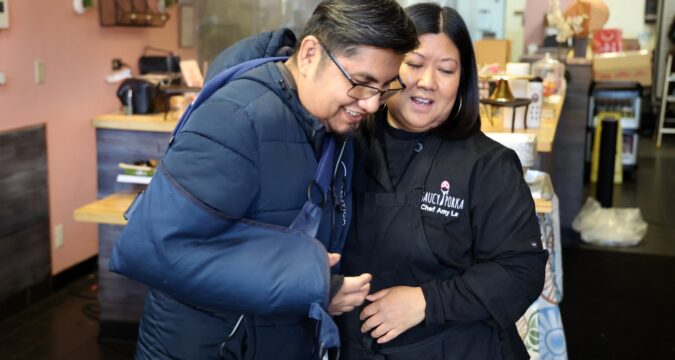
Amid tariffs and immigration fear, Saucy Porka’s South Loop location closes after chef was stabbed
The decision to close one of Saucy Porka’s locations was a tough one for Amy Le to make.
After over a decade in the South Loop, Le, the founder and owner of the Asian and Latino cuisine restaurant, shut down that location on Dec. 15 after a difficult year.
In October, the restaurant’s beloved Chef M was beaten up by three men on his way home from a late shift. He was stabbed in his stomach five times and in his back three times, and a nerve in his right hand was sliced, leaving him unable to cook.
“I felt three punches on my back and then I saw the knife in his hand and I felt scared because I saw the knife and then I saw another two guys,” Chef M said.
He was in the hospital for eight days. After being left with an outstanding medical bill, a GoFundMe page was started to help pay for the expenses. Community members have raised over $16,000 of the $30,000 goal.
“I feel so grateful, blessed because the people, they don’t know me, but they still support me, helping with this,” Chef M said. “Support is so important for me because I don’t have enough money to pay my bills on the hospital, it’s a lot.”
Chef M shows injuries to his hand and wrist on Dec. 19, 2025, when he stopped by the closed Saucy Porka restaurant on South Franklin Street in Chicago, where he’d worked for 13 years. He has been out of work since he was stabbed in an attack near his home in October. (Terrence Antonio James/Chicago Tribune)
He grew up in Guerrero, Mexico, helping his mom make masa for tortillas and helping his dad on the farm. He later moved to America, where he would get into the restaurant business.
In the almost two months since the attack, his back and stomach have recovered, but he said his hand hasn’t even recovered 50%. He is unable to fully grip anything and cannot lift heavy objects.
”The big plan right now is just recover my ability to grab,” Chef M said.
Le said the restaurant was already facing difficulties before her main chef was attacked.
Related Articles
ICE pushes Chicago restaurants in immigrant neighborhoods into survival mode: ‘We are dying a slow death’
Cafes, restaurants across Chicago put up signs barring immigration agents
As ICE detains longtime Chicago street vendors with no criminal history, neighbors rally with emergency funds
The increase in tariffs caused the restaurant’s international vendors to raise their prices on goods. President Donald Trump’s immigration crackdown, Operation Midway Blitz, caused employees to worry about their safety. One of the managers’ brothers was picked up by Immigration and Customs Enforcement officers, Le said.
“There was just so many layers of just already added stress and then this happens with Chef M, it was just kind of like the straw that broke the camel’s back,” Le said.
After hours of waiting in the hospital, the clock struck midnight, marking Le’s 46th birthday, but she was focused on getting an update on Chef M, who was in the trauma center. Then later that day, she was back at work, catering for 150 people.
“I think people don’t understand about restaurant owners is that there is no downtime for us mentally and physically sometimes, and you go through this traumatic experience, but then you also have these commitments to, not only your staff, but you have commitments to customers, you have commitments to just running a business,” Le said.
This mindset is all too familiar to Le. She grew up in St. Louis, working in her mom’s Chinese restaurants. In 2011, Le kick-started her own food truck in Chicago and even helped launch the Illinois Food Truck Association, she said.
The closed Saucy Porka restaurant on South Franklin Street in Chicago on Dec. 19, 2025. (Terrence Antonio James/Chicago Tribune)
Chef M worked as a fry cook close to Le’s food truck and noticed how much she was working, as she was the only one running the food truck. He offered to help her out in the mornings. This went on for a couple of years.
“We’ve always clicked from the get-go, like we have very similar personalities,” Le said. “We’ve always been in sync and had this rhythm in the kitchen together.”
When she got the opportunity to open her restaurant, she asked if he would join her, which he did. Le started Saucy Porka at a brick-and-mortar with Chef M in the South Loop.
“He literally helped me launch that,” Le said. “He helped me train the staff and do a lot of the basic stuff and he never left my side from that point on.”
Saucy Porka still has locations in Hyde Park (1164 E. 55th St.) and St. Louis.
With the hardships she’s faced this year, Le’s taking 2026 to reflect, regroup and plan for 2027.
“Whether the economy, the inflation, whether tariffs go away, whether there’s a slowdown in ICE activity, these are all things that we have to be prepared for,” Le said.
https://www.chicagotribune.com/2025/12/22/saucy-porka-closes-chef-stabbed/

Editorial: Medicaid fraud is a problem. But so is a lack of understanding about the program.
Medicaid is a federal program jointly funded with the states, providing health and long-term care insurance to more than 80 million low-income Americans.
And if you didn’t know all of that, you’re not alone.
The government has spent a fortune over the years de-emphasizing the term “Medicaid,” instead promoting other names that carry less of a stigma. The idea has been to encourage eligible Americans to sign up for benefits they otherwise might reject out of confusion, pride or political philosophy.
Marketing efforts have succeeded in disguising Medicaid, assisting states across the country in rebranding at least part of their public health-insurance programs. HealthChoice Illinois, for instance, is funded by Medicaid. Same goes for BadgerCare in Wisconsin, SoonerCare in Oklahoma, Apple Health in Washington state and so on.
Making things even more confusing, most states use private insurers such as Aetna or UnitedHealth to help administer their Medicaid programs. Millions of people who get health care paid for by Medicaid don’t see “Medicaid” displayed prominently on their insurance cards or billing documents.
As a result, many Americans just don’t realize they’re on Medicaid — and that hasn’t mattered much until now. But the confusion becomes a serious problem when staying insured depends on navigating new rules, paperwork and deadlines.
Folks can hardly be blamed for assuming they have private health insurance, or, conversely, believing they’re uninsured. In some cases, they disparage a program they depend on for themselves, their children, grandparents, neighbors and loved ones.
A recent public radio story spotlighted a patient advocate in Kentucky who was yelled at during a health fair when she explained that a man’s parents were indeed on Medicaid. “He started screaming about no one in his family was ever using Medicaid: That’s for poor people. That’s not for us.” In fact, 1 in 3 Kentucky residents depend on Medicaid.
Under the One Big Beautiful Bill Act that President Donald Trump signed into law in July, Medicaid is set for a long-awaited tightening. The concern is not that eligibility standards are being revisited, but that the law relies heavily on new work and reporting requirements that could reduce participation through administrative complexity rather than clear policy choices.
For starters, the bill bars the use of rules approved during the Joe Biden era that would have streamlined the program by removing barriers, simplifying documentation and automatically enrolling people who already qualify for related government benefits. The Biden initiative also improved payment systems and helped ensure access to care.
Those rules are out. Instead, GOP lawmakers have added new work and reporting requirements and increased the pace of eligibility determinations. Supporters claim the additional administrative burden is worth it to reduce fraud and abuse.
We are all for better firewalls against that fraud and abuse. On Thursday, a federal prosecutor suggested that the total amount of recent Medicaid fraud in Minnesota could top $9 billion. That’s a staggering amount, reportedly perpetrated across 14 different Medicaid services. Guilty pleas in Minnesota already have been forthcoming. That’s enough to tell us that Medicaid needs reform at both the federal and state levels. Especially in Minnesota.
We also don’t believe that spending should go unchecked.
But if lawmakers believe Medicaid is too large, they should narrow eligibility openly, not rely on bureaucratic obstacles that push eligible people out by accident.
The Congressional Budget Office estimates the new law will cut Medicaid spending by more than $900 billion over the next decade, while increasing the ranks of uninsured by at least 10 million, and potentially many more. States receiving reduced federal funding will likely cut services.
Some of the biggest changes will go into effect after the midterm elections in November. The deadline for states to impose new work requirements and boost the frequency of Medicaid redetermination kicks in as of Jan. 1, 2027.
So, as it stands, the end of next year will be a busy time for separating low-income Americans from their health insurance. And that’s a problem, separate to our minds from the fraud issue.
Medicaid has expanded dramatically since the pandemic, and we firmly believe that abuse must be stamped out and costs kept under control. Spending cuts should be made in an aboveboard way, however, not by tripping up Americans with bureaucratic landmines.
Submit a letter, of no more than 400 words, to the editor here or email letters@chicagotribune.com.
https://www.chicagotribune.com/2025/12/22/medicaid-one-big-beautiful-bill-trump-fraud-reform/