Category: News

Irony Alert: Google Suddenly Champions Free Speech As UK Crushes Online Expression
Irony Alert: Google Suddenly Champions Free Speech As UK Crushes Online Expression
Authored by Steve Watson via Modernity.news,
In a stunning reversal, Google has slammed the UK for threatening to stifle free speech through its aggressive online regulations. This from the company infamous for its own censorship crusades against conservative voices and inconvenient truths. If even Google is raising the alarm, you know the situation in Britain has hit rock bottom.
The move signals a broader culture shift in Big Tech, where woke agendas are crumbling under pressure from free speech advocates. It’s no coincidence this comes after Elon Musk turned Twitter into X, a platform where ideas flow without the heavy hand of ideological gatekeepers.
Google, which has demonetized, shadow-banned, and outright censored content that doesn’t align with leftist narratives, now positions itself as a defender of open discourse, accusing Britain of threatening to stifle free speech in an escalation of US opposition to online safety rules.
🔴 Google has accused Britain of threatening to stifle free speech in an escalation of US opposition to online safety ruleshttps://t.co/tYDEhQkJBq
— The Telegraph (@Telegraph) December 21, 2025
The Telegraph notes that Google has specifically accused Britain of a crackdown on the free flow of information through its ‘Online Safety Act’ and related regulations.
Key points from Google’s stance include concerns over the Act’s broad scope, which they argue could suppress open discourse by forcing platforms to over-censor content to avoid massive fines (up to 10% of global revenue).
Google has also previously criticized the funding mechanism for the crackdown, stating in a response to Ofcom: “The use of the worldwide revenue approach … risks stifling UK growth, and consequently affecting the quality and variety of services offered to UK users, by potentially driving services with low UK revenue out of the UK, or stopping companies from launching services in the UK.”
This ties into broader fears that the rules prioritize “safety” at the expense of fundamental rights, potentially leading to tech exodus or reduced innovation.
No additional direct quotes from Google appear in the public snippets, but the article frames their opposition as part of mounting transatlantic tensions, with Google contacted for comment on the matter. If you have access to the full piece, there might be more nuance.
Remember when Google scrubbed its calendar of DEI dates like Pride and Black History Month? That was a clear sign the winds were changing. As we covered earlier, it’s evidence of a culture shift away from forced diversity mandates.
But Google’s pivot isn’t happening in a vacuum. Credit goes to Elon Musk, who bought Twitter and rebranded it as X, transforming it into a bastion for free speech. Under Musk, X has resisted government overreach, allowing voices from all sides to thrive without fear of arbitrary takedowns. This has forced competitors like Google to rethink their own stifling policies, lest they lose users to platforms that actually value liberty.
The UK’s descent into speech suppression has been rapid and alarming.
In the latest crazy case, a UK man was jailed for 18 months over two tweets that were viewed just 33 times—insanity that highlights how far the state has gone in punishing thought crimes.
These cases build on a pattern of overreach, where British authorities prioritize “safety” over fundamental rights, echoing globalist efforts to control narratives on immigration, politics, and more.
President Trump’s allies have repeatedly criticised Britain’s pioneering legislative attempt to curb abuse and other harms online. Vice President JD Vance has warned the UK was following a “dark path” on free expression while Elon Musk’s X has urged that “free speech will suffer” under the rules.
Trump himsef this week suspended a $40 billion tech deal with the UK over its free speech crackdown, a move that underscores America’s commitment to First Amendment principles, and a clear sign that Trump will not stay silent on Britain’s freedom crushing policies.
The President has also offered asylum to British citizens being treated as “thought criminals” in their own country.
If Google is now exposing this evisceration of free speech, it must be dire. This isn’t just a policy disagreement; it’s a wake-up call that the tide is turning against censorship regimes worldwide.
Your support is crucial in helping us defeat mass censorship. Please consider donating via Locals or check out our unique merch. Follow us on X @ModernityNews.
Tyler Durden
Mon, 12/22/2025 – 08:45

Sospechoso de apuñalamientos en Taiwán planeó ataques durante más de un año
Por JOHNSON LAI y SIMINA MISTREANU
TAIPÉI, Taiwán (AP) — El sospechoso de un mortal ataque con cuchillo y granada que dejó tres muertos y 11 heridos en la capital de Taiwán planeó meticulosamente el asalto durante más de un año, informó el lunes la policía.
El atacante, identificado como Chang Wen, de 27 años, apuñaló indiscriminadamente a transeúntes y lanzó granadas de humo el viernes en una estación de metro de Taipéi y en la calle antes de correr hacia una tienda departamental. Cayó a su muerte desde el quinto piso de la tienda mientras era perseguido por la policía.
Los ataques conmocionaron a Taiwán, donde el crimen violento es raro, lo que llevó a las autoridades a aumentar la seguridad en lugares concurridos y eventos grandes.
Mientras llevaba a cabo el ataque en múltiples fases, Chang cambió su ropa y modos de transporte varias veces, pasando de una scooter a una bicicleta y luego a caminar, según la policía. En el proceso, incendió su apartamento y unas calles y causó daños a coches y motocicletas.
“Fue extremadamente astuto”, indicó Li Hsi-Ho, jefe de la policía de Taipéi, durante una conferencia de prensa el lunes.
Añadió que el sospechoso había estado preparando el asalto desde abril de 2024 comprando granadas de humo, cilindros de gas, respiradores y otras herramientas.
“Había estado planeando el crimen durante un año y medio, y su motivo para el crimen también comenzó hace un año y medio”, expresó Li.
Las autoridades aún estaban investigando su motivo, pero dijeron que el sospechoso había sido buscado desde julio tras no presentarse al servicio militar. Anteriormente había servido voluntariamente en el ejército, pero fue despedido por conducir en estado de ebriedad. No había contactado a su familia durante más de dos años.
Cinco personas heridas permanecían en el hospital y una de ellas estaba en cuidados intensivos, pero en condición estable después de la cirugía, informaron las autoridades.
___________________________________
Mistreanu reportó desde Beijing.
___________________________________
Esta historia fue traducida del inglés por un editor de AP con ayuda de una herramienta de inteligencia artificial generativa.

CTA’s Holiday Train brings lights, color through Evanston, Wilmette
The CTA’s Holiday Train brightened the Purple Line for three December days, offering riders an affordable way to make holiday memories.
On Friday, Dec. 19, Santa Claus and his train were seen starting the Purple Line at 3:45 p.m. from the Howard stop yard. People could board at Howard to go through Evanston, then to Wilmette’s Linden stop and back to the Loop.
The Allstate CTA Holiday Train leaves the Linden stop to get to the Loop during the Dec. 19, 2025 Purple Line appearance of the Allstate CTA Holiday Train. (Karie Angell Luc/Pioneer Press)
“The Allstate CTA Holiday Fleet is one of CTA’s and Chicago’s most beloved and unique traditions, and I’m proud that our employees bring it to life each year,” CTA Acting President Nora Leerhsen told Pioneer Press.
“The Allstate CTA Holiday Fleet reflects the creativity, commitment, and heart of CTA’s workforce, who work hard every day to make our riders’ holidays a magical and memorable experience.”
Right, Snowflake the elf poses for pictures on the Purple Line of the Allstate CTA Holiday Train on Dec. 19, 2025. (Karie Angell Luc/Pioneer Press)
According to the holiday train schedule, the train delivers 400 food baskets to city charitable agencies.
Each year, CTA employees donate their time and money to purchase groceries and assemble the food baskets with ingredients for a complete meal including a canned ham, potatoes, mixed vegetables, muffin mix, macaroni and cheese, fruit cocktail, green beans, corn and dessert.
Santa Claus waves to fans at the Linden Avenue stop during the Purple Line appearance of the Allstate CTA Holiday Train on Dec. 19. 2025. (Karie Angell Luc/Pioneer Press)
The holiday train began with the Blue Line in 1992. Today, thousands of twinkling lights outline the shape of the train and windows with lights across the tops of the cars.
Some of the favorite things riders look forward to are seeing Santa’s elves, many who return every year for the special North Pole assignment. Santa’s helpers offer the coveted collectible button and small wrapped candy canes.
Sugar, the senior elf, says hello at the Linden stop during the Dec. 19, 2025 Purple Line appearance of the Allstate CTA Holiday Train. (Karie Angell Luc/Pioneer Press)
Many of the elves, like Sugar the senior elf, proudly display the buttons on their festive garments to show everyone the buttons they have collected over their years of service. Button designs change each year.
At Wilmette’s Linden stop, Evanston families took photos after boarding the train.
Geoff and Jessica Wayton of Evanston rode with their children Stella, 6, a kindergartner, and Kurt, 12, a seventh-grader.
Regarding the tradition of the holiday train, “This is just one of the many reasons why we love Evanston,” Geoff Wayton said.
Jessica Wayton hoped for the family at Christmas, “just peace and health and to be able to travel safely.”
David and Laura Gardner of Evanston also brought their children Lucy, 3, and Elle, 5, a kindergartner.
Laura Gardner would like for Christmas, “just a healthy family, all together, and some walkie talkies for the girls.”
David Gardner said to the world, “Merry Christmas, Happy Chicago, Happy Evanston.”
Santa Claus himself was asked what he wanted for Christmas.
“For everybody to get along,” Santa said. “That’s what I want.”
Futures Rise, Japanese Yields Surge, Gold And Silver Soar
Futures Rise, Japanese Yields Surge, Gold And Silver Soar
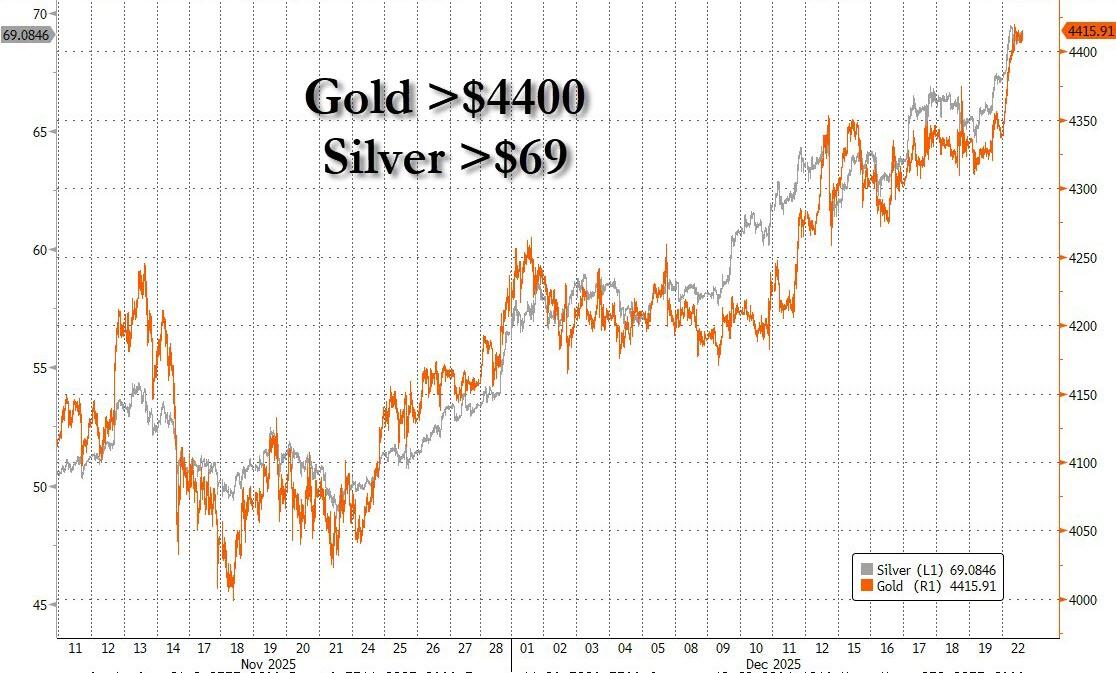
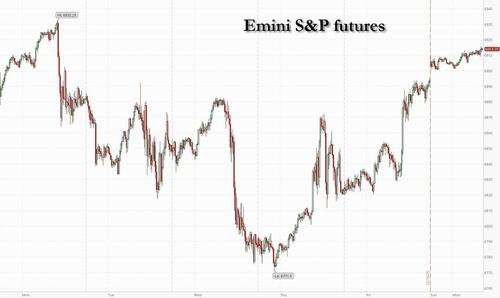
As we previewed late last week, the Santa Rally is back all right, and US equity futures are trading near session highs with the Nasdaq 100 poised to wipe out December’s losses as revived appetite for technology stocks powered gains across equity markets. As of 8:15am ET, S&P futures are 0.4% higher after the benchmark climbed 0.9% on Friday, the most in close to a month; Nasdaq futures rise 0.6% set to build on Friday’s jump as NVDA jumped 2% on a Reuters report the company sees H200 shipments to China starting by mid-February; Oracle and Micron both climbed more than 2% in premarket trading while most members of the Magnificent Seven megacaps advanced.Tech and mining shares outperformed in Europe. In Asia, benchmarks most exposed to artificial-intelligence demand, including South Korea’s Kospi, also led gains. Global bond markets remained under pressure, led by a second day of losses in Japanese debt following an interest-rate hike by the Bank of Japan. The dollar fell. Gold ($4400) silver ($69) and copper all climbed to record highs.The US economic calendar includes the Chicago Fed national activity index (8:30am). No Fed members scheduled to speak for the session
In premarket trading, Nvidia and Tesla lead gains among the Mag 7 tech stocks as sentiment toward AI-exposed companies improves following Micron Technology’s results last week. Nvidia has told Chinese clients it aims to ship its second-most powerful AI chips to China by mid-February, Reuters reports, citing people familiar with the matter. (NVDA +1.7%, TSLA +1.2%, GOOGL +0.5%, AMZN +0.4%, META +0.4%, MSFT +0.3%, AAPL is little changed).
Gold and silver miners advance after prices of both precious metals hit record highs. Newmont (NEM) climbs 2% and Coeur Mining (CDE) rises 4%.
Clearwater Analytics Holdings Inc. (CWAN) is up 8% as a group of private equity firms led by Permira and Warburg Pincus has agreed to acquire the investment and accounting software maker in a deal valuing it at $8.4 billion including debt.
Honeywell (HON) slips 1% after the industrial conglomerate adjusted its full-year and fourth quarter 2025 guidance to reflect the reclassification of its Advanced Materials business — now Solstice Advanced Materials Inc. — as it discontinued operations following its spinoff on October 30.
Marvell Technology (MRVL) rises 2% after Citi opened a positive catalyst watch on the chipmaker ahead of next month’s CES conference.
Rocket Lab (RKLB) gains 4% after saying late Friday that it won a contract to design and build 18 satellites, the company’s largest single contract to date.
T1 Energy (TE) climbs 7% after it signed a three-year contract to supply Treaty Oak Clean Energy with a minimum of 900MW of solar modules built with domestic solar cells from T1’s planned G2_Austin solar cell fab.
A year-end rally in stocks is taking hold, with investors positive about further gains in 2026, although volumes are set to be thinner in this holiday-shortened trading week. Sentiment has been bullish for three weeks in a row, according to Deutsche Bank strategists. Meanwhile, in commodities, oil rose as Trump intensified a blockade on Venezuela. Gold and silver soared to all-time highs on the escalating geopolitical tensions and bets on Fed rate cuts.
“It has been very remarkable how precious metals’ prices have decorrelated from other assets in recent months,” said Roberto Scholtes, head of strategy at Singular Bank. “Earlier this year, gold prices were materially correlated to the dollar and to high-beta risk assets such as tech stocks and cryptos. But this has been waning gradually, and nowadays they’re running freely.”
The focus on price moves in commodities went beyond record-setting metals, with oil climbing amid heightened geopolitical tensions after the US stepped up a blockade on Venezuela.
Bullishness toward stocks has pushed positioning higher, while fund managers are maintaining record low levels of cash, according to the latest BofA Fund Manager Survey. They are betting on a further rally next year, despite concerns in some quarters over rich valuations, heavy artificial intelligence capex and potentially over-optimistic earnings expectations. Separately, Goldman strategists say the economic outlook is supportive for small-cap stocks, a factor that’s underpriced by the market. The Russell 2000 is likely to advance 10% in 2026, close to the 12% return expected in the S&P 500, they say.
Optimism for a year-end rally in equities are growing after dip buyers late last week supported a rebound in US stocks. While some doubts about the AI trade and elevated valuations persist, optimism over the economy and corporate earnings is helping lift sentiment.
“Markets are riding a risk-on liquidity wave into year-end as resilient US growth underpins earnings next year, while a lower Fed fund rate eases financial conditions,” said Desmond Tjiang, chief investment officer for equities and multi-asset investment at BEA Union Investment. “Fears of AI capex and returns also recede on improving compute economics.”
Unlike the US, enthusiasm for European equities is missing on Monday as the Stoxx 600 slips 0.2% with utilities as well as food and beverage shares among the biggest laggards. Meanwhile, miners outperform as traders monitor the geopolitical outlook in Venezuela. Here are some of the biggest movers on Monday:
Saipem shares rise as much as 4.3%, the most since July, after the Italian energy services and drilling specialist wins an offshore EPCI Contract Worth $3.1 Billion by QatarEnergy LNG.
Fresnillo shares climb as much as 3% to a record high, leading a rally in mining stocks as gold, silver and copper prices hit record highs.
Gruvaktiebolaget Viscaria shares rise as much as 17%, the most in more than a year, after Handelsbanken initiated coverage of the Swedish mining company’s stock with a buy rating, calling its growth potential attractive.
Rank Group shares decline as much as 9.1%, hitting the lowest level since mid-May, after the gambling firm said its Spanish businesses, Enracha and Yo, were targeted by payment fraud totaling about €7.1 million.
ASP Isotopes shares plunge as much as 50% in Johannesburg after Bronstein, Gewirtz & Grossman said it is investigating potential claims on behalf of purchasers.
Fenerbahce shares fall as much as 3.5% in Istanbul to the lowest level since May after state-run Anadolu Agency reported the sports club’s chairman was questioned as part of an investigation into illegal drug use.
Pantheon Resources shares drop as much as 58%, the most since April 2018, after pausing testing of the Dubhe-1 well, citing cost profile of winter operations and focus on “disciplined” capital allocation.
In rates, Japanese yields remain center stage, with the 10-year segment hitting its highest level since 1999. The yield is 6bps higher today, amid speculation the Bank of Japan may need to raise interest rates more aggressively. This has spilled into other global benchmarks, lifting US, UK and German yields by 1-2bps. US yields cheaper by 1bp to 2bp across the curve with 2s10s, 5s30s spreads steeper by 1.2bp and 1bp on the day. US 10-year yields trade around 4.165%, cheaper by 1.5bp vs.
In Asia, stocks extended gains, as tech firms tracked their US peers higher in a holiday-shortened week. The MSCI Asia Pacific Index climbed as much as 1.1%, with TSMC and Samsung Electronics supporting the gauge higher. Tech-heavy benchmarks in Taiwan and South Korea led gains in the region with a more than 1.5% increase each. Japan and Hong Kong shares also advanced. Here Are the Most Notable Asian Movers
Kokusai Electric and Tokyo Electron shares climbed after Morgan Stanley MUFG analysts raised ratings and price targets for the stocks on signs of a recovery in demand for front-end semiconductor equipment. Meanwhile, Nidec shares rose after news the Japanese electronic component company’s founder Shigenobu Nagamori is stepping down from his position as chairman of the board.
Shriram Finance shares surge to a record after analysts saw Mitsubishi UFJ Financial Group’s $4.4 billion investment improving prospects of a credit rating upgrade.
Mixue Group shares surge as much as 13% in Hong Kong, the most since March 7, after the Chinese fresh tea maker opened its first store in the US.
Moore Threads shares rise as much as 4.2% after the company unveiled a new generation of chips aimed at reducing dependence on Nvidia Corp.’s hardware.
WiseTech shares drop as much as 4.7%, the most since Nov. 18, after Executive Chair Richard White’s investment vehicle RealWise entered into a collar derivative transaction.
Seatrium shares gain after the offshore engineering company reached an agreement with Maersk Offshore Wind’s affiliate Phoenix II A/S to deliver a wind turbine installation vessel by Feb. 28.
Kokusai Electric and Tokyo Electron shares climbed Monday after Morgan Stanley MUFG analysts raised ratings and price targets for the stocks on signs of a recovery in demand for front-end semiconductor equipment.
Daikin shares rose as much as 2.7%, the most since Nov. 20, after SMBC Nikko Securities raised the Japanese air conditioner maker to outperform from neutral on expectations for demand recovery and capital efficiency improvement.
Nidec shares climb as much as 7.3%, the most since Nov. 11, after news the Japanese electronic component company’s founder Shigenobu Nagamori is stepping down from his position as chairman of the board.
This week’s Treasury auctions kick-off at 1pm New York with $69 billion 2-year notes, followed by $70 billion 5-year notes and $44 billion 7-year notes Tuesday and Wednesday. Before today’s auction, the WI 2-year currently trades around 3.482% which is ~0.7bp richer than November’s sale
In FX, the upside in Japanese yields and officials’ jawboning has supported the yen versus the dollar. Bloomberg’s Dollar Index is down 0.2%, pressured also by the outperformance in AUD, NZD and GBP.
In commodities, as noted above, gold and silver sit at record highs, up 1.6% and 2.8% respectively. WTI crude oil futures are up 1.9% as the US pursues a third tanker in Venezuela. Bitcoin continues to rise, up 1.8%.
The US economic calendar includes September Chicago Fed national activity index (8:30am). No Fed members scheduled to speak for the session
Market Snapshot
S&P 500 mini +0.4%
Nasdaq 100 mini +0.6%
Russell 2000 mini +0.4%
Stoxx Europe 600 -0.2%
DAX little changed
CAC 40 -0.4%
10-year Treasury yield +2 basis points at 4.16%
VIX +0.1 points at 15.05
Bloomberg Dollar Index -0.2% at 1207.51
euro +0.2% at $1.1737
WTI crude +1.2% at $57.17/barrel
Top Overnight News
U.S. Coast Guard Chasing Another Tanker Involved in Shipping Venezuela Oil: WSJ
Russian General Is Killed After Car Bomb Explodes in Moscow: BBG
Paramount Amends Bid for Warner Discovery With New Ellison Guarantee: WSJ
Trump on Friday said he would call a meeting of insurance companies in the coming weeks to push them to cut prices and stay in the system.
Trump on Friday announced deals with nine pharmaceutical companies to cut prices on most drugs sold through Medicaid and lower cash-pay prices, while committing to most-favoured-nation pricing for future drugs, according to Reuters. The companies also pledged more than USD 150bln in US manufacturing and R&D investment, agreed to remit some foreign revenues to offset US costs, and received relief from US tariffs in return.
Charlie Kirk’s Empire Is Lining Up Behind a JD Vance Presidential Bid: WSJ
Vanke Averts Default as Bondholders Approve Longer Grace Period: BBG
Japan prepares to restart world’s biggest nuclear plant, 15 years after Fukushima: RTRS
CBS News Pulls ‘60 Minutes’ Segment; Correspondent Calls Decision Political: WSJ
One of Elon Musk’s Old Enemies Joins the Race to Run GM: WSJ
Syrians emptied Assad’s prisons. They’re filling up again, and abuse is rife: RTRS
Toxic Fumes on Planes Blamed for Deaths of Pilots and Crew: WSJ
The Warner Deal: Cinema owners fear that Netflix or Paramount acquiring Warner could reduce number of theatrical releases or speed time to streaming platforms: WSJ
Trump names Louisiana governor as Greenland special envoy, prompting Danish alarm: RTRS
Central Banks
ECB’s Kazmir said that the ECB remains flexible and will be ready to step in if needed. He is concerned about the long term growth prospect of the Eurozone.
Fed’s Hammack (2026 voter) said rates should be held steady into the spring after recent cuts, warning she was inflation-wary, noting November’s 2.7% CPI likely understated 12-month price growth due to data distortions, and suggesting the neutral interest rate was higher than commonly believed, the WSJ reported.
Former BoJ member Sakurai said the first hike to 1.0% could come around June or July and that the BoJ likely sees the neutral rate sitting somewhere around 1.75%.
Chinese Loan Prime Rate 5Y (Dec) 3.50% vs. Exp. 3.50% (Prev. 3.50%).
Chinese Loan Prime Rate 1Y (Dec) 3.00% vs. Exp. 3.00% (Prev. 3.00%).
Trade/Tariffs
China’s Commerce Ministry is to impose levies of up to 42.2% on EU dairy products, effective 23rd December, following its anti-subsidy probe.
New Zealand concludes free trade agreement with India; deal set to be signed in H1 2026. India and New Zealand are confident of doubling bilateral trade over the next five years.
A more detailed look at global markets courtesy of Newsquawk
APAC stocks kicked off the week with gains across the board as the region coat-tailed on the strength seen stateside. Tech outperformance continued across the region. ASX 200 edged higher as miners tracked gains in gold prices, with the yellow metal buoyed by a weekend packed with geopolitics Nikkei 225 was the clear outperformer as it topped 50.5k as the index cheered the post-BoJ JPY weakness on Friday alongside the global tech rally, whilst simultaneously overlooking the continuing rise in JGB yields. KOSPI was underpinned by its tech sector and following a month-to-date rise in exports. Hang Seng and Shanghai Comp conformed to the risk tone but with upside shallower than the above peers, with the PBoC LPR left unchanged as expected, whilst reports on Friday suggested US lawmakers urged the Pentagon to add DeepSeek and Xiaomi to the list of firms allegedly aiding the Chinese military.
Top Asian News
Japanese Chief Cabinet Secretary Kihara said will not comment on the forex market; recently seeing one-sided, rapid moves; important for currencies to move in a stable manner reflecting fundamentals; will take appropriate action against excessive moves. Closely watching the impact of higher interest rates while cooperating with the BoJ.
Japanese Top Currency Diplomat Mimura said he is recently seeing one-sided, rapid moves; will take appropriate action against excessive moves; concerned about forex moves.
China Vanke (2202 HK) bondholders approve the decision on a vote for 30-day extension of CNY 2bln bond, however rejecting one-year extension for 15th Dec CNY 2bln bond, via Reuters sources.
Goldman Sachs expect Chinese stocks to continue advancing in 2026, citing easing geopolitical tensions and as investors household savings begin flowing to equities as interest rates fall. Analyst Kinger Lau writes that “we expect the bull run to continue, but at a slower pace”. Though the firm highlights some main risks to the upside, including; global recession, AI exuberance, US-China tensions and disinflation. Finally, analysts suggest that the macro / equity-market policies remain in effect which should shift the expected fair value of Chinese stocks upward.
European equities (STOXX 600 -0.2%) are trading lower/flat this morning, with price action fairly rangebound in light newsflow. European sectors are trading with a mostly negative bias. Basic Resources (+1.1%) leads on firmer metal prices, followed by Tech (+0.4%) on positive spillover from the strong Nasdaq close, and Energy (+0.3%) on higher crude amid ongoing geopolitical tensions between Russia-Ukraine and US-Venezuela. On the downside, Utilities (-0.9%), Optimised Personal Care (-0.9%) and Food Beverage and Tobacco (-0.9%) lag.
Top European News
German Ifo survey finds that 26% of firms expect business to deteriorate in 2026, 59% expect no change, 15% forecast an improvement.
Geopolitics: Venezuela
US Coast Guard officials over the weekend tracked two oil tankers in international waters close to Venezuela, marking three tankers within the past week. An official suggested that the tanker is subject to sanctions, according to several media reports.
The Venezuelan government rejected the seizure of a new vessel transporting oil, it said in a statement.
Geopolitics: Ukraine
US Special Envoy Witkoff said the Ukrainian delegation held productive meetings over three days in Florida with US and European partners, including a separate US–Ukraine meeting, with discussions focused on timelines and sequencing of next steps.
Ukrainian President Zelensky said broader consultations with European partners should follow recent talks in the US.
Ukrainian President Zelensky said allies had started to slow supplies of air defence missiles and said Kyiv should stand by the US as mediator on talks with Russia, commenting on French President Macron’s proposal.
Ukrainian President Zelensky said the situation in the Odesa region was harsh after Russian strikes and said Russia was trying to restrict Ukraine’s access to the sea.
The Kremlin said changes made by Ukrainians and Europeans to peace proposals did not bring agreements closer or add anything positive, IFAX reported. It said Dmitriev was still in Miami meeting with Americans and would report on the results upon his return to Moscow. Kremlin aide said a trilateral Russia–US–Ukraine meeting was not being discussed.
Ukrainian President Zelensky said elections could not be held in Russian-occupied parts of Ukraine, could only take place once security was guaranteed, and said Kyiv was working with the US on a stable peace while preparing voting infrastructure for Ukrainians abroad, Reuters reported.
Ukraine’s deputy prime minister said Russia attacked the Pivdennyi port and was deliberately targeting civilian logistics in the Odesa region.
Russia’s Defence Ministry said Russian troops had captured Vysoke in Ukraine’s Sumy region and Svitlie in the Donetsk region, according to IFAX and TASS.
Russia’s Kremlin said Envoy Dmitriev will report to President Putin on the US proposals for a possible Ukraine settlement. Adds the US intelligence perception of Putin’s aims are mistaken following the Reuters report.
Russian General Sarvarov was injured in a car explosion in Moscow, via Unn; subsequently, the Russian Investigative Committee said the general was killed in the explosion.
“TASS: [Russian President] Putin’s envoy is likely to hold the next meeting with the US delegation in Moscow”, via Al Arabiya.
Two vessels and two piers were damaged in Russia’s Krasnodar after a Ukrainian drone attack, regional authorities said; damage to piers led to a large fire in the area.
US Special Envoy Witkoff said weekend meetings between US and Russian delegation were productive and constructive; Russia remains fully committed to achieving peace in Ukraine.
Geopolitics: Middle East
Israeli PM Netanyahu reportedly plans to brief US President Trump on possible new Iran strikes, according to NBC News. Israeli officials believe Iran is expanding its ballistic missile program. They are preparing to make the case during an upcoming meeting with Trump that it poses a new threat. Israeli officials have announced a Dec. 29 meeting.
Sources said the biggest risk is a war between Israel and Iran will break as a result of a miscalculation with each side thinking the other plans to attack and try to preempt it, according to Axios.
Israeli officials warned the Trump administration over the weekend that an Iranian IRGC missile exercise could be preparations for a strike on Israel, according to Axios sources.
US Event Calendar
8:30 a.m. ET: Chicago Fed Nat Activity Index
DB’s Jim Reid concludes the overnight wrap
For anyone still out there, we’re now entering a very quiet spell for markets before Christmas, with data releases and other headline announcements almost completely drying up. Indeed, there’s only two-and-a-half days left to go for many places, as the US and several European markets are closing early on Christmas Eve, and this week usually sees some of the lowest volumes of the year.
This morning, the main news has been further sharp losses for Japan’s government bonds, which follows the Bank of Japan’s Friday decision to hike rates by 25bps to 0.75%, the highest since 1995. The hike already meant that Japan’s 10yr yield was up +6.9bps last week to close above 2%, and this morning they’re up another +6.9bps to 2.08%, their highest since 1999. One factor behind that has been the weakness in the Japanese yen, which fell -1.40% against the US dollar on Friday, despite the hike. And this morning, the country’s chief currency official Atsushi Mimura said to reporters that “We’re seeing one-directional, sudden moves especially after last week’s monetary policy meeting, so I’m deeply concerned”. So in turn, that weakness for the yen is seen as raising the chance of another BoJ rate hike and has prompted the latest selloff for JGBs. We’ve seen that echoed across other countries too this morning, with 10yr Australian yields up +5.1bps this morning, whilst the 10yr Treasury yield is up +2.0bps to 4.17%.
For equities however, there’s been a much stronger picture across the board overnight, with gains for Japan’s Nikkei (+1.90%), along with the KOSPI (+1.82%), the CSI 300 (+0.79%), the Shanghai Comp (+0.64%) and the Hang Seng (+0.20%). Looking forward, US equity futures are also pointing higher, with those on the S&P 500 up +0.26%. Moreover, there’s been a fresh rally for precious metals this morning, with gold prices up +1.40% to $4400/oz, which would be an all-time closing high if sustained, and is the first time they’ve reached that level on an intraday basis as well. Similarly, silver prices (+3.25%) are up to a fresh record of $69.34/oz. So that now leaves their YTD gains at +68% for gold and +140% for silver, which would be the biggest for both since 1979, back when oil prices surged after the Iranian Revolution that year led to major supply disruption.
The latest rise in bond yields this morning follows several central bank decisions last week, where hawkish-leaning elements pushed yields higher around the world. So for example, the Bank of Japan did their 25bp rate hike as expected but also signalled more were still ahead and said real interest rates were “at significantly low levels”. Meanwhile in Europe, there was ongoing speculation about a potential ECB hike next year, particularly after they upgraded their forecasts for growth and core inflation. So that helped to push 10yr bund yields up +3.8bps last week to 2.89%, their highest level since the German fiscal stimulus announcements back in March.
However, the main exception to that pattern were US Treasuries, whose yields fell after the soft CPI print led investors to price in more rate cuts, with the 10yr yield down -3.7bps last week to 4.15%. That comes as speculation around the next Fed Chair has continued to swirl, and Trump said last week that it would be “someone who believes in lower interest rates”. We got some more headlines on the next Fed Chair last Friday as well, as CNBC reported that Fed Governor Waller had a “strong interview” with Trump, and that BlackRock’s Rick Rieder would be interviewed in the last week of the year. So as it stands the current odds on Polymarket are 56% for NEC Director Hassett, 22% for former Fed Governor Warsh, 12% for Governor Waller, and 6% for Rieder.
In terms of the week ahead, it’s a pretty quiet one on the events calendar. One thing to note will be a few US data releases, including the delayed Q3 GDP print today, but that’s very backward-looking and covers the period before the shutdown. Otherwise today, the more recent data will be the December consumer confidence reading from the Conference Board, which will be in the spotlight given the recent downtick in sentiment. In fact, the previous reading for November was the lowest since the Liberation Day turmoil in April. But apart from that, there really isn’t much scheduled.
With little on the calendar this week, this lack of events got us thinking about whether anything could disturb the pre-Christmas calm, as we have seen a few occasions when this week has brought heightened volatility. The best recent example is probably 2018, when you may remember a huge selloff saw the S&P 500 fall -7.7% in the four pre-Christmas sessions. A whole bunch of negative factors converged at once, including a hawkish Fed signalling more hikes to come, weak global data, US-China trade tensions, and the start of a US government shutdown on Dec 22. That selloff deepened further after the US Treasury Department said in a Dec 23 statement that Secretary Mnuchin had spoken with CEOs of the largest US banks, and that the President’s Working Group on financial markets would have a call. So that created huge concern that policymakers knew something that the rest of us didn’t, and the S&P hit its closing low on Christmas Eve.
Another good example, although not quite as fearful, happened in 2022. That was the year central banks hiked aggressively to combat inflation, with global bonds and equities entering a bear market that featured huge bouts of volatility as they kept sinking lower. And the Christmas run-up was no different, with the 10yr Treasury yield surging +26bps in the week before Christmas. That followed an adjustment to the Bank of Japan’s yield curve control policy on Dec 20, which was widely seen as the beginning of the end of Japan’s ultra-loose monetary policy. They permitted the 10yr JGB yield to rise to around 0.5%, up from 0.25% previously, but the effects cascaded globally given Japan’s role as one of the last anchors for low yields. So that led to some dramatic moves right before Christmas, and it was one of the biggest weekly jumps that year for the 10yr Treasury yield.
To be fair, this time last year saw a pre-Christmas Santa rally that took the S&P 500 up +2.9% in the final 3 days before Christmas. But either way, it shows that even if it’s a quiet week on the calendar, we can’t completely dismiss the prospect of a final year-end curveball, which would be in keeping with the constant surprises of 2025 so far. After all, this year has seen a huge regime shift in German fiscal policy in March, the Liberation Day tariffs in April, a direct military conflict between Israel and Iran in June, and the longest-ever US government shutdown over October-November. And that’s before we think about some other long-running themes, including periodic bond market flareups around fiscal policy, fears of a potential AI bubble, and ongoing concern around private credit.
Recapping last week’s moves now, global equities navigated several headwinds at the start of the week to recover into the weekend, with the S&P 500 ultimately closing up +0.10% for the week. Concerns over AI valuations had been an issue in the middle of the week, with Oracle struggling after the FT reported that Blue Owl Capital wouldn’t back a $10bn deal for Oracle’s data centre in Michigan. However, the soft US CPI report and a more positive earnings release from Micron helped things turn around into the weekend, and the Magnificent 7 ultimately posted a +1.48% gain for the week.
That US CPI report was critical because it kept open the prospect of further rate cuts from the Fed next year. Admittedly, there were questions about the data’s methodology given the government shutdown, but the print was still viewed as soft enough to make Fed rate cuts more likely. So the headline CPI rate was down to +2.7% year-on-year (vs. +3.1% expected), whilst core CPI hit its lowest since early 2021 at +2.6% (vs. +3.0% expected). Earlier in the week, we also had the delayed jobs report for November, which showed the unemployment rate ticking up to 4.6%, whilst it showed payrolls had fallen by -105k in October, before rebounding by +64k in November. So overall, that kept up the momentum behind further rate cuts, with 60bps of further cuts priced in by the December 2026 meeting at the close on Friday. In turn, US Treasuries rallied across the curve, with the 2yr yield (-3.9bps) down to 3.48%, whilst the 10yr yield (-3.7bps) fell to 4.15%. US credit spreads saw little movement however, with IG spreads widening +1bp last week, whilst HY spreads were unchanged.
In Europe, equities put in a stronger performance, with the STOXX 600 (+1.60%) closing at a new record. In part, they were supported by signs of progress on the Ukraine peace talks, and Brent crude (-1.06%) fell back to $60.47/bbl, whilst yields on Ukraine’s 10yr dollar bonds fell to their lowest since March. In the meantime, the ECB left their deposit rate at 2%, although some hawkish tones also saw yields on 10yr bunds (+3.8bps), OATs (+3.5bps) and BTPs (+3.7bps) move higher. Otherwise, the Bank of England delivered a 25bp cut, taking their policy rate down to 3.75%, albeit in a close 5-4 vote that saw the rest prefer to keep rates on hold. Meanwhile, Euro IG credit spreads were unchanged last week, whilst HY spreads were +1bp wider.
Tyler Durden
Mon, 12/22/2025 – 08:30
https://www.zerohedge.com/markets/futures-rise-japanese-yields-surge-gold-and-silver-soar
Ciberataque interrumpe el servicio postal y bancario en Francia
Associated Press
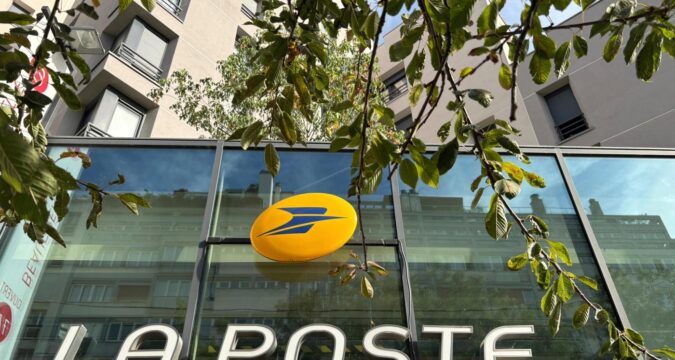
PARÍS (AP) — Un presunto ciberataque dejó fuera de servicio el servicio postal nacional de Francia y su brazo bancario el lunes, bloqueando y retrasando las entregas de paquetes y los pagos en línea en plena época navideña.
El servicio postal, llamado La Poste, dijo en un comunicado que un incidente de denegación de servicio distribuido (DDoS), “hizo que sus servicios en línea fueran inaccesibles”. Afirmó que el incidente no tuvo impacto en los datos de los clientes, pero interrumpió la entrega de paquetes y correo.
En una oficina de correos de París adornada con guirnaldas navideñas y que suele estar muy concurrida en esta época del año, los empleados no pudieron atender a clientes frustrados que hacían fila para enviar o recoger paquetes, incluidos regalos de Navidad.
Los clientes del brazo bancario de la compañía, La Banque Postale, no pudieron usar la aplicación para aprobar pagos o realizar otros servicios. El banco redirigió las aprobaciones a mensajes de texto en su lugar.
“Nuestros equipos están movilizados para resolver la situación rápidamente”, dijo el banco en mensajes publicados en las redes sociales.
Hace una semana, el gobierno de Francia fue blanco de un ciberataque que afectó al Ministerio del Interior, encargado de la seguridad nacional.
En ese incidente, un presunto hacker extrajo unas pocas docenas de archivos sensibles y obtuvo acceso a datos relacionados con registros policiales y personas buscadas, dijo el ministro del Interior, Laurent Nunez, en la emisora France-Info. Culpó a la “imprudencia” en el ministerio por el incidente. Los medios franceses informaron que un joven de 22 años fue detenido.
También la semana pasada, los fiscales dijeron que la agencia de contraespionaje de Francia está investigando un presunto complot de ciberataque que involucraba software que habría permitido a usuarios remotos controlar los sistemas informáticos de un ferry internacional de pasajeros. Un miembro de la tripulación letón está bajo custodia enfrentando cargos de haber actuado para una potencia extranjera no identificada, dijeron las autoridades.
Francia y otros aliados europeos de Ucrania alegan que Rusia está librando una “guerra híbrida” contra ellos, utilizando sabotaje, asesinatos, ciberataques, desinformación y otros actos hostiles que a menudo son difíciles de rastrear rápidamente hasta Moscú.
______
Esta historia fue traducida del inglés por un editor de AP con la ayuda de una herramienta de inteligencia artificial generativa.
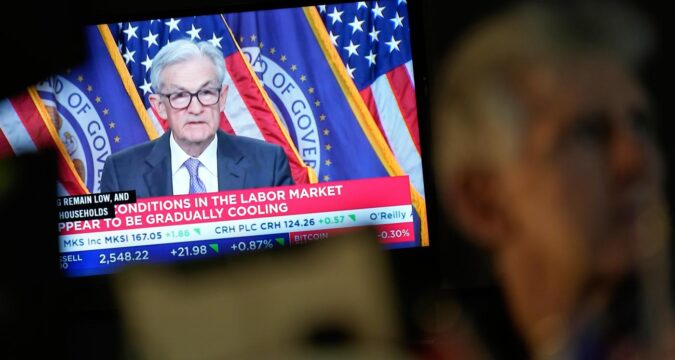
FOMO vs. bubble angst signals more stock volatility in 2026
The U.S. stock market is poised to be kept on edge next year as investors are caught between fear of missing out on the artificial-intelligence rally and concern that it’s a bubble just waiting to burst.
Big selloffs and quick reversals have been a feature of stock markets for the past 18 months. That trend is likely to continue heading into 2026, with some strategists anticipating that AI will follow the boom-and-bust cycle of past technological revolutions.
The tech companies at the center of the AI investment boom carry an outsized influence. While the divergence between the group and the rest of the S&P 500 has helped dampen realized volatility across the market in 2025 as gains in tech cancel out declines elsewhere, investors are alert for stumbles in chip names to spread. That would cause volatility gauges such as the Cboe Volatility Index to surge.
“2025 has generally been a year of rotation and narrow leadership, rather than one of broad risk-on versus risk-off,” said Kieran Diamond, derivatives strategist at UBS Group AG. “This has helped to drag implied correlation levels down to record lows, which in turn leaves the VIX at risk of ongoing outsized spikes whenever we see macro drivers taking over again.”
The scale of the stock-price runup has made angst about a bubble the top concern among fund managers, a recent Bank of America Corp. survey found. But another is the classic risk of missing out if it still has more room to run — potentially punishing anyone who pulls back too early.
The strategists expect equity volatility to be supported in 2026 primarily because asset bubbles tend to get more unstable as they inflate. As a result, they say investors should expect occasional declines surpassing 10%, but with record-fast snapbacks as traders realize the bubble isn’t popping yet.
To UBS strategists, the question of whether the AI boom continues or busts makes owning contracts that profit from higher volatility on tech-heavy Nasdaq 100 Index key to playing both sides of the trade. Maxwell Grinacoff, head of U.S. equity-derivatives research at the Swiss bank, says volatility wagers on the gauge perform better in both scenarios, adding that the trade can be structured to be directionally neutral using straddles or over-the-counter swaps.
Buying Nasdaq 100 volatility while selling S&P 500 volatility is “my highest conviction trade for the next year,” Grinacoff said.
There may be longer periods of calm in between moments of uproar, however. JPMorgan Chase & Co. strategists say volatility is being tugged between technical and fundamental factors that suppress it and macro factors that support above-average levels. While the median VIX level will hold around 16 to 17 for 2026, risk-off periods will send the the index surging, they argue.
One other technical factor that will affect options pricing is an imbalance of investment flows that should steepen the volatility curve in 2026, according to Antoine Porcheret, head of institutional structuring for the UK, Europe, the Middle East and Africa at Citigroup Inc.
“At the short end of the curve, you have a lot of supply coming from both retail and institutions — there’s been a significant growth in QIS and vol carry strategies, and that will likely amplify next year,” he said. “At the long end, you have hedging flows which will keep the long end elevated, so a steep term structure can be expected.”
The popular dispersion trade — which involves betting on higher single stock volatility and smaller index moves — will likely be especially popular early in the year, with investors putting on new versions of the strategies. Some funds are now taking the opposite position in what they argue has become an overcrowded trade.
“Dispersion is an extremely popular, overcrowded tourist trade these days,” said Benn Eifert, managing partner and co-chief investment officer of QVR Advisors, a San Francisco-based volatility fund. “We have the reverse dispersion trade on.”
Firms will need to get more creative to squeeze returns out of dispersion strategies, said Alexis Maubourguet, chief investment officer of Adapt Investment Managers, a Swiss hedge fund. Investors looking for more edge will explore variations.
“Dispersion now is a well-known strategy and a lot of the alpha has disappeared,” said Maubourguet. “You can improve your implementation, you can improve your name selection. The third way to do that is to improve your timing and trade tactically around your position.”
Others expect the flow of capital into dispersion strategies to keep demand for single-stock volatility relatively elevated.
“A lot of dispersion packages will expire in January, so hedge funds will be re-loading on custom basket dispersion, and that will likely maintain the single-stock vol premium over the index,” Porcheret said.
Some players are just buying single-stock volatility, while others are selling a smaller amount of index volatility at the same time to help cheapen the carry cost during quiet times, Maubourguet added.
The biggest question for investors is how to time any sudden moves. Strategists at Societe Generale SA including Jitesh Kumar presented in a client note a fundamental volatility regime model that they apply to dynamically switch between long and short volatility trades.
Broadly, a flattening yield curve is the signal for buying volatility, while the short volatility trade is triggered by a steepening curve. Although the model underperformed the S&P 500’s total return over a two-decade period, it avoided significant drawdowns in 2008 and 2020.
The model — which the strategists say has a good track record of forecasting turning points in volatility — points to higher volatility for 2026. The overall corporate sector in the U.S. has low leverage, but the strategists believe it is at the cusp of a new AI driven re-leveraging cycle which should lead to both credit spreads and equity volatility moving higher.
Overall, hedging for tail risks will be especially important for investors in 2026, according to Tanvir Sandhu, Bloomberg Intelligence’s chief global derivatives strategist.
“Investor FOMO, conflicting AI narratives and the U.S. administration as a source of volatility are creating a supportive backdrop for trading volatility, making preparation for both the left and right tails key in 2026,” he said.
https://www.chicagotribune.com/2025/12/22/stock-market-outlook/

Kenilworth, Northfield, Winnetka leaders discuss shared issues in end-of-year event
The villages lining the North Shore differ in size and in plenty of other ways, but as the leaders from Kenilworth, Northfield and Winnetka made clear in their respective recaps at a State of the Villages event Friday, they share extensively in their challenges and aspirations.
“We have a lot of the same sort of themes that run through our communities,” Winnetka Village President Bob Dearborn said. “And I have tremendous respect for Northfield and Kenilworth, of course.”
The neighboring villages deal with aging infrastructure, he said. And they’ve worked to boost retail and economic development, common buzzwords along Green Bay Road and its environs.
Yet each village has specific needs and solutions, too. Northfield’s leaders shared their push to transform outmoded office spaces with a zoning change. Kenilworth touted progress on its “generational” beach improvement project.
And a dose of healthy competition came up with a question from an audience member about the “hot restaurants” in a different North Shore village, Wilmette, asking what the three villages could do to attract more eateries.
“Annex Wilmette,” Northfield Village Manager Patrick Brennan responded jokingly.
A boisterous laugh rumbled from the crowd that had gathered in the lower level of the Winnetka Congregational Church.
The real solution, Brennan continued, involves having previously occupied restaurant space available. Otherwise, new builds often request “some sort of financial assistance,” he said.
Meanwhile, Winnetka views eateries as “mission critical” but has plenty of restaurants to boast of, Dearborn added.
(At a similar event in October, Wilmette Village President Senta Plunkett said a “pancake crawl” could soon be afoot among the many breakfast selections there.)
The League of Women Voters Winnetka-Northfield-Kenilworth organizes the annual event. Aside from the village managers and board presidents, representatives from New Trier and Northfield townships discussed their respective food banks — which served more people with the suspension of SNAP benefits in November — among other services.
Kenilworth ‘paving the way’ for others
Kenilworth Village Manager Katarzyna Thake kicked off the event by recounting the village’s progress on its beach improvement project. Work began this year on the second phase, which includes building new bathrooms, adding a pedestrian ramp and planting native landscaping. The construction should wrap up by the summer, Thake said.
Other initiatives underway in Kenilworth include a comprehensive update of the village’s zoning code. The changes will make the building regulations “more functional for all users,” Thake said. Another proposed project looks to improve the street features of Green Bay Road, Kenilworth’s commercial spine, for pedestrians and businesses.
And the village created a tool that uses weighted factors to help determine which infrastructure projects to prioritize. “Kenilworth is paving the way for other municipalities” in this regard, Thake said.
Village President Cecily Kaz followed up by describing her role as a “sign twirler” for Kenilworth’s ongoing projects, including the zoning revisions, a “monumental effort that nobody really wants to talk about.”
Northfield angling for more development
Over in Northfield, economic development is the issue of the day, especially along the north-south Central Avenue corridor that’s populated by offices.
“For those of you in the commercial industry, you know office really is not the place to be right now for sales,” Brennan said. “So we’ve been looking at that as an area that’s a little tired and could use some upgrade.”
Northfield Village Manager Patrick Brennan talks about economic development during the State of the Villages in Winnetka on Friday, Dec. 12, 2025. Village managers and board presidents from Kenilworth, Northfield and Winnetka spoke at the event. (Shun Graves/for Pioneer Press)
Village President Tracey Mendrek, too, pointed to the “really tired locations” as places to redevelop.
This year, the village changed the zoning of the area to allow multi-family units on the first level, Brennan said. This has started to attract developers, including a condominium project at 405 Central Ave.
It’s all part of an effort to build a strong business district that would boost economic activity and tax revenue. However, the future of one spot, the former Mariano’s, remains unclear.
The Mariano’s supermarket on Willow Road closed this year, and village officials have tried to woo a new grocer. A potential Sunset Foods opening hasn’t happened yet because of “sticking points” on the lease, Brennan said.
‘Year of transition’ for Winnetka
Village Manager Kristin Kazenas called 2025 a “year of transition” for Winnetka. A quick walk downtown would confirm that.
On Green Bay Road, the three-story Chase building has started to take shape. Nearby, the four-story One Winnetka mixed-use development and the four-story Engel & Völkers building should also finish construction in 2026, Kazenas said. And the village has begun to consider what a redevelopment of the downtown post office could look like.
Winnetka Village Manager Kristin Kazenas offers updates about ongoing downtown development, as well as an upcoming Willow Road reconstruction, at the State of the Villages event in Winnetka on Friday, Dec. 12, 2025. (Shun Graves/for Pioneer Press)
Another forthcoming construction project could prove more disruptive: Winnetka’s main east-west thoroughfare, Willow Road, will undergo reconstruction in late spring 2026.
“So figure out your alternate plans now,” Kazenas said, eliciting some nervous laughs.
As for the coveted economic development? Winnetka has only one vacant storefront, meaning its first-floor vacancy rate stands below 1%, Kazenas added. Kyoto Japanese Restaurant closed in September, according to its now-dormant website.
https://www.chicagotribune.com/2025/12/22/kenilworth-northfield-winnetka-leaders-discuss-issues/

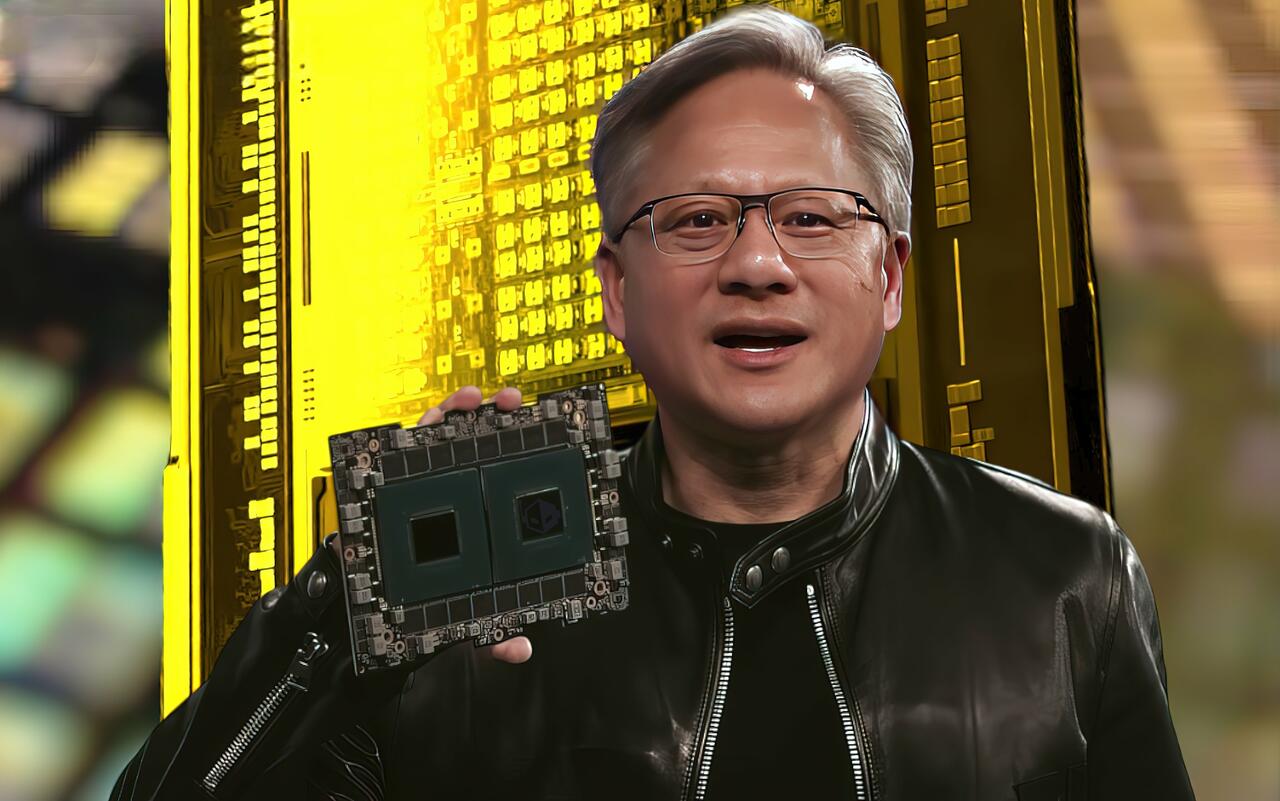
Nvidia Prepares To Ship H200 AI Chips To China By Mid-February
Nvidia Prepares To Ship H200 AI Chips To China By Mid-February
Nvidia shares rose slightly in premarket trading in New York after Reuters reported that the US chipmaker has informed customers it plans to ship its second-most powerful AI chip, the H200, to China before the Lunar New Year in mid-February.
Sources familiar with the shipment say Nvidia plans to deliver about 5,000 to 10,000 chip modules, equivalent to 40,000 to 80,000 H200 AI chips, to China in the coming months.
Those same sources noted that the chipmaker plans to expand H200 production capacity in the new year, with orders for that capacity scheduled to open in the second quarter of 2026.
Designed by Nvidia, the H200 AI chips are manufactured by Taiwan Semiconductor Manufacturing Company using its advanced 4-nanometer process. This is the same foundry that manufactures most of Nvidia’s Hopper-generation GPUs.
Major Chinese tech firms, including Alibaba Group and ByteDance, are interested in the H200s for training large AI models. This chip offers about six times the performance of the H20.
However, the sources noted:
Significant uncertainty remains, as Beijing has yet to approve any H200 purchases and the timeline could shift depending on government decisions, the sources said.
“The whole plan is contingent on government approval,” the third source said. “Nothing is certain until we get the official go-ahead.”
. . .
Chinese officials held emergency meetings earlier this month to discuss the matter and are weighing whether to allow shipments, Reuters reported this month. One proposal would require each H200 purchase to be bundled with a set ratio of domestic chips, according to the report.
This report follows the Trump administration’s approval of Nvidia’s sale of H200s in China, but only on the condition of a 25% surcharge. The opportunity from the US Gov’t will also be available to other chipmakers, such as Intel and AMD.
However, China’s move to expand domestic production of advanced AI chips may be at odds with Western chipmakers trying to expand market share in the world’s second-largest economy.
Tyler Durden
Mon, 12/22/2025 – 08:20
https://www.zerohedge.com/ai/nvidia-prepares-ship-h200-ai-chips-china-mid-february
Inundaciones repentinas en norte de California dejan carreteras anegadas, rescates y una muerte
REDDING, California, EE.UU. (AP) — Fuertes lluvias e inundaciones repentinas empaparon las carreteras en el norte de California, lo que llevó a rescates desde vehículos y hogares y al menos una muerte confirmada, informaron autoridades.
La policía en Redding informó que recibió el domingo numerosas llamadas de automovilistas varados que intentaron conducir a través de áreas inundadas. Una persona en Redding murió, publicó en línea el alcalde Mike Littau. No proporcionó más información.
Redding tiene aproximadamente 93.000 habitantes y está a unos 257 kilómetros (160 millas) al norte de Sacramento.
Entre 7,6 y 15,2 centímetros (3 y 6 pulgadas) habían caído el domingo por la noche en partes de dos condados, informó el Servicio Meteorológico Nacional.
En el área del paso de montaña de Donner Summit, los bomberos en Truckee extendieron una escalera a los residentes varados en una casa a lo largo del río South Yuba, publicó el departamento de bomberos en línea el domingo. No se reportaron heridos.
El servicio meteorológico en Sacramento había dicho que una serie de ríos atmosféricos cálidos traería lluvias moderadas a fuertes al Valle, las estribaciones y las montañas la semana de Navidad.
Los ríos atmosféricos son bandas largas y estrechas de vapor de agua que se forman sobre un océano y fluyen a través del cielo, transportando humedad desde los trópicos a latitudes del norte.
A principios de este mes, el clima cálido y las condiciones meteorológicas inusuales que se remontan hasta el ciclón tropical en Indonesia ayudaron a potenciar ríos atmosféricos persistentes que empaparon el estado de Washington con casi 19 billones de litros (5 billones de galones) de lluvia en una semana, amenazando con niveles récord de inundación, dijeron los meteorólogos.
___________________________________
Esta historia fue traducida del inglés por un editor de AP con ayuda de una herramienta de inteligencia artificial generativa.

Kansas lawmakers to vote proposal to lure Chiefs across the state line from Missouri
TOPEKA, Kan. — Kansas lawmakers are poised to vote Monday on a proposal that could lure the Kansas City Chiefs across the state line from Missouri, and replace popular but aging Arrowhead Stadium with a new facility capable of hosting major year-round events.
The meeting of the Legislative Coordinating Council, which includes the state’s top lawmakers, is expected to be attended by Chiefs owner Clark Hunt and other team officials. If the proposal is passed, the Chiefs could move swiftly in announcing plans to depart their 53-year-old home at the Truman Sports Complex for a stadium that could cost upwards of $2 billion.
The state’s proposal would allow for STAR bonds to be issued to cover up to 70% of the overall cost of the project. They would be paid off with state sales and liquor tax revenues generated in a defined area around around the sports complex.
What to know about the Chicago Bears’ possible move from Soldier Field
The same bonding process was used to build Kansas Speedway and the surrounding shopping and entertainment district, known as The Legends, in Kansas City, Kansas — the area where a future stadium for the Chiefs is most likely to be built.
The area is also home to Children’s Mercy Park, where Sporting Kansas City of Major League Soccer plays its home matches.
“The state of Kansas is in active discussions with the Kansas City Chiefs about the prospects of building a new stadium and other facilities in Kansas,” the Kansas Department of Commerce said last week. “No final agreement has been reached, but this would be a massive economic win for Kansas and benefit Kansans for generations to come. We are aggressively pursuing this opportunity.”
The move by the Chiefs would be a massive blow to Missouri lawmakers and Gov. Mike Kehoe, who have been working on a package of their own to prevent a second NFL franchise in a decade from leaving their borders. The Rams departed St. Louis for Los Angeles a decade ago in part because of their inability to secure funding to help replace The Dome at America’s Center.
Kehoe backed a special legislative session in June to authorize bonds covering up to 50% of the cost of new or renovated stadiums, plus up to $50 million of tax credits for each stadium and unspecified aid from local governments.
The special session came in response to Kansas lawmakers approving their bond package.
The Chiefs originally planned an $800 million renovation of Arrowhead Stadium in a joint effort with the Kansas City Royals, who are similarly planning to build a new facility to replace Kauffman Stadium — which sits a couple of hundred yards across a parking lot from Arrowhead Stadium — when the two teams’ leases with Jackson County, Missouri, expire in January 2031.
But after county voters soundly defeated a local sales tax extension last year, the Royals and Chiefs began work on separate plans.
The Royals will not be discussed by Kansas lawmakers Monday, but momentum appears to be building behind their own move across the state line. An affiliate of the club already has purchased the mortgage on a tract of land in Overland Park, Kansas.
Quinton Lucas, the mayor of Kansas City, Missouri, has been working to keep both franchises on the Missouri side of the state line. He said in a statement over the weekend that negotiations had continued with the Chiefs throughout last week.
“We’ll reserve further comment until we hear from the Kansas City Chiefs,” Lucas said.
Hunt has long said his preference was to renovate Arrowhead Stadium, which was beloved by his father and team founder, the late Lamar Hunt. It is considered one of the jewels of the NFL, alongside Lambeau Field in Green Bay, and is revered for its tailgating scene and home-field advantage; it currently holds the Guinness World Record for the loudest stadium roar.
This summer, Arrowhead Stadium will host six World Cup matches, including matches in the Round of 32 and quarterfinals.
The Hunt family has warmed in recent years to the idea of leaving their own mark by building its replacement, though. Not only would a new, state-of-the-art stadium provide new revenue streams, through luxury seating and accompanying development, but a fixed or retractable roof would allow it to be used year-round. That would mean the potential to host concerts and events, college football bowl games, the Final Four and one of Lamar Hunt’s long-held dreams: a Super Bowl.
Hanna reported from Topeka. Skretta reported from Kansas City, Missouri.
https://www.chicagotribune.com/2025/12/22/chiefs-kansas-stadium-vote/