Category: News
Calling it ‘something magical,’ author makes Geneva’s Christmas Walk focus of children’s book
A special part of the annual Christmas Walk in Geneva has now become the focus of a children’s book.
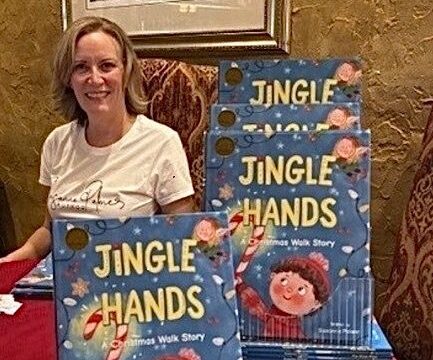
In the fall, St. Charles resident and author Suzanna Palmer released “Jingle Hands,” based on Bob’s Candy Cane Parade, a traditional part of the Christmas Walk festivities.
The parade was begun in 2010 by the late Bob Untiedt, who was the owner of Graham’s Chocolates in downtown Geneva.
Using the elements of the actual parade as well as those working at Graham’s, Palmer has woven a story that she says is much better, in some ways, “than the fantasy and make-believe that fills most children’s tales.”
“Most children’s books are fictional and magical and filled with wonder. I think kids deserve to read real stories,” Palmer, 59, said shortly after this year’s Candy Cane Parade concluded earlier this month. “Everything that I wrote about in the book is true except the candy cane, which is magical, but that can be true in life, right?”
The story itself centers around a boy named Harvey who Palmer said “is excited for the Christmas Walk and all he wants is that one candy cane once a year.”
“There are elves in the story and when they go to light the tree just as people do in the real parade, the special candy cane goes missing and then it’s a bit comical as to how they get it back and a decision that Harvey has to make to save Christmas,” Palmer said.
A native of Sydney, Australia, Palmer only recently became an author, penning her first self-published book, “Moxy, Who Do You Want To Be?” That story is based in St. Charles where she and her husband Marlon live today.
“I’ve always had a passion for writing, and the children’s book came about as I couldn’t find a gift book for my Australian friends,” she said. “I looked for a book specifically on St. Charles and there was nothing – there were local authors but nothing about foxes, the river or St. Charles, so I wrote one.”
The “Moxy” book was first published in August of 2024.
Palmer said her life’s work up to this point has included secretarial duties and “then becoming a florist where I had a gift basket business for 10 years in Australia.”
“That’s how I learned my business acumen and when we moved to the States, I got into real estate where I now do property management and flipping houses,” Palmer said.
The 32-page illustrated book “Jingle Hands,” she said, was written between November 2024 and January 2025.
The book includes direct references and illustrations tied to Untiedt’s daughter, Jayni Wunderlich of Elburn, now the CEO of Graham’s Chocolates, who said that she and her mother Beckie Untiedt of Huntley were approached this year after the story was written but before it was published.
Beckie Untiedt, left, and Jayni Wunderlich, now the CEO of Graham’s Chocolates in Geneva, showcase a copy of “Jingle Hands,” a new children’s book based on Bob’s Candy Cane Parade, a Geneva Christmas Walk tradition begun by Beckie’s late husband Bob Untiedt. (David Sharos/For The Beacon-News)
“She approached us for permission probably in late spring or early summer this year,” Wunderlich said of Palmer. “She asked if she could use our shop and likenesses and the relationship with our family. Her husband worked for us a bit – he did home things, like a handy man. She knew our family and loved our dad and she loved our candy cane pull.”
The book’s central character, Harvey, is named after Untiedt’s grandfather while Wunderlich herself is also in the story.
“I’m Harmony the Elf in the book and I organize the candy cane pull. My parents were very musical so naming me Harmony made sense,” Wunderlich said. “My dad’s father – my grandfather’s name was Harvey – and we have a caramel apple called the Harvey Graham Apple.
“My three children and mom are depicted in the book twice – the backs of their heads looking into the shop and then later towards the end there is a picture of my mom with my three kids in front of a tree ornament that says ‘Bon Jovi’ which was my dad’s phrase as he was leaving some place.”
Palmer reflected on the ornament and other items in the book which she said reflect little hidden secrets of their own.
“Something I learned from doing this second book was the amount of little messages I could hide in a book. Something I was able to do based around family,” she said “There are lots of little things written or found in an illustration that have meaning, but the general public might not know those things about Bob (Untiedt) and his family. There’s more significance than some might realize.”
Officials at the Geneva History Museum say that Palmer’s book will have a place in their archives along with other books that have been penned by locals.
“Next year is going to be the 50th anniversary of Geneva’s Christmas Walk and it’s such a celebrated tradition – people come from all over the place,” said Terry Emma, director at the museum. “I think it’s deemed worthy to be preserved in the archives here. We do that with any local authors that write about our town. We save a copy of their book.”
Jerry Miller of Geneva said he bought four copies of the book for his grandchildren.
“I think having one our institutions in town preserved in a children’s book, I couldn’t be happier,” he said. “This memorializes what those of us who live in Geneva thoroughly appreciate and enjoy. We found out about the book after going to a presentation at the history museum about the traditions of Geneva Christmas, so we bought them out.”
Palmer admits she’s been touched over and over by the Graham’s holiday tradition and wanted to give it a bigger audience.
“After migrating from Australia, I found that life here was very different and I feel like this is my second life,” Palmer said. “The Christmas Walk – witnessing what happens in that street and what happens outside of Graham’s is culturally different from anything I’ve known in Australia.
“It resonated with me as something magical and watching the people and watching what happens, it stuck with me,” Palmer added. “I think the nicest complement I’ve received are from the kids impressed by meeting an author and wanting to read more. I liked being able to capture a real story.”
David Sharos is a freelance reporter for The Beacon-News.
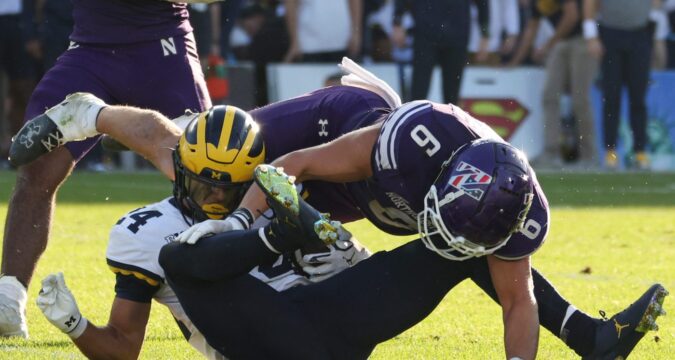
Northwestern safety Robert Fitzgerald, shaped by dad’s memory, worked his way from scout team to All-Big Ten
Northwestern assistant head coach Harlon Barnett has a long list of nicknames ready to use whenever he addresses or talks about safety Robert Fitzgerald.
The Terminator. The World’s Greatest Tackler. The Face of the Big Ten. The Eraser. The General. The Example. Mr. Consistent.
“He’s going to start forgetting his own name,” Barnett said.
Fitzgerald has given Barnett a lot of reason to talk about him in a breakout season that continues at noon Friday in Northwestern’s game against Central Michigan in the GameAbove Sports Bowl on ESPN.
The redshirt junior goes into the game at Detroit’s Ford Field as the Big Ten leader with 68 solo tackles for a Wildcats defense that fueled their 6-6 regular season. He ranked fourth in the conference with 109 tackles and also had 6½ tackles for a loss, three passes defended, an interception and a fumble recovery.
“He’s maximizing his gifts, talents and abilities that the Lord has given him,” Barnett said. “And he takes no days off.”
Fitzgerald’s season, for which he was named second-team All-Big Ten by coaches, comes after three years of working his way into bigger roles with Northwestern. He began with the Wildcats scout team and then played primarily on special teams in his first two seasons before earning more time on defense last year.
Throughout the climb, he focused on the process, determined that when the Wildcats needed him, he would be prepared.
“You’ve got to put the work in, day in, day out, no matter how long it takes,” Fitzgerald said. “But eventually your opportunity is going to come. And when that opportunity came, I knew that I was going to be ready based on all the work that I’ve been putting in for the past three years, on and off the field, in the weight room, in the training room, getting my body right, learning the playbook, studying film.”
Fitzgerald’s approach — and his understanding of the value of each day — was developed in part before his time at Northwestern. During his senior year of high school in Dallas, he watched his father, Matthew, fight ALS, and his memories of his dad have shaped how he lives now.
In the stands
Norhwestern safety Robert Fitzgerald tackles UCLA’s Jaivian Thomas on Sept. 27, 2025, at Martin Stadium in Evanston. (Michael Hickey/Getty Images)
The Fitzgerald family would have Italian beef and Lou Malnati’s shipped to Dallas for Chicago Bears-Green Bay Packers games. Fitzgerald and his sister, Olivia, were Packers fans because of their mom, Amy, who is from Wisconsin. Matt, who grew up in the Wildwood/Edgebrook area of Chicago, cheered for the Bears.
“He always said that my mom brainwashed me and my sister to be Packers fans,” Fitzgerald said.
Fitzgerald said his father was passionate about the work he did as a marketing executive. Midway through his career, he met Mark Cuban at the gym, became friends with him and became the Mavericks senior vice president for marketing and communications, a job that allowed Fitzgerald to be a Mavs ball boy and meet Dirk Nowitzki as a kid.
Matt could light up a room and was passionate about his family and friends, a trait Fitzgerald carries with him to his relationships.
And the former Loyola Academy safety loved football, a passion he passed on to his son. Fitzgerald remembers spending countless hours on the couch watching NFL Sunday Ticket with his dad. They would play in the backyard, reenacting Super Bowl-winning drives, making sideline grabs or playing goal-line tackle, the latter game one his mother didn’t love.
Fitzgerald said his dad was the biggest influence on his football career, giving him everything he needed to be successful. And he kept cheering on his son even after he was diagnosed with ALS the summer before Fitzgerald’s senior year at Jesuit College Prep. Fitzgerald, an All-State safety and running back that season, would look up into the stands to see his dad.
“I’d be like, ‘Whatever I’m going through — I’m tired out here; I’m exhausted — whatever I’m going through is minuscule compared to what he’s going through,’” Fitzgerald said. “So that kind of drove me in high school my senior year, and I’ve kind of been able to use that as fuel going forward.”
Fitzgerald, who is no relation to former Wildcats coach Pat Fitzgerald, chose Northwestern in part because of his father’s connection to the Chicago area. His grandmother still lived at the time in the same home Matt grew up in. Fitzgerald’s aunt lives in Naperville. His dad’s friends are around and come to games.
Illinois and Northwestern are headed to bowl games: Here’s what to know
But Matt didn’t get to see him play for the Wildcats. Matt died on July 22, 2022, just as Fitzgerald was beginning fall camp with Northwestern.
“The whole thing changed my perspective on life for sure,” Fitzgerald said. “I don’t take a single day for granted anymore. Just watching the way he handled it and the way he attacked it just really was amazing to see. And it was amazing to see how strong my mom was throughout the entire disease. And it was also amazing how many people showed up for my family. The community really showed up for us.”
When Fitzgerald thinks about how he got through that time in his life — getting acclimated at a new school in the midst of losing his father — he said his family helped, especially his mom, who was “the rock throughout the whole thing.”
And his Northwestern teammates and coaches helped too. It wasn’t just letting him know they were sorry or there for him. Sometimes it was just acting normally, because he needed that too.
“My teammates just really rallied around me, and they kind of became like 110 brothers that I never had,” he said.
‘Baddest dude out there’
Northwestern defensive back Robert Fitzgerald (6) tackles Indiana wide receiver Elijah Sarratt on Oct. 5, 2024, in Evanston. (John J. Kim/Chicago Tribune)
Fitzgerald’s freshman season wasn’t easy on the field either as he realized he would be playing behind guys with several years of experience.
He played scout team for a 1-11 squad before getting a few reps on special teams at the end of the year, which became a redshirt season. But he believed that if he kept working, he could increase his opportunities.
In his second season, he started on three special teams units and played in a third-down subpackage. By his third year, he made the defensive rotation and started some at nickel for the Wildcats.
Barnett, who joined Braun’s staff before the 2024 season, saw a player who was intentional and diligent with his work. He told Fitzgerald at the end of that season that he probably should have played more at safety, and he saw that message take hold to build Fitzgerald’s confidence in the offseason.
“I saw toughness,” Barnett said. “I saw a willingness to get better. I saw a guy that takes coaching. He’s one of those guys who’s going to do exactly what you tell him. He’s going to take it to heart, he’s going to listen to you and he’s going to apply it. And that’s what you like to see as a coach.”
Barnett, who played defensive back at Michigan State and in the NFL, always tells his players that they need to believe that they are the best player on the field.
Recapping an eventful 2025 for Chicago sports on — and off — the field
Fitzgerald said he knew he was meant to be in the starting-safety role after the opener against Tulane, when he had 13 tackles. But his confidence was really in place by the fourth game of the season against UCLA, a 17-14 Northwestern win in which Fitzgerald had nine tackles, including a tackle for a loss. He wouldn’t freak out if he missed a tackle. He told himself he was the best player on the field.
“Then he started playing like that — ‘I’m the baddest dude out here. I’m the baddest guy on the field,’” Barnett said.
Fitzgerald had numerous big plays in Northwestern’s near-upset of Michigan at Wrigley Field on Nov. 15. He had a career-high 15 tackles, including a tackle for a loss, and picked off quarterback Bryce Underwood in the fourth quarter, but Barnett got excited about a hit on a Wolverines running back late in the fourth.
“He came in and smacked one of the running backs,” Barnett said. “I am vicariously playing through the players. And so, oh, man, I was so fired up. … And I don’t like Michigan, so that also adds to it.”
Related Articles
Recapping an eventful 2025 for Chicago sports on — and off — the field
Chicago basketball report: WNBA players authorize a strike — and ‘Ain’t no Christmas’ for Notre Dame men
Keaton Wagler powers No. 20 Illinois past Missouri 91-48 for the biggest blowout in Braggin’ Rights rivalry
Notre Dame — with 96-game rivalry series vs. USC now on pause — announces home-and-home with BYU
Hannah Hildago posts triple-double in No. 20 Notre Dame women’s 110-38 win over Bellarmine
Fitzgerald will have one more chance this season to show up Friday against Central Michigan. He said the Wildcats want to finish with a winning record, send their seniors out on a high note and build some momentum heading into next season.
Barnett said in the offseason Fitzgerald will continue to work on his speed and change of direction, on honing his already solid ball skills and tackling and improving his “vision and break” to where the quarterback is sending the ball.
He expects him to continue to develop his leadership too. Fitzgerald delivered a speech to the team before the Tulane game to rally his teammates and said he is working on being a more vocal leader, which comes naturally after he feels like he has earned it.
That merit has come this season. Earlier this year, Northwestern coach David Braun said Fitzgerald should be proud of the demeanor and the consistency with which he has played, adding “there’s no one in this program that reflects our values more than that young man.”
Fitzgerald has thought about how his dad would view this breakout season, and he knows he would revel in it.
“He would eat this season up,” Fitzgerald said. “He would love to see me. I know he’s watching, but he would love to be in those stands and see me out there, just like I was playing in high school.”
https://www.chicagotribune.com/2025/12/25/northwestern-robert-fitzgerald-bowl-game/
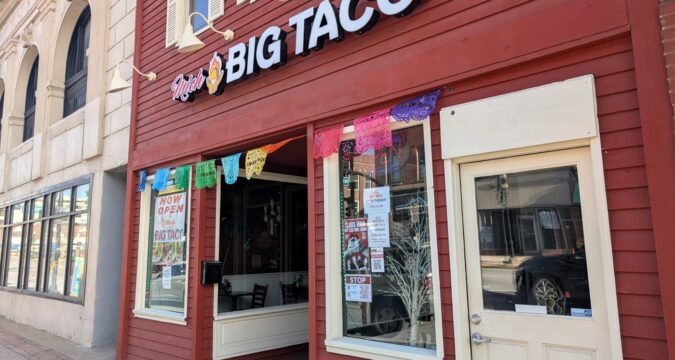
Downtown Aurora’s new Mich Big Taco wants to share taste of Mexican culture
Those who step into the new Mich Big Taco in downtown Aurora are stepping into the “soul of Mexico” — at least, that’s how the owners want people to feel.
The restaurant is located at 31 N. Broadway and offers Mexican fare from tacos to tortas and from breakfast plates to fajitas. Victor Alvarez, husband of owner Mercedes Alvarez, said the food is made from scratch using quality ingredients, including halal meat.
“It’s a little bit of more time to wait. We’re not fast food,” he said. “But the quality, you know, I think it’s worth the wait.”
Prices for most food items on the menu tend to be between $4 and $16, but there are some items that fall outside of that range.
Tacos are at the lower end of that scale, with $4.49 for a typical taco: choice of meat with cilantro and onion or lettuce, tomato and cheese. Tortas and burritos tend towards the middle at around $10, and entrees are at the higher end of the scale.
The most expensive item on the menu is the $20.99 mixed fajitas, which includes steak, chicken and shrimp.
Of course, as its name implies, the menu also features a “big taco” for $6.49. Cook Ismael Mata described the item as a homemade tortilla with “a lot of meat,” and the menu says it also includes cilantro and onion or lettuce, tomato and cheese. It’s like a little burrito, he said.
While they could have put more ingredients on it, they decided to just “keep it regular,” Mata said. That’s because sometimes when extras are added to something already made bigger, he said, it throws off the real meaning of the food.
In addition to the more regular tacos, the restaurant has a variety of other styles including “Campechano,” “Acorazado” and “Quesabirria,” which have different meats and toppings. And beyond food, the menu also shows drinks like aguas frescas, horchata, Mexican sodas and shakes.
Mata’s favorite item on the menu is the pozole verde, which is his mother’s recipe, he said. The menu describes it as a “traditional hominy soup with meat in a green sauce.”
Different states of Mexico have different ways of cooking, Mata said, but this restaurant is trying to put it all on one menu so “everybody can have a little bit of everything.” They don’t bring in their products directly from Mexico, but they do try to give their customers an authentic experience, he said.
In addition to providing food for the body, Mich Big Taco is also trying to provide food for the mind, said Victor Alvarez. Along the walls are write-ups on various elements of Mexican culture, from the story of the poinsettia flower to where the pinata comes from.
Everything has a meaning, according to Alvarez, and that extends to the restaurant’s logo, which is outstretched hands in a sign of prayer with a flaming taco between them. He said his wife’s idea for the restaurant was “cooked under the fire of prayer.”
Opening the restaurant was about more than just making money, Alvarez said. His wife wanted to welcome and serve people with her heart, he said.
Mercedes Alvarez’s grandmother started a popular restaurant in Mexico, where her mother also worked, according to Victor Alvarez. She was born in the midst of those ingredients and cuisine, he said.
Now that his wife has 35 years of experience in restaurants, she has her own, said Victor Alvarez. She also previously co-owned a restaurant in Elgin, he said.
It was a long process fixing up the historic building, Alvarez said, but now the restaurant has been open for about five months. He said that Mich Big Taco has received a “warm welcome” from the Aurora community.
As of Dec. 23, the restaurant had 4.8 out of five stars with 71 reviews on Google Maps. For more information, including a copy of the menu, go to: michbigtaco.com
rsmith@chicagotribune.com
The Economics Of Santa Claus
The Economics Of Santa Claus
Authored by Vincent Cook via The Mises Institute,
When I was a junior at a high school in the suburbs of Los Angeles in late 1978, rather uncharacteristically, I took a big risk. The teacher of my American Government class, Mr. Knapp, gave us an assignment to write a serious paper about government economic policy. Instead of doing that, I decided to submit a paper with a satirical theme, estimating what it would cost to become Santa Claus. Not only was I not following instructions, I had no idea how Mr. Knapp would react to my brand of humor.
As you read the transcription of my paper below, bear in mind that I wrote it a few years before I learned anything about libertarianism or about Austrian economics. Still, I was under the influence of the libertarian zeitgeist prevailing in California at the time. With inflation raging out of control while traditional statist authority figures in both major parties were lamely touting yet more business-as-usual interventions and tax increases, Californians had had enough by then. In November of 1978, they revolted against property taxes (led by the legendary anti-tax gadfly Howard Jarvis, passing the Proposition 13 voter initiative to amend the state constitution) and even gave a libertarian candidate for governor 5.5 percent of the vote. Reading this work of mine, I’m sure you’ll agree that there was a definite proto-Austro-libertarian influence at work.
Keep in mind too that the purchasing power of the dollar in 1978 was at least a factor of ten times greater than it is today, and, of course, the American population has increased a great deal too, so you might find my cost estimates absurdly low. They weren’t low at the time, however. Also be mindful that there was neither an internet nor privacy-unfriendly smart phone service, and personal computers had only just been introduced into the marketplace (in fact, my part-time retail job responsibilities at Radio Shack the previous summer included sales of the primitive TRS-80 computer), so you’ll have to pardon the technological backwardness of my cost analysis in the information category—that part of Santa’s job could probably be done much more cheaply these days.
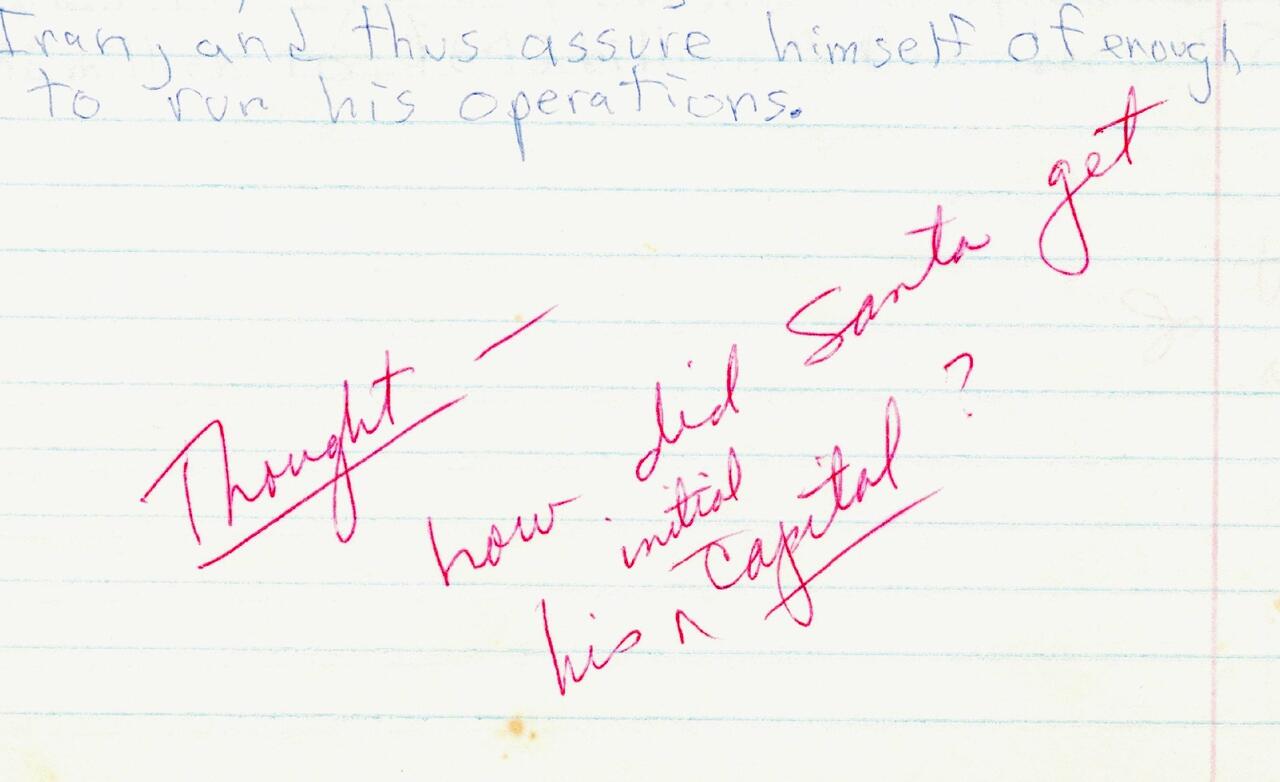
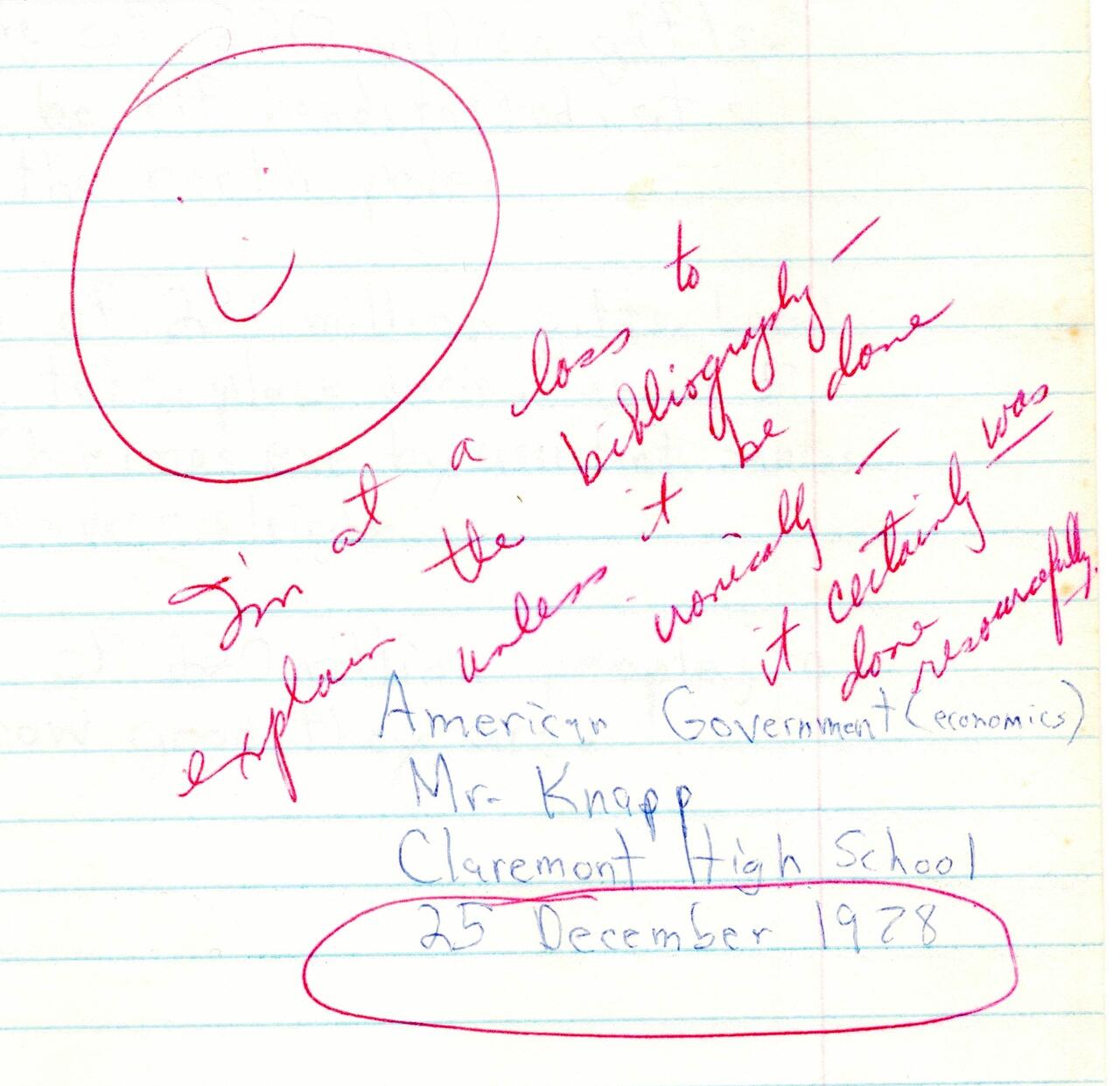
I have added screenshots of my paper showing a couple of Mr. Knapp’s comments.
Figure 1: Important Question Posed by Mr. Knapp
Source: Vincent Cook
Figure 2: Mr. Knapp’s Overall Comment
I’m taking another big risk to spring my youthful joke on you nearly five decades later, hoping that you’ll enjoy it as much as Mr. Knapp did back then—Merry Christmas!
Economics of Santa Claus
How often have you heard that there is no Santa Claus? If you check your history books, there was a real St. Nicholas who gave gifts to children, and he was given the Santa Claus title. Suppose someone wanted to claim this title now. How much would it cost? (I will restrict this Santa to the United States.)
To examine this profound question, I will break down the cost analysis into the three major categories which Santa is expected to fulfill.
1) Manufacture of 220 million gifts. These must be elf-handcrafted, at a factory at the North Pole.
2) Distribution of 220 million gifts. Local distribution takes place during about 5 hours on Christmas Eve by assistant Santa’s with 12 reindeer sleighs.
3) Monitoring of 220 million people, to determine how good they are.
For the first category, I will assume that an elf is a special sub-culture of human beings.
An elf should be able to turn out one hand-crafted gift a day. Since working conditions at the pole are very difficult, Santa will be expected to provide room and board, plus a salary of $200 per day. 220 million gifts then would require 220 million elf-days of labor at $200 per elf-day, at a total cost of $44 billion. Assuming continuous use of facilities, a city would be needed to house 600,000 elves. At the North Pole, this would be very expensive, say $1,000 per elf per day. This would bring the cost of facilities to $219 billion per year. Assuming the materials for each gift cost an average of $30, including transport to the pole, then the materials cost would be roughly $7 billion. Finally, we have the cost of the factories themselves; which, given the transient nature of the arctic ice cap, might cost $60 billion per year.
We see that arctic manufacturing is very expensive, I estimate the sub-total for this category to be $330 billion each year.
The second category is distribution.
This can be further divided into primary distribution (from North Pole to local distribution centers) and Christmas Eve local distribution (from local centers by sleigh to living rooms of families).
For the primary distribution, airlifting goods from the North Pole to the Canadian railroad network would be needed. This would probably cost about $10 billion. Further distribution and storage would also cost about $10 billion.
For Christmas Eve, assuming a sleigh crew of 3 men could handle 20 households, a fleet of 3 million sleighs, 36 million reindeer, and 90 million man-hours of labor would be needed. Assuming $500 a year for maintenance, the sleigh fleet would need $1.5 billion, plus another $0.5 billion for storage. Each reindeer would probably cost $1000 a year, for a total of $36 billion. 90 million man-hours, at $10 per man-hour, would cost about $1 billion. An additional $1 billion would be needed to cover the cost of legal expenses involved for employees caught trespassing while delivering gifts.
The sub-total for this category is about $60 billion.
The third category of Santa’s activities is in checking up on people to see who is good and who isn’t, to determine who deserves the best gifts.
The best method would be to hire a detective to monitor listening equipment at homes, workplaces, and schools. A single Santa detective could probably monitor 20 people, and write in-depth evaluations of them. For the United States, this would require 11 million detectives, plus a communications network, information storage and processing at the north pole, and equipment for the detectives. Since a full-time detective probably would cost $20,000 per year, total labor cost would be about $220 billion per year. Information evaluation, storage, and communications might cost $30 billion for 220 million reports. New equipment costs (such as “bugs,” mini microphones, transmitters, tape recorders, etc.) might run about $2 billion a year.
Sub-total for this category might be about $252 billion per year.
Adding up the three subtotals, we get a grand total for being a Santa Claus as $642 billion per year.
This is even more than the federal government spends, which shows how impractical it is to become a Santa Claus.
Still, there might be some potential income for Santa.
Huge sums of money could be extorted from people by the bad information that Santa’s detectives get.
Santa might also get to claim his 600,000 elves as dependents on his tax forms. His detectives could claim to be unemployed, and thus collect welfare and unemployment checks from the government. Santa could incorporate and collect royalties on the use of his image from corporations.
Best of all, Santa’s free gifts might drive corporations into bankruptcy, and he could take over all economic activity in the United States, with all of its potential for profit.
Santa could then proceed to take over the economies of many extremely rich nations, like Saudi Arabia and Iran, and thus assure himself of enough money to run his operations.
Tyler Durden
Thu, 12/25/2025 – 07:00
https://www.zerohedge.com/personal-finance/economics-santa-claus
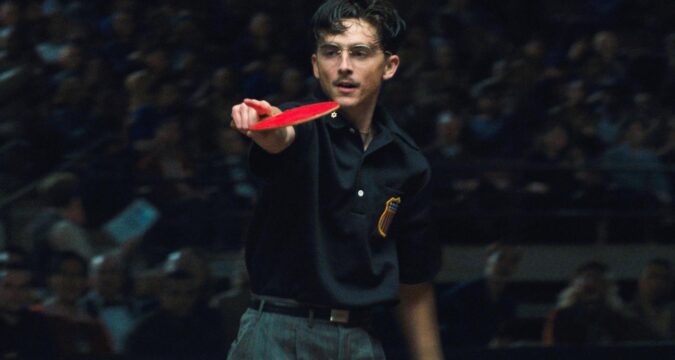
Review: Timothée Chalamet is truly great in the kenetic ‘Marty Supreme’
There’s an argument to be made that Marty Mauser (Timothée Chalamet), the protagonist of Josh Safdie’s “Marty Supreme,” could be the father of Howard Ratner (Adam Sandler), the protagonist of Josh and Benny Safdie’s 2019 cinematic panic attack “Uncut Gems.” Marty and Howard are versions of the same character: Jewish New York City hustlers addicted to risky business; inveterate gamblers who believe that just one more bet is going to pay off.
For this solo directorial outing, Josh Safdie and his longtime collaborator Ronald Bronstein, with whom he wrote and edited “Marty Supreme,” continue to mine the same milieu. (Benny headed West for his first solo film, the MMA biopic “The Smashing Machine.”)
“Marty Supreme” is inspired by the real-life characters of the mid-century table tennis scene in New York City (specifically Marty Reisman), and it’s a film designed around the New York City-born and -bred movie star Chalamet.
Many will assume that Marty Mauser is the performance that is most like Chalamet, and it’s clear that there has been some transference between character and actor in the past year, particularly Marty’s cheery braggadocio. But Safdie and Bronstein have a unique ability to pair performer and role, to write to an actor’s perhaps previously untapped potential, as they did with Sandler in “Uncut Gems,” and Chalamet does achieve greatness here, in one of the best performances of his career thus far.
“Marty Supreme” is a breathless, breakneck sprint through the Lower East Side of 1952 (beautifully rendered by legendary production designer Jack Fisk), where Marty holds top dog position in the table tennis scene. His next stop? The world. He steals $700 from his job at his uncle’s shoe store in order to make it to the world championships in London. That’s one of his first big risks — the other being a backroom quickie with his married childhood friend, Rachel (Odessa A’zion, who perfectly matches pitch with Chalamet). A river of consequences and bad decisions cascades from that inciting incident, which we follow with much anxiety and amusement.
In London, Marty seduces a movie star, Kay Stone (Gwyneth Paltrow), introduces her wealthy husband Milton Rockwell (Kevin O’Leary), an ink-pen impresario, to the untapped market potential of table tennis, and is roundly beaten in the finals by Koto Endo (Koto Kawaguchi), a deaf Japanese player who developed his own method for learning the sport, and displays a savant-like skill that stumps even Marty.
It’s a stroke of genius to cast Canadian businessman O’Leary, best known for the reality show “Shark Tank,” in his first acting role as a rich benefactor. His Rockwell indeed functions as a “shark” for Marty, offering a business arrangement to bring him to Japan for another table tennis tournament, but he’s also a predator ready to devour.
At one point, Rockwell hisses in Marty’s ear, “I’m a vampire,” and it tells us everything we need to know about this capitalist, who drains the life from whatever he can, extracting talent for profit and leaving a carcass behind. It’s the most important thing that Marty and Kay have in common. This level of dealmaking far exceeds the bowling alley bets and small-time street gambles that have shaped Marty’s way of moving in the world, and Rockwell represents the kind of ruthless American capitalism and competition that requires humiliation and subjugation. Marty chooses to participate.
Like Howard, Marty is trying to bend the arc of his own fate, and Safdie and Bronstein throw an unyielding avalanche of chaos at him in order to see how he’ll fight his way through, even as he (and Rachel) make bad decision after bad decision. Yet, witnessing his sublimely stressful journey is an exhilarating pleasure.
Safdie reunites his “Gems” creative team for “Marty,” including cinematographer Darius Khondji, whose camera captures this whirlwind odyssey from Manhattan to Japan and back again with staggering detail and extreme close-ups. Casting director Jennifer Venditti populates the world with all kinds of fascinating faces, both familiar and discoveries, but faces you’re more likely to see on a New York City street than in a Hollywood movie. That Chalamet fits in so well speaks to his versatile qualities as a movie star.
Composer Daniel Lopatin spins an electronic score that hews more hedonistic Reagan-era ’80s than period-specific 1950s, with various songs of these two eras peppered throughout — this anachronistic but era-spanning soundtrack is perfectly attuned to the film’s themes.
“Marty Supreme” is a truly staggering American epic about finally learning that hustle is never going to love you back — even if chasing it can be a thrill, at least for a moment. In this anxiety-riddled portrait of the corrosive nature of American capitalism, sports is merely the vessel, but it’s still the kind of movie that will make you want to stand up and cheer.
Katie Walsh is a critic for Tribune News Service.
“Marty Supreme” — 4 stars (out of 4)
MPA rating: R (for language throughout, sexual content, some violent content/bloody images and nudity)
Running time: 2:30
How to watch: In theaters Dec. 25
https://www.chicagotribune.com/2025/12/25/review-timothee-chalamet-marty-supreme/
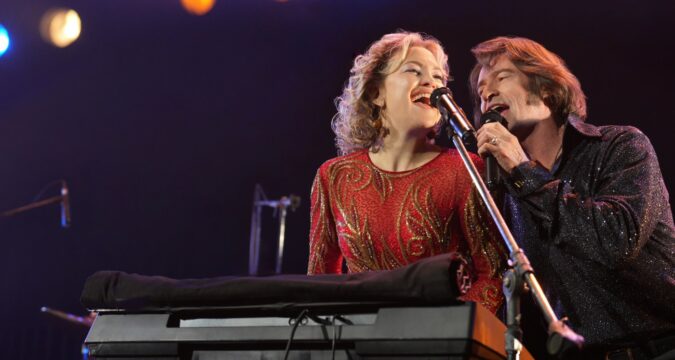
Review: ‘Song Sung Blue’ hits a winning note, based on a real story
There are a lot of ways that “Song Sung Blue” — a film about real Milwaukee Neil Diamond tribute act Lighting and Thunder — could have gone awry. The premise alone could be a “Saturday Night Live” sketch, and in a different world, the movie would be a broad comedy and star Will Ferrell. Instead, it hews closer to tragedy and stars Hugh Jackman (who couldn’t do irony if he tried) as Mike Sardina aka Lightning, and Kate Hudson, as Mike’s devoted wife and bandmate Claire, aka Thunder.
Craig Brewer’s film is based on the 2008 documentary of the same name directed by Greg Kohs, but even if you were unaware of that, the unbelievable events of the Lightning and Thunder story are just too outrageous to be fiction, and Brewer maintains close fealty to the truth.
Brewer’s film takes a different tack than the documentary, which gets mired in the medical lows and economic woes of Lighting and Thunder. As both writer and director, Brewer is more interested in the emotional highs, especially the ones found in the music that Mike and Claire make together, which is an outpouring and expression of their love of Neil Diamond, their love of performance, and first and foremost, their love for each other.
When Mike and Claire connect at a local musical impersonators show (she’s doing a damn fine Patsy Cline, he’s refusing to do Don Ho) and decide to work on a Neil Diamond act together, Claire makes an important distinction — what they’re striving for is not an impersonation, it’s an interpretation. And “Song Sung Blue” takes that same tack when it comes to this duo. It’s an interpretation of their story, a loving tribute that focuses on what mattered the most to them: family and music.
Brewer, who also directed the Oscar-winning rap drama “Hustle & Flow,” and “Dolemite Is My Name,” has an interest in underdog artists and their creative process, and that’s seen best in the musical sequences of “Song Sung Blue,” where the connection between Lightning and Thunder crackles with electricity and takes flight. The camera is suddenly liberated, floating between and around them, allowing the audience in on the jam session. Whatever tragedies that befall them, Lightning and Thunder are always striving to get back to this transcendent feeling, this beautiful harmony that they achieve through the vessel of the Neil Diamond songbook, and Brewer makes that feeling palpable.
The film’s earnestness is why it works, a celebration of trying hard and doing what you love, even if other people don’t think it’s cool. Lightning and Thunder’s enthusiasm is so infectious it takes Milwaukee by storm, even catching unlikely folks like Eddie Vedder of Pearl Jam in its energetic wake, as he joins them for a version of “Forever in Blue Jeans” when they open for the band.
A running gag throughout “Song Sung Blue” illustrates the tightrope that Brewer walks, tonally. Lightning continually insists on opening the show with the Diamond deep cut “Soolaimon,” and it’s a funny recurring bit, but even that pays off into a moving climax where he gets the full choir he’s always dreamed of for the song. We laugh, and then we cry at “Song Sung Blue,” because it’s inspiring to watch people doing the thing they love, random acts from the universe be damned.
That extends to the performances, which are crucial for the film’s success. Jackman pours every ounce of himself into Mike’s dogged determination, but Hudson is the revelation here, showing off parts of her range we’ve never seen before, from her singing, to her portrayal of the darkest depths of Claire’s journey. It’s clear that Jackman and Hudson have love for these characters, honoring their stories while having fun with the colorful details, too. Brewer surrounds this pair with a strong cast of supporting actors including Michael Imperioli and Jim Belushi, with Ella Anderson and King Princess standouts as their teenage daughters.
Brewer brings a grounded and authentic aesthetic to the world of these big dreamers, while the musical numbers explode in a supernova of lights and sequins — even if it’s just karaoke night at a Thai restaurant. There’s an important lesson at the center of “Song Sung Blue,” about abandoning self-consciousness in a relentless pursuit of a dream. Despite the obstacles, their age, the setbacks, there is a pot of gold, not at the end of the rainbow but within it, in their shared dream. As the kids say, “to be cringe is to be free” — Lightning and Thunder might as well have invented the concept.
Katie Walsh is a critic for Tribune News Service.
“Song Sung Blue” — 3.5 stars (out of 4)
MPA rating: PG-13 (for thematic material, some strong language, some sexual material and brief drug use)
Running time: 2:13
How to watch: In theaters Dec. 25
https://www.chicagotribune.com/2025/12/25/review-song-sung-blue/
What to do in Chicago: Harlem Globetrotters, Trans-Siberian Orchestra and holiday magic
Our picks for events in and around Chicago this weekend.
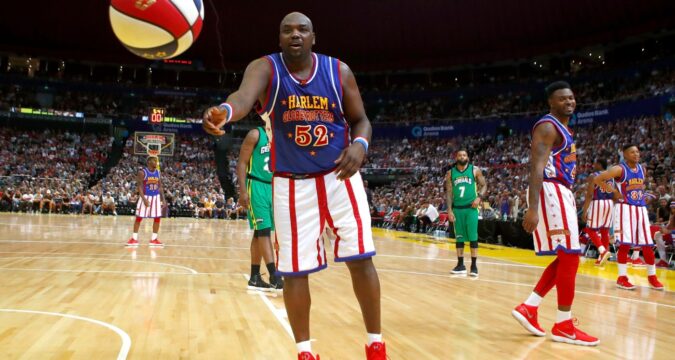
Harlem Globetrotters
Now on their “100 Year Tour,” the Harlem Globetrotters bounce into Allstate Arena for two shows. Bring a new generation to delight in the tricks, dunks and charm. It may not be a true basketball game, but it’s an athletic spectacle.
1 p.m and 6 p.m., Dec. 28 at Allstate Arena, 6920 N. Mannheim Road, Rosemont; tickets from $47.80 at rosemont.com
The Waco Brothers Yuletide Rumble
Hometown favorites The Waco Brothers play The Hideout this weekend, promising their classic blend of country and punk. It’s like a family gathering. Sure, everyone’s weathered over the past 30 years or so, but you’re happy to see them.
8:30 p.m. Dec. 26 at The Hideout, 1354 W. Wabansia Ave.; tickets from $33.65 at hideoutchicago.com
“It’s a Wonderful Life: A Live Radio Play”
Last call to see a live production of the Frank Capra classic, “It’s a Wonderful Life,” told as a 1940s-style radio broadcast. In our new era of economic inequality, the story resonates in a new way as George Bailey struggles to keep the Building & Loan afloat for Bedford Falls’ regular folks, despite greedy old man Potter.
Through Dec. 28 at American Blues Theater, 5627 N. Lincoln Ave.; tickets from $34.50 at americanbluestheater.com
The cast of “It’s a Wonderful Life: Live in Chicago!” by American Blues Theater. (Michael Brosilow)
“Annie”
A billionaire who does good? Daddy Warbucks to the rescue. The beloved musical “Annie” is playing through the New Year weekend at Skokie’s North Shore Center for the Performing Arts. Who knows … maybe the sun’ll come out tomorrow.
Through Jan. 4 at North Shore Center for the Performing Arts, 9501 Skokie Blvd., Skokie; tickets from $51.60 at northshorecenter.org
“The Real Housewives of the North Pole”
Wrap up the holidays with some campy fun from Hell in a Handbag Productions. Santa’s been indicted for fraud, and the women of the North Pole sign up with Andy Cohen and Bravo to save their families from financial ruin. Can reality TV rescue them?
Through Jan. 4 at The Clutch, 4335 N. Western Ave.; tickets from $37.25 at chicagoplays.com
“Quick! Before We’re Cancelled”
Close out the year with Practical Theatre Company’s sketch satire based on today’s headlines. Performers Paul Barrosse, Victoria Zielinski and Dana Olsen will tackle everything from the Chicago-born Pope Leo XIV, the relationship between President Donald Trump and Elon Musk, artificial intelligence and conspiracy theories.
Through Jan. 3 at Studio5, 1934 Dempster St., Evanston; tickets from $40 at evanstonmade.org
Holiday Magic Show
Need a touch of wonder? Consider heading to Lockport for a gathering of Chicagoland magicians. They’ll perform two shows — the early one geared more family-friendly — at Roxy Lockport.
3 p.m. and 7:30 p.m. Dec. 27 at Roxy Lockport, 1017 S. State St., Lockport; tickets from $17.50 at roxylockport.com
The Trans-Siberian Orchestra at the iHeartRadio Theater in New York City. (Getty Images)
Trans-Siberian Orchestra
They’re a day late, but the Trans-Siberian Orchestra is back with its “Ghosts of Christmas Eve” concert. Expect greatest hits designed to please fans. It’ll be bombastic.
2:30 p.m. and 8 p.m. Dec. 26 at Allstate Arena, 6920 N. Mannheim Road, Rosemont; tickets from $55 at rosemont.com
Sunday Family Magic Matinee with Magical Myster AJ
Kids ages 4-10 will delight in the antics of Myster AJ. Expect fast-paced magic, a touch of clowning and a bunch of laughs during this hour-long performance.
1-2 p.m. Dec. 28 at Collaboraction, Kimball Arts Center, 1757 N. Kimball Ave.; tickets $25 at collaboraction.org
The Rock and Roll Playhouse Noon Year’s Eve Party
Rock out with your little ones to Grateful Dead tunes at an early New Year’s party. Best for kids 10 and under.
11:30 a.m. Dec. 27 at Thalia Hall, 1807 S. Allport St.; tickets (children up to 1 year free) from $20.03 at ticketweb.com
Have something to do around Chicago? Email events to day.chitribevents@gmail.com.
https://www.chicagotribune.com/2025/12/25/what-to-do-chicago-dec-27/
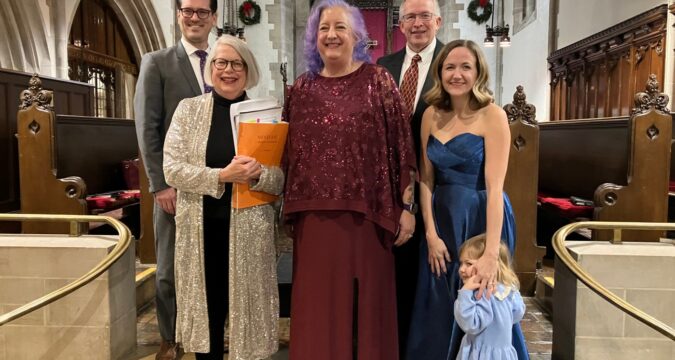
Emmanuel Episcopal brings world class musicians to La Grange for ‘Messiah’ performance
About 250 people became the chorus last week as La Grange’s Emmanuel Episcopal Church brought to life George Frederic Handel’s “Messiah” at the church on Kensington Avenue, backing four soloists in the rendition of the Christmas classic.
Mary Hopper, emeritus professor of Choral Music at Wheaton College, conducted the performance.
“This is great and such a great experience,” Hopper said before the performance. “People really enjoyed singing last year and I enjoyed that.”
Hopper described Handel’s most famous work as one that resonates with the American people.
“It’s the story of Christmas and the story of the Gospel,” she said. “It’s got music that’s familiar, probably the most familiar piece of classical music that anybody has.”
During her 43 years at Wheaton College, Hopper directed the Women’s Chorale and the Men’s Glee Club. She has toured nationally and internationally.
Since 2018, Hopper has been director of the Hinsdale Chorale, several of whose members were dispersed through the crowd at Emmanuel Episcopal for the performance, singing along to the choruses.
The oratorio, written in only 24 days by the German-born master, is considered among the most recognizable pieces of English language music.
The Messiah was first performed in Ireland in 1741, and quickly became a favorite of music-lovers of the era. While it originally was considered appropriate for the Easter Holiday, over the years “Messiah” has become a Christmas staple.
Oratorios are typically large-scale music works for orchestra and voices, focusing on religious themes; “Messiah” is no exception, with lyrics taken from scripture.
Chicago-based soprano Olivia Doig, who has performed in venues throughout the Midwest, also returned after performing in last year’s rendition in La Grange.
“Last year I was eight months pregnant and this year I’m not,” Doig said after the performance, “But my children are here this year.”
Doig is a veteran of venues like the Chicago Opera Theater, Ohio Light Opera, and the Haymarket Opera. She is currently a guest lecturer in voice studies at Wheaton College.
Other performers included mezzo soprano Janet Mensen Reynolds, who retired after 26 years in the chorus of the Chicago Lyric Opera, made her concert debut at Carnegie Hall, and currently has a private voice studio of 25 students. Baritone Ryan Cox has been a professional member of the Grant Park Chorus and the Chicago Symphony Chorus, and was the baritone soloist in the 2010 recording of Grant Park’s Pulitzer Project. Lyric Opera tenor Joseph Fosselman has been with the Opera since 1992 and has performed many solo roles in Lyric productions.
The Kaia String Quartet, dedicated to bringing the music of Latin America to the public, provided the instrumentation for the performance. The group has performed at many Chicago-area venues, including the Chicago Jazz Fest, the Studebaker Theatre, the Morton Arboretum, the Chicago Latino Music Festival, and Chamber Music on the Fox.
But some artists were first-timers for Emmanuel Episcopal Church’s new tradition.
Harpsichordist Kathy Christian has served on the music faculty of North Central College in Naperville for 26 years. She is the organist and pianist for the First Congregational Church of Western Springs, as well as the accompanist for Hinsdale Chorale.
Organist Bobby Nguyen, a native of Ho Chi Minh City, Vietnam, is the organist at the First United Church of Oak Park. He began his piano studies at Ho Chi Minh Conservatory of Music, continued his education at North Park University and ultimately studied organ at the Juilliard School.
“At first when Mary contacted me a few months ago, I was a bit worried,” Nguyen said. “The Messiah is a pretty big piece and when I showed up here everything was very casual feeling, a friendly atmosphere, so I said, ‘oh, I can do this.’”
Dan Mottl, junior warden at Emmanuel Episcopal Church, said bringing the performance back this year was an easy choice.
“We were pretty confident because of the response from last year,” he said before the performance. “We had a good turnout, the excitement was building and people were saying ‘I hope you do this every year. It was planned to be an annual event and it looks like it’s catching on.”
Mottl talked about bringing together different artists who normally didn’t work together.
“We assembled them from all over the neighborhood, some were from La Grange, some from Wheaton, some from Chicago,” he said. “So we assembled the best singers and best musicians that we knew. The Kaia String Quartet was wonderful. So we brought all these people together.
“Of course Mary Hopper was the key. She knew a lot of the people, but this is independent from anything she had worked on before.”
After the show, Mottl said “everything was great. It’s probably better than last year.”
Audience members came away impressed and inspired.
La Grange resident Nanci Davidson, a member of Emmanuel Episcopal Choir, was also part of the effort to bring the Messiah to the church last year.
“Oh my gosh this is the best community event this church could be doing,” Nanci said. “It brings everyone together at a very tumultuous time — depending on how you sit — and it sets you off in this wonderful, joyous mood in the holidays.”
Western Springs resident Janet Helin agreed.
“It’s just such a thrill,” she said. “Especially when you think of all those who would like to sing it, and especially the text that came up in our sermon this morning. Handel composed this in 24 days. It’s hard to even conceive of this whole thing.”
Hank Beckman is a freelance reporter for Pioneer Press.
https://www.chicagotribune.com/2025/12/25/lagrange-emmanuel-episcopal-handel-messiah/
Letters: Christmas reminds us of Jesus’ light for the world
Thank you so much for the refreshing commentary by Willie Wilson on Dec. 18, “What Christmas and the birth of Jesus Christ mean to me.” We are bombarded with heartbreaking news almost daily. We need to remember that Jesus is the light of the world and he brings light into darkness.
In John 16:33, Jesus says “You will have suffering in this world. But take heart, I have overcome the world.” He will be with us through all pain and suffering.
As always, Wilson ends his op-ed with some excellent application points on making Christ’s love visible. I especially appreciated: “Do more listening than talking.”
How important, as we enter the holidays, to listen and remember to respect others by giving them our full attention. Also, “express kindness and love toward someone.” Just as Jesus does for us every day.
Merry Christmas.
— Cathy Rennau, Oak Park
Immigrant’s story
Christmas and Easter are the two most important Christian holidays of the year. Many may not know that the two popular holiday songs “White Christmas” and “Easter Parade” were both written by a Russian-born Jewish immigrant named Israel Baline, better known as Irving Berlin.
Berlin was 5 years old when his family’s village in Russia was burned to the ground by Cossacks. He and his family immigrated to America, where Berlin later wrote the American classic “God Bless America” to express his deep gratitude to the country that took his family in.
In Charlottesville, Virginia, in 2017, white “Christian” nationalists chanted, “Jews will not replace us.” I wonder if they realize that three of the most popular American songs of all time, fully embraced and cherished by many Christians in our American culture, were all written by a Jewish immigrant.
We might do well to remember that, with the exception of Native Americans, we are all immigrants or their descendants. Amen.
— Bob Chimis, Elmwood Park
Bring back kindness
I ask everyone to start their New Year’s resolutions with “Be kind.” To family, friends, co-workers, other drivers, pedestrians, workers on the street, those not as fortunate as you and, yes, those who might have a different opinion than you do.
Some believe that kindness is an act of weakness. The opposite is true. Great leaders lead with kindness, which is actually leading with strength.
Kindness is lacking in the world today, and we need to get it back as everyone’s top priority.
— Fred Hausmann, Tinley Park
Everyone contributes
Professor Dawn S. Brown’s op-ed really resonated with me (“Who gets invited to the table? Holiday gatherings offer a lesson in leadership,” Dec. 22). In order for family, charitable and professional gatherings to be meaningful, invitations should be inclusive, and each individual should bring something or add something to the success of those assembled. It’s “ownership” and civil participation that make them meaningful, productive and/or fun.
— Ronnie Jo Sokol, Chicago
Ring the doorbell
In response to the editorial about porch piracy (“Porch piracy is costly and frustrating. And Chicagoland is a hotbed of parcel theft,” Dec. 14), I have a modest proposal for reducing such thefts: All those delivering packages should ring the doorbell so we can retrieve them before they’re stolen.
The post office generally does ring doorbells. But commercial companies don’t always do so, particularly not Amazon. I have requested this in my account profile. I try to complain about it in feedback request emails. But Amazon doesn’t provide a way to complain specifically about this issue. (You only get to check the “other problem “ box.)
Amazon apparently expects us to continuously check our email to discover that a package has been delivered. I have better things to do.
This is one of several reasons why I avoid buying from Amazon when I can.
— Judith Alexander, Oak Park
Theft of packages
The convenience of having items shipped to our front doors is a plus and a minus for shoppers. The impact of package theft is a major bummer for victims of this type of crime, especially during the holiday season. Small businesses are also among the many victims.
However, some things can be done to safeguard home deliveries.
A well-placed security camera is one of the most effective deterrents for would-be package thieves, or “porch pirates.” The mere presence of a security camera can make a potential thief think twice.
Always use package tracking. Most carriers enable customers to check the status and approximate time a package will be delivered.
Require a signature for delivery. This will ensure that a package will be safely delivered.
People who frequently use a package delivery service should seriously consider package delivery insurance.
A lockbox is another good tool to protect deliveries. All delivery services are familiar with the use of a lockbox.
Request deliveries be sent to another location that is convenient. For instance, a workplace or the home of a relative or a neighbor is a good alternative because someone will be there to receive them safely.
People living in multidwelling buildings should never buzz anyone into the building unless they are absolutely sure they know the person. Also, when entering a building that requires buzzer access, never allow anyone else inside unless the person’s identity is known.
Never leave packages in an automobile where they can be seen from the outside. Never place purchases inside a vehicle in order to continue shopping in other stores. Thieves are always watching.
Upon entering a vehicle after shopping, never delay in starting the vehicle. Don’t idle while talking on the phone or checking messages. After entering a vehicle, lock it immediately and always be alert to your surroundings. Most stores will provide an escort to a customer’s vehicle upon request.
The holidays are always a time to celebrate, but they’re also a time to be careful.
— Bob Angone, retired Chicago police lieutenant, Austin, Texas
Law enforcement
I hope that in the new year, people realize that the men and women in law enforcement are the good guys. They knock on your door because you called for help, and they pursue those who break the law. Nothing more, nothing less.
— Roberto L. Garcia, Chicago
RSV vaccination
The recent Illinois Department of Healthcare and Family Services (HFS) announcement regarding the removal of prior authorization requirements for a respiratory syncytial virus (RSV) vaccine marks a significant victory in our ongoing efforts to protect vulnerable populations from respiratory disease.
HFS has taken an essential step toward improving vaccine access for those who need it most by removing the requirements for additional documentation of informed consent and prior authorization for the Abrysvo vaccine. This important change will undoubtedly improve access to care and save lives.
This new policy will particularly benefit high-risk populations, including pregnant individuals during weeks 32 through 36 of pregnancy; adults ages 50 to 74 at increased risk of severe RSV disease; and all adults age 75 and older.
RSV is a common yet potentially severe virus that affects the lungs, leading to coldlike symptoms. While it typically resolves on its own, RSV can lead to serious complications for high-risk groups, including young children, the elderly and individuals with compromised immune systems. RSV is the most common cause of pneumonia and bronchiolitis in infants. It is critical that these groups are protected from this virus.
By streamlining access to the RSV vaccine, we can address the alarming disparities in vaccination rates that currently exist in Illinois. Recent data indicates that immunization coverage among high-risk groups is shockingly low — only 33.6% of infants under 8 months and 30.6% of adults over 75 have received the vaccine. These figures highlight a pressing need for targeted efforts to increase vaccination rates, particularly among non-Hispanic Black and Hispanic adults, as well as those with lower income and education levels.
While this is an important step forward, there is still more to be done. We must continue to advocate for equitable access to health care resources and ensure that all communities, especially the most vulnerable, are informed about the benefits of RSV vaccination. Having better access to vaccines is a significant step forward.
However, we need to go further to work alongside health care providers, community organizations, and public health officials to promote vaccine literacy and outreach.
Now, let’s build on this success by continuing to educate the public with the truth about vaccines.
— Erica Salem, Respiratory Health Association, Chicago
Submit a letter, of no more than 400 words, to the editor here or email letters@chicagotribune.com.
https://www.chicagotribune.com/2025/12/25/letters-122525-christmas/

Bison return to Kane County after 200 years, a crucial step for conservation and Indigenous connection
From their cozy homes in suburban Burlington, children curiously watch their new neighbors through windows and brainstorm nicknames.
Earlier this month, with their distinctive brown fur, big heads, short horns and back hump, a small herd of six American buffalo — the largest land mammals in the country — exited a trailer and took their first steps on 38 acres of prairie restored by the Kane County Forest Preserve District, 60 miles northwest of downtown Chicago. It’s the first time in over two centuries that bison have called the county home.
Inches of snow had piled on the ground, and conservationists had waited for hours in the brutal cold for the animals to show up.
The move was a rematriation, a return of missing relatives, according to Jay Young, co-executive director of the American Indian Center of Chicago, which owns the animals in the collaborative conservation effort.
“I don’t like using the word ownership, because that’s not a Native or Indigenous worldview,” Young said. “We are the stewards of the bison, and so we’re looking after them, we’re taking care of them, we’re making sure they’re OK.”
The Kane Forest Preserve began working toward bringing back bison three years ago, but the project “transcends generations” and has been “hundreds of years in the making,” according to the district’s executive director, Benjamin Haberthur. After an initial deal fell through, staff at the district felt discouraged about finding an Indigenous partner, until the American Indian Center stepped in.
“Without the Native American education component, (it) would have been a huge loss, because the story of the bison is the story of Native Americans in the country,” he said.
Haberthur saw Burlington Prairie Forest Preserve, formerly a soybean field, begin its journey to restoration in 2011, helping plant 114 species, including the ecosystem’s iconic, tall Indian grass and the rattlesnake master with its thistle-shaped flowerheads.
The bison’s return marks yet another victory in efforts to restore the Prairie State to its former glory, to an ecosystem and a landscape that bison shaped for hundreds of years — before settlers plowed grasslands, brought cattle to graze in the vast pastures and hunted the animals, extirpating them. The last recorded sighting of a wild bison in Illinois happened in 1870.
“We look at all of these things as relatives, whether it be the prairie grass or the bison,” Young said. “They evolved over thousands of years together, so a prairie without bison or bison without prairie is missing something.”
Bison move across the Burlington Prairie Forest Preserve in Burlington Township on Dec. 22, 2025. Six American bison have been introduced into the preserve. (E. Jason Wambsgans/Chicago Tribune)
The 22 million acres of prairies that once spanned Illinois depended on the grazing patterns of bison, which diversified native vegetation, maintained habitats for birds and cleared out invasive species. Most of this ecosystem was gone by the beginning of the 20th century. By 1978, fewer than 2,300 acres of high-quality original prairie remained; nowadays, the acreage is less than one-tenth of 1% of the original.
The razing of prairies and the erosion of soil from agriculture have led to the loss of plant and animal species, such as prairie chickens. The species, which Haberthur called “bold little territorial birds,” are critically endangered in the state, with 200 left in southeast central Illinois.
Bringing bison back opens up the possibility for the return of similar ecological missing pieces.
The brown-headed cowbird, which is common year-round in Illinois, used to be called the buffalo bird for its relationship with bison.
“It’s just one of these little guys that, like, sits on the back of a cow or buffalo and eats the ticks and little bugs,” Haberthur said. “So it changed its behavior after the buffalo left, but at Nachusa, they’ve seen them start to reassociate and rebuild that.”
The first herd of bison reintroduced east of the Mississippi River for conservation purposes was in 2014 at Nachusa Grasslands, some 50 miles west in Lee and Ogle counties, where the newcomers at Burlington Prairie hail from. In 2015, Nachusa welcomed the first baby bison born in Illinois in nearly two centuries. That same year, another restoration project brought bison to Midewin National Tallgrass Prairie in Will County, operated by the U.S. Forest Service. Other herds in Illinois that are not specifically part of conservation efforts include one outside Fermilab particle physics laboratory in Batavia since 1969, and an exhibit at Lords Park Zoo in Elgin since 2013.
When the large animals wallow — or roll in the dirt for a “dust bath” to relieve skin irritations, prevent insect bites and shed their winter coats — they also create small depressions in the ground that fill with water and create microhabitats for other wildlife.
“Different plants start coming back, that means different insects come back. Different insects come back, that means different birds come back,” Young said. “And so, being the keystone species, they create this whole ecosystem around the prairie, which is what it was supposed to be until bison were eliminated.”
Other bird species conservationists hope to see return to Burlington Prairie include bobolinks and grasshopper sparrows, whose populations are steeply declining.
American bison on Dec. 22, 2025, in the Burlington Prairie Forest Preserve in Burlington Township, where six of the bison have been introduced. The bison’s return marks yet another victory in efforts to restore the Prairie State to an ecosystem and a landscape that bison shaped for hundreds of years. (E. Jason Wambsgans/Chicago Tribune)
The prairie and its bison will not be open for public viewing over the winter in order to provide the animals with quiet and calm, so they can feel comfortable as they adjust to their new home. Burlington Prairie also closes seasonally due to blowing and drifting snow. Public events to welcome the herd will be planned for spring.
The American Indian Center and Kane County will continue working together to develop educational opportunities, including a community science program for regular citizens to help monitor the health of the prairie and the bison. The program will be built on Indigenous wisdom and provide opportunities for local Native Americans to reconnect with their roots.
“We’re talking about healing the landscape, right? We’re also healing our community,” Young said.
He is Potawatomi, a tribe native to the Great Plains and Great Lakes regions, including the modern-day Chicago area. Today, almost 80% of Native Americans live off reservations, and mostly in urban areas.
“How do you practice a land-based culture if you have no land base to practice it on?” Young said.
An estimated 65,000 Native American people live in the Chicago area, making it the third-largest urban Indian population in the country.
“There’s about 170, 180 tribes represented here. Some have very close ties with bison, and some don’t,” Young said. “Maybe you (are) a Buffalo Clan, or a Bison Clan, and you hear the stories and the songs, but you’ve never actually seen a bison. You’ve never been near a bison.”
Ruhter Bison — a family-owned business and bison meat provider in Illinois that focuses on prairie and wildlife conservation — will manage the herd for at least the next three years, at the same time training the handful of staff at the American Indian Center for future management.
Staff from Ruhter checks on the bison every day and gives them supplemental food like hay or grains if needed — especially during the colder months. The imposing animals are equipped to survive winter from fat reserves in their bodies, but they’ll still eat what they can.
Haberthur said the three female and three male bison at Burlington Prairie will be a breeding herd. The forest preserve district hopes to expand its fenced acreage to continue expanding the herd in the coming years.
“We don’t have it open like Yellowstone. I would love to own 3 million acres, but we don’t,” Haberthur said. “We can’t let them roam free, like on the Great Plains.”
They still have more freedom than other herds close to Chicago, he said.
In a suburban area, fencing ensures the safety of both the bison and the community. Despite looking harmless, the massive animals can charge humans when threatened or startled, and cause injury or death.
Their presence near human development has become a crucial goal for many conservationists working to regenerate eroded agricultural land. It’s a dream not many organizations realize.
“This is another big component of putting nature back together,” Haberthur said.
“The bison are there to teach the prairie how to be a prairie, so the prairie remembers how to be a prairie,” Young said. “And the prairie is there so the bison can remember how to be bison.”
https://www.chicagotribune.com/2025/12/25/bison-kane-county-prairie-restoration-indigenous/