Category: News

If Jesus Were Born Today, Would He Survive The American Police State?
If Jesus Were Born Today, Would He Survive The American Police State?
Authored by John & Nisha Whitehead via The Rurtherford Institute,
“When the song of the angels is stilled, when the star in the sky is gone, when the kings and princes are home, when the shepherds are back with their flocks, the work of Christmas begins: to find the lost, to heal the broken, to feed the hungry, to release the prisoner, to rebuild the nations, to bring peace among the people, to make music in the heart.”—Howard Thurman, theologian and civil rights activist
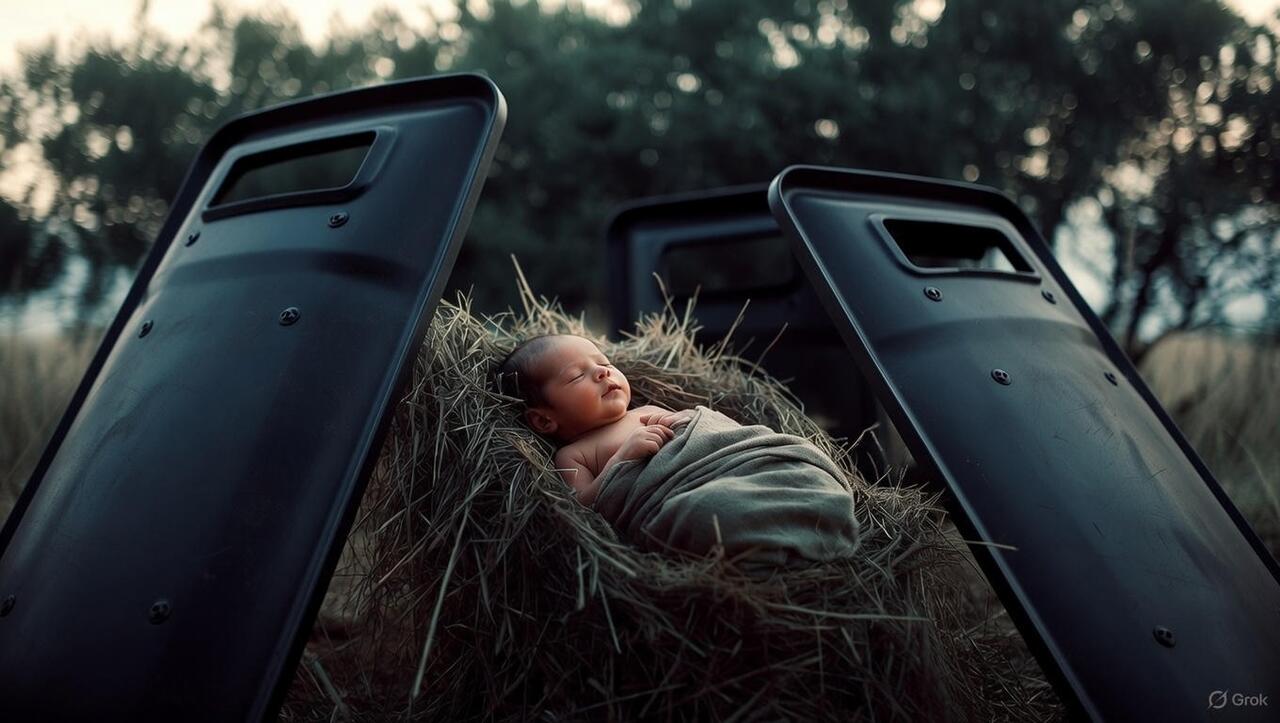
Every Christmas, Christians celebrate the birth of a child born into oppression—an occupied land, a climate of political fear, and a government quick to crush anything that threatened its authority.
Two thousand years later, the parallels are unmistakable.
If Jesus were born in modern America, under a government obsessed with surveillance, crackdowns on undocumented immigrants, religious nationalism, and absolute obedience to a head-of-state rather than the rule of law, would he survive long enough to preach about love, forgiveness and salvation? Would his message of peace, mercy, and resistance to empire be branded as extremism?
As familiar as the Christmas story of the baby born in a manger might be, it is also a cautionary tale for our age.
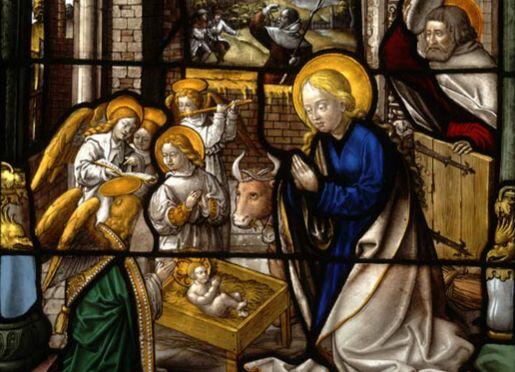
The Roman Empire, a police state in its own right, had ordered that a census be conducted. Joseph and his pregnant wife Mary traveled to the little town of Bethlehem so that they could be counted. There being no room for the couple at any of the inns, they stayed in a stable (a barn), where Mary gave birth to a baby boy, Jesus. Warned that the government planned to kill the baby, Jesus’ family fled with him to Egypt until it was safe to return to their native land.
Yet what if Jesus had been born 2,000 years later?
What if, instead of being born into the Roman police state, Jesus had been born at this moment in time? What kind of reception would Jesus and his family be given? Would we recognize the Christ child’s humanity, let alone his divinity? Would we treat him any differently than he was treated by the Roman Empire? If his family were forced to flee violence in their native country and sought refuge and asylum within our borders, what sanctuary would we offer them?
A singular number of churches across the country have asked those very questions in recent years, and their conclusions were depicted with unnerving accuracy by nativity scenes in which Jesus and his family are separated, segregated and caged in individual chain-link pens, topped by barbed wire fencing.
Those nativity scenes were a pointed attempt to remind the modern world that the narrative about the birth of Jesus is one that speaks on multiple fronts to a world that has allowed the life, teachings and crucifixion of Jesus to be drowned out by partisan politics, secularism, materialism and war, all driven by a manipulative shadow government called the Deep State.
The modern-day church has largely shied away from applying Jesus’ teachings to modern problems such as war, poverty, immigration, etc., but thankfully there have been individuals throughout history who ask themselves and the world: what would Jesus do?
What would Jesus—the baby born in Bethlehem who grew into an itinerant preacher and revolutionary activist, who not only died challenging the police state of his day (namely, the Roman Empire) but spent his adult life speaking truth to power, challenging the status quo of his day, and pushing back against the abuses of the Roman Empire—do about the injustices of our modern age?
Dietrich Bonhoeffer asked himself what Jesus would have done about the horrors perpetrated by Hitler and his assassins. The answer: Bonhoeffer was executed by Hitler for attempting to undermine the tyranny at the heart of Nazi Germany.
Aleksandr Solzhenitsyn asked himself what Jesus would have done about the soul-destroying gulags and labor camps of the Soviet Union. The answer: Solzhenitsyn found his voice and used it to speak out about government oppression and brutality.
Martin Luther King Jr. asked himself what Jesus would have done about America’s warmongering. The answer: declaring “my conscience leaves me no other choice,” King risked widespread condemnation as well as his life when he publicly opposed the Vietnam War on moral and economic grounds.
Their lives make clear that the question “What would Jesus do?” is never abstract. It is always political, always dangerous, and always costly.
Even now, there remains a disconnect in the modern church between the teachings of Christ and the suffering of what Jesus in Matthew 25 refers to as the “least of these.”
Yet this is not a theological gray area: Jesus was unequivocal about his views on many things, not the least of which was charity, compassion, war, tyranny and love.
After all, Jesus—the revered preacher, teacher, radical and prophet—was born into a police state not unlike the growing menace of the American police state.
Jesus was not born into comfort or security. He was born poor, without shelter, in an occupied land ruled by force and fear, under the watchful eye of a government obsessed with control, compliance, and the elimination of perceived threats. His parents were politically powerless. His birthplace was makeshift. His earliest days were shaped by fear of state violence.
Herod’s response to the news of the Messiah’s birth was not humility or reflection, but paranoia. Threatened by the mere possibility of a rival authority, Herod turned to brute force. The lesson is timeless: this is how tyranny operates. Unchecked power, when gripped by insecurity, will always seek to eliminate dissent rather than allow its own corruption to be confronted.
Modern governments, including our own, cloaked in the language of security and “law and order,” behave no differently. Any challenge to centralized power is treated as a threat to be neutralized. In such an environment, speaking truth to power is dangerous. Challenging imperial authority invites retaliation.
From the moment of his birth, Jesus represented a threat—not because he wielded violence or political power, but because his life and message exposed the moral bankruptcy of empire and offered an alternative rooted in justice, mercy, and truth.
When Jesus grew up, he had powerful, profound things to say—things that would change how we view people, things that challenged everything empire stood for. “Blessed are the merciful,” “Blessed are the peacemakers,” and “Love your enemies” are just a few examples of his most profound and revolutionary teachings.
When confronted by those in authority, Jesus did not shy away from speaking truth to power. Indeed, his teachings undermined the political and religious establishment of his day. It cost him his life. He was eventually crucified as a warning to others not to challenge the powers-that-be.
Can you imagine what Jesus’ life would have been like if, instead of being born into the Roman police state, he had been born and raised in the American police state?
Consider the following if you will.
Had Jesus been born in the era of the American police state, his parents would not have traveled to Bethlehem for a census. Instead, they would have been entered into a vast web of government databases—flagged, categorized, scored, and assessed by algorithms they could neither see nor challenge. What passes for a census today is no longer a simple headcount, but rather part of a data-harvesting regime that feeds artificial intelligence systems, predictive policing programs, immigration enforcement, and national security watchlists.
Instead of being born in a manger, Jesus might have been born at home. Rather than wise men and shepherds bringing gifts, however, the baby’s parents might have been forced to ward off visits from state social workers intent on prosecuting them for the home birth.
Had Jesus been born in a hospital, his blood and DNA would have been taken without his parents’ knowledge or consent and entered into a government biobank. While most states require newborn screening, a growing number are holding onto that genetic material long-term for research, analysis and purposes yet to be disclosed.
Had Jesus’ parents been undocumented immigrants, they and their newborn child might have been swept up in an early-morning ICE raid, detained without meaningful due process, processed through a profit-driven, private prison, and deported in the dead of night to a detention camp in a third-world country.
From the time he was old enough to attend school, Jesus would have been drilled in lessons of compliance and obedience to government authorities, while learning little—if anything—about his own rights. Had he been daring enough to speak out against injustice while still in school, he might have found himself tasered or beaten by a school resource officer, or at the very least suspended under a school zero tolerance policy that punishes minor infractions as harshly as more serious offenses.
Had Jesus disappeared for a few hours let alone days as a 12-year-old, his parents would have been handcuffed, arrested and jailed for parental negligence. Parents across the country have been arrested for far less “offenses” such as allowing their children to walk to the park unaccompanied and play in their front yard alone.
Rather than disappearing from the history books from his early teenaged years to adulthood, Jesus’ movements and personal data—including his biometrics—would have been documented, tracked, monitored and filed by governmental agencies and corporations such as Google and Microsoft. Incredibly, 95 percent of school districts share their student records with outside companies that are contracted to manage data, which they then use to market products to us.
From the moment Jesus made contact with an “extremist” such as John the Baptist, he would have been flagged for surveillance because of his association with a prominent activist, peaceful or otherwise. Since 9/11, the FBI has actively carried out surveillance and intelligence-gathering operations on a broad range of activist groups, from animal rights groups to poverty relief, anti-war groups and other such “extremist” organizations.
Jesus’ anti-government views would certainly have resulted in him being labeled a domestic extremist. Law enforcement agencies are being trained to recognize signs of anti-government extremism during interactions with potential extremists who share a “belief in the approaching collapse of government and the economy.”
While traveling from community to community, Jesus might have been reported to government officials as “suspicious” under the Department of Homeland Security’s “See Something, Say Something” programs. Many states are providing individuals with phone apps that allow them to take photos of suspicious activity and report them to their state Intelligence Center, where they are reviewed and forwarded to law-enforcement agencies.
Rather than being permitted to live as an itinerant preacher, Jesus might have found himself threatened with arrest for daring to live off the grid or sleeping outside. In fact, the number of cities that have resorted to criminalizing homelessness by enacting bans on camping, sleeping in vehicles, loitering and begging in public has doubled.
Jesus’ teachings—his refusal to pledge allegiance to empire, his warnings about wealth and power, his insistence that obedience to God sometimes requires resistance to unjust authority—would almost certainly be interpreted today as signs of ideological extremism. In an age when dissent is increasingly framed as a threat to public order, Jesus would not need to commit violence to be labeled dangerous. His words alone would suffice.
Viewed by the government as a dissident and a potential threat to its power, Jesus might have had government spies planted among his followers to monitor his activities, report on his movements, and entrap him into breaking the law. Such Judases today—called informants—often receive hefty paychecks from the government for their treachery.
Had Jesus used the internet to spread his radical message of peace and love, he might have found his blog posts infiltrated by government spies attempting to undermine his integrity, discredit him or plant incriminating information online about him. At the very least, he would have had his website hacked and his email monitored.
Had Jesus attempted to feed large crowds of people, he would have been threatened with arrest for violating various ordinances prohibiting the distribution of food without a permit.
Had Jesus spoken publicly about his forty days in the wilderness, his visions, or his confrontations with evil, he might have been labeled mentally ill and subjected to an involuntary psychiatric hold—detained not for what he had done, but for what authorities feared he might do. Increasingly, expressions of distress, spiritual conviction, or nonconformity are pathologized and treated as grounds for confinement, especially when paired with homelessness or poverty.
Without a doubt, had Jesus attempted to overturn tables in a Jewish temple and rage against the materialism of religious institutions, he would have been charged with a hate crime. More than 45 states and the federal government have hate crime laws on the books.
Had anyone reported Jesus to the police as being potentially dangerous, he might have found himself confronted—and killed—by police officers for whom any perceived act of non-compliance (a twitch, a question, a frown) can result in them shooting first and asking questions later.
Rather than having armed guards capture Jesus in a public place, government officials would have ordered that a SWAT team carry out a raid on Jesus and his followers, complete with flash-bang grenades and military equipment. There are upwards of 80,000 such SWAT team raids carried out every year, many on unsuspecting Americans who have no defense against such government invaders, even when such raids are done in error.
Instead of being detained by Roman guards, Jesus might have been made to “disappear” into a secret government detention center where he would have been interrogated, tortured and subjected to all manner of abuses. Chicago police have “disappeared” more than 7,000 people into a secret, off-the-books interrogation warehouse at Homan Square.
Charged with treason and labeled a domestic terrorist, Jesus might have been sentenced to a life-term in a private prison where he would have been forced to provide slave labor for corporations or put to death by way of the electric chair or a lethal mixture of drugs.
Indeed, whether Jesus had been born in his own time or in ours, the outcome would likely be the same. A government that demands obedience over conscience, order over mercy, and power over truth will always view a figure like Jesus as a threat.
The uncomfortable truth is that a nation willing to surveil, detain, and silence Jesus today is a nation far removed from the Gospel it claims to honor.
Christmas, then, is not merely a celebration of the Christ child’s birth. It is a recognition of all that follows it: what happened in that manger on that starry night in Bethlehem is only the beginning of the story. That baby born in a police state grew up to be a man who did not turn away from the evils of his age but rather spoke out against it.
That contradiction forces a reckoning.
The work of peace, justice, and compassion does not begin in the manger and end with a holiday, but demands courage long after the carols fade.
This reality stands in stark contrast to the brand of Christianity increasingly embraced and promoted by the government and its enforcers. A faith fused with nationalism, militarism, and obedience to authority bears little resemblance to the teachings of Christ.
What makes this moment especially dangerous is that this distortion of Christianity is no longer marginal—it is increasingly mainstream.
In too many cases, the modern church has not merely failed to challenge the machinery of empire—it has baptized it. When religious leaders bless endless wars, celebrate militarism, and portray violence as divinely sanctioned, they invert the Gospel itself.
Yet Jesus did not preach dominance, conquest, or submission to empire. He stood with the poor, the imprisoned, and the outcast—and he paid for it with his life.
As I make clear in my book Battlefield America: The War on the American People and in its fictional counterpart The Erik Blair Diaries, we must decide, once again, whether we will march in lockstep with the machinery of a military empire—or with the child born under its shadow who dared to resist it.
Tyler Durden
Wed, 12/24/2025 – 22:45

Another Bombing On Moscow Streets Kills 3, Including Two Police Officers
Another Bombing On Moscow Streets Kills 3, Including Two Police Officers
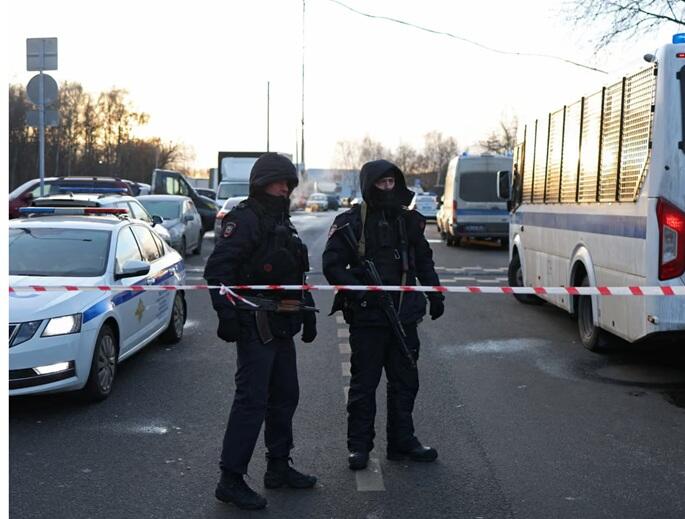
The plot has thickened, becoming even more alarming and stranger, connected to a top Russian commander’s assassination in Moscow. Lt Gen Fanil Sarvarov was killed in a car bombing on Monday. But on Wednesday, there’s been yet another bomb blast under mysterious circumstances, with Russian authorities confirming the deaths of three more people, including two police officers. The whole thing happened close to the location where the Russian general was killed early in the week.
According to scant details issued by officials, two traffic police officers began investigating a “suspicious individual” near a police car on the city’s Yeletskaya Street. The officers approached the suspect, intending to detain him, but when they got close an explosive device was detonated.
There hasn’t been much in the way of official statements on the nature or motive of the attack issued from the Kremlin, but Russia’s Investigate Committee spokesperson Svetlana Petrenko said in a statement on Telegram a formal criminal case has been opened “regarding an attempt on the lives of traffic police officers”.
BBC in its reporting has pointed to a likely anti-Kremlin act of terrorism and sabotage:
Sources in Ukraine’s military intelligence agency, HUR, told the BBC that a local resident, eliminated two representatives of the Russian law enforcement agency, “as a sign of disagreement with the Kremlin’s aggressive policy” and said that a man “threw an explosive package through the car window, causing an explosion”.
According to the HUR sources, two other people were taken to hospital with serious injuries.
Ukrainian military sources also told the BBC on Wednesday that the two officers killed had “participated in hostilities against Ukraine,” and added there was “evidence of their involvement in the torture of Ukrainian prisoners of war”.
If this account is accurate, this may have been yet another Ukraine-linked assassination targeting Russian personnel.
The Guardian also suggests this scenario:
Russian Telegram channels close to the security services said the third person who died was believed to have been planting the explosive device.
An anonymous official from Ukraine’s military intelligence, known as the GUR, told the Associated Press the attack had been carried out as part of an agency operation.
Throughout the course of the war there’s been a string of high profile assassinations on Russian soil involving car and even cafe bombs. Attacks on local police officers have not been part of this, apparently until now.
A car carrying police officers was blown up in Moscow, according to Russian media outlets. 🔥🔥🔥
Some groups report that this occurred on the same street where, a few days earlier, the car of Russian Director General Fanil Sarvarov was bombed. pic.twitter.com/D4qGUHubIw
— Jürgen Nauditt 🇩🇪🇺🇦 (@jurgen_nauditt) December 24, 2025
This adds to a growing list of high profile assassinations related to the Ukraine war. To review:
—Darya Dugina was killed in a car bombing in 2022 which was likely meant for her father, prominent political thinker and often dubbed “Putin ally” Aleksandr Dugin.
—Gen Igor Kirillov died in December 2024 outside of his residence when a bomb planted in a nearby scooter detonated.
—Gen Yaroslav Moskalik, who served as deputy head of the Main Operations Directorate of the General Staff of the Russian Armed Forces, was killed in a car bomb attack last April. A “homemade” explosive device detonated under his Volkswagen Golf in a residential neighborhood.
—This week: the targeted killing of Lt Gen Fanil Sarvarov by car bombing.
Also, a cafe bombing had happened in April 2023, and killed prominent pro-Kremlin blogger and war correspondent Vladlen Tatarsky. The blast at a St. Petersburg cafe during a close-quarters speaking event wounded some two dozen bystanders, six of them critically.
America’s CIA or Britain’s MI6 has long been suspected of also being involved in these targeted killings, or at least assisting in such brazen Ukrainian-linked operations, but ultimately little has been uncovered or proven in terms of a potential Western hidden hand in this ongoing ‘dirty war’.
Tyler Durden
Wed, 12/24/2025 – 22:00
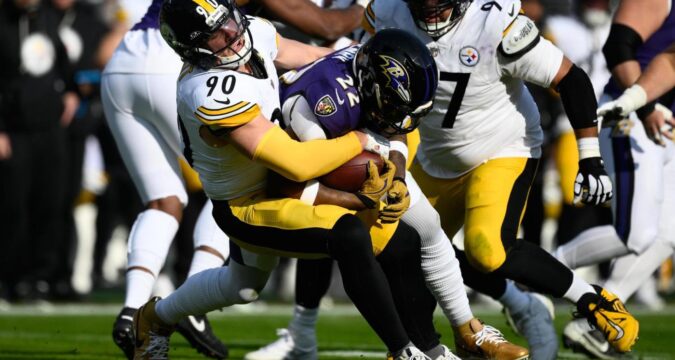
TJ Watt returns to Pittsburgh Steelers practice 2 weeks after surgery to repair partially collapsed lung
PITTSBURGH — T.J. Watt is back. Sort of.
The Pittsburgh Steelers outside linebacker returned to practice Wednesday, two weeks after he had surgery to repair a partially collapsed lung following a dry-needle treatment.
Watt was a limited participant Wednesday. While coach Mike Tomlin said he’s hopeful Watt will be able to return this weekend when the Steelers (9-6) try to wrap up the AFC North title with a road win against the Cleveland Browns, Watt’s availability remains uncertain.
Still, having Watt’s familiar No. 90 on the practice field is a good sign for a team that hopes to have him back in time for the playoffs at the latest, should the Steelers qualify for the third straight year.
“TJ is one of our leaders, so I love having him around,” quarterback Aaron Rodgers said. “Not sure what his status is going to be, but just his presence is good for the team.”
Watt was named to his eighth consecutive Pro Bowl on Tuesday. The 30-year-old is having a somewhat down year by his standards, with just seven sacks through 13 games played, though he also has two forced fumbles and an interception.
https://www.chicagotribune.com/2025/12/24/tj-watt-pittsburgh-steelers-returns/

Largest Acquisition In Nvidia History: Jensen Pays $20BN For AI Chip Startup In Bid For Google’s TPU Tech
Largest Acquisition In Nvidia History: Jensen Pays $20BN For AI Chip Startup In Bid For Google’s TPU Tech
Just before the market close on Friday, Nvidia unveiled its largest ever acquisition (which however was structured as a licensing deal to avoid anti-trust concerns) when it agreed to buy Groq – pardon license all of Grok’s assets and acquire its entire executive team – a designer of high-performance artificial intelligence accelerator chips, for $20 billion in cash. In reality what the deal is really about is Grok’s TPU expertise, and specifically the knowledge inside CEO Jonathan Ross’ head, who helped launch Google’s TPU, the search giant’s custom Application-Specific Integrated Circuit.
Jonathan Ross, chief executive officer of Groq
The news was first reported by CNBC, citing Alex Davis, CEO of Disruptive, which led the startup’s latest financing round in September. Davis, whose firm has invested more than half a billion dollars in Groq since the company was founded in 2016, said the deal came together quickly (that part is true: the deal likely came together in the days following the recent dramatic ascent of Google’s Gemini and TPU architecture, not to mention stock price, as explained below).
Groq raised $750 million at a valuation of about $6.9 billion in September. Investors in the round included Blackrock and Neuberger Berman, as well as Samsung, Cisco, Altimeter and 1789 Capital (where Donald Trump Jr. is a partner). Groq said at the time it would use the funds to expand its data center capacity. Instead, the participating funds are about to 3x their money in 3 months, an unprecedented venture return, thanks to Nvidia’s massive cash hoard.
Groq said in a blog post on Wednesday that it’s “entered into a non-exclusive licensing agreement with Nvidia for Groq’s inference technology,” without disclosing a price. Clearly, however, this is much more than just a licensing agreement since Groq founder and CEO Jonathan Ross along with Sunny Madra, the company’s president, and other senior leaders “will join Nvidia to help advance and scale the licensed technology,” the post said.
As Bloomberg explains, sharing a slightly different perspective on how the deal is structured or rather wants to be structured, the world’s largest publicly traded company paid for the right to use Groq’s technology and will integrate its chip design into future products. Some of the startup’s executives are leaving to join Nvidia to help with that effort, the companies said.
Groq will continue as an independent company with a new chief executive, existing finance chief Simon Edwards as CEO, it said Wednesday in a post on its website, which of course it will only pretend to be for regulatory and anti-trust reasons: Nvidia will have stripped all the good stuff, i.e., the TPU IP. It’s data center business, which offers outsourced computing, will continue, the company said in the post.
Davis told CNBC that Nvidia is getting all of Groq’s assets, though its nascent Groq cloud business is not part of the transaction. Groq said “GroqCloud will continue to operate without interruption.”
The deal represents by far Nvidia’s largest purchase ever. The chipmaker’s biggest acquisition to date came in 2019, when it bought Israeli chip designer Mellanox for close to $7 billion. At the end of October, Nvidia had $60.6 billion in cash and short-term investments, up from $13.3 billion in early 2023.
In an email to employees that was obtained by CNBC, Nvidia CEO Jensen Huang said the agreement will expand Nvidia’s capabilities.
“We plan to integrate Groq’s low-latency processors into the NVIDIA AI factory architecture, extending the platform to serve an even broader range of AI inference and real-time workloads,” Huang wrote, revealing the deal rationale.
Groq has been targeting revenue of $500 million this year amid booming demand for AI accelerator chips used in speeding up the process for large language models to complete inference-related tasks. The company was not pursuing a sale when it was approached by Nvidia, Davis said. While it is unclear what is the actual LTM revenue, the acquisition represents a 40x multiple of its “targeted” sales… so do the math.
So what is the reason for the deal? Well, as we explained in “The Google TPU: The Chip Made For The AI Inference Era“, in recent months Nvidia and its GPU architecture has lost momentum to Google and its TPU, which as noted above, is the “chip made for the inference era.” And so, instead of developing its own Tensor architecture, Nvidia decided to just buy it. Or rather, it pretends not to buy it as regulators may just kill the deal, which instead was structured as an asset-purchase/licensing deal.
And the punchline: Groq was founded in 2016 by a group of former engineers, including CEO Ross. Ross is a former Google chip executive who helped start that company’s Tensor Processing Unit, or TPU, the search giant’s custom chip that’s being used by some companies as an alternative to Nvidia’s graphics processing units. As part of the deal, he and other top executives will join Nvidia “to help advance and scale the licensed technology,” Groq said in the statement.
In its initial filing with the SEC, announcing a $10.3 million fundraising in late 2016, Groq listed as principals Ross and Douglas Wightman, an entrepreneur and former engineer at the Google X “moonshot factory.” Wightman left Groq in 2019, according to his LinkedIn profile.
Huang added that, “While we are adding talented employees to our ranks and licensing Groq’s IP, we are not acquiring Groq as a company.” Narrator: you are.
Nvidia has ramped up its investments in chip startups and the broader ecosystem as its cash pile has mounted. The company has backed AI and energy infrastructure company Crusoe, AI model developer Cohere, and boosted its investment in CoreWeave as the AI-centric cloud provider was getting ready to go public this year.
In September, Nvidia said it intended to invest up to $100 billion in OpenAI, with the startup committed to deploying at least 10 gigawatts of Nvidia products. The companies have yet to announce a formal deal. That same month, Nvidia said it would invest $5 billion in Intel as part of a partnership.
Nvidia has been making investments in companies across the AI infrastructure ecosystem and is trying to keep a large lead in the market for inference — running models once they have been developed. The company’s leadership has already pledged billions to a wide variety of projects that it believes will further the overall AI industry. Nvidia agreed to invest as much as $100 billion in OpenAI and has even bought a stake in erstwhile nemesis Intel Corp.
By incorporating a new type of design into what it sells, Nvidia is showing willingness to be flexible and add novel capabilities. That approach is likely aimed at keeping its biggest customers and new adopters focused on its technology at a time when in-house efforts from Google, Microsoft Corp. and Amazon.com Inc. are gaining momentum as the industry rushes to install as much computing capacity as quickly as it can.
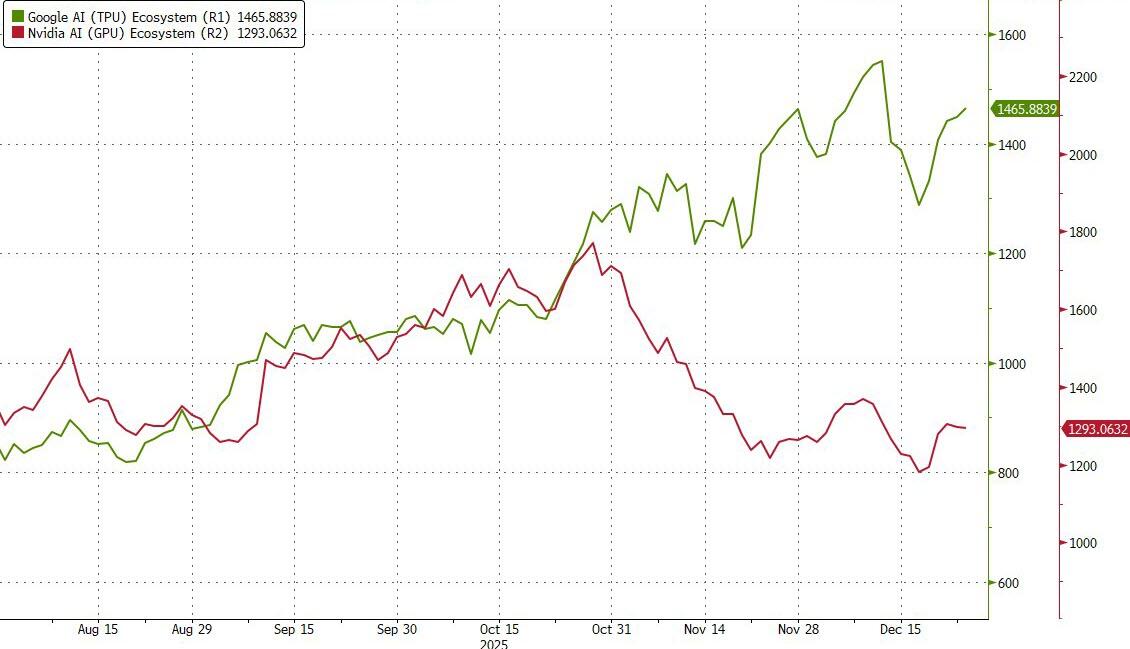
With today’s purchase, pardon, “licensing deal”, Nvidia has formally lobbed its response to Google’s recent ascent with its Ironwood TPU and Gemini AI, which saw a dramatic divergence in the Google vs Nvidia ecosystems (chart below). The question now is will Google issue its own “code red” and pull every string in its power to kill the deal, or will it respond even more forcefully. One thing is certain: if Nvidia has now successfully caught up to Google and its TPU technology, the alligator jaws of the Google vs OpenAI/Nvidia chart are about to slam shut.
Tyler Durden
Wed, 12/24/2025 – 21:09

NBA on Christmas: LeBron James’ 20th appearance on Dec. 25 highlights a fistful of holiday games
Jalen Williams’ plan for Thursday is mapped out like this: presents in the morning, then a game in the afternoon.
To him, that sounds like an exceptional Christmas.
Williams and the defending NBA champion Oklahoma City Thunder — who felt snubbed by the Christmas schedule makers a year ago — are on the league’s slate of showcase games this year, taking on the San Antonio Spurs as part of the annual Dec. 25 quintupleheader.
Spurs forward Victor Wembanyama (1) shoots over Thunder guard Jalen Williams in the second half of an NBA Cup semifinal Dec. 13, 2025, in Las Vegas. (Ronda Churchill/AP)
The schedule, with all times Central: The Cleveland Cavaliers at New York Knicks gets things started at 11 a.m., followed by the Spurs at Thunder at 1:30 p.m., Dallas Mavericks at Golden State Warriors at 4 p.m., Houston Rockets at Los Angeles Lakers at 7 p.m. and Minnesota Timberwolves at Denver Nuggets at 9:30 p.m.
“As a basketball player, I feel like you grow up — actually, if you’re a sports fan, you grow up watching sports on Christmas. To be able to be a part of it is really cool,” Williams said. “What time do we play, 1:30 (Central)? Yeah, we’re like the cool game. Like, 1:30, presents have already been opened and everybody’s kind of watching the games. I’m really looking forward to that.”
For most of the Thunder, it’ll be a first: The only current players who have scored in a Christmas game are Isaiah Hartenstein and Alex Caruso. And it’ll be the second Christmas game for the Spurs’ Victor Wembanyama, whose holiday debut last year was a 42-point, 18-rebound effort against the Knicks.
“It’s a big day for the NBA and the guys are excited to play on that slate of games,” Thunder coach Mark Daigneault said. “It’s one of 82 at the end of the day, but it is an elevated circumstance because of the attention on the game and the noise around it. Those are good experiences for any team and certainly for us.”
The Thunder are an NBA-best 26-4 — 26-2 against every team but the Spurs. The Spurs beat the Thunder 130-110 on Tuesday after ousting the Thunder in the NBA Cup semifinals earlier this month.
“They’re going to be locked in more than any time before, probably,” Wembanyama said of the looming Christmas meeting.
For LeBron James, it will not be a first: If he plays Thursday with the Lakers, it’ll be his 20th Christmas game. That’s more than 17 current franchises have played in their existence.
“I’d much rather be at home with my family,” James said. “But it’s a game, it’s the game I love, it’s a game I watched when I was a kid on Christmas Day, watching a lot of the greatest play the game on Christmas. It’s always been an honor to play it. I’m going to be completely honest: I would like to be home on the couch with my family all throughout the day, but my number is called, our number is called, so we have to go out and perform.”
LeBron on Christmas
James playing in his 20th Christmas game would mean the record book will need updating again when this holiday slate is complete.
He already is the all-time Christmas leader in games played, points (507), wins (11), field goals (180) and 3-pointers made (31, tied with James Harden).
Up next: assists, steals and free throws. James is second in Christmas assists with 137, eight behind Oscar Robertson. He also is second in steals with 28, two behind Russell Westbrook, and second in free throws made with 116 — nine behind Robertson.
James is sixth in Christmas rebounds with 143, one behind No. 5 Dolph Schayes, nine behind No. 4 Wilt Chamberlain and 12 behind No. 3 Shaquille O’Neal. (No. 1 Bill Russell, with 176, and No. 2 Wes Unseld, with 163, are probably safe from James this year.)
More about 3s
While James and Harden are tied atop the 3-pointers-made list, some other familiar names could rise with big efforts Thursday.
The Mavericks’ Klay Thompson enters the day No. 3 on the list with 27 made 3s on Christmas, one ahead of the Warriors’ Stephen Curry and Rockets’ Kevin Durant.
Still waiting
The Christmas wait goes on for some teams.
The Sacramento Kings haven’t played on Dec. 25 since 2003, the Indiana Pacers — who might have gotten the nod this year if Tyrese Haliburton didn’t get hurt in Game 7 of the NBA Finals — hasn’t made the Christmas list since 2004 and the Detroit Pistons haven’t since 2005.
To put that into context, it should be noted that Seattle — which hasn’t had a team in nearly two decades — played its last Christmas game in 2007, or more recently than the Kings, Pacers and Pistons have.
The Orlando Magic haven’t played on Christmas since 2011, and the Chicago Bulls haven’t since 2016. Meanwhile, the Boston Celtics’ nine-year streak of Christmas appearances comes to an end this year.
Can the Chicago Bulls keep outscoring their opponents — or is their defense on the hot seat again?
On the other end of the spectrum, the Lakers are playing on Christmas for the 27th consecutive year and Warriors for a 13th straight.
“Just excited for another big game on Christmas Day,” Curry said Monday after the Warriors won their second straight to get to 15-15 and go into the holiday with a bit of momentum. “The vibes are good right now.”
Welcome, kid
Mavericks rookie Cooper Flagg reacts after making a 3-pointer against the Nuggets on Dec. 23, 2025, in Dallas. (Ron Jenkins/Getty Images)
The Mavericks’ Cooper Flagg — who turned 19 this week — is set to make his Christmas debut.
If Flagg plays, he’ll be the fourth-youngest player to appear in a Christmas game. Kobe Bryant, Bill Willoughby and James were all 18 in their first Christmas contest.
KD’s Christmas travels
Durant is set to play on Christmas for a fifth team (and a sixth jersey), which makes his holiday paths one of the most traveled in league history.
Durant also has played on Christmas for Seattle and the Thunder, then the Warriors, then the Brooklyn Nets, then the Phoenix Suns and on Thursday, the Rockets — the team he joined last summer — get added to the list.
O’Neal (Magic, Lakers, Miami Heat, Suns, Cavs and Celtics) played on Christmas for six teams. Among those who have played on the holiday with five franchises: Chris Paul and Carmelo Anthony.
Lots of West
Of the 10 teams playing on Christmas this year, eight come from the Western Conference.
That’s the most from one conference on Christmas since 1978, when the Eastern Conference saw eight of its then-11 teams picked to play on the holiday.
The last time the East had more teams playing on Christmas than the West was 2004. Since then, including this year, the holiday schedule has seen an even East-West split 10 times and the West has seen more teams picked for the holiday slate on 11 occasions.
NBA Christmas schedule
All games on ABC-7 and ESPN
Cavaliers at Knicks, 11 a.m.
Spurs at Thunder, 1:30 p.m.
Mavericks at Warriors, 4 p.m.
Rockets at Lakers, 7 p.m.
Timberwolves at Nuggets, 9:30 p.m.
https://www.chicagotribune.com/2025/12/24/nba-christmas-day-schedule/
American Holiday Essentials
American Holiday Essentials
While every family celebrates the holiday season a little differently, each with its own sets of customs and traditions, there are things that most celebrants can agree on, things that are considered essential for a merry Christmas.
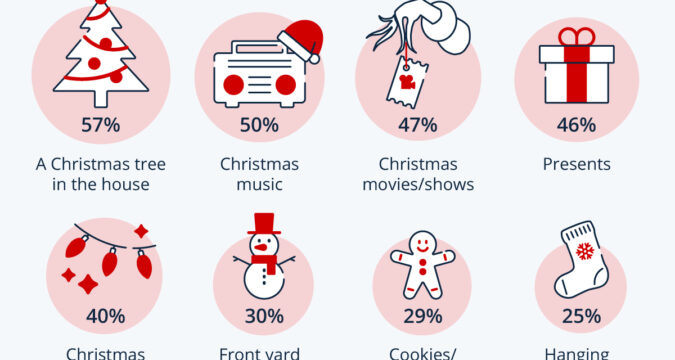
As Statista’s Felix Richter reports, according to Statista Consumer Insights, a Christmas tree in the house tops the list of holiday must-haves this year, with 57 percent of Americans considering it essential to a proper celebration.
You will find more infographics at Statista
Some proper holiday tunes (there’s more than “Last Christmas”) and Christmas movies, think “Home Alone”, “Love Actually” and (to some) “Die Hard”, are other key ingredients to the holiday season with 50 and 47 percent of Americans calling both essential traditions, respectively.
When asked about what they are looking forward to most thinking about the holiday season, Americans show that community and family still beat the commercial aspects of the holidays.
67 percent of the respondents look forward to spending time with friends and family, making it the top answer by far.
Interestingly Americans also prefer giving presents (52 percent) over receiving them (32 percent), showing that not all is lost for Christmas romantics.
Tyler Durden
Wed, 12/24/2025 – 20:30
https://www.zerohedge.com/personal-finance/american-holiday-essentials-0
The Piercing Cold Of Christmas
The Piercing Cold Of Christmas
Authored by Andrew Fowler via RealClearReligion,
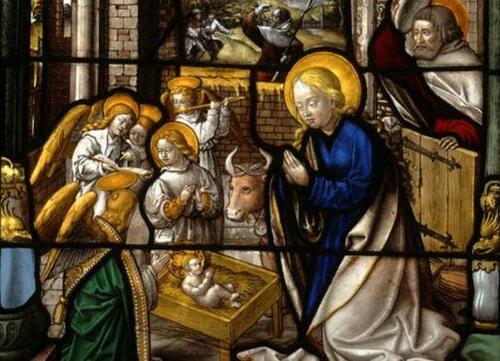
Christmas evokes a warmth during the winter: bright lights, roaring fires, and good cheer with loved ones. However, as St. Andrew’s Novena distinctly emphasizes, the “piercing cold” conditions of the first Christmas starkly contrast with the holiday season’s comforts, beckoning us to not only recognize Christ’s humility, but to care for the poor, forgotten, and the suffering.
The novena — spanning from the apostle’s feast day (November 30) to Christmas Eve — is prayed fifteen times a day. And while its roots are nebulous, most likely originating from Ireland, it humbly presents the harsh realities the Holy Family endured “at midnight, in Bethlehem” that further reveal God’s infinite love. By subverting the typical grandeur of royal births, instead embracing the “piercing” elements in a stable, Christ, in this singular instance, revolutionized the course of history and humanity’s relationship with each other.
In so doing, God honors the poor and marginalized’s inherent dignity in perpetuity. Indeed, salvation is not reserved for merely the powerful, but also those who are deemed lowly. As Christ would teach during his earthly ministry, “The last shall be first, and the first shall be last.”
Certainly, one can reflect why “the Word became flesh” more than 2,000 years ago and not at any other point in time. However, in the centuries since, critics argue Christians purloined pagan myths and holidays, particularly Christmas; and there is a general consensus Jesus’s birth did not coincide with December 25.
To be sure, the Gospels do not specify a date — but this does not negate Christmas Day’s historicity. Jesus’s birth is no myth. He was born in time — living, suffering, dying, and rising on the third day in ancient Israel. And much like the “piercing cold” of Christmas, He was pierced with a lance on Calvary.
In the wake of his resurrection, the seismic event in history, his disciples continue to proclaim this reality. Indeed, Christ’s death — much like His birth — subverted prior conceptions of class, race, wealth, and power. In the ancient world, the very idea of Jesus’s divinity, after dying via crucifixion, was considered “scandalous, obscene, grotesque” because, as Tom Holland notes in Dominion: How the Christian Revolution Remade the World, divinity was reserved for the “greatest of the great — for victors, and heroes, and kings.”
If one believes in the Resurrection, then one must reconcile with his birth’s wonderfully contradictory nature: that poverty and eternal glory occupied the manger, as it did on the cross on Good Friday.
This is precisely why the St. Andrew’s Novena’s call to reflect on his birth’s environment is imperative — because of its physicality. The Holy Family was poor; they uprooted from Nazareth to Bethlehem to comply with a Roman census; the Blessed Mother endured labor pains; they unsuccessfully searched for proper lodgings; and, while amongst animals, the wind struck them in the darkest hours. But precisely in this dark hour, Christ — the light of the world — broke into history. In fact, His life is history.
The first Christmas echoes daily in our own hearts, to believers and non-believers alike. Like that “piercing cold” night, Jesus continually knocks, seeking to transform and heal us. But as Pope Benedict XVI asked in a 2012 Christmas homily, “[D]o we really have room for God when he seeks to enter under our roof? Do we have time and space for him? Do we not actually turn away God himself?”
These questions extend to our treatment of neighbors, the impoverished, and those suffering temporally, mentally, and spiritually. Indeed, everyone is infinitely loved, formed in the image and likeness of God. Yet, too often, we fall short of this mission. However, as Pope Leo XIV reminds us in his first apostolic exhortation, Dilexi Te, caring for those around us, particularly the poor, “has always been a central part” of Church tradition. Moreover, Christian charity serves as “a beacon as it were of evangelical light to illumine the hearts and guide the decisions of Christians in every age.”
Ultimately, Christmas is a day of gratitude — not only for those in our lives and the gifts received, but God’s blessings, sacrifice, and love. Yet St. Andrew’s Novena offers the opportunity to reflect on the elements Christ endured for our salvation, not only on Good Friday, but also at midnight in Bethlehem.
As we cozy up in warm blankets, carols, gifts, libations, and merriment, may we commit ourselves to also remember, in a tangible way, the poor and those suffering from the “piercing cold” afflictions of the day. In them, we will find Christ — our great hope.
Tyler Durden
Wed, 12/24/2025 – 19:45

Watch: Pro-Natalist’s Head Explodes After Lefty Journo Denies Basic Science
Watch: Pro-Natalist’s Head Explodes After Lefty Journo Denies Basic Science
A hilarious clip is currently going viral in which far-left journalist Paola Ramos (daughter of Trump foe and Univision reporter Jorge Ramos) attempts a “gotcha” during an interview with Simone and Malcolm Collins – Silicon Valley investors-turned Pennsylvania pronatalists, who the left, of course, has been trying to cancel.
In her attempt to paint the Collins’s as white supremacists whose “practices and preachings recall the dark era of eugenics,” Ramos says “You’ve said things like black women are biologically different than white women.”
To which Malcolm replies; “Yes, they have different fertility windows, they have a higher rate of fertility complications-”
“But there’s no scientific evidence to prove that a black woman and a white woman are genetically different,” Ramos (who apparently missed this Stanford study) shoots back… which sends Malcolm over the edge:
“What are you TALKING about?” he replies. “Like, literally, there are genes that code for their skin color.“
Ramos then lies, saying “This is government data. This is the National Institute of Health. This is the American Medical Association. There is no scientific evidence to prove that…”
Watch the entire exchange here:
This must be the dumbest journalist of all time. @paoramos tries to convince two Trump supporters that there is no scientific evidence that proves different ethnicities have different genetics, even citing the NIH as source.
This is a patently false statement that only the… pic.twitter.com/lYgN1XEchZ
— Don Keith (@RealDonKeith) December 23, 2025
Ramos doubled down on social media, writing:
The pronatalist movement, a movement that encourages people to have more babies is once again gaining momentum in the far right. Remember, Trump said he wants to be the “president of fertility.”
Malcolm and Simone Collins, who are big Trump supporters, are two of the main leaders of this movement, which includes people like Elon Musk as well as individuals that believe in the Great Replacement Theory or religious leaders. It’s a big, complex and growing movement, particularly now that it has political allies.
For the Collins, who want to have 12 children, the mass production of genetically selected humans is part of the key to “saving civilization.” They use it to screen for cancer ( runs in the family) as well as IQ . Although they vehemently deny being white supremacists, some of their practices and their preachings recall the dark era of eugenics.
Meanwhile, the Science…
Both the National Institute of Health and the American Medical Association have published or hosted studies, articles and policy statements that acknowledge genetic differences between human populations.
NIH:
The Quagmire of Race, Genetic Ancestry, and Health Disparities
All of Us Research Program Study on Race, Ethnicity, and Genetic Ancestry
AMA:
Race, Genomics, and Health Care
Racial Essentialism in Medical Education
What both organizations have done is issue statements ‘clarifying‘ that “race [is] a socially constructed category different from ethnicity, genetic ancestry, or biology.”
Then there’s this one published in Nature in 2021:
African Americans and European Americans Exhibit Distinct Gene Expression Profiles
African American expression signatures, superimposed on single cell-RNA reference data, reveal increased number or activity of esophageal glandular cells and lung ACE2-positive basal keratinocytes. Our findings establish basal prognostic signatures that can be used to refine approaches to minimize risk of severe infection and improve precision treatment of COVID-19 for African Americans.
Oh…
So, more semantic games from the same people that insist a mentally ill man is actually a woman if he says so.
— Jeremy Kauffman 🦔🌲🌕 (@jeremykauffman) December 23, 2025
Tyler Durden
Wed, 12/24/2025 – 19:00

Daily Horoscope for December 25, 2025
General Daily Insight for December 25, 2025
Small steps create a steady rhythm today. With the intuitive Moon collaborating with action-oriented Mars at 10:45 AM EST, we’re more capable of channeling our feelings into practical applications. This is boosted by the earlier sextile between the Moon and the Sun. That softened our edges, allowing us to have kind conversations that prepped everyone for this Moon-Mars action surge. By evening, we can unwind with supportive people, letting simple care gently restore our spirits. Each one of us can choose patience.
Aries
March 21 – April 19
Listening is vital at the moment. As your inner voice speaks, its volume is magnified by the Moon in your detailed 12th house and Mars in your visible 10th house. Reflection, not pressure, supports wise career choices. You might have to push back against rushed deadlines, knowing that you’ll function better after a short rest. Quiet music, journaling, or a short walk could all help you settle down, release tension, and refocus. Protect today’s downtime, since restored energy sharpens tomorrow’s bold moves.
Taurus
April 20 – May 20
This morning dawns calm and kind. Your 11th House of Aspirations takes focus as the instinctive Moon collaborates with energetic Mars, crafting a space where teamwork can build practical paths to shared ideas. A friend might invite you to join a class, and your steady sense of pace keeps plans grounded even as your 9th house whispers of adventure. You may moderate a chat thread, ensuring that small misunderstandings don’t wreck your entire circle. Leave some space for “maybes” in every plan.
Gemini
May 21 – June 20
Put the pedal to the metal, Gemini! The lively Moon sextiles fiery Mars today, with Luna in your powerful 10th house and Mars in your intense 8th house. Any authorities or clients may demand frequent updates — or you may freely offer them. A side conversation could transform scattered ideas into a clear plan (professional or personal) that gets everyone excited. If you’re in charge, use a light hand to ensure the decisions stay collaborative. Clear words make real progress feel easy.
Cancer
June 21 – July 22
You deserve spacious, hopeful conversations now. Curiosity opens your world as the emotional Moon in your engaging 9th house cooperates with passionate Mars within your companionable 7th house. Let your intrigue draw you toward fresh connections! Additionally, heartfelt talks with a mentor or senior may soothe old worries. For maximum success, don’t rush any such conversations. Instead, make an effort to bridge differing perspectives by sharing a simple story from experience. Keep listening, because understanding turns distance into trust sooner.
Leo
July 23 – August 22
Soft courage empowers your current plans. Your 8th House of Intimacy and your 6th House of Chores are both steadied by the Moon and Mars supporting each other, so money talks can become calmer as everyone seeks fair results. You may write down a clearer split of expenses, so everyone remembers their dues without needing to be verbally reminded. Be mindful of upcoming deadlines! Try to start serious conversations (about money or other topics) in advance, so there’ll be room to take breaks as needed.
Virgo
August 23 – September 22
Cooperation can bring practical wins! The nurturing Moon in your agreeable 7th house is sextiling impassioned Mars in your bouyant 5th house, encouraging mutual effort in talks about responsibilities, timing, and expectations. You might propose a shared calendar to smooth daily responsibilities while keeping the tone gentle with a collaborator or relative. Pride could make it hard to accept mistakes, but you’re capable of listening carefully and shaping an agreement everyone can maintain. Choose fairness to protect the relationships you value most.
Libra
September 23 – October 22
Patience can make work feel lighter than you’d think. Your 6th House of Everyday Effort gets a lift as the tender Moon complements motivated Mars, channeling emotional intensity into focused tasks and supportive routines. You may streamline your routine so you gain extra room to handle a stubborn task at work, school, or home. While family demands could impact your timing, you’re braced to set boundaries and finish what matters without overloading yourself. Work smart, because steady habits free more sweet time later.
Scorpio
October 23 – November 21
Early hours invite playful, creative risks. The unconscious Moon sextiles fierce Mars across your expressive 5th house and your vocal 3rd house, ensuring that you can make yourself heard regarding what you love. Consider hosting a game night or attending an artistic event — something you can enjoy without pressure! Choosing what to do might be the hard part, because whatever you pick, you can have tons of fun with the ones you love. As you indulge in this joy, you’re simultaneously strengthening those relationships.
Sagittarius
November 22 – December 21
When home and money agree, peace follows. Make an effort to forge your restlessness into realistic action. Thankfully, that shouldn’t be too hard to do as Luna and Mars work together. Just be wary of being overly aggressive when it comes to asking about shared expenses, especially with roommates you don’t know particularly well. You can navigate the murky water of joint finances with care. Alternate arrangements could be necessary — for instance, someone who can’t pitch in monetarily may assist by tidying up.
Capricorn
December 22 – January 19
You’re leading with clear words and patience. Conversation becomes your strong suit as the Moon in your talking zone harmonizes with warrior Mars in your steady sign, inspiring messages that are useful without being unkind. You may call a sibling to clear a misunderstanding, making your way through thorny topics with patience. Whether you’re officially in charge or not, you can strengthen your message by proving your reliability throughout the day. Calm phrasing and responsible action move plans forward with far less friction.
Aquarius
January 20 – February 18
Gentle persistence guides your money choices. Security grows as the temperamental Moon works with Mars to align across your inward-focused 12th house and your money-minded 2nd house. You can honor your needs without overspending. Perhaps you’ll analyze your salary or rates and determine that you’re ready to ask for a raise, or maybe you’ll donate your time to a charity. When it comes to your wants, a short pause before buying keeps emotions from deciding the whole cart. Right now, spending should feel intentional.
Pisces
February 19 – March 20
Confidence grows as you gain momentum throughout your day. Believing in yourself is the best kind of motivation, especially with the Moon empowering your thoughtful sign. While there, Luna cooperates with combative Mars in your communal 11th house. By today’s end, you’ll know that courage doesn’t mean being rude, and kindness doesn’t mean being a doormat. You may send a thoughtful invitation, and your kind presence wins attention without dramatic effort from people nearby. Let connections build gradually — just like your own confidence!
https://www.chicagotribune.com/2025/12/24/daily-horoscope-for-december-25-2025/
Perú: 36 aspirantes a la presidencia se inscriben para elecciones de 2026
Por DAVID PEREDA
LIMA (AP) — Una cifra récord de 36 personas presentaron solicitudes de inscripción para competir en las elecciones presidenciales de Perú del próximo año, según informaron el miércoles las autoridades electorales tras cumplirse el plazo oficial.
La cantidad de aspirantes marca un récord histórico en el país y puede reducirse si el tribunal electoral nacional rechaza postulaciones por incumplir requisitos legales o cometer faltas graves.
“Es una oferta electoral que no ha habido antes”, comentó el presidente del Jurado Nacional de Elecciones (JNE), Roberto Burneo, en una conferencia de prensa.
Entre los aspirantes están Keiko Fujimori, hija del exgobernante Alberto Fujimori, en un cuarto intento; el exalcalde de Lima Rafael López Aliaga, conocido como “El Bolsonaro peruano”; César Acuña, exgobernador de la región norteña de La Libertad; el cómico Carlos Álvarez, que incursiona en la política; y el empresario Mario Vizcarra, hermano del expresidente Martín Vizcarra, preso por una condena por corrupción desde el mes pasado.
También están el prófugo Vladimir Cerrón, exgobernador de la región Junín y líder del partido de izquierda que llevó al poder al expresidente Pedro Castillo en el 2021; y exfutbolista George Forsyth, que fue alcalde de un distrito limeño y es copartidario del presidente interino del país, José Jerí: ambos militan en la agrupación política Somos Perú.
Además se postulan el exrector Alfonso López Chau, conocido por cobijar a jóvenes protestantes en el campus de la universidad que dirigía en la crisis de fines del 2022; el expresidente del Congreso y militar retirado José Williams, quien en 1997 dirigió la operación Chavín de Huántar, que liberó rehenes civiles de la embajada de Japón en Lima; y el congresista Roberto Chiabra, que participó en la Guerra del Cenepa (1995) con Ecuador.
Asimismo, compiten el centrista Mesías Guevara, exgobernador de la región Cajamarca; el excongresista Fernando Olivera, quien en el 2000 reveló el video que detonó la caída del gobierno de Alberto Fujimori al evidenciar a su asesor Vladimiro Montesinos dando un soborno; el empresario Rafael Belaunde, que a inicios de mes denunció haber sido blanco de un ataque armado; y el abogado y experiodista televisivo Carlos Espá; entre varios otros.
Además, hay 1.748 solicitudes de listas de candidatos al Senado, diputados y Parlamento Andino. En estas diversas postulaciones, sorprendieron Herminia Chino, madre de la ex primera ministra Bettsy Chávez, asilada en la embajada de México en Lima y condenada por el mensaje presidencial de Pedro Castillo para disolver el Congreso el 2022; y la fiscal Sandra Castro, que investigó una red de corrupción de magistrados, políticos y empresarios conocida como “Los Cuellos Blancos”, que remeció a los peruanos el 2018, entre otros.