Category: News

Kick Streamer Runs Over ‘Stalker’ With Cybertruck
Kick Streamer Runs Over ‘Stalker’ With Cybertruck
A 20-year-old U.S.-based content creator and streamer, whose real name is Braden Peters, was reportedly banned overnight from the creator-focused livestreaming platform Kick following an incident that appears to involve running over a person described as a “stalker.”
On Christmas Eve night, X user KickChamp posted a video showing Claviclar running over a “stalker” with a Tesla Cybertruck who jumped onto his windshield.
Clavicular RAN OVER a stalker that tried hopping on his windshield 😳 pic.twitter.com/w4ikrAeUp9
— KickChamp👑 (@Kick_Champ) December 25, 2025
“The stalker Clavicular ran over is unresponsive at the scene,” KickChamp said.
The stalker Clavicular ran over is unresponsive on the scene 😳 pic.twitter.com/ckGGgqaVil
— KickChamp👑 (@Kick_Champ) December 25, 2025
KickChamp posted another video …
Security confirmed that the stalker Clavicular ran over didn’t get up 😳 pic.twitter.com/QbMcpL2Gsd
— KickChamp👑 (@Kick_Champ) December 25, 2025
Following the incident, Clavicular’s Kick page has been deleted. It appears he has been banned from the platform.
Yet another documented instance of dangerous and harmful behavior associated with some livestreamers on Kick…
Tyler Durden
Thu, 12/25/2025 – 14:15
https://www.zerohedge.com/technology/kick-streamer-runs-over-stalker-cybertruck

‘There Is Nothing To Celebrate’: Gaza’s Christians Mark Somber Christmas Amid Fragile Truce
‘There Is Nothing To Celebrate’: Gaza’s Christians Mark Somber Christmas Amid Fragile Truce
Youssef Tarazi, a Palestinian Christian in Gaza, says the giant Christmas tree that once stood as a symbol of communal celebration will not be lit this year. For a third consecutive year, Gaza’s Christian community says they will be observing Christmas without public celebrations, as Israel’s alleged repeated ceasefire violations and restrictions on humanitarian aid entering the enclave continue to cast a shadow over the holiday.
“Churches have suspended all celebrations outside their walls because of the conditions Gaza is going through,” Tarazi, 31, told Middle East Eye. “We are marking the birth of Jesus Christ through prayer inside the church only, but our joy remains incomplete”.
Before the war, churches across Gaza transformed their courtyards into gathering spaces, decorated streets with festive lights and hosted carols that brought families together.
Muslims often joined Christian neighbors to mark the occasion, including the annual lighting of a large Christmas tree in Gaza City. “This year, we cannot celebrate while we are still grieving for those killed, including during attacks on churches,” Tarazi said.
“Nothing feels the same anymore. Many members of our community will not be with us this Christmas”.
George Anton, the director of operations at the Latin patriarchate in Gaza and head of its emergency committee, echoed those sentiments. “We cannot celebrate while Christians and Muslims alike are mourning devastating losses caused by the war,” Anton told MEE. “For us, the war has not ended”.
Anton said churches are limiting observances to prayers and a nativity scene inside church buildings. “In the past, we decorated our homes. Now, many homes are gone. We decorated the streets. Even the streets are gone,” he said. “There is nothing to celebrate”.
Since October 2023, Gaza’s Christian homes, schools and churches have been damaged or destroyed during Israeli military operations. Three historic churches – Church of Saint Porphyrius, the Holy Family Church and the Gaza Baptist Church – have suffered severe damage.
Anton said at least 53 Christians have been killed directly or indirectly during the war, with many others injured. “Some were killed in air strikes, while others died because we could not reach hospitals or provide medicine, especially elderly people with chronic illnesses,” he said.
Determined to stay
This Christmas comes amid what church leaders describe as the smallest Christian population Gaza has seen in decades.
More than 400 Christians have left Gaza during the war, fearing for their lives after relatives and friends were killed. Today, an estimated 220 Christian families – around 580 people – remain in the strip. “Those of us who remain are determined to stay,” Anton said, while acknowledging that worsening humanitarian conditions may force more families to leave in search of medical care and stability.
For the last two years, Nazareth, the hometown of Jesus Christ, has not been able to properly celebrate Christmas. Due to the war in Gaza, there has not been a tree in the village square, and the Christmas market has not been open.https://t.co/KVVHKLfgbr
— Crux (@Crux) December 22, 2025
Around 70 percent of Gaza’s Christians belong to the Greek Orthodox Church, with the remainder Latin Catholics. “The situation affects everyone – Christians and Muslims alike,” Anton said. “We are part of this society, and what happens to Gaza happens to us”.
On October 20 2023, less than two weeks into the war, Israeli strikes hit the Church of Saint Porphyrius complex, killing at least 16 people who had sought refuge there. The church is one of the oldest in the world, built on a site used for Christian worship since the fifth century.
In another attack on 17 July, Israeli fire struck Gaza’s only Catholic church, killing two women and injuring several others, including the parish priest. “All Palestinians, including the Christian community, are still living with the consequences of the war,” Anton said. “We are grieving, frustrated and unstable. We cannot celebrate as if nothing has happened”.
Tyler Durden
Thu, 12/25/2025 – 13:30
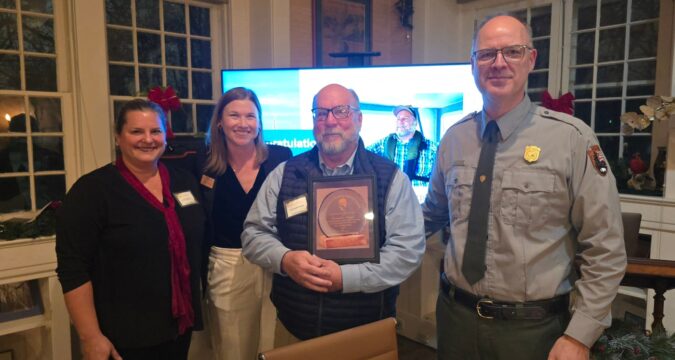
Save the Dunes honors former parks director, Notre Dame student group
As he wraps up a long career with the National Park Service, Chris Pergiel called recognition from a local organization “a great honor.”
“I especially think it means something to me this year,” said Pergiel, former deputy superintendent at the Indiana Dunes National Park. “The timing was good, and I think the relationship between the organization, Save the Dunes, and the Indiana Dunes National Park is as good and as productive as it’s ever been.”
Pergiel received the Paul H. Douglas Memorial Award from Save the Dunes, a Michigan City-based organization dedicated to preserving and advocating for the park. The Paul H. Douglas award is the organization’s highest honor, according to Save the Dunes, and is given to someone who is recognized for their work preserving and protecting the Indiana Dunes.
Pergiel worked for the National Park Service for more than 40 years, and he held various positions within the department, including law enforcement ranger, chief ranger and deputy superintendent. He worked in parks nationwide, including in Arizona, Alaska, California and Indiana.
His experience with the Indiana Dunes National Park was “eye-opening,” Pergiel said, and it allowed him to work closely with local partners, including Save the Dunes.
“In many of the other national parks, everything’s focused internally, and we work with the surrounding communities, but not as directly,” Pergiel said. “In Indiana Dunes National Park, it’s all about partnerships.”
The national park relies on local partners to help preserve and advocate for the dunes, Pergiel said.
Betsy Maher, executive director of Save the Dunes, said the organization has worked with Pergiel for years, and that he advanced many protections for the Indiana dunes and helped secure more than $33 million for the park.
“I have met countless times with Chris and can personally attest to his character and how deserving he is of this award,” Maher said. “He has been a mentor to so many people within the national park. … He’s known for being a steady hand, and he was able to navigate through what could really be destabilizing transitions and periods for the national park.”
Pergiel doesn’t have specific plans to help with the park in retirement, but he believes everyone should lend a hand if possible, especially with changes in federal funding for national parks.
“Never in my history has there been such an attack on federal employees, on federal institutions, on conserving national park lands, on protecting the environment as a whole,” Pergiel said. “I don’t think there’s ever been a more important time to engage. … I think we owe it to ourselves, number one, to get out and enjoy the national parks because that’s our number one line of defense.”
Save the Dunes also gives out the Dorothy Buell Youth Environmental Award, which is awarded to either an individual or group between the ages of 13 and 24 who advocate for the environment within the Lake Michigan Watershed.
The Notre Dame Student Policy Network members pose for a photo. The student group won the Dorothy Buell Youth Environmental Award, which is awarded to either an individual or group between the ages of 13 and 24 who advocate for the environment within the Lake Michigan Watershed. (Save the Dunes/Provided)
This year, the Notre Dame Student Policy Network received the youth award. The group is an entirely student-run undergraduate organization “demonstrating exceptional dedication to environmental stewardship and policy engagement,” according to Save the Dunes.
Members of the Notre Dame Student Policy Network were unable to immediately respond to request for comment. However, according to Save the Dunes, the group has completed more than 60 projects with more than 40 partner organizations and advocated for the environment statewide.
“We have been so impressed with the caliber of policy analysis and recommendations that have consistently come from the student body,” Maher said. “They have come to our headquarters every year and given presentations on a variety of environmental issues.”
Maher believes it’s important for Save the Dunes to recognize those who work to improve Indiana’s environment. Save the Dunes is one of the state’s oldest environmental organizations, Maher said, and they want to continue to advocate for years to come.
“We started as a grassroots, all-volunteer, all-women council, and so many of the victories in our early years can be attributed to individuals who care about the environment and who personally make the effort to do what sometimes feels like the impossible,” Maher said. “We are honored to continue to recognize individuals who bring that passion for protecting the Indiana dunes that carries our work forward today.”
mwilkins@chicagotribune.com

From Snowflakes To Raindrops: The Decline Of White Christmas
From Snowflakes To Raindrops: The Decline Of White Christmas
The magic of a white Christmas – snowflakes dusting city streets and children sledding under twinkling lights – is firmly rooted in the collective imagination, whether in Northern America or Europe.
But what are the actual chances of having a white Christmas?
As Statista’s Tristan Gaudiaut details below, according to meteorological service data published by various media reports, there is a significant decline in the likelihood of waking up to snow on December 25 around the world.
You will find more infographics at Statista
Over the last few decades, the tendency for winter precipitation to occur more often in the form of rain, some cities in the Northern Hemisphere are now experiencing white Christmases about half as often as they did in the mid-20th century.
In North America, where a white Christmas is defined as at least 2 cm (1 inch) of snow cover, Montreal is known to be a winter wonderland, with snow recorded 79 percent of the time on December 25 between 1955 and 1989.
Nowadays, the largest city in the province of Quebec sees snow the same day around 68 percent of the time (1990-2024), a drop of 15 percentage points.
A little further south, in the United States, Chicagoans could once expect a snowy Christmas nearly one in two years (47 percent in 1955-1989), but now just face a 35 percent chance (1990-2024), while New Yorkers’ odds have fallen from around 18 percent to 12 percent over the same period (-33 percent).
Across the Atlantic, data collected in Germany reveals a similar story.
Munich, famed for its fairy-tale Christmas markets dusted in snow, has seen its white Christmas probability (defined in Europe as at least 1 cm of snow cover) decrease from 47 percent in 1955-1989 to around 20 percent since 1990, a drop of more than 50 percent.
Berlin, less of a snow guarantee, has gone on its side from over a one-in-four chance (29 percent) to just under one-in-five (18 percent), with the last white Christmas dating back to 2010.
Tyler Durden
Thu, 12/25/2025 – 12:45
https://www.zerohedge.com/weather/snowflakes-raindrops-decline-white-christmas

FBI Raided Secret Service Agent’s Home In Charity Tax Fraud Probe
FBI Raided Secret Service Agent’s Home In Charity Tax Fraud Probe
Authored by Susan Crabtree via RealClearPolitics,
The FBI recently raided the home of a Secret Service agent on Vice President JD Vance’s detail in an alleged tax and wire fraud case involving millions of dollars in donations and grants.
In the alleged scheme, the agent accepted donations to a charity that purports to help inner-city youth and victims of domestic violence but didn’t provide the services it reported to the IRS, according to several knowledgeable sources in the Secret Service community.
The raid, which took place on or around Dec. 8, was the culmination of more than a year of work by a joint FBI-IRS investigation that the Secret Service joined in recent months, the sources said. Federal investigators have interviewed more than a dozen Secret Service agents, some of whom contributed to the nonprofit at the center of the probe, which is run by an agent on Vance’s detail.
The Secret Service has placed the agent on unpaid administrative leave and suspended his security clearance, signs that the agency considers the potential crimes and misconduct extremely serious, even though the individual has not been arrested, according to sources familiar with the matter.
RealClearPolitics has reached out to the USSS and has been told a statement is forthcoming.
The alleged fraud could further bruise the Secret Service, which is facing retention problems as it struggles to regain its once elite reputation after two Trump assassination attempts last year. In addition to potential criminal prosecution, the Secret Service agent could face internal insider threat allegations for demonstrating poor judgment and possible criminal intent.
“This is bigger than the 2012 prostitution scandal because agents are trained to investigate tax and bank wire fraud – anyone involved knew what they were doing was illegal,” one source remarked.
In 2012, more than a dozen Secret Service agents and other personnel were placed on administrative leave, and several were eventually fired after their superiors discovered they had hired prostitutes during a trip to Colombia to prepare for then-President Obama’s visit to the Summit of the Americas.
The agent whose home was raided is listed as the founder and chairman of the charity’s board of directors on tax documents filed with the IRS.
The charity in question purports to provide laptops to young inner-city youth in its “Laptops for Hope Program” – at least some of which are laptops donated by the Secret Service because they are beyond their warranties, according to knowledgeable sources. Investigators, however, are looking into whether laptops discovered in the basement of the agent’s home were ever donated to the youth or whether there were plans to do so.
In tax documents, the charity states that its mission is to provide “emergency assistance to survivors of domestic violence, financial literacy, preventing childhood obesity, & [stet] supporting families affected by HIV/AIDS in VA, MD, DC, & GA.”
The alleged tax and wire fraud schemes could implicate numerous Secret Service agents and employees, some of whom allegedly donated to the charity and then received part of their donation back in a payment. Investigators are looking into whether the donations allowed the Secret Service agents to file deductions and write off numerous work-related expenses, the sources said.
The charity has been operating since 2022, receiving $351,329 in contributions and grants in its first year while paying just $23,000 in salaries, tax documents show. In 2023, contributions and grants shot up to $806,409, and the nonprofit paid its officers a total of $154,590. Those numbers increased to $979,053 in contributions and grants in 2024, the latest tax document available. That year, the charity reported paying $267,221 in salaries.
Tyler Durden
Thu, 12/25/2025 – 12:00
https://www.zerohedge.com/political/fbi-raided-secret-service-agents-home-charity-tax-fraud-probe
Rudolph the Red-Nosed Reindeer was created in Chicago by Montgomery Ward copywriter Robert L. May to sell toys in 1939. Here’s how the popular Christmas character — and its author — went down in history.
Rudolph the Red-Nosed Reindeer was conceived for a purely Scrooge-like reason — to make money.
Thankfully, its creator saw the Montgomery Ward marketing campaign as an opportunity to be as bold in his writing as the fantastical flying stag with a blindingly bright beak he invented was when called upon to pull Santa Claus’ sleigh through fog.
More than 80 years after its inception, here’s how Rudolph — a completely Chicago concoction — became a Christmas icon.
The story
The original Rudolph story — about 100 rhyming phrases spread over 32 pages — was written in 1939 by Montgomery Ward advertising copywriter Robert Lewis May and predates his fellow Dartmouth College grad Theodor “Dr. Seuss” Geisel’s “How the Grinch Stole Christmas!” book by almost two decades.
For May, writing “Rudolph” was a chance to finally flex his imagination — as he had done in creating parodies for Ward’s office parties. After graduating from Dartmouth in 1926, he worked as an ad writer and manager at Macy’s and Gimbels in New York City. Ten years later he moved to Chicago to work for Ward’s.
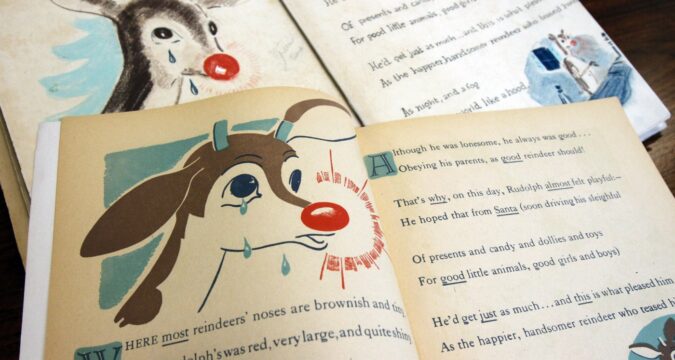
“Rudolph, the Red-Nosed Reindeer,” bottom, and an original layout, top, are part of a special collection at Dartmouth College in Hanover, N.H. The book is from the estate of Robert May, a Dartmouth graduate who wrote the famous story in 1939 as part of a Montgomery Ward marketing campaign. The book is copyrighted 1939 Robert L. May Company, LLC. All rights reserved. Original Robert Lewis May Materials Courtesy of Dartmouth College Library.
“Instead of writing the great American novel, as I’d once hoped, I was describing men’s white shirts,” he recalled for Guideposts magazine in 1975.
Ward’s and Sears were the nation’s largest mail-order and department stores in 1939. With each company dueling for supremacy, Ward’s came up with an idea to attract families to its toy department — “a Christmas give-away story” May called it in a 1976 letter. Parents would receive copies of the free pamphlet at any of Ward’s more than 600 locations throughout the country during the pre-World War II Christmas season. Surprisingly, Ward’s didn’t sell any items bearing Rudolph’s likeness to accompany the soft-covered booklet.
He took on this extra assignment and worked nights and weekends on it from his family’s apartment at 2734 N. Mildred Ave. in Chicago’s Lincoln Park neighborhood. He essentially crafted an original poem infused with his own relatable, underdog experiences from childhood. It also took inspiration from the “The Ugly Duckling” fairy tale and coupled it with a heroic addition to the “eight, tiny rein-deer” pulling Santa’s sleigh in Clement Clarke Moore’s 1822 poem “A Visit From St. Nicholas.”
May considered a laundry list of “R” names for his character before settling on Rudolph. One wonders if it would still be the most famous reindeer of all — had its name been Reginald, instead?
A handwritten list of possible names for the red-nosed reindeer is part of a special collection at Dartmouth College. The list and “Rudolph the Red-Nosed Reindeer” book are from the estate of Robert May, a Dartmouth graduate who wrote the famous story in 1939 as part of a Montgomery Ward marketing campaign. The book is copyrighted 1939 Robert L. May Company, LLC. All rights reserved. Original Robert Lewis May Materials Courtesy of Dartmouth College Library.
Ward’s executives gave the story a green light after company illustrator Denver Gillen added his depictions of reindeer games and a sorrowful turned triumphant Rudolph to the story’s layout. One interesting tidbit about Gillen’s drawings — each incorrectly depicts female reindeers without antlers and males with them when the opposite typically occurs during the winter.
May’s oldest daughter, Barbara Lewis, who was 4 years old at the time, remembers visiting the Lincoln Park Zoo with her father and Gillen to sketch the animals.
“We went to the zoo and they were checking out the reindeer. My father wanted to write a book for Christmas about a deer and he came up with Rudolph. The boss didn’t like the idea initially, but it all ended well,” she said in a recent interview with the Tribune.
You may have heard a few conflicting stories explaining why May wrote the Rudolph story.
“A lot of garbage has been written about the creation of the only 20th-Century Christmas legend. One tale I vaguely recall had poverty-stricken May writing the story in his miserable garret as the only gift he could afford for his children at a Depression-time Christmas. Bosh!” wrote Herb Daniels in his syndicated column, “The Modern Almanac,” in 1977.
Daniels was right — the story was written because it was May’s job. Not to be overlooked, however, was his somber life at home and how it might have seeped into the narrative. His wife, Evelyn, died of cancer on July 28, 1939, while he was writing the story.
May knew his story about the reindeer with a red nose had the potential to become a brand of its own.
Robert L. May, an advertising copy writer for Montgomery Ward & Co. in Chicago, dreamed up a Christmas fable on order. This photo shows May, circa 1948.
He stayed in touch with his alma mater, Dartmouth, even asking an administrator there in November 1939 to help him get in touch with Walt Disney Productions regarding a potential animated feature about the red-nosed reindeer story.
“Seriously, I’ve always felt that Rudolph must have had a team of Good Angels who watched over and guided him,” May wrote in a letter to the son of former Montgomery Ward president Wilbur H. Norton, on April 20, 1976, just four months before the author’s death.
The original manuscript and illustrations have been housed at Dartmouth’s Rauner Special Collections Library — yep, named after the former governor — since 1958, a gift from May.
“Born as a copyright, Rudolph has remained one ever since,” author Ronald D. Lankford, Jr. wrote in his 2017 book, “Rudolph the Red-Nosed Reindeer: An American Hero.”
The copyright
May said Norton offered to work on getting the copyright transferred to him in 1943 since the character was “gathering dust in the attic,” May wrote.
May, surprisingly, took a rain check on the offer, saying he wanted to resurrect Rudolph for another Christmas marketing campaign at Ward’s.
“Now that I look back, it was a foolhardy and/or courageous decision. Anything could have happened in the meantime … and darn near did!” May wrote in a 1976 letter.
The gamble paid off — Ward’s issued another 3.6 million copies of its “Rudolph the Red-Nosed Reindeer” for its stores in 1946. The story remained intact except for one minor change — Santa Claus’s Rudolph-less sleigh almost collided with a four-motored plane instead of a three-motored one.
Though Rudolph’s story was popular, it wasn’t lucrative for its creator — yet.
“Mind you, I’d never made a dime from my story and my modest Ward salary couldn’t begin to keep-up with the rising cost of living, and the regular visits of the stork,” May wrote in a 1976 letter.
May remarried twice and had a total of six children — Barbara, Joanna, Christopher, Virginia, Martha and Betsy.
Martha May, daughter of Robert L. May, holds a copy of her father’s original book of “Rudolph the Red-Nosed Reindeer,” at her home in Lake Forest on Dec. 17, 2021. This is the paper book that was handed out by Montgomery Ward in 1939.
Martha May holds a photo from the 1960s of her dad, Robert; mom, Virginia; sister, Betsy; and herself.
But when RCA-Victor contacted Ward’s about creating a recording of the Rudolph story set to music — also in 1946 — May saw an opportunity to finally gain his own royalties from the reindeer.
“I sensed that Victor’s letter might be just what I needed to break the ice on the all-important copyright-transfer subject,” May said.
May pleaded his case with several managers at Ward’s, but it was Norton, May said, who made the difference. Norton convinced Ward’s Chairman Sewell Avery — whom May described as “a one-man Supreme Court, from whose decision there was no appeal” — to transfer the Rudolph copyright to May. Norton argued the department store was “not in the business to try to make a couple of thousand in royalties from RCA-Victor,” May recalled.
Avery reportedly told a meeting of Ward’s officers, “Let Bob May have it.”
“Five words that changed my life,” May said.
The copyright was officially transferred to May on Jan. 1, 1947 — so Ward’s could complete the 1946 Rudolph Christmas promotion without infringing on May’s new ownership of Rudolph. (This copyright was renewed in 1967, and the original 1939 version of the story is set to enter the public domain in 2034.)
For the first time on Oct. 4, 1947, the Rudolph story was sold in book form — for 50 cents a copy — and no longer given away. Over the years the story and illustrations would change, but the rights stayed with May. He appeared at local bookstores and children’s Christmas events — including one with a skydiving Santa — to sign copies of his book. The original was reissued in 1993 and found a new generation of Rudolph fans.
Robert May autographs copies of his bestseller, “Rudolph the Red Nosed Reindeer,” and a sequel, “Rudolph Shines Again,” on Dec. 11, 1969.
With his new source of revenue, May moved his family — and his Rudolph the Red-Nosed Reindeer Enterprises venture — to Evanston. He often referred to his home at 9301 Hamlin Ave. as “the house that Rudolph built.” It’s where he grew 15-foot-tall tomato plants and created two follow-up Rudolph stories.
At both that address and their next house — two blocks away at 9515 Avers Ave. — the Mays put a 6-foot papier-mache Rudolph with a blinking red nose in their front yard every December. The family later donated it to Dartmouth, which restored it and displayed it in the Rauner library.
In 1973, the reindeer was not basking in the glow of a floodlight, as usual.
“I got so many calls and comments from kids when I didn’t light Rudolph’s nose because of the energy crisis, I decided to compromise,” May told the Tribune. He then turned the figure’s nose on.
“We would get dozens and dozens and dozens of children, young adults and families coming over, and the doorbell wouldn’t stop ringing,” daughter Martha May said. “Christmas carolers wanted their picture taken with Daddy and the deer. It was so joyful for me to see that side of him, just carefree.”
With the copyright, May was now free to create a variety of items featuring the red-nosed reindeer, but he also realized Rudolph’s popularity would fluctuate with each year’s new Christmas fads.
“I quickly realized that my flow of royalties would soon dry up unless I could make Rudolph known and popular and successful outside Montgomery-Ward-land,” May wrote in a 1976 letter. “Along with newspaper and magazine articles, radio and TV interviews, I thought of trying to accomplish my purpose with a Rudolph song.”
The song
He contacted Johnny Marks, a songwriter who also happened to be married to May’s sister, Margaret. Marks adapted May’s story into lyrics and set it to music.
That song was first recorded in 1949 by cowboy star Gene Autry, whose wife, Ina, apparently persuaded him to do it. It became one of the biggest hits of the season, selling 1.75 million copies. It also became the first No. 1 song of the 1950s, according to ASCAP.
Though Marks died in 1985, his St. Nicholas Music publishing company still owns the song’s copyright. In 2020, “Rudolph, the Red-Nosed Reindeer” by Marks was the 20th-most-popular holiday song — played almost 30,000 times on radio stations throughout the United States and more than 75 million times on-demand through streaming platforms, according to MRC Data/BDS.
Hundreds of artists — from Bing Crosby to Paul McCartney, Dolly Parton to DMX and Dean Martin to Destiny’s Child — have recorded their own takes on the original.
Burl Ives — disguised as Sam the Snowman — made the tune memorable for a new generation of Rudolph fans.
The TV special
Though the first animated feature about the character came out in 1948, “Rudolph the Red-Nosed Reindeer” is considered the quintessential show about May’s creation.
Released in 1964 — the 25th anniversary’s of the original story — the stop-motion animation special is the longest continuously running Christmas TV special in history. It predates “A Charlie Brown Christmas” and “How the Grinch Stole Christmas!” by a year and two years, respectively.
Earlier this month, CBS aired the Rankin/Bass Animated Entertainment show for the 57th straight year. Marks composed for it seven original songs, which the Tribune called “sprightly, catchy and singable.”
The special brought the Rudolph story to yet another generation of children — including May’s daughter, Martha.
“The first year, we watched it on a big box Montgomery Ward TV in the rec room, you know, the wood-paneled rec room in the basement and it was like magic. As soon as the show ended, I tell you, the phone did not stop ringing. Daddy felt like such a celebrity,” she said. “At the beginning of the show, my father’s name and my uncle Johnny Marks, who did the music, their names are on little gift boxes during the opening credits. I’ve always loved to see that.”
For the program, Rudolph gained a love interest named Clarice. He also found friendship with another outcast, Hermey the Elf, who would rather become a dentist than make toys, as well as Yukon Cornelius, a dog-sled musher looking for silver and gold. The Island of Misfit Toys storyline mirrors a section from May’s “Rudolph’s Second Christmas” book.
They remain ingrained in modern culture. In 2014, three characters appeared on U.S. Postal Service stamps — Santa, Hermey and Bumble the abominable snowman. Two puppets from the production were sold at auction last year for $368,000.
Robert L. May, 67, the creator of Rudolph the Red Nosed Reindeer, stands outside his home with his daughter Betsy, 14, and one of his Rudolphs on Dec. 20, 1972.
Rudolph’s legacy
May died at the age of 71 on Aug. 10, 1976, and is buried in River Grove’s St. Joseph Catholic Cemetery.
“It’s the only reindeer I know that ever put six kids in college,” May told the Tribune in 1972. If he were alive today, he’d say it put his grandchildren through college, too.
His family still retains the copyright to May’s work through the Robert L. May Co. Character Arts licenses the Rudolph image for everything from T-shirts to toys.
And, as the Tribune noted in 1972, Rudolph never ages and there is no generation gap in his story.
Why does Rudolph endure?
“Americans,” he said, “are always for the underdog who, thru goodness and perseverance, gains the respect of everyone.”
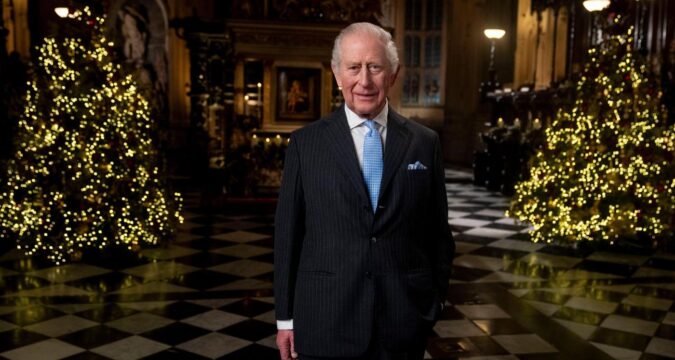
King Charles III calls for kindness and unity in Christmas message amid global conflicts
LONDON — On a Christmas Day when the war in Ukraine casts a shadow over Europe, concerns over immigration divide societies, and some politicians fan anger and resentment, Britain’s King Charles III called on people to focus on kindness instead of conflict.
Delivering his annual holiday address from Westminster Abbey, Charles said Thursday the Christmas story of wise men and shepherds traveling through the night to find their savior shows how we can find strength in the “companionship and kindness of others.”
“To this day, in times of uncertainty, these ways of living are treasured by all the great faiths and provide us with deep wells of hope, of resilience in the face of adversity,” Charles said. “Peace through forgiveness, simply getting to know our neighbors and by showing respect to one another, creating new friendships.”
“In this, with the great diversity of our communities, we can find the strength to ensure that right triumphs over wrong,” he added.
The speech, which concluded with a Christmas carol sung by a Ukrainian choir, comes as European leaders rally support for Ukraine amid signs that U.S. President Donald Trump is losing patience with America’s traditional European allies. At home, British politics have become increasingly bitter as Prime Minister Keir Starmer’s government struggles to control unauthorized migration and bolster creaking public services.
Charles, the titular head of the Church of England, chose Westminster Abbey as the site of his Christmas Day broadcast to underscore the theme of pilgrimage that ran through the speech. The abbey, known as the site of coronations and royal weddings, is also the focus of an annual pilgrimage honoring Edward the Confessor, an early king of England who was canonized as a saint in 1161.
“Pilgrimage is a word less used today, but it is of particular significance for our modern world, and especially at Christmas,’’ he said. “This is about journeying forward into the future, while also journeying back to remember the past and learn from its lessons.”
Charles and his family made their own pilgrimage on foot earlier in the day to St. Mary Magdalene Church on the king’s private Sandringham Estate, about 100 miles north of London.
Charles and Queen Camilla, along with Prince William and his wife, Kate, and their children, Princes George and Louis and Princess Charlotte, and extended family walked to the church and greeted the crowds of people after the service.
Events earlier this year marking the 80th anniversary of the end of World War II underscored the need to learn from the past, Charles said. While there are fewer and fewer living veterans of that conflict, we must remember the courage and sacrifice of those who fought the war and the way communities came together “in the face of such great challenge,” he said.
“These are the values which have shaped our country and the Commonwealth,” he said. “As we hear of division, both at home and abroad, they are the values of which we must never lose sight.’’
The monarch’s annual holiday message is watched by millions of people in the U.K. and across the Commonwealth, a voluntary association of 56 independent nations, most of which have historic ties to Britain. The pre-recorded speech is broadcast at 3 p.m. London time, when many families are enjoying their traditional Christmas lunch.
The speech is one of the rare occasions when Charles, 77, is able to voice his own views and doesn’t seek guidance from the government.
This year’s address comes just two weeks after Charles made a deeply personal television appearance in which he said “good news” from his doctors meant that he would be able to reduce his treatment for cancer in the new year.
The king was diagnosed with a still undisclosed form of cancer in early 2024. Buckingham Palace says his treatment is now moving to a “precautionary phase” and his condition will be monitored to ensure his continued recovery.
The speech was accompanied by a video of members of the royal family, from the king to his grandchildren, George and Louis and Charlotte, meeting with the public and carrying out their royal duties.
That included scenes from the king’s historic trip to the Vatican as he works to forge closer relations between the Church of England and the Catholic Church.
The event was the first time since King Henry VIII severed ties with Rome that the leaders of the two Christian churches, divided for centuries over issues that now include the ordination of female priests in the Church of England, have prayed together.
The king’s message was clear. Even if some years had passed, there’s always hope to start over. Peace is possible.
https://www.chicagotribune.com/2025/12/25/king-charles-iii-christmas-message/

Liberty Township and Chesterton Fire departments build for now and future
The Duneland communities of Chesterton and Liberty Township are investing millions of dollars to expand and update their fire stations in response to the area’s population growth.
Liberty Township in October began building its new $4.5 million fire station, which will also house the township’s government office.
The new 15,200-square-foot structure is being built behind the current 4,000-square-foot fire station on County Road W 900 N.
One of the important features of the new station is a much larger garage bay area, which would better accommodate up to eight fire vehicles.
Liberty Township’s current firehouse, built in 1955, can only accommodate six vehicles with little room to spare. Nicholas Wineland, who is president of the Liberty Township Volunteer Fire Department corporation, said the present building underwent two expansions and is maze-like.
Fire trucks were smaller back in the 1950s, so the garage doors are only 10 feet high.
“Every fire truck had to be special-ordered so it could fit inside the fire station,” said Liberty Township Trustee Matt Keiser.
Wineland said he hopes another benefit from the new construction will be to bring more volunteers into the department.
Sandwiched between the growing communities of Valparaiso and Chesterton, Liberty Township also wants to be positioned for the future. It’s why the structure allows for room to grow, Keiser said.
“We know at some point our fire department, that is now 100% volunteer, will transition to full-time to be able to service the township,” Keiser said.
Liberty Township’s population has doubled since 1980, as the 2020 census counted 10,908 and the number continues to grow. The Liberty Township Fire Department also covers neighboring Jackson Township and regularly provides mutual aid to surrounding communities.
Keiser said that Liberty Township has been “very conservative” with its finances and saved $2 million toward the project. He said the township is financing the remaining $2.5 million with a bond.
There will be enough space in the new building to house the township office. Currently, Liberty Township rents a 200-square-foot space from the Whispering Sands Mobile Home Park off U.S. 6.
When the new station is finished as expected next October, the current firehouse will be demolished, Keiser said.
Chesterton decided, as part of the renovation of the Town Hall, to also address the adjoining fire station at Broadway and 8th Street. The total project construction cost was $3.5 million, with practically a 50-50 split between the Town Hall and fire station.
The Town Hall was built in 1977, with the police and fire departments in separate sections at both ends of the building. After the new police station was built across Broadway, the old police station was razed at the west end to create more parking.
Chesterton Fire switched from a volunteer force to a full-time department in 1999.
The town’s population has grown to an estimated 14,655 as of July 1, 2024, up from 8,531 counted in the 1980 U.S. Census.
The renovation of Chesterton’s fire station includes a two-story, 1,700 square-foot addition. It has created brighter and more expansive quarters for the town’s firefighters.
Chesterton has a staff of 15 full-time firefighters and three supervisors.
Captain Heather Compton noted that the fire station is now large enough to one day accommodate twice as many firefighters, 10 per shift, in the future if the need should arise.
Jim Woods is a freelance reporter for the Post-Tribune.

COVID Christmas: Never Forget
COVID Christmas: Never Forget
Yes, it’s been five years.
Yes, it’s the season of joy and forgiveness, blah blah blah.
But, fuck that!
In 2020, while the sheeple huddled in fear-porn isolation, a cabal of power-hungry bureaucrats and pharma-shilling “experts” pulled off the greatest heist in modern history: they stole Christmas.
Not with guns or tanks, but with “emergency decrees,” arbitrary lockdowns, and endless streams of hysterical propaganda about a virus with a 99.7% survival rate for most.
Across the West, authoritarian governors and health czars like California’s Gavin Newsom and New York’s Andrew Cuomo played Grinch-in-Chief.
Family gatherings? Banned.
Churches closed on the holiest night of the year, while big-box retailers like Walmart raked in billions—essential, you see.
Travel restrictions grounded flights, borders slammed shut, and millions faced solitary holidays, Zoom “celebrations” replacing real human connection.
In the UK, Boris Johnson’s last-minute Tier 4 lockdown crushed plans for millions, proving politicians love nothing more than moving goalposts.
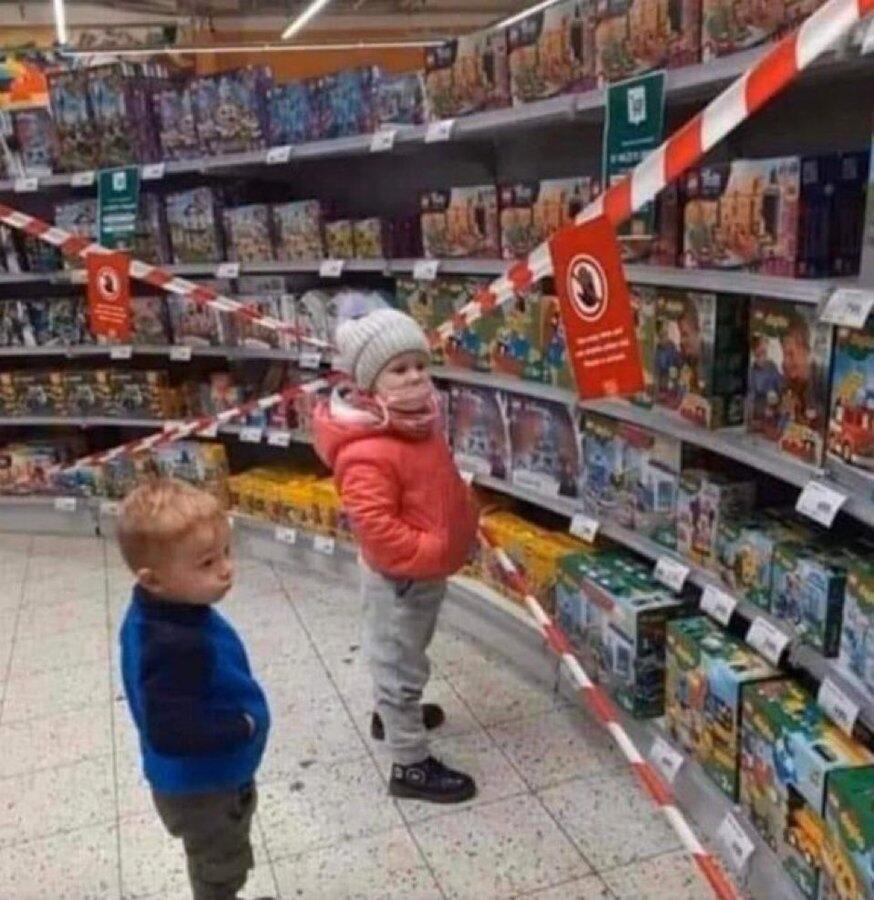
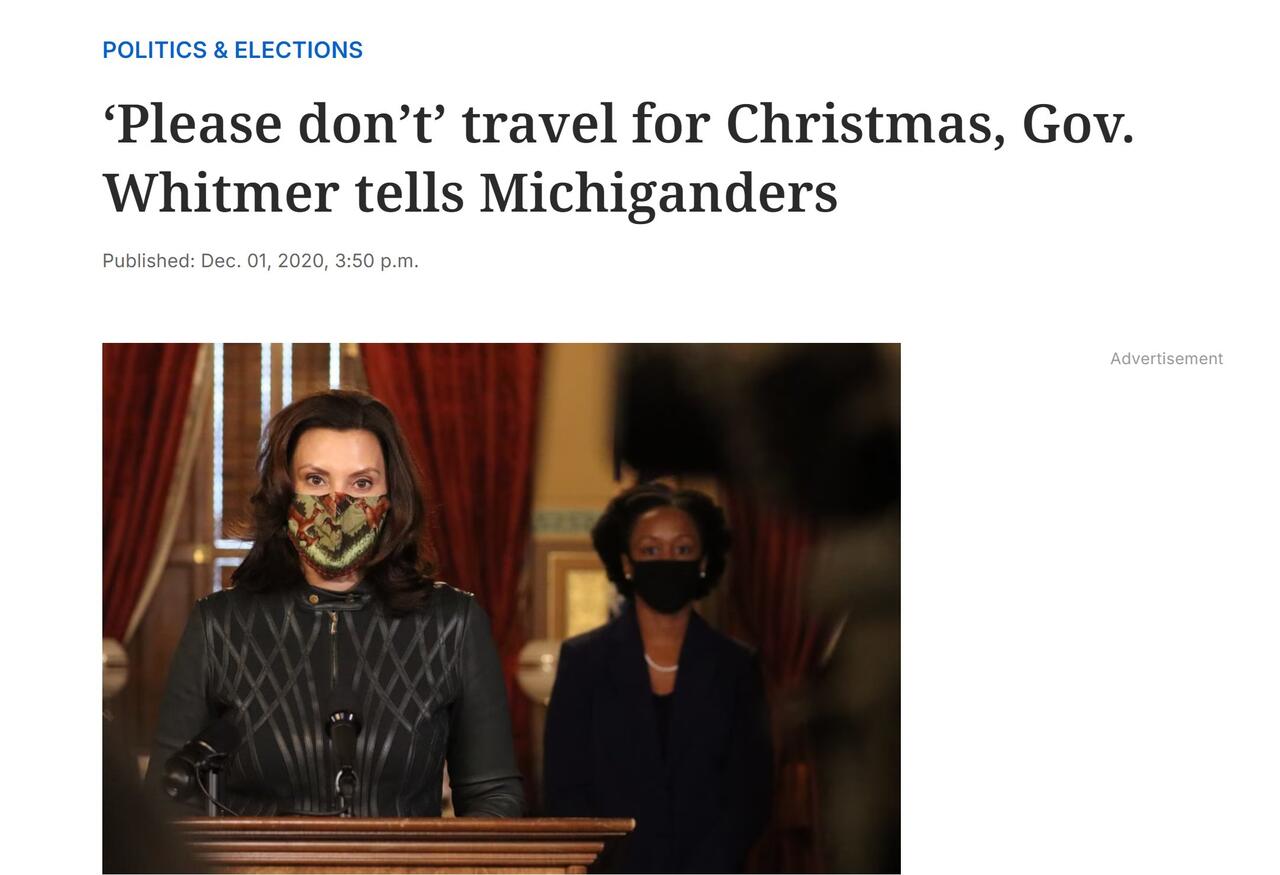
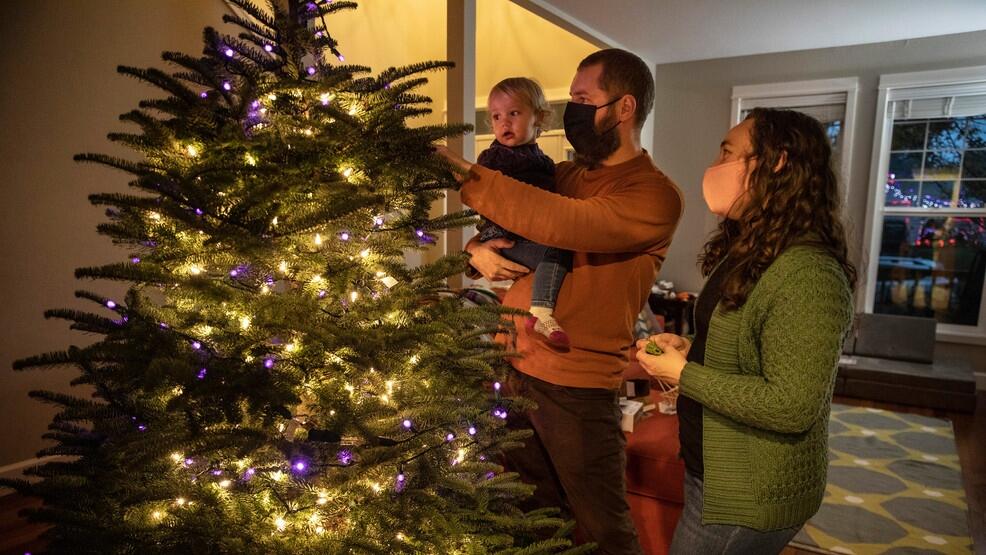
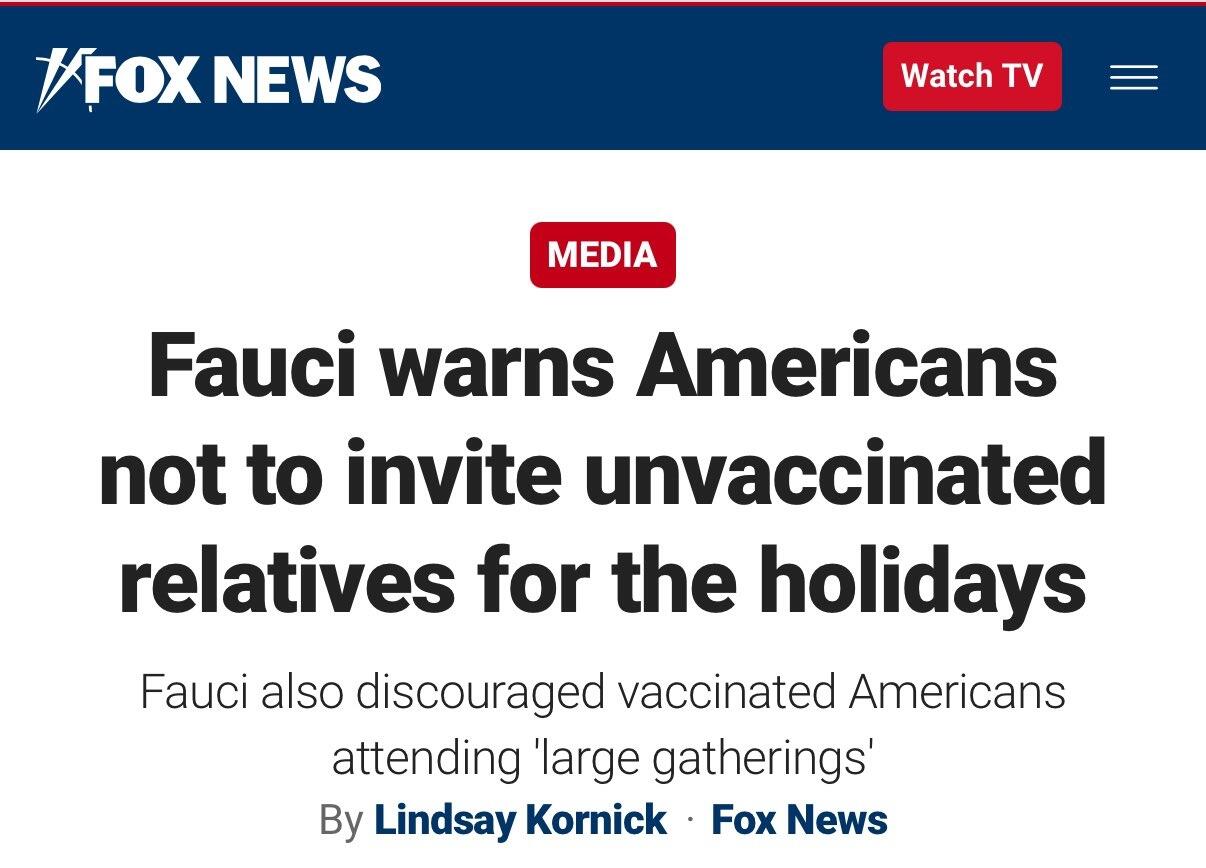
And to ensure we don’t forget (or forgive) those that imposed such a farce upon so many, Martin Armstrong dug up some images as a reminder…
The economic carnage was deliberate: small businesses gutted, restaurants shuttered, while Amazon’s Jeff Bezos laughed all the way to his yacht.
Fauci the Flip-Flopper pontificated from his ivory tower, warning against singing carols or hugging grandma, as if seasonal joy itself was a superspreader event.
This wasn’t public health – it was social engineering on steroids.
Fear was the weapon, compliance the goal.
The tyrants wrapped their theft in “science” bows, but the data later exposed the scam: excess deaths from despair, suicides, delayed treatments far outweighed their “saved” lives narrative.
Five years on, the damage lingers: fractured families, eroded trust, and a precedent for endless control.
Christmas 2020 wasn’t just stolen – it was sacrificed on the altar of technocratic tyranny.
Never forget: they hated the Whos down in Whoville, and they’ll do it again given half a chance.
Never Again!
Tyler Durden
Thu, 12/25/2025 – 11:15
https://www.zerohedge.com/covid-19/covid-christmas-never-forget

Neuqua Valley High School alum uses AI to create artificial glaciers in Chile: ‘You can build something incredible’
The hike was unlike anything Brett Storoe had ever done.
The Naperville native was used to hiking on flat terrain in Illinois with his family, but this time he was in Chile trudging up an ice stupa — a man-made glacier used to store water in the winter. While he was familiar with ice stupas by tracking them through a project he had been working on, he had never seen one in person.
“I’ve seen them in photos for over a year. I’ve been staring at them, but seeing them in person, how much they’ve grown and the actual size of them was incredible to see,” Storoe said. “I thought they were just maybe a couple people tall, not much taller than that. But seeing them in person, they were multiple stories.”
For that hike, he would need to trade in his athletic shoes for snow boots with spiked bottoms. Climbing the stupa was a dangerous endeavor, one where he had to use the spikes of his shoes to dig his own hole for grip. It was all worth it when he made it to the top, he said.
“It was just a great experience to connect back with the work that I’ve been participating in for the past year,” Storoe said.
Naperville resident Brett Storoe, left, climbs an ice stupa on Sept. 2, 2025, while John Young, managing director of Partner Solutions at Databricks, center, and Storoe’s Milwaukee School of Engineering classmate Ben Paulson watch from below. (Brett Storoe)
Since fall 2024, Storoe has been developing an algorithm that determines where ice stupas can be built to address water scarcity in Chile. His work is part of a larger collaboration between the Milwaukee School of Engineering and Chilean-based startup Nilus, an organization dedicated to utilizing artificial intelligence to bring back ice glaciers.
Storoe became involved with the project through an AI club, which the 20-year-old college junior has been part of since his first year at the university.
“Growing up, I was very math focused. Those are the classes that I enjoyed. I liked the problem solving aspect of it,” he said.
An alum of Naperville’s Neuqua Valley, he started taking coding classes in high school, which helped solidify his interest in engineering. He had heard about the Milwaukee School of Engineering’s AI club while he was at Neuqua and knew he wanted to be part of a club like that.
For his first year at the AI club, Storoe worked on a project aimed at predicting food price spikes in developing countries to help people in those countries stock up before the cost increases hit, an experience that sparked a larger interest in the intersection of engineering and the environment.
Ben Paulson (left) sits next to Brett Storoe (right) as Storoe drives a snowcat in Chile on Sep. 2, 2025. (Anton Potapov)
Fast forward to fall 2024, a professor at the university’s business school connected students from the AI club to Nilus to work on an algorithm responsible for determining locations where artificial glaciers could be built.
“I knew absolutely nothing about anything related to Chile or artificial glaciers,” Storoe said, but that lack of familiarity also made the project exciting.
According to a news release, ice stupas are “formed by channeling water from higher altitudes through underground pipes, and then sprinklers spray water into subzero air to create these ice formations.” The stupas melt in the summer, providing water to communities during a time when water is scarce.
The algorithm created by the students uses weather data to “know when to open the sprinklers for optimal glacial growth,” the release said. Students also made “a customized Swarm Rag approach that allows meteorological experts to analyze changing weather data over years of large datasets,” the release said.
Storoe was primarily responsible for growth analysis and volume tracking. Initially, Nilus was using a manual process for tracking growth of the stupas, using images from static cameras set up in the mountains and comparing those images to determine how much a stupa had grown or shrunk.
“Previously, (Nilus) would just look at the images and kind of hand label them and say, ‘Oh, this day had a ton of growth, this day it shrunk a little, or this day it stayed still,’” Storoe said. “So it was a very manual system that AI techniques. If you set up a proper system, you are able to tackle it pretty easily.”
To make the process more efficient, Storoe developed an algorithm that not only looked at the images but tracked where each image was in the frame and their overall growth in the season. After working on that project, Storoe traveled with another student, Ben Paulson, to Santiago to meet with the Nilus team. It was the first time the 20-year-old had ever left the country.
A sign describing Nilus’ conservation efforts is posted on a slope in Chile. (Brett Storoe)
“I went snowboarding in the mountains over there and that was just super fun. I’d never gone on a mountain that high, and we just tried so many different restaurants,” Storoe said. “The best day of the trip was when we actually went and visited these ice stupas up in these rural mountains where we had to drive and hike for four hours to get there.”
Now, Storoe said he’s continuing to work with Nilus as part of his senior capstone.
“My goal is to predict at scale the volume of these ice stupas,” Storoe said. “So just looking at a static camera, going from a 2D image to understanding the volume at a whole 3D realm is the goal that I’m trying to output by the end of this year.”
When asked what he was most proud of with this project, Storoe pointed to the precedent the Nilus project set for other students in the AI club.
“We showed this project to all the new AI club students this school year and showed them that, ‘Hey, if you’re a freshman, you’re a sophomore, you don’t have to limit yourself to simple projects,’” Storoe said. “You can build something incredible.”
cstein@chicagotribune.com
https://www.chicagotribune.com/2025/12/25/neuqua-naperville-storoe-chile-stupa/