Category: News

Jake Davis, Keaton Wagler power No. 20 Illinois to a 90-55 win over Southern
CHAMPAIGN, Ill. — Jake Davis hit five 3-pointers and finished with 15 points and Keaton Wagler had 11 points, 10 assists and seven rebounds as No. 20 Illinois closed out its non-conference schedule with a 90-55 win over Southern on Monday.
Zvonimir Ivišić had 13 points and three blocked shots, and his twin brother, Tomislav, added 11 points and seven rebounds for the high-scoring Illini (10-3), who average nearly 90 points and have five players who average in double figures. Illinois ranks third in the nation in that category, behind Baylor and Michigan, each with six. David Mirković also scored 11 points.
Michael Jacobs scored 11 points for Southern (4-9), which lost its fifth straight and fell to 1-9 on the road. Jacobs was held nine points under his average and shot 3 for 16 from the floor. Malek Abdelgowad scored 10 points for the Jaguars.
Illinois outrebounded Southern 45-26. The Illini lead the nation with seven players averaging more than four rebounds per game.
The Illini led 46-25 at halftime. They shot nearly 60% from the floor, made eight 3-pointers and were 8 for 8 from the free throw line in the first half. Illinois finished 14 for 34 from long distance and 16 of 18 at the line.
Brad Underwood’s first game as coach at Illinois was a 102-55 victory over Southern on Nov. 10, 2017. With Monday’s win, Underwood’s record in nine seasons in charge of the Illini is 175-104. Underwood is 10-0 in his career against the current 12-team membership of the Southwestern Athletic Conference, 7-0 at Illinois.
The Illini are 19-0 all-time against current SWAC teams, including a 113-55 win over Jackson State on Nov. 3 in their season opener.
Up next
Southern: Hosts Texas Southern on Saturday.
Illinois: Plays Saturday versus Penn State at the Palestra in Philadelphia.
https://www.chicagotribune.com/2025/12/29/illinois-mens-basketball-beats-southern/
West Virginia Has The Highest Share Of Income-less Households
West Virginia Has The Highest Share Of Income-less Households
Household income is often discussed in terms of averages, but the share of households reporting no income can reveal a different side of the country’s economic reality.
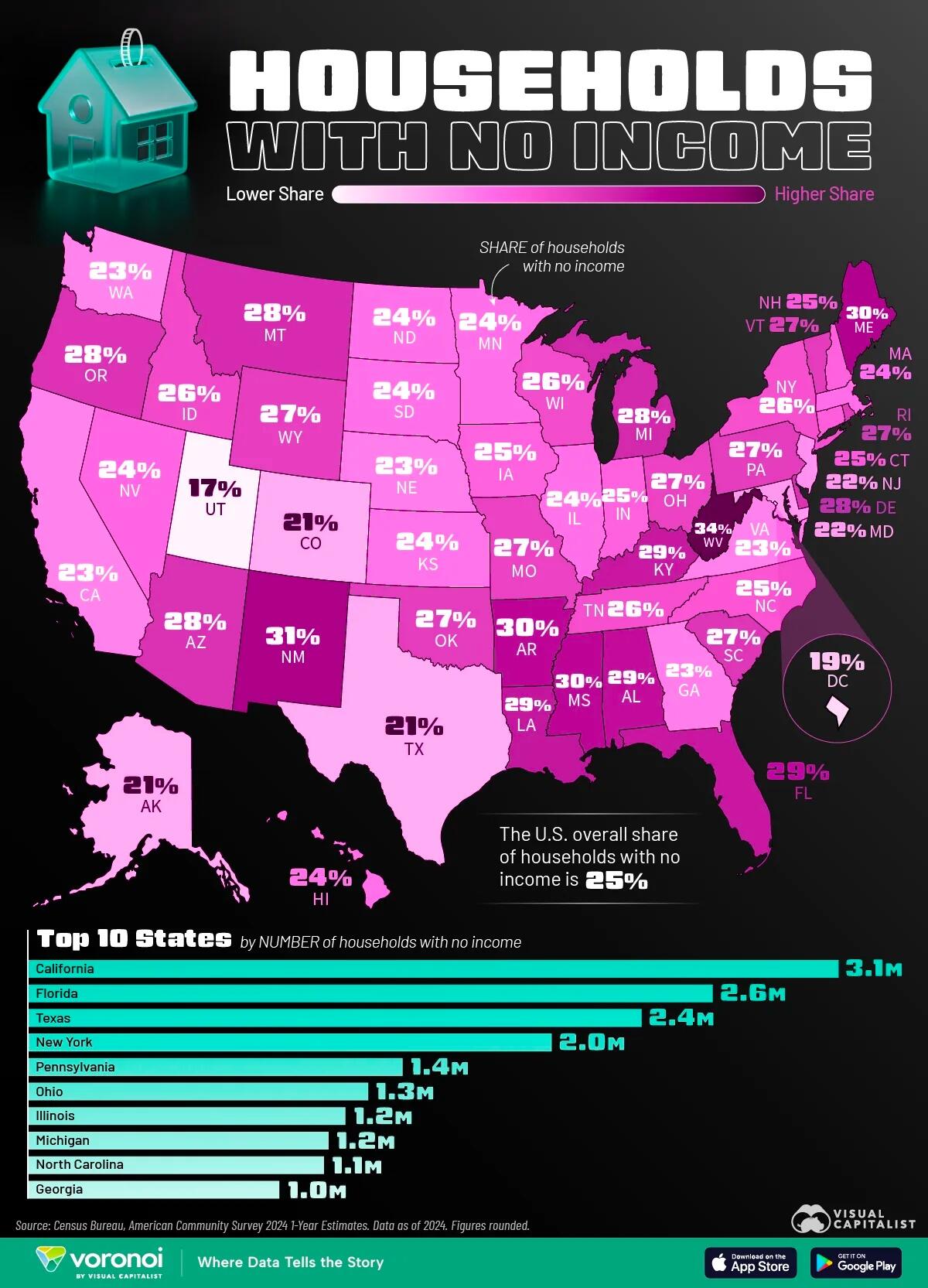
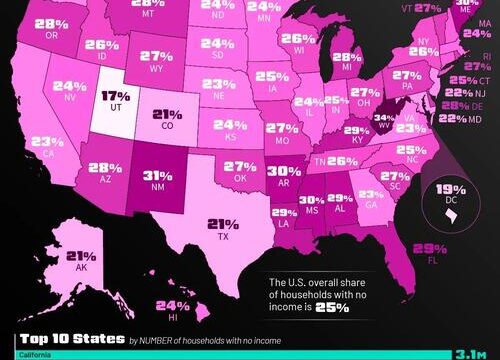
This map, via Visual Capitalist’s Niccolo Conte, highlights the share of households with no income across U.S. states (and the District of Columbia) in 2024 using data from the Census Bureau, American Community Survey 2024 1-Year Estimates.
States with the Highest Shares of No-Income Households
Across U.S. states, the share of households with no income ranges from a low of 17% (Utah) to a high of 34% (West Virginia). The United States’ overall share of no-income households is 25%.
The data table below lists each state’s share of households with no income:
State
Share of households with no income
West Virginia
34%
New Mexico
31%
Maine
30%
Arkansas
30%
Mississippi
30%
Alabama
29%
Louisiana
29%
Florida
29%
Kentucky
29%
Michigan
28%
Montana
28%
Delaware
28%
Arizona
28%
Oregon
28%
Vermont
27%
South Carolina
27%
Rhode Island
27%
Oklahoma
27%
Pennsylvania
27%
Wyoming
27%
Ohio
27%
Missouri
27%
Idaho
26%
Wisconsin
26%
Tennessee
26%
New York
26%
North Carolina
25%
U.S. Overall
25%
Connecticut
25%
Indiana
25%
Iowa
25%
New Hampshire
25%
Hawaii
24%
Nevada
24%
South Dakota
24%
Illinois
24%
Minnesota
24%
Massachusetts
24%
Kansas
24%
North Dakota
24%
Washington
23%
Georgia
23%
Nebraska
23%
Virginia
23%
California
23%
New Jersey
22%
Maryland
22%
Alaska
21%
Colorado
21%
Texas
21%
District of Columbia
19%
Utah
17%
West Virginia stands out with the highest share of households reporting no income at 34%, three percentage points ahead of New Mexico at 31%.
The top five states by share of no-income households are rounded out with Maine, Arkansas, and Mississippi each at 30%.
These states tend to have older populations, higher rates of disability, and lower median incomes overall. In such contexts, a larger portion of households rely on non-earned income sources or report no income during the survey period.
States with the Fewest No-Income Households
Even among the lowest results, “no income” households remain a meaningful slice of the population.
After Utah (17%), the District of Columbia is next-lowest at 19%. Alaska, Colorado, and Texas each come in at 21%, with only five jurisdictions at 21% or lower.
Utah’s low share of one-adult/non-family households is a large driver of its low rate of households with no income.
States with the Most No-Income Households
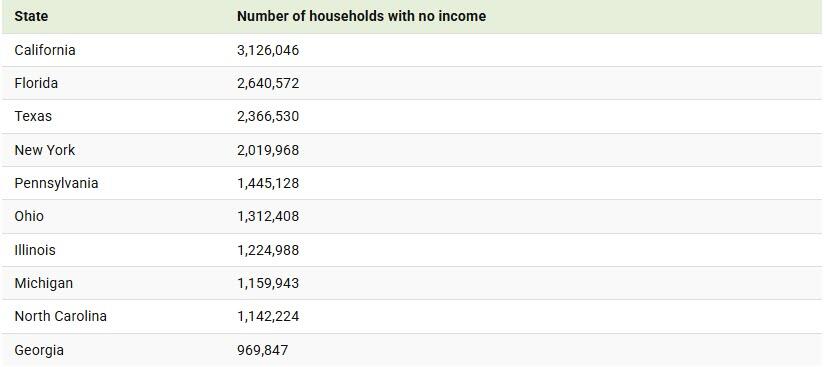
Below we look at the top 10 states by number of households with no income:
Beyond California, Texas, Florida, and New York, states like Ohio and Michigan also rank in the top 10, despite sitting closer to the middle of the pack by share of no-income households. Their high totals reflect population scale rather than unusually high prevalence.
Meanwhile, states with the highest shares—such as West Virginia and New Mexico—do not appear in the top 10 by total households, highlighting the gap between where no-income households are most concentrated versus where they are most numerous.
To learn more about the incomes across the U.S., check out this graphic about the income needed to reach the 1% in each state on Voronoi.
Tyler Durden
Mon, 12/29/2025 – 18:00
https://www.zerohedge.com/personal-finance/west-virginia-has-highest-share-income-less-households
Top Senate Races To Watch In 2026
Top Senate Races To Watch In 2026
Authored by Joseph Lord & Jackson Richman via The Epoch Times (emphasis ours),
As 2025 draws to a close, the country is already turning its attention to next year’s midterm elections.
Republicans are facing favorable odds in the Senate, where they currently hold a 53–47 advantage.
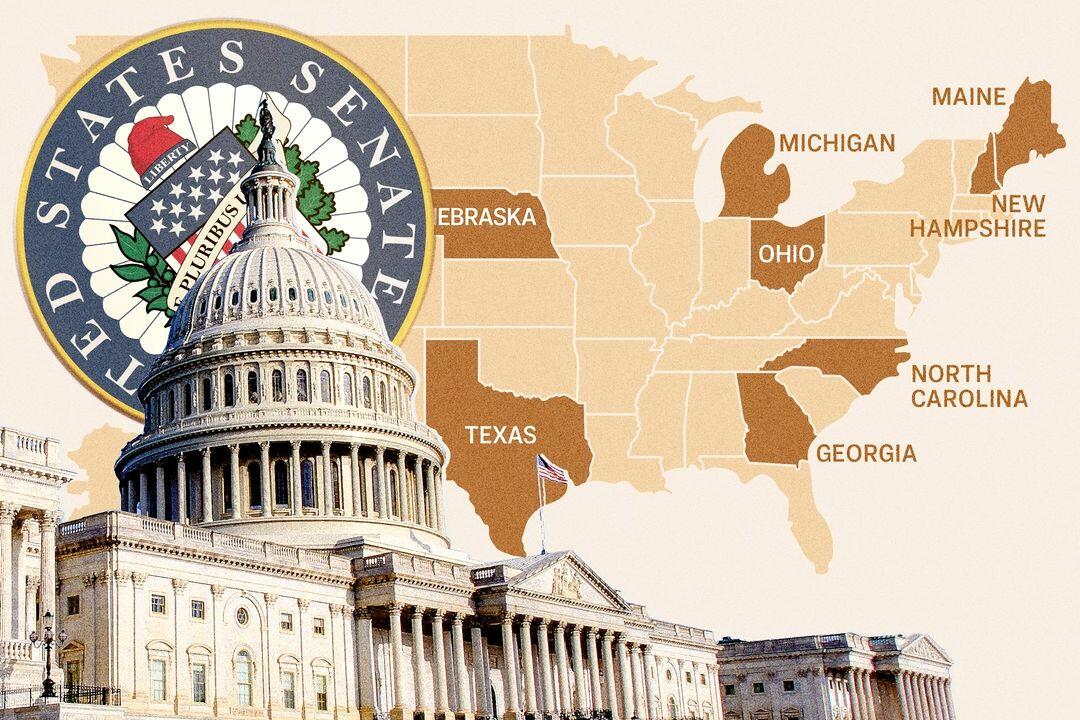
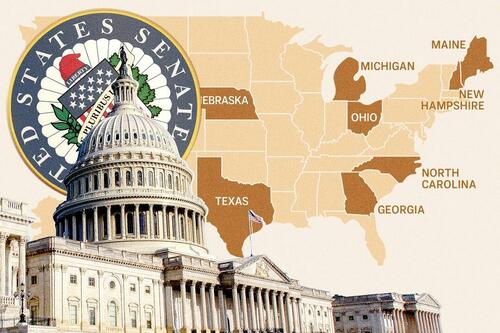
Illustration by The Epoch Times, Shutterstock
In the 2026 midterms, 33 Senate seats are up for election—20 currently held by Republicans and 13 held by Democrats. Prediction site Polymarket gives Republicans a 66 percent chance at holding the upper chamber.
To do so, they’ll need to fend off challenges from Democrats and make gains in a series of key races, including in Georgia, North Carolina, Maine, and Texas.
Meanwhile, Democrats are the current favorites to reclaim the House from Republicans, who hold the chamber 220 to 213, with two vacancies. Prediction sites such as Polymarket are giving Democrats a 78 percent chance of winning and RealClearPolitics (RCP) shows Democrats leading in House polls by about 3.7 percentage points.
Here are the top eight Senate races to watch, leading up to the Nov. 3, 2026, general election.
1. Texas
Both the Democratic and Republican primaries in the Lone Star State are intense contests.
On the GOP side, Texas Attorney General Ken Paxton is running to replace incumbent Sen. John Cornyn (R-Texas).
Paxton entered the race earlier this year, carrying baggage from controversies, including a 2023 impeachment trial in which he was ultimately acquitted by the Texas Senate.
The race has been labeled by Paxton as a contest between his populist, America First politics and the establishment politics, which he claims are represented by Cornyn.
Cornyn has described the race as a question of character, referencing Paxton’s impeachment, allegations of adultery, and other legal challenges faced by his challenger.
Most observers and prediction markets have pegged these two candidates as the frontrunners.
However, Rep. Wesley Hunt (R-Texas) has also thrown his hat into the ring, setting up a three-way primary that is likely to result in a runoff.
The National Republican Senatorial Committee, the main campaigning and fundraising arm of the Senate GOP, is supporting Cornyn, who is slightly favored in current RCP polling.
Trump has not yet made an endorsement in the race.
Given the broader political environment, Democrats hope for a long-shot win and currently leading the pack of potential nominees is Texas state Rep. James Talarico.
Talarico rose to prominence during the redistricting battle this summer as Texas Republicans voted to add five Republican districts to the state’s congressional map.
His main rival for the nomination is Rep. Jasmine Crockett (D-Texas), whose Oct. 8 entry into the race prompted Rep. Colin Allred (D-Texas) to end his bid.
The primary race will be held on March 3, and any runoff races are scheduled for May 26.
2. Georgia
For years, Republicans have sought to reclaim at least one of the Peach State’s two Senate seats, which were won by Sens. Raphael Warnock (D-Ga.) and Jon Ossoff (D-Ga.) in early January 2021 runoff elections.
This year, Ossoff has no Democratic rivals to fend off in the primary; while Republicans show a crowded field in their bid to reverse their losing streak in the state’s Senate races.
The top declared challengers in the Republican primary include Rep. Mike Collins (R-Ga.), Rep. Buddy Carter (R-Ga.), and former football coach Derek Dooley.
Each has emphasized loyalty to Trump as they vie for an endorsement from the White House, though the president has so far stayed out of the race.
Outgoing Georgia Gov. Brian Kemp has endorsed Dooley.
The RCP average shows Collins currently leading the GOP field by almost 10 percent.
However, Ossoff leads in hypothetical match-ups with any of the three Republicans in the general election.
Georgia’s primary is set for May 19, 2026, and the primary runoff date is June 16, 2026.
3. Maine
Further up the Eastern Seaboard, a long-serving Republican could be facing her toughest political challenge yet.
First elected in 1996, Sen. Susan Collins (R-Maine) has bucked trends in New England, where all other federal office seats are held by Democrats.
Collins’s seat is a top target for Democrats. She was reelected in 2020 with 51 percent of the vote, fending off Democratic challenger Sara Gideon who won 42.4 percent.
Two major Democratic contenders seeking the nomination in the Pine Tree State are military veteran and political newcomer Graham Platner and Maine Gov. Janet Mills.
At the start of the election cycle, Platner’s populist and progressive brand of politics garnered attention from left-leaning Democratic voters nationwide, earning him the endorsement of Sen. Bernie Sanders (I-Vt.).
However, his candidacy has faced difficulties following multiple scandals.
Mills’ candidacy has the backing of Senate Minority Leader Chuck Schumer (D-N.Y.).
Platner has a wide lead over Mills in the RCP average, which also shows that he would defeat Collins. Polling shows Collins winning a hypothetical matchup with Mills.
Maine’s primary is scheduled for June 9, 2026.
4. Michigan
In Michigan, Republicans hope to capitalize on incumbent Sen. Gary Peters’ (D-Mich.) retirement to win a key pickup in a state that has become synonymous with battleground politics in recent years.
Former Rep. Mike Rogers (R-Mich.) is the presumptive GOP nominee this year. Rogers was the Republicans’ nominee in the state’s 2024 Senate election, which he lost to Sen. Elissa Slotkin (D-Mich.) by just 0.3 percent.
Trump has endorsed Rogers in the race.
However, in a race that still favors Democrats, the Democratic field is more competitive. So far, Rep. Haley Stevens (D-Mich.), Michigan state Sen. Mallory McMorrow, and physician Abdul El-Sayed have thrown their hats in the ring.
McMorrow has said she would not support Schumer as Senate Democratic leader if she is elected. Establishment Democrats are supporting Stevens.
The RCP average shows Stevens with a narrow lead in the primary, and that Rogers would defeat those three candidates in a matchup.
Michigan’s primary election is scheduled for Aug. 4, 2026.
5. Ohio
Once upon a time, the Buckeye State was the definitive swing state, serving as a top target for both parties. But in recent years, it’s become nearly a lock for Republicans.
This year, Sen. Sherrod Brown (D-Ohio) hopes to change that—and make a political comeback after losing his seat in the state’s 2024 Senate election.
Brown served in the Senate from 2007 to 2025, before losing to Sen. Bernie Moreno (R-Ohio) in the 2024 election.
The seat up for grabs is currently occupied by Sen. Jon Husted (R-Ohio), who was appointed by Gov. Mike DeWine to fill the seat after Vice President JD Vance assumed his current role.
The race this year is a special election, and the winner will serve out the remaining two years of Vance’s term.
The RCP average shows Husted, who has been endorsed by Trump, leading by 2.5 percentage points.
Ohio’s primaries are set for May 5, 2026.
6. North Carolina
North Carolina has long been viewed as a swing state, despite its results typically favoring Republicans.
This year, Republicans are seeking to hold the seat being vacated by Sen. Thom Tillis (R-N.C.), who is retiring.
Democrats’ chances in the race are bolstered by the decision of former Gov. Roy Cooper—a popular Democrat who has proven electable at a statewide level—to seek the post.
“I have thought on it and prayed about it, and I have decided: I want to serve as your next United States Senator, because, even now, I still believe our best days are ahead,” Cooper said in a video posted to his YouTube account on July 28.
Republicans are expected to field Republican National Committee Chairman Michael Whatley, who has been endorsed by Trump.
The RCP average shows Cooper, who served as governor from 2017 to 2025, leading Whatley by 4.7 percentage points.
The North Carolina primary will be held on March 3, 2026, and any runoffs are scheduled for May 12, 2026.
7. Nebraska
In Republican stronghold Nebraska, the Democrats don’t plan to field a candidate.
Sen. Pete Ricketts (R-Neb.), who was appointed by the governor to fill the vacancy left by the retirement of Sen. Ben Sasse (R-Neb.), is the odds-on favorite to win the seat.
However, Republicans could still face a battle to hold the seat in 2026 in the form of independent candidate Dan Osborn.
In 2024, Osborn—who wouldn’t caucus with either party—came within 6.67 percent of winning the seat.
Nebraska’s primary is set for May 12, 2026.
8. New Hampshire
Though New Hampshire favors Democrats on a national level, Republicans hope to defy trends this year in the wake of Sen. Jeanne Shaheen’s (D-N.H.) retirement.
The Republican primary is a two-way race between former Sens. John E. Sununu (R-N.H.) and Scott Brown (R-Mass.).
Establishment Senate Republicans are supporting Sununu, who served in the Senate between 2003 and 2009.
The RCP average shows Sununu leading the primary race by 13 percentage points.
On the Democrat side, Rep. Chris Pappas (D-N.H.) is the frontrunner.
In possible general election matchups, RCP polling shows Pappas with a narrow edge on Sununu and winning against Brown by double digits.
The primary election in New Hampshire is scheduled for Sept. 8, 2026.
Tyler Durden
Mon, 12/29/2025 – 17:40
https://www.zerohedge.com/political/top-senate-races-watch-2026
USC coach Lincoln Riley says Notre Dame is to blame for discontinuation of rivalry series
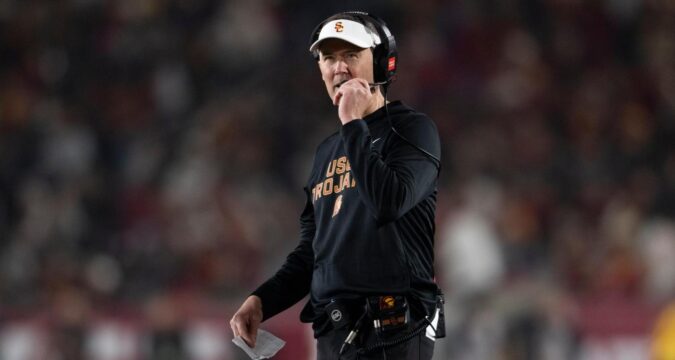
SAN ANTONIO — Notre Dame is responsible for the pause in the nearly 100-year rivalry with USC, Trojans coach Lincoln Riley emphatically stated Monday.
Riley assigned blame during a joint news conference with TCU coach Sonny Dykes as the teams prepare for Tuesday’s Alamo Bowl. It was the first time Riley had a chance to speak about the discontinuation of the series, and the Trojans coach had a lot to say.
“We took Notre Dame at their word that they would play us anytime, anywhere,” Riley said. “That proposal was rejected. Not only was it rejected, but five minutes after we got the call, it was announced they scheduled another opponent, which — I’ll give them credit — that might be the fastest scheduling act in college football history.”
In place of USC, Notre Dame announced Dec. 21 that it will play a home-and-home series with BYU in 2026 and 2027.
Regarded as one of the fiercest rivalries in college football history, the Trojans and Irish have played 96 times since first meeting in 1926. The teams have met every year since with the exception of a pause from 1943 to 1945 during World War II and again in 2020 due to the COVID-19 pandemic when the Pac-12 canceled all nonconference games.
Notre Dame leads the series 51–37–5, including victories in eight of the last 10 matchups.
Riley said he was eager to join the historic rivalry when he took over at USC on Nov. 28, 2021, after five seasons as Oklahoma’s coach.
“I have a deep respect for college football, been a part of some really great rivalries,” Riley said. “Obviously this is right there up at the top.”
So being one of the only coaches in a century of USC football not to face Notre Dame during the regular season does not sit well with Riley.
“We’re hopeful something can be worked out in the future,” Riley said. “That would be fantastic. We at SC would love for the game to continue. We have no problem following through on our promises in the future.”
The rivalry traditionally was contested around Thanksgiving but always in the final months of the season. This year’s game was played Oct. 18 with the Irish winning 34-24.
The selection process for the 12-team College Football Playoff is causing teams to reconsider whom they play in nonconference games, especially late in the season.
Notre Dame failed to make the playoffs this season despite going 10-2. The Irish opted not to participate in a bowl game after the CFP committee announced the playoff field.
“I know college football has changed a lot, but the fact is very, very clear, this can all be settled very quickly,” Riley said. “Had Notre Dame lived up to their word and played us anytime, anywhere, we would be playing in the next two years, and looking ahead after that, hopefully continuing the series. They did not follow through on it, thus we are not playing them the next couple years.”
Notre Dame and USC said in a joint statement Dec. 22 that “our institutions will continue working toward bringing back The Battle for the Jeweled Shillelagh,” and that they “look forward to meeting again in the future.”
https://www.chicagotribune.com/2025/12/29/usc-notre-dame-lincoln-riley/
Brandon Johnson, Larry Snelling urge parents to be mindful of teens ahead of downtown NYE celebration
Mayor Brandon Johnson and Chicago police Superintendent Larry Snelling on Monday urged local parents to keep vigilant over their teens’ whereabouts ahead of the city’s planned New Year’s Eve celebration in the Loop later this week.
“We want our young people to experience this event and the best of our city along with us, and we’re encouraging families to make a plan with their children and teens,” Johnson said. “Parents, talk to your children about their plans and help them identify a safe place where they can go if they get separated from their group.”
On Wednesday, the city will host its New Year’s celebration along Wacker Drive between Franklin Street and Columbus Drive.
“Please know where your children are,” Snelling said, before repeating his plea two more times.
“We have a lot of young people who go down(town) and do the right thing and they’re enjoying themselves and they’re responsible,” Snelling said. “But then we have young people who show up and they’re down there for the purpose of causing problems.”
“The Chicago Police Department is not going to tolerate that.”
Snelling said CPD officers will be highly visible throughout the downtown area, on the CTA and throughout the rest of the city as the calendar turns to 2026.
A month ago, two shootings unfolded in the Loop shortly after the city’s annual Christmas tree-lighting ceremony in Millennium Park. A 14-year-old boy was killed and eight other teens were wounded by gunfire.
The “teen takeover” gatherings have vexed city officials for more than a decade. Typically organized on social media, the unsanctioned gatherings often see hundreds of unaccompanied minors zigzagging through the downtown area. Interpersonal skirmishes often lead to fistfights, and those fistfights sometimes result in shootings.
Johnson said outreach workers will also be assigned along the Riverwalk to help maintain safety, though any person under 17 years old must be accompanied by an adult after 10 p.m.
“As we close out one of the most transformative years in violence reduction in our city’s history, we want to finish this year safe and strong,” Johnson added. “This celebration belongs to our entire city.”
https://www.chicagotribune.com/2025/12/29/chicago-new-years-eve-teens/

Indiana appeals court tosses decades-old Gary lawsuit against gun industry
The Court of Appeals of Indiana directed the trial court to dismiss the 26-year-old Gary gun lawsuit, citing a state law passed last year.
In a Monday ruling, Chief Judge Robert Altice wrote the city of Gary “failed to show that retroactive application” of a state law barring cities from filing lawsuits against gun manufacturers “violates any vested right or constitutional guarantee held by the city.”
“Unfair as it may appear, the legislature can legally do exactly what it did in this case, and we cannot second-guess its public policy determinations in this regard. On remand, the trial court is directed to dismiss this action,” the judges wrote.
Attorney General Todd Rokita posted on Twitter/X that he was pleased the court dismissed the case “against law-abiding firearm manufacturers and sellers.”
“This result helps to ensure that firearms remain available to law-abiding citizens, preventing a single city or handful of cities from using lawsuits to force changes to the way they are sold,” Rokita said.
Gary Mayor Eddie Melton couldn’t be immediately reached for comment.
“On behalf of the people of Gary who have yet to receive their day in court, we are disappointed in today’s decision,” Philip Bangle, senior litigation counsel with the Brady Center, which assisted the city with its lawsuit, said in a statement to the Post-Tribune. “We will coordinate with our co-counsel and the City of Gary to determine the next steps in this case. It’s long overdue that Gary residents be able to hold gun manufacturers and dealers accountable for the harms and unnecessary deaths they’ve inflicted on the City for decades.”
Gary’s lawsuit, filed during a period when gun violence was escalating, alleged the gun industry should be held as a public nuisance for supplying guns they know will reach criminals and others who can’t legally buy them.
The state has made several past attempts to kill the lawsuit. In 2024, it passed a new law with a date made retroactive to three days before Gary filed its August 1999 lawsuit.
The measure removes the rights of municipalities to sue the gun industry, allowing only the state to file lawsuits.
In February, Rokita filed a brief seeking the dismissal of the case with the appellate court on the grounds of the 2024 law.
“In effect, the city is trying to use the courts rather than the legislature to enact gun policies and regulate law-abiding citizens’ access to weapons and ammunition,” he said in a release.
In rejecting the firearms manufacturers and sellers’ motion to dismiss the lawsuit after the new law passed, Lake Superior Court Judge John Sedia called the new law unconstitutional and violated vested rights. He labeled the law as retroactive and said it singled out Gary.
The state legislature enacted the Immunity Statute, effective in 2001, that states that “a person may not bring” a lawsuit against a firearms manufacturer or seller for recovery of damages in the lawful design, manufacture, marketing or sale of firearms.
In 2015, the general assembly amended the immunity statute to state a person could not “bring or maintain” a lawsuit retroactive to August 26, 1999.
Sen. Rodney Pol, D-Chesterton, said the trial court “got it right” because it saw that Gary “had a vested interest in this case.”
“This has nothing to do with individual gun rights or the 2nd Amendment. This case has always been about the city defending itself against major players in the gun industry that saw profits soar while Gary suffered,” Pol said.
Throughout the case, lawyers representing Gary presented “valid, meritorious” claims, Pol said. But, with the 2024 law, the state was able to “circumvent the clear separation of powers” to stop Gary’s lawsuit, he said.
“This precedent allows powerful corporations to use their influence in the legislature to avoid liability to the people for their wrongful acts. Even if they are dead to rights wrong and owe millions to you or your community, if you sue a corporation that can get a bill across a statehouse, they’ll walk free,” Pol said.
Ultimately, Pol said he hopes the case makes it to the Supreme Court “and that justice will be restored to the city.”
akukulka@post-trib.com
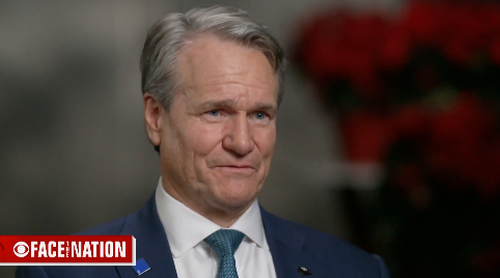
BofA CEO Moynihan: Trump’s Tariff War Shifts Into De-Escalation Phase
BofA CEO Moynihan: Trump’s Tariff War Shifts Into De-Escalation Phase
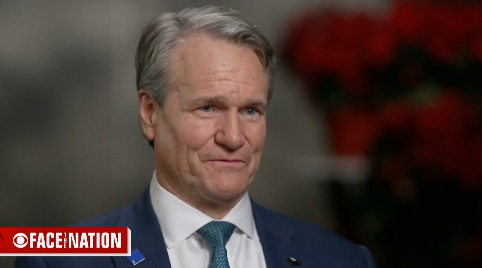
The conversation between CBS Face the Nation’s Margaret Brennan and Bank of America CEO Brian Moynihan on Sunday morning focused on the economic outlook for small businesses after nearly one year of the Trump administration’s ‘America First’ policies.
Moynihan discussed trade policy, tariffs, small businesses, labor, and immigration. He noted that, on the trade front, Trump’s trade war with many of America’s top trading partners was chaotic in early 2025 and caused significant concern among small businesses, a key client base for BofA. By the end of the year, however, that chaos had largely subsided.
Brennan asked BofA CEO:
In the past year, trade and tariffs—there were a lot of shocks to the system. It was a big concern. But Bank of America now projects that President Trump’s strategy is one of de-escalation, not escalation. Does that mean you see this trade war with China cooling off?
Moynihan’s response:
Well, I think if you go back to where we were in April, there was a lot of lack of understanding about what would end up being affected for small businesses. They were shocked—they’ll be shocked—by the sheer size and volume of dollars across the board, etc. What you’d say now, as time has moved on, it’s sort of 15% on one side, and then higher numbers based on people who won’t commit to purchase from the US or will not commit to lowering their non-tariff barriers, things like that.
So the question—when I talk to foreign governments, they ask questions about, “What does this all mean for CEOs?” You’ve got a choice: you could be here, you just have to make choices. It’s going to drive more towards America—come down to 15%, go to 10% across the board, 15% for the broad base of countries. Not a huge impact. And that’s where our team says it is starting to de-escalate. You start seeing resolution discussions—15% here, different numbers.
When you put China in, it’s a Chinese question because of national security interests: rare earth minerals, magnets, batteries, chips, AI—all this stuff. It’s a very different case. I think also between Mexico, China, and the US—the USMCA, which has to be redone—is also a different case. But broadly in the world, you can see sort of an endpoint here, and now they’ve just got to work with it. It’s got to work through the system.
Brennan then asked:
How much of a toll has that taken on small businesses? I understand Bank of America is the largest small business lender in the country…
Moynihan responded:
It was a big toll earlier this year because rates were going up—it cost more money because they borrow on revolving lines of credit… and they were on floating rates. And then tariffs came in and caused, “I’m not sure I can get the goods at what price and how I could commit.”
As you went through the year, rates came down a little bit, so now their issue right now is labor—they need to get labor to bid contracts and do the work. Because immigration policies haven’t settled in yet, that’s causing people concern. It’s not that they agree with them or disagree with them—just need to have an answer.
And that’s, I think, across four policy regimes: tax, trade and tariffs, immigration, and ultimately deregulation. We’ve seen resolution of a lot of it. But I think the next one for small business—what they tell us—is labor availability.
How they get there is, “I need people to do this work, and I need to be dependable that they’re here. So give me a set of rules, and I’ll go play with them. I just need clarity on what the rules are.”
Bank of America CEO Brian Moynihan says small business owners have concerns about the Trump administration’s immigration policies, not because “they agree with them or disagree with them,” but rather the “policies haven’t settled in yet.”
“What they tell us is labor… pic.twitter.com/pPpXkCV07a
— Face The Nation (@FaceTheNation) December 28, 2025
What is very clear is that Trump’s America First policies have defied the apocalyptic consensus of mainstream economists, MSM complex, and the Democratic Party’s propaganda machine.
The Apocalyptic Shortage That Never Happened: Democrats’ Tariff Doomsday Narrative Imploded
Economic data show solid growth and controlled inflation, pointing to a robust 2026, just in time for the midterms, as Democrats search for their next doom-and-gloom narrative to flood the airwaves. Yet Democrats fail even to mention that much of the affordability crisis originated during the Biden-Harris regime years and their nation-killing globalist policies, which Trump officials have been correcting this year
Tyler Durden
Mon, 12/29/2025 – 17:20
https://www.zerohedge.com/markets/bofa-ceo-moynihan-says-trumps-tariff-war-enters-de-escalate-phase

Opinion series: 2025 in review
2025 brought in a great deal of change. Join the Tribune Editorial Board and opinion team as we reflect on the events that shaped the year. Each piece gives an overview of some of the biggest debates that shaped our city, nation and world in 2025 and what writers in our section had to say about it. After reading, test your knowledge with our 2025 news quiz.
Life in Chicagoland as told through Tribune editorials
Metra retires its 10-ride pass. Madigan jurors hear the sad ballad of Mike and Mike. A progressive cycling alderman tries and fails to change Chicago’s speed limit. A history of public ownership ends at Walgreens. JoAnn Fabrics hangs it up. Da Pope is a real headline. We lose Norm, but offer cheers to George Wendt. And we mourn the death of R. Bruce Dold, one of the giants of Chicago journalism and one of our own. Here’s our first collection, focused on the little joys and big irritations of life in Chicagoland, 2025 edition. Read the full story.
Mayor Brandon Johnson’s year through the lens of Tribune editorials
Chicago’s mayors have been the subject of Tribune editorials for pretty much this newspaper’s entire 178-year history. But few of the city’s chief executives have made as many appearances on the editorial pages in a single year as has Mayor Brandon Johnson, whose 2025 was filled with conflict, ending with a grand December debacle at the City Council over the city’s budget. Here’s a revealing look back at 2025 editorials featuring Johnson. Read the full story.
Aggressive federal immigration enforcement roils Chicago
2025 will be remembered by most Chicagoans for the arrival here of the Border Patrol, which joined agents from Immigration and Customs Enforcement in aggressive enforcement of the nation’s immigration laws, as directed by the president of the United States. Accompanied by protesters wherever they went, the agents arrested people throughout the city, often in ways more associated with military-style governments. Here is our look back at what the Tribune Editorial Board had to say about their action. Read the full story.
Chicago’s yearlong fight against violent crime
Chicago’s struggles around public safety were the subject of many Chicago Tribune editorials in 2025. We focus on both the politics and the human costs of violent crime and our collective search for solutions. Read the full story.
A look back at the impact of the Trump administration through op-eds
President Donald Trump promised during his inaugural speech that his second term would usher in a “golden age,” and he promptly signed a flurry of executive orders in his first 100 days, more than any other U.S. president. The changes that came in subsequent months have left many Americans reeling. The contributors to our commentary section have examined what this new age of executive power means and how it is affecting Americans and people around the world. Read the full story.
A look back at immigration enforcement raids in Chicago through op-eds
Masked Border Patrol and Immigration and Customs and Enforcement agents spread out on the streets of Chicago and its suburbs to ramp up arrests, and their often brutal tactics were met with resistance. Protests increased at the Broadview detention facility, and neighbors in Chicago and its suburbs blew whistles and created informal community groups. Our commentary from this chaotic time examined the actions and decisions of federal immigration agents and how Chicagoans responded and found solidarity during the worst moments of the blitz. Read the full story.
A look back at Chicago’s affordable housing debate through op-eds
Chicago does not have enough affordable housing. In fact, the area needs 142,000 units, and one report released in June said the region must build 227,000 in the next five years to keep pace with demand. Mayor Brandon Johnson kicked off a stormy battle in the City Council this summer and presided over the passage of two ordinances that act as first steps in chipping away at Chicago’s problem. First, he revived an ordinance to make “granny flats,” or accessory dwelling units, legal again throughout Chicago — albeit with some compromises. Second, the mayor championed a ban on parking space minimums in buildings near public transit. Contributors to our op-ed section wrote thoughtfully on how Chicago can quickly develop the amount of housing needed while respecting the realities and demands of life in a city. Read the full story.
Submit a letter, of no more than 400 words, to the editor here or email letters@chicagotribune.com.
https://www.chicagotribune.com/2025/12/29/opinion-series-2025-in-review/

Resident suffers minor injury in Geneva house fire
A resident suffered a minor heat-related injury in a house fire Saturday night in Geneva, the Geneva Fire Department said in a news release.
At 11:59 p.m. on Saturday, the fire department was dispatched to a two-story, single-family home in the 300 block of Cheever Avenue near Geneva’s downtown district, the release from the department said, for a report of a fire inside an attached three-car garage.
Upon arrival, fire companies found smoke showing from the garage and requested additional resources, the news release said. Firefighters brought the fire under control in under 30 minutes, per the department.
One resident suffered a minor heat-related injury, the news release said. That resident was assessed by paramedics and declined additional medical attention after signing a medical release.
The origin of the fire was determined to be a car in the garage, but the fire’s cause is still under investigation, according to the department. The fire damage was limited to the garage, but the home sustained smoke damage.
Firefighters from St. Charles, Batavia, Elburn, West Chicago, Fermilab and North Aurora assisted at the scene, the release noted, and the Winfield Fire Protection District and South Elgin and Countryside Fire Protection District provided coverage at Geneva’s fire stations in case there were additional emergency calls. The Geneva Police Department, Geneva Emergency Management Agency, Geneva Public Works Department Electric Division and Nicor Gas also provided support.
https://www.chicagotribune.com/2025/12/29/resident-injured-house-fire-geneva-saturday/

Is The Gloom And Doom About An AI Dystopia Justified?
Is The Gloom And Doom About An AI Dystopia Justified?
Authored by Arthur Schaper via American Greatness,
“Artificial intelligence does the work of many minds at once. Will human creativity flourish or fail?”
“Artificial intelligence will make us useless slaves. We must stop these abuses before they start!”
“AI will create killer robots! We’re doomed!”
I have heard various versions of the above concerns regarding the rise of robots, the growth of artificial intelligence, and the broader concerns about the moral and ethical dilemmas facing humanity as technological innovation advances—and then accelerates.
The gloom around AI is understandable but incorrect.
Technological innovation has always served as a winnowing process. Old jobs fall away, but new jobs take their place. Some career paths may disappear, but new opportunities take over.
No matter how sophisticated, artificial intelligence cannot replace human intelligence, wisdom, ingenuity, and entrepreneurship. AI can hone specialized skills for those who want to retain or maintain specific fields of craftsmanship, but craftsmen are not going away.
With special thanks to Canadian commentator JJ McCullough, AI makes it easier to create templates and ideas, but the quality and the taste of the pictures, objects, and ideas created are, on the surface, still cringeworthy. A machine cannot inspire, nor can it replicate the inspiration of the human spirit. Whatever stories, poems, or other forms of art that can come out of a ChatGPT prompt, the style and substance will never suffice or suffuse the human mind. Furthermore, the compact creations of Grok or Meta AI programs can’t reflect the inner tensions of man’s search for place or meaning in his world, including the scenes that he depicts. While AI can generate pictures or formulate ideas into pictures, it cannot create or enhance the contrasts, shades, and shadows that transform the ordinary into the extraordinary.
Of course, there is a growing number of artists and intellectuals ruggedly opposed to AI. They think that all creative works deserve assessment and praise based on the amount of effort put into the creation. Here’s the fundamental failure of the marketplace for leftists. Value is not determined by labor but by the interest or value of the consumer. No creation, no good, and no service has value in and of itself, but rather its value is based on what it produces. There you have the Austrian economics’ subjective theory of value.
Animators fear that AI will take their jobs away. AI might make it easier to produce films, but the fundamental characters and templates of individual actors, processions, and ideas will have to come from the people. The stunning beauty of Walt Disney’s “Snow White” still rivals the computer animation of DreamWorks.
Instead of limiting or bankrupting artists, AI will induce the general public to discern quality, and artists will strive to reflect that. The general public will have a greater appreciation for the abstract and avant-garde. That’s a win-win for artists.
We cannot predict how broad and commanding man’s ingenuity will be going forward. AI has provided a means for man to be more creative more quickly, but it cannot predict or anticipate the future wants and needs of the general public, either.
Man and his search for competence, recognition, and meaning will not disappear, but our lives will improve in the search for answers.
Another fear about rapid mechanization and advancement of AI was that there would be such widespread unemployment that governments and peoples would have to invest in universal basic incomes.
Industries that promoted the upkeep and well-being of horses fell into decline with the arrival of the automobile. Animal enthusiasts, performers, and general-interest equestrians still own horses, ride them, and enjoy their company. The horse-riding industry was limited, but it became more specialized.
But specialized careers employ fewer people. Where’s the comfort, then? Consider the moment when banks switched to automatic in the 1970s. There was widespread fear that automated teller machines, ATMs, would put thousands of people out of work. The opposite happened. Banks shifted their services to more customer-related features. With the increased savings, these financial firms opened up more branches, and they ended up having to hire more people! Free enterprise does entail creative destruction, but there always follows a creative proliferation!
Furthermore, it’s rather arrogant for labor leaders and liberal pundits to claim that “There will be no jobs left.” Human wants and needs are constantly changing. Steve Jobs created the portable phone with Internet before there was a thought, let alone a want, for the phone. Once he invented the nifty device, everyone had to have one. The innovations often create the need because of the facility and agility they provide to the consumer.
Even now, reports are listing the jobs that AI cannot replace. Human beings will always have employment opportunities.
Besides, if AI became so sophisticated that all jobs became obsolete, then that would mean the AI could provide for all human needs, thus eliminating concerns about economic privation and starvation.
We’ve dispensed with the gloom.
But what about the doom?
Are we on the verge of the T-800 and T-1000 making war on the human race? Hasta la vista, baby!
Will we see “I, Robot” become reality? A recent video of Chinese engineers fending off a robot prototype, which began thrashing its arms and legs wildly—and violently—raised these concerns. Another article described how an AI program deleted all the software of a company, ruining the productivity and preeminence of the company.
Artificial intelligence that can recognize itself opens serious ethical concerns. Will they attack us? Will they make war on us? We should not be naïve enough to ignore such a possibility. Is it ethical to treat mechanical creations, acting as our servants, with any form of disdain or disrespect? When do we discuss the rights of robots and the responsibilities of human beings in connection to these creations (creatures)?
Instead of focusing on job losses, AI discussions should focus on ethical concerns, and we must ponder the answers. No one wants to face the fate of Dave in “2001: A Space Odyssey” or the Epsilons in “Brave New World.”
Views expressed in this article are opinions of the author and do not necessarily reflect the views of ZeroHedge.
Tyler Durden
Mon, 12/29/2025 – 17:00
https://www.zerohedge.com/ai/gloom-and-doom-about-ai-dystopia-justified