Category: News

Chicago Bears ‘not pleased at all’ with offensive performance in Week 18 loss to the Detroit Lions
It didn’t matter that the Chicago Bears were already locked into a playoff spot. It didn’t matter that Sunday’s 19-16 loss against the Detroit Lions didn’t hurt their playoff seed.
Ben Johnson was not happy with his offense.
“We can’t dig ourselves in a hole like that,” Johnson said. “I was disappointed in the offense as a whole. I let those guys know that and we’ll be better for it.”
The Bears nearly pulled themselves back from the dead yet again with a furious comeback effort. They erased a 16-0 deficit with a pair of touchdowns in the fourth quarter Sunday at Soldier Field. They converted both two-point tries as well, pulling even at 16-16.
But an overall flat effort was not how Johnson envisioned his team heading into the postseason. The Bears still earned the No. 2 seed and will host the Green Bay Packers at 7 p.m. Saturday in a wild-card round playoff game, despite the fact that they lost the final two regular-season games to San Francisco and Detroit.
The Bears failed to score in the first half Sunday. They went 4-for-11 on third-down attempts. The offense totaled 270 yards and the run game recorded 65 yards, both season worsts.
Bears tight end Colston Loveland falls while trying to catch a fourth-down pass from quarterback Caleb Williams during the second quarter against the Lions on Sunday, Jan. 4, 2026, at Soldier Field. (Armando L. Sanchez/Chicago Tribune)
The frustration was palpable in the postgame locker room.
“Not pleased at all,” rookie tight end Colston Loveland said. “Slow start. You never want to end a season like that.”
Loveland led the Bears with 10 catches for 91 yards and a touchdown. His touchdown grab pulled the Bears within two points with the clock ticking under six minutes. Moments later, quarterback Caleb Williams connected with veteran tight end Cole Kmet for a two-point conversion to tie the game.
At that point, the home crowd at Soldier Field fully believed that these Bears — a team with six fourth-quarter comebacks on its resume — were going to win the game.
Safety Kevin Byard’s interception with 2:11 remaining in the game gave the offense a chance to take the lead. An intentional grounding penalty against Williams on second-and-10 severely hampered the possession. A third-down pass to running back Kyle Monangai picked up 15 yards and the Bears were then facing a fourth-and-5 at their own 31-yard line.
During the two-minute warning timeout, Johnson considered keeping his offense on the field and going for it before eventually deciding to punt.
“We had three timeouts and we felt like we were going to get the ball back,” Johnson said.
The Bears never saw the football again.
Johnson put his faith in his defense, but Jared Goff and the Lions picked up two first downs — including a 26-yard gain from receiver Amon-Ra St. Brown — and kicker Jake Bates made a 42-yard field goal to win the game as time expired.
The Lions had the better offense on Sunday, and that was part of the problem. The Bears punted on their first two possessions, and the Lions responded with long scoring drives that ate up the clock. The Bears had only three offensive possessions in the first half.
“When you’re playing a good offense on the other side, you know you’re going to have limited tries at it,” Loveland said. “So our mentality is: Score every time we get the ball. And obviously we didn’t do that.”
Williams set the Bears’ single-season passing yards record during the game. He finished the regular season with 3,942 passing yards, surpassing Erik Kramer’s 1995 record of 3,838 passing yards. Williams also ended his season with 27 touchdown passes, two behind Kramer’s record of 29 set in that same 1995 season.
Williams completed 20 of 33 passes on Sunday, totaling 212 yards with two touchdowns and one interception. But the second-year quarterback was less than thrilled with his new record in the face of back-to-back losses.
“Need to win the game,” Williams said.
He also said, “that number is the number and so be it.”
This Bears offense put up 38 points a week ago in a 42-38 shootout loss against the 49ers. Against a banged-up Lions defense, expectations were much higher for Sunday’s game.
The Bears were without their starting left tackle in rookie Ozzy Trapilo, who missed the game with knee and quad injuries, but backup Theo Benedet had started seven games this season. Trapilo’s absence certainly wasn’t the reason for the prolonged offensive struggles Sunday.
Week 18 photos: Chicago Bears vs. Detroit Lions
The Bears failed to find any rhythm.
“I didn’t think it was one of our more elaborate (game) plans,” Johnson said. “I thought it was one of our simpler plans, and so we need to do a better job executing it and coaching it up.”
The offense has no choice but to turn the page and do so quickly. But Sunday left a pretty bad taste in the Bears’ mouths.
“I wouldn’t say (there’s) momentum off of two straight losses,” running back D’Andre Swift said. “I don’t know how you can gain momentum from that, but another opportunity, a great opportunity to make it in the playoffs. And everything kind of resets from that standpoint.”
Thanks to Washington’s win over Philadelphia, the Bears still earned the No. 2 seed in the NFC. They will face a Packers team they’ve battled close twice, losing a heartbreaker on Dec. 7 at Lambeau Field and winning Dec. 20 in overtime at Soldier Field.
This one will once again be on home turf at Soldier Field. It will be the third-ever playoff game between the two historic franchises.
“(I) feel good about anybody,” Williams said. “Whatever position we’re going to be in, whatever position we’re in now, I feel good about us versus anybody.”
https://www.chicagotribune.com/2026/01/04/chicago-bears-detroit-lions-offense/

Escobar: How Political Analysis Became A Target Of A.I. Fakes
Escobar: How Political Analysis Became A Target Of A.I. Fakes
Authored by Pepe Escobar,
A.I. is fast expanding as a plague all along the internet spectrum. That’s quite predictable, considering the Big Tech model for A.I. is techno-feudalism, relying on profit and mind/social control, and not on sharing/expanding knowledge and creating better conditions for a well-informed citizenry.
A.I. in many aspects is the antithesis of civitas. Prior to the A.I. boom, several layers of the internet had already been distorted into a series of minefields across a large-than-life sewer. A.I. – as controlled by Big Tech – in many aspects had already revealed itself as a fraud. Now it’s a weapon.
There are several channels on YouTube manipulated by A.I., stealing the image and voice by some of us, independent political analysts. A not-extensive list includes as targets John Mearsheimer, Larry Johnson, Richard Wolff, Glenn Diesen, Yanis Varoufakis, economist Paulo Nogueira Batista and myself.
It’s not an accident that all of us are independent geopolitical and geoeconomic analysts, mostly know each other personally, and are guests in roughly the same podcasts.
In my own case, there are channels in English, Portuguese and even Spanish: I rarely do podcasts in Spanish, so even the voice is fake. In English, usually the voice is approximately cloned. In Portuguese it comes with an accent I don’t have. In several cases, audience numbers are huge. Essentially, these come from bots.
In all cases, as far as we, the targets are concerned, all these channels are fake. I repeat: all these channels are fake.
They may at least in some cases be set up by “fans” – certainly with an eye for profit via monetization.
Or the whole scam may be part of something way more sinister: a strategy bent of loss of credibility.
As in an operation by the usual suspects to sow confusion amongst the – large – audience of several independent thinkers.
It’s not an accident that quite a few viewers are already deeply puzzled. Cue to the most common question: “Is this really you, or A.I.?”
Many apparently have denounced these fake channels, but YouTube, so far, has done absolutely nothing about them. The algos keep suggesting these channels to large audiences.
The only realistic way to fight the scam is to file a complaint with YouTube. But that, in practice, is pretty useless. YouTube management seems to be more interested in occasionally erasing “inconvenient” channels displaying critical thinking and analysis.
Cracking the code of the scam
Quantum Bird, a physics and HPC (High Performance Computing) expert, formerly with the CERN in Geneva, has cracked the code of the scam:
“The proliferation of agents of deep learning digital neural networks capable of emulating writing, voice and video of human beings was inevitable, and their impact on scientific research, production of knowledge and art in general has a negative potential that has not been yet fully analyzed.”
He adds:
“While writers and academics are detailing the springing up of texts attributed to them, and replicating to a certain extent their style and opinions, the latest fad is the blooming of whole channels on YouTube, and other notorious Big Tech platforms, that offer videos of popular content producers, communicating in their native language or other languages. In several cases, the quality of this synthesized material is sufficiently high not to allow immediate identification by an average viewer. In the context of the political analysis community, the impact is obvious: historic revisionism, erosion of reputations and distortion of news and analysis.”
And here Quantum Bird lays out the tech clincher:
“The synthetization of this type of content requires the availability of abundant samples and massive computational capacity, way beyond the reach of domestic users. While the popularity of the YouTube victims guarantees the first condition, the second one suggests the activity of large-scale state or corporate actors, since advanced deep learning models must be developed and trained by processing a huge quantity, in terms of “disk space”, of audio and video. The monetization of the content does not cover the costs of this operation. Ironically, it’s the availability and the excess exposure of voice and video online that allows this type of attack.”
Here we go. Welcome to A.I. turning the net into an infernal machine bent on erasing meaning, culture and History – and sowing deep intellectual confusion. Exactly like Techno-Feudalism wants it.
Tyler Durden
Sun, 01/04/2026 – 22:10
https://www.zerohedge.com/ai/escobar-how-political-analysis-became-target-ai-fakes

Rick Armstrong’s high school boys basketball rankings and player of the week for the Aurora-Elgin area
Oswego takes over top spot again, while East Aurora and Yorkville Christian enter the rankings.
Top 10
With records through Sunday and previous rankings in parentheses.
1. Oswego East 11-3 (2)
Layup by all-tournament pick Mason Lockett tops Niles North 72-71 for fifth at Hinsdale Central.
2. Kaneland 13-0 (3)
Jeffrey Hassan comes up big as Knights win third straight Plano Christmas Classic championship.
3. Geneva 11-2 (1)
Vikings take third at Hinkle Classic behind all-tournament picks Nathan Palmer and Gabe Jensen.
4. Aurora Christian 12-2 (4)
Jacob Baumann bags MVP honors as Eagles win in Florida, then lose twice at State Farm Classic.
5. Oswego 8-7 (8)
Panthers go 3-2 in tournament at York but impress in double-overtime loss to Brother Rice.
6. Waubonsie Valley 8-5 (6)
All-tournament selection Kris Mporosko averages 18.8 points for Warriors at Hinsdale Central.
7. East Aurora 8-6 (NR)
Casston Cross and Tomcats enter new year with one-game lead over Bartlett in conference.
8. Yorkville Christian 10-4 (NR)
Jayden Riley and Mustangs, runners-up at Plano, drop 72-68 decision to Whitney Young.
9. Marmion 9-4 (10)
Ben Piekarz scores 15 points as Cadets roll to 70-48 victory over St. Charles East.
10. Jacobs 8-5 (5)
Elijah Bell picks up all-tournament honors at Hinkle Classic for host Golden Eagles.
Player of the Week
Senior guard Marshawn Cocroft averages 24.5 points. leading Kaneland to the Plano Christmas Classic title. The Grand Valley State commit earns tournament MVP for a second straight year.

Date and time are set for Chicago Bears’ 1st-round playoff game vs. Green Bay Packers at Soldier Field
The Chicago Bears are the No. 2 seed in the NFC playoffs and will host the Green Bay Packers at 7 p.m. Saturday in the wild-card round. The game will be broadcast on Amazon’s Prime Video.
It will be the first Bears playoff game since the 2020 season and the first playoff game at Soldier Field since the 2018 season, when kicker Cody Parkey missed a last-second field-goal try against the Philadelphia Eagles.
The Bears locked down the No. 2 seed — despite a 19-16 loss to the Detroit Lions in the regular-season finale Sunday — when the Eagles lost 24-17 to the Washington Commanders.
The Bears already were guaranteed a home game in the first round after clinching the NFC North two weeks ago. As the No. 2 seed, they’re also guaranteed a home game in the divisional round if they beat the Packers.
Week 18 photos: Chicago Bears vs. Detroit Lions
This will be the third matchup this season between the longtime rivals. The Packers won the first game 28-21 on Dec. 7 at Lambeau Field, with Bears quarterback Caleb Williams throwing an interception in the end zone in the final minute. The Bears won the rematch 22-16 with a dramatic fourth-quarter rally and overtime touchdown Dec. 20 at Soldier Field.
This will mark the 213th meeting between the Bears and Packers, but only the third in the postseason. They last met in the playoffs in the NFC championship game in January 2011. Aaron Rodgers and the Packers won that game and went on to win Super Bowl XLV.
The franchises also met in a playoff game in 1941, with the Bears beating the Packers to advance to the NFL championship game, in which they defeated the New York Giants for the title.
Both previous matchups this season came down to the wire. The Bears came back from a 10-point, fourth-quarter deficit in the overtime victory, a game in which Packers quarterback Jordan Love exited in the first half with a concussion.
https://www.chicagotribune.com/2026/01/04/chicago-bears-wild-card-opponent/
“Cocaine Mills”: Trump Puts Three More Latin American Countries On Notice
“Cocaine Mills”: Trump Puts Three More Latin American Countries On Notice
President Trump soon after the overnight into early Saturday brief invasion of Venezuela and nabbing of President Nicolas Maduro – now in US custody on American soil – put more Latin American countries on notice, calling them essentially “cocaine mills” which ship ‘poison’ into the United States.
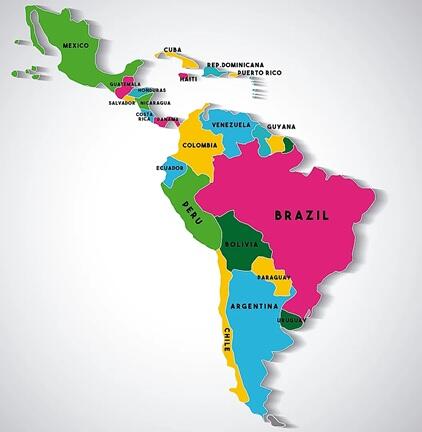
The not-so-veiled warnings and threats were issued to the governments of Mexico, Colombia, and Cuba – the latter which has been a Washington enemy stretching many decades back into the height of the Cold War.
In the comments, Trump again called Maduro as a “narco-terrorist” while fielding a question about the implications for neighboring countries, before linking the Venezuelan leader to his ally Colombian President Gustavo Petro.
“He has cocaine mills, he has factories where he makes cocaine and they’re sending it into the United States” Trump said of the Colombian leader, adding, “he does have to watch his ass.”
And on Cuba, the warning was more veiled, as he described his administration is “going to be something we’ll end up talking about” as Washington suppose wants to “help the people” of this “failing nation” akin to Venezuela.
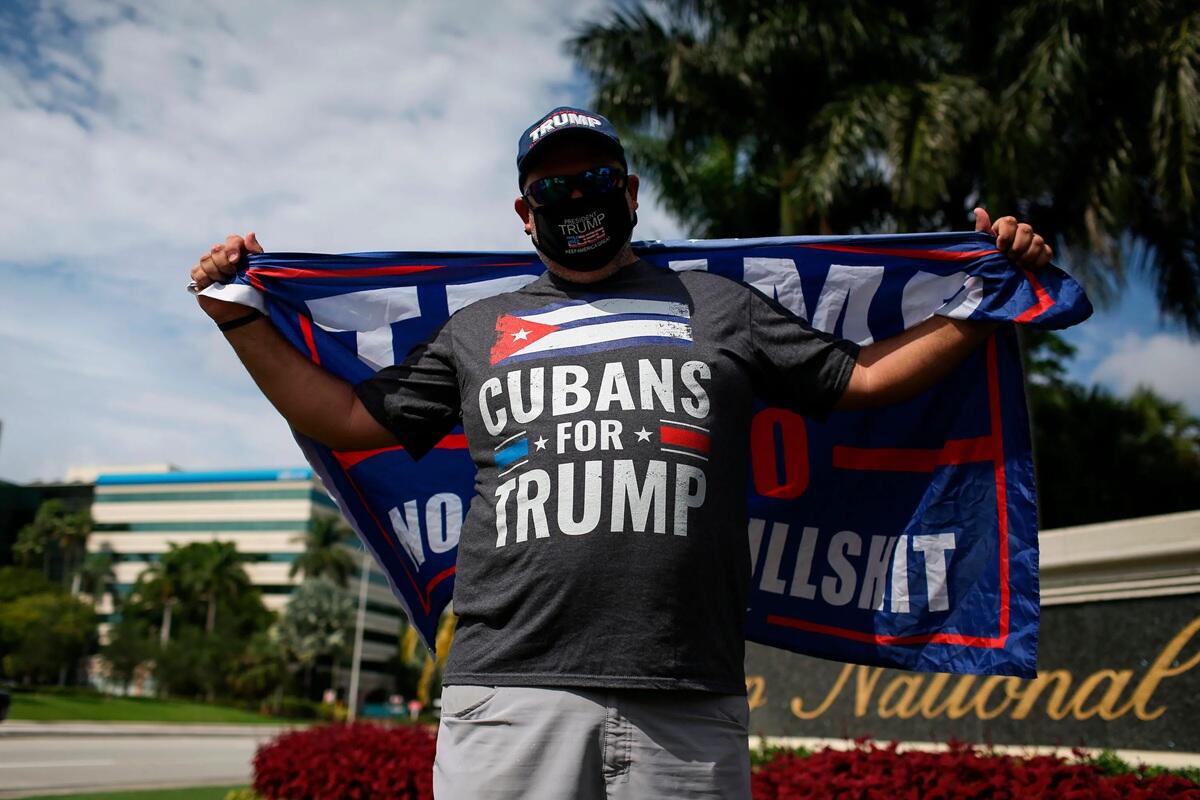
“It’s very similar in the sense that we want to help the people in Cuba, but we also want to help the people who were forced out of Cuba and are living in this country,” he continued, in reference to Trump’s own significant support base among Cuban-Americans.
Among the more interesting and somewhat post-Venezuela regime change remarks by Trump were aimed just south of the border. Trump again put Left wing, or perhaps more accurately center-left Mexican President Claudia Sheinbaum Pardo on notice.
Trump described that the drug cartels are basically running the country, and that “something’s going to have to be done with Mexico” and that the government is “frightened” of them.
“They’re running Mexico. I’ve asked her numerous times: ‘Would you like us to take out the cartels?’ ‘No, no, no, Mr. President, no, no, no, please.’ So we have to do something,” he said in a phone interview with Fox.
Mexico had quickly condemned the US military action in Venezuela, as predictably the Colombian leader too. Petro has described Washington’s actions as an “assault on the sovereignty” of Latin America – and many other BRCIS and other global south countries have said the same.
As for Cuba, the US has over decades been essentially ‘looking for an excuse’ in a ‘give us a reason’ kind of way while all along keeping brutal sanctions on Havana. Will Trump now have his ‘reason’ for getting more muscular on Cuba?
Tyler Durden
Sun, 01/04/2026 – 21:35

After transferring from district rival, Nick Brzezniak breaks out for Lincoln-Way Central. ‘A lot different.’
Moving across town and transferring from Lincoln-Way West to district rival Lincoln-Way Central, junior forward Nick Brzezniak had to work through some weird initial feelings.
But Brzezniak didn’t take long to fit in. He has also developed a huge appreciation for his new teammates and coaches — and he’s thriving on the court like never before.
“It was a little bit awkward at first,” Brzezniak said. “It’s a lot different over here. I was pushed a lot harder and I just wasn’t used to it, but I eased into it. Now, I love it.
“There’s a really great staff here that’s helped me a lot with my perimeter game. I love being here. There’s no place I’d rather be.”
Brzezniak’s strong start to the season reached new heights Saturday. He poured in a career-high 32 points to help the host Knights pull away in the second half for a 57-35 victory over crosstown rival Providence in New Lenox.
Micah Evans finished with 13 points and eight rebounds for Lincoln-Way Central (11-3), while Nolan Morrill added six points and four steals.
Lincoln-Way Central’s Nick Brzezniak (22) steals the ball from Providence’s Eli Phillips (5) during a nonconference game in New Lenox on Saturday, Jan. 3, 2026. (Sean King / Daily Southtown)
Eli Phillips led Providence (4-12) with 14 points. Cade Styrsky added seven points and Curtis Stubbs pulled down eight rebounds.
Brzezniak was on fire all game. He hit 13 of his 15 shots from the field, including four 3-pointers, and made both his free throws.
“It feels awesome,” Brzezniak said. “I never thought I’d score that many points in a game. Every shot I took felt amazing. I just felt really good. I can’t explain it any other way than that.
“I wasn’t forcing anything, I don’t think. It just came naturally.”
Lincoln-Way Central’s Nick Brzezniak (22) takes a jumper from the baseline against Providence during a nonconference game in New Lenox on Saturday, Jan. 3, 2026. (Sean King / Daily Southtown)
Lincoln-Way Central’s Brian Flaherty remembers coaching against Brzezniak last season. Now, he sees a well-rounded, blossoming player who’s thankfully on his side.
“Last year, he was more of an around-the-basket-type guy,” Flaherty said of Brzezniak. “This year, he’s doing a lot away from the basket. He does a lot of different things for us. It seems like every game, you see him doing something new he didn’t do the game before that helps us.
“You can see his confidence growing. He’s like a sponge when you tell him stuff. He wants to keep learning.”
Perhaps Brzezniak’s eagerness to gain basketball knowledge stems from the fact that he’s a relative newcomer to the game.
Lincoln-Way Central’s Nick Brzezniak (22) takes a shot from beyond the 3-point arc against Providence during a nonconference game in New Lenox on Saturday, Jan. 3, 2026. (Sean King / Daily Southtown)
Growing up, his athletic focus was on being a goalkeeper in soccer. He didn’t play basketball until seventh grade.
“I would always go to basketball summer camps just for fun and the seventh-grade coach was like, ‘You’re pretty good. You should try out,’” Brzezniak said. “I just said, ‘OK.’
“I fell in love with it and it overtook soccer. I quit soccer freshman year.”
On Saturday, Brzezniak came through with a big third quarter, scoring 12 points. That helped the Knights outscore Providence 21-4 in the quarter to pull away after leading just 24-18 at halftime.
Providence’s Eli Phillips (5) shoots the ball in the post against Lincoln-Way Central’s Nick Brzezniak (22) during a nonconference game in New Lenox on Saturday, Jan. 3, 2026. (Sean King / Daily Southtown)
Evans did not know much about Brzezniak before the season, but he’s certainly glad to have him on his side.
“When I found out he was coming here, I was trying to remember him from the scouting report last year,” Evans said. “All I remembered was he beat one of our bigs on a back cut last year. But when he came in, the first shot I ever saw him take during practice was a dunk.
“I knew this kid was legit. He plays really disciplined on the defensive end and he just wants it more. He’s got the same love for basketball that I do and I appreciate having someone like that.”
As far as Brzezniak is concerned, he’s just getting started.
“I can still develop my game a lot,” he said. “At this level, I’m one of the bigger guys, but at the next level, I’m a guard, so I need to work on those skills and just keep getting better.”

Berenson: Just How Insane Did Democrats Become On Immigration?
Berenson: Just How Insane Did Democrats Become On Immigration?
Authored by Alex Berenson via Unreported Truths,
Almost six years ago, Democrats published the world’s longest political suicide note — their 2020 election platform on immigration.
CREATING A 21ST CENTURY IMMIGRATION SYSTEM has now vanished from the Democratic Party Website. But the Internet is forever, and the archived document remains easily findable. It makes a fascinating read.
In almost 2,000 words, the platform does not mention “border security” once. It does use the word “illegal” — referring to “President Trump’s illegal, chaotic, and reckless changes” to immigration. “Undocumented” comes up once too, in a promise to offer citizenship to “millions of undocumented workers, caregivers, students, and children.”
Among the platform’s other high notes:
We will protect and expand the existing asylum system and other humanitarian protections… Democrats will end Trump Administration policies that deny protected entry to asylum seekers… we will end prosecution of asylum seekers at the border and policies that force them to apply from “safe third countries,” which are far from safe.
We will also eliminate unfair barriers to naturalization…
Democrats believe family unity should be a guiding principle for our immigration policy. We will prioritize family reunification for children still separated from their families…
[W]e will end workplace and community raids. We will protect sensitive locations like our schools, houses of worship, health care facilities, benefits offices, and DMVs [Note: this may be the first time anyone has ever called a DMV office a “sensitive” place] from immigration enforcement actions…
We believe detention should be a last resort, not the default. Democrats will prioritize investments in more effective and cost-efficient community-based alternatives…
—
(You want reckless? We’ll give you reckless!)
(SOURCE)
—
In other words: Come on in. The water’s fine.
The platform promises an interlocking series of guarantees and policy changes that would not merely reduce but as a practical matter end any restrictions against immigration, legal or otherwise.
Basically, the Democratic Party vowed that if it ran the federal government, it would open American borders to anyone and everyone in the world who could reach them.
The asylum promises were especially important.
As even the “American Immigration Council” — which despite its anodyne name is funded by immigration lawyers and relentlessly pushes open borders — has explained:
Since the second term of the Obama administration, however, U.S. asylum policy has become hopelessly entangled with border management. As part of global displacement challenges, many more people than ever before started coming to the United States to request asylum; at the same time, those people came from places beyond Mexico and had more complex needs than the working-age adults who had made up most migration in the past.
“More complex needs” is a polite way to say “people uninterested in working.”
The Democratic platform explicitly encouraged those arrivals. All they had to do was make an asylum claim, with or without credible evidence. How could border officials possibly check their stories? At that point they would be allowed in — and would not face any meaningful enforcement, ever.
—
Given these incentives, it is no surprise immigrant caravans started moving north only weeks after Election Day in 2020 — even before Joe Biden was officially sworn in.
And the flood continued, as migrants very quickly realized the Democrats had meant every word. They understood they would be greeted with open arms — and checkbooks. An increasingly professionalized industry of smugglers emerged to organize and transport them.
Supply creates its own demand, whatever the product.
In January 2023, the Biden Administration took the inevitable final step, a creating what it called a “Humanitarian Parole Program.” The plan allowed in another 360,000 migrants a year from Cuba, Haiti, Nicaragua, and Venezuela without even requiring them to reach the southern border or have any legal basis for admission. If they could afford a plane ticket and find someone — anyone — in the United States to sponsor them, they could fly in.
The goal of the Bidenites was nakedly political. They hoped to make the border look better. But as a practical matter the program eliminated the last barrier to entry — that would-be migrants physically arrive at the border. Even the 2020 Democratic platform hadn’t (explicitly) gone that far.
—
(Sometimes the truth, like the devil, is in the details. Help me explain them.)
How the Democrats got to this point is its own story, and worth exploring. So is the question of what happens next.
But for now it is simply worth understanding that the collapse of any immigration restrictions was a feature, not a bug. Nearly 10 million people came to the United States under the Biden Administration — the largest surge either in raw numbers or as a percentage of the population at least since the Civil War.
The only surprise is that the total wasn’t even higher.
Tyler Durden
Sun, 01/04/2026 – 21:00
https://www.zerohedge.com/political/berenson-just-how-insane-did-democrats-become-immigration

Donald Trump says that Ukraine didn’t target Vladimir Putin residence in a drone strike as Kremlin claims
ABOARD AIR FORCE ONE — President Donald Trump on Sunday told reporters that U.S. national security officials have determined that Ukraine did not target a residence belonging to Russian President Vladimir Putin in a drone attack last week, disputing Kremlin claims that Trump had initially greeted with deep concern.
Russian Foreign Minister Sergey Lavrov last week said Ukraine launched a wave of drones at Putin’s state residence in the northwestern Novgorod region that the Russian defense systems were able to defeat. Lavrov also criticized Kyiv for launching the attack at a moment of intensive negotiations to end the war.
The allegation came just a day after Ukrainian President Volodymyr Zelenskyy had traveled to Florida for talks with Trump on the U.S. administration’s still-evolving 20-point plan aimed at ending the war, and had Zelenskyy quickly denied it.
“I don’t believe that strike happened,” Trump told reporters as he traveled back to Washington on Sunday after spending two weeks at his home in Florida.
Trump addressed the U.S. determination after European officials argued that the Russian claim was nothing more than an effort by Moscow to undermine the peace effort.
But Trump, at least initially, had appeared to take the Russian allegations at face value. He told reporters last Monday that Putin had also raised the matter during a phone he had with the Russian leader earlier that day. And Trump said he was “very angry” about the accusation.
By Wednesday, Trump appeared to be downplaying the Russian claim. He posted a link to a New York Post editorial on his social media platform that raised doubt about the Russian allegation. The editorial lambasted Putin for choosing “lies, hatred, and death” at a moment that Trump has claimed is “closer than ever before” to moving the two sides to a deal to end the war.
The U.S. president has struggled to fulfill a pledge to quickly end the war in Ukraine and has shown irritation with both Zelenskyy and Putin as he tried to mediate an end to a conflict he boasted on the campaign trail that he could end in one day.
Both Trump and Zelenskyy said last week they made progress in their talks at Trump’s Mar-a-Lago resort on a 20-point peace plan.
But Putin has shown little interest in ending the war until all of Russia’s objectives are met, including winning control of all Ukrainian territory in the key industrial Donbas region and imposing severe restrictions on the size of Ukraine’s post-war military and the type of weaponry it can possess.
Madhani reported from Washington.
https://www.chicagotribune.com/2026/01/04/trump-ukraine-putin-drone-strike/

International aid groups grapple with what Israel’s ban will mean for their work in Gaza
TEL AVIV, Israel — Israel’s decision to revoke the licenses of more than three dozen humanitarian organizations this week has aid groups scrambling to grapple with what this means for their operations in Gaza and their ability to help tens of thousands of struggling Palestinians.
The 37 groups represent some of the most prominent of the more than 100 independent nongovernmental organizations working in Gaza, alongside United Nations agencies. Those banned include Doctors Without Borders, the Norwegian Refugee Council, Oxfam and Medical Aid for Palestinians.
The groups do everything from providing tents and water to supporting clinics and medical facilities. The overall impact, however, remains unclear.
The most immediate impact of the license revocation is that Israel will no longer allow the groups to bring supplies into the Gaza Strip or send international staffers into the territory. Israel says all suspended groups have to halt their operations by March 1.
Some groups have already been barred from bringing in aid. The Norwegian Refugee Council, for example, said it has not been allowed to bring in supplies in 10 months, leaving it distributing tents and aid brought in by other groups.
Israel says the banned groups make up only a small part of aid operations in Gaza.
But aid officials say they fulfill crucial specific functions. In a joint statement Tuesday, the U.N. and leading NGOs said the organizations that are still licensed by Israel “are nowhere near the number required just to meet immediate and basic needs” in Gaza.
The ban further strains aid operations even as Gaza’s over 2 million Palestinians still face a humanitarian crisis more than 12 weeks into a ceasefire. The U.N. says that although famine has been staved off, more than a quarter of families still eat only one meal a day and food prices remain out of reach for many; more than 1 million people need better tents as winter storms lash the territory.
Why were their licenses revoked?
Earlier this year, Israel introduced strict new registration requirements for aid agencies working in Gaza. Most notably, it required groups to provide the names and personal details of local and international staff and said it would ban groups for a long list of criticisms of Israel.
The registration process is overseen by Israel’s Ministry for Diaspora Affairs and Combating Antisemitism, led by a far-right member of the ruling Likud party.
Israel says the rules aim to prevent Hamas and other fighters from infiltrating the groups, something it has said was happening throughout the 2-year-old war. The U.N., which leads the massive aid program in Gaza, and independent groups deny the allegations and Israeli claims of major diversion of aid supplies by Hamas.
Aid organizations say they did not comply, in part, because they feared that handing over staff information could endanger them. More than 500 aid workers have been killed in Gaza during the war, according to the United Nations.
Israel denies targeting aid workers. But the group say Israel has been vague about how it would use the data.
The groups also said Israel was vague about how it would use the data.
“Demanding staff lists as a condition for access to territory is an outrageous overreach,” Doctors Without Borders, known by its French acronym MSF, said Friday. It said Israeli officials had refused its attempts to find alternatives.
A December report on MSF issued by an Israeli government team recommended rejection of the group’s license. It pointed primarily to statements by the group criticizing Israel, including referring to its campaign in Gaza as genocide and calling its monthslong ban on food entering the territory earlier this year as “a starvation tactic.” It said the statements violated neutrality and constituted “delegitimization of Israel.”
The report also repeated claims that an MSF employee killed in by an Israeli airstrike in 2024 was an operative with the Islamic Jihad fighter group. That, it said, suggested MSF “maintains connections with a terrorist group.”
MSF on Friday denied the allegations, saying it would “never knowingly employ anyone involved in military activities.” It said that its statements cited by Israel simply described the destruction its teams witnessed in Gaza.
“The fault lies with those committing these atrocities, not with those who speak of them,” it said.
Aid groups have a week from Dec. 31 to appeal the process.
Medical services could see biggest impact
Independent NGOs play a major role in propping up Gaza’s health sector, devastated by two years of Israeli bombardment and restrictions on supplies.
MSF said Israel’s decision would have a catastrophic impact on its work in Gaza, where it provides funding and international staff for six hospitals as well as running two field hospitals and eight primary health centers, clinics and medical points. It also runs two of Gaza’s five stabilization centers helping children with severe malnutrition.
Its teams treated 100,000 trauma cases, performed surgeries on 10,000 patients and handled a third of Gaza’s births, the group says. It has 60 international staffers in the West Bank and Gaza and more than 1,200 local staff — most medical professionals.
Since the ceasefire began in early October, MSF has brought in about 7% of the 2,239 tons (2,032 metric tonnes) of medical supplies that Israel has allowed into Gaza, according to a U.N. tracking dashboard. That makes it the largest provider of medical supplies after U.N. agencies and the Red Cross, according to the dashboard.
Medecins du Monde, another group whose license is being halted, runs another four primary health clinics.
Overburdened Palestinian staff
Aid groups say the most immediate impact will likely be the inability to send international staff into Gaza.
Foreign staff provide key technical expertise and emotional support for their Palestinian colleagues.
“Having international presence in Gaza is a morale booster for our staff who are already feeling isolated,” said Shaina Low, communications adviser for the Norwegian Refugee Council, which is one of the main NGOs providing shelter supplies and fresh water to displaced people.
NRC has roughly 30 international staff who rotate in and out of Gaza working alongside some 70 Palestinians.
While any operations by the 37 groups in the West Bank will likely remain open, those with offices in east Jerusalem, which Israel considers its territory, might have to close.
Halt on supplies
Many of the 37 groups already had been blocked from bringing supplies into Gaza since March, said Bushra Khalidi, Oxfam’s policy lead for Israel and the occupied Palestinian territories.
What changes with the formal license revocation is “that these practices are now formalized, giving Israel full impunity to restrict operations and shut out organizations it disagrees with,” she said.
Some of the groups have turned to buying supplies within Gaza rather than bringing them in, but that is slower and more expensive, she said. Other groups dug into reserve stocks, pared down distribution and had to work with broken or heavily repaired equipment because they couldn’t bring in new ones.
Amed Khan, an American humanitarian philanthropist who has been privately donating medicine and emergency nutrition for children to Gaza, said the impact extends beyond the aid groups.
He relies on NGOs to receive and distribute the supplies, but the fewer groups that Israel approves, the harder it is to find one.
“It’s death by bureaucracy,” he said.
https://www.chicagotribune.com/2026/01/04/international-aid-groups-israels-ban-gaza/

Korybko: Regime-Tweaking, Not Regime-Change, Is What The US Just Achieved In Venezuela
Korybko: Regime-Tweaking, Not Regime-Change, Is What The US Just Achieved In Venezuela
Authored by Andrew Korybko via Substack,
This refers to keeping the targeted state’s power structure in place but after some (at times significant) changes that advance the meddling state’s interests.
Some critics of the US’ “special military operation” in Venezuela claim that it didn’t succeed despite President Nicolas Maduro’s capture since the “Chavismo deep state” that he presided over remains in place.
This refers to the explicitly ideological elements of his country’s permanent military, intelligence, and diplomatic bureaucracies but can be expanded to include governors and trade unions among other groups.
The point is that removing Maduro from the political equation didn’t result in regime change.
That’s true, but the premise that US wanted to achieve such a goal is debatable since Trump 2.0 is comprised of figures who’ve criticized previous regime change operations for destabilizing their regions and leading to unpredictable consequences that ultimately harmed US interests.
It’s therefore plausible that they never intended to forcibly carry out regime change in Venezuela due to concerns that a civil war might follow, which could engender a large-scale migrant crisis and destroy energy infrastructure.
Rather, the immediate goal can be described as regime tweaking, which refers to keeping the targeted state’s power structure in place but after some (at times significant) changes that advance the meddling state’s interests.
In the Venezuelan context, the US forcibly removed Maduro so that he’d be replaced by his Vice President Delcy Rodriguez, who Trump publicly expects to “do what we want” (likely at Marco Rubio’s direction).
That’s arguably what he meant by “running the country” till its transition is complete.
Such a transition might not result in regime change after Trump ruled out Nobel Peace Prize winner Maria Corina Machado leading Venezuela since “She doesn’t have the support or the respect”.
He also didn’t mention “democracy” once during his press conference in a sign that he’s uninterested in a radical regime change from the Chavismo model to a Western one (at least at this time). This hints that he’s open to Rodriguez or some other Chavista who he thinks the US can work with succeeding Maduro.
They’d have to enjoy the support of the powerful armed forces and militias in order to prevent a civil war, which ipso facto entails preserving at least some of their privileges, especially economic-financial ones.
That said, the armed forces barely put up any resistance on Saturday so it’s possible that Defense Minister Vladimir Padrino Lopez and Interior Minister Diosdado already clinched a deal with the US, only to talk tough in front of the cameras afterwards like Rodriguez has for domestic political reasons.
If an election is held within 30 days like Article 233 of the Constitution calls for, then the Defense and Interior Ministries would have to help secure it, thus reinforcing the importance of their chiefs supporting the US’ envisaged transition in Venezuela.
The US doesn’t care how Venezuela is governed or who (at least nominally) rules it, just that US influence is restored, which could take the form of its oil only being sold to US-approved buyers and foreign rivals like China no longer having a foothold there.
Of course, de-ideologizing the Venezuelan “deep state” so that more easily manipulatable pro-Western figures replace the Chavistas would entrench the US’ newfound influence, but this can only be done gradually since moving too fast could spark a civil war and thus risk ultimately harming US interests.
Some of the Chavismo model’s socio-economic programs and neighborhood organizations might also have to be preserved to prevent this.
It’ll therefore be interesting to monitor how the transition unfolds.
Views expressed in this article are opinions of the author and do not necessarily reflect the views of ZeroHedge.
Tyler Durden
Sun, 01/04/2026 – 19:50