Category: News

Mamdani’s Rich Kid Commie Tenant Advocate Starts Crying When Asked About Millionaire Parents
Mamdani’s Rich Kid Commie Tenant Advocate Starts Crying When Asked About Millionaire Parents
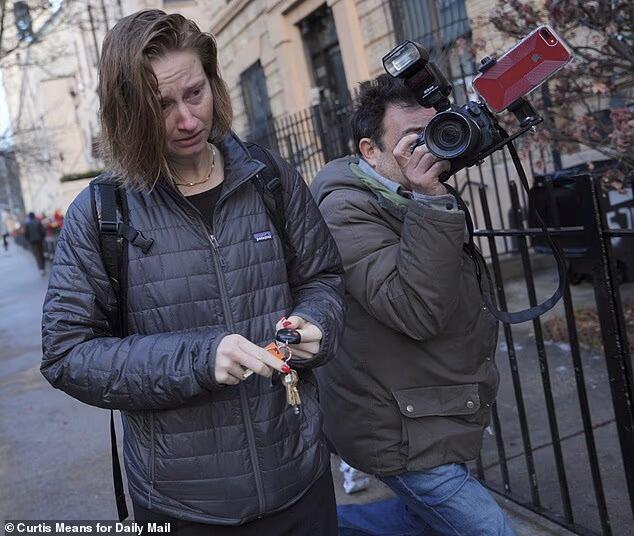
NYC Mayor Zohran Mamdani’s newly installed tenant advocate, Cea Weaver – a limousine liberal (socialist), popped out of her apartment in Crown Heights, Brooklyn Wednesday (a historically black neighborhood until people like Weaver priced out longtime residents) – only to start crying and run back inside when reporters asked her about her mother’s $1.6 million home in Nashville, Tennessee.
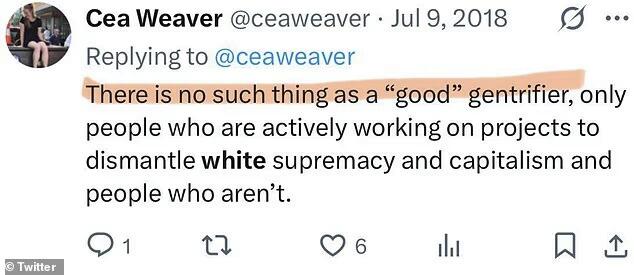
Weaver came under fire on Monday after resurfaced tweets on her now-deleted X account called for the government to “seize private property,” and called home ownership a “weapon of white supremacy.”
In December, she pushed to “Elect more communists” while a street in Harlem was being renamed after former communist Rep. Vito Marchantonio of Manhattan.
And in May of 2020 she slammed law enforcement following the death of George Floyd, writing “The Police Are Just People The State Sanctions To Murder W[ith] Immunity.”
The 37-year-old weaver began running down the street after seeing a Daily Mail reporter outside her home, only to say “no” when asked if she wanted to comment on her professor mother Celia Appleton’s ownership of the pricey property in Nashville.
Weaver – apparently walking towards a nearby subway station – reversed course and ran inside her home, which has a ‘Free Palestine’ poster taped to one of its windows, the Mail reports.
In a press conference on Tuesday, New York City Mayor Zohran Mamdani said he stood by Weaver, but his team is understood to have been caught by surprise by her anti-white tweets.
Weaver deleted her X account after her old posts were unearthed by anti-woke campaigner Michelle Tandler.
She attempted to distance herself from them yesterday in a statement that said: ‘Regretful comments from years ago do not change what has always been clear – my commitment to making housing affordable and equitable for New York’s renters.’ -Daily Mail
Yes, we’re sure she’s totally changed her mind…
Tyler Durden
Wed, 01/07/2026 – 16:50
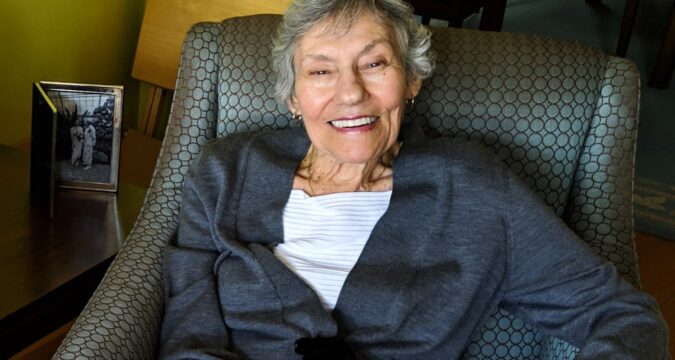
Nancy Cirillo, UIC scholar on fascism and Atlantic slave trade, dies at 93
For more than a half-century, Nancy Cirillo taught English and was a scholar at the University of Illinois Chicago.
An expert on Caribbean studies and post-colonial literature, Cirillo loved teaching, mentoring and championing her students, colleagues said. She also devoted considerable scholarship to charting the impact on literature and music by the rise of fascism across Europe in the mid-20th century; her work also explored the economic effects of slavery.
“As a teacher, she was incredibly available and giving, and the classroom situation was always informative,” said Mani Pillai of Chicago, who took an honors literature class from Cirillo in 1978. “What I remember most was the breadth of knowledge that she had and that she shared with us. It was clear that she loved literature, and it was so clear that she was excited about sharing that; and more than that, she listened to us and valued every opinion and comment that (her students) had.”
Cirillo, 93, died of natural causes Dec. 2 while in hospice care at an assisted living facility in the Nashville, Tennessee, area near her daughter’s home, said her daughter, Dia. Cirillo previously had been a resident of the Lincoln Park, Lakeview and Avondale neighborhoods on Chicago’s North Side.
Born Nancy Rockmore in Amityville, New York, in 1932, Cirillo grew up in a Jewish family that lived in Massapequa, New York, and then moved to nearby Freeport. She graduated from Baldwin High School in Baldwin, New York.
Cirillo studied for two years at Alfred University in western New York before transferring to the University of Chicago, where she got an English literature degree in 1954. While at the U. of C., Cirillo became friends with classmate Eva Richter. After college, Cirillo and Richter both took teaching positions at the University of Nebraska, and the two later taught together for a short time at Rutgers University in New Jersey.
“What I remember is just the most overwhelming emotional generosity and warmth,” Richter said. “She treated everybody as though they were an individual. It was terribly important to her, and if anyone ever came to her with a problem, she tried to solve it in a very personal way. I also remember her dedication to her teaching and her commitment to the intellectual life and to the issues that she found really important — and paramount among them, obviously, were fascism and slavery.”
After teaching at the University of Nebraska, Cirillo began pursuing a doctoral degree in comparative language at New York University. Her dissertation examined how the rise of fascism in France, Germany and Italy showed up in literature and music. She got a Ph.D. in 1968.
Cirillo also taught at Hunter College in New York, and conducted some research in Europe, her daughter said. In 1964, the University of Illinois hired Cirillo as an English professor at its Navy Pier campus. She remained with the university as it opened its Near West Side campus in 1965, and she was awarded tenure in 1969.
While teaching at UIC, Cirillo focused her research on post-colonial studies, the literature of Caribbean independence from colonial nations, the institution of slavery and how slavery shaped Caribbean nations, the United Kingdom and the U.S.
She taught courses on Caribbean studies, the rise of fascism and 19th and 20th century Western European history and literature.
Cirillo also worked for a time as an administrator, overseeing undergraduate studies in UIC’s English department.
One major contribution that Cirillo made to UIC’s library was to work with a publisher in Jamaica to purchase the H.D. Carberry Collection of Caribbean Studies — about 1,000 works of literature, history and political theory, including the first published works from Nobel laureates Derek Walcott and V.S. Naipaul. Working with the special collections department, Cirillo curated a 2012 exhibit at UIC’s library called “Commerce in Human Souls: The Legacy of The Atlantic Slave Trade.”
Kellee Warren, a UIC associate professor and special collections librarian, came to know Cirillo while Warren was an undergraduate at UIC. She assisted Cirillo with the 2012 exhibit. Warren joined UIC’s library staff in 2016, and Cirillo became her colleague.
“She really respected you as a junior intellectual, no matter the age or the sort of academic level a student was at,” Warren said.
Herbert Nuwagaba, a structural engineer in Colorado who got a degree in engineering from the Massachusetts Institute of Technology, took a course on the Atlantic slave trade from Cirillo in 2015, shortly after he returned to the U.S. after having lived in Uganda for 11 years. He recalled Cirillo’s keen interest in his background and perspective, and her efforts to help him stay in school with financial support and employment on campus.
“She created a space where I was able to find my voice, and over time I was able to become more confident and engaged in the class,” he said. “But her generosity extended far beyond the classroom. That November, I was alone here in Chicago with no family here, and she invited me to her home to celebrate Thanksgiving with her and her friends. It was really an act of kindness because I was all alone.”
Cirillo was honored three times with the Silver Circle, a university teaching award, in 1974, 1999 and 2003.
At age 73, Cirillo retired from UIC in 2005 as an associate professor with emerita status. However, for another 13 years, she continued teaching an undergraduate class, Readings in Slavery, until finally ceasing teaching at age 86 in 2018.
During retirement, Cirillo enjoyed reading, keeping up with colleagues and spending time with her daughter and granddaughter, her daughter said.
A marriage to Carl Cirillo ended in divorce. In addition to her daughter, Cirillo is survived by a granddaughter and three nieces.
A remembrance event will be held in the spring.
Goldsborough is a freelance reporter.
https://www.chicagotribune.com/2026/01/07/nancy-cirillo-uic-obituary/

Feds’ statements after Minneapolis driver killed by ICE officer echo pattern from Midway Blitz in Chicago
The U.S. Department of Homeland Security said the federal immigration agent who killed a woman in Minneapolis Wednesday had been “fearing for his life, the lives of his fellow law enforcement and the safety of the public” when he shot the woman.
Local and state officials immediately cast doubt on the DHS narrative, based on bystander videos of the shooting. The debate recalls claims from DHS in the aftermath of two federal agent-involved shootings that took place during the 64-day “Operation Midway Blitz” that rocked Chicago and its suburbs for much of the fall and early winter.
In both cases, the feds alleged that the agents who fired on Marimar Martinez and Silverio Villegas-Gonzalez had been acting in self-defense. And in both cases, video footage and discovery materials later poked holes in officials’ claims about agents’ justification for lethal force.
On Wednesday, DHS said the shooting victim in Minneapolis had been trying to run over agents with her car. DHS made nearly identical allegations about Martinez, a 30-year-old teacher’s assistant shot on Oct. 4 by a Border Patrol agent in Brighton Park.
At the time of the shooting, DHS called Martinez a “domestic terrorist” who used her car as a weapon against agents. On Wednesday, DHS said the woman killed in Minneapolis had “weaponized her vehicle” in “an act of domestic terrorism.”
In late November, a federal judge dismissed charges against Martinez in one of the highest-profile criminal cases against protesters to disintegrate at the Dirksen U.S. Courthouse.
“Today’s tragic shooting was all too predictable based on the reckless conduct we have seen ICE officers exhibit in Chicago, Minneapolis and across the country,” Martinez said in a statement Wednesday released through her attorney, Christopher Parente.
Parente, a former federal prosecutor, said the Minneapolis shooting showed that “this is going to keep happening” as federal forces used to working at the border fan out into American cities.
While his client had survived, he said, in Minneapolis, the situation “ended much more tragically.”
“Unfortunately I think this is the beginning and not the end of these kinds of events,” he said.
“Minneapolis is the next city, as this keeps going across the country,” he said. “These agents aren’t trained for this.”
Unlike the Minneapolis incident, the shooting of Martinez was not caught on any bystander or surveillance video.
One of the agents in the back seat of the car was wearing a body camera that captured a portion of what led up to Martinez’s shooting, however U.S. District Judge Georgia Alexakis last month refused requests by the Tribune and other media outlets to make the video public.
In the Villegas-Gonzalez shooting, agents shot and killed the a 38-year-old Mexican citizen and single father during a Sept. 12 traffic stop. Officials alleged that Villegas-Gonzalez was fleeing from Immigration and Customs Enforcement in west suburban Franklin Park and had “refused to follow law enforcement commands and drove his car” at officers, striking one of the ICE agents and dragging him “a significant distance.”
“Fearing for his life, the officer discharged his firearm and struck the subject,” the statement continued.
But body-worn camera footage from the Franklin Park Police Department shows that the agents, one of whom was originally described as critically injured, described their bloody hands and knees to responding police officers as “nothing major” just minutes after the shooting.
U.S. Rep. Robin Kelly referenced Villegas-Gonzalez’ death in a statement in which she “urge(d) the truth to come to light.”
“The city of Chicago knows all too well that DHS Secretary Kristi Noem only lies,” said Kelly, a Chicago Democrat running to succeed retiring U.S. Sen. Dick Durbin. “The Minneapolis Mayor has already said that video disputes Secretary Noem’s claims.”
Minneapolis Mayor Jacob Frey told reporters Wednesday that federal claims of self-defense against the woman were untrue.
Having seen the video myself, I wanna tell everybody directly, that is bull—-,” Frey said.
U.S. Rep. Raja Krishnamoorthi, also a primary candidate in the race to replace Durbin, condemned the shooting as “a senseless tragedy” and said he planned to demand “full answers” from Trump administration officials, who have made crackdowns on immigrants living in the U.S. without legal status a centerpiece of the president’s second term.
“This is Donald Trump’s America: a woman is dead because ICE is operating with impunity in our neighborhoods,” Krishnamoorthi’s statement read. “When federal agents are unleashed without restraint or oversight, the consequences are deadly—and the responsibility for this killing is on their hands.”
As news of the shooting made its way across the country, Chicago area activists who spent much of the fall organizing against the federal immigration enforcement surge announced actions at the Little Village Arch — which saw a number of high profile confrontations between neighbors and federal agents throughout the blitz — and in west suburban Oak Park.
“As I’ve said time and time again, the Trump Administration’s militarized immigration raids are dangerous political theater meant to spread fear and advance an anti-immigrant agenda,” Durbin said in a statement. “This loss of life is tragic, heartbreaking, and enraging, but I encourage all protestors to remain peaceful.”
Durbin called for a “full investigation.”
“Video of the incident starkly contradicts DHS’s narrative, and the fact that DHS has jumped to characterize this shooting in ‘self-defense’ is rushed, at best, and a lie, at worst,” he said. “In a November hearing challenging the treatment of press and protestors by federal immigration agents, U.S. District Judge Sara Ellis said that their ‘use of force shocks the conscience’ and ‘this conduct shows no sign of stopping.’ And now their use of force has led to another shooting and another death. This must come to an end.”
Chicago Tribune’s Jason Meisner contributed.

Lake County Sheriff warns of court and jail-related scams
Lake County Sheriff Oscar Martinez issued a news release Wednesday warning people not to fall for court or jail-related scams.
He said that the Sheriff’s department had “received information” since September on a “dozen cases” where “criminals have attempted to prey on people by using the names of real police officers to make the calls seem legitimate.”
Citing specific examples, Martinez wrote one man hopped on an online meeting where a “virtual” scammer demanded more than $3,100.
In another instance, someone got a text message with a QR code linked to a fake “Lake County Sheriff’s Official Bond Identification” website.
“The scammers are pushing victims to use any platform to transfer funds including Apple Pay, Cash App and bitcoin digital currency machines,” he wrote. “The Lake County Sheriff’s Department will never call and demand money to help you clear your name, avoid arrest or to bond someone out of jail.”
A department spokeswoman was not immediately available for comment on whether anyone will be charged in these cases.
On Monday, a state audit accused Martinez of improperly spending nearly $300,000, mostly from jail commissary funds. His lawyer did not respond to a request for comment.
A spokeswoman for U.S. Attorney Adam Mildred declined comment.
“We are reviewing the report and will take any necessary actions to fulfill our duties,” Indiana Attorney General Todd Rokita’s spokeswoman Slayde Settle said in an email.
mcolias@post-trib.com
https://www.chicagotribune.com/2026/01/07/lake-county-sheriff-warns-of-court-and-jail-related-scams/

Griffith woman avoids prison for defrauding $175,000 from Social Security
A federal judge sentenced a Griffith woman to three years probation, including eight months on house arrest on Wednesday after she pleaded guilty to defrauding $175,000 from the U.S. Social Security Administration.
Surina Curry, 43, pleaded guilty in September to Social Security fraud. She faced up to 14 months under the plea deal.
Federal prosecutors accused her of falsifying documents from 2019 to 2024 to maximize benefits she didn’t qualify for.
Yet, U.S. District Judge Gretchen Lund said early in the hearing she didn’t intend to send Curry to prison.
Defense lawyer Roxanne Mendez Johnson said Curry had legitimately qualified for Social Security since age 12 due to a disability and never had a job. But, increasingly, even as she was married, it became more difficult to support her three sons.
“She understands poverty is hard,” the lawyer said. “It was not a good enough reason.”
The case would have profound consequences – Curry is ordered to repay $175,000 and will be cut off from future benefits. She now works as a ride-share driver to support herself and gradually plans repay the government.
“It was a lesson learned for me,” Curry said in court.
It wasn’t a “one-time slip up,” Assistant U.S. Attorney Francis Sohn said, who like Mendez Johnson, asked for Curry to avoid prison. He later noted she wasn’t going to be able to defraud the agency again. Later in the hearing, he suggested granting her the ability to go to Illinois so she could make more money taking passengers to Chicago airports.
Lund issued her sentence, noting a crime of “necessity,” saying Curry, a first-time offender, was trying to support her children and pay for her home.
Court records show Curry falsely told Social Security, in 2021, that one child didn’t live there, or her husband didn’t live there and she didn’t know how to find him.
Curry provided a fake lease in 2022 when she and her husband owned the home.

Stablecoin Titan Tether Wants Gold To Be Used For Everyday Payments—Here’s How
Stablecoin Titan Tether Wants Gold To Be Used For Everyday Payments—Here’s How
Authored by André Beganski via decrypt.co,
In brief
Tether introduced the term Scudo on Tuesday to represent 1/1,000th of a troy ounce of gold.
The stablecoin issuer thinks the term could bolster gold’s use in payments.
Tether issues a gold-backed token, XAUT, and holds nearly $17 billion worth of gold.
Tether moved to establish a new unit of account for gold on Tuesday, as the stablecoin industry leader argued that transactions denominated in “Scudo” could simplify the precious metal’s use in everyday payments.
Under the stablecoin issuer’s definition, one Scudo would equate to one-thousandth of a troy ounce of gold—as well as its XAUT token, which is valued at $2.3 billion, according to CoinGecko. The token’s market cap has nearly quadrupled over the past year.
In a blog post, Tether acknowledged that demand for gold has been bolstered worldwide by “persistent inflation concerns, heightened interest-rate uncertainty, record central bank purchases, and growing demand for safe-haven assets.”
Although a lion’s share of the firm’s products are pegged to the U.S. dollar, it described those factors as an “opportunity to restore gold” to its former status: a universally accepted medium of exchange that can’t be devalued by a government’s ability to print money. The company added that its wallet developer kit can help support XAUT on virtually any device.
Tether noted that “satoshi” is already used in a similar way to Scudo, as a way to refer to the smallest unit of Bitcoin, or one hundred-millionth of a Bitcoin. One satoshi is currently worth around $0.001, while one Scudo would be worth roughly $4.48.
Tether’s term dates back to the 16th century, more than 400 years before the first version of the internet was developed. Scudo was used to describe a variety of coins in Italy, likely hammered from metal blanks. The term was derived from the Latin word for shield.
Introducing Scudo.
A new way to measure the value of gold on-chain. Scudo is a simple, intuitive unit that makes Tether Gold ( XAU₮) easier to use, track, and transact.
1 Scudo = 1/1000 of an XAU₮ (Gold Ounce), giving you a practical and accessible way to send and receive gold… pic.twitter.com/JLbhuUYTk2
— Tether Gold (@tethergold) January 6, 2026
The parallel with Tether’s logo may be coincidental, but CEO Paolo Ardoino and CFO Giancarlo Devasini were both born in Italy. Last year, Tether acquired a minority stake in football club Juventus, one of Italy’s most storied soccer clubs. An all-cash offer to buy a majority stake in the team was rejected last month.
Tether said that its introduction of Scudo does not change the fact that gold backing its XAUT tokens is “held in secure vaults.” If an individual would like to redeem their tokens, the company’s website says it can deliver gold bars to “any physical address in Switzerland.”
According to Tether’s website, XAUT is backed by 1,329 gold bars equivalent to 16.2 metric tons. The firm published its first attestation report from BDO Italia for the token last April, which did not comply with international financial reporting standards because it did not include primary disclosures and statements from the stablecoin issuer. Tether’s critics have called on the industry’s leading stablecoin issuer to receive independent audits for a decade.
In April, Ardoino said on X that XAUT was “gaining important traction in emerging markets.”
Tyler Durden
Wed, 01/07/2026 – 16:25

Lake County candidates jockey to be the first on the ballot
The race to be the first person to throw in their hat in the ring for election season was lost to many before the doors opened at 8:30 a.m. Tuesday.
Lake County Deputy Police Chief Ed Jenkins scored the top spot, using his keys to the building to roll in around 7 a.m. to file for Sheriff, Lake County Board of Elections and Registration Director Michelle Fajman said. Several other office holders, such as Lake County Assessor LaTonya Spearman and Recorder Gina Pimentel, were also among the first, but that didn’t stop people from trying, she said.
Lake County deputy chief Edward Jenkins was first in line during the first day of candidate filing as the Lake County elections office in Crown Point, Indiana on Wednesday, Jan. 7, 2026. Jenkins filed to run for Lake County sheriff. (Andy Lavalley/for the Post-Tribune)
“I unlocked the doors, and several people were like, ‘I’m going to be the first one!’ and I said, ‘Oh, I don’t think so,’ and then they walked in to see the line already there,” Fajman said.
Crowded though it may have been, the work seemed shorter in the Election Board office itself, she said, in large part because it changed the way they process the filings. It used to be that candidates would bring people to cheer them on, so Election Board workers would type in the information for them as a service so the entourages could take pictures and whatnot, Fajman said.
As they would hand them the paperwork back, Election Board workers would point out the things candidates needed to hand-initial, but there were enough times that they didn’t, and they’d get challenged as a result, Fajman said. Now, the board has the candidates fill out the paperwork themselves, and notaries are on hand to seal the deal.
“We’ve got roving notaries, so we’re good to go,” she said.
Election clerk Donna Roper looks over candidate information with election administrator Jerry Schmitt during the first day of candidate filing at the Lake County elections office in Crown Point, Indiana on Wednesday, Jan. 7, 2026. (Andy Lavalley/for the Post-Tribune)
The office also considered moving the candidate lists to a ticker TV to play on repeat but decided the boards lining the hallway to the office were the way to go in the end, Fajman said.
“Everyone’s so excited, and they love the boards,” she said. “We may still run a ticker board in the coming weeks, though.”
With a tumultuous political season expected this year, Lake County’s party chairmen feel they’re ready for anything but expect challenges. Democratic Chair Mike Repay, who’s also a County Commissioner, said the party has been doing a lot of team building and recruitment to fill positions when the person’s retiring.
“This is the opportunity for the Democratic Party to get more people to be a part of it,” he said. “The splash will be measured over the next few weeks when we see the number of people who sign up. That’s the key.”
Lake County Board of Elections and Registration director Michelle Fajman posts names outside the Lake County elections office during the first day of candidate filing in Crown Point, Indiana on Wednesday, Jan. 7, 2026. (Andy Lavalley/for the Post-Tribune)
And all the gerrymandering concerns of the last few months have been an issue for decades: for the Dems, he added.
“There are some incredible challenges for us, and I’m sure it’s going to be a slog, but overall, I think we’ll find a lot of success,” Repay said.
Republican Chair Randy Niemeyer, who filed his paperwork to run again for the Lake County Council’s 7th District as well state delegate, marveled at the process.
“(Filing Day is) always exciting,” he said. “The fact that anyone who isn’t a felon can sign up to run for office makes us the greatest country in the world.”
Maria Garcia Trajkovich, right, hugs her mother Valerie Hernandez after declaring her intention to run for Lake County sheriff during the first day of candidate filing at the Lake County elections office in Crown Point, Indiana on Wednesday, Jan. 7, 2026. Trajkovich currently works in the Lake County sheriff’s department. (Andy Lavalley/for the Post-Tribune)
Niemeyer expects the Republicans to have a better ballot than last time with qualified candidates, but so far, it’s not quite a full slate. He attributed that to potential candidates’ reticence to run.
“In today’s political environment, the main concern is social media and the attacks that people level. I have a pretty thick skin, so it doesn’t bother me, but I get it,” he said. “We should be able to be of a different political philosophy and still be able to shake hands.”
Mary Joan Dixon, who is a Cedar Lake town council member, came in to file for precinct committee person. At this point, it’s “second nature” to her.
“I know the people,” she said. “I would appreciate it if the Republican (poll) workers would show up, though.”
Paul Aguilera, of Hammond, filed for the second time to run as a Democratic state delegate.
“The role’s really important for the health of the local party,” he said. “A lot of people don’t even know that it exists.”
Anyone thinking about running in the May 5th primary has until noon February 6 to turn in their paperwork to the Lake County Board of Elections and Registration, 2293 N. Main St., Crown Point. The office is open from 8:30 a.m. to 4:30 p.m.
Michelle L. Quinn is a freelance reporter for the Post-Tribune.

Daughter of woman killed in New Year’s Eve Riverdale crash grateful for arrest, but says loss is still ‘too heavy’
A suspect was arrested in the death of 72-year-old Harriett Reynolds, who was killed on New Year’s Eve in a crash initially reported as a hit-and-run, the Riverdale Police Department said.
“I was hoping I was going to feel better,” said Consuela Vernor, Reynolds’ daughter. “I have no words for this whole situation. It’s a relief that the person did turn himself in, it is a relief. That doesn’t bring my mother back, though.”
Police declined to identify the suspect or to speak on potential charges to the Daily Southtown.
“I hope they charge him to the fullest, and I hope he spends the rest of his life in jail,” Vernor said. “And I hope they do not release him on bail.”
Vernor said she was told that the suspect would be charged with driving with a revoked license causing death, along with obstructing justice and tampering with evidence. Charges had not yet appeared in the Cook County court computer as of midday Wednesday.
“I really do appreciate the hard work they did, the Riverdale Police Department,” Vernor said. “I thank God for the justice that’s being served. Whatever happens, I know I just have to leave it in God’s hands. I don’t have the strength to deal with it. This loss is too heavy on my heart.”
Reynolds was struck outside an HP gas station on East 146th Street in Riverdale. She walked there from the nearby senior housing complex, Our Savior’s Senior Housing, where she lived.
The thought of her last moments haunts Vernor.
“I can’t sleep. I can’t stop moving,” Vernor said. “It’s terrible what happened to my mom, and I have to think about the last thoughts of my mom, being ran over like that.”
Vernor said police told her following the accident, the driver remained on the scene, moved the body and lied about what had happened, creating the narrative that the crash had been a hit-and-run.
“It’s not fair that he gets to walk and breathe, and maybe get out of jail, and live his life,” Vernor said.
Vernor created a Gofundme to raise funeral expenses for her mother, who did not have life insurance. Services are planned for Jan. 17, she said.
“This is just a very tragic thing that happened to our family, and we will never be the same,” Vernor said. “My momma was really loved in the community. Everyone loved my mother.”
Vernor plans on attending every hearing and court date, she said.
“My mother probably is resting well now. She probably was following that man around,” Vernor said. “So now I hope that she can rest. But for me, the fight has just begun.”
In addition to justice for her mother’s death, Vernor said she wants to see the road between the senior home and the gas station where she was struck made safer, so that similar tragedies can be avoided.
“It’s no yellow caution signs on that block at all,” Vernor said. “It’s a senior building with a hundred people over there.”
elewis@chicagotribune.com
https://www.chicagotribune.com/2026/01/07/daughter-new-years-eve-riverdale-fatal-crash/

Republicans line up in Porter County as filing for primaries opens
With nary a Democrat in sight, Porter County Republicans dominated the first hour of candidate filing for the 2026 primary elections Wednesday morning at the Porter County Election & Registration Office.
Filing opened with office hours at 8:30 a.m. and will continue until noon on Feb. 6. Porter County Recorder Chuck Harris was first in line to file for a run to become the next Center Township Trustee. He’s termed out as recorder in his second consecutive term and also served as coroner for two terms from 2010 to 2018.
“I’ve been first in line every time I’ve run,” he said. “It’s just tradition for me. I want people to know I’m in it to win it.”
His dad Stephen Harris, of Chesterton, accompanied him and the two were hitting the road after the papers were completed. “We’re going on a little trip after today to spend some time together,” Chuck Harris said.
Behind him in line was Chief Deputy Porter County Recorder Jon Miller, who is running to replace Harris as recorder. Miller served two prior terms in that office at the same time Harris was coroner. State law allows a person to serve eight years in a 12-year period.
Porter County Treasurer Jimmy Albarran was next in line. “I only filed for a delegate today and I knew these guys would be here, and I wanted to be here for support,” he said.
Porter County Director of Elections & Registration Sundae Schoon, right, assists Porter County Recorder Chuck Harris, center, in filing paperwork for his candidacy for Center Township Trustee as Chief Deputy Recorder Jon Miller waits his turn to file to replace Harris Wednesday, Jan. 7, 2026. (Shelley Jones/for Post-Tribune)
Porter County Council Vice President Red Stone, R-1st, said his wife couldn’t believe he was up for reelection again; the past three years went by so quickly. He said he’ll approach his reelection campaign with a light hand like last time. “I just went out there and talked to people,” he recalled. “People are sick of politicians in general. I try not to go out there and push people.”
In her second attempt at a seat on the county council, Dawn Miller, who filed to run for the District 3 seat currently held by Democrat Greg Simms, is planning to try harder this time. She ran unsuccessfully for an at-large seat in 2024. “It’s more my area,” she said of District 3, which encompasses the city of Valparaiso. “Instead of at-large, it’s where I live, where I’m already a precinct committeeman.
“I’ve decided to get more people on board, more on the committee,” Miller added.
“That’s why she has me here,” said Steve Bensig, president of the Duneland Photography Club, who was on hand to photograph Miller. Bensig also applied to run for state delegate Wednesday morning.
Jackie Haney, Porter County Chief Finance Deputy in the Clerk’s Office, was on hand to run for the seat held by County Clerk Jessica Bailey, who will term out at the end of her second term this year. Haney’s husband Stephen joined her as she completed her filing.
“Midterms, that’s when you see the swings happen,” said Tara Graf, Porter County’s assistant director of elections & registration.
Elections & Registration Director Sundae Schoon reminded candidates and office holders that annual finance reports are due Jan. 21 from all candidates with an open committee, including exploratory committees.
“A lot of them, they’ll close their bank account and think that closes their committee. It does not. You still have to come here,” she said.
County offices up for election are the clerk, auditor, recorder, sheriff, prosecutor, coroner, assessor, District 2 Commissioner, and County Council Districts 1 through 4. All 12 townships are also holding trustee and board elections. The town of Kouts is holding elections for District 2 and 4 seats on the Town Council, and Ogden Dunes is holding elections for town clerk and Council Districts 1 and 5.
School board elections aren’t until the general election in November.
Shelley Jones is a freelance reporter for the Post-Tribune.

Pulitzer-winning Pittsburgh Post-Gazette to shut down in May
The Pittsburgh Post-Gazette newspaper will shut down later this year, with a final edition slated for May 3.
Post-Gazette owners Block Communications, a family-owned multi-media company based in Toledo, Ohio, cited financial losses as the reason behind the decision to cease operations.
Block claims to have lost more than $350 million in two decades and “continued cash losses at this scale [are] no longer sustainable.”
“The Block family said it deeply regretted how the decision will affect Pittsburgh and the surrounding region. The Block family said it was proud of the service the Post-Gazette has provided to Pittsburgh for nearly a century,” reads a statement.
Cars are parked near the building where the offices of the Pittsburgh Post-Gazette on Thursday, Feb. 14, 2019, in Pittsburgh. (AP Photo/Keith Srakocic)
A recent court decision that found in favor of the paper’s union, which ordered the Post-Gazette to operate under a 2014 labor contract, also played a factor in the decision. The November 2024 decision followed a three-year strike by union members.
“Recent court decisions would require the Post-Gazette to operate under a 2014 labor contract that imposes on the Post-Gazette outdated and inflexible operational practices unsuited for today’s local journalism,” according to the news release.
Block Communications also owns Pittsburgh City Paper, which was shuttered and published its last issue on New Year’s Eve after 34 years in business as an alt-weekly in the Steel City.
The Pittsburgh Post-Gazette has operated in some form since 1786. The newsroom won a Pulitzer Prize in 2019 for breaking news reporting for its coverage of the deadly 2018 Tree of Life synagogue shooting in Squirrel Hill, Pa.
https://www.chicagotribune.com/2026/01/07/pittsburgh-post-gazette-shutting-down/