Category: News

Today in History: Japan apologizes for forcing Korean women to serve as ‘comfort women’
Today is Tuesday, Jan. 13, the 13th day of 2026. There are 352 days left in the year.
Today in history:
On Jan. 13, 1992, Japan apologized for forcing tens of thousands of Korean women to serve as sex slaves for its soldiers during World War II, citing newly uncovered documents that showed the Japanese army had a role in abducting the so-called “comfort women.”
Also on this date:
In 1733, James Oglethorpe and some 120 English colonists arrived at Charleston, South Carolina, while en route to settle in present-day Georgia.
In 1794, President George Washington approved a measure adding two stars and two stripes to the American flag, following the admission of Vermont and Kentucky to the Union. (The number of stripes was later reduced to the original 13.)
In 1941, a law took effect affirming that those born in Puerto Rico are granted U.S. birthright citizenship.
In 1979, singer Donny Hathaway died in a fall from a hotel window in New York. He was 34. Hathaway was known for his duets with Roberta Flack and the holiday song “This Christmas.”
In 1982, an Air Florida Boeing 737 crashed into Washington, D.C.’s 14th Street Bridge and plunged into the Potomac River shortly after takeoff from Washington National Airport during a snowstorm, killing 78 people, including four motorists on the bridge; four passengers and a flight attendant survived.
In 1990, L. Douglas Wilder of Virginia became the nation’s first elected Black governor as he took the oath of office in Richmond, the state’s capital.
In 2012, the Italian cruise ship Costa Concordia slammed into a reef and capsized in shallow water while maneuvering off the coast of Italy, killing 32 of the 4,200 people aboard.
Related Articles
Today in Chicago History: For the second time, Michael Jordan retires from the Bulls
Today in History: New York Jets win Super Bowl III
Today in Chicago History: BLIZZARD …
Chicago Bears and Green Bay Packers have played 213 times in the past 100 years: How the rivalry has unfolded
Today in History: Mark McGwire admits that he used steroids
In 2021, President Donald Trump was impeached by the U.S. House over the violent Jan. 6 siege of the Capitol, becoming the only president twice impeached; 10 Republicans joined Democrats in voting to impeach Trump on a charge of “incitement of insurrection.” (Trump would again be acquitted by the Senate in a vote after his term was over.)
Today’s birthdays: Golf Hall of Famer Mark O’Meara is 69. Actor Julia Louis-Dreyfus is 65. Country singer Trace Adkins is 64. Actor Patrick Dempsey is 60. TV producer-writer Shonda Rhimes is 56. Actor Orlando Bloom is 49. Actor Liam Hemsworth is 36. Actor Natalia Dyer is 31. NHL center Connor McDavid is 29.

Today in Chicago History: For the second time, Michael Jordan retires from the Bulls
Here’s a look back at what happened in the Chicago area on Jan. 13, according to the Tribune’s archives.
Is an important event missing from this date? Email us.
Front page flashback: Jan. 14, 1999
“I’m here to announce my retirement from the game of basketball,” Michael Jordan told a packed house at the United Center in Chicago on Jan. 13, 1999. (Chicago Tribune)
Weather records (from the National Weather Service, Chicago)
High temperature: 58 degrees (1932)
Low temperature: Minus 9 degrees (1929)
Precipitation: 1.37 inches (1950)
Snowfall: 16.5 inches (1979)
Chicago Bulls great Michael Jordan and his wife Juanita, meet with the press to announce his retirement from basketball on Jan. 13, 1999, at the United Center in Chicago. (Nuccio DiNuzzo/Chicago Tribune)
1999: “It’s not really 100 percent,” Michael Jordan said, “but it’s close. That’s where I stand. I’m not going to say never. But I will say 99.9.” Jordan retired from the Chicago Bulls for the second time.
Jordan, who first retired in 1993 after the Bulls won the third of their six championships, said this was as good a time as any to hang up the Air Jordans. Over a storybook career he won six championship rings and 10 scoring titles while earning five Most Valuable Player awards and six NBA Finals MVP trophies.
In addition to being remembered as perhaps the greatest player in the history of the game, Jordan sealed his reputation as the pre-eminent clutch performer by hitting the game-winning basket with 5.2 seconds remaining to give the Bulls their sixth title with an 87-86 victory over the Utah Jazz in Game 6 of the previous season’s NBA Finals.
Vintage Chicago Tribune: Michael Jordan — 23 stories about No. 23
As he did when Jordan retired Oct. 6, 1993, NBA Commissioner David Stern flew to Chicago to honor Jordan, calling him one of the greatest ambassadors the game had even seen. Stern, who all but begged Jordan to play at least one more season to help repair the public relations damage caused by the labor dispute that shortened the season, thanked Jordan for a spectacular career that boosted the popularity of the league worldwide.
Bulls Chairman Jerry Reinsdorf, who presented Jordan with his 1998 championship ring and re-hoisted Jordan’s retired No. 23 jersey to the United Center rafters, said it was a sad day for the Bulls and for basketball.
‘The Last Dance’: Recaps from the 10-part documentary on the Chicago Bulls
“This is a day that I hoped would never come,” Reinsdorf said. “It has to be the toughest day in the history of the Chicago Bulls. It’s a tough day for Chicago; it’s a tough day for the NBA.”
Jordan acknowledged the decision was difficult.
Tony Martinez, of Chicago, holds a “No More Air” sign Jan. 13, 1999, at the United Center in Chicago, as Michael Jordan announced his retirement. (Chris Walker/Chicago Tribune)
“I’m doing a good job of trying to hold back the emotions because it’s like taking back something I truly have loved. I started when I was 12 years old and I’m 36 next month, so 24 years I’ve been playing the game,” he said. “It’s sad that I’m leaving the game but it’s happy that my life is starting to go into a whole new stage.
Jordan said he reached his decision over the summer, when he knew Phil Jackson wouldn’t return as Bulls coach.
‘Holy (expletive)! That’s Michael Jordan.’ A behind-the-scenes look at ‘The Last Dance’
Want more vintage Chicago?
Subscribe to the free Vintage Chicago Tribune newsletter, join our Chicagoland history Facebook group, stay current with Today in Chicago History and follow us on Instagram for more from Chicago’s past.
Have an idea for Vintage Chicago Tribune? Share it with Kori Rumore and Marianne Mather at krumore@chicagotribune.com and mmather@chicagotribune.com
https://www.chicagotribune.com/2026/01/13/january-13-chicago-history/
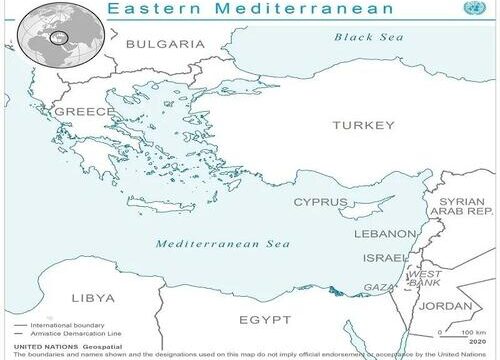
Eastern Mediterranean Geopolitics Are Becoming More Complex
Eastern Mediterranean Geopolitics Are Becoming More Complex
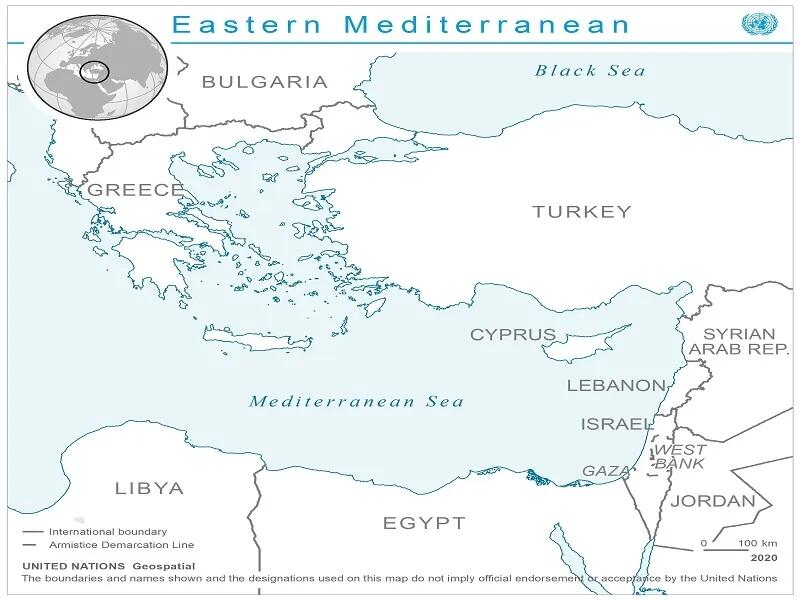
Tensions are growing between Turkiye-Pakistan and Israel-Cyprus-Greece…
Stability in the Eastern Mediterranean can no longer be taken for granted as a result of three recent developments:
1) the growing Turkish-Israeli rivalry in post-Assad Syria;
2) Israel’s reported plans to establish a rapid response force with Cyprus and Greece; and
3) Turkish ally Pakistan’s new military ties with Eastern Libya’s General Khalifa Haftar. The aforesaid are unfolding amidst Israel’s plans for an underwater EastMed gas pipeline to Greece and Turkiye’s maritime claims that cut right across its route.
The reported rapid response force could accordingly be assembled to defend the EastMed if construction on it were to begin while Pakistan might establish a military presence in Eastern Libya under the cover of training Haftar’s forces for complementing Turkiye’s in Western Libya so as to help Ankara counter this. Unaware observers should review this article here to learn more about the rapprochement between Turkiye and Haftar, previously enemies, which advances the former’s abovementioned maritime claims.
The Turkish-Pakistani Tandem (TPT) might not directly clash with Israel over the EastMed, at least not at first, since it’s much more likely that Turkiye would initially pressure it in Syria while Pakistan stirs trouble on its behalf at sea (perhaps with drones) through its potential military presence in Eastern Libya. The purpose would be to keep tensions manageable and “plausibly deniable”. That would be difficult to do if they targeted NATO member Greece, however, which could backfire by rallying the bloc around it.
For that reason, TPT would probably employ low-level and “plausibly deniable” hybrid provocations against Israel in the first stage, though Israel would be expected to call them out on this if it happens. It’s not possible to accurately forecast what might follow but it’s sufficient to predict that Israel likely wouldn’t back down since it rarely does so under military pressure. A conventional escalation might therefore be in the cards and that could in turn set the entire region aflame if it spirals out of control.
Turkiye’s interest in involving Pakistan in this dispute wouldn’t just be to diffuse responsibility for any escalation over its maritime claims but to have the support of the only Muslim nuclear power in order to deter Israel from responding in a way that risks a war between them. For its part, Pakistan would probably be happy to saber-rattle against Israel since this would play well domestically, but it understandably wouldn’t want Israel to force its hand into fighting a conventional war or backing down.
Any serious escalation between TPT and Israel would assuredly lead to an American diplomatic intervention given that all three are its close partners. Which side the US would support, however, remains unclear. While Israel is one of its most special partners, the EastMed pipeline could challenge the US’ newfound energy hegemony over the EU, so the argument can be made that it might prefer to impose a compromise whereby Israel supplies Turkiye with gas just like it’s poised to supply Egypt.
If Syria joins the Abraham Accords, then a pipeline could be built across its territory from Israel to Turkiye, while Lebanon could be involved as well if it too signs onto the accords. Even without that happening, an underwater pipeline could connect Israel’s offshore gas fields with Turkiye, which would strengthen their complex interdependence for reducing the risk of conflict.
That would be the best-case scenario from the US’ perspective for resolving Turkish-Israeli tensions in the Eastern Mediterranean.
Tyler Durden
Tue, 01/13/2026 – 05:00
https://www.zerohedge.com/geopolitical/eastern-mediterranean-geopolitics-are-becoming-more-complex

Best blood glucose test strips
Which blood glucose test strips are best?
According to the Centers for Disease Control, over 30 million Americans have diabetes and nearly 98 million have prediabetes. Measuring blood glucose levels is critical for maintaining optimal health and identifying sudden changes.
Fortunately, the technology for measuring blood glucose has greatly advanced. It has never been easier to precisely measure blood glucose with accurate results. Test strips are a critical step in the measuring process that delivers a blood sample to the meter that measures the glucose content. For exceptionally fast and accurate results, the Contour Next Blood Glucose Test Strips are the top choice.
What to know before you buy blood glucose test strips
Should I use brand-name or generic test strips?
Test strips are no different from other medications and health care products that offer off-brand alternatives. Generic test strips often cost less than brand-name test strips, but you need to make sure that they are compatible with the glucometer that you use. Many manufacturers have designed their meters to only work with their brand of blood glucose test strips. In that case, it is actually more affordable to use brand-name test strips. Check the manufacturer’s list of compatible glucometers to ensure that your test strips will be usable.
Does the amount of blood matter?
Most test strips draw between 0.3 to 0.6 microliters of blood. This is a very small amount, but it is vital that the sample covers the test strip pad for a correct reading. The size of your sample is not as important as making sure that the test strip pad is saturated.
Is there a way to ensure the test strips are accurate?
Control solution is a glucose solution available in low, medium and high levels. Apply the solution to your test strips and see if they return results that fall within the parameters of the control solution.
What to look for in quality blood glucose test strips
Reapplication window
Previously, if you did not get enough blood on the test strip, you would have to start over with a new test strip. New technology provides a window of opportunity, though — usually around one minute — to reapply more blood on days when you are struggling to draw enough blood for an adequate sample.
Drawing blood from places other than your finger
Though the fingertip is the recommended place for drawing blood with a lancet, some users develop painful sensitivities over time because of the frequent pricking at the fingertip site. Some test strips now allow you to draw blood from other places, such as your palm or abdomen. There are even some test strips that let you draw blood from anywhere on the body. Check the manufacturer’s recommendations to make sure you are following their preferred draw sites.
Coding no longer required
Many test strips now come without the need to recalibrate the meter when a new box of test strips is being used. The test strips provide the new code automatically to the meter, which saves a lot of time for the user and streamlines the process overall.
How much you can expect to spend on blood glucose test strips
For a bulk package of 100 test strips, you can expect to pay between $10-$100. The middle range test strips sell for $30-$60 and are usually more accurate and convenient. Higher-end test strips cost between $60-$100 and offer a reapplication window and typically require the least amount of blood for the sample.
Blood glucose test strips FAQ
Do test strips expire?
A. All test strips have a shelf life. The expiration date is usually printed on the box as well as the test strip protective wrapper. Always check the expiration date before using a test strip. Some users set an alarm on their phones to remind them when the expiration date is nearing.
What can cause inaccurate blood glucose readings?
A. In addition to expired test strips, blood glucose readings can also be negatively affected by a dirty glucometer and unclean hands. Always wash your hands before testing your blood glucose levels, and it is recommended to clean your glucometer according to the manufacturer’s guidelines.
What are the best blood glucose test strips to buy?
Top blood glucose test strips
Contour Next Blood Glucose Test Strips
What you need to know: These test strips from a trusted manufacturer are known for accuracy and results in just a few seconds.
What you’ll love: There is no coding technology, which streamlines the process, and the strips require a very small blood sample. Second-chance technology allows the user to add more blood if necessary instead of using a second test strip.
What you should consider: The test strips can only be used with the Contour series of blood glucose meters.
Top blood glucose test strips for the money
Prodigy No Coding Blood Glucose Test Strips
What you need to know: These test strips are very affordable compared to other brands and are compatible with Prodigy meters.
What you’ll love: Using special technology, the test strips will not register a reading until enough blood is present. This saves time and money by eliminating additional test strips. These strips work with the Prodigy AutoCode, Prodigy Pocket and Prodigy Voice meters.
What you should consider: There have been some reports of the test strips expiring before the printed expiration date. The user is limited to Prodigy meters only.
Prices listed reflect time and date of publication and are subject to change.
Check out our Daily Deals for the best products at the best prices and sign up here to receive the BestReviews weekly newsletter full of shopping inspo and sales.
BestReviews spends thousands of hours researching, analyzing and testing products to recommend the best picks for most consumers. BestReviews and its newspaper partners may earn a commission if you purchase a product through one of our links.
Distributed by Tribune Content Agency, LLC.
https://www.chicagotribune.com/2026/01/13/best-blood-glucose-test-strips/

The best wireless access point
Which wireless access point is best?
Wi-Fi has become an essential aspect of everyday life around the globe. Whether it’s doing our jobs or connecting with family and friends, it’s the backbone of everything we do. More than ever before, our lives are taking place online, meaning we all need a dependable and stable Wi-Fi setup.
Your wireless access point works as a secondary broadcast location that allows you to get more of the network for your devices so that you’re able to stay online. Adding a wireless access point can boost your Wi-Fi signal and make working from home considerably easier.
What to know before buying a wireless access point
Wireless access points (known as WAPs) work with your wireless router, extending its reach and speed. It connects to a wireless network through a wired Ethernet connection or a wireless setup. These systems are ideal for buildings where you need to improve your Wi-Fi coverage to multiple areas. You can scale the speech and reach of your Wi-Fi network by adding additional WAPs to your setup. If you have a Wi-Fi “dead spot“ in your home or building, a WAP could be an ideal solution.
It’s all about location
One thing you want to consider before purchasing a wireless access point is the location in which you want to set it up. Most WAPs are designed to be placed in one of three locations in your building.
Ceilings and wall-mounted WAPs are usually the size of a smoke detector and can provide coverage for an entire room. You’ll need to be able to provide the WAP with both power and a wired internet connection.
You can set a stand-alone WAP on any surface, making it look like your average wireless router. This setup gives you more flexibility and allows you to move the WAP around as needed.
Outdoor WAPs are designed to withstand changing weather conditions and are ideal for when you need to provide Wi-Fi outside your building, for example, in a patio or garden area.
Features to look for in a wireless access point
Range
You want to consider the range that you need for your WAP. If you have a small dead space in your home, you likely won’t need to worry about the range. If you’re looking for a WAP for a commercial property, you will want to make sure you choose a WAP that covers the range you need. Your average WAP can provide coverage between 5,000-10,000 square feet.
WAP capacity
Every WAP will have an optimal number of users on the system at any one time. Just like the range, this will be more of a concern for commercial properties or office buildings. It’s worth double-checking the listing to make sure the WAP capacity matches your needs.
Wireless protocol standards
Before you purchase your WAP, you’ll want to double-check that the wireless protocol standards are up to date. Some WAPs only support outdated protocol standards. You want to ensure that your WAP supports the 802.11ac wireless protocol, the current fastest standard.
How much does a wireless access point cost?
There are two main price points for a wireless access point. You can expect to pay $50-$100 for a WAP for a smaller apartment or if you only need it for one room. If you’re looking for additional features like wall-mounting kits, you can expect to pay $100-$200. These models are ideal for high-traffic areas and shared office spaces.
Wireless access point FAQ
Can I use my WAP with a rented wireless router?
A. This setup will depend on the specific model of wireless router that your ISP provides. Most of them will support third-party WAPs, but it is a good idea to double-check this before purchasing a WAP.
How complicated is it to set up a WAP?
A. If you have already set up your Wi-Fi network, setting up your WAP won’t be too difficult for you. The setup will involve connecting your WAP to the network and configuring the software. A mesh networking setup may be easier if you’re not as tech-savvy, or a friend may be able to help you.
What is the best wireless access point to buy?
Top wireless access point
What you need to know: This WAP has an easy setup process, making it ideal for those who aren’t tech-savvy.
What you’ll love: This Ethernet-based WAP is a reliable source for any residential building. It includes an Ethernet cable and can be easily set up through the Netgear app.
What you should consider: You’ll need to set up the Netgear app, including making an account, to establish your WAP.
Top wireless access point for the money
TP-Link AC-1200 Wi-Fi Access Point
What you need to know: This affordable WAP is flexible and ideal for use in small residential buildings.
What you’ll love: You can utilize this system as a range extender or WAP, giving you more flexibility for expanding Wi-Fi coverage across your home. It has an impressive speed for its affordable price point.
What you should consider: It doesn’t work directly with standard PoE switches. It requires the included adapter and a separate power supply.
Worth checking out
What you need to know: This compact WAP is small but mighty, offering strong coverage for commercial areas, including hotels and shared office spaces.
What you’ll love: The beamforming tech directs your bandwidth to where you need it most. It’s easy to install with high-speed dual-band Wi-Fi. This WAP comes with a free cloud management app.
What you should consider: It may be tricky to set up if you’re not familiar with using this style of tech.
Prices listed reflect time and date of publication and are subject to change.
Check out our Daily Deals for the best products at the best prices and sign up here to receive the BestReviews weekly newsletter full of shopping inspo and sales.
BestReviews spends thousands of hours researching, analyzing and testing products to recommend the best picks for most consumers. BestReviews and its newspaper partners may earn a commission if you purchase a product through one of our links.
Distributed by Tribune Content Agency, LLC.
https://www.chicagotribune.com/2026/01/13/the-best-wireless-access-point-2/
Rusia lanza otro gran ataque contra la red eléctrica de Ucrania y mata a cuatro personas
Por JON GAMBRELL
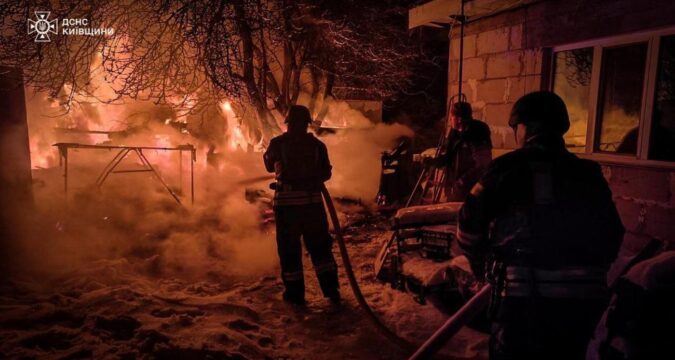
DUBÁI, Emiratos Árabes Unidos (AP) — Rusia lanzó su segundo gran bombardeo de drones y misiles sobre Ucrania en cuatro días, dijeron funcionarios el martes, en una andanada que golpeó de nuevo la red eléctrica y pareció desairar los esfuerzos de paz liderados por Estados Unidos mientras la guerra se acerca a cumplir cuatro años.
Rusia disparó casi 300 drones, 18 misiles balísticos y siete misiles de crucero en ocho regiones durante la noche, dijo el presidente ucraniano, Volodymyr Zelenskyy, en las redes sociales.
Un ataque en la región nororiental de Járkiv mató a cuatro personas en un depósito de correos y varios cientos de miles de hogares estaban sin electricidad en la región de Kiev, dijo Zelenskyy. La temperatura diurna en la capital era de -12 grados Celsius (alrededor de 10 grados Fahrenheit). Las calles estaban cubiertas de hielo y la ciudad retumbaba con el ruido de los generadores.
Cuatro días antes, Rusia también envió cientos de drones y docenas de misiles en un ataque nocturno a gran escala y, por segunda vez en la guerra, utilizó un poderoso nuevo misil hipersónico que golpeó el oeste de Ucrania en lo que parecía ser una clara advertencia a los aliados de la OTAN de Kiev de que no retrocederá.
Estados Unidos acusó el lunes a Rusia de una “peligrosa e inexplicable escalada” de los combates, cuando el gobierno de Trump trata de avanzar en las negociaciones de paz.
Tammy Bruce, embajadora adjunta de Estados Unidos ante Naciones Unidas, dijo en una reunión de emergencia del Consejo de Seguridad de la ONU que Washington deplora “el asombroso número de bajas” en el conflicto y condena los ataques intensificados de Rusia contra la energía y otra infraestructura.
Durante la guerra, Rusia ha intentado dejar a los civiles ucranianos sin calefacción y agua corriente en los meses de gélido invierno con la esperanza de desgastar la resistencia de la población a la invasión a gran escala de Moscú, que comenzó el 24 de febrero de 2022. Los funcionarios ucranianos describen la estrategia como “convertir el invierno en un arma”.
El ataque ruso también hirió a 10 personas en la región ucraniana de Járkiv, dijeron las autoridades locales.
En la ciudad sureña de Odesa, seis personas resultaron heridas en el ataque, dijo Oleh Kiper, jefe de la administración militar regional. Los ataques dañaron la infraestructura energética, un hospital, un jardín de infancia, un centro educativo y varios edificios residenciales, dijo.
Zelenskyy dijo que Ucrania cuenta con entregas más rápidas de los sistemas de defensa antiaérea acordados de Estados Unidos y Europa, así como con nuevas promesas de ayuda, para contrarrestar la última ofensiva de Rusia.
Mientras tanto, las defensas antiaéreas rusas derribaron 11 drones ucranianos durante la noche, dijo el Ministerio ruso de Defensa el martes. Siete fueron destruidos supuestamente sobre la región rusa de Rostov, donde el gobernador Yuri Slyusar confirmó un ataque en la ciudad costera de Taganrog, unos 40 kilómetros (alrededor de 24 millas) al este de la frontera ucraniana, en el último ataque de largo alcance de Kiev a instalaciones rusas relacionadas con la guerra.
El ejército ucraniano dijo que drones de producción nacional alcanzaron una instalación de fabricación de drones en Taganrog. La planta Atlant Aero lleva a cabo el diseño, fabricación y prueba de drones Molniya y componentes para vehículos aéreos no tripulados Orion, según el Estado Mayor General de las Fuerzas Armadas de Ucrania. Se reportaron explosiones y un incendio en el lugar, con daños confirmados en los edificios de producción, dijo el Estado Mayor General.
No fue posible verificar de forma independiente los reportes.
___
Katie Marie Davies contribuyó a este informe desde Manchester, Inglaterra.
___
Esta historia fue traducida del inglés por un editor de AP con la ayuda de una herramienta de inteligencia artificial generativa.

Le Pen’s Political Future Hangs In The Balance As Appeal Begins This Week
Le Pen’s Political Future Hangs In The Balance As Appeal Begins This Week
The political future of Marine Le Pen hinges on a crucial appeal in Paris this week that will determine whether she can run in the 2027 presidential election, after she was barred from public office over misusing 4 million euros of EU funds.
Marine Le Pen, pictured in Dec. 2024 at her party’s offices in the National Assembly. (via El Pais)
Le Pen, who leads France’s populist National Rally (RN) party, was sentenced to four years in prison (two suspended, two under house arrest which are on hold during her appeal) and banned from political office for five years, effectively disqualifying her from the 2027 election. She was also fined €100,000. In last March’s ruling, Le Pen and her co-defendants were convicted of using funds meant for the European Parliament to pay staff that were working for RN.
RN is the largest opposition party in France, which poses a major threat to President Emmanuel Macron in next year’s election – as the party enjoys widespread support throughout the country due to a pendulum shift back to conservative policies and anti-immigration views.
Le Pen’s appeal is scheduled to run from January 13th through February 12th, with a final ruling expected by this summer. If unsuccessful, Le Pen says her protege, 30-year-old party president Jordan Bardella, will run in her place.
US President Donald Trump and senior members of his administration have voice support for Le Pen following her conviction, who will undoubtedly use her as an example of a weaponized judicial system in Europe that seeks to unfairly block right-wing politicians who oppose immigration from taking power.
German magazine Der Spiegel claims that the Trump administration held internal discussions about sanctioning French prosecutors and judges involved in barring Le Pen, however US Under Secretary of State Sara B. Rogers denied the report as a “fake story.”
Understand that this fake story is making the rounds in France, so I thought I’d do my part to counter foreign “misinformation”: the purported leak is stale and false. https://t.co/ixAzJY06mF
— Under Secretary of State Sarah B. Rogers (@UnderSecPD) January 7, 2026
That said, Reuters notes that “over the past year, the U.S. has imposed sanctions against 11 International Criminal Court judges involved in cases against Israel.
Le Pen has accused the judiciary of politically motivated targeting, telling French TV channel TF1 at the time “In the country of human rights, judges have implemented practices that we thought were reserved for authoritarian regimes.”
Meanwhile, the European Parliament’s lawyer Patrick Maisonneuve says he hopes Le Pen and her co-defendants’ convictions would be upheld, including over 3 million in euro awarded in damages to the European Parliament. RN was also ordered to pay a 2 million fine, with half of the amount having been suspended.
Tyler Durden
Tue, 01/13/2026 – 04:15
https://www.zerohedge.com/geopolitical/le-pens-political-future-hangs-balance-appeal-begins-week

Protestas por bajos ingresos y el acuerdo UE-Mercosur llevan 350 tractores al Parlamento
Associated Press
PARÍS (AP) — Agricultores y ganaderos franceses condujeron unos 350 tractores por las avenidas adoquinadas de París hacia el Parlamento para protestar por sus bajos ingresos y un acuerdo comercial de la UE con varios países de América del Sur que temen amenace sus medios de vida.
Escoltados por la policía, los tractores complicaron el tráfico de la hora punta mientras avanzaban por los Campos Elíseos y otras avenidas de París, y luego cruzaron el río Sena para llegar a la Asamblea Nacional.
La ira de los productores en Francia y otros países europeos ha escalado debido a una serie de desafíos. Los sindicatos que lideraron las protestas del martes dijeron que exigían “acciones concretas e inmediatas” para defender la seguridad alimentaria de Francia.
La portavoz del gobierno francés, Maud Bregeon, dijo el martes en la televisora TF1 que el gobierno haría nuevos anuncios pronto para ayudar a los agricultores.
El presidente, Emmanuel Macron, y su gobierno se oponen al acuerdo comercial UE-Mercosur, pero se espera que se firme en Paraguay el sábado de todos modos porque cuenta con el apoyo de la mayoría de los otros países de la UE.
Los agricultores y ganaderos europeos han denunciado durante mucho tiempo el acuerdo comercial con las naciones del Mercosur —Brasil, Argentina, Bolivia, Paraguay y Uruguay—, argumentando que inundaría el mercado con importaciones más baratas.
___
Esta historia fue traducida del inglés por un editor de AP con la ayuda de una herramienta de inteligencia artificial generativa.
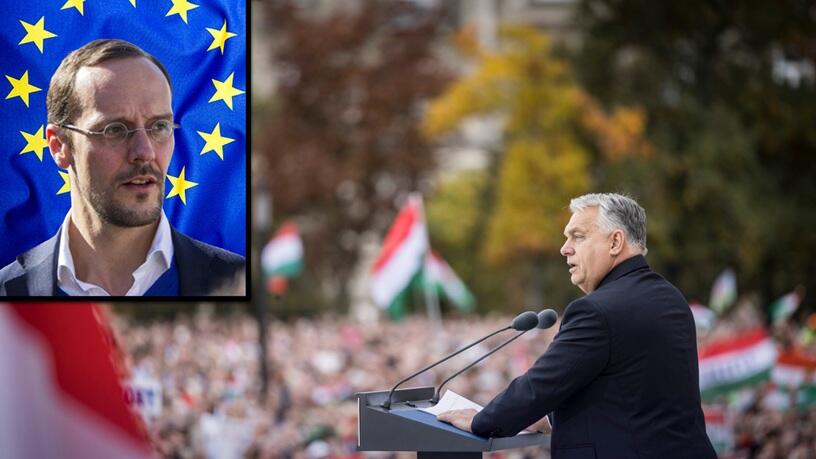
EU Official Plotted To ‘Organize Resistance’ Against Hungary’s Orban, Files Show
EU Official Plotted To ‘Organize Resistance’ Against Hungary’s Orban, Files Show
Authored by Kit Klarenberg via The GrayZone,
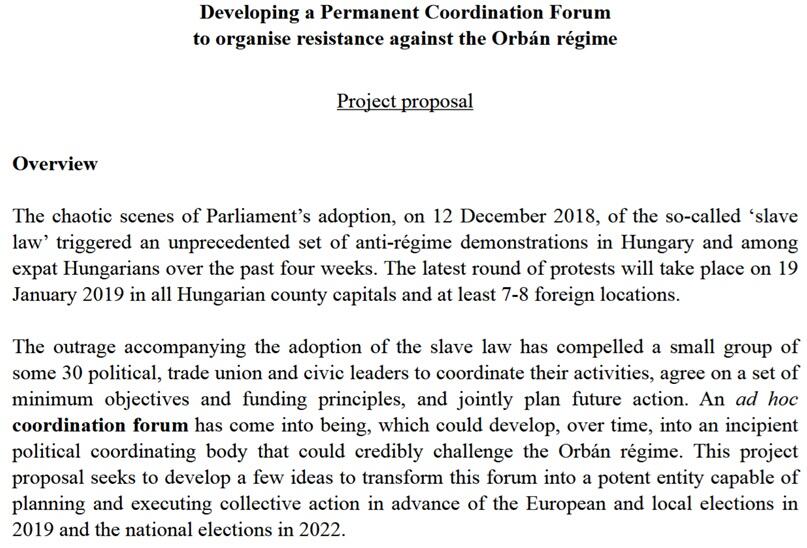
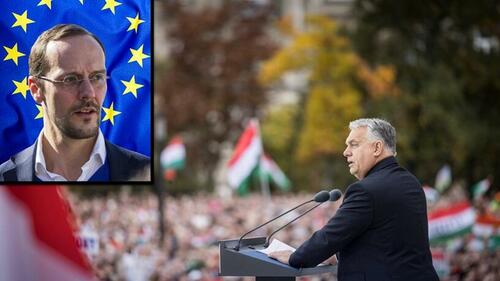
A senior European Union official has been secretly seeking to remove Hungarian President Viktor Orban since at least 2019, according to leaked documents reviewed by The Grayzone. The files show in January 2019, the EU’s International Coordinator for the Directorate-General for Migration and Home Affairs, Marton Benedek, authored a “project proposal” aimed at “developing a permanent coordination forum to organize resistance against the Orban regime.” In addition to his role at the European border control agency, Benedek currently heads Brussels’ “cooperation” with Libya.
The impetus for Benedek’s plot was “an unprecedented set of anti-regime demonstrations in Hungary and among expat Hungarians” over controversial proposed legislation allowing businesses to compel employees to work overtime, and delay payment of their wages for an extended period. Thousands took to the streets before and after its implementation.
According to Benedek, outrage over what he referred to as “the slave law” had “compelled a small group of some 30 political, trade union and civic leaders to coordinate their activities, agree on a set of minimum objectives and funding principles, and jointly plan future action.” This had given birth to “an ad hoc coordination forum… which could develop, over time, into an incipient political coordinating body that could credibly challenge” Orban’s rule.
Benedek’s proposal to harness resistance to the so-called “slave law” and bring its opponents into a single political movement was likely a reaction to the pro-sovereignty positions pursued by Orban and his Fidesz party, which has consistently sought to maintain national veto power for member states and to prevent the bloc from enlarging further, to the great chagrin of Brussels.
Participating in the “ad hoc coordination forum” were a variety of NGOs, many of which have been acccused of receiving funds from George Soros’ Open Society Foundations. OSF relocated its Hungarian office to Berlin in April 2018, due to Orban’s government undertaking numerous measures to curb the activities and influence of foreign-financed NGOs locally. OSF activities in Budapest have been a closely-guarded secret ever since. Nonetheless, the most recent available figures indicate Soros’ personal regime change operation pumped $8.9 million into Hungary in 2021 alone.
The source who obtained the files told The Grayzone that the proposal was submitted to Open Society Foundations, although they were unable to furnish proof that the Soros-led organization received the documents or signed off on them.
In the document, Benedek wrote that he hoped “to develop a few ideas to transform this forum into a potent entity capable of planning and executing collective action” ahead of elections that would be held in Hungary in 2019 and 2022. Benedek stressed the need for expansive financing to “deliver results” not least as organizing a single “large demonstration in Budapest” cost roughly $11,000. The then-ongoing demonstrations relied on crowdfunding, and Hungarian political parties – which receive state funding – to cover “gaps” in “project management.”
Among Benedek’s “proposed lines of action” was the creation of “a non-profit entity, registered in Hungary (for operational activities) and a financial vehicle potentially registered in Austria.” A board comprising political party representatives, trade unions and NGOs “could provide the political steer for future action.”
Benedek sought to maintain as broad of an anti-Orban coalition as possible, warning against “rapidly proceeding to controversial projects,” for instance uniting opposition parties to contest European elections. As these votes are “contested in a fully proportional system,” it was “quite rational” for parties “to run individual party lists.”
Instead, Benedek looked ahead to “organizing collective action” and “sustained opposition to the Orban regime” over contentious domestic political issues ahead of Hungary’s 2019 local and 2022 national elections. The operation would involve “primary campaigns, information campaigns, mobilisation campaigns, electoral debates and joint fundraising activities,” he wrote.
The senior EU functionary concluded by suggesting his proposed organization would ultimately morph into a shadow government that could seize power from the Hungarian president. “In the longer run, the proposed non-profit entity could also… develop the policy foundations (and shadow cabinet) of a united political front against the Orban regime.”
A failed test-run for toppling Orban?
By this point, Benedek had been intimately involved in anti-Orban activism in Hungary for many years, while also working in a variety of senior EU posts related to bloc enlargement and relations between aspiring member states. An official profile reveals he “led the European Commission’s visa liberalization dialogue” with the breakaway statelet of Kosovo, “oversaw rule of law reforms in the Western Balkans,” and coordinated “the EU’s internal security policies during Hungary’s EU Council Presidency” in 2011.
Benedek’s determined plotting against Orban clearly constitutes a conflict of interest. In October 2012 – the year that Orban’s disputes with Brussels significantly intensified – Benedek co-founded a party called Együtt, or Together. A progressive liberal party, it sought to forge an extremely broad political coalition in Hungary. Együtt’s explicit objective was to seize power and undo all reforms enacted by Fidesz since taking office two years prior. Its leaders urged parties of every ideological extraction to join their cause.
Read Benedek’s anti-Orban project proposal here.
Despite much initial media hype framing Együtt as Hungary’s premier opposition entity, and therefore a threat to Orban’s grip on power, the party failed miserably. Having been flatly rejected by the country’s right-wing, it formed a coalition with a quartet of green, liberal and social democratic parties. This was sufficient to elect three MPs to Budapest’s 199-seat parliament in 2014, although four years later that figure fell to just one. The lone lawmaker promptly defected to another party, and Együtt folded.
Despite the cataclysmic results, and Együtt’s chiefs being forced to pay back close to half a million dollars in state funding they received for campaigning activities due to abysmal electoral performance, Benedek was undeterred. In a 2017 interview, he branded allegations that his family had improperly profited from his mother’s senior position within the EU as a “Fidesz lie.” The fact that he was reaping a sizable salary from Brussels for sensitive, high-level work, while simultaneously playing opposition politician at home, was left unmentioned by his interviewers.
This matter should’ve been a source of significant critical interest and inquiry, however. Under formal rules, EU civil servants are supposed to be impartial and politically neutral. Officials must declare any personal or political interests that could compromise their independence, and obtain permission from superiors before engaging in external activity. One might think Benedek engaging in nakedly partisan political campaigning, both covert and overt, would be prohibited – unless of course it was signed off upon at the bloc’s highest levels.
In the leaked 2019 “project proposal,” Benedek boasted that “an online community that yours truly set up” was part of the anti-Orban “coordination forum.” That group, “Hazajöttünk túlórázni” (“We came home for overtime”), had attracted the interest of thousands of Hungarian emigres, which were drawn together when it “organised demonstrations against the Orban regime in 35 cities in Europe, North America, Asia and Australia.” How these actions were funded, and whether the EU played any role in bankrolling them, remains unclear.
While Együtt’s crusade to dislodge Orban crashed and burned, the experience offered clear lessons for future contenders. The first of these was that Hungarians are overwhelmingly right-wing, dooming virtually any explicitly progressive, liberal movement to failure. Second, and equally important, as Benedek noted in his “project proposal,” was that European parliament votes are conducted under proportional representation, making it much easier for smaller parties to break through in Brussels than in national elections. Recent political developments suggest Együtt’s contemporaries learned from their efforts, and adapted accordingly.
EU ‘resistance’ ambitions fulfilled by Tisza?
In March 2024, a little-known figure named Peter Magyar exploded onto Budapest’s political scene when he released secret recordings of his ex-wife, former Justice Minister Judit Varga, revealing that senior government figures attempted to sabotage the prosecution of a state official for corruption. Varga had resigned the previous month along with Hungarian President Katalin Novak, for signing off on the pardon of the deputy director of an orphanage who was implicated in covering up pedophilia.
Ever since, Varga has repeatedly claimed Magyar was physically abusive, and that she made the incriminating statements under duress. She has variously alleged Magyar locked her in a room without her consent, violently shoved her into a door while she was pregnant, and stormed around their shared residence menacing her with a knife. In April 2024, a police report was released exposing how Magyar attempted to forcibly seize custody of the pair’s children, while making a variety of threats to Varga. He denies the report’s authenticity.
These revelations have fallen almost entirely on deaf ears, however, while Magyar’s star has grown inexorably. Magyar became chief of the Tisza (Respect and Freedom) party almost overnight, and was immediately bestowed the title of “opposition leader” by mainstream media. While founded in 2020, Tisza had not previously competed in any elections or ever publicly campaigned. However, in the June 2024 European parliament election, Tisza garnered almost 30% of the vote, and seven seats. Today, the party enjoys a significant lead over Orban’s Fidesz in many national opinion polls.
From the very inception of Magyar’s stratospheric ascent, his political activities have been of intense interest to Western news outlets, with protests he routinely leads generating saturation coverage. At no point have obvious questions been asked as to whether Magyar’s abrupt emergence as Hungary’s leader-in-waiting was an organic phenomenon, or how his activities have been funded. Despite repeated promises, Magyar has yet to provide the public with any detailed financial statements. Instead, he claims Tisza relies on “micro-donations” from average citizens, and the largesse of popular local anti-government actor Ervin Nagy.
Immediately after Magyar assumed leadership over Tisza, he barnstormed through towns and villages across the country. The spectacular campaign often saw him addressing crowds from large stages featuring concert-ready audio equipment, along with videographers and professional security. Magyar has also been supported by highly sophisticated PR and social media efforts, as well as a liberal-leaning local mainstream media ecosystem which seems increasingly desperate to market him to right-wing voters.
In 2024, Hungarian academic Zsolt Enyedi published a typical profile of Magyar’s party, marvelling at Tisza’s “meteoric” and “unprecedented” rise, while acknowledging that its “ideological profile” is “amorphous” – which is quite an understatement.
Though he claims to be conservative, Magyar’s positions on many issues are unclear. For example, he has visited Ukraine and branded Moscow the proxy war’s “aggressor,” while Tisza has voted for European Parliament resolutions calling for more weapons for Kiev. The party’s representatives performatively donned Ukrainian flag t-shirts as they cheered Volodymyr Zelensky’s November 2024 address to the chamber.
Magyar has also promised to adopt the EU’s ban on Russian energy imports, a position opposed by the overwhelming majority of Hungarians. Adding to the confusion, Tisza supports the government’s refusal to send weapons to Kiev, as well as Ukraine’s EU accession. Magyar has admitted he avoids taking concrete positions on Ukraine, as the topic is “divisive” among domestic constituents. Pointed questions about his penchant for flip-flopping have prompted Tisza’s leader to storm out of live TV interviews.
Hungary on the verge of EU subjugation?
Nonetheless, one policy area in which Magyar is consistent, unequivocal, and in stark opposition to Fidesz, is the EU. Defining himself as avidly pro-European, he supports adoption of the Euro, as well as greater EU integration and federalism. If he comes to power, Budapest will no longer be an irritant to Brussels’ designs. It is likely to back the Ukrainian proxy war “for as long as it takes,” as EU chief Ursula von der Leyen has repeatedly pledged, and to eliminate the remaining vestiges of sovereignty from the bloc’s members.
Since late 2022, the EU has withheld billions of euros from Hungary due to “rule of law concerns.” Accessing these vast sums would require Fidesz to undertake major reforms in eight separate policy areas. However, Magyar has claimed once he takes office and Budapest is “a fully-fledged member of the EU,” the funds will instantly be unfrozen – a key Tisza pledge, which has propelled the party’s surging popularity ahead of Hungary’s national elections in April.
If current polling trends hold, Marton Benedek’s clandestine scheme to “organize resistance” and “credibly challenge” Orban may finally be fulfilled.
Tyler Durden
Tue, 01/13/2026 – 03:30
China–EU EV Conflict Nears Resolution As New Pricing Framework Emerges
China–EU EV Conflict Nears Resolution As New Pricing Framework Emerges
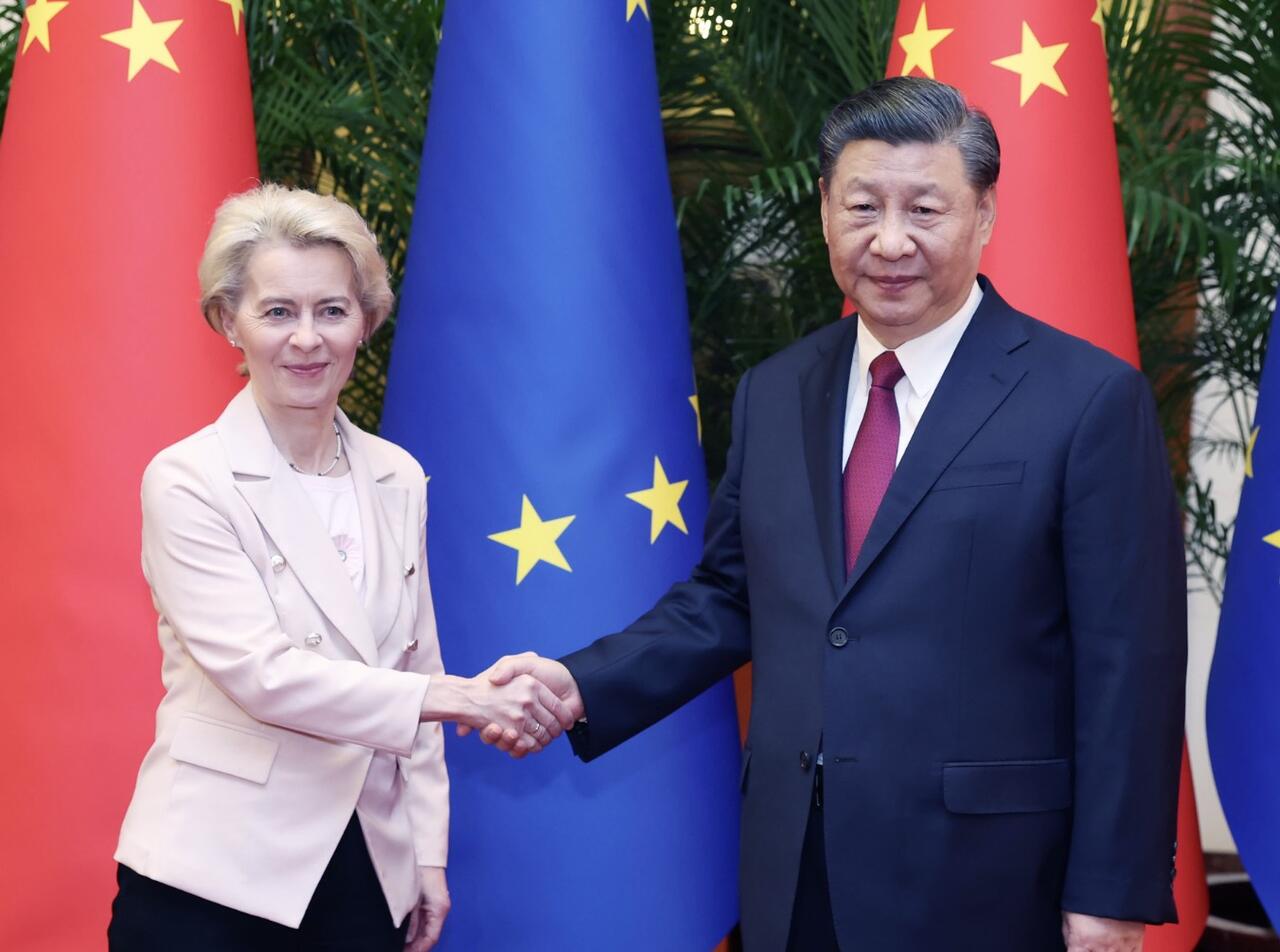
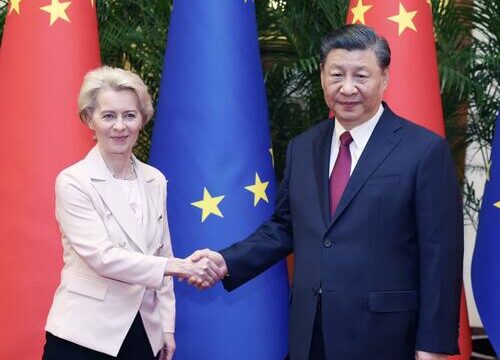
China and the EU took a significant step Monday toward easing their long-running electric vehicle trade dispute after Brussels released rules that could allow Chinese exporters to replace punitive tariffs with negotiated pricing commitments, according to the South China Morning Post.
The European Commission said companies may submit price undertakings that must be “adequate to eliminate the injurious effects of the subsidies and provide equivalent effect to duties”. Exporters are encouraged to include shipment limits and future EU investments, with assessments conducted under WTO rules. If accepted, the EU would revise its existing regulations.
The conflict dates back to the EU’s 2023 anti-subsidy probe, which resulted in 2024 duties of 7.8% to 35.3% for five years. China responded with investigations into European cognac, dairy and pork. While the tariffs technically remain, the new framework could replace them with minimum import prices.
China’s Ministry of Commerce welcomed the move, saying “the progress fully reflects the spirit of dialogue and the outcomes of consultations between China and the EU.” It added: “It shows that both China and the EU have the ability and willingness to properly resolve differences through dialogue and consultation under the framework of WTO rules and maintain the stability of automotive industrial and supply chains in China, the EU and the whole world,” calling it “conducive not only to ensuring the healthy development of China-EU economic and trade relations, but also to safeguarding the rules-based international trade order.”
SCMP writes that negotiations gained momentum after the EU began reviewing a price undertaking offer in December from Volkswagen’s Chinese joint venture. Economist Alicia Garcia-Herrero of Natixis called the potential shift from tariffs to price floors a major development.
China’s chamber of commerce in the EU described the move as a “soft landing” and “a constructive step forward for China–EU trade and investment cooperation, as well as for the broader bilateral relationship”, adding: “The consensus and arrangements reached will significantly strengthen business confidence, [and] create a more stable and predictable environment for Chinese electric vehicle manufacturers and related supply-chain companies investing and operating in Europe.”
Cui Hongjian of Beijing Foreign Studies University cautioned the change remains largely technical, noting that “At present, both sides are grappling with a certain lack of confidence [in each other].” Garcia-Herrero warned the scheme could weaken EU trade enforcement, raise costs for European buyers, and deepen Europe’s reliance on Chinese investment.
Tyler Durden
Tue, 01/13/2026 – 02:45