Category: News

Day 1,419: The Russia-Ukraine Conflict Just Surpassed Soviet War With Nazi Germany
Day 1,419: The Russia-Ukraine Conflict Just Surpassed Soviet War With Nazi Germany
This week has marked another grim milestone in the nearly four-year long Russia-Ukraine war. The conflict has just entered its 1,419th day – which means it has officially surpassed the entirety of the historic Soviet campaign against invading Nazi Germany, which lasted 1,418 days from June 1941 to May 1945.
Red Army forces eventually drove Nazi troops back from the Volga River all the way to Berlin, before seizing the German capital. But in today’s war, the 1,419th day is just another in a long one in a tragic and grinding war of attrition, where it is believed each side has lost literally hundreds of thousands.
Source: Cover art from The History of Russia Ukraine War: How Putin & Zelensky reached this stage
Russia definitely has the upper hand and momentum on the battlefield, but it’s been a slow and deadly slog, with The Times of London reporting Monday that despite prolonged combat, Russian advances in the Donetsk region amount to roughly 30 miles from their original positions.
Ukraine’s armed forces have in large part been propped up by many billions in weapons, training, and funds poured in by NATO and Western backers of Zelensky.
A recent study by the BBC’s Russian service and Mediazona – both largely anti-Putin outfits, found that at least 160,000 Russian soldiers have been killed, but the true figure may be significantly higher. It could also be lower, as Western sources have incentive to exaggerate for propaganda purposes (just as Russia would have incentive to underestimate).
At the same time, most international reports and war monitors say Ukraine’s casualties could be many times that figure. On both sides, a whole generation of young men is being wiped out.
Efforts to achieve peace by the Trump administration have so far failed, but at least the lines of communications are still open between Washington and Moscow.
Ukrainian officials have warned that Russian troops are preparing renewed offensives in the north, including areas near the city of Sumy, at a moment the conflict is still only at the legal level of ‘special military operation’ in the Kremlin’s eyes, and not a full state of war which could require societal mobilization.
Over in Ukraine, the war has created the single biggest army in Europe, as recent analysis in The Wall Street Journal detailed:
When the war with Russia eventually ends, Ukraine will be left with a military larger and with more recent experience than any of its European backers’.
Whether it can outlast Russia’s long-term designs in the event of any peace deal is a question for the entire continent, which now sees Ukraine as a bulwark against Moscow’s ambitions.
Finding the money and personnel to maintain 800,000 troops and piles of equipment while devising new capabilities will be among the Ukrainian government’s hardest tasks in the immediate aftermath of the war. European Union leaders recently said they would lend Ukraine 90 billion euros, around $105 billion, fending off a looming cash crunch in Kyiv and helping the Ukrainian army keep fighting as Russian leader Vladimir Putin and Ukrainian President Volodymyr Zelensky compete for President Trump’s ear.
Western leaders have meanwhile constantly reiterated their support for Ukraine while accusing Moscow of dragging out the conflict, and yet few have still recognized that Russia is genuine and legitimate in saying constant NATO expansion has led to this.
Trump has at times hinted he understands Moscow’s grievances, but has still seemed to escalate behind the scenes, such as authorizing US intelligence assistance to Ukrainian drone attacks deep inside Russian territory.
Tyler Durden
Mon, 01/12/2026 – 23:00
Money And Power: Fiat Currency, Monetary Corruption, & The Architecture Of Extraction
Money And Power: Fiat Currency, Monetary Corruption, & The Architecture Of Extraction
Authored by Justin Pak via The Mises Institute,
Money is often described as neutral, technical, or merely instrumental—a passive medium facilitating exchange within an otherwise political society. This view is not only mistaken; it is profoundly misleading. Money is the hidden constitution of every political order. It determines which actions are possible, which institutions survive, which risks are rewarded, and which failures are forgiven. While constitutions proclaim rights and legislatures debate policy, money silently governs outcomes.
For this reason, the structure of a monetary system is never merely economic. It is moral, political, and civilizational.
From the perspective of Austrian and heterodox political economy, the modern fiat monetary system represents not a refinement of earlier monetary forms but a radical departure from them—one whose defining feature is the removal of constraint. Historically, money emerged as a market phenomenon rather than a state creation. Carl Menger demonstrated that money arises organically as the most saleable commodity within an economy, a process driven by voluntary exchange rather than decree. Ludwig von Mises later formalized this insight through the regression theorem, showing that money must originate in a good valued for its non-monetary uses in order to acquire exchange value at all. Gold and silver did not become money because states declared them so; states declared them money because markets already had.
Fiat money reverses this logic. It does not arise from scarcity or market selection but from legal privilege. Its acceptance depends not on earned trust but on enforcement through legal tender laws, taxation, and institutional inertia. What presents itself as sovereign currency is, in practice, state credit circulating as money. This distinction is not semantic. It marks the difference between a system disciplined by external reality and one governed by discretion.
That discretion is concentrated in the institution of central banking. Central banks are often portrayed as neutral guardians of stability, technocratic referees standing above politics. In reality, they function as cartel managers for the financial system, coordinating outcomes that could not survive under competitive conditions. By suppressing interest rates, guaranteeing liquidity, and acting as lenders of last resort, central banks shield privileged institutions from failure while preserving the appearance of market order. Failure is not abolished; it is postponed. And because it is postponed, it accumulates, growing larger and more destructive with each cycle.
This structure produces an inversion of capitalist discipline. In genuine markets, profit and loss serve as signals, rewarding foresight and penalizing error. Under central banking, profits remain private during credit-fueled expansions, while losses are declared systemic during contractions and transferred to the public through bailouts, inflation, and monetary debasement. Risk-taking is rewarded precisely because it is underwritten; prudence is punished through negative real interest rates and competitive disadvantage. Institutions that restrain leverage are displaced by those that exploit it. What remains is not capitalism but state-protected finance, sustained by political necessity rather than economic viability.
The manipulation of interest rates lies at the heart of this transformation. In classical theory, interest rates coordinate time preferences across society, balancing present consumption against future uncertainty. They are prices, emerging from the interaction of savers and borrowers. In modern fiat systems, interest rates are no longer prices at all. They are policy signals, imposed to achieve macroeconomic targets defined by central planners. This substitution of administrative judgment for market coordination creates a profound monetary hierarchy.
Those closest to the source of money creation enjoy the lowest borrowing costs. Sovereign governments finance deficits cheaply, substituting monetary expansion for taxation. Large banks access central liquidity directly. Major corporations issue debt at compressed spreads, insulated from true risk. As one moves farther from the issuance point, costs rise. Small businesses face higher rates and tighter conditions. Households absorb inflation and credit costs simultaneously. Peripheral nations borrow in foreign currencies, exposed to exchange risk they cannot control. Proximity to money creation becomes a determinant of survival. Access replaces productivity as the primary economic advantage.
Because money enters the economy unevenly, monetary expansion always entails political choice. There is no neutral increase in the money supply. Every expansion selects beneficiaries. The era of quantitative easing made this impossible to deny. Liquidity flowed overwhelmingly into financial assets—equities, bonds, and real estate—while wages lagged and productive investment stagnated. This outcome was publicly justified as a “wealth effect,” the belief that rising asset prices would stimulate broader economic activity. In practice, it functioned as asset patronage, enriching those who already owned capital while widening the gap between financial wealth and earned income.
The productive economy increasingly gave way to financial engineering. Growth appeared robust on balance sheets even as real capacity hollowed out. The illusion of prosperity was sustained by rising asset prices rather than rising productivity. What was described as stabilization was, in reality, a redistribution of claims on future output toward those nearest the monetary spigot.
Creation, however, is only one side of the monetary cycle. Fiat systems must also retrieve money, and they do so through inflation, interest, and dependency. Inflation silently erodes savings, punishing deferred consumption and rewarding leverage. Interest extracts future labor, binding individuals to obligations denominated in a currency whose purchasing power is systematically diluted. Debt concentrates ownership, converting missed payments into asset transfers and accelerating consolidation during downturns. Citizens are increasingly compelled to borrow not to expand opportunity but to survive—to obtain housing, education, healthcare, or even the means to start a business. Debt becomes a mechanism of behavioral control. Default becomes a tool of dispossession.
This system depends on opacity for its survival. Modern monetary regimes are deliberately complex. Emergency facilities are disclosed after the fact. Beneficiaries are obscured. Balance sheets are framed as technical artifacts rather than political instruments. Language is abstracted to discourage scrutiny. Inflation becomes “accommodation.” Bailouts become “liquidity support.” As Murray Rothbard observed, complexity functions as camouflage. A system that cannot withstand transparency relies on obscurity to preserve legitimacy.
The corruption of fiat money does not end at national borders; dollar hegemony globalizes it. Because the US dollar functions as the world’s reserve currency, Federal Reserve policy becomes global monetary policy by default. Foreign states must hold dollars to stabilize trade, borrow in dollars to access capital, and absorb the consequences of US monetary decisions over which they have no control. When the Fed eases, capital floods into emerging markets, inflating bubbles and encouraging dollar-denominated debt. When the Fed tightens, currencies collapse, debts become unpayable, and crises erupt. What appears as domestic stabilization at the center manifests as devastation at the periphery.
This arrangement constitutes a form of seigniorage imperialism. The issuing state acquires real goods, labor, and assets in exchange for liabilities it can expand at will. The costs are exported through exchange-rate volatility, debt crises, and externally imposed austerity. Fiat corruption thus scales globally, transforming monetary dominance into an instrument of geopolitical power.
History offers abundant confirmation. From the credit expansion of the 1920s and the deepening of the Great Depression through intervention, to the abandonment of gold convertibility in 1971 and the explosion of debt that followed, to the 2008 financial crisis and its aftermath of bailouts and consolidation, the pattern repeats. Each crisis is framed as exceptional. Each intervention becomes precedent. Each rescue increases fragility. The pandemic-era monetary expansion merely accelerated a trajectory already in motion, normalizing levels of creation once reserved for war.
From a Rothbardian perspective, such a system cannot be reformed. Monopoly over money inevitably produces abuse, not because individuals are uniquely corrupt, but because unchecked discretion always is. The problem is not mismanagement; it is structural. Fiat money—insulated from competition and constraint—transforms money from a medium of exchange into an instrument of hierarchy.
A free society cannot rest on a monetary foundation that requires ignorance to function. Constraint is not the enemy of prosperity; it is its precondition. Without it, prices lie, capital misallocates, and responsibility dissolves. Fiat money does not merely finance power. It becomes power. And when money itself is corrupted, everything built upon it follows.
The ultimate question, then, is not how to manage fiat money more skillfully, but whether liberty can coexist with a monetary order insulated from consent, competition, and consequence. History suggests it cannot.
Tyler Durden
Mon, 01/12/2026 – 22:35
Los 76ers vencen 115-102 a los Raptors tras una primera mitad de 80 puntos
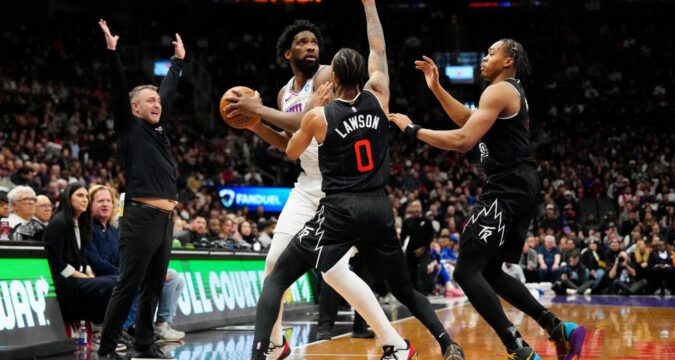
TORONTO (AP) — Tyrese Maxey anotó 33 puntos, Joel Embiid sumó 27 y los 76ers de Filadelfia aprovecharon una primera mitad de 80 puntos para vencer 115-102 a los Raptors de Toronto el lunes por la noche.
VJ Edgecombe y Paul George anotaron 15 cada uno mientras los 76ers se recuperaban de la derrota en tiempo extra del domingo ante Toronto para ganar por sexta vez en ocho juegos.
Embiid (rodilla izquierda e ingle izquierda) y George (rodilla izquierda) regresaron a la alineación después de no jugar el domingo.
Los fanáticos corearon “¡Queremos a Lowry!” en el último cuarto, luego se levantaron para una ovación de pie cuando el exjugador de los Raptors, Kyle Lowry, ingresó por Maxey con 1:57 por jugar.
Lowry fue una estrella del equipo de Toronto que ganó el campeonato de la NBA en 2019. Falló un triple en su primer intento y erró los tres tiros que realizó.
Immanuel Quickley anotó 18 tantos y Brandon Ingram tuvo 17 y diez rebotes. Scottie Barnes anotó 15 puntos para Toronto.
Barnes, quien encestó el tiro libre ganador el domingo, fue nombrado Jugador de la Semana de la Conferencia Este el lunes.
Los 80 puntos de Filadelfia en la primera mitad fueron la mayor cantidad permitida por un oponente de los Raptors esta temporada. Los 76ers encestaron 27 de 37 tiros de campo en la primera mitad, incluidos 13 de 20 desde larga distancia, y acertaron 13 de 13 en la línea de tiros libres.
La mayor ventaja de Filadelfia fue de 33 puntos, 87-54, después de un triple de Edgecombe con 8:24 restantes en el tercer cuarto.
___
Deportes en español AP: https://apnews.com/hub/deportes

Pacers superan 98-96 a Celtics y consiguen su primera racha de tres victorias
INDIANÁPOLIS (AP) — Pascal Siakam anotó 21 puntos, incluyendo el decisivo tiro con 6,1 segundos restantes, y los Pacers de Indiana sumaron tres victorias consecutivas por primera vez en la campaña al vencer el lunes 98-96 a los Celtics de Boston.
Derrick White de Boston falló un intento de tres para tomar la delantera en los segundos finales después de que empató el juego a 96 con una bandeja en penetración con 28,6 segundos restantes.
Siakam hizo un amague y dio un paso dentro de la línea de tiros libres para anotar en los segundos finales. También sumó ocho rebotes y seis asistencias.
Los Pacers comenzaron la noche con el peor récord de la NBA, pero ahora están 9-31, medio juego por encima de los Pelicans de Nueva Orleans a pesar de no contar con el alero Bennedict Mathurin (17,8 puntos por juego), quien estuvo fuera por una lesión en el pulgar por quinto juego consecutivo.
Jay Huff anotó 20 unidades, incluyendo cuatro triples, para los Pacers.
Payton Pritchard lideró a los Celtics con 23 tantos y ocho asistencias. White tuvo 18 puntos y Anfernee Simons 16.
___
Deportes AP: https://apnews.com/hub/deportes
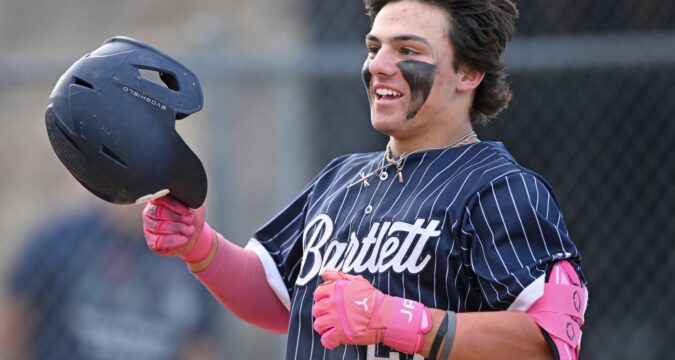
After being hit in eye by fastball, Josh Colaizzi begins another comeback for Bartlett. ‘Miracles can happen.’
It was just another day on the baseball field for Bartlett’s Josh Colaizzi, something that he had experienced hundreds if not thousands of times.
On Sept. 14, Colaizzi was playing in a travel baseball game in Iowa. But during an at-bat, facing a 2-0 count, the day turned into anything but routine.
“I saw a fastball coming and I thought I reacted,” Colaizzi said. “As soon as I got hit, I went down and I couldn’t see out of my left eye. I personally thought I was done at that point.”
Emergency eye surgery followed at the University of Iowa.
“I went to the emergency room right away,” Colaizzi said. “They were making sure I didn’t have a concussion. I got 10 stitches. He was looking at my pupil and it was leaking out of my eye.
“They said if I didn’t have emergency surgery I could lose my eye.”
Bartlett’s Josh Colaizzi (27) throws a pitch against Geneva during a nonconference game in Bartlett on Tuesday, March 25, 2025. (Mark Black / The Beacon-News)
Considering Colaizzi had already undergone a cornea transplant earlier in his career, he couldn’t believe the cruel twist of fate he had just suffered.
“It all hit me at once,” Colaizzi said. “I was frustrated and sad at the same time. I didn’t work this hard for it to end like this. I didn’t think there was any way I could come back from that.
“Miracles can happen, and here I am.”
Fast forward to November and he was cleared to begin baseball activities again.
Bartlett’s Josh Colaizzi (27) delivers a pitch against Streamwood during the seventh inning of an Upstate Eight West game in Bartlett on Monday, April 7, 2025. (H. Rick Bamman / The Beacon-News)
After all Colaizzi has gone through, the senior outfielder has been awarded the Bo Jackson Courage Award, which is given to someone who has shown “exceptional resilience, bravery or overcome significant adversity.”
He’ll receive the award at a banquet Sunday in Tinley Park from the Pitch and Hit Club of Chicago.
“It’s pretty special to win it unanimously,” Colaizzi said. “It’s just a blessing and I’m grateful for it.”
When Bartlett coach Alex Coan first heard about the injury, baseball was the last thing on his mind.
Bartlett’s Josh Colaizzi (27) fields a bouncing grounder against South Elgin in the first inning of an Upstate Eight West game in Bartlett on Monday, May 19, 2025. (H. Rick Bamman / The Beacon-News)
“My first thought was, ‘Is he OK?’” Coan said. “Baseball is secondary at that point. He called me and told me he didn’t know what was going to happen.
“I said, ‘Let’s take things back a bit and focus on getting you back to being physically OK. We can worry about baseball after the fact.’”
Only two months after the accident, Colaizzi was cleared for physical activity. So, what did he do? The same thing he’s done just about every day for years — he was in the gym at 5 a.m.
“I went and lifted that day and went to the Bo Jackson dome in Bensenville to go hit,” Colaizzi said. “I got back into it.”
Coan was amazed with how quickly Colaizzi got back up to speed.
“Didn’t miss a beat,” Coan said. “Josh is the type of kid that will find his way back to where he was before the injury. But you don’t anticipate it being in the first week back.
“For him to get back that quickly is crazy. To step into the cage three months after this happened is not normal.”
Bartlett’s Josh Colaizzi (27) follows through on a swing during an at-bat against Larkin during an Upstate Eight West game in Bartlett on Wednesday, April 10, 2024. (Nate Swanson / The Beacon-News)
Another situation Colaizzi went through in the wake of the accident was his college recruiting.
He was uncommitted at the time, but McHenry County College wasn’t fazed, however. He committed on Oct. 27 while still rehabbing.
“I think they knew who I was and I think they thought about the injury and didn’t think it would set me back at all,” Colaizzi said. “They had the faith to give me this opportunity.”
Coan isn’t surprised Colaizzi is conquering yet another obstacle in his way.
“Whether it’s his height or past medical issues, he thrives in the role of, ‘I see what you’re saying and here’s how I’m going to prove you wrong,’” Coan said. “It’s a special makeup.
“I couldn’t think of a more perfect person for this award to be going to.”
Paul Johnson is a freelance reporter for The Beacon-News.
https://www.chicagotribune.com/2026/01/12/josh-colaizzi-bartlett-ihsa-baseball/

Behind The Utter Failure Of Russian Anti-Air Systems In Venezuela
Behind The Utter Failure Of Russian Anti-Air Systems In Venezuela
There are reports that during the Trump-ordered military raid on Venezuela to oust and capture President Nicolás Maduro, at least one US helicopter was hit by surface fire or possibly small missile, but the chopper managed to keep flying – with the pilot wounded – and the damaged aircraft made it back from the mission safely.
But this raised the question: what happened to Venezuela’s Russian-supplied anti-air defenses, including S-300 and Buk-M2 surface-to-air missile systems purchased in 2009?
While at this point it is well understood that the US military and CIA had help from inside the Venezuelan government – making it essentially a US-backed coup topped off with a special forces nab and grab against Maduro and his wife, there’s still the question of whether the entire Venezuelan armed forces were ordered to stand down, or else that their defense systems simply didn’t work or were inactive.
The New York Times says it was actually more the latter scenario – Russian-built air defense systems stationed in Venezuela were mostly inoperable and did not react to the major initial US strikes which paved the way for the ground operation in Caracas.
When American military aircraft entered Venezuelan airspace on Jan. 3, the missile systems were not even linked to radar, according to US officials privy to the mission to The New York Times.
The publication further explained the systems were not integrated with one another and may have actually been unusable for several years. Satellite imagery and photographs further suggest that critical elements of the air defense systems were being kept in storage rather than deployed.
Interestingly the Ukraine war has played a role, after early in the conflict US defense officials said they would support and supply the Zelensky government in order to ‘weaken’ Russia by bogging it down in a proxy war.
US officials explained to the Times that Venezuela (and presumably other Russian defense allies) has faced ongoing difficulties maintaining its Russian-made air defenses because of limited access to Russian technicians and spare parts – all of which have had to be diverted to support Russia’s ‘special military operation’ in Ukraine.
Much of the initial US strikes appeared to focus on areas where Buk missile systems had been positioned or stored, and locations close to the capital.
“The Venezuelan armed forces were practically unprepared for the U.S. attack,” Yaser Trujillo, a military analyst in Venezuela, told The New York Times.
“Their troops were not dispersed, the detection radar was not activated, deployed or operational. It was a chain of errors that allowed the United States to operate with ease, facing a very low threat from the Venezuelan air defense system,” Trujillo added.
And a separate source concludes:
Venezuela’s much-touted antiaircraft systems were essentially not connected when U.S. forces entered the skies over Venezuela’s capital, and they may not have been working for years, former officials and analysts said.
“After years of corruption, poor logistics and sanctions, all those things would have certainly degraded the readiness of Venezuela’s air defense systems,” said Richard de la Torre, a former C.I.A. station chief in Venezuela who now runs Tower Strategy, a Washington-based lobbying firm.
The below OSINT account predicted this outcome back in mid-November:
For some context to those who haven’t been following for a while.
This is Venezuelas S-300 system and its storage at Captain Manuel Rios airbase in Guarico.
The missiles for the unit are stored just 100m away from the vehicles in a hangar.#Venezuela https://t.co/ka06CDPnVt pic.twitter.com/PqlCOZurqS
— CNW (@ConflictsW) November 15, 2025
The report throws open another interesting possibility, with two former US officials stating their view that Moscow may have permitted the systems it sold to Venezuela to fall into disrepair in order to avoid escalating tensions with Washington.
Tyler Durden
Mon, 01/12/2026 – 22:10
https://www.zerohedge.com/geopolitical/behind-utter-failure-russian-anti-air-systems-venezuela
Castro deja en el terreno a Leones con doble y Santurce toma ventaja en la Final
Por The Associated Press
Rubén Castro conectó un doble en la parte baja de la novena entrada para dejar en el terreno a los Leones de Ponce y darle a los Cangrejeros de Santurce una victoria por 5-4, en el primer juego de la Serie Final de la Liga de Béisbol Profesional Rroberto Clemente, disputado el martes en el Estadio Hiram Bithorn. Con el triunfo, Santurce tomó ventaja de 1-0 en la serie al mejor de siete.
Los Cangrejeros se adelantaron 4-1 gracias a un jonrón de tres carreras de Andrew Velázquez en la tercera entrada. Ponce respondió con cuadrangulares de Edwin Díaz y Alex Dickerson, este último de dos carreras en la novena entrada para empatar el juego. En el cierre del episodio, tras una base por bolas a Jeremy Arocho, Castro conectó el batazo decisivo frente a Gabriel Rodríguez. Andrew Baker se acreditó la victoria en labor de relevo, mientras que Rodríguez cargó con la derrota.
Caribes ganan tres en fila y se meten a la pelea
Los Caribes de Anzoátegui derrotaron el lunes por 9-6 a los Navegantes del Magallanes para firmar su tercera victoria consecutiva y escalar al segundo lugar de la ronda de todos contra todos que define a los finalistas de la Liga Venezolana de Béisbol.
Hernán Pérez bateó de 4-2 con dos jonrones solitarios; Balbino Fuenmayor se fue de 5-3 con un cuadrangular y dos carreras producidas; Carlos Mendoza tuvo una noche perfecta de 4-4 con tres anotadas, y Diego Infante añadió un vuelacercas de dos carreras para encabezar la ofensiva de los ganadores.
En Maracaibo, Luis Castro conectó un jonrón de dos carreras, José Herrera aportó un doble remolcador de una anotación y Alí Castillo impulsó otra con un sencillo, para guiar a las Águilas del Zulia a una victoria por 6-4 sobre los Bravos de Margarita.
Con los resultados de este lunes, Cardenales de Lara lideran el round robin con marca de 4-1, seguidos por Caribes de Anzoátegui (4-2), Águilas del Zulia (3-2), Bravos de Margarita (1-3) y Navegantes del Magallanes (1-5).

Jazz deja atrás humillante derrota con victoria 123-112 ante Cavaliers
CLEVELAND (AP) — Keyonte George anotó 32 puntos, Lauri Markkanen agregó 28 y el Jazz de Utah se recuperó después de una derrota por 55 unidades el sábado para vencer el lunes 123-112 a los Cavaliers de Cleveland.
George tuvo 16 puntos durante el tercer cuarto, cuando Utah se recuperó de un déficit de diez, para retomar el control al comienzo de una gira de cinco partidos con una victoria. George también acertó 12 de 12 en la línea de tiros libres y tuvo nueve asistencias.
Fue la segunda victoria del Jazz en sus últimos ocho juegos y llegó dos noches después de que perdieron por 150-95 ante los Hornets de Charlotte, la segunda diferencia más amplia en la historia de la franquicia yy la más grande desde que se mudaron de Nueva Orleans en 1979.
Markkanen, décimo en la liga en anotaciones con 27,8 puntos por juego, también tuvo 12 rebotes. Jusuf Nurkik, quien se perdió los últimos dos juegos debido a una lesión en el dedo del pie, anotó 11 puntos y capturó 17 rebotes.
Darius Garland lideró a Cleveland con 23 puntos y Donovan Mitchell anotó 21. Los Cavaliers han perdido dos de tres juegos.
___
Deportes AP: https://apnews.com/hub/deportes
Grandes olas en varias playas de la provincia de Buenos Aires dejan un muerto y 35 heridos
Associated Press
SANTIAGO (AP) — Al menos una persona murió y otras 35 resultaron heridas después de que fueran sorprendidas el lunes por grandes olas que golpearon con fuerza y de forma inusual varias playas localizadas en la provincia de Buenos Aires cuando estaban llenas de veraneantes.
El fenómeno se produjo en horas de la tarde, cuando una serie de enormes olas impactó por sorpresa en populares balnearios como Mar del Plata, Mar Chiquita y Santa Clara del Mar, localizados a más de 300 kilómetros al sur de la capital argentina, sobre la Costa Atlántica.
Imágenes compartidas por los usuarios en las redes sociales muestran el momento en que la inmensa pared de agua golpeó una de las tranquilas playas de Santa Clara del Mar, avanzando sobre la arena y arrastrando a los bañistas, lo que generó pánico entre los centenares de veraneantes que buscaban disfrutar del mar en una calurosa jornada del verano austral.
El director de Defensa Civil de la provincia de Buenos Aires, Fabián García, informó en declaraciones a medio locales del fallecimiento de un hombre y las lesiones leves sufridas por una treintena de personas a causa del “mini tsunami”. Una persona fue ingresada además al hospital tras sufrir un infarto.
El varón fallecido “fue empujado por el agua y golpeó contra las rocas”, detalló García.
Agregó que las playas del municipio de Mar Chiquita y otras cercanas fueron evacuadas de forma preventiva. De momento, agregó, no hay una causa confirmada que explique el fenómeno. “Es un evento totalmente imprevisible”, aseveró.
En la vecina ciudad de Mar del Plata también se registraron olas inusualmente grandes, por lo que las autoridades activaron una alerta preventiva en la zona costera afectada, mientras continúan evaluando los daños ocasionados y monitoreando las condiciones del mar.
Aunque se investigan las posibles causas del siniestro, meteorólogos han apuntado que podría tratarse de un posible “meteotsunami”, un fenómeno poco frecuente asociado a cambios bruscos en las condiciones meteorológicas que pueden generar olas repentinas.
Maximiliano Prenski, un guardavidas que participó del operativo de rescate en la zona del Torreón del Monje —uno de los íconos balnearios de Mar del Plata— relató a medios locales que fue una situación inédita que generó pánico entre los veraneantes.
“El mar volvió a retirarse, se armó un remolino, todo se puso oscuro. Nunca habíamos visto algo así acá”, dijo Prenski, quien logró sacar a “cinco o seis personas” del agua después de que el mar se retrajera y las primeras olas golpearan. “Fue un fenómeno superextraño”.

10 Commandment Displays Became Law In Texas, Then The Lawsuits Came
10 Commandment Displays Became Law In Texas, Then The Lawsuits Came
Authored by Darlene McCormick Sanchez via The Epoch Times (emphasis ours),
Melissa Martin, a veteran Texas educator with some 30 years of experience, was thrilled when the state passed a law in 2025 that required the state’s 9,000 public schools to post the Ten Commandments in classrooms.
For Martin, it was a bright spot—a swing back toward classical education rooted in Western civilization in an otherwise liberal teaching environment.
Her excitement quickly turned to disappointment at the Houston-based public charter school in which she works.
“I was real surprised when they didn’t jump at putting the Ten Commandments up,” she told The Epoch Times.
Texas’ Senate Bill 10 has sparked the nation’s largest state-led effort to put the Ten Commandments into schools—and it is facing concerted legal challenges. A hearing on the constitutionality of the new law is scheduled before the Fifth U.S. Circuit Court of Appeals this month.
The Ten Commandments, fundamental to both Judaism and Christianity, are credited with influencing Western values and are the basis for laws against killing, theft, adultery, and perjury.
Martin believes public schools have ignored the significance of foundational works such as the Ten Commandments and their role in preserving “our democratic Republic for future generations.”
She said she is retiring this month, fed up in general with a public education system that she feels has failed students.
As a board member of Innovative Teachers of Texas, an alternative to liberal teacher unions, Martin hopes to spend her time establishing a Christian classical school.
Christopher Rhoades, a minister and math teacher in the Alvin Independent School District south of Houston, told The Epoch Times he believes the law is a positive change but worries it could open Pandora’s box.
“I mean, it definitely returns us to a point of values,” he said. “You know, my concern is always with whatever precedent is set. What does it open the door to that I wouldn’t like if someone else was in power?”
The law says public schools “shall display” a poster or framed copy of the Ten Commandments in a conspicuous place in each classroom. Schools must accept donated posters that meet the law’s specifications but aren’t required to purchase them.
Critics of the law argue that requiring the Ten Commandments to be hung in every classroom violates the separation of church and state and offers little educational value.
Teacher Rachael Preston testified against the bill in Austin last spring.
“I’m curious about how displaying the Ten Commandments … is relevant enough to the teaching of mathematics to be displayed in a math room,” she told state lawmakers.
Sarah Morrison, who taught in public school for 15 years before becoming a math instructor at Paris Junior College, told The Epoch Times via text that she believes the law is unconstitutional.
“As both a Christian and an educator, I believe that requiring the Ten Commandments goes against the First Amendment of the United States Constitution and treats Christian faith as the state’s preferred religion instead of recognizing the diversity I see in my classroom every day,” she said.
The American Civil Liberties Union (ACLU) and its Texas chapter quickly challenged the law by filing two lawsuits. Two federal district judges blocked the 25 school districts named in the lawsuits from displaying the posters.
The civil rights organizations filed a third lawsuit in December 2025. This time, the federal class-action lawsuit names another 16 districts and seeks to block all Texas school districts from displaying the Ten Commandments.
Legal observers believe the issue will likely end up before the Supreme Court.
A case related to a similar Louisiana law and one of the Texas cases are scheduled to be heard by the full Fifth U.S. Circuit Court of Appeals on Jan. 20, according to the ACLU.
Wider Efforts
The Texas law is part of a larger state effort that has focused on putting God back into schools—a move grassroots conservatives in the red state applaud.
Texas passed a law in 2021 requiring public schools to display the national motto, “In God We Trust.” In late 2024, the Texas State Board of Education approved the “Bluebonnet Learning” curriculum, which integrates Bible stories and Christian values into K-5 language arts lessons.
In the town of Rockwall, just east of Dallas, attorney Lorne Liechty and his family purchased Ten Commandments posters for their local school district, which serves some 19,000 students. The posters were hung in classrooms before the ACLU filed its lawsuit; they now sit in storage as the issue winds its way through the courts.
Liechty, who had two children attend Rockwall schools, said that besides being good rules to live by, the Ten Commandments are foundational to America and its history.
Liechty, also a Rockwall County Commissioner, said prayer was allowed in school until the early 1960s; and he vividly recalls when his third-grade teacher told him it was outlawed.
“The Ten Commandments, Bible verses, and prayer were taken out of the schools,” he told The Epoch Times. “So I had a chance to try and restore them. I wanted to do that.”
Lawsuits Either Way
The Ten Commandments controversy has left some Texas schools in a quandary.
School districts outside Austin, Dallas, Houston, and San Antonio were named in the lawsuits and have been forced to remove Ten Commandments posters.
Meanwhile, Texas Attorney General Ken Paxton sued school districts in Galveston, Leander, and Round Rock for failing to display donated posters.
“America is a Christian nation, and it is imperative that we display the very values and timeless truths that have historically guided the success of our country,” Paxton said in a news release.
North of Houston, Shepherd Independent School District, which serves about 2,000 students, didn’t need an extra push to post the Ten Commandments.
Rebecca Nix, an administrator with Shepherd schools and a former teacher, said the posters have sparked classroom discussions.
“It’s been good fodder for conversation in some of the high school English classes,” she told The Epoch Times.
Read the rest here…
Tyler Durden
Mon, 01/12/2026 – 21:35
https://www.zerohedge.com/political/10-commandment-displays-became-law-texas-then-lawsuits-came