Category: News
Editorial: CPS watchdog details a culture that failed to protect students
A report from Chicago Board of Education Inspector General Philip Wagenknecht, the watchdog who keeps an eye on Chicago Public Schools, details “pervasive” adult-on-student sexual misconduct on more than one campus.
“Pervasive” is not a word we like to read in the context of kids and schools.
Office of Inspector General investigations found that across the large district, 44 female and 21 male students were victims of misconduct, with students ranging in age from 4 to 19. The report also provides extensive updates on the egregious abuse committed by staffers from the Little Village Lawndale High School Campus.
In August, Brian Crowder, the former dean of the school, was sentenced to 22 years in prison for sexually abusing a student. The victim, now an adult, testified that when she was around 15 years old, the former dean came up to her in the school lunchroom and asked for her SnapChat username; she said the relationship eventually became sexual. Crowder’s attorneys said Crowder got the victim pregnant twice, pressured her to have abortions and posed as her parent at appointments. When she broke off the relationship, he threatened her.
In December, the Chicago Board of Education approved a $17.5 million settlement in this horrible matter.
Inappropriate contact issues at the Little Village Lawndale High School Campus went beyond this one case.
In another example, a teacher and athletic coach blurred the line with a student, meeting outside of school to discuss their personal lives, exchanging over 18,000 text messages over the course of three and a half months and spending hours on the phone, often late at night, according to the report. The report discloses that the female teacher and student were physical — sharing a kiss — without going into detail about how far the teacher took things. The victim is now an adult and did not pursue a police investigation, but the teacher was removed from the classroom and placed on a do-not-hire list.
On that same troubled campus, a popular teacher “who was known to hold strong influence over his students, especially his female students,” repeatedly exhibited a pattern of connecting with female students and then pursuing them after graduation, all while presenting himself as a feminist and champion of women. According to the OIG, “in at least four cases, Employee 3 met with the former student in person and had sex with them.” He claimed his behavior was appropriate “because CPS never told him not to.” The IG concluded that most of the alleged conduct was not criminal in nature, often due to the student’s age at the time of the conduct. Nonetheless, it represented a profound abuse of trust rooted in relationships formed in the classroom.
The report goes on for pages regarding the toxic culture on this campus, where the boundaries between bad actors and students seemingly did not exist, and the problem was so bad that one student said she was targeted by three different teachers.
NBC 5 found that since 2017, at least seven educators, including two administrators and five teachers, have resigned or been fired while under investigation for sexual misconduct at Little Village Lawndale High School. The 12 former students NBC interviewed shared personal stories, saying “they either witnessed, were approached or felt they were groomed into sexual relationships with their former teachers.”
The misconduct described at Little Village Lawndale occurred in the 2010s, prior to CPS tightening oversight after a Chicago Tribune investigation that led to stricter rules, including a ban on social media contact with students and the creation of a sexual allegations unit.
It’s good to know that changes have been made, and when the district learned of misconduct, people were fired. Still, parents are left wondering how much other inappropriate conduct continues to take place in our public schools and how many children are still at the hands of adults who would misuse their power and authority. It’s hard to regain trust once it’s broken, especially when it concerns children.
While the bulk of the report’s findings focused on the problems at Little Village Lawndale High School, it also detailed other disturbing instances of abuse, including a fourth grade girl who was fondled on the bus by an aide on multiple occasions. At another school, an hourly employee was found to possess child pornography and to have sexually abused a child to whom he was related.
Reading this report is enough to make any parent question their child’s safety at school. Past reforms matter, but they are not a guarantee. The inspector general’s findings serve as a reminder that protecting students requires constant vigilance and an intolerance for blurred boundaries. Public trust in schools rests on a simple promise: that no child will be asked to trade their safety for an education.
Submit a letter, of no more than 400 words, to the editor here or email letters@chicagotribune.com.
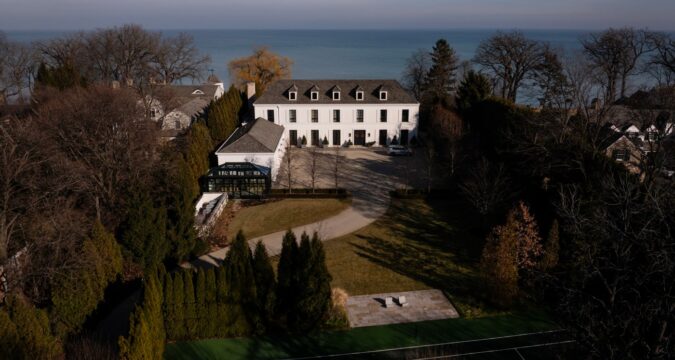
Here are the Chicago area’s top 10 home sales of 2025
For residential real estate, 2025 was the year of the Chicago-area megasale.
Two mansions on the North Shore sold for more than $30 million each, setting new Chicago-area sales records.
The first was a French Renaissance Revival-style mansion at 419 Sheridan Road in Winnetka, which sold in September for $31.3 million, becoming the highest-priced home resale in Chicago-area history. But that record was eclipsed in November when another Winnetka mansion — at 609 Sheridan Road — sold for $34.5 million.
Those two sales were the tip of the spear for a year in which the high-end market saw 10 residential sales for $9.5 million or more.
The reasons why high-end homes are selling for increasing prices have been well-documented, including continued gains in the stock market and wealthy individuals’ general insulation from factors such as mortgage rates.
If there’s one thread that ties together the 10 highest-priced home sales in 2025, it’s Lake Michigan. Fully eight of the 10 highest-priced Chicago-area home sales involved single-family homes with frontage on Lake Michigan, in the communities of Winnetka, Kenilworth and Lake Bluff. A ninth property, in Lake Forest, sits within little more than shouting distance of the lake, while the final property is a Chicago penthouse with lake views.
While it’s a cliche to say that they’re not making any more lakefront land, what’s clear is that buyers are valuing Lake Michigan frontage on the North Shore in ways they never have before. Of 2025’s top 10 sales, six of the eight lakefront properties on the list — including four of the top five — are in Winnetka.
Real estate agent Jena Radnay of @properties Christie’s International Real Estate, who was involved in seven of the top 10 Chicago-area sales in 2025, attributed the growing interest in lakefront homes and their elevated prices to “protected luxury.”
“Protected luxury has never been more at the forefront,” Radnay said. “The Midwest is fortunately an area that doesn’t have catastrophic events happen from a weather perspective, and through the last couple years, people have seen what has happened with fires and flooding in places like Malibu and Texas.”
Radnay also said the North Shore’s great communities, educational institutions, and fine dining opportunities are appealing to buyers.
“Those are the things that attract people to the North Shore. That’s why we get the prices that we do,” she said. “This is like the Aspen of the Midwest — things on the lake just keep increasing in value. It’s a great investment.”
Here’s a look at the Chicago area’s top 10 residential sales in 2025, according to public records:
1. $34.5 million
609 Sheridan Road, Winnetka
The back of the mansion at 609 Sheridan Road in Winnetka, which sold for $34.5 million in November, sits along the lakeshore on Jan. 7, 2026. (E. Jason Wambsgans/Chicago Tribune)
This five-bedroom, 16,000-square-foot Georgian-style mansion with 151 feet of beachfront along Lake Michigan sold in November for $34.5 million. Records showed that the sale price included $2 million worth of personal property, which usually refers to furniture. Without the personal property, the recorded property sale price was $32.5 million. The mansion was built in 2016 and designed by architect Bill Fork.
2. $31.25 million
419 Sheridan Road, Winnetka
A seven-bedroom, 13,894-square-foot mansion at 419 Sheridan Road in Winnetka sold in September for $31.25 million. (MILLER + MILLER Architectural Photography)
This seven-bedroom, 13,894-square-foot vintage French Renaissance-style mansion, known as Windsor House, sold in September for $31.25 million. Built in 1928 and designed by architect Ernest Mayo, the 22-room mansion has 223 feet of private beachfront. The sellers said they put between $65 million and $72 million into creating the estate, which included buying the mansion for $9.5 million in 2002 and spending another $4.1 million in 2013 for the property next door. The sellers first listed it for $35 million in 2024.
3. $14.5 million
219 Sheridan Road, Kenilworth
The mansion at 219 Sheridan Road in Kenilworth sold for $14.5 million in October, Jan. 7, 2026. (E. Jason Wambsgans/Chicago Tribune)
This six-bedroom mansion on the lake sold in October for $14.5 million — a record sale price for Kenilworth. The mansion was constructed by Paul Starrett, who also built the Empire State Building in New York and the Lincoln Memorial in Washington, D.C. The mansion has 115 feet of sandy beach.
4. $12 million
973 Sheridan Road, Winnetka
This seven-bedroom, 9,653-square-foot mansion on the lake in Winnetka sold in June for $12 million — which up to that point had been the year’s highest sale price. The mansion was built in 2020 and designed by architect Paul Konstant, on the site of an earlier, now-demolished mansion that had been built in 1991 for the late philanthropists Robert and Ann Lurie.
5. $11.4 million
765 Sheridan Road, Winnetka
This seven-bedroom, 15,784-square-foot mansion on the lake in Winnetka sold in July for $11.4 million. Built in 2005 by Orren Pickell Builders and once listed for $18 million, the mansion sits on a 1.3-acre parcel and has a Marc Chagall-inspired circular mosaic ceiling. The property has both stairs and an electric tram leading to the beach, along with more than 100 feet of sandy beach.
6. $11.25 million
700 Crabtree Lane, Lake Bluff
This six-bedroom, 9,990-square-foot mansion on fully 27 acres in Lake Bluff sold in December for $11.25 million. Once listed for $22.9 million, the estate has polo fields, equestrian stables with 13 stalls, and no less than 700 feet of private Lake Michigan beach access.
7. $11 million
930 E. Rosemary Road, Lake Forest
In October, a vintage eight-bedroom, 11,787-square-foot ivy-covered red brick Georgian-style mansion on 8.68 acres in Lake Forest — but not on the lake — sold for $11 million. Designed by architect Benjamin Marshall and known as Camp Rosemary, the estate, just southeast of Lake Forest College’s campus, sold to a Wisconsin-based developer who plans to renovate its interior and enhance its grounds. The estate is known for its extensive gardens, which include 21 outdoor garden “rooms.” Its landscaping was designed in the 1920s by noted landscape architect Rose Standish Nichols.
8. $10.125 million
4 E. Elm Street, PH23, Chicago
In March, the full-floor penthouse on the 23rd floor of the building at 4 E. Elm St. on the Gold Coast sold for $10.125 million. The four-bedroom unit’s build-out was designed by architect Paul Konstant — which marks his second appearance on this top 10 list — and the penthouse has 11-foot ceilings, wide-plank hardwood floors with a herringbone inlay, a 60-foot entertaining terrace, and views to the east, south and west. The recorded sale price was $9.78 million, which means that the remaining $341,000 included in the purchase price was personal property like furniture.
9. $9.575 million
381 Sheridan Road, Winnetka
In June, a six-bedroom, 8,086-square-foot mansion on the lake sold for $9.575 million. Built in 2015, the mansion, which has 88 feet of beachfront, actually sold in 2018 for $12 million and then sold again in 2022 for just $7 million. The mansion extends from Sheridan Road to the lakeshore, making it something of a rarity in Winnetka.
10. $9.499 million
139 Sheridan Road, Winnetka
This six-bedroom, 9,723-square-foot mansion on the lake sold in July for slightly less than $9.5 million. Built in 2021, the home, whose southern lot line is the Winnetka-Kenilworth border, is built into the bluff and sits on a 0.75-acre property. It has a boathouse whose zoning is grandfathered by the village.
Bob Goldsborough is a freelance reporter.
https://www.chicagotribune.com/2026/01/13/chicago-top-home-sales-2025/
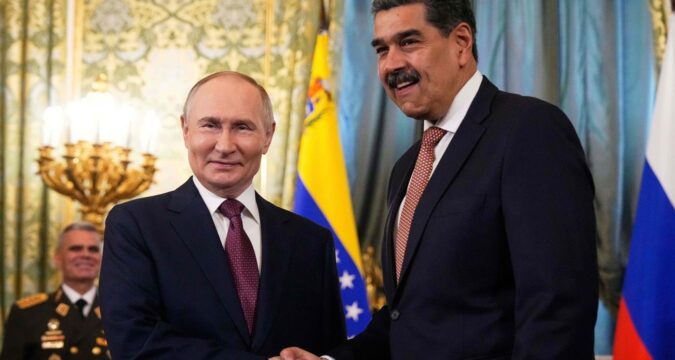
Daniel DePetris: Venezuela has been introduced to supposed ally Vladimir Putin’s fickle side
More than a week after Venezuelan dictator Nicolás Maduro was captured and brought back to the United States to stand trial on narcoterrorism charges, officials with the Donald Trump administration are trying to determine how relations with one of South America’s largest countries will evolve in the weeks and months ahead. In between Trump’s threats of more U.S. airstrikes if Venezuela’s post-Maduro government refuses to bend the knee to U.S. demands, Washington and Caracas are exploring a resumption of diplomatic relations after six years in which the United States didn’t have a functioning embassy in Venezuela.
The mood isn’t so sanguine in Moscow. With Maduro’s arrest, Russian President Vladimir Putin watches as yet another one of his partners descends into the depths of despair. In the end, Putin was unable to save Maduro, who traveled to Russia as recently as May to bolster his regime’s ties with Russia. In fact, it was highly unlikely Moscow could play the white knight even if it wanted to.
This isn’t the first time Russia chose to sit on the sidelines as one of its principal foreign partners got into trouble. When Syrian dictator Bashar Assad’s army was disintegrating in the face of a rapid advance by Syrian opposition forces under the command of Ahmad al-Sharaa, all the Russians were willing to do was launch a few symbolic airstrikes and help organize Assad’s getaway to a life in exile. Assad, who relied on the Russian air force to bomb and strafe Syria’s opposition-controlled regions for a decade, suddenly found himself alone, without his main protector, when his family dynasty was on the ropes.
Six months later, in June, Moscow didn’t lift a finger when Israel waged a fierce 12-day war against Iran, destroying Iranian-operated Russian air defense systems in relentless air attacks that wiped out a good chunk of Tehran’s military leadership. The most Putin did was register strong disapproval for the action, which is a bit like a disgruntled customer writing a strongly worded letter to the CEO for bad service.
Maduro now joins the club of Russian allies getting stabbed in the back by Putin. At first glance, this might surprise some people. Under Maduro and Hugo Chávez before him, Venezuela was seen as a great opportunity to show the United States that Moscow still retained the option of projecting its power in ways that the Americans might view as threatening or at least annoying. Indeed, just as the United States and its NATO allies were pressing their advantage on Russia’s periphery, Russia was returning the favor by bolstering a regime in Caracas that regarded Washington as its chief adversary. Russia sold billions of dollars in weapons to the Venezuela army, from tanks and aircraft to air defense missiles, and Russian oil tycoons invested in Venezuelan oil fields.
Yet just as Assad learned in December, it turned out that Maduro was expendable. At the end of the day, the Russians were never going to expose themselves halfway around the world for a man who, while friendly from the Russian perspective, didn’t matter all that much to Russia’s core interests. It also underlined just how cutthroat, transactional and Machiavellian Putin really is — if the costs of support outweigh the benefits, and if the risks are too high, then it’s better to cut bait, change your strategy and hope the person who takes over will be amenable to a positive, productive relationship. This is exactly what Putin is doing in Syria; despite having bombed his forces repeatedly during the country’s 13-year civil war, Putin was more than happy to invite rebel-turned-president al-Sharaa to the Russian capital in October in an attempt to mend fences. Putin sat down with Syria’s foreign and defense minister last month to build on that initial meeting.
This strategy might be more difficult for the Russians to pull off in Venezuela. Delcy Rodríguez, Maduro’s former vice president who took power shortly after her boss was arrested, is now in the unenviable position of having to pacify hard-liners in her government at the same time she mollifies Trump who wants to turn the South American country into an American vassal state. The Trump administration has handed a whole list of demands to Rodriguez: Expel the Russians, Chinese, Iranians and Cubans from your country; hand over your oil industry to the Americans; wage war against the drug traffickers; release all political prisoners; and eventually organize free and fair elections.
Needless to say, getting cozier with Russia runs the risk of emboldening those in the Trump administration who want regime change rather than regime transformation.
Related Articles
Elizabeth Shackelford: The United States is better off as a global power than a global bully
Daniel DePetris: Donald Trump wants to be the emperor of Latin America
Regardless of what Putin’s policy on Venezuela will be from this day forward, Maduro’s capture demonstrates just how fickle the world’s authoritarians can be. The conventional wisdom in U.S. foreign policy circles these days is that dictators are teaming up to undermine the power of democracies, bail each other out when they run into trouble and work to adopt a whole new international system that eviscerates the rules crafted out of the ashes of World War II. The whole “axis of autocrats” or “axis of upheaval” sounds almost conspiratorial.
In reality, these dictators are self-interested creatures and will do what they believe is in their own best interest. And if standing to the side as a partner gets pummeled produces some bad press and perhaps a dent in your credibility in the meantime, so be it. Putin is no exception. In the grand scheme, he valued Russia’s equities in Venezuela as undeserving of sustained investment.
Let that be a lesson to U.S. policymakers.
Daniel DePetris is a fellow at Defense Priorities and a foreign affairs columnist for the Chicago Tribune.
Submit a letter, of no more than 400 words, to the editor here or email letters@chicagotribune.com.
https://www.chicagotribune.com/2026/01/13/column-vladimir-putin-autocracy-depetris/
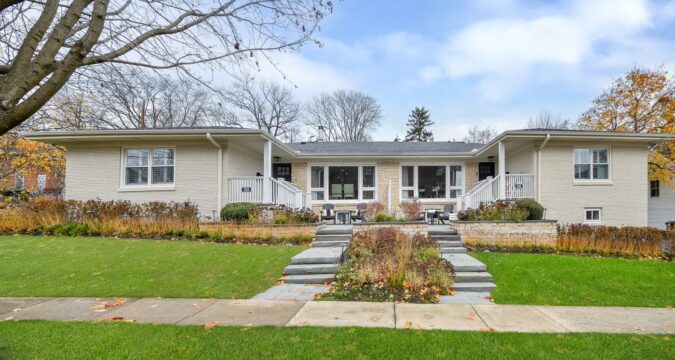
Glen Ellyn 3-bedroom home with front, back and side patios: $1.5M
Address: 520 Anthony St., Glen Ellyn
Price: $1,475,000
Listed: Nov. 6, 2025
This three-bedroom home has three full bathrooms, one half bath, hardwood floors and custom millwork. The kitchen is equipped with an island, quartz countertops, white cabinets, a built-in plumbed Miele coffee machine and a bar area with a beverage refrigerator. A basement rec room features a wet bar, and bathrooms are outfitted with Kohler vanity sinks and walk-in showers with subway tile. This home also has a gym, a Sonos entertainment system, a private two-car garage and front, back and side patios. The exterior has been professionally landscaped and includes a new irrigation system.
Listing agent: Tammy Maganini, Keller Williams, 630-452-2607
(Rachael Ormond/Portraits of Home)
(Rachael Ormond/Portraits of Home)
(Rachael Ormond/Portraits of Home)
(Rachael Ormond/Portraits of Home)
(Rachael Ormond/Portraits of Home)
(Rachael Ormond/Portraits of Home)
(Rachael Ormond/Portraits of Home)
(Rachael Ormond/Portraits of Home)
(Rachael Ormond/Portraits of Home)
Some listing photos are “virtually staged,” meaning they have been digitally altered to represent different furnishing or decorating options.
To feature your luxury listing of $1,000,000 or more in Chicago Tribune’s Dream Homes, send listing information and high-res photos to ctc-realestate@chicagotribune.com.
https://www.chicagotribune.com/2026/01/13/glen-ellyn-patios-home-of-the-week/
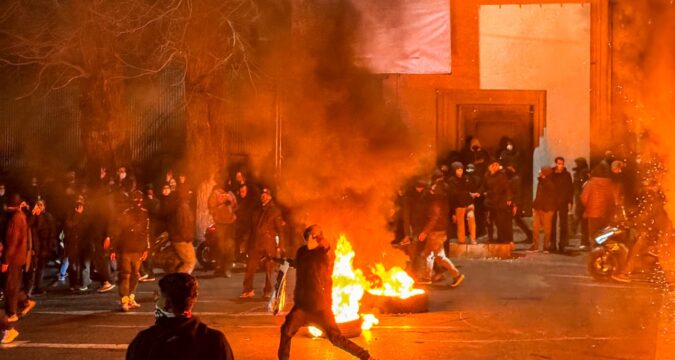
Pegah Banihashemi: Behind the blackout, Iran is drowning in blood
Two weeks into Iran’s latest nationwide protests, the Islamic Republic has returned to a grimly familiar strategy: total silence, followed by overwhelming force.
As of Sunday, Iran has been plunged into near-total isolation for five consecutive days. Internet access has been almost entirely shut down. Ordinary means of communication — mobile phone calls, landlines and even institutional lines — have been severed. Iranians inside the country cannot reach the outside world, and those abroad cannot reach their families. Even embassies in Tehran have reportedly been unable to establish regular communication.
Only a handful of people with access to Starlink internet have managed to send fragments of images and videos to the outside world. What has emerged through these digital cracks has struck Iranians everywhere like a knife to the heart.
One video shows rows of bodies lying on the ground outside a medical facility — too many to count. The sound is unbearable: mothers screaming, crying, calling the names of children who will never answer. Other footage shows families searching desperately through hospitals and streets for loved ones, hoping to find them alive — or at least to find their bodies.
These images confirm what many Iranians already know too well. Once again, the regime has perfected its method of repression: First, cut all lines of communication; then unleash direct and lethal force against unarmed citizens.
Unconfirmed reports from inside Iran suggest that more than 2,000 people may have been killed in just two days, with countless others seriously wounded and denied proper medical care. Whether the final numbers are higher or lower, the pattern is unmistakable — and tragically familiar.
They began amid a sudden spike in Iran’s currency exchange rate, which triggered immediate and severe increases in food prices and basic living costs. Inflation, already suffocating much of the population, tightened its grip almost overnight. Within days, Tehran’s bazaar — long considered the backbone of Iran’s economy and traditionally cautious about joining street protests — closed its doors in protest. Historically, when the bazaar moves, the country listens.
This time, the bazaar did not act alone for long. Protests quickly spread from Tehran to cities across the country, including smaller towns in underdeveloped provinces. These communities, often bearing the heaviest burden of poverty and state neglect, became unexpected centers of resistance.
The government attempted to contain the unrest by declaring multiple public holidays under the pretext of extreme cold weather, hoping to empty the streets. The tactic failed. Protesters continued to gather — especially in smaller cities, where the state’s presence is more visible and more violent.
In Malekshahi, a small city in western Iran’s Ilam province, scenes emerged of security forces retreating from a police base as residents celebrated briefly in the streets. Such moments of collective defiance, though rare and fleeting, underscored the depth of public anger.
Alongside these protests, chants explicitly invoking the Pahlavi name have been widely reported. Mohammad Reza Shah Pahlavi, Iran’s last monarch before the 1979 Islamic Revolution. Today, protesters chant both his name and that of his son, Reza, while also directing increasingly explicit slogans at Supreme Leader Ayatollah Ali Khamenei, including: “This year is the year of blood — Seyyed Ali Khamenei will be overthrown.”
Reza Pahlavi publicly called on Iranians of all political and ideological backgrounds to take to the streets last Thursday and Friday. That call coincided with large nighttime demonstrations in major cities, particularly on Thursday evening, the start of Iran’s weekend.
It was precisely at this moment that the regime intensified its crackdown and enforced the most severe communication blackout yet. With independent media banned and journalists silenced or imprisoned, no institution has been able to verify the number of casualties. What is clear from the fragments that have gotten out is that hospitals are overwhelmed and many of the dead and detained are teenagers.
Families search in desperation for children taken into custody. As in past protest waves, Iran’s judiciary has denied detainees access to lawyers and contact with their families, despite explicit guarantees in Iran’s own criminal and procedural laws. Once again, the regime has demonstrated that even its own legal framework holds little weight when power feels threatened.
Having witnessed the Green Movement of 2009 firsthand, I recognize familiar patterns and critical differences. The streets today carry the same potential for mass mobilization, but Iranian civil society is more exhausted. Years of relentless repression, economic collapse and social fragmentation have taken their toll. Many Iranians are angrier than ever — but also poorer, more vulnerable and more fearful. Mobilization takes longer; the risks feel higher.
Meanwhile, the international response has been painfully muted.
Many Iranians, inside and outside the country, are asking a difficult question: Where are the voices that so loudly champion human rights elsewhere? The world has mobilized institutions, headlines and humanitarian language for Gaza and other crises. Why, then, is the killing of thousands of unarmed Iranians in the streets met largely with statements of “concern”?
President Donald Trump and several figures associated with his administration have repeatedly voiced support for the Iranian people, and United Nations Secretary-General António Guterres has expressed concern. But for a population that has endured repeated cycles of protest and repression, words alone are not enough. Meaningful action — real pressure and tangible support — is urgently needed. Time after time, the regime kills its citizens, and the international community responds with condemnation, only to retreat once again into silence.
Iran is a country rich in natural resources and human capital. Yet today, even middle-class families are being pushed below the poverty line. Economic desperation intersects with political suffocation and religious coercion, producing a volatile and deeply unstable reality.
As Iranians watch, wait and refresh social media feeds for scraps of news, fear mixes with fragile hope. Many worry that, once again, young lives will be lost without meaningful change. Others insist that despite the cost, retreat is no longer possible.
The coming days will be decisive. Whether Iran’s battered civil society can transform this bitter winter into a new political spring remains uncertain. What is certain is that the courage on display in Iran’s streets — and the blood already spilled there — demands more than silence from the world.
Pegah Banihashemi, a native of Iran, is a legal scholar and journalist in Chicago whose work focuses on human rights, constitutional and international law, and Middle East politics.
Submit a letter, of no more than 400 words, to the editor here or email letters@chicagotribune.com.
https://www.chicagotribune.com/2026/01/13/opinion-iran-protests-blackout-violence/
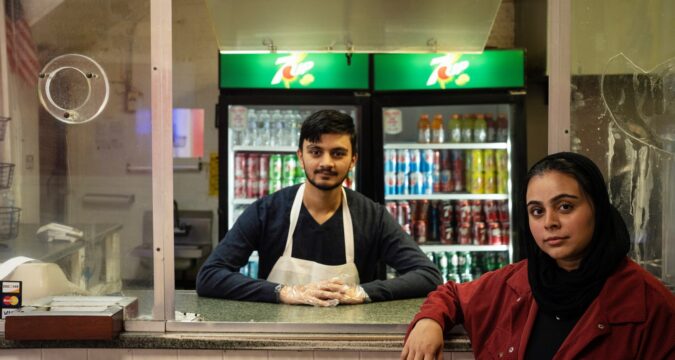
Addison family piecing life and restaurant back together after father deported to Pakistan
In Chicago’s Humboldt Park neighborhood on the city’s West Side, a sandwich shop on North Avenue stands as it has for more than 20 years — menu prices taped over and over again on the wall, a door that squeaks and sticks in its groove, a bulletproof service window separating servers slinging Philly subs with a pile of fries and a crisp, cold orange soda. But now, without its beloved owner, an undertone of lifelessness lingers.
Asif Amin Cheema, owner of Best Sub #2, was deported to Pakistan on the first day of the new year, leaving behind a beloved customer base and a business he had started from scratch in 2003.
Nooraan Amin, Cheema’s 19-year-old son, was behind the counter Thursday afternoon, filling shifts in between college classes and another part-time job. Cheema has been away from the shop for more than three months since Border Patrol agents arrested him in September. Nooraan said it feels like years have passed.
“When my dad was here, he really only taught me cashier duties, which was just staying in the front, but he was slowly getting me into how the cooking process works,” Nooraan said. “But now, I have to help with everything, including stocking and inventory.”
Nooraan’s mother, whose name the Tribune is keeping private, came by the restaurant with her daughter. She would often stop by to spend time with her husband as he whipped up a sandwich or put on the kettle for chai.
“It used to be a time where we could spend alone, he loves to cook for me here,” she told the Tribune in Urdu. She cupped Nooraan’s chin and asked him if he ate.
They’re a tight-knit family, grappling with a new normal. Best Sub #2 is the family’s primary source of income, but it’s also Cheema’s legacy, Nooraan said. They’ll never get rid of it.
Cheema’s wife recalled how he manually placed each tile in a checkerboard pattern on the restaurant’s floor. She smile as she pointed out how some blue tiles are mistakenly touching each other. He also built the blue and yellow booths with help from a few handymen, she said.
Rabia Amin, Cheema’s 27-year-old daughter, looked up at the fading pictures of the menu items, now comically indiscernible. She said she took most of those pictures when she was in sixth grade. Her dad had plans to upgrade the menu boards to replace the hand-scribbled pricing, with many 2s turned to 3s thanks to inflation.
Rabia, a writing and research clerk for a law firm overseeing family and criminal defense cases, has been vocal about her father’s arrest. She helped her family make several last-ditch efforts to halt Cheema’s removal, a process that started on Sept. 17 when Border Patrol agents arrested him.
A few weeks into Operation Midway Blitz, Cheema was driving across the street from La Huerta, the Mexican grocer on Lake Street in his hometown of Addison, when two Border Patrol cars started flashing their high beams at him. He pulled over, then two more cars arrived and blocked him in, Rabia explained.
“Obviously, he has never been arrested before, so he just complied,” she said. “And I found out because that morning on Facebook, I saw that ICE (Immigration and Customs Enforcement) was in Addison, specifically in that same intersection as La Huerta. I was like, that is so strange. And I don’t know how to describe it, but I just felt like something was wrong … so I checked his location, and saw he was in Broadview. That’s when I put the pieces together.”
Cheema was deported due to a 1991 removal order, but he had learned of its existence only last April, when he went in for a green card interview.
Cheema’s attorney, William McLean, said the situation is complicated. McLean recently came on as his legal counsel, while Cheema was being held at the Broadview ICE processing facility. McLean said ICE identified Cheema through fingerprints and biometric information he had provided when applying for his green card.
A friend, left, comforts the wife of Asif Amin Cheema, the owner for over 20 years of Best Sub #2 in the Humboldt Park on Jan. 8, 2026. Cheema was was deported to Pakistan on Jan. 1 after being detained by Border Patrol agents in September. (E. Jason Wambsgans/Chicago Tribune)
“Your biometrics is a 360-degree photo of your head, so when ICE invades Chicago a year later with their facial recognition technology, they see you in your car, and they know exactly who you are and your entire immigration history,” McLean said. “And that’s what happened to him. They identified him and arrested him with no warrant.”
Rabia suggested that had her father not tried to secure a legal pathway, the removal order wouldn’t have even been flagged for immigration officers, as it hadn’t yet been enforced.
“That’s the problem — people are trying to go about it the right way and still suffer consequences. And they let him go home after the interview, after seeing a removal order. They didn’t deport him then,” she said. “Doesn’t that make you wonder?”
Rabia said her dad wondered if he had reason to worry as word spread in early September of immigration enforcement across Chicagoland.
“Things like this, you just don’t think it’s going to happen to you. And the government kept saying, ‘We’re only getting the worst of the worst, we’re only getting criminals who are illegal,’” Rabia said. “I was like, ‘Well, Dad, you had your green card interview this year, you have a valid work permit. You are not a criminal. You’re not the worst of the worst.’”
After Cheema’s arrest, the family’s attorney at the time filed a motion to reopen the removal order case with the Board of Immigration Appeals, the first movement on that order in 30 years. If the motion had been approved, Cheema would have been able to stay in the country temporarily.
But court records show every attempt the Amin family made to halt his deportation was denied.
A week before his scheduled deportation, McLean filed an emergency temporary motion seeking a restraining order on his removal. This led to a hearing on Jan. 1, just hours before Cheema’s scheduled flight to Pakistan. An emergency judge in the Northern District of Illinois decided not to grant a temporary restraining order. McLean said the judge was reasonable and gracious, but it was a gut punch to the family.
That same day, before the hearing, Cheema collapsed while at O’Hare International Airport. He was taken to Resurrection Hospital for evaluation but was sent back to the airport after three hours. Rabia said they presented Cheema’s hospital discharge papers to the 7th District Court of Appeals judge, hoping the court would weigh in favor of keeping an unwell Cheema at home with his family. Rabia said her father has a history of ill health, having previously suffered two heart attacks.
With the TRO denied, Cheema would be on the next flight to Pakistan. Rabia said her mom and her siblings raced to the airport on the off chance that they’d get to see him before takeoff, and at the very least, to hand off some of his personal belongings and extra medications to an immigration officer. They weren’t able to see him. But an officer did eventually grab his stuff, Rabia said.
“What’s crazier is that because my dad’s not a criminal, he’s not dangerous, they put him on a commercial Qatar Airways flight back to Pakistan,” she said. “He was at the gate, waiting in public — so he’s obviously safe enough to sit with all these random people while he’s waiting for his gate to open, but his own family can’t even say bye to him? It’s just cruel.”
A week after Cheema’s deportation, the restaurant wasn’t busy, but the few customers who stopped by Thursday afternoon shared well-wishes and prayers for the family.
Sales have dropped since the COVID-19 pandemic, when the restaurant could no longer stay open 24 hours a day. Then last year, Best Sub #2, like many other restaurants in heavily Latino areas, faced a new reality with fewer customers dining in and workers afraid as intense immigration enforcement rippled across the Chicago area.
In December, the immigration crackdown briefly went to Charlotte, North Carolina, and then moved to New Orleans, before returning to Chicago. Most recently, the Department of Homeland Security announced it was sending more than 2,000 federal agents and officers to Minnesota, following a fatal shooting of a woman by an immigration officer.
Rabia said that up until his arrest, Cheema would often be the one to lock up each night, even though he employed four full-time workers and a store manager. His regulars knew he’d always be around.
“We’d come in here, late at night and just sit down if we had nowhere else to go — he’d let us get warm, never kicked us out,” said Lawrence Davis, a longtime customer who has known Cheema for 20 years.
Davis is a member of the Alliance of Local Service Organizations, whose mission is to prevent the transmission of violence locally. He and his colleague, William Estrada, were in the area passing out flyers about their outreach efforts, when they saw Cheema’s wife sitting in a booth near the window.
“We grew up in the neighborhood. … He’s a great man, a great man. If you were ever short or didn’t have anything, he’ll still give (food) to you,” Estrada said. “It’s terrible. … A nonviolent person. They started using that excuse about violence. (Cheema) is furthest from being a criminal. He’s an outstanding businessman in the community.”
Other customers stopped by for lunch and lingered a little longer after ordering gyro sandwiches and chicken fingers.
Rabia said a lot of locals developed a safe space with her father. Over the years, many in the Desi community who had precarious legal status but families to feed and provide for turned to Cheema for a small job around the restaurant. Cheema’s wife said even college students who came from India or Pakistan with little or no work experience often found themselves working a few hours at Best Sub #2, just enough to make some pocket money.
“He’d try his best to find something for someone to do, if they needed a job,” Rabia added. “He gave money, food, … his time. He gave so much, and now I think the community can give back to him.”
Rabia and her older sister started a GoFundMe campaign to help them navigate recent financial strains, including costly legal fees. The funds will go toward Cheema’s essential living expenses and medical needs. Rabia’s eldest brother, who is 29, is special needs and depends on his father for financial and emotional stability, and the funds will also help with his care.
The family video calls Cheema every day. Rabia’s sister flew out to Pakistan last week with a suitcase full of items from home. Currently, Cheema is staying with a relative but the family is hoping to set up a more comfortable living arrangement if they’re able to afford it.
The goal ultimately is to bring him back, Rabia said.
McLean said that while it is difficult to return to the United States after deportation and not a realistic pathway for most people, some can successfully return after several years. In Cheema’s case, his children could petition for him to immigrate to the country.
The day Cheema was deported, McLean filed a Bivens action — which seeks damages against federal officers for violating constitutional rights while acting under federal authority — against local and national leaders and “multiple unknown ICE agents.” The action alleges that Cheems was denied his due process rights.
The suit also alleges that agents withheld medication from him for at least three days before his deportation, which led to his collapsing at the airport. McClean sued the director of ICE’s field office in Chicago, Homeland Security Secretary Kristi Noem and Attorney General Pam Bondi for personal injury damages for $250,000.
McLean said officials also violated the Geneva Convention Against Torture by subjecting Cheema to “no less than three mock deportations” where law enforcement informed him of impending removal and transferred him to O’Hare and back.
Those appeals remain pending.
In an email to the Tribune, the Department of Homeland Security said any allegations that Cheema was denied medication are false.
“At the airport on Dec. 17, when officers attempted to board him for his flight, he claimed chest pains. Out of an abundance of caution, Cheema was immediately transported by ambulance to a hospital, where he was medically cleared within hours. Conveniently, during this brief hospital stay, a stay of removal was filed, but rejected by the 7th Circuit Court of Appeals,” the Department of Homeland Security said.
In a brief phone call with Rabia, Cheema told the Tribune that he has every intention of returning to his wife and children, as well as to his employees and customers.
“We have no intention of selling the shop,” Rabia said. “That’s my dad’s blood, sweat and tears. … The reason why my dad was able to pay for my law degree and my other siblings’ education; all our living expenses, our cars, our house. It’s 30 years of his life.”
Rabia said her father was orphaned at a young age and came to America to give his family a more secure future.
“How could you fault someone for wanting better?”
https://www.chicagotribune.com/2026/01/13/best-sub-owner-deported/
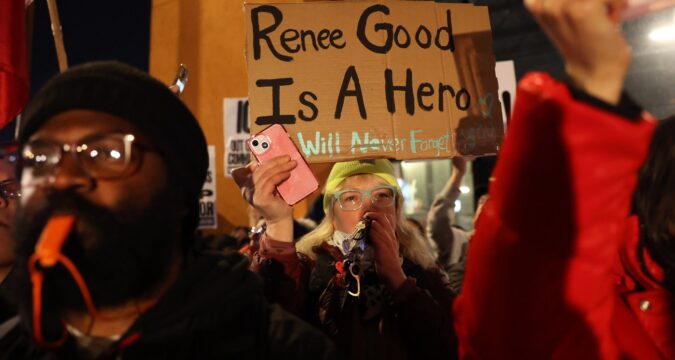
Letters: I don’t think Renee Nicole Good would make the same decision if she had to do it over again
I’m sure if we could bring Renee Nicole Good back to life, she would not make the same decision she did in Minneapolis. This was her one life to see her children grow up, plan a vacation, eat her favorite food and meet friends. Simple, but most of our lives are.
There is a higher calling to save lives and fight for the cause, but it was not meant to be fought on the streets of Minneapolis.
Yes, life is precious. When it’s over, it’s over. Consequences are harsh and sometimes permanent.
— Sue Atkenson, Frankort
Tragedy was coming
Renee Nicole Good’s death was a tragedy waiting to happen. Hopefully, a jury of peers will be permitted to determine whether Good’s death was a murder committed by an Immigration and Customs Enforcement agent or an ICE agent’s act of self-defense.
Either way, President Donald Trump’s mass deportation methods made this tragedy almost inevitable. Allowing a mass showing of heavily armed federal agents in military garb to publicly take people into custody is going to draw a crowd and some protest.
Like everyone else in the country, Trump saw that these confrontations between agents and protesters were escalating. One cannot help but believe that, in permitting ICE’s continued displays of such force, Trump is enjoying the conflict and is unconcerned about the harm that has been caused by his deportation policy.
— Terry Takash, Western Springs
Split-mindedness
How is it bad for the Iranian government to kill its protesting citizens, but OK for U.S. Immigration and Customs Enforcement agents to kill American citizens? Please explain.
— Helen Pachay, Villa Park
Biased point of view
The editorial describing the death of Renee Nicole Good, a Minneapolis woman killed by an Immigration and Customs Enforcement agent, as a textbook example of federal immigration overreach is deeply irresponsible, especially during these divided times (“A needless death in Minneapolis,” Jan. 9). By ignoring conflicting accounts, video evidence and the context of lawful ICE operations against illegal immigration, the Tribune Editorial Board prioritizes ideology over facts, inflaming tensions as protests erupted nationwide last weekend.
This mirrors a pattern in the Tribune’s news coverage: downplaying enforcement needs while amplifying narratives of agent aggression, as Cook County Commissioner Sean Morrison has criticized. In Chicago, where immigration clashes hit home, such biased reporting risks real harm — eroding trust, inciting unrest and abandoning journalism’s duty to inform objectively.
As a longtime Chicago resident and health care professional, I urge an immediate retraction or amendment and a commitment to balanced, fact-checked stories and coverage that de-escalates rather than divides.
The Tribune’s influence shapes our city’s response to these events — choose responsibility.
— Regina Barango, Chicago
Acting with impunity
The Jan. 11 story “Shooting revives legal question” does an excellent job of summarizing the difficulties inherent in bringing federal officers to justice in state courts for actions that would be covered under state criminal codes for anyone else.
However, the article fails to address the elephant in the room: President Donald Trump. As the article points out, federal agents are most assuredly going to be able to have their cases removed to a federal court. Then, the case is likely to be dropped by the attorney general, who has shown herself to be little more than a tool of the president. Finally, should a case somehow proceed, regardless of the findings of any judge or jury (or perhaps even before any finding), it is certain that the offending agent will be pardoned by the president. One need only look to his pardons of Jan. 6 insurrectionists at the U.S. Capitol, those involved in violent crimes and others who sought to overturn a free and fair election, to know that anyone who is doing something that he endorses will receive a pardon.
Therein lies the problem. Because ICE agents know that they are in no jeopardy from the justice system, they are free to continue their lawless behavior with impunity. In this regard, the blindfold on Lady Justice seems to be precariously hanging from her head.
— David Grossman, Chicago
Not American way
The Donald Trump administration has said that the death of Renee Nicole Good, a U.S. citizen and mother of three, was due to domestic terrorism. Once again, Trump is projecting onto others what he himself has done. If he had not sent all of these agents to Minneapolis, Good would not have died.
This incident is a repeat of what happened to Silverio Villegas González in a suburb of Chicago last September. The 38-year-old man was shot and killed by a U.S. immigration agent as he was trying to drive away. The agent he injured reportedly said later that what had happened to him was “nothing major.”
Trump could have his immigration crackdown done in an orderly and sensible way. He has chosen not to do that. He is using the current tactics to frighten and intimidate people.
This is not the American way.
— Linda Volino, Chicago
Hold Trump accountable
The shooting death of the woman in Minneapolis and the controversy surrounding that tragedy are such a huge story that it has for the moment overshadowed what President Donald Trump’s anti-immigration force already had done and continues to do. Which is tear apart a lot of innocent lives around this country, most notably in Democratic sanctuary cities such as Chicago and nearby — men, women and children whom Trump’s overly aggressive, indiscriminate deportation force regards as not having the right skin color or national origins.
While Trump permits this terrorism, a label he and his equally dishonest underlings attach to protesters who are justified, he may not directly order every violation by the masked enforcement squad he authorized. But he does set the standard, actually the substandard, for all of the inhumanity and other illegal acts that occur under his presidential reign.
Trump loves to hear that he’s in total control, so he should be held accountable, through impeachment or some other incriminating measure in three years, for his oppression of a lot more innocent people than the alleged criminals he claims to pursue. And for the U.S. Capitol riot.
— Ed Stone, Northbrook
Submit a letter, of no more than 400 words, to the editor here or email letters@chicagotribune.com.
https://www.chicagotribune.com/2026/01/13/letters-011326-renee-nicole-good-ice/

Editorial: Why an independent Federal Reserve matters far more than renovations to a building
There’s a time-honored tradition of U.S. presidents, whose electoral fortunes tend to rise or fall with the state of the economy, grumbling about chairmen of the Federal Reserve Board.
Famously, Paul Volcker, who as Fed chair dramatically raised interest rates in the early 1980s to combat inflation rates considerably higher than those that helped doom President Joe Biden’s hopes for reelection, ruined many a day for President Ronald Reagan, particularly early in his first term.
But Volcker’s tough medicine was credited in large part for taming the rampant inflation of the era, a record that persisted for decades until the COVID pandemic recovery briefly sent inflation rates spiking.
Fast-forward to the present day, and President Donald Trump is doing far more than grousing about a Fed chair he doesn’t like — in this case Jerome Powell. News broke over the weekend that Powell is under criminal investigation by the Justice Department, which sadly has become an attack tool of the president’s, in connection with the rising costs of renovating the Fed’s Washington, D.C., office buildings. We all know, of course, that renovation costs are not what this really is about.
To his credit, Powell confronted the issue directly. In a video statement, Powell correctly cast the probe as a threat to the independence of the Fed itself and said he wouldn’t be cowed. He was backed by former Fed Chairs Alan Greenspan, Ben Bernanke and Janet Yellen and a bipartisan host of other economic luminaries. In a pointed statement all but accusing Trump of dictatorial overreach, they said, “This is how monetary policy is made in emerging markets with weak institutions, with highly negative consequences for inflation and the functioning of their economies more broadly.”
Trump makes a regular practice of busting norms that have served this nation well for decades and even centuries. Thankfully, the pushback to his attempts at dominating the Fed has been stiffer than with some other examples of Trumpian bullying (universities, law firms, etc.).
GOP Sens. Thom Tillis of North Carolina and Lisa Murkowski of Alaska roundly condemned the effort to intimidate Powell, with Tillis saying he wouldn’t vote to confirm any of Trump’s future Fed board nominees as a Senate Banking Committee member if the legal threat to Powell continues.
Why this reaction? Simply stated, the independence of the Fed is a bedrock of our economy.
Investors and creditors rely on stable monetary policy to make decisions that, taken together, help guide the course of our financial system. If Trump 2.0 has taught us nothing else, it’s that predictability and stability are critical to a well-functioning business environment.
Trump’s desire to move Powell out as Fed chair isn’t new, of course. His desire to change course at the Fed in favor of far more aggressive cutting of interest rates was evident the minute he retook office.
The administration made noises last year about firing Powell despite federal law that shields the chair from serving strictly at the president’s pleasure. The U.S. Supreme Court quickly made clear that it would uphold the Fed’s independence even as the high court allowed Trump to remove officials at other agencies that heretofore had been independent per federal statute.
What’s particularly puzzling about Trump’s latest machinations is that the Powell’s term as Fed chair expires in May. In just a few short months Trump will be able to select a replacement, subject of course to Senate confirmation.
Once he’s no longer chair, Powell can remain on the Fed board until 2028 if he so chooses. That could explain Trump’s unseemly maneuvering, as a Fed chair at the end of the day is merely one of 12 who get to vote on the setting of interest-rate levels. Powell will be one of those 12 if he stays on.
Last year, Austan Goolsbee, president of the Federal Reserve Bank of Chicago, sat on the Fed’s Open Markets Committee. As head of the Chicago Fed, Goolsbee serves on that panel every other year, so he won’t be voting on interest rates in 2026. But he will again in 2027; with his term ending at the end of next month, Goolsbee was reappointed late last year to another five-year term beginning in March.
Goolsbee was one of three committee members who dissented at the December meeting from the decision to cut the federal funds rate by a quarter point — a move Powell supported.
All of this is to say that, no matter whom Trump appoints as the next Fed chair, other central bankers on the Open Market Committee will cast their own votes about future monetary policy. Our monetary system is set up deliberately so that a presidential administration gets a say in who makes those crucial decisions but not a complete say.
So it should remain; that setup has served the U.S. well.
President Trump is free to voice his opinions about interest rates and nominate people he believes holds views similar to his own. But he is not the nation’s chief central banker. By threatening Powell with criminal prosecution on a peripheral and dubious matter, he is abusing his office’s powers.
Submit a letter, of no more than 400 words, to the editor here or email letters@chicagotribune.com.

Column: Chevy Chase and Seymour Hersh get the documentaries they deserve
Be thankful that you are not Cornelius Crane “Chevy” Chase.
The subject of a new CNN documentary titled “I’m Chevy Chase and You’re Not” is not a particularly pleasant person, even though some of his churlishness may have been caused by a brutal and physically abusive childhood.
Now 82 years old, Chase comes off as a surly, forgetful man. But the comedian is one of two fascinating, if vastly different people currently being examined in documentary form. The other is Seymour Hersh, an investigative reporter/writer of the shoe-leather era, a throwback who is still at the admirable if frustrating business, fighting the good fight in an increasingly muddy media landscape.
Neither man seems particularly anxious for these on-camera ventures, both uneasy with self-reflection, but that reluctance adds a certain intimacy to both programs.
Though a generation may not know his name, Chase was a big star for a time, launching during the first 1975 season of “Saturday Night Live” on the fuel of his pratfalls imitating President Gerald Ford and his tiresomely smug delivery of “Weekend Update.”
After one year, he was lured to big screens, starring in such 1980s financial hits as “Caddyshack,” “Fletch,” the “National Lampoon’s Vacation” movies and “Three Amigos.” He hosted the Academy Awards, twice. And then, as the movie roles became increasingly forgettable — anyone remember “Nothing But Trouble,” “Memoirs of an Invisible Man,” “Cops & Robbersons”? — he tried to capitalize his waning renown by tackling television.
Comedian Chevy Chase, second from left, joins cast of NBC-TV’s “Saturday Night Live,” Feb. 16, 1978 in New York, where he first got his start with the “Not Ready For Prime Time Players.” Others are, from left, Jane Curtin, Bill Murray, Gilda Radner and Laraine Newman. (Marty Lederhandler/AP)
I was this newspaper’s TV critic in 1993 when “The Chevy Chase Show” premiered as a late-night offering on Fox-Ch. 32. Reviewing it, I wrote that he was “a study in self-obsession and nervous almost beyond belief.”
I wrote that the show was “painfully awkward and lame,” that he was filled with nervous tics” and that viewers could “discover how out of whack it all was … (by watching) the show’s ‘News Update,’ the satirical newscast segment that was the seed of Chase’s ‘SNL’ popularity and something that was expected to be the centerpiece of this show. … Chase’s delivery was unsure and the humor, rather than topical, was sophomoric.”
The show was a bust, and though Chase would make more movies and become a ubiquitous guest on late-night shows, he would never recapture his stardom. Three decades ago, he moved from Hollywood into what appears to be a comfortably luxurious home in quiet Bedford, New York.
His life has been scarred by some cocaine and booze troubles, and serious heart issues. His three daughters and his wife of more than four decades have loving things to say about him, as do Dan Aykroyd, Goldie Hawn and Martin Short. But it is Chase who dominates the 97-minute-long film directed by Marina Zenovich, who has previously made films about such difficult characters as Richard Pryor and Roman Polanski.
She touches sensitively on a couple of potentially incendiary subjects involving a homophobic slur and the use of a racial slur when Chase was a cast member for a few years on the NBC comedy “Community.” The star refuses to discuss that at length but did express his disappointment at not being asked to be a part of the recent “SNL” 50th anniversary bash.
Seymour Hersh is not an easy subject either, but at least he is a gentleman and not resting on his considerable accomplishments.
He fell in love with journalism here. The son of Russian immigrants, he attended Hyde Park High School while working in his father’s laundry and dry cleaning business.
While a student at the University of Illinois’ Chicago campus, then housed in Navy Pier, he impressed a teacher with his writing. He thought Hersh would make a good newspaperman, told him so, and helped him get into the University of Chicago. That professor was, I’m proud to tell you, my uncle Bernard Kogan, not mentioned by name in the program but acknowledged often over the years by Hersh.
Seymour Hersh at the opening of the movie “Cover-Up” at the 82nd International Venice Film Festival on Aug. 29, 2025. (Tiziana Fabi/Getty-AFP)
At the University of Chicago, Hersh learned about and was steered to the City News Bureau, the bygone training ground for such journalists as Mike Royko and my father, Herman Kogan. He started in the mailroom but was soon hitting the streets, where, he says in the film, he “fell in love with being a reporter,” especially covering the colorful worlds of organized crime and the police. (He also fell in love with his future wife, psychologist Elizabeth Klein. Though she is not interviewed in the program, they have three adult children, are still together, and he says of her, “I married the right person who can calm me down and keep me from going into total despair because I was writing such terrible stuff.”)
Indeed, and there was nothing worse than one of his first investigations.
Seymour M. Hersh sits in the furnitureless office of Dispatch News Service in Washington, May 4, 1970, after being awarded the Pulitzer Prize for international reporting. Hersh disclosed the alleged massacre of Vietnamese civilians at My Lai. (Bob Daugherty/AP)
In 1969, he was working for the Dispatch News Service when he investigated and wrote about what would be known as the My Lai Massacre, detailing how the U.S. Army attempted to cover up an incident of troops killing hundreds of Vietnamese civilians. One of the most chilling lines was what the Indiana mother of one of the soldiers told Hersh: “I sent them a good boy, and they made him a murderer.”
The story added fuel to the anti-war movement, and it won the 1970 Pulitzer Prize for International Reporting.
The two-hour-long film, “Cover-Up,” directed by Laura Poitras and Mark Obenhaus, gives us so much more, cutting effectively through the understandable glare of Robert Redford and Dustin Hoffman as reporters Bob Woodward and Carl Bernstein in “All the President’s Men,” which made it easy to forget what a crucial role Hersh’s work played in that story.
We also see how Hersh got the story of the CIA’s role in spying on student groups, and the torture and abuse of prisoners at Abu Ghraib during the U.S. war on terror. And there was a steady stream of investigations; his work appeared in many places, including the Associated Press, The New York Times, The New Yorker and Substack. He has written 11 books.
He sits in “Cover-Up” still determined to find the truth in this world of “fake news.” Surrounded by piles of files and notes, Hersh is forthright. He owns up to his mistakes, one of which involved being fooled by fake documents that he had to cut from his 1997 book about President John F. Kennedy, “The Dark Side of Camelot.”
Surrounded by piles of files and notes, Sy Hersh is the real deal. He is not merely a survivor in today’s modern media mess. He’s a hero.
rkogan@chicagotribune.com
https://www.chicagotribune.com/2026/01/13/chevy-chase-seymour-hersh-documentary/
DC, New York Brace For Deep Mid-January Freeze
DC, New York Brace For Deep Mid-January Freeze
An Arctic front is forecast to descend into the central and eastern U.S. later this week. Above-average temperatures will give way to below-normal conditions across the Mid-Atlantic and Northeast, bringing colder weather back to major metro areas through the end of the month.
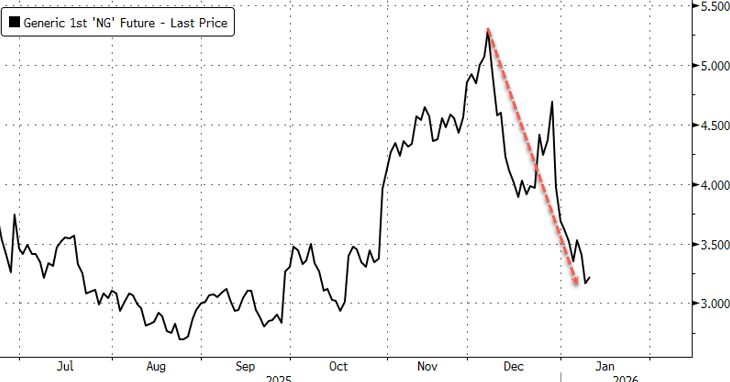
The setup closely mirrors the December weather pattern that locked much of the eastern US into a prolonged cold spell, sending natural gas prices higher amid increased heating demand.
This is honestly just sorcery from @BretWaltsWx 👌 pic.twitter.com/pSEM1I3mog
— BAM Weather (@bam_weather) January 11, 2026
Marc Chenard, a senior branch forecaster with the U.S. Weather Prediction Center, was quoted by Bloomberg as saying that the Arctic front will arrive in the eastern U.S. by Thursday or Friday this week. He said the pattern will remain in place for the next ten days.
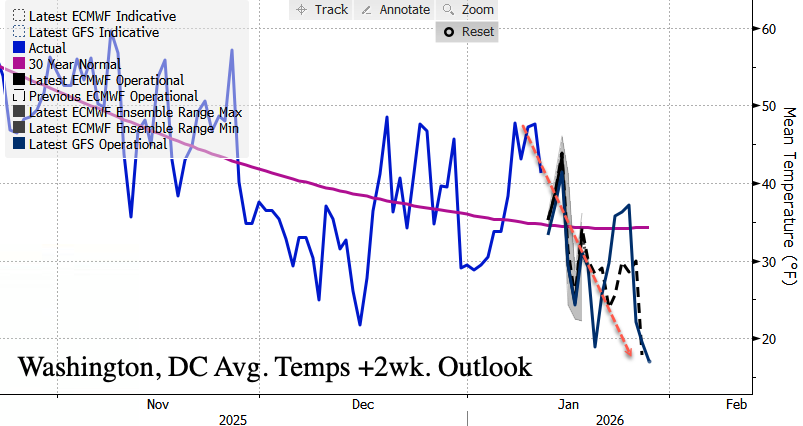
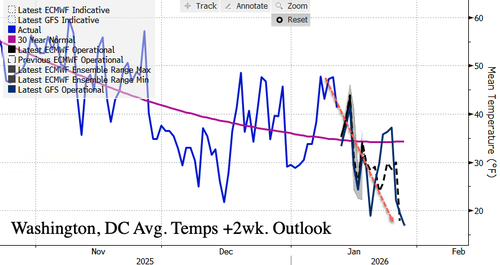
The Arctic blast is expected to be severe. Bloomberg data indicate that average forecast temperatures for Washington, D.C., over the next two weeks will run well below 30-year norms, with end-of-month readings dipping into the high teens.
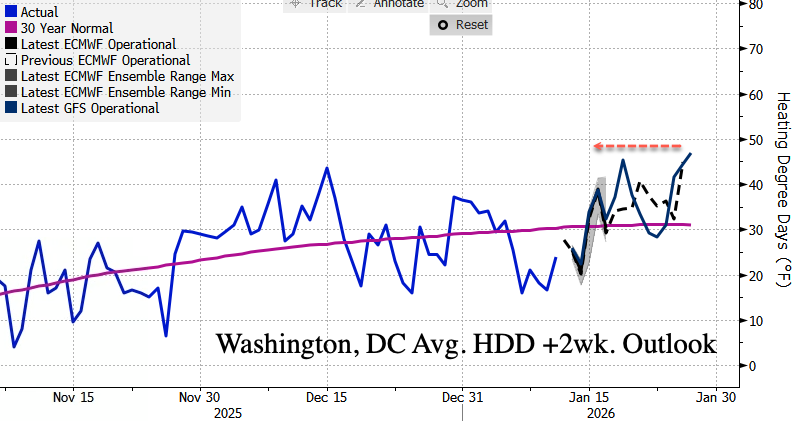
Washington, D.C. heating degree days over the next two weeks are expected to be among the highest of the winter season.
In energy markets, higher HDDs result in more furnaces running and higher demand for natural gas, heating oil, and electricity. Traders and utilities track them closely because even small changes in HDD forecasts can move energy prices.
NatGas Futs…
Cold returns.
Tyler Durden
Tue, 01/13/2026 – 05:45
https://www.zerohedge.com/weather/dc-new-york-brace-deep-mid-january