Category: News
China’s trade surplus surges 20% to a record $1.2 trillion, even with Trump’s tariffs
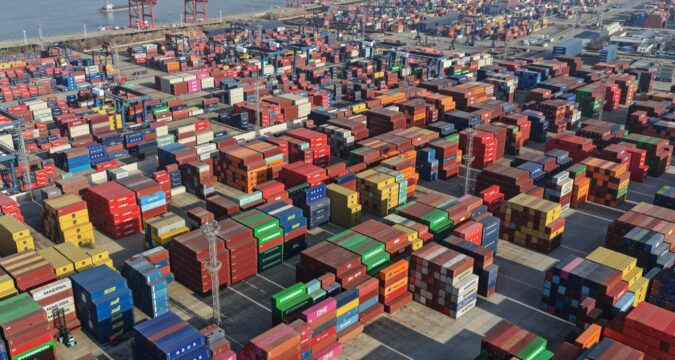
HONG KONG — China’s trade surplus surged to a record of almost $1.2 trillion in 2025, the government said Wednesday, as exports to other countries made up for slowing shipments to the U.S. under President Donald Trump’s onslaught of higher tariffs.
China’s exports rose 5.5% for the whole of last year to $3.77 trillion, customs data showed, as Chinese automakers and other manufacturers expanded into markets across the globe. Imports flatlined at $2.58 trillion. The 2024 trade surplus was over $992 billion.
In December, China’s exports climbed 6.6% from the year before in dollar terms, better than economists’ estimates and higher than November’s 5.9% year-on-year increase. Imports in December were up 5.7% year-on-year, compared to November’s 1.9%.
China’s trade surplus surpassed the $1 trillion mark for the first time in November, when the trade surplus reached $1.08 trillion in the first 11 months of last year.
Economists expect exports will continue to support China’s economy this year, despite trade friction and geopolitical tensions.
“We continue to expect exports to act as a big growth driver in 2026,” said Jacqueline Rong, chief China economist at BNP Paribas.
While China’s exports to the U.S. fell sharply after Trump returned to office and escalated his trade war with the world’s second-largest economy, that decline has been largely offset by shipments to other markets in South America, Southeast Asia, Africa and Europe.
For the whole of 2025, China’s exports to the U.S. fell 20%. In contrast, exports to Africa surged 26%. Those to Southeast Asian countries jumped 13%; to the European Union 8%, and to Latin America, 7%.
Strong global demand for computer chips and other devices and the materials needed to make them were among categories that supported China’s exports, analysts said.
Car exports also grew last year. Auto exports surged 21% in 2025 to more than 7 million units, driven by electric vehicles and plug-in hybrids, according to the China Association of Automobile Manufacturers, an industry group, on Wednesday.
Mechanical and electrical items were the largest export category last year, rising 8.4% from a year earlier, customs data showed. China also exported more grain and fertilizer, while exports of furniture, clothing, shoes and other labor intensive products fell.
Strong exports have helped keep China’s economy growing at an annual rate close to its official target of about 5%. That has triggered alarm in countries that fear a flood of cheap imports is damaging local industries.
China faces a “severe and complex” external trade environment in 2026, Wang Jun, vice minister of China’s customs administration, told reporters in Beijing. But he said China’s “foreign trade fundamentals remain solid.”
“Even if exports sustain neutral or positive growth this year, more of China’s growth drivers will need to come from domestic demand,” wrote HSBC economists Erin Xin and Taylor Wang in a note on Wednesday.
The head of the International Monetary Fund last month called for China to fix its economic imbalances and speed up its shift from reliance on exports by boosting domestic consumption and investment.
A prolonged property downturn in China after the authorities cracked down on excessive borrowing, triggering defaults by many developers, is still weighing on consumer confidence and domestic demand.
China’s leaders have made increasing spending by consumers and businesses a focus of economic policy, but actions taken so far have had a limited impact. That included government trade-in subsidies over the past months that encouraged consumers to buy newer, more energy efficient items, such as home appliances and vehicles.
“We expect domestic demand growth to stay tepid,” said Rong of BNP Paribas. “In fact, the policy boost to domestic demand looks weaker than last year — in particular the fiscal subsidy program for consumer goods.”
In the case of autos, domestic passenger car sales rose 6% in 2025, according to industry figures, but they fell back toward the end of the year as subsidies were scaled back or phased out in some areas.
Gary Ng, a senior economist at French investment bank Natixis, forecasts that China’s exports will grow about 3% in 2026, less than the 5.5% growth in 2025. With slow import growth, he expects China’s trade surplus to remain above $1 trillion this year.
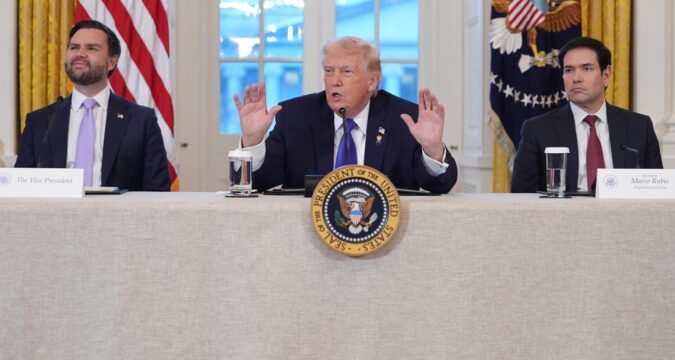
What Americans think about Trump’s intervention in Venezuela, according to a new AP-NORC poll
WASHINGTON — More than half of U.S. adults believe President Donald Trump has “gone too far” in using the U.S. military to intervene in other countries, according to a new AP-NORC poll.
The poll from The Associated Press-NORC Center for Public Affairs Research was conducted Jan. 8-11, after Venezuelan President Nicolás Maduro’s capture. It found that 56% of U.S. adults think Trump has overstepped on military interventions abroad, while majorities disapprove of how the Republican president is handling foreign policy in general and Venezuela in particular.
The findings largely cut against Trump’s aggressive foreign policy stance, which has recently included efforts to exert control over Venezuelan oil, calls for the U.S. to take over Greenland and warnings that the U.S. would provide aid to people protesting in Iran. Many did see the Trump administration’s recent intervention in Venezuela as a “good thing” for stopping the flow of illegal drugs into the U.S. and a benefit for the Venezuelan people, but fewer say it’s a positive for U.S. national security or the U.S. economy.
Hundreds more in Venezuela say their loved ones are ‘political prisoners’
Republicans are mostly following Trump’s lead, despite the sharp contrast with the “America First” platform he ran on. But few Republicans want Trump to go further, underscoring the risks of a continued focus abroad.
Most Republicans say Trump’s actions have been ‘about right’
While the U.S. used its military power in Venezuela to capture Maduro, Trump has also made recent comments about seizing Greenland “the hard way” if Denmark’s leaders do not agree to a deal for the U.S. to take it over, and he has warned Iran that the U.S. will come to the “rescue” of peaceful protesters.
Democrats and independents are driving the belief that Trump has overstepped. About 9 in 10 Democrats and roughly 6 in 10 independents say Trump has “gone too far” on military intervention, compared with about 2 in 10 Republicans.
The vast majority of Republicans, 71%, say Trump’s actions have been “about right,” and only about 1 in 10 want to see him go further.
About 6 in 10 Americans, 57%, disapprove of how Trump is handling the situation in Venezuela, which is slightly lower than the 61% who disapprove of his approach to foreign policy. Both measures are in line with his overall job approval, which has largely remained steady throughout his second term.
Many say the US action in Venezuela will be good for halting drug trafficking
Many Americans see some benefits from U.S. intervention in Venezuela.
About half of Americans believe the U.S. intervening in Venezuela will be “mostly a good thing” for halting the flow of illegal drugs into the country. Close to 4 in 10, 44%, believe the U.S. actions will do more to benefit than harm the Venezuelan people, who lived under Maduro’s dictatorship for more than a decade. But U.S. adults are divided on whether intervention will be good or bad for U.S. economic and national security interests or if it simply won’t have an impact.
Republicans are more likely than Democrats and independents to see benefits to the U.S. action, particularly its effects on drug trafficking. About 8 in 10 Republicans say America’s intervention will be “mostly a good thing” for stopping the flow of illegal drugs into the country, but fewer Republicans, about 6 in 10, believe it will benefit the U.S. economy.
Democrats and independents drive desire for US to take a ‘less active’ role
Most Americans don’t want greater U.S. involvement in world affairs, the poll found. Nearly half of Americans want the U.S. to take a “less active” role, and about one-third say its current role is “about right.”
Only about 2 in 10 U.S. adults say they want the country to be more involved globally, including about 1 in 10 Republicans.
At least half of Democrats and independents now want the U.S. to do less, a sharp shift from a few months ago.
Republicans, meanwhile, have grown more likely to indicate that Trump’s level of involvement is right. About 6 in 10 Republicans, 64%, say the country’s current role in world affairs is “about right,” which is up slightly from 55% in September. About one-quarter of Republicans say the U.S. needs to take a “less active role” in solving problems around the globe, down slightly from 34% a few months ago.

Hundreds more in Venezuela say their loved ones are ‘political prisoners’
GUANARE, Venezuela — Freedom came too late for Edilson Torres.
The police officer was buried Tuesday in his humble, rural hometown following his death in a Venezuelan prison, where he was held incommunicado since being detained in December on what his family said were politically motivated accusations.
Torres, 51, died of a heart attack Saturday, just as his family awaited the government’s promised release of prisoners following the U.S. capture of then-President Nicolás Maduro. The loss left his family reeling.
Now scores of families — who once hesitated to approach advocacy groups — are coming forward to register their loved ones as “political prisoners” in the hope that they might have a more optimistic future than Torres.
Foro Penal, which tracks and advocates for Venezuelan prisoners, has received a “flood of messages” from families since last week, said Alfredo Romero, director of the nongovernmental organization.
“They didn’t report it out of fear, and now they’re doing it because, in a way, they feel that there is this possibility that their families will be freed,” Romero said. “They see it as hope, but more importantly, as an opportunity.”
Waiting for liberations
The head of Venezuela’s national assembly, Jorge Rodríguez, said last week that a “significant number” of Venezuelan and foreigners imprisoned in the country would be released as a gesture to “seek peace” following the operation that captured Maduro in the early hours of Jan. 3. The U.S. and Venezuela’s opposition have long demanded the widespread release of detained opposition figures, activists and journalists, whom they claim are used as a political tool by the ruling party.
Venezuela’s government denies that there are prisoners unjustly detained, accusing them of plotting to destabilize Maduro’s government.
Following Torres’ death, Venezuela’s Attorney General Tarek William Saab said in a statement that the case had been assigned to a terrorism unit and “was linked to criminal activities detected by state security agencies.” He did not offer any details, but the vague language tracks with past accusations leveled against real or perceived government critics.
Romero said that of the roughly 300 families who reached out to Foro Penal, about 100 cases so far have been confirmed as politically motivated. Most of those reported over the past few days, he said, once worked for Venezuela’s military. That is on top of more than 800 people that the organization says continue to be detained for political reasons in Venezuela.
As of Tuesday evening, Foro Penal had confirmed 56 prisoners it said were detained for political reasons had been freed. The group criticized the lack of government transparency over the releases. Venezuela’s government negated the organization’s count, and reported a far higher figure of 400 Tuesday afternoon.
But the government did not provide evidence of the releases, a time range in which they were carried out nor identify those freed, making it impossible to determine whether those freed were behind bars for political or other reasons.
‘Pure and real kidnapping’
Before Torres’ funeral on Tuesday, a procession of cars and motorcycles stopped at a local jail, where his wife remains detained on disputed accusations.
“My little brother, my little brother,” Emelyn Torres said between sobs after his casket, cloaked in Venezuela’s flag, arrived at her home for the wake. A few feet away, their grandmother nearly fainted as dozens of people crammed into the living room to pay their respects.
Hours earlier, as a minivan transported the body of her brother 267 miles (430 kilometers) from the capital, Caracas, to Guanare, Torres learned that other men linked to the WhatsApp group that led to her brother’s arrest had just been released from prison. She wailed.
Among those who have been released are: human rights attorney Rocío San Miguel, who immediately relocated to Spain; Biagio Pilieri, an opposition leader who was part of Nobel Peace Prize winner María Corina Machado’s 2024 presidential campaign; and Enrique Márquez, a former electoral authority and presidential candidate.
Italian businessman Marco Burlò, who was released from prison Monday, told reporters outside a Rome airport Tuesday that he was kept isolated throughout his detention, which he characterized as a “pure and real kidnapping.”
“I can’t say that I was physically abused, but without being able to talk to our children, without the right to defense, without being able to speak to the lawyer, completely isolated, here they thought that I might have died,” he said.
A rare moment of hope
The small set of releases over the past few days continues to fuel criticisms by families, human rights watchdogs at the United Nations and U.S. politicians, who have accused the government of not following through on their word of a wider release.
But the rapid political shifts in the Latin American nation and the distant possibility of release simultaneously marked a rare moment of hope for many families who have spent years wondering if their loved ones would ever be freed.
Part of the reason that Romero said he believed so many people had not come forward is the government’s ongoing crackdown on dissent since Venezuela’s tumultuous 2024 election, which Maduro claimed to have won despite ample credible evidence to the contrary.
As mass street protests broke out, authorities said they detained more than 2,000 people. In the month after July elections, Venezuela’s government passed a law — dubbed the “anti-NGO law” by critics — making it easier for the government to criminalize human rights groups.
That had a chilling effect, Romero said, making families hesitant to come forward — until now.
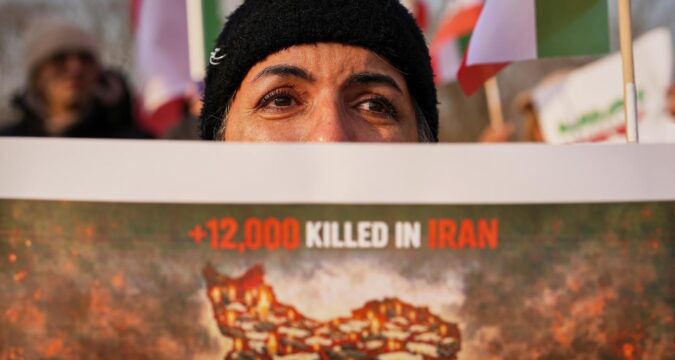
Evacúan base militar de EEUU en Qatar ante declaraciones de Irán
Por KONSTANTIN TOROPIN y FARNOUSH AMIRI
WASHINGTON (AP) — Parte del personal en una base militar estadounidense en Qatar ha recibido órdenes de evacuar para el miércoles en la noche, reveló un funcionario de Estados Unidos. La decisión se tomó luego que un alto funcionario en Irán mencionó un ataque iraní anterior en ese lugar.
El funcionario, que habló con The Associated Press el miércoles bajo condición de anonimato para discutir planes sensibles, describió la medida en la base como una precaución. No quiso dar más detalles sobre la medida, incluyendo si la evacuación era opcional o obligatoria, si afectaba militares o civiles o el número de personas aconsejadas a salir, citando la necesidad de seguridad operativa.
En respuesta, Qatar dijo el miércoles que tales medidas se estaban “llevando a cabo en respuesta a las tensiones regionales actuales”.
“La oficina de prensa reafirma que el Estado de Qatar continúa implementando todas las medidas necesarias para salvaguardar la seguridad y protección de sus ciudadanos y residentes como una prioridad principal, incluidas acciones relacionadas con la protección de infraestructura crítica e instalaciones militares”, indicó la oficina de prensa de Qatar en X.
Esto ocurre mientras continúan las protestas antigubernamentales en la cercana Irán y el presidente Donald Trump ha dicho que está dispuesto a realizar acciones militares en el país para apoyar a los manifestantes.
La base, que alberga a miles de militares norteamericanos, fue atacada por Irán en junio en represalia por los ataques estadounidenses a sus instalaciones nucleares.
Ali Shamkhani, asesor del líder supremo, el ayatolá Alí Jamenei, escribió en la plataforma social X: “El presidente de #EstadosUnidos, que habla repetidamente sobre la agresión inútil contra las instalaciones nucleares de #Irán, haría bien en mencionar también la destrucción de la base estadounidense en #Al-Udeid por misiles iraníes”.
“Sin duda ayudaría a crear una comprensión real de la voluntad y capacidad de Irán para responder a cualquier agresión”, añadió.
Funcionarios iraníes y qataríes habían hablado el martes en medio de la represión en Irán y las crecientes amenazas de Estados Unidos de intervenir si los manifestantes no son perdonados.
Ali Larijani, secretario del Consejo Supremo de Seguridad Nacional de Irán, tuvo una llamada telefónica con el jeque Mohammed bin Abdulrahman Al Thani, primer ministro de Qatar.
En una declaración en X, Al Thani informó que “reafirmó el respaldo del Estado de Qatar a todos los esfuerzos de desescalada, así como soluciones pacíficas para mejorar la seguridad y estabilidad en la región”.
La decisión de Irán en junio de tomar represalias contra los ataques estadounidenses al apuntar a la extensa instalación desértica fuera de Doha creó una rara tensión entre los dos vecinos marítimos, con funcionarios qataríes diciendo que los tomó por sorpresa.
Ningún personal estadounidense o qatarí resultó herido, señaló el Comando Central del ejército estadounidense, señalando que las dos fuerzas trabajaron juntas para defender la base. Un oficial militar qatarí dijo que uno de los 19 misiles disparados por Irán no fue interceptado y golpeó la base, pero Trump declaró en una publicación en redes sociales en ese momento que “apenas se causaron daños”.
___________________________________
Esta historia fue traducida del inglés por un editor de AP con ayuda de una herramienta de inteligencia artificial generativa.
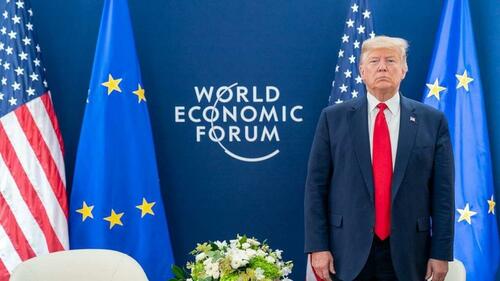
Trump To Speak At Globalist WEF Forum
Trump To Speak At Globalist WEF Forum
Authored by Steve Watson via Modernity.news,
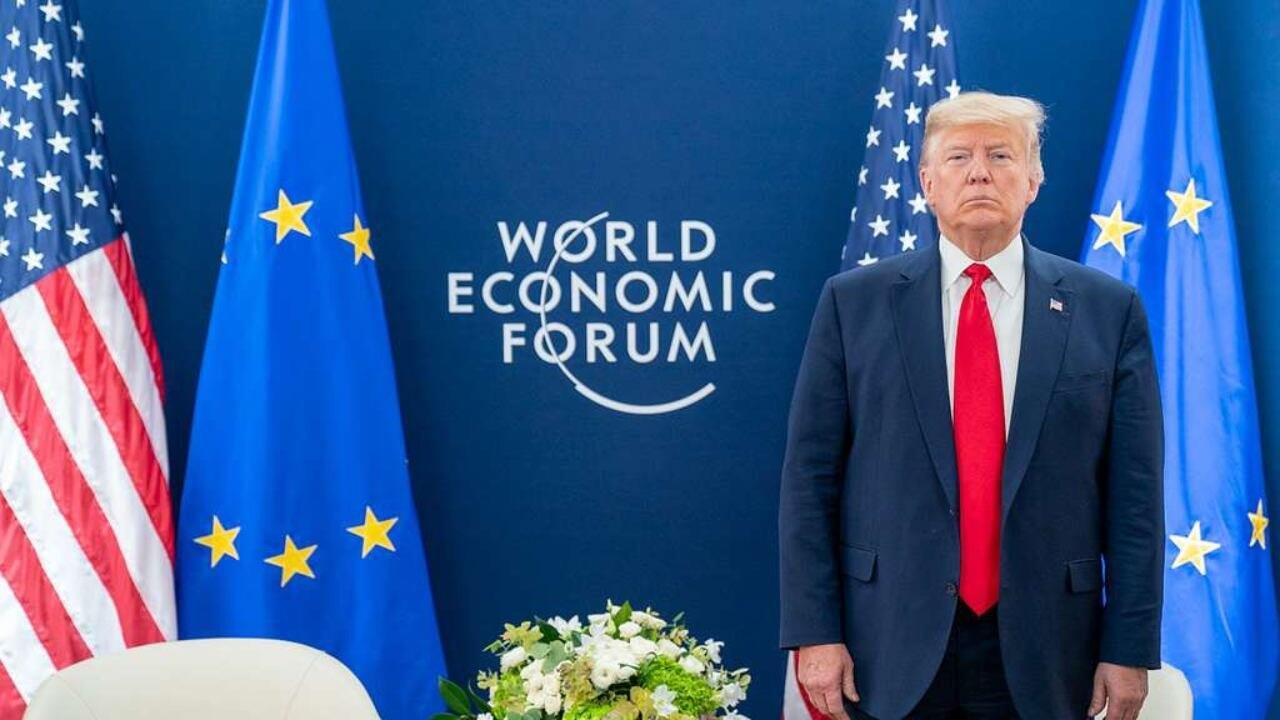
President Trump is set to crash the World Economic Forum in Davos, bringing his America First agenda straight into the heart of the globalist elite’s annual gathering. As the multilateralism devotees scramble to maintain their facade of openness Trump’s presence signals a direct challenge to their open borders and free trade obsessions that have long undermined U.S. sovereignty.
All eyes will be on the President as he heads to the Swiss ski resort for the confab, where the theme this year is ironically dubbed “A Spirit of Dialogue.”
“We’re pleased to welcome back President Trump,” said Borge Brende, the forum’s chief executive, during an online press conference. He noted this marks six years since Trump’s previous in-person appearance during his first term.
BREAKING: Donald Trump will lead the “largest and most senior” US delegation to Davos ever, say officials at the World Economic Forum.
The organisation’s annual meeting will start on 19 January in the Swiss town.https://t.co/5MpePzQTlm
? Sky 501 and YouTube pic.twitter.com/nSxwteEmLO
— Sky News (@SkyNews) January 13, 2026
Trump will arrive with the largest U.S. delegation ever, including key figures like Secretary of State Marco Rubio and Treasury Secretary Scott Bessent, as well as Steve Witkoff, his special envoy for the Middle East and Ukraine.
“The interest is to come together at the beginning of the year to try to connect the dots, decipher, and also see areas where we can collaborate,” Brende claimed, adding “Dialogue is not a luxury. Dialogue is really a necessity.”
Yet, Trump’s track record of protectionist tariffs and disdain for traditional alliances casts a long shadow over any hopes for cozy collaboration. Brende noted that the summit unfolds against “the most complex geopolitical backdrop since 1945.”
Economist Karen Harris at Bain & Co., remarked “2025 will ultimately be seen as the year in which neoliberal globalisation ended and … the post-globalisation era began.”
She described it as one where “the US prioritises national security, its own security, and uses the economy as a tool to achieve some of those goals.”
Attendees include China’s Vice Premier He Lifeng, EU Commission chief Ursula von der Leyen, and Ukraine’s President Volodymyr Zelensky, setting up potential flashpoints on issues from Ukraine and Venezuela to Gaza, Greenland, and Iran.
Trump’s video address to Davos last year, just after his second inauguration, laid bare his stance: he warned nations to shift manufacturing to the U.S. or face tariffs, rejecting decades of unchecked global trade.
? ?? BREAKING: President Trump is set to attend the World Economic Forum’s annual meeting in Davos, Switzerland NEXT WEEK, where he is expected to deliver the keynote address to the globalists.
In his virtual address last year at Davos 2025, President Trump fiercely rejected… pic.twitter.com/8nEx8YUT5h
— JJ?? (@jesseyjay94) January 9, 2026
This rejection extends to multilateral institutions, as Philippe Dauba-Pantanacce, head of geopolitical analysis at Standard Chartered, observed: it “is precisely a broad rejection of multilateral institutions, on the view that international cooperation is inconsistent with ‘winning’ a global competition that is seen as a zero-sum game.”
“With his tariffs, trade ‘is a subject where Trump has made a lot of noise’,” said Pascal Lamy, former head of the World Trade Organization, adding “But unlike what has been the case with geopolitics, whether it’s Ukraine, China, Iran or Venezuela, the impact on the global economy has been limited so far.”
Among the 850 CEOs attending are Nvidia’s Jensen Huang and Microsoft’s Satya Nadella, underscoring the forum’s blend of business and politics.
Trump’s Davos appearance follows his decisive action just days ago, where he pulled the U.S. out of 66 international organizations, including climate bodies like the Intergovernmental Panel on Climate Change and UN-linked groups on gender equality and human settlements.
Secretary of State Marco Rubio slammed these as “redundant in their scope, mismanaged, unnecessary, wasteful, poorly run, captured by the interests of actors advancing their own agendas contrary to our own, or a threat to our nation’s sovereignty, freedoms, and general prosperity.”
Rubio further critiqued their evolution into “a sprawling architecture of global governance, often dominated by progressive ideology and detached from national interests.” Trump’s move saves billions in taxpayer dollars, rejecting the inertia of funding entities that push DEI mandates, climate orthodoxy, and sovereignty-eroding policies.
At Davos, expect Trump to double down on this America First reset, exposing the forum’s multilateral mantra as a cover for globalist control that prioritizes unelected bureaucrats over national priorities.
Trump’s presence in Davos isn’t about playing nice—it’s a reminder that the era of subsidizing globalist schemes at America’s expense is over. By showing up with his powerhouse team, he’s forcing the elite to confront the reality of a U.S. that puts its own people first, free from the entanglements that have drained resources for too long.
First time Trump spoke at Davos, he told them to their face he rejects their totalitarian ‘climate change’ agenda “to dominate, transform and control every aspect of our lives.”
He’s going again to tell the WEF
their dream of a global government is OVER. pic.twitter.com/JQP82qg43X
— ??Ø?Ø?? (@KAGdrogo) January 11, 2026
Your support is crucial in helping us defeat mass censorship. Please consider donating via Locals or check out our unique merch. Follow us on X @ModernityNews.
Tyler Durden
Wed, 01/14/2026 – 09:05
https://www.zerohedge.com/geopolitical/trump-speak-globalist-wef-forum
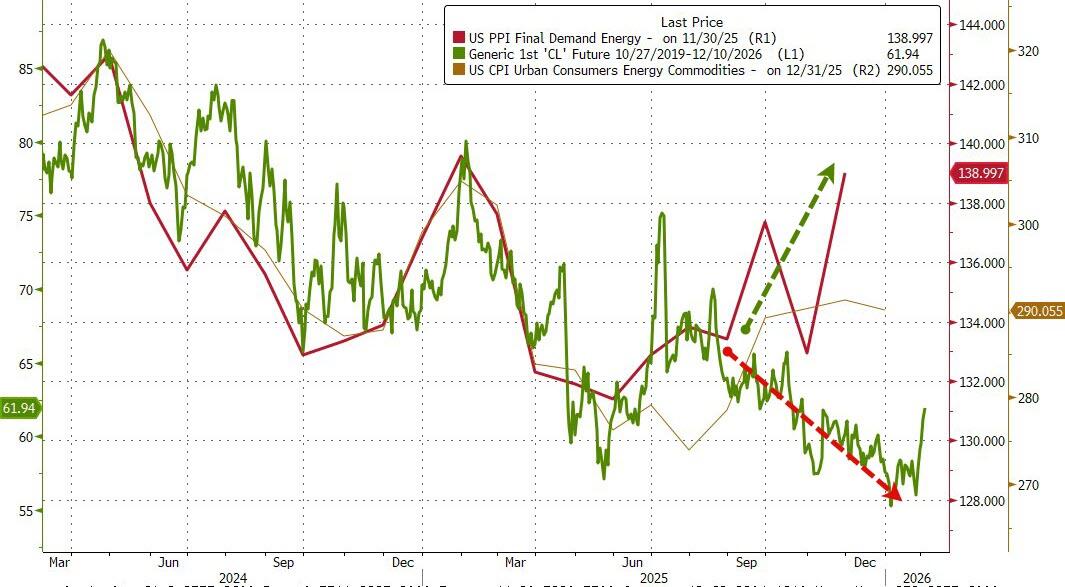
US Producer Prices Come In Hot On Heels Of Mysterious Energy Cost Surge
US Producer Prices Come In Hot On Heels Of Mysterious Energy Cost Surge
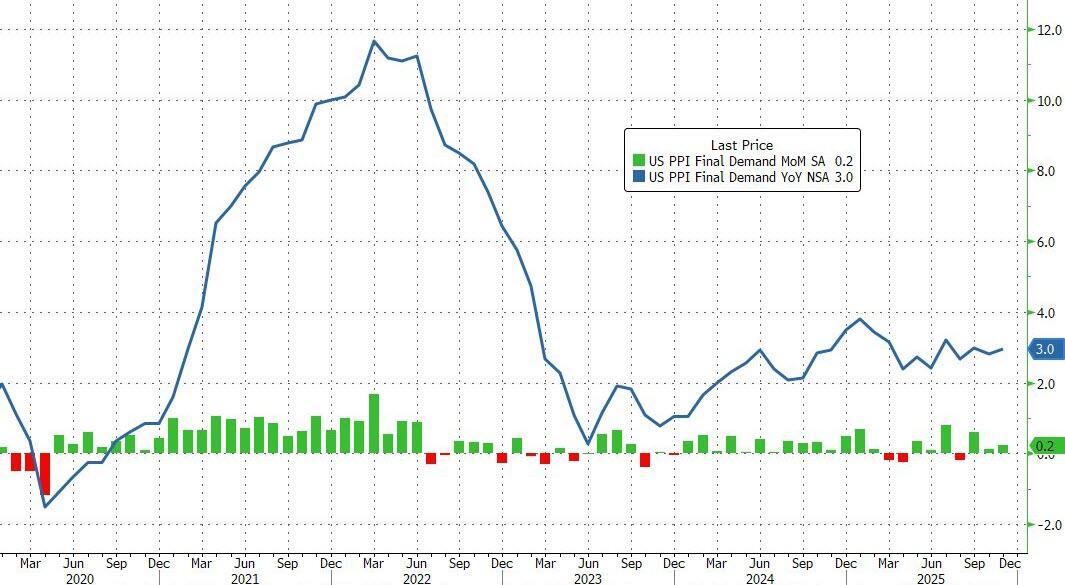
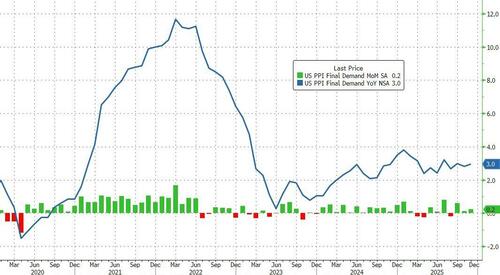
US wholesale inflation picked up slightly in November from a month earlier on a jump in energy costs, even as prices for services were unchanged.
The producer price index rose 0.2% after climbing 0.1% in the prior month, according to much-heralded BLS.
Source: Bloomberg
PPI Final demand goods:
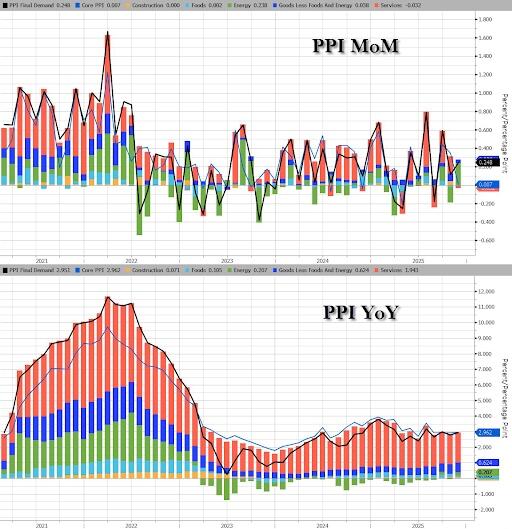
The index for final demand goods advanced 0.9 percent in November, the largest rise since moving up 0.9 percent in February 2024. Over 80 percent of the November increase can be traced to prices for final demand energy, which jumped 4.6 percent.
The index for final demand goods less foods and energy advanced 0.2 percent, while prices for final demand foods were unchanged.
Product detail:
More than half of the November rise in the index for final demand goods is attributable to prices for gasoline, which moved up 10.5 percent.
The indexes for electric power, diesel fuel, fresh fruits and melons, jet fuel, and light motor trucks also increased. (Most new-model-year passenger cars and light motor trucks were introduced into the PPI in October and November.
In contrast, prices for residual fuels declined 8.6 percent. The indexes for beef and veal and for basic organic chemicals also decreased. (See table 2.)
PPI Final demand services:
Prices for final demand services were unchanged in November following a 0.3 percent increase in October.
In November, the indexes for final demand services less trade, transportation, and warehousing and for final demand transportation and warehousing services both advanced 0.3 percent.
Conversely, margins for final demand trade services fell 0.8 percent.
Product detail:
Within final demand services in November, prices for bundled wired telecommunications access services rose 4.6 percent.
The indexes for machinery and vehicle wholesaling, portfolio management, outpatient care (partial), and game software publishing also moved up.
In contrast, margins for health, beauty, and optical goods retailing decreased 4.3 percent.
The indexes for automobile retailing (partial), chemicals and allied products wholesaling, guestroom rental, and food and alcohol retailing also declined.
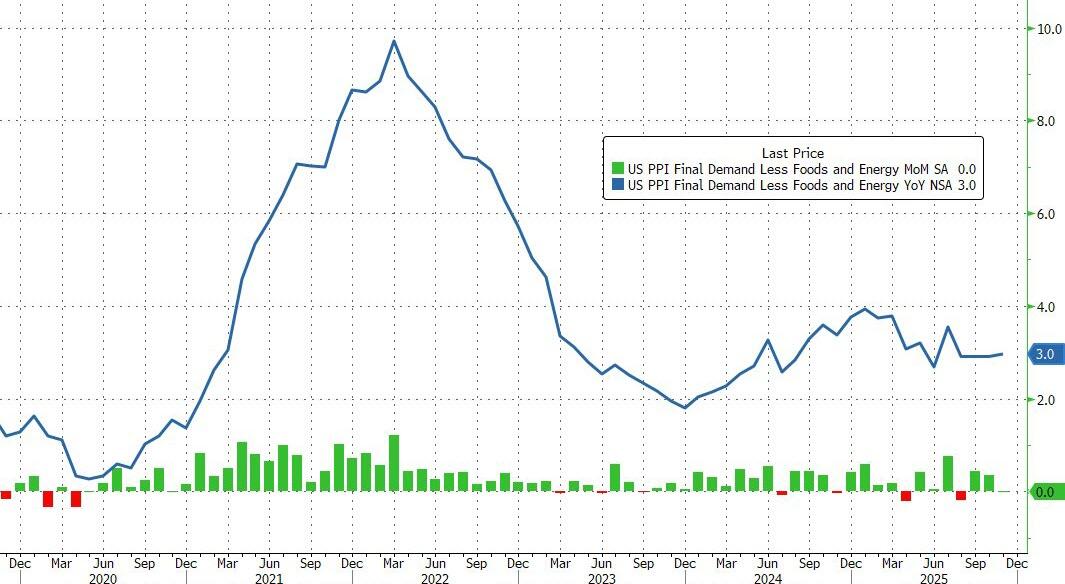
Excluding food and energy, the PPI was unchanged from the prior month and climbed 3% from November 2024.
Source: Bloomberg
Economists and investors closely track the PPI because several of its components feed into the Federal Reserve’s preferred inflation gauge, the personal consumption expenditures price index.
Among those categories, portfolio management fees advanced 1.4% while costs of airline passenger services fell 2.6%. The costs of physican care and hospital inpatient care rose slightly, while hospital outpatient care saw a bigger increase.
However, we are not quite sure where the prices surge seen in PPI data is coming from, as oil prices were still plummeting when this data was ‘created’…
Source: Bloomberg
Still, the lack of a PhD on our side means we are surely too dumb to comprehend this divergence.
Tyler Durden
Wed, 01/14/2026 – 08:53
https://www.zerohedge.com/markets/us-producer-prices-come-hot-heels-mysterious-energy-cost-surge
La UE ayuda a Ucrania con nuevo programa de préstamos y apoyo presupuestario
Por LORNE COOK
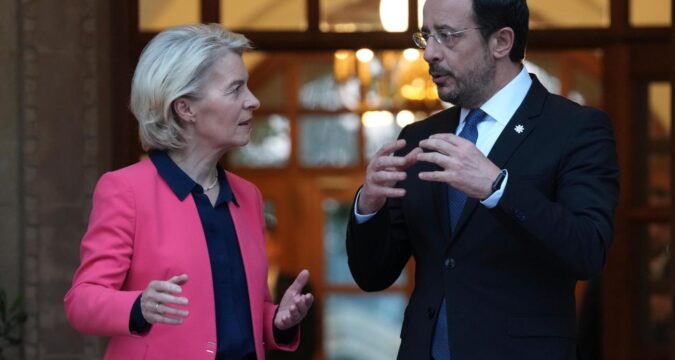
BRUSELAS (AP) — La Unión Europea dedicará la mayor parte de un nuevo programa masivo de préstamos a las necesidades militares de Ucrania durante los próximos dos años, al tiempo que inyectará miles de millones en su economía, afirmó el miércoles la presidenta de la Comisión Europea, Ursula von der Leyen.
El mes pasado, los líderes de la UE acordaron prestar a Ucrania 90.000 millones de euros (105.000 millones de dólares) para ayudar a cubrir sus necesidades en 2026 y 2027. Kiev solo tendrá que devolver el dinero una vez que Rusia termine su guerra y pague reparaciones por los daños que ha causado durante casi cuatro años.
El Fondo Monetario Internacional estima que Ucrania necesitará 137.000 millones de euros (160.000 millones de dólares) durante los dos años. El gobierno en Kiev está al borde de la bancarrota y necesita desesperadamente el dinero para la primavera.
El bloque espera que otros países como Reino Unido, Canadá, Japón y Noruega ayuden a compensar la diferencia. El FMI está preparando un nuevo préstamo multimillonario para Ucrania y se espera que lo apruebe el próximo mes.
“Todos queremos la paz para Ucrania, y para eso Ucrania debe estar en una posición de fuerza”, declaró Von der Leyen al explicar los planes de gasto de la comisión.
Añadió que que 60.000 millones de euros (70.000 millones de dólares) serían para apoyo militar y 30.000 millones de euros (35.000 millones de dólares) para ayuda presupuestaria.
“Con la asistencia militar, Ucrania puede mantenerse firme contra Rusia y, al mismo tiempo, integrarse más estrechamente en la base industrial de defensa de Europa”, dijo Von der Leyen a los periodistas.
La comisión quiere que el dinero del préstamo comience a fluir en abril, pero los países miembros de la UE y el Parlamento Europeo deben aprobar el plan de gasto antes de que pueda entrar en vigor.
El tramo militar se utilizaría para comprar equipos de Ucrania, países de la UE y otros en el área económica de Europa, como Noruega. “También será posible adquirir el equipo fuera de Europa ocasionalmente”, si es más efectivo hacerlo, dijo von der Leyen.
En algunas circunstancias, parte del dinero podría usarse bajo un esquema de la OTAN para que los aliados europeos y Canadá compren armas y equipos de Estados Unidos y los donen a Ucrania, dijeron funcionarios.
Von der Leyen insistió en que Ucrania debe emprender reformas democráticas para asegurar los préstamos, incluyendo el estado de derecho y la lucha contra la corrupción. “Estas condiciones no son negociables para ningún apoyo financiero”, afirmó.
Ucrania ha estado sumida en la corrupción durante décadas, y la presión aumentó sobre el presidente Volodymyr Zelenskyy el año pasado tras la dimisión de su poderoso jefe de gabinete, Andrii Yermak, después de que su residencia fuera registrada por investigadores anticorrupción.
Yermak también fue el principal negociador de Ucrania en las conversaciones con Estados Unidos para poner fin a la guerra.
___________________________________
Esta historia fue traducida del inglés por un editor de AP con ayuda de una herramienta de inteligencia artificial generativa.
‘Anything Less’ Than US Control Of Greenland Is ‘Unacceptable’: Trump As Ministers Hosted At WH
‘Anything Less’ Than US Control Of Greenland Is ‘Unacceptable’: Trump As Ministers Hosted At WH
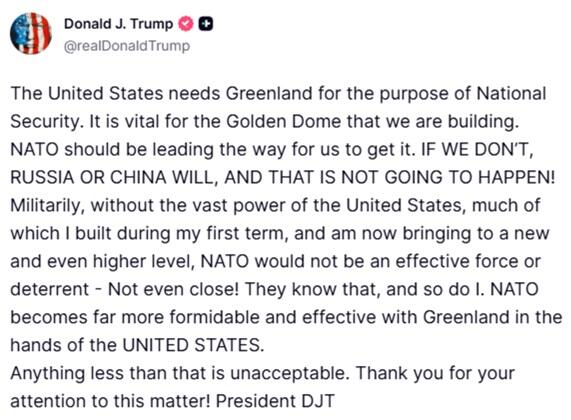
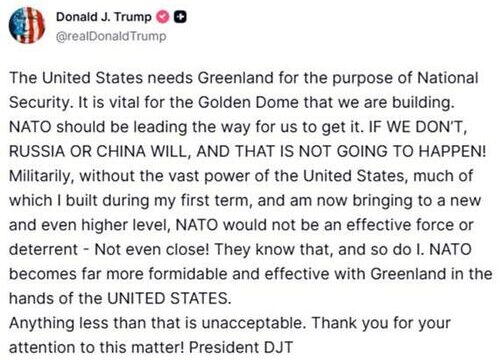
President Trump said early Wednesday on Truth Social that anything less than full American control of Greenland would be “unacceptable” – and even cited its necessity in erecting the new Golden Dome missile defense system.
“The United States needs Greenland for the purpose of National Security. It is vital for the Golden Dome that we are building. NATO should be leading the way for us to get it. IF WE DON’T, RUSSIA OR CHINA WILL, AND THAT IS NOT GOING TO HAPPEN!” Trump wrote.
The statement was issued just ahead of Vice President Vance and Secretary of State Marco Rubio’s meeting with officials from the large far northern island and NATO member Denmark at the White House.
“Militarily, without the vast power of the United States, much of which I built during my first term, and am now bringing to a new and even higher level, NATO would not be an effective force or deterrent – Not even close! They know that, and so do I,” Trump continued.
“NATO becomes far more formidable and effective with Greenland in the hands of the UNITED STATES,” he asserted, adding that “anything less than that is unacceptable.”
Trump has repeatedly unsettled the EU and NATO of late by declining to rule out the use of force to take control of the strategically important, resource-rich island. Because Denmark is a member of both organizations, the territory benefits from many of their collective security guarantees.
Denmark’s foreign minister, Lars Løkke Rasmussen, and Greenland’s foreign minister, Vivian Motzfeldt, originally outright rejected talks with Rubio. However, the meeting is now be held in Washington after Vance asked to participate and subsequently offered to host the discussions. So now they will face down Vance.
Greenland and Denmark have consistently made clear that the territory is not for sale, accusing the United States of applying “unacceptable pressure” on a long-standing ally. They also point out that a 1951 bilateral agreement already permits the US to significantly expand its military presence on the island.
EU leaders have quickly come forward to voice their support for Denmark, reaffirming their commitment to its territorial integrity and the principle of self-determination. European Commission president Ursula von der Leyen said on Wednesday that the island “belongs to its people”.
🔴 Greenland would rather remain part of Denmark than join the United States, the island’s prime minister has said ahead of a crucial White House meeting
Find out more ⬇️https://t.co/8gAoIUGmLy pic.twitter.com/VEWBzIGrn5
— The Telegraph (@Telegraph) January 13, 2026
But what if the people want to take a buyout offer from the United States? Giving each citizen a huge single cash sum is actually among the more creative ideas which have been floated.
The figure of one million dollars has been something in media reports, for example, and we can imagine there are many Greenlanders that would take it.
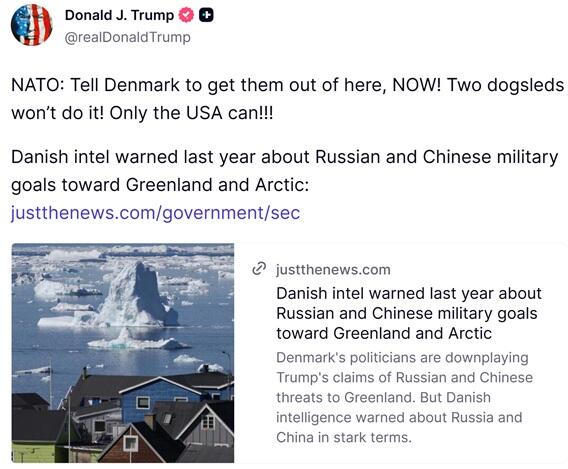
In follow-up on Wednesday, Trump issued a second Greenland Truth Social statement, this time highlighting that even Danish intelligence last year warned of the increased threat of Russian and Chinese military presence in the Arctic. The Europeans have suddenly been downplaying this, rejecting it as a rationale for a greater US military presence.
And NATO leadership too:
NATO chief Mark Rutte has said that Greenland’s security is “non-negotiable.”
He says that all allies agree on the importance of security in the Arctic and has warned that there must be diligence from NATO towards Chinese and Russian activity in the region.
Denmark and the Europeans have pushed back against his earlier assertions like the following: “We need that because if you take a look outside of Greenland right now, there are Russian destroyers, there are Chinese destroyers and, bigger, there are Russian submarines all over the place. We’re not gonna have Russia or China occupy Greenland, and that’s what they’re going to do if we don’t,” Trump has said before.
The ‘fact checkers’ have been quick to push back, for example in this fresh Associated Press article: “Experts have repeatedly rebuffed Trump’s claims of Chinese and Russian military forces lurking off Greenland’s coastline. Experts say Russia instead operates in the Barents Sea, off the Scandinavian coast, and both China and Russia have a presence in the Bering Sea south of Alaska.”
But then there’s this highly interesting thread…
Okay.
Here is a list of the quotes from the Danish 2025 Intelligence Assessment that contradict this article:
Danish Defence Intelligence Service (DDIS) – Intelligence Outlook 2025
Link: https://t.co/YlTZxmfdjh
– “In recent years, the United States has significantly increased… https://t.co/uIPkj3msLA
— Nick Solheim (@NickSolheim) January 11, 2026
The White House gathering will likely see Denmark try and push for a joint NATO mission for Greenland, of which US forces are a key part, in hopes of satisfying Trump enough to get him to halt his big push for a Greenland takeover. Today’s talks are expected to begin at 10:30am ET.
Tyler Durden
Wed, 01/14/2026 – 08:45
US Retail Sales Shrug Off ‘K-Shaped’ Economy With Upside Surprise In November
US Retail Sales Shrug Off ‘K-Shaped’ Economy With Upside Surprise In November
Having noted yesterday that holiday retail spending (December) was up significantly (via the NRF), today we get the official (US Census Bureau) look at Retail Sales from November… so don’t get too excited.
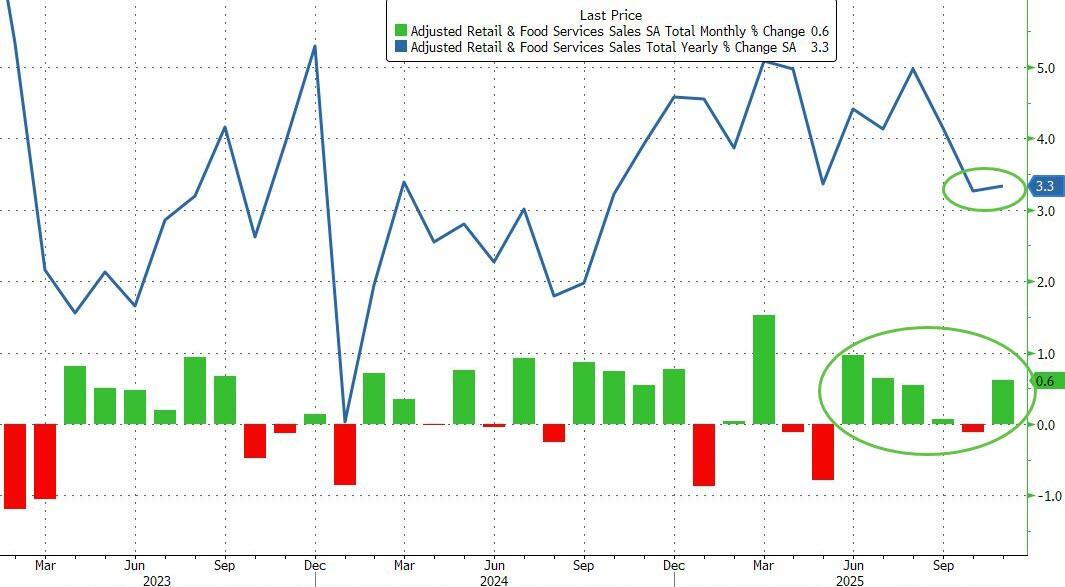
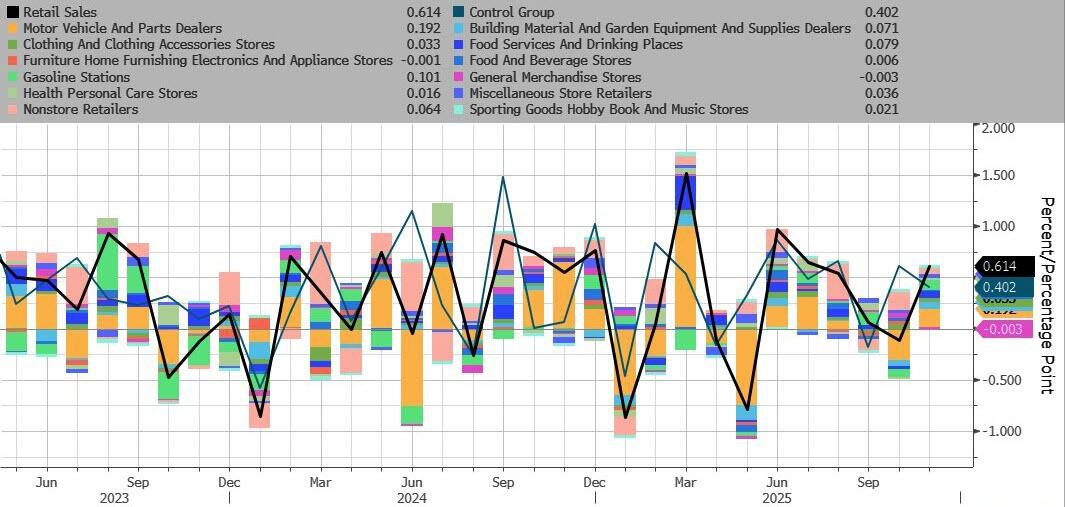
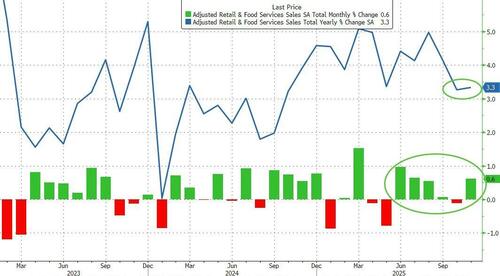
But, amid the growing specter of the ‘k-shaped’ economy, expectations were for a sizable 0.5% MoM jump in retail sales (after October’s 0.0% nothingburger)… but the headline print beat expectations with a 0.6% MoM surge… leaving sales up 3.3% YoY…
Source: Bloomberg
That was the strongest MoM jump in retail sales since July.
Additionally, Ex-Autos, and Ex-Autos and Gas also both beat expectations.
Ten out of 13 categories posted increases, including sporting goods and hobby stores as well as building materials retailers and clothing outlets. Motor vehicle sales bounced back after the expiration of federal tax incentives on electric cars restrained sales in the prior month. Higher receipts at gasoline stations also contributed to the overall gain.
General Merchandise stores saw sales decline in November (along with Furniture), while Motor Vehicles and Gas Station sales surged the most…
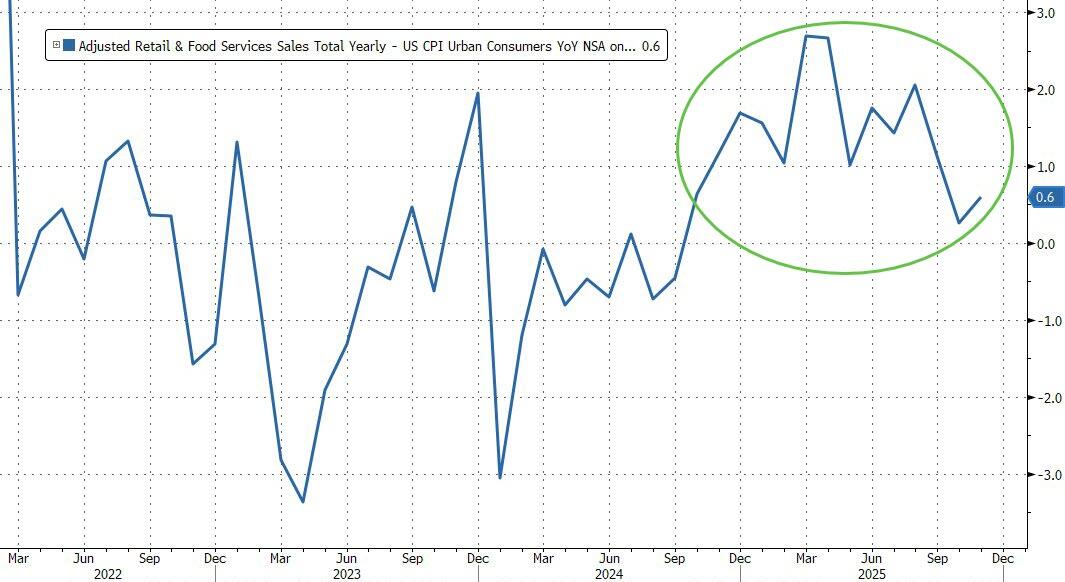
Real retail sales (a rough approximation against CPI) remained positive on a YoY basis…
Source: Bloomberg
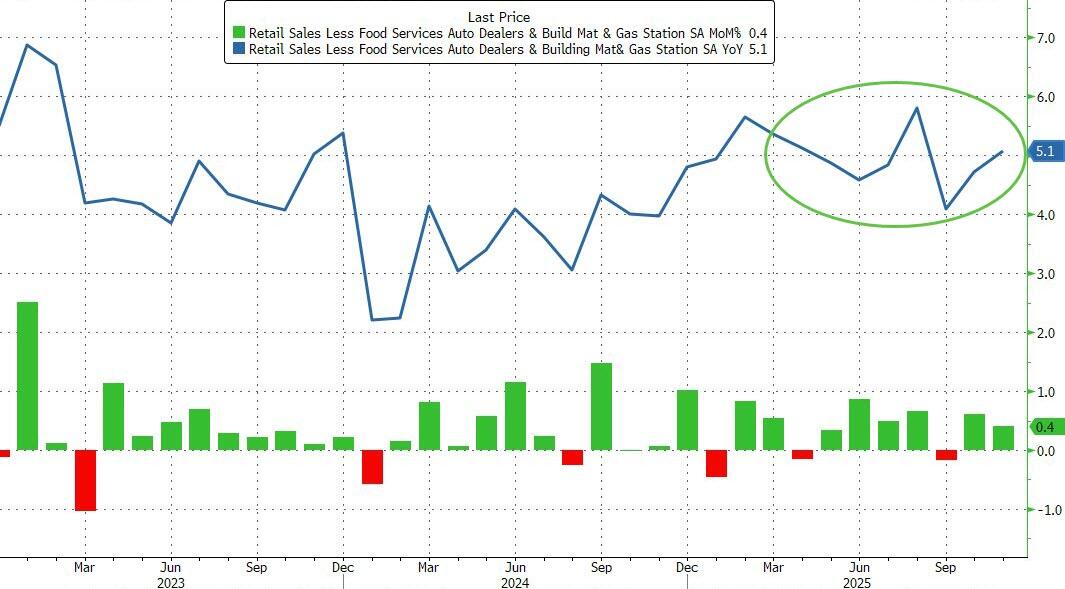
Finally, things look even better for the broad economy as the Retail Sales Control Group (which excludes food services, auto dealers, building materials stores and gasoline stations) – which feeds into the GDP calc – jumped 0.4%% MoM – in line with expectations…
Source: Bloomberg
That MoM jump leaves sales up a strong 5.1% YoY and while the ‘k-shaped’ economy continues to weigh on market sentiment, it is not evident in the aggregate data and supports solid Q4 GDP growth.
“The consumer ended 2025 on a strong note might get stronger when tax refunds start hitting in the new year,” said David Russell, Global Head of Market Strategy at TradeStation.
“Today’s retail sales report is consistent with accelerating GDP in Q4, which could push rate cuts further into the future. Whatever happens with Jerome Powell, the era of his relevance seems to be winding down. Further easing with be the concern of his successor.”
The figures may have gotten an extra boost from federal workers, who recouped lost wages from the government shutdown.
Tyler Durden
Wed, 01/14/2026 – 08:39
Acceso gratuito a Starlink en Irán, clave para que manifestantes difundan su mensaje
Por DAVID RISING
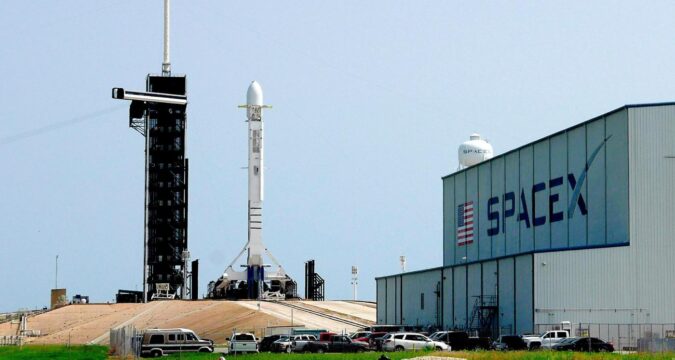
BANGKOK (AP) — La capacidad de los manifestantes iraníes para difundir al mundo los detalles de las sangrientas protestas a escala nacional ha recibido un fuerte impulso, ya que el servicio de internet satelital Starlink de SpaceX redujo sus tarifas para permitir que más personas eludan el intento más fuerte del gobierno de Teherán de evitar que la información se filtre fuera de sus fronteras, dijeron activistas el miércoles.
La medida de la empresa aeroespacial estadounidense dirigida por Elon Musk se produce tras el cierre completo de las telecomunicaciones y del acceso a internet para los 85 millones de iraníes, ocurrido el 8 de enero, mientras las protestas se expandían debido a la tambaleante economía de la República Islámica y el colapso de su moneda.
SpaceX no ha anunciado oficialmente la decisión y no respondió a la solicitud de comentarios, pero activistas dijeron a The Associated Press que Starlink ha estado disponible de forma gratuita desde el martes para cualquier persona en Irán que cuente con los receptores.
“Starlink ha sido crucial”, afirmó Mehdi Yahyanejad, un iraní cuyo grupo sin fines de lucro Net Freedom Pioneers ha ayudado a introducir unidades de contrabando en Irán, señalando un video que surgió el domingo en el que se muestran filas de cuerpos en un centro médico forense cerca de Teherán.
“Se mostraron varios cientos de cuerpos en el suelo, lo cual salió a la luz gracias a Starlink”, dijo en una entrevista desde Los Ángeles. “Creo que esos videos del centro cambiaron bastante la comprensión de todos sobre lo que sucede, porque lo vieron con sus propios ojos”.
Desde el estallido de las manifestaciones el 28 de diciembre, el número de muertos ha aumentado a más de 2.500 personas, principalmente manifestantes, pero también personal de seguridad, según la Agencia de Noticias de Activistas de Derechos Humanos con sede en Estados Unidos.
Starlink está prohibido en Irán por regulaciones de telecomunicaciones, ya que el país nunca autorizó la importación, venta o uso de los dispositivos. Los activistas temen que puedan ser acusados de ayudar a Estados Unidos o Israel al usar ese sistema de comunicación y ser acusados de espionaje, lo que puede conllevar la pena de muerte.
Autoridades iraníes buscan dispositivos Starlink
Las primeras unidades de Starlink fueron introducidas de contrabando en Irán en 2022 durante las protestas por la ley de uso obligatorio del velo en el país, cuando Musk logró que el gobierno del expresidente Joe Biden eximiera el servicio de las sanciones a Irán.
Desde entonces, se calcula que se han introducido de contrabando más de 50.000 unidades, y las personas hacen grandes esfuerzos para ocultarlas, utilizando redes privadas virtuales mientras están en el sistema para ocultar direcciones IP, además de tomar otras precauciones, dijo Ahmad Ahmadian, director ejecutivo de Holistic Resilience, una organización con sede en Los Ángeles que fue responsable de llevar algunas de las primeras unidades de Starlink a Irán.
Starlink es una red global de internet que utiliza unos 10.000 satélites que orbitan la Tierra. Los suscriptores deben contar con un equipo que incluye una antena, la cual requiere una línea de visión al satélite, por lo que debe desplegarse al aire libre, donde podría ser detectada por las autoridades. Muchos iraníes las disfrazan como paneles solares, dijo Ahmadian.
Debido a que los esfuerzos para cerrar las comunicaciones durante la guerra de 12 días con Israel en junio demostraron no ser muy efectivos, los servicios de seguridad iraníes han tomado ahora “tácticas más extremas” para bloquear las señales de radio de Starlink y los sistemas GPS, dijo Ahmadian en una entrevista telefónica. Cuando Holistic Resilience transmitió informes a SpaceX, señaló Ahmadian, la empresa lanzó una actualización de firmware que ayudó a eludir las nuevas contramedidas.
Los servicios de seguridad también utilizan informantes para averiguar quién podría estar usando Starlink, buscan tráfico de internet y redes sociales en busca de señales de que se ha utilizado, y ha habido informes de que han allanado apartamentos con antenas satelitales.
“Siempre ha habido un juego del gato y el ratón”, dijo Ahmadian, quien huyó de Irán en 2012, tras pasar tiempo en prisión por activismo estudiantil. “El gobierno usa todas las herramientas de que dispone”.
Aun así, señaló que los intentos de interferencia del gobierno solo han sido efectivos en ciertas áreas urbanas, lo que indica que los servicios de seguridad carecen de los recursos para bloquear Starlink de manera más amplia.
Un Starlink gratuito podría aumentar el flujo de información desde Irán
El martes, Irán comenzó a permitir que las personas hicieran llamadas telefónicas internacionales a través de sus teléfonos móviles, pero los telefonemas desde fuera del país hacia Irán siguen bloqueados.
En comparación con las protestas de 2019, cuando el gobierno pudo sofocar efectivamente durante más de una semana la información que llegaba al resto del mundo utilizando medidas menos estrictas, Ahmadian dijo que la proliferación de Starlink ha hecho imposible evitar las comunicaciones. Afirmó que el flujo podría aumentar ahora que el servicio se ha vuelto gratuito.
“Esta vez realmente lo cerraron, incluso las líneas fijas no funcionaban”, dijo. “Pero a pesar de esto, la información salía y también muestra cuán distribuida está esta comunidad de usuarios de Starlink en el país”.
Musk ha hecho que el uso de Starlink sea gratuito durante varios desastres naturales, y Ucrania ha dependido en gran medida del servicio desde la invasión a gran escala de Rusia en 2022. Inicialmente fue financiado por SpaceX y luego, a través de un contrato del gobierno estadounidense.
Musk expresó preocupaciones sobre el poder de tal sistema en manos de una sola persona, tras negarse a extender la cobertura de Starlink de Ucrania para apoyar un contraataque ucraniano planeado en Crimea ocupada por Rusia.
Como defensor de Starlink para Irán, Ahmadian dijo que la decisión sobre Crimea fue una llamada de atención para él, pero que no podía ver ninguna razón por la cual Musk pudiera estar inclinado a actuar de manera similar en Irán.
“Mirando al Elon político, creo que tendría más interés… en un Irán libre como un nuevo mercado”, dijo.
Julia Voo, quien dirige el Programa de Ciberpoder y Conflicto Futuro del Instituto Internacional de Estudios Estratégicos de Singapur, dijo que existe un riesgo al depender de una sola empresa como salvavidas, ya que “crea un punto único de falla”, aunque actualmente no hay alternativas comparables.
China ya ha estado explorando formas de cazar y destruir satélites Starlink, y Voo dijo que cuanto más efectivo demuestre ser Starlink al penetrar “apagones terrestres ordenados por el gobierno, más estados estarán observando”.
“Solo generará más esfuerzos para ampliar los controles sobre distintas formas de comunicación, para quienes están en Irán y en todas partes, observando”, dijo.
___
Los periodistas de The Associated Press Jon Gambrell en Dubái, Emiratos Árabes Unidos, y Melanie Lidman en Tel Aviv, Israel, contribuyeron a este informe.
___
Esta historia fue traducida del inglés por un editor de AP con la ayuda de una herramienta de inteligencia artificial generativa.