
Category: News
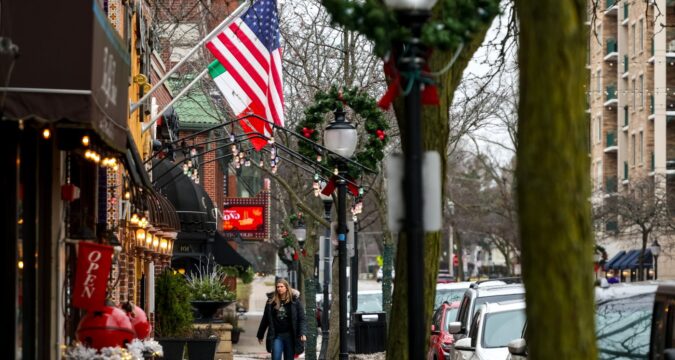
Heather Larson: How a Chicago Bears move to Arlington Heights will strengthen the entire Chicagoland economy
Across Chicago’s northwest suburbs and the greater region, business owners, hospitality leaders and civic organizations share a common goal: building an economy that grows responsibly, creates jobs and strengthens our communities without placing unnecessary burdens on taxpayers.
I am proud to stand alongside a coalition of regional business leaders — including hotel, restaurant and attraction owners and managers and other community leaders — who believe the conversation around tax certainty for the Chicago Bears’ proposed Arlington Heights development warrants thoughtful public discussion.
The Bears are not asking for a taxpayer-funded stadium. They are not seeking tax abatements or exemptions. They will pay property taxes and contribute to local school districts, park districts and other taxing bodies. What they are requesting is the ability to negotiate directly with those entities to ensure their tax obligations are predictable and transparent — an approach commonly used in major developments across the country.
Tax certainty is not unusual. It is a practical requirement for projects of this magnitude — especially when private investors are prepared to commit billions of dollars in Illinois.
The proposed redevelopment of the Arlington Park site represents a capital investment of more than $5 billion for the stadium and adjoining mixed-use district, including over $2 billion from the Bears organization alone. Independent analysis projects the completed development would generate approximately $1.3 billion in net new annual economic activity across Illinois, supporting jobs, wages and business growth throughout the region.
That economic activity translates into significant public benefit. Over a 40-year period, the project is expected to produce nearly $2 billion in net new tax revenues for local, county and state governments, exclusive of property taxes, revenues that would not exist without this development.
The Bears released an economic impact report that included architectural renderings of the proposed stadium in Arlington Heights on Sept. 30, 2025. (MANICA Architecture)
Beyond job creation and tax base growth, a modern, enclosed stadium would allow Chicagoland to compete for major national and global events, including Super Bowls, NCAA championships, Final Fours, major concerts and other large-scale events. These events generate year-round visitation and drive spending on hotels, restaurants, retail and transportation that benefit communities throughout the region, including the city of Chicago, throughout Cook County and beyond.
The surrounding site will require public investment in infrastructure, and that reality should be acknowledged openly. However, infrastructure improvements — roads, transit access, utilities, stormwater management and public safety — are not giveaways. They are long-term public assets that improve daily quality of life for residents, support surrounding businesses and enable future development well beyond the stadium itself. Importantly, projected state tax revenues alone exceed the requested infrastructure investment by hundreds of millions of dollars over time, making this a fiscally responsible decision with a clear public return.
From a tourism and business perspective, this project strengthens, not diminishes, Chicago and the entire region. Visitors attending games and major events will stay in both suburban and Chicago hotels, dine in suburban and city restaurants, and visit the major cultural attractions. Events hosted in the northwest suburbs will drive new economic activity across the region.
Illinois has a rare opportunity before it: a transformational private investment that delivers jobs, long-term revenue, global visibility and modern infrastructure — without asking taxpayers to fund the stadium itself.
Granting tax certainty does not cost the state; it simply allows negotiations to proceed in good faith and provides the predictability necessary to move forward one of the most significant economic development projects in our region’s history.
On behalf of the many regional employers and business leaders, I believe this conversation should continue; thoughtfully, transparently, and with an eye toward what’s best for workers, businesses and communities across Illinois.
Heather Larson is president and CEO at Meet Chicago Northwest, a nonprofit marketing organization.
Submit a letter, of no more than 400 words, to the editor here or email letters@chicagotribune.com.
https://www.chicagotribune.com/2026/01/14/opinion-bears-stadium-arlington-heights-taxes/

For Dry January, hospitality industry experts discuss why they’re cutting back on alcohol
This time of year, with Dry January in full swing, it’s hard to ignore the sobering (pun intended) stories and stats on alcohol consumption. According to a 2025 Gallup poll, a record-low 54% of Americans reported that they consume alcohol. It was the third consecutive year the poll found declines in Americans’ reported drinking. For the first time, a majority of Americans say drinking in moderation — one or two drinks a day — is bad for their health.
But it’s not just average consumers who are questioning and changing their relationship with alcohol. Folks on the other side of the bar are too. Those in the hospitality industry are especially vulnerable to the downsides of drinking with easy access to alcohol, spirit brand-sponsored trips, alcohol-focused conferences and a social life that often revolves around bars.
With some 18 years of working in restaurants, including in her current role as bar director for Creepies and Elske, Monica Casillas-Rios knows all too well the allure of alcohol — the good and not-so-good. While she has always tried to be conscious of her drinking, taking off months here and there, she realized a few years back that she needed to rethink her frequent outings to bars, restaurants and after-hours clubs.
“I couldn’t keep doing that financially and physically,” Casillas-Rios says.
Six months ago, she committed to not drinking beyond the cocktail tasting research required to do her job. When she tastes wine, she always spits.
“As beverage professionals, this is how we make our living, but there’s also a matter of how responsible are we being to ourselves,” she says.
It was about a year and a half ago when Abe Vucekovich started questioning his relationship with alcohol.
“I realized there had been some real consistency to my drinking that I didn’t love, including how early I was starting,” says Vucekovich, who was one of the creative cocktail forces at influential bar the Violet Hour. More recently, he helped open Meadowlark, but his focus now is on Friends of Friends, where he is co-owner.
After abstaining from alcohol for a year, Vucekovich has been dipping his toe back in slowly, albeit with no plans to dive fully back in.
“I need to realize where my threshold is and I’m trying to be very gracious with myself with that process as it’s messy,” he says. “I’ve seen a lot of other operators and bar people who have either cut drinking out completely or cut back.”
A bitter & bright, left, is a nonalcoholic drink with Pathfinder, Lucano, lemon, sweet vermouth and mint with another nonalcoholic drink named woodsy & bubbly with blanc vermouth, palo santo, grapefruit, sea salt and tonic at the bar at Friends of Friends, Jan. 12, 2026, in Chicago. (Armando L. Sanchez/Chicago Tribune)
That’s something Natalia Cardenas has also experienced.
“I’m hearing so many industry people share their journeys of scaling back or cutting out alcohol altogether,” she says. “Honestly, that’s something I had never heard before and every day I hear about more and more.”
Cardenas got her start behind the bar first in Miami, followed by stints at Chicago’s Purple Pig and Balena. Working in spirits was never her dream, but she fell in love with the people in the industry and the history and storytelling behind wine and spirits. The travel possibilities were a plus too.
For Cardenas, health issues led to her alcohol aha moment. Eventually, her doctor recommended eliminating alcohol.
“It became increasingly harder to do my job working for a liquor supplier as there were many company outings and gatherings where alcohol was flowing,” she says.
Cardenas stepped away from the industry in 2024 as she didn’t know where she fit in anymore.
In early 2025, she found her way back with Pathfinder, a hemp-based nonalcoholic spirit company where she is the Midwest regional manager and sells to retail, restaurants and bars. The experience has been enlightening, says Cardenas.
“We’re at a crossroads of what’s actually happening and what people are consuming and what society deems is acceptable in a social setting,” she says.
Kevin Canchola’s career in hospitality has run the gamut from bartending at the Pump Room and the Langham, Chicago, to being a brand ambassador for Moët Hennessy and William Grant & Sons. His relationship with alcohol has been equally varied.
“There were times where I’d spent months not drinking,” he says.
While working as a brand ambassador, where drinking is often an unspoken part of the job with an expense account to go along with it, Canchola began questioning his career choice.
“I maintained as much sobriety as the job would allow, and that made me resent drinking because while I would no longer overdo it, I would still feel some of the aftereffects the next day and I wouldn’t feel as sharp as I wanted to be,” he says. “I was trying to live up to these brands and represent them accurately, but in doing so, I wasn’t representing myself.”
Canchola felt conflicted in trying to represent these brands while not consuming alcohol. For a while, he kept his drinking — or lack of drinking — habit to himself.
In May he took a firm step to stop drinking, he says.
At his current gig working with Casa Lumbre, an incubator for small spirit brands based out of Mexico, Canchola is particularly excited about Almave, a new nonalcoholic blue agave spirit that’s distilled like tequila minus the fermentation process, where it would become alcohol. Like some other NA spirits, Almave does contain minute amounts of alcohol.
“For the first time, I’m excited about Dry January because I get to do my job and I’m not hindered by anything,” he says. “I get to celebrate with friends and maybe give them a peek into sobriety if they care to try that.”
Casillas-Rios considers herself fortunate to have stepped into a strong NA program at Elske, including a nonalcoholic pairing menu, when she joined five years ago. She has leaned even more into those offerings at both Elske and Creepies.
“The category of nonalcoholic is growing so much that it is a disservice to not put it on your menu,” she says.
In her role at Pathfinder, which includes an amaro-like NA spirit and a canned NA Negroni, Cardenas’ renewed interactions with the operators and bartenders she has known for so long have revealed some interesting changes in the NA world, especially when it comes to verbiage.
“Mocktail” is out due to its child-like reference, while “nonalcoholic” has its naysayers because it sounds negative and “non-fun” says Cardenas. “Alcohol-free” has its fans. “Spirit-free” seems to be gaining popularity with industry folks, but that wouldn’t necessarily apply to Pathfinder as it goes through a fermentation process with botanicals and a distillation to build flavor and dimension, so it’s technically a spirit. (Confused yet? All of this doesn’t even include the various terms for the different levels of alcohol consumption, ranging from “sober-curious” and “damp” to just plain “sober.”)
“There are so many terrific alcohol-free options these days with different wines and spirits that operators can have more nuanced cocktails to cater to their guests,” says Cardenas, especially important at a time when bars are seeing declines in patrons as their drinking habits change.
For those looking to extend their Dry January endeavor further or simply cut back, these industry experts have plenty of tips.
“People need to look within themselves and see what role alcohol plays in their life and whether it works for them,” says Casillas-Rios. “Your relationship with sobriety is incredibly personal, but at the end of the day, we all want something better for ourselves.”
“I wish it sounded more poetic, but just speak up,” says Canchola, who also recommends finding a friend who’s damp or sober.
“Have conversations with retail operators, bartenders and servers,” says Cardenas. “If you’re open with them, I can almost guarantee they’re going to disclose that they’ve cut back themselves so they can give you the right direction.”
Owner Abe Vucekovich makes an old fashioned behind the bar at Friends of Friends, Jan. 12, 2026, in Chicago. (Armando L. Sanchez/Chicago Tribune)
“The biggest thing for me was pursuing therapy and other mindfulness things in my life that were not reliant on drinking,” says Vucekovich, who admits the journey isn’t without challenges. “Drinking can make you think of yourself differently, so when the beer goggles come off, it’s a bit raw to sit with your feelings.”
But there are plenty of benefits of not drinking too.
“I never realized how much of a morning person I was until I really stopped drinking,” says Casillas-Rios. “At the end of the day, though, it’s my livelihood. I still enjoy working in it, but I think a lot more of us have to take on that role of being advocates, not only for providing a good experience when it comes to people that are drinking, but also providing a good experience when people are not.”
Lisa Shames is a freelance writer.
https://www.chicagotribune.com/2026/01/14/dry-january-hospitality-industry-experts/
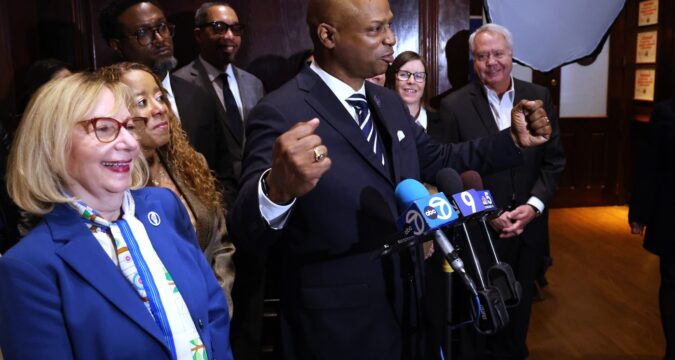
Editorial: There’s no partisan monopoly on bad ideas to combat the high cost of living
Politicians all along the ideological spectrum are in agreement on the big issue currently animating Americans. Stuff is too expensive.
President Donald Trump, after mocking talk of “affordability” as a “hoax” last year, has pivoted now to proffering a slew of questionable, quick-fix policies to lower prices for Americans.
Here in Illinois, Democratic House Speaker Emanuel “Chris” Welch, speaking Jan. 6 before a City Club of Chicago audience, said of the 2026 legislative session, “Everything’s about affordability and that’s going to be our focus.”
Fine and dandy. But where things start giving us pause is when these politicians get specific.
From Trump, we have his recent pronouncement that he backs a one-year cap on credit-card interest rates of 10%. Current rates are roughly double that level.
Of course, that sounds on its face like a relief to those who pay interest on their credit-card purchases. But it doesn’t take more than a few seconds of thought to realize that if banks and other lenders are forced to slash their interest rates, they will sharply restrict what sorts of consumers they’ll finance. Credit cards aren’t a convenience for most of us; they’re a necessity — especially in a world in which cash purchases are a relative rarity.
When it comes to credit cards, the only thing that will make a consumer angrier than the nosebleed interest rate is not being able to get one at all.
Sadly, Trump doesn’t have a monopoly on this bad idea. Sen. Elizabeth Warren, the Massachusetts Democrat who’s been a harsh critic of banks for decades, says she’d love to work with the president on a bill to cap credit-card interest. This page has consistently urged Republicans and Democrats to work together, but that’s the sort of bipartisanship we can do without.
In Illinois, Welch has offered a few ideas of his own, which he says may well be pursued during this spring session in Springfield. For example, he wants to give the Illinois Department of Insurance the authority to reject homeowners insurance rate hikes if they exceed a certain level.
Again, on its face, this is likely to earn cheers in many quarters, particularly after Bloomington-based insurance giant State Farm jacked up its homeowners rates in Illinois by 27% on average last year.
But Illinois has one of the most competitive insurance markets in the U.S. thanks in no small part to its light regulatory touch on rates. We’ve supported forcing insurers to be more transparent with the public on their losses in the state when substantially boosting their rates. But a crackdown is just as likely to reduce competition that keeps prices reasonable as it is to give consumers relief.
In short, the command-and-control levers politicians have at their disposal to reduce the cost of living often are fool’s gold, creating their own unintended consequences.
That doesn’t mean, however, that these political leaders are powerless to help. Far from it. Where they can improve our economic lives is by reining in their own impulses that contribute to making daily life more expensive.
For Trump, of course, the most obvious example is his insistence on imposing stiff tariffs on imported goods. After incorporating anticipated behavioral changes by importers and others, the average effective U.S. tariff rate as of Nov. 1 was 11.2%, according to the Tax Foundation. In 2024, that figure was just 2.5%.
The U.S. inflation rate hasn’t spiked as much as some anticipated after Trump’s tariff binge, but it remains well above the Federal Reserve’s target of 2%. Calibrating tariffs’ precise contribution to inflation is difficult, but certainly those levies on foreign goods are a factor. Without them, daily life would be cheaper.
In the case of Welch and the Democratic House Caucus in Illinois that he leads, their contribution to cost pressures arise in large part from a budget approach that leans heavily on revenue increases rather than efficiencies each year. Late last year, they raised the sales tax in the Chicago area by 0.25 percentage points, for example, as part of the sprawling bill to bail out the region’s transit agencies. One can debate the trade-offs in that measure, but the bottom line is that Chicagoans will pay a 10.5% sales tax when the bill takes effect — the highest sales tax of any major U.S. city.
It’s difficult to think of a more negative public-policy effect on the daily cost of living than that.
Additionally, the state over the years has reduced the share of various other taxes it shares with municipalities, putting pressure on those local governments to raise property taxes. Property taxes in Illinois are among the highest in the U.S., significantly denting the monthly finances of homeowners and inflating rents for apartment dwellers.
Again, that’s about as direct an effect on the cost of living as there is.
So, whether you’re a Republican or a Democrat, when you hear a politician talk about how much they feel your pain and how they’re going to put the hammer down on (name your greedy industry or company of choice), we’d advise you to contemplate instead how your representative, senator, governor or president can change matters directly in their control to make your situation better.
Submit a letter, of no more than 400 words, to the editor here or email letters@chicagotribune.com.

Letters: The Bears broke my heart. Saturday’s victory over the Packers helps with the ache.
Twenty-plus years ago, I broke up with the Bears. I couldn’t take the heartache. It was an unhealthy relationship. Eventually I stopped watching football altogether.
Saturday night, I had my standing 6:30 p.m. appointment with my mom and dad for pizza at their place. They’re in their 90s and always eat in the dining room, no exceptions. There’s no TV there. Since the game would be historic — no matter who won — I brought my laptop and streamed the game.
My dad is a Bears fan. My mom too. Mostly she likes watching us watch — and provides color commentary, sometimes insightful and sometimes ridiculous.
In general, we all miss 1985 and the parties and fun those games gave.
We went through cocktails, dinner and dessert, all while watching the Bears trail. Before halftime, my dad wrote off the Bears, noting their defense wasn’t good enough to enable a win. Around 10 p.m., we watched the Packers get six more points: 27 to 16 with only six minutes left. I told Mom and Dad, “I’m taking my computer and going home.”
As I was packing, my dad walked to his den and turned on the TV. He called me, extended the remote and said, “Find the game for me.” I pressed the mic and said, “Bears game.” The game came up as 27 to 24. What? Somehow the Bears scored eight points during the brief blackout I imposed.
So there we were, my dad and me standing shoulder to shoulder, and my mom was now in the den too, in a chair that was facing us rather than the TV. She watched Dad and me standing and cheering for the Bears like we did so many decades ago.
We watched the Packers miss a field goal with less than three minutes left and the Bears get a touchdown with less than two minutes left: Bears ahead, 31 to 27. They held back the Packers to complete the win!
What a great time my dad, my mom and I had. Especially those last minutes of the game. It felt a bit like ’85.
Now I’m planning to watch the next game with them.
As for the Bears and me: Will I go back to being a fan? I’m telling myself to be strong. I’ve been hurt too many times.
— James Janus, Glenview
One for the history books
Bears quarterback Caleb Williams has given Chicagoland a major historical victory over the Packers. Once again, the triumph of Da Bears in Soldier Field was both forceful and elegant in an unforgettable fourth quarter.
Definitely a Bears-Packers game for the sports history books. Congratulations to head coach Ben Johnson for his truly inspiring 21st century Bears team!
— Alejandro Lugo, Park Forest
Just give them 15 minutes
So, tell me: Why is it necessary for the Bears to show up for a game before the fourth quarter? All they need is 15 minutes to pull off a playoff win. Go Bears!
— Dean Dranias, Plainfield
Bears are going to be bears
Why is it that the Bears do not get going until the fourth quarter? Because they are the Bears, it is winter and they hibernate!
— Terry Shapiro, Lombard
Suggestion for nickname
It’s not a hard and fast rule, but for as far back as I can remember, the great athletic teams often seemed to be tied to a snappy nickname. Pro or amateur, whatever the sport, either for the team as a whole or a prominent segment of it, there might be one around somewhere.
So in light of the 2025 NFL season’s ongoing pattern, I’d like to recommend that the Bears be dubbed the Cardiac Kids. Time and again, they’ve clawed their way back (excuse the pun) from almost certain defeat to pull out a win. The fact that the Saturday night effort involved turning the lights out on their archrival Packers’ season made that latest episode even sweeter.
Well, may it continue. Although for the next month, if they were to reprise a dominance unseen since the Super Bowl Shuffle squad and actually blow somebody out, I wouldn’t be against it.
— Tom Gregg, Niles
Be loyal to Soldier Field
My connection to Chicago comes from my wife’s family and our oldest daughter. She lived and worked in Chicago for 14 years. We always enjoyed our visits to Chicago to see our daughter.
I never had the privilege of attending a game at Soldier Field, but I have a question for Chicago: After the electrifying win over the Packers on Saturday evening, why would anyone in their right mind even consider leaving this cherished stadium for another site?
Watching the game at home on television, I could feel the electricity of the crowd surging through the screen. That intensity was powerful. The stadium’s design, location and loyalty of its fans are legendary.
Ponder these questions about other similar athletic venues.
Do you think the Red Sox will leave Fenway, the Dodgers Chavez Ravine or the Cubs Wrigley? No.
Will Butler University leave Hinkle Fieldhouse or Duke leave Cameron Indoor Stadium? No.
Will the Packers leave Lambeau? No.
Soldier Field, just like these venues, is a classic. Da Bears deserve to play in no other stadium. A move to another location in Chicago would be an insult. That could cause Carl Sandburg’s “City of the Big Shoulders” to shrink. We can’t have that.
Soldier Field has been loyal to the Chicago Bears. Now, the Chicago Bears and Chicago must be loyal to Soldier Field.
Put on your thinking caps and figure this out. Take all options minus one off the planning table. The only viable option worthy of consideration — Da Bears play at Soldier Field forever.
— Bill Pike, Richmond, Virginia
New stadium a big mistake
Everybody had a good time at Soldier Field last Saturday as the Bears defeated the Packers with a miracle finish. The fans were deliriously happy. The playing field looked great. It was a reminder that it would be a big mistake, particularly in these difficult economic times, to waste money on a new stadium just so the McCaskeys can make sure their grandchildren, great-grandchildren and great-great-grandchildren live in comfort for the next hundred years.
— Robert Dolgan, Indian Head Park
Hammond a good option
In response to Rick Pearson’s story (“As Bears mull Indiana move, few parallels found in Kansas City,” Jan. 10), which differentiates a potential Bears move to Hammond from a Chiefs move to Kansas City, Kansas, here’s a short geography lesson: Hammond borders Chicago. As such, it is much closer to Chicago than Arlington Heights and most suburbs for that matter.
Culturally and geographically, if you are in Hammond, you may as well be on the South Side. Hammond would be a great home for the Bears.
— Joe Blaney, Bloomington, Illinois
Indiana offer is decent
I believe it is a ploy for the Bears to consider moving to Indiana. But as a lifelong fan of the Bears and a resident of Illinois, I would not be upset if they pick up and move across the state line.
Our state is in no fiscal position to help finance a new stadium for the team. We are still paying off the redo of Soldier Field, our pension system needs fixing, public transportation needs repair and schools need upgrades.
If Indiana wants to pay for a new stadium in the northwest part of the state, which is still the Chicago metro area, the Bears should accept their offer. Our state will still receive the taxes on ticket sales and hotels, as most visiting teams and fans will still stay in Chicago, and they will still fly into O’Hare or Midway Airport. The Illinois Tollway will see additional income as more fans will be using Interstate 294 on their way to the games. All Illinois will potentially lose is game day concessions.
Many Bears fans will disagree with this letter as they hate Indiana. The Bears need to do what is best for them and our state, which is to take advantage of the Indiana offer.
— Cary Riske, Grayslake
Put Richard Dent on the air
When the Chicago Bears’ 1985 defense is mentioned, it’s often spoken of in mythical term: monsters, legends, an era that can never be repeated. But myths are made of moments, and one of the most decisive moments in Super Bowl history belongs to Richard Dent.
Dent didn’t merely play in Super Bowl XX. He took it over.
One and a half sacks. Constant pressure. Total disruption. He was named Super Bowl MVP, an honor rarely given to a defensive lineman, because his impact was undeniable. The Bears didn’t just win that game; they imposed their will, and Dent was at the center of it.
Which raises an obvious question for today’s NFL media landscape: Why isn’t Dent still a prominent voice in football commentary?
Turn on a playoff broadcast now, and you’ll see familiar faces, former quarterbacks explaining quarterback play, studio analysts who never swung a championship and talking heads trained more in television cadence than in consequence. Meanwhile, a Hall of Fame pass rusher who defined what championship defense looks like remains largely on the sidelines of the conversation.
This is missed opportunity.
The NFL has no shortage of analysts, but it has a shortage of authority, voices shaped by moments when games were decided, seasons ended and legacies forged under pressure. Dent understands disruption, preparation and the mental edge required to dominate when everything is on the line. That perspective doesn’t age out. If anything, it becomes more valuable.
Today’s fans crave authenticity. They respond to voices that aren’t overproduced, overly cautious or filtered through branding committees. Dent represents an era when football was raw, physical and decisive, when excellence spoke louder than polish. That includes quarterback Jim McMahon‘s legendary wobbly spirals and William “the Refrigerator” Perry catching a pass for a touchdown.
If a network, podcast platform or media outlet had the wisdom to bring Dent into a regular commentary role, it might be surprised by the response. Bears fans remember. Football fans recognize truth when they hear it. And younger viewers, inundated with analysis, are hungry for voices that actually changed games — not just discussed them.
Dent earned his place in football history on the field. It’s time someone gave him the microphone.
— Jerry McGlothlin, formerly of Chicago, Hickory, North Carolina
No ‘Bears’ deal for some
Shame on Jewel, which touts its grocery chain to be “hometown” and “customer-friendly” and has operated in our neighborhoods for decades, for discriminating against its most loyal customer base.
In line at my Oak Park Jewel, I struck up a conversation with an elderly woman ahead of me. She was paying with cash, spoke to me about her dementia and most likely didn’t have a smartphone. When asked by the cashier if she was a member of Jewel’s shopping program, she replied, “I have been coming here for decades!” She cheerfully entered her phone number, soon learning that she is not part of Jewel’s digital coupon program, where you have to go into an app on a smartphone and “clip” the coupons prior to checking out to get a sale price. This week, one of the promotions allows customers to save $7 on their total purchase due to the Bears win on Saturday.
I asked the cashier if he could give this promotion to her after she asked to put back one item because she had only $20. He said she had to be part of the “program.”
Shame on Jewel, which is discriminating against elderly people and other people who do not have the wherewithal to own smartphones.
— Beth Shannon, Oak Park
Submit a letter, of no more than 400 words, to the editor here or email letters@chicagotribune.com.

5 concerts across 5 genres for your MLK weekend
Martin Luther King Jr. Day weekend has become a special time to celebrate the life and legacy of the reverend and civil rights activist. Besides being a national day of rest and service, the weekend has also become a great time to support a variety of Black artists and musicians. And this year is no exception, with something to appease the tastes of listeners across genres as different as country, classical, R&B, and house music, among many others. We’ve selected some of the most eclectic and special events taking place across the city.
For country: Denitia
For years, Denitia has grinded both as a solo artist and in collaboration with other musicians across many genres. But it is her solo work, deeply rooted in traditional country aesthetics yet mixed with the contemporary flourishes of the modern roots scene, that makes her a musician to watch. On 2024’s “Sunset Drive,” her latest album, Denitia explores the dichotomy of leaving the past behind, the emotional rollercoaster of starting over, and what possibilities may flourish by pursuing something important and new. A singular artist and a deeply felt live performer, this special set at the underrated Judson & Moore Distillery is sure to please both old fans and curious new listeners. With guest artists Olivia and the Lovers.
9 p.m. Jan. 16 at Judson & Moore Distillery, 3057 N. Rockwell St.; tickets $18 (ages 21+) at judsonandmoore.com
Denitia performs at City Winery Nashville on April 25, 2024, in Tennessee. (Jason Davis/Getty Images)
For juke, jungle, hip hop and R&B: Club Brew’s Cafe Day Party
The coffee-and-DJ trend shows no signs of fading away in 2026. One of the most enjoyable events on the scene is Club Brew, a coffee shop day party taking place at the beautiful and Black-owned Monday Coffee. Dubbed as a “cozy, high-energy space where coffee shop culture meets underground sound,” guests at this weekend’s event with DJ Mighty Mo and Zuni can expect a mix of propulsive beats and unique drinks to set the mood. Drop the pretension of a late-night club and lean into a space-filled with incredible music and community (and the pleasant glow of daylight).
12 p.m. to 4 p.m. Jan. 17 at Monday Coffee, 3243 W. 16th St.; tickets $9-$12 (ages 21+) at eventbrite.com
For jazz and funk: Rebirth Brass Band
After decades in the business, the Grammy Award-winning Rebirth Brass Band continues to delight fans and keep dance floors jumping with their unique blend of jazz, funk, soul and R&B. Inspired by and in homage to the New Orleans brass bands they grew up with, the Rebirth Brass Band has brought the sounds of the Big Easy to concert halls and festivals around the globe. This MLK weekend, they’re sure to bring the house down at a joyous show at Thalia Hall. Arrive early to get a spot on the main floor.
8 p.m. Jan. 17 at Thalia Hall, 1807 S. Allport St.; tickets $39.96-$66.63 (ages 17+) at www.thaliahallchicago.com
For house: “For Frankie”
Once a year, Smartbar’s legendary Sunday night party, Queen, dedicates the evening to the late, beloved house music pioneer Frankie Knuckles. The event, dubbed “For Frankie,” has served as a celebration of his life and legacy for more than a decade. Proceeds from the event benefit the Frankie Knuckles Foundation, a nonprofit dedicated to raising awareness for AIDS research and LGBTQ+ youth homelessness, two causes deeply important to the late DJ and producer. Consider “For Frankie” a house music lover’s dream, where fans are free to revel in the glory of a perfect four-on-the-floor beat. This year’s edition features a mix of Queen staples like Michael Serafini and Shaun J. Wright as well as guest acts like vocalist Adeva, DJ Andre Hatchett, Celeste Alexander and Chez Damier.
9 p.m. Jan. 18 at Metro/Smartbar, 3730 N. Clark St.; tickets $25-$30 (ages 21+) at metrochicago.com
DJ Michael Serafini performs at Green Dolphin Street in Chicago. He’s a Smartbar regular and contributes to “For Frankie” this weekend. (Joel Wintermantle / For the Tribune)
For classical: “Open Heart: An MLK Tribute Concert”
Each year, the Chicago Sinfonietta organizes a Dr. Martin Luther King Jr. concert with a different focus and lineup of sounds. This year’s concert is no exception, honoring the legacy of Dr. Daniel Hale Williams, a Black Chicago surgeon who performed the first successful open-heart surgery. The surgery also took place months before the premiere of Dvořák’s “From the New World” symphony, which will be featured during the event. Guests will also hear the world premiere of Kathryn Bostic’s “The Supremes at Earl’s All-You-Can-Eat,” an auspicious new piece adapted from the Hulu film and novel of the same name. Plus an elegy for Breonna Taylor, featuring cellist Jeffrey Zeigler.
4 p.m. Jan. 19 at Auditorium Theatre, 50 E. Ida B. Wells Drive; tickets $30-$70 at auditoriumtheatre.org
Britt Julious is a freelance critic.
https://www.chicagotribune.com/2026/01/14/mlk-weekend-concerts/

Column: Defying the calendar and playing on, jazzman Bobby Lewis is turning 90
The young man with a horn came here in 1961 and he blew that cornet with such force and style, such brilliance and versatility, that he has become a living landmark, emphasis on “living.”
He has played with thousands of musicians, on thousands of stages, and in thousands of recording and commercial sessions. He has made many friends. The great singer Peggy Lee once said of him, “I like him best when he plays in pastels, but every note is beautiful … is loving. Bobby loves life as he loves music … and I love Bobby Lewis.”
That young man is older now, much older. He turns 90 on Jan. 23, but as you know if you ever saw him in a nightclub or plan to see him Sunday at Winter’s Jazz Club, Bobby Lewis is defying the calendar.
“I feel great, warm and cool,” he told me shortly before the Bears defeated the Packers on Sunday, a game he watched in his Wilmette home. “I have a little tendonitis I guess, but I am so glad to be able to keep playing at a high level. I don’t take any meds. I wake up every day, happy and ready to play.”
Lewis is not the first nonagenarian I have known. One was Studs Terkel, with whom I spent a lot of time during his 96 years, and who once said, “Think of what’s stored in a … 90-year-old mind. Just marvel at it. You’ve got to get out this information, this knowledge, because you’ve got something to pass on. There’ll be nobody like you ever again. Make the most of every molecule you’ve got as long as you’ve got a second to go.”
That would serve nicely as a philosophy for Lewis, who has always been the most generous performer, able to communicate his joy. In talking to him about his long career, it’s easy to feel that nothing can (or will) diminish that happiness.
Bobby Lewis holds one of his trumpets at his home in Wilmette on Jan. 12, 2026, ahead of an upcoming concert celebrating his 90th birthday. (Terrence Antonio James/Chicago Tribune)
“I have been on this planet for almost 90 years and for 80 of them I have been playing the trumpet,” he says, as well as the flugelhorn.
A bit longer, actually, since he tells me he started playing when he was “9 and a half years old,” when he started to mimic some of Harry James’ sounds pouring from 78s into his family’s home in Oshkosh, Wisconsin.
His father, Bart, played trombone and piano and his uncle Merill taught music in schools. So music came to Bobby irresistibly, and he was playing in bands while in high school, and while getting a music education degree at the University of Wisconsin and serving two years in the Army in Germany.
Soon he was here and here he has happily stayed, traveling the world every so often, playing with what amounts to a gallery of jazz greats, in bands and with such performers as Jack Teagarden, Benny Carter, Marian McPartland, Henry Mancini, Curtis Mayfield, Frank Sinatra, Ella Fitzgerald, Tony Bennett, Sarah Vaughan, Judy Garland, Mel Tormé and Sammy Davis Jr. There are more.
He was ever busy too in studios for commercial work and became a composer, arranger, singer and sometimes teacher. He has also been able to handle the vagaries and bumps (earthquakes, more like it) that have shaken and transformed the jazz, nightclub and recording worlds.
It is never a good idea to wallow in the past, filled with closed clubs and vanished pals, so we didn’t, much. We talked about the major back surgery that required months of recovery and intensive physical therapy a decade ago. We talked about only a couple of bygone clubs, more about his two grandchildren (both in college, one pursuing a degree in music and both musically inclined) and about the golf we used to play with our mutual pal Tim Weigel, the late sportscaster and passionate music fan.
“I miss Timmy, but I think he’d be impressed that I can still hit it, not as far but …” he said, breaking out in a laugh. “But sometimes I can’t remember where I hit it.”
Bobby Lewis relaxes at home in Wilmette on Jan. 12, 2026, ahead of an upcoming concert celebrating his 90th birthday. (Terrence Antonio James/Chicago Tribune)
The relationship most of us have with musicians, especially those of the jazz world, is a particularly close one, in large part because it takes place in the dark. As the great, late pianist/singer Buddy Charles once told me, “There is something primitive about being close to live music. What makes it work is that people are inherently eager for intimacy.”
Over the decades, there has been a mountain of praise heaped on Lewis. Instead of offering a lengthy list of compliments from fans and critics, I asked one of his younger collaborators, guitarist Andy Brown, who just turned 50, to offer his take.
This is some of what he told me: “I’ve known and worked with Bobby for over 20 years. I first played with him not long after I moved to Chicago and joined trombonist Russ Phillips’ Windy City All-Stars and started working with them weekly at Andy’s Jazz Club. Bobby was the trumpet player with the group, which specialized in Chicago-style traditional jazz. Bobby’s eclectic musical tastes and uncanny melodic gifts were immediately apparent to me, and we really hit it off. Besides being a master of early jazz styles, he has vast knowledge of classical music, Brazilian feels and various modern jazz approaches. He has always been unflaggingly encouraging to me, and seemed to especially enjoy hearing me “stretch out” during a weeklong run with his quintet at the Jazz Showcase during those early years working together. I’ve been honored to be featured on several of his recordings, and am always inspired by his beautiful sound, developed ideas and dedication to the free-wheeling jazz spirit he so embodies. Over the years, we’ve worked together with CSO principal clarinetist Larry Combs, Petra van Nuis (Brown’s wife), various Russ Phillips groups, and Bobby’s own projects. In all of these musical scenarios, his No. 1 goal has been to add beauty to the world through the sounds of his trumpet. His genuine warmth and positive spirit have never wavered in all the various encounters we’ve had, and he’s really the person I want to be when I grow up.”
In his life, Lewis has made 14 albums, some of the recent ones bearing titles that speak to his longevity, “…Play On” and “No Expiration Date.”
But wait, there’s more. “I’m currently working on my 15th,” he said. “Just one more session and then it’s into post production. I’m shooting for a release in the spring.”
Well, of course he is.
rkogan@chicagotribune.com
Bobby Lewis Quintet plays 5:30 p.m. and 7:30 p.m. Jan. 18 at Winter’s Jazz Club, 465 N. McClurg Court; tickets $28.75-$33.75 at www.wintersjazzclub.com
https://www.chicagotribune.com/2026/01/14/bobby-lewis-jazz-birthday/
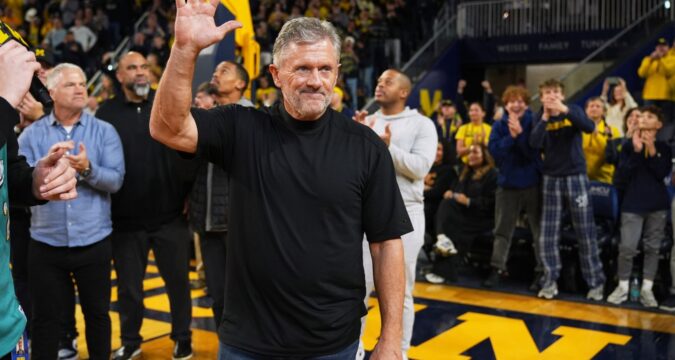
Editorial: Michigan makes a big bet on vital oldsters for football coach, president
In December, the University of Michigan hired away a new head football coach from the University of Utah: the 66-year-old Kyle Whittingham. By more than a decade, Whittingham became the oldest football coach ever hired by the Ann Arbor school (as a comparison, the legendary Bo Schembechler was 39 when he began there). Nonetheless, Whittingham got a five-year contract.
Then last week, Michigan hired away from Syracuse University the 69-year-old Kent Syverud as its 16th president. He also got a five-year contract.
Whatever criticisms you may level at this great university, which has gone through a rough patch of late, ageism clearly cannot be one of them.
These are powerful, high-pressure jobs, at least one of which involves running up and down the sidelines of a football field. And while it’s not unusual to remain in such positions in the latter half of one’s 60s, it’s rare to get the chance then to start out in one of them.
Good for Michigan, say we.
Clearly, Michigan needed to fix the scandal-scarred hangover of the Jim Harbaugh era, ending with the firing of Sherrone Moore for having an inappropriate relationship with a young staffer. Whittingham certainly would fit the bill of a new mature presence at the head of a storied program.
Syverud becomes the third president of the University of Michigan in five years. Stability was at the top of the wishlist there, too.
University presidents these days face a variety of headaches, from restless and often radicalized faculty members to student-athletes now making millions of dollars (not to mention all the hangers-on) to an interfering federal administration in Washington, D.C.
Never has the job called more for a cool head and a deep reservoir of experience. Syverud, a Michigan alum and a legal scholar who led Syracuse for a dozen years, would seem to fit that bill.
“We’ve become an incredibly successful country, in part because because of having the best higher education system in the world,” he told the nonprofit news source Bridge Michigan, “and I think that’s particularly been true in the state of Michigan, and I’m worried we may be losing that for a whole host of reasons and we have to do our part to turn that around.” He also asked for help from everyone who cares about the school.
Smart. Humble. Wise. Measured. All of the best qualities in which older workers, seeking a third act, tend to specialize.
Submit a letter, of no more than 400 words, to the editor here or email letters@chicagotribune.com.
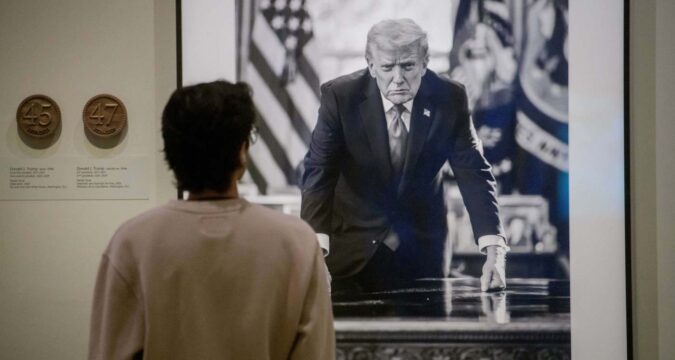
Laura Washington: Politicians should respond to voter dissatisfaction with authenticity
What do Americans want in a leader? Where is the leadership?
2026 dawns with the Republican Party in the clutches of a despot. The Democrats are wandering blindly in the woods, searching for a way to respond. The nation swirls in turmoil.
So where do we turn? My strong suspicion suggests authenticity. Who is real? Who can deliver on their promises?
Unfortunately, when you survey the political landscape, you find barren territory. The nature of the American political system propagates scads of lawyers and poseurs who blather on endlessly, promising everything and delivering little.
A recent survey found that 24% of Americans are “satisfied with the way things are going in the country,” while 74% were “dissatisfied.” That’s according to a Gallup Poll taken Dec. 1-15.
That sentiment is down from previous months; back in May, 38% of U.S. adults said they were satisfied. Overall, satisfaction levels remain slightly higher than at the end of the Joe Biden administration, according to Gallup.
Meanwhile, three-quarters of adults in the United States say the Democratic Party makes them feel “frustrated,” while a smaller majority — 64% — says the same of the Republican Party, shows a survey taken in September by the Pew Research Center. Roughly half of Americans say the Democratic Party (50%) and the Republican Party (49%) make them feel “angry.”
Too many politicians should be driving garbage trucks. Instead, they are driving our nation into a ditch.
It would seem counterintuitive that in our democracy, where anyone can run for office, there would be such deep dissatisfaction among voters. After all, we, the voters, picked these candidates. So why are they perceived so poorly by those same voters?
It’s a puzzle for the pundits. President Donald Trump is a conundrum. There is a strain in the electorate that is eager for a strongman, a decisive leader who will act, make deals and be true to his convictions. Trump has brilliantly tapped into this attitude.
Is that authenticity? In Trump’s case, it is seriously flawed and hypocritical. Leadership is not dictatorship.
Our billionaire president likes to claim that he doesn’t need money or power. During his first term as president, he opened a hotel in the landmarked Post Office building in Washington to lure politicians, foreign visitors and other big shots looking to curry favor with his power.
His White House has rolled out memes of Trump as Superman. He is selling “God Bless The USA” bibles, at only $59.99 a pop. Trump is doing Americans a big favor by being our president, he says, while also hawking bibles on the side.
Related Articles
Laura Washington: Political goings-on in 2025 reflect anything but comity
Laura Washington: Chance the Rapper’s CTA campaign is fun but won’t soothe our fears
Laura Washington: I love to host Thanksgiving but can’t cook
Laura Washington: Brooches are for bros too
Laura Washington: If Donald Trump can run for a third term, so can Barack Obama
Real authenticity is a rare commodity in politics. It is nuanced, complex and difficult to define. One thing I know for sure. Authenticity is deeply deficient on both sides of the aisle.
The fiscal deficit is not the only deficit in Washington. Authenticity means different things to different people. Many might define authenticity as how closely the thoughts and values of others align with their own. In other words, agree with me, and you are authentic.
There are a few general propositions most votes can agree on. How about this? The first is that no one has all the answers. Complex problems require multiple conversations, inputs and analysis. Second, let’s look beyond obvious. Authenticity is not rooted in today but extends from the past to the future.
Few in politics want to discuss that. For too many, there is only the “now.”
Pandering is for pandas and politicians, but we need to step outside our cages and connect with the zeitgeist. If you look at present-day politicians, you’ll know that the corn doesn’t grow very tall.
The pols should join Dorothy, the Cowardly Lion, Scarecrow and the Tin Man in the quest for the Wizard of Oz. Look behind that curtain and see that the great and powerful Oz is a chimera.
For example, take a gander at the aspirants lining up to run for Chicago mayor in 2027 (or at least the ones who are looking to be boldface names). Can any of them stand up to the current City Hall leader, a loquacious progressive champion who is struggling to execute his ambitions agenda?
We will see. In politics, authenticity remains elusive.
Laura Washington is a political commentator and longtime Chicago journalist. Her columns appear in the Tribune each Wednesday. Write to her at LauraLauraWashington@gmail.com.
Submit a letter, of no more than 400 words, to the editor here or email letters@chicagotribune.com.

Nearly a year after asphalt spill in Chicago Sanitary and Ship Canal, EPA criticized for leaving cleanup unfinished
Nearly a year after a toxic asphalt spill in the Chicago Sanitary and Ship Canal, state and local officials and environmental advocates say the U.S. Environmental Protection Agency ended the cleanup effort before it was completed.
A week before Thanksgiving, the agency posted a notice on its website that federal operations in the canal had been concluded.
“That was kind of shocking that (the EPA) is not living up to the things that they need to do, protecting the environment and monitoring this,” said Jen Walling, executive director of the Illinois Environmental Council. “It was a half-million gallons of liquid asphalt that was just poured into the river. That’s incredibly problematic.”
The thick, tar-like asphalt sludge contains a mixture of harmful carcinogens and heavy metals like lead, mercury and arsenic, making spills toxic to humans and animals.
The U.S. EPA found Petroleum Fuel & Terminal Co. responsible for polluting the waterways in Bedford Park and Forest View but did not issue the company any citations or penalties during its months of oversight.
More than 2,000 tons of asphalt were recovered and more than 100 animals rescued and rehabilitated, the costs of which were borne by PF&T, said U.S. EPA spokesperson David Shark.
Boat crews remove a tar-like substance contained by booms after an asphalt spill in the Chicago Sanitary and Ship Canal in 2025. (U.S. EPA)
The Illinois Environmental Protection Agency, which is now overseeing the site, observed asphalt in the canal and along the shoreline after the cleanup was reported complete, said IEPA spokesperson Kim Biggs in a statement last week.
On Dec. 5, the IEPA sent a notice to PF&T citing it for violating its agreement with the U.S. EPA, Biggs said. The agency is awaiting PF&T’s response to the allegations.
PF&T did not respond to repeated requests from the Tribune for comment.
The U.S. EPA’s decision to withdraw from the cleanup comes as the administration of President Donald Trump rolls back the agency’s authority and pushes to cut its budget in half in 2026. Across Illinois, lagging federal oversight on issues like coal ash cleanups has posed an ongoing threat to environmental health.
Cameron Davis, a commissioner with the Metropolitan Water and Reclamation District of Greater Chicago and a former senior adviser on Great Lakes restoration efforts in the administration of President Barack Obama, called the U.S. EPA’s sudden withdrawal “premature.” It signals weakened cooperation between federal and state agencies and a broader trend of cutting corners on environmental health under the Trump administration, he said.
“In my experience at EPA before joining MWRD, there would be lots of discussion between the U.S. EPA and the state,” Davis said. “In this case, we saw the Trump administration pull the rug out from underneath Illinois and surprise the state with its decision.”
IEPA acting Director James Jennings wrote a letter in November to EPA Region 5 Regional Administrator Anne Vogel urging the agency to reconsider its decision.
“Given the significant nature of this liquid asphalt release, the response necessitates maintaining a combined state and federal effort,” Jennings wrote. “Effective coordination between our two agencies is imperative.”
An EPA cleanup worker oversees excavation work at the main spill area in the Chicago Sanitary and Ship Canal in 2025. (U.S. EPA)
In his letter, Jennings noted the spill affected water quality over 3 miles downstream and required a cooperative effort between the federal and state agencies.
He also cited a similar state-federal cleanup model that helped the EPA address recent environmental disasters like the 2023 train derailment in East Palestine, Ohio.
Walling said the federal exit could compromise the canal’s restoration.
“Now (IEPA) is holding the bag and now they’re responsible, and it just means spending time and resources that have already been spent for something that the U.S. EPA should have continued to do,” Walling said.
An oily mess
PF&T distributes petroleum-based asphalt products in Chicago and is owned by St. Louis-based Apex Oil Co. On Feb. 4, a pipe failure at PF&T’s storage facility caused toxic asphalt sludge to spill into the canal, according to EPA investigations.
The petroleum company leases 24 acres along the canal from MWRD, according to Davis.
Related Articles
Illinois has cut its EPA workforce by 38% in the past decade — more than any other state, report shows
Chicago officials, workers protest EPA canceling contract with unions
Trump EPA pick for Chicago office cut enforcement, scrapped climate change information in Wisconsin
The stretch of the canal where the spill occurred runs parallel to the Des Plaines River and is near the Portage Woods Forest Preserve, a scenic park in Lyons popular with runners, naturalists and dog walkers.
Barbed wires separate the park trails from the canal, where leftover asphalt coats the banks. Hidden from view and inaccessible from the park, the spill site has gone unnoticed by many park-goers.
The 28-mile, human-made waterway, opened in 1900, was designed to reverse the flow of the Chicago River. Because the canal lacks the natural curves of a river, Davis explained, it is a confined, straight channel where pollutants can move quickly along its length.
At the height of the spill, ducks, snakes and birds were among the victims of PF&T’s spill in the canal.
Wildlife specialists wash a duck that was harmed by an asphalt spill in the Chicago Sanitary and Ship Canal in 2025. (U.S. EPA)
Justin Sharp, a wildlife care supervisor at the DuPage Conservation Center who treated some of the animals after the spill, said the high numbers were unusual.
“This was abnormal in the scope, the amount of patients,” Sharp said. “We haven’t had that many patients come in from one contamination.”
From June to August, Sharp said he treated 30 orphaned mallard ducklings, 13 water snakes, a tree swallow and a dove that were covered in oil.
Although the spill happened in February, the effects of the liquid asphalt weren’t noticeable to cleanup workers until the summer months, Walling said.
“Part of the problem with it is that the asphalt freezes and it sinks, and then when it unfreezes, it comes back up,” she said. “It may not be currently visible, but it’s been on and off with the weather.”
Walling said she worries more asphalt could surface this summer because it hasn’t all been removed.
Under stress
Advocacy groups like Friends of the Chicago River also are concerned about lasting impacts to Chicago’s waterways.
“Our natural assets are already at risk and under stress from urbanization and the climate crisis so ‘good enough’ is no longer an option with accidents like the one that took place along the Chicago Sanitary and Ship Canal near Forest View,” said Margaret Frisbie, executive director of Friends of the Chicago River. “The bad old days for the river are over, and we need to keep it that way.”
Shark said the EPA will receive a final report from PF&T and consult with IEPA on whether further cleanup actions are needed.
Davis said he hopes this case is a reminder that cooperation is necessary at all levels of government to tackle industrial accidents that threaten natural ecosystems.
“Some of these spills, some of these emergencies can be so complex that it really does take a multigovernmental approach to addressing them,” Davis said. “It takes the feds, it takes the state, it takes municipalities. And if any one of those legs get pulled out from underneath the stool, the public health and environmental stool collapses.”
https://www.chicagotribune.com/2026/01/14/chicago-sanitary-ship-canal-asphalt-spill/
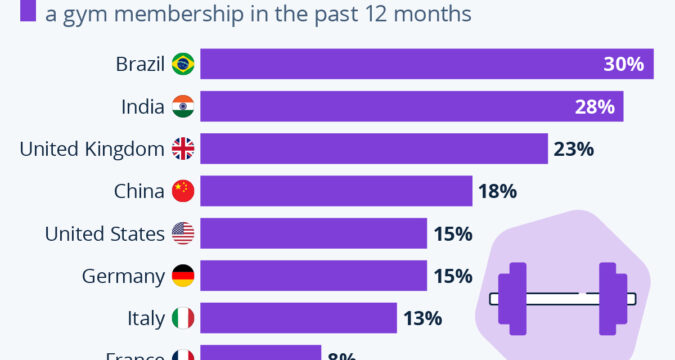
Where Going To The Gym Is Most (Un)Popular
Where Going To The Gym Is Most (Un)Popular
Exercising more is again one of the most popular New Year’s resolutions in the United States.
Yet where data shows that January tends to see a higher number of gym sign ups than other months, it also reveals that the goal falls by the wayside for many not long after.
As Statista’s Anna Fleck reports, according to Statista data, only 15 percent of U.S. adults had paid for a gym membership in the 12 months prior to the survey.
You will find more infographics at Statista
How many actually used the service regularly though is another question.
French and Italian respondents were even less enthusiastic about the gym, with only eight percent and 13 percent, respectively, saying they had invested in a gym membership.
By comparison, going to the gym was far more popular in Brazil and India.
Tyler Durden
Wed, 01/14/2026 – 05:45
https://www.zerohedge.com/personal-finance/where-going-gym-most-unpopular


