Category: News
Editorial: A Supreme Court ruling has put Illinois’ wetlands at risk. Springfield should respond.
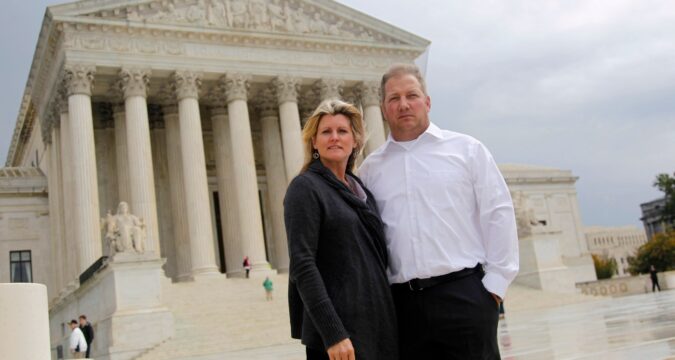
Idaho residents Michael and Chantell Sackett got a shock from the Environmental Protection Agency when they began backfilling a lot with dirt to build a new home.
Their site contained wetlands, the EPA declared, and their backfilling violated the Clean Water Act, which protects “the waters of the United States” from pollution. Sure enough, the Sacketts’ wetlands were near a ditch that fed into a creek, which flowed into the much-larger Priest Lake, putting it under EPA jurisdiction via an interpretation of the law that prevailed for decades.
Then along came the U.S. Supreme Court. Justice Samuel Alito and four other conservative justices had been itching to rewrite environmental regulations. The Sackett case, decided in 2023 by a 5-4 vote (with one conservative justice, Brett Kavanaugh, dissenting on the main issue), tossed out a standard supported by the EPA, Army Corps of Engineers and multiple administrations.
Much of the nation’s wetlands that previously enjoyed federal protection suddenly were vulnerable. Some states, including Michigan, were backstopped by their own laws that duplicated at least part of the federal protection.
But not Illinois.
The Land of Lincoln’s wetlands remain mostly unprotected, and intense lobbying from a coalition of farming and business groups has succeeded so far in keeping it that way, overcoming equally intense lobbying from environmental and conservation groups.
Wetlands at Milan Bottoms Preserve in Rock Island County on July 31, 2025. (E. Jason Wambsgans/Chicago Tribune)
Something should be done. But restoring the same protections that wetlands enjoyed under the EPA is complicated, requiring a significant state investment to expand its oversight — and potentially creating costs for farmers and other landowners.
What’s needed is a thoughtful discussion and, for now, both sides are dug in. We think the environmentalists have a strong case, and Illinois’ landowners opposing strict new rules protecting wetlands need to think about compromising before the General Assembly overrides their interests.
Every resident of Illinois has an interest in protecting natural habitats that support game fish and migratory birds, among other beloved creatures. But the wetlands issue isn’t solely about tree-hugging, and that’s what makes it so compelling.
The state’s wetlands play a critical role in flood control, for instance. Averting wet basements and swamped roadways is one reason why Cook County and four other counties in the Chicago area have passed wetland protections specific to their jurisdictions.
Given the prevalence of heavy rainstorms as the climate warms, this flood control is becoming ever more essential. As it stands, many of the flood-prone areas along the state’s major rivers have no protection for wetlands that help soak up downpours today.
Wetlands also serve as natural filters and reservoirs. Acting like sponges, they capture water and slowly release it, sustaining streams and lakes during dry periods and replenishing underground water tables. That includes the aquifers that much of the state depends on for drinking water.
Effectively, they are a natural form of infrastructure. To our minds, the strongest argument for protecting them is that, if they go away, we’ll have to build man-made structures to perform the same functions.
“This is a long-term, slow-burn sort of thing,” Paul Botts, president of The Wetlands Initiative, told us in a recent meeting we had with supporters of the proposed Wetlands Protection Act, which would establish a state permitting process for protecting wetlands. “Down the road, we’ll have to spend a lot of money, or our descendants will, replacing those values.”
About 563,000 acres of Illinois wetlands lie outside any county, state or federal protection, according to a research study cited by environmental lobbyists. That sure sounds like a lot of land. But it’s a drop in the bucket compared with the 36 million acres that make up the state’s entire land mass, with three-fourths of it devoted to farming.
The farm lobby, however, has objected to restoring the protection lost in the Sackett decision as if it’s an existential threat. The state bill favored by environmentalists is too broad and burdensome, they say, and the expanded oversight it requires would cost Illinois several million dollars a year.
We get it: Expanding state bureaucracy with new rules could indeed complicate life for the state’s landowners. But the Sackett decision left a gap that cannot continue to go unfilled. Illinois’ wetlands deserve the same protections they had for decades under the EPA — or at least close to the same.
It’s worth noting that an activist Supreme Court can be expected to continue foisting new responsibilities onto the states by overturning settled law governing federal regulation — as in the 2024 “Chevron Deference” decision that significantly limits the power of federal agencies. In other cases, the court has reinforced federal powers over the states, making this a challenging time for state lawmakers across the country.
For years, Illinois counted on the feds to take the lead in curbing water pollution. These days, the state needs to act when court rulings upend long-standing practices and undermine compelling public interests.
The proposed Wetlands Protection Act is a good starting point for Illinois to respond to the Sackett case. Tweaking it to provide clear, reasonable rules for landowners makes sense. Standing by while a vulnerable resource goes unprotected is reckless and costly.
Illinois needs its wetlands, now and into the future.
Submit a letter, of no more than 400 words, to the editor here or email letters@chicagotribune.com.

Todd C. Smith: Who deserves credit for the drop in Cook County’s opioid overdose deaths?
In recent months, Chicago and communities across Illinois have experienced something that renews hope: signs of progress in the fight against opioid overdose deaths and poisonings.
The Cook County medical examiner’s office recently released preliminary data for 2025. One of the most significant highlights was the dramatic decrease in opioid overdose deaths recorded in the county.
While results from approximately 180 toxicology tests remain pending, 683 deaths throughout Cook County were attributed to opioid overdoses last year, down from a record high of 2,001 in 2022. The dramatic decrease represents lives not lost, families spared grief and futures still intact.
This also raises an important question: Who deserves the credit?
The most honest answer is that progress such as this is never the result of a single action or institution. It reflects sustained effort across enforcement, public health, education, policy and community advocacy, working in parallel toward the same goal.
At the Drug Enforcement Administration’s Chicago field division, our responsibility is to enforce our nation’s drug laws by reducing the supply of illicit fentanyl before it can poison another family member, another classroom or another neighborhood. Over the past year, DEA agents and our task force partners seized nearly 2 million illicit fentanyl pills and 915 pounds of fentanyl powder in Chicago and across Illinois, Indiana and Wisconsin. Those are record-level seizures, but their real significance lies in what never happened: fatal drug poisonings that did not occur because lethal drugs never reached the street.
Our work represents one piece of the equation in combating illicit supply and trafficking. It disrupts criminal networks, raises the cost of doing business for traffickers, and removes dangerous substances from circulation. Just as importantly, it creates space for the other parts of the equation to work.
Strong law enforcement and prosecutorial partnerships remain essential to this effort. Local, state and federal agencies work side by side every day, from street-level investigations to long-term conspiracy cases. Prosecutors ensure traffickers are held accountable and that fentanyl distribution is treated with the seriousness it demands. These partnerships weaken supply chains and reinforce the rule of law.
At the same time, lives are being saved because public health professionals focus on survival and access to care. The Chicago Department of Public Health has expanded naloxone distribution and overdose response efforts, placing lifesaving medication into the hands of those most likely to encounter an overdose.
Education has become another critical line of defense. Illinois took a forward-looking step by making fentanyl awareness education mandatory in classrooms statewide. This policy reflects a hard reality: Fentanyl is appearing in counterfeit pills and substances young people mistakenly believe are safe. Accurate, age-appropriate information empowers students to make informed decisions and helps prevent tragedy.
Policymakers also play an important role in shaping the environment in which prevention succeeds. At the federal level, the HALT Fentanyl Act strengthened the ability of law enforcement to respond to a rapidly evolving drug threat by ensuring fentanyl-related substances are treated with urgency. At the state level, legislation supporting education and prevention has reinforced local efforts. Policy does not replace enforcement or public health; it enables both to operate more effectively.
These efforts are being aligned through the DEA’s Fentanyl Free America campaign, a national prevention initiative designed to bring enforcement, education, public health and community engagement together. The campaign reflects what experience has shown repeatedly: Progress is strongest when institutions and communities move in the same direction rather than in silos.
And then there are the angel parents.
No dataset can capture the courage of mothers and fathers who have lost children to fentanyl poisoning and refused to let their grief be the final chapter. We’ve seen firsthand how parents throughout Chicago have transformed loss into purpose — educating other families, advocating for accountability and pushing for change so no parent, family member or friend has to endure the same pain.
It took all these efforts to reach this moment, and it will take continued collaboration to sustain it. Fentanyl remains the deadliest drug threat this country has ever faced, and progress can reverse if attention fades.
The recent decline in overdose deaths is encouraging, but it is not a finish line. It is a reminder that when enforcement, public health, education, policy and community advocacy operate together, lives are saved. The task ahead is not deciding who gets credit but ensuring that no family ever has to grieve losing someone they love to a drug poisoning. That responsibility belongs to all of us.
Todd C. Smith is the special agent in charge of the U.S. Drug Enforcement Administration Chicago field division, which covers Illinois, Indiana and Wisconsin.
Submit a letter, of no more than 400 words, to the editor here or email letters@chicagotribune.com.
https://www.chicagotribune.com/2026/01/15/opinion-chicago-decline-opioid-overdose-deaths-fentanyl/
Letters: The data center proposed for a Chicago suburb raises some serious questions
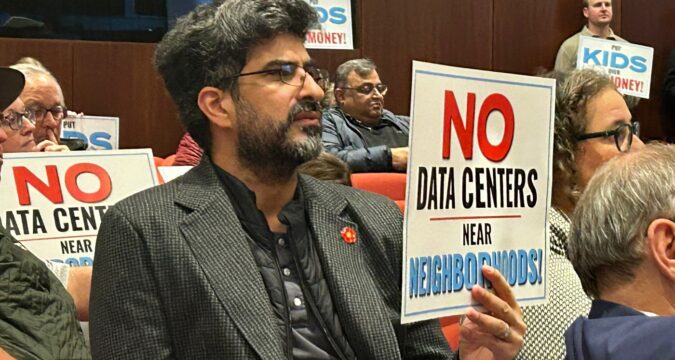
The proposed Naperville data center raises serious unanswered questions regarding fiscal responsibility, transparency and risk to taxpayers. Residents have repeatedly asked whether the project has a committed operator, secured financing, a concrete power delivery plan with enforceable timelines, and clear responsibility for costly off-site grid upgrades. Tax revenue projections based on near constant peak load also depart from industry norms and remain unexplained.
This project would directly impact four, soon to be five, neighborhoods representing more than an estimated 1,000 residents, and a petition opposing the proposal has gathered nearly 5,000 signatures. Despite extensive testimony and detailed submissions from resident and nonresident experts, many core issues remain unresolved, including discrepancies in noise studies, emissions, home value pricing impact analyses and projected tax analyses. Residents are increasingly concerned not only about the lack of answers but also whether all submitted information is even being fully reviewed.
How does a proposal that generated standing-room-only opposition and failed to meet required conditions still pass the Planning and Zoning Commission with only one dissenting vote? What changed after early indications the project would be denied? And how can a data center be sited next to homes and forest preserves at all, let alone without full transparency?
If these fundamentals remain uncertain, approving the project would shift legal, financial and planning risk onto the city rather than the developer. Even if these questions were fully answered and the project shown to be viable, it should be located on a site consistent with the city’s land use master plan, not on a parcel currently designated for future medium-density residential use.
Public confidence depends on decisions grounded in complete information, careful review and sound policy, not personal or partisan considerations. A project of this scale warrants caution, not haste.
— Sarah Baugh, Naperville
Renewable energy needs
The Jan. 11 editorial (“Ready or not, the data centers are coming. We must keep our electric bills from soaring”) rightly raises concerns about how the explosive growth of data centers will affect the reliability and affordability of electricity in Illinois. Requiring data center owners to shoulder the cost of new power generation and grid upgrades — rather than shifting those costs onto ratepayers — is essential. Households, seniors and small businesses already struggling with rising utility bills should not be forced to subsidize energy-intensive corporate users.
The Tribune Editorial Board weakens its argument, however, by downplaying renewable energy while pointing to nuclear power as an alternative. Climate change is already imposing real costs on Illinois residents, from extreme weather to higher insurance and infrastructure expenses. Nuclear power carries unresolved risks, including the potential for accidents, the absence of a proven long-term solution for radioactive waste, serious dangers to uranium miners and the decades required to bring new plants online. It is also the most expensive form of energy to build.
Renewable energy is not only cleaner and safer — it also is the cheapest and fastest way to curb rising electricity rates. The recently enacted Clean and Reliable Grid Affordability Act provides funding for virtual power plants, battery storage and energy-efficiency rebates that can quickly increase supply, reduce demand and lower customer bills.
Illinois has been a national leader in clean energy policy. As electricity demand grows, the solution is not to retreat from renewables but to double down on them — and to ensure that large corporate users pay their fair share.
— Mardi Klevs, Third Act Illinois, Evanston
Consuming land and water
The Tribune Editorial Board writes in its Sunday editorial, “Energy-intensive data centers are the backbone for artificial intelligence,” and then it goes on to present information about the centers’ dramatically increasing energy hunger. This presents difficult challenges for both energy providers and consumers.
But there’s another major concern that legacy media may pass over — the use and consumption of water and land for these centers. Data centers are resource-ravenous; even a midsize data center may consume as much water as a small town, while larger ones may use up to 5 million gallons of water every day — as much as a city of 50,000 people, according to the Lincoln Institute of Land Policy.
The Lincoln Institute notes: “Some of the largest data centers being built today will cover hundreds of acres with impermeable steel, concrete, and paved surfaces—land that will no longer be available for farmland, nature, or housing—and require new transmission line corridors and other associated infrastructure as well.”
Further, and unfortunately for all of us, lawmakers aren’t just opening the door for these new developments; they are seeking them. The Lincoln Institute reports: “In Loudoun County (in Virginia), which has over 27 million square feet of existing data center space, officials expect the total real and property tax revenues collected from local data centers in fiscal year 2025 to approach $900 million, nearly as much as the county’s entire operating budget.”
Data centers need more than electricity, they also need significant amounts of water to keep cool. It may seem like we have an abundance of water in our nearby lakes, but each of us needs to take a look at our weather, our climate, our land, our electricity use and our water use and decide how much artificial intelligence we really want and need. Will our environment, our neighborhoods and our health be sacrificed to provide profit for developers and energy providers?
If it is true that “ratepayers shouldn’t be taking the risk on these massive investments,” then I hope the Tribune Editorial Board and the people of Illinois will consider that these massive developments for AI threaten more than just our pocketbooks. They will take our land and our water, too.
— Patrick Comer, Clarendon Hills
Dialogue on agreements
Thank you so much for the Sunday editorial on data centers. Chicago and Illinois simply avoided this necessary conversation on how best to proceed with data centers. The editorial will set the stage for important public dialogue on our technology, water, energy and land agreements with private industries.
— John Paul Jones, president, Sustainable Englewood Initiatives, Chicago
They need their own supply
So that Illinois ratepayers will not have to bear the cost of the increase in electricity demand by data centers, the legislature needs to pass legislation that requires data centers to build renewable energy facilities on their sites. If the centers need so much electricity, then make them pay for their own supply.
— Joanne Zolomij, Evanston
Submit a letter, of no more than 400 words, to the editor here or email letters@chicagotribune.com.
https://www.chicagotribune.com/2026/01/15/letters-011526-data-centers/

Editorial: If you believed the McRib was a real rib, we have some chicken nuggets to sell you
Another day, another class-action lawsuit, this time about what kind of meat is in a sandwich.
Four lead plaintiffs, including Chicagoan Dorien Baker, are suing McDonald’s, claiming the fast-food giant is misleading customers over what kind of meat it uses in its cult classic “McRib” sandwich.
“Despite its name and distinctive rib-like shape, it does not actually contain any pork rib meat,” the lawsuit states.
Consumer protection law isn’t meant to shield people from every assumption a brand name might invite, but from genuine deception on which a reasonable buyer would rely.
Does anyone truly believe the McRib is real rib meat? Does anyone pretend to know what part of the chicken is used to make a McNugget?
Do we really want to know?
In November, McDonald’s announced that the McRib would make a limited-time return to select restaurants in cities across the country, including Chicago.
McRib lovers are in it for the taste and — yes — the mystique. Much of the allure of this weird sandwich stems from its irregular availability.
It’s not as if McDonald’s hasn’t been fairly forthcoming about the makeup of the sandwich. If you must know, the McRib is a seasoned pork patty. More specifically: It’s restructured pork (ground pork formed into that rib-shaped patty) slathered in barbecue sauce. McDonald’s simply calls it a “pork sandwich” online.
Whether this lawsuit ultimately succeeds is for the courts to decide, but this complaint would seem to stretch consumer protection beyond its intended purpose.
Yes, retailers should be forthcoming about what’s being sold. We don’t take too kindly to farm-raised salmon being sold as “wild caught” or “extra-virgin olive oil” that isn’t. Products labeled as halal or kosher must actually be those things, otherwise companies can deceive devout Jewish or Muslim customers into violating their faith traditions.
But it doesn’t strike us as a truth-in-advertising scandal that the McRib consists of part of the pig other than the rib. If it were turkey meat passed off as pork? OK then!
Want real ribs? Head to Twin Anchors in Lincoln Park, Jameson’s in the suburbs, Green Street Smoked Meats in the West Loop or Lem’s Bar-B-Q on the South Side. We’ve got enough great pork rib options in Chicagoland that you could hop around for weeks trying different spots.
And if you’re in too big of a rush to grab the real thing — and a handful of napkins to wipe off the sauce — there’s always the McRib. (While supplies last).
Submit a letter, of no more than 400 words, to the editor here or email letters@chicagotribune.com.
https://www.chicagotribune.com/2026/01/15/mcdonalds-mcrib-lawsuit-class-action-pork-fake-meat/

Tribune investigation into hospitals’ use of guardianship system inspires new bill
A Tribune investigation into some Chicago-area hospitals’ questionable use of the state’s guardianship system has resurrected legislation that would exclude private entities from being appointed as guardians in such cases.
The newspaper reported in November that if a patient in need of guardianship had property or other assets, hospitals and their lawyers usually asked the court to appoint a certain private care management organization as guardian. That organization often charges more for its services than county public guardians, which along with fees billed by lawyers working on the cases can quickly drain a person’s savings, the Tribune found.
The bill, filed last week, would require the appointment of a state or county public guardian, if one is available, when hospitals, nursing homes or similar institutions file guardianship petitions in court.
State Rep. Marti Deuter, an Elmhurst Democrat in the second year of her first term, said she is working with AARP Illinois on the legislation. The Tribune’s two-part series underscores the need for reforms, she said.
“As I was reading the articles, it was clear to me that we can do better for our seniors,” Deuter told the Tribune. “My interest as a policymaker is really to make sure government works as well as it can for people, and affordability is a big issue. As your articles pointed out, this is draining (people’s) resources very quickly in some cases.”
Earlier versions of the bill failed to pass in 2024 and 2025 when introduced under former state Rep. Terra Costa Howard, who left the legislature last year when she became a judge. The earlier measure faced heavy opposition, including from the Illinois Health and Hospital Association, whose concerns included the possibility that the change could cause some patients to remain hospitalized beyond medical necessity.
Though advancing a hotly debated measure will likely be an uphill battle during an election year, Deuter said she hopes to work with all stakeholders on the issue and put forward “the best legislation we can.”
The Tribune’s investigation revealed that Chicago-area hospitals initiated hundreds of guardianship petitions in an 18-month period, a step they said is intended to protect patients who have lost the ability to make decisions and who have no friends or family willing and able to take charge. But in many cases, the Tribune found the arrangement facilitated patients’ discharge to subpar nursing homes, and it sometimes stripped families of control over their loved ones.
Lori Hendren, AARP Illinois’ senior associate state director of advocacy and outreach, said the Tribune “has shined a light on a troubling situation that may be impacting far too many of our most vulnerable residents — individuals who may be isolated, medically fragile, and without family or trusted support to help navigate critical decisions.”
Hendren added: “Guardianship is one of the most consequential legal interventions a person can face. It can remove fundamental rights and control over personal, medical and financial decisions. For that reason, it should be pursued only when truly necessary, used in the least restrictive way possible, and paired with strong due process protections, transparency, and meaningful court oversight.”
The vast majority of the hospitals’ guardianship petitions involved people with little money who were placed with the Office of State Guardian at the hospitals’ expense. But the Tribune reported that when patients did have assets, the law firm that Chicago-area hospitals commonly hire in such cases — Monahan Law Group — usually named a particular organization — Midwest Care Management — as the hospital’s preferred guardian. In many cases, both parties then benefited from providing months or years of services funded by the former patient.
Ben Topp, owner and managing director of Midwest Care Management, said in a statement Monday that although state and public guardians play a vital role in protecting vulnerable adults, “We also believe the system functions best when courts retain discretion and petitioners are able to thoughtfully evaluate all appropriate options — public, private, corporate, friends, or family members — based on the individual’s specific circumstances.”
“The focus should remain on identifying the right guardian for each individual, not limiting the court’s ability to make case-specific decisions,” Topp said in the statement.
The Illinois Health and Hospital Association is reviewing the new legislation and has reached out to the bill sponsor to learn more, spokesperson Paris Ervin said in a statement Monday.
The hospital association looks forward to working with the lawmaker and other stakeholders “on what additional improvements may be appropriate to strengthen existing protections in the guardianship statute; as well as thinking through with her the possible unintended consequences of the proposed legislation on vulnerable patients, such as delays in obtaining timely consent for treatment,” the statement said.
Joseph Monahan, founding partner of Monahan Law Group, did not provide comment on the new legislation, but he previously told the Tribune he opposed similar legislation in the past because it would have resulted in “limiting choice based solely on the petitioner and removing judicial discretion.”
Cook County Public Guardian Charles Golbert, whose office oversees the cases of more than 600 adults under guardianship, has spoken to the Tribune about his long-standing concerns regarding what he called the injection of a “profit motive” into guardianship services.
Cook County Public Guardian Charles Golbert, shown at his Loop office in November, applauded Rep. Marti Deuter for “taking the lead” on changes to guardianship procedures. (Eileen T. Meslar/Chicago Tribune)
Still, in an interview this week, Golbert said he worries the proposed legislation is too restrictive. He said there may be cases where a private guardian is needed, such as when a public one is not available or there is a conflict of interest.
“The approach that we would like to take is to make sure that before a private guardianship corporation is appointed, that the court makes a finding that this is actually appropriate for this person and the facts of the case, taking into account whether any family members are available,” he said.
“In the Tribune’s series, there were examples where family members were willing and able to be the guardian but the hospital was apparently very eager to open up the bed and nonetheless made it a private guardianship corporation that was appointed instead of the family member.”
Before accepting an appointment, Golbert argued, the private corporation should be required to meet with the individual and complete an assessment to see if less-restrictive alternatives are more appropriate. He said his office does this in all cases.
Golbert said he is “thrilled” the Tribune’s reporting is stimulating legislative efforts and applauded Deuter for “taking the lead.” He said: “Hopefully now there is momentum to move needed reforms across the finish line.”
The House returns to Springfield next week. Deuter’s bill will likely end up in the Judiciary – Civil Committee, which Rep. Jennifer Gong-Gershowitz chairs.
“It is critical that we bring transparency and accountability to this process to ensure that the best interests of vulnerable people are protected at every stage,” Gong-Gershowitz, a Glenview Democrat, said in a statement.
cmgutowski@chicagotribune.com
lschencker@chicagotribune.com
https://www.chicagotribune.com/2026/01/15/illinois-hospital-guardianship-bill/
Willie Wilson: What the Rev. Martin Luther King Jr. would encourage us to do today
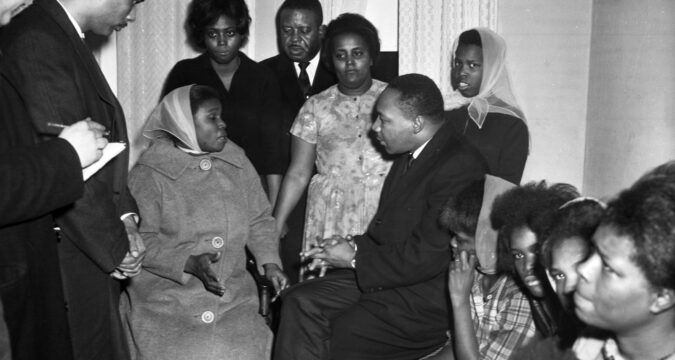
On Thursday, we honor what would have been the 97th birthday of the Rev. Martin Luther King Jr. If King were alive today, I believe he would encourage us to fight against injustice and inequality. He would inspire us to love our neighbors.
King was a prophet and master of language, sent by God at a time in history when race relations were deeply fractured. He understood that words had the power to heal or hurt, to tear down or build up.
His last speech, “I’ve Been to the Mountaintop,” delivered at Mason Temple in Memphis, Tennessee, was prophetic and profound. He sensed death was imminent. King was in Memphis to support striking sanitation workers. He rallied against injustice and unfair treatment of sanitation workers.
“We’ve got some difficult days ahead. But it really doesn’t matter with me now, because I’ve been to the mountaintop. And I don’t mind. Like anybody, I would like to live a long life. Longevity has its place. But I’m not concerned about that now. I just want to do God’s will. And he’s allowed me to go up to the mountain. And I’ve looked over. And I’ve seen the promised land. I may not get there with you. But I want you to know tonight, that we, as a people, will get to the promised land. And so I’m happy, tonight. I’m not worried about anything. I’m not fearing any man! Mine eyes have seen the glory of the coming of the Lord,” King said.
He gave his life for racial equality, justice and human dignity.
Because of King’s leadership, the following major bills were passed and signed into law:
The Civil Rights Act of 1964: This law outlawed segregation in public places and banned employment discrimination based on race, color, gender and national origin.
The Voting Rights Act of 1965: This act eliminated discriminatory voting practices, such as literacy tests and poll taxes.
The Fair Housing Act of 1968: Passed just a week after his assassination, this legislation prohibited discrimination in the sale, rental and financing of property.
Large numbers of African Americans and Latinos elected to political offices can be traced back to the work of King around the Voting Rights Act of 1965. Black and brown CEOs are beneficiaries of King’s work.
Since the death of King, landmark laws he championed have been weakened by executive orders, the Supreme Court and Congress. There has been an attempt to pit racial groups and economic classes against each other. The United States of America is at its weakest point when we are divided.
We are all born innocent. Our parents and environment shape our thinking. Imagine if in every home children were taught to love their neighbor and follow the Ten Commandments. My mother taught me to love everyone irrespective of color or ethnicity.
The challenges today seem insurmountable for those who have suffered long years of poverty, hurt, neglect and disinvestment. I am reminded — God is at work in our difficult seasons.
Where are the modern-day prophets — those fighting for racial harmony, equity in health care, and education, housing, employment and contract opportunities? Where are those fighting for equity in technology and the cannabis industry?
King would be appalled to learn that the largest big-city gap in life expectancy in the U.S. is in a community on the West Side of Chicago — West Garfield Park.
He would be outraged to hear that three predominately Black communities — Lawndale, Garfield Park and Englewood — experienced the highest increase in property tax bills.
King would be saddened to know that the leading cause of death for Black teens and men ages 15 to 44 is homicide.
The poverty of spirit and hopelessness across Black communities would trouble King. Low voting participation by Black and brown citizens would cause King to ask: What did I give my life for? He would be disappointed to learn of communities where there are no grocery stores within walking distance.
King would be concerned about the persistent achievement gap among minority children. He warned against the prison industrial complex that has become the new Jim Crow. King saw firsthand some of the problems in Chicago when he lived on the West Side in Lawndale.
Where is the sense of urgency to make life better for the poor and those suffering? As a preacher of the gospel of Jesus Christ, King understood that the spirit of the Lord was upon him, and he was anointed to deal with the problems of the poor.
The following are suggestions to help usher in King’s dream:
All people should share the message of nonviolence and love with someone outside your comfort zone.
Congress should pass the John R. Lewis Voting Rights Advancement Act.
Faith leaders must speak out against injustice. The church and other institutions should promote nonviolence in the community as a way of conflict resolution and teach the history of King.
Cook County elected leaders should fight to ensure detainees in Cook County Department of Corrections get a speedy trial.
The prophets of today must fight for independence of public agencies and institutions. They should advocate for access to information — books, the internet, public television and fair reporting by the media. They must fight for access to health care and lifesaving therapeutics.
King completed his mission and left an indelible print on the soul of America.
New Zion M.B. Church, 1252 S. Wolcott Ave., is hosting a community celebration at 10 a.m. Monday honoring the life of King.
I write this commentary to make those comfortable with forgetting the sacrifice King made uncomfortable.
Willie Wilson is a business owner, philanthropist and former mayoral candidate.
Submit a letter, of no more than 400 words, to the editor here or email letters@chicagotribune.com.
https://www.chicagotribune.com/2026/01/15/opinion-martin-luther-king-jr-legacy-civil-rights-chicago/

Streeterville 4-bedroom duplex with coffee and wine station: $1.3M
Address: 200 E. Delaware Place, Unit: 8-9C, Chicago
Listed: Dec. 10, 2025
Price: $1,299,900
Listing agent: Camille Canales, Compass, 512-417-1708
This four-bedroom, 3½-bathroom duplex has two levels with corner windows, motorized shades and two east-facing balconies. The kitchen is equipped with Dacor appliances, including an induction cooktop, an oversize built-in fridge and a wine and coffee station tucked behind custom cabinetry. A spiral staircase leads to the three main bedrooms. The primary suite has a bathroom with quartzite stone, a soaking tub, a glass steam shower, radiant heated floors, a water closet and a dedicated dressing area with a vanity counter and a smart mirror. The main level has a room that serves as a bedroom and home office with an ensuite bath and custom Italian office furnishings.
This Chicago duplex at 200 E. Delaware Place, Unit 8-9C, has a primary suite bathroom with quartzite stone, a soaking tub, a glass steam shower, radiant heated floors, a water closet and a dedicated dressing area with a vanity counter and a smart mirror. (James McGing)
This Chicago duplex at 200 E. Delaware Place, Unit 8-9C, has a primary suite bathroom with quartzite stone, a soaking tub, a glass steam shower, radiant heated floors, a water closet and a dedicated dressing area with a vanity counter and a smart mirror. (James McGing)
This Chicago duplex at 200 E. Delaware Place, Unit 8-9C, has a primary suite bathroom with quartzite stone, a soaking tub, a glass steam shower, radiant heated floors, a water closet and a dedicated dressing area with a vanity counter and a smart mirror. (James McGing)
This Chicago duplex at 200 E. Delaware Place, Unit 8-9C, has a primary suite bathroom with quartzite stone, a soaking tub, a glass steam shower, radiant heated floors, a water closet and a dedicated dressing area with a vanity counter and a smart mirror. (James McGing)
This Chicago duplex at 200 E. Delaware Place, Unit 8-9C, has a primary suite bathroom with quartzite stone, a soaking tub, a glass steam shower, radiant heated floors, a water closet and a dedicated dressing area with a vanity counter and a smart mirror. (James McGing)
This Chicago duplex at 200 E. Delaware Place, Unit 8-9C, has a primary suite bathroom with quartzite stone, a soaking tub, a glass steam shower, radiant heated floors, a water closet and a dedicated dressing area with a vanity counter and a smart mirror. (James McGing)
This Chicago duplex at 200 E. Delaware Place, Unit 8-9C, has a primary suite bathroom with quartzite stone, a soaking tub, a glass steam shower, radiant heated floors, a water closet and a dedicated dressing area with a vanity counter and a smart mirror. (James McGing)
This Chicago duplex at 200 E. Delaware Place, Unit 8-9C, has a primary suite bathroom with quartzite stone, a soaking tub, a glass steam shower, radiant heated floors, a water closet and a dedicated dressing area with a vanity counter and a smart mirror. (James McGing)
This Chicago duplex at 200 E. Delaware Place, Unit 8-9C, has a primary suite bathroom with quartzite stone, a soaking tub, a glass steam shower, radiant heated floors, a water closet and a dedicated dressing area with a vanity counter and a smart mirror. (James McGing)
This Chicago duplex at 200 E. Delaware Place, Unit 8-9C, has a primary suite bathroom with quartzite stone, a soaking tub, a glass steam shower, radiant heated floors, a water closet and a dedicated dressing area with a vanity counter and a smart mirror. (James McGing)
Some listing photos are “virtually staged,” meaning they have been digitally altered to represent different furnishing or decorating options.
To feature your luxury listing of $1,000,000 or more in Chicago Tribune’s Dream Homes, send listing information and high-res photos to ctc-realestate@chicagotribune.com.
https://www.chicagotribune.com/2026/01/15/dream-home-200-e-delaware-place/
Tania Zamorsky: Navigating the quiet tyranny of the LinkedIn ‘like’
We hate them for not liking our LinkedIn posts.
Of course, not really. But who hasn’t refreshed their browser repeatedly to see how many likes their latest post has — or hasn’t — garnered, and from whom?
While it’s not life or death, it isn’t pure ego either. With layoffs in the U.S. now reaching their highest levels since COVID-19, stakes and tensions are high. The site has become more than a networking tool; it’s a public scoreboard for professional potential, and even one like can make a difference.
Low engagement can also trigger a cringey mix of self-consciousness, status anxiety and old social hierarchies we thought we’d outgrown.
We note, but scan past, the loyal few who like everything we do. While we appreciate them, alas, the likes are always greener on the other side, and these can feel akin to taking our cousin to the dance.
Intellectually, we get it: It often comes down to timing, feed-crowding or other algorithmic magic. We tell ourselves that what other people think of us is none of our business. Even that person from our professional past who pointedly likes all other mutual connections’ posts but ours. (This has itself turned into a kind of compliment — as Taylor Swift might sing it, “actually romantic.”)
And yet, we fret. A watched post never likes.
Some folks just have it — that undeniable charisma. Now part of the workforce, former quarterbacks and homecoming queens are no doubt awash in online adoration. The “Seinfeld” character Kramer had the kavorka, a (fake) Latvian word meaning “the lure of the animal.” Virility begets virality; he would have owned LinkedIn.
But us? Not so much. We are skilled and hard workers, but not natural networkers. Whereas some folks casually amass thousands of connections, we can be hard on people, assessing them as critically as Marie Kondo did clothes or clutter.
Or perhaps it’s that all social media, like most of life, is high school, with its subtle cuts and casual cruelties. Scrolling the halls, clicking through the cafeteria, it is evident who temporarily holds power and who does not.
Whether you’re 18 or 80, everyone wants to be liked, especially on a platform that is, at least officially, all business. So, it smarts when the “Mean Girls” (everyone’s got some, men among them) seem to prop up only each other in an endlessly congratulatory closed loop system. Gaining admission can feel as unlikely to happen as the word “fetch.”
In our defense, the fashion keeps changing. While it was briefly haute to humblebrag, stern missives from social media experts now warn us never to utter the words “thrilled,” “honored” or “proud” again, even (especially?) if we mean them. What does one do when actual authenticity may not ring true?
Granted, we don’t like everything our connections post either. But when all someone ever posts are their corporate employer’s news releases, what is there for us to actually like, love, celebrate or declare insightful or funny? When someone shares their personal thoughts, aspirations, efforts or accomplishments, we like the hell out of it!
We will occasionally, impulsively, remove a notorious non-liker from our network. After all, we reason, if we have consistently engaged with their content, but they have never responded in kind, were we ever truly “connected”? If a tree falls in the forest without ever having been liked, did it ever stand at all?
Admittedly, this is awkward. But we must resist the urge to send out a new connection request the following morning. No one’s buying our sheepish “I don’t know how that happened.”
With the new year upon us, let’s resolve to make the most of what is ultimately, undeniably, a powerfully beneficial platform.
For starters, we’ll stop assuming the worst. While we can take steps to improve the odds, a lack of likes likely isn’t personal. Most people scroll, maybe stop and skim, but then move on. No malice. No meaning. No one’s really thinking about us all that much.
Next, likes or no likes, and on LinkedIn and beyond, we’ll keep posting anyway, for the sake of our own creative expression, the practice and pleasure of the words. Sure, we’ll strive to provide value — not only with our content, but by connecting authentically with others, on the platform and (more importantly) off. But, after that, we’ll let it go and let karma take the wheel. Deal?
Finally, we’ll focus more on liking ourselves. Everyone and everything else, if it’s meant to, should follow.
Tania Zamorsky is a New York-based public relations and communications consultant.
Submit a letter, of no more than 400 words, to the editor here or email letters@chicagotribune.com.
https://www.chicagotribune.com/2026/01/15/opinion-linked-in-engagement-social-media/

Senators Want To Ban Chinese Students From Government Labs
Senators Want To Ban Chinese Students From Government Labs
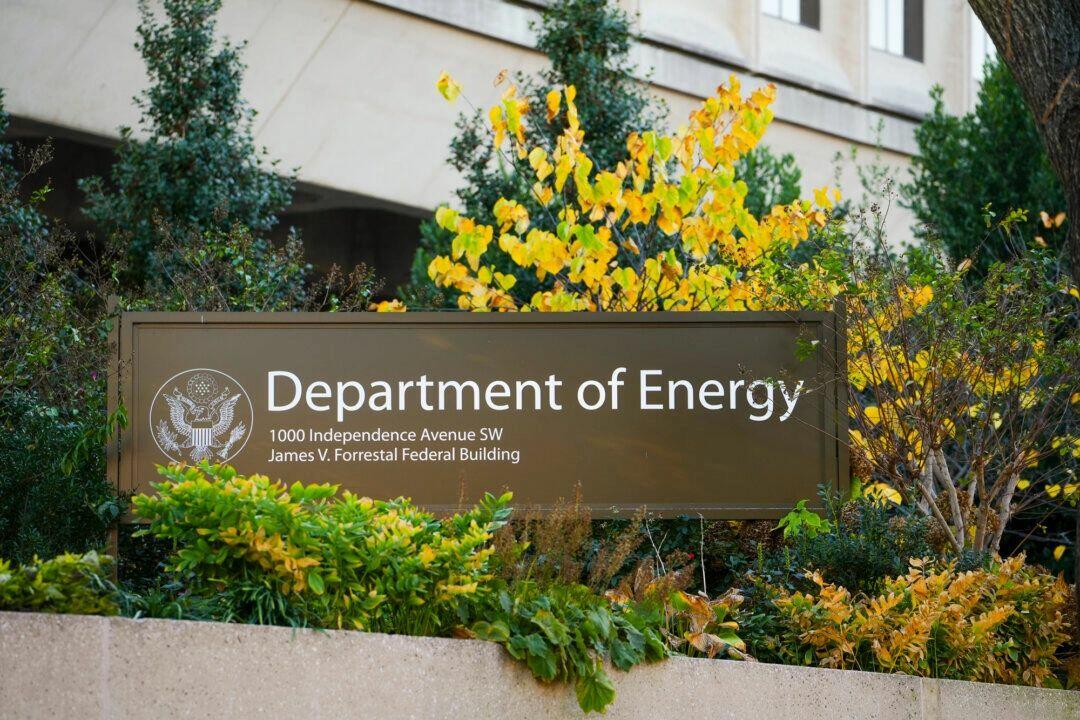
Eleven US senators wrote to Energy Secretary Chris Wright on Tuesday seeking to ban Chinese nationals from US national labs – contending that their access undermines the United States’ position in the artificial intelligence (AI) race.
The Department of Energy building in Washington on Nov. 13, 2023. Madalina Vasiliu/The Epoch Times
The DOE notably oversees 17 national laboratories and funds research to advance various technologies, including energy, environmental, nuclear, and others. In November, President Donald Trump ordered the DOE to launch ‘Genesis Mission,’ with a goal of coordinating a national effort to accelerate AI innovation “comparable in urgency and ambition to the Manhattan Project.”
In their letter, the Senators expressed concern over the thousands of Chinese nationals who have access to these national lab sites, which contain sensitive information and technology. In FY2024, around 3,200 Chinese nationals were approved for such access, which the lawmakers noted does not include lawful permanent residents of the United States, “which means there are likely hundreds, perhaps thousands, more individual Chinese citizens working in our labs,” they wrote.
“Continuing to give access to the cutting-edge work performed at these laboratories to Chinese nationals who will turn everything they know over to the [Chinese Communist Party] directly undermines the purpose of Genesis Mission,” reads the letter, which was co-signed by Sens. Tom Cotton (R-Ark.), Mike Lee (R-Utah), James Risch (R-Idaho), Jim Justice (R-W.Va.), John Cornyn (R-Texas), John Barrasso (R-Wyo.), James Lankford (R-Okla.), Dave McCormick (R-Pa.), Jerry Moran (R-Kan.), Todd Young (R-Ind.), and Ted Budd (R-N.C.).
The Senators recommend that the department implement a policy to prohibit access by Chinese nationals to national laboratory sites, information, and technology.
As the Epoch Times notes further, underpinning the espionage concern is the fact that Beijing has passed laws to require all Chinese citizens to assist in the state’s intelligence efforts, as well as the regime’s practice of transnational repression.
Human rights organization Freedom House ranks the Chinese regime among the worst transnational repressors, using tactics such as threatening family members residing in China in order to coerce overseas Chinese to participate in state operations.
The lawmakers cite such coercion as one reason that even proper vetting of these scientists is “not a sufficient safeguard.”
Additionally, the volume of individuals outpaces the department’s capacity to vet them, and China has made efforts to obfuscate links to the Chinese Communist Party (CCP), the lawmakers said.
“The best way to protect Genesis Mission, and the rest of the important work done throughout the labs, is to put an end to Chinese national scientists and researchers working at them,” the letter reads.
The request comes on the heels of a December House report that found the Energy Department funded research in AI, quantum, and other advanced technologies with defense applications, conducted in partnership with Chinese researchers and institutes, citing more than 4,000 research papers published between June 2023 and June 2025.
The report found that 2,000 Chinese nationals worked at national laboratories as of 2025. The lawmakers behind the report said they had interviewed department executives and found their rationale “naive.”
“Multiple DOE executives … defended [the Chinese nationals’] continued presence … by claiming, in effect, that we want them in our labs so they can see how advanced we are—and go back to China telling their colleagues, thus giving up on beating the United States,” the report reads.
The House Select Committee on the CCP has also published reports that show funding for Chinese defense research through grants from other government agencies, including the Pentagon.
The Department of Energy did not respond to an inquiry from The Epoch Times by the time of publication.
Tyler Durden
Thu, 01/15/2026 – 05:45
https://www.zerohedge.com/political/us-senators-want-ban-chinese-students-government-labs
Today in Chicago History: First-ever MLK Day observed in Illinois
Here’s a look back at what happened in the Chicago area on Jan. 15, according to the Tribune’s archives.
Is an important event missing from this date? Email us.
(Sports) front page flashback: Jan. 16, 1916
Charles Weeghman and three of Chicago’s biggest names in business J. Ogden Armour, William Wrigley Jr. and Julius Rosenwald bought the Chicago Cubs from Charles P. Taft in January 1916. (Chicago Tribune)
1916: Confirming a scoop obtained by the Tribune weeks earlier, Charles Weeghman and others bought the Chicago Cubs from Charles P. Taft. New stockholders in the team included J. Ogden Armour and William Wrigley Jr.
Weather records (from the National Weather Service, Chicago)
High temperature: 60 degrees (1949)
Low temperature: Minus 19 degrees (1979)
Precipitation: 0.81 inches (1877)
Snowfall: 4.2 inches (1997)
1831: Cook County was created. The Illinois State Legislature recognized it as the state’s 54th county.
Five members of the 1939 Chicago Bruins are, from left, Bill Phillips, forward; Frank Linskey, guard; Mike Novak, center; Wibs Kautz, guard; and Eddie Oram, guard. The Bruins’ home floor is in the 132nd Regiment Armory at Madison and Rockwell streets in Chicago. The quintet will be operated by George Halas of the Chicago Bears and Charles Bidwill of the Chicago Cardinals. (Chicago Tribune historical photo)
1925: The Chicago Bruins, the city’s first professional basketball team, lost to the Beloit Fairies 33-29 at the Broadway Armory. George Halas was the team manager and left guard. The rest of the team was comprised of Big Ten Conference captains.
The Bruins played in the American Basketball League through the 1930-31 season before disbanding, then were revived for the National Basketball League.
A portrait of the Rev. Martin Luther King Jr. hangs above a memorial service for the slain civil rights leader at Holy Angels Catholic Church at 607 Oakwood Blvd. on Jan. 15, 1974, in Chicago. (William Kelly/Chicago Tribune)
1974: The first Martin Luther King Jr. Day was observed in Illinois. A cheering crowd of 1,000 people joined a celebration at Operation PUSH headquarters while others attended a candlelit memorial service at St. Martin Catholic Church. Chicago public schools and city colleges were closed. All city, state and county offices in Chicago were closed as were criminal and civil courts and three state motor vehicle facilities.
Vintage Chicago Tribune: How Illinois became the first state to recognize MLK Day
1981: “Hill Street Blues” premiered on NBC. The cop drama, which was filmed in Chicago, continued until May 1987 and set records for most Emmys won in a single season.
New Chicago Bears coach Lovie Smith, left, and general manager Jerry Angelo shake hands as Smith is introduced on Jan. 15, 2004, at Halas Hall in Lake Forest. Smith was the defensive coordinator for the St Louis Rams. (Jim Prisching/Chicago Tribune)
2004: Lovie Smith was introduced as Chicago Bears head coach. He went 81-63 (.563) from 2004-12.
From George Halas to Ben Johnson: What was said about every Chicago Bears coach when they were hired
Want more vintage Chicago?
Subscribe to the free Vintage Chicago Tribune newsletter, join our Chicagoland history Facebook group, stay current with Today in Chicago History and follow us on Instagram for more from Chicago’s past.
Have an idea for Vintage Chicago Tribune? Share it with Kori Rumore and Marianne Mather at krumore@chicagotribune.com and mmather@chicagotribune.com
https://www.chicagotribune.com/2026/01/15/january-15-chicago-history/