Category: News

US Navy Sailor Sentenced To Nearly 17 Years In Prison For Selling Military Secrets To China
US Navy Sailor Sentenced To Nearly 17 Years In Prison For Selling Military Secrets To China
Authored by Dorothy Li via The Epoch Times (emphasis ours),
A former U.S. Navy sailor who had been found guilty of providing the Chinese communist regime with sensitive U.S. military information in exchange for money was sentenced to 200 months in prison, the Justice Department said on Monday.
The Department of Justice in Washington on Feb. 12, 2025. Madalina Vasiliu/The Epoch Times
Wei Jinchao, also known as Patrick Wei, was arrested on espionage charges in August 2023 after reporting for duty aboard the USS Essex, an amphibious assault ship based in San Diego.
Wei, a naturalized U.S. citizen, was convicted by a federal jury in San Diego of espionage and five other criminal counts, including conspiracy to commit espionage, and unlawful export of, and conspiracy to export, technical data related to defense articles in violation of the Arms Export Control Act and the International Traffic in Arms Regulations, after a five-day trial in August 2025.
Prosecutors had asked the court to sentence Wei to 21 years and 10 months in prison, arguing that his actions jeopardized U.S. national security and betrayed the country that granted him citizenship.
“Defendant compromised the U.S. Navy’s entire fleet of amphibious assault ships by sending the Chinese Government thousands of pages of technical information about the fleet’s complex ship systems and how the U.S. Navy operates and maintains those systems,” Assistant U.S. Attorney John Parmley wrote in a government sentencing memorandum filed earlier this month.
“It is a betrayal of America and its people, and it often puts real lives at risk. It also can cost the Government huge amounts of money when it must adjust its military planning, operations, and tactics to account for compromises in informational security.”
In a letter submitted to the court before sentencing, his mother, Wei Mingli, appealed for leniency, recounting the hardships her son faced growing up. She said that he was raised without a father and left home around age 10 to attend boarding school because she had to care for her ailing mother at the time. She portrayed her son as a “devoted Christian” and a kind person who continued to help others, even while in custody.
Patrick Wei’s attorney had sought a much lighter sentence of two years and six months. Wei also wrote a letter to the court expressing remorse for sharing information with an individual he said he once considered a friend.
Now 25 years old, Wei apologized for “wasting taxpayers’ money and eroding people’s trust” in him, and pleaded for “love and mercy” in determining the sentence.
“Yes, I screwed up,” he wrote. “If you could find in yourself to be able to show me some love and mercy in your Honorable conclusion, I would, without fear of contradiction, pay it forward and help others for the rest of my life.”
Details
According to the indictment, Wei was recruited through social media by a Chinese intelligence officer posing as a naval enthusiast affiliated with China Shipbuilding Industry Corporation, a state-owned giant shipbuilder, in February 2022.
About a week later, Wei confided in a friend in the U.S. Navy that the Chinese officer had offered him $500 for daily information on which ships were docked at the San Diego base. Wei told his friend that he was “no idiot” and that what he was being asked to do was commit espionage.
At the time, Wei was a petty officer and worked as a machinist’s mate, which gave him access to sensitive national defense information, including data on U.S. Navy ships and their weapons, according to court documents.
Prosecutors said that, starting in March 2022, Wei sent the Chinese intelligence officer multiple photos and videos of the Essex, along with information about the ship’s defensive weapon systems.
In May 2022, the Chinese officer sent him money and congratulated him on becoming a naturalized U.S. citizen.
In June 2022, Wei provided 30 technical and mechanical manuals containing export-control warnings and details of various operational systems aboard the Essex and similar U.S. Navy vessels, including power, steering, aircraft, and deck elevators, as well as damage and casualty control.
In return for transmitting these documents, Wei received $5,000. The Chinese officer informed Wei that 10 of the manuals he provided had not been seen before and were “proved useful,” according to his indictment.
During that same month, the Chinese officer specifically requested that Wei provide information about the number and training of U.S. Marines participating in an international maritime warfare exercise, as well as photographs of military equipment. Wei complied by sending several images of military hardware.
In August 2022, Wei received $1,200 from the Chinese intelligence officer after passing along another 26 documents detailing the power structures and operations of the Essex and similar vessels, which contained data subject to export controls and information classified as “critical technology” by the U.S. Navy.
Wei continued to transmit other sensitive data to the officer throughout 2023, including information about the layout and location of weapons systems, repairs to the Essex, and mechanical vulnerabilities of similar vessels. The officer instructed Wei to keep their relationship discreet and to destroy any evidence that could reveal their activities.
In the press release announcing the sentence against Wei, Assistant Attorney General for National Security John Eisenberg said: “Wei swore loyalty to the United States when he joined the Navy and reaffirmed that oath when he became a citizen. He then accepted the solemn responsibility of protecting this Nation’s secrets when the United States entrusted him with sensitive Navy information.
“He made a mockery of these commitments when he chose to endanger our Nation and our servicemembers by selling U.S. military secrets to a Chinese intelligence officer for personal profit. Today’s sentence reflects our commitment to ensuring those who sell our Nation’s secrets pay a very high price for their betrayal.”
Roman Rozhavsky, assistant director of the FBI’s counterintelligence division, said the sentencing served as “a reminder that those who choose to put personal gain above their oath and the safety of our nation will be brought to justice.”
FBI Director Kash Patel also pledged to collaborate with other agencies to defend the United States against foreign intelligence threats.
“If you betray the United States, endanger our warfighters, and put personal profit over your oath, you will be found, you will be exposed, and you will pay a heavy price,” Patel wrote on X.
On the same day Wei was arrested, another U.S. Navy sailor, Zhao Wenheng, who was based out of Naval Base Ventura County in California, was also taken into custody. Zhao, also found guilty of selling military secrets to China, was sentenced to 27 months in prison in January 2024.
Frank Fang and Eva Fu contributed to this report.
Tyler Durden
Thu, 01/15/2026 – 07:15

Grupo de derechos critica la impunidad tras violencia religiosa en Sweida, Siria
Por KAREEM CHEHAYEB
BEIRUT (AP) — Human Rights Watch criticó el jueves al gobierno sirio por lo que considera la falta de rendición de cuentas de los responsables de la violencia religiosa y los asesinatos en todos los bandos en los choques entre clanes beduinos armados respaldados por el gobierno y milicias drusas en una provincia del sur en julio que mataron a cientos de civiles.
En su informe, el grupo de derechos humanos dijo que documentó 86 “muertes aparentemente ilegales” de civiles en la provincia de Sweida, de los cuales 67 eran drusos y 19 eran beduinos.
Human Rights Watch afirmó que entrevistó a testigos presenciales y sobrevivientes, quienes dijeron que las fuerzas gubernamentales destruyeron propiedades civiles y realizaron ejecuciones sumarias.
Dijeron que los grupos armados beduinos respaldados por el gobierno saquearon hogares y secuestraron personas, mientras que las milicias drusas atacaron y detuvieron a civiles beduinos en una serie de incursiones de venganza.
Los enfrentamientos en la provincia sureña de Sweida supusieron otro revés para el presidente Ahmad al Sharaa, quien ha tratado de afirmar la autoridad completa de su gobierno en todo el país devastado por la guerra y apelar a las minorías de Siria, que en gran medida son escépticas con su gobierno liderado por islamistas.
Bajo el liderazgo autocrático de Bashar Assad, los drusos tenían un grado de autonomía durante el conflicto, ya que en gran medida se mantuvieron alejados de los combates. Desde la caída del mandatario en diciembre de 2024, los miembros de la pequeña comunidad han vivido en una nueva e incierta Siria.
A mediados de julio, grupos armados afiliados al jeque Hikmat al-Hijri, un líder espiritual druso, se enfrentaron con clanes beduinos locales, lo que provocó la intervención de las fuerzas gubernamentales que efectivamente se alinearon con los beduinos. Cientos de civiles, en su mayoría drusos, fueron asesinados, muchos por combatientes del gobierno. Naciones Unidas estima que 187.000 personas fueron desplazadas para finales de mes.
La mayoría de la comunidad drusa en Siria vive en la provincia de Sweida. Desde entonces, un gran grupo de las milicias se unió bajo el mando de Al-Hijri, lo que en la práctica crea un territorio en grandes extensiones de la provincia, respaldada por la vecina Israel.
“El reconocimiento del gobierno de las atrocidades no es suficiente si aquellos que lideran y dirigen fuerzas abusivas están protegidos de la justicia”, dijo Adam Coogle, subdirector para Oriente Medio de Human Rights Watch, en el informe. “Sin rendición de cuentas a alto nivel y una reforma estructural del sector de seguridad, Siria continuará enfrentando ciclos de violencia y represalias”.
Damasco se está preparando ahora para una posible escalada militar con las Fuerzas Democráticas Sirias lideradas por kurdos, que aún controlan grandes extensiones del noreste de Siria, después de intensos enfrentamientos en dos barrios disputados en la ciudad norteña de Alepo. Durante años, las FDS han sido el aliado clave de Washington en la lucha contra el grupo Estado Islámico.
En Alepo, el jueves continuaban los juicios de los acusados de atacar a civiles durante los enfrentamientos en marzo en las provincias costeras de Siria, donde una contraofensiva contra una insurgencia de leales a Assad se convirtió en ataques de venganza entre comunidades religiosas.
Esto llevó a la masacre de cientos de civiles de la minoría religiosa alauí, que en su mayoría vive a lo largo de la costa. Assad y su familia son alauíes.
El gobierno dijo que estaba investigando la violencia religiosa en Sweida y en septiembre anunció que había detenido a varios miembros de las fuerzas militares y de seguridad. Damasco encargó a un organismo gubernamental que informara sobre los abusos en un plazo de tres meses, pero a mediados de noviembre, el comité solicitó una extensión de dos meses para publicar sus hallazgos a finales de año.
Sin embargo, la investigación aparentemente está en curso. Damasco no ha dicho cuándo se publicarán los hallazgos, ni si se llevará a cabo un juicio similar al relacionado con la violencia en la costa.
Aunque el gobierno dijo que está investigando los incidentes, aún no ha comenzado un juicio por los enfrentamientos en Sweida.
___
Esta historia fue traducida del inglés por un editor de AP con la ayuda de una herramienta de inteligencia artificial generativa.

Column: Buzzer-beating Alex Bregman signing changes the mood of Cubs Convention weekend
The Chicago Cubs celebrate their 150th anniversary this season, beginning with this weekend’s annual convention at the Sheraton Grand Chicago.
To put things in perspective, the president when the Cubs first took the field in 1876 was Ulysses S. Grant, who helped end the Civil War instead of trying to start one. And the telephone had just been invented that year, so few could call the Chicago Tribune and complain about not having the Cubs score in their edition.
Anyway, it’s being called a “very special” weekend and a joyous time for Cubs fans, coming off an actual playoff appearance in 2025 and with budding stars such as Pete Crow-Armstrong, Michael Busch and Cade Horton back and ready to take that next step.
Manager Craig Counsell also will be on hand, and according to a press release, fans can “mingle and enjoy a beverage with Chairman Tom Ricketts!” (The exclamation point is mine).
All in all, it’s certain to be a memorable weekend, thanks mostly to the recent signing of third baseman Alex Bregman and the return of the 2016 Cubs to celebrate the 10th anniversary of their championship season. That was supposed to be the start of a Cubs dynasty that never was, ensuring players would never have to buy a drink in this town for the rest of their lives.
They remain beloved despite their failure to add titles, and the addition of Bregman, like the signing of Jon Lester in 2014, is expected to bring back the vibes that led to a brief Golden Age of Cubs baseball.
The Cubs invented the fan fest 40 years ago, and I’ve been assigned to cover most of them since the second one in 1987, when the hot topic was whether they would sign Andre Dawson. The concept back then was simple — keep the Cubs on the minds of their fans 365 days a year instead of from spring training through September.
“We wanted to market the product 12 months a year,” former Cubs executive John McDonough once said of his invention. “Beforehand, once the season ended, it got dark and you’d get ready for next year. We wanted to perpetuate everything.”
It worked, and the Cubs have used it to introduce new players, managers and executives, to bring back familiar faces and to spread hope that this year would be better than the last. It’s a time-honored concept that seldom strays from its roots, marking the unofficial beginning of the baseball season and giving fans a chance to dream — or complain, depending on the offseason moves.
Jed Hoyer, from left, Randy Bush, Theo Epstein and Scott Harris participate in a Q&A during the Cubs Convention on Jan. 13, 2018, at the Sheraton Grand Chicago. (John J. Kim/Chicago Tribune)
President Jed Hoyer, who served as the proverbial potted plant alongside then-President Theo Epstein at Q&A session in his first nine conventions, is beginning his 15th season in Chicago, having outlasted most of the reporters covering the team.
But those of us who remain know Hoyer is smart enough to realize he can go most of the winter without making a splash as long as he does something before the Cubs Convention. This season he followed the script perfectly, getting the Bregman deal done before the buzzer.
So instead of being booed for trading top prospect Owen Caissie, Hoyer is expected to be applauded for giving Bregman a five-year, $175 million deal that solidifies the Cubs lineup in the absence of Kyle Tucker, the star of last year’s Cubs Convention who remains unsigned. Had Hoyer waited another week, he would’ve been asked incessantly about why he didn’t get another bat. Instead, he’ll get many compliments on his socks — and for getting Bregman.
The Bregman signing was leaked during the third quarter of the Bears’ miraculous comeback win over the Green Bay Packers in the wild-card round Saturday at Soldier Field, a curious bit of timing that no one could process until the smoke cleared. You’d think the Cubs would want to have at least one news cycle during which a $175 million signing was the biggest sports story in town.
Oh, well. They plan to introduce their new star Thursday at the Cubbieplex offices next to Wrigley Field, so at least they’ll be able to get some attention before Bears Fever cranks up again for Sunday’s divisional-round game against the Los Angeles Rams.
Epstein used to caution the media about the risks of signing free agents past age 30 to long-term deals, but Hoyer had no qualms giving the 31-year-old Bregman five years and a coveted no-trade clause. According to the Boston Globe, the Red Sox felt confident they were going to bring Bregman with a five-year, $165 million deal and were wary of bidding against themselves.
Red Sox third baseman Alex Bregman, right, celebrates after his home run against the Yankees on Sept. 13, 2025, in Boston. (Mark Stockwell/AP)
Kudos to Hoyer for getting Ricketts to cave in and give Bregman more money and the coveted no-trade. We’ll have to assume Ken Rosenthal’s constant needling of Ricketts in The Athletic, calling him a cheapskate owner of a major-market team, finally did the trick.
Related Articles
Column: On a memorable night for the Bears and Cubs, keeping the faith was easier said than done
Chicago Cubs and 3rd baseman Alex Bregman agree to a reported 5-year, $175 million deal
Chicago Cubs acquire RHP Edward Cabrera in trade with Miami Marlins for OF Owen Caissie and 2 other prospects
Column: Starting a healthier sports diet in 2026 is easier than you might think
Chicago Cubs and right-handed reliever Hunter Harvey agree to 1-year deal
If Bregman is healthy, he should provide the kind of offense the Cubs got from Tucker in the first half of 2025 before Tucker’s injuries led to a power outage and a mediocre playoff performance. Bregman is well respected in the clubhouse and should be beneficial to the careers of Crow-Armstrong, Busch and other young players.
“He was one of the guys that I could depend on to send a message and I don’t have to tell him what message to send,” former Houston Astros manager Dusty Baker once said. “This is what I love about Bregman.”
The taint of being part of the cheating 2017 Astros has worn off over the years, and Cubs fans are banging the drum for Bregman’s arrival, excited to have an offensive upgrade from Matt Shaw, who can still learn a lot from playing multiple positions and watching from the bench. That’s assuming the Cubs don’t move him to second and trade Nick Hoerner, which would be the worst move by the organization since dealing Mark DeRosa and then signing Milton Bradley after the 2008 season.
If Bregman doesn’t work out, we might not see another megadeal from Ricketts for a long time. That’s a lot of pressure to put on one player, but seemingly he’ll be able to able to handle it.
Meanwhile, the 150th birthday party officially begins. There really hasn’t been much to celebrate since 1876 with one World Series win in our lifetime and only three in their entire existence. But I’m confident the Cubs will find a way to spin it so they look like the New York Yankees.
That’s the real Cubs Way.
https://www.chicagotribune.com/2026/01/15/chicago-cubs-convention-alex-bregman/

Fred Hoiberg and twin sons Sam and Charlie ‘living our dreams’ during No. 8 Nebraska’s season for the ages
LINCOLN, Neb. — It’s too early to tell where the Nebraska men’s basketball team will end up, but Fred Hoiberg and two of his sons sure are enjoying the ride.
The Cornhuskers are 17-0, have the nation’s longest winning streak at 21 games and, at No. 8, the program’s highest ranking in 60 years.
Talk about family fun.
Hoiberg’s son Sam has evolved from a walk-on practice player to one of the Big Ten’s most versatile guards.
Sam’s identical twin, Charlie, is in his first year as a graduate manager who, among other things, helps run practices, puts players through individual workouts and produces analytics reports for the staff.
“We’re living our dreams right now,” Sam said. “It’s tough to really reflect at midseason because we have so many things to improve on and so many goals to reach, but it has been an amazing experience up to this point.”
There are 20 Division I men’s teams whose head coach has at least one son playing for him this season, according to NCAA research.
North Texas first-year coach Daniyal Robinson and his son Reece began their journey at Cleveland State last season.
“In my mind, there’s no cons,” Daniyal said. “Whether he has a great performance on the court or he doesn’t have a great game, man, that is minute compared to the day to day, being able to spend quality time with him and be there with him where we’re working together to go through whatever adversity we have. And then also share the great moments.”
One of those moments happened late in a November game against Eastern Washington when Reece hit a 3-pointer, had a tip-in and made two free throws with nine seconds left to force overtime. UNT won 79-71, and Daniyal said he felt pure joy because his son’s performance loomed so large.
“I just remember seeing how proud my dad was after I hit those free throws,” Reece said. “I talked to him in his office after the game, and it made me emotional.”
At North Carolina, senior reserve Elijah Davis got his big moment with his father, Hubert Davis, in a December blowout of East Carolina. With about 30 seconds left, he launched a 3-pointer from in front of the UNC bench with his dad standing nearby on the sideline.
The shot caught all net for his first points with the Tar Heels, and the starters on the bench went wild.
“I’m the head coach, so I try to be head coach and not Dad,” Hubert Davis said, pausing multiple times to control his emotions. “That was a really awesome, cool moment.”
Nebraska graduate manager Charlie Hoiberg, right, passes the ball to his twin brother, guard Sam Hoiberg before a game Tuesday, Jan. 13, 2026, in Lincoln, Neb. (Bonnie Ryan/AP)
The Hoibergs are the consummate basketball family. Fred was a star player for Iowa State and had a successful run as the Cyclones coach. Another son, Jack, was a walk-on at Michigan State and now is a video analyst for the San Antonio Spurs. Fred and Carol Hoiberg’s oldest child, daughter Paige, works in medical device sales in Chicago.
Sam and Charlie played high school ball together at Lincoln Pius X. From there, Charlie went to TCU to be a regular student, but Sam wanted to keep playing. Sam didn’t draw much recruiting interest, and he walked on at Nebraska with the idea he would develop his game against better players and look for opportunities to transfer to a lower-level Division I program after a couple of years.
A rash of injuries put Sam in position to play significant minutes starting in the second half of the 2022-23 season, and he has started 32 of the last 33 games. He is fourth in the nation in assist-to-turnover ratio (5.25-1) and tied for first in the Big Ten in steals (35).
Charlie was a TCU student manager for two seasons, interned for his dad in the summer of 2024 and returned in June as a graduate manager, a position designed for aspiring coaches.
“It’s been a lot of fun having Charlie part of the program,” Fred said. “He’s been really good for Sam. They share the same DNA, so he has a way of being able to get in his head probably better than I can as a coach and father just because those guys shared a womb together.”
Iowa State coach Fred Hoiberg, right, and his sons Charlie, left, and Sam look on during practice at the NCAA Tournament on March 18, 2015 in Louisville, Ky. (Timothy D. Easley/AP)
Charlie has helped Sam build and maintain confidence, particularly as an offensive player. Sam has doubled his scoring average, to 8.2 points, and his shooting accuracy has gone from 43% to 53%.
“He’s seen me when I’ve been shooting at the highest level, and he’s seen me when I was the leading scorer on teams and making plays, and he’s there to remind me of that,” Sam said of Charlie. “I work out with him every day, he helps me get the reps and he reminds me a lot about the best I’ve played, and that gives me confidence.”
Fred, like Sam, said he hasn’t had time to fully savor the experience of having family with him on the team but knows he will when things slow down. Charlie, on the other hand, is soaking it up.
“I’ve taken my moments to sit back and say, ‘Yes, this is great,’ “ he said. “I’m having a great time on top of being with my dad and brother, which is why I wanted to come here in the first place. I get to be with them every single day. I get to go have dinner at my parents’ house with my mom. Life’s great right now.”
AP reporter Aaron Beard in Chapel Hill, N.C., contributed.
https://www.chicagotribune.com/2026/01/15/fred-hoiberg-sons-nebraska-basketball/

Timely blitzes saved Chicago Bears last week — but Matthew Stafford’s numbers vs. the blitz are staggering
Dennis Allen made an adjustment at halftime.
The Chicago Bears defensive coordinator blitzed just five times on 16 passing plays in the first half against the Green Bay Packers. In the third quarter, Allen sent an extra rusher on five of eight passing plays. The Packers punted on all three of their third-quarter possessions.
The defensive adjustment helped turn the tide for the Bears in the second half as they engineered a comeback from an 18-point deficit. In all, the Bears blitzed on 35.4% of passing plays, outpacing their regular-season blitz rate of 28.7%, per NFL Pro.
The Bears defensive front has been largely ineffective, statistically speaking. They ranked 27th among 32 teams in the regular season with a 31.6% quarterback pressure rate. Their sack rate (5.8%) ranked 21st.
The Bears have struggled to get home when rushing only four defenders. Only three defensive linemen had more than two sacks this season: Montez Sweat with 10, Gervon Dexter Sr. with six and Austin Booker with 4½.
In certain matchups, Allen has been forced to rely on the blitz to create pressure. That, of course, is a double-edged sword because it means fewer defenders in pass coverage.
On Saturday night against the Packers, it worked. This week against quarterback Matthew Stafford and the Los Angeles Rams, it might not
Matthew Stafford’s staggering numbers vs. the blitz
Stafford, who has a finger injury, had an MVP-caliber season. He threw a career-high and league-leading 46 touchdown passes while also leading the NFL in passing yards (4,707). The Rams had the No. 1 offense in both points (30.5) and total yards (394.6) per game.
Obviously a season like that means a quarterback is doing a lot of things right.
“His numbers versus everything’s pretty good this year,” Bears coach Ben Johnson said. “He’s playing at an MVP level, and that’s going to be our challenge.”
Rams quarterback Matthew Stafford throws a pass against the Panthers during an NFC wild-card-round game Saturday, Jan. 10, 2026, in Charlotte, N.. (Jared C. Tilton/Getty Images)
Stafford’s numbers are great no matter how you look at them, but he has been at his best when teams are blitzing. In the regular season, opponents blitzed Stafford at the highest rate since at least 2018 (which is as far back as NFL Pro’s data goes) at 32.9%.
He made them pay for it.
Stafford had a 125.4 passer rating with 32 touchdowns and one interception when teams sent an extra rusher at him. Yes, that’s 32 of his 46 touchdown passes that came against the blitz. He threw seven of his eight interceptions when teams didn’t blitz, and his passer rating dropped to 94.
Blitzing him usually just means he’s getting rid of the ball faster. Stafford ranked 12th-fastest among 33 qualified quarterbacks with a 2.8-second time to throw metric. Against the blitz, he got the ball out in 2.6 seconds on average.
“We have to have guys step up here this week, both up front and on the back end, to make things as difficult as we possibly can for them,” Johnson said. “And so whether that’s bring pressure, whether that’s play coverage and depend on our front four to get after him, it’s one of those things where it’s going to take everybody.”
With a pass rush that has struggled when rushing only four, the Bears are between a rock and a hard place against a savvy veteran like Stafford. Can they afford to risk giving him clean pockets if they don’t blitz?
Or is it a gamble worth taking to send the blitz? The numbers suggest that’s playing with fire.
A comeback for the ages
Receiver DJ Moore runs to the locker room after the Bears defeated the Packers 31-27 in an NFC wild-card game Saturday, Jan. 10, 2026, at Soldier Field. (Armando L. Sanchez/Chicago Tribune)
Saturday’s win over the Packers was the largest playoff comeback in Bears history. It was the fourth-largest comeback in franchise history, period, regular season or postseason. Here are the top four:
20 points: at Arizona Cardinals, Oct. 16, 2006
20: at Tampa Bay Buccaneers, Oct. 25, 1987
19: vs. San Francisco 49ers, Oct. 28, 2001
18: vs. Packers, Jan. 10, 2026
The Bears have had five 17-point comebacks, including Caleb Williams’ NFL debut against the Tennessee Titans on Sept. 8, 2024.
Per the Bears, only four teams have rallied from 15 points down in the fourth quarter to win a postseason game. The last was the New England Patriots in Super Bowl LI, a famous comeback from a 28-3 deficit against the Atlanta Falcons.
Odds and ends, including some playoff records
Bears quarterback Caleb Williams throws a pass in the fourth quarter of an NFC wild-card game against the Packers on Jan. 10, 2026, at Soldier Field. (Chris Sweda/Chicago Tribune)
Caleb Williams’ 361 passing yards set a Bears playoff record.
Williams’ six fourth-quarter comebacks in the regular season also was a franchise record (Pro Football Reference tracks as far back as 1950). Before this season no Bears quarterback had more than four. Jay Cutler twice had four in a season (2010 and 2015).
With seven now, including the postseason, Williams is one fourth-quarter comeback shy of tying the all-time single-season record (including playoff games). Stafford (2016) and Kirk Cousins (2022) both had eight, all coming in the regular season.
Related Articles
Caleb Williams creates viral moment with Jumpman throw, but ‘I’m kind of used to it,’ Chicago Bears QB says
5 things we learned from the Chicago Bears, including not wanting to rely on rally mode against the LA Rams
Chicago Bears CB Kyler Gordon — with ‘tough times’ hopefully in the past — makes a timely return
Northern Illinois’ Jordan Lynch, ex-Chicago Bears Olin Kreutz and Jerry Azumah in College Football HOF class
Chicago Bears Q&A: Is Caleb Williams throwing over the middle more? How is Matthew Stafford in the cold?
For his career, Williams has eight regular-season fourth-quarter comebacks, plus one in the playoffs. If you count the playoff comeback, he now has more total fourth-quarter comebacks in his career than Joe Burrow, Brock Purdy, Jordan Love, Sam Darnold and Bryce Young, and he’s tied with Trevor Lawrence. All of those quarterbacks have been in the league longer than Williams.
Kicker Cairo Santos made a 51-yard field goal against the Packers, a franchise postseason record.
Tight end Colston Loveland’s 137 receiving yards were the second-most by an NFL rookie tight end in a playoff game. He became the first rookie tight end with eight receptions and more than 100 receiving yards in a playoff game. He finished just shy of Allen Robinson’s franchise-record 143 receiving yards against the Philadelphia Eagles in the double-doink game in January 2019.
Coach Ben Johnson became the first Bears coach to win a playoff game in his first season. His 12 wins, including the postseason, ties a record for the most by a Bears coach in his first season.
The Bears’ 25 fourth-quarter points were the most by any team in a playoff game since the Eagles scored 26 in January 1993.
Saturday’s win marked the first time (regular season or postseason) that the Bears had no punts in a game since Sept. 28, 2014. They have had three such games since 1972.
https://www.chicagotribune.com/2026/01/15/chicago-bears-los-angeles-rams-matthew-stafford-blitz/
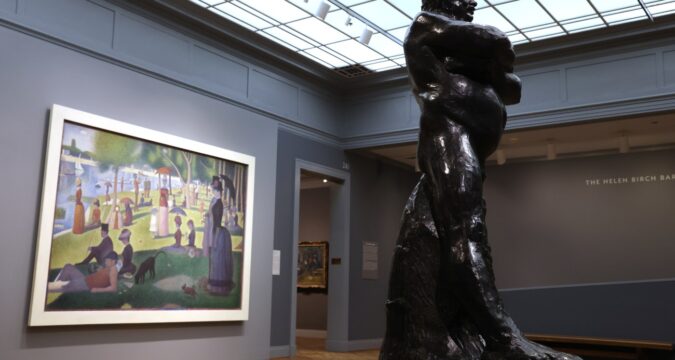
Free admission: Make the most of Chicago museums’ free days for residents
Sure, Chicago has world-class museums and institutions. You’re always meaning to go. But admission fees rack up quickly — especially for families. One of the perks of living in Illinois is free days for residents. Here’s a roundup to plan your calendar, along with other opportunities to experience culture on the cheap.
Griffin Museum of Science and Industry
Remember the first time you saw the train? It’s time to go back to the Griffin Museum of Science and Industry to explore what’s new. You’ll need a calendar to track the free opportunities for Illinois residents. Note that additional fees are required for special exhibits, tours and Giant Dome Theater screenings.
Jan. 25-28; Feb. 2-5, 8-12, 17-19, 23-26; April 19; June 4 and 19 at Griffin Museum of Science and Industry, 5700 S. DuSable Lake Shore Drive; details at griffinmsi.org
Field Museum
Wednesdays are free for Illinois residents at the Field Museum — and yes, it includes Sue the T. rex. While some special exhibitions may require an add-on ticket, you may not want to. There’s always so much to see — even if you’ve seen some of it before.
Wednesdays through March 25 at the Field Museum, 1400 S. DuSable Lake Shore Drive; details at fieldmuseum.org
Shedd Aquarium
Illinois residents get free admission many weekdays during January and February and on Tuesday evenings March through June. Free tickets include access to exhibits and, once it reopens in May, Stingray Touch. Note that a $5 fee applies to online reservations, but phone reservations are free at 312-939-2438. While walk-up reservations are available, they go quickly, so plan to call ahead.
Jan. 18-20, 27-29; Feb. 3-5, 10-12, 17-19, 24-26; March-June free Tuesday nights 5 p.m.-9 p.m. at Shedd Aquarium, 1200 S. DuSable Lake Shore Drive; details at sheddaquarium.org
The updated Wonder of Water gallery with freshwater on the right and marine water on the left at the Shedd Aquarium in Chicago on Dec. 6, 2024. (Tess Crowley/Chicago Tribune)
Adler Planetarium
Sure, you can look at the sky for free, but what can you really see with all the city lights? Head to Adler Planetarium to expand your horizons — free for Illinois residents on select dates. Note that their dome theater sky shows are not included; those add $15 per show, per person to the price.
Jan. 21, 26, 28; Feb. 2, 4, 9, 11, 18, 23; March 2, 4, 9, 11, 18, 25; April 1, 8, 15, 22, 29 at Adler Planetarium, 1300 S. DuSable Lake Shore Drive; details at adlerplanetarium.org
Art Institute of Chicago
Play hooky and head to the Art Institute of Chicago for Free Winter Weekdays. In addition to this perk for Illinois residents, the museum extends free admission throughout the year to those 18 and under, Illinois educators, active-duty military, and LINK and WIC cardholders. Students of some universities and employees of certain corporations may also qualify.
11 a.m.-5 p.m. Mondays, Wednesdays, Fridays, and 11 a.m.-8 p.m. Thursdays through Feb. 27 at the Art Institute of Chicago, 111 S. Michigan Ave.; details at artic.edu
Museum of Contemporary Art Chicago
Every Tuesday evening at the Museum of Contemporary Art Chicago is free for Illinois residents. And if that doesn’t work for you, you still may be able to visit the MCA for less than the suggested admission price. Free admission is available every day for those 18 and under; K-12 teachers; visitors with disabilities and their caregivers; and veterans and members of the military, police and fire departments. Pay-what-you-can admission and other discounts may also be available in person.
5-9 p.m. Tuesdays at the Museum of Contemporary Art Chicago, 220 E. Chicago Ave.; details at mcachicago.org
Intuit Art Museum
The Intuit Art Museum, celebrating self-taught art, already features a fairly liberal admission policy: Those 24 and under pay nothing. But on quarterly Community Days, everyone gets in free. The theme of the next installment is “IAM nourished.”
11 a.m.-6 p.m. Feb. 7 at Intuit Art Museum, 756 N. Milwaukee Ave.; details at art.org
Chicago History Museum
Beef up on local history — for free, if you’re an Illinois resident, on select dates in January and February. While some institutions reserve the Martin Luther King Jr. Day and Presidents’ Day holidays for paying customers, the Chicago History Museum makes those days free. Use it as an excuse to learn about Chicago as a vital center of American history, featuring exhibits ranging from Abraham Lincoln’s Chicago, the murder of Emmett Till and the roots of local Latino communities.
Jan. 19-23, 27-30 and Feb. 16 at Chicago History Museum, 1601 N. Clark St.; details at chicagohistory.org
Curator Elena Gonzales speaks about a quinceañera dress on display in the “Aquí en Chicago” exhibition at the Chicago History Museum on Oct. 22, 2025. (Eileen T. Meslar/Chicago Tribune)
The DuSable Black History Museum & Education Center
Now more than 60 years old, the DuSable is one of the oldest museums dedicated to chronicling the Black experience. Throughout February, Black History Month, free admission is available to all on Wednesdays. The museum also offers free admission every day to many, including active-duty military and responders; visit the website for full details.
Free on Wednesdays through February at the DuSable Black History Museum & Education Center, 740 E. 56th Place; details at etix.com
Illinois Holocaust Museum Experience360
While the full Illinois Holocaust Museum and Education Center in Skokie remains closed for renovations, you can visit its pop-up museum downtown — for free on the last Wednesday of each month. “Experience360: A Panoramic View Through History and Time” features interactive survivor stories and educational experiences centered on commemorating and preventing genocide.
Last Wednesday of the month at Experience360, 360 N. State St.; details at ilholocaustmuseum.org
American Writers Museum
Less than a decade ago, the American Writers Museum opened to document the power and creativity of American writing. Visit on the third Sunday of the month to see all exhibits for free — a treat for the bookish, no matter where you live.
Third Sunday of each month at the American Writers Museum, 180 N. Michigan Ave.; details at americanwritersmuseum.org
A butterfly rests on a plant in the Judy Istock Butterfly Haven at the Peggy Notebaert Nature Museum on Feb. 3, 2025. (Eileen T. Meslar/Chicago Tribune)
Peggy Notebaert Nature Museum
Need to glimpse some summer magic? Head to the Peggy Notebaert Nature Museum. The museum hosts 52 free days for Illinois residents throughout the year. While the Judy Istock Butterfly Haven will require an additional $5 per person fee beginning Feb. 2, you can still get in for free in January.
Jan. 22, 29; March 9-11; June 1-3, 22-24; July 20-22; Aug. 24-26; Sept. 8-11, 14-18, 21-25, 28-30; Oct. 1-2, 5-9; Nov. 2-4 and 30; Dec. 1-2 and 7-8 at Peggy Notebaert Nature Museum, 2430 N. Cannon Drive; details at naturemuseum.org
Brookfield Zoo
Everyone can visit Brookfield Zoo for free during January and February except on Martin Luther King Jr. Day and Presidents’ Day. While some attractions are closed for the season — pachyderms, the carousel and Motor Safari — there’s still plenty to explore in the 235-acre park. Note that parking and fees for individual attractions, such as the “Dolphin Discovery” show, still apply.
10 a.m.-4 p.m. through Feb. 28, except Jan. 19 and Feb. 16, at Brookfield Zoo, 31st Street and Golfview Avenue, Brookfield; details at brookfieldzoo.org
Chicago Botanic Garden
Wander the Chicago Botanic Garden’s 385 acres of nature — a wonderland at any time of year — or just let your kids roll down the hills of the Nature Play Garden over and over again. Whatever you do, you’ll be glad to escape outside — for free on select dates for Illinois residents. Preregistration is required, and parking fees still apply.
Jan. 19; Feb. 1-6 and 16; March 16-19; April 6-10; May 5 and 7; June 9, 11 and 19; July 7 and 9; Aug. 4 and 6; Sept. 15, 17 and 29; Oct. 1 and 12; Nov. 2-6, 9 and 11; and Dec. 7-13 at Chicago Botanic Garden, 1000 Lake Cook Road, Glencoe; details at chicagobotanic.org
Chicago Architecture Center
Watch the Chicago Architecture Center’s website for free hands-on learning. Engineering Fest will be Feb. 28, and Family Day is scheduled for May 9.
Feb. 28 and May 9 at Chicago Architecture Center, 111 E. Wacker Drive; details at architecture.org
Chicago Children’s Museum
On Feb. 22, all kids 17 and younger can visit the Chicago Children’s Museum for free. Adults still need to buy their tickets, but it’ll save you upwards of $21 per child. In addition, on any day, active military receive up to four free admissions and veterans receive one.
10 a.m.-5 p.m. Feb. 22 at Chicago Children’s Museum, 700 E. Grand Ave.; details at chicagochildrensmuseum.org
Kohl Children’s Museum
Normally, everyone older than 1 year has to pay to play and learn here. But Glenview residents with proof of address get in free on Wednesdays between 1-4 p.m. Every day, veterans and military members qualify for a buy-one-get-one discount.
1-4 p.m. Wednesdays at Kohl Children’s Museum, 2100 Patriot Blvd., Glenview; details at kohlchildrensmuseum.org
A person rests on the steps of the Griffin Museum of Science and Industry, just off the lagoon, in Chicago on Sept. 8, 2025. (Antonio Perez/Chicago Tribune)
Lizzadro Museum of Lapidary Art
Love a good rock? Head to the Lizzadro Museum of Lapidary Art, where you can view gemstones, jade carvings, rocks, minerals, fossils and much more. Everyone gets in free on Wednesdays.
10 a.m.-5 p.m. Wednesdays at Lizzadro Museum of Lapidary Art, 1220 Kensington Road, Oak Brook; details at lizzadromuseum.org
Driehaus Museum
Pop into the Driehaus Museum after work one Wednesday evening for a free night of culture. Dedicated to art, architecture and design of the late 19th and early 20th centuries, the building itself is well worth exploring along with the rotating exhibits.
4-7 p.m. Wednesdays at Driehaus Museum, 50 E. Erie St.; details at driehausmuseum.org
Heritage Museum of Asian Art
Spend a Friday evening at Bridgeport’s Heritage Museum of Asian Art, founded more than a decade ago to showcase art spanning centuries, countries and traditions. The third Friday evening of each month is free to all.
5-8 p.m. on the third Friday of each month at Heritage Museum of Asian Art, 3500 S. Morgan St. 3rd floor (enter on West 35th Street); details at heritageasianart.org
Swedish American Museum
Nestled in the heart of Andersonville — the “Little Sweden” of Chicago dating back to the 19th century — the Swedish American Museum hosts special and permanent exhibits as well as the fabulous and beloved Brunk Children’s Museum of Immigration. Visit it for free on the second Tuesday of each month.
10 a.m.-4 p.m. second Tuesday of each month at Swedish American Museum, 5211 N. Clark St.; details at swedishamericanmuseum.org
Glessner House
You don’t need an HBO subscription to experience the Gilded Age. Just visit the Glessner House — and on the first and third Thursday of the month, Illinois residents can tour it for free. The Glessner family was a fixture of the Chicago scene in the late 1800s. Their home on Prairie Avenue — once known as “millionaires’ row” — has been preserved to illustrate their love of culture.
Closed in January. Beginning Feb. 5, 1 p.m. first and third Thursday of the month at Glessner House, 1800 S. Prairie Ave.; details at glessnerhouse.org
Proof of Illinois residency may be required; see websites for details. Beyond free days, those receiving SNAP food assistance may be able to receive free or discounted admission through the Museums for All program by presenting an EBT card and photo ID. The Chicago Public Library also offers cardholders free and discounted admission to several area institutions via digital museum passes.
ALWAYS FREE
You don’t have to wait for free days to make the most of living in Chicago. The following institutions are free to all. Also be on the lookout for suggested — rather than mandatory — admission fees, such as those at the University of Chicago Institute for the Study of Ancient Cultures. It’s possible to see its collection representing “10,000 years of humanity under one roof” for free. We know this because we stumbled in here one lazy afternoon with a curious kindergartner but no wallet. But note that in today’s era of declining arts funding, donations are always welcome — and encouraged.
Lincoln Park Zoo
The savior of Chicago parents, the Lincoln Park Zoo remains one of the city’s best free experiences. No, it may not be as expansive as the Brookfield Zoo, but sometimes that isn’t what you need. Additional fees for the carousel, train and virtual reality shorts.
10 a.m.-5 p.m. daily at Lincoln Park Zoo, 2400 N. Cannon Drive; details at lpzoo.org
Chicago Public Library
It’s all too easy to take the Chicago Public Library for granted. It’s one of the city’s cultural gems, spanning the city and offering a stunning array of free programming for all ages. Skim the calendar, and you’ll find something of interest. And if not, wander the stacks for inspiration.
Various locations throughout Chicago; details at chipublib.org
Chicago Cultural Center
There’s always something happening at the Chicago Cultural Center, the city’s epicenter for free arts events. Check out its expansive calendar or just go to bask in the beauty of its stained-glass domes.
10 a.m.-5 p.m. daily at the Chicago Cultural Center, 78 E. Washington St.; details at chicago.gov
“Thin Volumes: In the Round,” by Iman Fayyad, in the exhibit “SHIFT: Architecture in Times of Radical Change” at the Chicago Architecture Biennial in the Chicago Cultural Center is installed, Sept. 16, 2025. (Terrence Antonio James/Chicago Tribune)
The Block Museum of Art
With more than 6,000 artworks in its permanent collection and an ever-changing slate of temporary exhibitions, Northwestern University’s Block Museum aims to serve as a “springboard for interdisciplinary thinking about the issues of our time.” It’s worth a peek if you’re up around Evanston.
Reopening Feb. 4 from noon-8 p.m. Wednesdays-Fridays and noon-5 p.m. Saturdays and Sundays at The Block Museum of Art, 40 Arts Circle Drive, Evanston; details at blockmuseum.northwestern.edu
Smart Museum of Art
The University of Chicago’s Smart Museum of Art is both a museum and a civic site that aims to channel the intellectual and cultural energy of the South Side. Beyond its exhibits — which features “Unto Thee,” Theaster Gates’ first solo exhibition in Chicago, through Feb. 22 — the museum also features an outdoor sculpture garden.
10 a.m.-4:30 p.m. Tuesdays-Sundays at the Smart Museum of Art, 5550 S. Greenwood Ave.; details at smartmuseum.uchicago.edu
DePaul Art Museum
DePaul Art Museum, located on DePaul University’s Lincoln Park campus, centers on modern and contemporary art — particularly art with a connection to Chicago. Think Chicago Imagists, Barbara Crane, Chris Ware, Dawoud Bey and more.
11 a.m.-7 p.m. Wednesdays and Thursdays, 11 a.m.-5 p.m. Fridays-Sundays at DePaul Art Museum, 935 W. Fullerton Ave.; details at depaul.edu
Museum of Contemporary Photography
Columbia College Chicago’s Museum of Contemporary Photography turns 50 this year — and an exhibit marking the anniversary offers a great opportunity to glimpse the museum’s collection. “MoCP at Fifty: Collecting Through the Decades” runs Jan. 22-May 16.
10 a.m.-5 p.m. Mondays-Saturdays in Museum of Contemporary Photography, 600 S. Michigan Ave.; details at mocp.org
Hyde Park Art Center
Visit the Hyde Park Art Center’s galleries, or consider an Open Arts class. More than 150 courses per year are offered for all ages and skills on a contribute-what-you-can model. Watch their calendar, too, for Center Days and other free events.
10 a.m.-7 p.m. Mondays-Thursdays, 10 a.m.-4:30 p.m. Fridays, 10 a.m.-4 p.m. Saturdays, 11 a.m.-4 p.m. Sundays at Hyde Park Art Center, 5020 S. Cornell Ave.; details at hydeparkart.org
Works by Yollocalli Arts Reach students are displayed on Sept. 23, 2025, at the National Museum of Mexican Art in Chicago’s Pilsen neighborhood. The museum always offers free admission. (Brian Cassella/Chicago Tribune)
National Museum of Mexican Art
Established in 1982 and expanded in 2001 to a 48,000-square-foot building in Pilsen, the National Museum of Mexican Art is a vibrant cultural center. Visit to explore the broad range of Mexican art — from both sides of the border.
10 a.m.-5 p.m. Tuesdays-Sundays at the National Museum of Mexican Art, 1852 W. 19th St.; details at nationalmuseumofmexicanart.org
The National Museum of Puerto Rican Arts & Culture
Now more than 25 years old, this Humboldt Park institution features work showcasing the arts and culture of Puerto Rico and its emigrants. Housed in the former Humboldt Park Receptory and Stables and serving as a gateway to Chicago’s Paseo Boricua, the museum features a collection spanning the late 18th century to today.
10 a.m.-4:30 p.m. Tuesdays-Thursdays, 10 a.m.-4:30 p.m. Fridays, 10 a.m.-1:30 p.m. Saturdays at The National Museum of Puerto Rican Arts & Culture, 3015 W. Division St.; details at nmprac.org
National Veterans Art Museum
Marking 40 years this year, the National Veterans Art Museum offers a venue for veterans to express their experiences through art. Created in the wake of the Vietnam War, the museum has evolved to include more than 2,000 works in its permanent collection spanning generations.
10 a.m.-4 p.m. Tuesdays-Saturdays at National Veterans Art Museum, 4041 N. Milwaukee Ave., 2nd floor; details at nvam.org
Pullman National Historical Park
Visit Pullman, the historic planned industrial community that once supported the manufacturing of train cars. Start in the Clock Tower & Administration Building, headquarters of the original Pullman Palace Car Co. and now a visitor center. Pick up a self-guided tour and view exhibits. Or consider waiting a bit to take in the National A. Philip Randolph Pullman Porter Museum — closed until spring — along with the Historic Pullman Foundation Exhibit Hall.
10 a.m.-4 p.m. Wednesdays-Sundays at Pullman Administration-Clock Tower Building, 610 E. 111th St.; details at nps.gov
Jane Addams Hull-House Museum
Visit the Jane Addams Hull-House Museum to learn about the revolutionary nature of the settlement Addams created in 1889 to serve the city’s growing immigrant community. Though the settlement and surrounding neighborhoods were razed decades ago, two remaining buildings were transformed into this museum, now a part of the University of Illinois Chicago.
10 a.m.-4:50 p.m. Tuesdays-Fridays and 10 a.m.-3 p.m. Saturdays in Jane Addams Hull-House Museum, 800 S. Halsted St.; details at hullhousemuseum.org
National Public Housing Museum
A mile away from the Hull-House Museum, explore a more contemporary story of social justice and human rights at the National Public Housing Museum. Opened last year in the Jane Addams Homes, the museum seeks to preserve the stories of those who grew up in public housing — much of which has been demolished since.
10 a.m.-5 p.m. Wednesdays-Sundays in National Public Housing Museum, 919 S. Ada St.; details at nphm.org
Federal Reserve Bank of Chicago Money Museum
Ever wondered what $1 million cash would look like? Find out at the Money Museum inside the first floor of the Federal Reserve Bank of Chicago. The exhibit aims to explain the role of the Fed while offering fun exhibits featuring counterfeit notes (can you determine which is real?) and rare currency.
10 a.m.-5 p.m. Mondays-Fridays (except bank holidays) in the Federal Reserve Bank of Chicago, 230 S. LaSalle St.; details at chicagofed.org
Jennifer Day is a freelance writer.
https://www.chicagotribune.com/2026/01/15/chicago-free-museum-admission/
Are Deportations Making Affordability A Winning Issue For The GOP?
Are Deportations Making Affordability A Winning Issue For The GOP?
Democrats entered 2026 confident they could make “affordability” the rallying cry that would win back suburban voters and propel them back into the majority. But an inconvenient political twist has upended that plan: Donald Trump is the one actually delivering on affordability – and doing it in ways his opponents are almost certain to despise.
The foundation of this shift is the administration’s aggressive crackdown on immigration. ICE deportations under Trump have sharply reduced the number of illegal migrants in the country – which, according to the White House – is easing the enormous housing demand that exploded under Joe Biden thanks to his open borders policies.
In short, rents and home prices in many major metro areas are becoming more affordable. Though we would of course note that correlation is not necessarily causation.
FACT: In 14 of the top 20 metro areas with the largest illegal migrant populations, home list prices DECLINED year-over-year in December.
The three metro areas that saw modest price increases are all “sanctuary cities.”
Mass deportations = lower housing costs for Americans. pic.twitter.com/63BLWCYhnF
— Rapid Response 47 (@RapidResponse47) January 12, 2026
According to new estimates from Brookings Institution economists, more immigrants left the United States than entered last year – the first time that’s happened in at least five decades. Net migration fell by between 10,000 and 295,000 in 2025, driven by everything from a near-closure of the southern border to tightened visa limits, new fees, and the suspension of nearly all refugee programs.
Economists and industry experts say the housing impact is already being felt.
For example, in San Antonio, developers built aggressively in 2025, expecting another surge of migrant renters. That didn’t happen, so landlords began slashing prices to fill new units. Kevin Lynn, founder of U.S. Tech Workers and a long-time critic of large-scale visa programs, called it basic economics. “When you crack down on immigration, legal and illegal, housing costs naturally drop,” he told Breitbart, describing the decline as a textbook case of supply and demand.
Lynn pointed to Lancaster County, Pennsylvania – a community once labeled “the refugee capital of America.” There, he said, newly renovated apartments are now being advertised with three months of free rent because demand from immigrants has vanished. “This is what happens when you take the immigrants out of the equation,” Lynn said.
It’s a stark reversal from the years under Joe Biden, when roughly 14 million legal and illegal migrants entered the country, coinciding with surging rents and home prices that outpaced wage growth. Now that the pressure is easing, the administration has an answer ready for Democrats hoping to campaign on “affordability.” Trump’s team is framing border enforcement not only as a public-safety measure but as a direct economic benefit for working households.
“Rents are down. You know the story that the Biden administration doesn’t want to talk about: The mass unfettered immigration that pushed up rents, especially for working Americans,” Treasury Secretary Scott Bessent said last month. “The connection between illegal immigration and skyrocketing housing costs is as clear as day.”
The White House clearly believes this narrative could neutralize one of the Democrats’ key talking points heading into the midterms.
Falling rents, rising wages, and higher labor participation are giving younger voters something they’ve struggled to find for years: a sense of stability. Lower immigration is also contributing to reduced crime and drug deaths, further tying economic security to Trump’s immigration policies.
And then there’s the One Big Beautiful Bill Act, which the administration believes will play a huge role in giving Americans the relief they’ve been craving. The legislation aims to lock in lower individual and corporate tax rates, expand full business expensing, and let voters see more of their paychecks. The administration describes it as a direct strike on the cost-of-living crisis.
Other key provisions include higher SALT deduction caps for homeowners, no tax on tips and overtime, and a modest expansion of charitable deductions. Seniors will also see new tax breaks on Social Security income. Buyers of U.S.-made vehicles would get fresh incentives. Each piece will show that while Democrats talk the talk on “affordability” the GOP walks the walk.
Democrats built their midterm plans around the assumption that they could own the affordability issue. Trump is instead redefining it on his terms: fewer migrants competing for jobs and housing, stronger wages, cheaper rents, and more disposable income. Republicans hope that by the time voters head to the polls, “affordability” may no longer be a Democratic talking point. And it might just work.
Tyler Durden
Thu, 01/15/2026 – 06:45
https://www.zerohedge.com/political/are-deportations-making-affordability-winning-issue-gop

Review: ’28 Years Later: The Bone Temple’ is a taut continuation of zombie world
Dr. Ian Kelson (Ralph Fiennes) spends a lot of time alone. Coated in iodine to stave off the zombie virus that has laid waste to England for three decades, he sometimes dances alone in his ossuary — a bone temple — to the music of his youth, Duran Duran. He gazes at old photos listening to “Girls on Film,” the lyric, “and she wonders how she ever got here as she goes under again,” rattling around his shaved skull.
But Dr. Kelson won’t cry for yesterday, as he tries to survive this now ordinary world, isolated and primitive, where zombies roam the countryside, and pockets of human survivors quietly scavenge. Directed by Nia DaCosta, “28 Years Later: The Bone Temple,” starts right where 2025’s “28 Years Later,” directed by Danny Boyle, left off. Boyle and writer Alex Garland originated the franchise in 2002 with “28 Days Later,” kick-starting the 2000s zombie craze. Garland is penning the scripts for the “28 Years” sequels, a planned trilogy.
In “The Bone Temple,” it’s not the zombies one has to worry about — it’s the Jimmies. Our young hero Spike (Alfie Williams), having abandoned the secluded safety of his island home in the wake of his mother’s death, finds himself at the mercy of this merry band of bloodthirsty pranksters, shepherded by a sadistic Manson-esque leader, Sir Lord Jimmy Crystal (Jack O’Connell).
Clad in ratty platinum blond wigs and colorful tracksuits, the cult apes the look of the late English television personality and notorious sexual predator Jimmy Savile. Sir Jimmy is obsessed with the television of his childhood, before his reality was ripped limb from limb. Raised in chaos and bloodshed, receiving directives from a satanic voice in his head dubbed “Old Nick,” Sir Jimmy and his bewildered teenage followers, the Fingers, leave a bloody path in their wake, handing out “charity,” as they call it, randomly torturing the few humans who are unlucky enough to encounter their swaggering and silly nihilism.
Spike is a quivering young boy, but he’s good with a blade and has strong survival instincts. Joining the Fingers is his way of continuing to survive for one more day. Roaming the same patch of northern England, they’re on a collision course with Dr. Kelson, who spends his days hanging out with a heavily drugged alpha zombie, Samson (Chi Lewis-Parry, who delivers a beautifully unexpected performance), hoping to find a way to bring him back to life.
In this second installment, DaCosta has the challenging task of continuing a story with established characters, and then leaving us with new ones, and more story to be told. What’s remarkable is her ability to keep the thread of tension pulled taut, even as we jump between characters and locations, and as she offsets savagery and noise with stillness and quiet. The film is shockingly violent and bloody, but there are also profoundly poetic moments and images that pop up like wildflowers in a field.
She does have some dazzling material to work with — the strange beauty of the bone temple, where the strikingly orange Kelson tends to the doped up Samson, and the distinctive style of the Jimmies, with their “Children of the Corn” hair, gold chains, tiaras and fairy wings. Cinematographer Sean Bobbitt brings his own visual language to the film too. While Boyle’s iPhone camera rigs zipped and zoomed around the landscape with an almost game-like mobility, Bobbitt’s camera shakes with zombie rage and then stills, lulling us in and out of violence and peace.
In “The Bone Temple,” Garland juxtaposes faith and reason and how they oppose one another in a world where the foundations and “order” have been torn asunder. Believing in something bigger than ourselves can feel comforting even if it’s false, because humans contain all the beauty, grace and violence that can be imagined. Religion is mere theater — or at least a really great rock show.
“The Bone Temple” is a deeply wistful film, imbued with nostalgia and highly specific British cultural memory: Teletubbies, Duran Duran, Iron Maiden, Radiohead, Jimmy Savile, Winston Churchill. There’s a sweetness to the comfort of childhood touchstones and shared history in a world gone psychotic with death and destruction. These small reminders of our humanity are adjacent to Kelson’s practice of honoring the dead as a way to honor life.
Despite longing for the past, Garland knows we cannot go back to the way things were. All we can do is remember — or “never forget,” as some have famously said. Reality is bleak, shredded by violence and disinformation, but Garland does allow for a glimmer of hope. If zombie-ism is mass psychosis, an infectious disease passed from person to person, maybe there’s a way to treat it, a way to wake up from the fog. It’s a nice idea, especially in this profoundly un-ordinary world.
Katie Walsh is a critic for Tribune News Service.
“28 Years Later: The Bone Temple” — 3.5 stars (out of 4)
MPA rating: R (for strong bloody violence, gore, graphic nudity, language throughout, and brief drug use)
Running time: 1:49
How to watch: In theaters Jan. 16
https://www.chicagotribune.com/2026/01/15/review-28-years-later/
President To Sign Bill Allowing Return Of Whole Milk In Schools
President To Sign Bill Allowing Return Of Whole Milk In Schools
Authored by Aaron Gifford via The Epoch Times (emphasis ours),
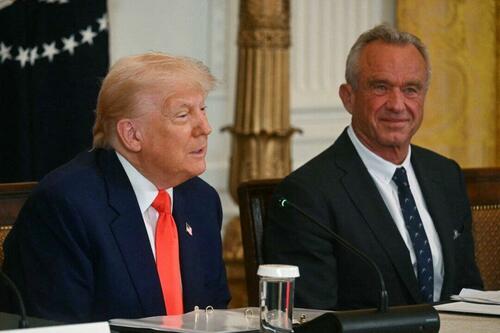
President Donald Trump will sign the Whole Milk for Healthy Kids Act on Wednesday, overhauling previous U.S. Department of Agriculture guidelines that required milk served in school cafeterias to be fat-free or low-fat.
Now, schools have the freedom to serve whole milk, flavored or unflavored, as well as organic milk.
The Senate passed the bill unanimously in November; it easily cleared the House a month later. It was sent to Trump on Jan. 6.
A 2 p.m. signing ceremony is planned in which the president will reverse an Obama-era policy that banned whole milk in public schools, White House officials confirmed to NTD, sister media outlet of The Epoch Times.
“This is common sense and great news for America’s children, dairy farmers, and parents who deserve choice, not big government mandates. President Trump is delivering on his commitment to Make America Healthy Again,” said Taylor Rogers, a White House spokeswoman.
The legislation also stipulates that schools must provide milk substitutes to students with dietary restrictions upon presentation of a letter from a parent or licensed physician.
Additionally, liquid milk no longer counts toward the 10 percent maximum allowance of saturated fat calories.
Rep. John Mannion (D-N.Y.), who sponsored the House bill, previously said this legislation goes a long way in helping U.S. dairy farmers while also providing students the diets they need to “thrive in the classroom.”
“As a teacher for almost 30 years, I saw firsthand how proper nutrition supports student success,” said Mannion, whose district contains many dairy farms.
A 2012 federal law prohibited school cafeterias from serving whole milk, which led to a significant decline in student milk consumption in the past decade, according to Mannion’s Dec. 15 news release.
In the two years between 2014 and 2016 alone, schools served 213 million fewer half pints of milk despite rising public school enrollment.
Mannion also said children over the age of 4 are not getting the recommended daily dairy as outlined by federal dietary guidelines aimed at promoting stronger bone health, lower blood pressure, and reduced risks of Type 2 diabetes and cardiovascular disease.
By contrast, the Physicians Committee for Responsible Medicine, a nonprofit agency represented by about 17,000 physicians, has criticized this legislation, saying that more saturated fats are unhealthy options for children.
Instead, the committee said, Congress should push soy milk as a healthier source of protein, and alternative healthy calcium sources such as nuts, kale, broccoli, and fortified orange juice.
In a related action last week, the federal departments of agriculture and health and human services unveiled a new “upside-down” food pyramid that reduces the recommended amount of grains and healthy fats and oils while increasing the amount of meats and vegetables.
Those guidelines, which will be updated every five years, also provide a stronger stance against sugar and alcohol consumption while promoting unprocessed or lesser-processed foods with saturated fats like yogurt, cheese, and whole milk.
Previous guidelines contained more sweeping generalizations against all types of saturated fats, federal officials said.
“These guidelines replace corporate-driven assumptions with common-sense goals and gold-standard scientific integrity,” Agriculture Secretary Brooke Rollins said on Jan. 7.
Tyler Durden
Thu, 01/15/2026 – 06:15
https://www.zerohedge.com/food/president-sign-bill-allowing-return-whole-milk-schools

Review: Park Chan-wook’s ‘No Other Choice’ is a cutting, dark satire of capitalism
Legendary Korean auteur Park Chan-wook is the ultimate master of tone. No other living filmmaker could so elegantly dance the line between bleak, absurd, devastating and slapstick like he does in his 10th feature film and latest masterpiece, “No Other Choice,” a starkly hilarious satire about what it means to try and survive our current capitalist nightmare.
“No Other Choice” is adapted from the 1997 novel “The Ax” by Donald Westlake, about a mid-level employee at a paper company who is laid off and turns to extreme measures in his hunt for a new job. The novel was adapted into French-language film “The Ax” by Costa-Gavras in 2005, and now Park puts his own spin on it with star Lee Byung-hun, who appeared in his breakthrough film “Joint Security Area” in 2000.
Park’s mastery of tone reflects his mastery of cinematic craft, which has only become more surgically refined in the past few years. His achingly romantic 2022 neo-noir “Decision to Leave,” and 2016 erotic thriller “The Handmaiden” reflect that, but the daffy tonal swings and mischievous nature of “No Other Choice” are so deftly rendered on screen as to take your breath away.
The cinematography (by Kim Woo-hyung) and editing (by Kim Ho-bin and Kim Sang-beom) is peerless, and even the scenes featuring cellular communication are intensely and uniquely cinematic (the dissolves are truly something to behold). An inquisitive and often whimsical noir-ish score by Cho Young-wuk trades off with traditional classical pieces, blending mood seamlessly. The rich cinematic storytelling on display in “No Other Choice” is so dense that this could be a silent film and remain not just comprehensible but deeply moving.
At the heart of this satire is a true humanist streak, an empathy for the people caught in this steel trap, thanks to Lee’s stunning performance as Man-su, a husband, father and dedicated professional who is made redundant after an American company buys out the paper factory where he has made his career. The position has afforded him an exceedingly comfortable life: two kids, two golden retrievers, his childhood home, ballroom dance lessons with his beautiful wife Mi-ri (Son Ye-jin). During a bucolic family barbecue, he embraces his family, basking in the sun, asking for “one more minute.” His time was already up.
Man-su is unwilling to accept a menial job stocking boxes, and he struggles to get a job interview, forced to humiliate and prostrate himself before paper executives. Jealously watching a paper influencer on social media, he’s stuck by an idea: why not suss out his competition for the best jobs, and then eliminate them? He places an ad in a trade magazine and waits for the applications to roll in.
Park and Lee meticulously lay out Man-su’s evolution, or devolution, over the course of this painstaking process, a journey that starts out comedic and bumbling, and then twists into horror as he takes to this calling. He’s a skilled engineer and quick on his feet, and he applies those qualities to his desperate mission.
Only Park could take a scene of bungled attempted murder and make it so hilarious — Man-su clad in a suit, rubber waders and an oven mitt — and so devastating. He confronts his potential victim with pleading accusations that could be applied to his own situation: why can’t you listen to your wife and sell this house? Pursue a new career? Get over your own ego? As the situation crumbles into madcap physical comedy, it is still suspenseful, terrifying and entirely unpredictable.
What is predictable is the way this journey chips away at Man-su himself. In his bid for the validation of a career, he lies to his wife, ditches their hobby, loses the trust of his children and abandons what makes him human, the thing he was fighting for in his failed attempt to protect the workers of his factory. When he finally achieves his goal, it’s by submitting himself to the wood chipper of ruthless corporate practice.
Paper is the perfect material for this tale, a representation of the capitalist urge to chew up and spit out, trees made to pulp and paper and then pulped again. The makeup of the physical world feels positively outdated, vintage. Even workers are outmoded in this automated, artificially intelligent world.
Though Man-su grins through it all, Lee’s toothy smile never reaches his eyes, stretched into an expression of agony, never happiness. Lee’s performance is astonishing, and Son matches him word for word, expression for expression. Park and co-writers Lee Kyoung-mi, Don McKellar and Jahye Lee aren’t afraid to make Mi-ri a strong and assertive woman who has her own agency and desires; her sensibility is the perfect foil to Man-su’s deadly quest. If only he had listened to his wife.
Katie Walsh is a critic for Tribune News Service.
“No Other Choice” — 4 stars (out of 4)
MPA rating: R (for violence, language and some sexual content)
Running time: 2:19 (in Korean with English subtitles)
How to watch: In theaters Jan. 16