Category: News

Cold spurt to set in for the weekend, making for a chilly Bears playoff
Watch out, football fans — weekend chills will make for a crisp kickoff come Sunday, though not the coldest.
After a week of on-and-off flurries, weather officials say a cold spell is in the forecast for the weekend, with highs in the cool teens for the Chicago Bears’ playoff game against the Los Angeles Rams.
“Definitely going to a chilly one out there,” said Zachary Yack, a meteorologist with the National Weather Service in Chicago.
The Iceman cometh pic.twitter.com/4Q5CjYMdDB
— Chicago Bears (@ChicagoBears) January 15, 2026
The cold spurt is expected to set in after a weather system that was poised to move through the Chicago area Thursday night into Friday morning brings a fresh round of snowfall to the region, according to Yack. Most areas were expected to see a dusting to 1 inch of snow, topping off snow accumulations that had been building for the past few days.
As of Thursday afternoon, O’Hare International Airport had picked up about 1.6 inches of snow through the week, Yack said. That brings the season total to 21.5 inches.
Temperature-wise, forecasts called for highs Friday to hover around the mid- to high-30s before falling by evening, Yack said. Both Saturday and Sunday should see highs around 20 degrees, weather officials say. There’s a chance of snow Sunday, but Yack said flurries were more likely Saturday.
By the time the Bears face off against the Rams at Soldier Field in their divisional-round playoff Sunday night, temperatures will be in the mid- to high-teens, cooling off to the low-teens as the game goes on, Yack said.
The Bears, and fans, have had their fair share of frosty games. Against the Cleveland Browns at Soldier Field in December, the temperature at kickoff was 8 degrees.
The coldest Bears game at Soldier Field on record dates back to December 2008, when the Bears beat the Green Bay Packers in a game that saw temperatures reach 2 degrees.
The Bears are embracing this weekend’s frosty conditions.
On game day, a “BEAR DOWN” ice sculpture will be unveiled outside of Soldier Field, according to a Bears spokesperson. The sculpture will be displayed outside Ticketmaster Plaza starting at 8 a.m. and will stay through the end of the game.
The installation comes after the team on Thursday fashioned an ice sculpture of quarterback Caleb Williams outside of the Merchandise Mart. The rendering was an ode to the quarterback’s “Iceman” nickname, a title he’s earned by staying calm and cool under pressure, especially late in the game.
The Bears spokesperson, in an email to the Tribune, said the ice sculptures symbolize the city’s winter conditions — and highlight the advantage of hosting postseason football at home.
https://www.chicagotribune.com/2026/01/16/chicago-bears-playoff-rams-cold-weather/
South Shore property’s plight highlights area’s increasing appeal ahead of Obama Center opening
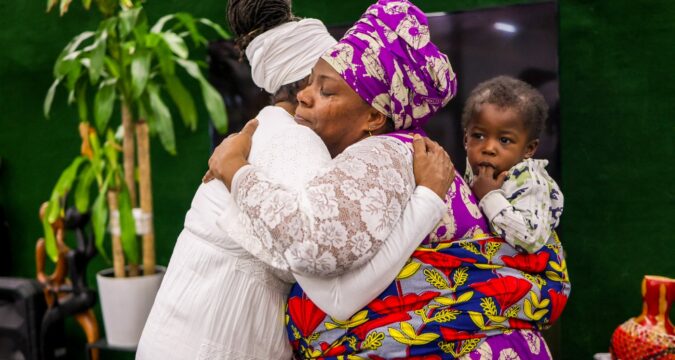
Dozens of dancers, drummers and spectators filled Mama Africa’s Marketplace in South Shore for a spiritual ceremony in support of the shop and community space.
Between the music and prayer, visitors shopped among the rows of colorful beaded jewelry, traditional African clothing and woven river grass baskets. They came to the ceremony primarily for one reason: to “Save Mama Africa’s Marketplace” from its likely closure.
“I always looked for a space where I can be loved and included,” Lakiesha Infarinu Williams, also known as “Mama Africa,” said last weekend to ceremony attendees. “To know there’s so many people who have found that here just means so much to me.”
Williams became Mama Africa to many in her community five years ago when she opened the marketplace in the 71st Street business corridor. Since then, the 43-year-old mother of four said she has cultivated a “neutral space where all people are welcome,” and sells African products mostly on consignment from around 30 U.S. and African vendors.
But now, Williams will have to close Mama Africa’s Marketplace at the end of the month. According to Williams, her landlord plans to sell the building at 2100 E. 71st St. She’s trying to come up with the thousands of dollars needed to either buy the building or move to a new location and cement the future of her story.
Her experience mirrors broader trends in the increasing appeal of South Shore properties, propelled in part by the construction of the Obama Presidential Center just 2 miles away, according to community members and experts.
Lakiesha Infarinu Williams, known as “Mama Africa,” unlocks the security gate on the windows of her store, Mama Africa’s Marketplace, in the South Shore neighborhood, Jan. 8, 2026. (Eileen T. Meslar/Chicago Tribune)
“This is the first time in decades — or actually, in my lifetime — that I’ve seen significant investment on the South Side of Chicago, and most importantly, this close to the South Shore community,” said Tonya Trice, executive director of the South Shore Chamber of Commerce.
Some residents worry that the increased investment means they’ll lose longtime community spaces they can’t find anywhere else in Chicago.
The ceremony was the second time Darrell Efundeji Johnson, who just moved to Chicago from North Carolina, had visited Mama Africa’s Marketplace. He said he came to the marketplace to practice Ifá, a religion originating from West Africa, as it’s one of the few places in Chicago where practitioners can gather.
“I really hate that this space is under threat of no longer existing because of the vital pillar that it is in this particular side of town,” Johnson said.
For Williams, the goal of opening a store was never to turn large profits, she said. Rather, it was to provide this type of communal space and “pump the life back into the community.”
According to a report from the Chicago Metropolitan Agency for Planning published in July, the South Shore community is over 90% Black, and the median household income is around $40,000. About a third of households make under $25,000 a year. For comparison, the median household income of Chicago is around $75,000 a year, and around 19% of Chicago households make under $25,000 a year.
In recent years, South Shore has experienced increased crime and the loss of many middle-class residents, contributing to the area’s struggle.
Marquinn McDonald, the 2nd Police District council member on the city’s Community Commission for Public Safety and Accountability, attended the ceremony as a friend of Williams. He said he remembers a time growing up when his mother and grandmother were scared for him to walk along East 71st Street, but Williams changed the energy of the area dramatically.
McDonald pointed to a history of Chicago pushing Black residents out of their communities while those neighborhoods face disinvestment at the same time. He said he doesn’t want to see Mama Africa’s Marketplace meet the same fate.
“In order to keep these small businesses, we have to support them,” McDonald said. “We have to take ownership.”
Competition for the property
Williams said her landlord, John Lewis, first told her about the buyer for the building in mid-December, later asking that she leave the store by Jan. 23.
Williams said she thinks the owner is selling because property taxes are now too high. The Cook County treasurer’s office website currently shows more than $37,000 in overdue property taxes for the building. The records also show a 50% property tax increase from the 2023 to 2024 tax years.
Lewis did not respond to the Tribune’s interview requests.
County data show South Side neighborhoods were among the many hit hardest by property tax increases. The Cook County treasurer’s office 2024 Tax Year Bill Analysis — which analyzes property tax bills mailed in 2025 — shows the total value of South Shore commercial property taxes increased by 15% to 20% between the 2023 and 2024 tax years. By comparison, commercial property tax revenue in the Loop decreased by 10% to 15% in the same time period.
Williams said she was paying $1,100 per month to rent the space, adding that her landlord had been “extremely generous.”
“He’s been a blessing for five years, and at this time, if he wants me to leave, I don’t want to fight him for that,” Williams said.
Williams has experienced other struggles as a renter too. She owes over $9,000 in rent and is currently facing eviction from the Near West Side apartment she’s lived in for 30 years, she said. She is working with her lawyer and landlord to keep her family from being displaced, she said.
The prospective buyer, Eli Williamson, grew up in South Shore and now sits on the board for the South Shore Chamber of Commerce. He said he’s buying the building to expand the operations of his Bronzeville nonprofit, Leave No Veteran Behind, to his neighborhood.
The nonprofit focuses on employment training, transitional jobs and education debt relief for veterans.
Williamson said he approached commercial property owners in the area as he looked to buy a space and eventually met Lewis. Although he said the building needs updates and other repairs, he wanted to take on the renovations to ensure “this property remains a community asset.”
The sale will likely be finalized soon, Williamson said.
Williamson said he reached out to his network, asking they contact Williams if they know of a new space for her.
“We want her in the community,” Williamson said.
Williams said she requested assistance from the chamber earlier this month, and it offered a potential space along the East 71st Street corridor this week. But she said the space is half the size and three times the price, which she can’t afford.
Increasing interest in South Shore elicits mixed reaction
The ownership fate of 2100 E. 71st St. illustrates how South Shore properties are becoming increasingly sought after in recent years. This trend is due, in part, to the announcement of the Obama Presidential Center in 2016, Trice said.
The presidential center is under construction in Jackson Park and expected to open this summer, adjacent to South Shore. The city anticipates the center will attract 700,000 annual visitors and create over 5,000 direct and indirect jobs.
Increased development is also expected to accompany the center. For example, a 26-story hotel is coming to the Woodlawn neighborhood, a few blocks from the site.
The Obama Presidential Center isn’t the only potential driver of increased development in South Shore, said Geoff Smith, executive director and principal investigator for the DePaul Institute for Housing Studies. He pointed out the area’s proximity to the lakefront, the University of Chicago and the construction of Quantum Shore Chicago.
But Smith still expects that the presidential center will lead to private market investment and affect the real estate market, he added.
Phillip Moore, managing director of lending for Community Investment Corp., pointed to a more causal relationship. He said that through his work — lending primarily to local developers of affordable rental housing — he’s seen increased activity in South Shore because of the Obama Presidential Center.
“We’ve seen a lot of investors — both local and out of state investors — see that as an area of, ‘Hey, I want to be next to something exciting,’” Moore said.
Trice said she and the South Shore Chamber of Commerce view the presidential center as a positive.
Trice added that the other reason South Shore is becoming more attractive is due to local efforts to revitalize the neighborhood’s commercial corridors. The East 71st Street corridor has a 43% retail vacancy rate, Trice said. The high vacancy rate isn’t because of a lack of interest in the properties, Trice said, but a lack of high-quality retail space.
Commercial space has become more valuable since the announcement of the presidential center. Trice said yearly market rents on the 71st Street corridor ranged from about $10 to $12 per square foot before the center was announced. Now, spaces go for $16 to $20 per square foot, and Trice said she expects those numbers to increase due to rising property taxes.
By Trice’s estimates, a monthly market rent for a building the size of the one that houses Mama Africa’s would fall at $16,000 on the low end and $20,000 on the high end.
The chamber is working to renovate spaces along the corridor and recruit businesses, and Trice hopes local businesses will benefit from the foot traffic that will follow the completion of the presidential center, she said.
But others in the community worry the presidential center may push longtime residents and business owners out.
In 2024, investors were the buyers 40.8% of the time in South Shore’s single-family home sales — making it the neighborhood with the third-highest percent of investor buyers — according to data from DePaul’s Institute for Housing Studies. Investors were the buyers of single-family homes in only 18.3% of total Chicago sales.
Rosondunnii Marshall, a therapist and owner of The Darkroom Chicago, characterized the property grabs by investors as “predatory.”
“I’m really hoping that the city of Chicago will respond and protect us in that way so we don’t have a repeat of the historical offenses that we’ve already had in Chicago,” Marshall said.
A City Council ordinance passed in September took steps to preserve affordable housing near the Obama Center in part by allocating up to $3 million for property tax debt relief in the South Shore, Englewood and Lower West Side community areas. It also reserved 30 city-owned lots in Jackson Park and South Shore for affordable housing development.
Smith, the housing investigator, said that although investment is beneficial for communities, there are always risks of increased rents when there are investors buying up large amounts of housing stock.
“Investment needs to be balanced with the needs of the community,” Smith said. “The community wants investment, needs investment, but in some cases, that investment might trigger affordability pressures.”
Rooted in the community
Mama Africa’s community space has been home to spiritual ceremonies, African dance and language classes, concealed carry classes, meetings for the Chicago Association of Black Psychologists, and more, Williams said. The store makes some money by hosting community events, but Williams said she never turns away anyone who can’t pay.
When there’s not an event going on, the room is lined with tables of clothes and shoes for whoever needs them, and Williams said she gives them out during her Feed The People events each Friday as she distributes free meals.
Lakiesha Infarinu Williams, known as “Mama Africa,” gets a fist bump from Michael Cain, outside her store, Mama Africa’s Marketplace, Jan. 8, 2026. (Eileen T. Meslar/Chicago Tribune)
In an effort to raise money to buy the building, in December, Williams started a GoFundMe that had raised over $14,500 as of Thursday. A friend of Williams and the Underground Bookstore owner Yoel Ahmechshadye said he offered to help with $250,000 of pre-approved credit.
Ahmechshadye said he wants to help save Mama Africa’s Marketplace because he’s seen how all kinds of people are drawn to Williams’ energy and benefit from being around her.
“She wears the ‘Mama Africa’ spirit on her,” Ahmechshadye said.
As she begins packing some of her merchandise, it’s hard for her to leave a place where she feels so rooted in community.
Williams said she’s looking for other commercial spaces but hasn’t found anything promising.
“We don’t want to go, but if we have to, we know that we can do the same thing,” Williams said. “But it wasn’t an easy task. So thinking about doing that all over again is a little stressful, but I know I got what it takes.”
https://www.chicagotribune.com/2026/01/16/mama-africas-marketplace-south-shore-obama-center/

Sheila Weinberg: What the fraud in Minnesota can teach Illinois
The Tribune Editorial Board recently wrote about disturbing oversight failures in Minnesota’s federally funded programs, problems that have led to fraud investigations and federal payment freezes. But this is not unique to Minnesota. Illinois’ most recent single audit reveals similar systemic breakdowns in federal program oversight, showing that federal taxpayers’ money is at risk far beyond one state.
This paper also reported that hundreds of Illinois state workers improperly obtained millions in Paycheck Protection Program loans, with more than 200 employees fired or facing criminal scrutiny after falsified information was used to secure taxpayer-backed loans. These episodes underscore a broader problem. When oversight systems are weak, both individual misconduct and program-wide compliance failures can flourish at the taxpayers’ expense.
In Illinois’ 2023 single audit, independent auditors issued adverse opinions for two major federal programs administered by the state. The COVID-19 Homeowner Assistance Fund, a federal program intended to help homeowners avoid losing their homes during the pandemic, distributed approximately $177 million without the required monitoring or risk assessments.
Auditors concluded that the program did not comply with federal requirements in all material respects. Who was helped by these federal dollars?
The audit reached a similar conclusion for the crime victim assistance program. The Illinois Criminal Justice Information Authority disbursed approximately $75.3 million in federal funds without following required risk-based and on-site monitoring procedures, and several agencies that received the funds were never visited. This reflects a significant breakdown in oversight that auditors highlighted in their opinion.
Beyond those two adverse findings, auditors issued qualified opinions on compliance for several other major federal programs, including the child care and development funds; unemployment insurance; the Supplemental Nutrition Assistance Program; the Women, Infants, and Children program; and multiple COVID-19 relief programs. A qualified opinion signals material compliance weaknesses or insufficient audit evidence for those programs, meaning auditors could not fully verify that the state met all federal requirements.
Minnesota’s oversight failures in the child care assistance program, a different sector, led to federal payment freezes and intense scrutiny after attendance reporting and provider compliance issues were uncovered. The real-world consequences were immediate and painful for families and providers. The experience in Illinois shows that these kinds of failures are not isolated or incidental. When monitoring is ignored, and problems go uncorrected, large federal programs can operate for years without adequate safeguards, wasting taxpayer dollars.
As of this writing, Illinois has not yet released its 2024 single audit or annual comprehensive financial report, leaving it unclear whether these oversight and reporting deficiencies from 2023 have been addressed.
Lawmakers, auditors and citizens in every state should take note. Reviewing your state’s single audit reports, the federally required examination of how federal dollars are spent, can reveal whether similar risks exist at home. Federal funds are intended to support families, communities and essential services. Without strong oversight and reliable financial reporting, taxpayers cannot be confident that those funds are serving their intended purpose.
However, there is a silver lining: These issues are starting a much-needed national conversation about the intricate web of federal funding to states. For decades, states such as Illinois and Minnesota have increasingly relied on billions in federal grants, subsidies and reimbursements to balance their budgets and fund critical services, from education and health care to infrastructure and social welfare. This dependency raises pressing questions: Have states grown too accustomed to this financial lifeline, potentially stifling their own fiscal innovation and accountability? Could many states even survive without these federal infusions, or would they face drastic cuts to essential programs, higher local taxes or economic downturns?
This dialogue is prompting Americans to scrutinize the inefficiencies of the current system. Citizens pay federal income taxes, only to see portions “dribbled” back to their state through bureaucratic channels, often with strings attached and layers of red tape. This redistribution can distort priorities, as states chase federal dollars rather than addressing local needs directly. It also fosters a cycle where federal oversight, intended as a safeguard, becomes overburdened, leading to the very lapses we’re seeing now.
Ultimately, this conversation should lead to structural reforms that make both federal and state governments more efficient, resilient and accountable, turning today’s oversight failures into tomorrow’s fiscal strengths.
Sheila Weinberg is founder and CEO of Truth in Accounting, a nonpartisan think tank dedicated to transparent and accurate government financial reporting.
Submit a letter, of no more than 400 words, to the editor here or email letters@chicagotribune.com.
https://www.chicagotribune.com/2026/01/16/opinion-fraud-minnesota-illinois-audit/

Editorial: DePaul gets ensnared in a sports gambling scandal that should raise alarms at the NCAA
Thursday was a dark day for college basketball in general and DePaul University in particular.
A sprawling indictment unsealed by the U.S. attorney’s office in the Eastern District of Pennsylvania laid out an alleged gambling conspiracy in which players were recruited to underperform in specific games so that bettors could wager on point spreads, both for halves of games and entire games. Players at multiple basketball programs were implicated, including four who played for DePaul in the 2023-24 season. Three of those former DePaul players were charged.
The DePaul players acted to ensure the team didn’t beat the first-half spread in three games — Big East contests versus Georgetown, Butler and St. John’s — in February and March of 2024, according to the indictment. For their efforts, they were collectively paid tens of thousands of dollars. DePaul, which had a terrible record in that season and was the underdog in all three contests, didn’t cover the spread in the first halves, so the allegedly crooked bets paid off.
The details in the indictment are sad to read if you’re a believer in the value of college athletics.
One that stood out to us was a text one of the DePaul players received from one of the men accused of bribery during the game on March 5, 2024, against St. John’s. The alleged conspirator complained that a DePaul player not in on the plot was performing too well during the first half. That player, the text said, needed to “chilllll (the expletive) out,” according to the indictment.
The DePaul player texted back, reassuring the conspirator that he and his teammates wouldn’t keep passing the ball to their teammate who was playing so well. Again, this was during the game!
The game in question, mind you, took place at Wintrust Arena in Chicago, where DePaul plays its home games. In fact, all three of the games in which players are alleged to have shaved points were at home, a true insult to loyal DePaul fans who paid to watch a three-win team play out a lost season.
Perhaps not coincidentally, all three games took place shortly after DePaul fired its coach, Tony Stubblefield, leaving an interim coach in charge at the time. Just nine days after that St. John’s game, DePaul announced the hiring of former Ohio State University basketball coach Chris Holtmann as its new coach.
In a statement, DePaul said it was “deeply disappointed” that former players — all of them left for other schools after the 2023-24 season — were accused in the indictment and said it had a “long-standing commitment” to educating athletes “about the dangers and consequences of sports gambling.” The university said it would continue to “evaluate and strengthen” its efforts to educate players on risks just like the ones these accused former players now are experiencing firsthand.
Indeed, whatever program DePaul has been running on the potentially pernicious effects of gambling, clearly it hasn’t been sufficient. Coaches and administrations bear the primary responsibility for keeping this sort of disaster from happening. Players need to be made to understand that they shouldn’t be surprised to be approached by bad actors and that the risk of ruining their lives far outweighs the short-term benefits.
This is not merely a DePaul story, of course. Players at many schools allegedly succumbed to these offers, according to the indictment. We aren’t so naive to believe this group of alleged fraudsters acted in isolation. With sports gambling legalized throughout much of the country and growing rapidly, the NCAA and the sports gambling industry should be hearing shrill alarm bells in this indictment and acting accordingly.
It’s time to rethink how entangled college sports is with gambling. The prevalence of prop bets (wagers on how well an athlete does by a specific statistical measurement) as well as parlays (bets on more than one thing happening) heighten the risk. Indeed, this alleged ring used parlays on multiple games they’d manipulated to try to boost their winnings, according to the indictment.
If all that comes from this scandal is the prosecution of these individuals, we will see something like this happen again. Very soon.
Submit a letter, of no more than 400 words, to the editor here or email letters@chicagotribune.com.

Mike Clemmons: Joliet data center is the opportunity families have been asking for
I’ve worked in and around Joliet my whole life. I’ve seen the good years, the slow years and the years when we had to fight like hell just to keep folks working. So let me get right to the point: We need the Joliet Technology Center project.
For more than a century, Joliet has powered progress — from rail and river to steel and manufacturing. Today, the economy runs on data and digital infrastructure, and the new data center proposed for Joliet is not just another construction project; it’s a generational investment in Joliet’s future. This is our chance to bring in jobs, investment and opportunities that will pay dividends for decades.
During construction, local contractors, union trades and suppliers will see millions of dollars in work. Paychecks would circulate in our restaurants, shops and businesses, keeping the local economy moving. Once the center is built, it will support long-term operations jobs — technicians, engineers, facility managers, security and support staff — many of which can go to Joliet residents. This isn’t temporary work; these are real careers that can sustain families and strengthen our community.
In addition, data centers require ongoing construction work to accommodate the constant upgrading, replacement and expansion of high-density computer servers, power systems, cooling infrastructure and security systems. This continuous investment creates a steady stream of residual construction jobs long after the initial build is complete, directly countering the claim that data centers do not generate meaningful long-term employment.
But the benefits don’t stop there. This developer is doing something you rarely see anymore — it’s paying for the transmission upgrades itself. All of them. That means Joliet gets a stronger, more reliable grid without it costing ratepayers a single cent.
The developer also has gone above and beyond to limit impacts on residents and the environment. Concerns about water usage and mechanical noise are relics of older technology. The facility will use a closed-loop water cooling system, recirculating the same water rather than draining local supplies, cutting consumption significantly. Modern heating, ventilation and air-conditioning systems are quieter, cleaner and far less resource-intensive, so the community won’t have to choose between digital infrastructure and peace of mind.
Beyond the jobs and economic boost, this project will have a lasting impact on Joliet’s finances. It brings substantial new tax revenue — revenue that will go directly to schools, roads, public safety and other essential services. That means improvements we all rely on, without raising taxes on residents. Families won’t be asked to pay a single extra dollar, yet the benefits will touch every corner of Joliet.
And it’s not just about money sitting in a city account — it’s about what that money makes possible. Better-funded schools mean more resources for kids, safer roads mean fewer accidents and stronger support for our first responders keeps all of us secure. When you look at the scale of the project and the revenue it generates, it’s clear this isn’t just a win for the city’s bottom line — it’s a real, tangible boost for the everyday lives of Joliet families.
It’s important to note that the companies behind this project have a track record of success. Hillwood has a long history of transforming underused land into high-quality, job-creating developments and PowerHouse Data Centers brings expertise in secure, efficient, next-generation digital infrastructure. Together, they’re proposing a long-term partnership with Joliet — not a “build it and leave” project.
This is a once-in-a-generation opportunity for Joliet. Other communities are actively competing for these investments, and we have the land, workforce and infrastructure to win. With thoughtful oversight and the right agreements in place, this project can become a cornerstone of Joliet’s next chapter — bringing good jobs, responsible development and lasting benefits for the families and businesses who call this city home.
Mike Clemmons is international vice president for the Sixth District of the International Brotherhood of Electrical Workers.
Submit a letter, of no more than 400 words, to the editor here or email letters@chicagotribune.com.
https://www.chicagotribune.com/2026/01/16/opinion-joliet-data-center-power-grid/
Heidi Stevens: The joy from the Chicago Bears’ run is about more than football. It’s remembering what we share.
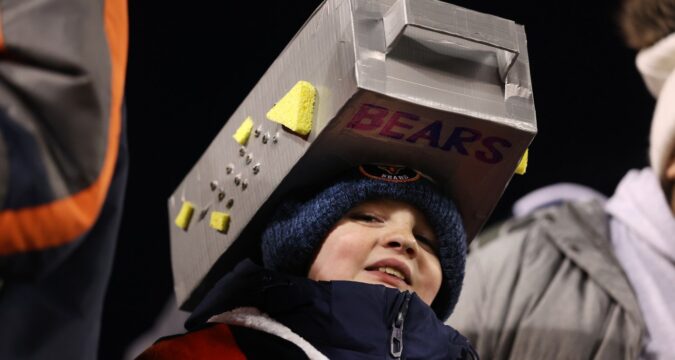
Win or lose, this Chicago Bears season has been an absolute blast. Unexpected. Joyful. Resilience in action. A comeback story for the ages. A foundation to build upon.
A couple days after the Bears sent the Green Bay Packers packing, I bonded with a guy on the sidewalk about Matthew Stafford’s cold-weather stats for the Rams. The week prior, I bonded with a FedEx driver about the cost of tickets. For those prices, she suggested, the players should offer lap dances. For that idea, I suggested, she should be team president.
Also thanks to that victory over the Packers, Chicago got to know Brandon Martinez, aka Cheese Grater Guy, who appeared on screens across America grating a block of Parmesan he smuggled into Soldier Field.
“I nicked two of my fingers,” Martinez told Block Club Chicago reporter Mack Liederman, who profiled our new hero. “But yeah, I’d do it again.”
Martinez, born and raised on the Southwest Side, bought tickets with the money he earned working overtime at his job operating blenders for antifreeze and airplane deicer at a chemical plant.
“On the way to the tailgate Saturday, Martinez picked up beers and a $8.99 cheese grater with a plastic cover from Jewel-Osco,” Liederman reported. “Martinez was also strapped with four cheese chunks that his wife put in Ziploc bags and stuffed into his pockets.”
Absolute legend.
All of this comes on the heels of the Wiener’s Circle offering free hot dogs if Caleb Williams scored four touchdowns against Dallas. (He did.) And free hot dogs if coach Ben Johnson took his shirt off after a win over the Eagles. (He did.)
I posted on Facebook the other day about some of the joy this is bringing me and a friend commented, “I don’t know how anyone can give a crap about football right now.”
Extremely fair point.
Millions of Americans are watching their health insurance skyrocket to unaffordable levels, even as grocery prices rise faster than at any time since 2022.
Masked federal agents are terrorizing communities and destroying families and going door to door demanding papers.
Renee Nicole Good is dead. Her children, now motherless, are living through the compound trauma of having her character assassinated by our elected leaders.
The Environmental Protection Agency will no longer consider the number of human lives saved in its pollution regulations — only the cost to business.
The FBI just searched the home of a Washington Post journalist, seizing laptops, a phone and a smartwatch during their search.
President Donald Trump, meanwhile, is policing Smithsonian content and flipping off auto workers and stoking conflict around the globe.
Football feels pretty flimsy.
I replied on Facebook with my favorite Dan Savage quote, which I’ve shared here before:
“Anyone who tells you that making time for joy is a distraction or a betrayal has no idea what they’re talking about. During the darkest days of the AIDS crisis, we buried our friends in the morning, we protested in the afternoon and we danced all night. And it was the dance that kept us in the fight because it was the dance we were fighting for.”
But I think it’s a little more than that.
The joy is what we’re fighting for, absolutely. The joy is why we’re here. I did not give birth so my children could pick a tribe. So they could divide and conquer. So they could feel outrage and despair and indignation. Your parents didn’t either.
We are here to feel wonder and witness beauty and create meaning and cherish the people who love us, and to love them back with intention and gratitude.
And we’re also here, I believe, to use our energy and voices and power to make sure wonder and beauty and meaning and love — along with safety and dignity and human rights — are available to everyone.
We’re not just fighting for the dance, in other words. We’re fighting so everyone gets to dance.
I promise I’m getting back to football in a minute.
I think we fight for those things more effectively, more fervently, more authentically, when we know each other. When we are connected to each other. When we experience the same things. When we love some of the same things.
Art does that. Books do that. Nature does that. And sports do that.
They’re not distractions. They’re paths to understanding one another. They’re invitations to talk to one another. They’re ways to understand the human condition.
Is that a lot to attach to a shirtless coach and a cheese-grating fan and a conversation on a sidewalk about Matthew Stafford’s pass rating in snow? Maybe. Do I believe it with my whole heart? Definitely.
We need things that remind us we’re all part of the same story. The one we’re still writing.
Join the Heidi Stevens Balancing Act Facebook group, where she continues the conversation around her columns and hosts occasional live chats.
Twitter @heidistevens13
https://www.chicagotribune.com/2026/01/16/heidi-stevens-chicago-bears-joy/
Data Centers, Power Infrastructure, Healthcare Set To Lead Next Phase Of Construction Boom
Data Centers, Power Infrastructure, Healthcare Set To Lead Next Phase Of Construction Boom
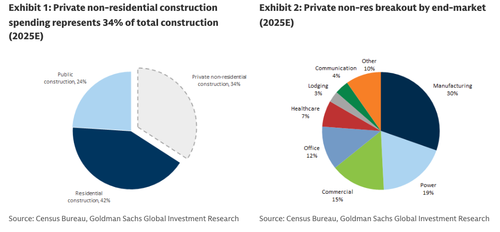
Eric Gaus, chief economist at Dodge Construction Network, joined Goldman Sachs analysts to discuss the overall state of U.S. building construction, assessing which project types are likely to dominate and the underlying strength of the trend.
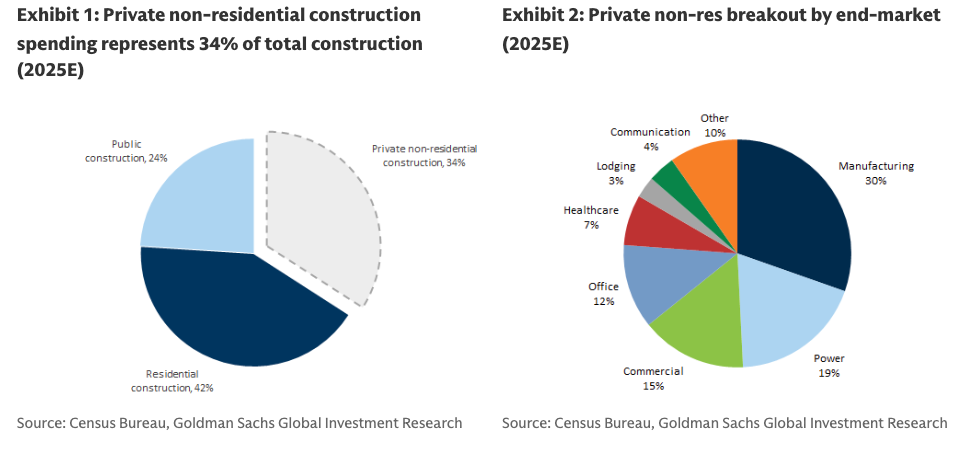
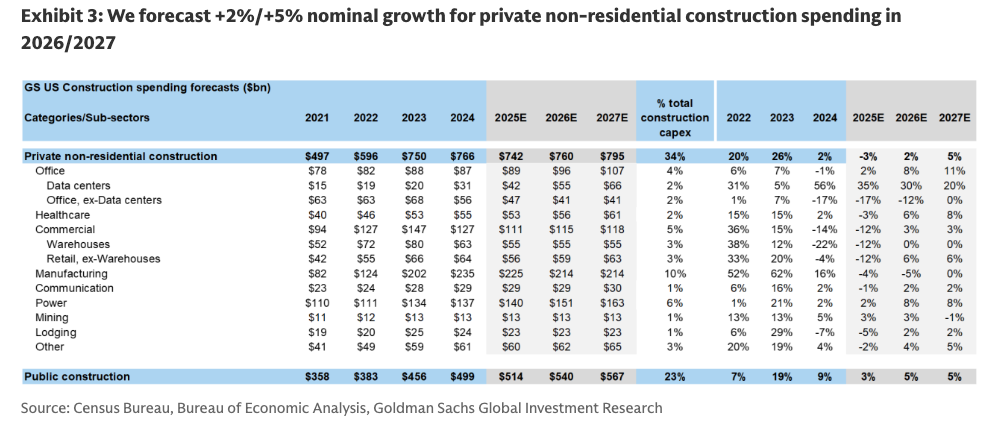
“We come away from our discussion with a continued outlook for private non-residential construction spending to return to growth in 2026 vs 2025, with strength led by data centers, power infrastructure, and healthcare,” Goldman analysts led by Adam Bubes wrote in a note on Tuesday.
For those unfamiliar with Dodge Construction, the index is a leading indicator of U.S. construction activity, measuring the dollar value of new, nonresidential building projects entering the planning phase. Analysts track the index because it provides early signals for industrials, materials, engineering firms, and REITs, and often anticipates broader turns in the business cycle.
Bubes forecasted nominal growth of 2% in 2026 and 5% in 2027 in private nonresidential construction spending, with data centers, power infrastructure, and healthcare leading the way.
About 2.5 months ago, the Dodge Momentum Index showed a sharp increase in data center buildouts expected for 2026. In May of last year, we pointed to UBS analyst Steven Fisher, who forecasted the Trump-era construction boom in AI data centers wouldn’t filter into the real economy until early 2026.
“More slowing before reacceleration in 2026,” Fisher told clients at the time, adding, “We expect stimulus and structural forces to drive the rebound, while cyclical factors remain weak.”
ZeroHedge Pro Subs can read the full Goldman note in the usual place, where key takeaways from the Dodge Construction roundtable offer more insight into building trends nationwide this year.
Tyler Durden
Fri, 01/16/2026 – 05:45

Today in Chicago History: Fire destroys McCormick Place
Here’s a look back at what happened in the Chicago area on Jan. 16, according to the Tribune’s archives.
Is an important event missing from this date? Email us.
Prohibition began 100 years ago this week. Americans are drinking more now than we were then.
Front page flashback: Jan. 17, 1967
A blaze started in draperies inside a housewares exhibit inside the north end of McCormick Place early on Jan. 16, 1967, and quickly spread. The building was destroyed. (Chicago Tribune)
1967: McCormick Place was destroyed by fire.
Weather records (from the National Weather Service, Chicago)
High temperature: 57 degrees (1990)
Low temperature: Minus 25 degrees (1982)
Precipitation: 0.90 inches (2017)
Snowfall: 6.4 inches (1885)
“To be the greatest merchant of the present day is to be the greatest merchant in the history of the world,” the Tribune wrote about Marshall Field after the department store founder’s death in 1906. (Chicago Tribune)
1906: Marshall Field died in New York of pneumonia contracted during a winter game of golf. He’s buried in Graceland Cemetery.
Harold “Red” Grange, right, who is returning from a coast to coast “football tour,” is greeted by his brother Garland Grange, left, upon his arrival at the Chicago and Northwestern Railroad station on Feb. 4, 1926. (Chicago Tribune historical photo)
1926: Red Grange scored two touchdowns before more than 70,000 fans in the Los Angeles Coliseum. The Chicago Bears beat the Los Angeles Tigers 17-7.
1982: ‘It’s awful!’ Chicago recorded its third-coldest temperature — minus 25 degrees.
Chicago weather: A look back at our coldest recorded temperatures
During the team’s visit to the White House on Jan. 16, 2017, the Chicago Cubs offered President Barack Obama a “pardon” for being a White Sox fan. (Chicago Tribune)
2017: “Here is something none of my predecessors ever got a chance to say: Welcome to the White House the World Series Champion, Chicago Cubs!”
President Barack Obama honored the 2016 Chicago Cubs with a celebration day in Washington, D.C.
Want more vintage Chicago?
Subscribe to the free Vintage Chicago Tribune newsletter, join our Chicagoland history Facebook group, stay current with Today in Chicago History and follow us on Instagram for more from Chicago’s past.
Have an idea for Vintage Chicago Tribune? Share it with Kori Rumore and Marianne Mather at krumore@chicagotribune.com and mmather@chicagotribune.com
https://www.chicagotribune.com/2026/01/16/january-16-chicago-history/
Today in History: Wayne Newton performs his 25,000th Las Vegas show
Today is Friday, Jan. 16, the 16th day of 2026. There are 349 days left in the year.
Today in history:
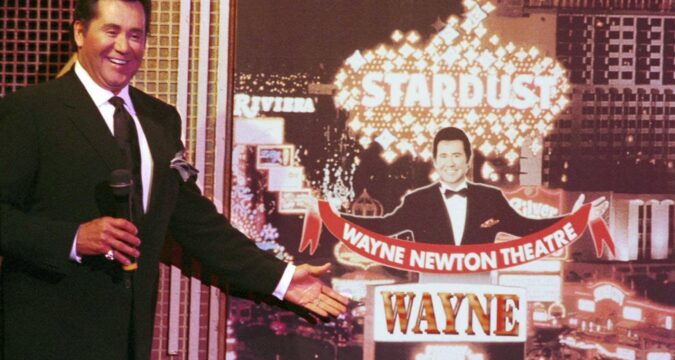
On Jan. 16, 1996, Wayne Newton performed his 25,000th Las Vegas show. Newton had performed more shows as a headliner in Las Vegas than any other entertainer.
Also on this date:
In 1865, Union Maj. Gen. William Tecumseh Sherman decreed that 400,000 acres of confiscated land in the South would be divided into 40-acre lots and given to former enslaved people. (The order, later revoked by President Andrew Johnson, inspired the expression, “40 acres and a mule.”)
In 1942, actor Carole Lombard, 33, her mother, Elizabeth Peters, and 20 other people were killed when their plane crashed near Las Vegas, Nevada, while returning to California from a war-bond promotion tour.
In 1989, three days of rioting began in Miami when a police officer fatally shot a Black motorcyclist, causing a crash that also claimed the life of his passenger. (The officer was convicted of manslaughter, but later acquitted in a retrial.)
In 1991, in a televised address to the nation, U.S. President George H.W. Bush announced the start of Operation Desert Storm, a combat operation that drove Iraqi forces out of Kuwait.
In 2001, Congolese President Laurent-Désiré Kabila was fatally shot by one of his own bodyguards.
In 2006, Ellen Johnson Sirleaf became the first elected female head of state in Africa when she was sworn in as president of Liberia.
Related Articles
Massive citizen revolt spelled doom for Richard J. Daley’s Crosstown Expressway
Vintage Chicago Tribune: How Chicago expressways and other major roads got their names
Today in Chicago History: First-ever MLK Day observed in Illinois
Today in History: Wikipedia makes its debut
Today in Chicago History: Lackluster coronavirus precautions cause CPS students to walk out
In 2018, authorities in Denmark charged inventor Peter Madsen with killing Swedish journalist Kim Wall onboard his private submarine. (Madsen would be convicted and sentenced to life in prison.)
Today’s birthdays: Opera singer Marilyn Horne is 92. Hall of Fame auto racer A.J. Foyt is 91. Country musician Ronnie Milsap is 83. Filmmaker John Carpenter is 78. Actor-dancer-choreographer Debbie Allen is 76. Singer Sade is 67. Boxing Hall of Famer Roy Jones Jr. is 57. Model Kate Moss is 52. Actor-producer-songwriter Lin-Manuel Miranda is 46. Baseball great Albert Pujols is 46. Singer-Songwriter Yebba is 31.

China Leads Global Coal Power Additions Despite Renewables Push
China Leads Global Coal Power Additions Despite Renewables Push
By Charles Kennedy of OilPrice.com
China continues to nearly single-handedly prop up global coal consumption and new coal-fired power generation, despite being also the world’s leading investor in renewables and battery storage.
China is set to commission as many as 85 coal-fired power generating units this year, out of a total global of 104 coal projects slated for start-up in 2026, according to data by non-profit Global Energy Monitor (GEM) cited by the Financial Times.
Of all the 63 gigawatts (GW) of coal-fired power generation expected to begin commercial operations globally this year, 55 GW will be in China, the GEM data showed.
Last year, China accounted for a massive 78% of all global coal power capacity that began operating. The world’s top coal consumer and importer also makes up a whopping 86% of the total global capacity under construction and expected to be commissioned this year, according to the data analyzed by GEM.
Apart from China, other Asian economies such as India, Indonesia, and Vietnam continue to add coal-fired capacity.
GEM data shows India has 24 GW of coal power capacity under construction. India is investing huge sums in renewables and hit its renewable installation target earlier than planned, but it continues to bet on coal.
Coal-fired power generation and capacity installations in India continue to rise and coal remains a key pillar of India’s electricity mix with about 60% share of total power output. Despite booming renewable capacity additions, India continues to rely on coal to meet most of its power demand as authorities also look to avoid blackouts in cases of severe heat waves.
Globally, China is the leader – by far – in renewable energy investments and capacity installations, but it is also a leader in coal-fired power and continues to be the key driver of record-high global coal demand.
So, any meaningful reduction of global coal-related energy emissions depends on how China approaches its energy security and affordability dilemma in the coming years.
Tyler Durden
Fri, 01/16/2026 – 05:00
https://www.zerohedge.com/markets/china-leads-global-coal-power-additions-despite-renewables-push