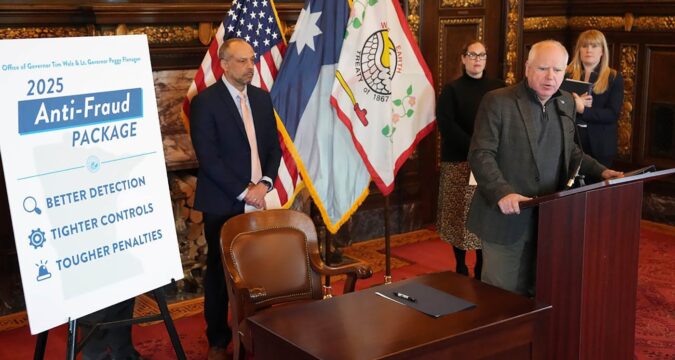
The Tribune Editorial Board recently wrote about disturbing oversight failures in Minnesota’s federally funded programs, problems that have led to fraud investigations and federal payment freezes. But this is not unique to Minnesota. Illinois’ most recent single audit reveals similar systemic breakdowns in federal program oversight, showing that federal taxpayers’ money is at risk far beyond one state.
This paper also reported that hundreds of Illinois state workers improperly obtained millions in Paycheck Protection Program loans, with more than 200 employees fired or facing criminal scrutiny after falsified information was used to secure taxpayer-backed loans. These episodes underscore a broader problem. When oversight systems are weak, both individual misconduct and program-wide compliance failures can flourish at the taxpayers’ expense.
In Illinois’ 2023 single audit, independent auditors issued adverse opinions for two major federal programs administered by the state. The COVID-19 Homeowner Assistance Fund, a federal program intended to help homeowners avoid losing their homes during the pandemic, distributed approximately $177 million without the required monitoring or risk assessments.
Auditors concluded that the program did not comply with federal requirements in all material respects. Who was helped by these federal dollars?
The audit reached a similar conclusion for the crime victim assistance program. The Illinois Criminal Justice Information Authority disbursed approximately $75.3 million in federal funds without following required risk-based and on-site monitoring procedures, and several agencies that received the funds were never visited. This reflects a significant breakdown in oversight that auditors highlighted in their opinion.
Beyond those two adverse findings, auditors issued qualified opinions on compliance for several other major federal programs, including the child care and development funds; unemployment insurance; the Supplemental Nutrition Assistance Program; the Women, Infants, and Children program; and multiple COVID-19 relief programs. A qualified opinion signals material compliance weaknesses or insufficient audit evidence for those programs, meaning auditors could not fully verify that the state met all federal requirements.
Minnesota’s oversight failures in the child care assistance program, a different sector, led to federal payment freezes and intense scrutiny after attendance reporting and provider compliance issues were uncovered. The real-world consequences were immediate and painful for families and providers. The experience in Illinois shows that these kinds of failures are not isolated or incidental. When monitoring is ignored, and problems go uncorrected, large federal programs can operate for years without adequate safeguards, wasting taxpayer dollars.
As of this writing, Illinois has not yet released its 2024 single audit or annual comprehensive financial report, leaving it unclear whether these oversight and reporting deficiencies from 2023 have been addressed.
Lawmakers, auditors and citizens in every state should take note. Reviewing your state’s single audit reports, the federally required examination of how federal dollars are spent, can reveal whether similar risks exist at home. Federal funds are intended to support families, communities and essential services. Without strong oversight and reliable financial reporting, taxpayers cannot be confident that those funds are serving their intended purpose.
However, there is a silver lining: These issues are starting a much-needed national conversation about the intricate web of federal funding to states. For decades, states such as Illinois and Minnesota have increasingly relied on billions in federal grants, subsidies and reimbursements to balance their budgets and fund critical services, from education and health care to infrastructure and social welfare. This dependency raises pressing questions: Have states grown too accustomed to this financial lifeline, potentially stifling their own fiscal innovation and accountability? Could many states even survive without these federal infusions, or would they face drastic cuts to essential programs, higher local taxes or economic downturns?
This dialogue is prompting Americans to scrutinize the inefficiencies of the current system. Citizens pay federal income taxes, only to see portions “dribbled” back to their state through bureaucratic channels, often with strings attached and layers of red tape. This redistribution can distort priorities, as states chase federal dollars rather than addressing local needs directly. It also fosters a cycle where federal oversight, intended as a safeguard, becomes overburdened, leading to the very lapses we’re seeing now.
Ultimately, this conversation should lead to structural reforms that make both federal and state governments more efficient, resilient and accountable, turning today’s oversight failures into tomorrow’s fiscal strengths.
Sheila Weinberg is founder and CEO of Truth in Accounting, a nonpartisan think tank dedicated to transparent and accurate government financial reporting.
Submit a letter, of no more than 400 words, to the editor here or email letters@chicagotribune.com.
https://www.chicagotribune.com/2026/01/16/opinion-fraud-minnesota-illinois-audit/


