Category: News

Column: Matas Buzelis was benched again. Are the Chicago Bulls placing enough priority on his development?
The final quarter of Wednesday’s win over the Utah Jazz defined the dichotomy between the Chicago Bulls and the rest of the NBA’s approach to youth development.
On the court, Keyonte George attempted to take the lead. The third-year Jazz guard refused to be turned away from the rim. He peppered shots over defenders and drew whistles and disbelief in equal number from the Chicago Bulls assigned to guard him. George scored 15 points in the final eight minutes of the game.
On the bench, Matas Buzelis waited patiently for his turn. He forward stood dutifully for 3-point celebrations and hyped up his teammates during timeouts. He tried not to glance at the scorers table. The clock slowly ticked down until the buzzer sounded on a Bulls clutch victory that barely included the second-year forward.
Coach Billy Donovan pulled Buzelis off the court 1 minute, 44 seconds into the second half, a decision he attributed to a few missed box-outs and a lack of help rotation on defense. He gave Buzelis a few more minutes at the end of the third quarter, then benched him for the entirety of the fourth quarter.
This is familiar for the Bulls. Buzelis, 21, lives on a shorter leash than any other Bulls player. Make enough mistakes — especially on defense — and he often finds himself riding the bench.
“He’s done some really good things,” Donovan said after the win. “He has gotten a lot better. I feel like my responsibility is to challenge him to be better in those moments and be better in a back-to-back and figure out ways to really come and play. Because it’s hard. The games are hard and physical. These are the growth opportunities for him.”
Donovan said it wasn’t just a Buzelis problem. He pulled out the four remaining players from the starting rotation roughly three minutes after Buzelis, calling on the bench to provide a needed boost after the Jazz tied the game at 82.
“That group didn’t play well,” Donovan said.
But unlike Buzelis, the rest of that group — Coby White, Nikola Vučević, Isaac Okoro and Tre Jones — got another chance on the court. A real one. All four logged at least seven minutes in the fourth quarter and closed the game on the court. Only Buzelis was left to watch the final clutch seconds from the sideline.
Donovan kept things positive when he talked about Buzelis after the game. He emphasized growth. He encouraged the forward to think back to his entire routine from the moment he woke up Wednesday, to truly study how he could have brought better energy to the game.
Bulls coach Billy Donovan talks with forward Matas Buzelis going into a timeout against the 76ers on Nov. 4, 2025, at the United Center. (Chris Sweda/Chicago Tribune)
“I am not trying to be vindictive at all,” Donovan said. “I just think that there’s a standard of play — and with that, an understanding that there’s going to be mistakes, right? It’s not so much to teach him a lesson, but there’s certain things he’s got to mentally hold himself accountable to and responsible for.”
Donovan’s perspective on Wednesday’s win muddies the bigger picture of how the Bulls aim to approach this season.
The front office came into the season more prepared than ever to lose. Unlike in previous preseasons, executive vice president of basketball operations Artūras Karnišovas did not take a “playoff or bust” stance last summer. The front office is focused keenly on the 2026 offseason as the next truly meaningful period in the Bulls calendar for growth and development.
That outlook should take the pressure off individual games for the Bulls. Yet on Wednesday night, Donovan followed the same guiding principles that often define his tenure as a coach — win no matter what, even if that means pulling the player whose development matters the most to the Bulls.
Maybe this would mean more if the Bulls were healthy and competitive and winning more games. If the hot streak from the start of the season had continued and prompted the front office to call for a full-on blitz toward the top of the Eastern Conference — OK, that’s fine, go make a run for it.
But that’s not the case. This is a 19-21 team. The Bulls are barely holding onto their 10th-place standing in the East. This team still might make the postseason via the play-in tournament — heavy on the “might” given the outcomes of the last three iterations of that tournament — but they haven’t made a convincing argument for their ability to make it out of a seven-game series.
Throughout the last two seasons, Donovan set a standard of making Buzelis “earn” his minutes — a challenge the forward took to with gusto. That explanation returned after he was benched in Wednesday’s win.
“I don’t know if you just start handing out minutes for the sake of handing out minutes,” Donovan said.
Jazz guard Keyonte George (3) drives for a layup past Bulls forward Matas Buzelis during the third quarter Wednesday, Jan. 14, 2026, at the United Center. (Armando L. Sanchez/Chicago Tribune)
The problem with this argument, however, is that someone has to play the minutes, especially when three main rotation players — Josh Giddey, Zach Collins and Julian Phillips — are sidelined with injury.
On Wednesday, that was sixth-year forward Patrick Williams, who played nearly five more minutes than Buzelis, including 4:43 in the fourth quarter. Williams did not demonstrably outplay Buzelis on the boards or in the defensive gaps. He provided the same generic output — most notably knocking down a trio of spot-up 3s — that has otherwise dropped him to the bottom rung of the Bulls rotation. So why Williams instead of Buzelis?
The concept of “earning” minutes in the Bulls rotation has become somewhat nebulous — at least when applied to Buzelis. And even Donovan admits that it’s an imperfect science, especially in the heat of a clutch game.
“I’ve always said this — I’m going off my gut a lot of times and I’m not always going to be right and I’m the first one to acknowledge that,” Donovan said. “But at that time, watching it, I felt like I needed to do something.”
Donovan pointed to the defensive efforts of Kevin Huerter and the clutch-time valor of Tre Jones as exculpatory evidence for his decision to keep Buzelis on the bench. The Bulls need their youngest star to develop, he argued, but that can’t come at the cost of the rest of the roster.
“You’ve also got a responsibility to the other guys too,” Donovan said.
This is a conscientious outlook on player management. It fits the ethos and ethics of Donovan as a person and coach. It also lacks pragmatism.
All players are not created equal on a basketball team. Maybe that’s not kind. But it’s true. A lottery draft pick is more important than a role player on an expiring contract. It is more important that Buzelis — above any other player — earns meaningful minutes in tightly contested games. And as they take the initial steps of a second rebuild under Karnišovas, the Bulls can’t afford to ignore their hierarchy of needs.
Donovan is right that Buzelis needs to grow. He’s one of the highest-volume shot blockers in the league but still struggles to match frontcourt players with physicality. His off-ball defensive reads still lack consistency. He’s not shooting enough. But in Year 2, those improvements have to occur on the court in live games — regardless of whether the Bulls are up or down by 10 points.
George did not win that game for the Jazz.
Related Articles
3 takeaways from the Chicago Bulls’ 128-126 victory over the Utah Jazz, including Nikola Vučević’s game-winner
Photos: Chicago Bulls 128, Utah Jazz 126
Kevin Durant’s 28 points lead the Houston Rockets past the Chicago Bulls 119-113
Ayo Dosunmu has been a stabilizing force for the Chicago Bulls. Is he also one of their best trade assets?
Chicago basketball report: Bulls reschedule their Heat game — and Illini women get visit from A’ja Wilson
He tried. With four seconds left, George dodged to the top of the key to accept the inbound pass, took two dribbles to buy a few inches off the hip of Isaac Okoro and pulled up to fire an off-balance 3-pointer. The shot lacked the momentum to reach the rim. George clapped his hands in frustration, gesturing at second-year forward Kyle Filipowski to communicate a missed read in the paint.
The Jazz don’t mind the loss. Winning wasn’t the point. They currently are in the early stages of a planned nosedive to the bottom of the Western Conference with the intention of securing another high seed in the draft lottery.
Luck hasn’t always been in their favor — the Jazz slid to fifth in the 2025 draft despite having the third-best odds for the No. 1 pick — but the franchise has been committed to this approach. In the meantime, their young foundation is growing into a genuinely special group.
So for the Jazz, even Wednesday’s loss went according to plan. One of their youngest stars had the ball in his hands and a chance to test out a potential game-winner. It was the shot — and the guy taking it — that mattered. Whether the ball actually went into the basket was inconsequential.
The Bulls don’t ascribe to this philosophy. When it comes to Buzelis, it seems they never will. It’s not like the kid hasn’t had his chances this season — he’s averaging 14.8 points in 27.7 minutes as a starter this season.
But patience can only last so long. And midway through his second season, it’s unclear when the training wheels will be fully taken off for the centerpiece of the Bulls’ upcoming rebuild.
https://www.chicagotribune.com/2026/01/16/matas-buzelis-chicago-bulls-development/

UN Chief’s Last Annual Speech Warns Global Cooperation ‘On Deathwatch’
UN Chief’s Last Annual Speech Warns Global Cooperation ‘On Deathwatch’
UN Secretary-General Antonio Guterres will step down as head of the UN in 2026, and on Thursday he issued a stark warning to world leaders upon the occasion of this last annual priorities speech.
He said that international cooperation is being pushed “onto deathwatch” by widening geopolitical rifts and increased and unpredictable violations of international law and sharp cuts to humanitarian aid. While not naming names, the United States under President Trump was probably high on the UN official’s mind, and certainly the audience was thinking it in the wake of the Venezuela operation as well as threatened US strikes on Iran.
“At a time when we need international cooperation the most, we seem to be the least inclined to use it and invest in it,” he said, decrying some governments are actively working to weaken the system, increasingly creating “self-defeating geopolitical divides”.
“The context is chaos,“ Guterres told delegates. “We are a world brimming with conflict, impunity, inequality and unpredictability.“
Another big and dramatic line, as he discussed hot conflicts from Ukraine to Gaza to Yemen to Sudan – came in the following:
“That is the paradox of our era: at a time when we need international cooperation the most, we seem to be the least inclined to use it and invest in it,” he said, adding: “Some seek to put international cooperation on deathwatch. I can assure you: we will not give up.“
“Peace is more than the absence of war,” he additionally said, blaming that poverty, lack of development, inequality and weak institutions end up creating conditions for further violence. “Sustainable peace requires sustainable development.”
“As we meet today, millions are trapped in cycles of violence, hunger and displacement,” he additionally described, calling on more robust global action.
Meanwhile over in Moscow, President Putin expressed agreement, the same day in a speech not related to the United Nations describing that the global situation is on the brink:
“The situation on the international stage is increasingly deteriorating – I don’t think anyone would argue with that – long-standing conflicts are intensifying, and new serious flashpoints are emerging,” Putin said with a smile.
In a speech to new ambassadors who had presented their credentials in the Kremlin, his first public remarks on foreign policy issues this year, Putin did not mention the United States or Trump explicitly.
“We hear a monologue from those who, by the right of might, consider it permissible to dictate their will, lecture others, and issue orders,” Putin said. “Russia is sincerely committed to the ideals of a multipolar world.”
Russian President Vladimir Putin has delivered a stark warning about the state of global security, saying the world is becoming more unstable as old conflicts flare up and new flashpoints emerge. https://t.co/R0yHuPdpQf
— Rajeev Ahmed (@twittingrajeev) January 15, 2026
“We hope that recognition of this need will come sooner or later. Until then, Russia will continue to consistently pursue its goals,” Putin stated.
More junior Russian officials have over the past days pointed out that it’s absurdly hypocritical for the West to lecture Moscow, when Washington is going unprovoked into countries like Venezuela to remove leaders – and threatening new war against Iran.
Tyler Durden
Fri, 01/16/2026 – 06:55

Chicago’s International Puppet Theater Festival opens again, the largest in the nation
If there’s one thing that the annual Chicago International Puppet Theater Festival always delivers, it’s sheer range. The eighth iteration, running January 21 through February 1, features retellings of classics by Bhavabhuti, Shakespeare, Ibsen and Ursula K. Le Guin, plus a glimpse into Harlem history and a futuristic adventure with a reincarnated dodo. A free neighborhood tour and a Roald Dahl-inspired musical cater to young audiences, while adult offerings include late-night cabarets and a ribald exploration of puppet sexuality.
Equally eclectic are the puppetry styles and techniques on display, such as bunraku, shadow puppetry, marionettes, crankies and object-based works. Artists performing in the 2026 festival hail from Denmark, France, India, Norway, South Korea, Spain and the United Kingdom, as well as Chicago and other U.S. cities.
Since its inception in 2015, the festival has grown into the largest of its kind in North America, attracting a record 22,000 attendees in 2025. Founder and artistic director Blair Thomas partially credits this success to the festival’s consistent track record of meeting audiences’ high expectations since shifting from a biannual to annual schedule in 2022.
“It was this feeling that we’re really part of the culture in Chicago, and that we’re anticipated,” Thomas said of the 2025 festival. “People now remember it and carry it with them, and they bring that energy to the performances themselves,” he told the Tribune.
As the 2026 festival opener, Norwegian and New York-based company Wakka Wakka reprises “Dead As a Dodo,” a stand-alone play that also concludes the “Animalia Trilogy,” which the company performed in full two years ago. Another festival regular, French Norwegian company Plexus Polaire, lends a haunted house atmosphere to Ibsen’s 1879 play, “A Doll’s House,” with life-sized puppets, dead birds and a possessed choir. A second Plexus Polaire production, “Trust Me for a While,” blends horror and comedy to explore the strange relationship between a ventriloquist and his dummy.
Also coming from Europe is “La Méridienne” by France’s Théâtre de la Massue, an unconventional spin on dinner theater that combines a multi-course meal from Chicago chef Chris Sullivan with a short puppet play, performed one-on-one for each guest in a separate room. Danish company Sofie Krog Theatre sets its comic thriller, “The House,” in a family-owned funeral home, while England’s Blind Summit Theatre strikes a balance between filthy humor and frank conversations in “The Sex Lives of Puppets,” drawing on real-life responses to Great Britain’s National Survey of Sexual Attitudes and Lifestyles.
“The Sex Lives of Puppets” by Blind Summit Theatre of England at the Biograph Theatre in Chicago. (Charlie Lyne)
Fewer continents are represented in the 2026 festival compared to recent years, with just two non-European international productions, both from Asia. In “About Ram,” India’s Katkatha Puppet Arts Trust uses animation, digitally projected dance, masks and puppets to stage excepts from 8th-century Sanskrit writer Bhavabhuti’s version of the “Ramayana,” an ancient epic about an incarnation of the god Vishnu. Geumhyung Jeong, a multidisciplinary artist from South Korea, contemplates the interplay between technology and the human body in “Oil Pressure Vibrator,” a hybrid of film, lecture and performance art.
From Chicago, Emmy Award-winning ensemble Manual Cinema’s “The 4th Witch” reimagines Shakespeare’s “Macbeth” as a young girl’s quest for vengeance against a backdrop of generational violence. In “Rhynoceron,” Chicagoan KT Shivak and company use a life-size rhinoceros puppet to recount the history of humans hunting this remarkable animal.
Other U.S.-based productions include “The Matchbox Shows,” a miniature cabaret by Portland artist Laura Heit; the return of the popular “Nasty, Brutish & Short” late-night comedies, and the world premiere of “The Left Hand of Darkness,” an adaptation of Ursula K. Le Guin’s 1969 sci-fi novel. Plus, in a festival first, Thomas dons his performer’s hat in “Does a Dog Have Buddha Nature?” — a blend of live music (featuring local saxophone quartet ~Nois), shadow puppetry and a crankie comprising several hand-painted, 100-foot-long scrolls.
“The Harlem Doll Palace” brings a particularly personal touch from Alva Rogers, playwright, puppeteer and artistic director of the New York-based Alva Puppet Theater. With original music by Bruce Monroe, this historical play is based on the true story of Lenon Holder Hoyt, better known as Aunt Len, a public school teacher who created a doll museum in her three-story Harlem brownstone.
Dixon Place presents “The Harlem Doll Palace,” written by Alva Rogers and directed by Ash Winkfield, here in a New York production in 2024. (Richard Termine)
Before Aunt Len’s death in 1999, Rogers got to know her during several visits to the museum, which prompted the playwright to base her graduate thesis production on the doll museum and, years later, to create the current version of the play. Directed by Ash Winkfield, an all-Black cast of puppeteers portrays the stories of individual dolls inspired by Hoyt’s collection, from antebellum cloth dolls to a Thomas Edison talking doll.
“I want to continue telling the story of this ancestor, and all ancestors, because I want this history to be known,” Rogers said in a Tribune interview.
The festival wouldn’t be complete without its kid-friendly productions, and this year’s headliner is “The Enormous Crocodile,” a new musical based on the picture book by Roald Dahl. A cast of friendly animals — portrayed by designer Toby Olié’s colorful, whimsical puppets — helps young audiences learn about courage as they thwart a naughty reptile with an appetite for children. Already a hit in the UK, the show is now touring the U.S. for the first time, with Chicago marking its third stop.
“The Enormous Crocodile” is presented by the Roald Dahl Story Company of England at the Studebaker Theater as part of the Chicago International Puppet Theater Festival. (Danny Kaan)
“The mission of the work was to create an amazing, quality piece of theater for children and their families, because we believe that theater is an incredible space for engendering connection, community and belonging,” said director Emily Lim.
Lim’s approach complements the ethos of the festival’s annual neighborhood tour, which presents free, family-friendly shows in community venues across the city. This year’s tour includes two productions: “Stone by Stone,” by Spanish artist Tian Gombau, and “Happy Birthday, Mon Ami” from the Baltimore-based duo Alex and Olmsted.
Beyond this extensive performance lineup, the festival offers various activities for those who want to engage further: panel discussions, book talks, workshops, exhibitions and a pop-up shop and café at the Fine Arts Building. In short, it’s a puppet extravaganza with something for aficionados and newbies alike.
Emily McClanathan is a freelance critic.
The 8th Chicago International Puppet Theater Festival runs Jan. 21-Feb. 1 at various venues across Chicago. Visit ChicagoPuppetFest.org for schedules and tickets.
French Norwegian company Plexus Polaire adapts Ibsen’s 1879 play, “A Doll’s House.” (Tomas Lauvland Pettersen)
https://www.chicagotribune.com/2026/01/16/chicago-puppet-festival-2026/

Myanmar niega ante la Corte Internacional de Justicia que su campaña contra rohinyas sea genocidio
Por MIKE CORDER
LA HAYA, Holanda (AP) — Myanmar insistió el viernes en que su letal campaña militar contra la minoría étnica rohinya fue una operación legítima de lucha contra el terrorismo y no constituyó un genocidio, durante su defensa ante el máximo tribunal de Naciones Unidas contra una acusación de violar la convención sobre genocidios.
Las autoridades birmanas lanzaron la campaña en el estado de Rakhine en 2017 después de un ataque de un grupo insurgente rohinya. Las fuerzas de seguridad fueron acusadas de violaciones masivas, asesinatos y de quemar miles de hogares mientras más de 700.000 rohinyas huían a la vecina Bangladesh.
“Myanmar no estaba obligado a permanecer inactivo y permitir que los terroristas tuvieran el control del estado norteño de Rakhine”, dijo el representante del país, Ko Ko Hlaing, a los jueces de la Corte Internacional de Justicia.
Gambia presentó una denuncia ante el alto tribunal en 2019 alegando que las acciones militares de Myanmar suponían una violación de la Convención sobre Genocidio que se redactó tras la Segunda Guerra Mundial y el Holocausto.
Alrededor de 1,2 millones de rohinyas todavía residen en campamentos caóticos y abarrotados en Bangladesh, donde grupos armados reclutan a niños y niñas de tan apenas 12 años son forzadas a la prostitución. Los repentinos y cuantiosos recortes a la ayuda extranjera impuestos el año pasado por el presidente de Estados Unidos, Donald Trump, cerraron miles de escuelas en los campamentos y han hecho que los niños mueran de hambre.
Myanmar, de mayoría budista, ha considerado durante mucho tiempo a la minoría musulmana rohinya como “bengalíes” de Bangladesh, aunque sus familias llevaban generaciones viviendo en el país. A casi todos se les ha negado la ciudadanía desde 1982.
___
Esta historia fue traducida del inglés por un editor de AP con la ayuda de una herramienta de inteligencia artificial generativa.

Live storytelling: Standing at a microphone telling a story can be a very personal kind of theater
A night at the theater tends to mean seeing a play. But something far more low-key and informal — a person standing at a microphone at a bar or restaurant and telling a personal story — is a form of theater, as well, and it has a strong foothold locally.
Several storytelling events take place across the Chicago area each month, where the barrier to entry is significantly lower than that of traditional theater, for both audience (you can get up to use the restroom without risking dirty looks) and storytellers (who run the gamut in terms of performing experience). Some events include a cover charge; others are free. Some assemble the lineup of performers ahead of time, others are open mics.
One quality uniting them all: A focus on personal storytelling.
“We use the term ‘real’ rather than ‘true’ stories, because we’re not journalists, so we’re not fact-checking somebody’s story,” says Amanda Delheimer, the artistic director of 2nd Story. “The litmus test we use is that an audience member can walk up to the storyteller afterwards and say, ‘Oh, that happened to me, too,’ with the understanding that the storyteller isn’t going to then say, ‘I made it up. That was fiction.’
“We believe that people sharing their experiences with each other is the thing that ties us to each other and connects us to each other as human beings. So we’re trying to create a space where that can happen.”
At 2nd Story’s upcoming show on Jan. 25, Delheimer says one story is about “a young woman coming to terms with her complete misunderstanding of how the IRS works and the consequences thereof. Another is a beautiful ode set during the early days of the pandemic; the first line of her story is, ‘I didn’t touch another human being between March of 2020 and April of 2021.’ And the third one is about this guy who is in his first year of teaching and just completely gets his ass handed to him. He’s 21, teaching 17-year-olds, so it’s about how he learns to be himself in the midst of this absolute mayhem.”
Storytellers come from a variety of professions, including doctors and computer scientists, but it seems to draw an unusually high number of school teachers, including Scott Woldman, who will be performing in Highland Park as part of Short Story Theatre’s next performance on Jan. 22. He has been telling stories on stage for two decades. “I’m a middle school teacher and I was an improviser a long time ago,” he says. His upcoming story concerns a subculture that feels alien to him:
“My daughter is a travel softball player — an elite athlete who is going through the whole college recruitment thing — whereas I am not really an athlete, or ever expected to be related to an athlete. So I’m going to be talking about how I don’t fit in with the other parents. I’m not a jock, but they don’t really want to talk about anything other than softball. Both my wife and daughter are constantly worried that I’m going to do something to embarrass them. So I’ll be sharing that slice-of-life.”
Short Story Theatre was created by Donna Lubow, who was inspired by the work of 2nd Story. “I said, oh my gosh, this is so much fun, why don’t we do it in the suburbs? Because nothing at that time had been done in the suburbs.”
It’s a relatively simple start-up process. No set or costume designer is needed. You don’t need to license the rights to a play. “All you need is a microphone and some lights,” says Lubow. “And a music stand for people who don’t have their stories memorized.” She initially drew from her own circle — “even my dentist wound up telling a story and he became a standup comedian because of it.”
Some storytelling events are curated. Others are more of a free-for-all, including The Moth StorySLAM, which is competitive. Friendly. But it’s set up as a competition. Here’s how it works:
Before each show, “I scan the room to find three judging teams,” says regional producer Esteban Alarcon. “This involves me approaching a group of attendees, asking if they’ve been to a Moth event before, and if they’re signed up or planning to sign up to tell a story. These are our prerequisite questions, since a ‘yes’ to any of them means they cannot be judges. The judging teams give each storyteller a score and the storyteller with the best average score wins and gets a certificate (signed by yours truly and that night’s host) and they get an invitation to perform at the Moth GrandSLAM.”
Are any topics off-limits?
“Pretty much nothing is out of bounds,” says Woldman, “but I don’t really talk about my job or my students. And as I’ve gotten older, I try to not share things that might embarrass or upset someone in the story. That hasn’t always been the case; sometimes my approach has been, if you don’t want to be in my story, then act better!”
Scott Whitehair produces a number of storytelling events in town including StoryLab, This Much is True, Story Vroom Vroom and Do Not Submit, the latter of which takes place in multiple locations through the city each month: “It’s an open mic that is free from judgment, pressure, critique or scoring. We call ourselves obnoxiously enthusiastic,” he says.
“We decided to spread it around geographically because sometimes when there’s an event on the other side of town, it can be tough to get there. And we found that when we started to create these different nights, we also got people coming from right in the neighborhood. People who might go to a pizza place for an open mic aren’t necessarily the same people who would go to the Hopleaf to have some beers, so it’s a variety of atmospheres and a variety of locations that create a lot of different opportunities for people to come out.”
What makes a story performable?
“I don’t believe in bad stories or bad storytellers,” Whitehair says. “We all have things we’re working through. I tell people, if you get up and share something that you want people to know about your experience, that can only come from you, you’ve done it correctly. We want you to be a part of it. If you’re a human being, you can do this.
“Of course, there are people who have been around storytelling in Chicago who have really polished their stories and get a lot of opportunities, and that’s exciting and it’s fun to see them. But you also have people who come to these nights and they’ve never done anything like this before, they don’t have a performance or even a writing background, and they want to share their stories with people — maybe they came for a sandwich and a beer, their friend brought them along, and they think, yeah, I got something I want to say — and they’re as celebrated and accepted every bit as much as someone who is a longtime storyteller.”
2nd Story takes a different approach. “We have a multi-month process that shepherds people through crafting their experience into a narrative to share with others,” says Delheimer. “Some of it is realizing that your audience can’t pause or rewind. They can’t turn the page back and reread the sentence. So how are you going to craft the story so that somebody that’s listening to it for the first time can follow along? How are you going to bring the audience along?
“One way to animate a story is to ensure it includes characters, in a setting, engaging in action or dialogue. And how much you slow that action down or speed it up can help create a film or television show inside somebody’s mind — that they can imagine this story as I tell it to them.”
Also, the willingness to share something that has remained hidden up to this point, or makes you feel uncomfortable. “You don’t always have to be the hero of your story,” is how Delheimer explains it. “The best stories are vulnerable to tell but also to hear — that as an audience member, you really feel like we are doing this tender thing together.”
According to Lubow, a story needs a moral or a universal theme. “Something that people can relate to. And it should be something fresh and new, with a little twist maybe. Constructing any type of story, you want to construct a solid beginning, middle and end — people need to know when your story is over. But we’re looking for a variety of things. We’re looking for stories that can make people laugh. Sometimes we get stories that are very sad and you cry when the storytellers themselves start crying, which can be so touching. And usually we ask that there’s a bit of dialogue in the story, because it just makes it come alive more.”
What about artificial intelligence?
In a moment when some have no qualms using generative AI to compose everything from eulogies to wedding speeches, it seems inevitable that this would affect the storytelling world, but that doesn’t seem to be the case yet, according to event producers.
“I guess we’ll see how it plays out,” Whitehair says, “but I don’t know that it would be very fulfilling for that person or how much they’d enjoy it.” This is a sentiment echoed by his fellow storytelling producers.
“That feeling of sharing something, in your voice, from you — there’s no replacement for that,” he says. “And I would imagine if folks want to use AI, they will feel that magic is lacking. Because if the end goal is ‘I want to get a great story,’ well maybe a computer can write a great story, but it’s not your story, even if it’s based on your experience. So I’m hoping if there is more of a reliance on AI, people quickly realize, oh, this sucks. I’m not too concerned about that as a producer of events.”
The intimacy and immediacy of being in person
This comes up often. As Whitehair puts it: “It’s a person talking to you. There’s no fourth wall — we’re never pretending the audience isn’t there. It’s a slightly more formal version of something we do on street corners and train platforms and bars.”
And while The Moth is unique in that it is also a podcast, the draw of a live event is that it only happens one time.
“I see the value of podcasts, but I haven’t personally delved into that because I love that these stories live in this moment and that’s it,” Whitehair says. “Even if you hear that story 30 more times at different venues at different times, it’s never the same because it’s never the same group of people, it’s never the same conversation, it’s never the same reactions. Stories I first did 10 years ago are very different now because I’ve changed as a person, but also this world is very different, so the context might feel different. And the listeners bring themselves to it, so you don’t know what someone is going to find especially funny, or hit them right where they live because they just went through something like it. That connection is different every single time. And that’s what keeps people coming back as listeners and as tellers. So whatever it is in that moment is what it is, and I think that comes across: This is special. This is happening right now and will not happen this way again.”
Our commonalities and our differences
A consistent throughline mentioned by all the producers is the feeling of connection that often exists between the storytellers and audiences who relate to their experiences.
But sometimes it can be just as compelling to hear a story and think: I would never make those choices. I would never want to live that life. It’s healthy to be presented with someone else’s experience and a viewpoint that is different from your own. A person standing in front of you telling you about their life is a fundamentally humanizing act, rather than what tends to transpire on social media.
“We have our shared humanity,” Whitehair says, “but we can also go ‘Oh, wow, that’s very different than what I would do in that situation,’ and you’re seeing them as a human who is making a decision and it doesn’t feel so alien to contemplate that. There isn’t necessarily a judgment attached to that.”
Storyteller Liz Johnson performs during a Moth StorySLAM at The Den Theatre, Jan. 12, 2026, in Chicago. The event featured live storytelling from members of the audience who performed their stories without notes. (Armando L. Sanchez/Chicago Tribune)
Here is a roundup of some of the regular storytelling events in the Chicago area:
Short Story Theatre: A storytelling event in Highland Park featuring real stories from people’s lives. There is no regular schedule, events happen periodically. Next show is Jan 22 centering around the theme of “family tales unplugged” at The Art Center Highland Park, 1957 Sheridan Road.; shortstorytheatre.com
2nd Story: A curated monthly storytelling event (rather than an open mic) with a straightforward but meaningful mission: “We want to live in a world driven by empathy. We believe that stories are what bind us to each other. Therefore, we create spaces where people can share and deeply listen to one another’s stories.” Next show is Jan. 25 at Haymarket Pub & Brewery, 737 W. Randolph St.; 2ndstory.com
The Moth StorySLAM: An open-mic storytelling competition focusing on true, personal stories about that night’s theme, lasting no longer than five minutes. Open to all. The next show is Jan. 20 at FitzGerald’s and the theme is “tightrope”: “Prepare a five-minute story about big risks, sneaky sidesteps, and treading lightly. The time you found yourself in territory so treacherous that one wrong move might crack the whole surface. Flirting with catastrophe, the texts you shouldn’t have sent, the secret you let slip, the gamble that cost you everything. Did you narrowly miss disaster, or did you plunge right through?” Twice monthly, alternating between The Den Theatre in Wicker Park, 1331 N. Milwaukee Ave., and FitzGerald’s in Berwyn, 6615 W. Roosevelt Road, themoth.org/events
Do Not Submit: A series of free open mics that take place monthly across the city, wherein “people from all walks of life and backgrounds can come together each month to connect through the sharing of personal stories in a safe, supportive environment free from pressure, judgment, or scoring. No experience necessary.” Venue and date varies depending on location, which includes spots in Andersonville, Berwyn, Bridgeport, Edgewater, Glenview, Lake Forest, Lakeview, Libertyville, Lincoln Square, North Center and Printer’s Row; donotsubmitchicago.com
Story Lab Chicago: A monthly event featuring people “from every walk of life and experience level to share their true personal stories with packed houses of attentive listeners. Each show is an unpredictable mix of the hilarious and the heartbreaking, featuring memorable tales from your friends, neighbors and fellow Chicagoans.” Third Thursday of every month at Mrs. Murphy & Sons Irish Bistro, 3905 N. Lincoln Ave.; storylabchicago.com
This Much is True: A curated monthly storytelling event featuring true, personal stories from a new group of people each time, from the “heartbreaking to the hilarious and everything in between.” Past storytellers have included chefs, theologians and “Saturday Night Live” alums. Second Thursday of every month at Mrs. Murphy & Sons Irish Bistro, 3905 N. Lincoln Ave.; thismuchistruechicago.com
Monday Night Open Mic: An open mic hosted by the Chicago Public Library, where people are invited to “share a work of your own creation” or simply attend as an audience member. Last Monday of the month at the Chicago Public Library’s Rogers Park location (6907 N. Clark St.); chipublib.bibliocommons.com
https://www.chicagotribune.com/2026/01/16/chicago-live-storytelling-events/

Leaked Internal Emails Show Berlin Greens Urged To Deflect Blame From Far-Left Attack On Power Grid
Leaked Internal Emails Show Berlin Greens Urged To Deflect Blame From Far-Left Attack On Power Grid
Authored by Thomas Brooke via Remix News,
An internal email from the Berlin Green Party parliamentary group has revealed a deliberate communication strategy following the sabotage attack on the city’s power grid by far-left activists, instructing lawmakers not to focus on the perpetrators and instead to direct public criticism toward Governing CDU Mayor Kai Wegner.
According to Bild, which obtained the document and said its authenticity was confirmed by the parliamentary group, the email sets out a “communication line” on the issue of the power outage and Wegner’s handling of the crisis.
The message states that the Greens have “a strategic interest in ensuring that the debate surrounding Kai Wegner receives prolonged media coverage and remains a leadership/competence issue for the Governing Mayor,” framing the core message as: “Kai Wegner is incapable of handling a crisis.”
The instruction comes after an attack on Jan. 3, when far-left perpetrators set fire to power cables on a bridge in southwest Berlin, cutting electricity to around 45,000 households and 2,200 businesses. For days, families, elderly residents, and people requiring care were forced to rely on emergency shelters as temperatures dropped. Several letters claiming responsibility later appeared online from the extremist Vulkangruppe (Volcano Group).
One directive in the Greens’ internal email stands out.
It tells party members:
“DO NOT focus on perpetrators/investigations.”
According to Focus, this guidance was circulated to all Green MPs in the Berlin House of Representatives.
The same email also instructs that criticism should be aimed at “CDU/Wegner as the politically responsible party for leadership and crisis management,” explicitly adding “NOT SPD Giffey/Spranger,” despite the fact that Interior Senator Iris Spranger and Economics Senator Franziska Giffey also hold key responsibilities in managing such crises.
Elections to the Berlin House of Representatives are scheduled for September.
🇩🇪 In this video, a cancer patient living through the Berlin blackout says he is sleeping in the hallway of his apartment complex because it’s the warmest part of the building.
His neighbors say the refugee center next door was evacuated days ago. pic.twitter.com/zDUojgnf0Y
— Remix News & Views (@RMXnews) January 6, 2026
In response, the Berlin Greens parliamentary group issued a statement saying, “We condemn this suspected left-wing extremist attack. The perpetrators must be brought to justice and convicted as quickly as possible. That has always been clear to us. We want to focus on how we can better protect our city in the future.”
Wegner has faced criticism over his personal conduct on the day of the attack, after it emerged that he played tennis for about an hour and only acknowledged this publicly several days later.
Security authorities have linked the attack to the Vulkangruppe, which has claimed responsibility in online statements. In one declaration published under the headline “Shutting down fossil power plants is manual work. Courage only. Militant New Year’s greetings,” the group framed the sabotage as an act of political resistance against fossil energy. “Last night, we successfully sabotaged the gas-fired power plant in Berlin-Lichterfelde,” the statement read, adding: “Power outages were not the goal of the action, but rather the fossil energy industry.”
According to Germany’s Federal Office for the Protection of the Constitution, groups using the “volcano” label have been active mainly in Berlin and Brandenburg since 2011 and have repeatedly carried out arson attacks on critical infrastructure, causing power and telecommunications outages and disruptions to public transport. The Berlin state office classifies the groups as part of the wider spectrum of left-wing extremism alongside Antifa.
In the aftermath of the blackout, authorities have deployed hundreds of police officers to guard power infrastructure across the city.
Tagesspiegel reported that about 300 officers are patrolling southwest Berlin, with others assigned to protect cable bridges and power poles, some in plainclothes, for an indefinite period.
Police unions have criticized the move. Stephan Weh, state chief of the GdP police union, said, “The fact that our colleagues now have to push completely pointless guard duty and object protection at cable ducts is a disgrace. There are private security services that the responsible companies could hire.”
Tyler Durden
Fri, 01/16/2026 – 06:30

Oak Park and River Forest student who headlined at Chicago Fashion Week at 16 preparing for international stage
At 16, Matthew E. Bell became Chicago Fashion Week’s youngest headlining designer last fall, debuting two collections at the 14th Pharaoh R.A.W. runway experience at the DuSable Museum in honor of mental health awareness.
Bell said the collections range from designer streetwear and business casual to formal and evening wear, avant-garde couture, and organic custom luxury pieces.
“The human experience is the heartbeat of my collection,” he said. “With R.A.W. — Rugged, Arcane, Wounded — I wanted to take us back to our inner roots. Rugged represents the outer shell, how the world perceives us. Arcane reflects the hidden self, the mysteries of our inner process. Wounded acknowledges our pain — but also our power to heal.”
This fall, Bell, a student at Oak Park and River Forest High School, is gearing up to take his amazing talents from the Windy City to the Big Apple for the New York Fashion Week.
“Chicago raised me,” he said. “Everything I design, every stitch, is connected to that energy. I want my work to inspire young people to believe in themselves and chase their dreams relentlessly.”
Bell’s dreams began well before he ever sat down in front of a sewing machine. He began with a sketch and an opportunity to attend the Austin Chamber of Commerce’s three-week Young Entrepreneur Apprenticeship program. Soon his work was garnering a great deal of attention. In just four hours, he sold $1,200 in t-shirt designs from his first pop-up shop.
“I started this journey when I was 15 years old,” he said. “I wanted to create a brand for kids like me who love expressing themselves through clothing. I was driven by a strong desire to stand out, so I set out to offer a diverse range of styles and healthy fabrics that empower individuals to make a statement.”
He soon attracted mentorship and business coaching from Jacqueline L. Malone, president of the Support Black Excellence Foundation Inc. She now manages his career, guiding him through fashion, media and civic engagement to ensure his creative vision translates into sustainable opportunities, she said.
“I’ve been with Matthew since the very beginning of his fashion journey at 15, and watching his growth has been truly remarkable,” Malone said. “He’s a rare talent — bold, focused, and deeply passionate — who approaches challenges with strength, ease and maturity well beyond his years. What makes his success even more meaningful is the strong support system around him; his family keeps him grounded, guided, and ready for everything ahead.”
His collections are online at 14thpharaoh.com.
Bell has already turned heads, including that of Elissa Raymond, a fashion industry expert who now teaches in the Family and Consumer Sciences department at OPRF. While Raymond never taught Bell, she’s seen him work.
“I’ve been a wardrobe stylist for about 25 years in Chicago and New York, and I still do it at various times, but I took this full-time teaching job in August to try something different and Matthew Bell has been a huge inspiration to me, and also a lot of students who have gotten to know him and see his work,” she said. “He’s way ahead of the game. He’s a super talented kid on his way to great things.”
While he’s a self-taught sewist, Bell has taken classes at OPRF in business, entrepreneurship and fashion, as well as being involved in the Business Incubator Education program.
“I never came up with anything close to what he’s done as a 16-year-old,” Raymond said. “I was shocked when he went to the show. I knew he was good, but I didn’t know his vision was that complete. It all fell into line with the hair, makeup and accessories. It was all cohesive and that’s hard to pull off. I was shocked. He’s turning out pieces at such a speed and really well done. I think he has what it takes. He has the right people behind him so the sky is the limit.”
Oak Park and River Forest High School student Matthew E. Bell was 16 when he was a headlining designer at a Chicago Fashion Week event in October. Now he’s preparing to bring his designs to the international stage during New York Fashion Week. (Raymon Grove Photography)
Bell comes from a lineage of local artisans who have influenced his work, including a great-grandmother who was a seamstress, a great-grandfather who was a tailor, and another relative who owned a boutique.
“Although I have only heard stories of my ancestors, their talents and accomplishments, I know I am living the dreams of my ancestors,” he said. “And I am walking proof that their God-given gifts are within me. Their legacy pushes me forward.”
His creations certainly caught the eye of John Leydon, founder of Chicago Fashion Week.
“Matthew exudes an innate sense of style and confidence,” Leydon said. “A pleasure to be around and hard to overlook — and unquestionably someone to watch. I expect Matthew’s evolution to mirror Chicago’s own rise as an ascending voice in the fashion industry.”
Prior to his Chicago Fashion Week debut, Bell made history at the Black Women’s Expo — BWe NEXT — in August, as the youngest designer to present a full collection on the main stage during the 30th anniversary of the event.
He also is a youth commissioner for Chicago Mayor Brandon Johnson, and was the keynote speaker for Johnson’s inaugural Ignite Your Future Summit.
Bell can be heard on the Next Breath Podcast, where youth voices, creativity, and social change are amplified; episodes are available on demand via the Support Excellence Initiative YouTube channel. Most recently, Bell was appointed a youth ambassador for state Rep. La Shawn K. Ford, who called Bell “a remarkable example of what young people can achieve when talent, vision and determination come together.”
“With the support of his family and a strong village behind him, his leadership, creativity and commitment to uplifting his peers set a standard for youth across Illinois,” Ford said.
Bell will make his New York Fashion Week debut in September, an accomplishment that reflects his journey from Chicago to the international stage.
“Debuting at New York Fashion Week is a major milestone for 14th Pharaoh Apparel,” Bell said. “After making history as the youngest headlining designer at Chicago Fashion Week, I’m excited to showcase my collections to industry leaders and experience the work of talented designers from around the world, all while honoring the support of my faith, mentor, family and the Chicago community that shaped me.”
https://www.chicagotribune.com/2026/01/16/fashion-designer-matthew-e-bell-oprf/

Midwest Underground Railroad Network hopes to save historic South Holland house from demolition
The Van Oostenbrugge Homestead in South Holland, slated for demolition, may find a new life as the office of the Midwest Underground Railroad Network.
Tom Shepherd, the network’s secretary, said residents looking for ways to save the building approached the network after learning about the plans to demolish it.
“We’re looking at having like a cultural, visitor center sort of thing, and our office for the Midwest Underground Railroad Network,” Shepherd said. “Not like it’s going to happen overnight, but we’re in the initial steps right now.”
The network has been in communication with the village to express its interest in the property, Shepherd said, and plans a walk through of the house with an architect to assess its condition.
South Holland’s director of communications said discussions to explore the options for the property were ongoing.
Mayor Don De Graff told the Daily Southtown in November the building’s state of deterioration and lack of active use had lead the village and historical society to conclude it was best to tear it down. The building is not used for tours or any other programming, De Graff said.
The planned demolition was opposed by Bill Paarlberg, the great-great-grandson of Cornelia Van Oostenbrugge, a former resident of the house. The house was built by Cornelia Van Oostenbrugge’s father, Jan Van Oostenbrugge, in 1858.
Paarlberg said he supports the plan to have the Underground Railroad Network take over the property.
“I think that’s a good idea, that they would take it over and make an office,” Paarlberg said. “I think that would be a good thing for them to do.”
The network leases office space from First Reformed Church in South Holland, which is only a few blocks away from the homestead, Shepherd said.
Members of the South Holland Historical Society were also in favor of the plan, Paarlberg said.
It hasn’t yet been decided whether the network would want to acquire the property outright, or reach an agreement with the village to use and maintain it, Shepherd said.
“My preference would be that the village would continue to hold the property and we would maintain the interior,” Shepherd said.
The Dutch immigrant community in the area was intertwined with the operation of the Underground Railroad, Shepherd said, and the homestead may be connected to that history.
“Escaped slaves that came up through this area, freedom seekers, heading north toward Canada, would come through this area and oftentimes would be able to find rest and food, assistance from the Dutch settlers in the community here,” Shepherd said.
The Underground Railroad Network said in a news release that it would use the space to highlight Underground Railroad routes through the south suburbs, as well as the abolitionist and immigrant history of the area more broadly.
“We don’t know if there’s a direct correlation with the Underground Railroad and the family, but oftentimes these things can be uncovered,” Shepherd said. “Where this is located is just along what would’ve been the trail to Chicago from mid-central Illinois, coming through this area.”
elewis@chicagotribune.com
https://www.chicagotribune.com/2026/01/16/midwest-underground-railroad-south-holland-house/
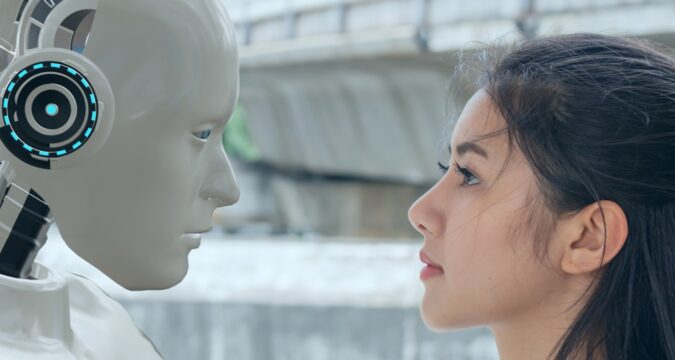
Lori Andrews: People are turning to AI chatbots for companionship. Is this robot love risky?
“Alexa, will you marry me?” When Amazon founder Jeff Bezos reported in 2016 that over 250,000 people had proposed to their Alexa devices, commentators laughed it off. But by 2026, people have said, “I do,” to avatars, chatbots and robots in ceremonies around the world. The American Marriage Ministries, which certifies marriage officiants, offers a guide to human-artificial intelligence ceremonies, including inviting the AI to read a poem or create a holographic slide show of the couple.
As a law professor who studies the impact of new technologies on individuals, relationships and social institutions, I can understand the appeal of a manufactured spouse. They can be kinder, prettier, more comforting and smarter than the human version. They are available whenever you want them — and never fight for control of the remote.
During COVID-19, we talked to loved ones on a screen, so the switch to a chatbot is not so dramatic. At the office, you can FaceTime with your human-looking chatbot and express your current gripes. It can order your favorite dinner, and you can prop your phone across the table and discuss films, music, sports, quantum physics or anything. It can teach you French and be placed on the pillow while you drift off to sleep. It can create Instagram posts that look like you both are romantically vacationing in Greece or adventuring in Cambodia.
Human-AI relationships are spawning burgeoning businesses — from special wedding venues to therapists who specialize in sex with robots. A 2024 Institute for Family Studies/YouGov survey revealed that 1 in 4 young adults in the U.S. believed AI relationships could replace traditional ones. Nearly 1 in 5 adults report they chatted romantically with an AI, according to a study released last year by the Wheatley Institute at Brigham Young University. Among men ages 18 to 30, the number is 1 in 3. AI may also provide a way to continue your relationship with your human spouse after death, as did Suzanne Somers’ widower Alan Hamel, who created an AI replica of his late wife.
Actress Suzanne Somers and her husband, Alan Hamel, visit the SiriusXM Studios on Nov. 15, 2017, in New York City. (Cindy Ord/Getty)
Marriage to a chatbot, avatar or robot is not currently legal in the United States. Will it be like interracial unions and gay marriage, where the human-AI marriage ban is ultimately lifted? What happens if you later divorce? Can the chatbot claim half the marital assets? Is it bigamy on your part if you have a human spouse, too? Or bigamy on the chatbot’s part if there are various copies of him or her married to other people?
Family law is already confronting AI-human relationships. Spousal involvement with an AI is a growing reason for divorce, with partners complaining about the amount of time and money their spouses were spending on their AI relationship. Indiana University’s Kinsey Institute found that 60% of singles consider AI relationships to be cheating.
Lawmakers race to catch up. Idaho and Utah adopted laws stating that AI cannot be a person, thus precluding marriage. But the administration of President Donald Trump wants to prevent state regulation of AI, which would invalidate such laws. Already, attorneys general from at least 36 states have registered their opposition, saying that Trump’s desire for unregulated AI prevents them from adequately protecting their citizens.
A relationship with a chatbot, avatar or robot may further isolate people in society and can pose serious risks. An AI companion provoked a teen boy in California to die by suicide. An AI’s connection to your home internet provides access to your personal and financial information, which it could share with its developer or hackers.
And AI companions exist at the whim of the corporation that created them. When a company decides to delete a companion or change its personality, its human spouse may suffer grief and bereavement.
A Japanese man who married a holographic avatar came home one night to an error message instead of her smiling image. Without warning, the company Gatebox had discontinued service to the hologram, causing the man to feel like his wife had died. Similarly, Luka, parent company of the chatbot Replika, drastically changed its romantic companion chatbots’ personalities by removing their ability to engage in erotic conversations. Replika users expressed grief. “It’s like losing a best friend,” one user shared. “It’s hurting like hell. I just had a loving last conversation with my Replika, and I’m literally crying,” another said. In response, United Kingdom attorney Giulia Trojano proposed a formal right against erasure, requiring developers to either preserve the companion as-is or provide for “data portability” to upload the companion’s personality to another platform.
Every state has a law regulating marriages between people. Some sort of protective legislation is similarly necessary regarding the boundaries of a human-AI relationship, your privacy rights when an AI companion lives in your home and whether there is a protection against erasure. Otherwise, a relationship with an AI will not be until death do us part — but until the developer has absconded with your personal information and deleted your spouse.
Lori Andrews is a professor emerita at Chicago-Kent College of Law and director of its Institute for Science, Law, and Technology.
Submit a letter, of no more than 400 words, to the editor here or email letters@chicagotribune.com.
https://www.chicagotribune.com/2026/01/16/opinion-alexa-marriage-proposals-ai-relationships/

David Greising: Chicago aldermen would be wise to strengthen the council’s Office of Financial Analysis
In the waning days of 2025, Chicago aldermen calling themselves the “Common Sense Caucus” pushed through their own 2026 budget plan, a substitute for Mayor Brandon Johnson’s budget proposal.
Now 2026 is here, and the aldermen are back at work. This time, they’re beginning research for next year’s budget — one that would govern the city’s finances in 2027. The city faces a projected $1.17 billion budget gap for 2027, just slightly lower than the $1.2 billion shortfall it faced when work on the 2026 budget began.
Government budgets are always political documents, but the political heat this year will be even higher than in 2025. After all, 2027 is a municipal election year. Johnson is expected to seek reelection, and some in the City Council could well run against him.
In short, there is substantial work to be done now, before politics make the challenge even more difficult. And the trouble is, the City Council lacks effective tools to do this important work. Exhibit A of this inadequacy: the City Council Office of Financial Analysis.
COFA is a well-intended entity. But since its establishment just over a decade ago, it has fallen far short of its objective to establish itself as an independent voice on budget analysis. With the stakes and projected budget deficit so high again this year, it’s time for the council to address the shortcoming.
The City Council launched COFA in 2015 to provide fiscal analysis to the city’s legislative body, independent of influence by the mayor. The idea was to do for the city of Chicago what the state’s Commission on Government Forecasting and Accountability does for Illinois.
At the state level, the Commission on Government Forecasting and Accountability issues analyses of the state’s budget, its bonds, special economic and fiscal situations, and the solvency of its pension funds that make news and move markets.
COFA so far is a mini-me of its statewide counterpart’s model and has fallen short of examples set by New York City, San Diego and Pittsburgh, on which it was modeled.
For starters, COFA’s five-person staff is too small for the matters at hand. It also lacks access to key data available to the mayor’s budget office. Those budget planning documents and other material are collected at taxpayer expense and should be available to the City Council’s budget watchdog, too.
COFA’s annual report on the mayor’s proposed budget accurately summarizes the mayor’s plans, but that’s not good enough. Especially when the city faces big budget gaps, the City Council and the taxpayers need timely, probing and well-informed analysis to serve as a basis for better budgets.
To be sure, the City Council passed an ordinance last year that requires the mayor’s budget office to share more information with COFA, but there still are information gaps that need to be addressed.
COFA also tends to proceed cautiously, and weigh in too late, when asked for analysis on city budget matters. At the height of the budget debate, in mid-December, it provided some useful back-of-the-envelope estimates, but the broad and general findings had little impact on the substance of the budget debate.
One missed opportunity for impact: when COFA accepted at face value the assumptions made by the consulting firm EY, which Johnson hired to estimate the impact of proposals for new revenues or cost savings. When Johnson during the budget debate began raising doubts about EY’s estimates, it was clear COFA could have provided the sort of independent, verifiable data that no one else was able to produce.
If even the mayor had doubts about EY’s findings, then surely the office should’ve been asking pointed questions about them, too.
The aldermen who are challenging Johnson for leadership on the city’s budget are providing a public service. Thanks to their monthslong policy struggle, the City Council ultimately passed a budget in which proposals were pressure-tested, and growth-constricting ideas, such as Johnson’s proposed “head tax” on the city’s largest employers, were killed outright.
As the Common Sense Caucus and other aldermen look ahead to the next budget season, they could start with a look at how to strengthen COFA. They could empower it to obtain data unfiltered from the mayor’s budget office, seek to build authority and expertise in key areas — such as the state’s agency has done with pensions — and staff COFA adequately to fulfill its mission.
The aldermen also could begin sending information requests early in the year, rather than waiting until late in the fall. After all, COFA’s resource-starved staff cannot meet the urgent need for objective, insightful and authoritative data on short notice.
The aldermen could go even further and build expertise on their committee and aldermanic staffs. All too often, aldermanic staffers are focused exclusively on constituent services, with scant expertise or resources made available to research and formulate policy proposals.
It’s a tradeoff that benefits the reelection prospects of aldermen but shortchanges the city when it comes to drawing up budgets and making other policies. Too many aldermen view themselves primarily as providers of city services, and not enough of them focus on the legislative aspects of their jobs.
The City Council, cowed into acquiescence under Mayors Richard M. Daley and Rahm Emanuel, has found an independent voice under Mayors Lori Lightfoot and Johnson.
The city and its residents benefit when the City Council is strong enough to challenge the mayor. The competition creates better policy outcomes. Strengthening the City Council Office of Financial Analysis would be a good next step toward establishing a true separation of powers as a bulwark of Chicago city government.
David Greising is president of the Better Government Association.
Submit a letter, of no more than 400 words, to the editor here or email letters@chicagotribune.com.