Category: News

Human Evolution: ‘Our Ultimate Fate Comes Down To… Three Possibilities’
Human Evolution: ‘Our Ultimate Fate Comes Down To… Three Possibilities’
Authored by Ross Pomeroy via RealClearScience,
Everything around us seems to be changing at breakneck speed. Twenty years ago, smartphones were niche products. Twenty years before that, computers were clunky behemoths. Forty years before that, far more Americans traveled by train than by plane. Forty years before that, cars were just starting to supplant horses.
Over the past couple millennia, a mere blip of Earth’s history, humans have manifestly reshaped the planet – from the physical to the biological. The ground, the oceans, the air, the flora, the fauna – nothing is as it was. And yet, despite this radical transformation, it can seem like we ourselves haven’t changed much at all…
But that’s an illusion.
“Humans are still evolving,” Dr. Scott Solomon, an Associate Teaching Professor at Rice University specializing in ecology, evolutionary biology, and scientific communication, wrote in his forthcoming book Becoming Martian: How Living in Space Will Change Our Bodies and Minds.
Sure, over the last 10,000 or so years, our physical alterations have been relatively muted compared to the changes seen in society and on our planet. Essentially, we’ve shrunk a bit, and our jaws have weakened. But even a little change is still change, and it begs a question: “In the far-flung future, what will happen to us, evolutionarily speaking?”
It’s a question that Solomon considered in his 2016 book, Future Humans: Inside the Science of Our Continuing Evolution. He surmised that our ultimate evolutionary fate could follow one of three basic trajectories.
The first is a standstill – our species will remain roughly as it currently is. But Solomon thinks this is unlikely.
“So far, in the 3.7-billion-year history of life on Earth this has not happened to a single species… All species change, some faster than others, but there is no species alive today that has not undergone changes throughout its existence.”
Our second possible fate is extinction. Though the chances of this may seem remote to our brains biased to optimism, the odds are far higher than any of us would like to admit. Extinction, after all, is the norm on Earth – 99 percent of all the species that have ever lived ultimately died out.
“There are an uncomfortably high number of plausible ways this could happen,” Solomon wrote, “including another giant asteroid impact, a super-volcano eruption, nuclear war, catastrophic climate change, the spread of a devastating pandemic, or our sun exploding in a supernova.”
The third possible fate for humanity, which Solomon explored in depth in Becoming Martian, is that at least part of humanity will evolve into a different species. A decade ago, Solomon deemed this path improbable. Humans today are so interconnected that no population could be siloed enough to speciate.
But now, he thinks the chances have risen considerably. Why? Because the world’s richest men are plowing their hefty fortunes into making humans interplanetary. What once seemed science fiction is growing closer to reality with the launch of every large rocket. If a group of humans could colonize another world – Mars, for example – and cease to breed with Earthlings altogether, it may take only ten generations before they grow genetically distinct enough to no longer be considered humans, but rather Martians.
“If we do manage to spread out and survive on planets scattered across our solar system and others, we should expect to evolve, adapt, and speciate everywhere we go,” Solomon wrote.
Like the cornucopia of different creatures inhabiting Charles Darwin’s beloved Galapagos Islands, humans dwelling on different bodies within the solar system could similarly evolve “endless forms most beautiful and most wonderful.”
Tyler Durden
Fri, 01/16/2026 – 22:35
https://www.zerohedge.com/political/human-evolution-our-ultimate-fate-comes-down-three-possibilities

Chicago Bulls storm back from 20-point fourth-quarter deficit but fall short in 112-109 loss to Brooklyn Nets
NEW YORK — Michael Porter Jr. made a go-ahead layup with 5.4 seconds remaining after Brooklyn had blown a 20-point fourth-quarter lead, and the Nets beat the Chicago Bulls 112-109 on Friday night.
Porter scored 26 points and Noah Clowney had 23 points and 11 rebounds for the Nets, who snapped a five-game losing streak. Day’Ron Sharpe scored 14 points and rookie Danny Wolf had 13.
Nikola Vučević scored 19 points and Ayo Dosunmu 18 for the Bulls in the opener of a home-and-home series.
Coach Jordi Fernandez thought the Nets could’ve won all three games on their just-completed trip, but it appeared they wouldn’t need to worry about another close finish after a 15-0 run in the second quarter helped them take a 17-point halftime lead, their second-largest of the season.
Cam Thomas’ 3-pointer to open the fourth quarter made it 92-72 before the Bulls scored the next 11 points. Thomas hit another 3 to stop that surge, and the Nets still led by six with less than a minute remaining.
The Bulls then scored seven straight points to go ahead 109-108 on Tre Jones’ layup with 11.4 seconds remaining. The Nets ran a play to get Porter the ball near the basket, and he put the Nets back on top. Rookie Drake Powell then stole the Bulls’ pass in from the sideline, and Clowney’s two free throws made it 112-109 before Vučević missed a rushed 3-point attempt.
The Nets had a 42-38 lead with about 4½ minutes to play in the second quarter that should’ve been cut to two, but Matas Buzelis missed a fast-break dunk attempt with nobody around. Clowney then converted a pair of three-point plays during a personal run of seven points, and after Porter made a 3-pointer, Clowney hit one to extend the lead to 17 before Egor Demin made two free throws to end the run and make it 57-38.
Up next: The teams play Sunday in at the United Center.
https://www.chicagotribune.com/2026/01/16/chicago-bulls-brooklyn-nets-loss/

Huff registra récord personal con 29 puntos en triunfo de Pacers 127-119 sobre Pelicans
INDIANÁPOLIS (AP) — El pívot Jay Huff logró un récord personal de 29 puntos y nueve rebotes y lideró a cinco jugadores con cifras de doble dígito en la victoria de los Pacers de Indiana sobre los Pelicans de Nueva Orleans por 127-119 el viernes por la noche.
Huff, de 2,16 metros, quien llegó al viernes con un promedio de 8,4 puntos, lanzó 13 de 17 desde el campo y tres de seis en triples. Su récord anterior era de 22 unidades, logrado el año pasado mientras estaba con los Memphis Grizzlies en una victoria sobre los Dallas Mavericks. Huff fue adquirido por Indiana en un intercambio con Memphis durante la temporada baja.
Pascal Siakam anotó 20 de sus 27 tantos en la primera mitad, y Andrew Nembhard añadió 19 y diez rebotes para los Pacers, quienes ganaron por cuarta vez en cinco juegos. Aaron Nesmith y Quenton Jackson anotaron 12 cada uno mientras Indiana cerraba una serie de cuatro partidos en casa con un récord de 3-1 y mejoraba a 8-16 en casa.
Zion Williamson lideró a Nueva Orleans con 27 puntos, lanzando diez de 12 desde el campo y siete de diez desde la línea de tiros libres. Williamson tuvo un perfecto ocho de ocho desde el campo en la primera mitad, cuando consiguió 21 unidades.
Trey Murphy III anotó 22 puntos, Saddiq Bey añadió 20, Jeremiah Fears terminó con 16, Derik Queen tuvo 14 y Jordan Poole 11 para los Pelicans, quienes tienen un récord de 3-16 en juegos fuera de casa. Queen también tuvo 12 rebotes.
___
Deportes en español AP: https://apnews.com/hub/deportes

Tyson impone récord personal de 39 puntos; Mobley da triunfo a Cavs, que barren a 76ers en 2 duelos
FILADELFIA (AP) — Jaylon Tyson anotó un récord personal de 39 puntos, Evan Mobley logró una volcada decisiva con 4,8 segundos restantes y los Cavaliers de Cleveland, pese a jugar con una plantilla reducida, completaron una barrida de dos duelos sobre los 76ers de Filadelfia, al imponerse el viernes por 117-115.
Donovan Mitchell añadió 13 puntos, 12 asistencias y nueve rebotes a la causa de Cleveland, que se recuperó de un déficit de 11 unidades en el último cuarto. Los Cavs derrotaron a los 76ers 133-107 el miércoles.
Joel Embiid anotó 33 puntos y Tyrese Maxey añadió 22, además de aportar nueve asistencias y cinco robos por los 76ers.
Cleveland no contó con Darius Garland (molestias en el dedo gordo del pie derecho) ni Sam Merrill (esguince en la mano derecha), quienes se lesionaron el miércoles. El entrenador Kenny Atkinson dijo que ambos serán reevaluados este fin de semana, cuando el equipo regrese a Cleveland.
Los 76ers parecían tener el control cuando Paul George encestó un tiro con 8:47 restantes para una ventaja de 11 puntos. Pero los Cavaliers utilizaron una racha de 13-2, culminada por un triple de De’Andre Hunter con 5:53 por jugar, para empatar a 102.
Filadelfia se adelantó por siete puntos después de pérdidas de balón de los Cavs en tres posesiones consecutivas, pero Cleveland se mantuvo en el encuentro.
_____
Deportes AP: https://apnews.com/hub/deportes
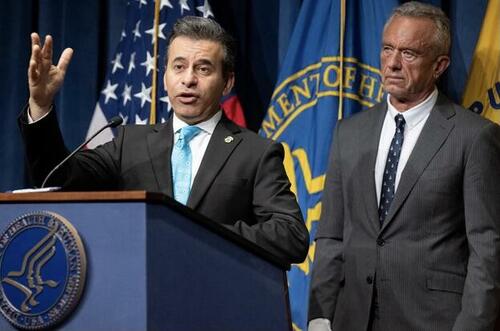
FDA Removes Web Content Saying Cellphones Are Harmless – HHS Launches Study
FDA Removes Web Content Saying Cellphones Are Harmless – HHS Launches Study
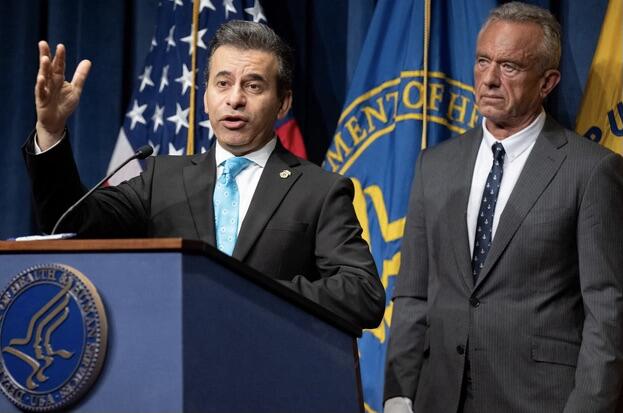
Without fanfare, the Food and Drug Administration has deleted multiple web pages asserting that cellphones are not dangerous. First reported by the Wall Street Journal, the move comes as the Department of Health and Human Services has begun a new investigation into potential health effects of cellphone radiation.
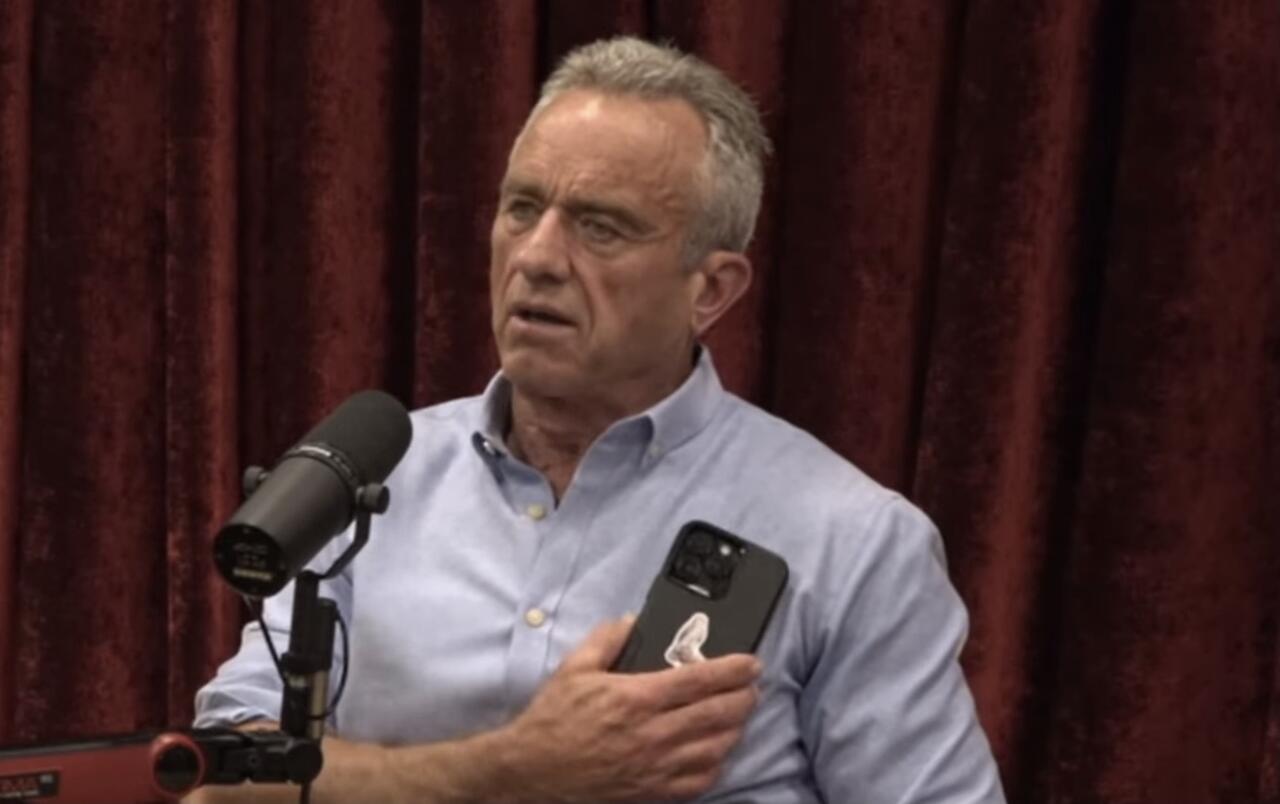
HHS Secretary Robert F. Kennedy Jr has previously declared that cellphones are causing harms that are not yet fully acknowledged. “There’s cellphone tumors. I’m representing hundreds of people who have cellphone tumors behind the ear. It’s always on the ear that you favor with your cellphone…We have the science,” Kennedy said in a 2023 appearance on the Joe Rogan Experience. “You should never put one next to your head… I put it on speakerphone or use earphones.”
Responding to a Journal inquiry about the change to the FDA website, HHS spokesman Andrew Nixon said, “The FDA removed webpages with old conclusions about cellphone radiation while HHS undertakes a study on electromagnetic radiation and health research to identify gaps in knowledge, including on new technologies, to ensure safety and efficacy.”
One of the deleted pages included a passage declaring that “the weight of scientific evidence has not linked exposure to radio frequency energy from cellphone use with any health problems.” There may be more scrubbing of the site to come: The Journal notes that the FDA’s site still has summaries of the deleted pages, but the links redirect to other generalized content about the agency’s regulatory mission.
Kennedy, who had a career as an environmental litigator, has long engaged on this issue. Kennedy represented people suing phone companies for allegedly causing brain tumors, and won a 2020 case that compelled the Federal Communications Commission to reassess its wireless-radiation regulations. He was also chairman of Children’s Health Defense, which has been involved in litigation over 5G technology, and a case blaming an Idaho man’s cardiac issues on a cellphone tower. He has also pointed to radiation as a prime suspect in the mystery of widespread chronic illnesses among America’s children, “Our children are swimming around in a toxic soup, the Wi-Fi radiation is a lot worse than people think it is…yeah, from your cellphone,” Kennedy told Rogan in 2023.
In 2025, Kennedy celebrated a large wave of cellphone restrictions that swept across the nation’s schools. In addition to pointing to links between social media use and depression, Kennedy told Fox News that “[cellphones] produce electromagnetic radiation, which has been shown to do neurological damage to kids when it’s around them all day, and to cause cellular damage and even cancer.”
Both the FDA and FCC have a hand in regulating cellphones, with the FDA providing scientific assessments to the FCC, which imposes caps on radio-frequency emissions. For now, the FCC website still has content declaring there’s no evidence linking wireless electronics to cancer.
The National Cancer Institute, a component of the National Institutes of Health, says, “evidence to date suggests that cellphone use does not cause brain or other kinds of cancer in humans.” Johns Hopkins epidemiologist Elizabeth Platz told the Journal that cellphones don’t emit the variety of radiation that is known to cause cancer. She also pointed to large studies failing to find any connection between cellphones and cancer.
However, scientific consensus about health has a long history of infamous fallibility. Confidently-wrong conclusions have caused incalculable harms, from creating a peanut-allergy epidemic to opening a Pandora’s box of harms during the Covid-19 pandemic. Given that, we don’t mind seeing RFK Jr’s revamped HHS put a new set of skeptical eyes on the cellphone-radiation consensus.
Tyler Durden
Fri, 01/16/2026 – 22:10

How The 1917 Virgin Islands Deal Is A Blueprint For Buying Greenland
How The 1917 Virgin Islands Deal Is A Blueprint For Buying Greenland
Authored by Dustin Bass via The Epoch Times (emphasis ours),
When Secretary of State Marco Rubio stood before reporters on Jan. 7 to discuss the military operation that took place in Venezuela four days prior, he added another element of intrigue. He planned to meet with Danish officials this week to discuss purchasing the world’s largest non-continental island: Greenland.
A fjord in western Greenland on Sept. 16, 2025. Guglielmo Mangiapane/Reuters
Such discussions will be new for Rubio, though it is not the first time the Trump administration has broached the subject. President Donald Trump’s brief statement to reporters on Jan. 4 aboard Air Force One was succinct: “We need Greenland from the standpoint of national security.” It was a reiteration of his March 2025 congressional address.
Additionally, Trump first mentioned purchasing Greenland in August 2019, a suggestion rebuffed by Danish officials, which led to a brief kerfuffle between the two states.
When Rubio sits with Danish leaders for those first discussions, he will have entered upon diplomatic deliberations that stretch back to the Andrew Johnson administration. The first inquiry to purchase Greenland from the Danes came in 1868 from Secretary of State William Seward. America had recently purchased a tundra to its northwest: Alaska. That purchase in 1867 was initially mocked as “Seward’s Folly” by the press, but of course, after the discovery of gold and oil, Seward’s decision was more than justified. Nonetheless, Congress proved disinterested in the icy territory to its northwest.
Seeking the ‘Small Gibraltar’
While negotiating the Alaska purchase from Russia, Seward was negotiating the purchase of the Danish West Indies from Denmark. The small islands of St. Thomas, St. John, and St. Croix—specifically the “small Gibraltar,” St. Thomas—were considered vital to national security. The Civil War had highlighted American vulnerabilities in the Caribbean, as the major European powers held possessions in the region, but the United States did not. And it was the European powers that concerned the United States.
“The West India Islands, in the possession of Denmark, are of not much danger to us,” wrote U.S. consul to Denmark, George P. Hansen, in 1864, “but it seems to me we cannot very well afford to let a powerful European nation get possession of them. If they ever change ownership, the ownership should be in the [United] States.”
The American and Danish officials had reached an agreement to purchase St. Thomas and St. John for $7.5 million in gold coins. A plebiscite on the islands overwhelmingly approved the sale. Danish King Christian IX announced the sale. But American politics ended the purchasing process. The Republican-led Senate, furious over President Johnson’s policies and Seward’s support of the president, refused to ratify the agreement. The United States’ Atlantic seaboard would remain vulnerable.
A Second Attempt
Early into the momentous year of 1898, Sen. Henry Cabot Lodge expressed his concerns about the islands in a report to the Foreign Relations Committee, stating, “So long as these islands are in the market there is always the danger that some European power may purchase, or try to purchase, them. This would be an infraction of the Monroe Doctrine, and would at once involve the United States in a very serious difficulty with the European power which sought possession of the islands. In the interest of peace, it is of great importance that these islands should pass into the hands of the United States and cease to be a possible source of foreign complications, which might easily lead to war. From a military point of view the value of these islands to the United States can hardly be overestimated.”
Three weeks later, the Spanish–American War began, during which the United States secured its Pacific seaboard by obtaining Guam and the Philippines from Spain (America also annexed Hawaii during this period). Additionally, America obtained Puerto Rico and kicked the Spanish out of Cuba, which became a quasi-protectorate.
Spain had fallen far as a European power, but Russia, France, Great Britain, and a surging Germany remained great powers. The ongoing construction of the Panama Canal by the French only increased concerns about America’s Atlantic vulnerabilities.
The State Department again began negotiations with the Danish for the West Indies. By the winter of 1902, an agreement between Secretary of State John Hay and Danish Chargé d’Affaires Constantin Brun had been reached. The Americans ratified the treaty, but this time it was the Danish who refused to ratify. The nations had signed two treaties with nothing to show for it.
Securing the Islands
In 1910, Maurice Egan, the U.S. ambassador to Denmark, believed he had come up with a plan to obtain both the Danish West Indies and Greenland. Egan wrote to the State Department with the “very audacious suggestion” of a multi-country land trade agreement. Perceiving the Danish government gave “very little attention” to Greenland—combined with what he viewed as the growing threat of a triple alliance in the Far East of Russia, Japan, and China—he believed that Germany could be utilized as a way of obtaining the islands and placing an ally in the Philippines.
He proposed swapping Mindanao, the second-largest Philippine island, for Greenland (and after further talks, the West Indies). This would allow Denmark to swap Mindanao for the Schleswig-Holstein territory it had lost to the Germans in 1864. “I assure you that it represents the desires and the opinion of some of the best minds in Denmark, and some of them most highly placed,” Egan added.
The proposal, though interesting and complex, came to nothing. Egan, however, may have been onto something.
A year into World War I, it was Germany that caused the Americans to inquire again about the West Indies. Instead of a potential ally as suggested by Egan, Germany was now a threat.
The initial inquiry about the islands by Secretary of State Robert Lansing was rebuffed by Brun, who indicated Denmark “had very large commercial interests which were vastly increasing with the construction of the Panama Canal.”
Lansing communicated that the Americans were not concerned about the Danes’ commercial interests, but about Germany’s interests. Germany’s expanding empire, militarism, and growing commercial interests led the Americans to believe they might annex Denmark or force the sale of the West Indies. If that were the case, Lansing made it clear that “the United States would be under the necessity of seizing and annexing [the islands].”
“This plain spoken threat of what might occur under certain conditions had the desired effect,” Lansing recalled. On Aug. 4, 1916, Lansing and Brun signed the treaty, which both sides ratified, and the purchase of the now-U.S. Virgin Islands was completed on March 31, 1917, for $25 million in gold coins. Part of this agreement, however, confirmed Denmark’s rights to Greenland.
The Post-World War II Attempt
The acquisition of Greenland arose almost immediately after World War II. In 1946, the State Department took a page out of Egan’s book by suggesting a land trade. America would acquire portions of Greenland in exchange for land in Alaska’s Point Barrow district. Again, the land-swap idea was a no-go.
Interestingly, U.S. diplomat John D. Hickerson echoed Egan’s belief that ‘’Greenland is completely worthless to Denmark.” The State Department then offered $100 million for the “worthless” island that appeared “indispensable to the safety of the United States.”
Brief and unofficial discussions took place, but the matter was eventually dropped. Denmark and the United States, however, did sign a treaty in 1951 to establish a base in Thule, now known as Pituffik Space Force Base.
In 1953, Greenland was incorporated into Denmark, ending two centuries as a colony. It achieved Home Rule and then Self Rule in 1979 and 2009, respectively. It has the option to pursue independence, and despite its wealth of natural resources, which the Trump administration often mentions, it is considered a “welfare state,” requiring an annual $600 million Danish block grant.
Trump and Greenland
President Trump, in the spirit of Secretary Lansing, has made it rather clear he is not concerned about Danish or Greenlandic interests. His concerns are more immediate and widespread.
“We need Greenland from a standpoint of national security, and Denmark is not going to be able to do it,” Trump stated. “The European Union needs us to have it, and they know that.”
The national security threat is no longer from European powers as it was in the 19th and first half of the 20th century. The threats now come from Russia and China, whose navies roam the Arctic Ocean with seeming impunity. Trump claimed, perhaps with a hint of sarcasm, that Denmark was not doing enough to protect American or international interests with Greenland.
“You know what Denmark did recently to boost up security on Greenland?” he rhetorically asked reporters. “They added one more dog sled.”
The world was alarmed when Trump suggested military force was an option. No doubt, as the administration has made clear, purchasing Greenland is preferable. But when Rubio sits down with Danish officials this week, he may need to pull a page out of Lansing’s book. It may again have “the desired effect.” Additionally, much like our purchase of the Danish West Indies, maybe the third attempt is the charm.
Views expressed in this article are opinions of the author and do not necessarily reflect the views of The Epoch Times or ZeroHedge.
Tyler Durden
Fri, 01/16/2026 – 21:45
https://www.zerohedge.com/political/how-1917-virgin-islands-deal-blueprint-buying-greenland

Estudiante hondureña deportada de EEUU por error cuenta a la AP cómo su vida dio un vuelco
Por MICHAEL CASEY
BOSTON (AP) — Mientras viajaba en un vuelo de deportación con destino a Texas, Any Lucía López Belloza se preguntaba una y otra vez la razón. Era una estudiante universitaria sin antecedentes penales y sin motivos para creer que corría el riesgo de ser devuelta a su natal Honduras.
“Simplemente me impactó. No sé, como que me quedé paralizada”, dijo López Belloza a The Associated Press el viernes en una entrevista telefónica desde Honduras, donde se hospeda con sus abuelos. La estudiante de primer año de la universidad Babson College, de 19 años, fue detenida en el aeropuerto de Boston el 20 de noviembre mientras se preparaba para volar a su casa en Texas con el fin de sorprender a su familia por el Día de Acción de Gracias. Fue deportada dos días después, y regresó a Honduras por primera vez desde que tenía 8 años.
Aunque el gobierno se ha disculpado por el hecho de que autoridades federales de inmigración la deportaran por error —incluso después de que un juez de Massachusetts dictaminara que no debía salir de Estados Unidos— su futuro es incierto. Su abogado solicitó el viernes a un juez federal que le ordene al gobierno del presidente Donald Trump elaborar un plan para que regrese al país.
Lejos de casa
Se ordenó la deportación de López Belloza y su madre varios años después de que llegaran a Estados Unidos. Aunque el gobierno dice que ella perdió varias oportunidades de apelar, López Belloza reportó que su abogado anterior le informó que no existía ninguna orden de deportación. Insiste en que nunca habría intentado volar a casa en noviembre si hubiera sabido algo al respecto.
Lo más difícil de su repentina deportación ha sido no poder pasar las festividades navideñas con sus padres, lo que en ocasiones la ha dejado deprimida y en lágrimas. Le preocupan su mamá y su papá, quienes temen salir de su casa en Texas porque, según López Belloza, también han sido blanco del Servicio de Inmigración y Control de Aduanas (ICE, por sus siglas en inglés), pese a que solicitaron la tarjeta de residencia permanente para inmigrantes, conocida como “tarjeta verde”.
“Tienen miedo. Tienen miedo de salir por cómo está todo”, contó. “Están traumatizados. Yo estoy traumatizada”.
El Departamento de Seguridad Nacional no hizo comentarios sobre el caso de sus padres, y no ha respondido en el tribunal a la solicitud de su abogado para que la traigan de regreso a Estados Unidos.
No obstante, López Belloza agregó que se mantiene animada al hablar regularmente con su mamá y conservando su fe en Dios. Tras sopesar brevemente la idea de asistir a una universidad en Honduras, decidió seguir en Babson, que le ha ofrecido apoyo mientras estudia a distancia.
Se pregunta por qué fue deportada
Para hablar con un abogado, un agente federal de inmigración en el aeropuerto le informó que tenía que firmar un documento de deportación. Cuando se negó, la trasladaron a una celda de detención del ICE con sólo una manta térmica para cubrirse. En documentos judiciales describió dos noches hacinada con otras 17 mujeres, sin suficiente espacio para acostarse y dormir.
“Esas horas en que estuve detenida fueron horribles”, subrayó.
López Belloza pudo llamar a su familia antes de que la subieran a un avión con destino a Texas, su última parada antes de salir del país.
“Estuve paralizada todo el viaje en avión. Pensaba: ‘Si esto es todo, entonces esto es todo’”, expresó, aunque mantenía la esperanza de evitar la deportación. “No dejaba de cuestionarme: ¿Por qué me está pasando a mí?”.
Pero al abordar el vuelo rumbo a Honduras, su ánimo se ensombreció. La vida que tenía —vivir en una residencia universitaria en un suburbio adinerado de Massachusetts, obtener una licenciatura en negocios para poder abrir una sastrería con su padre— podría haber llegado a su fin.
“Supongo que aquí es donde se acabaron mis sueños”, recordó haber pensado. “Porque en Honduras, si quieres soñar en grande, necesitas mucho dinero. Tienes que ser rico. Pero en Estados Unidos, los sueños son posibles. Puedes hacerlos realidad”.
Esperanzada de regresar
López Belloza dijo que “aprecia mucho la disculpa que el gobierno presentó” en el tribunal esta semana por el hecho de que el agente del ICE mantuviera erróneamente su nombre en la lista de deportación de un vuelo a pesar de la orden judicial.
“Saber que fue un error me duele. Con base en ese error que cometieron, mi vida dio un giro de 360 grados”, manifestó.
“No sé cómo describirlo. Esto es algo nuevo”, añadió. “Sólo espero regresar lo antes posible”.
Un abogado dice que el gobierno estadounidense debería devolverla
El caso de López Belloza es el más reciente relacionado con una deportación realizada a pesar de que hay una orden judicial que prohíbe efectuarla.
Kilmar Ábrego García fue deportado a El Salvador a pesar de que existía una sentencia que debería haberlo impedido. En un principio, el gobierno de Trump se opuso a los intentos para traerlo de regreso a Estados Unidos, pero finalmente accedió tras la intervención de la Corte Suprema. Y en junio pasado, un guatemalteco identificado como O.C.G. fue devuelto a territorio estadounidense después de que un juez determinara que su deportación de México probablemente “carecía de cualquier atisbo de debido proceso”.
Todd Pomerleau, el abogado de López Belloza, hizo referencia a ambos casos en un documento judicial presentado el viernes. Solicita que un juez dé a los funcionarios federales un plazo de dos semanas para encontrar la manera de traerla de regreso. El documento describe varias opciones posibles, incluida una visa de estudiante, aunque Pomerleau explica que esa vía probablemente sea complicada debido a su orden de deportación previa.
A pesar de haber violado la orden judicial de no deportarla, el gobierno manifiesta que fue deportada legalmente porque un juez de inmigración ordenó su deportación y la de su madre en 2016, y la Junta de Apelaciones de Casos de Inmigración (BIA, por sus siglas en inglés) desestimó su apelación en 2017.
El viernes por la noche, el juez federal de distrito Richard Stearns dictaminó que no tenía jurisdicción sobre la petición de “habeas corpus” de López Belloza, ya que fue presentada después de que ella fuera trasladada a Texas. Sin embargo, instó al gobierno de Trump a sopesar una manera de remediar el error que cometieron al deportarla.
“Afortunadamente, no existe una solución universal para que se haga justicia en lo que todos coinciden que fue una amalgama de errores que terminaron mal para Any. Más bien, existe una mezcolanza de opciones”, escribió Stearns, y agregó que el secretario de Estado estadounidense, Marco Rubio, podría emitirle una visa de estudiante no inmigrante, lo “que le permitiría continuar con sus estudios en Babson College mientras su situación migratoria se resuelve oportunamente en los tribunales correspondientes”.
Stearns también indicó que su tribunal podría ordenarle al gobierno el regreso rápido de López Belloza a Estados Unidos, pero que preferiría darle al gobierno la oportunidad de rectificar el error que reconoce haber cometido en el caso de Any, antes de contemplar la emisión de cualquier otra orden.
Pomerleau dijo que, en su opinión, el fallo es una “excelente noticia” para su cliente, ya que Stearns solicita al gobierno que “encuentre una solución en las próximas tres semanas para traer a López Belloza de vuelta al país”.
“Estoy ansioso por hablar con los representantes del gobierno sobre una solución viable”, añadió.

Nuclear Bunker Faces Final Days As Coastline Rapidly Erodes
Nuclear Bunker Faces Final Days As Coastline Rapidly Erodes
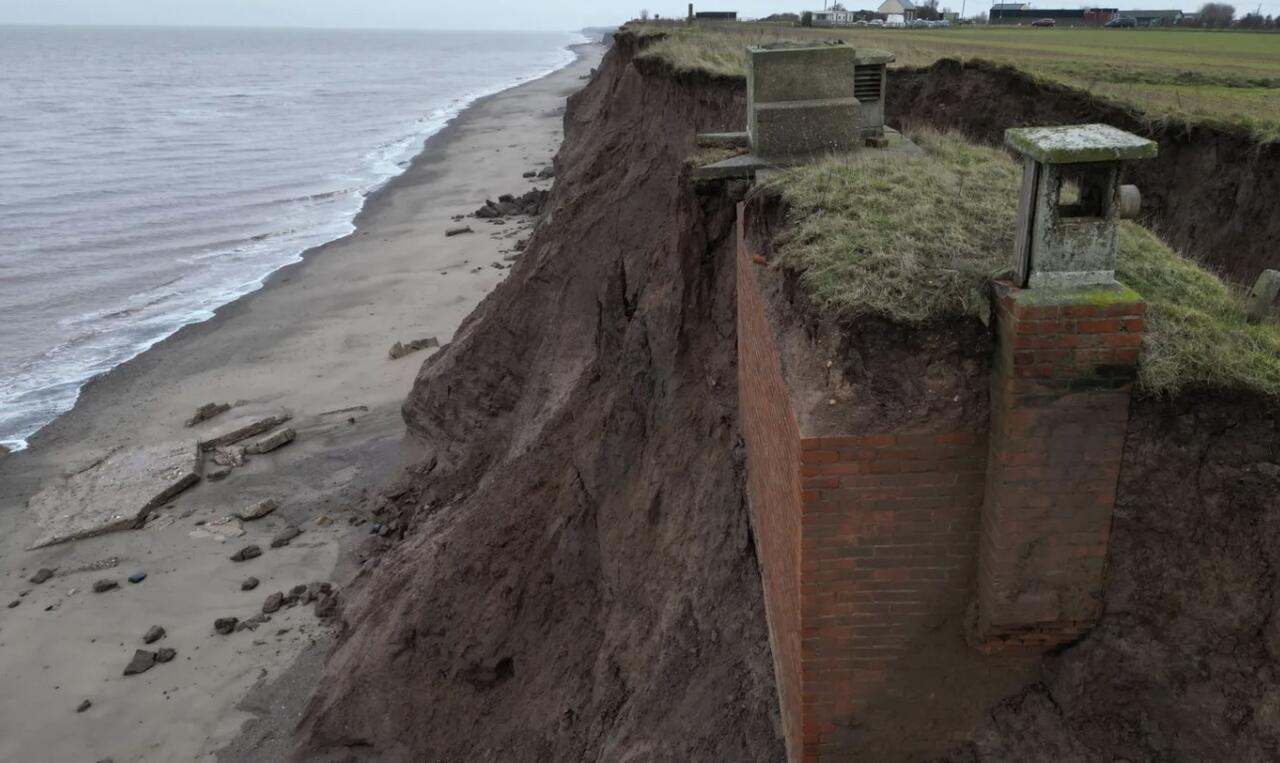
A nuclear bunker on the East Yorkshire coast is close to falling into the sea after decades of coastal erosion, according to the BBC. The structure near Tunstall, built around 1959 as a Cold War lookout post, was once more than 100 yards from the shoreline but is now dangerously exposed on the cliff edge.
Local historian Davey Robinson, who has been filming the site, said: “We live on one of the most eroded coastlines in Europe and this bunker hasn’t got long left, perhaps just a few days,” and described the bunker as “just a few days” from collapse.
The East Riding of Yorkshire Council has warned the public to stay away from the area because of unstable cliffs, while the Environment Agency confirms the region has some of the fastest-eroding coastline in the UK.
Robinson and his partner Tracy Charlton have returned to the site daily and shared footage online. “We are posting the footage on our YouTube channel and it’s getting interest from around the world,” Robinson said.
The BBC writes that the bunker, known as the Tunstall ROC Post, was part of a network of nuclear monitoring stations. It included sleeping space and basic living facilities. Robinson explained: “It was designed so that people could live inside it and just wait for a nuclear explosion to register and they could tell other people in other bunkers around the country,” adding: “It never got used thank goodness.”
The Holderness coast is losing around 6.5ft (2m) of land each year, and more than 3 miles have disappeared since Roman times. Robinson said the bunker “adds a lot of meaning” to the situation, calling it “a symbol of erosion in this area,” and adding, “This whole area is eroding at a rapid rate and to see an actual physical thing moving it just shows what’s happening really.”
Charlton said they would continue filming because the bunker “only had days left” before collapse: “We’re invested in this and I guess we’re obliged to keep visiting for the sake of the thousands of people who are now watching our videos on the YouTube channel.”
Tyler Durden
Fri, 01/16/2026 – 21:20
https://www.zerohedge.com/markets/nuclear-bunker-faces-final-days-coastline-rapidly-erodes

Matt Shaw se prepara para un papel versátil con los Cachorros tras la llegada de Alex Bregman
Por JAY COHEN
CHICAGO (AP) — Matt Shaw estaba viendo televisión con su esposa, quien de pronto recibió una notificación en su teléfono: Alex Bregman había llegado a un acuerdo contractual con los Cachorros de Chicago.
Shaw fue el tercera base titular de Chicago durante su temporada de novato, por lo que se preguntó qué significaba ese movimiento para él.
“Lo miras y dices: ‘¡oh hombre! ¿dónde voy a jugar?’ Y te pones un poco ansioso por esas cosas”, reconoció Shaw el viernes en la convención anual de fanáticos del equipo. “El club me conoce lo suficientemente bien en este punto para saber que sólo quiero estar preparado cuando llegue la temporada.
“Así que, por supuesto, inmediatamente tengo preguntas como: ‘¿voy a ir aquí? ¿Voy a ir allá?’”
La respuesta a muchas de esas preguntas fue sí.
Shaw se está preparando para un rol multifuncional después de que Chicago formalizó un contrato de cinco años y 175 millones de dólares con Bregman el miércoles. Además de respaldar a Bregman en tercera y a Nico Hoerner en segunda, también se espera que Shaw juegue en los jardines.
Siempre existe la posibilidad de un canje con Hoerner, quien está entrando en el último año de un contrato de tres campañas y 35 millones, o con Shaw, una selección de primera ronda en el draft amateur de 2023 que cumplió 24 años en noviembre. Pero los Cachorros parecen inclinados a mantener sus variantes en el cuadro como una póliza de seguro contra lesiones.
“No creo que tengamos suficientes muchachos todavía”, comentó el manager Craig Counsell con una sonrisa. “Si piensas que hay demasiados, no sé qué estás mirando”.
Counsell dijo que el equipo fue “afortunado” el año pasado en términos de lesiones.
“Ahora estamos protegiéndonos mucho contra lo que puede suceder, pero creo que esa es una parte importante de construir una plantilla y un equipo”, manifestó.
Hoerner, de 28 años, fue un jugador clave la temporada pasada, cuando Chicago ganó 92 juegos y llegó a los playoffs por primera vez desde 2020. Bateó para .297 con siete jonrones, 61 carreras impulsadas y 29 robos en un récord personal de 156 juegos. También ganó su segundo Guante de Oro.
En medio de una mayor especulación de canje tras el acuerdo de Bregman, Hoerner dijo que ama a los Cachorros y atribuyó los rumores a su situación contractual y a jugar en un gran mercado.
“Creo que, sobre todo, debemos recordar que no es algo personal y que el trabajo del equipo es siempre hacer la mejor plantilla posible que pueda para este año y para los años venideros”, comentó. “Y miras las cosas que hemos hecho para la próxima campaña, y ves que es bastante evidente que ése es su objetivo. Y estamos en un lugar realmente bueno”.
_____
Deportes AP: https://apnews.com/hub/deportes
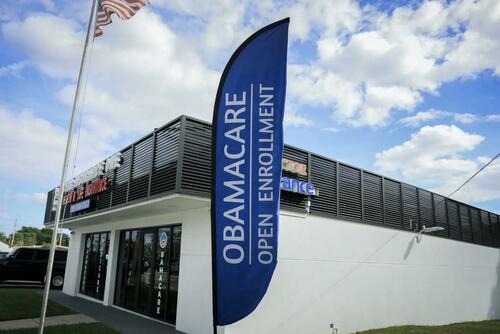
How Expanded Obamacare Made Premiums Spiral, Americans Dependent
How Expanded Obamacare Made Premiums Spiral, Americans Dependent
Authored by Lawrence Wilson and Sylvia Xu via The Epoch Times,
Congress responded to the COVID-19 pandemic by passing the American Rescue Plan Act in early 2021. This $1.9 trillion spending bill was intended to provide relief and spark an economic recovery.
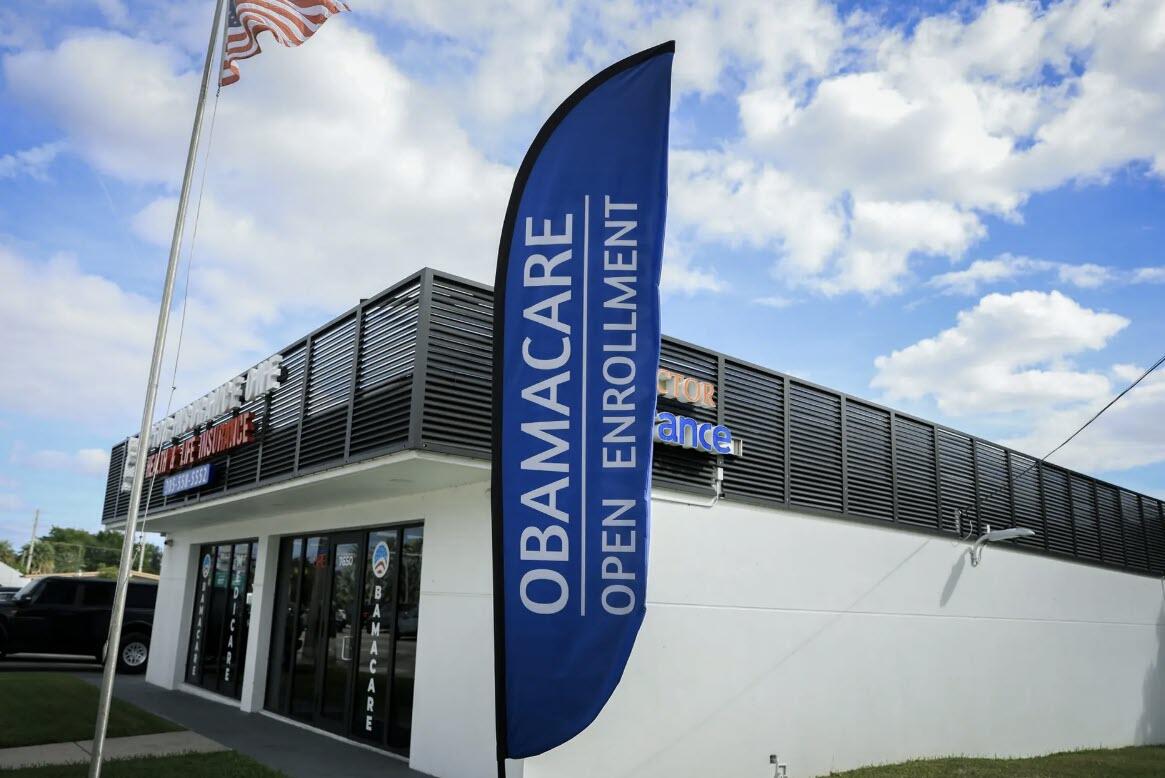
Among other provisions, the law expanded the availability of government-subsidized health care through the Obamacare Marketplace to help low- to middle-income people maintain health coverage until the economy normalized.
The measure brought millions of middle-class Americans into Obamacare, but had the unintended consequence of making many of them dependent on government aid.
The law also introduced temporary, enhanced subsidies, which raised Obamacare premiums, some observers say.
Though the enhanced subsidies expired on Dec. 31, 2025, Congress continues to debate their possible reinstatement.
Expanded Enrollment
Obamacare was created for people caught in the gap between Medicaid coverage and employer-sponsored health insurance.
The program provides income-based premium tax credits, which are subsidies paid directly to insurance companies, for people whose incomes are on the poverty line and up to four times above the poverty line (between 100 percent and 400 percent of the federal poverty level).
People earning less than—or in some states, up to 138 percent of—the poverty level are eligible for Medicaid. Obamacare offers help for people earning up to four times that amount, up to $62,600 per year or $106,600 for a family of three, based on the current federal poverty level.
During the pandemic, Congress created subsidies that had no income cap. These enhanced subsidies also lowered enrollees’ affordability cap—the maximum amount a customer would pay out of pocket for a monthly premium.
Under the enhanced subsidies, introduced in 2021, no enrollee would spend more than 8.5 percent of their monthly income on premiums. Some would pay no more than 6 percent, others 4 percent or 2 percent, and some would pay nothing.
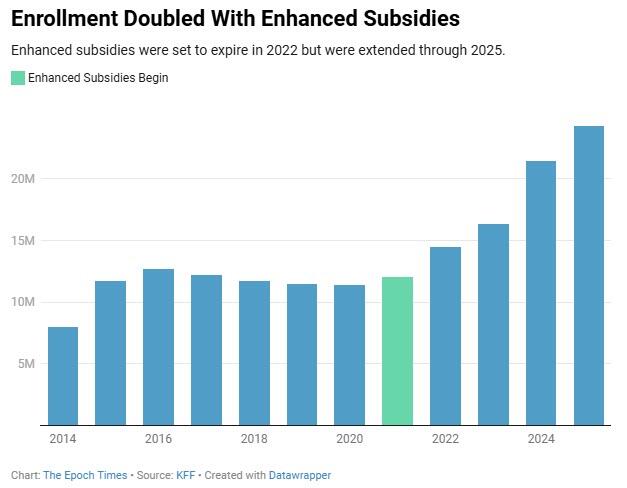
Enrollment boomed, jumping from 11.4 million to 14.5 million in two years. By 2025, enrollment had doubled from its pre-pandemic level, topping 24 million, according to data from health research organization KFF.
The enhanced subsidies were set to expire in 2022, allowing just enough time to get people back to work.
But when the pandemic ended, the enhanced subsidies remained.
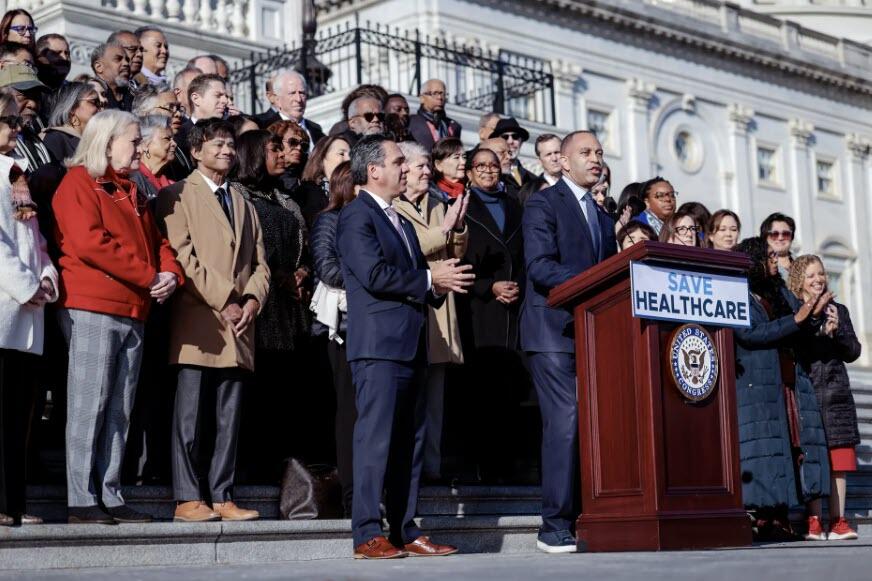
House Minority Leader Hakeem Jeffries (D-N.Y.) and fellow Democrats hold a news conference on the East Front Steps of the U.S. Capitol on Dec. 18, 2025. Jeffries said on Jan. 5 that House Democrats are seeking to extend the Affordable Care Act tax credits, which expired on Dec. 31, 2025. Heather Diehl/Getty Images
Premiums Increased, Wages Didn’t
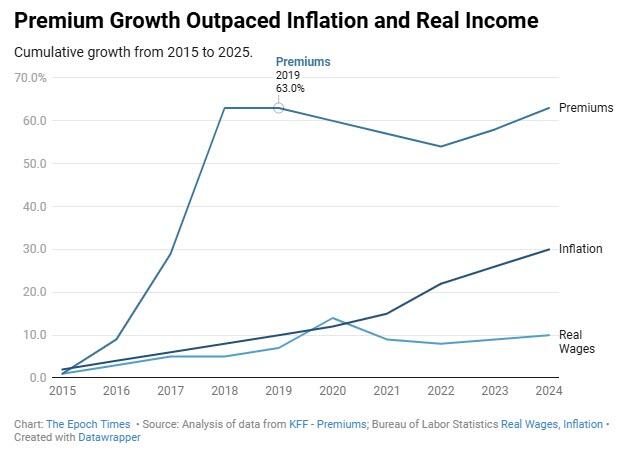
Health insurance premiums increased dramatically during Obamacare’s first five years. The average individual premium for a 40-year-old went up at least 75 percent, according to data reported by KFF.
Prices soared in commercial markets, too, where the cost of individual premiums rose about 120 percent from 2013 to 2019, according to The Heritage Foundation.
Obamacare prices leveled out before the pandemic hit and from 2020 to 2022, which includes the first two years of enhanced subsidies, prices dropped 5 percent, according to data reported by KFF.
But in 2022, the year the subsidies were set to end, inflation was on the rise, peaking at more than 9 percent by midyear, according to the Bureau of Labor Statistics.
Economists broadly agree that this was an unintended consequence of American Rescue Plan spending. The rising prices were “the product of easy fiscal and monetary policies, excess savings accumulated during the pandemic, and the reopening of locked-down economies,” Ben Bernanke, former chairman of the Federal Reserve, wrote in a co-authored assessment for Brookings.
Congress responded by spending even more money. The Inflation Reduction Act, passed in August 2022, would pump another $1.2 trillion into the economy within a decade, the Cato Institute estimated. That included a three-year extension of the enhanced subsidies.
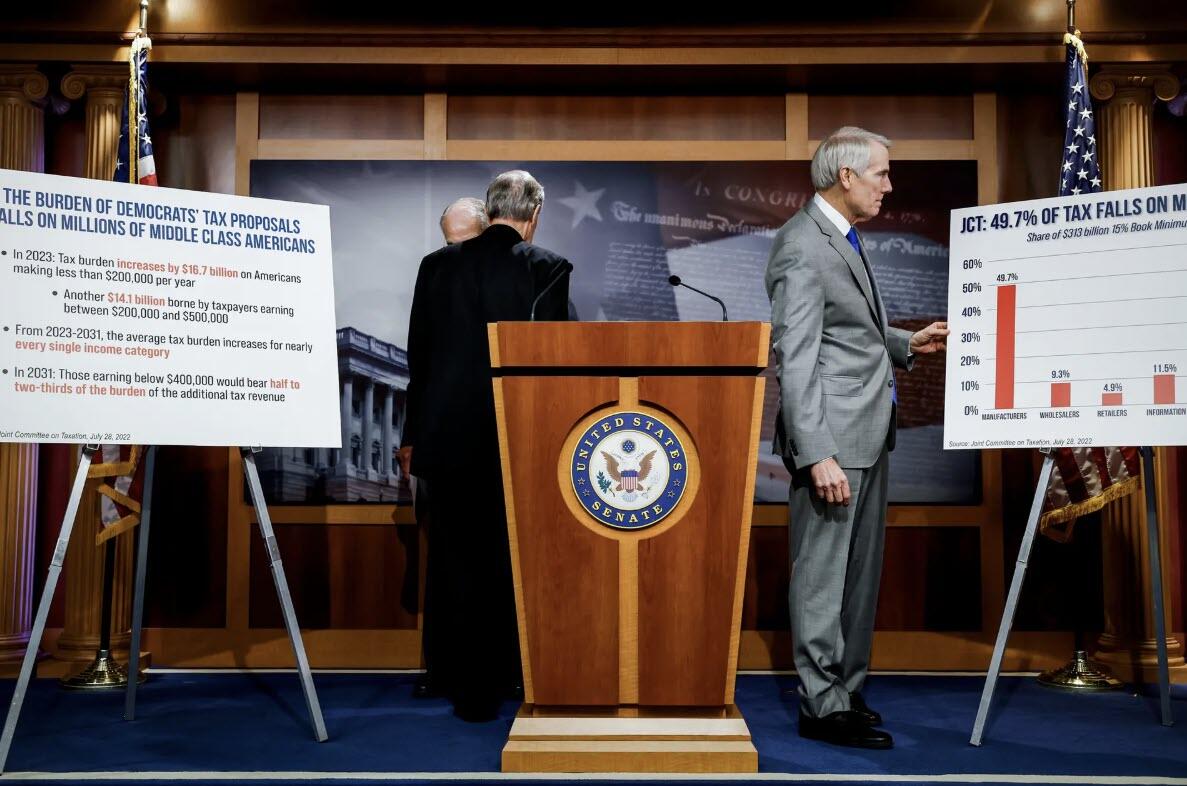
(L–R) Sen. Chuck Grassley (R-Iowa), Sen. Mike Crapo (R-Idaho), and Sen. Rob Portman (R-Ohio) speak at a press conference at the U.S. Capitol on Aug. 3, 2022. While most Republicans opposed extending the enhanced Obamacare subsidies, some supported a second short-term extension of one to three years. Anna Moneymaker/Getty Images
Obamacare premiums shot back up, according to data reported by KFF, rising more than 13 percent in three years.
Economic and policy researcher Cynthia Cox for KFF pointed to a number of factors driving the recent rise in premiums, including increased hospital costs, the rising popularity of expensive new drugs such as Ozempic, and the use of tariffs.
Many observers also cite the enhanced subsidies themselves as a driver of the problem they were created to address.
“The [Affordable Care Act] subsidy structure is itself inflationary—driving up health care prices and total premiums,” said Mark Howell and Brian Blase of the think tank Paragon Health Institute. “As Congress considers the future of the COVID Credits . . . it must confront the reality that the [Affordable Care Act] made coverage far less affordable.”
That reality was largely hidden from many who received the enhanced subsidies because their out-of-pocket premium payments were capped based on income. Price hikes above that cap were paid by taxpayers, which meant the enhanced subsidies were now even more important for people with modest incomes.
Meanwhile, the real wages of American workers were not keeping pace with the price of consumer goods, let alone the skyrocketing cost of health insurance.
Around that time, Rep. Jim McGovern (D-Mass.) commented on the value of the enhanced subsidies to members of his congressional district. “Without the Inflation Reduction Act, the average premium for these individuals would have increased by 76 percent, to $1,430, in 2023,” he said in a statement.
By 2025, the year the enhanced subsidies were again scheduled to expire, Obamacare premiums were at their highest point ever. Health insurers realized that, without the additional subsidies, healthier enrollees would drop their coverage in 2026, leaving a smaller, more expensive pool of people to insure, according to the Peterson-KFF Health System Tracker.
Insurers responded with premium increases ranging from 10 percent to 59 percent, Peterson-KFF found, with the median being 18 percent.
Congressional Democrats argued that the enhanced subsidies had become essential and moved to make them permanent. Some Republicans agreed that a second extension of one to three years was needed.
After five years of premium increases largely paid for by federal taxpayers, both the insurers and the insured appear to have become dependent on the enhanced subsidies.
Increased Fraud
Most Republicans opposed extending the enhanced subsidies. Before spending more money on rising premiums, they said another problem hidden in the system needs to be fixed first—fraud.
There has been no dispute among lawmakers that the enhanced subsidies have been a boon to consumers.
The average Obamacare premium for 2025 was $619 per month, of which subsidies covered more than $500. More than 10 million enrollees, 46 percent of those receiving aid, paid $10 or less per month out of pocket for premiums.
About 8 million paid $0, according to Brookings.
That’s exactly the problem, according to some analysts, because the possibility of enrolling large numbers of people who would never receive a bill created a ripe opportunity for fraud.
Many people were enrolled in the program without their knowledge by unscrupulous insurance brokers, Blase alleges, prompting the federal government to send a commission check to them—and premium payments to an insurance company.
These phantom enrollees are detected in part by their lack of activity once enrolled, Blase said.
“In 2024, nearly 12 million enrollees did not use their plan a single time—up from fewer than 4 million in 2021,” Blase told the House Judiciary Committee on Dec. 10.
Overall, 35 percent of all exchange enrollees never used their plan, and 40 percent of fully subsidized enrollees did not have a single claim, which Blase said is double the rate in both the commercial market and pre-pandemic Obamacare.
America’s Health Insurance Providers, the trade association for health insurance companies, disputed that claim.
“A ‘no-claims’ year is evidence that a consumer stayed healthy or only had a few months of coverage—not that taxpayer money was misdirected or that their policy was illegitimate,” the group said in an Aug. 18 statement.
Yet in December 2025, the Government Accountability Office provided evidence of enrollment fraud in Obamacare that suggests fake accounts are being created.
Pages from the U.S. Affordable Care Act health insurance website healthcare.gov are seen on a computer screen in New York City on Aug. 19, 2025. Patrick Sison/File/AP Photo
Investigators were able to enroll 20 nonexistent identities in Obamacare in 2024 by using Social Security numbers that had never been issued to any person and other easily created counterfeit documents.
Of the 20 false enrollments, 18 were still active in September 2025, costing taxpayers more than $10,000 per month.
Investigators also found 26,000 accounts that received subsidies in 2023 based on Social Security numbers that matched records in the Social Security Administration’s death file.
More than 7,000 Social Security numbers belonged to people who were reported dead before enrolling in Obamacare, and 19,000 Social Security numbers matched death data by number but not name and address, indicating that false identities may have been created for enrollment.
Taxpayers paid more than $94 million in subsidies for one year based on those numbers.
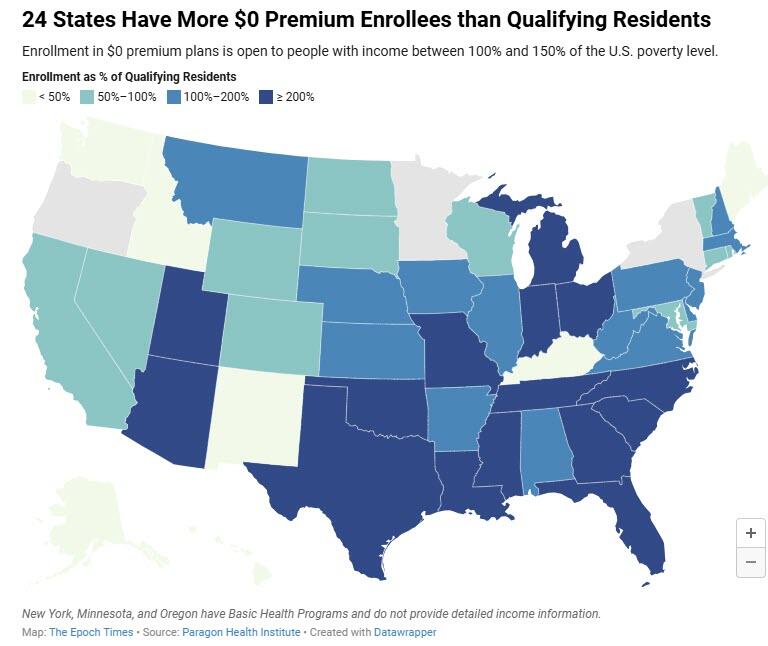
Another indication of fraud is the number of states where enrollment in Obamacare plans with a $0 premium is unreasonably high compared to the number with a qualifying income.
Twenty-four states have more Obamacare enrollees claiming incomes between 100 percent and 150 percent of the federal poverty level than there are people living in the state with that income, according to data from the U.S. Census Bureau.
The problem appears worse in states that have not adopted expanded Medicaid, which would have increased Medicaid eligibility to 138 percent of the federal poverty level.
Obamacare customers are automatically re-enrolled each year, so a fictitious account would continue to generate fraudulent commissions and wasteful insurance payments until detected.
Fraudulent enrollment costs up to $20 billion per year, according to Paragon Health Institute.
A Social Security card sits alongside checks from the U.S. Treasury in this photo illustration in Washington on Oct. 14, 2021. The Government Accountability Office found evidence of Obamacare enrollment fraud involving fake accounts created with Social Security numbers of people reported dead before enrollment. Kevin Dietsch/Getty Images
Making Health Care Affordable
The enhanced subsidies expired on Dec. 31, 2025.
Congressional Republicans and Democrats continue to agree that the U.S. health care system has become unaffordable and want to address the problem. They differ in approach.
Democrats generally favor government intervention in the system, as in the case of Obamacare, where taxpayers pitch in to cover rising costs.
The Senate in December 2025 rejected a proposal to make the enhanced subsidies permanent.
House Minority Leader Hakeem Jeffries (D-N.Y.) said at a press conference on Jan. 5 that his party continues to seek an extension of the subsidies “to protect the health care of tens of millions of … everyday Americans, middle-class Americans and working class Americans.”
Without the subsidies, Jeffries said, some consumers would face cost increases of up to $2,000 or more per month.
Republicans generally favor using the power of government to create marketplace competition. Senate Republicans recently presented a plan to provide dedicated funds directly to consumers, which they could use to shop for health care. That plan, too, was rejected by the Senate.
Sen. John Thune (R-S.D.), the Senate majority leader, addressed the differing philosophies in a Dec. 16, 2025, press conference.
“If [Democrats are] willing to accept changes that actually would put more power and control and resources in the hands of the American people, and less of that in the pockets of the insurance companies, I think there’s a path forward,” he said.
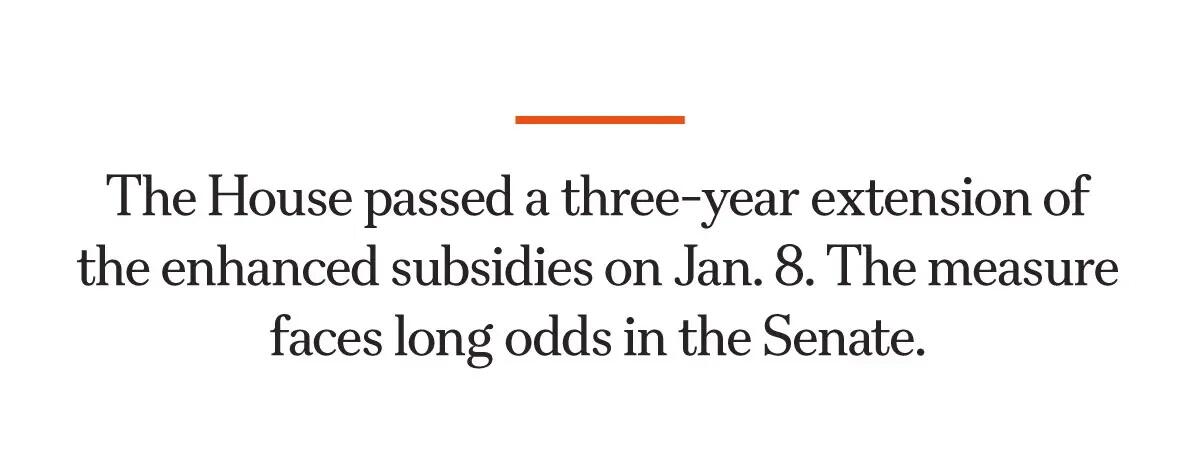
The House passed a three-year extension of the enhanced subsidies on Jan. 8. A bid by Senate Minority Leader Chuck Schumer (D-N.Y) to pass the bill via unanimous consent in the upper chamber failed on Jan. 14.
President Donald Trump has said he would veto any extension of Obamacare subsidies that came to his desk.
Tyler Durden
Fri, 01/16/2026 – 20:55
https://www.zerohedge.com/political/how-expanded-obamacare-made-premiums-spiral-americans-dependent