
Category: News

Lo que hay que saber acerca del Tratado de Alta Mar en su entrada en vigor
Por ANNIKA HAMMERSCHLAG
El primer acuerdo legalmente vinculante del mundo para proteger la vida marina en aguas internacionales entró en vigor el sábado, un momento histórico para la conservación oceánica después de casi dos décadas de negociaciones.
El Tratado de Alta Mar regulará casi la mitad de la superficie del planeta: las vastas zonas oceánicas que están fuera del control de cualquier país. Estas aguas enfrentan amenazas cada vez mayores debido a las prácticas pesqueras destructivas, el transporte marítimo, la contaminación por plásticos, la sobrepesca y la posible minería en aguas profundas, todo ello agravado por el cambio climático. El océano absorbe dióxido de carbono y produce oxígeno, por lo que su salud es crucial para abordar la crisis climática.
El tratado entró en vigor 120 días después de alcanzar el umbral de ratificación por parte de 60 países en septiembre. Hasta el viernes, había sido ratificado por 83 países, incluyendo la reciente incorporación de grandes potencias marítimas como China y Japón.
Crea el primer marco para establecer Áreas Marinas Protegidas en alta mar, que constituyen aproximadamente dos tercios de los océanos del mundo. Actualmente, solo alrededor del 1% de estas aguas internacionales están protegidas.
Obligaciones inmediatas para los firmantes
Desde el sábado, los países que ratificaron el tratado deben comenzar a colaborar en materia de ciencia y tecnología oceánica, así como ayudar a las naciones en desarrollo a generar la capacidad para participar en la gobernanza oceánica. Las empresas que planifiquen actividades que puedan dañar la vida marina deben realizar evaluaciones de impacto ambiental que cumplan con los estándares del tratado. Además, quienes lleven a cabo investigaciones sobre organismos oceánicos que puedan utilizarse comercialmente, como para nuevos medicamentos, deben notificarlo a las otras naciones y compartir sus hallazgos.
Quizás lo más significativo es que los países deberán promover los objetivos de conservación del tratado cuando participen en otros organismos internacionales que regulan actividades oceánicas, como las entidades regionales de pesca, la Organización Marítima Internacional y la Autoridad Internacional de los Fondos Marinos.
Aunque hay elementos clave como la secretaría del tratado y su cuerpo científico que siguen en desarrollo, los firmantes pueden comenzar a preparar ya propuestas de áreas marinas protegidas. Entre los posibles emplazamientos están los montes submarinos Emperador en el Pacífico Norte, el mar de los Sargazos en el Atlántico y las cordilleras submarinas Salas y Gómez y Nazca frente a Sudamérica.
Presión para actuar rápido
Los conservacionistas advierten que los gobiernos deben actuar con rapidez para lograr el objetivo global de proteger el 30% de los océanos del mundo para 2030, una meta que los científicos consideran crítica para su salud. Dado que las aguas internacionales constituyen una parte tan vasta de los océanos, su protección es clave para alcanzar ese objetivo.
“Las áreas marinas protegidas por el tratado serán tan fuertes como los gobiernos las hagan”, dijo Megan Randles, responsable de política global de la Campaña Oceánica de Greenpeace. “No podemos confiar en que los grandes actores de la industria pesquera simplemente dejen de pescar en estos ecosistemas críticos. Necesitamos que los gobiernos usen el tratado para obligarlos a hacerlo”.
Todavía está por decidir aún la forma en la que se monitorearán y harán cumplir las normas en esas zonas protegidas. Se están explorando varias opciones, desde la tecnología satelital hasta la coordinación de patrullas de varias naciones y el uso de agencias de Naciones Unidas para colaborar en la supervisión, apuntó Rebecca Hubbard, directora de la Alianza de Alta Mar. Esos detalles se resolverán a medida que se declaren las primeras áreas protegidas.
En el plazo de un año se celebrará la primera Conferencia de las Partes del tratado, o COP, para decidir detalles operativos clave, desde los presupuestos hasta la composición de varios comités. Los países están trabajando en muchos de esos asuntos en reuniones preparatorias, y hay una última sesión prevista para finales de marzo. La primera vez que podría aprobarse una Área Marina Protegida sería en la segunda COP, ya que el cuerpo científico que revisará las propuestas aún no se ha establecido.
Destacada ausencia de EEUU
Estados Unidos firmó el tratado pero no lo ha ratificado, lo que significa que puede participar como observador, pero no podrá votar. Según el derecho internacional, se espera que los signatarios cumplan con los objetivos del tratado incluso antes de su ratificación.
“El Tratado de Alta Mar tiene un apoyo político increíblemente amplio y fuerte de todas las regiones del mundo”, dijo Hubbard. “Aunque es decepcionante que Estados Unidos aún no lo haya ratificado, no socava su impulso y el apoyo que ya tiene”.
Los defensores de la iniciativa insisten en que ese amplio apoyo debe convertirse ahora en una rápida puesta en marcha.
“El tratado es una señal de que en un mundo dividido, proteger la naturaleza y nuestros bienes comunes globales aún puede triunfar sobre las rivalidades políticas”, afirmóRandles. “El océano nos conecta a todos”.
___
Hammerschlag está en Instagram en @ahammergram.
___
The Associated Press recibe apoyo de la Walton Family Foundation para la cobertura de políticas de agua y medio ambiente. AP es la única responsable de todo el contenido. Para consultar la cobertura ambiental de la AP, visite https://apnews.com/hub/climate-and-environment
___
Esta historia fue traducida del inglés por un editor de AP con la ayuda de una herramienta de inteligencia artificial generativa.

Letters: Editorial overlooks Pace as a critical partner in getting commuters to the Loop
The Jan. 2 editorial about Chicago-region transit and workers’ return to the Loop (“More workers are coming downtown in the new year. It’s showtime for our transit systems”) rightly highlights the importance of reliable, safe and robust regional transit options for commuters returning to the office, particularly service provided by the CTA and Metra. However, the piece overlooks a critical partner in sustaining mobility throughout the Chicago metropolitan area: Pace Suburban Bus.
Every weekday, Pace carries suburban riders directly to downtown Chicago and the Loop through a network of express services and coordinated connections that make rail viable for tens of thousands of commuters. Express routes, such as those along Interstate 55 and Interstate 90, provide fast, reliable service from the suburbs into the city, while dozens of other Pace routes feed CTA rail lines and Metra stations that serve downtown employment centers. For many suburban residents, Pace is not optional. It is the first and last leg of their trip to the Loop.
Just as important, most of the region’s jobs are in the suburbs, not downtown, and Pace is often the only transit option connecting workers to those employment centers. In addition to fixed-route and express bus service, Pace’s Vanpool programs help bridge gaps where traditional transit is not practical, providing flexible, affordable access to suburban jobs during off-peak hours and in lower-density areas.
That role is especially critical for riders with disabilities. As the region’s Americans with Disabilities Act paratransit provider, Pace ensures that people with disabilities can access downtown jobs, medical care and civic life — whether their trip begins in the suburbs, ends in the Loop or requires seamless connections across multiple transit agencies. Without Pace’s ADA service and accessible bus network, much of the regional transit system would simply be out of reach for these riders.
By linking suburban neighborhoods to the CTA and Metra, Pace expands the effective reach of rail service, reduces the need for car commutes into downtown and supports a stronger, more inclusive return-to-office economy. These connections are not ancillary; they are fundamental to how Chicago’s regional transit system actually functions day-to-day.
Pace is part of the solution and stands ready to continue investing in transit options that support workers, employers and communities across the entire region.
— Rick Kwasneski, chairman, Pace Suburban Bus
Restore arts funding
Across Chicago, cultural institutions and creative workers are facing unprecedented uncertainty. Federal cultural policy and funding, once a reliable source of support, have become increasingly unpredictable and politicized. For artists, educators, nonprofit leaders and cultural organizations, this instability is not abstract. It shows up as canceled programs, hiring freezes, shuttered venues and talented workers leaving Chicago altogether.
Illinois cannot afford to wait for stability to return at the federal level. We must act now to secure our creative future.
Chicago has long been a global cultural capital. Our museums, theaters, music venues, design firms, film crews and neighborhood arts organizations are not just sources of pride — they are economic drivers deeply woven into the life of the city. From Bronzeville to Pilsen and Uptown to Austin, creative workers fuel small businesses, attract tourism, educate young people and strengthen community identity.
The economic case is clear. According to Arts Alliance Illinois, arts and cultural production contributes more than $37 billion to Illinois’s economy and supports over 226,000 jobs statewide, with a significant share in the Chicago region. Illinois consistently ranks among the top states for creative-sector employment. Yet despite that leadership, the state has not restored arts funding to its 2007 level and now ranks roughly 11th nationally in per-capita arts spending.
The creative economy is not a luxury. It is one of the largest engines of economic activity we have. But many of the systems supporting this workforce were never designed for long-term resilience. Creative workers, especially freelancers and gig workers, often lack stable benefits and career pathways. Cultural institutions operate on thin margins. When funding becomes volatile, the consequences are immediate: Programs are cut, jobs disappear and Chicago loses talent it cannot easily replace.
Funding for the Illinois Arts Council, the state’s primary arts funding body, remains below its 2007 level, even as demand has surged. Requests for funding in 2025 are up more than 120%, yet the agency’s budget represents a fraction of 1% of total state spending.
Arts and culture are a lifeline for communities across Illinois. That is why Illinois must treat them as essential infrastructure. As part of the Illinois Creative Caucus and chair of the House Museums, Arts, Culture and Entertainment Committee, I see firsthand how cultural institutions function as civic anchors and economic engines.
Chicago’s creative community has shown extraordinary resilience. Now it’s time for the state to match that commitment. If we want a city that remains economically competitive, culturally vibrant and socially resilient, reinvesting in our creative future is essential.
— State Rep. Kimberly Neely Du Buclet, D-Chicago
Maintain sportsmanship
I am not so naïve as to think the F-word is not dropped routinely in all sports locker rooms. Even on TV, I’ve seen quarterbacks, kickers and defensive linemen mouth it after throwing an interception, muffing a field goal and missing a crucial tackle.
However, I also believe good sportsmanship should be the norm for all sports teams (professional and amateur), no matter how heated the rivalry is between them. Coaches and players should set a positive example for all of us and at least take the high road in public. So I personally am not enamored with Bears head coach Ben Johnson’s exclamation of “F— the Packers” after the Bears’ wild-card win.
All kinds of penalties exist in sports for intentionally hurting a member of another team. Even taunting during an NFL football game results in a 15-yard penalty. Why? These actions are considered unsportsmanlike conduct. Shouldn’t good sportsmanship extend to behavior off the field as well?
Getting pumped up on dissing an opponent might be the norm in all kinds of sports, but keep it civil.
— Dianne Casuto, Lake Forest
Still a fan of the Bears
The letter written by James Janus (“Win reminded us of 1985,” Jan. 14) is simply fabulous. I read it once, and then I read it again. No doubt, he captured the sentiments of many who also lost interest in watching the Bears play. Even though I no longer live in Chicagoland, I am still a Bears fan. Though I will confess to not watching their games.
Nevertheless, fingers crossed the Bears make it all the way to the Super Bowl, and knock on wood they win. Go, go, Bears!
— JoAnn Lee Frank, Clearwater, Florida
Submit a letter, of no more than 400 words, to the editor here or email letters@chicagotribune.com.
https://www.chicagotribune.com/2026/01/17/letters-011726-pace-transit/
Elmhurst museum explores history of healthcare in DuPage County in new exhibit
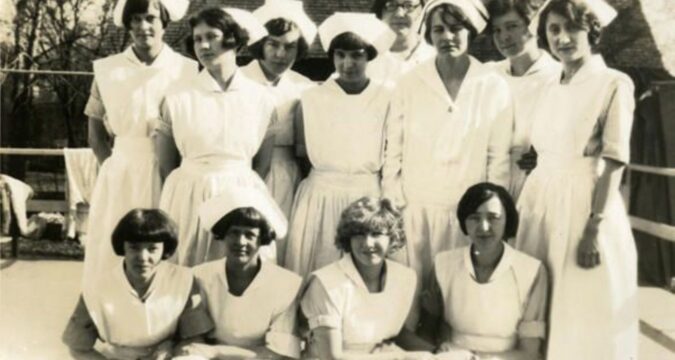
Elmhurst Hospital is celebrating its centennial year. That inspired Sarah Cox, curator of exhibits at the Elmhurst History Museum, to explore the history of healthcare in DuPage County.
The result of her exhaustive research is a new exhibit, Anatomy of Healthcare: DuPage County Medical History, which runs from Jan. 23 to May 3 at the museum, 120 E. Park Ave.
“I knew I didn’t want to do an exhibition just about the hospital but how our community started in healthcare, how the hospital came to be, and where we’re going and how things have developed, especially here in DuPage,” Cox said, adding, “We’ve been a growing community for more than a hundred years.”
They are launching the new exhibit with an “Elmhurst Gives Back Blood Drive,” 10 a.m.-3 p.m. Jan. 24 on a mobile donor bus provided by Vitalant. Drop-ins are welcome but donors are encouraged to register at bit.ly/EHMblooddrive.
Cox spent a year brainstorming, researching, fabricating pieces, securing loans, and installing the exhibit. In other words, she was responsible for every aspect of the project. She will also be doing a gallery tour, as she does with every exhibit she creates.
Cox said she worked backwards on this project.
“I looked at What do we have now? What is my personal experience with healthcare—going for annual checkups, having screenings,” she said. Then she jumped backwards to answer the question, “What was it like if I was living here in 1850?” Cox questioned. “Do I still have access to all of those same things? No, I have access to none of those things.”
Cox said she explored how the changes occurred and who the pioneers were.
“After that, it was diving down a bunch of rabbit holes,” she said.
Cox said she prefers first-person accounts so she read a lot of doctors’ notebooks and journals that were in the museum’s archives.
The 100th anniversary of Elmhurst Hospital, pictured in 1939, inspired the Elmhurst History Museum to create the new exhibit Anatomy of Healthcare: DuPage County Medical History. (Elmhurst History Museum)
“After that it was books, publications, working with other museums and organizations that hold the artifacts and archival materials based on some of the topics that I explore in the exhibit,” Cox said.
One surprising thing she discovered was that, even though the county was affected by such diseases as influenza and the Spanish flu, the second-biggest killer was train accidents. “They didn’t have alarms, bells and whistles, and arms going down to stop you from crossing train tracks,” she explained.
Artifacts in the exhibit include doctors’ instruments and tools, medications, original documentation from the establishment of Elmhurst Hospital, and nurses’ uniforms from different eras, among other items.
Children will have hands-on experiences at the exhibit’s Kids’ Clinic. “They can dress up as a doctor or dress up as a nurse and treat a doll or a teddy bear,” she said.
There will be a number of events related to the exhibit:
“Nature Cure: The Lindlahr Sanitarium.” Curator of Collections Dan Lund will speak about the nature treatments Dr. Henry Lindlahr gave in Elmhurst. 1-2 p.m. Feb. 8. $8; free to Elmhurst Heritage Foundation Members. Registration is required.
“Anatomy of Healthcare: Du Page County Medical History” Gallery Talk by Curator of Exhibits Sarah Cox. Noon Feb. 22. $8; free to Elmhurst Heritage Foundation Members. Registration is required.
“Medicine of the Civil War.” Presentation will be by Kenosha Civil War Museum Curator Doug Dammann. 6:30 p.m. March 5. $8; free to Elmhurst Heritage Foundation Members. Registration is required.
“Bus Tour: International Museum of Surgical Science.” 8:30 a.m.-3 p.m. March 18. $95; $85 for Elmhurst Heritage Foundation Members. Fee includes admission, transportation, and a three-course lunch at Orso’s Italian Restaurant in Old Town. Registration is required.
“Patch Adams” Film Screening. 2 p.m. April 10 at Elmhurst Public Library, 125 S. Prospect Ave. Free.
“Rescue & Ready Kids Day.” Family-friendly event explores the ins and outs of the human body. 11 a.m.-1 p.m. Free.
For registration and further information, visit elmhursthistory.org/programs-and-events.
Myrna Petlicki is a freelance reporter for Pioneer Press.
https://www.chicagotribune.com/2026/01/17/elmhurst-museum-healthcare-exhibit/

The Tribune’s Quotes of the Week quiz for Jan. 17
The Bears have grabbed the attention of the Chicagoland after pulling off another improbable comeback Saturday over the rival Packers. Trailing 21-3 at halftime, the hometown team scored 25 points in the fourth quarter to come from behind and win 31-27 in the wild-card round, ending Green Bay’s season.
The Bears now move on to the divisional round where they’ll play host yet again, this time to the Los Angeles Rams. Kickoff is Sunday at 5:30 p.m. at Soldier Field. Check out the forecast for the game and see if the Chicago cold could be enough to deter Rams quarterback Matthew Stafford. Plus, here’s who’s playing, who’s not and our reporters’ predictions.
But that’s not all on the Bears front this week. The success of the team has raised the stakes in the debate over where the Bears will play if they leave Chicago. Franchise officials and NFL leadership toured potential stadium sites, while Arlington Heights asked Illinois lawmakers to act on legislation that would sweeten the northwest suburb’s stadium proposal, and Indiana Gov. Mike Braun said he’s “working hard” to bring the Bears across state lines.
A week after the shooting death of Renee Good in Minneapolis, President Donald Trump is threatening to use the Insurrection Act to quash protests in the city. Local officials, meanwhile, filed a lawsuit against the Trump administration in federal court, calling Border Patrol and ICE “occupiers.” Homeland Security Secretary Kristi Noem has also come under increased scrutiny for her agency’s immigration enforcement tactics, with some House Democrats moving to impeach her from office.
Trump also continued his push this week for a complete U.S. takeover of Greenland, saying “anything less than that is unacceptable.” After meeting Wednesday with Vice President JD Vance and Secretary of State Marco Rubio, officials from Denmark, of which Greenland is a semiautonomous territory, said there was a “fundamental disagreement” between the two nations. Later in the week, European troops were mobilized to the Arctic island in a show of force, and Trump threatened tariffs for countries that don’t back U.S. control.
In other news, the Trump administration has backtracked on a plan to pull millions of dollars in grants for mental health and substance use disorder services from Illinois, Mayor Brandon Johnson said Chicago’s plan to legalize video gambling is still in flux and Illinois residents convicted of nonviolent offenses could have their state criminal records automatically sealed under a new law signed Friday by Gov. JB Pritzker.
And the Golden Globes were Sunday. Paul Thomas Anderson’s revolutionary action comedy “One Battle After Another” reigned supreme, winning the awards for best film, comedy, best supporting female actor, best director and best screenplay.
Those are the headlines! Without further ado, here’s the Tribune’s Quotes of the Week quiz, this time with excerpts and utterances from January 11 to 17.
Missed last week? You can find it here or check out our past editions of Quotes of the Week.
https://www.chicagotribune.com/2026/01/17/quotes-quiz-january-17/
For Chicago Pride Hockey, ‘Heated Rivalry’ is more than just a show
When Zack Dessent lets people know he plays “gay hockey,” the first thing out of their mouths in recent months is a “Heated Rivalry” joke — and he wouldn’t have it any other way.
Dessent is a board member on Chicago Pride Hockey, a recreational hockey nonprofit for LGBTQ+ players and allies. Not only have a considerable number of people expressed interest in joining the group because of the hit show — they’ve received around 60 inquiries in just the past two weeks.
But Dessent also enjoyed the depiction of gay relationships in a sport he knows firsthand doesn’t always seem to embrace them. The National Hockey League has never had an active player who is openly gay.
“Anytime that you can expand the game out to be more inclusive and to make people feel more included in the community and seen, I think is really important,” the 33-year-old Lakeview resident said. “I think the fact that the show can be that gateway is really cool.”
“Heated Rivalry,” streaming on HBO Max and based on a Rachel Reid novel of the same name, stars Hudson Williams and Connor Storrie as closeted gay professional hockey players, Shane Hollander and Ilya Rozanov. It depicts their secret yearslong relationship from steamy hookups to a committed partnership. The show cultivated a rabid fanbase that grew much larger than studio executives initially predicted.
Dessent, who grew up in Niles, started playing hockey as a kid because his older brother was talented at the sport and his parents thought it would be a good idea for him to join while they were at the rink. When he was a kid, though, Dessent said he never had much fun playing.
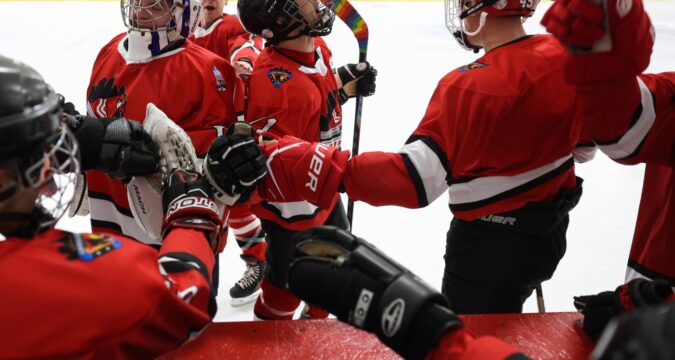
Zack Dessent puts on his sweater while suiting up with teammates of the Chicago Pride Hockey team for a game against the Chicago Aces at the American Heartland Ice Arena, Jan. 15, 2026, in Lincolnwood. (John J. Kim/Chicago Tribune)
He was scared that his teammates would find out he was gay and that he would get bullied. This fear caused him to keep to himself and he didn’t make many friends in the sport. He related to the fear the characters expressed in the show of their relationship being discovered.
“The feeling of being different is a very scary thing, especially when you don’t know how people are going to react to it,” he said.
A couple years ago, Dessent was looking for a way to make new friends as an adult, a challenging experience. He didn’t want to play dodgeball or kickball, and thought he’d try out the only sport he in which he had any real experience. But this time he wanted to play with other LGBTQ+ players.
Although he joked it did take him a couple games to build up his stamina after 14 years of not skating.
“Playing as an adult has been the most fun I’ve ever had in my life,” Dessent said. “I’ve made so many new best friends … and we all look out for each other.”
Chicago Pride Hockey, formerly called the Chicago Gay Hockey Association, was founded in 2002 with the goal of creating a safe, comfortable environment for gay men to play hockey. People of all genders and identities are accepted and encouraged to join though, Dessent said.
The founder, Chuck Jacobson, told the Tribune in 2004 that he was inspired by a gay hockey league in New York. He was able to find 15 players to start. Most of them were gay men, two were straight and one was a lesbian.
“Hockey is an intimidating sport,” Jacobson said at the time. “But that doesn’t mean a gay team can’t play and win.”
Over the years, the group has collaborated with the Chicago Blackhawks, including for a “Hockey is for Everyone” campaign in 2017. The Hawks wore “pride tape” on their sticks during warmups in support of the LGBTQ+ community. The nonprofit also focuses on charity work, such as a learn to skate program with the Boys and Girls Club.
Annie Davis-Korelc, executive director of the Chicago Blackhawks Foundation, said she’s inspired by the sense of belonging Chicago Pride Hockey brings to the sport. NHL Commissioner Gary Bettman, meanwhile, told reporters Thursday that “Heated Rivalry” is “very compelling and a lot of fun.” He said he binged all six episodes in “one night.”
Hudson Williams, left, and Connor Storrie of “Heated Rivalry” in West Hollywood, California, Dec. 18, 2025. (Ryan Pfluger/The New York Times)
“We believe that hockey is for everyone, and this team and others like it create spaces where people can show up and feel welcomed and included in the sport,” Davis-Korelc said. “We’re proud of this partnership and the excitement it adds as more people discover what makes this game so special.”
Now there’s about 100 players on four teams. Those teams play in a few different leagues at different rinks throughout the city and suburbs. Dessent expects the number of players to grow though with the renewed hockey interest — the “more the merrier,” he said.
“We’re just happy that we can be that place where people can come and feel welcomed and supported and like they don’t have to worry about being judged,” he said.
That was what Shelby Domabyl-Deiters said she found when she joined about a year a half ago. The 35-year-old La Grange Park resident and self-titled “suburban hockey mom” is now the secretary and director of community outreach.
She’s always loved hockey, but wasn’t sure if it loved her back — both as a woman and a lesbian. When she’s on the ice the external world falls away. But there’s still a nagging feeling that she may not be accepted while playing or coaching her 6-year-old son’s hockey team.
“There’s always that, what if that parent, or what if the other player in this pickup game says something, or they don’t like my pride tape,” she said. “You can’t fully enjoy the experience without that layer of protection, but with Chicago Pride Hockey it was like instant family.”
The part of “Heated Rivalry” that touched her the most was Ilya struggling to be himself because of his family. She also connected to Shane, the other half of the couple, trying to convince himself he isn’t gay. She said she also had a hard time coming out
She added that when Scott Hunter, a side character on the show who is also a closeted professional hockey player, kissed his boyfriend in front of a huge crowd is the kind of representation that helps push people to accept themselves.
“I just remember trying to keep the secret, I guess, and trying really hard not to be gay,” she said. “Not in a sport or team setting, but with family and friends (thinking) ‘oh no I need to not be this way.’”
For Andrew Sobotka, the show demonstrated what it’s like to leave a piece of yourself at home in order to not be outed. He’s sure there’s professional athletes today who are going through a similar experience as Shane and Ilya in the show.
“There are gay hockey players, and they very likely are high performing athletes,” he said. “It’s kind of the sadness that comes with having to hide part of themselves to be able to play the game that they love.”
Indeed, Williams said in a podcast interview that closeted professional athletes have reached out to him.
Sobotka, 40, of Forest Glen, is the former president of the organization. He was a finalist last year for the NHL’s Willie O’Ree Community Hero Award for his work with Chicago Pride Hockey. A Detroit native, he said he grew up playing hockey but quit when he was teenager because of the homophobic culture.
Sobotka liked that the show struck an overall positive, celebratory tone. For example, there are numerous characters, including parents and friends, who are very supportive of the characters’ identity, he said. The last two episodes are his favorite and he said he would love to go to “the cottage” — the location where Shane and Illya explore their relationship in private.
“You don’t see too much of the hatred that realistically would be happening,” he said. “We hardly go a season in our teams where someone isn’t called a slur, and you know it’s happening, but I’m appreciative that the show is focusing on more of the queer joy than the homophobia.”
Since the show was released, Domabyl-Deiters said “Heated Rivalry” has become a conversation starter with parents of the kids she coaches. That’s led to more conversations about Chicago Pride Hockey, she said.
The only thing Domabyl-Deiters took issue with in the show was some of the hockey scenes. Players don’t typically practice in full uniforms, she noted.
“I think it humanized a little bit of that experience,” Domabyl-Deiters said. “Not that they weren’t comfortable talking about stuff, but it was like, oh I want to learn more about this. It felt more comfortable talking to me and learning more about me.”

Chicago bars and restaurants gear up for Bears Playoff Sunday with food and drink specials
Whether you’re planning on watching Sunday’s Bears playoff game cozy at home or braving the cold to catch it at a packed bar, Chicago restaurants are embracing the game-day spirit with drink deals, food specials, and watch-party packages. Across the city, bars and restaurants are rolling out Bears-themed drink deals, discounted drafts and hearty food specials — from wings and burgers to game-day platters built for sharing.
Last Call Tavern Group Bars
The restaurant group will have several game-day deals across its seven bars: The Butcher’s Tap, Blue Bayou, Duffy’s Tavern, Rebel & Rye, The Reveler, Trace and Willie Lill’s. Each of these locations will be offering $6 Goose Island and Revolution drafts, $7 Bud Light stadium cups, $8 Olmeca Altos Plata shots and $9 Three Olives and Jose Cuervo cocktails. At The Butcher’s Tap, fans can also grab $40 Nutrl and Carbliss seltzer buckets, plus enter a halftime raffle featuring Bears-themed prizes such as flags and plaques, along with drink giveaways. Multiple locations, lastcalltaverngroup.com
Hubbard Inn
For an all-inclusive experience, fans can purchase a $50 ticket for an open bar running from 5:30 p.m. to 9 p.m. The package includes mixed drinks, domestic beer, select wines and select seltzers. Tickets are available through Eventbrite. 110 W. Hubbard St., 312-827-6234, hubbardinn.com
Matilda
The Lakeview bar will offer a wide lineup of drink specials. Beer deals include $4 domestic bottles, $5 Son of Juice drafts and $5 Hinterland Pils. High Noons, White Claws and Freshie seltzers are $5, while the Matilda Old Fashioned is $10. 3101 N. Sheffield Ave. #1, 773-883-4400, matilda-babyatlas.com
Headquarters Beercade
Headquarters Beercade has a variety of wings as part of its Bears game day specials. (Halie Parkinson)
Whether you’re watching the football game or playing an arcade game, there are plenty of specials to enjoy this Sunday. Grab a $12 pizza, order wings with a buy-one-get-one-free deal, sip $5 select beers, or celebrate every Bears score with a $5 Malört shot. Table reservations are available over the phone. 213 W. Institute Pl., 312-291-8735, hqrivernorth.com
Parlay Lincoln Park
The modern sports bar will feature a 3-hour open bar package deal starting at 5 p.m. Tickets are $55 and available via Eventbrite or in person. The deal includes well mixed drinks, domestic beer and seltzers. Green Tea shots and Fireball shots will be $5. 950 W. Wrightwood Ave., 773-904-7790, parlaylincolnpark.com
Fuego Logan Square
Want more than just a typical sports bar to watch the big game? At this family-owned Latin restaurant, game day food specials will include eight jumbo wings for $10 and loaded nachos for $10. As for drink specials, top-shelf margaritas will be $10 and all beer buckets will be available for $25. To keep spirits high, regardless of the score, a DJ will be playing music during each game break. Reservations are available through the restaurant’s website. 3534 W. Fullerton Ave., 773-342-4999, fuegologansquare.com
Bodega Taqueria y Tequila
Both the River North Bodega Bar and West Loop Taqueria y Tequila locations will offer deals throughout the game. Specials include five beers or seltzers for $25 buckets, $7 Patron shots, $1.50 chicken wings and $10 nachos. River North: 407 N. Clark St., 312-340-0201, bodegataqueria.com/location/rivernorth/. West Loop: 912 W. Randolph St., 312-940-3670, bodegataqueria.com/location/westloop/
Electric Shuffle
With a $10 cover charge, which can be paid online or at the door, guests will have access to unlimited open-play shuffleboard and various competitions with prizes. Food and drink specials run all day, with $5 select beers, seltzers and fries, $25 beer and seltzer buckets, and $30 Surfside or Sun Cruiser buckets. Beer pitchers are $20 and margarita pitchers are $30. 488 N. La Salle Dr., 312-736-7617, electricshuffle.com/us/chicago
Lexington Betty Smokehouse
The Bear Down tailgate and catering package from Dominique Leach of Lexington Betty. (GAZ Creative)
For fans hosting at home, the Pullman restaurant is offering “Bear Down” barbecue tailgate and catering packages packed with smoked meats, wagyu hot dogs, house-made dips and chips. Options include “Sliders & Glizzies” ($20 per person), “Chips & No Double Dips” ($10 per person), “Ribs, Tips & Wings” ($25 per person) and “Macaroni & Cheese Please” ($20 per person). Packages are available through Super Bowl Sunday, Feb. 8. For inquiries, email info@lexingtonbetty.com. 756 E. 111th St., 708-927-5614, lexingtonbetty.com
Big screen or home stream, takeout or dine-in, Tribune writers are here to steer you toward your next great experience. Sign up for your free weekly Eat. Watch. Do. newsletter here.
https://www.chicagotribune.com/2026/01/17/bears-game-food-drink-specials/

As Bears gain momentum, house music staple ‘Percolator’ rises with them
The weekend has arrived and we know you’re watching the clock as much as any Chicago Bears fan, waiting for the showdown with the Rams on Sunday. Social media was a great distraction for the anxious energy, with many fans posting videos and reels synced to the song “Percolator.”
It’s the earworm that will get you out of a deep slumber. And out of your seat at the United Center, celebrating Benny the Bull’s court feats. What time is it? It’s time for the Percolator.
The quintessential house classic track and corresponding eponymous dance are making the rounds, with the franchise posting a clip after the Green Bay Packers’ defeat, with fans, young and old, dancing to the beat. So we felt now was a perfect time to look into what makes the tune reminiscent of an old-fashioned coffee pot that pops instead of gurgles, a perfect anthem for the team in this moment.
It’s so Chicago, it hurts. But hurts so good. And regardless if you do the South Side version of the dance or the West Side version (look it up), one can’t not move to it.
The work is that of Curtis Jones, also known as Cajmere and Green Velvet, a former chemical engineering student who, according to former Tribune rock critic Greg Kot, helped put “Chicago back on the international dance scene in the ’90s.”
The track, released in 1992 on Cajmere’s label, Cajual, is considered a house music classic. Fans and DJs attest that the track was integral for house when released — as it was a time hip-hop was emerging.
“House music probably would have died, if it weren’t for the kids who came along in the ‘90s who kept house music going — the second wave … this subculture looking for the party seven days a week, looking for house music, specifically,” said DJ Lady D, aka Darlene Jackson, executive director and CEO of the social justice arts organization Collaboraction. “Hip-hop brought its own culture. It was really hard to mingle the two audiences, because you got peace-loving people of all walks of life, and then you got people who are posturing this sort of image of what it means to be hip-hop.”
April Welch, a “house head” (or house music enthusiast) and founder of Immortal U, recalled the power of the music when she was in college. One can hear the smile and awe in her voice as she recollects Illinois Institute of Technology parties that she would attend coming home from Boston University — large events that she said brought all cultures together with its driving rhythm, tribal beats. On college campuses, house music was a release aided by future engineers who revamped how sound happened in a space-using equipment and systems in different ways.
Barry Robinson used to DJ on Chicago campuses back in the day, and he said when “Percolator” first dropped at IIT, people lost their minds. “The dance floor would just rock,” he said. “And the thing about Chicago, Chicago people like to dance. They’re serious about their dance.”
“Back then, the way people danced was different,” she said. “We showed up in gym shoes, ready to sweat everything out. We came for an athletic workout. Those years were sort of the last years where the dance floor was freedom and a safe space for madness.”
Freedom, sweating it out, people coming together — is it any wonder that “Percolator” is playing on repeat with fans wearing their gear and showing off their moves? One of the names out there is Sam Sanchez, a 26-year-old software engineer from South Chicago, who has earned the name “Percolator Guy.” He learned the dance in 2013, but it wasn’t until 2024, when he was dancing the South Side version, celebrating his nuptials at Navy Pier, that he went viral. He’s been running with the name ever since.
“The song embodies home to me,” Sanchez said. “Whenever it comes on, I’m reminded of events it was played at when I was younger, line dances that people were doing at birthday parties and celebrations throughout my childhood. Every time I hear the ‘Percolator,’ I think about all of the great things that the culture of Chicago has done for my life.”
In dance tutorials on YouTube, Sanchez can be seen getting into the groove in locations around Chicagoland, with and without his Bears gear on.
He learned the dance during a church performance and has since produced too many Percolating videos to count; the videos accruing over 500 million views across platforms last year. His passion for dancing to “Percolator” has taken him to places he never thought he’d go — from collaborations with the Chicago Bulls to dancing at the Arc Music Festival with Cajmere.
“What I love about the dance is the energy that you put behind it,” Sanchez said. “It’s something that allows people to be themselves and do something with passion without a care in the world about what others think. I love that the Bears are playing the song leading up to the game.
“Having a team represent your home city in a way that shows that they are connected to the culture is very inspiring and I hope they continue to stay connected to the city and its history. I will be a Bears fan no matter where they go. If they decide to move to northwest Indiana, I will be there Percolating as always.”
“We already had ‘The Super Bowl Shuffle.’ We need to do the Bears ‘Percolator,’” said Thomas Kendricks, known as DJ Slugo. “It’s one of those records that’s going to always get the reaction from the crowd. I’ve been in different countries and when that record comes on, everybody looks like they’re from Chicago,” he said.
“It has a glow. … It’s one of the biggest records out of Chicago with a global effect.”

Biblioracle: Natasha Stagg tells an unsparing and emotionally raw coming-of-age story in ‘Grand Rapids’
The experience of reading Natasha Stagg’s new, unsparing and emotionally raw coming-of-age novel, “Grand Rapids,” made me realize that I may have an overly nostalgic, too rosy view of the coming-of-age genre.
I suppose this view is colored by my memories of my favorite coming-of-age novels of my youth, such as “Bridge to Terabithia” and “A Separate Peace.” While dark and tragic things happen in those books, my impression, carried forward over time, is that the protagonists emerged from these trials indelibly but appropriately scathed. The challenges of youth are inevitable, but there is also something like a payoff in adulthood once they are weathered.
This is nostalgia speaking.
“Grand Rapids” opens in the early, post-Sept. 11 aughts with 15-year-old Tess living with her aunt, uncle and cousins according to the wishes of her mother, who has recently died of cancer. Tess’s father had already been absent for years, and Aunt Norma and Uncle John are financially stable, fine church folk with sons who will grow up to be pillars of the community.
But Tess is slowly collapsing from grief. She has spent the first part of her life in Ypsilanti, Michigan, and finds Grand Rapids strange and alienating, and so seeks a kind of alien/outcast status for herself. Her best friend is Candy, a magnetic but volatile presence with an older sister and “cool guy” father who almost seems worse than absent. Tess and Candy graduate from Robitussin highs to harder stuff and hang out with boys who are much more like men. At the same time, Tess is doing OK in school, and has a job at a somewhat dispiriting old folks home with an apparent “Cuckoo’s Nest” vibe.
The narration is sharp and specific — Tess’s senses are alive — but also resolutely matter-of-fact in terms of its emotional register. This technique effectively recreates the experience of Tess’s grief as she tries to live in this strange place with her mother’s presence confined to her memories and a diary Tess receives from her aunt at the book’s opening.
The chapters are short and episodic, sometimes long enough to establish a scene or series of events, but sometimes consisting of short reflections, which reveal early on that Tess is telling her story retrospectively from adulthood to a specific person in response to their asking, “Where are you from?” Tess explains her motive for the telling to this unseen, unknown audience, “When I told you where I’m from, you made a face I’ve seen before, and it revolted me. I can see you tidying up my background, my youth, in a phrase, and no matter what it may be — working class, suburban, white trash, middle America — it doesn’t work.”
The adult Tess is insisting that the specifics matter, that our coming of age is more than a tidy parable around growth, and that maybe coming of age is something of a lie.
Over time, the episodes accrue relentlessly moving forward toward a foretold second death — after her mother’s — as we pay witness to a young girl engaging self-destructive behaviors that do not make for pleasant reading but feel true and powerful. We know from the book’s structure that Tess is alive to tell the tale, and at least to some degree living a reasonably successful adult life, but it’s also clear that she is accruing very real physical and emotional scars.
As the reader, we are privy to Tess’s fullest reconsideration of what it means to be from somewhere, to be amongst a particular set of people in a particular period of time and to live to tell the tale.
John Warner is the author of books including “More Than Words: How to Think About Writing in the Age of AI.” You can find him at biblioracle.com.
Book recommendations from the Biblioracle
John Warner tells you what to read based on the last five books you’ve read.
1. “North Woods” by Daniel Mason
2. “Moon Tiger” by Penelope Lively
3. “The History of Love” by Nicole Krauss
4. “I Am Homeless If This is Not My Home” by Lorrie Moore
5. “What We Can Know” by Ian McEwan
— John E., Chicago
I think John E. needs a book that’s at least a little bit “thinky”: “No One Is Talking About This” by Patricia Lockwood.
1. “The Evening of the Holiday” by Shirley Hazzard
2. “Flesh” by David Szalay
3. “Dream Life of Astronauts” by Patrick Ryan
4. “Palaver” by Bryan Washington
5. “The Loneliness of Sonia and Sunny” by Kiran Desai
— John S., Chicago
I’m hoping to introduce John S. to the Patrick Melrose novels of Edward St. Aubyn, which kick off with “Never Mind.”
1. “The Light Eaters: How the Unseen World of Plant Intelligence Offers a New Understanding of Life on Earth” by Zoë Schlanger
2. “Murderland: Crime and Bloodlust in the Time of Serial Killers” by Caroline Fraser
3. “The Mother Next Door” by Tara Laskowski
4. “Replaceable You: Adventures in Human Anatomy” by Mary Roach
5. “The Gales of November: The Untold Story of the Edmund Fitzgerald” by John U. Bacon
— Mary Beth N., Aurora
I’m going to have to go with some narrative nonfiction here, which takes me to one of my favorites from last year, “Children of Radium” by Joe Dunthorne.
Get a reading from the Biblioracle
Send a list of the last five books you’ve read and your hometown to biblioracle@gmail.com.
https://www.chicagotribune.com/2026/01/17/biblioracle-grand-rapids-natasha-stagg/

Get busy on this year’s garden
What a gift to be a gardener at this time of year! For most other people, winter just grinds on, with dingy snowdrifts melting into puddles that will freeze into ice slicks. But gardeners don’t have to just mope indoors, dreaming of summer. They can get to work.
“There’s plenty to do in the middle of winter to get ready for spring,” said Sharon Yiesla, plant knowledge specialist in the Plant Clinic at The Morton Arboretum in Lisle. “It’s a great opportunity to think ahead for a more successful and satisfying garden this year.”
Here are some winter tasks to get your gardening season started and keep cabin fever away.
Make a plan. Review any notes you took about last year’s garden, or look through pictures on your phone to help you recall. Think about what you’d like to improve this year, such as more color, more privacy, more winter interest or more wildlife habitat. Measure your yard with a long tape measure and sketch a rough plan. “Get a clear sense of the space you have to work with before you start thinking about choosing plants,” Yiesla said. Be especially careful to look up, so you don’t make a plan to plant trees or large shrubs where they will grow to collide with power lines.
Research plants carefully. “It’s easy to fall for a gorgeous picture of a new plant in a catalog or a website, but give it some thought before you set your heart on it,” she said. Consider whether the plant will really work for the space and conditions in your garden. It’s especially important to make careful choices of trees and shrubs, which are long-term commitments. The search tool on the Arboretum’s website (mortonarb.org/search-trees-and-plants) can help you learn about the many kinds of plants and make better choices.
Prune deciduous shrubs. Get outside and use sharp hand pruners to shape up any shrubs that need it. Learn the right approach and timing for pruning many kinds of shrubs at mortonarb.org/pruning-deciduous-shrubs. Look around for any branches that have been broken by the weight of heavy snow or ice and prune the stubs cleanly back to a main stem or near the ground.
Order seeds. Browse catalogs and websites for interesting varieties. “Just be realistic about how many vegetables or flowers you have space for,” Yiesla said. It’s a good idea to make a rough planting plan of your in-ground garden or raised beds to be sure you don’t over-order.
Schedule your seed-starting. Use the seed packet or catalog description as a guide to figure out how many weeks before the last frost date you should start seeds indoors under lights. “We generally expect the last frost in mid-May, although spring weather can be volatile and there are no guarantees,” she said. It’s smart to start seeds in two or three batches a week apart to increase the odds that you will have seedlings ready to transplant outdoors when the chancy weather allows.
Cut back grasses. Remove the old, dry stems from ornamental grasses before March, when new growth will likely begin. “Cut them down within a few inches of the ground, but don’t cut into the base of the plant,” Yiesla said.
Plan and build raised beds. Choose a spot for vegetable beds that will be in full sun for at least six hours a day. Allow space around each bed for a wheelbarrow to pass. Make beds no more than 4 feet across so you can reach in to weed and harvest. “There are plenty of plans online for build-it-yourself raised beds, or you can buy kits,” she said. Beds that are 8 inches deep can accommodate shallow-rooted crops such as spinach, lettuce and radishes. Tomatoes, peppers, carrots and other plants with deep roots need at least 12 inches of soil depth.
Check perennials for frost heaving. The freeze-and-thaw cycle so common to Chicago winters, when warm spells and cold spells follow each other, is hard on perennials. The soil around their roots may freeze and be heaved up as the ice expands, only to leave the roots stranded aboveground when the ice melts. “Shallow-rooted plants, such as those that were just planted in fall, are most vulnerable, especially if the soil isn’t insulated with a layer of mulch,” Yiesla said. Look around for displaced perennials on a warm day and gently push each root mass back into the soil. Then spread some mulch to protect plants against future weather swings.
Clean, sharpen and sterilize garden tools. Wash tools in water to remove dirt, dry them and use steel wool to remove any rust. Then sharpen pruners and loppers with a small diamond file or pruner sharpening stick, available at hardware stores. For shovels and hoes, use a medium-cut 10-inch file. After sharpening, wipe pruners and loppers with 70% rubbing alcohol to sterilize them. Use a light household oil to lubricate the action of cutting tools. Wipe the business ends of all your tools with the same oil to deter rust.
For tree and plant advice, see the online resources of The Morton Arboretum at mortonarb.org/plant-care, or submit your questions online at mortonarb.org/plant-clinic or by email to plantclinic@mortonarb.org. Beth Botts is a staff writer at the Arboretum.
https://www.chicagotribune.com/2026/01/17/get-busy-on-this-years-garden/

Policía de Uganda niega arresto de líder opositor a la espera de resultados de las presidenciales
Associated Press
KAMPALA, Uganda (AP) — La policía de Uganda negó el sábado los reportes sobre la detención del principal candidato de la oposición en las tensas elecciones presidenciales de esta semana, y calificó esas informaciones de “engañosas e incendiarias”. Además, instó a la población a mantener la calma mientras el país espera los resultados definitivos de los comicios.
Uganda celebró elecciones generales el jueves en medio de un bloqueo del acceso a internet que duró cuatro días, con un fuerte despliegue militar en todo el país y algunos incidentes violentos mientras la gente protestaba por los resultados de las parlamentarias en varios puntos de la nación africana.
El presidente Yoweri Museveni, de 81 años, busca un séptimo mandato y encabeza los resultados provisionales con más del 70% de los votos. Su principal rival, el músico reconvertido en político Kyagulanyi Ssentamu, más conocido como Bobi Wine, tiene actualmente el 20% de los votos. Wine calificó los resultados provisionales como “falsos” y pidió a sus seguidores que los ignoren.
La policía dijo el sábado que Wine “no estaba arrestado”, como afirmaba su partido, Plataforma de Unidad Nacional. El portavoz de la policía, Kituuma Rusoke, afirmó que Wine era libre de salir de su casa, pero que se había “controlado el acceso” para otros que intentaban ingresar a la propiedad, para evitar que se usara el recinto para incitar a la violencia.
“No debería sorprenderles que tengamos una o dos camionetas cerca de la residencia de Kyagulanyi”, señaló Rusoke.
Está previsto que los funcionarios electorales anuncien los resultados oficiales de las presidenciales más tarde el sábado, como exige la Constitución. El presidente de la comisión electoral nacional apuntó el viernes que todo estaba listo para el anuncio.
La votación se vio empañada por los retrasos en la entrega del material a los centros electorales más tarde de la hora prevista de apertura y por la falla de algunas máquinas biométricas.
El presidente Museveni dijo que estaba de acuerdo con el plan de la comisión electoral de volver a los registros de votantes en papel, pero Wine alegó fraude y apuntó que hubo “un relleno masivo de urnas” y que los agentes electorales de su formación fueron secuestrados para dar una ventaja injusta a la formación gobernante.
Las fuerzas de seguridad tuvieron una presencia constante durante toda la campaña electoral, y Wine denunció que las autoridades lo siguieron y acosaron a sus seguidores, usando gases lacrimógenos contra ellos. Hizo campaña ataviado con chaleco antibalas y casco debido a sus temores por su seguridad.
Wine manifestó el jueves en X que no podía salir de su casa, y el viernes su partido escribió en la red social que había sido arrestado y trasladado en un helicóptero del ejército.
Uganda no ha tenido una transición presidencial pacífica desde que se independizó del dominio colonial británico hace seis décadas.
El veterano opositor Kizza Besigye, que aspiró a la presidencia en cuatro ocasiones, está encarcelado tras ser acusado de traición en febrero del año pasado.
___
Esta historia fue traducida del inglés por un editor de AP con la ayuda de una herramienta de inteligencia artificial generativa.


