Category: News
The $134 Billion Betrayal: Inside Elon Musk’s Explosive Lawsuit With OpenAI
The $134 Billion Betrayal: Inside Elon Musk’s Explosive Lawsuit With OpenAI
Elon Musk’s lawsuit against OpenAI and Microsoft has evolved into a high-stakes dispute over whether OpenAI stayed true to the mission it was founded on or quietly outgrew it while relying on that original promise.
Musk is seeking between $79 billion and $134 billion in damages, a figure derived from an expert valuation that treats his early funding and contributions as foundational to what OpenAI later became. While the number is enormous, the heart of the case is simpler: Musk argues he helped create and fund a nonprofit dedicated to AI for the public good, and that OpenAI later abandoned that commitment in a way that amounted to fraud.
According to Musk’s filings, his roughly $38 million in early funding was not just a donation but the financial backbone of OpenAI’s formative years, supplemented by recruiting help, strategic guidance, and credibility. His damages theory, prepared by financial economist C. Paul Wazzan, ties those early inputs to OpenAI’s current valuation of around $500 billion.
The claim is framed as disgorgement rather than repayment, with Musk arguing that the vast gains realized by OpenAI and Microsoft flowed from a nonprofit story that attracted support and trust, only to be discarded once the company reached scale, according to TechCrunch.
Much of the public attention has centered on internal documents uncovered during discovery, particularly private notes from OpenAI co-founder Greg Brockman in 2017.
One line has become central to Musk’s argument: “I cannot believe that we committed to non-profit if three months later we’re doing b-corp then it was a lie.”
They openly discuss their conspiracy to commit fraud and steal the charity https://t.co/AI6oFll2yV
— Elon Musk (@elonmusk) January 16, 2026
Musk’s legal team treats this as evidence that OpenAI’s leadership understood the nonprofit commitment was being undermined and worried about how that would look to Musk, the organization’s biggest early backer. In Musk’s telling, OpenAI used the nonprofit identity to get off the ground, then pivoted toward for-profit structures and a deep partnership with Microsoft that fundamentally changed who the company served.
The scale of the damages also feeds Musk’s narrative. Given his immense personal wealth, OpenAI has argued that the lawsuit is about money. Musk counters, implicitly, that the size of the claim reflects the size of what was built on the original promise, not personal need. OpenAI, for its part, has characterized the case as part of an “ongoing pattern of harassment” and a tactic to slow a competitor while Musk builds his own AI company.
Sam Altman had indirect stake in OpenAI through YC fund
Board later learned he also secretly owned OpenAI Startup Fund
All while serving as “independent director” of the non-profit he ran as CEO pic.twitter.com/mzEkycUJqK
— NIK (@ns123abc) January 16, 2026
OpenAI’s response disputes both the facts and the framing. In a blog post responding to Musk’s filings, the company said, “In his latest court filing, Elon cherry-picks and publishes snippets from Greg Brockman’s private journal entries … which, when read with the surrounding context, tell a very different story from what Elon claims.” OpenAI argues that as early as 2017, it was openly discussed that developing advanced AI would require far more capital than a nonprofit could realistically raise, and that Musk was involved in those conversations.
According to OpenAI, Musk agreed that some form of for-profit structure would be necessary, as long as the nonprofit mission continued in some form, OpenAI said in a blog post responding to the lawsuit.
OpenAI also says the relationship unraveled over control, not deception. As the company puts it, “The truth is that we and Elon agreed in 2017 that a for-profit structure would be the next phase for OpenAI; negotiations ended when we refused to give him full control; we rejected his offer to merge OpenAI into Tesla; we tried to find another path to achieve the mission together; and then he quit OpenAI.” From this perspective, Musk left because he could not dictate OpenAI’s future, not because he was misled about it. OpenAI has gone further, calling the lawsuit Musk’s “fourth attempt” at similar claims and “part of a broader strategy of harassment.”
At trial, the fight will hinge on how a jury interprets those internal notes and conversations. Musk says they reveal leaders who knew the nonprofit promise could not survive and worried about admitting it. OpenAI says they show a team struggling honestly with how to fund an ambitious mission without surrendering it, while resisting Musk’s demand for dominance.
The outcome will shape not just who wins or loses billions, but how far Silicon Valley founders can stretch lofty missions before courts decide they crossed the line from evolution into deception.
Tyler Durden
Sat, 01/17/2026 – 09:55
https://www.zerohedge.com/markets/134-billion-betrayal-inside-elon-musks-explosive-lawsuit-openai
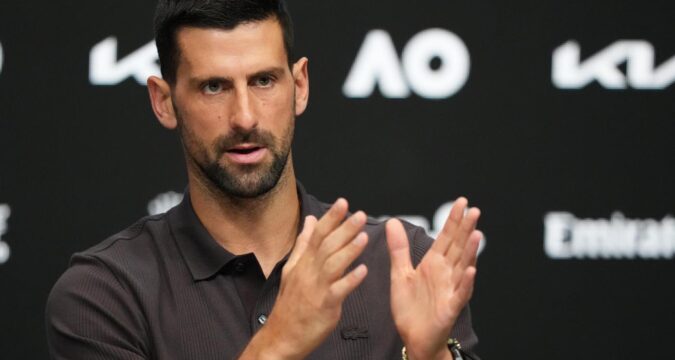
El nuevo enfoque de Djokovic para el Abierto de Australia: ’24 no es un mal número’
Por JOHN PYE
MELBOURNE, Australia (AP) — Novak Djokovic bromeó al hablar de la rivalidad entre Carlos Alcaraz y Jannik Sinner que durante dos años le ha impedido convertirse en el tenista más laureado de la historia.
“Perdí tres de los cuatro Slams contra Sinner o Alcaraz”, dijo el sábado, en la víspera del Abierto de Australia de 2025.
“No necesitamos elogiarlos demasiado”, añadió, sonriendo. “¡Ya han sido elogiados lo suficiente! Sabemos lo buenos que son, y absolutamente merecen estar donde están. Son las fuerzas dominantes del tenis masculino en este momento”.
Djokovic está comenzando una tercera temporada en busca de su 25º título de Grand Slam en individuales, y ha refinado su enfoque para el Abierto de Australia.
Se retiró de su único torneo de preparación que había programado, sabiendo que le falta “un poco de energía en las piernas” para competir con dos jóvenes estrellas al final de los grandes torneos y que tiene que mantenerse lo más libre de dolor posible.
Djokovic descifró la fórmula para vencer a Roger Federer y Rafael Nadal, la rivalidad establecida antes de que él la transformara en los “Tres Grandes” y luego los superara a ambos.
Campeón de 24 grandes —un récord masculino para la era abierta y empatado con Margaret Court por el mayor número en la historia del tenis—, el serbio de 38 años está haciendo todo lo posible para mantenerse “en la pelea”.
Djokovic conquistó por última vez un Slam en el Abierto de Estados Unidos de 2023. Sinner y Alcaraz se han repartido los ocho desde entonces. Sinner ha ganado los dos últimos títulos australianos. Alcaraz está en Australia decidido a añadir el título en Melbourne Park para completar la colección de Slams.
Pese a un rosario de lesiones, Djokovic alcanzó las semifinales en los cuatro grandes torneos el año pasado. Un desgarro del isquiotibial lo obligó a abandonar su semifinal del Abierto de Australia, después de haber eliminado a Alcaraz en los cuartos de final.
Recordándose a sí mismo que “24 tampoco es un mal número”, Djokovic dijo que está adoptando una mentalidad de “ahora o nunca” en cada una de sus apariciones en un grande porque no le permite sobresalir en su mejor nivel.
“Sinner y Alcaraz están jugando a un nivel diferente ahora mismo respecto a todos los demás. Eso es un hecho”, dijo Djokovic, “pero eso no significa que nadie más tenga una oportunidad”.
“Así que siempre me gustan mis posibilidades, en cualquier torneo, particularmente aquí”, afirmó.
El diez veces campeón del Abierto de Australia debutará el lunes en un partido nocturno en la Arena Rod Laver contra el español Pedro Martínez, 71 en el ranking. Como cuarto cabeza de serie, quedó en la misma mitad del cuadro que Sinner. Eso significa que podría toparse en las semifinales aquí.
Condición física
Djokovic no ha jugado un torneo oficial desde noviembre.
“Obviamente tomé más tiempo para recuperarme físicamente, porque entiendo que en los últimos años, eso es lo que más ha cambiado para mí: lleva más tiempo recuperarse, y también lleva más tiempo arrancar (la temporada)”, dijo. “Tuve un pequeño contratiempo que me impidió competir en el torneo de Adelaida… pero ha ido muy bien hasta ahora aquí”.
Dijo que hay “algo aquí y allá” todos los días en términos de dolores y molestias, “pero en general me siento bien y espero con ansias competir”.
PTPA
Djokovic rompió lazos a principios de este mes con la Asociación de Jugadores de Tenis Profesionales, un grupo que cofundó, diciendo que “mis valores y enfoque ya no están alineados con la dirección actual de la organización”.
Djokovic y el jugador canadiense Vasek Pospisil lanzaron la PTPA en 2020, con el objetivo de ofrecer representación a los jugadores que son contratistas independientes en un deporte mayormente individual.
“Fue una decisión difícil para mí salir de la PTPA, pero tuve que hacerlo, porque sentí que mi nombre estaba… sobreutilizado”, dijo. “Sentí que la gente, cada vez que piensa en la PTPA, piensa que es mi organización, lo cual es una idea equivocada desde el principio”.
Dijo que todavía apoya el concepto.
“Todavía les deseo lo mejor, porque creo que hay espacio y necesidad de una organización de representación exclusivamente de jugadores al 100% en nuestro ecosistema”, dijo.
___
Deportes AP: https://apnews.com/hub/deportes

Luciano Benavides logra la victoria más ajustada en el Rally Dakar
YANBU, Arabia Saudí (AP) — El argentino Luciano Benavides capitalizó un error de navegación de Ricky Brabec a minutos del final del Rally Dakar para ganar de manera sensacional el título de motos el sábado por dos segundos, el margen más pequeño de la historia.
Mientras tanto, Nasser Al-Attiyah no parpadeó para atrapar su sexto título de autos en la 13ª y última etapa, una carrera a toda velocidad de 105 kilómetros a lo largo de la costa del Mar Rojo hasta Yanbu.
Brabec se dirigía a toda velocidad hacia su tercera victoria en el Dakar. Mientras que la KTM de Benavides era más rápida en tiempo real, la Honda de Brabec acumulaba bonificaciones de tiempo por marcar el paso y extendía su ventaja nocturna de 3 minutos y 20 segundos.
Luego, a siete kilómetros de la meta, Brabec tomó un giro equivocado. Benavides no lo hizo. Vio un faro dar la vuelta y se detuvo para ver quién era. Cuando se dio cuenta de que era Brabec, Benavides supo que lo “casi imposible” era posible.
“Vi la oportunidad y la tomé”, dijo el argentino de 30 años. “Me sentí listo todo el día. Le dije a todos al inicio de la etapa ‘Este Dakar es para mí’”.
Benavides terminó segundo en la etapa detrás de su compañero de equipo Edgar Canet, quien ganó su tercera etapa de este Dakar. Cuando el estadounidense Brabec llegó 3:22 detrás de Benavides, el equipo del argentino lo levantó en sus hombros y gritó su nombre.
“Es irreal”, dijo Benavides. “Dos segundos después de dos semanas y casi 8.000 kilómetros es algo difícil de entender”.
El margen más cercano anterior fue de 43 segundos por el hermano mayor de Luciano, Kevin. Esa fue otra remontada impresionante. Kevin comenzó la etapa final de 2023 con un retraso de 12 segundos y ganó su segundo título de motos.
Tosha Schareina, compañero de equipo de Brabec en Honda, fue un distante tercero después de quedar segundo el año pasado.
Luciano comenzó su noveno Dakar sin haber alcanzado el podio y apenas tres meses después de desgarrarse los ligamentos de la rodilla en el Rally de Marruecos.
Incluso después de comenzar la segunda semana con victorias consecutivas en etapas, corrió a la sombra de su compañero de equipo y campeón defensor Daniel Sanders, quien dominaba la carrera hasta que se estrelló el miércoles y se rompió la clavícula y el esternón. Sanders continuó prácticamente conduciendo con una mano y terminó quinto para obtener valiosos puntos en la defensa de su título mundial de rally-raid.
Brabec ganó la etapa del viernes para acumular una ventaja general que incluso Benavides pensó que “era matemáticamente casi imposible” de superar.
Pero, dijo, “nunca dejé de creer. Para mí no hubo estrategia en ningún día, solo doy lo mejor de mí. Nunca intenté desacelerar. Me siento mal por Ricky. Cometió un error y le costó el Dakar”.
El sexto de Al-Attiyah
Al-Attiyah logró su sexto título de coches, dos detrás del récord de su excompañero de equipo Stéphane Peterhansel, y el primero para Dacia. Lo hizo con una cautelosa conducción final, casi nueve minutos detrás de Mattias Ekström, quien ganó su cuarta etapa liderando el coche.
Nani Roma apenas pudo recortar seis minutos del ritmo del líder general y Al-Attiyah finalmente venció a Roma por 9:42, el margen más estrecho de sus seis victorias.
Al-Attiyah ha ganado para cuatro fabricantes diferentes en 2011 y 2015 en Argentina, en 2019 en Perú y en 2022, 2023 y este año en Arabia Saudí.
Roma, el campeón de coches de 2014, obtuvo su primer podio desde 2019. El Ford de Ekström mantuvo a raya al Dacia de Sébastien Loeb por 37 segundos para acabar tercero.
___
Deportes AP: https://apnews.com/hub/deportes

Nuevo cohete lunar de NASA se dirige a plataforma para lanzamiento de programado para febrero
Por MARCIA DUNN
CABO CAÑAVERAL, Florida, EE.UU. (AP) — El nuevo y gigantesco cohete lunar de la NASA se dirigió el sábado a la plataforma de lanzamiento en preparación para el primer vuelo lunar de astronautas en más de medio siglo.
El viaje de ida y vuelta podría despegar tan pronto como en febrero.
El cohete de 98 metros (322 pies) comenzó su lento avance de 1,6 km/h (1 mph) desde el Edificio de Ensamblaje de Vehículos del Centro Espacial Kennedy al amanecer. La travesía de 6 kilómetros (4 millas) podría durar hasta el anochecer.
Miles de trabajadores del centro espacial y sus familias se reunieron en el frío previo al amanecer para presenciar el tan esperado evento, retrasado durante años. Se agruparon antes de la salida del cohete del Sistema de Lanzamiento Espacial del edificio, construido en la década de 1960 para albergar los cohetes Saturno V que enviaron a 24 astronautas a la Luna durante el programa Apolo. La multitud que vitoreaba fue liderada por el nuevo administrador de la NASA, Jared Isaacman, y los cuatro astronautas asignados a la misión.
Con un peso de cinco millones de kilogramos (11 millones de libras), el cohete del Sistema de Lanzamiento Espacial (SLS, por sus siglas en inglés) y la cápsula de la tripulación Orion en la parte superior se trasladaron a bordo de un enorme transportador que se utilizó durante las eras Apolo y del transbordador. Fue mejorado para soportar el peso adicional del cohete del SLS.
El primer y único otro lanzamiento del SLS —que envió una cápsula Orion vacía en órbita alrededor de la Luna— tuvo lugar en noviembre de 2022.
“Este se siente muy diferente, poner tripulación en el cohete y llevar a la tripulación alrededor de la Luna”, dijo John Honeycutt de la NASA en la víspera del despliegue del cohete.
Los daños en el escudo térmico y otros problemas de la cápsula durante el vuelo de prueba inicial requirieron análisis y pruebas exhaustivas, retrasando este primer vuelo tripulado a la Luna hasta ahora. Los astronautas no orbitarán la Luna ni aterrizarán en ella. Ese gran salto se dará en el tercer vuelo de la serie Artemis dentro de unos años.
El comandante Reid Wiseman, el piloto Victor Glover y Christina Koch —astronautas veteranos de la NASA con experiencia en vuelos espaciales— serán acompañados en la misión de 10 días por el astronauta canadiense Jeremy Hansen, un expiloto de combate que espera su primer viaje en cohete.
Serán las primeras personas en volar a la Luna desde que Gene Cernan y Harrison Schmitt del Apolo 17 cerraron el triunfante programa de alunizaje en 1972. Doce astronautas caminaron por la superficie lunar, comenzando con Neil Armstrong y Buzz Aldrin en 1969.
La NASA está esperando realizar una prueba de abastecimiento de combustible del cohete SLS en la plataforma a principios de febrero antes de confirmar una fecha de lanzamiento. Dependiendo del resultado de la prueba, “eso finalmente establecerá nuestro camino hacia el lanzamiento”, dijo el director de lanzamiento Charlie Blackwell-Thompson el viernes.
La agencia espacial tiene sólo cinco días para lanzar en la primera mitad de febrero antes de pasar a marzo.
___
El Departamento de Salud y Ciencia de The Associated Press recibe apoyo del Departamento de Educación Científica del Instituto Médico Howard Hughes y de la Fundación Robert Wood Johnson. La AP es la única responsable de todo el contenido.
___
Esta historia fue traducida del inglés por un editor de AP con la ayuda de una herramienta de inteligencia artificial generativa.

Trump Appoints Rubio, Witkoff, Kushner, And Blair To Gaza ‘Board Of Peace’
Trump Appoints Rubio, Witkoff, Kushner, And Blair To Gaza ‘Board Of Peace’
Authored by Aldgra Fredly via The Epoch Times,
The White House announced on Jan. 16 the names of members appointed to the Gaza Board of Peace, which President Donald Trump created as part of phase two of a U.S.-backed plan to end the war in Gaza.
Among the “founding executive board” members are U.S. Secretary of State Marco Rubio, presidential special envoy Steve Witkoff, Trump’s son-in-law Jared Kushner, and former British Prime Minister Tony Blair.
The board also includes private equity executive Marc Rowan, World Bank President Ajay Banga, and U.S. national security adviser Robert Gabriel, according to a White House statement.
The board, to be chaired by Trump, will oversee the Palestinian technocratic committee—also known as the National Committee for the Administration of Gaza (NCAG)—which will be led by former Palestinian Authority official Ali Abdel Hamid Shaath.
The White House said each of the members will be tasked with managing Gaza’s “governance capacity-building, regional relations, reconstruction, investment attraction, large-scale funding, and capital mobilization,” which it said are vital to the enclave’s stability and long-term success.
The administration also named Aryeh Lightstone and Josh Gruenbaum as senior advisers to manage the board’s daily strategy and operations, and appointed Nickolay Mladenov, a Bulgarian diplomat and former United Nations envoy to the Middle East, as the high representative for Gaza.
Trump also tapped Maj. Gen. Jasper Jeffers to lead the International Stabilization Force, which will oversee security operations and the safe delivery of humanitarian aid and reconstruction materials to Gaza.
The administration also announced a separate 11-member executive board, comprising some of the founding members, which will support both the technocratic committee and Mladenov’s office.
The executive board includes Turkish Foreign Minister Hakan Fidan, Qatari diplomat Ali Al-Thawadi, Major General Hassan Rashad – head of the Egyptian General Intelligence Service, UAE minister for international cooperation Reem Al-Hashimy, Israeli-Cypriot billionaire Yakir Gabay, and Dutch diplomat and U.N. envoy Sigrid Kaag.
The White House said more members of both boards will be announced in the coming weeks.
“The United States remains fully committed to supporting this transitional framework, working in close partnership with Israel, key Arab nations, and the international community to achieve the objectives of the Comprehensive Plan,” it said.
In announcing the board’s formation on Jan. 15, Trump said the United States will work with Egypt, Turkey, and Qatar to secure an agreement that will require Hamas to surrender all weapons and dismantle its tunnel network.
“Hamas must immediately honor its commitments, including the return of the final body to Israel, and proceed without delay to full Demilitarization,” the president said.
“As I have said before, they can do this the easy way, or the hard way. The people of Gaza have suffered long enough. The time is now.”
The Gaza peace plan, which began in October 2025, is expected to unfold in three phases to achieve the 20-point plan Trump laid out in September last year to end the war in Gaza.
Witkoff said on Jan. 14 that phase two of Trump’s peace plan has started, which involves the complete demilitarization and reconstruction of Gaza.
Tyler Durden
Sat, 01/17/2026 – 09:20

Periodistas en Bangladesh exigen protección ante aumento de ataques
Por JULHAS ALAM
DACA, Bangladesh (AP) — Periodistas, editores y propietarios de medios de comunicación en Bangladesh exigieron el sábado que las autoridades los protejan tras los recientes ataques a dos de los principales diarios nacionales por parte de turbas.
Afirmaron que la industria de los medios en el país del sur de Asia está siendo sistemáticamente atacada bajo el gobierno interino encabezado por el laureado con el Nobel de la Paz, Muhammad Yunus. Señalaron que el gobierno no logró prevenir los ataques al Daily Star, el principal diario en inglés del país, y al Prothom Alo, el periódico más grande en lengua bengalí, ambos con sede en Daca, la capital.
En diciembre, multitudes enfurecidas asaltaron las oficinas de los dos periódicos y prendieron fuego a los edificios, atrapando a periodistas y otros empleados en su interior, poco después de la muerte de un destacado activista islamista.
Los directivos de los periódicos culparon a las autoridades bajo el gobierno interino por no responder adecuadamente a los incidentes a pesar de las repetidas solicitudes de ayuda para dispersar a las multitudes. Horas después, los periodistas atrapados que se refugiaron en el techo del periódico Daily Star fueron rescatados. Los edificios fueron saqueados. Un líder del Consejo de Editores, un organismo independiente de editores de periódicos, fue agredido por los atacantes cuando llegó al lugar.
Ese mismo día, centros culturales liberales también fueron atacados en Daca.
No queda claro por qué los manifestantes atacaron los periódicos, cuyos editores son conocidos por estar estrechamente vinculados con Yunus. En los últimos meses, se habían organizado protestas fuera de las oficinas de los diarios por islamistas que acusaban a los periódicos de tener vínculos con India.
El sábado, el Consejo de Editores y la Asociación de Propietarios de Periódicos de Bangladesh organizaron conjuntamente una conferencia donde editores, líderes de sindicatos periodísticos y periodistas de todo el país exigieron que las autoridades defiendan la prensa libre en medio de crecientes tensiones antes de las elecciones en febrero.
Nurul Kabir, presidente del Consejo de Editores, dijo que los intentos de silenciar a los medios y las instituciones democráticas reflejan un patrón peligroso.
Kabir, también editor del diario en inglés New Age, expresó que la unidad entre los periodistas debe mantenerse para combatir esta tendencia.
“Aquellos que quieren suprimir instituciones que actúan como vehículos de aspiraciones democráticas lo están haciendo a través de leyes, fuerza e intimidación”, manifestó.
Tras los ataques a los dos diarios en diciembre, una experta de Naciones Unidas dijo que los ataques de multitudes a los principales medios de comunicación y centros culturales en Bangladesh eran profundamente alarmantes y debían ser investigados de manera pronta y efectiva.
“La conversión en arma de la ira pública contra periodistas y artistas es peligrosa en cualquier momento, y especialmente ahora que el país se prepara para las elecciones. Podría tener un efecto paralizante en la libertad de los medios, las voces minoritarias y las opiniones disidentes con serias consecuencias para la democracia”, sostuvo Irene Khan en un comunicado.
Yunus llegó al poder luego que la ex primera ministra Sheikh Hasina huyera del país en medio de un levantamiento masivo en agosto de 2024. Yunus había prometido estabilidad en el país, pero grupos globales de derechos humanos, incluidos Human Rights Watch y Amnistía Internacional, han culpado al gobierno por su fracaso en defender los derechos humanos y otros derechos civiles. Al régimen liderado por Yunus también se le ha culpado por el auge de los radicales e islamistas.
Docenas de periodistas enfrentan cargos de asesinato relacionados con el levantamiento bajo el argumento de que alentaron al gobierno de Hasina a usar armas letales contra los manifestantes. Varios periodistas que se sabe tienen vínculos cercanos con Hasina han sido arrestados y encarcelados bajo el gobierno de Yunus.
___
Esta historia fue traducida del inglés por un editor de AP con la ayuda de una herramienta de inteligencia artificial generativa.
Border Czar Tom Homan Has Plan To Target Anti-Ice Agitators
Border Czar Tom Homan Has Plan To Target Anti-Ice Agitators
Minneapolis has erupted into chaos as anti-ICE mobs rampage through the city. On Wednesday, an ICE agent fired in self-defense after being attacked by three illegal immigrants from Venezuela armed with shovels. Governor Tim Walz and Mayor Jacob Frey have fanned the flames straight out of the ‘defund the police’ playbook – turning a law enforcement operation into a political flashpoint. The violence has spiraled so far out of control that President Trump has threatened to invoke the Insurrection Act of 1807, which would allow him to deploy U.S. troops to Minneapolis to restore order since local leaders won’t.
“If the corrupt politicians of Minnesota don’t obey the law and stop the professional agitators and insurrectionists from attacking the Patriots of I.C.E., who are only trying to do their job, I will institute the INSURRECTION ACT, which many Presidents have done before me, and quickly put an end to the travesty that is taking place in that once great State,” Trump promised in a post on Truth Social on Thursday morning.
Trump has yet to do so – telling reporters on Friday that he doesn’t think “there’s any reason right now to use it,”
President Trump: “The Insurrection Act, which has been used by 48% of presidents…It’s been used a lot. If I needed it, I’d use it. I don’t think there’s any reason right now to use it, but if I needed it I’d use it. It’s very powerful.” pic.twitter.com/YJSIlmARD6
— CSPAN (@cspan) January 16, 2026
That said, Border Czar Tom Homan offered a strategy that could hit those stirring the chaos hard, and of course may set a dangerous slippery-slope precedent for civil rights when the shoe is on the other foot. Appearing on Fox News’ The Ingraham Angle Thursday, Homan made clear that while protesters have the right to demonstrate, crossing the line by interfering with enforcement will carry consequences far beyond a court date.
“This job,” Homan told host Laura Ingraham, “and these people who wanna — you know, follow ICE, film ICE — you know what? You can protest; they have that right.” But, he added, “when you cross a line, and we’ve proven it, if you interfere or impede or assault an ICE officer, you will be prosecuted.”
Homan didn’t stop at the threat of prosecution. He said he is urging the Trump administration to take the next step, which is to “make them famous.”
“One thing I’m pushing for right now, Laura,” he said, “we’re gonna create a database, where those people that are arrested for interference, impediment, assault — we’re gonna make ’em famous. We’re gonna put their face on TV.”
The strategy, he explained, is simple: let employers, neighbors, and schools see who is disrupting federal law enforcement.
“We’re gonna let their employers and their neighborhoods and their schools know who these people are,” Homan said. “’Cause as you said, a lot of these people, they say they’re taking time off work to protest. I bet you a lot of them are calling in sick. I bet you a lot of their employers don’t know what they’re doing. But we’re going — we’re gonna make sure everybody knows who they are.”
Homan framed the policy as a response to activists who have used social media and livestreaming to amplify confrontations with ICE officers. “They wanna broadcast the ICE officer that was nearly killed all over the internet,” he said. “We’re gonna broadcast every one of these people we arrest.”
🚨 HOLY SMOKES. The Trump admin is creating a database of ALL leftist insurrectionists attacking ICE and will be broadcasting their name and face
They’re also gonna contact employers
TOM HOMAN: “We’re gonna MAKE ‘EM FAMOUS!” 🔥🔥 pic.twitter.com/rtVZMLF1xC
“We’re going to let…
— Eric Daugherty (@EricLDaugh) January 16, 2026
Homan also revealed that the ICE agent who was ambushed and attacked with shovels is healing and under medical care in a secure location.
“He’s in a secure location not because he’s afraid, because of the death threats against his family,” he told Ingraham. “I’m glad he’s in a secure location ’cause I myself have seen plenty of intelligence reports that a lot of people want him dead. They want his family dead. So, he’s in a safe place right now, healing up, getting the medical attention.”
Full interview below:
According to Homan, neither Mayor Frey nor Gov. Tim Walz has contacted the agent’s family.
Tyler Durden
Sat, 01/17/2026 – 08:45
https://www.zerohedge.com/political/border-czar-tom-homan-has-plan-target-anti-ice-agitators

How The EU Is Messing Up The AI Boom
How The EU Is Messing Up The AI Boom
Authored by Thomas Kolbe via American Thinker,
Economic prosperity is created in free markets by innovative companies. Over 50 percent of globally operating AI unicorns are located in the U.S., while Europe plays virtually no role. The race for the next future technology is already decided.
It seems that economic history is repeating itself. On the stock markets, companies in the artificial intelligence and data center sectors are being traded feverishly. Massive capital flows into this technology. Much of it resembles the dot-com boom 25 years ago.
Structurally and regionally, little has changed since then: The U.S. and China are fighting for pole position, while the European Union’s economy remains largely on the sidelines, pushed into a spectator role by EU regulators.
Unicorns as a Measure of Innovation
An interesting measure of the EU’s lag in artificial intelligence is the number of so-called unicorns — private startups valued at at least one billion U.S. dollars before going public. This metric is considered a valid indicator of a region’s innovative capacity — and for the EU, the comparison with the U.S. is catastrophic.
About 1,700 such innovative companies currently operate in the U.S., while the EU has only around 280. The U.S. dominates this market with over 50 percent share, whereas the European economy lags far behind with less than ten percent of the global market.
This economic gap is also reflected in investment volume. Hyperscalers such as Amazon, Microsoft, Alphabet, and Meta invested over $320 billion in AI and corresponding data center infrastructure this year alone. More than 550 new projects — with a focus in Virginia, Texas, and Arizona—are forming the backbone of a new economy.
Data center capacity in the U.S. grew by around 160 percent this year, while Europe’s capacity increased by only about 75 percent, equaling an investment volume of just under €100 billion.
With investments of around $125 billion, China’s economy also lags far behind the U.S. An interesting context — especially from the perspective of European, and particularly German, policymakers — is that nuclear power is gaining noticeable momentum in these regions.
Even if green-minded Germany refuses to acknowledge it due to its ideological stance against nuclear energy, the enormous energy demand of new technologies will in the future be covered to a significant extent by the expansion of nuclear power.
Among the few major projects in the European Union are the Brookfield project in Sweden, with an investment volume of around $10 billion, and the Start Campus in Portugal, which could also activate nearly $10 billion in investments.
Crash of Ideologies
Especially in AI, the ideological clash between the U.S. and the EU can be observed in practice and in all its consequences. While the U.S. relies on deregulation and private solutions, removing barriers for intense competition, EU Europe still adheres to the mantra of political global control. Nothing may happen unless Brussels officials have schemed it at their green table in all their wisdom.
The Draghi motto still applies here: Only massive public investments — credit-financed and centrally planned — will, in the view of EU statist planners, help overcome the enormous gap between Europe and the U.S.
In the simulations of the EU Commission’s master plan, now stretched over seven years under Ursula von der Leyen, everything seems surprisingly simple, almost simplified. The EU’s Invest-AI plan intends to borrow around €50 billion in loans and invest them in selected projects in the coming years. This is supposed to trigger private investments of €150 billion, ultimately creating four AI gigafactories.
Welcome to the socialist textbook world of “Habeckonomics”: a system in which state projects like Northvolt repeatedly fail. Yet as long as public guarantees, subsidies, and state-guaranteed purchase prices are in prospect, the small flame of political hope continues flickering in Europe’s lukewarm wind.
As usual, we also observe the typical European jungle of funding programs, subsidies, and steering projects. These include “Horizon Europe,” which is meant to strengthen computing power in science, the RAISE pilot, and the Gen-AI-4-EU initiative, together investing another billion euros in the EU’s digital infrastructure.
The Power of Competition
The ideological clash between the two major economic blocks, the U.S. and the EU, is producing strange effects. While the open capital market in the U.S. lets startups sprout like mushrooms from fertile soil, EU regulation — especially under the Digital Markets Act — has fostered a predatory mentality. That this was likely the Eurocrats’ goal from the start comes as no surprise.
Brussels imposed more than €3.2 billion in competition fines this year, mainly targeting U.S. corporations. Brussels has degenerated into a bureaucratic leviathan — a parasitic glutton absorbing economic energy and generating ossified structures and economic vacuum.
In EU Europe, the motto is: the regulatory framework matters most — and the state takes its cut. That private industry prefers other locations and withdraws capital matters little to Brussels’ extraction experts.
Against the backdrop of Europe’s massive descent into a climate-socialist dystopia, it is surprising that the roots of libertarian economic thinking originate precisely on this continent. Consider the great economist Ludwig von Mises, who repeatedly pointed out that it is the entrepreneur who drives the engine of the market economy through profit-seeking, and that without exception, decentralized processes create prosperity — while state interventions regularly derail it.
Civilization-superior models like the free market sink in the waves of ideological EU infantilism. Its repressive climate socialism promotes the growth of corporatist structures in which politics and subsidized parts of the economy carry out the extraction, eliminating competition.
The rigid adherence to centrally planned control of the new tech industry tragically mirrors the timeline of the dot-com era. What Europe fails to understand is that groundbreaking innovation inevitably triggers an investment boom, often resulting in overinvestment and a stock market crash — but ultimately leaving economically profitable structures permanently woven into the existing economy.
As with companies like Amazon, Google, or Microsoft, Europeans will look back in a few years at these months and examine this intercontinental economic bifurcation through the examples of OpenAI, Gemini, or Perplexity. The energy needed will come from French nuclear reactors and soon also from Polish nuclear power.
Tyler Durden
Sat, 01/17/2026 – 08:10
Biden-Appointed Minnesota Judge Limits Federal Immigration Enforcement Actions At Protests
Biden-Appointed Minnesota Judge Limits Federal Immigration Enforcement Actions At Protests
A federal judge in Minnesota on Friday ruled that federal immigration agents can’t detain or use nonlethal munitions and crowd dispersal tools on peaceful protesters who aren’t obstructing authorities, including when these people are observing the agents.
The decision, handed down by U.S. District Judge Kate Menendez – appointed by President Biden in 2021, stems from a lawsuit brought last month by six local activists.
These individuals, backed by the American Civil Liberties Union (ACLU) of Minnesota, said that Homeland Security (DHS) personnel were infringing on their First Amendment rights when they observed federal agents performing their duties.
As Joseph Lord reports for The Epoch Times, after the ruling, Tricia McLaughlin, DHS Assistant Secretary for Public Affairs, issued a statement saying her agency was taking “appropriate and constitutional measures to uphold the rule of law and protect our officers and the public from dangerous rioters.”
She said people have assaulted officers, vandalized their vehicles and federal property, and attempted to impede officers from doing their work.
“We remind the public that rioting is dangerous—obstructing law enforcement is a federal crime and assaulting law enforcement is a felony,” McLaughlin said.
Protestors and federal agents have clashed during enforcement operations in recent months but intensified after an Immigrations and Custom Enforcement (ICE) agent fatally shot Renee Nicole Good during an encounter on Jan. 7 that was captured on video from several angles.
The incident has met with clashing interpretations, with some defending the ICE agent’s shooting as self defense and others alleging that he used excessive force.
Video shows that in the moments before the shooting, four ICE agents stopped their vehicle in the middle of the street, exited, and approached Good’s vehicle which was blocking their path. The footage also shows Good’s female partner, Becca Good, heckling immigration law enforcement.
As one agent attempted to reach into Good’s car and open her door from the inside, Good turned the wheel to the right, away from Ross, and accelerated her car, allegedly striking the agent, who fired his weapon, according to video and audio. The footage also records Good’s wife, who was outside the vehicle, telling her to “drive, baby, drive.”
Protestors took to the streets of Minneapolis on Jan. 10 following the shooting.
Attorneys for the federal side argued that agents operate under established guidelines to uphold immigration statutes and ensure personal safety.
They said officers have been attacked, harassed, and doxxed nationwide and in Minnesota, and that their responses have been appropriate and justified.
Under the new mandate, agents are barred from detaining drivers or their passengers unless they are obstructing or interfering with agents. The judge said that trailing vehicles at a safe distance does not inherently warrant a traffic stop.
Safely following agents “at an appropriate distance does not, by itself, create reasonable suspicion to justify a vehicle stop,” the ruling said.
Menendez added that agents must have reasonable suspicion supported by solid evidence of a crime or active disruption to officers duties.
Peaceful assembly and oversight, without direct meddling, fall outside permissible reasons for intervention.
The Epoch Times reached out to DHS and the ACLU but did not hear back before publication.
Tyler Durden
Sat, 01/17/2026 – 07:35
Egipto y Sudán aceptan la oferta de Trump para mediar en disputa por represa en el río Nilo
Por SAMY MAGDY
EL CAIRO, Egipto (AP) — Egipto y Sudán dieron la bienvenida el sábado a la oferta de Donald Trump para reanudar los esfuerzos de mediación de Estados Unidos con Etiopía para resolver una prolongada disputa sobre el agua del río Nilo tras la construcción de una gigantesca represa por parte de Addis Abeba.
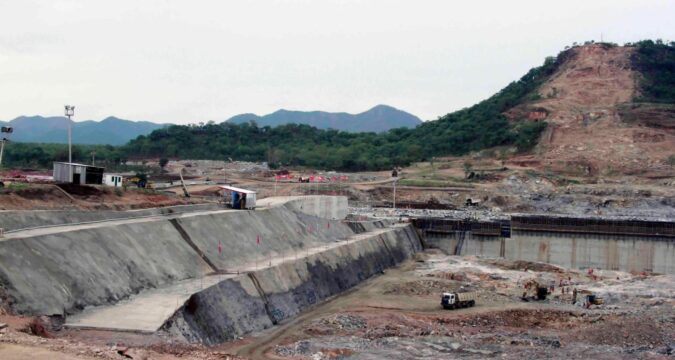
Etiopía inauguró la Gran Represa del Renacimiento Etíope (GERD, por sus siglas en inglés), el pasado otoño. Es la más grande de África y está diseñada para producir más de 5.000 megavatios, lo que duplica la capacidad de generación eléctrica del país. Egipto considera que la infraestructura es una “grave violación del derecho internacional” que supone “una amenaza existencial”, por temor a que tenga graves efectos en el caudal del Nilo.
El presidente de Egipto, Abdel-Fattah el-Sissi, dijo en una publicación en redes sociales que valoraba “la atención del presidente Trump a la importancia crucial del asunto del río Nilo para Egipto”. Además, añadió que el país está comprometido con “una cooperación seria y constructiva con los países de la cuenca del Nilo, basada en los principios del derecho internacional, de manera que se logren intereses compartidos sin causar daños a ninguna de las partes”.
El mandatario indicó que El Cairo respalda los esfuerzos de Washington para resolver la disputa con Etiopía.
En un mensaje en X, el general Abdel-Fattah Burhan, presidente del Consejo Soberano gobernante de Sudán y jefe militar del país, elogió la iniciativa de Trump calificándola de paso “para encontrar soluciones sostenibles y satisfactorias que preserven los derechos de todos.”
Las autoridades etíopes no realizaron comentarios.
Trump publicó el viernes en redes sociales una carta que envió a el-Sissi en la que decía que “Estoy listo para reiniciar la mediación de Estados Unidos entre Egipto y Etiopía para resolver de manera responsable la cuestión del ‘Reparto del agua del Nilo’ de una vez por todas”.
Las mediación estadounidense comenzó durante el primer mandato del republicano, pero fracasó en 2020, cuando Etiopía se retiró de las negociaciones, aaunque algunas discusiones continuaron posteriormente en el marco de la Unión Africana sin que se llegase a un acuerdo.
El Cairo y Jartum piden un acuerdo legalmente vinculante sobre el llenado y el funcionamiento de la GERD, ubicada en el Nilo Azul, cerca de la frontera entre Etiopía y Sudán, mientras que Addis Abeba insiste pactar directrices.
Egipto, un país en su mayoría desértico, depende del río Nilo para abastecer de agua potable a su creciente población de 110 millones de habitantes. Teme que la represa reduzca drásticamente el caudal del río, lo que podría tener consecuencias potencialmente severas en su agricultura y en otros sectores. El-Sissi ha manifestado que la cuota de agua del Nilo de su país es “intocable”, aunque está a favor de buscar una solución negociada a la disputa.
Sudán, por su parte, quiere coordinar el funcionamiento y llenado de la GERD para evitar consecuencias inesperadas en sus represas.
Etiopía dice que la infraestructura de 5.000 millones de dólares es esencial ya que la gran mayoría de su población carece de electricidad.
La disputa se centra ahora en cómo se llevará a cabo el llenado anual de la presa, la cantidad de agua que Etiopía liberará río abajo si hay una sequía prolongada y el método que los tres países utilizarán para resolver futuros desencuentros.
___
Esta historia fue traducida del inglés por un editor de AP con la ayuda de una herramienta de inteligencia artificial generativa.