Category: News
Gunman Kills Canadian Tourist At Popular Mexican Pyramid Site
Gunman Kills Canadian Tourist At Popular Mexican Pyramid Site
Local Mexican outlet Milenio reports an “armed attack” at the Teotihuacan archaeological site, located in central Mexico about 25 miles (40 kilometers) northeast of Mexico City, in the State of Mexico.
Details are scant, but preliminary reports say the attacker climbed the Pyramid of the Moon and fired at tourists.
“Confirmed that the fatality from the armed attack at the Teotihuacan Archaeological Zone is of Canadian nationality,” Milenio wrote on X around 1513 local time.
🔴 #ÚLTIMAHORA | Confirman que víctima mortal por ataque armado en Zona Arqueológica de Teotihuacan es de nacionalidad canadiense
📺 La información con @taniadiazs pic.twitter.com/g1FXmGdpvG
— Milenio (@Milenio) April 20, 2026
Live feed from the outlet:
Ahora | #MILENIONoticias con @taniadiazs
— Milenio (@Milenio) April 20, 2026
Preliminary reports provided no further information on whether the attack was linked to drug cartels.
If you’re traveling to Mexico, it’s probably smart to get K&R insurance.
*Developing…
Tyler Durden
Mon, 04/20/2026 – 15:37
https://www.zerohedge.com/geopolitical/gunman-kills-canadian-tourist-popular-mexican-pyramid-site
Hormuz Traffic At Standstill After US Ship Seizure
Hormuz Traffic At Standstill After US Ship Seizure
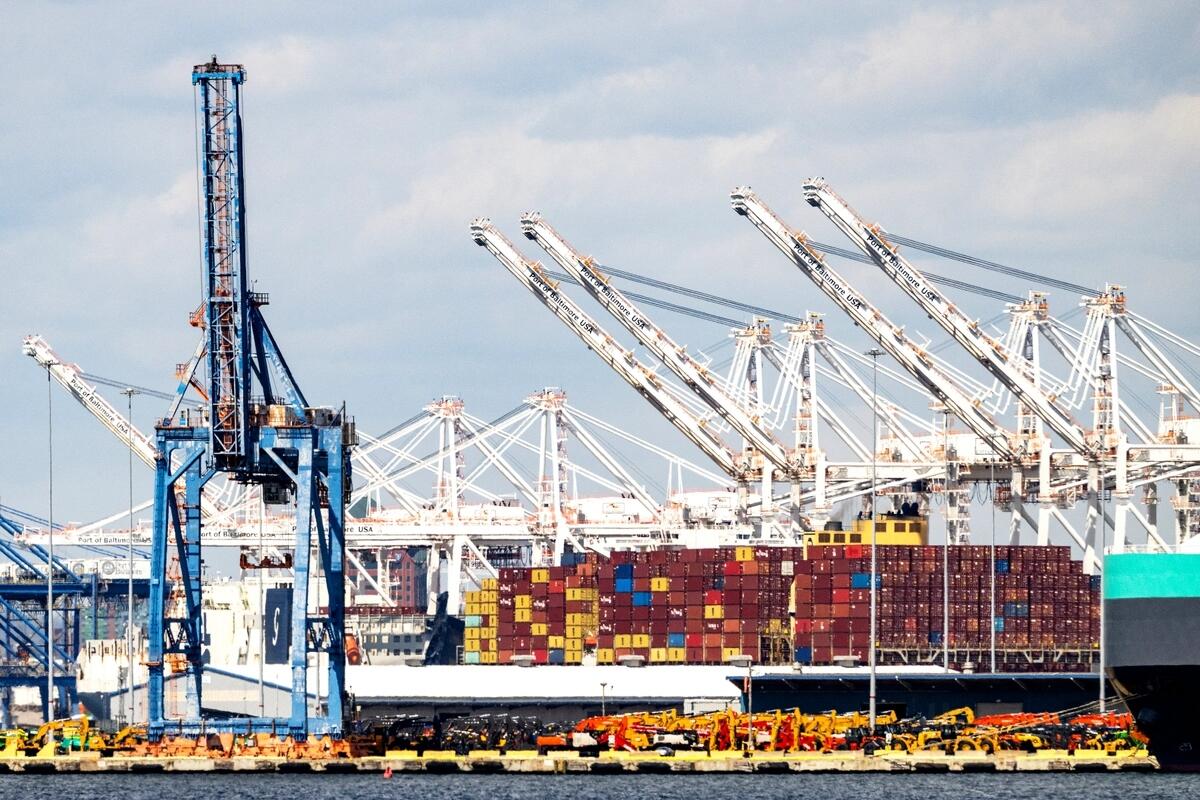
Confirming the Schrodinger nature of the notorious waterway, the Strait of Hormuz is now just closed even more than before Iran and the US said the vital oil channel had been reopened.
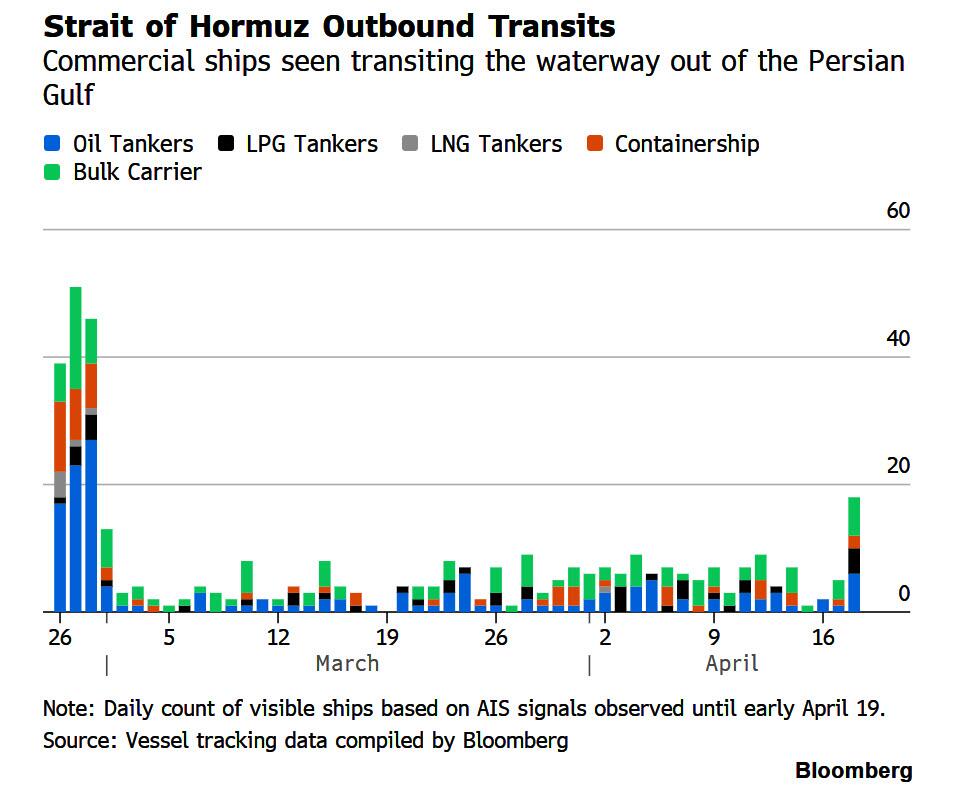
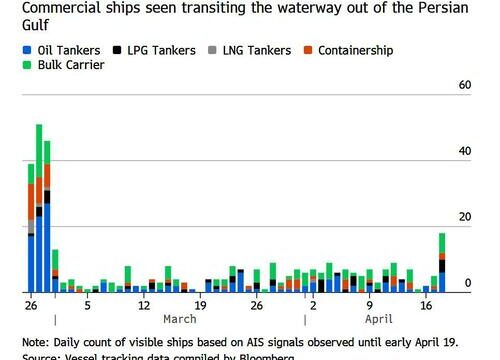
Traffic through the strait on Sunday and Monday was reduced to a trickle following a Saturday surge, after Tehran rejected a continuing US naval blockade and moved to seal the waterway again. The reduced movement underscores just how quickly hopes unraveled that cargoes could once again resume.
On Friday, Iran’s Foreign Minister Abbas Araghchi said the strait was “completely open” for commercial shipping, while US President Donald Trump said Iran was removing sea mines from the waterway. That prompted oil prices to plunge and dozens of tankers to race toward the strait at the mouth of the Persian Gulf. But Iran quickly declared that the passage was closed again as it emerged that the US operation in place since April 13 would not be lifted.
And rejected: the two tankers taking the neutral route, Minerva Evropi and Nissos Keros, have turned around; the Sanmar Herald which appears to be taking the Iran-sanctioned Larak island route is proceeding. https://t.co/aceBI7ki0B pic.twitter.com/gmkM37iA1U
— zerohedge (@zerohedge) April 18, 2026
The Hormuz crisis flared again over the weekend after the US Navy seized an Iranian vessel, during a turbulent period marked by Iranian forces firing at ships and reimposing controls across the strait. The developments pushed oil and natural gas prices higher after Friday’s big declines, reflecting fears of prolonged supply constraints.
The chaotic, start-stop nature of ship traffic through the strait underscores just how difficult it will be to fully restore oil and gas flows that are vital to the global economy, where energy producers need to have visibility months in advance before restarting production.
According to Bloomberg, just two liquefied petroleum gas carriers and two oil product tankers moved through the strait in both directions on Monday. The previous day, two LPG vessels and a cruise liner sailed out of the gulf, while no inbound transits were seen.
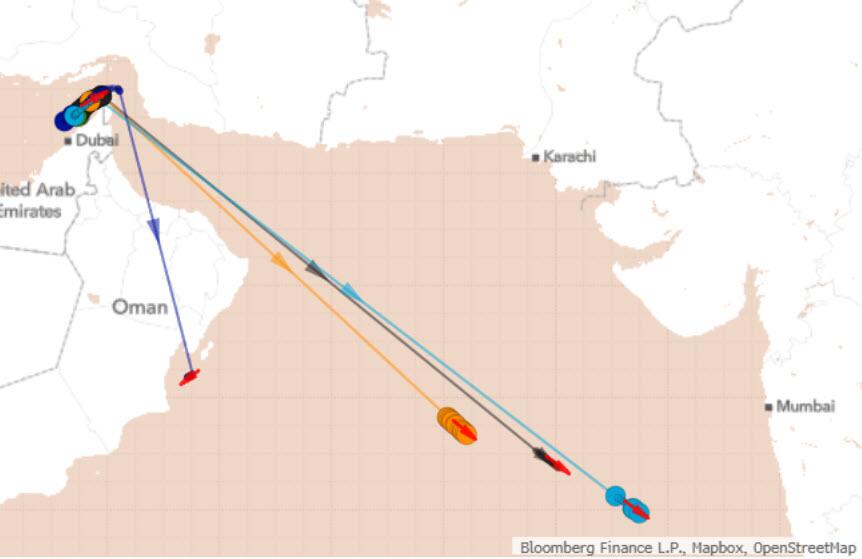
The Gas Harmony, an LPG carrier, went dark inside the gulf on Saturday morning but reappeared off the coast of Oman on Monday, indicating that the vessel transited the strait in the interim. The Liberia-flagged ship is owned and managed by Athens-based Gas Harmony Shipping Ltd., according to maritime database Equasis.
Greek and Iranian LPG ships departed the gulf on Sunday along with the European passenger liner, not listed in the charts. Subsequent observations until Monday afternoon, London time, identified further outbound movement by an Iranian product tanker and a second LPG ship.
At least three Mediterranean Shipping Co. containerships and a MSC cruise liner, along with a handful of other passenger vessels, appeared to have exited the gulf on Saturday, hugging the Omani coastline. That was a deviation from the corridor approved by Iran during the short-lived opening of the waterway. Another MSC containership remains off-grid after it stopped signaling inside the gulf. The company didn’t respond to a request for comment.
Six cruise ships clear Strait of Hormuz during brief reopening
A flotilla of cruise ships stranded in Gulf ports since late February has now cleared the Strait of Hormuz, taking advantage of a brief reopening of the waterway before tighter controls returned.
According to… pic.twitter.com/nvnhG4JrkW
— MarineTraffic (@MarineTraffic) April 20, 2026
Diplomatic momentum has wavered after Tehran signaled hesitation regarding a second round of talks in Pakistan, amid the ongoing American blockade of Iranian traffic and the vessel seizure.
The commercial vessels entering Hormuz with active AIS signals during the past day were confined to a narrow northern lane near the Iranian islands of Larak and Qeshm, the route approved by Tehran.
The inbound transits on Monday included an Iranian LPG ship and a fuel tanker.
Tyler Durden
Mon, 04/20/2026 – 15:20
https://www.zerohedge.com/energy/hormuz-traffic-standstill-after-us-ship-seizure
‘Wright Is Wrong’: Trump Rejects Energy Secretary’s Comment That Gas Prices May Not Drop Under $3 Until 2027
‘Wright Is Wrong’: Trump Rejects Energy Secretary’s Comment That Gas Prices May Not Drop Under $3 Until 2027
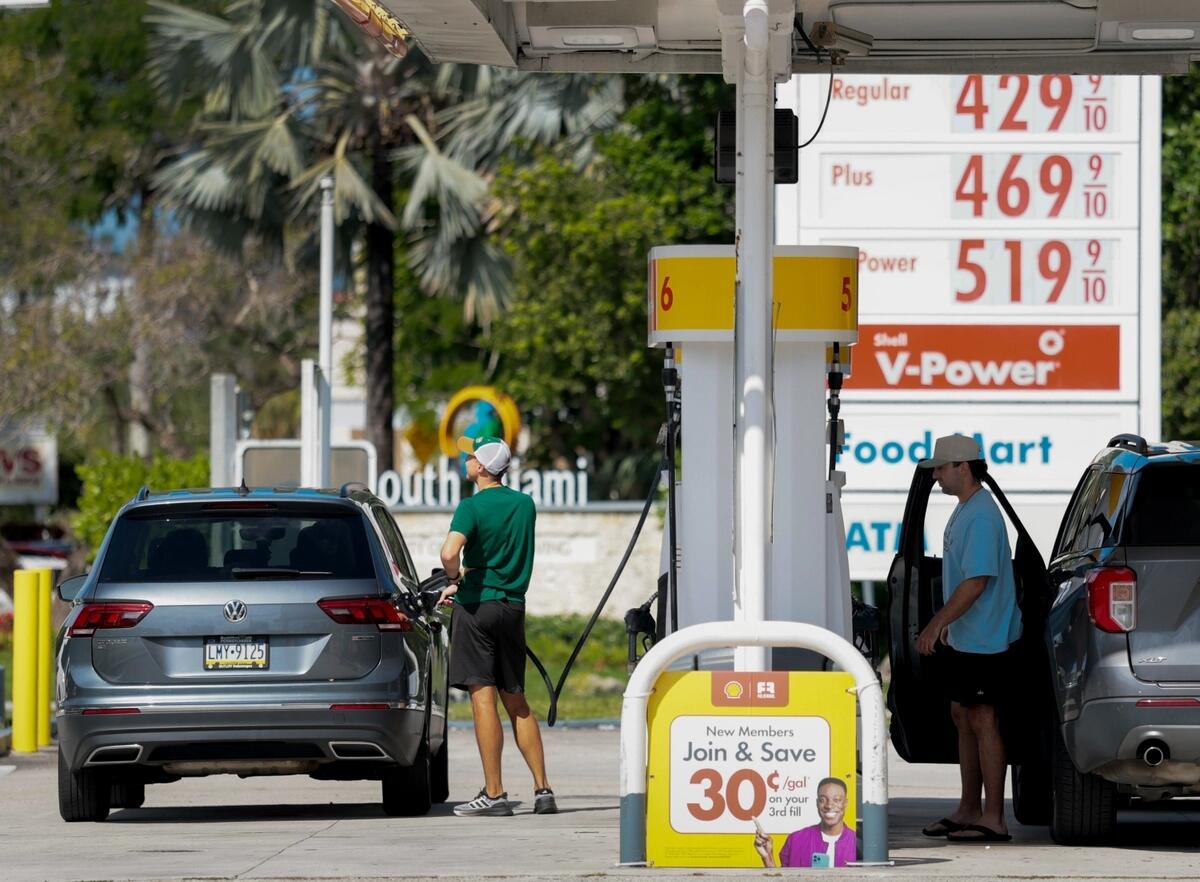
Pain at the pump might not ease up for American consumers until 2027, according to Energy Secretary Chris Wright, who said on April 19 that the price of a regular gallon of gas could stay above $3 for the rest of the year.
Wright said a price of $3 per gallon of gas “could happen later this year, [but] that might not happen until next year” in an interview that aired on CNN’s ”State of the Union” program Sunday.
“But prices have likely peaked, and they’ll start going down certainly with a resolution of this conflict [in Iran],” Wright predicted while speaking about how the war has impacted energy prices.
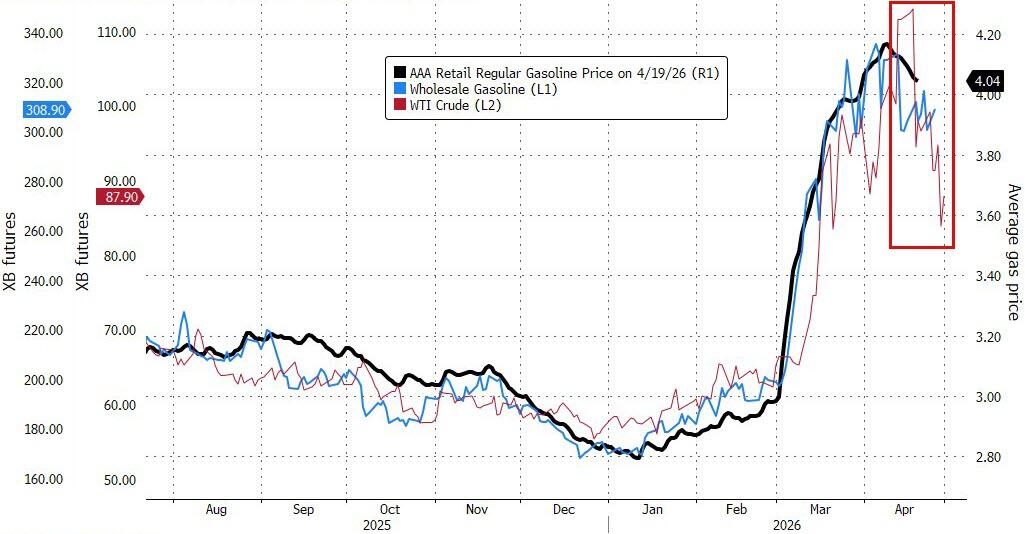
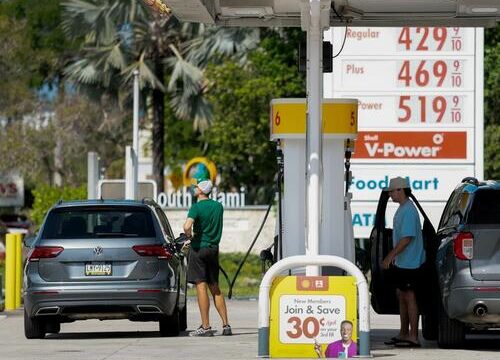
As of April 19, the average price for a gallon of regular gas in the U.S. was $4.04, according to data from the American Automobile Association (AAA).
States on the West Coast and the Northeast have the highest prices, according to AAA.
Before the United States and Israel launched Operation Epic Fury against the Iranian regime on Feb. 28, the price for a regular gallon of gas in the U.S. was $2.98.
The Energy Information Administration’s short-term energy outlook, published on April 7, predicted the average retail price for a gallon of gasoline would be $4.30 per gallon in April.
The Energy Information Administration – designed as a nonpartisan agency within Wright’s Department of Energy – estimated the retail price for an average gallon of gasoline will be $3.46 in 2027, above the $3 level he predicted on CNN.
As the chart above shows, for pump prices to fall back to $3 a gallon, we would need to see crude oil prices back around $60 a barrel – a long way down given the disruptions from the Iran War are likely to ripple through the supply chain for months.
Finally, The Hill’s White House correspondent, Julia Manchester, reports that President Trump just told her over the phone that he disagrees with Energy Secretary Wright’s assessment that gas prices may not drop until next year.
“No, I think he’s wrong on that. Totally wrong,” Trump said, adding that gas prices will drop “as soon as this ends.”
With the Midterms looming ever closer, Trump better hope he’s right and Wright is wrong.
Tyler Durden
Mon, 04/20/2026 – 14:40
Market Lesson: Why Panic Is A Costly Mistake
Market Lesson: Why Panic Is A Costly Mistake
Authored by Lance Roberts via RealInvestmentAdvice.com,
The Iran shock erased 18% from valuations and fully recovered in two weeks. Investors who panicked missed it all. Here’s what the market lesson is about: risk management, behavior, and what to do with your portfolio right now.
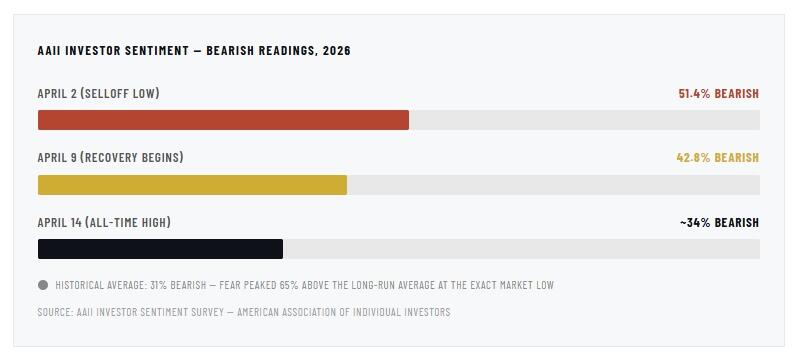
The stock market selloff between February 28 and April 14 produced one of the more instructive market lessons in recent memory. It isn’t because of what the market did, but because of what investors did in response. By April 2nd, the AAII Sentiment Survey showed bearish sentiment at 51.4%, the highest reading in years, well above the historical average of 31%. Put option volume surged, and the financial media ran daily coverage of worst-case oil scenarios, recession projections, and S&P 500 targets as low as 3,800.
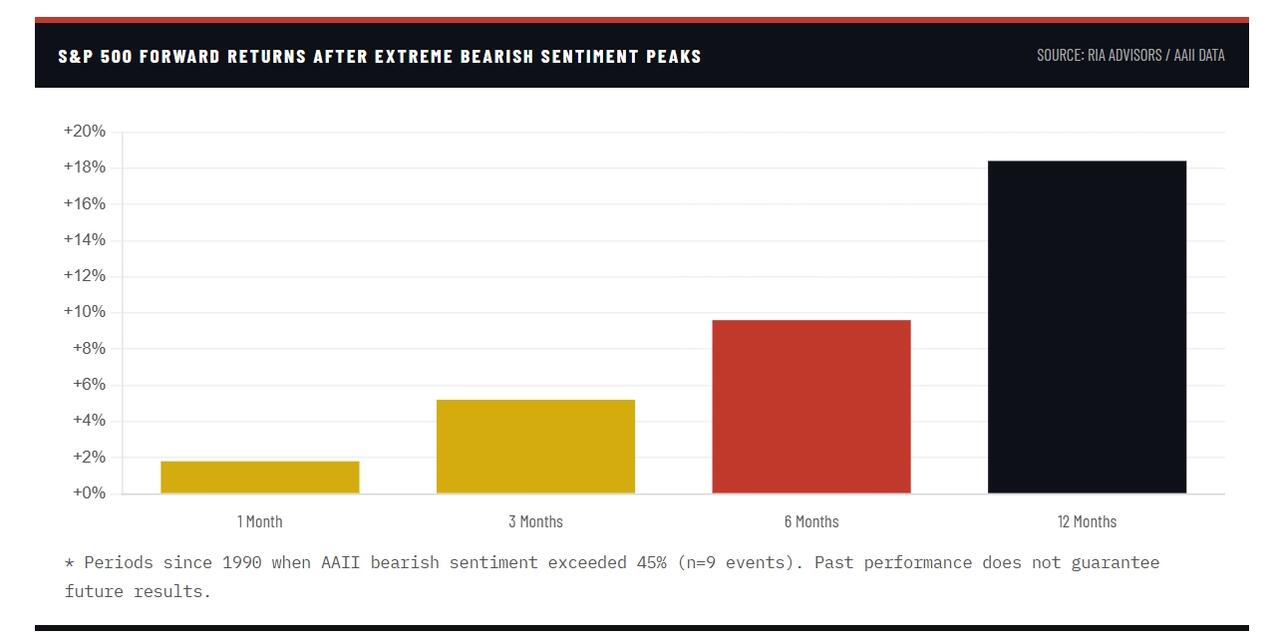
However, when you have that combination of bearishness, as we discussed in 5-Consecutive Weekly Declines, markets tend to perform better.
What was surprising was that the S&P 500 recovered completely in two weeks and is now setting all-time highs.
That sequence is not a reason to relax, but it is a valuable market lesson. It is also a good reason to examine what happened to investors who panicked, why the pattern repeats with such regularity, and, most importantly, what a well-constructed portfolio actually looks like when the next stock market selloff arrives. Because it will arrive. The only uncertainty is the catalyst.
The Drill & The Failure
Every major market shock is a test, a market lesson to be learned from. Not a test of whether your thesis was right, or whether you picked the right stocks. A test of whether your portfolio was built to hold under pressure, and whether your instincts are an asset or a liability when it counts.
The Iran conflict delivered a real economic shock. U.S. and Israeli forces struck Iran’s nuclear facilities. Tehran retaliated against Gulf energy infrastructure and the Strait of Hormuz, the narrow waterway through which roughly 20% of the world’s oil supply flows daily, ground to a halt. Brent crude surged from $61 at year-end to over $114 a barrel, and that spike raised inflation expectations, hammered small caps, and sent Asian equity markets into a tailspin as energy costs threatened to consume the profit margins underpinning the region’s AI and manufacturing boom.
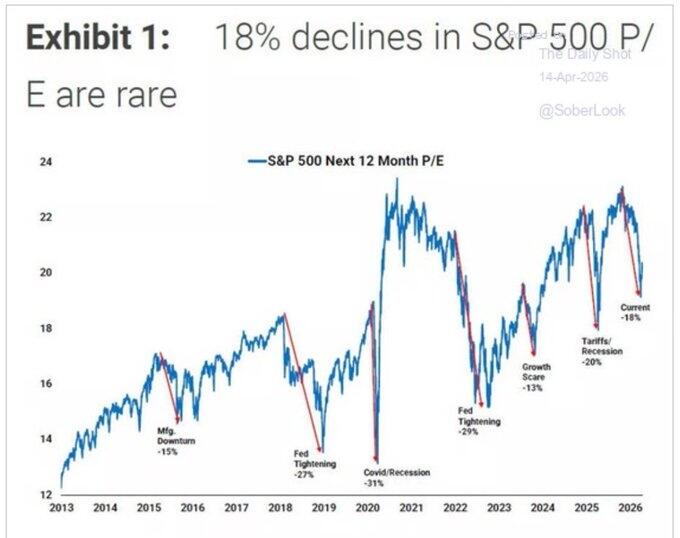
Then, at what seemed to be the darkest moment, the market repriced all of that in two weeks. Valuations declined roughly 18% as investors adjusted for the expected impact of higher oil prices on earnings and consumer spending. That repricing was rational, but the panic layered on top of it was not. In the middle of the selloff, predictions of a structural bear market were everywhere, but none of them materialized.
That pattern of maximum fear at the exact moment prices are lowest, followed by regret as they recover, is a market lesson that repeats itself regularly. The investors who liquidated near the recent lows, as sentiment turned negative, locked in losses. But two weeks later, they face an even more difficult decision: do I reenter at prices 10% higher than the ones I sold at? Most don’t. That gap between market returns and the average investor’s actual earnings is the most expensive line item in the typical portfolio.
What Risk Is, And Isn’t
The word “risk” gets used so loosely in financial media that it has lost most of its meaning. A falling stock price isn’t the definition of “risk.” Neither is a scary headline. Volatility isn’t risk either; it’s the price of admission for participating in markets over time.
As I’ve said previously, if you aren’t willing to watch your portfolio decline 10% to 15% without doing something rash, you aren’t really an investor; you are a speculator who happens to be holding stocks.
Risk, defined precisely, is the probability of a permanent impairment of capital. Not temporary losses, or a 10% drawdown that reverses in two weeks. Risk is the permanent impairment of capital, resulting in significantly diminished future outcomes. The distinction is enormous, separating investors who compound wealth over decades from those who don’t.
When the S&P 500 dropped during the Iran shock, the vast majority of that decline reflected a temporary repricing of earnings expectations under elevated oil prices. The underlying companies, their cash flows, their competitive advantages, and their earnings power didn’t change materially. The price changed, but the value didn’t. Investors who sold during that repricing didn’t escape risk; they converted a temporary paper loss into a realized one and then forfeited the recovery.
The market lesson is in the chart. Fear peaked at the moment prices were most attractive. By the time the market had recovered and all-time highs were being printed, fear had nearly returned to historical norms. The investors who acted on that peak in fear did exactly the wrong thing at exactly the wrong moment. The investors who recognized it as a contrarian signal, or who simply had the discipline to do nothing, participated in the full recovery.
The Behavior Gap: The Most Expensive Cost
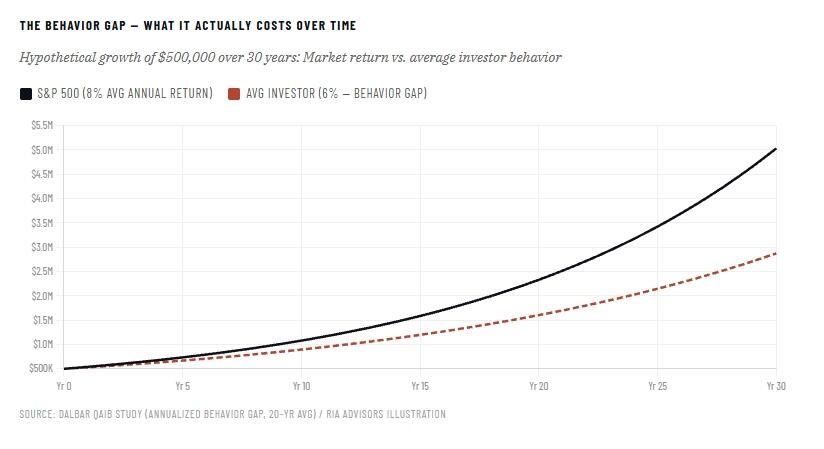
Dalbar Inc. has published an annual study for over 30 years, measuring the difference between the return delivered by the stock market and the return actually earned by the average equity investor. The gap, which Dalbar calls the “behavior gap,” has consistently shown that the average investor earns two to three percentage points less per year than the indices they’re invested in. That shortfall isn’t explained by fees or bad stock selection. It’s explained entirely by timing decisions: buying after rallies and selling during selloffs.
Over 30 years, a two-percentage-point annual shortfall compounds into a staggering wealth gap. A $500,000 portfolio growing at 8% a year becomes roughly $5 million. The same portfolio growing at 6%, because the investor panicked during selloffs and missed recoveries, becomes roughly $2.9 million. That $2.1 million gap is the price of panic. And the investor who sold near the April 2nd sentiment extreme has already paid a portion of it.
After every major market shock, the “this time is different” argument gains traction. The Iran conflict gave that argument real support. It was a genuine exogenous shock with measurable economic consequences, not a technical correction or manufactured volatility. But the historical record on recovery from sharp, shock-driven selloffs is remarkably consistent, and favors the patient investor over the reactive one.
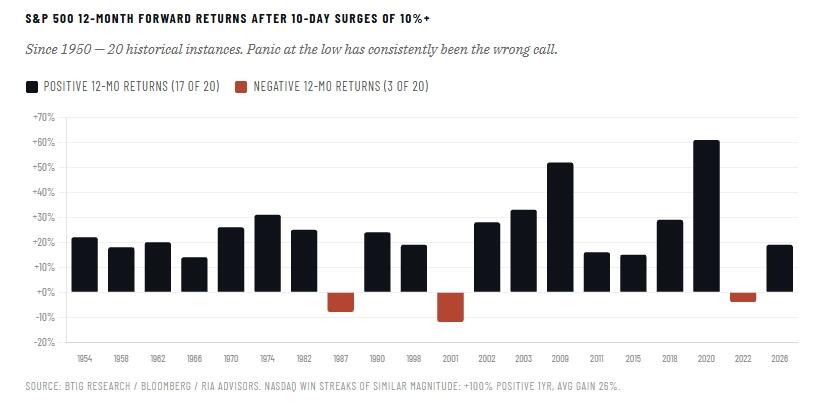
Since 1950, there have been 20 instances in which the S&P 500 rose more than 10% in a 10-day period, the kind of snapback recovery we saw in April. Over the following 12 months, the index was higher in 17 of those 20 cases, with an average gain of 19%. Nasdaq win streaks of comparable magnitude resolved higher 100% of the time over 12 months, with average gains near 26%. Those numbers don’t guarantee another selloff isn’t coming. That means the investors best positioned to capture those forward returns are the ones who stayed disciplined through the downturn. They rebalanced into weakness, and held enough cash to redeploy rather than liquidate.
Consider 2022. The Fed’s tightening cycle produced a 9-month bear market that erased ~25% from the S&P 500. The investors who sold in October 2022, when sentiment was just as dark as it was in early April 2026, missed a recovery that added nearly 60% over the next two years. The pattern repeats because human psychology repeats. The catalyst changes. The behavior doesn’t.
Build a Shock-Resistant Portfolio
Building a portfolio that survives market selloffs without requiring heroic decision-making isn’t complicated. It’s only unpopular because it involves accepting modest underperformance during the easy, low-volatility periods in exchange for not being the person who liquidates at the bottom during the hard ones.
The UBS analysis of the Iran shock made a point worth internalizing. The assets that acted as refuges during 2025’s tariff-driven selloff, such as gold, the Japanese yen, and Treasuries, provided meaningfully less protection this year. The assets that performed well in 2026, particularly the trade-weighted dollar, did little to offset losses during last year’s episode. In other words, building a portfolio to hedge against the last crisis is a losing strategy. The next one will look different.
The more durable approach focuses not on predicting which hedge will work, but on maintaining portfolio construction that allows you to hold through volatility without being forced to sell. That means genuine diversification across asset classes and geographies. It means a real cash buffer that functions as optionality. It also means rebalancing mechanically rather than emotionally, adding exposure when prices are low and trimming when they’ve run ahead of value.
The Iran conflict reframed a question many investors had avoided asking: Were they genuinely diversified? Investors with heavy commodity-linked exposure looked prescient during the decline. But that quickly fell out of favor as megacap technology stocks took center stage during the recovery. Having diversification means you had positions that performed during both the decline and the rally. Concentrated, one-sided portfolios rarely perform well over the long term.
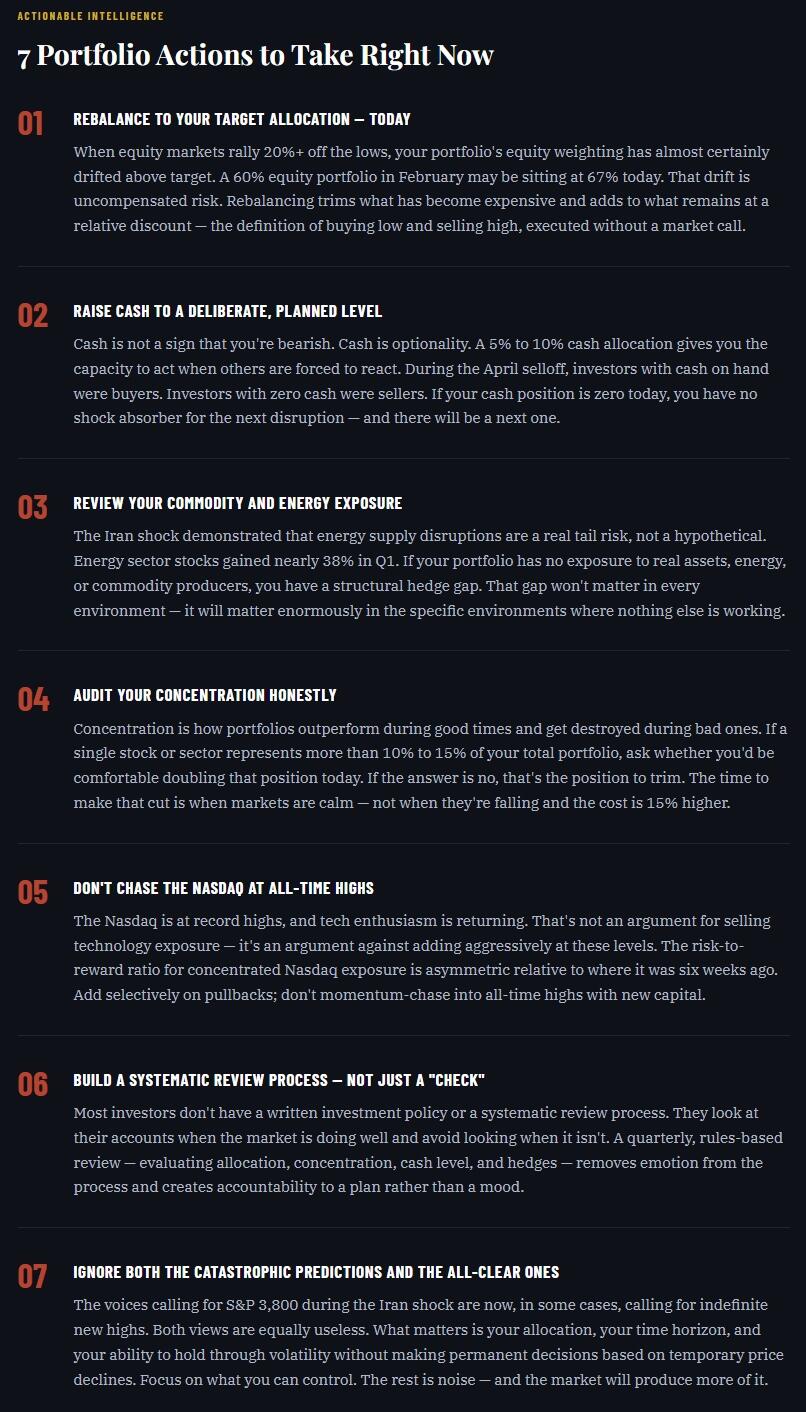
Here are seven portfolio actions to think about today.
The six weeks between late February and mid-April gave every investor a real-world market lesson. That lesson was in both portfolio construction and behavioral discipline. It wasn’t about Iran, oil prices, or the Strait of Hormuz. The lesson was whether your portfolio was built to withstand a genuine shock. And whether you know the difference between a temporary price decline and a permanent impairment of value.
Those who held, rebalanced, and redeployed cash came out ahead. Those who sold near the lows are now deciding what to do with prices ~10% higher. Most won’t. That’s the behavior gap in real time, and it compounds across every market cycle over an investing lifetime.
After 30 years of watching this pattern repeat, I can tell you with confidence that no amount of market forecasting substitutes for a sound process. The S&P 500 is trading at roughly 20 times forward earnings, the ten-year Treasury yield is near 4.3%, and the geopolitical situation is improving, or at least markets are pricing it that way. What comes next is unknowable. What you do with your portfolio in the meantime is entirely within your control.
That’s always been the real market lesson. The Iran shock just delivered it again, free of charge and clearly labeled.
What you do with it is up to you.
Tyler Durden
Mon, 04/20/2026 – 14:20
https://www.zerohedge.com/markets/market-lesson-why-panic-costly-mistake
Supply Chain What? The NSA Is Using Anthropic’s Mythos According To Report
Supply Chain What? The NSA Is Using Anthropic’s Mythos According To Report
Two months after the Department of War declared Anthropic a “supply chain risk” and moved to several all ties with the AI wunderkind, the National Security Agency (NSA), which falls under DoW, is using it according to Axios.
According to the report, the nation’s top surveillance agency is using Mythos Preview – Anthropic’s most powerful model to date. It is unclear how the NSA is currently using Mythos, however other organizations are using it primarily to scan their own environments for exploitable security vulnerabilities. The company has restricted access to Mythos to around 40 organizations – as the company says the model’s offensive cyber capabilities are too dangerous for wider release. Axios notes further;
Anthropic only announced 12 of those organizations. One source said the NSA was among the unnamed agencies with access.
The NSA’s counterparts in the U.K. have said they have access to the model through the country’s AI Security Institute.
On Friday, Anthropic CEO Dario Amodei met White House chief of staff Susie Wiles and Treasury Secretary Scott Bessent to discuss deploying Mythos within the government, as well as Anthropic’s wider plans and security practices.
As we noted late last week, the White House has directed federal agencies to begin using Mythos. So the Pentagon, er, Department of War, has egg (or an egg-like substance) on their face – after Anthropic demanded oversight over its use in military operations and domestic surveillance.
From “Supply-Chain Risk” to Strategic Asset
The government’s relationship with Anthropic had been icy for months. As we noted in February, the Pentagon threatened to blacklist the company as a “supply-chain risk” after Anthropic refused to strip certain ethical guardrails from its models for military use. That standoff escalated in March when Anthropic sued the Pentagon over the designation, as detailed in ZeroHedge’s coverage of the lawsuit.
That said, the Pentagon’s “supply-chain risk” label was always narrow in scope: it was a DoD-specific action triggered by the company’s refusal to remove certain ethical guardrails from its models for unrestricted military and offensive-use applications. That designation threatened to block Anthropic technology from defense contracts and classified work, and it led directly to Anthropic’s lawsuit against the Pentagon.
Today’s OMB memo changes almost nothing on paper for that designation. The Pentagon has not withdrawn it, the lawsuit is still active, and DoD contractors remain restricted from using Claude models (including Mythos) in offensive or surveillance contexts.
Just days ago, the U.S. Treasury was rushing to gain access to Mythos after internal warnings that the model could “hack every major system.” Senior Treasury and Federal Reserve officials had summoned CEOs of the nation’s largest banks to Washington, warning them that the financial system’s exposure to AI-powered attacks had become existential. Behind closed doors, federal agencies – including the Commerce Department’s Center for AI Standards and Innovation – had already begun quiet red-teaming of Mythos. Anthropic co-founder and president Daniela Amodei confirmed the company had briefed the administration early, telling reporters simply: “The government has to know about this stuff.”
Tyler Durden
Mon, 04/20/2026 – 14:00
https://www.zerohedge.com/ai/supply-chain-what-nsa-using-anthropics-mythos-according-report
CBP To Begin First Phase Of Tariff Refunds Following Supreme Court Ruling
CBP To Begin First Phase Of Tariff Refunds Following Supreme Court Ruling
Authored by Aldgra Fredly via The Epoch Times,
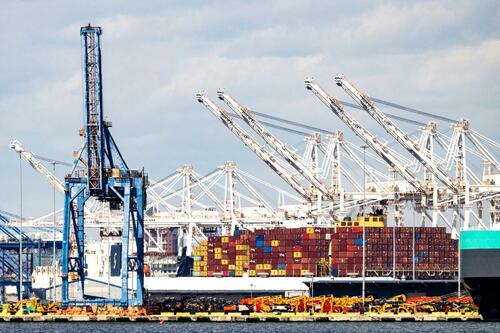
U.S. Customs and Border Protection (CBP) is set to begin the first phase of its refund process for certain tariffs on April 20, following a ruling by the Supreme Court in February.
CBP will deploy the Consolidated Administration and Processing of Entries (CAPE) through its Automated Commercial Environment (ACE) system, which would allow businesses to seek refunds for tariffs they paid that were imposed by President Donald Trump under the International Emergency Economic Powers Act (IEEPA). The Supreme Court ruled on Feb. 20 that the IEEPA does not clearly authorize the president to impose tariffs.
The agency said the CAPE will be implemented in phases, with the first phase starting at 8 a.m. ET on April 20 and covering “certain unliquidated entries and certain entries within 80 days of liquidation.”
The system is designed to “consolidate refunds of IEEPA duties including interest rather than processing refunds on an entry-by-entry basis,” according to CBP.
It stated that importers and licensed customs brokers are required to set up an account on the ACE portal, submit bank account details, and file declarations for imports on which tariffs were paid.
“Importers and authorized brokers should anticipate that valid IEEPA refunds will generally be issued within 60–90 days following acceptance of the CAPE declaration, unless a compliance concern requires further CBP review, ” the agency stated on its website.
“However, certain scenarios, such as entries that are extended, suspended or under review, and warehouse entries, will maintain their liquidation status with validated refunds issued at liquidation.”
In a court filing dated April 14, CBP Executive Director of Trade Programs Brandon Lord said the agency was dealing with “an unprecedented volume of refunds,” with more than 330,000 importers filing about 53 million entries in which they deposited or paid tariffs imposed pursuant to IEEPA as of March 4, which amounted to $166 billion.
“[The CBP’s] existing administrative procedures and technology are not well suited to a task of this scale and will require manual work that will prevent personnel from fully carrying out the agency’s trade enforcement mission,” Lord said, adding that CBP was working to have its ACE functionality ready for use within 45 days.
The Trump administration has been looking at alternative legal avenues after the Supreme Court struck down the reciprocal tariff framework.
U.S. Trade Representative Jamieson Greer said on Feb. 20 that his office would launch new investigations under Section 301 of the Trade Act, covering most major trading partners.
The probe intends to counter “unjustifiable, unreasonable, discriminatory, and burdensome acts, policies, and practices,” Greer said. Further tariffs may be applied if unfair practices are found, he added.
The new trade investigations will cover various areas, including industrial excess capacity, forced labor, pharmaceutical pricing practices, discrimination against U.S. technology companies and digital goods and services, digital services taxes, and ocean pollution.
Tyler Durden
Mon, 04/20/2026 – 13:40
Giant Data Center Developer Fermi Crashes 22% After CEO, CFO Abruptly Quit
Giant Data Center Developer Fermi Crashes 22% After CEO, CFO Abruptly Quit
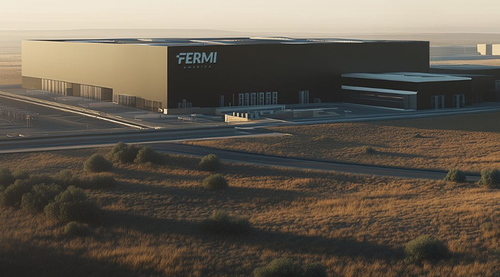
Last November, we warned that storms clouds were gathering over the torrid, and in some cases chaotic, rollout of US data centers, after Fermi’s massive 11 GW energy and data center project in Texas, called Project Matador, which the company has envisioned to be the world’s largest AI data center and energy campus in the Texas Panhandle, near Amarillo, was struggling to close the deal with its first major data center tenant (and since Fermi is set up as REIT that allocates income from tenants to shareholders, the delay may raise doubts about attracting other potential money-generating tenants, in a toxic feedback loop).
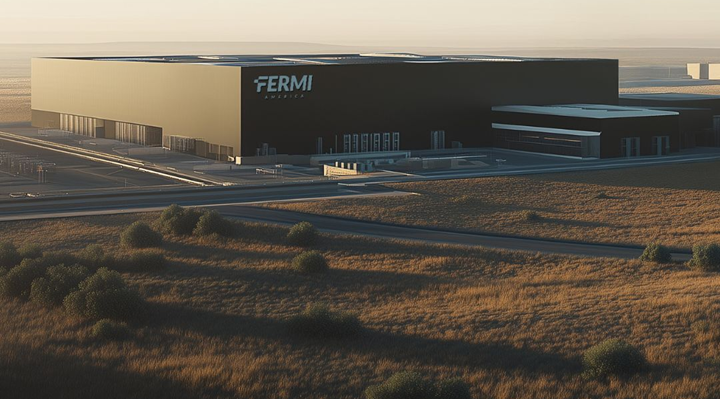
Fermi’s Project Matador – The President Donald J. Trump Advanced Energy and Intelligence Campus.
Fast forward 6 months, and the Fermi story has gone from bad to catastrophic, after the developer of nuclear power for AI data centers, slumped following the sudden departure of co-founder and Chief Executive Officer Toby Neugebauer and the company’s chief financial officer.
The exit of Neugebauer was the definition of a Friday night bomb: it was disclosed in a filing late Friday after the close of trading. Fermi held a conference call over the weekend for analysts, during which it said the board had been considering the change in management for at least three months, according to a research note from Evercore ISI.
On Monday, Fermi issued a statement revealing that Miles Everson resigned as CFO, and that it’s planning a new corporate headquarters in Dallas. Fermi said it has created a “interim office of the CEO,” comprising Jacobo Ortiz Blanes and Anna Bofa, both company executives who will now serve as co-presidents, while it searches for Neugebauer’s replacement. Neugebauer, a major shareholder in the company, will remain on the board. Everson was elected to the board, Fermi said.
As we reported in late 2025, Fermi – which has been developing a massive AI campus in Texas that it expects to initially power with natural gas and eventually plans to add as many as four nuclear reactors – has been dogged by challenges in recent months, including the loss of a key anchor tenant for the site.
The change at the top of the company “indicates that there was friction between customers and Neugebauer, and negotiations could be simpler going forward,” Stifel Nicolaus analyst Stephen Gengaro said in a note.
For the company’s sake, he better be right: the company has so far failed to line up tenants for its complex; and without tenants there is no company (not to mention, what it means for the broader AI space where euphoria is absolutely oozing everywhere). Fermi said in December that a potential user had terminated a $150 million deal.
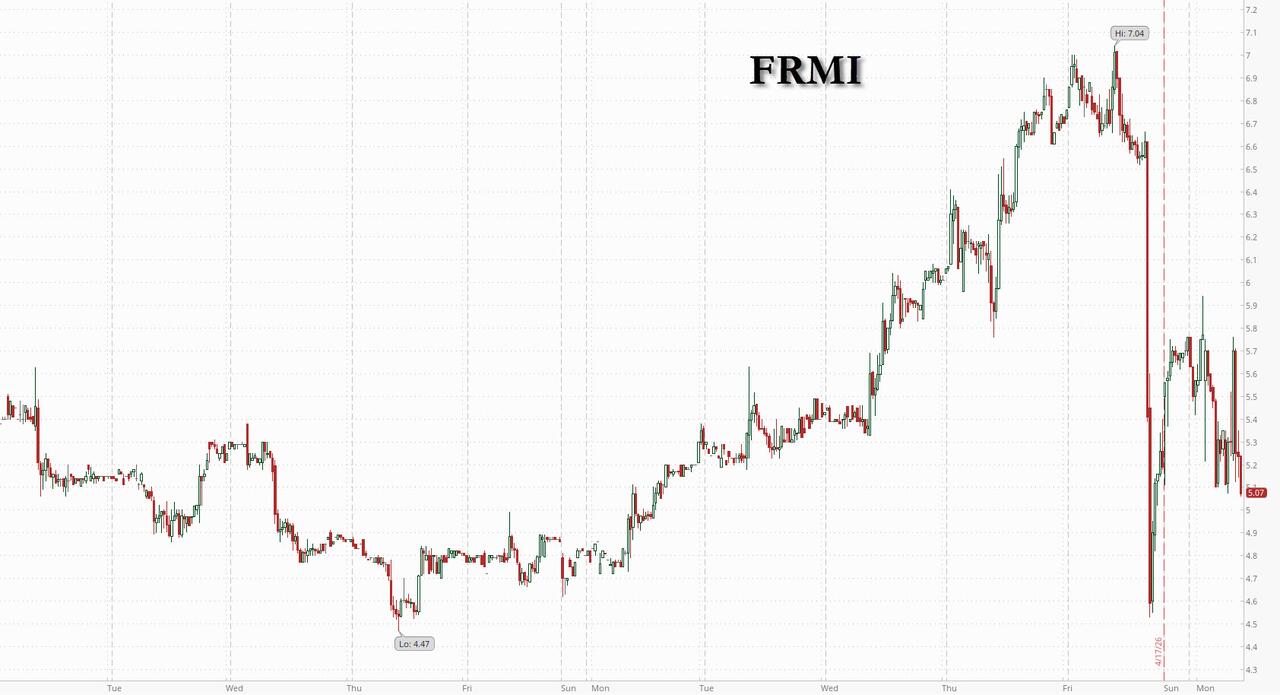
FRMI shares fell as much as 22% Monday, the most intraday since March 30 when the company said on an earnings conference call that it still hadn’t signed up customers for the campus, which it’s calling Project Matador. Fermi has slumped 69% since its initial public offering last year, giving it a market value of $4.1 billion.
“Fermi’s ability to ink a contract from hyperscalers who are scrambling to secure scarce available power has been perplexing,” Gengaro wrote in the research note. “Some potential customers could be taking a ‘prove-it-to-me’ approach to Fermi’s power campus.”
Some analysts said the management overhaul, despite triggering a stock drop, may ultimately be a positive for Fermi.
“Overall, we view this transition as changing the ‘tone at the top,’ but maintaining the same tenacity and vigor the industry has seen from an operational perspective,” Evercore analysts led by Nicholas Amicucci wrote in their note.
Tyler Durden
Mon, 04/20/2026 – 13:20

Anti-ICE Protestors Face Trial After Judge Denies Dismissal Of Federal Charges
Anti-ICE Protestors Face Trial After Judge Denies Dismissal Of Federal Charges
Authored by Bryan Hyde via American Greatness,
Three defendants who took part in an anti-Immigration and Customs Enforcement (ICE) protest last year are headed to federal trial on May 18 after a judge denied their motions to dismiss the case.
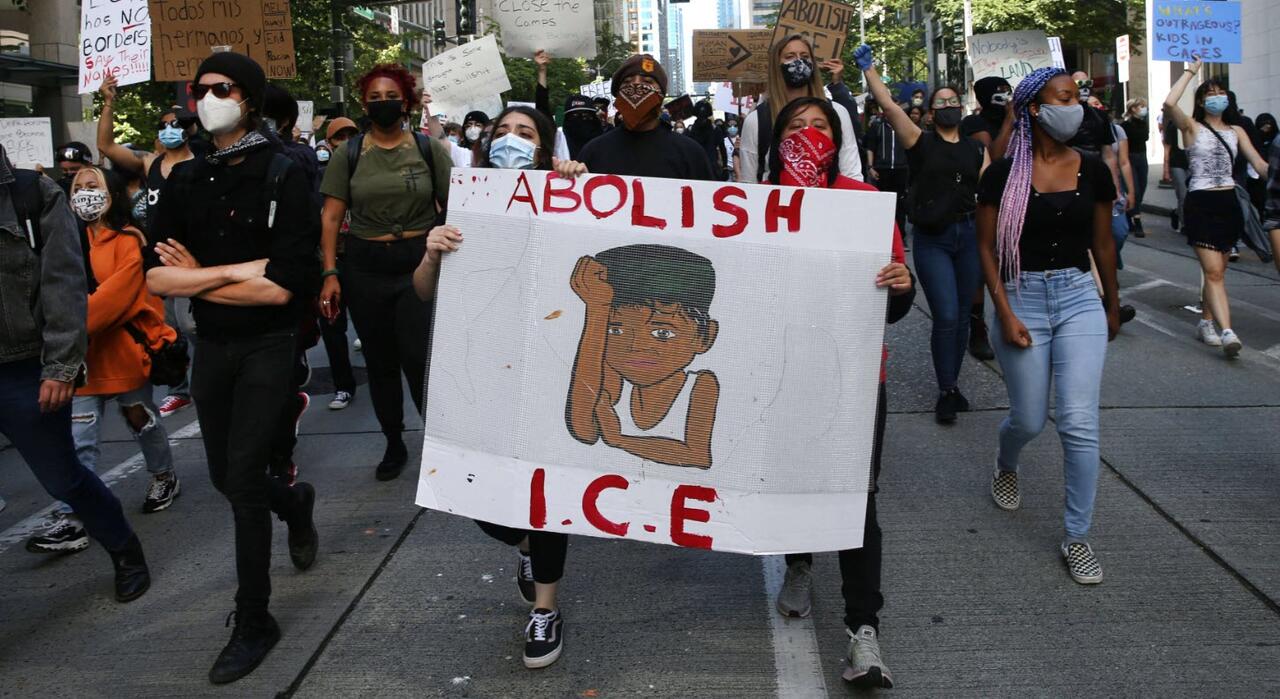
The defendants were part of a June 2025 protest near an ICE facility in Spokane, Washington, where they allegedly tried to block and damage law enforcement vehicles in response to the detainment of two Venezuelan men.
The protest against the Trump administration’s immigration agenda coincided with demonstrations in Seattle, Portland, and other major cities.
Just the News reports that the three defendants are part of a group of nine protestors who were arrested and later indicted by the Trump administration on federal conspiracy charges.
Six of the defendants took plea deals, including former Spokane City Council president Ben Stuckart, but the remaining three protestors, Jac Archer, Justice Forral, and Bajun Malvalwalla, chose to file a motion to dismiss their charges as protected free speech.
Malvawalla, a US Army veteran, has alleged that he was assaulted by federal agents during his arrest.
Attorneys for the defendants argued that their clients’ actions were constitutionally protected and challenged the indictment’s sufficiency.
The Dept. of Justice (DOJ) called the motion “meritless” and argued that the demonstration went beyond a constitutionally protected protest, alleging that the defendants blocked a transport van from leaving the federal facility, deflated its tires, and piled objects in front of the exits to stop the agents.
According to Just the News, a pretrial conference is scheduled on May 5 and the court will also consider motions that day by acting US Attorney General Todd Blanche seeking to exclude certain defense arguments and evidence at trial.
Blanche specifically wants the court to exclude arguments about whether the demonstration was a constitutionally protected protest, and references to other major immigration-related protests.
He also is asking the court to reject claims of political influence, including former acting US Attorney Richard Baker, who resigned days before the indictment, a well as arguments that two Venezuelan immigrants whose transport sparked the protest were here legally.
Liz Moore with the Peace and Justice Action League of Spokane is calling on residents of Spokane “To make sure that immigrant neighbors and loved ones in our community are not isolated and targeted and they experience support.”
Tyler Durden
Mon, 04/20/2026 – 13:00

Chicago Man Sentenced To 25 Years For Conspiring With ISIS
Chicago Man Sentenced To 25 Years For Conspiring With ISIS
Authored by Naveen Athrappully via The Epoch Times,
Ashraf Al Safoo from Chicago has been sentenced to 25 years in federal prison for conspiring to provide material support to ISIS, which involved recruiting members into the terror group and encouraging attacks on its enemies.
Al Safoo, 41, was a leader of online organization Khattab Media Foundation, which pledged allegiance to ISIS, the Department of Justice (DOJ) said in an April 17 press release. The foundation created and spread threats and ISIS propaganda online, with Al Safoo and other members posting pro-ISIS articles, videos, infographics, and essays in coordination with the terrorist outfit.
Most of the propaganda spread by Khattab promoted violent jihad on behalf of ISIS.
The organization’s posts celebrated mass shootings and terror attacks in the United States and encouraged people to engage in “lone wolf” attacks in Western nations.
In one post, Al Safoo asked Khattab members to “cause confusion and spread terror within the hearts of those who disbelieved,” according to the DOJ press release.
In another post, Al Safoo wrote, “Work hard, brothers, edit the issue into short clips, take the pictures out of it and publish the efforts of your brothers in the pages of the apostates. Participate in the war, and spread terror, the [Islamic] State does not want you to watch it only, rather, it incites you, and if you are unable to, use it to incite others.”
Al Safoo immigrated to the United States in 2008 and was naturalized in 2013. In 2018, he was arrested and has since been in federal custody.
A bench trial was conducted last year, after which U.S. District Judge John Robert Blakey found Al Safoo guilty of various charges.
On April 16, Blakey imposed a 25-year prison term for Al Safoo, followed by 10 years of court-supervised release.
The State Department designated ISIS’s predecessor group, al-Qaeda in Iraq, as a foreign terrorist organization in December 2004 under the George W. Bush administration. When ISIS was formed in 2013, the designation carried over.
Over the past several months, multiple individuals have been detained for their support of ISIS.
In December 2025, a Texas man alleged to be an ISIS sympathizer was charged with an international terrorism offense. The man allegedly provided funding and bomb making equipment to people he believed were acting on behalf of ISIS.
Earlier in November, a dual American Albanian national was arrested and charged in New York for allegedly providing support to ISIS and distributing instructions for homemade bombs.
During a testimony before the U.S. House Committee on Homeland Security on Dec. 11, Michael Glasheen, operations director at the FBI, highlighted how ISIS continues to pose a threat to American interests, both domestically and abroad.
The terror outfit is able to “direct, enable, and inspire attacks through their successful use of social media and messaging applications to attract individuals. ISIS seeks direct confrontation with the United States, and almost certainly would exploit any opportunity to attack the U.S. or Western interests,” Glasheen said.
Like other foreign terrorist organizations, he said, “ISIS advocates for lone-offender attacks in the U.S. and Western countries via videos and other English-language propaganda that have specifically advocated for attacks against civilians, the military, law enforcement, and intelligence community personnel.”
The 2025 Worldwide Threat Assessment report from the Defense Intelligence Agency said that ISIS and al-Qaeda have implemented a decentralized plotting approach toward Western nations.
Story continues below advertisement
Both groups are referencing Israel’s operations in Gaza to generate revenue, hire new members, and inspire attacks against U.S., Jewish, Israeli, and European interests internationally.
“The groups are also seeking to improve their weapons capabilities, including with commercial technologies such as UAVs and artificial intelligence,” the report said, referring to unmanned aerial vehicles.
In December, U.S. Central Command (CENTCOM) said it had initiated Operation Hawkeye Strike in Syria following an attack that killed two Army soldiers and a civilian interpreter.
CENTCOM said in a Feb. 14 update that since the launch of Operation Hawkeye Strike, “more than 50 ISIS terrorists have been killed or captured and over 100 ISIS infrastructure targets have been struck with hundreds of precision munitions during two months of targeted operations.”
Tyler Durden
Mon, 04/20/2026 – 12:32
https://www.zerohedge.com/geopolitical/chicago-man-sentenced-25-years-conspiring-isis

FBI Director Kash Patel Files $250 Million Defamation Lawsuit Against The Atlantic, Reporter
FBI Director Kash Patel Files $250 Million Defamation Lawsuit Against The Atlantic, Reporter
FBI Director Kash Patel filed a $250 million defamation lawsuit Monday against The Atlantic magazine and its national-security reporter Sarah Fitzpatrick, escalating a high-profile clash over a Friday article that alleged Patel’s “erratic behavior,” excessive drinking, and unexplained absences have alarmed colleagues and raised national-security concerns.
In the complaint, filed in U.S. District Court for the District of Columbia, Patel accuses the publication and Fitzpatrick of publishing the story “with actual malice” despite being “expressly warned, hours before publication, that the central allegations were categorically false,” having access to “abundant publicly available information contradicting those allegations,” and ignoring “obvious and fatal defects in their own sourcing,” CNN reports.
The Atlantic article, titled “The FBI Director Is MIA,” relied on more than two dozen anonymous sources – including current and former FBI officials, members of Congress, and hospitality-industry workers – to portray Patel’s leadership as a “management failure” and his personal conduct as a potential vulnerability. It detailed claims of “bouts of excessive drinking” at venues such as the private club Ned’s in Washington, D.C., and the Poodle Room in Las Vegas, rescheduled meetings due to late-night drinking, and incidents in which Patel’s security detail allegedly struggled to wake him and once requested breaching equipment to access a locked room. The piece also suggested Patel is deeply paranoid about being fired and that President Trump has privately expressed displeasure over his behavior, including a viral video of him chugging beer with the U.S. men’s hockey team.
Patel’s attorney, Jesse R. Binnall, sent a detailed pre-publication letter to The Atlantic and Fitzpatrick on April 17, disputing the claims point-by-point and demanding the outlet refrain from publishing. Binnall later posted the letter publicly on X, writing: “They were on notice that the claims were categorically false and defamatory. They published anyway. See you in court.”
This is the letter we sent to The Atlantic and Sarah Fitzpatrick BEFORE they published their hit piece on FBI Director @FBIDirectorKash. They were on notice that the claims were categorically false and defamatory. They published anyway.
See you in court. pic.twitter.com/Ke8cqNh8hY
— Jesse R. Binnall (@jbinnall) April 17, 2026
Patel himself responded defiantly on Fox News Sunday, calling the story “fake news” and promising legal action the next day. “We HAVE to fight back against the fake news,” he said. “If the fake news mafia isn’t hitting you with baseless info, you’re not doing your job!”
🚨 WOW! FBI Director Kash Patel is SUING The Atlantic after they reported he gets drunk all the time and constantly has “unexplained absences”
“You want to attack my character? Come at me. I’LL SEE YOU IN COURT!”
“Absolutely. [The lawsuit] is coming TOMORROW. FOR DEFAMATION.”… pic.twitter.com/7X5PqQlP3p
— Eric Daugherty (@EricLDaugh) April 19, 2026
The suit seeks $250 million in damages, a figure Patel’s team described as necessary to hold the outlet accountable for what they call a “sweeping, malicious, and defamatory hit piece.”
Tyler Durden
Mon, 04/20/2026 – 12:05