Category: News

US Nuclear Renaissance Finally Starts…? TNC Plans New South Carolina Reactor
US Nuclear Renaissance Finally Starts…? TNC Plans New South Carolina Reactor
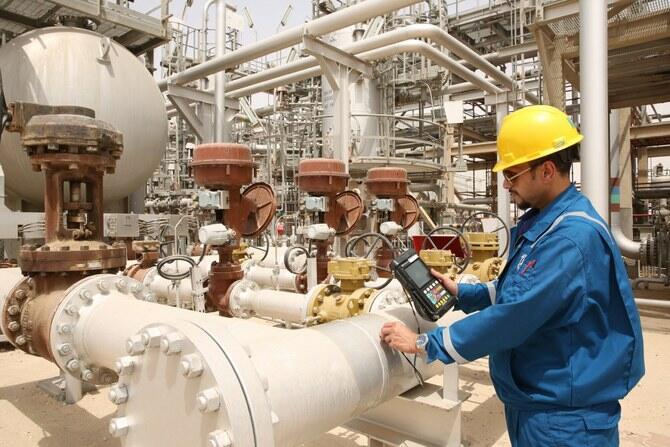
The Nuclear Co. (TNC), a startup that emerged from stealth in 2024 as America’s full-stack nuclear project integrator, is preparing to propose one of the first large-scale conventional reactor builds in the United States in more than a decade.
According to Bloomberg, the company could unveil plans as soon as this week for an AP1000 reactor at one of three potential sites in South Carolina. The move comes as surging electricity demand, fueled largely by AI data centers, forces utilities and developers to confront the limits of today’s grid.
TNC showed up with a design-once, build-many methodology and fresh Series A funding in hand as the firm opened its primary engineering and construction office in Columbia, SC, last year.
Governor Henry McMaster welcomed the move, which is expected to create more than 100 jobs while supporting a targeted 6-gigawatt fleet rollout. South Carolina already generates over half its electricity from nuclear power, boasts established infrastructure, a skilled workforce, and a state leadership clearly committed to expansion.
The timing feels both promising and painfully familiar:
-Just days ago we asked whether America sits on the verge of a nuclear renaissance
-We have chronicled the historic first federal approval for novel reactor technology
-The Washington facility is slated to host 12 Amazon-funded small modular reactors
-Nano Nuclear’s construction permit was submitted for its Kronos unit in Illinois
-We tracked the steady drumbeat of SMR licensing approvals
-President Trump’s executive orders to fast-track small modular reactor development drew widespread applause
-We even reported on the national emergency declaration that positioned the U.S. government to purchase 10 large new reactors
Yet for all that…
Four months later, China has added 9 more reactors and is now building a total of 39 nuclear power plants. Meanwhile the US has added 0 and is still building 0 https://t.co/TJ6BoMghNk pic.twitter.com/O4idOANNUr
— zerohedge (@zerohedge) April 15, 2026
China continues to lead with dozens of units under construction. Russia and India press forward while America’s own expertise has atrophied after a generation of near-total inactivity. Even Iran is building more nuclear plants than the US…
At least the US will have some really cool microreactors to play with, and they’ll only need 999 more of them to even come close to a single AP1000.
The frustration deepens when one considers the $80 billion strategic partnership struck last October between Cameco, Brookfield, and the U.S. government to deploy Westinghouse reactors across the country.
Six months later, that headline figure has produced zero visible shovels in the dirt.
If the times really are changing and nuclear steel is about to get put into the ground, investors would do themselves some good to consider where the upside is in the construction of a new plant. Uranium prices are going to be more directly driven by the wider global supply-demand gap, not necessarily the reactor build itself, where fuel only accounts for roughly 5% of the cost of a new reactor.
The most likely investment opportunity for a new nuclear facility rests in the construction companies, heavy equipment manufacturers, and service providers for the facility. Companies like Fluor, Amentum, Curtiss-Wright, Mirion Technologies, ATI, Flowserve, and Crane Company are just a few examples.
Tyler Durden
Mon, 04/20/2026 – 19:40
https://www.zerohedge.com/energy/nuclear-co-plans-new-south-carolina-reactor

USS Ford Carrier Returns To Mideast After Extensive Fire Repairs
USS Ford Carrier Returns To Mideast After Extensive Fire Repairs
Over the weekend it was confirmed by Pentagon statements that the USS Gerald R. Ford aircraft carrier strike group has belatedly redeployed to the Middle East after a month in port for repairs following a fire aboard the ship.
The world’s largest aircraft carrier returned to operations after what’s been officially described as a blaze in its laundry area, which headlines have presented as accidental. The incident injured sailors and forced significant maintenance work, and ever since it happened on March 12, there’s been an avalanche of public speculation that Iranian forces my have hit it in a missile or drone attack.
However, US and military officials have repeatedly rejected that the Ford was damaged as a result of Iranian attack, as Tehran has claimed.
The carrier is rejoining an expanding US military buildup in the region – with the USS Abraham Lincoln strike group already deployed, and the USS George H.W. Bush expected to soon join, which would bring the number of US carriers in the Middle East to three.
By comparison, the 2003 US invasion of Iraq was supported by a total of five US Navy aircraft carriers, with some in the Persian Gulf and some in the Mediterranean.
The Ford had been operating in the eastern Mediterranean when the US and Israel launched military operations against Iran. While transiting the Red Sea last month, a fire allegedly broke out in the ship’s main laundry facility, triggering a major damage-control response and forcing the vessel to divert for repairs.
After completing maintenance, the bulk of which was done at the Croatian port town and Split, the carrier has returned to active duty.
Before earlier this year returning to the Middle East, the Ford operated in the Caribbean, including missions targeting suspected drug trafficking, and it was heavily involved in the controversial US operation against Venezuelan leader Nicolás Maduro.
As a reminder on the Bush carrier’s route:
🇺🇸 🇮🇷 USS GEORGE HW BUSH CARRIER GROUP TAKES LONG ROUTE TO MIDDLE EAST TO AVOID BAB AL MANDAB STRAIT AND HOUTHIS
Source: USNI pic.twitter.com/opTeCA6Nut
— Maine (@TheMaineWonk) April 13, 2026
During its extended deployment, the carrier has also been subjecting of widespread reports of technical problems, including plumbing failures that caused sewage system backups, adding to the overall strain of its lengthy, extended deployment.
Tyler Durden
Mon, 04/20/2026 – 18:50

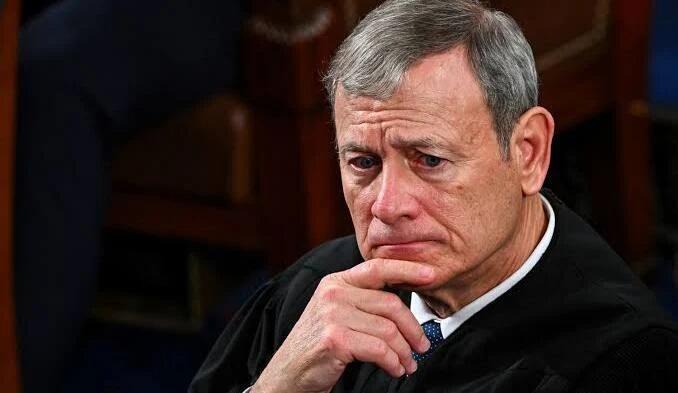
Chief Justice Roberts Faces Two Strikes After New Leak Rocks The Court
Chief Justice Roberts Faces Two Strikes After New Leak Rocks The Court
The legendary baseball player and manager Ted Williams once wrote a letter to the Angels outfielder Jay Johnstone on improving his hitting. Among his pieces of advice was that “with two strikes, you simply have to protect the plate.”
Williams’s advice on not striking out came to mind this week when another leak of confidential information rocked the Supreme Court. (The prior leak of the Dobbs decision went unsolved).
For Chief Justice John Roberts, the message is clear: it is a time like this when you have to protect the plate.
Roberts, of course, is famous for his own baseball analogies. In his confirmation, he declared that “judges are like umpires. Umpires don’t make the rules. They apply them…Nobody ever went to a ballgame to see the umpire.”
Yet, justices do make rules not only in new precedent, but in the operation of the court system. Those rules are being broken.
In the same week as the new leak, Justice Sonia Sotomayor attacked her colleague Brett Kavanaugh as essentially an out-of-touch prig who had never even met an hourly wage worker.
It was an unfair insult and a departure from the Court’s long-standing rules of civility.
(Sotomayor later apologized).
Additionally, a forthcoming book by Mollie Hemingway on Justice Samuel Alito contains an embarrassing account of how Justice Elena Kagan allegedly screamed at Justice Stephen Breyer so loudly before the Dobbs opinion that the “wall was shaking.”
(The book suggests that Kagan was upset with Breyer agreeing to spur along the dissents to get out the final opinions in light of rising threats against conservative colleagues after the leak).
For an institution that prides itself on its confidentiality and insularity, the Court is looking increasingly porous and partisan in these leaks.
Worse yet, people are indeed coming to the Court “to see the umpires.”
The most recent leak was published by the New York Times, which was given internal memos from various Supreme Court justices on the use of what is known as the “shadow docket” to issue rulings without oral arguments.
Notably, the leaks occurred after a controversial speech by Justice Ketanji Brown Jackson at Yale Law School in which she denounced the use of the shadow docket by her conservative colleagues to release decisions that were sometimes “utterly irrational.”
The memos reveal the concern of the justices that the Environmental Protection Agency was effectively gaming the system, imposing unlawful regulatory burdens on electric utilities despite a countervailing earlier ruling in Michigan v. EPA.
Chief Justice Roberts noted that the EPA was using the ongoing litigation to force utilities to spend billions of dollars to comply with the new regulations: “In other words the absence of stay allowed the agency to effectively implement an important program we held to be contrary to law.”
The controversy over the use of the shadow docket is immaterial to this story. The most immediate concern for Roberts should be that this is strike two: another leak from within the Court that was clearly designed to wound some of its members.
Unlike the Dobbs leak (which appeared to be an effort to influence the final opinion), this is a leak about a decade-old case. It had a purely malicious purpose to embarrass or disrupt the Court.
The question, again, is the identity of the culprit. There is no reason to assume that the same person was involved in both leaks. Rather, the leaks appear to reflect a deteriorating culture at the Court.
After the Dobbs leak, Chief Justice Roberts launched a fruitless investigation through the federal marshals to find the responsible person. The use of the marshals as the lead investigators (rather than the FBI) was criticized at the time. Roberts may have been sensitive to an executive-branch agency rooting around in the highest court of a sister branch.
The result was the worst possible outcome. The culprit succeeded in both leaking the opinion and evading any accountability.
The fact is that the Court’s culture and institutional identity have always been its greatest protection of confidentiality. In a city that floats on a rolling sea of leaks, the Court was an island of integrity and civility. The “umpires” could call balls and strikes without playing the leak game.
That culture is fast becoming nothing but a relic in the wake of yet another major leak. For the future of the Court and the faith of the public, Roberts has to set his reservations aside and bring in the FBI to find the culprit. Most importantly, he has to guarantee total transparency in allowing the public to see the results wherever they may lead. In other words, with two strikes, Roberts needs to protect the plate.
Jonathan Turley is a law professor and the best-selling author of “Rage and the Republic: The Unfinished Story of the American Revolution
Tyler Durden
Mon, 04/20/2026 – 18:25
Kuwait Declares Force Majeure As US Seizure Of Iranian Ship Escalates Tensions
Kuwait Declares Force Majeure As US Seizure Of Iranian Ship Escalates Tensions
By Charles Kennedy of OilPrice.com
Kuwait has declared force majeure on shipments of crude oil and refined products after disruptions at the Strait of Hormuz prevented some vessels from entering the Persian Gulf.
The move comes as tensions in the Strait escalated again following the U.S. seizure of an Iranian-flagged cargo vessel in the waterway.
According to Reuters, Kuwait Petroleum Corporation has notified customers that it is invoking contractual clauses allowing it to withhold certain scheduled deliveries after the blockade hindered access to the Gulf. The measure is not expected to result in a complete halt to supply.
The latest escalation follows a volatile weekend in which the Strait briefly reopened before closing again after Iran linked the reopening of the shipping lane to the lifting of the U.S. naval blockade targeting its oil exports.
Iran’s foreign ministry said it has no plans for a new round of talks following the U.S. seizure of the vessel. U.S. President Donald Trump said a delegation led by Vice President JD Vance is heading to Islamabad for talks. Pakistan has tightened security in the capital ahead of the potential negotiations.
Iran has warned that it cannot guarantee safe passage through the Strait of Hormuz if its oil exports continue to be restricted, saying that security for shipping in the waterway cannot be separated from pressure on its own crude flows.
Shipping activity in and around the Strait has been disrupted again, with vessels altering routes and operators reassessing transit risks through one of the world’s most important oil shipping lanes.
After plunging late last week, oil prices rebounded in early trading as markets reacted to the renewed disruption and the risk of further constraints on flows through the Strait of Hormuz.
The renewed pressure also comes as Iran-aligned Houthis have threatened to target the Bab el-Mandeb Strait, raising concerns about additional risks to alternative export routes for Middle East crude.
Tyler Durden
Mon, 04/20/2026 – 17:40

DOJ Shakeup In Florida Signals Major Escalation In Russiagate Criminal Probe
DOJ Shakeup In Florida Signals Major Escalation In Russiagate Criminal Probe
The Department of Justice appears to be gaining fresh momentum in its criminal investigation into the 2016 Trump-Russia collusion narrative, with a significant overhaul of the team handling the case in southern Florida.
According to investigative journalist Julie Kelly’s reporting at Declassified.live, longtime Trump legal advisor Joe diGenova – a former U.S. Attorney and prominent commentator – will be sworn in Monday as counsel to the attorney general. He will assume leadership of the ongoing grand jury probe based in Fort Pierce, the district overseen by U.S. District Judge Aileen Cannon. That same courthouse was the site of Cannon’s landmark July 2024 ruling dismissing Special Counsel Jack Smith’s classified documents case against President Trump after she found Smith’s appointment unconstitutional. The grand jury has been active in Fort Pierce since January, Kelly reports.
DiGenova’s wife, Victoria Toensing, has also served as a key Trump legal counselor for years. In a notable earlier move, the Biden Justice Department seized Toensing’s cellphone in April 2021 during a separate inquiry tied to Rudy Giuliani’s efforts to examine the Biden family’s overseas dealings.
But wait, there’s more…
The addition of DiGenova isn’t the only retooling. Earlier this week, acting Attorney General Todd Blanche removed the career prosecutor previously in charge of the investigation into former CIA Director John Brennan, who played a key role in concocting the Trump-Russia collusion scheme in 2016. According to CNN, assistant U.S. Attorney Maria Medetis Long was ousted “after she resisted pressure to quickly bring charges against the former CIA director and prominent critic of President Donald Trump.” Meditis Long notified lawyers representing several individuals who have received subpoenas or interview requests related to the investigation that she was off the case, the New York Times reported on Friday. -Declassified Live
Blanche has also sent one of his senior aides, Christopher-James DeLorenz – who clerked for Judge Cannon during the documents litigation – to the Fort Pierce team.
These changes come shortly after President Trump dismissed former Attorney General Pam Bondi earlier this month, citing dissatisfaction with the pace of the Russiagate accountability effort. In a pointed press conference days later, Blanche—whom Trump immediately named acting attorney general—made clear the department’s direction. “The president has said time and time again that he wants justice,” Blanche told reporters. “If you look at what happened to him, his family, his administration, the agents who protected him, people who just happened to walk by him on a given day, they got subjected to…massive investigations by this department.”
Blanche speaks from direct experience: he defended Trump in both the Florida documents case and the Manhattan hush-money prosecution brought by District Attorney Alvin Bragg.
Earlier this year the Justice Department did secure indictments against a small number of figures tied to the lawfare campaign, including former FBI Director James Comey and New York Attorney General Letitia James. Those cases were later dismissed, however, after a judge ruled that the appointment of the acting U.S. Attorney who filed them, Lindsey Halligan, was improper. That decision is now under appeal in the Fourth Circuit.
Still, many Trump supporters are demanding deeper accountability. While the initial charges brought some satisfaction, the expectation is for more significant action. A potential indictment of Brennan – who many view as a top target – now looks increasingly likely. He was recently subpoenaed in connection with his 2023 congressional testimony, in which he denied that the discredited Steele dossier influenced his 2017 Intelligence Community Assessment alleging Russian election interference on Trump’s behalf.
Brennan’s legal team has reacted with alarm. In a highly unusual letter sent last December to the chief judge of the 11th Circuit, his attorneys urged the court to block the probe from proceeding in Fort Pierce—viewed as a more conservative venue than Miami—and to bar Judge Cannon from any involvement. The letter claimed that Cannon’s prior rulings created the appearance of favoritism toward Trump and accused prosecutors of deliberately steering the case to her courtroom in line with what they called the president’s political retribution agenda.
If diGenova’s role expands beyond Brennan to encompass a wider “grand conspiracy” review – potentially covering everything from the roots of Russiagate through January 6, the Mar-a-Lago raid, and the conduct of the now-disqualified special counsel – additional high-profile targets could come into focus. Among them are individuals already the subject of criminal referrals sitting with the DOJ, including Thomas Windom (referred by House Judiciary Chairman James Jordan for alleged obstruction during congressional depositions) and January 6 committee witness Cassidy Hutchinson, accused of fabricating testimony about an incident in the presidential vehicle. This week, Director of National Intelligence Tulsi Gabbard also referred two former officials—Intelligence Community Inspector General Michael Atkinson and analyst Eric Ciaramella – for their roles in advancing the 2019 Ukraine-related impeachment allegations against Trump. Both men have documented connections to the original Russiagate players.
Even Jack Smith may not be fully in the clear. Recent reporting from CBS News indicates that Florida prosecutors are examining documents linked to Smith’s prior investigation of the president. Smith could additionally face scrutiny for allegedly continuing to hold himself out as special counsel in court filings long after Cannon disqualified him, raising questions of contempt and potential false statements to Congress.
As Julie Kelly observed in her Declassified.live piece, diGenova—still energetic and far from retirement age—may be exactly the experienced, no-nonsense figure needed to bring decisive momentum to the Florida investigation and deliver the accountability many have long awaited.
Tyler Durden
Mon, 04/20/2026 – 17:20

70% Of US Farmers Say That They Won’t Be Able To Buy All The Fertilizer They Need In 2026
70% Of US Farmers Say That They Won’t Be Able To Buy All The Fertilizer They Need In 2026
Authored by Michael Snyder via The Economic Collapse blog,
We might want to listen to what the farmers are telling us, because if they don’t grow our food we do not eat. Coming into this year, we were already facing the worst farming crisis in America in at least 50 years. Farmers all over the nation are drowning in debt, and farm bankruptcies have been soaring. In all my years, I have never seen America’s farmers so angry, and now the crisis in the Strait of Hormuz has made things much worse. Spring planting season is here and there is a global scramble for whatever supplies of nitrogen fertilizer that happen to be available. As a result, prices have skyrocketed and farmers all over the planet are facing some incredibly tough choices.
That is even true here in the United States.
According to a brand new survey that was just conducted by the American Farm Bureau Federation, 70 percent of U.S. farmers say that they will not be able to purchase all of the fertilizer that they need in 2026 because it has become so expensive…
Conducted by the American Farm Bureau Federation April 3-11, the survey shows 70% of respondents say fertilizer is so expensive that they will not be able to buy all the fertilizer they need.
More than 5,700 farmers, both Farm Bureau members and non-members, from every state and Puerto Rico took the survey. Farm Bureau economists analyzed the results in the latest Market Intel.
The analysis reveals that almost 8 in 10 farmers in the southern U.S. say they can’t afford all needed supplies this year, followed by the Northeast and West at 69% and 66%, respectively, compared to 48% of the farmers in the Midwest.
Fertilizer prices were already at frighteningly high levels even before the war with Iran started, and since that time they have surged dramatically…
Nitrogen fertilizer prices have gone up more than 30 percent since the start of the conflict on Feb. 28, according to Market Intel. Combined fuel and fertilizer costs have also risen between 20 and 40 percent, with urea prices jumping 47 percent since late February.
Many people out there don’t seem to understand this yet, but this is going to affect all of us.
If 70 percent of U.S. farmers use less fertilizer this year, those farmers will grow less food.
If there is less food available, prices will go up.
Needless to say, food prices are already at ridiculous levels, but they are going to go even higher.
In impoverished countries, conditions will be even worse.
Due to a historic lack of nitrogen fertilizer, hundreds of millions of families that are currently barely existing “may soon find they are only able to afford little or no food”…
In many parts of the world, vulnerable families who today are currently managing to put some food on the table may soon find they are only able to afford little or no food.
“If this conflict continues, it will send shockwaves across the globe, and families who already cannot afford their next meal will be hit the hardest,” said WFP Deputy Executive Director and Chief Operating Officer Carl Skau.
I wish that I could get people to understand how serious this is.
Goldman Sachs is publicly admitting that the global fertilizer crisis is spreading a lot faster than they were originally projecting.
We desperately need the Strait of Hormuz to be reopened immediately, but that simply isn’t going to happen.
The Iranians continue to strangle commercial traffic through the Strait, and the U.S. has now “completely” cut off traffic to Iranian ports…
The U.S. blockade of Iranian ports is now fully into effect, “completely” cutting off Tehran’s international sea trade that powers about 90% of its economy, the U.S. Central Command said late Tuesday stateside.
The announcement comes at a time when the White House has been signaling a diplomatic solution to the conflict in the Middle East, as discussions around continuing negotiations with Iran are underway.
“A blockade of Iranian ports has been fully implemented as U.S. forces maintain maritime superiority in the Middle East,” said Brad Cooper, Centcom commander, highlighting that it was achieved under 36 hours of President Donald Trump’s order.
The Trump administration is convinced that this blockade will force the Iranians to give in.
According to U.S. Central Command, the first 48 hours of the blockade have been a resounding success…
But the Iranians are showing no signs of backing down.
On Wednesday, an official with the IRGC warned of severe consequences if the U.S. does not end the blockade…
Iran’s Revolutionary Guard announced Wednesday that Tehran would not allow the import or export of goods through the Persian Gulf, the nearby Gulf of Oman and the Red Sea unless the United States lifts the blockade it imposed earlier this week around the Strait of Hormuz.
Ali Abdollahi, commander of Iran’s Khatam al-Anbiya emergency headquarters, said the measures would be “firm and decisive” steps to protect Iran’s national interests and sovereignty.
According to Abdollahi, if the U.S. continues the blockade Iran has decided that it “will not allow any exports or imports to continue in the Persian Gulf, the Sea of Oman, and the Red Sea”…
In his statement broadcast by Iranian state television, Abdollahi said Iran would move to disrupt shipping routes in the Red Sea and elsewhere if the U.S. continued its blockade, initiated by President Donald Trump.
“The powerful armed forces of the Islamic Republic will not allow any exports or imports to continue in the Persian Gulf, the Sea of Oman, and the Red Sea,” the commander of the Khatam al-Anbiya Central Headquarters said.
If Iran is able to successfully stop commercial traffic from traveling through all of those waterways, it will greatly intensify the economic problems that we are starting to witness all over the globe.
In California, the average price of a gallon of gasoline has already almost reached 6 dollars…
Gas prices are soaring across the country, but especially in California. The Golden State average is now nearly $6 per gallon — 40 percent above the national figure. That gap is likely to widen: UC Davis economists estimate that Californians could soon be paying more than $2.50 a gallon above the national average.
In the United Kingdom, officials are bracing for widespread fuel shortages in “two or three weeks”…
Sources told ITV News that the UK is ‘two or three weeks away’ from shortages of diesel and jet fuel, although petrol supplies are healthier.
The Government is said to be facing ‘difficult decisions’ over how to allot fuel supplies, including how to keep ‘ancillary power’ going for NHS hospitals.
If the war with Iran is not resolved quickly, this will only be the tip of the iceberg.
The Iranians are holding the global economy hostage, and they fully realize that this gives them a tremendous amount of leverage.
But there is no way that the U.S. and Israel will ever agree to their demands.
So for now we seem to have an unsolvable problem on our hands, and meanwhile the damage that is being done to the global economy is getting worse with each passing day.
Michael’s new book entitled “10 Prophetic Events That Are Coming Next” is available in paperback and for the Kindle on Amazon.com, and you can subscribe to his Substack newsletter at michaeltsnyder.substack.com.
Tyler Durden
Mon, 04/20/2026 – 17:00

Tim Cook Stepping Down As Apple CEO; John Ternus, Head Of Hardware, Will Take Over
Tim Cook Stepping Down As Apple CEO; John Ternus, Head Of Hardware, Will Take Over
Confirming long-standing rumors of Tim Cook’s replacement, after hours Apple announced that Tim Cook will step down as CEO and become executive chairman of Apple’s board of directorsm while John Ternus, senior vice president of Hardware Engineering whose name has been speculated as the next boss of Apple, will become Apple’s next chief executive officer effective on September 1, 2026. The transition was approved unanimously by the Board of Directors.
Cook will continue in his role as CEO through the summer as he works closely with Ternus on a smooth transition. As executive chairman, Cook will assist with certain aspects of the company, including engaging with policymakers around the world.
“It has been the greatest privilege of my life to be the CEO of Apple and to have been trusted to lead such an extraordinary company. I love Apple with all of my being, and I am so grateful to have had the opportunity to work with a team of such ingenious, innovative, creative, and deeply caring people who have been unwavering in their dedication to enriching the lives of our customers and creating the best products and services in the world,” said Cook.
Tim Cook joined Apple in 1998 and became CEO in 2011, overseeing the introduction of numerous products and services, including new categories like Apple Watch, AirPods, and Apple Vision Pro, and services ranging from iCloud and Apple Pay to Apple TV and Apple Music.
Under Cook, Apple’s market cap grew from $350 billion to $4 trillion, more than 1,000% increase; meanwhile revenue quadrupled, from $108 billion in 2011 to $416 billion in 2025. That’s a more than 2x Price/Sales expansion under Cook, who showed that you don’t need original ideas, you just need cash for buybacks, to be successful as a CEO.
“John Ternus has the mind of an engineer, the soul of an innovator, and the heart to lead with integrity and with honor. He is a visionary whose contributions to Apple over 25 years are already too numerous to count, and he is without question the right person to lead Apple into the future. I could not be more confident in his abilities and his character, and I look forward to working closely with him on this transition and in my new role as executive chairman.”
“I am profoundly grateful for this opportunity to carry Apple’s mission forward,” said Ternus. “Having spent almost my entire career at Apple, I have been lucky to have worked under Steve Jobs and to have had Tim Cook as my mentor. It has been a privilege to help shape the products and experiences that have changed so much of how we interact with the world and with one another. I am filled with optimism about what we can achieve in the years to come, and I am so happy to know that the most talented people on earth are here at Apple, determined to be part of something bigger than any one of us. I am humbled to step into this role, and I promise to lead with the values and vision that have come to define this special place for half a century.”
Additionally, Arthur Levinson, who has been Apple’s non-executive chairman for the past 15 years, will become its lead independent director on September 1, 2026. Ternus will join the board of directors, also effective September 1, 2026.
“Tim’s unprecedented and outstanding leadership has transformed Apple into the world’s best company. He’s introduced groundbreaking products and services time and again, and his integrity and values are infused into everything Apple does,” said Levinson. “On behalf of the entire board of directors, we are incredibly grateful for his countless contributions to Apple and the world, and we are thrilled he will now be executive chairman. We believe John is the best possible leader to succeed Tim and as he transitions to CEO we know his love of Apple, his leadership, deep technical knowledge, and relentless focus on creating great products will help lead Apple to an extraordinary future.”
“I want to thank Art for the incredible work he has done leading the board of directors for the past 15 years,” said Cook. “I have always found his advice to be invaluable and I appreciate his thoughtfulness and his unwavering dedication to the company. I am grateful he will serve as our lead independent director, and I look forward to working with him in my new role.”
Some more from the press release:
Ternus joined Apple’s product design team in 2001 and became a vice president of Hardware Engineering in 2013. He joined the executive team in 2021 as senior vice president of Hardware Engineering. Throughout his tenure at Apple, Ternus has overseen hardware engineering work on a variety of groundbreaking products across every category. He was instrumental in the introduction of multiple new product lines, including iPad® and AirPods, as well as many generations of products across iPhone®, Mac®, and Apple Watch.
Ternus’s work on Mac has helped the category become more powerful and more popular globally than at any time in its 40-year history. That includes the recent introduction of MacBook Neo™, an all-new laptop that makes the Mac experience even more accessible to more people around the world. This past fall, his team’s efforts were on full display with the introduction of a redefined iPhone lineup, including the incredibly powerful iPhone 17 Pro and Pro Max, the radically thin and durable iPhone Air™, and the iPhone 17, which has been an incredible upgrade for users. Under his leadership, his team also drove advancements in AirPods to make them the world’s best in-ear headphones, with unprecedented active noise cancellation, as well as the capability to become an all-in-one hearing health system that can serve as over-the-counter hearing aids.
Ternus led much of the company’s focus in areas like reliability and durability, introducing new techniques that have made Apple products remarkably resilient. He has also driven much of Apple’s innovation in materials and hardware design that have reduced the carbon footprint of its products, including the creation of a new, recycled aluminum compound that has been introduced across multiple product lines, the use of 3-D printed titanium in Apple Watch Ultra® 3, and innovations in repairability that have increased the lifespans of several Apple products.
Prior to Apple, Ternus worked as a mechanical engineer at Virtual Research Systems. He holds a bachelor’s degree in Mechanical Engineering from the University of Pennsylvania.
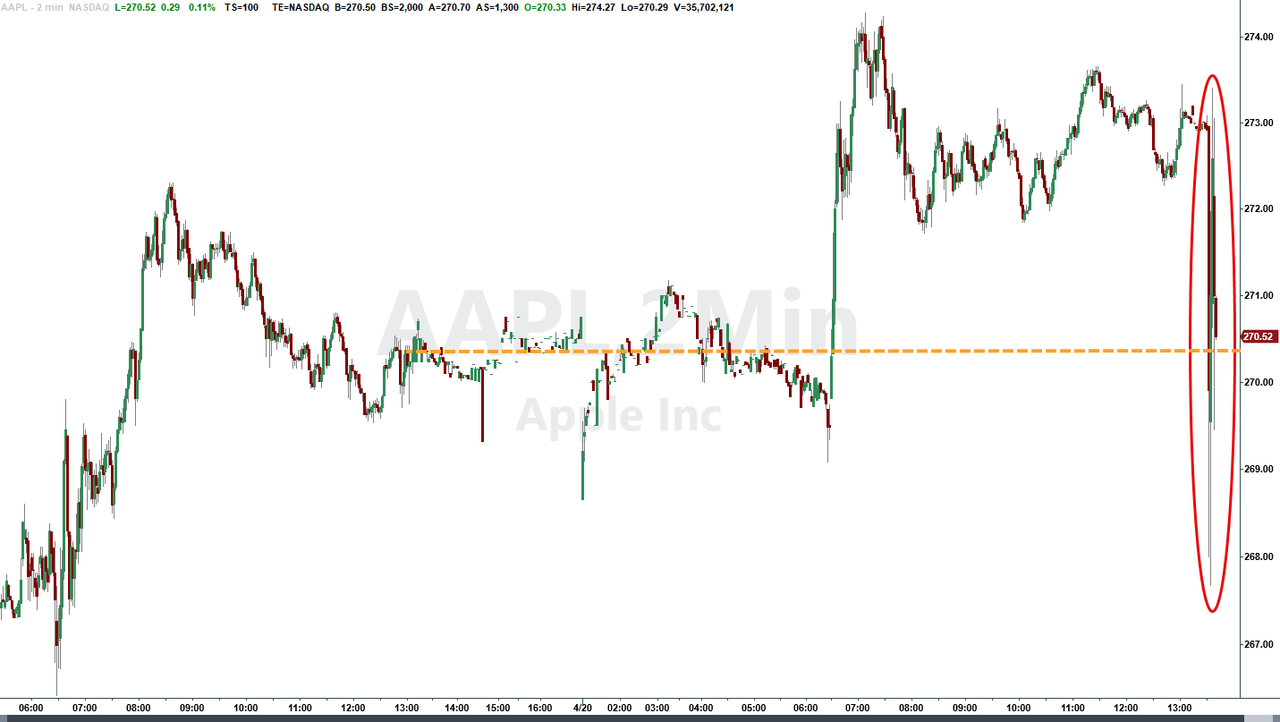
Apple stock dumped on the (widely telegraphed) news, then recovered much of the initial drop.
Tyler Durden
Mon, 04/20/2026 – 16:46
Half Of Americans Live In States Where Weed Is Legal
Half Of Americans Live In States Where Weed Is Legal
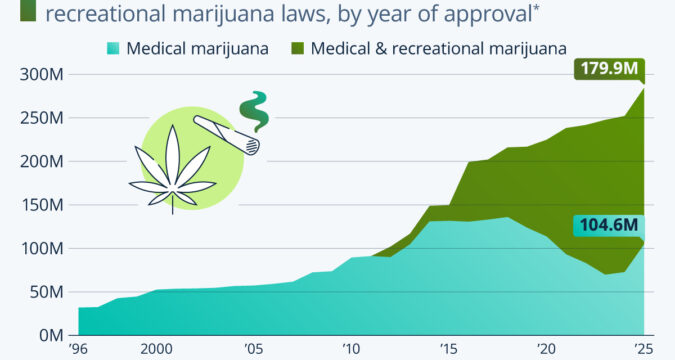
In August 2013, the Justice Department stated in a press release that it was not going to enforce federal law prohibiting the cannabis use in states that were launching recreational cannabis programs at the time, clearing the way for state-by-state marijuana legalization in the United States.
Approximately 12 years down the line, half of Americans live in states where marijuana is legal and another 105 million have access to medical marijuana.
As Statista’s Katharina Buchholz details below, this means that 80 percent of U.S. residents now live in a state with some sort of legal weed.
In 2013, it was Colorado and Washington which were gearing up to legalize marijuana after successful ballot initiatives as part of the November 2012 elections.
But the federal government’s policy statement was also relevant for another 18 states and the District of Columbia, which at the time had already legalized medical marijuana.
You will find more infographics at Statista
Data from the Census Bureau shows that between 2012 and 2014, a substantial number of people continued to gain access to medical marijuana as larger states like Massachusetts and Illinois passed measures.
After those years, shifts to recreational weed legislation dominate the statistic with significant legalizations in California (2016), Michigan (2018), New Jersey (2020) and New York (2021), effectively lowering the number of people under medical marijuana legislation only.
Despite this, a total of 15 states have passed medical marijuana ballots or legislation after 2015, including Pennsylvania, Ohio, Florida, Utah and most recently Nebraska.
You will find more infographics at Statista
Texas last year significantly expanded existing laws and is now counted as a medical marijuana state for the purpose of this chart, significantly pushing up the number of Americans under any kind of legal weed law once more.
Tyler Durden
Mon, 04/20/2026 – 16:40
https://www.zerohedge.com/medical/half-americans-live-states-where-weed-legal

Things Get Interesting-er
Things Get Interesting-er
Authored by James Howard Kunstler,
“It is one thing for the people (of Iran) to be ruled by globally feared autocrats armed to the teeth, but quite another to be governed by humiliated, now impotent incompetents and buffoons.”
– VDH
Wednesday the US / Iran ceasefire expires. It has been an interesting two weeks. The US used it to negotiate an end to hostilities, resupply our ships in the Arabian Sea, do maintenance on our ships and warplanes, dismantle Iran’s banking conduits, and blockade Hormuz to shut down the regime’s remaining income flow. The Iranians used it to jump up and down and go woo-woo-woo. They also tried to dig out the entrances of their bombed caves and tunnels to unearth whatever’s left of their hidden missile launchers. Our satellites watched everything they did and mapped the coordinates.
Negotiations? So far, not fruitful, if termination of hostilities and surrender of Iran’s uranium is the goal. We’re not even sure the Iranians we’re negotiating with have any real authority to make a deal. Iran’s government at this point is a hash of conflicting factions: the Revolutionary Guard (IRGC), which is a large Jihadi mafia that happens to own half of Iran’s economy and controls its advanced missile and drone weaponry; the regular Army (Artesh) which would theoretically defend against a ground invasion, but otherwise just stands by; and the civilian government represented by President Masoud Pezeshkian, Foreign Minister Abbas Araghchi, and Parliament Speaker Mohammad-Bagher Ghalibef — none of whom seem to hold any real decision-making power.
America’s negotiators, led by Veep Vance along with Messrs. Witkoff and Kushner, will land back in Islamabad, Pakistan, today (Monday, April 20).
Our deal is still on the table.
It’s pretty straightforward:
the aforementioned uranium plus a twenty-year halt of nuclear activities with no path toward a weapon;
full reopening of the Strait of Hormuz;
an end to Iranian support for Hezbollah, Hamas, and the Houthis;
phased-out sanctions and access to frozen assets;
and cessation of hostilities.
Events over the weekend argue that Iran is not finished playing stupid games and winning stupid prizes.
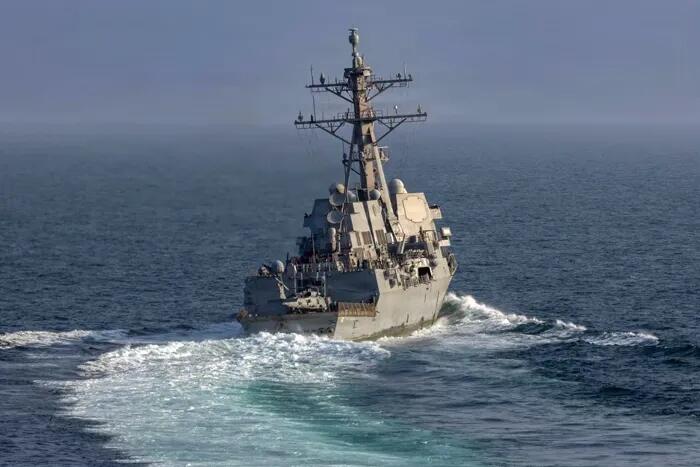
They tried to run the Hormuz blockade on Sunday with an incoming cargo ship, the Iranian-flagged M/V Touska. The USS destroyer Spruance, an Arleigh Burke-class guided-missile destroyer, blew a hole clean through its engine room and then seized the vessel. Its cargo remains undisclosed for now.
Iran claims that it has closed the Strait of Hormuz. The US said it was already closed via the US blockade (we closed it harder). Iran can’t surreptitiously move any oil out to sell to China or run supplies into the country. Iran will lose about $500-million a day and China will lose the majority of its oil imports. China will jump up and down and go woo-woo-woo over that, while the IRGC will lose its last remaining income stream, meaning no pay for anyone. Let’s see if that prompts an attitude change.
If Iran can’t move its oil, it will soon reach the limit of its oil storage capacity, meaning it will have to shut down its oil wells.
If that happens, the hydrology is such that water invasion of the underground strata will permanently damage the oil fields. Iran is between a rock and a squishy place.
That might be enough to force a deal in the hours ahead.
President Trump has made it clear that the time for Iran jerking-around the US is over.
So then, it’s back to Power Station and Bridge Day (blowing them up).
That would be extremely unfortunate for the ordinary Iranian people.
They are unarmed and helpless to resist the maniacs of the IRGC who would allow Power Station and Bridge Day to happen, who, in effect, don’t really care about the ordinary people of Iran.
However, the regular Iranian army, the Artesh, does have weapons (they are the army and armies are generally armed).
Perhaps they will use them to put the insane jihadi IRGC out of business.
After all, the Artesh’s mission is defense on-the-ground of the Iranian homeland, and just now the biggest threat to Iran is the IRGC.
I guess we’ll have to wait on that and watch.
Meanwhile, interesting developments back on America’s home front: All of a sudden, pieces are moving around the game-board of the ongoing and long-running color revolution that the Trump administration is trying to stop.
By color revolution I mean the Democratic Party and its Deep State cadres’ efforts to transform our country into a matrix of crypto-Marxist racketeering operations — and to evade responsibility for the damage already perpetrated dating back to at least 2016.
The FBI Director, Kash Patel, said explicitly on Maria Bartiromo’s Sunday Morning news show that his agency has amassed hard evidence of fraud in the 2020 elections and to expect arrests presently.
(Hmmmm, maybe not so “baseless” after all.)
Acting Attorney General Todd Blanche has prepared to move Colorado political prisoner Tina Peters out of the state lockup and under protection in a federal facility.
It is rumored that the move is due to Ms. Peters’ imminent transformation into a witness for a federal case against Colorado election officials.
AG Blanche has also hired Joseph diGenova, former US Attorney for the DC District, as an assisting counsel to US Attorney Jason Reding Quiñones in the Southern District of Florida, who, as you know, is running a grand jury down there.
Mr. diGenova, 81, has mapped the events and time-lines necessary to make a solid “grand conspiracy” case against the well-known posse of color revolutionists who perpetrated a series of hoaxes, frauds, and malicious prosecutions on our country and on thousands of innocent citizens (including the current occupant of the White House and his lawyers and associates). Like I said, things get interesting-er.
Tyler Durden
Mon, 04/20/2026 – 16:20
https://www.zerohedge.com/geopolitical/things-get-interesting-er

Charles Schwab, Citadel Securities Weigh Entering Prediction Markets
Charles Schwab, Citadel Securities Weigh Entering Prediction Markets
Authored by Jesse Coghlan via CoinTelegraph.com,
Traditional finance giants Charles Schwab and Citadel Securities are both considering entering prediction markets, with each separately weighing up how they wish to get involved in the fast-growing sector.
“I think at some point we likely will have prediction markets,” Rick Wurster, the CEO of the banking and investing titan Schwab, told investors during a call on Thursday.
He added that prediction markets weren’t “of tremendous interest” when he recently asked a group of Schwab clients about them, but it was an area the company would “take a hard look at, and it would be quite straightforward for us to offer.”
Charles Schwab CEO Rick Wurster speaking to CNBC after the company launched Bitcoin and Ether trading on Thursday. Source: CNBC
Prediction markets such as the popular Kalshi and Polymarket have exploded in use over the past few months, with both platforms seeing a record combined total monthly trading volume of $23.6 billion in March, according to Token Terminal.
However, Kalshi, Polymarket and other prediction market platforms have also caught the ire of some US state regulators, who have accused them in court of offering unlicensed sports betting.
Some federal lawmakers have also vowed to crack down on prediction markets, claiming the platforms weren’t doing enough to stamp out insider trading.
Wurster said Schwab’s potential offering would steer away from allowing bets on areas such as sports, politics and pop culture as it looks to position itself as a partner for building long-term wealth.
“Prediction markets that are not aligned to that are not something that we want to pursue,” he said.
“If you look at the stats on the success of gamblers, they’re not strong, and people generally lose money.”
Citadel “keeping an eye” on prediction markets
Meanwhile, Citadel Securities president Jim Esposito said at a Semafor conference in Washington, DC, on Thursday that the company is “absolutely keeping an eye on developments” in prediction markets.
Citadel Securities president Jim Esposito speaking at the Semafor World Economy conference on Thursday. Source: YouTube
“We’re not there yet, there’s not that much liquidity,” he added, but said that the market is likely to “ramp and scale,” and it was “certainly possible” that the market-making firm would potentially look to get involved.
Esposito said Citadel was “not looking at sports at the moment at all, I don’t see us entering that market,” but did signal an interest in some event contracts.
He added that Citadel could see its retail and institutional clients use some event contracts as a hedge for risks to their investments, such as contracts for elections, which have been known to move markets.
“That’s going to be some of the biggest risks to investors’ portfolios that they’re going to have to grapple with,” Esposito said. “Having a clean and distinct way to hedge certain risks, I think there’s a good use case and industrial logic to it.”
Tyler Durden
Mon, 04/20/2026 – 15:40