Category: News

User experience changing for Porter County library patrons
Carol Daumer Gutjahr was sitting at the airport when she needed to borrow some books for her flight. No problem.
The executive director of the Lake County Public Library, which has nine branches, was able to get what she needed right there at the airport – and without paying airport prices. She picked up her iPad and found what she needed online.
“In the past, I would take three or four books because you just never know sometimes what you would want to read,” she said. She usually packed a few magazines, too, so her reading material could match her mood at the moment.
Digital borrowing is proving popular for many patrons as libraries strive to improve the customer experience.
At the Porter County Public Library System, Director Jesse Butz said total digital circulation – books, audio, databases, video, magazines and music – outnumbered physical circulation in 2024, 504,339 to 455,591.
Ease of e-readers
A variety of factors affected the numbers for physical items. Magazines, DVDs and music are losing popularity to streaming services, Butz said. Library hours were cut 2%, too, as the library system began adjusting to the anticipated revenue drop that Senate Enrolled Act 1 is causing for local governments statewide.
Borrowing electronically can happen anytime, anywhere. Digital audiobook borrowing increased 16% last year. “They’re so very convenient; we’ve got so many commuters in the area,” Butz said. Many modern cars don’t even have CD players built in. Apple CarPlay and its Android equivalent are becoming the standard.
Butz reads almost exclusively on a Kindle Paperwhite, as do his wife and one of his sons.
The other son prefers physical books.
A Kindle is more convenient for Butz, who accompanied his wife to medical appointments. “I was bringing a heavy backpack constantly. I had her book and my book.”
Reading on the phone wasn’t comfortable because of the screen size, so he found an Amazon deal for a Kindle. “No running to the bookstore, no running to the library,”
“I’ll go on the Indiana Digital Library, and we’ll put a bunch of holds on books,” Butz said. “To be able to do that from home is enormously beneficial.”
“You don’t want to take 30 books in your luggage. You want to take one device with a thousand books,” he said.
The Kindle Paperwhite reduces the glare of a regular screen. “You start to have that convenience, and honestly, you don’t miss that book,” Butz said.
Reading a sci-fi book, “I can press and hold and get the definition right there,” he said.
For his digital son, “I think it’s been helping to increase his engagement with literacy rather than video games.”
“They’re not necessarily a replacement for physical if you don’t want them to be,” Butz said.
Snowbirds and other seniors are big fans of e-readers. “They’d load up their Kindles and go on a cruise,” Butz said.
“It is nice to bump up the point size,” Daumer Gutjahr noted, giving the ease of reading a large print book without the extra weight.
Some people prefer to use the theatrical versions of audiobooks, which aren’t limited to a single narrator. “In a way, you have a cast reading to you,” she said.
Indiana Digital Library
Butz was instrumental in making digital lending so easy for nearly all of Indiana’s libraries. He helped set up the Indiana Digital Library, working with the Indiana State Library and Stephanie Murphy, who is now at the St. Joseph County Public Library.
Now, more than 200 libraries across Indiana can borrow digital materials purchased elsewhere.
Lake County Public Library, which has nine branches, is too large to be eligible for participation. Digital lending is popular there, with 785,433 digital loans last year, but the 1,445,919 physical items were nearly double that number, Daumer Gutjahr said.
Crown Point Public Library Director Julie Wendorf said digital lending was up 13.6% over 2024, at 125,932, while physical materials were down 0.4% to 360,569. The drop in physical lending could have been simply the result of days the library was closed for weather or other reasons, she said.
The formation of the Indiana Digital Library was transformative, she said.
“Digital purchasing for individual libraries is quite expensive,” she said. An ebook might cost an individual $14 or $15, but libraries don’t get that price. They buy a license for a year or two, or for a limited number of readers. “The cost of that book might be as much as $80.”
Julie Wendorf, director of the Crown Point Community Library, shown at the Crown Point Community Library on Friday, Feb. 21, 2025. (John Smierciak / Post-Tribune)
The American Library Association believes publishers are discriminating against libraries, Wendorf said.
Libraries get a discounted price for printed materials. “A library can lend that book until it falls apart,” she said.
Print preferences
Even with the growth of digital, some readers prefer print.
“I find that some of our younger readers are definitely trying to decrease their screen time,” Wendorf said. By young, she’s referring to Millennials and Generation Z. “They’re the ones that have the strongest feelings about reading in print,” she said.
Book collecting is on the rise for readers in that age group.
Daumer Gutjahr admits to a fondness for physical materials even as she uses her iPad to read. “I have a lot of paperbacks at home and hard copies that I love,” she said.
Enticing children to read is important.
Children’s material accounts for 60% of circulation at the Crown Point library, up 2.8% over 2024, Wendorf said. Printed material is the big driver.
“We’ve seen that growth for a number of years,” she said. “We like to see that pattern building.”
Changing the visitor experience
At the Porter County Public Library System branches, the way children’s material is being displayed is changing, starting with the Hebron branch.
At Hebron, picture books are grouped by topic. “It won’t just have words; it will have pictures of dogs and cats and superheroes,” Butz said.
“Right now, we sort them by the author’s last name. So if you say I want dinosaur books, what a patron would have to do is search ‘dino.’ As a system, we’ve got 4,342 books on dino. If I want to see where a book is, this book right here, I have to go to the Valpo branch in the picture books section, I have to look for VAISB. That’s the author’s last name. That’s how I find it. So if I want that one title, outstanding, very easy to find. But what happens if I want the next title? This one is WHEEL, so I’ve got one in V and one in W,” and so forth. “Each one of them will be in different sections as we go. They’re all over, 4,000 of them.”
“That’s not how kids browse,” Butz said. “We want to give agency to each of these kids. We want them to be able to guide their literacy journey and experience it, and we want them to have fun,” he said. “But they just want dinos. They’re obsessed with dinos. So let’s give them the dinos, not have them do a scavenger hunt where they may or may not find these books.”
“I’ve seen it in my own library when a kid put his arm around all these books and dumped them into a wagon, just giggling hysterically the whole time,” Butz said.
The picture books are being displayed like albums at a record store. Kids can flip through them and see the covers without having to pull each book off the shelf first.
At Hebron Public Library, children’s books are being gathered by topic and stored like record albums so kids can flip through them more easily to see the covers. (Doug Ross/for Post-Tribune)
Letting books put their best face forward rather than just displaying their spines is important to Butz and, he believes, to library users.
He’s discarding the Dewey decimal system to group material by genre, like mystery and science fiction. Shelves at the Valparaiso branch have large labels to guide people to the section they’re interested in, much like at a bookstore.
“You don’t browse Dewey. That’s why bookstores don’t use it. It’s designed for librarians who are trying to put something on a shelf, find it and put it back right away. Most people don’t look like that. They come in, and they want to browse their genre,” Butz said.
“Personally, I’m a sci-fi and fantasy guy. I won’t leave these three rows the whole time I’m here. So why should we design this whole collection around the librarian, when it’s for the convenience of the patrons that we really want you to do?”
“Before, you wouldn’t enter these stacks unless you knew the exact title you’re looking for. Now you’re invited to come in, you’re invited to explore, invited to find new materials,” Butz said.
That helps the customer, but it also affects how the books are organized by librarians for easy retrieval and shelving. The new taxonomy will work like a cookbook: French, author’s last name. “As long as you can get to your zone, it’s going to be more intuitive than ever,” he said.
Explore and discover
Inside the stacks, zigzag shelves allow some of the books to be judged by their covers rather than by their spines. “We’re partnering with the career and technical team over at Valpo Schools, and they’re going to build these so we’ve got more of them,” Butz said.
“You can look all the way through. It makes it feel lighter, airier, more comfortable,” he said. Less claustrophobic, too.
“If you can’t find a book here you’ve never seen, you’re just absolutely not trying,” he said.
Next month, the Porter County Library Board will be asking permission to buy new shelving to make the arrangement work.
Displaying books face-out like these at Valparaiso Public Library makes it easier to judge books by their covers rather than their spines. (Doug Ross/for Post-Tribune)
Butz has other changes in the works, too.
Already, the entry doors automatically slide open when a visitor approaches. That’s in response to the patron who said when she pushed the button for the door to swing open, it started closing by the time she could get her walker through it.
The main lobby will be remodeled to remove the large circulation desk and have two pods for borrowers in its place. That opens up space to display more materials.
Tables in the reference area will be replaced with study carrels that give more privacy, scattered throughout the library. Café tables are already by the windows so patrons can have more light when they’re sitting to chat or read.
Spending more time at the library means being exposed to more books.
“By doing the displays the way we have, and doing what we have with the classification changes, I think it’s going to be so much easier and accessible,” Butz said.
“Librarians struggle with this a little bit because we think it’s easy to find. There’s a system; look it up, and it should be where it’s supposed to be.”
“You don’t think about displays and the wayfinding and the habits of the patrons. What we’re trying to do is divorce ourselves from us as librarians and focus on us as human. How do we interact? When we go to a store, what do we look for?”
“I just want to see something I’ve never seen before. I want to hunt. It’s very rare that I see the exact same book that I wanted that moment, so I use that as a discovery moment,” Butz said. “I think that’s what we haven’t had before, is the ability to explore and discover.”
Doug Ross is a freelance reporter for the Post-Tribune.

Pentagon Puts 1,500 Arctic-Trained Troops On Standby For Minnesota Deployment Amid Left-Wing Chaos
Pentagon Puts 1,500 Arctic-Trained Troops On Standby For Minnesota Deployment Amid Left-Wing Chaos
The Pentagon has placed 1,500 active-duty troops on prepare-to-deploy status for a possible deployment to the Minneapolis metro area if social unrest escalates in the sanctuary city governed by left-wing politicians, according to multiple reports from ABC News and The Washington Post, both citing unnamed defense officials.
“The Department of War is always prepared to execute the orders of the Commander-in-Chief if called upon,” Chief Pentagon spokesman Sean Parnell told CNN.
WaPo and ABC reported that the 1,500 active-duty troops are assigned to two U.S. Army infantry battalions under the 11th Airborne Division, which is based in Alaska. The soldiers specialize in cold-weather operations, as temperatures in Minneapolis are in the single digits.
On Saturday afternoon, we reported that Gov. Tim Walz mobilized the National Guard to support the Minnesota State Patrol and other local law enforcement. These Guardsmen would focus on public safety support, such as traffic control and protecting life and property.
President Trump has already sent 3,000 federal agents from ICE and Border Patrol to Minneapolis and nearby St. Paul this month, as part of a massive federal deportation operation to arrest and deport criminal illegal aliens that are being shielded by corrupt Democratic politicians.
On the ground, federal agents have faced militant left-wing groups, such as Antifa and Antifa-adjacent organizations, waging pressure campaigns to derail federal operations. There have also been so-called “legal observers,” including left-wing activists, who have attempted to disrupt these deportation operations. In addition, dark-money-funded NGOs are aiding these pressure campaigns against federal authorities.
ALERT: Woman reveals that a quick response group she’s in was able impede and obstruct an ICE operation that ended in the detainee being let loose:
“When we got the call for this ICE sighting, within minutes, we had 20 to 30 observers on foot and in vehicle, myself included.… pic.twitter.com/4rYXbWfitN
— E X X ➠A L E R T S (@ExxAlerts) January 18, 2026
Even the unhinged Minneapolis Mayor Jacob Frey admitted these pressure campaigns were being supported by a network of nonprofits.
POLITICAL VIOLENCE: Minneapolis Mayor Jacob Frey refuses to reveal the identities of the NGOs he’s working with to organize protests in his city. The DOJ is investigating the groups with funding and directives from Soros and CCP-linked NGOs. pic.twitter.com/C9cWgIZ5VN
— @amuse (@amuse) January 8, 2026
These pressure campaigns against the feds have prompted Trump to publicly say that he could use the “Insurrection Act” to quell the manufactured chaos by left-wing agitators.
“If the corrupt politicians of Minnesota don’t obey the law and stop the professional agitators and insurrectionists from attacking the Patriots of I.C.E., who are only trying to do their job, I will institute the INSURRECTION ACT,” Trump posted on Truth Social.
Meanwhile, CBS News reported Saturday that the Justice Department is investigating Gov. Walz and Minneapolis Mayor Jacob Frey over an alleged conspiracy to impede federal immigration agents during deportation operations (read report).
Left-wing chaos is unfolding even in frigid weather. Just wait until the Democratic Party’s billionaire-funded protest industrial complex ramps up in the spring; the manufactured unrest is only beginning. The clock is ticking for the Trump administration to fracture the left-wing billionaire family foundations, foreign money pipelines, and nonprofit networks waging a color revolution against all things “America First” agenda.
Tyler Durden
Sun, 01/18/2026 – 14:35

Box Office: ‘28 Years Later: The Bone Temple’ opens behind ‘Avatar: Fire and Ash’
“28 Years Later: The Bone Temple” may have scored well with critics, but slightly more moviegoing audiences chose to spend the holiday weekend catching up with “Avatar: Fire and Ash.” James Cameron’s epic topped the North American box office charts for the fifth straight weekend with $13.3 million in ticket sales, according to studio estimates Sunday. The Walt Disney Co. also celebrated another win as their Thanksgiving release “Zootopia 2” became the highest grossing animated Motion Picture Association release of all time.
Meanwhile “The Bone Temple,” directed by Nia DaCosta, landed in second place with $13 million through Sunday. By the end of Monday’s Martin Luther King Jr. Day holiday, it’s expected to be at $15 million, still trailing “Avatar’s” projected $17.2 million. The film, released by Sony Pictures and starring Ralph Fiennes and Jack O’Connell, opened wide this weekend in 3,506 theaters on a wave of hype and strong reviews. It currently has a 93% on Rotten Tomatoes, and 72% of audiences said in a PostTrak poll that they would “definitely recommend” the movie. Considering it’s also solidly in the horror genre and arriving in January, often a dumping ground for lesser movies, “The Bone Temple” should have done better. Internationally, it made $16.2 million from 61 markets.
But perhaps in a case of too much too soon, the sequel also comes less than a year after the previous installment, “28 Years Later,” which opened to $30 million in June. Going into the weekend, “The Bone Temple” was expected to make at least $20 million through Monday. With a reported $63 million production budget, not including marketing and promotion, it also has a long journey to break even.
“It’s one of those head-scratchers,” said Paul Dergarabedian, the head of marketplace trends for Comscore. “There may be a little bit of confusion from audiences. But word-of-mouth might sustain it in this marketplace, like we saw with ‘The Housemaid’ and ‘Zootopia 2.’”
Danny Boyle and Alex Garland, the team who started it all with “28 Days Later,” which came out in 2002, are also working on a third installment.
Third place went to “Zootopia 2,” with $8.8 million in its eighth weekend. With global grosses currently at $1.7 billion, it surpassed “Inside Out 2” as the highest grossing MPA animated release of all time. The MPA distinction means that the Chinese blockbuster “Ne Zha 2,” which has made over $2.2 billion, is not included in the rankings. “Zootopia 2” is also now the ninth biggest global release of all time
“The Housemaid,” one of the other major blockbusters of late, landed in fourth place with $8.5 million. Made for only $35 million, the Lionsgate release has grossed nearly $250 million worldwide.
Rounding out the top five was “Marty Supreme,” which became A24’s highest grossing North American release with a running gross of $79.7 million, unseating “Everything Everywhere All at Once.” Josh Safdie’s mid-century adrenaline rush may get another boost after Oscar nominations are announced Thursday.
“Lord of the Rings: The Fellowship of the Ring” and “The Two Towers” were also back in theaters this weekend and both in the top 10, grossing $3.6 million and $2.4 million respectively.
Outside of the top 10, Focus Features’ “Hamnet,” which won best drama and best female actor for Jessie Buckley at the Golden Globes last weekend and is considered another top Oscar contender, expanded to 718 locations this weekend where it made $1.3 million through Sunday.
Top 10 movies by domestic box office
With final domestic figures being released Tuesday, this list factors in the estimated ticket sales for Friday through Sunday at U.S. and Canadian theaters, according to comScore:
1. “Avatar: Fire and Ash,” $13.3 million.
2. “28 Years Later: The Bone Temple,” $13 million.
3. “Zootopia 2,” $8.8 million.
4. “The Housemaid,” $8.5 million
5. “Marty Supreme,” $5.5 million.
6. “Primate,” $5 million.
7. “Lord of the Rings: The Fellowship of the Ring,” $3.6 million.
8. “Greenland 2: Migration,” $3.4 million.
9. “Anaconda,” $3.2 million.
10. “Lord of the Rings: The Two Towers,” $2.4 million.
https://www.chicagotribune.com/2026/01/18/box-office-28-years-later/

Republicans and Democrats are trying to contain Donald Trump’s Greenland aggression. Will it be enough?
WASHINGTON — Republican lawmakers are scrambling to contain President Donald Trump’s threats of taking possession of Greenland, with some showing the most strident opposition to almost anything the Trump administration has done since taking office.
They gave floor speeches on the importance of NATO last week. They introduced bills meant to prevent the U.S. from attacking Denmark. And several traveled to Copenhagen to meet with Danish counterparts.
But it’s not clear that will be enough, as the president continues to insist that he will take control of the Arctic island. It’s raised fears of an end to NATO — a decades-old alliance that has been a pillar of American strength in Europe and around the globe — and raised questions on Capitol Hill and around the world about what Trump’s aggressive, go-it-alone foreign policy will mean for world order.
“When the most powerful military nation on earth threatens your territory through its president over and over and over again, you start to take it seriously,” Sen. Chris Coons told The Associated Press.
The Delaware Democrat organized the bipartisan trip to Denmark to “bring the temperature down a bit,” he said, as well as further talks about mutual military agreements in the Arctic. Republican Sens. Thom Tillis of North Carolina and Lisa Murkowski of Alaska accompanied a handful of Democrats on the trip. Also, Republican lawmakers joined in meetings in Washington last week with the Danish foreign minister and his Greenlandic counterpart where they discussed security agreements.
Yet it’s clear Trump has other ideas. He said Saturday he will charge a 10% import tax starting in February on goods from eight European nations because of their opposition to his Greenland plans.
Trump said on social media that because of modern weapons systems “the need to ACQUIRE is especially important.”
The pushback to Trump’s Greenland plans
Key Republicans have made clear they think that forcefully taking Greenland is out of the question. But so far, they’ve avoided directly rebuking Trump for his talk of possessing the island.
Tillis on social media called Trumps tariff plans “bad for America, bad for American businesses, and bad for America’s allies.”
Senate Majority Leader John Thune, R-S.D., told reporters Thursday that “there’s certainly not an appetite here for some of the options that have been talked about or considered.”
In a floor speech, Thune’s predecessor as Republican leader, Sen. Mitch McConnell, warned that an attempt to seize Greenland would “shatter the trust of allies” and tarnish Trump’s legacy with a disastrous foreign policy decision.
Republican and Democratic lawmakers alike see an obvious path to bolstering American interests in Greenland while keeping the relationship with NATO-ally Denmark intact.
In a meeting with lawmakers Thursday, Danish Foreign Minister Lars Løkke Rasmussen and his Greenlandic counterpart Vivian Motzfeldt discussed how the countries could work together to develop critical mineral industries and military cooperation, Coons said. The diplomats also told the senators there is no evidence of Chinese or Russian activity in Greenland.
Trump has made the argument that the U.S. should take Greenland before China or Russia do, prompting worry across Europe. Troops from several nations have been sent to Greenland in support of Denmark.
Murkowski said on social media that “our NATO allies are being forced to divert attention and resources to Greenland, a dynamic that plays directly into Putin’s hands by threatening the stability of the strongest coalition of democracies the world has ever seen.”
What can Congress do?
Lawmakers are looking at a few options for taking a military attack on Greenland off the table. Still, the Trump administration has shown little if any willingness to get congressional approval before taking military action.
Lawmakers, including Republicans like Murkowski, are pushing legislation that would prohibit Department of Defense funds from being used to attack or occupy territory that belongs to other NATO members without their consent.
The Alaska senator also suggested Congress could act to nullify Trump’s tariffs. Murkowski and several other Republicans have already helped pass resolutions last year meant to undo tariffs around the globe, but those pieces of legislation did not gain traction in the House. They would have also required Trump’s signature or support from two-thirds of both chambers to override his veto.
Democrats have also found some traction with war powers resolutions meant to force the president to get congressional approval before engaging in hostilities. Republicans last week narrowly defeated one such resolution that would prohibit Trump from attacking Venezuela again, and Democrats think there could potentially be more Republicans who would support one applying to Greenland.
“What I’ve noticed is these war powers resolutions, they do put some pressure on Republicans,” said Sen. Tim Kaine, a Virginia Democrat who has forced votes on several similar resolutions. He said the tactic has also compelled the Trump administration to provide lawmakers with briefings and commitments to get congressional approval before deploying troops.
Still, while dismissing the Venezuela war powers resolution on Wednesday, Republican leaders made the argument that the legislation should be ruled out of order because the Trump administration has said there are currently no U.S. troops on the ground in Venezuela.
That argument may set a precedent for future war powers resolutions, giving Republicans a way to avoid voting against Trump’s wishes.
“If you don’t have boots on the ground, it’s a moot point,” said Sen. Mike Rounds, a South Dakota Republican, about war powers resolutions in general. He also argued that the prospect of taking Greenland over the objections of Denmark is nothing “more than a hypothetical.”
Other Republicans have expressed support for Trump’s insistence that the U.S. possess Greenland, though they have downplayed the idea that the U.S. would take it by force.
That’s left the strongest objections on the Republican side of the aisle coming from a handful of lawmakers who are leaving Congress next year.
Rep. Don Bacon, a Nebraska Republican, told The Omaha World Herald that an invasion of Greenland would lead to Trump’s impeachment — something he would “lean” towards supporting.
Tillis, another retiring Republican, has directed his criticism at Trump advisors like White House Deputy Chief of Staff Stephen Miller.
“The fact that a small handful of ‘advisors’ are actively pushing for coercive action to seize territory of an ally is beyond stupid,” he said.
https://www.chicagotribune.com/2026/01/18/republicans-democrats-trumps-greenland-aggression/

Nueva entrega de “Avatar” encabeza las taquillas por quinta semana consecutiva
Por LINDSEY BAHR
En el fin de semana largo en Estados Unidos, la película “Avatar: Fire and Ash”, la épica de James Cameron, encabezó las taquillas por quinta semana consecutiva con 13,3 millones de dólares en ventas de boletos, según estimaciones del estudio el domingo.
The Walt Disney Co. también celebró otra victoria, ya que su estreno del Día de Acción de Gracias “Zootopia 2” se convirtió en el lanzamiento animado de la Motion Picture Association con mayor recaudación de todos los tiempos.
Mientras tanto, “28 Years Later: The Bone Temple”, dirigida por Nia DaCosta, se ubicaba en segundo lugar con 13 millones hasta el domingo. Se espera que al final del feriado por el Día de Martin Luther King Jr. el lunes, alcance los 15 millones, aún por detrás de los proyectados 17,2 millones de “Avatar”.
“The Bone Temple”, lanzada por Sony Pictures y protagonizada por Ralph Fiennes y Jack O’Connell, se estrenó ampliamente este fin de semana en 3.506 cines con una ola de expectativas y críticas favorables.
Actualmente tiene un 93% en Rotten Tomatoes, y el 72% del público dijo en una encuesta de PostTrak que “definitivamente recomendaría” la película. Considerando que también está sólidamente en el género de terror y llega en enero, a menudo un vertedero para películas menores, “The Bone Temple” debería haber tenido un mejor desempeño. Internacionalmente, recaudó 16,2 millones de dólares en 61 mercados.
El tercer lugar fue para “Zootopia 2”, con 8,8 millones en su octava semana. Con una recaudación global actualmente de 1.700 millones, superó a “Inside Out 2” como el lanzamiento animado de la MPA con mayor recaudación de todos los tiempos. La distinción de la MPA significa que el éxito de taquilla chino “Ne Zha 2”, que ha recaudado más de 2.200 millones, no está incluido en las clasificaciones. “Zootopia 2” es también ahora el noveno lanzamiento global más grande de todos los tiempos.
“The Housemaid”, uno de los otros grandes éxitos de taquilla recientes, se ubicó en cuarto lugar con 8,5 millones. Hecha con solo 35 millones de dólares, el lanzamiento de Lionsgate ha recaudado casi 250 millones de dólares en todo el mundo.
Completando los cinco primeros está “Marty Supreme”, con una recaudación acumulada de 79,7 millones de dólares, desbancando a “Everything Everywhere All at Once (“Todo en Todas Partes al Mismo Tiempo”). La descarga de adrenalina de Josh Safdie podría recibir otro impulso después de que se anuncien las nominaciones al Oscar el jueves.
A continuación, la lista de las películas más taquilleras en los cines de norteamérica, según Comscore:
1. “Avatar: Fire and Ash”, 13,3 millones de dólares.
2. “28 Years Later: The Bone Temple”, 13 millones de dólares.
3. “Zootopia 2”, 8,8 millones de dólares.
4. “The Housemaid”, 8,5 millones de dólares
5. “Marty Supreme”, 5,5 millones de dólares.
6. “Primate”, 5 millones de dólares.
7. “Lord of the Rings: The Fellowship of the Ring”, 3,6 millones de dólares.
8. “Greenland 2: Migration”, 3,4 millones de dólares.
9. “Anaconda”, 3,2 millones de dólares.
10. “Lord of the Rings: The Two Towers”, 2.4 millones de dólares.
_______
Esta historia fue traducida del inglés por un editor de AP con la ayuda de una herramienta de inteligencia artificial generativa.
Imagine Ramping Up A “War Time” Economy Where Most Of The Stuff You Shoot At The Enemy, Comes From The Enemy
Imagine Ramping Up A “War Time” Economy Where Most Of The Stuff You Shoot At The Enemy, Comes From The Enemy
By Peter Tchir of Academy Securities
If you have not read our 2026 Outlook piece – ProSec 2026, we really urge you to do it. It is our best attempt, to date, to outline why ProSec, or Production for Security (and Resilience) is the dominant theme for this year (and likely for years to come). Not just for the U.S. government (which kicked it off), but also for investors (who are rapidly chasing opportunities in the space), and increasingly for foreign governments and corporations.
We have not “trademarked” the term ProSec (yet), but we have been trying to capture this momentous shift in policy and focus since last summer, and haven’t thought of (or seen) a better way to summarize the New Era.
When we first argued that ProSec is the New ESG – the most common responses were: eye rolls and some reasonably aggressive pushback. That is not the case anymore as the shift in focus and the intensity of that focus is becoming apparent. ProSec has become the core of our discussions. We are learning and refining our take, but the core thesis remains not only intact, but it is also gaining momentum. The FT pointed out that Nuclear Weapons are now ESG Compliant. This is reframing ESG to remain relevant when in reality we are moving to a ProSec World. While the nuclear weapon concept might be a bit over the top, Euronext’s European Defense Bonds smell like capitulation. It will take Europe longer to truly admit that ESG has been replaced, and they are already creating the tools to make it happen, in the guise of the existing framework.
We were inundated (maybe just swamped) with people pointing out the Bipartisan Proposal to create a $2.5 Billion Agency focused on rare earths and critical minerals (someone really needs to simplify rare earths and critical minerals into something catchy and easy). We continue to argue that it is the refining and processing that is most important. More on that in “threats.”
We promise to deliver some semblance of a ProSec equity index this week. That will let people track the performance of ProSec companies. It is likely to evolve (as we get better at this), but it will provide a starting point. While ProSec may seem like an equity story, it will also be a credit story! Some companies will have to issue more debt than planned to achieve their ProSec opportunities (we almost said “goals” but ProSec isn’t about “goals” it is about opportunities). Other companies will see spreads tighten on growth, improved earnings, and possibly, especially for smaller, higher yielding companies, from being acquired. This is about investment to create long-lasting profit opportunities (while achieving security and resilience for your companies, investments, and countries).
If we could just stop the report here, we would. It is important, in our opinion, that if you haven’t read our work on ProSec it isn’t too late, and you should.
But many have read our work and discussed it, so we need to plow on. Also, we can’t ignore last weekend’s Fast and Furious 47, since the admin continued to issue edicts as a “fast and furious” pace.
We are going to go back and forth between deadly serious, and a bit over the top, to try to get our points across (and then we can get back to identifying tickers for our indices).
From ESG to ProSec
Let’s follow a mildly tongue-in-cheek and simplified “decision tree” to where we are in global production. Especially the processing and refining of rare earths and critical minerals. But also, things like steel, copper, solar panels, etc.
You might argue that this is overly simplified. I’d agree. You might argue that this is heavily tongue in cheek. I’d disagree as this is only mildly tongue in cheek.
So here is a take on how we got to where we are.
Is the process energy (carbon emission) intensive? Does it produce a lot of pollutants?
If so, let’s do that step in [insert country here].
Did that reduce direct and immediately obvious issues locally?
Yes.
Did it protect the earth against global pollutants, carbon, etc.?
Probably not, but “out of sight” = “out of mind.”
Presumably [insert country here] must have led to a lot of production in different countries?
Not really, by and large “insert country here” became China.
Wow, it must be incredibly difficult to do these things, and that’s why it all went to China?
Not really. Most countries create more complex systems and finalize projects all the time. It really just didn’t fit the “framework” that we (the “West”) were looking to develop.
Okay, I lied, or at least exaggerated. Initially that was probably correct, but as economies of scale grew and the infrastructure was put in place, there were even greater cost advantages than just not worrying about details like pollution and carbon emissions.
Ok, so we should be able to bring it back “quickly?”
Well, we ceded all of this to China over the course of a decade or two. Sure, we can bring it back more quickly than that, but it will still take time.
Before getting to one more “rant” let’s take a look at some real world examples.
The Threat to Our Flow of Semiconductors
Semiconductors have been greatly affected by how the global supply chain shifted. While we all know that Taiwan is the leading semiconductor manufacturer in the world (in terms of state of the art chips), even they are partially dependent on China. The U.S. is even more so, and not so much because of the technology to make chips, but due to what goes into a chip.
Working with ChatGPT for this, we start with the “simple question” of what are the 5 most important materials that go into semiconductor manufacturing and/or the chips themselves? Anything in bold AND italicized was done by Academy to highlight.
Quick hierarchy (mental model)
Silicon → physical platform
Photoresists → pattern fidelity
Copper → performance & power
Gases & chemicals → manufacturing viability
High-k & specialty metals → advanced scaling
ProSec lens (relevant to your prior themes)
Silicon wafers, photoresists, and specialty gases are strategic choke points
Rare metals (hafnium, tantalum, cobalt) tie semis directly to mining and refining security
Water and electricity intensity makes fabs a critical infrastructure asset
Yes, we have been trying to “train” ChatGPT on our ProSec research.
Sticking with ChatGPT (but eliminating the graphics it provided):
From silica → electronic-grade silicon (step by step)
1) Raw silica (SiO₂)
Comes from quartz / quartzite deposits, abundant globally, but purity and consistency matter
Mining alone is not the bottleneck
2) Metallurgical-grade silicon (MG-Si)
Process
Quartz + carbon (coal/coke/charcoal), smelted in electric arc furnaces at ~2,000°C
Output
~98–99% pure silicon, Still far too impure for chips
Where this happens
China (dominant), Brazil, Norway, United States (limited, declining)
This step is energy-intensive and already geographically concentrated.
3) Chemical purification → polysilicon
This is where semiconductor relevance begins.
Process (simplified)
MG-Si reacts with HCl → trichlorosilane (SiHCl₃)
Distillation removes impurities to parts-per-billion
Re-deposition via Siemens process → ultra-pure polysilicon rods
Purity
Semiconductor grade: 9N–11N (99.9999999%+)
Where this happens (critical chokepoint)
China (largest capacity, esp. Xinjiang), Germany, Japan, United States (small but strategic)
Only a handful of facilities globally can do true semiconductor-grade purification at scale.
4) Single-crystal silicon ingots
Process
Melt polysilicon, Grow a single crystal via Czochralski (CZ) or Float-Zone (FZ) methods
Slice into 300 mm wafers
Where this happens
Japan, Taiwan, South Korea, Germany
This step is precision engineering, not mining.
Key takeaway (important)
Silicon is abundant. Semiconductor-grade silicon is not.
The bottleneck is:
Energy-intensive smelting, Hazardous chemical purification, Extreme quality control, Capital-heavy facilities
Strategic implications (ProSec framing)
Mining ≠ security
Chemical processing + electricity + know-how = security
Losing access to: Polysilicon purification, Crystal growth, Wafer slicing → fabs go dark, even if chips are designed domestically
This is why silicon is quietly treated like a strategic material, even though it’s “just sand.”
That was probably more information that you (or I) needed on silicon in chips.
I’m almost embarrassed to have forced you to read it (or skim over it) but chips are mission critical to our (and virtually every) economy.
Also, this was just one of the 5 main “ingredients” in chips.
An “Imaginary” Conversation
With that serious discussion out of the way, we can get a bit more fully “tongue in cheek” and run through a conversation that plays out in my mind over and over (darn, I should have tried to think of a song for today’s T-Report).
What would happen if China decided to cut the U.S. off from some of the things we now rely on them for?
Why would they do that?
Ok, but hypothetically, what would happen if China decided to cut the U.S. off from some of the things we now rely on them for?
Why would they do that?
Didn’t we get cut off during COVID?
Yes, but that was different because the entire global economy shut down.
Were the consequences for U.S. manufacturing capacity really bad?
Not really because we weren’t making much of anything because people couldn’t go into the office unless they worked in important industries – like finance.
But it would have hampered us?
Sure, but they would never do it on purpose.
So at least we tried to reduce our exposure against another “accidental” situation, like COVID?
There was a lot of chatter about onshoring, re-shoring, friend-shoring, near-shoring, and we even had the CHIPS ACT to boost domestic production of chips.
So, we aggressively reduced the risk?
By “aggressively” (in air quotes) you mean we talked about it a lot? Heck yeah! Actually, accomplished a lot, meh…
So, we remain vulnerable to China cutting off supplies of various things?
Why would they do that?
But seriously, we remain vulnerable to China?
Why would they do that?
Okay, maybe I should toss out some reasons why they “might” do that:
They think it would create leverage for them to be “handed” Taiwan?
They view us as being in competition to be the major global superpower, and they would employ economic means to achieve their goal.
The race is in chips and AI, where we lead in design and even manufacturing, but remain heavily reliant on Taiwan (in their sphere of
influence) and China for the inputs.
They threatened us repeatedly during trade negotiations, on exactly this topic.
The U.S. now accounts for only 15% of China’s exports and they seem to continue to take steps to reduce the importance of the U.S. economy on their economy, which might lead them to the decision that they can start a real economic war.
They did see how poorly the U.S. responds to inflation and disruption in our “comfortable” lives, so they may be tempted to use that to disrupt us, especially on the race to AI and Space superiority (to name a couple key technologies).
They have been allegedly stockpiling things that are important to them, that they don’t necessarily produce themselves (oil is top of mind, but only one of a number of things).
Those all sound crazy to me.
You really think there is no possibility that we experience a disruption, accidentally or on purpose?
Well, zero probability might be too low, things do happen.
Wouldn’t we then be better off if we were prepared for such an eventuality, even if it is a low probability?
I guess.
Ultimately, the higher the risk you think we face from having supply shortages due to restrictions from China (whether intentional or not) the more urgent and important ProSec is.
In any case, I cannot think of good reasons not to want greater capacity domestically, for security, resilience, and the JOBS created.
In addition, is there a possibility that Venezuela doesn’t so much become a source of rare earths and critical minerals, but instead a major hub for processing rare earths and critical minerals, far more in our “control” than existing sources? It might be a way to outpace regulation in the near-term?
True economic freedom and true sustainability derive from being able to take care of yourself (just ask Maslow).
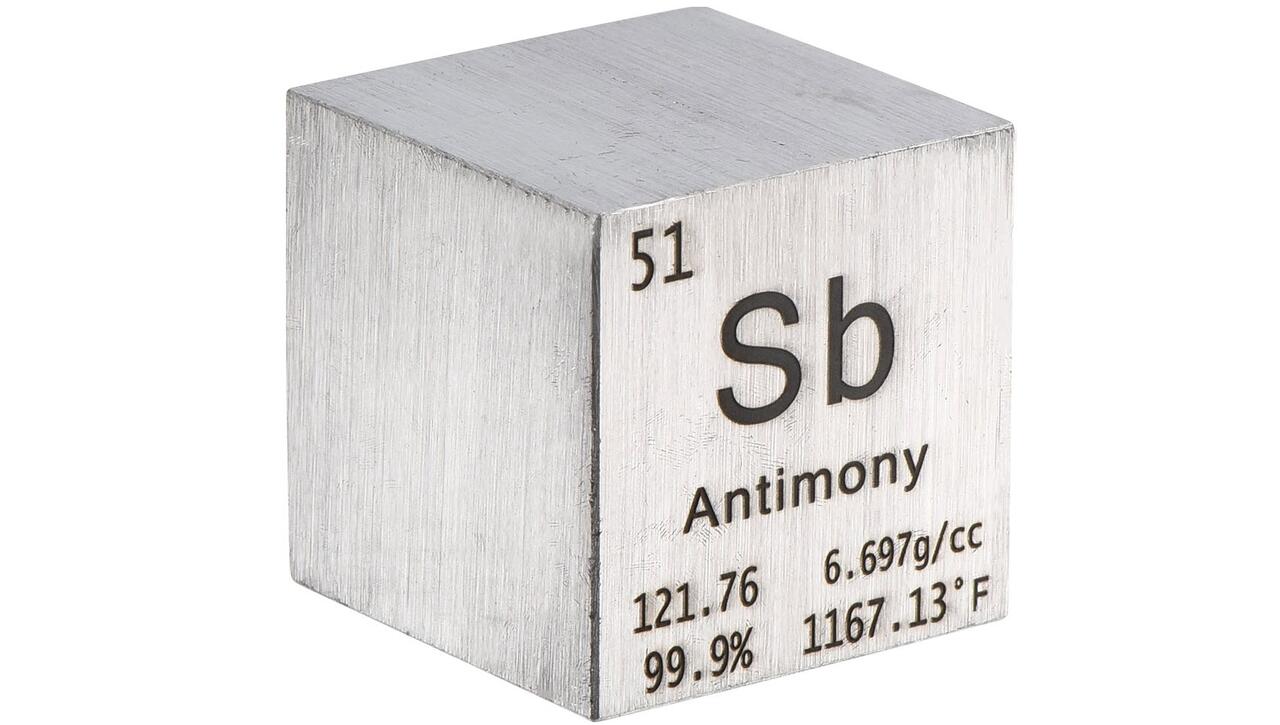
The Threat to the U.S. Military – Antimony
General (ret.) Spider Marks loves bringing up antimony (he has been doing it for years). I’m mildly suspicious he does it primarily because he knows I have trouble pronouncing it, but it is a serious topic. And if it is a threat to our military, imagine the threat it is to other countries’ militaries.
Antimony seems to follow the rather aggressive tone I took in my “make believe” conversation regarding China.
This is more or less an actual conversation with ChatGPT (I have paraphrased its answers because this report is already getting long on technical information, and it is not salient to the point we are trying to make).
Is antimony used in munitions?
Yes.
Are there other alternatives?
Technically yes, but far less efficient
Is it the commodity itself or a refined version?
No. Munitions use antimony as refined metal or chemical compounds “the refining step is the real choke point.”
Where does the U.S. get its refined antimony?
Over 60% from China.
Then directly from ChatGPT (along ProSec lines):
What the U.S. does not have:
No large-scale primary antimony mine in operation
No dedicated munition-grade antimony trisulfide production
No surge-capable domestic refining base
This is the core vulnerability.
Why this is strategically uncomfortable:
The U.S. can manufacture ammunition domestically, but it depends on foreign chemistry to lighten and harden it.
Imagine ramping up a “war time” economy where most of the stuff you use to shoot at the enemy, comes from the enemy.
It almost hurts to even think about, but that is where we are.
Bottom Line
Production.
Security.
Resiliency.
ProSec.
Yes, today’s “Bottom Line” is that simple – ProSec.
Hope you have a great long weekend and I promise we will get back to our rate outlooks, credit outlooks, etc., but we believe that understanding and embracing this topic (as it evolves) will do more for your performance this year, than anything else in your control.
Tyler Durden
Sun, 01/18/2026 – 14:00

Cronología de los desacuerdos entre EEUU y Europa
The Associated Press
La disputa entre Estados Unidos y Europa sobre el futuro de Groenlandia no es la primera vez que los aliados han estado en desacuerdo.
Desde la Segunda Guerra Mundial, han surgido profundas desavenencias de vez en cuando, provocando crisis diplomáticas transatlánticas.
Aquí un vistazo a algunas de ellas.
Crisis de Suez
Cuando Francia, el Reino Unido e Israel invadieron Egipto en 1956, con el objetivo de derrocar al presidente egipcio Gamal Abdel Nasser y retomar el control del Canal de Suez, Estados Unidos empleó una fuerte presión diplomática y económica para detenerlo.
La intervención de Estados Unidos tensó severamente las relaciones de Washington con Londres y París, que eran aliados clave durante la Guerra Fría, y fue un hito en la menguante influencia de Europa en la posguerra.
Guerra de Vietnam
Aunque los países europeos, excepto Francia, brindaron apoyo diplomático a Estados Unidos, se negaron a proporcionar tropas.
Las protestas callejeras en Europa contra la guerra tuvieron un costo político significativo para los gobiernos del continente, que tuvieron que reconciliar su apoyo a Estados Unidos con una erosión de su popularidad interna, y fueron una carga para las relaciones transatlánticas.
Crisis de los euromisiles
El despliegue por parte de Rusia de sus nuevos misiles SS-20, que podían alcanzar rápidamente objetivos en Europa Occidental, obligó a la OTAN a instalar misiles balísticos Pershing con ojivas nucleares y misiles de crucero en Europa para mantener el equilibrio de la amenaza de armas nucleares.
La medida provocó un alboroto en el continente, donde se profundizaron los temores de una nueva carrera armamentista. Enormes manifestaciones pacifistas antinucleares, con manifestantes que a menudo dirigían su ira hacia Washington, llenaron las calles de las capitales europeas en la década de 1980.
Invasión de Irak
La invasión de Irak por parte de Estados Unidos en 2003 provocó una gran crisis en las relaciones con Europa, especialmente con Francia y Alemania, que se negaron a apoyar el ataque al gobierno del presidente Saddam Hussein.
Funcionarios de Washington reprendieron a París y Berlín. El secretario de Defensa Donald Rumsfeld se refirió a ellos como “la Vieja Europa” y elogió a los países de Europa del Este como “la Nueva Europa”.
Detenciones clandestinas
Como parte de su “guerra contra el terrorismo”, Estados Unidos capturó y a veces secuestró a sospechosos, y luego los transfirió a ubicaciones en países donde fueron interrogados y a menudo torturados de manera clandestina.
Aunque algunos gobiernos europeos fueron cómplices del programa, una protesta pública obligó a los líderes políticos a denunciar la práctica.
Guerra en Ucrania
Cuando el presidente Donald Trump regresó a la Casa Blanca en enero de 2025, trastocó tres años de política estadounidense hacia la invasión de Ucrania por parte de Rusia.
Trump alabó al presidente ruso Vladímir Putin, fue frío hacia el presidente ucraniano Volodymyr Zelenskyy, y luego redujo significativamente la ayuda militar de Estados Unidos para Kiev.
Líderes europeos alarmados, que ven su propia seguridad en juego en Ucrania, han presionado a Trump para que esté del lado de Kiev.
Estrategia de seguridad nacional
La administración Trump estableció una nueva estrategia de seguridad nacional el pasado diciembre que retrataba a los aliados europeos como débiles.
Fue mordaz con sus políticas de migración y libertad de expresión, sugirió que enfrentan la “perspectiva de un exterminio civilizacional” y puso en duda su fiabilidad a largo plazo como socios estadounidenses.
Aranceles comerciales
Con las relaciones entre Estados Unidos y Europa deteriorándose, Trump amenazó al continente el pasado julio con fuertes aranceles comerciales en lo que se consideró un movimiento profundamente hostil.
Trump anunció inicialmente aranceles del 30% sobre la Unión Europea, que es el mayor socio comercial de Estados Unidos. Ambas partes acordaron posteriormente un marco comercial que establece un arancel del 15% sobre la mayoría de los bienes.
___________________________________
Esta historia fue traducida del inglés por un editor de AP con ayuda de una herramienta de inteligencia artificial generativa.
https://www.chicagotribune.com/2026/01/18/cronologa-de-los-desacuerdos-entre-eeuu-y-europa/

Sorloth lleva al Atlético a un triunfo 1-0 sobre Alavés en La Liga española
Por TALES AZZONI
MADRID (AP) — Alexander Sorloth anotó en los albores del segundo tiempo para darle al Atlético de Madrid la victoria el domingo por 1-0 sobre el Alavés en La Liga española.
El delantero noruego marcó a los 48 minutos con un cabezazo desde cerca del punto de penal al centro de Pablo Barrios desde la banda derecha. El balón golpeó el poste en el segundo palo antes de entrar.
Fue la décima titularidad en 19 partidos de liga para Sorloth esta temporada y suma seis goles, tres de ellos de cabeza.
El triunfo permitió al Atlético del técnico argentino Diego Simeone alcanzar en puntos a Villarreal, tercero en la clasificación con 41 unidades.
Alavés, un equipo amenazado por el descenso y sin ganar en cinco partidos consecutivos de liga, estuvo cerca de igualar en varias ocasiones al final en el estadio Metropolitano en la capital española.
Los dirigidos por el técnico argentino Eduardo Coudet han sufrido siete derrotas en sus últimos nueve partidos de lig. La única victoria fue el 1-0 contra la Real Sociedad en diciembre.
Más temprano el domingo, Valencia salió de la zona de descenso al vencer 1-0 en Getafe con un gol de José Gayà a los 84 minutos.
El resultado puso fin a la racha de seis partidos sin ganar del Valencia en la liga. Getafe ahora lleva seis partidos consecutivos de liga sin ganar, con cinco derrotas.
Más tarde, el líder Barcelona visita a la Real Sociedad. El Real Madrid, segundo en la tabla, venció el sábado de local 2-0 a Levante.
___
Deportes AP: https://apnews.com/hub/deportes
Higher ed commission wants feedback on O’Bannon Grant approach
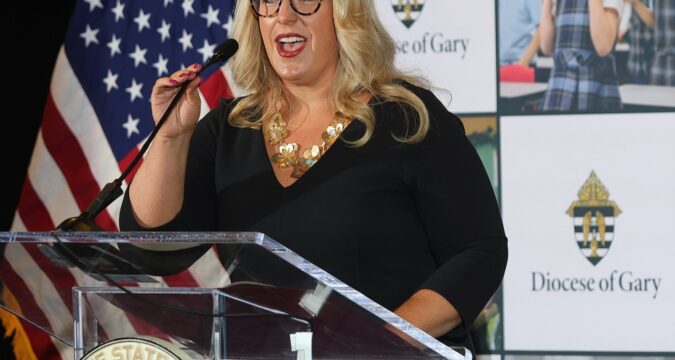
The Indiana Commission for Higher Education is seeking public input on the methodology used in establishing funding for the Frank O’Bannon Grant scholarship, Indiana’s primary need-based financial aid program for residents.
In a Thursday release, the Commission said it’s never shared its methodology used in doling out about $168 million to about 37,000 grant winners across the state to support students from low-income families.
The commission is seeking feedback from colleges and universities, financial aid organizations and other stakeholders.
“Every dollar matters when it comes to helping students access and complete college,” said Katie Jenner, Indiana Secretary of Education.
Commission officials said it relies on two forecasting models to administer the O’Bannon Grant – the Free Application for Federal Student Aid (FAFSA) and the Claims model.
The release said both models guide development of the award program and serve as fiscal controls to ensure spending remains within the appropriation.
“Sharing the methodology will ensure the state maximized its resources so more students can attend college without financial barriers,” said Jenner, who heads the Department of Education and the Commission for Higher Education.
The FAFSA model uses historical FAFSA-filing data through the state’s April 15 priority deadline and historical O’Bannon Grant utilization patterns.
It predicts future student financial need and enrollment behavior to develop an annual award schedule to maximize the state appropriation without overspending, the release said.
The Claims model tracks fall college O’Bannon Grant claims data through October to project total fiscal year spending. The model tracks payments in real-time as the fiscal year progresses and acts as fiscal control once institutions begin submitting claims.
The 2026-27 awards are based on the results of the FAFSA model to guide institutions in developing financial aid packages for both prospective and current students. The projected total spend is $156 million in fiscal year 2026 and $157 million in fiscal year 2027.
By law, the O’Bannon Grant includes both the Higher Education Award and the Freedom of Choice Award. As the state’s primary need-based student aid program, officials said it assisted more than 37,000 Indiana students who attended state public and private schools last year.
To provide feedback or comments to the Commission regarding the methodology, complete this JotForm by March 25. For questions about state financial aid, students can contact the Commission by phone at 888-528-4719 or via email at awards@che.in.gov.
Carole Carlson is a freelance reporter for the Post-Tribune.

Venus Williams, 45, sets an Australian Open record as oldest woman but falls in the 1st round
MELBOURNE, Australia — It took 45 years to be in a position to set a record that has drawn so much attention. So another 14½ minutes serving to keep her Australian Open hopes alive felt like no time at all for Venus Williams.
Ranked No. 576 and playing on a wild-card entry, the seven-time major winner led 4-0 in the third set Sunday before Olga Danilović rallied to win six straight games — getting the vital break in the extra-long, next-to-last game — for a 6-7 (5), 6-3, 6-4 victory.
“It was an amazing journey on the court today,” said Williams, who left the stadium with a smile and a wave.
Just by starting the first-round match, Williams became the oldest woman to compete in an Australian Open singles main draw, surpassing the mark set by Japan’s Kimiko Date, who was 44 when she lost in the first round in 2015.
“I’m really proud of my effort today because I’m playing better with each match, getting to the places that I want to get to,” Williams said. “Right now, I’m just going to have to keep going forward and working on myself and working to control my errors.
“Those are things, too, that come with playing extra matches … all of those things that I’m still learning. It’s kind of weird, but it’s super exciting to have played that well and to get myself in that position and come very close.”
She was 17 when she made her Australian Open debut in 1998, reaching the quarterfinals. This was her 22nd trip to Melbourne Park, where she lost finals to her sister Serena in 2003 and 2017.
Williams was married in December to Andrea Preti, and the couple traveled together in Melbourne.
Williams was determined not just to break Date’s age record. She wanted to punctuate the occasion with a win that could have set up another match against Coco Gauff.
After splitting the first two sets, Williams went on a roll and dropped just five points across four games, hitting some vintage winners. Then the 68th-ranked Danilović found range with her big left-handed forehand returns and put Williams back under pressure.
“I told myself before the match I really want to take this moment — playing against Venus Williams is something I can’t take for granted,” Danilović said. “At 4-0, I said, ‘Just play.’
“It was such a pleasure playing against such a legend.”
At 4-4 in the deciding set, Williams served for 14 minutes and 28 seconds — saving two break points and setting up game points of her own with powerful winners and clutch aces — before she finally succumbed.
“It was such a great game, such a great moment. The energy from the crowd was amazing. That lifted me up so much,” Williams said of that penultimate game on her serve. “She played a great game. Also some luck there as well. That’s just the sport. That’s how it works sometimes. But it was an amazing moment.”
Danilović calmly served out, clinching it in 2 hours, 17 minutes when a Williams forehand clipped the net and landed just wide of the line on match point.
Williams entered the Australian Open on a five-match losing streak since the first and only win in her comeback to the tour last year in Washington. Her U.S. Open comeback last August also ended in the first round.
“Yeah, at 4-love I felt good. Also, it’s the biggest lead I’ve had since I’ve been back,” Williams said. “In a lot of ways I’m having to relearn how to do things again, if that makes any sense.”
She’ll keep that process going in the doubles at Melbourne Park, then she’ll think about her schedule for the rest of 2026.
“Right now I’m very much in the tournament,” she said. “My next focus is the doubles. So that’s where my head is.”
https://www.chicagotribune.com/2026/01/18/venus-williams-australian-open-record/