
Category: News

Oak Lawn students raise money for Sudanese refugees, ‘show people the best of us’
A gathering at Oak Lawn Community High School highlighting the cultures of the school’s students from Egyptian, Sudanese and Syrian backgrounds also was a chance to also celebrate the school’s cultural diversity.
At the same time, the event also was a fundraising vehicle for Sudanese families in the U.S. who fled the civil war in their home country, many who are struggling to survive here.
“We need to raise awareness for the people of Sudan because not a lot of people know what’s going on,” said Sarah Elamin, a senior, who performed a Sudanese dance with several other students from Sudan.
“People have unfortunately had to flee war to seek refuge in America. That’s why we’re raising the money, to help with any needs,” said Elamin, noting she and her family have been unable to return to visit Sudan because the airports were destroyed.
Rawan Sharfi, another student from Sudan, dedicated her words to “my beloved country,” telling the story of her family being displaced by the war and their home looted and destroyed.
“My uncle was killed by the RSF (Rapid Support Forces paramilitary group), yet my story is only one of the countless Sudanese around the world,” she said. “Today we have an opportunity to rebuild those lives, together we can help them rise again.”
Rory Ali, a senior whose family is from Egypt, performed Salma ya Salamah, an Egyptian song by singer Dalida, along with students and family members Rizan and Ann Ali, Lojayen and Sedra Kamel and Yosra Saleh as Mohammed Abuelhawa played the riqq, a traditional Arabic percussion instrument.
The anthem “celebrates the soul of the nation and the profound joy of returning to its soil,” Ali said. “It means a whole lot to me to be singing her song. She is me, I am her.”
Abuelhawa said he did some painstaking research on the riqq, which he has been practicing for months.
“I began to listen to old Arabic music and think it (the riqq) is really crucial to the rhythm and creating sharp sounds,” he said.
Rori Ali, right, a senior at Oak Lawn Community High School, performs a traditional Egyptian song during a Culture Night event at the school in Oak Lawn. (Janice Neumann/Daily Southtown)
Ali also joined fellow students and children to reenact an Egyptian baby shower (El-Sabeu), which is meant to celebrate and protect the baby and takes place seven days after birth. It includes scattering salt, the mother stepping over the baby seven times, carrying the baby around, children carrying makeshift lit candles and at the end, receiving candy.
It was a chance to showcase more of her culture.
“I’m excited to show we’re more than pyramids,” Ali said.
Marwa Elmasry, a Oak Lawn Community High School World Languages/Arabic teacher who also sponsors the Arabic Honor Society and planned and coordinated the event, was born in Egypt and lived for a time in Sudan. She wore an Egyptian dress from Nubia and items from her home were on display in a room where the different cultures highlighted their art and artifacts.
“I’m especially very happy because we are celebrating my country Egypt and my second country Sudan, because I lived there,” she told the audience.
She noted that her long dress was from Nubia, which is in Southern Egypt/North Sudan.
“It’s a connection between Sudan and Egypt,” said Elmasry.
Marwa Elmasry, a World Languages/Arabic teacher who was born in Egypt and lived for a while in Sudan, showcases Egyptian items from her home during a Culture Night event at Oak Lawn Community High School in Oak Lawn. (Janice Neumann/Daily Southtown)
Many participating students are in Arabic 3 Honors and Arabic 4 Honors classes and the Arabic Honor Society club.
Elmasry said six students in the school are from Syria, 4 students from Egypt and 11 students from Sudan. A number of families and students are from Palestine.
The event also featured a video about the three countries and fundraising for Sudan, poetry readings, a Kahoot game about the three dialects and prizes, Henna and face painting, Syrian dance, a Sudanese wedding reenactment, fashion show and ethnic food.
“You get to see people who are from that place,” said student Jayda Shouman, whose family is from Palestine. “It’s always important to speak up for people who can’t.”
“We’re spreading the word that all cultures matter,” said student Ghofran Ouarerhni, whose family is from Morocco.
Parents at the event said they were proud of their sons and daughters and happy to participate in the event.
“This way we learn about every culture,” said Abeer Ahmad, one of the parents, who is from Palestine. “Sometimes there’s misunderstandings. This way we show people the best of us.”
Janice Neumann is a freelance reporter for the Daily Southtown.
https://www.chicagotribune.com/2026/01/22/oak-lawn-students-culture-night-sudan-egypt/

Editorial: Parking meter deal from hell is a Chicago nightmare. Can the city exorcise this devil?
In 2008, a cash-strapped city of Chicago leased some 36,000 parking meters to a Morgan Stanley-led entity called Chicago Parking Meters LLC (you likely know it as Park Chicago on your phone) for the absurdly low sum of $1.15 billion. By about a year ago, that entity (other big investors include Allianz Capital Partners and the Abu Dhabi Investment Authority) had earned some $2 billion, mostly from ordinary Chicagoans lining up their vehicles with the public sidewalk.
That’s with another 57 years still left on the deal.
We’ve opined several times on this stunning piece of governmental malpractice and mayors subsequent to Richard M. Daley, whose crew made this monumental mistake for which we now pay a pretty price, have tried to improve the deal. They never have meaningfully succeeded. Mayor Rahm Emanuel managed to swap some things around in 2013, mostly in a revenue-neutral kind of way, adding an evening hour of paid parking to sub for free Sunday parking in some neighborhoods spots, saying at the time that he didn’t want churchgoers and synagogue attendees to have to pay to park. But the bones of this deal from hell have survived one challenge after another.
The parking meter fiasco has been back in the news this week because that original consortium put the deal up for sale and why not? They already have made their pile.
And no doubt attracted to the potential political benefits of excising the devil’s deal, Mayor Brandon Johnson confirmed reports that the city was thinking about buying the meters back. Actually, he did a lot more than muse: we have been given to understand that the city was in fact the highest bidder in the reauctioning of its own meters, but elected not to proceed with the purchase.
We fully understand Johnson’s temptation: aside from the hundreds of millions of dollars in revenue the city is losing every year, the deal also stops the city from doing a variety of desirable civic things (such as holiday markets and other special events) because if Chicago takes away even one of the spots for longer than a few hours, a bill comes due from the meter owners.
Who would not want to be rid of Chicago Parking Meters LLC and any successors?
On the other hand, the very idea of borrowing to give this amoral crew yet more of the taxpayers’ money (well in excess of $3 billion more, we hear) is as annoying as it gets. And, as some aldermen pointed out, there was also a real danger of compounding one loss with another, yet bigger.
Chicago Parking Meters LLC played the city for fools in 2008 and there is no certainty that would not happen again.
By Tuesday, this consideration appeared moot. Johnson said that the deal had been consummated with another private entity. To our minds, the city’s exit from the game (no doubt with private equity players) was the best call. The best part of the orange — your orange, Chicago taxpayers — already has been squeezed for the most juice, likely explaining the sale.
The future brings big revenue risks, not the least of which is the growing number of retail vacancies in some sections of downtown, where it is costliest to park, along with the coming of Waymo and other self-driving vehicles likely to impact parking. For a city on the brink, the price was too much to pay.
But we’ve not heard the last of this. There is a provision in the 2008 contract giving the city the right to approve (or presumably reject) any sale. Given our longtime disdain for this deal, our first impulse would be to suggest City Council simply refuse to play ball: you’ve gotten enough, the august body could say, and all you deserve now is obstruction.
But that of course would lead to litigation and we cannot imagine any court looking favorably on a city’s pique.
But that doesn’t mean the city has no leverage here. At a minimum, some of the egregious true-up costs could be eliminated and better terms negotiated for when the city legitimately needs to take meters out of commission for the benefit of Chicagoans. We’d like to see the absurd 35-cent fee (which came in with the app) for parking for less than two hours go away; that’s pure profiteering at this point and the new owners would have no meaningful technology costs. And we’d like to see some new agreements on unanticipated force majeure events such as the COVID crisis; Chicago Parking Meters did not give the city a meaningful break. Also, the city has some enforcement cost when it comes to parking; the new owners should be swallowing that. We could go on. This might be the last point of leverage for a while.
Of course, what nobody is really talking about is what would happen to this deal if the city should prove unable to meet all of its obligations in the future and the state of Illinois decides to allow some kind of insolvency for its biggest municipality. Perish the thought, especially if you have, or expect to have, a city of Chicago pension.
Based on our several conversations, there are enough variables to make a definitive expectation of what would happen to the parking deal if that were to happen. As a closed loop with its own revenue, the meter arrangement might end up in a lockbox outside of any restructuring. Or, if one sees what has been happening in the courts with Puerto Rico’s long-running restructuring as a precedent, the new owner could find itself fending off other creditors hungry for parking cash.
Suffice at this point to say that the new owners of the meters have a vested interest in keeping Chicago healthy, which should mean negotating some new, fair terms in return for City Council’s approval of the deal. Better to give a little milk now than lose the whole cow.
Submit a letter, of no more than 400 words, to the editor here or email letters@chicagotribune.com.

West Town 5-bedroom home with private rooftop terrace: $1.9M
Address: 2456 W. Ohio St., Chicago
Price: $ 1,900,000
This five-bedroom home has three full bathrooms, one half bath, 11-foot ceilings and an open glass staircase. The chef’s kitchen, which is equipped with custom cabinets and an island, flows into a great room with a contemporary gas fireplace and French doors. The primary suite features a walk-in closet and a bathroom with a dual vanity, a soaking tub, a glass shower and heated floors. The lower level of this home has a recreation room with a full wet bar. A private rooftop terrace with a pergola, a fireplace and a penthouse wet bar completes this home.
Listing agent: Jonathan Chvala, Vesta Preferred Realty, 773-863-3972
(RH Motion Pictures)
(RH Motion Pictures)
(RH Motion Pictures)
(RH Motion Pictures)
(RH Motion Pictures)
(RH Motion Pictures)
(RH Motion Pictures)
Some listing photos are “virtually staged,” meaning they have been digitally altered to represent different furnishing or decorating options.
To feature your luxury listing of $1,000,000 or more in Chicago Tribune’s Dream Homes, send listing information and high-res photos to ctc-realestate@chicagotribune.com.
https://www.chicagotribune.com/2026/01/22/west-town-home-of-the-week-2/

Letters: Donald Trump’s aspirations for Greenland are threatening our NATO ties and helping China and Russia
During World War II, the U.S. built military bases in Greenland to protect it from Germany. Today our European allies, including Germany, are sending troops to Greenland to protect it from the U.S.
President Donald Trump claims that seizing Greenland is the only way to keep China and Russia from doing the same. The best way to ensure Greenland’s security, as well as our own, is to work with our allies instead of against them.
The U.S. has a military base in Greenland and is allowed to have more under a treaty signed in 1951. Greenland is also protected by a NATO security guarantee that requires all members to respond if one of them is attacked.
Trump’s belligerence is risking the demise of the most successful alliance in history — one that allowed us to win the Cold War and came to our aid after 9/11. He’s also doing a huge favor to Vladimir Putin and Xi Jinping, who see a weakening of the West as crucial to their territorial ambitions in Europe and Southeast Asia.
— Mike Mosser, Chicago
Trump’s confusing ways
Since the new year has begun, a number of President Donald Trump’s statements and actions demonstrate confusion and contradiction.
First, when it comes to Greenland. Trump has said just because Denmark landed a ship there 500 years ago doesn’t mean it has a right to the land. In approximately the same historical time frame, English ships landed at Plymouth, Massachusetts, and Jamestown, Virginia. Those colonists declared that the land was now theirs. So by Trump’s logic, if Denmark has no real claim to Greenland, by what right do we have a claim to American soil?
Second, Trump condemns Iranian leaders for the shooting of demonstrators. He threatens reprisals if they do not immediately cease. Compare that to the Immigration and Customs Enforcement killing of Renee Good in Minneapolis. She was lawfully demonstrating and, despite how Vice President JD Vance, Homeland Security Secretary Kristi Noem and others want to spin it, she was not threatening the ICE agents involved. Simply watch the videos and listen to the audio. Good was not disrespectful to the ICE agents and was not part of some mythical left-wing terrorist group. She backed up her car and was trying to escape the situation of which she was not the intended target. For that, she was shot, and the Trump administration deems it justified. ICE agents should do their jobs in a lawful way. They have not been given the right to become Judge Dredd.
Third, Trump says he has lowered pharmaceutical prices by as much as 1,500%. Even a middle school student understands that is mathematically impossible. If a prescription costs $60, lowering it by 50% then means it costs $30. Lowering it by 100% means you are paying nothing.
Fourth, in a White House meeting with oil executives on how to rebuild the Venezuelan oil industry, Trump stopped mid-meeting, got up and walked over to a window. He gazed out over the demolished East Wing and started to describe his vision of the new ballroom and how “beautiful” it is going to be. When he returned to his seat, Secretary of State Marco Rubio discreetly slipped him a note to get back on point. Trump then read the note out loud. I wonder how Fox News would have framed this had Joe Biden been filmed demonstrating similar behavior.
These are just a few of Trump’s statements that confuse me.
— Tom Smoucha, Arlington Heights
What do 75% of us do?
I read a poll recently that said 75% of Americans disagree with President Donald Trump trying to take Greenland. He doesn’t care. He has said the only thing that can stop his international ambitions are his morals, and we know he has none.
So my question is: If he takes the United States into a war with our NATO allies over Greenland, what will/can we 75% of Americans do? Will we blindly follow because it is our country at war?
— George Recchia, Oak Park
Denied his validation
I guess no one should be surprised by President Donald Trump essentially saying, “You wouldn’t give me the Peace Prize, so now I want Greenland.”
Reminds me of playing ball when I was a young girl and my team was winning: “It’s my ball, so I’m taking it and going home.”
— Virginia Dare McGraw, Naperville
Trump’s focus is wise
Artificial intelligence wars are on the horizon. Direct access to rare earth elements and other minerals profusely abundant in Greenland is crucial to AI. That’s the ticket.
President Donald Trump wisely wants to acquire Greenland for the rare earth elements, for national security and the proposed Golden Dome missile defense system.
And, because it’s a lead pipe cinch, China and Russia are angling to control Greenland.
— David N. Simon, Chicago
Claims put in perspective
President Donald Trump claims to have “stopped eight wars” in his current term and therefore should be awarded the Nobel Peace Prize. Let’s put this in perspective.
He didn’t. Most of the conflicts either were not wars or haven’t been stopped or neither is the case.
The prize is not a quid pro quo for a count of achievements, even real ones; it’s based on overall contributions to world peace. Trump has done as much to create or encourage conflict as to bully other nations into temporary ceasefires. Such as: siding with Vladimir Putin over Ukraine; supporting Israel’s violations of international law; dismantling U.S. programs that reduce starvation, disease and thus the risk of war; bombing Iran; attacking civilian ships on the high seas; invading Venezuela and kidnapping its president; threatening use of force against an ally, Denmark, in order to seize its territory and punishing other allies for not supporting this blatantly uncivilized behavior, etc.
Most of these actions were taken without constitutional authority. Because the sycophantic, loyalist elements in Congress refuse to do their constitutional duty, Trump has filled the void and become effectively a dictator.
Every major international involvement has been closely tied to Trump’s desires to grab valuable assets or to satisfy a potent U.S. political faction.
Against this background, Trump recently sent a message to the Norwegian prime minister saying that because Norway did not award him the Peace Prize, “I no longer feel an obligation to think purely of Peace,” as if he ever did, and challenging in absurd terms Denmark’s sovereignty over Greenland.
At the same time, his attacks on American democracy have become increasingly egregious: his weaponization of government to seek vengeance against individuals, cities and states that oppose him, blatantly unconstitutional attacks on free speech, trashing of the best aspects of the civil service system, attempts to make the government officially Christian, uncontrolled violence against lawful residents and citizens; etc.
This is the behavior of a small child — but not one you would let your children play with. He has made the U.S., formerly the symbol of democracy and stability, one of the most despised, and certainly the most feared, nations on earth.
What will it take for the decent Americans who remain in Congress to do their duty and remove him?
— Steven Gruenwald, Schaumburg
Submit a letter, of no more than 400 words, to the editor here or email letters@chicagotribune.com.
https://www.chicagotribune.com/2026/01/22/letters-012226-greenland/

A collapsing polar vortex brings Arctic blast to Chicago area. How long will it last?
Polar vortexes are a year-round phenomenon. But Chicago-area residents only notice them when they collapse, experts say.
That’s what’s happening starting Thursday when dangerously frigid air from Siberia and the North Pole is forecast to plunge the Great Lakes region into subzero territory for multiple days.
“A piece of (the polar vortex) will break off and meander southward into our area,” said Gino Izzi, a senior meteorologist with the National Weather Service.
The National Weather Service has issued an extreme cold watch from 4 a.m. Thursday until noon Friday for Chicago as well as central, north central and northeast Illinois, said NWS Chicago meteorologist Zachary Yack.
The most severe stretch will occur Thursday night into Friday morning, when windchills in Chicago and the northwest suburbs are expected to reach up to minus 35, although subzero temperatures are also forecast through Sunday, said Yack.
But this is nowhere near Jan. 20, 1985, when Chicago experienced its coldest day on record: minus 27 degrees and a windchill of minus 57.
A polar vortex is a constant cold, low-pressure system of air that circulates counterclockwise around both of the Earth’s poles, acting like a wall that contains cold air. A jet stream is a band of strong wind that generally travels from west to east and acts as a boundary between cold, polar air and warmer air farther south.
A weak polar vortex can cause the jet stream to buckle, sending Arctic air from the North Pole southward, according to NWS.
After the polar vortex collapsed in 2014 and brought dramatic subzero arctic air and windchills to the Midwest, Izzi said many Chicagoans started loosely referring to other severe winter storms as “polar vortexes.”
While this week’s arctic event is the result of a collapsing vortex, along with other factors, it won’t be as severe because of the position of the atmospheric circulation, Izzi said. In 2014, the vortex was centered directly over the Great Lakes; this year it is farther north over Canada.
This winter may also be less predictable due to a weak La Niña year.
La Niña is a climate pattern of cooler-than-average ocean temperatures in the Pacific Ocean that can affect weather worldwide, according to the National Oceanic and Atmospheric Administration.
During a La Niña year, cooler-than-average global ocean temperatures bring cold weather to the Midwest and Great Lakes. But La Niña weather conditions are also highly variable, explained Izzi.
So far, the 2025-2026 winter has been consistent with an irregular La Niña year. With the exception of this week, January has been an unusually mild, warm month, with some 60-degree days, said Izzi. In contrast, early December experienced untimely subzero temperatures, with NWS calling this season the “the quickest start to winter since 1978.”
“If there’s one characteristic of La Niña, it tends to be more variability with temperatures, shots of extreme cold and periods of extreme warmth,” Izzi said.
A weather phenomenon of fluctuations over the North Atlantic Ocean is also likely contributing to this week’s Arctic blast.
“When you’re in a La Niña phase, or a neutral phase, or weak La Niña phase, it tends to open the door to allow other circulations to dominate and result in really cool air coming down,” Izzi said.
Chicago weather: A look back at our coldest recorded temperatures
For Chicago, Thursday night into Saturday will be the coldest in this weeklong cold snap, with subzero temperatures lasting through the weekend.
Temperatures are expected to drop to minus 12 Thursday night into Friday morning with windchills up to minus 35. Dangerously cold temperatures will remain into early Saturday, with temperatures as low as minus 13 and windchills up to minus 25, forecasters said.
The high Friday afternoon is forecast at 3 degrees with a minus 10 windchill.
NWS plans to issue another cold weather advisory over the weekend as sustained cold air will remain in the Chicago area until at least Tuesday.
Officials in Chicago and Cook County are warning residents about the dangers of being outdoors during this severe cold stretch, urging people to wear multiple layers of clothing and take frequent breaks to warm up.
“Any skin that is exposed to the elements will certainly be at risk of frostbite in a relatively short period of time,” Izzi said.
Frostbite on exposed skin can occur in as little as 10 minutes, said Chicago’s Office of Emergency Management and Communications.
People walk along South Wacker Drive in the cold temperatures on Jan. 21, 2026, in Chicago. (Josh Boland/Chicago Tribune)
More than 200 warming centers will be open this week across Chicago, according to the city’s OEMC, including community service centers, senior centers, Chicago Public Library locations, Chicago Park District field houses and Chicago police stations during operating hours.
Over the weekend, Garfield Community Service Center will remain open from 9 a.m. to 8 p.m. as well as Public Library, Park District and Police district locations.
To find the closest warming center and hours, Chicagoans are encouraged to call 311 or download the CHI311 app.
Cook County’s Department of Emergency Management and Regional Security is also opening warming centers at the Skokie, Maywood and Markham courthouses starting at 8:30 a.m. Thursday through 4:30 p.m. Monday.
A full list of Cook County warming centers can be found here or by calling 211.
Metra will be operating reduced train schedules Friday because of the severe cold forecast. Travel times may also increase due to Metra speed restrictions during subzero temperature conditions.
https://www.chicagotribune.com/2026/01/22/polar-vortex-chicago-arctic-subzero/
Liam Stanton: Universal child care is how Chicago makes affordability real
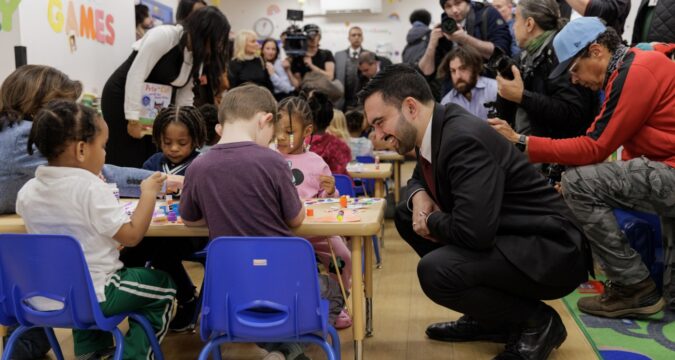
Chicago talks a lot about affordability. But for families with young kids, there is one cost that overwhelms almost everything else — child care.
I know this firsthand. Like so many parents in this city, my family has paid day care bills that rival a mortgage payment. Every month, those costs force real tradeoffs: savings or stability, career decisions or family needs, staying in the city we love or quietly wondering how long we can make it work.
That’s why Chicago should move toward universal child care.
Not as a slogan. Not as a political talking point. But as a practical, serious way to support working families — and to make affordability something people actually feel in their daily lives.
Other cities are beginning to recognize this reality. In New York, state and city leaders have committed to expanding child care access by publicly funding care for young children, starting with 2-year-olds and building toward a broader universal system. Their logic is simple. The cost of doing nothing — parents leaving the workforce, families leaving the city, kids starting school behind — is greater than the cost of investing early.
Chicago has already shown that it understands this principle. Under Mayor Rahm Emanuel, the city made a sustained push to expand access to full-day and universal pre-K for 4-year-olds. That effort helped thousands of children get a stronger start and gave working parents meaningful relief. It was the right move — and it worked.
Universal child care is the next step in that same evolution.
This isn’t about telling parents how to raise their kids. It’s about recognizing economic reality. In today’s Chicago, most households rely on two working parents. Yet child care costs have risen far faster than wages, putting enormous pressure on families who are doing everything right and still falling behind.
If we are serious about keeping families in Chicago — not just attracting young professionals, but helping people stay when they start raising kids — this is where affordability stops being a buzzword and becomes real.
Yes, funding universal child care will be hard. It will require clear priorities, tough budget decisions and real partnership with the state. But difficulty isn’t an excuse for avoidance.
Chicago already makes choices every year about what matters. We invest billions through our budget, tax structures and development incentives. The real question isn’t whether we have resources — it’s whether we are willing to prioritize working families as part of the city’s long-term strength.
Universal child care is not a handout. It’s an investment in people who want to work, contribute and build a life here. When parents can afford care, they stay in the workforce, advance in their careers and generate real economic returns for the city — from property taxes to stronger local businesses and more stable neighborhood economies. Employers benefit from a more stable workforce. Children benefit from early learning that sets them up for success long before they enter a classroom.
And the city benefits from families who can plan their future here — instead of constantly wondering when they’ll be forced to leave.
Too often, Chicago responds to affordability with temporary fixes that don’t match the scale of the challenge. Universal child care would be different. It would be a structural commitment to the idea that this city works best when working families can thrive.
Chicago has always been strongest when it invests in the foundations of a good life: education, opportunity and stability. Universal child care belongs squarely in that tradition.
If we want Chicago to remain a city where families can put down roots — not just get started but stay — then this is a conversation we can’t keep postponing.
Affordability becomes real when families feel it every month. Universal child care is how Chicago gets there.
Liam Stanton is a lifelong Chicagoan, entrepreneur and founder of The Chicago Style Project, a neighborhood advocacy group focused on bold, practical solutions for Chicago’s biggest challenges.
Submit a letter, of no more than 400 words, to the editor here or email letters@chicagotribune.com.
https://www.chicagotribune.com/2026/01/22/opinion-universal-child-care-chicago-affordability/

Editorial: More Illinois parents are rejecting their public schools. The silence from Springfield is deafening.
Demographics aren’t the only reason enrollment at Chicago Public Schools is dropping. A larger percentage of Chicago families are sending their kids to private schools.
A new report from the trusted Kids First Chicago shows that CPS is serving a smaller share of the city’s school-age population, evidence that parental choice is in no small part behind CPS’ enrollment woes. In 2018, CPS enrolled about 75% of Chicago’s school-age children. By 2023, that share had fallen to roughly 71%.
Had CPS maintained its earlier share, the district would be serving approximately 18,000 more students today, according to the report.
Yes, demographics are behind much of the enrollment decline. Chicago, like much of the country, is experiencing a sharp decline in births, and some families are leaving the city altogether. But the loss of market share points to something more consequential: a growing share of families who remain in Chicago are choosing not to enroll their children in CPS.
While Chicago is the canary in the coal mine, the legislative resistance to choice affects the entire state. Illinois public school enrollment has fallen by about 136,000 kids since before the pandemic, according to state data.
Public school enrollment decline is a problem nationwide, but that alone doesn’t tell the whole story here at home. Where are Illinois’ public school students going? Are families moving out of state, contributing to overall population loss? Or are students leaving public schools for private alternatives?
State data makes it difficult to precisely track where every departing student goes, but the trend is clear: There are fewer kids in our public schools. By contrast, private school enrollment has remained relatively stable over this period.
Yet Illinois lawmakers behave as if this shift isn’t happening, or worse, as if it shouldn’t be allowed to happen at all. The data suggest strongly that parents want more options outside the public schools in their areas. Instead of responding to their constituents, lawmakers in Springfield have worked to limit them.
It wasn’t long ago that Illinois had a program called Invest in Kids, which provided private-school scholarships to low-income students, funded by individuals who received tax write-offs in return. According to Illinois Department of Revenue data obtained by the Tribune, the program helped fund private school educations for more than 15,000 students in the 2023–24 school year, a 56% increase from the year before. Thousands were on the waitlist.
Then, state lawmakers, at the urging of teachers unions, allowed the program expire at the end of 2023.
The end of Invest in Kids didn’t mean that demand for alternatives lessened. It simply removed one of the few mechanisms providing access for families without means. The program’s demise already has created tangible fallout. A handful of private schools announced closures in its wake, including Chicago’s St. Stanislaus Kostka Academy, which will shut its doors at the end of this school year after more than 150 years of educating children. The pastor of the parish cited the program’s loss as a factor in the closure decision.
A federal law, the Educational Choice for Children Act becoming law enacted last year, gives Illinois another chance to do the right thing by parents. The measure, modeled on Illinois’ defunct law, offers $5 billion in scholarships for private school, similarly financed by individuals making donations and receiving tax breaks in return. The rub is that states must opt in to the program for parents to take advantage.
So all Springfield has to do is say yes.
The state’s unwillingness to do so — Gov. JB Pritzker criticized the measure shortly after its passage — sends a clear, unwelcome message to parents. You may want options, but the state does not want to give them to you. Even when it doesn’t have to finance those scholarships with its own tax dollars!
Faced with legislative inaction, local governments are stepping into the vacuum. Across Illinois, dozens of local governments such as McHenry County have placed advisory questions on the primary ballot asking voters where they stand on the federal school choice program, according to analysis from the Illinois Policy Institute.
These referendums may be nonbinding, but they are powerful as messages. They make explicit what enrollment data show: Many families want alternatives to the public schools in their areas. Lawmakers can — and often do — dismiss advisory votes. But it’s harder to ignore the choices parents already are making. With their feet.
Submit a letter, of no more than 400 words, to the editor here or email letters@chicagotribune.com.
Bob Kustra: Where to find solace in the age of ICE
Where can one go to hear the moral sanity that counters the grudgeful actions of the American president? Where can we hear the voice of compassion and empathy as immigration agents ignore the most basic rights of Americans and demonstrate the heavy hand of authoritarian government in action? Who would have guessed it would come from a former Chicago priest now influencing others in the Catholic hierarchy?
President Donald Trump’s MAGA rallies have served as training sessions for at least a third of Americans, who polls show support his administration’s actions regardless of how ruthless and deadly they have been recently in Minneapolis. Republicans now scoff at President Ronald Reagan’s reference to America as “a shining city upon a hill.”
Today, Trump teaches how to put self ahead of that shining city upon a hill. He degrades the language we use to modulate our disagreements and seek common ground. He stretches the truth into fabrications, and he punishes those with whom he disagrees.
His latest lesson was giving the finger to a worker at a Michigan auto plant who yelled at him for his handling of the Jeffrey Epstein controversy, thereby giving license to his minions to do the same in any conflict or disagreement.
Americans hoping for a better day yearn for a leader who may differ with political opponents but doesn’t cast them as enemies to be executed for treason, as Trump did to U.S. Sen. Mark Kelly, a former astronaut and Navy fighter pilot. Most Americans according to the latest polls disapprove of Trump and hope for a return to a president who governs with a respect for the norms presidents of both parties have observed when criticizing those who differed with them.
Historically, strong congressional leadership offered strong dissenting voices, which gave hope to Americans seeking new leadership. But Trump’s daily doses of outlandish behavior and the vengeance he wreaks on anyone who differs with him are no match for conventional norms used to counter a strong president.
Both Senate Majority Leader Charles Schumer and House Minority Leader Hakeem Jeffries are weak matches for Trump’s incessant manipulation of the media with major networks such as CBS folding to his threats and intimidation. Democratic governors have challenged Trump’s autocratic leadership, but their states suffer greatly as Chicago learned with U.S. Immigration and Customs Enforcement’s violent rebuttal to Gov. JB Pritzker’s criticisms of Trump and as Gov. Tim Walz is experiencing in Minnesota.
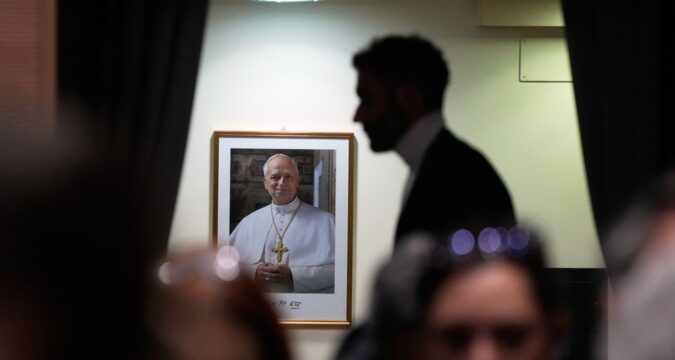
The election of the Chicago-born Pope Leo XIV came at a most strategic moment as Russian President Vladimir Putin and Trump have vied for the world “might makes right” title. With Trump as the world’s bully, it seems likely that the College of Cardinals knew exactly who they were choosing when they voted for a missionary priest from South America with his roots in the most American of cities, Chicago.
The College of Cardinals, with the Vatican’s most sophisticated diplomatic corps, must have known how Cardinal Robert Prevost could serve as a moral corrective to Trump who ignores international law and is devoid of any empathy for those who suffer at his hand. The new pope has taken center stage in the world arena serving as a counterweight to Trump.
Leo’s appointments of bishops since becoming pope reveal a strong concern about Trump’s ICE approach to border control. If there is a common thread in the pope’s appointments of U.S. bishops, almost all of them have been critical publicly of Trump’s immigration policies.
Leo replaced the controversial Cardinal Timothy Dolan, archbishop of New York, who called Charlie Kirk a “modern-day St. Paul,” with Bishop Ronald A. Hicks of Joliet, who served as a missionary priest in El Salvador.
In a stunning and broadened critique of Trump and after a recent conversation, Cardinal Blase Cupich, archbishop of Chicago; Cardinal Robert McElroy, archbishop of Washington, D.C.; and Cardinal Joseph Tobin, archbishop of Newark, New Jersey, had with Leo, they called for a “genuinely moral foreign policy” in a statement. Referring to Venezuela, Ukraine and Greenland, they said that “military action must be seen only as a last resort in extreme situations, not a normal instrument of national policy.”
Last month, the National Catholic Register reported that 54% of Catholics still support Trump’s immigration policies, the same percentage of Catholics who voted for Trump in 2024. Only time will tell if Catholics follow their church’s leadership and reject the policies of Trump.
Leo and his American bishops and cardinals offer people of all faiths a path paved with compassion and justice for those seeking to improve their lives. Just as importantly, they employ the soft power of the Vatican to warn against a government that threatens and intimidates by brandishing its weapons when it fails in or avoids diplomacy.
Bob Kustra served two terms as Republican lieutenant governor of Illinois and 10 years as a state legislator. He is now host of “Readers Corner” on Boise State Public Radio and a regular columnist for the Idaho Statesman.
Submit a letter, of no more than 400 words, to the editor here or email letters@chicagotribune.com.
https://www.chicagotribune.com/2026/01/22/opinion-ice-immigration-pope-cardinals/
Review: No ‘Mercy’ for audiences from this schlocky sci-fi flick
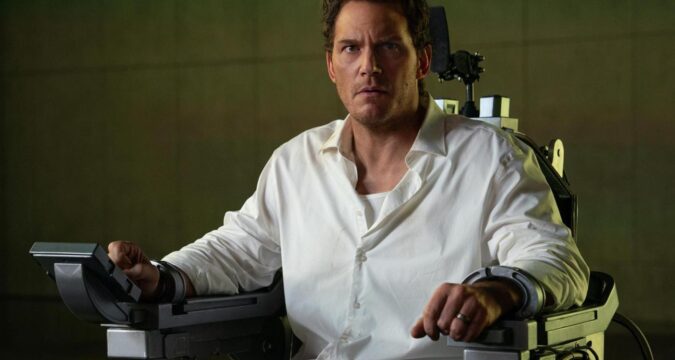
The schlocky dystopian action thriller “Mercy” touts itself as having been “filmed for IMAX,” but that’s not such a selling point when almost the entire film is a dim close-up of Chris Pratt strapped to a chair. This real-time AI mystery is a mashup of “Judge Dredd” and “Searching,” in which a Los Angeles detective (Pratt) has to prove himself innocent of murder during a 90-minute trial conducted by an artificially intelligent system called Mercy, presided over by an entity known as “Judge Maddox” (Rebecca Ferguson).
Written by Marco van Belle and directed by Russian action auteur Timur Bekmambetov, “Mercy” is a remarkably — though perhaps not surprisingly — conservative film, which manages to be both pro-cop and pro-AI. It uncritically presents a city that has been rapidly transformed into a militarized surveillance state, with a judicial system run by robots serving as judge, jury and executioner. But hey, crime is down, or at least cordoned off in the Hollywood “Red Zone.”
Detective Chris Raven (Pratt), one of the first cops to utilize Mercy to try a murder case, finds himself on the wrong side of the law when his wife (Annabelle Wallis) is found stabbed to death at home, and he’s found blackout drunk at a bar at 11 a.m. He wakes up already inside the Mercy system, with 90 minutes to prove his innocence, or at least get his probability of guilt under 92% and avoid instant death. He has the entire AI surveillance apparatus at his fingertips, including police bodycam footage, video doorbells and social media accounts connected to the “municipal cloud,” and he gets the option to phone-a-friend, like his partner, Jaq Diallo (Kali Reis), distraught daughter Britt (Kylie Rogers), and sponsor Rob (Chris Sullivan), to try and pull the pieces together.
Of course all of this material is to make the film more cinematic, because watching Pratt and Ferguson talk to each other when they aren’t even in the same room isn’t all that compelling, filmed for IMAX or not. But Bekmambetov and cinematographer Khalid Mohtaseb, as well as a team of six editors, have stitched together the shaky camera footage and the hands-free interface into a visual “surfing the web” aesthetic that can only be described as “stomach-churning.” Don’t sit too close to this one — the quick swiping through bodycam and cellphone footage on an IMAX screen is migraine-inducing.
Since the film is a little over 90 minutes, our street-smart Detective Raven, who has relied on his gut and the terrifyingly invasive AI tools throughout the trial, is finally liberated from the chair in the third act, as the twisty-turny tale morphs into an attack on Mercy itself. There is some excellent location-shooting in downtown Los Angeles during the climax, seen through the lens of a bodycam or quadcopter or drone camera. It’s not enough to save the aesthetic of the entire film, though, which is somehow both gray and nauseating.
“Mercy” essentially argues that it’s the people behind the prompts that makes artificial intelligence work (or not). Every person and system is fallible, but there’s no substitute for instinct and street smarts — can a robot achieve that kind of intelligence? The film presents a fable in which a cop and a machine find their way through the maze of this mystery, essentially arguing that law enforcement should have access to this kind of surveillance, which is a concept more sickening than the jiggly found footage of this film.
Not to mention that one would hate to see the carbon footprint of these AI trials. It’s laughable to suggest that the biggest problems of a near-future Los Angeles using an AI-powered judicial system would be a few scruffy Hollywood meth dealers — how would the city under this system even have enough drinking water if it’s serving all those data centers? Perhaps those are the more pertinent questions, but “Mercy” doesn’t choose to engage those.
Katie Walsh is a critic for Tribune News Service.
“Mercy” — 1.5 stars (out of 4)
MPA rating: PG-13 (for violence, bloody images, some strong language, drug content and teen smoking)
Running time: 1:40
How to watch: In theaters Jan. 23
https://www.chicagotribune.com/2026/01/22/movie-review-mercy/

F.K. Plous: How can we bring more people to Starved Rock? By train.
All of us who love nature were cheered by the news that Starved Rock State Park is getting $37.2 million in essential improvements. Crumbling trails are being reinforced with fresh crushed stone, the park’s handsome wooden bridges and limestone walls are being overhauled or replaced, and the invisible but vital plumbing and drainage systems are being modernized.
There’s only one problem that Starved Rock’s do-over doesn’t address: capacity. The most popular destination in Illinois’ state park system can’t handle any additional visitors during the peak summer season because its parking lot is full and cannot be expanded. More parking — even if a garage were built — would degrade the fragile natural environment the visitors come to see.
The park itself is not crowded. Its trails and groves and canyons can accommodate many more visitors. What Starved Rock can’t absorb is more cars.
So how are visitors supposed to get there?
The simple answer: by train. The main line of the former Chicago, Rock Island & Pacific Railroad runs along the north shore of the Illinois River, and there’s space for a platform in downtown Utica right across the river from Starved Rock. If trains were running, a bus could shuttle passengers across the river and into the park in about seven minutes.
The problem is that restoring the Rock Island for passenger service is going to cost a lot of money. The venerable Rock went bankrupt in the late 1970s and was liquidated in 1980, with its weaker lines abandoned and the stronger ones sold off to other railroads or to startups. The 40-mile Chicago-Joliet segment went to Metra, the 74 miles from Joliet to Bureau were sold to the giant Eastern freight carrier CSX Corp. and the rest of the Illinois trackage out to the Quad Cities was sold to the startup Iowa Interstate Railroad, which also got the 47-mile branch from Bureau to Peoria.
Unfortunately, none of this track except the Metra segment can be used for passenger trains. It’s “dark territory” lacking the automatic block signals that prevent train collisions. If a passenger train were to operate, its top speed would be 59 mph, too slow to compete with highway travel. Rebuilding the Rock to modern passenger-train standards — 110 to 135 mph, hourly service, frequent passing tracks, grade-crossing enhancements, and new stations and platforms — would probably will cost more than $1 billion.
But the stakes are bigger than just Chicago-Starved Rock. In a scandal underreported for decades, Illinois’ two largest cities outside Chicago, Peoria and the Quad Cities, each with about 400,000 residents, are not connected to Chicago by passenger train service, even though lesser communities are:
Carbondale, 330 miles from Chicago with only 26,000 residents and a Southern Illinois University enrollment of 11,000 students, enjoys two daily state-sponsored Amtrak trains to Chicago (plus service from Amtrak’s long-distance City of New Orleans). Yet the Quad Cities, only 170 miles from Chicago, have no passenger-rail connection to Chicago.
Quincy, population 39,000, has two daily Amtrak frequencies to Chicago, 300 miles and five hours away, while Peoria, a wealthy industrial-commercial community of over 400,000 that is only 151 miles from Chicago — less than three hours from Chicago by modern trains — still lacks a passenger-rail connection.
Fortunately, both Peoria and the Quad Cities are located on the former Rock Island and would be within three hours of Chicago if the tracks were re-engineered for passenger trains. The quickest and cheapest way to bring Illinois’ Rock Island track up to modern passenger-train standards is for the state to buy it from its current owners, reengineer it for higher speeds and frequencies, and hire Metra to operate hourly frequencies to Peoria and the Quad Cities (with a stop at Utica for Starved Rock visitors).
The freight train operators will still be able to use the Rock by purchasing “trackage rights” from the state. Trackage rights are a venerable user fee that railroads pay when they have to venture onto another railroad to reach a customer. In fact, Iowa Interstate pays trackage rights fees to CSX in order to reach Joliet, and both carriers pay trackage rights fees to Metra to reach Chicago.
The huge success of the new Brightline passenger trains between Miami and Orlando suggests that with appropriate engineering improvements, Metra could be operating the same type of frequent and popular diesel-powered trains from Chicago to both the Quad Cities and Peoria. Both of the those two cities have vibrant, diverse economies based on manufacturing, digital technology, food processing, large regional medical centers and Inland Waterway transportation, and both have substantial populations of college students from Chicago. But airfares are discouragingly high, and highway congestion makes driving so unreliable that business travelers scheduled for a conference in Chicago usually drive here the day before and book a hotel room to make sure they’re on time for their morning meeting. A strong passenger train connection to Chicago would make thousands of lives easier (and safer).
Quick, frequent rail connections between a large city and its hinterland are a fundamental of modern economic geography. In Ireland, Dublin, population 1.35 million, has 14 daily round trips to Cork, population 200,000 and 135 miles away. Surely Chicago, with a metro population of 9 million, can support 14 daily frequencies to destinations of 400,000-plus less than 150 miles away — especially when trains to both destinations can use the same track for the first 114 miles.
Plus trains to the Quad Cities and Peoria can deliver something the Irish trains can’t: a stopover at Starved Rock.
Gov. JB Pritzker is a successful businessman. He needs to sit down with the CEOs of CSX and the Iowa Interstate and make a deal.
F.K. Plous is a Chicago transportation writer and a publicist for Corridor Rail Development Corp.
Submit a letter, of no more than 400 words, to the editor here or email letters@chicagotribune.com.
https://www.chicagotribune.com/2026/01/22/opinion-starved-rock-train-stop/


