Category: News
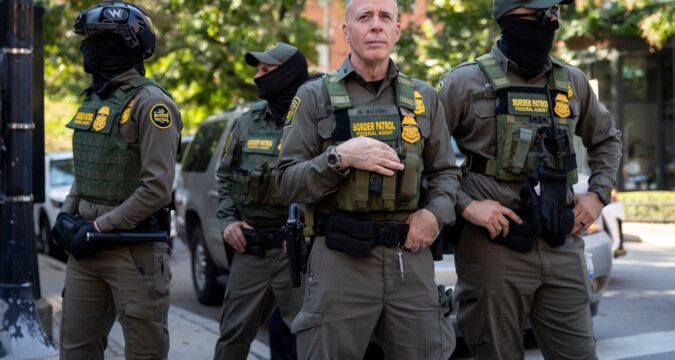
Fast-moving trial of man accused in Bovino bounty expected to go to jury
After less than a day of evidence, jurors will likely begin deliberating Thursday in the fast-moving trial of a man accused of putting a gang-related bounty on the head of Border Patrol Cmdr. Gregory Bovino.
Juan Espinoza Martínez, 37, a construction worker who has lived in Chicago for years but is not a U.S. citizen, is charged in an indictment with a single count of solicitation of murder for hire, which carries up to 10 years in prison.
Closing arguments in the case, which has made national headlines amid the continuing controversy over the Trump administration’s immigration crackdown, are set to begin at 9:15 a.m. before U.S. District Judge Joan Lefkow.
The jury of six men and six women, which was just empaneled on Tuesday, will likely be deliberating the case by lunchtime.
Espinoza Martínez’s trial is the first criminal case to stem from Operation Midway Blitz to go to trial and has garnered national headlines since it was first charged, with Trump administration officials holding it up as an example of the threats and violence faced by immigration officials during their deportation push.
Though limited in scope, the case is an important litmus test as immigration-enforcement operations continue to roil Chicago and other Democrat-led cities long targeted by President Donald Trump, including Minneapolis, where the killing of a U.S. citizen by an immigration agent earlier this month has sparked nationwide protests.
When the charges were first brought, authorities accused Espinoza Martínez of being a high-ranking member of the Latin Kings. But evidence of any gang membership never materialized, and much of the testimony about the Latin Kings wound up being toned down or stripped from the trial completely.
According to prosecutors, Espinoza Martínez sent Snapchat messages to an acquaintance from the construction business, Adrian Jiménez, calling for Bovino’s killing after an immigration agent shot a woman in Chicago’s Brighton Park neighborhood on Oct. 4.
Jiménez, who had worked as a government informant on and off for years, shared the messages with Homeland Security Investigations, including one that had a screenshot of a Chicago Tribune photo of Bovino with the words, “2k on information when you get him” and “10k if u take him down.”
In his opening statement to the jury Wednesday, Assistant U.S. Attorney Minje Shin said the case was not about someone charged with “expressing strong, even angry, views about immigration enforcement policy” or a hatred of Bovino.
“Make no mistake — the evidence in this case will show that what the defendant did was not a joke, not just mouthing off, not just him blowing off steam behind a keyboard, not political discourse. .. what the defendant did was a solicitation of murder,” Shin said.
Shin said Espinoza Martínez was “fixated” on Bovino, who was “the face of the threat” to arrest, detain and deport members of his community in the Little Village neighborhood, a threat that “hit close to home.”
Espinoza Martínez’s attorney, Jonathan Bedi, told jurors in his opening remarks that the case was “riddled” with reasonable doubt because “the government cannot point to anything that shows Juan’s intent.”
“When you cut through all of their words … all they have is their guesses and speculation,” Bedi said.
Bedi noted what he said were huge gaps in the prosecution’s case: no bags of money in the offing, no follow-up on any threats, no discussion of any plans, location scouting, escape route, surveillance, or communication saying, “Bovino’s here — now would be a good time to act.”
“Repeating neighborhood gossip is not a federal crime,” Bedi said.
Jiménez testified Wednesday he first met Espinoza Martínez about a year ago after he reached out to him on Snapchat, looking for construction work.
Jiménez testified he had conversations about immigration with Espinoza Martínez “more than a few times.” But when Shin attempted to ask what they talked about specifically, the defense repeatedly objected and the judge sustained it.
Jiménez testified he took Bovino-related photos of the Snapchat messages received from Espinoza Martínez on Oct. 2 and “almost immediately” contacted agents with HSI about them.
Shortly after his arrest on Oct. 6, Espinoza Martínez was led by three federal agents into a windowless interview room, still dressed in a green work T-shirt and carrying a small bottle of water.
In portions of the ensuing videotaped interview played for the jury on Wednesday, the agents pressed Espinoza Martínez repeatedly on how he thought his text messages looked, including references to the Latin Kings street gang backing the offer.
He said over and over he meant nothing by it, that they were nothing more than social media chatter, and that he had no intention of making any actual offer for Bovino’s killing.
“I’m really confused about this,” Espinoza Martínez said at one point. “I’m not nowhere around there. I work for a living every day. I’m a union worker. I work concrete, so I don’t know.”
After prosecutors rested, the defense called as its only witness Oscar Espinoza, the defendant’s younger brother who testified he’d already seen the language about a Bovino bounty on Facebook an hour or so before his brother sent it to him.
“I took it as a joke,” the brother testified.
jmeisner@chicagotribune.com
https://www.chicagotribune.com/2026/01/22/trial-bovino-bounty-expected-jury/
US Q3 GDP Revised Up to 4.4%, Highest In Two Years
US Q3 GDP Revised Up to 4.4%, Highest In Two Years
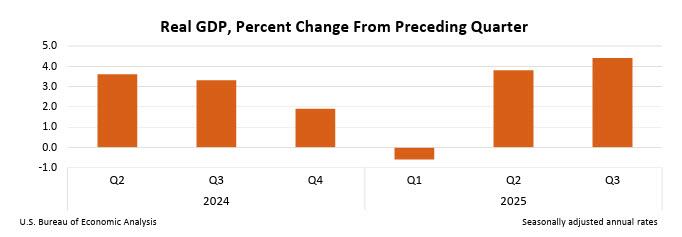
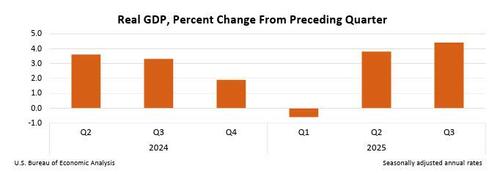
While it’s ancient history now – even preceding the record long government shutdown – and nobody will care, moments ago the BEA reported that its first revision of third quarter GDP came in a bit hotter than expected as US GDP grew slightly more than initially reported, supported by stronger exports. Due to the recent government shutdown, this updated report for the third quarter of 2025 replaces the release of the third estimate originally scheduled for December 19, 2025, the BEA reported.
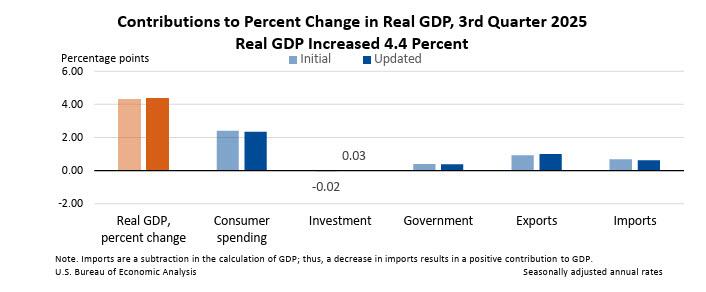
Inflation-adjusted gross domestic product increased at a revised 4.4% annualized rate, the fastest in two years, and up 0.1% from the initial estimate, primarily reflecting upward revisions to exports and investment that were partly offset by a downward revision to consumer spending. That said, the change was minuscule: it went up from an unrounded 4.340% to 4.370%.
Compared to the second quarter, the acceleration in real GDP in the third quarter reflected upturns in investment, exports, and government spending, as well as an acceleration in consumer spending. Imports decreased less in the third quarter than in the second.
Real GDP was revised up 0.1 percentage point from the initial estimate, primarily reflecting upward revisions to exports and investment that were partly offset by a downward revision to consumer spending. Imports were revised up.
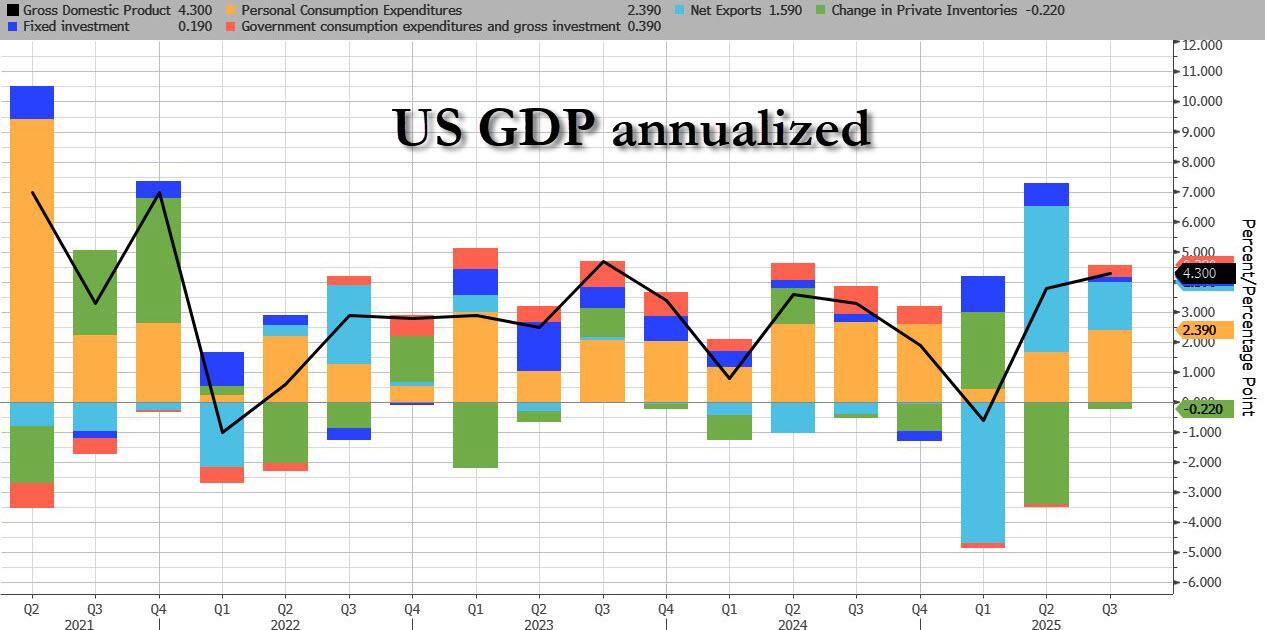
Here is the breakdown:
Personal consumption contributed 2.34% to the bottom line, slightly lower than the 2.39% originally reported.
Fixed Investment added 0.15%, also revised lower from 0.19%
Change in private inventories was a net improvement, raising from -0.22% to -0.12%, if still subtracting from the bottom line
Net trade (exports less imports) was also revised favorably up from 1.59% to 1.62%
Finally, government added 0.38% to the bottom line print, effectively the same as 0.39% before.
And visually:
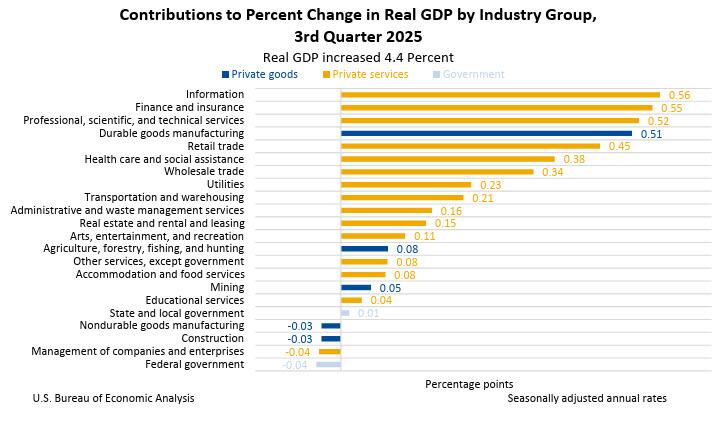
Real gross output increased 3.2% in the third quarter, reflecting increases of 4.4% for private services-producing industries and 2.1% for government that were partly offset by a decrease of 0.1% for private goods-producing industries. Real gross domestic income (GDI) increased 2.4% in the third quarter, the same as previously estimated. The average of real GDP and real GDI increased 3.4%, the same as previously estimated.
From an industry perspective, the increase in real GDP in the third quarter reflected increases of 5.3 percent in real value added for private services-producing industries and 3.6 percent for private goods-producing industries that were partly offset by a decrease of 0.3 percent in real value added for government.
Finally, while it’s beyond ancient history now, the price index for gross domestic purchases increased 3.4% in the third quarter, the same as previously estimated. The personal consumption expenditures (PCE) price index increased 2.8 percent, and the PCE price index excluding food and energy increased 2.9%, both the same as previously estimated. A much more timely print of core PCE for November will be reported at 10am today.
Tyler Durden
Thu, 01/22/2026 – 08:57
https://www.zerohedge.com/economics/us-q3-gdp-revised-44-highest-two-years
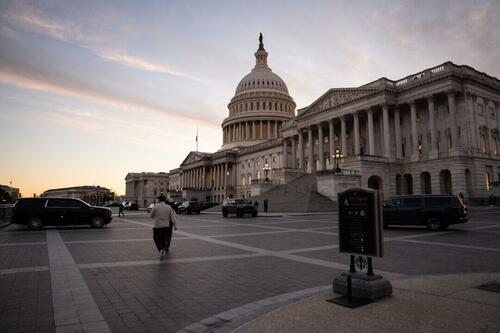
House To Vote On Bill To Fund The Government
House To Vote On Bill To Fund The Government
Authored by Joseph Lord via The Epoch Times,
The U.S. House of Representatives will vote on a multi-bill package to fund the federal government on Thursday.
The legislation includes funding for the departments of Defense, Homeland Security, Labor, Health and Human Services, Education, Transportation, and Housing and Urban Development.
Most portions of the bill are expected to pass easily as members of both parties seek to avoid a repeat of the 43-day government shutdown, the longest in U.S. history, that accompanied the previous government funding fight.
House Minority Leader Hakeem Jeffries (D-N.Y.) and Senate Minority Leader Chuck Schumer (D-N.Y.) are among those, and both leaders have expressed a desire to work with Republicans to pass the 12 annual government funding bills ahead of the Jan. 30 funding deadline.
Though it includes some spending cuts, the package largely holds funding levels at fiscal year 2025 rates.
Republicans are expected to back the legislation largely along party lines.
Rep. Tom Cole (R-Okla.), the lead Republican on the House Appropriations Committee, praised the bill in a statement, saying it “reflects the core tenets of American strength: combat-ready forces, secure communities, effective education and health systems, and modern transportation. At every level, it applies innovation and discipline to deliver results without waste.”
In line with leadership’s desire to avoid a government shutdown, the sections of the bill related to funding for the departments of Defense, Labor, Health and Human Services, Education, Transportation, and Housing and Urban Development are expected to gain Democratic support as well.
However, one segment of the funding has proven divisive.
DHS Funding Controversy
Ahead of the vote, Democrats came out en masse against the portion of the bill that would fund the Department of Homeland Security (DHS).
Democrats have been increasingly critical of the agency that oversees Immigration and Customs Enforcement (ICE), criticism that has only intensified in the wake of the ICE-involved shooting of Renée Nicole Good in Minneapolis.
In the aftermath of the shooting, Democrats have called for President Donald Trump to back off on the deployment of ICE agents to Democrat-run areas, while the party’s progressive wing has renewed calls to “abolish ICE.”
In Congress, lawmakers have largely urged funding cuts or policy reforms.
While this package includes reforms, several Democrats have indicated that they don’t go far enough and have expressed an intention to oppose the bill.
Despite this opposition, the DHS funding measure is expected to pass with wide GOP support and support from some Democrats.
ICE Reforms
The bill would implement several changes to ICE’s policies and procedures.
One measure in the bill would provide $20 million to ICE for the procurement and deployment of body cameras for ICE and other immigration agents engaged in domestic law enforcement activities. It would similarly require standardization of ICE and immigration agents’ uniforms.
It provides additional funding for civil liberties-related oversight of ICE activities.
The bill would also mandate additional training for immigration agents operating within the U.S. interior, with a focus on de-escalation.
It also instructs DHS Secretary Kristi Noem to ensure that all immigration agents are properly trained on Americans’ First Amendment right to record federal agents during public operations.
It also provides substantially fewer detention beds than were requested by the administration, instead cutting the number. While 50,000 beds were requested, an increase, the bill would cut the total number of detention beds to 41,500, marking a decrease of 5,500 beds.
It also slightly reduces funding for enforcement and removal operations, cutting $115 million.
However, for many Democrats, these reforms don’t go far enough.
Democrats Split
Democrats are split on the issue, though many have expressed opposition to the bill.
Rep. Lauren Underwood (D-Ill.), a member of the House Appropriations Committee, expressed opposition to the bill in a post on X.
“The 2026 Homeland Security funding bill that the House is voting on this week is an easy NO for me. It’s a blank check with no accountability for DHS’s outrageous abuses,” Underwood wrote.
Several other House Democrats on the Appropriations subcommittee have similarly indicated plans to oppose the bill.
However, others have indicated plans to support the bill or have otherwise said they’re undecided.
Rep. Rosa DeLauro (D-Conn.), the lead Democratic appropriator, has said she’ll back the legislation, citing the reforms.
Rep. Henry Cuellar (D-Texas), a moderate in a red-trending district, has also expressed his intention to support the bill.
Tyler Durden
Thu, 01/22/2026 – 08:45
https://www.zerohedge.com/political/house-vote-bill-fund-government

Appendicitis interrupts Caleb McLaughlin’s breakout for Wheeler. But he’s not done. ‘We’re on the come-up.’
Wheeler senior Caleb McLaughlin was elevating his game to new heights.
The 6-foot-1 guard scored a career-high 19 points against Highland on Jan. 8 and nearly matched that two days later with 18 points against Griffith.
“Whatever I can do to help us win is really all I want,” McLaughlin said.
But McLaughlin didn’t feel well during the Bearcats’ next game, and he underwent surgery for appendicitis last week.
“We hate to lose Caleb now,” first-year Wheeler coach Aaron Butcher said. “He’s playing great.”
McLaughlin, who is averaging 8.3 points, 2.2 rebounds and 1.5 assists as the Bearcats (5-7, 1-3) prepare to play Calumet in a Greater South Shore Conference game on Friday, is targeting a mid-February return for the final three or four games of the regular season.
The Bearcats shifted their senior night from a Jan. 16 game against Whiting, which McLaughlin said he attended post-surgery but “couldn’t move,” to a Feb. 5 game against rival Boone Grove to better accommodate him.
“Thankfully I’m recovering really fast,” he said. “I’m getting around.”
A three-sport athlete who also plays baseball and soccer, McLaughlin said he has experienced his most “growth” in basketball. He averaged 4.5 points, 1.5 rebounds and 1.2 assists in his debut as a starter last season.
Senior guard Nick Scott, Wheeler’s leading scorer and top 3-point shooter at 42%, noted McLaughlin is close at 40%. According to Butcher, that number was around 28% earlier in the season, which underscores McLaughlin’s upward trajectory.
“We’re basically the ‘Splash Brothers’ here,” Scott said with a laugh. “If I don’t have a three, I’m kicking it to Caleb for a three. … It’s awesome when him and me are hitting shots. It’s great.”
McLaughlin is also a tri-captain with Scott and senior forward Tyne Vettickal, a multisport standout who is a Valparaiso football recruit.
“Caleb’s been really good,” Butcher said. “He does a great job of coaching the younger kids in practice, leading them and helping them.
“He’s been playing really well. He’s just somebody that is always positive, fun to be around. He does a great job of helping the younger guys.”
McLaughlin is taking his success in stride.
“My role has been to shoot the ball,” he said. “Once I shoot the ball, I want to get my teammates involved as much as I can. I like to pass the ball around.”
McLaughlin said baseball actually is his primary sport. A pitcher and corner infielder, he was a team captain last spring, when he went 4-4 with a 3.87 ERA in a team-high 50 2/3 innings. McLaughlin was also a team captain and the starting goalkeeper for the boys soccer team this past season.
McLaughlin and Scott both expressed confidence that the Bearcats can finish above .500 this season, something they haven’t done since they went 17-7 in 2016-17. That’s also the last time they won a sectional game.
McLaughlin, who intends to study sports media at Butler, believes the Bearcats can end that postseason drought too.
“We’re on the come-up,” he said. “Teams will be scared to play us when it comes to sectionals. They’ll be scared to draw our name.
“It’s the talent we have. We have shooters, we have drivers, we have very athletic players, tall, short. Whatever we need, we have it.”
https://www.chicagotribune.com/2026/01/22/basketball-valparaiso-wheeler-caleb-mclaughlin/
Rate-Cut Odds Tumble As Jobless Claims Hover Near 56-Year-Lows
Rate-Cut Odds Tumble As Jobless Claims Hover Near 56-Year-Lows
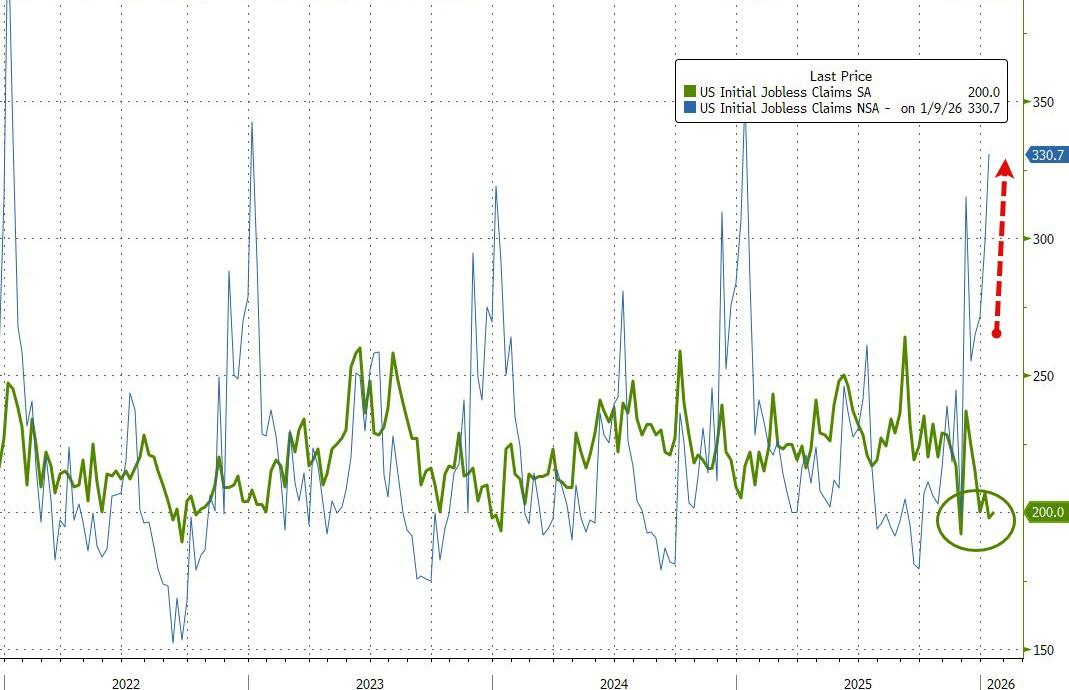
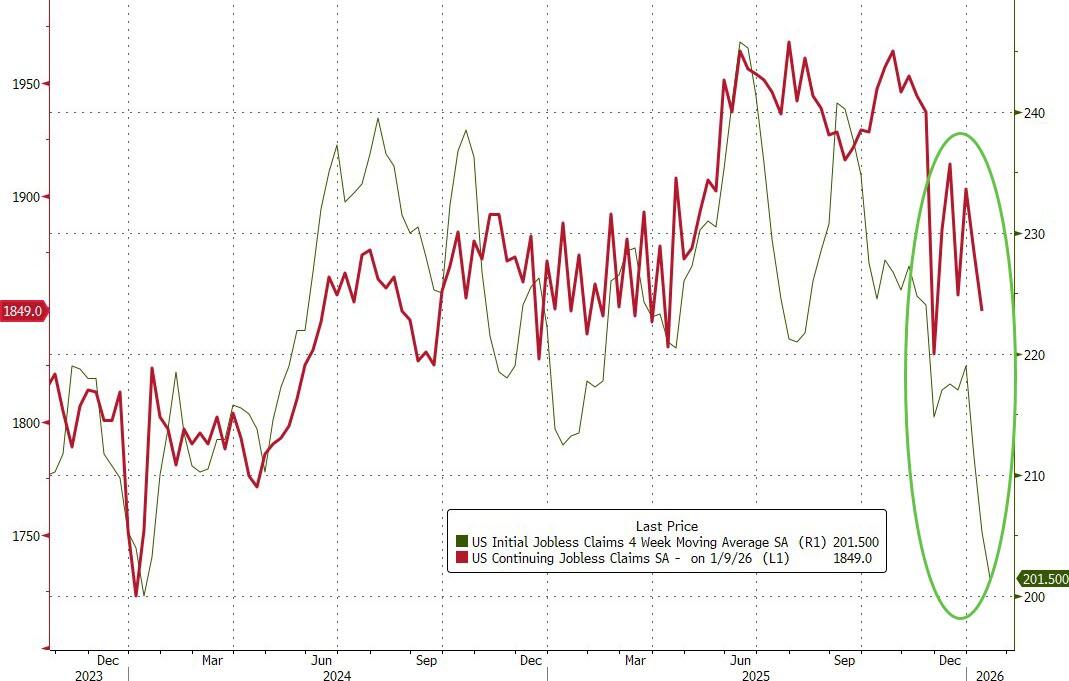
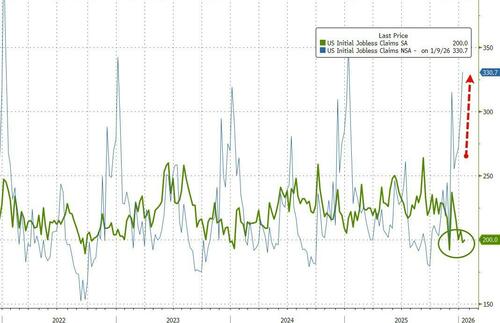
Following last week’s plunge back below 200k, analysts expected a small rise to 209k this week but the number of Americans filing for jobless benefits for the first time remained flat at 200k. Notably, as is usual at this time of year, non-seasonally-adjusted claims spiked…
Source: Bloomberg
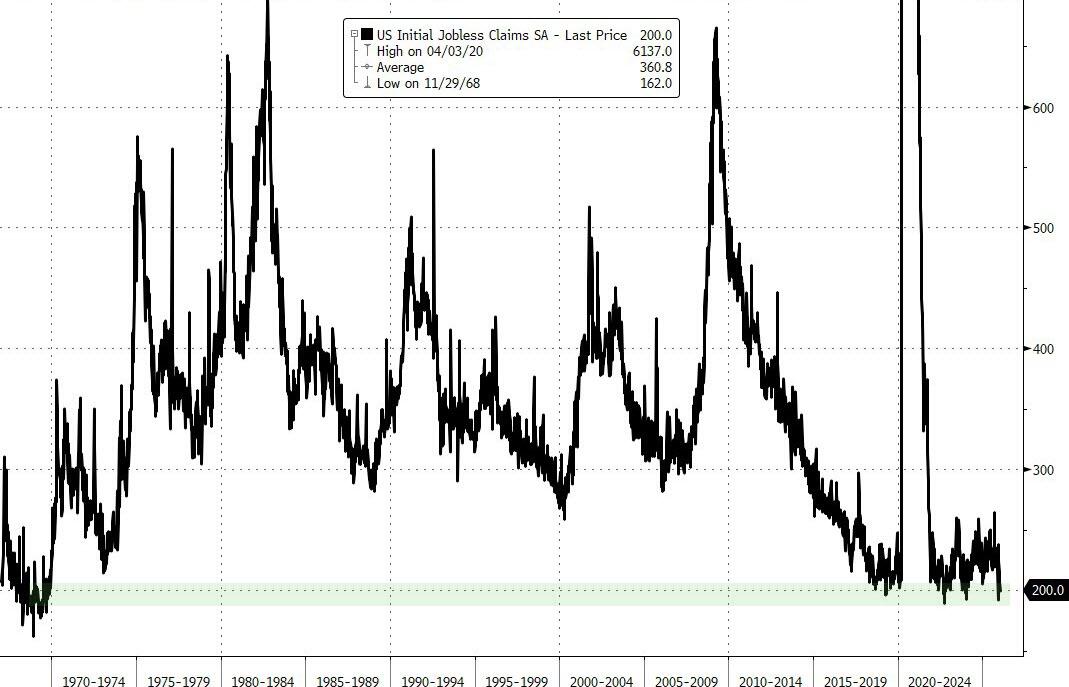
…basically hovering at its lowest levels since 1969…
Source: Bloomberg
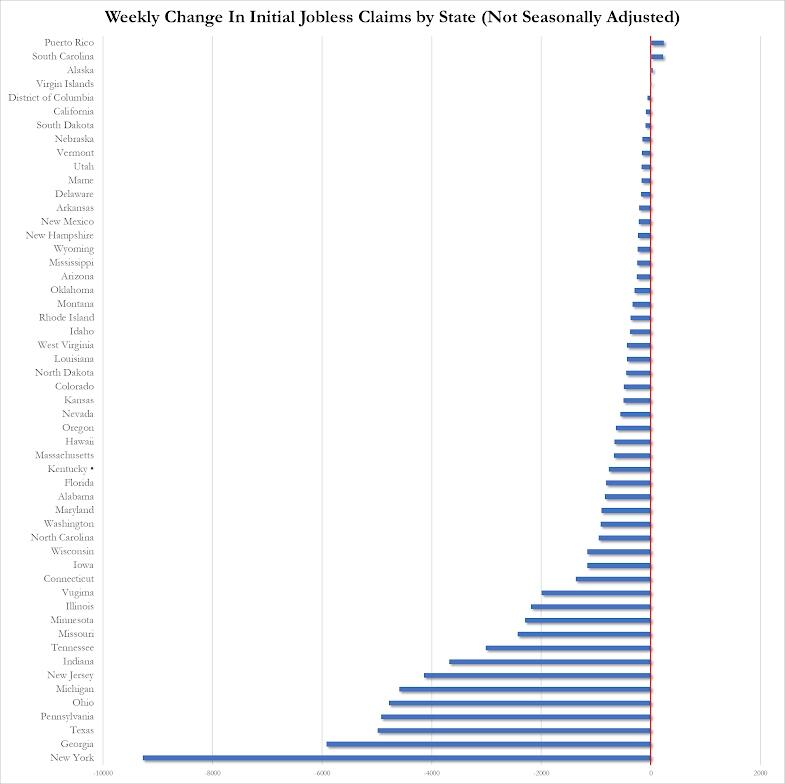
New York and Georgia saw the largest drops in jobless claims while Puerto Rico saw a modest increase in claims…
Continuing jobless claims also ticked down (to 1.849 million Americans) – the lowest since November…
Source: Bloomberg
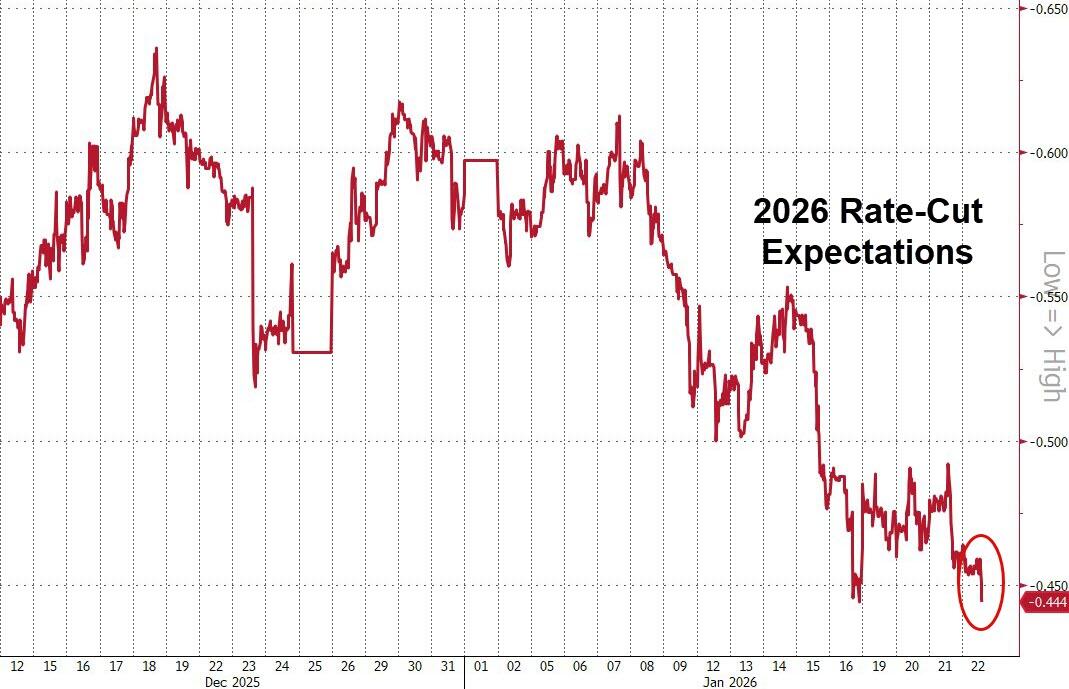
All of which fits with the ebbing of rate-cut expectations for this year…
Source: Bloomberg
…likely much to the chagrin of President Trump.
Tyler Durden
Thu, 01/22/2026 – 08:35
https://www.zerohedge.com/markets/rate-cut-odds-tumble-jobless-claims-hover-near-56-year-lows
US Futures, Global Markets Rally After Trump Greenland Pivot
US Futures, Global Markets Rally After Trump Greenland Pivot
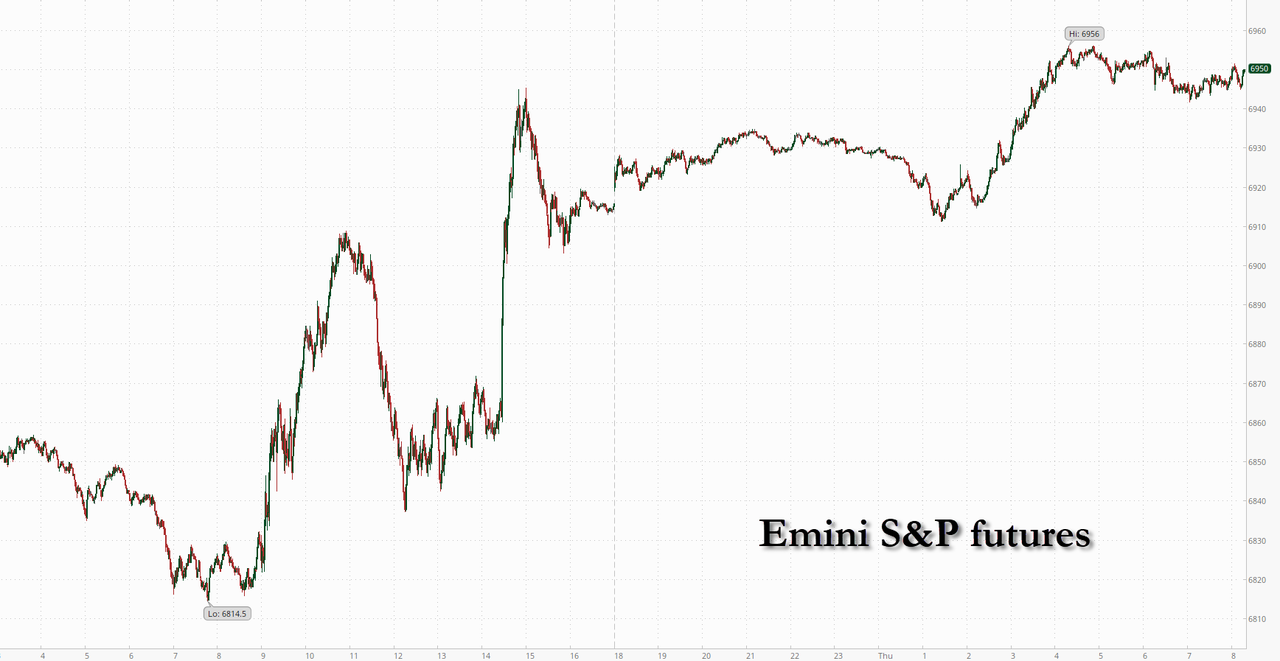
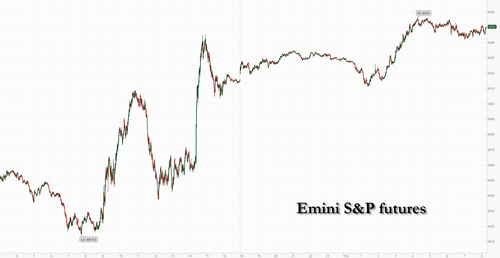
US equity futures and global stocks are sharply higher as the S&P again marches toward a new ATH while the latest vol spike subsides, after Trump’s tariff pivot eased geopolitical fears, though Greenland and other flashpoints mean the optimistic mood is laced with some caution. As of 8:00am ET, S&P 500 futures rose 0.5% after the benchmark’s biggest advance since November as a relief rally over President Donald Trump’s pivot on Greenland continued, with a flurry of activity in the artificial-intelligence space adding support to tech stocks: Nasdaq 100 futures climbed 0.8% as names linked to the build-out of AI-infrastructure outperformed in premarket trading, while all Mag 7 members advanced in premarket trading with Fins/Industrials also standout performers as Staples are mostly lower. The 10-year is flat 4.24%, dollar similar DYX $99 and Bitcoin same place as yesterday $89.8k. Commodities are mixed: nat gas surges for a third day of follow through up 14% prompt to $5.56 – highest level since late 2022 – on bruising cold across the US, while crude, copper, gold all taking a breather this morning as WTI may fall below $60/bbl. Today’s macro data gives an update on Q3 metrics, November spending / PCE, and new jobless claims.
In premarket trading, Mag 7 stocks are rallying alongside index futures (Alphabet +2%, Tesla +1%, Microsoft +0.8%, Amazon +1%, Nvidia +0.9%, Apple +0.5%, Meta +1.9%)
Venture Global Inc. (VG) is up 10% after the company won a dispute with Spain’s Repsol SA involving the sale of liquefied natural gas shipments from its export plant in Louisiana.
Abbott (ABT) falls 4% after posting fourth quarter results.
Axogen (AXGN) is down 7% after the health care firm said it will offer $85 million of shares of its common stock.
Knight-Swift (KNX) falls 2% after the freight transportation company posted fourth quarter earnings that fell short of expectations.
Mobileye (MBLY) drops 6% after the maker of software and hardware technology for automobiles provided revenue guidance for 2026 missed the average analyst estimate.
Procter & Gamble Co. (PG) slips 1.6% as growth in a key sales metric stagnated in the latest quarter while volume slipped, showing that US consumers spent cautiously in the final months of the year.
Rocket Lab (RKLB) falls 2% after the company said qualification testing of the Stage 1 tank resulted in a rupture during a hydrostatic pressure trial.
Sphere Entertainment (SPHR) rises 3% as BTIG upgrades the live entertainment and media company to buy, citing multiple catalysts driving the stock’s upside potential.
In corporate news, Lululemon’s founder lashed out over the company’s latest product flop, calling it a “total operational failure” that he blamed on the company’s board of directors. GameStop CEO disclosed the purchase of 500,000 shares of the gaming retailer, sending the stock higher in premarket trading.
The rebound in stocks followed Trump’s announcement of a framework agreement with NATO to end a days-long standoff over Greenland. The rally gained momentum on Thursday as NATO’s chief said the breakthrough didn’t involve discussion of the territory’s sovereignty, easing concerns over a key sticking point, focusing rather on the broader issue of security.
This week’s events have rewarded TACO trade dip buyers, while also serving as a reminder that volatility is never far away. Fundamentals for 2026 still look excellent, according to Tikehau Capital’s Raphael Thuin. There’s “a rare alignment of stars” going on, with double-digit earnings expected, good economic growth and possible rate cuts.
“Despite a very positive market narrative about 2026, geopolitical crisis and US tariffs can fuel volatility spikes at any time,” said Raphael Thuin, head of capital markets strategies at Tikehau Capital in Paris. “The fast-changing AI industry, like last year, also represents both a big upward potential as much as a potential downward risk.”
Sentiment was also lifted after Japanese bonds rebounded for a second straight session.
Small-cap stocks look set to continue their strong run after outperforming the S&P 500 for 13 straight sessions, with contracts on the Russell 2000 broadly tracking those on the S&P 500 on Thursday.
Meanwhile, the AI narrative is back, with Asian chip stocks surging after Wednesday’s bullish comments on AI spending from Nvidia’s Jensen Huang. The theme is getting more juice from news that Anthropic’s revenue run rate is said to have more than doubled since last summer. News that Alibaba Group Holding Ltd. is preparing to list its chipmaking arm added to a series of upbeat moves in tech after bullish comments from Nvidia Corp. Details emerged that Anthropic PBC’s revenue run rate has more than doubled since last summer, while OpenAI was locked in talks about a fresh funding round at a marked-up valuation.
In geopolitics, NATO’s chief said a breakthrough over Greenland was secured without discussing the territory’s sovereignty with Trump, focusing rather on the broader issue of security. Ukraine’s Zelenskiy arrived in Davos to meet with Trump. Speakers at the event today include Elon Musk and Larry Fink. Amid renewed speculation that foreigners may sell US assets, JPMorgan strategists said there’s been little sign of foreign investors shunning US assets amid the Greenland tensions.
In other assets, Goldman raised its December 2026 gold price forecast by more than 10% to $5,400 an ounce, on the assumption that investors who bought gold as a hedge will maintain positions. Global natural gas prices continue to soar amid freezing weather. A sweeping crypto market bill is likely to be delayed by several weeks as key lawmakers shift their focus to potential housing legislation in support of Trump’s affordability push.
Out of the 52 S&P 500 companies that have reported so far in the earnings season, 83% have managed to beat analyst forecasts, while 12% have missed.
PCE data for October and November will likely corroborate evidence that tariff pass-through is fading. That could support the case for rate cuts later in the year. Trump suggested that’s he’s down to just one choice for next Fed chair, and said Rick Rieder and Kevin Warsh are good options.
In Europe, the Stoxx 600 is up 0.9% after four days of declines, with telecoms, construction and auto sectors leading the gains. Here are the biggest movers Thursday:
Orsted rallied as much as 5.5% after Oddo BHF upgraded to outperform from neutral, citing a “structural change of regime at the Danish offshore wind developer
Volkswagen shares rise as much as 6.1% after the German carmaker delivered a positive surprise on free cash flow in its automotive division, driven by improvements in working capital and lower investment spend
AB Foods climbs as much as 1.5% after the conglomerate reported first-quarter constant currency sales which Shore Capital analyst Clive Black (hold) said were “a bit better” than the group guided for earlier this month
Aryzta shares jump as much as 14%, the most in more than three years, as analysts see the Swiss baker’s 2025 performance and outlook for the coming year as a first step to regain investor trust
Baltic Classifieds Group shares rise as much as 6.9% after Morgan Stanley initiates the online classifieds company at overweight, citing its regional leadership position across verticals and a favorable macro backdrop
Basic resources is the worst-performing sector in Europe on Thursday after copper declined to its lowest intraday level in almost two weeks, weighing on miners
Essity drops as much as 5.3%, with a miss on sales overshadowing an adjusted Ebita beat by the Swedish personal care products producer
Bankinter shares decline as much as 2.9%, the only lender declining on the Stoxx 600 Banks Index, after the Spanish bank reported earnings in line with analysts expectations
Wickes shares climb as much as 2.2% after the home improvement products retailer reported “solid” second-half results, with analysts encouraged by evidence of market share gains
Earlier in the session, Asian stocks advanced, poised to snap a three-day losing streak, after US President Donald Trump retreated from his tariff threat on European nations and investors returned to tech stocks. The MSCI Asia Pacific Index gained 0.7%, boosted by tech shares — including TSMC and Samsung Electronics — after Nvidia CEO Jensen Huang’s comment about AI spending fueled optimism for the sector. South Korea’s stock benchmark Kospi briefly crossed the 5,000-level, a threshold targeted by the country’s president during his campaign last year.
In FX we saw muted moves with the dollar little changed. The pound was little changed.
In rates, treasuries are little changed, lagging most European bond markets but outperforming gilts, hit by potential UK leadership challenge to Prime Minister Starmer. Focal points of US session include weekly jobless claims and November personal income and spending data — which embeds PCE price indexes — and $21 billion 10-year TIPS auction. US 10-year yield near 4.24% is within 1bp of Wednesday’s closing level with UK counterpart about 2bp cheaper on the day and Germany’s richer by about 1.5bp. Gilts underperformed European peers after a pathway for a potential leadership challenge against Prime Minister Keir Starmer emerged.
In commodities, gold erases an earlier decline, trading little changed around $4,830/oz. Oil prices falling, with Brent slipping toward $64/barrel and extending after Trump comments on potential talks with Iran. Gas surged 14% to $5.56, its third day of gains, on freezing cold.
US economic calendar includes third estimate of 3Q GDP and jobless claims (8:30am), November personal income and spending (10am) and January Kansas City Fed manufacturing activity (11am)
Market Wrap
S&P 500 mini +0.6%
Nasdaq 100 mini +0.8%
Russell 2000 mini +0.5%
Stoxx Europe 600 +1.3%
DAX +1.4%
CAC 40 +1.3%
10-year Treasury yield little changed at 4.24%
VIX -0.8 points at 16.07
Bloomberg Dollar Index little changed at 1205.89
euro little changed at $1.1687
WTI crude -1.1% at $59.93/barrel
Top Overnight News
NATO Secretary General Mark Rutte said Greenland’s sovereignty wasn’t discussed with Trump but that talks centered on Arctic security in a “practical sense.” BBG
Emboldened by the U.S. ouster of Venezuelan President Nicolás Maduro, the Trump administration is searching for Cuban government insiders who can help cut a deal to push out the Communist regime by the end of the year. WSJ
US House GOP leaders are struggling to strike a deal with Republican hard-liners tonight that would allow the final government funding package to advance. “The Rules Committee recessed Wednesday evening without a solution. Senior Rs hope to reconvene the panel by 9 pm”: Politico
Volodymyr Zelenskiy is traveling to Davos to meet with Trump, a person familiar said. US envoys Steve Witkoff and Jared Kushner will go to Russia for talks with Vladimir Putin. BBG
It took just $280 million of trading to push Japan’s government bond market into meltdown, with a $41 billion wipeout across the Japanese curve. The disconnect between the size of the wipeout and the amount that actually traded shows how Japan’s sometimes illiquid bond market has become a weak spot in the global financial system. BBG
For the first time since the start of the private-credit boom, large numbers of individual investors are trying to get their money out. Several of the biggest funds eligible to wealthy individuals received requests from about 5% of shareholders to cash out at the end of last year, well above the normal volume, according to SEC filings. WSJ
South Korea isn’t delaying the first $20 billion tranche of its US investment pledge, Finance Minister Koo Yun Cheol said. Project selection is ongoing, making execution unlikely in the first half. BBG
Japan’s exports rose a less-than-expected 5.1% in December. South Korea’s economy unexpectedly shrank last quarter. The Malaysian central bank kept its policy rate at 2.75% as expected. BBG
US natural gas surged to the highest since 2022, jumping more than 70% in three days as brutal cold lifts demand amid short covering. A storm is set to hit starting tomorrow, plunging Texas into a deep freeze that may also disrupt production. BBG
The Fed will finally get core PCE data for October and November today. Both headline and core inflation are expected to rise year on year, but the monthly figures will probably indicate that tariff pass-through is fading. BBG
Trade/Tariffs
Switzerland’s Parmelin via X said he had a very constructive talks with USTR Greer.
UK Business Secretary Kyle said the European customs unions is not currently on the radar of the UK government.
China’s Commerce Ministry said China is concerned with the EU excluding some of Chinese tech suppliers.
A more detailed look at global markets courtesy of Newsquawk
APAC stocks traded entirely in the green, tracking the rebound on Wall Street after President Trump withdrew plans for additional tariffs on EU countries. ASX 200 opened around +0.8%, lifted by the improved global tone after US tariff removal, though the index later dipped following a hotter-than-expected Australian jobs report. Nikkei 225 posted firm gains of nearly 2%, snapping a five-day losing streak as chipmakers and financials advanced and JGBs stabilised. Hang Seng and Shanghai Comp the laggards, despite a brief recovery tech and easing trade-tension concerns after the US rollback of tariffs.
Top Asian News
Australia’s Nationals Leader said coalition can no longer continue.
European equities (STOXX 600 +1.3%) are firmer across the board. Sentiment has tracked tailwinds from APAC and Wall St which traded higher after market sentiment was kept at ease following Trump’s Davos speech where he vowed to not use military action against NATO allies and later withdrew tariff plans on some European countries. European sectors are all in the green. Autos takes the top spot, boosted by gains in Volkswagen (+5%) and Michelin (+3.3%) after providing positive trading updates.
Top European News
German Chancellor Merz said there needs to be significant defence investment.
FX
DXY is currently flat and trades within a narrow 98.72 to 98.82 range; the low for the day coincides with its 200 DMA. Some further pressure in the index could see the test of its 100 DMA (98.69).
Focus this morning has been solely on US President Trump, who provided updates on both Greenland and the Fed. Starting with the former, Trump mentioned that he had a very productive meeting with NATO’s Rutte, and they have formed a framework for a future deal. Notably, Trump announced that the scheduled tariffs on eight European countries would not go ahead – leading to a familiar “TACO” trade to take place across markets. Elsewhere, on the Fed, Trump said he would like to keep NEC Director Hassett when he is, and now has two or three left in mind for the Chair role. This follows familiar commentary from last Friday, which spurred some strength in the Dollar as markets come to terms with a potentially less dovish appointment; Polymarket odds show Warsh (44%) as the favourite, Rieder (31%) and then Waller (14%).
G10s are broadly firmer against the Dollar; Antipodeans lead with clear outperformance in the AUD after a hotter-than-expected jobs report. Elsewhere, the JPY is the G10 underperformer this morning, and trades within a 158.17 to 158.89 range; high for the day marks a WTD peak, though still shy of its YTD high at 159.45. Overnight pressure in the JPY was attributed to December exports/trade balance missing expectations. Since, the JPY was mildly strengthened on reports that Japan now forecasts the primary balance to be in a deficit (prev. forecast surplus) in FY26. At face value, a negative, but perhaps given the relatively small deficit amount, eases recent fiscal-related fears.
Finally, Norges Bank kept rates steady at its January meeting and largely reiterated the commentary/guidance from the December confab. As such, there was little reaction in EUR/NOK.
Fixed Income
A relatively contained start for fixed income after a tumultuous first few sessions of the week.
As it stands, the complex is awaiting geopolitical updates from the numerous meetings and briefings scheduled for today, the first of which is due now at the Peace Board signing with President Trump. From these, we look for clarity that the TACO narrative around Greenland is correct, and if the reporting around a deal like the one the UK has with Cyprus is correct.
For fixed, this leaves USTs and Bunds firmer with gains of three and 13 ticks respectively. Just eclipsing Wednesday’s 111-22 best for USTs, while Bunds have a little way to go to first recoup the 128.00 figure and then get to Wednesday’s 128.25 high.
Gilts outperform, on the back of a smaller-than-expected level of UK borrowing in December. The latest PSNB figure of GBP 11.6bln was around GBP 2.5bln below consensus. Despite the elevated level and still precarious state of UK finances, the December print has been enough to lift Gilts by 39 ticks at best to a 92.12 peak, eclipsing Wednesday’s 92.04 best but still shy of the 92.51 WTD peak from Monday.
Commodities
Crude is on the backfoot, as the TACO trade takes the sting out of a near-term escalation on Greenland. However, we still wait to see details on how the deal will be done and exactly what the US will walk away with and demand; initial reporting suggests it will be similar to the UK-Cyprus arrangement. Further pressure also stemming from the Private inventory report, which posted a larger-than-expected headline crude build. WTI and Brent down to USD 60/bbl and USD 64.57/bbl, lower by c. USD 0.60/bbl.
European gas is on the back foot, lower by around a EUR/MWh for Dutch TTF. However, this comes after the benchmark extended to a EUR 41.92/MWh peak early doors, a move driven by US NatGas settling higher by some 25% on Wednesday, alongside continued focus on the European & APAC cold spell.
Spot gold has been tarnished by the removal of near-term risk premia by Trump’s tariff U-turn. However, the numerous geopolitical meetings and opportunities for commentary today mean a return of premia is a real possibility. As it stands, XAU is holding at USD 4822/oz, having recovered from the USD 4772/oz overnight low but pushed lower once again in recent trade after the PBoC commentary that they will be increasing their supervision of the gold market.
US Energy Secretary Wright said global oil production would need to more than double to meet rising demand and prevent energy poverty.
US President Trump is reportedly personally controlling the release of funds generated from Venezuela’s oil, Semafor reported citing an official.
PBoC to reportedly strengthen supervision of the gold market, via Xinhua.
Japanese copper smelters reportedly remain in discussions over charges for 2026 with miners.
China’s UBS SDIC silver futures fund will be suspended form market open until 10:30 am local time (2:30am GM) on the 23rd January.
MMG (1208 HK) reported Q4 copper production of 108.6k/T of output, -7% Y/Y.
Goldman Sachs raises its year-end gold price target to USD 5,400/oz (prev. USD 4,900/oz).
US Private Inventory Data (bbls): Crude +3.0mln (exp. +1.8mln), Distillate -0.03mln (exp. -0.2mln), Gasoline +6.2mln (exp. +2.5mln), Cushing +1.2mln.
Geopolitics: Ukraine
Russia’s Kremlin said meeting between US envoy Witkoff and Russian President Putin will be after 7-8pm Moscow time.
US President Trump and Ukrainian President Zelensky are set to meet at 12:00 GMT, via a Spokesman.
US envoy Witkoff said a lot of progress has been made on Ukraine, getting to the end. Believes tariff free zone would be a gamechanger.
Ukraine’s top negotiator Umerov said he met with US envoys Witkoff and Kushner, discussed security guarantees and post-war reconstruction.
Geopolitics: Middle East
A Palestinian source said there is an understanding between Hamas and the US administration that the organization will hand over its weapons and tunnel maps in exchange for recognition as a political organisation, via Sky news.
US ambassador said all options are on the table [on Iran] and President Trump will keep his promise.
Israeli military source quoted by local press: “The US military is mobilizing large capabilities in the region in preparation for the possibility of a large-scale confrontation with Iran”, Sky News Arabia reported. “Concern in Tel Aviv that Washington will strike Iran hard at first and then withdraw its forces quickly and leave Israel facing a new reality on the ground”. “Tel Aviv doubts the ability of the United States to find a real alternative to the Iranian regime in the event of its overthrow”.
Geopolitics: Others
The Trump administration is actively seeking regime change in Cuba by the end of 2026, the WSJ reported citing sources; the administration assess Cuba’s economy as weak following the capture of Venezuela’s Maduro.
The proposal by NATO’s Rutte does not include the transfer of overall sovereignty, Axios reported citing sources; the plan includes the increase of security in Greenland and NATO activity in the Arctic.
NATO’s Secretary General Rutte said the issue of Greenland remaining with Denmark did not come up in his conversation with President Trump.
NATO’s Rutte said there is still a lot of work to be done for the Greenland deal, AFP reported.
US President Trump’s deal for Greenland is said to involve small pockets of land, according to NYT.
Greenland deal is reportedly to involve small pockets of land, the NYT reported.
German Finance Minister, on US President Trump’s Greenland deal, said have to wait and not get hopes up too soon.
US Event Calendar
8:30 am: 3Q T GDP Annualized QoQ, est. 4.3%, prior 4.3%
8:30 am: 3Q T Personal Consumption, est. 3.5%, prior 3.5%
8:30 am: 3Q T GDP Price Index, est. 3.8%, prior 3.8%
8:30 am: 3Q T Core PCE Price Index QoQ, est. 2.9%, prior 2.9%
8:30 am: Jan 17 Initial Jobless Claims, est. 209k, prior 198k
8:30 am: Jan 10 Continuing Claims, est. 1890k, prior 1884k
10:00 am: Nov Personal Income, est. 0.4%
10:00 am: Nov Personal Spending, est. 0.5%
10:00 am: Nov Real Personal Spending, est. 0.3%
10:00 am: Nov PCE Price Index MoM, est. 0.2%
10:00 am: Nov PCE Price Index YoY, est. 2.79%
10:00 am: Nov Core PCE Price Index MoM, est. 0.2%
10:00 am: Nov Core PCE Price Index YoY, est. 2.8%
DB’s Jim Reid concludes the overnight wrap
Now where were we before the weekend news? We’ve seen a big recovery over the last 18 hours after Mr Trump has seemingly agreed a deal on Greenland with the tariff threat for February 1st being withdrawn.
Indeed, the lows for the week came pretty much just before Mr Trump spoke at Davos. The first sense of relief for markets came after Trump’s suggestion that the US wouldn’t use force to acquire Greenland. This then strengthened after the European close, as Trump posted that he would not be imposing the threatened tariffs starting February 1st, citing agreement on “the framework of a future deal with respect to Greenland”. So that led to a big relief rally as investors priced out escalatory scenarios, with financial stress easing across multiple asset classes. The S&P (+1.16%) rose, and the return to US assets meant 10yr Treasury yields rallied by -5.0bps, and US HY spreads (-7bps) also tightened. That said, gold prices (+1.43%) hit another record of $4,832/oz, taking its YTD gain up to +11.86% already, even as they briefly fell to flat on the day after Trump’s post.
The framework deal over Greenland was apparently reached in Trump’s meeting with NATO Secretary General Rutte. Trump did not offer specific details but called the deal “a little bit complex” in a CNBC interview, suggesting that it would cover issues like mineral rights and the planned Golden Dome missile-defence shield and would last “forever”. The New York Times reported that a compromise option discussed within NATO earlier in the day would see the US taking control over small pockets of Greenland for military bases, with Axios reporting that the proposal will respect Denmark’s overall sovereignty over the island. So, while it’s not yet clear exactly what concessions the US will be getting, these appear to have been markedly scaled back compared to Trump’s recent demands for “complete and total control” of Greenland.
Earlier in the session, markets had rallied after Trump said in his Davos speech that “People thought I would use force. I don’t have to use force. I don’t want to use force. I won’t use force”, which eased fears about a military escalation. However, there was still lingering uncertainty as Trump also said he was “seeking immediate negotiations to once again, discuss the acquisition of Greenland by the United States”. Indeed, markets gave up much of their initial gain after Denmark’s foreign minister Lars Lokke Rasmussen said “We will not enter into any negotiations on the basis of giving up fundamental principles. That is something we will never do”. His tone changed after Trump’s announcement of a framework deal, with Rasmussen saying “The day is ending on a better note than it began”.
Risk assets similarly breathed a big sigh of relief after Trump’s post, with the S&P 500 rising by as much as +1.67% intra-day before closing +1.16%. This was a broad rally with all 11 of the index’s sector groups higher on the day, with tariff-sensitive sectors outperforming. Indeed, the Philadelphia Semiconductor Index (+3.18%) hit an all-time high, while the pharma & biotech industry group (+2.34%) was one of the biggest advancers in the S&P 500. Still, the relief rally left the S&P nearly one percent below Friday’s close. Another US asset that struggled to fully recover was the dollar. The greenback rose +0.34% against the euro, erasing about a third of its decline since Friday.
Whilst the Greenland news was main the driver boosting markets, another supportive factor was the start of the Supreme Court case into Lisa Cook’s removal from the Fed’s Board of Governors. We don’t have a verdict yet, but the start of arguments showed that some of the conservative justices were questioning some of the Trump administration’s arguments. For example, Justice Brett Kavanaugh said that it would “weaken if not shatter the independence of the Federal Reserve.” So that was viewed as favouring the chances the court would rule against Cook’s removal, which in turn would make it harder for Trump to refashion the Board with his own appointees.
Together with the Greenland news, this helped drive a bull flattening in Treasuries. At the long-end of the curve, which has been most sensitive to concerns around Fed independence, 30yr yields were down -5.7bps on the day to 4.86%, whilst the 10yr yield fell -5.0bps to 4.24%. By contrast, 2yr yields fell by a marginal -1.1bps on the day, having been down -3bps intra-day shortly before Trump spoke in Davos. Yields are flat to a basis point higher across the curve this morning.
Over in Europe, markets had a relatively weaker performance, with bonds and equities struggling to gain traction but rallying from the day’s lows after the Trump speech with futures higher this morning. The STOXX 600 (-0.02%) was basically flat on the day, with losses for Germany’s DAX (-0.58%) set against gains for the UK’s FTSE 100 (+0.11%) and France’s CAC 40 (+0.08%). Notably, we also saw European defence stocks underperform as fears eased about a military escalation, with Rheinmetall down -2.91%. However, Stoxx (+1.17%) and Dax (+1.27%) futures are higher this morning.
Then for sovereign bonds, there was also a fresh bout of losses, with yields on 10yr bunds (+2.4bps), OATs (+1.7bps) and BTPs (+2.8bps) all moving higher. That comes as concerns around energy inflation have continued to gain traction, with European natural gas futures touching €40/MWh for the first time since June amid recent cold weather and declining gas storage.
Here in the UK, 10yr gilts (0.0bps) were a relative outperformer after the latest inflation print for December. It showed headline CPI picking up a bit more than expected to +3.4% (vs. +3.3% expected), but core CPI surprised on the downside at +3.2% (vs. +3.3% expected) which helped to offset the headline beat.
In Asia, the Nikkei (+2.01%) is leading the gains driven by bank stocks with the KOSPI (+0.87%) supported by chipmakers and autos. The S&P/ASX 200 (+0.75%) is also firm following unexpectedly robust jobs data for December (details below). Conversely, Chinese stocks are flattish. S&P 500 (+0.20%) and Nasdaq (+0.30%) futures are edging up further. 10 and 30yr JGB yields are -4.0bps and -5.0bps lower respectively.
Returning to Australia, the unemployment rate has decreased to a seven-month low of 4.1% from 4.3% in November, better than market expectations of 4.4%. Net employment surged by 65,200 in December compared to November, which saw a revised drop of 28,700. This figure significantly exceeded market forecasts of a 27,000 increase, while full-time employment rebounded by 54,800, in contrast to a decline of 56,500 in the preceding month. Against this background, the Australian dollar (+0.62%) is appreciating, trading at 0.6804 against the US dollar, marking its highest level in 15 months, while three-year government bond yields (+7.6bps) have reached a more than two-year high of 4.25% as we go to print. Meanwhile, markets are anticipating a 61% probability of a rate hike from the RBA on February 3rd, an increase from 26% prior to the data release.
Separately, exports in Japan increased for the fourth month in a row, rising by +5.1% year-on-year in December. This marks a decrease from the +6.1% increase observed in November and fell short of the median prediction of a +6.1% gain. Meanwhile, imports grew +5.3% year-on-year, surpassing the anticipated rise of +3.6%. This indicates stronger domestic demand and elevated input costs. Consequently, Japan reported a trade surplus of ¥105.7 billion, which is considerably less than the expected surplus of approximately ¥360.0 billion.
Looking at the day ahead, US data releases include the weekly initial jobless claims, the updated estimate of Q3 GDP and PCE inflation for November. In the Euro Area, we’ll also get the European Commission’s preliminary consumer confidence indicator for January. From central banks, we’ll get the ECB’s account of their December meeting. Finally, today’s earnings include Intel, General Electric, and Procter & Gamble.
Tyler Durden
Thu, 01/22/2026 – 08:30
https://www.zerohedge.com/markets/us-futures-global-markets-rally-after-trump-greenland-pivot

Nick Martinelli’s 22 points help Northwestern beat USC 74-68 to snap 9-game skid in Big Ten play
LOS ANGELES — Nick Martinell scored 17 of his 22 points in the second half on Wednesday night to help Northwestern beat USC 74-68 and snap a five-game losing streak.
Five-star freshman Alijah Arenas — a McDonald’s All-American and the son of three-time NBA All-Star Gilbert Arenas — made his debut for USC and finished with eight points on 3-of-15 shooting, 0 for 6 from 3-point range. The 6-foot-6 guard hit a pull-up jumper along the right baseline nearly 3 1/2 minutes into the game for his first points and added a 360-layup about two minutes later.
Northwestern (9-10, 1-7) Big Ten) had lost nine straight games in conference play dating to last season. The Wildcats ended their worst start in Big Ten play since the 2007-08 team lost its first 14 games.
Jordan Marsh scored all of his 19 points in the second half and Ezra Ausar added 17 points — 13 after halftime — for USC (14-4, 3-5). Jacob Cofie had 12 rebounds to go with nine points.
Chad Baker-Mazara, USC’s leading scorer (18.9 per game), finished with 14 points in 13 foul-plagued minutes.
Nick Martinelli had his 10th consecutive game scoring at least 20 points, the longest active streak in the nation Freshman Tyler Kropp made his first career start and finished with 11 points on 5-of-6 shooting and grabbed nine rebounds. Jake West also scored 11 points and had five assists.
With 1.6 seconds on the shot clock, Max Green threw and inbounds pass from three-quarters court to Martinelli, who immediately turned and hit a baseline jumper to make it 67-63 with 2:14 to play. Martinelli then stole the ball, went coast to coast and fed Kropp for a layup and it was at least a two-possession game the rest of the way.
Up next
Northwestern: The Wildcats play Saturday at UCLA.
USC: The Trojans visit Wisconsin on Sunday.
https://www.chicagotribune.com/2026/01/22/northwestern-usc-nick-martinelli/
‘Sinners’ makes history, setting Oscars nomination record
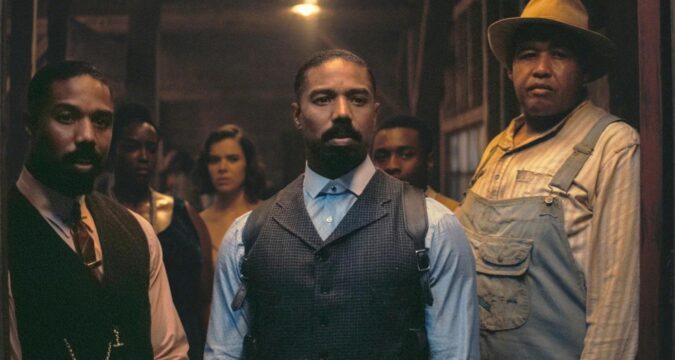
Ryan Coogler’s blues-steeped vampire epic “Sinners” led all films with 16 nominations to the 98th Academy Awards on Thursday, setting a record for the most in Oscar history.
Academy of Motion Pictures Arts and Sciences voters showered “Sinnners” with more nominations than they had ever bestowed before, breaking the 14-nomination mark set by “All About Eve,” “Titanic” and “La La Land.” Along with best picture, Coogler was nominated for best director and best screenplay, and double-duty star Michael B. Jordan was rewarded with his first Oscar nomination, for best actor.
Paul Thomas Anderson’s father-daughter revolutionary saga “One Battle After Another,” the favorite coming into nominations, trailed in second with 13 nominations of its own. Four of its actors — Leonardo DiCaprio, Teyana Taylor, Benicio del Toro and Sean Penn — were nominated, though newcomer Chase Infiniti was left out in best actress.
THIS IS A BREAKING NEWS UPDATE. AP’s earlier story follows below.
Horror films have traditionally been left out of the Oscars, but as nominations for the 98th Academy Awards are announced Thursday, Ryan Coogler’s vampire tale “Sinners” could make history.
Ten films are nominated for best picture, as read by presenters Danielle Brooks and Lewis Pullman: “Bugonia,” “F1,” “Frankenstein,” “Hamnet,” “Marty Supreme,” “One Battle After Another,” “The Secret Agent,” “Sentimental Value,” “Sinners” and “Train Dreams.”
The first category read was supporting actress. The nominees are Elle Fanning and Inga Ibsdotter LilIeaas for “Sentimental Value,” Amy Madigan for “Weapons,” Wunmi Mosaku for “Sinners” and Teyana Taylor for “One Battle After Another.”
For supporting actor, the nominees are Jacob Elordi for “Frankenstein,” Sean Penn for “One Battle After Another,” Stellan Skarsgård for “Sentimental Value,” Benicio del Toro for “One Battle After Another” and Delroy Lindo for “Sinners.”
No movie has ever landed more than 14 nominations — something achieved only by “All About Eve,” “Titanic” and “La La Land.” But “Sinners” could top that mark with a heap of nods for its lush craft, Coogler’s writing and direction, and Michael B. Jordan’s acting (it would be his first nomination).
Right with it will likely be Paul Thomas Anderson’s “One Battle After Another,” which has coasted through awards season as the clear frontrunner. The father-daughter revolutionary comedy could land 14 nominations of its own, including five or even six acting nominations.
Whatever the final tally is, Warner Bros. is poised for its best Oscar showing in the 102-year-old studio’s history. Both “One Battle After Another” and “Sinners” should lead Warner Bros. to a record haul even as the studio prepares for its sale to Netflix. Earlier this week, Netflix amended its $72 billion acquisition of Warner Bros. Discovery to an all-cash offer, sweetening its offer over that of Paramount Skydance.
This year, the Oscars are introducing a new category for casting. That new honor helped “Sinners” and “One Battle After Another” pad their already impressive stats. Along with those two films, the nominees are “Hamnet,” “Marty Supreme” and “The Secret Agent.”
“Sinners” can also be found among the nominees for original song: “Golden” from “Kpop Demon Hunters,” “Train Dreams” from “Train Dreams,” “Dear Me” from “Diane Warren: Relentess,” “I Lied To You” from “Sinners” and “Sweet Dreams Of Joy” from “Viva Verdi!”
The 98th Academy Awards will take place on March 15 at the Dolby Theatre in Los Angeles and will be televised live on ABC and Hulu. YouTube’s new deal to exclusively air won’t take effect until 2029. This year, Conan O’Brien will return as host.
https://www.chicagotribune.com/2026/01/22/oscar-nominations-sinners/
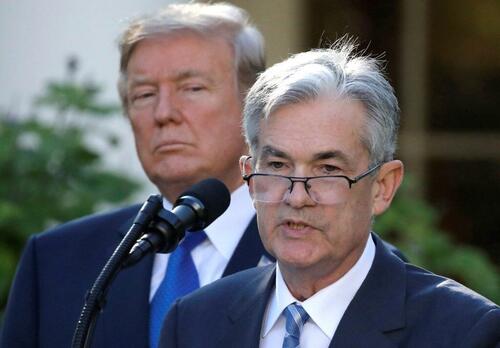
Das: Trump’s Spat With The Fed Is Not About Central Bank Independence
Das: Trump’s Spat With The Fed Is Not About Central Bank Independence
Authored by Satyajit Das via New India Express,
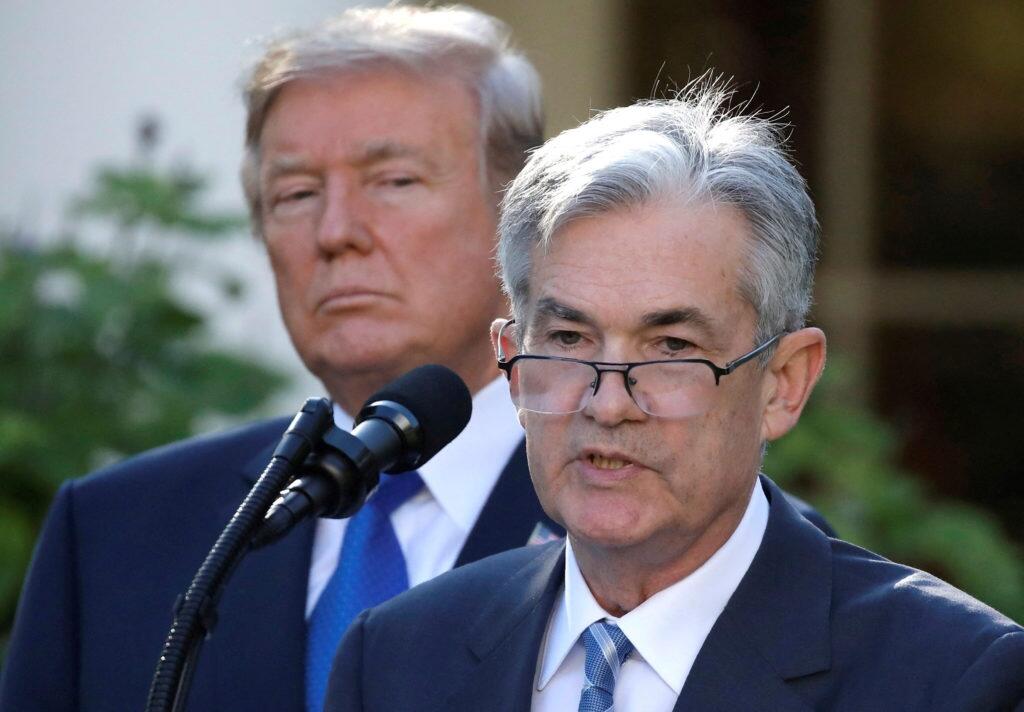
The spat between the White House and Fed Reserve Chairperson Jerome Powell, a President Trump appointment, is hardly unusual. Lyndon Johnson and Richard Nixon bullied the central bank to lower interest rates.
Central banks function as the government’s banker, issue currency, maintain the payment system and manage the nation’s currency reserves. They safeguard financial stability acting as a lender of last resort to banks although separate bodies sometimes regulate the financial system. The contentious part of their mandate is controlling money supply and setting interest rates.
Central bank independence is recent. In 1990, New Zealand legislated inflation targeting which was adopted by other nations. The concept was that an independent institution would determine monetary policy and maintain price stability minimising opportunities for politicians to use interest rates to boost economic activity especially around elections. The context was the high inflation era of the 1970s and 1980s. It was convenient to transfer painful choices to central bankers allowing governments to blame others or claim credit depending on outcomes.
The case for independence is unclear. The objectives, such as relative price stability, growth, and employment, are frequently contradictory. It is unclear which of multiple measures of price levels is to be prioritised. The 2 to 3 percent inflation objective is arbitrary. Empirical studies suggest that fear of deflation may be unwarranted. There are differences on what constitutes full employment. Data, rarely timely, has methodological problems. The representativeness of items used to measure inflation is contested. Unpaid work, zero-hour agreements and contracting complicates labour statistics. Resource scarcity or sustainability are ignored.
Central banks have limited tools – interest rates, regulating money supply through open market operations, quantitative easing (buying government debt) and forward guidance (open mouth operations or jawboning). Budgets, the currency, international capital flows, and geo-politics (sanctions, trade restrictions) are outside its control.
The underlying economic models focus on NAIRU (non-accelerating inflation rate of unemployment) or the Phillips Curve, a simplistic trade-off between unemployment and inflation. In practice, these relationships are unreliable. Cause and effect are difficult to differentiate. There is no agreement on a neutral (not contractionary or expansionary) interest rate. Central bankers constantly validate Laurence J. Peter’s judgement: “an economist is an expert who will know tomorrow why the things he predicted yesterday didn’t happen today.”
The problems are compounded by training and backgrounds which lend themselves to groupthink. Central bankers are economists, usually trained at the same universities, who spend their working life around the institution, government or academe and limited commercial experience. Central banks are run by economists providing employment for their tribe. Independent members rarely second guess staff recommendations, even if they have the expertise and information.
Originally reticent, central banks, following the lead of former Fed Chairperson Alan ‘Maestro’ Greenspan, have embraced celebrity. Inscrutable invisibility has given way to volubility, X handles, and Delphic oratory. They play to financial markets with an excessive focus on asset prices which do not uniformly benefit all citizens. Politicians, never happy to share the limelight, increasingly resent the power and public profile of these unelected technocrats. They begrudge having to seek approbation for their policies. US Presidents found themselves forced to kowtow to the all-powerful Greenspan. They increasingly are wary of the threat to their position and re-election that central banks may pose.
Central banks’ records are unconvincing. The Great Moderation of the 1990s and early 2000s, for which central bankers unashamedly claimed credit, was driven by lower rates, the result of Paul Volcker using punitive rates with high human cost to bring down inflation, as well as the entry of China, India and Russia into the global trading system and the growth of information technology. After the shocks of 2000 and 2008, hubristic central bankers used public money to rescue the system without addressing root causes. After 2020, they grossly misread price pressures regarding them as supposedly ‘transitory’. They have persistently ignored the side-effects of their policies such as asset price inflation, rising debt levels, capital allocation distortions, financing governments and social issues like inequality and housing affordability.
The current environment is different, characterised by low growth, slackening trade, challenges to free capital flows and geopolitical uncertainty. Interest rates are less effective in boosting economic activity. Inflation is less responsive to slack in the economy. Government borrowing in the aftermath of the crashes and the pandemic have created unsustainably high public debt and ongoing interest expenses which is unlikely to abate given aging populations, rising welfare costs and tax cuts. The increasingly populist political environment favours low interest rates, high growth, and jobs.
This is allied to suspicion of powerful elite central bankers insensitive to ordinary people’s concerns combined with an internationalist bent which favours globalisation.
Vice-chairman of the US House of Representatives financial services committee Patrick McHenry questioned the right of then Fed Chair Janet Yellen to negotiate financial stability rules with “global bureaucrats in foreign lands without . . . the authority to do so.”
Given his sharp political instincts, President Trump senses an opportunity to undermine central bank authority if only by appointing voting Fed governors who favour his desire for short-term rates as low as 1 percent. Rather than institutional reform, the motivation is furtherance of financial repression to disguise sovereign insolvency and maintain artificially high stock and property prices.
Lower rates would allow continuation of profligate governments, with tax cuts and higher spending in sectors like defence and national security which favour the government’s business constituents. Negative real rates and self-fulfilling expectations of inflation are designed to allow the government to inflate away its rising debts and devalue the currency to improve competitiveness. The policy entails transferring wealth from domestic and overseas savers to borrowers. Treasury Secretary Scott Bessant has suggested that the US will de facto use foreign wealth to rebuild American industry and employment through policies forcing foreigners to invest in US industries as directed by the Administration while at the same time reduce the value of overseas investors holdings by weakening the dollar or worse.
Interestingly, the President’s modus operandi for government policy is similar to that he used in his business. Trump enterprises sought growth at all costs. They borrowed big and defaulted if things did not work out.
Framed by the Administration’s critics around central bank independence, the opposition to Trump’s agenda has little to do with the subject. The governing classes’ concern is around the realisation that the Federal Reserve is now one of the few remaining institutions that offers any check on Presidential power given the weakening of Congress, the public sector, and the judiciary.
Tyler Durden
Thu, 01/22/2026 – 08:05
https://www.zerohedge.com/political/das-trumps-spat-fed-not-about-central-bank-independence

Ubisoft Crashes Most On Record After Tom Clancy’s Rainbow Six Maker Unveils Reorganization, Cancels Games
Ubisoft Crashes Most On Record After Tom Clancy’s Rainbow Six Maker Unveils Reorganization, Cancels Games
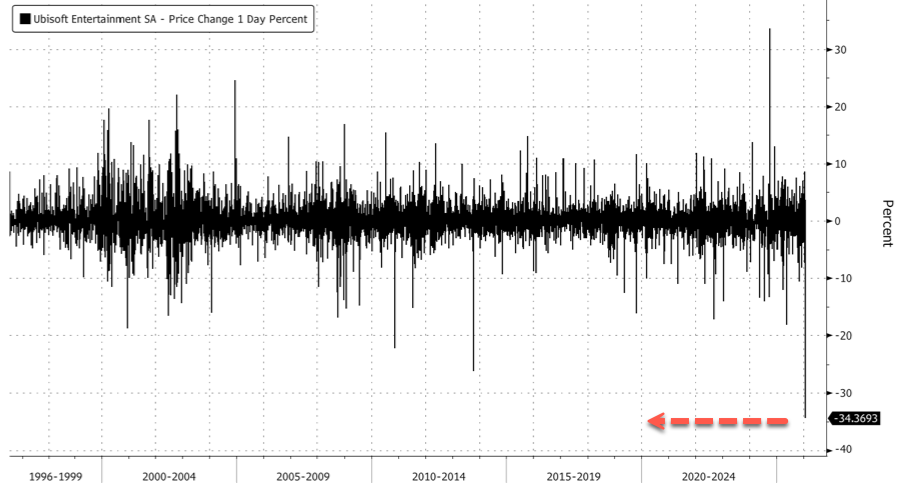
Ubisoft Entertainment SA shares in Paris crashed the most on record after the maker of Tom Clancy’s Rainbow Six Siege (more commonly known for Assassin’s Creed) announced widespread restructuring, studio closures, project cancellations, and sharply lower guidance.
Shares plunged as much as 36% in the intraday session, currently down 33%, the steepest drop on record.
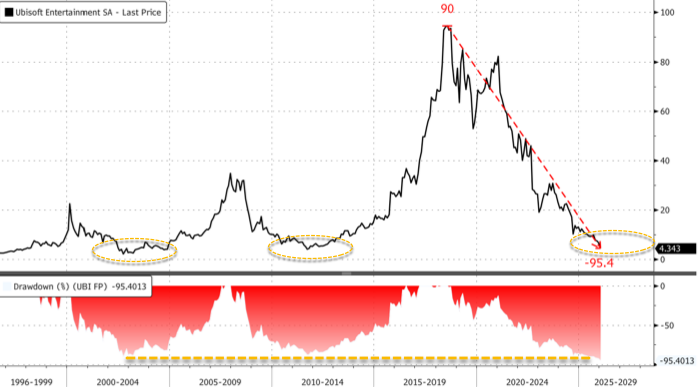
Shares are down to around 2011 lows. Will the 2002 lows be next?
The French gaming company said it expects a 1 billion euro EBIT loss in FY 2025-26, driven by a one-off 650 million euro writedown tied to the restructuring. It will close studios in Stockholm and Halifax, cut about 100 million euros in fixed costs by March (a year ahead of plan), and target an additional 200 million in cuts over the next few years.
Six games were canceled and seven delayed, including the long-awaited Prince of Persia: The Sands of Time remake, prompting some Wall Street analysts to warn of a broken game development pipeline.
Key summary of Ubisoft’s year forecast (courtsey of Bloomberg):
Sees net bookings about EU1.5 billion, estimate EU1.78 billion (Bloomberg Consensus)
Sees negative free cash flow EU400 million to EU500 million
Sees non-IFRS Ebit loss about EU1 billion
In November, Ubisoft said “it expects stable net bookings year-on-year, approximately break-even non-IFRS operating income and negative free cash flow”
Third quarter forecast:
Sees net bookings about EU330 million, saw about EU305 million
Ubisoft’s new structure will comprise five “creative houses,” business units each handling a game genre with “faster, decentralized decision-making,” the company explained. In April, these units will be supported by a network of studios providing development resources – and will all share core resources.
“The portfolio refocus will have a significant impact on the Group’s short-term financial trajectory, particularly in fiscal years 2026 and 2027, but this reset will strengthen the Group and enable it to renew with sustainable growth and robust cash generation,” Yves Guillemot, Founder and CEO of Ubisoft, wrote in a statement.
Here’s commentary from Wall Street analysts (courtsey of Bloomberg):
Bernstein (market perform)
Management refrained from outlining any FY27 indications, “but we felt that a return to positive FCF may well be a three-year journey as Ubisoft strives to right-size its cost base,” analyst Aleksander Peterc writes
This could turn out to be a survival test, given about €1b of debt is due in 2027 and 2028
TD Cowen (hold)
“We are skeptical that the reorg will fix long-standing issues with inconsistent game development,” analyst Doug Creutz writes
It’s not clear why the new model after the restructuring will achieve superior results compared with the old one, which produced aggregate negative Ebit over seven years
CIC (downgrades to sell from neutral, PT lowered to €4 from €7.5)
The update points to a worsening operational situation, with the prospect of significant cash burn in FY26 and probably FY27, according to analyst Eric Ravary
The reorganization seems to be paving way for IP and studio disposals
Most of the firm value is tied in its JV with Tencent
Kepler Cheuvreux (reduce, PT cut to €5 from €7)
Broker’s previous cautious view was based on operational challenges and added complexity from the Tencent transaction, while assuming balance-sheet risk remained largely under control
These latest developments should bring balance-sheet risk back to the forefront of the investment thesis
The key question is if Ubisoft shares find a base at the 2011 lows or ultimately retrace toward the 2002 trough. With restructuring now underway, focus shifts to whether the company can stabilize operations and rebuild after crashing and burning. This is a stock to watch over the next 12 to 24 months.
Tyler Durden
Thu, 01/22/2026 – 07:45