Category: News

Proposed Homer Glen development would add condos, duplexes, retail along 159th Street
Homer Glen village officials are seeking feedback from residents on a potential new mixed use development proposed for 159th Street.
Developer Boris Predovich is looking to build Arya, a 15.5 acre community consisting of retail, condominiums and duplexes on vacant land just east of 12542 W. 159th St.
The plan includes two three-story buildings fronting 159th Street, with businesses on the first floor and condos on the second and third floors.
The commercial portion would be about 30,000 square feet of new shops, said Christopher Gruba, the village’s director of planning and zoning.
Each building would contain 13 condos with some being between 1,250- to 1,500-square feet with balconies and penthouse units between 1,500- and 1,800-square-feet with outdoor terraces.
Further back from 159th Street, a main corridor through Homer Glen, would be 20 duplex buildings, or 40 homes, in a gated community, Gruba said.
Prices for the duplex units could start in the upper $500,000s or $600,000, Predovich said.
Predovich and his team presented their idea for Arya to the Village Board at a committee meeting Wednesday. The board has not approved the plan. Rather, it must still go through a series of steps, including a plan commission review, before it reaches the Village Board for a vote.
The retail portion of the project could bring 16 new stores to Homer Glen, such as restaurants, boutiques and coffee shops, Predovich said. The community would be designed to promote walkability and serve as a gathering place, he said.
“We do only high end,” Predovich said. “… We will make this a special project.”
He said it represents a $50 million to $60 million investment in the village.
The homes would be brick and offer elevation and color variations so that they don’t have a “cookie cutter” look, the developers said.
Predovich said he is “not interested in offering apartments.”
Homer Glen residents and village officials have been opposed to apartment units.
“We’re not just doing a development,” Predovich said. “We hope to be the gold standard of the future of 159th Street.”
Developer Boris Predovich answers questions about a new project in Homer Glen that would include 30,000 square feet of new commercial space and 66 total new homes on the vacant land, just east of 12542 W. 159th St. during a Homer Glen Village Board meeting Jan. 28, 2026, in Homer Glen. (Michelle Mullins/Daily Southtown)
Village officials said the development would fit under density requirements allowed in Homer Glen.
“Arya has been carefully planned to be in alignment with the needs of the village and to be a premiere location in Homer Glen,” architect Steve Francis said.
Several trustees said they liked the proposal.
Trustee Rose Reynders said she can envision residents who are looking to downsize, but want to remain in Homer Glen being interested in a condo or duplex and enjoy the convenience of grabbing a coffee or sandwich at one of the shops.
“I think it’s checking all the boxes,” Trustee Robert Schaller said.
Mayor Christina Neitzke-Troike said she would like to hear residents’ views on the project. The next board meeting is Feb. 11.
“This is a big deal,” she said.
A new zoning district would need to be created as part of the development, Gruba said, adding the village doesn’t have a zoning classification for the mixed use portion of the project.
Michelle Mullins is a freelance reporter for the Daily Southtown.
https://www.chicagotribune.com/2026/01/29/homer-glen-condo-duplex-development/
Montañosa y con armados ilegales, así es la zona del accidente aéreo que dejó 15 muertos en Colombia
Por ASTRID SUÁREZ
BOGOTÁ (AP) — El operativo de rescate de los cuerpos de los 15 fallecidos en un accidente de una avioneta en Colombia ocurrido el miércoles se extendió por horas en una zona montañosa y con difíciles condiciones de seguridad por la presencia de grupos armados ilegales.
El ejército indicó el jueves que desplegó tropas y operaciones aéreas para “asegurar el área” del accidente aéreo registrado en zona rural del municipio La Playa de Belén, ubicado en la región de Catatumbo, donde operan grupos armados ilegales como la guerrilla Ejército de Liberación Nacional.
“Nuestro personal brinda seguridad perimetral y acompañamiento a los organismos de socorro que trabajan en la zona, garantizando las condiciones necesarias para las labores de rescate y atención a esta emergencia”, señaló el ejército en un comunicado.
La Defensa Civil, dedicada a atender calamidades, informó el jueves que la operación de rescate de los cuerpos culminaba con éxito, luego de trabajar durante toda la noche con apoyo de los bomberos y la Cruz Roja.
La aeronave perdió comunicación con el control del tráfico aéreo sobre el mediodía del miércoles, poco después de despegar de la ciudad de Cúcuta rumbo a Ocaña. La Aeronáutica Civil aún investiga las causas del siniestro.
Los cuerpos de los dos tripulantes y 13 pasajeros fueron trasladados hacia Cúcuta, capital del departamento de Norte de Santander. El Instituto Nacional de Medicina Legal y Ciencias Forenses aseguró el jueves que los cuerpos se encuentran en sus instalaciones para adelantar los procedimientos de identificación.
Quiénes eran las víctimas
Entre los ocupantes se encontraba el representante a la Cámara Diógenes Quintero, quien representaba a las víctimas del conflicto armado interno de su región y aspiraba a reelegirse en las próximas elecciones legislativas de marzo.
Quintero era un reconocido defensor de derechos humanos en el Catatumbo, donde antes de ser congresista fue defensor del pueblo regional. Su muerte ha sido lamentada por congresistas de todas las corrientes políticas, así como por la oficina del Alto Comisionado de la ONU para los Derechos Humanos, que lo describió como un “socio” en la labor “de incidencia por la protección de los derechos” en la región.
También viajaban miembros del equipo de trabajo de Quintero, como Natalia Acosta; Carlos Salcedo, un líder social que también aspiraba al Congreso para representar a las víctimas del conflicto armado; María Alejandra Avendaño, trabajadora del Consejo Noruego de Refugiados, y Karen Liliana Perales, de World Vision.
“Ofrecemos un especial sentido pésame por los miembros de las organizaciones humanitarias y sociales que dedicaron su trabajo al servicio de las comunidades”, indicó el jueves en un comunicado Médicos sin Fronteras.
Qué se sabe de la avioneta accidentada
Se trataba de un Beechcraft 1900 de matrícula HK4709 de 1995, con alrededor de 32.000 horas de vuelo y permisos vigentes para operación, según la Aeronáutica Civil.
La autoridad aérea dijo la víspera que han identificado “condiciones meteorológicas adversas permanentes” en el sitio del impacto de la aeronave. Sin embargo, aclararon que continúan investigando las causas del accidente.
El presidente de Satena, general Óscar Zuluaga, dijo el jueves a la prensa que esperan los resultados de la investigación, pero que no tenían una alerta previa por condiciones meteorológicas adversas que impidieran el cumplimiento del itinerario e indicó que la comunicación de la tripulación con el control del tráfico aéreo fue normal.
Ante preguntas de los periodistas que sugerían una posible acción de grupos armados ilegales contra la avioneta, Zuluaga dijo que si bien es una zona “de un alto riesgo en cuanto a la condición de orden público”, será la investigación la que explique “si hubo alguna condición externa que generara este desenlace”.
Zuluaga indicó que el piloto contaba con más de 10.000 horas de vuelo y años de experiencia, por lo que defendió la pericia de la tripulación.

Arqueros goleadores han creado momentos icónicos, desde Chilavert hasta el drama de Benfica
Por JAMES ROBSON
MANCHESTER, Inglaterra (AP) — Suele ser un acto de desesperación. Un último lanzamiento de dados que puede producir los resultados más espectaculares.
En otras ocasiones, puede ser el resultado de una confusión desastrosa. Uno para la colección de bloopers.
No sucede a menudo, pero cuando los arqueros anotan, suele ser memorable por razones correctas o incorrectas.
El cabezazo de Anatoliy Trubin en el octavo minuto del tiempo de descuento para Benfica contra el Real Madrid el miércoles produjo uno de los momentos más dramáticos en la historia de la Liga de Campeones. No solo Trubin selló una victoria 4-2 sobre los 15 veces campeones de Europa, sino que también aseguró que su equipo se quedara con el último puesto para los repechajes por la diferencia de goles.
“No me di cuenta de lo que necesitábamos. Pero luego vi a todos diciéndome que subiera. También vi al entrenador, así que subí, entré en el área y no sé. No sé qué decir. Fue un momento loco”, relató el portero ucraniano.
No es de extrañar que José Mourinho, el técnico de Benfica, celebrara con tanta euforia. El dos veces ganador de la Liga de Campeones ha logrado casi todo en una carrera llena de trofeos, pero esto era un territorio nuevo.
Con una ventaja de 3-2 en el tiempo de descuento, el club portugués necesitaba otro gol para avanzar a los repechajes.
“Recuerdo haber ganado o perdido en el último minuto, me había pasado varias veces antes, pero en esta situación donde estamos ganando, no es suficiente. Tienes que cambiar las cosas y arriesgarte”, dijo Mourinho.
Fue un riesgo que ciertamente valió la pena y hay una larga historia de porteros causando estragos en el área contraria.
Chilavert, el paraguayo experto en penales
Los porteros goleadores no tienen que aguardar por el caos, simplemente enviados para los momentos de agonía.
El internacional paraguayo José Luis Chilavert fue prolífico y una vez anotó un hat trick para el equipo argentino Vélez Sarsfield al convertir tres penales.
Chilavert, quien también ejecutaba tiros libres, anotó 67 goles en su carrera, según la Federación Internacional de Historia y Estadística de Fútbol, Fue el único portero en anotar un hat trick y es el arquero con más goles en el fútbol internacional con ocho tantos para Paraguay.
Sin embargo, la IFFHS dice que el brasileño Rogerio Ceni es el portero con más goles de todos los tiempos. Según el Guinness World Records, Ceni anotó 129 goles en su carrera.
El colombiano René Higuita, famoso por sus llamadas atajadas de escorpión y por driblar el balón fuera de su área, fue otro portero conocido por anotar de tiros libres y penales.
Momento icónico en el fútbol inglés
Mientras que el gol de Trubin fue en la competencia de élite del fútbol de clubes europeo, el portero Jimmy Glass obtuvo un estatus icónico entre los hinchas de Carlisle con su esfuerzo de último minuto que salvó al equipo de entonces cuarta división de caer fuera de la Liga de Fútbol Inglesa.
Fue en 1999 cuando el arquero remató de volea el gol para la victorisa en el tiempo de descuento contra Plymouth para asegurar la salvación de Carlisle, un momento que fue apodado como “The Great Escape”.
“Nada más la cabeza baja y le pegué. Pensé que iba a lanzarla por encima del travesaño, pero no podía fallar desde esa distancia”, contó.
Lo raro y lo maravilloso
Acostumbrados a lanzar el balón lejos desde los saques de meta, los porteros han sido responsables de algunos de los goles más sorprendentes de larga distancia, pero a veces puede requerir un viento a favor, literalmente, o un error embarazoso de su contraparte.
El estadio de Stoke es conocido como uno de los más ventosos en el fútbol inglés y eso ciertamente pareció ayudar al portero Asmir Begovic en 2013 cuando anotó cuando apenas transcurridos 13 segundos contra Southampton.
Entró en el Libro Guinness de los Récords por el gol más largo de todos los tiempos, con su esfuerzo medido en 91,9metros. Pero no llegó sin un poco de ayuda del portero rival Artur Boruc, quien fue sorprendido y quedó avergonzado cuando el balón rebotó sobre él.
“Es una sensación genial, pero fue un incidente afortunado. Me siento un poco mal por Boruc”, dijo Begovic.
___
Deportes AP: https://apnews.com/hub/deportes

Erdogan Urges Trump To Let Him Mediate Iran Crisis, Amid Fears Of Refugee Explosion
Erdogan Urges Trump To Let Him Mediate Iran Crisis, Amid Fears Of Refugee Explosion
Turkish President Recep Tayyip Erdogan is pushing the idea of hosting a direct teleconference between US President Donald Trump and Iran’s President Masoud Pezeshkian in a last-ditch bid to cool rising tensions, and avoid US military action.
Regional sources have newly revealed that in a phone call with Trump on Monday, Erdogan urged Washington to pursue diplomacy over escalation and offered Turkey’s services as an intermediary, a Turkish official said.
Trump reportedly signaled interest in the proposal, though Tehran has yet to respond. According to the same official, the Iranian president has not issued any public reaction.
Iran’s Foreign Minister Abbas Araghchi is actually currently in Istanbul amid a diplomatic scramble to avert war. One big problem is that Tehran is willing to talk about its nuclear program, but the reported Washington push for it to limit or abolish its ballistic missile arsenal is seen as nothing less than suicide.
The Iranians see this request as simply a non-starter, given the same limitations would not be imposed on Israel, and the Israelis have already mounted a surprise attack on the Islamic Republic last June.
Turkey is against any US-led strikes or a war, but is still pressuring Tehran to make meaningful internal reforms:
Speaking to Al Jazeera, Turkey’s foreign minister, Hakan Fidan, said: “It is wrong to attack Iran. It is wrong to start the war again. Iran is ready to negotiate in the nuclear file.”
He admitted Iran faced challenges at the bargaining table, saying: “It might seem humiliating for them. It will be very difficult to explain not only to themselves but to the leadership. So if we can make things better tolerated I think it will help.”
Fidan argued Iran also had to present a new face to the Middle East, saying he had been “very frank” with the Iranians that they “need to create trust in the region [and] they need to pay attention how they are perceived by the regional countries”.
Turkey has some other pressing interests, given the fact that it shares a far eastern border with Iran, and Iranian migrants and tourists have long played a role in its economy.
Ragıp Soylu of Middle East Eye has put it this way: “Lack of EU initiative to stop this escalation is worrisome. If Iran explodes, 90 million people wouldn’t stay only in the region and Turkey; they will definitely migrate to Europe.”
He added, criticizing absent EU leadership: “But Von der Leyen is more interested in yoga camps in India.”
If Turkey isn’t happy about how things unfold regarding the US, Iran, and Israel – it could once again weaponize a potential new migrant crisis and hold it over Europe’s head, as Erdogan did in 2015.
Tyler Durden
Thu, 01/29/2026 – 15:40

Leases approved for new workforce development hub in Aurora
The Aurora City Council has approved leases with two organizations for the city’s new CEJA Workforce Development Hub, which will offer job training in green energy-related fields.
The College of DuPage and the 548 Foundation are funded by the state of Illinois to run clean energy-related job training programs, but those programs didn’t have a permanent location in the city. Now, the organizations are partnering with Aurora to bring these programs to a currently-empty, city-owned building at 649 S. River St.
The Illinois Climate and Equitable Jobs Act, which also gives the Aurora center its name, provides funding for the two organizations’ workforce development programs. The act was signed into law in 2021 and specifically notes Aurora as one of the 13 statewide locations to have such a job-training hub.
Aurora hosted a “launch” event for its new CEJA Workforce Development Hub last week. But, Mayor John Laesch was quick to point out in his speech that leases for the College of DuPage and the 548 Foundation to rent out the building, formerly used by the city’s water and sewer division, had yet to pass the Aurora City Council.
Now that the leases have been approved, they will go into effect on Feb. 1.
The building is planned to one day contain both classroom and work space. The classroom is set to be a “living laboratory,” with its own HVAC system for students to work on and empty spaces in the walls for students to install insulation in, city officials said at the launch event.
The inside of the building at 649 S. River St. in Aurora, as seen on Jan. 20, 2026, which is set to become the new Aurora CEJA Workforce Development Hub. (R. Christian Smith/The Beacon-News)
College of DuPage’s director of the Aurora CEJA Aurora Workforce Hub, Callie Matheny, said during the event that it was a “game changer” to have a place where students, staff and all of the program’s stuff can be in a single place.
From the new physical hub in Aurora, the College of DuPage is set to run its seven-week entry-level CEJA Bridge Program, which earns students various certificates related to construction and first aid, Matheny told the Aurora City Council’s Committee of the Whole last week. After completing that training, students can choose to take more advanced, job-specific training in solar installation, energy auditing and HVAC work.
More information on the college’s program can be found at: www.cod.edu/academics/continuing-education/career-professional-training/climate-equitable-jobs.html
The Aurora center is also planned to hold a training program from the 548 Foundation, which sets graduates up to become first-year apprentices in the Mid-America Carpenters Regional Council with training in construction and solar power. Founder AJ Patton said at the launch event that his organization’s program offers $500 weekly stipends to its students to “earn while you learn,” helping to carry them through the training.
More information about the program can be found at: 548foundation.org
The College of DuPage is on the “workforce development” side of things, which means it is more specific to meeting the needs of local employers, while the 548 Foundation is more on the “climate works” side, which is more in-tune with what the unions would like to see, according to Matheny’s presentation last week. Both programs rely on Goodwill to educate the community about the programs and guide interested people towards them.
A poster showing future goals of Aurora’s CEJA Workforce Development Hub is set up at an event held to launch the new center on Jan. 20, 2026. (R. Christian Smith/The Beacon-News)
Aurora is also actively looking for additional partners to expand its CEJA Workforce Development Hub.
City officials are also looking at ways to encourage the creation of jobs that could be filled by graduates of the new center. One way is through a Commercial Property Assessed Clean Energy financing program, commonly called C-PACE, which was approved by the Aurora City Council alongside the two leases on Tuesday. Through the lending program, the owners of commercial properties can borrow at a fixed, low interest rate for renovation or new construction projects related to energy efficiency and similar types of things.
Laesch campaigned last year partially on the promise of bringing these types of jobs to Aurora. And, during his inauguration speech, he spoke about partnering with the local CEJA Workforce Hub to help train students for that coming “green collar economy.”
rsmith@chicagotribune.com

Starbucks planea expandirse con cientos de nuevas tiendas en EEUU y aumentar su capacidad
Por DEE-ANN DURBIN
NUEVA YORK (AP) — Starbucks anunció el jueves sus planes de abrir cientos de nuevas tiendas en Estados Unidos y aumentar la capacidad de asientos en miles de ubicaciones existentes, apostando por enfatizar sus cafeterías como centros comunitarios incluso en momentos en que la demanda de café para llevar sigue en aumento.
La compañía presentó sus planes durante un evento para inversionistas en Nueva York. Después de anunciar el cierre de cientos de establecimientos menos rentables en septiembre pasado, la compañía señaló que ahora pretende inaugurar hasta 175 cafeterías este año en Estados Unidos y unas 400 más en 2028.
Entre sus planes se incluyen tiendas de formato más pequeño que son un 20% más baratas de construir, pero que aún ofrecen asientos cómodos, servicio al automóvil y capacidad para recoger pedidos por aplicación.
El presidente y director general de Starbucks, Brian Niccol, indicó que la compañía ve una oportunidad de construir al menos 5.000 nuevas cafeterías en Estados Unidos, y el formato de tiendas de menor tamaño representa buena parte de dicha oportunidad. Hay miles de lugares en donde no opera un Starbucks a menos de kilómetro y medio (una milla) de un competidor, destacó. Starbucks está particularmente interesado en abrir establecimientos en el centro, sur y noreste de Estados Unidos.
De alguna manera, Starbucks va en contra de una creciente tendencia en el país de cafeterías exclusivas para servicio directo al automóvil, como Dutch Bros y 7 Brew. La Asociación Nacional del Café, un grupo comercial de la industria, reveló en septiembre que el 59% de los bebedores de café en Estados Unidos que compraron café fuera de su hogar lo hicieron directamente desde su vehículo, un máximo histórico.
Pero Niccol aseguró el jueves que más del 60% de sus clientes ingresaron a una cafetería durante el último mes, y cree que es importante que esas tiendas se sientan acogedoras.
“Nuestras cafeterías son nuestro punto de diferenciación”, afirmó. “Queremos que la gente esté en nuestras cafeterías”.
Starbucks dijo que planea agregar 25.000 asientos adicionales a sus cafeterías en Estados Unidos para finales del ejercicio fiscal, en octubre. Es parte de un proceso de mejora continua que tiene como objetivo hacer que las tiendas existentes sean más cálidas y acogedoras.
Las mejoras –que cuestan alrededor de 150.000 dólares y se realizan durante la noche mientras las tiendas están cerradas– se han completado en 200 establecimientos y se tiene previsto que la cifra llegue a 1.000 para finales del año. Starbucks espera terminar con las remodelaciones en 2028. La compañía opera alrededor de 10.000 tiendas en Estados Unidos.
Niccol dijo que la compañía detectó que los clientes pasan más tiempo en las tiendas que fueron remodeladas.
Niccol, quien se unió a Starbucks en 2024 para revivir sus ventas en declive, destacó que la recuperación de la compañía está tomando forma. Starbucks ha estado agregando personal y equipo para mejorar los tiempos de servicio y dar a los empleados más tiempo para conectarse con los clientes.
Entre las prioridades de Starbucks para el próximo año está mejorar su negocio vespertino, el cual presenta cifras más bajas que la operación matutina. La compañía planea introducir en los próximos meses una línea de bebidas energéticas personalizables hechas con un extracto de café verde. También planea poner a la venta más bocadillos ricos en proteínas y fibra, como panes planos, requesón y palomitas de maíz con proteínas.
La compañía también comenzó con la instalación de equipos diseñados para acelerar el servicio. Una máquina de espresso de próxima generación reducirá a la mitad los 70 segundos que toma preparar un espresso actualmente y duplicará la capacidad a ocho tazas a la vez, anunció la compañía. Estas máquinas se empezarán a usar en el país a partir de 2027.
Starbucks también espera que los cambios en su programa de lealtad impulsen las ventas. A partir del 10 de marzo comenzará un programa de tres niveles en Estados Unidos y Canadá, el cual ofrecerá varios beneficios para los miembros Green, Gold y Reserve. Starbucks tiene 35.5 millones de miembros activos en su programa de lealtad en Estados Unidos.
Los miembros Green seguirán ganando una estrella por cada dólar que gasten, y las estrellas se pueden canjear por alimentos y bebidas. Pero ahora obtendrán un crédito de 2 dólares más rápido y modificaciones de bebidas gratis una vez al mes, anunció la compañía.
Los miembros que gasten más obtendrán más beneficios. Los miembros con estatus Reserve, que deben ganar 2.500 estrellas en 12 meses, tendrán acceso a mercancía exclusiva y eventos, incluidos viajes con todos los gastos pagados a destinos cafetaleros como Milán y Costa Rica.
Starbucks reportó esta semana ventas por encima de las expectativas durante su primer trimestre fiscal. La compañía dijo que sus ventas en tiendas comparables aumentaron un 4% a nivel global y en Estados Unidos en el período de octubre a diciembre, lo que marcó su mejor desempeño en dos años.
La compañía compartió el jueves sus proyecciones para el ejercicio fiscal 2028. Continúa esperando que las ventas en tiendas comparables en Estados Unidos y a nivel global aumenten un 3% o más, y espera que los ingresos crezcan un 5%. También pronosticó ganancias por acción de entre 3,35 y 4 dólares, en comparación con las ganancias ajustadas por acción de 2,13 dólares en el año fiscal 2025.
Las acciones de Starbucks cayeron un 1% en las operaciones del mediodía del jueves.
___
Esta historia fue traducida del inglés por un editor de AP con la ayuda de una herramienta de inteligencia artificial generativa.
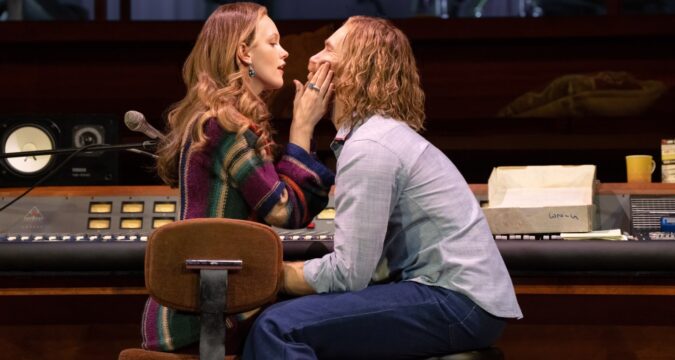
Review: ‘Stereophonic’ is a play about a ’70s band and the price you pay for genius
The national tour of David Adjmi and Will Butler’s “Stereophonic” cut through the cold Wednesday night to open in the American city that should best understand what it is all about.
This is an extraordinary piece of theater. It’s a deep cut into the agony and ecstasy of collaboration, and a profound meditation on the personal price you inevitably pay, and what you benefit, when you work with a combustible, volatile, insanely driven visionary.
Many of us have spent professional time with such people. Some of us look back on it fondly, or come to look back on it fondly once the price of pervasive mediocrity becomes clearer as you age. Some vow, never again. I’ve seen Daniel Aukin’s superbly directed production three times now; that should tell you on which side of the fence I reside. Which is not to say I did not feel the thorns in the green grass.
This much-admired show’s album cover is the music industry: Over three hours, you watch a British band that recalls Fleetwood Mac holed up for months in U.S. recording studios to create something that sounds a lot like “Rumours,” as released in 1977. Especially in scenes featuring a band’s de facto leader and a willful drummer, there are also thematic echoes of Peter Jackson’s documentary about The Beatles, another example of the above dichotomy.
The fictional group’s leader, Peter (Denver Milord), is obsessive, driving his bandmates, especially the lead singer-songwriter Diana (Claire DeJean), to greater heights. Everyone is fueled by drugs and ego, loneliness, insecurity and regret. Everyone already is famous, although Adjmi is not much interested here in the trappings of fame, restricting it to a few moments of conversation between tracks. He’s interested in the creative process itself — most specifically, in the line between the rocket fuel that ignites from the talents of others, if you have the right people in the room, and the consequences, for good or ill, of falling in love with your own vision.
The show, if you are not familiar, has a couple of other distinctive features. Butler, formerly of the very real band Arcade Fire, has written an original score that melds in truly innovative fashion into the dramatic action. That score, which is both cool and, given all the musical Easter eggs here, also a notable technical achievement, is played and sung live by the actors, who are all credible as belonging to a rock band that already has a No. 1 album. Some of Butler’s songs are mere snippets, some are full-length numbers, often with vocals in the three-part harmony familiar from the time. Although some here seem happier working alone (though not really).
The set, designed by David Zinn and lit by Jiyoun Chang, is a kind of hyper-realism. That’s an era-specific mixing board you can see in the mock-up of the studio and control room, and Chang’s subtle lighting design is animated by exactly the kind of lighting that would have been present. Unless some shortcuts were taken for the tour that got by me, everything you hear is authentically analogue within our digital world.
Adjmi also wrote in two Chekhovian observers for all this. One is Grover (Jack Barrett) the ambitious young engineer who begins as the play’s normative character but who matures (if that’s the word) as he jostles with the members of the band (Cornelius McMoyler is Simon, Christopher Mowod is Reg and Emilie Kouatchou is Holly) as the show progresses. Grover’s assistant, Charlie (Steven Lee Johnson), is like a young take on the servant Firs in “The Cherry Orchard,” widely ignored but a wide-eyed witness to painful change nonetheless.
‘Stereophonic’ arrives in Chicago, telling the story of a band through its songs
One lives vicariously with the band through the agony of the days when creativity was limited by how much tape was available or how much space there was on a single album without making the perilous leap to double. (You listen to them work on original Butler songs that eventually get “cut” and you might find yourself wanting to shout “not that one!” at the stage.)
But you also come to a new understanding of how that long-gone limitation actually helped bands throw away their lesser songs and work to make every available minute as close to perfection as possible. This put me in mind of a recent critique I read of The Atlantic that noted how the historical distinctiveness of that magazine came in part from what it did not publish. I left thinking a lot about that — how unlimited time and space can be the enemy of excellence and how scarcity of one thing or another can prod you to be better.
I admit to some trepidation walking into this tour, given the quality of the original Broadway cast, who were part of an exhaustive process. I have my favorites but I don’t want to compare actors, which is hardly fair to an ensemble here that is sufficiently similar to their predecessors to convey the same ideas, but also distinctive. DeJean is especially vulnerable in this cast. And although it took me a while to warm up to Barrett’s Grover (he had one heck of an act to follow), he linked his engineer in the end far more closely to the ambitious alpha milieu of the band, and the show is all the more resonant for that. Goofiness was downplayed; visceral ambition was at the core of Barrett’s work.
The play was rendered somewhat shorter for the tour, which is a shame in my view, although you may well find it long enough.
I prefer the original cut. Also, don’t be late for the curtain since the running time clearly is an internal issue, for reasons I find perplexing. The curtain went up at 7 p.m. right on the nose Wednesday, followed by an unnecessary seating hold that stranded some frozen souls in the lobby even as the dysfunctional British rock geniuses straggled into place to try and wrestle something spectacular from their forlorn souls.
Chris Jones is a Tribune critic.
cjones5@chicagotribune.com
Review: “Stereophonic” (4 stars)
When: Through Feb. 8
Where: CIBC Theatre, 18 W. Monroe St.
Running time: 2 hours, 50 minutes
Tickets: $40-$135 at 312 977-1700 and broadwayinchicago.com
https://www.chicagotribune.com/2026/01/29/review-stereophonic-musical-chicago/

Waukegan library provides a healthcare area for visitors: ‘They may be more comfortable here than … their home’
For the past 16 months, people have been able to have virtual doctor visits at the Waukegan Public Library’s Telehealth Booth, and now there is a second electronic setup — the Higi Station — to help visitors keep track of how their health statistics might change.
Amy Grossman, the library’s deputy director, said both the Telehealth Booth and the Higi Station are next to each other in a low-traffic section of the first floor, providing people as much privacy as possible in a public place.
While the Higi Station is in an open space where users can be seen, Grossman said they have an account to check their blood pressure or other types of history, which is secure. The Telehealth Booth locks from the inside, giving the patient complete privacy.
“All the information is on the website in a private account,” Grossman said of the Higi Station. “It’s a discreet look by design, which is good for the people using it.”
The Telehealth Booth and the Higi Station currently provide the general public with a variety of healthcare opportunities during regular hours at the Waukegan Public Library’s main downtown location, offering yet another access to medical needs.
Though people must make an appointment for the Telehealth Booth — it can be done in person, on the phone or online — Vanessa Burns, the library’s adult services manager, said they do not keep track of the use to help ensure privacy.
The newest addition to the Waukegan Public Library’s healthcare area is the Higi Station, providing people with a way to keep track of their medical information. (Steve Sadin/For the Lake County News-Sun)
“A few folks use it regularly,” Burns said, “It’s a private space, and you really don’t see when it’s being used. I notice it getting used a few times a week.”
In an effort to learn more about the use of the Telehealth Booth, Burns said the library is conducting an ongoing survey with a questionnaire that users can complete. The answers are generally positive, she said.
“Some people have suggested equipment we could add,” Burns said. “People like to use it for mental health appointments. They may be more comfortable here than doing telehealth out of their home. They may feel it is more secure.”
“The person they’re talking about may be living there, too,” Grossman added.
When an individual walks into the Telehealth Booth, they lock the door, and a fan helps block any outside noise. They sit at a table using a laptop computer with headphones to ensure privacy when communicating with a healthcare professional.
Grossman said the patient can take their own vitals with a blood-pressure machine, thermometer, pulse monitor and a scale. As soon as the door shuts, a special light illuminates, killing any germs that may be left from a prior visitor.
With up-to-date technology, Grossman said the Telehealth Booth offers an internet connection, which is much less likely to fail than devices at home, especially a cellular telephone, which has a very small screen.
“The library has fiber optics internet access, so the connection is reliable and won’t drop,” Grossman said. “It’s an ideal way to do a telehealth visit. The booth is a very private place.”
Burns said she works with community services groups like HACES to let them know about the availability of the Telehealth Booth and Higi Station.
Though the library does not charge for the use of the equipment, the cost of the visit is between the provider and the user’s insurance company.
The Telehealth Booth first opened in September 2004, and the Higi Station arrived at the library in March of last year.
https://www.chicagotribune.com/2026/01/29/waukegan-telehealth-booth/
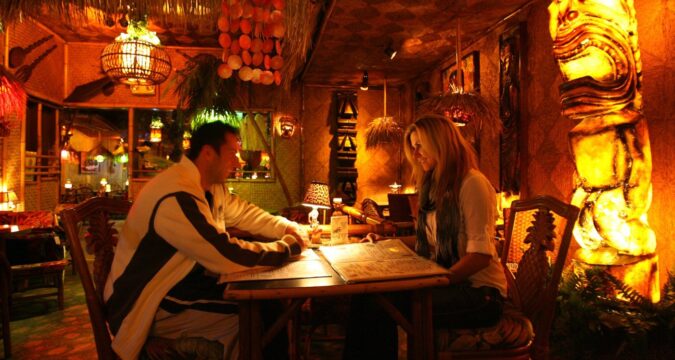
Vintage Chicago Tribune: Tiki bars and tropical-themed restaurants
For decades, Chicagoans have looked for an easy escape from winter’s bitter cold and mounds of snow. Generations of them have found a temporary reprieve inside the small clubs, lounges, bars and restaurants that cited Pacific Ocean island escapes as their inspiration.
Many of these establishments popped up during or after World War II, when service members were shipped to the South Pacific for duty. Others were inspired by the Rodgers and Hammerstein musical and 1958 film of the same name — or “Gilligan’s Island,” or Elvis Presley in 1961’s “Blue Hawaii.”
But let’s take a moment to discuss authenticity. Those who dreamed of re-creating crystal clear waters and lush botanical scenery with lulling music in Chicago were guided by their own interpretations of what island life, cuisine and art should be — not what it actually was.
Chinese lions dance outside Jimmy Wong’s restaurant to celebrate Chinese New Year on Feb. 12, 1965. (Chicago Tribune historical photo)
Others — Won Kow and Jimmy Wong’s included — served American versions of traditional food. Though tropical drinks were on the menu, those weren’t the focus of the dining experience.
A search of the Tribune’s archives to find photographs of these local places was more complicated than expected. We hit a dead end on: Ted Cirals’ House of Tiki; Joker Joe’s Typhoon Club; Shanghai Lil’s; South Pacific Restaurant; Tiki Lounge on Lawrence; Tong’s Tiki Hut in Glendale Heights and Villa Park; Trade Winds; and The Tropics Bar in the Hotel Chicagoan.
Still, there are a few local places that will transport you to a warmer climate without leaving the Chicago area.
Hala Kahiki — which means house of pineapple — in River Grove has been serving up potent punches since 1964.
Three Dots and a Dash, 435 Clark St., Chicago, opened in 2013, and remains the go-to tropical terrace in the city.
Zombie Punch, a popular drink for several people, is served on fire Aug. 8, 2014, at Three Dots and a Dash, 435 N. Clark St., Chicago. (Jessica Tezak/Chicago Tribune)
Here’s a look back at a sampling of long-gone island oases we wish we could duck into from the cold this winter.
Why do we miss Chicago restaurants so much when they’re gone? You could write a book
Bamboo Room at Country Club Hotel
The Bamboo Room was a tropical-themed cocktail bar located in the Country Club Hotel, 6930 South Shore Drive, Chicago, from the mid-1940s to the 1960s. (Chicago Tribune)
6930 South Shore Drive, Chicago
In operation (according to Tribune archives): 1943-1963
Tribune critic Kay Loring enjoyed a buffet “and its modest price” on the hotel’s ninth floor in 1961, but the Bamboo Room received few reviews in the paper.
There was, however, news of a “hotel bar holdup” on Sept. 12, 1949. Three bandits stole $541 and $1,600 worth of jewelry and another $500 from the Bamboo Bar’s till, the Tribune reported.
The hotel — which was across the street from the South Shore Cultural Center — closed in the early 1970s and is now an apartment complex.
Black Pearl
Dorothy Owens and Edman Chin are at the Black Pearl restaurant, 590 W. Diversey Parkway in Chicago, on April 13, 1963. The restaurant was inspired by tropical locations in the South Pacific. (Arthur Walker/Chicago Tribune)
590 W. Diversey Parkway, Chicago
In operation (according to Tribune archives): 1963-1992
Loring wrote the Polynesian cafe’s owners Frank Peck and Lewis Mustari “have never been closer to the South Seas islands than California,” but recruited knowledgeable chefs to prepare the Black Pearl’s cuisine.
The decor was bamboo, traditional tapa cloth, straw and exotic props — including seashells and wood carvings.
Allen Chin was the second owner of the Black Pearl restaurant. (Chicago Tribune)
“The food is quite tasty,” Loring wrote. “We thoroughly enjoyed the crispy egg rolls, the lobster almond, the beef imperial, the beef with snow peas.” She complimented Chef Jimmy, who had apprenticed at Trader Vic’s in San Francisco, for his recipes.
Allen Chin became the restaurant’s owner in 1964, and its focus became Cantonese and American recipes — including “chop suey to go.” Chin moved the restaurant to 28 W. Golf Road, Schaumburg, in the 1970s.
Lincoln Park Plaza now occupies the Lakeview site.
Don the Beachcomber
Employees of Don the Beachcomber from the Philippines and China make the first contributions to the Chicago Herald-American’s “Buy a Bomber” campaign, circa 1942. Max Alexandrio, from left, John Lee, Tafa, Don the Beachcomber, Liani, Tommy Tobalero and Lee Jone drop their tips into a giant clamshell. (Chicago Herald-American archive)
101 E. Walton Place, Chicago
In operation (according to Tribune archives): 1940-1981
“Restaurant with man’s name has lady in control,” read the headline to Loring’s review of the restaurant in July 1958.
Donn Beach (formerly known as Ernest Raymond Beaumont Gantt) founded the original location of his namesake bar — nothing more than a shack — in Hollywood in the early 1930s. It’s there where he mixed fresh juices, a variety of rums and experimented with garnishes to create his secret tropical drink recipes.
Sunny Sund, owner of Don the Beachcomber’s Chicago location, at the restaurant on May 8, 1958. (Harold Norman/Chicago Tribune)
Sund, a Minnesota native, met Beach and quickly became enamored with him and his enterprise. They became partners in business, then in life in 1937. She brought class, dedicated staffers and celebrities to the expanded operation. The private relationship ended in divorce in 1940, which gave Sund the opportunity to open her own Chicago location of the restaurant. Her new business partners, however, had connections.
Don the Beachcomber’s restaurant served Cantonese-style food. (Chicago Tribune historical photo)
“She was very much involved with the mob,” Sund’s daughter wrote in “Sunny Sund: The Woman Behind Don the Beachcomber, Inc.” “They were eager to partner with her and called on her to do so many times.”
Sund expanded the franchise around the U.S., and Beach retreated to Hawaii after his service during World War II.
Hawaiian Room at the Congress Hotel
The Hawaiian Room at the Congress Hotel opened May 26, 1933, according to this advertisement published that day in the Tribune. (Chicago Tribune)
520 S. Michigan Ave., Chicago
In operation (according to Tribune archives): 1933-34
The Polynesian-themed establishment at the Loop hotel offered “a deluxe international dinner” for $2 (or $51 in today’s dollars) and dancing to the music of an orchestra made up of native Hawaiians during its grand opening May 26, 1933. The Hawaiian Room replaced an old formal dining room, the Tribune reported.
But the theme didn’t last. The room was transformed into a French dining room in February 1934.
Honolulu Harry’s Waikiki
Honolulu Harry’s Waikiki, 804 Wilson Ave., Chicago, flew in authentic bands, singers and dancers from Hawaii for its entertainment. (Chicago Tribune)
804 Wilson Ave., Chicago
In operation (according to Tribune archives): 1950-1962
Musical groups were flown in from the Hawaiian islands by club owner “Honolulu” Harry Nakamura to be the featured entertainment.
The Kalima brothers played typical hula fare, but also a variety of others genres that “knock the customers out of their rattan chairs,” the Tribune’s William Leonard wrote in January 1953. The Hilo Hawaiians made their mainland debut at Honolulu Harry’s in 1959.
But when Nakamura’s wife filed for divorce in July 1962, she alleged he had plans to move out of state. That’s the last time Honolulu Harry was mentioned in the Tribune.
Kahala Terrace
In August 1974, Tribune critic Kay Loring enjoyed Kahala Terrace in Northbrook’s “unusually good food in the Chinese-Cantonese tradition.” (Chicago Tribune)
3065 Dundee Road, Northbrook
In operation (according to Tribune archives): 1973-1993
Brothers Walter and Bob Chinn were born in Minnesota, but their family’s restaurant legacy is well-known in the Chicago area.
Bob Chinn operated Golden Pagoda in Evanston and House of Chan on Green Bay Road in Wilmette in the 1950s. Walter Chinn was maitre d’ at Kon-Tiki Ports and ran Chan’s Tea House in Highland Park. Together they opened Kahala Terrace in 1974, which featured “unusually good food in the Chinese-Cantonese tradition accented with an occasional American touch such as steak with salad and french fries,” Loring wrote. The “luau” dinner began with soup or juice followed by a “puu-puu platter” of assorted appetizers. Exotic mixed drinks were the restaurant’s specialty.
Bob Chinn in front of his restaurant, Bob Chinn’s Crab House, in Wheeling on Sept. 7, 1989. (Michael Fryer/Chicago Tribune)
Why Northbrook? Parking in the White Plains shopping center was plentiful, there was easy access to the Kennedy Expressway and an industrial complex was on the rise nearby.
In the early 1980s, Bob Chinn sold his half of Kahala Terrace to Walter Chinn. Bob Chinn’s Crab House opened on Dec. 23, 1982, in nearby Wheeling. Kahala Terrace remained open into the early 1990s. Walter Chinn died in 1995, and Bob Chinn died in 2022.
Kon-Tiki Ports at Sheraton-Chicago Hotel
The Papeete Room in the Kon-Tiki Ports restaurant in the Sheraton-Chicago Hotel at 505 N. Michigan Ave., Chicago. (Chicago Tribune historical photo)
505 N. Michigan Ave., Chicago
In operation (according to Tribune archives): 1961-1986
Stephen Crane was an actor from Crawfordsville, Indiana, who was probably better known as being the husband — twice — of Lana Turner. Like Don the Beachcomber, Crane opened a stylish Polynesian restaurant called The Luau on Rodeo Drive in Beverly Hills that became popular with celebrities — and expanded his restaurant portfolio across the country.
More than $1 million was poured into building this 350-seat luxury dining experience inside the Sheraton-Hotel Chicago (now Intercontinental Chicago) that was essentially several restaurants in one. Diners were seated in one of four dining rooms: Papeete, Singapore, Saigon and Macao.
“The Polynesian restaurant menu is usually Cantonese in style, and only Polynesian in concept,” Crane told Loring in 1965. “As a matter of fact, most of what goes into our Polynesian dishes — bean sprouts, water chestnuts, tomatoes, and pea pods — don’t even grow on the islands.”
Kon-Tiki Ports restaurant at the Sheraton-Chicago Hotel (now known as InterContinental Chicago), 505 N. Michigan Ave., was opened in August 1962. It featured four distinct dining rooms named for locales on the Pacific Ocean — Macao, Papeete, Singapore and Saigon, which is shown here. (Chicago Tribune archive)
“Despite these far-east sounding names, the hotel expects to do 75 percent of its business in American food orders and only 25 percent in Polynesian and far eastern dishes,” Tribune reporter James M. Gavin wrote before its opening in August 1962.
A change of ownership at the hotel meant closing it in 1986 for renovations. This also brought the closure of Kon-Tiki Ports — and the auction of its custom cocktail glasses, and 8-foot statues.
Kona Kai Polynesian Restaurant inside the Chicago Marriott Motor Hotel
Diners watch the hula show at the Kona Kai Polynesian Restaurant at the Chicago Marriott Motor Hotel (now Marriott Chicago O’Hare) at 8535 W. Higgins Road in Chicago. The restaurant opened in 1973. (Chicago Tribune historical photo)
8535 W. Higgins Road, Chicago
In operation (according to Tribune archives): 1973-1998
The 583-seat eatery was the largest of its kind in the city when it opened in late 1973. Yet Loring noted the ambiance provided by a waterfall, lush plants and soft lighting made Kona Kai more intimate than expected.
Kona Kai Polynesian Restaurant inside the Chicago Marriott Motor Hotel, 8535 W. Higgins Road, was the largest of its kind in the city when it opened in 1973, with seating for 456 people in the dining area and another 127 in a multilevel cocktail lounge. (Roy Hall/Chicago Tribune)
After a brief foray into Chinese food, diners lured Kona Kai back to its Polynesian fare in the early 1990s — and its popular music and hula shows. The Barefoot Hawaiians presented authentic island dances from Hawaii, Samoa and other Pacific Islands.
Though Kona Kai was part of a national chain, it outlived all other locations — remaining open into 1998.
Lost Lake
The Tic Tac Taxi drink at Lost Lake on April 16, 2015. (Dana J. Ardell/for the Chicago Tribune)
3154 W. Diversey Ave., Chicago
In operation (according to Tribune archives): 2015-2022
Lost Lake opened in early 2015 as a tiki-themed bar after acclaimed beverage director Paul McGee departed another well-regarded tiki-themed bar, Three Dots and a Dash. Lost Lake quickly became one of Chicago’s most esteemed cocktail bars, and was a finalist for a national James Beard Foundation Award for Outstanding Bar Program, in 2019 and 2020. In addition to the Beard nominations, it was named one of Esquire magazine’s best bars in America in 2017. It was also chosen as best American cocktail bar in 2018 by judges at Tales of the Cocktail’s Spirited Awards.
The Lost Lake tiki bar on April 16, 2015, in Chicago. (Dana J. Ardell/for the Chicago Tribune)
After closing because of the COVID-19 pandemic in March 2020, Lost Lake pivoted to sell bottled cocktails to go, winning the Tribune’s Readers Choice Takeout Award for best to-go cocktails for the year.
When it finally reopened in 2021, it did so without the tiki motif, which has come under fire for cultural appropriation. Instead, Lost Lake said it was embracing a tropical theme. Lost Lake closed in January 2022.
“As it turns out, a super-spreader surge that wiped out what would usually be our busiest time of year was the last little straw this camel could handle,” the Instagram post read. “Maybe someday we’ll be back in one form or another, but it looks like this is it for now.”
Polynesian Room at the Edgewater Beach Hotel
Johnny Pineapple, left, serenades Kealoha and Leilani inside the Polynesian Room at Edgewater Beach Hotel in Chicago, circa 1955. The maestro and his orchestra played during dinner and post-meal dancing at the venue. (Chicago Tribune archive)
5300 N. Sheridan Road, Chicago
In operation (according to Tribune archives): 1954-1964
Formerly known as the Marine Room, the island spirit arrived at the hotel just in time for New Year’s Eve. Described as romantic and exotic by the Tribune’s Will Leonard, the Polynesian Room embraced a dinner and dancing concept — emceed by Johnny Pineapple — with dimly lit terraces encircling the open dance floor.
Fred Natividad, left, and Louis Patrolla dust lamps on Dec. 31, 1954, at the Polynesian Room inside the Edgewater Beach Hotel in Chicago in preparation for New Year’s Eve. (George Quinn/Chicago Tribune)
“You want some plain old American dishes? Sure, You want ham and eggs? They’re served with fried pineapple and banana fritters. You want a filet mignon? It comes seasoned and simmered in an imported oyster sauce. You want ice cream? Cocoanut flavor you can have. But why have ice cream for dessert when you can have tropical guava, steeped in rum and served with cheese?” he wrote.
The Juan Carlos Copes revue from Argentina was the last act to appear at the Polynesian Room before it closed in January 1964 — and the Marine Room returned.
Trader Vic’s at the Palmer House
A giant head sculpted out of wood greets diners at the entrance to Trader’s Vic’s restaurant at the Palmer House in Chicago on Jan. 6, 2006. (Phil Velasquez/Chicago Tribune)
17 E. Monroe St., Chicago
In operation (according to Tribune archives): 1957-2010
Victor Bergeron was a man of adventure and pluck who had a wooden left leg (which had been amputated when he was 6) and a love of the islands (though he had never sailed there due to seasickness).
Bergeron borrowed under $1,000 to build his own restaurant in Oakland called Hinky Dinks. But it was after a night at Don the Beachcomber in San Francisco that he was really inspired.
“I felt I could do it better,” he told the Tribune in 1979.
‘Trader’ Vic Bergeron in the 1960s with some of the food and drink creations that are served at his restaurants. (Chicago Tribune archive)
Hinky Dinks became the original Trader Vic’s.
Bergeron opened the South Seas-themed Traders inside what was formerly the Chicago Room at the Palmer House on March 28, 1957, after a half-million dollar renovation. It was a homecoming for Bergeron’s wife, Helen Harwood, who was originally from the city.
“Suckling pigs, Indonesian lamb roast, hens and squab will be barbecued in the expensively fired ovens in full view of the guests,” Loring wrote in a preview.
Guests took an escalator to the hotel’s lower level where they were transported to a tropical locale that featured idols carved from coconut trees and decor that lived up to Bergeron’s reputation as a trader in native artifacts.
The Trader Vic’s dining room inside Palmer House in Chicago on Aug. 2, 2002. (Erik Unger/for the Chicago Tribune)
Trader Vic’s remained in the same location until 2006. New owners of the hotel canceled the restaurant’s lease, forcing it to move to 1030 N. State St. in 2008.
Want more vintage Chicago?
Become a Tribune subscriber: It’s just $1 for a 1-year digital subscription.
Thanks for reading!
Subscribe to the free Vintage Chicago Tribune newsletter, join our Chicagoland history Facebook group, stay current with Today in Chicago History and follow us on Instagram for more from Chicago’s past.
Have an idea for Vintage Chicago Tribune? Share it with Kori Rumore at krumore@chicagotribune.com.
https://www.chicagotribune.com/2026/01/29/vintage-chicago-tribune-tiki-bars-tropical-restaurants/
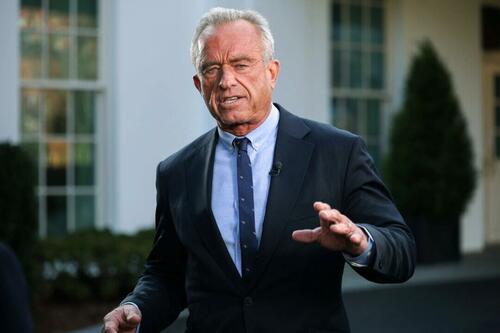
HHS Responds To Criticism From Vaccine Companies
HHS Responds To Criticism From Vaccine Companies
Authored by Zachary Stieber via The Epoch Times,
The Department of Health and Human Services (HHS) has responded after executives of top vaccine companies took aim at the Trump administration in the wake of a series of actions on vaccines.
“Vaccine recommendations are based on the best available gold-standard scientific evidence and public health considerations, not corporate interests. Under this administration, HHS is not beholden to the pharmaceutical industry,” an HHS spokesperson told The Epoch Times in an email on Jan. 28.
“Decisions are made through transparent processes with the sole aim of protecting the health of the American people. Protecting public health and restoring trust will continue to drive HHS’ vaccine policy.”
Under President Donald Trump and Health Secretary Robert F. Kennedy Jr., the Trump administration has downgraded vaccine recommendations for shots against diseases such as COVID-19 and influenza.
Officials have also canceled contracts for vaccine research, including for projects involving messenger ribonucleic acid (mRNA) technology.
The Pfizer-BioNTech and Moderna COVID-19 vaccines utilize mRNA.
Albert Bourla, Pfizer’s CEO, was among vaccine company executives recently criticising the Trump administration.
He told The Wall Street Journal during the World Economic Forum in Switzerland in January that Kennedy’s position on vaccines is “anti-science” and that a new secretary of health would be needed for discussions on vaccines to move forward.
Bourla also said that “we always knew that who is in the government is extremely important for our business because it is highly regulated.” In the United States, the Food and Drug Administration, part of HHS, decides whether to clear vaccines. The Centers for Disease Control and Prevention, another HHS division, offers recommendations for cleared shots.
At the same event, Moderna CEO Stephane Bancel told Bloomberg TV that Moderna has no plans to invest in late-stage trials for vaccines because the Trump administration’s actions are making the potential market size in the United States “much smaller.”
“You cannot make a return on investment if you don’t have access to the US market,” he said.
A nurse administers the flu vaccine in New York City on Nov. 11, 2002. Robert Giroux/Getty Images
In addition to narrowing vaccine recommendations and scaling back funding for vaccine research, Kennedy has announced officials are looking into whether vaccines cause autism. This week, he appointed new members to a federal autism committee, including people who have said autism is caused by vaccines.
“Vaccines will not be a growth area under the current administration,” ING Global Lead for Pharma and Healthcare Stephen Farrelly said.
Investors said that long-term prospects for vaccine makers remain robust, but that companies are now more beholden to the positions of political leaders.
“Unfortunately, success and failure will rest on the opinions of a few people. It’s not enough to have good science and commercial opportunity,” Clear Street analyst Bill Maughan said.
GlaxoSmithKline and French drugmaker Sanofi have already reported lower vaccine sales in the United States, and Australia’s CSL in the fall of 2025 postponed separating its vaccine unit, citing “heightened volatility” and falling U.S. vaccination rates.
Sanofi on Jan. 29 said it expected sales growth in 2026 overall, but sales from vaccines were expected to be slightly negative in part due to Trump administration changes.
“Dosing, administration, and insurance coverage remain largely the same … It’s more a perception issue more than anything else,” Sanofi CFO François-Xavier Roger said on a call with journalists. “The change of vaccine policy may have an impact, but it’s difficult to quantify at this stage. It might be slightly negative, but it’s too early to say and to quantify.”
Tyler Durden
Thu, 01/29/2026 – 15:20
https://www.zerohedge.com/political/hhs-responds-criticism-vaccine-companies