Category: News

Jazz trumpeter Marques Carroll’s pandemic dreams bear fruit on live album series
When coronavirus descended on Chicago, Marques Carroll made himself a promise. If the pandemic was the end of live music as we knew it, he was going “to go out swinging.”
The trumpeter, 47, has been a steady presence on the Chicago scene for decades. But, like so many others, the pandemic made him take stock of his career. For the first time, he felt emboldened to funnel creative energy into his projects, giving impromptu porch concerts with a combo at his Bucktown home and writing music with renewed urgency.
While Carroll’s albums “Live from Andy’s” and “Live from Winter’s” may have come out in November, they owe their existence to that period. So do the debuts which preceded them: 2021’s “The Ancestors’ Call” and 2022’s “Foundations.” (“Foundations” brought Carroll’s music to wider renown when two tracks, “Brother Payton BAM” and “Larry Sings,” were featured on episodes of FX’s “The Bear.”)
But at the end of the day, Carroll admits he’s a live-music guy. He set a goal to record a live recording series captured in the city’s four major clubs: Andy’s, Winter’s, Jazz Showcase and Green Mill. All feature his quintet, with saxophonist Brent Griffin, pianist Julius Tucker, drummer Greg Artry and bassist Christian Dillingham.
As of writing, all four records are in the can, with the Jazz Showcase and Green Mill installments planned for release sometime in late summer or early fall. A third, of alternative takes from the Andy’s sessions, came out on Jan. 2.
By releasing the series, Carroll wanted to pay homage not only to his love of live recordings — as a teen, he was hooked on MTV’s “Unplugged” — but to the inimitable energy of those clubs, bustling again after the pandemic’s near-lethal silence.
Marques Carroll, center, performs on stage with the Chi-Town Trumpet Summit at Andy’s Jazz Club on Jan. 20 2026. (E. Jason Wambsgans/Chicago Tribune)
“These four places don’t have to be open. They could have closed a long time ago,” Carroll says.
At the time we connected, Carroll was catching a brief break between back-to-back shows promoting the album. He’d just completed a weekend run with his quintet at Jazz Showcase, as well as another Chi-Town Trumpet Summit, which invites two other trumpets to join him and his band on the Andy’s stage twice a month.
But the next Summit, on Feb. 3, was just around the corner. So were two more quintet shows promoting the records: Feb. 6 at Andy’s and Feb. 20 at Winter’s.
Carroll balances it all as a full-time pedagogue. He’s taught at Chicago Jesuit Academy, a tuition-free elementary and middle school in Austin, for nearly 20 years and adjuncted at the University of Illinois Chicago for five. He also sits on the advisory board of BandWith, a major player in music education on the West Side. (BandWith is among the organizations participating in International Jazz Day when that global event touches down in Chicago in the spring.)
When Carroll moved from St. Louis to Chicago to study at DePaul University in 1990s, he would have never expected teaching would become such a huge part of his career. It’s just another way he followed in the footsteps of his grandfather — also a trumpet player, also inexhaustible, and a buddy of trumpeter Clark Terry’s to boot.
“He would basically take inner-city kids and give them music to get them off the streets — that was his thing,” Carroll says.
The originals on Carroll’s three “Live from…” releases so far offer a snapshot of this on-the-move artist. “Live from Andy’s” is full of riches, from the twinkling economy of “Afrocentric” to “The Ancestors’ Call Upon Us,” a polyrhythmic epic. The forward-shuffling “Riding with Claudette,” an “Andy’s” outtake, is part of a longer suite about civil rights activist Claudette Colvin, who died earlier this month. (Colvin was also the protagonist of “She Who Dared,” an opera which premiered at the Studebaker Theater in June.) And anyone listening to “Live from Winter’s” will commit the butter-smooth groove of “Soulful” to mental loop.
Marques Carroll performs on stage with the Chi-Town Trumpet Summit at Andy’s Jazz Club on Jan. 20 2026. (E. Jason Wambsgans/Chicago Tribune)
All reward deep listening, elements subtly shifting underfoot in an alert yet sensuous way. “I like modal playing; I like being able to take a melody, but then forget about it,” Carroll says. “There’s still this element of swing that I grew up in, from the ’90s, yet I still like this hip-hoppy stuff.”
The Trumpet Summit has also become a mainstay in Carroll’s calendar. The whole concept started with Andy’s co-owner Chris Chisholm, who suggested that Carroll riff on opera’s Three Tenors. The trumpeter admits he was skeptical at first. But through the Summit, Carroll has been able to tear it up alongside stars like the Chicago-born Marquis Hill and, on one memorable swing through town, Wynton Marsalis.
“He played his signature, ‘All the Things You Are,’ and he did ‘Cherokee’ at a very fast tempo, as he does,” Carroll recalls with a chuckle. “He gave another 45-minute, hour-long show, and then we sat around for another hour while he held court.”
With a schedule like Carroll’s, staying regimented isn’t a choice but a necessity. He keeps spreadsheets “like crazy” and sets aside Sunday evenings for his daughters, a 15-year-old and a 3-month-old newborn. Sleep? He probably doesn’t get enough, he admits.
“But I’m driven by the work,” he hastens to add. “I don’t like to sit still.”
As for the quintet, Carroll is committed to convening the group on bandstands at least once a month. At most, he’ll bring in sketches to the gig. But the rest is fully of-the-moment. Carroll says he hasn’t rehearsed the band “in years.”
Marques Carroll at Andy’s Jazz Club on Jan. 20 2026. (E. Jason Wambsgans/Chicago Tribune)
“I love the spontaneity of bringing sketches in, because we’re just going to keep working it. I want to hear, ‘What’s your take on this?’” Carroll says.
That focus is paying off. Carroll says he can feel the group “taking more chances” together. Just the other day, after one of the quintet’s Showcase gigs, a musician colleague approached Carroll after the set and noted that the group had a “band sound.”
For someone who idolizes Miles Davis’s Second Great Quintet and the late Roy Hargrove’s own distinctive unit, that’s always the goal.
“We are moving into that space of what I’ve been wanting to do for years,” Carroll says, “and I’m starting to see it.”
Hannah Edgar is a freelance critic.
Chi-Town Trumpet Summit is Feb. 3, followed by concerts Feb. 6 at Andy’s Jazz Club, 11 E. Hubbard St.; 312-642-6805 and andysjazzclub.com. Then Feb. 20 at Winter’s Jazz Club, 465 N. McClurg Court; www.wintersjazzclub.com.
https://www.chicagotribune.com/2026/01/30/marques-carroll-trumpet-jazz/
Israel anuncia que reabrirá el cruce fronterizo entre Gaza y Egipto el domingo, tras casi dos años cerrado
JERUSALÉN (AP) — Israel anuncia que reabrirá el cruce fronterizo entre Gaza y Egipto el domingo, tras casi dos años cerrado.

Saudi Arabia Presses Royal Families To Bankroll Faltering Megaprojects
Saudi Arabia Presses Royal Families To Bankroll Faltering Megaprojects
Saudi Arabia has begun pressing the kingdom’s wealthiest families to inject more capital into domestic ventures as flagship Vision 2030 megaprojects are scaled back or shelved, Bloomberg reported this week.
The report said the Public Investment Fund (PIF), alongside the Ministry of Investment and other state bodies, convened a closed-door meeting on the Red Sea coast with some of the country’s richest families. Those present were urged to “collaborate” on more projects and to partner with foreign investors still considering opportunities in the kingdom.
Balkis Press/ABACA/Shutterstock
This renewed push comes as Riyadh quietly retreats from some of its most heavily promoted developments, with construction at the Mukaab suspended earlier this week and other megaprojects scaled back, once touted as cornerstones of Vision 2030.
The combined pullback reflects a broader reassessment of the scale and financing of the Vision 2030 agenda, with investment capital being redirected toward sectors offering quicker returns, including logistics, mining, and AI.
Amid the shift, oil still accounts for roughly 61 percent of Saudi state revenue, according to the 2025 budget, while crude prices have lately hovered near $60 per barrel – well below the level economists say is needed to balance spending.
Foreign investors have largely stayed away from costly prestige projects, leaving the PIF to rely on borrowing and domestic funding.
Saudi Arabia has suspended construction of the Mukaab, a vast cube-shaped skyscraper planned for central Riyadh, as authorities reassess its financing and feasibility:
Source: New Murabba Development Co.
Bloomberg noted that the PIF declined to comment on the meetings, while the Ministry of Investment did not respond to requests for clarification.
The move echoes events in 2017, when Saudi Arabia’s Crown Prince Mohammed bin Salman (MbS) detained dozens of business figures and royal family members at the Ritz-Carlton in Riyadh, requiring them to hand over billions of dollars in assets during what was described as an “anti-corruption” campaign.
Analysts widely viewed the purge as a calculated move by MbS to tighten control over the security services while sidelining powerful figures associated with competing branches of the royal family, thereby consolidating his authority.
Tyler Durden
Fri, 01/30/2026 – 06:30

Editorial: Secretary of State Giannoulias puts e-bike safety on the table
Where do e-bikes and e-scooters belong? On the sidewalk? On the road? And who should be allowed to drive them?
As use increases across the city and suburbs, the need to establish broader rules has become apparent. Too often, these vehicles become a menace when used at high speeds or in places they don’t belong.
After a suburban Mount Prospect teenager died after his e-bike crashed into a truck in September, we called for sensible regulations to protect walkers, drivers and e-bike users alike.
Different local governments across the state have created a patchwork of rules and regulations that differ in various ways. And while some suburbs have responded already, not every local government has taken up the issue.
So we were pleased to hear Secretary of State Alexi Giannoulias’ Thursday announcement of a new initiative to address rising injuries and deaths tied to high-speed e-bikes and other powerful electric devices.
We’ve argued that sensible rules for e-bikes and e-scooters begin with clarity and safety: clear categories based on speed and power, limits on where and how fast they can travel and commonsense requirements such as helmets, lights and proper parking. Giannoulias is working with state Sen. Ram Villivalam, D-Chicago, and state Rep. Barbara Hernandez, D-Aurora, and the potential legislation seems poised to incorporate many of these principles, though the specifics are still a work in progress. In addition to rules regulating e-bikes and e-scooters — sometimes referred to as micromobility devices — Giannoulias has said his proposal would pair regulation with education by expanding micromobility instruction across K-12 classrooms and high school driver’s education, giving students and new drivers clearer guidance on safely sharing the road.
Granted, we still need to see the legislation, but these ideas broadly make sense. The problem with e-bikes is that the higher-speed models are not really bikes at all, but function more like motorcycles. Yet under Illinois law, teens can ride many classes of e-bikes without the licensing or training required for motorcyclists. Most electric bikes can cruise at speeds up to 28 mph, depending on the class and model.
We are not letting teenaged motorcyclists out on our roads without oversight. So why is it different for electric bikes?
These devices should certainly not be outlawed, as some have called for, but regulated sensibly. We think this new statewide proposal has the potential to bring some needed clarity — not to mention improved safety.
Submit a letter, of no more than 400 words, to the editor here or email letters@chicagotribune.com.
David Greising: What are Mayor Brandon Johnson’s plans for stopping abuses by immigration agents?
A bright orange whistle has become the symbol of resistance to federal immigration agents in Minneapolis, Chicago and other major cities.
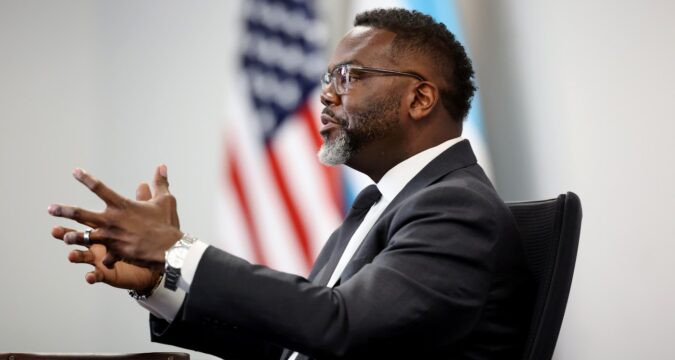
This week, Chicago Mayor Brandon Johnson sought to blow the whistle in a big way by calling for action in a speech to the National Press Club in Washington.
“As a nation, we have to really look at the model that was set during the Civil Rights Movement. We need a well-trained, organized opposition to ultimately expand the resistance that is already afoot in the country,” Johnson told the Press Club on Wednesday. “Saving our democracy is the most patriotic thing we can do in this season.”
But if this was Johnson’s big moment to issue a call, unfortunately, it was a whimper. He recited a litany of past actions but set no plan for what to do next.
Maybe that’s because he sequenced his effort backward: First, the big national speech; next, planning meetings at the U.S. Conference of Mayors; then, at some undefined time — two weeks, maybe, as is the trend in D.C. these days — he’ll unveil a master plan for Chicago that could be a pattern for the country.
There may yet be time for Johnson to offer concrete details and seize the national spotlight again. But to get to where Johnson and his fellow mayors need to go, rhetorically and as leaders, they have work to do.
For starters, they need to reckon with how the power dynamic of the current immigration struggle contrasts with the civil rights era.
In the days of the Rev. Martin Luther King Jr. and others, the federal government imposed its will on the racists running cities and states, in a drive toward racial equity that delivered major progress.
President Dwight Eisenhower federalized the Arkansas National Guard to ensure safe entry of the Little Rock Nine into Central High School, and the federalized Alabama guard pushed Gov. George Wallace out of the schoolhouse door at the University of Alabama. The FBI and Department of Justice ultimately brought justice to the Klansmen who perpetrated the Mississippi Burning murders.
Today, though, the power of the federal government is at times arrayed against constitutional order, the rights of free speech and assembly, and even the power of local authorities to police their own streets. And before Border Patrol Cmdr. Gregory Bovino was demoted, federal agents were using the modern-day equivalent of water hoses and police dogs — and worse — to subdue the public. And they were egged on by cheerleading from Homeland Security Secretary Kristi Noem and the nothing-to-see-here response of Attorney General Pam Bondi’s DOJ.
White House border czar Tom Homan on Thursday promised a more restrained approach by Immigration and Customs Enforcement and other border control forces going forward, after the two killings in Minneapolis this month and the outrage that has followed. He seems aware that most Americans support reasonable enforcement of immigration laws, but not the reckless excesses of federal power we are seeing.
We should know by this spring whether Homan can restrain the forces of chaos that have seized ICE lately. And as a measure of protection, cities such as Chicago still need to prepare for a return to Bovino-style overreach, just in case.
After all, when the DOJ fails to investigate the agents who killed Alex Pretti and Renee Nicole Good, emboldened by Vice President JD Vance’s initial claim that federal shooters could be protected by “absolute immunity,” local authorities are left to investigate and prosecute on their own — with the expectation they will be hamstrung by a lack of federal cooperation and likely resistance.
Johnson is calling for coordinated national efforts led by mayors and state governments, in concert with public pressure groups and local residents, to combat the actions by ICE, the Border Patrol and other federal authorities.
During his D.C. appearance, Johnson promised detailed ideas will be coming soon. As to why this is taking so long — Operation Midway Blitz started in September, after a rhetorical windup by the Donald Trump administration — Johnson did not say.
What can Johnson and other mayors and governors do?
For starters, they can take a page from the Trump administration’s playbook and press their own powers to constitutional limits. Trump goes at least that far, and beyond, evidently under a theory that the courts will have a hard time keeping up with — much less permanently prohibiting — many ICE actions.
There is no reason Chicago can’t consider similar brinkmanship. And Chicago’s track record against court challenges to measures taken so far offer encouragement that there is room for even more ambitious defense of state authority, local police powers and other constitutional rights.
A federal judge has recognized the right of the city and state to require federal agents to wear name tags or other identifying markers, for example. The Trump administration challenged Johnson’s executive order prohibiting agents from wearing masks during enforcement actions, but the city’s public safety and governmental accountability aims are being served for now, even if the courts don’t back the city in the end.
Johnson’s executive order to block use of city property for marshaling immigration agents and equipment remains in effect. And another ordering the Chicago Police Department to protect the free speech rights of protesters will be on hand should federal agents amass again in Chicago this spring.
Johnson has plenty of other tactics available for consideration: requiring federal agents to wear body cameras while working in Chicago, for example; requiring training standards for agents; ensuring that no agents are listed in the DOJ’s National Decertification Index of nearly 60,000 former police officers who have lost the right to work in law enforcement because of misconduct.
The Brookings Institution listed more such ideas this week. No doubt Johnson and his mayoral allies in Los Angeles, Minneapolis and other cities have come up with other ideas during the Mayors Conference this week.
Johnson’s headiest idea — criminally charging Bovino or whoever else might break the law — would be a test of federal versus state power that might be worth taking.
Johnson took a political risk by announcing plans to lay out ambitious steps in the coming days. Now he needs to collect his thoughts, set a plan and blow that whistle.
David Greising is president of the Better Government Association.
Submit a letter, of no more than 400 words, to the editor here or email letters@chicagotribune.com.

Editorial: The Midwest is becoming a population magnet again. Here’s a chance for Illinois to grow.
The census data just released brought fantastic news for us hale and hearty Midwesterners: We’re growing.
It’s true. Our mighty region, overlooked — and often looked down upon, particularly by our coastal compatriots — was the one region in the U.S. where all states saw population growth from July 2024 to July 2025.
The region’s population grew by 244,000 in that period, marking four consecutive years of growth, and, notably, the Midwest posted positive net migration from other states for the first time this decade.
A handful of states, including Indiana, Iowa, Minnesota, Missouri and Nebraska, have seen population growth each of the past five years. Among the biggest turnarounds, however, were turned in by Big Ten rivals Ohio and Michigan, which had previously been in a population slump marked by negative net domestic migration and worrisome natural population declines — more deaths than births. That’s turned around, and we’re pleased for the Buckeyes and Wolverines as they bask in this good news.
But what about us?
Illinois has grown, too, but far more modestly. The state added about 16,000 residents in the year ended July 1, 2025, down sharply from 70,000 the year before, and we still have fewer residents than we did in 2020. That’s progress. Of a sort. But nothing to brag about.
Our broad take: It’s heartening the Midwest is more attractive than it used to be. That’s really good news for population-challenged Chicago and Illinois. It will help immensely in reversing those trends here if the wind is at the back of the region of which Chicago is the unofficial capital.
But that doesn’t mean Illinois will take advantage of it. Our political leaders have a chance now to seize this regional momentum and make Illinois and Chicago the destinations they should be.
We’ve written before on some of the many reasons Illinois is stuck in the mud when it comes to the number of people living and working here.
One of the primary recent reasons is beyond the state’s control, and that relates to one of the more important disclosures from the Census Bureau: U.S. population growth has slowed markedly, and while it remains true that the low birth rate is a major driver, the real shift in this latest report is that the country is seeing a “historic decline in net international migration,” as the bureau puts it.
Illinois’ international migration fell by about 60% from 2024 to 2025, a sudden slowdown that exposes an underlying weakness in the state’s ability to grow.
Domestic migration remains a significant drag on growth here, too, with more residents leaving than people coming here from other states. This is the component most responsive to state and local policy.
In our region, Missouri and Indiana were the clear winners in terms of generating positive net domestic migration last year, with Wisconsin right on their heels. Illinois would do well to look at what its neighboring states are doing to make themselves more attractive.
In some respects, our problems aren’t complicated. Taxes, especially property taxes, remain a major complaint among Illinois residents, a concern that polling has consistently shown to be a leading reason people consider leaving the state.
Fiscal uncertainty, both at the state level and in Chicago, is an impediment as well. Even when the tax burden is onerous, newcomers often will choose to come if they feel confident those levies won’t rise substantially in the near future. Chicago and Illinois, unfortunately, have been unable to offer such assurances.
Illinois also is widely perceived as a costly place to do business from a regulatory and tax standpoint. Our long history of high-profile corruption scandals doesn’t help matters, although we hope the recent convictions of political powerhouses such as former House Speaker Michael Madigan and former Chicago Ald. Edward Burke will begin to lift that cloud.
After years of stagnation, Ohio and Michigan have responded by signaling they want growth, moving faster on permitting, leaning into housing affordability and marketing themselves as predictable places to spend and build.
Despite facing many of the same challenges, Illinois has not responded, playing defense as governments face budget-busting pension debts and long-term obligations.
What appear to be the beginnings of a Midwestern resurgence gives Illinois a chance to reset and get in the game along with our neighboring states. There’s no reason, given Chicago’s clear preeminence among Midwestern cities and an abundance of infrastructure and natural resources, that Illinois shouldn’t be leading the charge.
Submit a letter, of no more than 400 words, to the editor here or email letters@chicagotribune.com.

Andrew McDiarmid: AI can’t function without our creativity. What does that tell us about humanness?
Generative artificial intelligence is all the rage these days. We’re using it at work to guide our coding, writing and researching. We’re conjuring AI videos and songs. We’re enhancing old family photos. We’re getting AI-powered therapy, advice and even romance. It sure looks and sounds like AI can create, and the output is remarkable.
But what we recognize as creativity in AI is actually coming from a source we’re intimately familiar with: human imagination. Human training data, human programming and human prompting all work together to allow our AI-powered devices to converse and share information with us. It’s an impressive way to interact with ourselves and our collective knowledge in the digital age. And while it certainly has a place today, it’s crucial we understand why AI cannot create and why we are uniquely designed among living things to satisfy a creative urge.
A century ago, Russian philosopher Nikolai Berdyaev argued that human creativity springs from freedom — the capacity to bring forth what wasn’t there before. He considered creativeness the deepest mark of the humanness in a person, a spark that reflects the divine image in us. “The creative act is a free and independent force immanently inherent only in a person,” Berdyaev wrote in his 1916 book “The Meaning of the Creative Act.” He called creativity “an original act of personalities in the world” and held that only living beings have the capacity to tap into fathomless freedom to draw out creative power.
Ancient wisdom attests to this powerful creative spirit. One of humanity’s oldest stories begins with a creative task: naming the animals of the world. It’s a hint that we’re meant to do more than just survive. We have the power to imagine. Much later, the early Christian writer Paul, whose letters shaped much of Western moral thought, affirms this view when he describes people as a living masterpiece, made with intention, and capable of our own good works.
But without freedom, Berdyaev writes, creativeness is impossible. Outside the inner world of freedom lies a world of necessity, where “nothing is created—everything is merely rearranged and passes from one state to another.” Here, materialism is the expression of obedience to necessity, where matter only changes states, meaning is relative and adaptation to the given world takes the place of creative freedom.
AI belongs to this world of necessity. It is bound by the inputs we give it: code, training data, prompts. It has no imagination. It needs our imagination to function. And what does it give us in return? Based on vast training datasets and lots of trial-and-error practice, it analyzes what we ask it letter by letter, using conditional if-then protocols and the statistical power of prediction to serve up an amalgamation of data in a pattern we recognize and understand. AI is necessity by definition, wholly lacking in the freedom from which true creativity emerges.
Related Articles
Lori Andrews: People are turning to AI chatbots for companionship. Is this robot love risky?
So how do we break through this world of necessity and protect our birthright to create?
First, we practice daily creativity. “Every creative act,” Berdyaev writes, “is creation out of nothing: the production of new forces rather than the changing or rearranging of the old.” And it doesn’t have to be a Picasso painting or a bestselling novel. Creativeness certainly includes the visual, literary and performing arts, but it’s much more: a reorganized room in your house, a handwritten letter to a friend, an afternoon serving at the food bank. It’s a home-cooked meal for your family, a podcast episode, some words of encouragement to a struggling soul. Practice exercising your creative potential every day.
Second, we limit our use of AI. That doesn’t mean ignore it completely — that would be hard to do now. It means be boss over it. The more we use it, the more we will want to use it. So before firing up ChatGPT, Gemini, Copilot or Grok, ask a few questions: How will this infringe on my own creativity? Are there other ways I can get help with this? What is the mental and even spiritual cost to me of this AI session? Fight the urge to take the easy way out and then practice depending on AI less.
Third, we consider the source of our creativity. Berdyaev argued that creativity in the world is only possible because the world is created. In the last century, scientists have found bountiful evidence of complexity and engineering in living systems that seems highly unlikely to have emerged from a world of evolved necessity. Earth bears the hallmarks of creative action, and it’s also the field of activity we use to create.
So what will be here tomorrow that doesn’t exist today? That is entirely up to you.
Andrew McDiarmid is a senior fellow at the Discovery Institute.
Submit a letter, of no more than 400 words, to the editor here or email letters@chicagotribune.com.
https://www.chicagotribune.com/2026/01/30/opinion-artificial-intelligence-ai-human-creativity/
Letters: Gun rights advocates outraged over Alex Pretti’s death should be upset by Renee Good’s killing, too
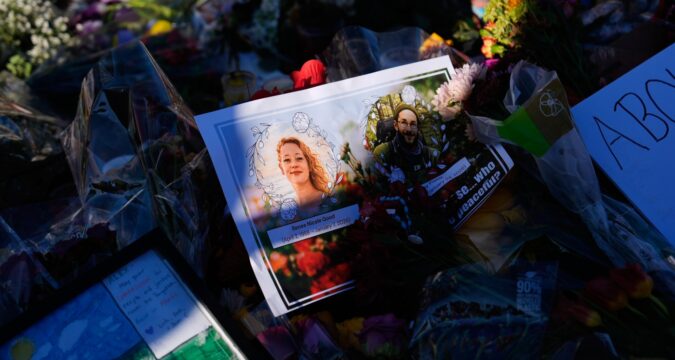
I’m glad that that the National Rifle Association and many Second Amendment advocates are outraged over Alex Pretti’s recent killing by Border Patrol agents in Minneapolis. However, their underlying logic for this rage is mistaken. Pretti was not killed because he was legally carrying a gun. He was pepper-sprayed, knocked to the ground and beaten by federal agents before they realized he had a gun. The gun was safely removed prior to his killing. He was attacked and killed by federal agents for exercising his constitutionally protected right to protest government actions.
I would feel much more solidarity with the NRA, as well as the posers displaying the “Live Free or Die” flag, if they expressed the same outrage over the killing of Renee Good who was similarly exercising her right to protest, even though she was not carrying a gun.
— Peter Okkema, La Grange
ICE an embarrassment
I am really getting tired of people trying to spin the senseless loss of life that happened in Minneapolis at the hands of federal agents. During the course of my career, I graduated from two police academies and had countless hours of training regarding use of force. This training continued into the private sector when I managed executive protection for a major corporation.
There was absolutely no justification for the use of deadly force in this situation — none. If Alex Pretti was breaking the law, agents should and could have arrested him and had him charged. Instead, they shot and killed him.
These are poorly trained men, and they must be held accountable for their actions. The entire organization should be disbanded and reorganized and its agents retrained. They cannot continue to be allowed to act with impunity.
There is an absolute need for immigration enforcement, but it must be held to the same constitutional standards as any other law enforcement agency in this country. What is happening with these fools is painful and unnecessary, and U.S. citizens are being sacrificed over the incompetence.
Immigration and Customs Enforcement is an embarrassment to law enforcement, and it must end.
— Richard Williams, Highland Park
Kimmel’s narrative
On Monday, I was heartened to see late-night host Jimmy Kimmel pay tribute to Alex Pretti, tragically killed by federal agents. Yet what about Rachel Morin, Laken Riley and Jocelyn Nungaray — U.S. citizens killed by undocumented immigrants?
Recognizing all victims would offer a fuller picture, but apparently, that doesn’t fit neatly into his narrative.
— David Tulanian, Henderson, Nevada
Recall Rittenhouse
I have two words in response to Loren Monsess’ letter (“Alex Pretti’s judgment,” Jan. 28) chastising Alex Pretti for having a loaded pistol on him while protesting the brutalities of federal agents: Kyle Rittenhouse. Does Monsess remember him? He was the 17-year-old who paraded the streets of Kenosha during protests of a police shooting. He openly brandished a long gun and killed two men and wounded a third.
— Paula J. Schneiderman, Chicago
Believe the science
I listened to a fascinating NPR podcast last Sunday, “Challenger at 40: Lessons from a tragedy,” about the engineers who tried to keep their bosses and NASA from launching the space shuttle in too-cold weather, and the guilt they felt the rest of their lives because their warnings were ignored.
Contrast that with the report this week that the Donald Trump administration has secretly taken an ax to safety regulations for the construction and operation of new nuclear plants. Or proposed rollbacks of Environmental Protection Agency standards for air toxin standards for power plants.
Political pressure to launch brought about the Challenger disaster, watched in real time by school kids, among others. I guess President Trump and his deregulators figure they’ll be long off the scene before the first “accident” or before radiation is detected in public water supplies or mercury in children’s bones.
But, yes, instead of listening to politicians who swear it will be all right till it all goes wrong, maybe we should go back to believing the science we have learned over recent decades.
— John Podulka, Wolverine, Michigan
SNAP requirements
Both Chicago newspapers reported on the same man, Kenneth Robinson, who finds his Supplemental Nutrition Assistance Program benefits imperiled with the requirement that recipients either work or volunteer so many hours a month. He speaks of his past as a hindrance to employment, but he is not required to work to receive benefits. He can take classes or volunteer.
It is not good public policy to just give people money on an ongoing basis. It’s demeaning and discourages independence.
Congress was right to expect at least something from SNAP recipients.
— Larry Craig, Wilmette
Call your senators
The not-so-Big Beautiful Bill is about to cause hunger to skyrocket and millions to lose their health care (“SNAP work requirements set to go into effect Sunday,” Jan. 27). This is a policy decision by the current president and the majority party in Congress.
The people of America don’t want to see their neighbors go hungry, lose their homes or be sick without health insurance. Why not call those who represent you, 202-224-3121, and tell them to turn around these catastrophic policy decisions?
There is no need for the world’s wealthiest country not to care for all citizens, not just the rich.
— Willie Dickerson, Snohomish, Washington
Reality of policies
Imagine how it must feel to be a die-hard Donald Trump fan and wake up to realize that everything his opponents have been saying is, in fact, true.
Trump’s tariffs (really, taxes, which we all pay for) have caused inflation to remain high. Meanwhile, China announced a record $1.2 trillion trade surplus for 2025. While the U.S. started trade wars, China struck deals with Canada and the European Union, among others, to sell electric cars, and India and the EU just announced “the mother of all trade deals.” We’re left on the sidelines.
Trump cut research to U.S. universities and prevented the best foreign students from attending them. Now, worldwide rankings show a drop in the rankings of U.S. universities. Schools that have seen the greatest increases include Chinese universities, as their “best and brightest” stay home.
Meanwhile at home, we have a K-shaped economy. Despite what Trump tells them, the Trump base — mostly rural and working class — struggles due to inflation and increasing housing and medical costs. Farmers and ranchers must accept government handouts to offset the inability to sell their crops and cattle to foreign countries. Meanwhile, the wealthiest Americans enjoy Trump’s tax cuts, which are creating massive deficits as our national debt skyrockets.
And now these Trump supporters must certainly realize, in light of the video evidence of the killing of innocent U.S. citizens in Minneapolis, that the Trump administration is, in fact, lying to them and that the federal agents in these cities are, in fact, goons.
“America First”? Hardly. Thanks to Trump’s policies, America at home and abroad, and its future, has been severely, perhaps irrevocably, damaged. Have the Trump supporters woken up to this reality yet?
— Frank Kern, Chicago
Age cutoff for leaders
I no longer have any faith in voters. This thinking that voters should be the ones deciding age cutoffs is the same rhetoric we heard last year: Don’t try to stop Donald Trump from running again; let the voters decide.
Well, we can see how that played out.
Politicians need to retire at a reasonable age to ensure new and younger candidates can step up. These politicians who are in their 80s and now 90s continuing to run for office is absurd. They’re out of touch in their bubble; they are no longer effective.
— Margaret Melville, Cedarburg, Wisconsin
Submit a letter, of no more than 400 words, to the editor here or email letters@chicagotribune.com.
https://www.chicagotribune.com/2026/01/30/letters-013026-alex-pretti/
Daniel Anello: As immigration enforcement intensifies, CPS needs to share real-time data to protect students
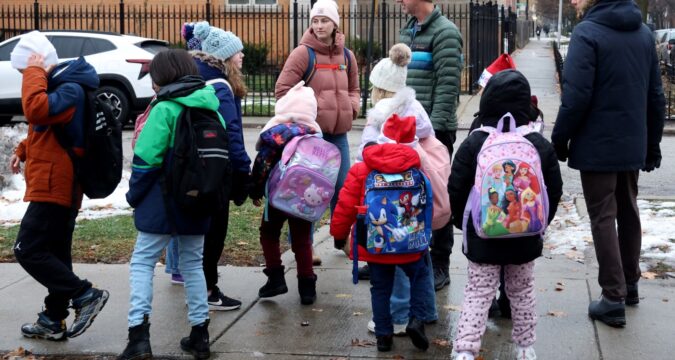
Last fall, amid heightened federal immigration enforcement, Chicago communities and schools mobilized quickly and creatively to help students get safely to and from school. These compassionate, community-led efforts were laudable — but given what is occurring in Chicago and across the country, we must be prepared to do far more for the city’s children. Despite these amazing efforts, far too many students, particularly English learners and Latine students, stayed home. What began as a safety concern quickly became an attendance crisis.
If last week’s actions in Minneapolis are any indication of what this intensified moment could bring, communities should brace for disruptions far greater than those seen in Chicago last fall.
Chicago Public Schools has struggled with attendance throughout the 2025-26 school year, continuing a pattern of chronic absenteeism that dates to the COVID-19 pandemic. A new report by the University of Chicago’s Consortium on School Research reaffirms that attendance matters not only for learning and achievement but also for school culture and climate.
But today’s challenge is distinct — driven by unprecedented actions being taken by the federal government, often in direct conflict with local governments. Without timely, transparent data, it is impossible to respond with the precision and coordination this moment demands.
CPS and the city should immediately begin sharing weekly absenteeism data, separated by English learners and non-English learners, at the districtwide and regional levels and searchable by grade level. Reporting according to individual schools or community areas is unnecessary and could risk singling out specific neighborhoods. But citywide and regional data would allow CPS, community organizations, funders and policymakers to align efforts and resources in real time.
The risks of sharing this data is minimal. Federal immigration actions are already concentrated in these regions. Without transparent, timely data, public attention has been muted, and coordination across CPS, the city and community partners has been more difficult than this moment demands. However, having access to accurate attendance data would make it possible to prioritize and prepare high-risk communities. For example, Safe Passage could be expanded, routes to school incorporating designated safe havens could be established, and schools could establish sanctuary teams to serve as trusted points of contact for families. But we must understand where these sorts of tactics are needed.
Let’s be clear: Students in Chicago (and in other cities across the country) are missing school because of fear tied to federal immigration actions. Schools and community groups have reported sharp spikes in absences during and immediately following enforcement activity.
Parents in our network describe being terrified, with some fearing their children, many of whom have legal status, could be used as leverage against family members. While there is no legal basis or precedent for such actions, rumors alone have been enough to keep children home and out of classrooms. Although enforcement activity in Chicago has temporarily slowed, federal officials have signaled renewed action this spring. We must be better prepared next time.
The importance of children being able to attend school safely cannot be overstated. Decades of data show that school attendance is tied to better life outcomes, stronger economic participation, improved health and safer communities. This principle is so fundamental that in 1982, the U.S. Supreme Court affirmed the right of all children, regardless of immigration status, to a public education. To be clear, the U.S. government wants these children in school. The education of all Chicago children mustn’t become collateral damage to immigration enforcement actions, regardless of how one views these actions.
Families also want their children in school. They trust schools to keep them safe and fed. What they fear is the commute to and from school. This is particularly true in neighborhoods, where many students are already struggling to overcome numerous barriers to their achievement.
We cannot address this acute, location-specific challenge without real-time data showing where and when students are missing school. Weekly attendance data is essential for precision, coordination between CPS and communities, and mobilizing additional support from philanthropy, city wards and community safety initiatives.
On behalf of thousands of CPS families living with daily anxiety, we urge the district to begin regularly sharing attendance data no later than February, in advance of an anticipated resurgence of federal immigration activity this spring. If CPS could share daily data during the COVID-19 pandemic so communities could respond accordingly, it can do so again now. For many Chicago families, this moment feels like a new kind of pandemic — and it demands the same urgency and transparency.
Daniel Anello is CEO of the nonprofit Kids First Chicago.
Submit a letter, of no more than 400 words, to the editor here or email letters@chicagotribune.com.
https://www.chicagotribune.com/2026/01/30/opinion-immigration-raids-schools-attendance-chicago-data/
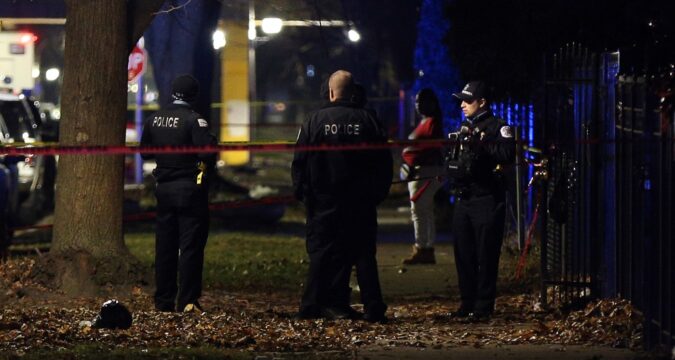
One detective’s work demonstrates how CPD improved the homicide clearance rate
Two days after a 19-year-old woman was fatally shot through the window of a second-floor apartment in Washington Park, a witness told a Chicago police detective, “This is gonna be taken care of anyways.”
And in fact the April 2, 2019, murder of Jiaerra Harris was the first of at least five intertwined shootings that involved a neighborhood gang conflict, a deadly attempted carjacking downtown, a mass shooting at a subsequent memorial and the murders of two witnesses.
Records obtained by the Tribune detail how one of the Chicago Police Department’s most effective homicide investigators recently closed that 5-year-old cold case, helping to raise the department’s murder clearance rate to its highest level in more than a decade.
CPD’s homicide clearance rate reached 71% last year — up from 55% in 2024 — amid a sharp decline in murders that helped buoy the figure. Records obtained by the Tribune show CPD detectives cleared fewer cases in 2025 — 296 — than in any year since 2019.
That means detectives effectively cleared cases among a smaller number of homicides, and continued to count the clearance of older cases in the department’s newest figure. In fact, of the cases cleared last year, records show more than 60% of them originated in years prior to 2025, the oldest being from 1987.
The clearance rate is calculated by dividing the number of homicide cases opened in a year by the number of homicide cases closed in a year. It’s a formula used by police departments across the country and remains the closest thing available to an objective measure of CPD’s effectiveness in investigating the most serious crime in Chicago.
‘I hit my targets’
On April 2, 2019, Jiaerra Harris attended a small birthday party for a friend at an apartment in the 6100 block of South Martin Luther King Drive. Not long before midnight, she sat in the kitchen while others shot dice in a nearby bedroom.
The guest of honor, turning 23, was recently paroled. Two years earlier, while being arrested for illegal gun possession a few blocks away, he told officers, “It is what it is. I keep my (expletive) on me.”
“I hit my targets,” he added.
A few days before the party, witnesses told police, a relative of Harris was in a fight with Lonell Irvin, who police said is a member of a nearby faction of the Black Disciples.
As Harris was in the kitchen, a bullet ripped through the open window, fatally striking her. One of the other attendees, a roommate, saw Irvin running away while holding a gun. Another person called 911 and police and paramedics soon arrived. Harris was pronounced dead about 30 minutes later.
Police records indicate Harris was shot three times, though investigators found only one spent bullet casing in the building’s side walkway. Another casing was found in the kitchen where Harris was shot.
Her family declined to be interviewed for this story.
The man who was celebrating his birthday was taken into CPD custody two weeks later on an unrelated charge. While at the police station, the detective asked again about the killing.
He refused to look at a photo array of potential suspects, but said he “heard on the street” that the shooting was retribution for the earlier fight. The witness told police he believed Irvin to be the shooter.
Violence ripples out
Irvin, 22, was dead just 10 days later.
On April 26, 2019, Irvin was driving a stolen Volkswagen SUV in the first block of West Ida B. Wells Drive when he rear-ended a BMW sedan that was waiting at a red light. The BMW driver got out, but Irvin, armed with a handgun, soon forced him into the car’s front passenger seat as Irvin got behind the wheel.
In the car, when Irvin briefly turned his attention away from the victim, the man reached for his own gun and shot Irvin three times in the head. He was pronounced dead at the scene. CPD logged the shooting as a justifiable homicide and the BMW driver, a legal gun owner, was not cited.
Even with Irvin’s death, the investigation into Harris’ killing continued.
On Dec. 7, 2019, the other witness who identified Irvin as the shooter — the man who was celebrating his birthday — was found shot to death in the backyard of a home in south suburban Harvey. Police officials there did not respond to a request for comment from the Tribune.
Two weeks later, on what would have been Irvin’s 23rd birthday, a house party was held in his memory in Englewood. Police officials estimated that about 70 people were in the home in the 5700 block of South May when two gunmen opened fire. Thirteen people were shot and wounded, four of them critically.
“It’s a terrible tragedy and, frankly, an act of cowardice,” former Mayor Lori Lightfoot said shortly after that shooting. “We can’t normalize this kind of behavior and tragedy in this city.”
Two men were later charged and convicted in connection with the shooting, records show.
The case changes hands
Meanwhile, the detective who initially investigated Harris’ killing retired from CPD. The case was reassigned to another detective who, as an officer, responded to the scene on the night of the shooting, records show.
In February 2021, the detective made contact with the other man who lived in the apartment when Harris was killed. The man “admitted to being an eyewitness and subsequently identified (Lonell Irvin) as the offender,” though he refused to sign or initial the photo.
A month later, that witness was killed, too, apparently in retaliation for a house fire he caused when he tried to heat a home in the 7900 block of South Anthony Avenue with a space heater.
Records indicate he returned to the block in March 2021 and was recognized by a neighbor as the person who started the fire. The neighbor then shot the witness and fled. CPD records indicate that killing was cleared in 2024 after prosecutors declined to seek an arrest warrant.
CPD Detective Patrick Deenihan, a cold case investigator in Area 1, took over the Harris investigation in early 2024 after the second detective on the case was promoted to sergeant, records show. While reviewing the investigation, his fellow officer told Deenihan that “this case was one that could potentially be cleared.”
CPD declined to make Deenihan available for an interview.
Records show Deenihan sought out two other witnesses who were in the apartment playing dice on the night of the shooting, including the man who initially told police, “This is gonna get taken care of anyways.” They also heard, secondhand, that Irvin was the shooter, though neither saw him at the scene.
Detective Patrick Deenihan (Eric P Davis/CPD)
The detectives stayed in contact with Harris’ parents throughout the investigation, and in March 2025, Deenihan told them the case would soon be closed.
With the two secondhand identifications, paired with the statements from the two dead witnesses, Deenihan submitted the case to his supervisors to be closed in August 2025 via “command channel review.”
That process requires an evaluation of the investigation by a detective’s sergeant, lieutenant and, ultimately, commander, according to a CPD spokesperson. It is one of the ways a homicide can be pronounced “cleared.”
“In each investigation, homicide team supervisors and detective area leadership provide guidance and oversight to ensure all steps are taken to bring offenders to justice,” CPD said in a statement to the Tribune.
“Cases are cleared closed through exceptional means only after all the necessary investigative steps are taken and the case will not proceed to court,” the statement read. “Command channel review is conducted to ensure an exceptionally cleared closed designation is appropriate and consistent with a complete and thorough investigation.”
Prior to any charging decision, investigating detectives and supervisors regularly meet with prosecutors in the Cook County state’s attorney’s office.
“These meetings offer detectives an opportunity to present updates on witness statements, forensic results, and physical and digital evidence to Assistant State’s Attorneys, helping determine whether sufficient evidence exists to charge a suspect and proceed to trial,” CPD’s statement added. “If the investigation is to continue, supervisors and detectives receive clear direction on the necessary next steps to advance the case for prosecution.”
An officer climbs the ranks
Deenihan was hired by CPD in 1997 and was initially a patrol officer in the Harrison District (11th) on the city’s West Side, city personnel records show. He was promoted to detective in 2000 and is the older brother of Brendan Deenihan, CPD’s former chief of detectives.
Before Area 1, he was assigned to Area 4, which covers the Ogden, Harrison and Austin districts, three of CPD’s most violent.
In the last quarter century, he has been one of the most effective of all CPD homicide investigators. Records reviewed by the Tribune show that Deenihan has cleared 51 cases since 2012 — roughly the time he was assigned to Area 1 — more than any other CPD detective but one.
As is often the case, though, most of the clearances have come without an arrest.
The handful of cases cleared via charging since 2012 have all led to convictions, according to Cook County court records. However, a man who was charged and convicted in a 2011 West Side murder, investigated by Deenihan and his partner, recently had his 51-year prison sentence vacated. A hearing is scheduled for next month to argue if the man should receive a certificate of innocence, records show.
Besides the Jiaerra Harris killing, Deenihan cleared three more cold cases in 2025: a 2001 murder in McKinley Park, a 2009 killing in Englewood and another from 2013 in Back of the Yards. Records show the state’s attorney’s office declined to bring charges in each of those three.
Records show Deenihan was assigned to investigate the 2017 murders of drill rappers FBG Brick — the brother of FBG Duck — and Coby Mack in the 6300 block of South St. Lawrence. That case was cleared in 2024 after CPD determined that the shooter died while he was held at Cook County Jail in connection with a separate murder case, records show.