Category: News
Should Democrats Fear A Supreme Court October Surprise That Could Save The Senate For The GOP?
Should Democrats Fear A Supreme Court October Surprise That Could Save The Senate For The GOP?
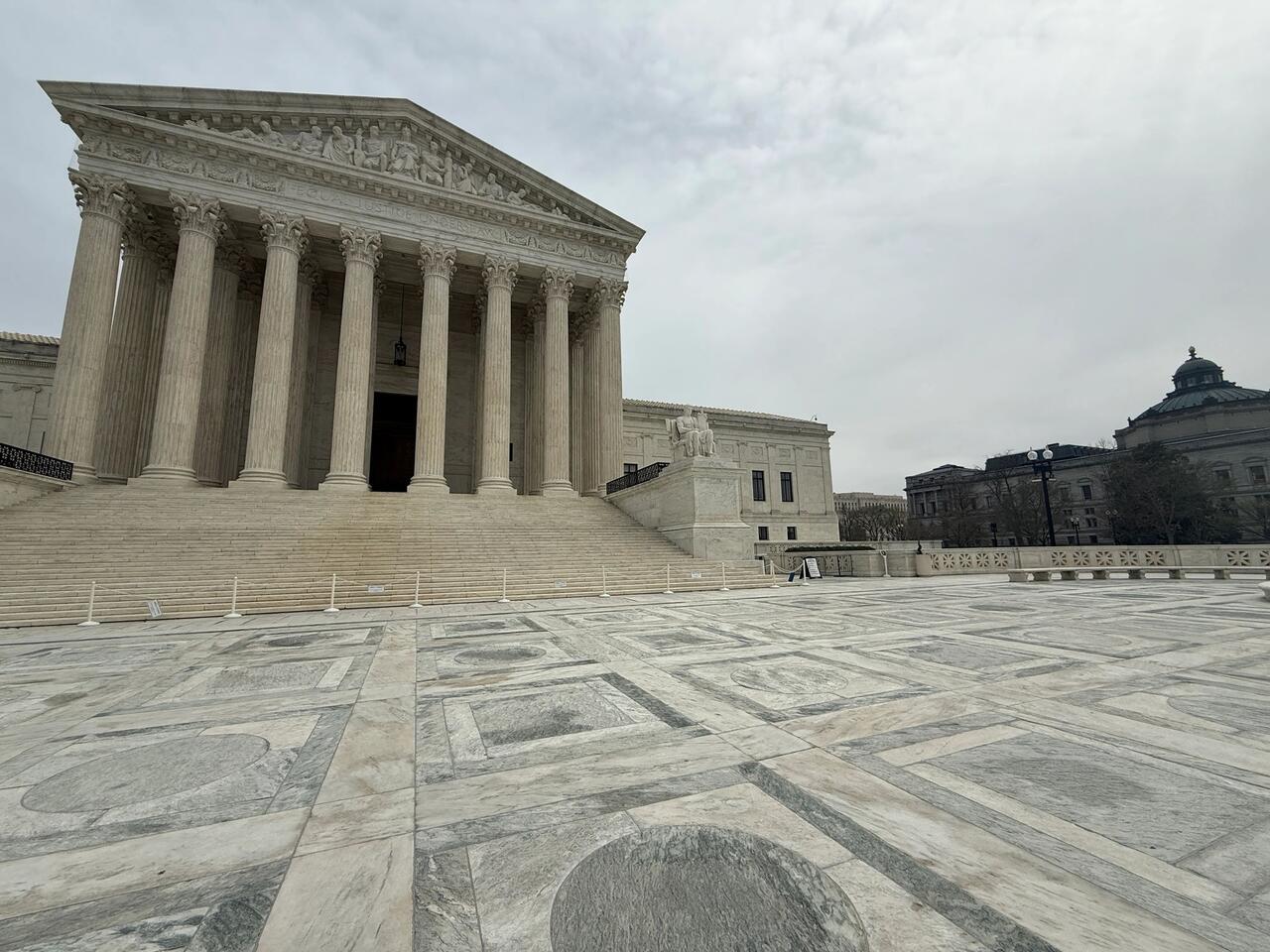
There has been a lot of speculation about potential Supreme Court vacancies this year, mostly centered on Justices Samuel Alito and Clarence Thomas. Even President Donald Trump seems anxious about the possibility. In a recent interview with Fox Business’s Maria Bartiromo, Trump revealed that he has a shortlist of potential Supreme Court nominees ready in the event of a vacancy and signaled he’s prepared to fill multiple seats if the opportunity arises.
“In theory, it’s two – you just read the statistics – it could be two, could be three, could be one,” Trump said. “I don’t know. I’m prepared to do it. But when you mention Alito, he is a great justice.“
However, for now, the door appears closed. Sources close to both Justice Samuel Alito and Justice Clarence Thomas told CBS News that neither man plans to retire in 2026, effectively throwing cold water on the speculation that has been building for months within Republican circles.
But Senate Republicans aren’t exactly ready to write it off yet. They’re treating the possibility of a fall vacancy as hot enough to plan around, even while keeping their mouths carefully shut in public.
The calculus is straightforward. Republicans currently hold a 53-seat Senate majority, but party strategists privately acknowledge that margin is vulnerable. The nonpartisan Cook Political Report recently shifted four Senate races — Ohio, North Carolina, Nebraska, and Georgia — toward Democrats. Meanwhile, Trump’s job approval has slipped into the low 30s. Democrats have a credible path to flipping the upper chamber if they can make inroads in Ohio, Alaska, Texas, or Iowa.
What Senate Republicans are hoping for is a potential October surprise.
GOP strategist and former Senate aide Brian Darling argues that a vacancy and confirmation battle hitting in October would “have the whole agenda change,” pulling Senate races away from economic grievances and back toward the Court. It would “shift” the focus of contested races and “may motivate MAGA voters to get reengaged and show up to vote.” As Darling put it, “An October surprise is when some issue comes up that people aren’t expecting that completely changes the debate,” adding that such a development “clearly is something that would be welcomed by the Trump administration going into the midterms.”
It sounds like a risky strategy that could backfire, as such events could easily motivate both sides. However, Republicans have a recent data point to anchor that theory.
In 2018, Justice Brett Kavanaugh’s confirmation fight landed so close to Election Day that it likely helped Republicans flip a few Senate seats despite losing 42 House seats and majority control of the lower chamber. The Senate outcome diverged sharply from the national wave, and vulnerable Democrats in red-leaning states paid the price. Sens. Claire McCaskill of Missouri and Joe Donnelly of Indiana both held polling leads heading into the Kavanaugh vote. Both lost. McCaskill later acknowledged on MSNBC’s “Morning Joe” that, before the confirmation battle, there had been “a double-digit difference in enthusiasm” favoring Democrats, but that Supreme Court fight changed the dynamics completely.
The 2016 Scalia precedent is also part of the institutional memory here. After Scalia died in February of that year, then-Majority Leader Mitch McConnell held the seat open through the presidential election, effectively turning the race into a referendum on the Court’s direction. Justice Neil Gorsuch was confirmed in April 2017. Republicans believe that the gambit helped deliver the White House.
Sen. John Cornyn (R-Texas) believes a Supreme Court vacancy “would be a galvanizing issue for Republicans,” but was careful to note that justices make their own decisions. “I don’t give Supreme Court justices advice,” Cornyn said, praising Alito’s record by saying simply, “Alito’s been great.”
There certainly is reason for Republicans to be careful. Barack Obama infamously failed to convince Justice Ruth Bader Ginsburg to retire while he was president. She stubbornly stayed on the court, despite her advanced age and poor health, and passed in 2020, giving a third Court pick.
Sen. John Kennedy (R-La.) was equally careful about nudging Alito, 76, or Thomas, 77, about retiring. He said he has “seen the articles” speculating about Alito’s retirement and acknowledged that “the rumor started somewhere.” On whether either justice might step down, Kennedy said it “depends on their health,” then added, “I don’t know where this rumor came from; it may well be true.”
Senate Majority Leader John Thune pointed to Republicans’ demonstrated ability to confirm quickly, referencing both 2018 and the confirmation of Justice Amy Coney Barrett in 2020 — completed less than two months after Justice Ruth Bader Ginsburg’s death, just before a presidential election.
“It seems like it could happen,” one senior Republican aide said. “We’ll get somebody confirmed. The fight will be interesting.”
The question isn’t whether Republicans want a Supreme Court vacancy before November — it’s whether they’ll get one. And if they do, history suggests the political fallout could be severe for Democrats defending seats in territory that was never really theirs to begin with.
Tyler Durden
Sat, 04/25/2026 – 18:05
‘Spies Inside The Holy See’: Report Reveals US Espionage Campaign Targeting Pope Leo
‘Spies Inside The Holy See’: Report Reveals US Espionage Campaign Targeting Pope Leo
The administration of US President Donald Trump has been “spying” on Pope Leo XIV as part of a years-long intelligence campaign by Washington against the Vatican, US investigative journalist Ken Klippenstein said in a report released Friday.
Klippenstein – an independent, Washington-based investigative journalist who formerly wrote for The Intercept – cited sources as saying that Trump’s recent comments on the new Pope were taken by the intelligence community as “a directive to prioritize spying on the Vatican.”
Trump had said earlier this month that Pope Leo was “terrible on foreign policy” and “weak on crime.” According to Klippenstein’s sources, Washington has “for years” been spying on the Vatican.
“The CIA has human spies working inside the Holy See bureaucracy. The NSA and CIA seek to intercept telecommunications, emails, and texts. The FBI investigates crimes committed against and by the Vatican. The State Department closely follows the ins and outs of Papal diplomacy and politics. All of these agencies liaise with the Vatican’s own foreign policy, intelligence, and law enforcement agencies,” the report stated.
Klippenstein pointed to a “longstanding – and quietly extensive – relationship between the US national security apparatus and the Vatican” involving diplomatic, law enforcement, and cybersecurity cooperation.
Much of it is “genuine” but also serves as a “convenient cover for collecting intelligence.”
“The first Trump administration sought to beef up its coordination with Italian intelligence agencies and Vatican officials on things like cybersecurity, white collar crime, human trafficking, art theft, and other issues. One particular project was to help the Vatican actively thwart cyber intrusions into its networks. The FBI also regularly provides threat intelligence to the Pope during his travels,” Klippenstein cited FBI documents as saying.
“The State Department, meanwhile, maintains a daily Vatican-centric news digest circulated to diplomats worldwide… The department’s Bureau of Intelligence and Research has analysts dedicated to producing classified assessments on Vatican affairs,” he added, referring to other documents he obtained.
“Even the US military has a Vatican-specific language code on its books as a distinct linguistic capability. ‘QLE’ designates Ecclesiastical Latin – the Vatican’s preferred liturgical register – as distinct from classical Latin.”
The report follows recent tensions between Trump and the Holy See. Trump said earlier this month:
“Pope Leo is WEAK on Crime, and terrible for Foreign Policy. I don’t want a Pope who thinks it’s OK for Iran to have a Nuclear weapon. I don’t want a Pope who thinks it’s terrible that America attacked Venezuela, a Country that was sending massive amounts of Drugs into the US … And I don’t want a Pope who criticizes the President of the US.”
Prior to that, the pope had condemned what he called the “delusion of omnipotence,” fueling the US-Israeli war against Iran.
“Enough of the idolatry of self and money! Enough of the display of power! Enough of war!” he said. The pope also recently said that a “handful of tyrants” were ruling the world, before later clarifying that his comments were not meant as a jab at Trump and were written before the US president criticized him.
Additionally, the papacy referred to Trump’s threat to wipe out the Iranian civilization as unacceptable.
President Trump responds to Pope Leo XIV: “He shouldn’t be talking about war, he has no idea what’s happening.”
Trump responds to Italian PM Meloni saying his words about Pope Leo XIV are “unacceptable”: “It’s her who is unacceptable… I thought she was brave, but I was wrong.” pic.twitter.com/YwkiUDfwR2
— The American Conservative (@amconmag) April 14, 2026
Pope Leo’s remarks came weeks after dozens of US lawmakers demanded a probe due to hundreds of complaints from service members saying that military commanders portrayed the war on Iran as “divinely ordained” and linked to biblical prophecy, including claims that Trump had been “anointed by Jesus.”
Well over 2,000 people have been killed by the US-Israeli war on Iran, and the country’s infrastructure has been ravaged.
Only about one-third of the infrastructure destroyed in Iran’s capital during the US-Israeli war was military-linked, Bloomberg revealed on 21 April in an analysis of the damage caused by Washington and Tel Aviv.
Tyler Durden
Sat, 04/25/2026 – 17:30
18 Shocking Facts That Prove The US Economy Is In Far Worse Shape Than Most People Realize
18 Shocking Facts That Prove The US Economy Is In Far Worse Shape Than Most People Realize
Authored by Michael Snyder via The Economic Collapse blog,
The economy has been the number one issue for U.S. voters for several years in a row, and it isn’t because things are good.
Consumer confidence is at an all-time low, inflation is starting to accelerate once again, mass layoffs are being conducted all over the nation, and delinquencies and foreclosures are soaring. Nobody can dispute any of the facts that I am about to share with you. We have an enormous economic mess on our hands, and now the crisis in the Middle East threatens to plunge the entire global economic system into chaos in the months ahead. In other words, conditions are not good now and the outlook for the future is not promising at all.
The following are 18 shocking facts that prove that the U.S. economy is in far worse shape than most people realize…
#1 Consumer confidence in the United States has fallen to an all-time record low…
Consumer confidence plunged to a record low in April as fears mounted over rising energy prices and the broader impact of the Iran war, according to a University of Michigan survey Friday.
The university’s headline index of consumer sentiment tumbled to 47.6, down 10.7% from the March survey to its lowest on record. Current conditions and expectations indexes also saw double-digit monthly declines.
#2 Student loan delinquencies have exploded to a level that we have never seen before…
Student loan delinquency has climbed to roughly 25 percent of borrowers with payments due during the first year of the current Trump administration, according to new analysis.
Researchers from The Century Foundation and Protect Borrowers said the sharp rise in missed payments, nearly triple the pre-coronavirus pandemic rate, has pushed millions into default risk and lowered credit scores, warning of broader financial fallout for households and colleges facing higher nonpayment rates.
#3 The monthly cost of owning a home has risen to absurd heights…
All in, the median monthly housing payment for an owner — including mortgage principal and interest, taxes, homeowners insurance, and estimated maintenance expenses — has ballooned to more than $2,800, a staggering 72% jump from $1,635 six years earlier.
#4 Foreclosure filings were way up in 2025, and so far in 2026 we are 26 percent above last year’s pace…
A fresh wave of foreclosures is sweeping across the United States, with more than 118,000 homes caught up in the crisis in just the first three months of 2026.
It is a grim omen – with echoes of the run up to the 2008 Great Recession – that financial pressure is mounting for thousands of families.
New Attom data shows 118,727 properties were hit with a foreclosure filing in the first quarter – up 26 percent on the same period last year.
#5 The number of Americans that cannot pay their credit card bills in full each month has reached another record high…
More than 111 million people could not pay off their monthly credit-card bills in full at the end of last year, marking a new record, according to new estimates from consumer advocates. That’s roughly 2 million more people unable to pay in full compared to the end of 2024, they noted.
These card holders now owe banks more than $1 trillion — and most are inching closer to maxing out their credit lines, according to researchers at the Century Foundation, a progressive think tank, and Protect Borrowers, a nonprofit group that advocates for borrowers.
#6 As the cost of living soars, people are pulling money out of their 401(k) plans at a record rate in a desperate attempt to make ends meet…
More Americans are digging into their retirement savings because of financial emergencies.
Last year, a record 6% of workers in 401(k) plans administered by Vanguard Group took a hardship withdrawal. That is up from 4.8% in 2024 and a prepandemic average of about 2%, according to Vanguard.
#7 Food prices continue to escalate, and the price of coffee has more than doubled since 2019…
A 16-item basket of groceries made up of staples like eggs, bread, and meat — no truffle cheese in our cart — rang in nearly 43% higher in March compared to the same month in 2019.
A few key categories are behind the rise: Coffee prices have more than doubled since the pandemic, while beef prices have soared more recently.
#8 For the first time ever, the price of a pound of ground beef is now higher than the federal minimum wage in many parts of the country…
The cost of a pound of ground beef has hit a major threshold. Depending on where you shop, the grocery staple likely costs more than the federal minimum wage.
Money analyzed ground beef prices at seven of the most popular grocery chains across the U.S., finding that 1 pound of the typical 20% fat ground beef costs between $6.49 and $8.96. Organic, grass-fed and leaner varieties tend to cost much more.
On the other hand, the federal minimum wage sits at $7.25 per hour.
#9 The Federal Reserve is telling us that 42.5 percent of recent college graduates were underemployed at the end of 2025…
Historically, college graduates have tended to find jobs faster and experience lower unemployment than workers without a degree. But recent data suggests it’s now harder to find a job that fits your skill set once you graduate.
According to the Federal Reserve of New York, 42.5% of recent college graduates (aged 22 to 27 with a bachelor’s degree or higher) are underemployed as of December 2025 — the highest rate since October 2020. Underemployment refers to working in a role that underutilizes your skills, usually at a lower wage or in a part-time position.
#10 We continue to see retailers close locations all over the nation at a staggering rate. For example, Grocery Outlet has announced that they will be permanently closing 36 stores…
Grocery Outlet – the California-based retailer famous for selling products at steep discounts – says it will close 36 stores nationwide as part of a sweeping restructuring plan designed to improve profitability.
The company revealed the move while reporting its latest financial results, saying it had conducted a ‘strategic, financial and operational analysis’ of its entire store network.
#11 Not to be outdone, Papa John’s has announced that they will be closing approximately 300 restaurants…
Pizza chain Papa John’s said it plans to close hundreds of underperforming restaurants in North America by the end of next year.
“We have identified approximately 300 underperforming restaurants across North America that are not meeting brand expectations or lack a clear path to sustainable financial improvement, as well as locations where we can effectively transfer sales to a nearby restaurant,” Papa John’s Chief Financial Officer Ravi Thanawala said last week during the company’s fourth-quarter earnings call.
#12 One of our “too big to fail” banks has decided that now is the time to cut about 2,500 jobs…
Morgan Stanley is slashing about 3% of its global workforce — roughly 2,500 jobs — across its key divisions, as the Wall Street giant realigns priorities amid a banner year for profits, sources familiar with the matter have told The Post.
The cuts hit the Ted Pick-led lender’s investment banking, trading, and wealth management units, the people close to the situation said.
#13 EBay will be conducting yet another round of layoffs. This time around approximately 800 workers will get the axe…
EBay said Thursday it is cutting about 800 roles, or 6% of its workforce, in the latest round of layoffs at the e-commerce company.
“We are taking steps to reinvest across our business and align our structure with our strategic priorities, which will affect certain roles across our workforce,” an eBay spokesperson said in a statement. “We are grateful for the contributions of the employees impacted and are committed to supporting them with care and respect.”
#14 At one time Wendy’s was doing great, but in 2026 it will be permanently shuttering hundreds of locations…
Fast-food chain Wendy’s will shutter 5% to 6% of its stores nationwide in the first half of 2026 as part of an ongoing downsizing plan.
Interim CEO Ken Cook first told investors in a Nov. 7 quarterly earnings call that the company would be closing a “mid single-digit percentage” of its nearly 6,000 locations nationwide.
#15 Meta, the parent company of Facebook, apparently intends to let nearly 8,000 employees go in the very near future…
Meta is preparing to cut thousands of jobs as early as next month, with deeper layoffs expected later this year, according to a report.
The tech giant intends to slash roughly 10% of its global workforce — or nearly 8,000 employees — in an initial round of cuts on May 20, sources told Reuters.
The company is also planning additional layoffs in the second half of the year, though details including timing and scope remain unclear, the outlet reported.
#16 From coast to coast, thousands of supply chain workers have been told to hit the bricks in recent weeks…
A wave of layoffs across U.S. supply chains — from EV battery plants and auto parts factories to warehouses and rail terminals — has affected nearly 4,000 workers in recent weeks, according to company announcements and WARN filings across multiple states.
Recent WARN filings and company announcements show job cuts across at least a dozen companies in states including California, Georgia, Tennessee, Texas, Ohio, South Carolina, Pennsylvania and Alabama.
The largest layoffs in the recent wave are coming from the automotive and industrial supply chain. SK Battery America said it laid off 958 workers — about 37% of its workforce — at its electric vehicle battery plant in Commerce, Georgia, citing shifting EV demand as automakers reassess production plans.
#17 According to Newsweek, the following list of companies have all announced layoffs during the month of April…
Blue Shield of California
Zenith Logistics
Perdue Foods
ERN Services
Boston Electrometallurgical Corporation
First Brands Group
GEODIS
MicroVision
IPIC Theaters
Goulet Trucking
CJ Logistics
L3Harris
Supernal
Heritage Bank of Commerce
Angel City Brewery
VCA Bay Area Veterinary Specialists
Monroe Operations
Meteor Creative
Viskon-Aire Corporation
C3.ai
Safari West
Main Street Sports Group Cincinnati
Raley’s
Koppers
Wells Fargo
Lucid Group
Hornblower Cruises and Events
Charles River Laboratories
Wescom Financial
Bluum USA
CHS Northwest
Catalent
Liberty Dental Plan
GXO Logistics
#18 The total unfunded obligations of the U.S. government have now reached a staggering total of 130.12 trillion dollars…
On March 17, 2026, the U.S. Department of the Treasury quietly released the federal government’s fiscal year 2025 financial report. Buried in its tables is a number that should dominate our national conversation – but doesn’t: Total federal obligations now stand at $130.12 trillion.
That figure is not a rounding error or a political talking point. It is derived from the government’s own accounting – combining the reported negative net position (driven largely by bonded debt) with the present value of projected shortfalls in major social insurance programs. Yet public debate continues to revolve almost exclusively around the much smaller figure of Treasury securities outstanding.
There is no way that anyone can spin the facts that I have just shared with you to make them look good.
So if conditions are already this bad, what will things be like six months from now if the Strait of Hormuz is still closed?
We really are in unprecedented territory, and the truth is the economic conditions could easily get a lot worse during the months ahead.
Michael’s new book entitled “10 Prophetic Events That Are Coming Next” is available in paperback and for the Kindle on Amazon.com, and you can subscribe to his Substack newsletter at michaeltsnyder.substack.com.
Tyler Durden
Sat, 04/25/2026 – 16:20
Crypto Industry On Track To Surpass 2024 Spending On Texas Midterms
Crypto Industry On Track To Surpass 2024 Spending On Texas Midterms
Crypto super PACs scored big in the 2024 midterms, backing 53 of 58 candidates who won seats in Congress nationwide – including four from Texas.
(Azul Sordo/The Texas Tribune, Azul Sordo/The Texas Tribune)
This cycle, the same groups are pouring money into a fresh slate of Texas contenders and are on track to exceed their 2024 spending levels in the state, according to KSAT.
Two major PACs – Defend American Jobs and Protect Progress – have already committed more than $2.5 million to Texas candidates this year, according to the latest Federal Election Commission filings. Both are tied to Fairshake, the cryptocurrency industry’s massive super PAC war chest, which started 2026 with $193 million in cash on hand.
When combined with other crypto-aligned super PACs, the industry has spent at least $28 million on congressional races nationwide so far this cycle. At the same point in the 2024 cycle, those groups had spent roughly $22 million.
In 2024, Protect Progress was the primary crypto spender in Texas, dropping nearly $1 million to help Rep. Julie Johnson win her Democratic primary and general election. Overall, Protect Progress and three other crypto super PACs – including Defend American Jobs and Fairshake – spent a combined $2.5 million on Texas candidates such as Sen. Ted Cruz, Rep. Monica De La Cruz, and Rep. Craig Goldman.
Since the last midterms, Congress has passed major cryptocurrency legislation, including the GENIUS Act in July 2025 – the first federal regulatory framework for the industry, which passed with bipartisan support and was backed by crypto groups. Yet the industry’s sharp increase in political spending suggests it remains concerned about potential new restrictions.
Bills such as the Clarity Act, which critics argue would weaken oversight of crypto markets, are still under negotiation and could further shape policy.
“The fear is there’s going to be significant regulation on the part of Congress, and so [crypto PACs] want to find people who would be willing to at least listen to them,” said Daron Shaw, a government professor at the University of Texas at Austin.
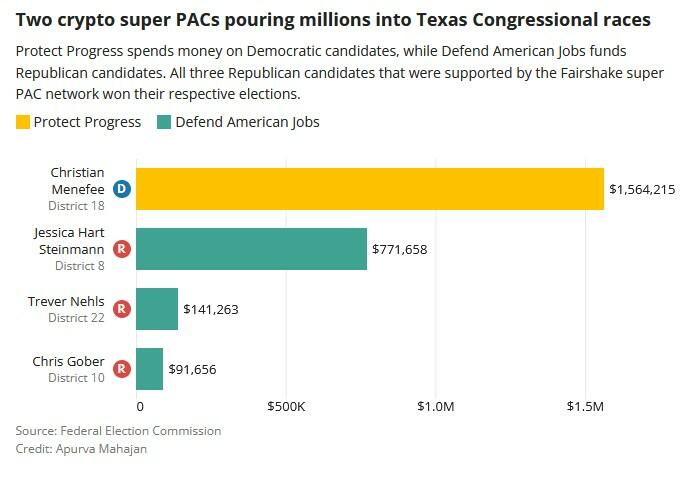
In Texas, nearly two-thirds of the crypto spending has gone to a single candidate: Rep. Christian Menefee. Fairshake’s progressive arm, Protect Progress, has spent more than $1.5 million to help Menefee defeat Rep. Al Green in a runoff for a Houston-area seat that covers much of Harris County. Green was drawn out of his original district in redistricting, while Menefee won a special election in January.
Green, a member of the House Financial Services Committee, has opposed key pro-crypto bills, including the GENIUS Act and the Clarity Act. He has also publicly criticized cryptocurrency’s potential to undermine U.S. sanctions and the environmental impact of crypto mining.
Menefee, by contrast, has embraced blockchain technology on his campaign site, saying it can “increase trust, transparency and efficiency” when paired with strong consumer protections. The industry group Stand with Crypto gave Menefee an “A” rating and Green an “F.”
“When you get an ‘F’ that means they don’t like you,” Green said on the House floor March 19. “When they don’t like you, they’ll do whatever they can … to expel you, to evict you.”
Menefee, who holds a significant financial edge, told reporters he recognizes the widespread adoption of crypto and wants smart regulation to curb scams.
“Over 70 million Americans have crypto right now, and a lot of them are young, a lot of them live in Texas-18, a lot of them are Black and brown folks,” Menefee said. “My job is to protect them, and you can’t protect people when you refuse to engage on an issue.”
The race has also highlighted a generational split: Green is 78, while Menefee is 37. Menefee argues his generation is more open to emerging technologies like crypto and that lawmakers shouldn’t “bury [their] heads in the sand.” Green did not respond to a request for comment.
On the Republican side, Defend American Jobs has spent roughly $771,000 supporting Jessica Steinmann, who is running to succeed retiring Rep. Morgan Luttrell in Magnolia. Steinmann, a former Trump administration official and aide to Sen. Ted Cruz, describes herself as a “strong supporter of digital assets, blockchain technology and financial innovation” that promotes economic freedom without stifling growth.
The same PAC has spent about $92,000 backing Chris Gober, a conservative attorney seeking to replace retiring Rep. Michael McCaul in Central Texas. Gober’s campaign emphasizes boosting technology investment and turning Austin and the Brazos Valley into “America’s center for innovation,” though he does not highlight crypto specifically.
Defend American Jobs also spent approximately $141,000 on Trever Nehls – twin brother of Rep. Troy Nehls – who won the primary in a solidly Republican district outside Houston after his brother opted not to seek reelection.
Michael Beckel of Issue One, a nonpartisan group focused on reducing money in politics, noted that cryptocurrency was once a fringe sector but has rapidly gained influence.
“The cryptocurrency industry wants people in Washington and in state houses to be able to pick up their phone calls,” he said.
Adam Green, co-founder of the Progressive Change Campaign Committee, said crypto super PACs were unusually effective in 2024 and appear set to repeat that success.
“Crypto was successful last cycle in being the only player on the block, and having a chilling effect on political leaders being willing to put any rules or guardrails,” Green said.
Tyler Durden
Sat, 04/25/2026 – 15:45
https://www.zerohedge.com/political/crypto-industry-track-surpass-2024-spending-texas-midterms
Federal Appeals Court Allows Texas To Enforce State Immigration Law
Federal Appeals Court Allows Texas To Enforce State Immigration Law
Authored by Matthew Vadum via The Epoch Times,
A divided federal appeals court on April 24 allowed Texas to enforce a state law that permits the arrest and prosecution of individuals thought to have unlawfully crossed the U.S.-Mexico border.
The U.S. Court of Appeals for the Fifth Circuit voted 10–7 to undo a 2024 injunction that had prevented enforcement of the law known as Senate Bill 4. Initially, the former Biden administration had challenged the statute, but the second Trump administration dropped the challenge in March 2025.
SB 4, which Texas Gov. Greg Abbott, a Republican, signed in December 2023, would make it a state-level crime to illegally enter or re-enter Texas from a foreign country, give state judges authority to order that violators leave the United States, and allow prison sentences of up to 20 years for those refusing to comply.
The Fifth Circuit did not address the merits of the case because it found that the groups challenging the law—Las Americas Immigrant Advocacy Center and American Gateways—lacked legal standing to do so.
Standing refers to the right of someone to sue in court. The parties must demonstrate a strong enough connection to the controversy before the court to justify their participation in a lawsuit.
The groups had argued that SB 4 was preempted—or superseded—by the federal Immigration and Nationality Act.
“This case concerns whether the State of Texas, exercising its historic, sovereign police powers, can legislatively protect its citizens from a surge of illegal aliens in response to an unprecedented border crisis and a declared invasion,” Circuit Judge Jerry E. Smith wrote for the majority.
“The [federal] district court judge and a divided panel held that it cannot. Because the Plaintiffs that are challenging the new statute lack standing, we vacate the [district court’s] preliminary injunction without addressing the merits of the preemption claim.”
The majority said SB 4 was enacted to respond to “widespread, illegal, disruptive immigration into the State,” including “more than 6 million illegal aliens, from over 100 countries,” including 100,000 unaccompanied minors, about 2,000 gang members, and 336 persons on the terrorist watchlist, who streamed across Texas’s international border from 2021 to 2023.
Circuit Judge Priscilla Richman filed a dissenting opinion, disagreeing with the majority’s decision to deny standing.
Las Americas Immigrant Advocacy Center, at least, would have standing to seek an injunction because if the preempted state law were to take effect, it would have to use its resources to represent clients in the state immigration system, she said.
Richman said she would have addressed the merits and upheld the district court’s injunction against the law.
“Federal laws on the books permit Texas to assist the federal government in apprehending illegal immigrants if the federal government so requests. But Texas cannot enact its own immigration regime,” she said.
A three-judge panel of the Fifth Circuit upheld the district court’s February 2024 injunction in July 2025, holding that SB 4 would have interfered with the federal government’s efforts to enforce the nation’s immigration laws.
Along the way, in March 2024, the U.S. Supreme Court briefly permitted the statute to take effect. Not long after, the Fifth Circuit panel temporarily blocked the law pending further review.
Later, the full Fifth Circuit agreed with Texas Attorney General Ken Paxton’s request to reconsider the case.
Paxton hailed the new ruling.
“My office has secured yet another major win for Texas by defending SB 4 before the Fifth Circuit,” Paxton said in a statement.
“Texas’s right to arrest illegals, protect our citizens, and enforce immigration law is fundamental. This is a major victory for public safety and law and order,” he said.
The Epoch Times reached out for comment to Las Americas Immigrant Advocacy Center and American Gateways. No replies were received by publication time.
Tyler Durden
Sat, 04/25/2026 – 15:10
https://www.zerohedge.com/political/federal-appeals-court-allows-texas-enforce-state-immigration-law
DOJ Re-Adopts Executions By Firing Squad As It Strengthens Federal Death Penalty
DOJ Re-Adopts Executions By Firing Squad As It Strengthens Federal Death Penalty
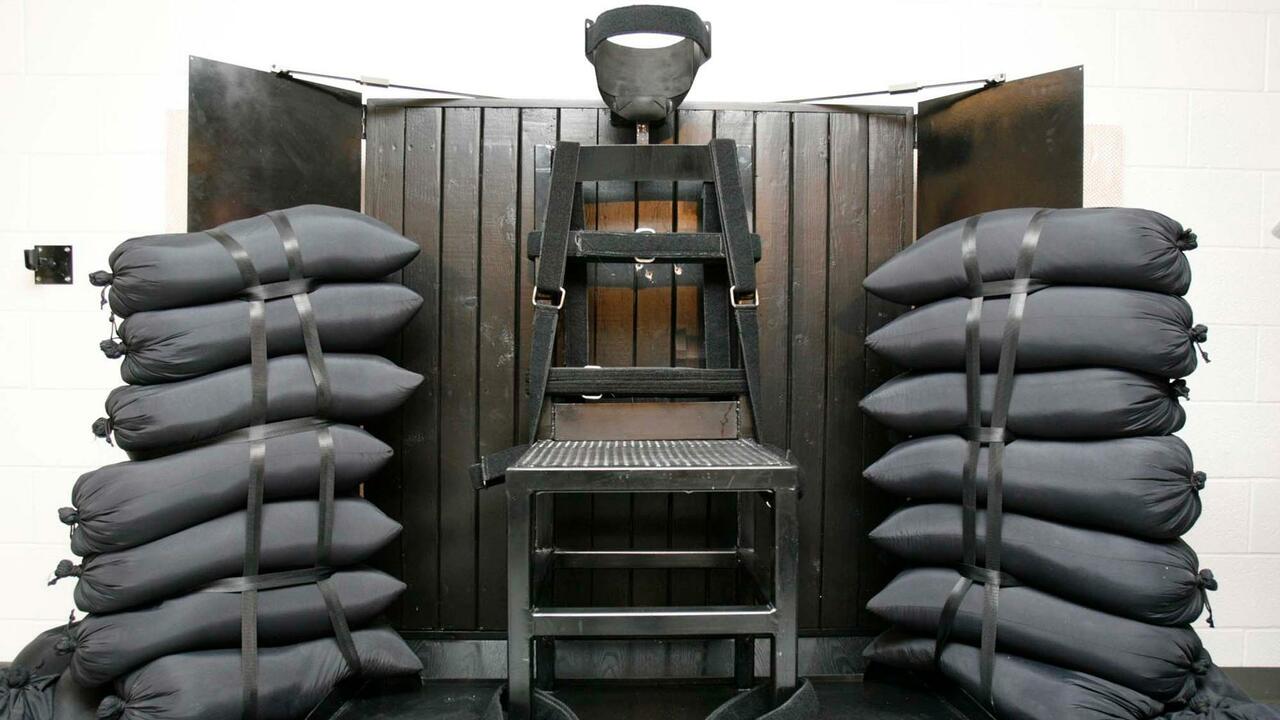
The Department of Justice on Friday directed the Bureau of Prisons to expand death penalty protocols to include pentobarbital injections and firing squads as part of broader actions to strengthen the federal death penalty, Fox News reports.
“Today, the Department of Justice acted to restore its solemn duty to seek, obtain, and implement lawful capital sentences — clearing the way for the Department to carry out executions once death-sentenced inmates have exhausted their appeals,” the DOJ memo obtained by Fox News read.
“Among the actions taken are readopting the lethal injection protocol utilized during the first Trump Administration, expanding the protocol to include additional manners of execution such as the firing squad, and streamlining internal processes to expedite death penalty cases,” the memo read.
In addition to recommending the new methods of execution, the DOJ is also directing BOP to look into expanding the federal death row and constructing additional execution facilities.
Additionally, the DOJ also plans to consider a rule that will help states to streamline federal habeas review of capital cases which, if adopted, the DOJ says will reduce the period between conviction and execution in state capital cases by years. Death row inmates can often wait decades after receiving their sentence to face execution.
On President Trump’s first day of his second term, he issued an executive order “to ensure that the laws that authorize capital punishment are respected and faithfully implemented.”
In 2025 the Trump administration rescinded a moratorium on federal executions instituted by former President Joe Biden’s DOJ. Biden also commuted the sentences of 37 of the 40 death row inmates in December 2024, a move widely condemned by Republicans as dangerous but praised by Democrats as an act of justice and mercy.
The DOJ’s Friday memo slammed the Biden administration. “The prior administration failed in its duty to protect the American people by refusing to pursue and carry out the ultimate punishment against the most dangerous criminals, including terrorists, child murderers, and cop killers,” Acting Attorney General Todd Blanche wrote.
The federal government has never executed a person by firing squad, though some states still use firing squads to execute death row inmates at the state level. South Carolina carried out three firing squad executions in 2025.
Pentobarbital is a central nervous system suppressant that many states use as a fallback to the standard three-drug cocktail for lethal injections. The Biden administration barred its use, arguing that it caused “unnecessary pain and suffering.” The DOJ, however, claimed its use is in line with the 8th amendment, which states that cruel and unusual punishment is unconstitutional.
“These steps are critical to deterring the most barbaric crimes, delivering justice for victims, and providing long-overdue closure to surviving loved ones,” the DOJ memo read.
Tyler Durden
Sat, 04/25/2026 – 14:35
Mother Of NYC Thug Who Body-Slammed And Stomped Girl’s Head Says He’s The Victim
Mother Of NYC Thug Who Body-Slammed And Stomped Girl’s Head Says He’s The Victim
Authored by Steve Watson via Modernity.news,
A deranged mother is rushing to the defense of her 14-year-old son after he was filmed slamming a 15-year-old girl to the concrete and stomping on her head in East Harlem — all because she refused to give him her phone number.
The horrifying attack, captured on video and shared widely online, has left the victim hospitalized with a concussion. Yet instead of demanding accountability, the boy’s mother is painting her son as a victim of bullying.
The assault unfolded around 3:30 p.m. Monday at the corner of East 107th Street and Third Avenue, right after classes let out at East Harlem Scholars Academy Charter School, which both teens attend.
The video is so graphic that X is placing a content warning on it.
🚨15 year-old-black teen stomps on the head of a 14-year-old white girl— Why? Because she wouldn’t give him her phone number
No MSM outrage. No calls for change. No front page news coverage.
Imagine the outrage if this was a white male doing that to a black girl
Savage… pic.twitter.com/ZiLECIEZCX
— MJTruthUltra (@MJTruthUltra) April 23, 2026
As the boy confronted the girl on a crosswalk, he blocked her path and threatened, “I’ll knock the s**t out of you right now.” One of his friends egged him on: “Do it!”
The girl tried to get away, yelling, “Get the f*** away from me, p***y.” He followed, grabbed her from behind, lifted her, and slammed her to the ground before stomping on her head. He then strutted off as she lay motionless.
The 15-year-old victim suffered a concussion and spent two days in Harlem Hospital. Her mother, Lucinda Arroyo, called the attack “outright assault — and he could have killed her.” She added that her daughter is “lucky to be alive” and confirmed, “She’s not going back to that school … that school can’t keep her safe.”
The boy was arrested and charged with assault. He appeared in Manhattan Youth Court and was remanded into custody.
Yet his mother, Sealema Allen, came forward to defend him in comments to the media.
A mother whose teenage son was jailed for assault after he was filmed slamming a classmate to the ground and stomping on her face is coming to his defense https://t.co/lmTrPNCvTa 🔗 pic.twitter.com/4YNbWoEyZn
— Daily Mail US (@Daily_MailUS) April 24, 2026
“She was being a bully to him, that’s it,” Allen said. “She pushed him.”
Mom of the boy who stomped on girls head in NYC.
“She was being a bully to him, thas it.” https://t.co/BgbF1S4G64 pic.twitter.com/mctgqnE4BZ
— MJTruthUltra (@MJTruthUltra) April 24, 2026
She continued: “He’s been complaining about her. I bring it to the principal’s attention but he don’t address it. The way my son is being bullied, he doesn’t want to go to school.”
Allen described her son as a “quiet” and “humble Christian” boy who “don’t provoke nobody. But if you provoke him, he will lash out.” She insisted the attack was “retaliation because she pushed him first” and claimed the pair “are friends and text frequently,” denying any romantic advance.
It remains unclear why the charge for the attack was only second degree assault when the attack clearly could have killed the girl or left her with permanent brain damage.
This is not an isolated incident. New York’s charter schools and streets have seen repeated failures to protect students from exactly this kind of random, brutal violence. Progressive policies that treat teenage predators with kid gloves only embolden more attacks while victims and their families are left to pick up the pieces.
Real justice demands consequences that match the crime, not therapy sessions and light charges for acts that could easily have been fatal.
Your support is crucial in helping us defeat mass censorship. Please consider donating via Locals or check out our unique merch. Follow us on X @ModernityNews.
Tyler Durden
Sat, 04/25/2026 – 14:00
Netanyahu Treated For Early Stage Cancer For 2-Years Without Telling Public
Netanyahu Treated For Early Stage Cancer For 2-Years Without Telling Public
Israeli Prime Minister Benjamin Netanyahu has revealed he was treated for early-stage cancer but is now in “excellent condition”.
Writing on X, Netanyahu said he had remained quiet about his health condition and delayed publication of his record so as not to provide “propaganda” opportunities for Iran.
“A year and a half ago, I underwent successful surgery for an enlarged benign prostate, and since then I have been under routine medical monitoring. In the last monitoring, a tiny spot of less than a centimeter was discovered in the prostate,” he said.
“Upon examination, it turned out to be a very early stage of a malignant tumor, with no spread or metastases whatsoever.”
Israeli prime ministers are expected to release regular reports on the state of their health and Netanyahu’s decision not to do so has come in for scrutiny.
The 76-year-old added that he had “overcome” the illness, pointing out that “when I’m given information in time about a potential danger, I want to address it immediately”.
Vladimir Beliak, an MP for the opposition Yesh Atid party, criticized Netanyahu’s decision not to publish his health report, comparing it to the reasoning he previously used to delay his ongoing corruption trial.
“‘It is impossible’ to establish a state investigation committee because there is a war. ‘It is impossible’ to conduct a criminal trial because there is a war. Now it turns out that ‘it is impossible’ to publish a medical report and report on cancer because there is a war,” he posted on X.
“There is so much benefit to the regime in waging an eternal war, and perhaps at the next stage we will hear that ‘it is impossible’ to hold elections because there is a war. Not going to happen. It is time to stop Netanyahu’s farce, which threatens our existence here.”
Since the beginning of the US-Israeli war on Iran on February 28, Netanyahu’s health has been speculated on a number of times.
Netanyahu says he beat early-stage prostate cancer
——
Israeli Prime Minister Benjamin Netanyahu said on Friday that he had undergone successful treatment for early-stage prostate cancer, though he did not indicate when the procedure took place.
In a statement shared on social… pic.twitter.com/IaUJm2RkWn
— The Cradle (@TheCradleMedia) April 24, 2026
Iran responded to the attacks with missile strikes, and soon after rumors began to circulate that the prime minister had died. Videos released on social media that aimed at dispelling the rumors did little to stem the tide. His appearance in front of journalists on March 19, however, put the rumors to rest.
Tyler Durden
Sat, 04/25/2026 – 12:50
Total Internet Blackout In Iran Hits 8 Weeks As Citizens Left In Dark About War’s Future
Total Internet Blackout In Iran Hits 8 Weeks As Citizens Left In Dark About War’s Future
The near-total internet blackout in Iran has “now entered its 57th day after 1344 hours,” internet watchdog NetBlocks has said.
The restrictions followed renewed anti-government protests in early January and intensified after the start of the US-Israel war on Iran at the end of February, and during which time leaders in Washington and Israel have signaled they seek total societal collapse and government overthrow in the Islamic Republic. This has left many of Iran’s some 95 million citizens scrambling for information on what comes next concerning war and negotiations.
“Exactly eight weeks have passed since 28 February when Iran was placed under a regime-imposed internet blackout,” NetBlocks continues.
The heavily restricted internet has disrupted jobs and businesses nationwide, and has seen some citizens temporarily cross borders or else flee the country entirely just to access better communications.
This is particularly at the porous border with Turkey, for people able to get in and out, according to one report based on an on the ground interview:
Dazed by the sun and tired by more than a dozen hours of travel by bus, the woman from Tehran, Iran’s capital, crossed into eastern Turkey.
Her first stop? Somewhere with Wi-Fi.
“I only want to make a video call and go back [to Iran.] That is it,” she told NPR.
For the last month, she has been making the hours-long drive to Iran’s border with Turkey every three days in order to use the internet for a few hours to contact her son, who is studying at a university in western Turkey.
The US state-funded publication NPR continues:
“The only voice is the voice of the Iranian regime now, because they have cut the internet. They have shot our voices and cut our tongues,” a second Iranian woman told NPR, while traveling in eastern Turkey.
Some can afford to buy precious minutes of Wi-Fi or phone time from a black market of Starlink bandwidth and phone SIM cards, but many Iranians say the connections are glitchy, unable to load most web pages and social media sites.
And so, for Iranians with the means to travel, there is one other option for internet: to travel to another country.
🗓️ Exactly eight weeks have passed since 28 February when #Iran was placed under a regime-imposed internet blackout.
The disruption, now entering its 57th day after 1344 hours, stifles the voices of Iranians, leaves friends and family out of touch and damages the economy. pic.twitter.com/XGQATa9rY8
— NetBlocks (@netblocks) April 25, 2026
A whole ‘internet access black market’ has arisen based on finding loopholes and workarounds.
We previously featured an investigative story which said Telegram remains one of the most widely used apps in Iran. People use it for news, communication and everyday life. Now, it has also become a place where VPN sellers advertise their services. Access to the internet has become expensive, unreliable and uncertain. But it’s a familiar pattern. In recent years, cutting internet access has become a common response by authorities during times of crisis – whether protests or external conflict.
Tyler Durden
Sat, 04/25/2026 – 12:15
White House Confirms Trump To Address Memecoin Gala Tonight
White House Confirms Trump To Address Memecoin Gala Tonight
Authored by Jesse Coghlan via Cointelegraph,
The White House has reportedly confirmed that US President Donald Trump will attend the exclusive event for top TRUMP memecoin holders at his Florida residence on Saturday, after questions were raised earlier this month over whether he would attend.
Reuters reported on Friday that the White House confirmed Trump would deliver a keynote address at the gala luncheon organized by the company behind his Official Trump (TRUMP) memecoin.
The gala is set to take place at Mar-a-Lago. It will be open to the top 297 holders of the TRUMP token, and the top 29 holders will also qualify for a private reception with the president.
When the event was announced in March, a White House official told Politico that it was not locked into Trump’s schedule and that it was taking place the same day Trump said he would attend the White House Correspondents’ Association Dinner in Washington, DC, the first time he would do so as president.
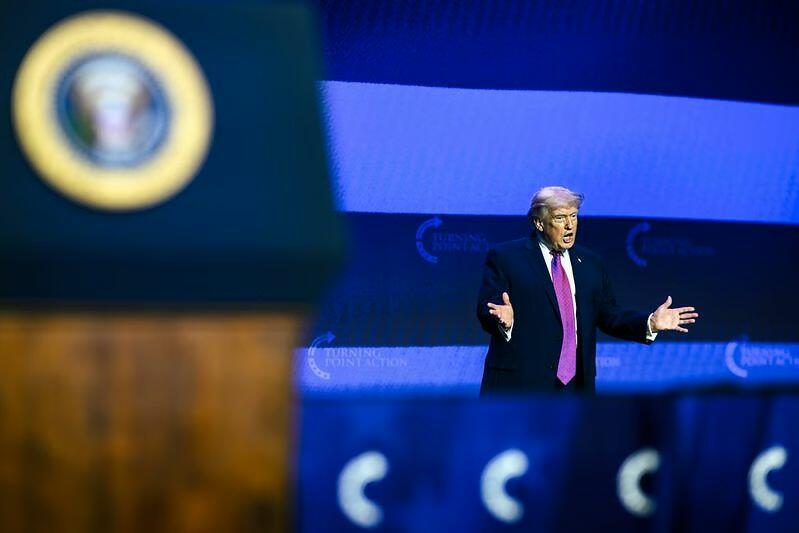
Trump, pictured at a Turning Point USA event on April 17, is confirmed to be addressing an event for holders of his memecoin on April 25. Source: The White House
The event’s terms also state that Trump may not be able to attend the event, and it “may be canceled for any reason.”
Trump’s potential attendance at the event has been a sticking point for some lawmakers, who have criticized the event as a conflict of interest for the president.
Earlier this month, Democratic Senators Elizabeth Warren, Richard Blumenthal and Adam Schiff reportedly sent a letter to Bill Zanker, the individual behind the TRUMP memecoin, questioning whether Trump intends to “dangle access” to himself at the upcoming event.
“[O]rganizers are promoting a conference by dangling access to President Trump to potential attendees (and in doing so, are encouraging purchases of his meme coin that will generate transaction fees for the President and his family) on a day he may not actually be able to attend,” the letter said.
It is the second event for holders of the TRUMP token. The first took place at a Trump golf club in May 2025 and drew criticism from those who said Trump was using his position as president for personal financial gain.
Tyler Durden
Sat, 04/25/2026 – 11:40
https://www.zerohedge.com/crypto/white-house-confirms-trump-address-memecoin-gala-tonight