Category: News

Afternoon Briefing: Illinois rejects federal guidance in adopting vaccine schedule
Good afternoon, Chicago.
Illinois will adopt the childhood vaccine schedule recently released by the American Academy of Pediatrics, in a rejection of federal recommendations.
The move is the latest example of Illinois breaking with the federal government over health care policies and guidance since President Donald Trump took office. The Trump administration has spent the last year revamping health care policies, such as by recommending fewer vaccines for children and pulling out of the World Health Organization.
Here’s what else is happening today. And remember, for the latest breaking news in Chicago, visit chicagotribune.com/latest-headlines and sign up to get our alerts on all your devices.
Subscribe to more newsletters | Asking Eric | Horoscopes | Puzzles & Games | Today in History
Congressional candidate Katherine “Kat” Abughazaleh, center, and her deputy campaign manager, Andre Martin, far left, leave with their attorneys from the Dirksen U.S. Courthouse in the Loop on Jan. 28, 2026, after a hearing on charges of conspiracy during a protest outside the Broadview ICE facility in September. (Eileen T. Meslar/Chicago Tribune)
Trial set for May in ‘Broadview Six’ conspiracy case against Operation Midway Blitz protesters
If the trial date holds, it will come well after the March 17 Democratic primary in Illinois, where one of the defendants, Katherine “Kat” Abughazaleh, is running is running for the 9th Congressional District seat. Read more here.
More top news stories:
Boy, 17, charged in Loop mass shooting following Christmas tree lighting
Chicago Public Library Foundation president Brenda Langstraat Bui dies at 52
A student walks toward the entrance of Chamberlain University in Chicago, Feb. 4, 2026. Adtalem Global Education is changing its name to Covista, which has five health-care-focused institutions, including Chamberlain University. (Josh Boland/Chicago Tribune)
Adtalem changes its name, after move toward health care education
The company was previously called DeVry Education Group before changing its name to Adtalem in 2017. The company’s last name change followed years of scrutiny and government enforcement directed toward for-profit colleges. Read more here.
More top business stories:
Former Chicago Bears offensive coordinator Declan Doyle lists Green Oaks home for nearly $2.1M
Scottie Pippen auctioning $6 million of personal memorabilia
New Chicago Bears coach Ben Johnson departs with his wife, Jessica, and children Emory, Halle and Kennedy after being introduced on Jan. 22, 2025, at Halas Hall. (Brian Cassella/Chicago Tribune)
How NFL Coach of the Year finalist Ben Johnson turned the Chicago Bears around in his 1st year
Ben Johnson is one of five finalists for the NFL Coach of the Year award that will be announced tonight in San Francisco. A lot had to happen to bring his vision to life. Much like a fourth-quarter comeback, it didn’t happen all at once. Read more here.
More top sports stories:
Why did Chip Kelly take Northwestern OC job? Coaching veteran believes Wildcats are ‘an up-and-coming team.’
Chicago Bulls trade hometown kid Ayo Dosunmu to Minnesota Timberwolves
New Edition performs at the United Center in Chicago on Wednesday, Feb. 4, 2026. (Chris Sweda/Chicago Tribune)
Review: New Edition shares the United Center stage with Boyz II Men and Toni Braxton in a gloriously traditional concert
In a time when reunion shows and nostalgic retreats are a staple of the touring concert circuit, New Edition employed a different kind of production to create their show. Read more here.
More top Eat. Watch. Do. stories:
Review: Filmmaker Luc Besson takes a stab at ‘Dracula’ story
Today in Chicago History: ‘Grease’ performed for the first time — at June Pyskacek’s Kingston Mines Theatre Co.
Assembly team worker Kevin Garner lowers the engine assembly onto the frame of a large SUV at the General Motors Arlington Assembly plant, June 8, 2023, in Arlington, Texas. (Tom Fox/The Dallas Morning News)
How GM is preparing for an economic downturn
General Motors Co. is strategizing for an inevitable economic downturn by paring down dealer inventory and maintaining a cash safety net, Chief Financial Officer Paul Jacobson said. Read more here.
More top stories from around the world:
Trump administration to launch TrumpRx website for discounted drugs
Savannah Guthrie’s missing mother is ‘still out there,’ sheriff says, but no suspects

Opositores desafían el miedo y exigen libertad en Venezuela tras la caída de Maduro
Por REGINA GARCIA CANO y JOSHUA GOODMAN
CARACAS (AP) — Andrés Velásquez no se quedó para convertirse en otro crítico del gobierno encarcelado tras las elecciones presidenciales de Venezuela de 2024.
El exgobernador, que había recorrido Venezuela haciendo campaña por el oponente del entonces presidente Nicolás Maduro en la disputada contienda, se dejó crecer una espesa barba, envió a sus hijos al exilio y evitó eventos públicos que pudieran exponerlo a ser arrestado.
Pero tras el derrocamiento de Maduro por parte de Estados Unidos, reunió el valor para hablar. Primero, el 19 de enero, Velásquez, con su nuevo aspecto, apareció en un video en el que expresó su apoyo a la destitución de Maduro mientras pedía nuevas elecciones. Luego, unos días después, se arriesgó aún más, grabando un breve video frente a la infame prisión de Helicoide en Caracas, la capital, para exigir la liberación de todos los presos políticos.
“No puede quedar un solo preso por razones políticas y debe desmontarse todo el aparato de represión del régimen”, dijo Velásquez en el video. “Venezuela será libre”.
Velásquez no está solo. Desde la destitución de Maduro, varios críticos prominentes han comenzado a salir de la clandestinidad para poner a prueba los límites del discurso político tras años de silencio autoimpuesto impulsado por el miedo. Los venezolanos comunes también van dejando atrás la moderación, y las familias de activistas encarcelados protestan frente a las prisiones mientras que quienes han sido liberados desafían las órdenes de silencio que suelen imponerse como condición para su liberación. Mientras tanto, los medios de comunicación han comenzado a reabrir sus ondas a voces críticas desterradas en los últimos años.
¿Una glasnost en Venezuela?
La liberalización política, aunque incipiente, fue comparada por Velásquez con la glasnost, refiriéndose a la era de reformas y mayor libertad en el debate público que precedió al colapso de la Unión Soviética. Pero a diferencia de esa y de otras aperturas democráticas, esta ocurre casi enteramente bajo la tutela del gobierno del presidente Donald Trump, que ha utilizado una combinación de incentivos financieros y amenazas de más ataques militares para cumplir su aparentemente improbable promesa de “dirigir” Venezuela desde Washington.
Aún se ignora cuál es el objetivo final de las maniobras del gobierno de Trump. Aunque la Casa Blanca ha elogiado la disposición de la presidenta interina Delcy Rodríguez para asociarse con Estados Unidos y abrir las vastas reservas de petróleo de Venezuela, combatir las redes criminales y frenar la influencia de los adversarios estadounidenses Irán y Rusia, los opositores del gobierno han expresado su preocupación de que sus demandas de elecciones y la restauración de la democracia podrían retrasarse indefinidamente.
La semana pasada, Rodríguez, una aliada de larga data de Maduro, anunció planes para una amnistía general que podría liberar a cientos de líderes opositores, periodistas y activistas de derechos humanos detenidos por razones políticas. También anunció el cierre de Helicoide, jurando transformar el edificio en espiral —un ícono arquitectónico futurista transfigurado en un símbolo de las mazmorras de Maduro— en un complejo deportivo y cultural para la policía y los residentes de los barrios marginales circundantes.
“Que sea una ley que sirva para reparar las heridas que ha dejado la confrontación política, desde la violencia, desde el extremismo”, dijo en un evento, rodeada de incondicionales del partido gobernante.
Pedro Vaca, el principal experto en libertad de expresión de la Comisión Interamericana de Derechos Humanos, el organismo defensor más respetado de la región, dijo que las pocas “migajas” ofrecidas por la administración de Rodríguez no sustituyen a un poder judicial y una aplicación de la ley independientes.
“El espacio cívico de Venezuela sigue siendo un desierto”, dijo Vaca, quien, durante meses, ha tratado de obtener permiso de las autoridades venezolanas para encabezar una misión de evaluación sobre el terreno en el país. “Las pocas voces críticas que emergen son semillas que rompen el suelo endurecido, y sobreviven no porque exista libertad, sino porque la represión se ha relajado aunque sigue presente. Seamos claros: esto no marca un punto de inflexión democrático”.
La autocensura se profundiza tras las elecciones de 2024
El pluralismo político se erosionó gravemente en Venezuela después de que Maduro asumiera la presidencia tras la muerte de Hugo Chávez en 2013. Las protestas antigubernamentales y los episodios de disturbios civiles fueron aplastados sistemáticamente por fuerzas de seguridad cuya lealtad al autoproclamado líder socialista resultó inquebrantable, aunque impotente frente a un ejército estadounidense muy superior.
La autocensura se profundizó tras las elecciones de julio de 2024, cuando Maduro lanzó una ola de represión marcada por miles de detenciones arbitrarias tras desconocer las pruebas que mostraban que había perdido la disputada contienda ante el candidato opositor, Edmundo González, por un margen de más de dos a uno.
Los disidentes se escondieron, y los pocos medios de comunicación independientes que quedaban suavizaron su ya cautelosa cobertura por temor a ser desconectados.
En una entrevista con la AP, Velásquez dijo que continuará poniendo a prueba los límites de la actividad política permitida, pero sigue siendo cauteloso porque el aparato represivo del estado sigue completamente bajo el control de Rodríguez y sus aliados.
“Hay que seguir ganando terreno, desafiando el poder… Se abrió una oportunidad y no podemos dejarla cerrar”, afirmó. “El mayor obstáculo es el miedo”.
Busca organizar un evento público en las próximas semanas, con otros opositores al gobierno que han salido recientemente de la clandestinidad. Entre ellos está Delsa Solórzano, una exlegisladora que también fue una figura destacada de la campaña presidencial de la oposición en 2024. Solórzano reapareció públicamente la semana pasada en una inusual conferencia de prensa para su partido, describiendo con lágrimas cómo tuvo que tomar vitamina D para compensar la falta de luz solar mientras vivía en la clandestinidad.
“No me resguardé porque haya cometido ningún delito, sino porque aquí luchar por la libertad se convirtió en un altísimo riesgo contra tu vida”, afirmó.
Aliados de Rodríguez se resisten a la liberalización política
Los medios de comunicación también han comenzado a mostrar más fuerza.
Venevisión, que como la mayoría de las redes privadas dejó de cubrir críticamente al gobierno en los últimos años, ha reabierto sus ondas a voces antigubernamentales, cubriendo cada movimiento de la líder opositora María Corina Machado en Washington desde la captura de Maduro.
Mientras tanto, Globovisión, la mayor cadena privada del país, cuyo propietario está sancionado por Estados Unidos por sus vínculos con Maduro, invitó de nuevo al prominente comentarista Vladimir Villegas por primera vez en años.
Villegas se ganó una reputación por navegar hábilmente las ya restringidas ondas venezolanas al mantener a los opositores acérrimos del gobierno fuera de su influyente programa de entrevistas políticas. Pero el programa fue cancelado abruptamente en 2020 cuando Villegas criticó a Maduro por obligar a DirecTV a transmitir la televisión estatal en violación de las sanciones estadounidenses, un acto que obligó al proveedor de televisión satelital —y su variedad de medios de noticias internacionales— a abandonar el país.
La propia Rodríguez no ha participado en ningún debate público significativo sobre los problemas de la nación, aparte de anunciar la creación de una comisión asesora sobre coexistencia política que será encabezada por el hermano de Villegas, el ministro de Cultura Ernesto Villegas.
Pero algunos de sus aliados parecen decididos a acallar cualquier crítica. Mientras tanto, las autoridades aún no han restaurado el acceso completo a la plataforma de redes sociales X, que Maduro bloqueó después de que su propietario, el multimillonario Elon Musk, lo acusara de robar las elecciones de 2024.
En respuesta a la cobertura de Venevisión sobre la reunión de Machado en Washington con el secretario de Estado Marco Rubio, el ministro del Interior Diosdado Cabello —un partidario de la línea dura que enfrenta una orden de arresto por drogas en Estados Unidos— acusó a los medios de jugar en un complot de la ganadora del Premio Nobel para sembrar el caos en Venezuela.
“Sin estridencia mediática, su figura se diluye. Sin titulares, simplemente desaparece”, advirtió Cabello en la televisión estatal, señalando la cobertura de Venevisión.
Pero incluso en la televisión estatal —que durante mucho tiempo fue un bastión de propaganda progubernamental y control ideológico— han comenzado a aparecer grietas.
Un ejemplo: la reciente gira de Rodríguez por un campus universitario en Caracas en la que fue confrontada por un pequeño grupo de estudiantes que se manifestaban. Aunque la televisión estatal no mencionó las demandas de los estudiantes, la escena en sí —en la que se mostró a Rodríguez separándose calmadamente de su séquito de seguridad para “intercambiar ideas” con lo que el locutor llamó activistas de “partidos extremistas”— hubiera sido impensable hace unas semanas.
En el régimen de Maduro, incluso la crítica más leve era enterrada en la televisión estatal, y las transmisiones de los frecuentes mítines y eventos al aire libre del presidente dejaron de emitirse en vivo tras una serie de embarazosas interrupciones, incluida una visita en 2016 a la isla Margarita en la que fue expulsado por un grupo de enfurecidos manifestantes que golpeaban cacerolas.
Inspirándose en activistas encarcelados
Aunque el panorama para una futura transición democrática en Venezuela sigue siendo desconocido, los opositores al gobierno esperan que Rodríguez desate fuerzas que están más allá de su control. Mientras tanto, siguen inspirándose en aquellos que sufrieron la represión de primera mano.
El periodista y activista político Carlos Julio Rojas pasó 638 días en una prisión venezolana donde, como docenas de prisioneros, fue esposado repetidamente, se le negó la luz solar y fue confinado a una pequeña celda sin cama, a veces durante semanas, según su propio testimonio.
El mes pasado, cuando fue liberado como parte de un gesto de buena voluntad anunciado por Rodríguez, dice que se le ordenó no hablar nunca del abuso.
Su silencio obligado duró apenas 15 días.
“Para mí, el no hablar era que todavía me sentía preso. No hablar era una forma de tortura ”, afirmó Rojas, quien fue acusado sin pruebas de participar en un complot de asesinato en 2024 contra Maduro. Por ello, dijo, decidió quitarse la mordaza y hablar.
—-
Goodman informó desde Washington
___
Esta historia es parte de una colaboración en curso entre The Associated Press y FRONTLINE (PBS) que incluye un próximo documental.
___
Esta historia fue traducida del inglés por un editor de AP con la ayuda de una herramienta de inteligencia artificial generativa.

Newsom Won’t Cut Ties To Homeless Fraudster Firm
Newsom Won’t Cut Ties To Homeless Fraudster Firm
Authored by Susan Crabtree via RealClearPolitics.com,
Borrowing from novelist James Hilton, who coined the word “Shangri-La” to describe a Tibetan utopia in a 1933 novel, Franklin Roosevelt gave that name to the peaceful retreat we know as Camp David.
For California Gov. Gavin Newsom and Los Angeles Democrats, Shangri-La hasn’t become synonymous with a place that connotes peace on earth. It stands for a hellish homeless housing nightmare, eye-popping fraud, and the ease and scale with which con-artists rip off taxpayers.
In October, federal agents arrested Cody Holmes, the 31-year-old former CFO of Shangri-La Industries, a downtown Los Angeles-based developer who was supposed to be providing housing for homeless people in Southern California. First Assistant U.S. Attorney Bill Essayli for the Central District of California, a Trump appointee, charged him with mail fraud.
Holmes, who pleaded not guilty, is accused of embezzling more than $2 million in taxpayer funds slated for homeless housing construction to host extravagant parties; a $46,000-per-month Beverly Hills mansion; private jet travel; leases of exotic cars; high-end handbags totaling $128,000; a $35,000 diamond watch; and 20 VIP passes for the 2023 Coachella Music and Arts Festival.
Meanwhile, Shangri-La Industries executives showered Newsom and Los Angeles County Democrats with political donations as they were applying for some $100 million in state contracts that the CFO later allegedly looted to fund his and his ex-girlfriend’s lavish lifestyle.
Even after federal prosecutors exposed the massive fraud, Newsom and L.A. Democrats haven’t severed ties with the embattled developer and have kept political donations from the firm’s executives. Newsom has also allowed the construction firm to continue to tout his endorsement on its social media.
Powerful Friends
Holmes allegedly defrauded the California Department of Housing and Community Development by submitting fabricated bank accounts in its applications for state contracts to build homeless housing. Acting on behalf of Shangri-La, Holmes allegedly falsified $160 million in assets controlled by Shangri-La and its affiliates to demonstrate that the firm had liquid funds to contribute to the construction projects.
According to the government, most of those funds never existed. The FBI traced only an estimated $24,000 that the developer had on hand at the time of the applications for Newsom’s signature Homekey contracts, a program launched amid the COVID pandemic lockdowns that converted empty motels into homeless housing. Holmes is accused of providing false bank statements for Shangri-La Industries to acquire the more than $100 million in state grant money for seven Homekey projects, according to an affidavit filed with the complaint and other court documents.
Shangri-La Industries has historic roots to billionaire Steve Bing and Bill Clinton, whom the Bing-led company paid more than $2.5 million to serve as a strategic adviser. Bing died by suicide in 2020, more than a decade after founding the investment, entertainment, and philanthropic empire.
California housing authorities are also suing Shangri-La Industries for breaching contracts under Newsom’s signature Project Homekey homeless housing project in a likely futile attempt to recover the missing millions. Yet, no criminal action was taken against anyone involved until Essayli issued his indictment against Holmes last fall.
Shangri-La Industries CEO Andy Meyer, who also goes by Andy Abdul-Wahab, according to court documents, has blamed Holmes for the bank and mail fraud and filed a lawsuit against him. The suit accuses Holmes, his former intern, of embezzling company funds by moving the money to accounts and shell companies that he controlled while allegedly also transferring money to Madeline Witt, his then-girlfriend. Witt is named as a co-defendant in the suit.
Newsom, L.A. Dems Mum on Returning Shangri-La Donations
Newsom’s office did not respond to an inquiry into whether he planned to return any of the funds Shangri-La employees have donated to his campaigns over the last decade. A RealClearPolitics review of campaign donations found at least $18,000 from Abdul-Wahab to Newsom’s campaigns for governor and lieutenant governor.
Newsom’s office also did not say whether he stands by a quote endorsing Shangri-La Industries and its partner, Step Up On Second Street, which Shangri-La has used on its now-defunct website under the heading, “What Our Customers Are Saying,” and on its active Instagram account.
“In a matter of months, not years, Shangri-La and Step Up gave some of the most vulnerable Californians the dignity of a key, a lock, a door, a place to call home,” the Newsom quote states in reference to a homeless housing project in San Bernardino. California’s campaign finance database also shows a mysterious $30,000 donation from Shangrila Investment LLC in support of Newsom’s signature Proposition 1 homeless ballot initiative. The initiative, which barely passed with 50.2% of the vote in March 2024, approved a $6.4 billion bond for more state homelessness spending and attempts to address related mental health and addiction for the first time.
In the final days of the mail-in voting election, as the outcome hung in the balance, both sides, Newsom and those opposing the ballot measure, urged voters whose ballots may have been rejected to fix their signatures.
Yet, so far, Newsom’s “CARE court” project, attempting to address mental health and addiction, has reportedly fallen far short of expectations. Other controversial donations to the homeless ballot initiative include $100,000 from Edison International and affiliated entities, the parent company of SoCal Edison, whose equipment caused the Eaton fire that killed 19 people last year; and $250,000 from PG&E and affiliated entities, the Northern California utility that caused the 2018 Camp Fire, the deadliest fire in state history, responsible for 84 deaths.
It’s unclear whether this $30,000 donation from Shangrila Investment LLC is related to Shangri-La Industries or other affiliated entities that court documents connect to the embattled developer. Neither Newsom’s office nor Capitol Compliance, the D.C.-based entity that helps run Newsom’s ballot committee, returned repeated requests for comment.
Asked if the donation made by Shangrila Investment LLC is affiliated with the Shangri-La developer at the heart of the fraud scandal, Holmes’ high-powered attorney Michael Freedman, who has represented Harvey Weinstein and Bill Cosby, replied only: “No comment.”
State campaign-finance records show that Abdul-Wahab also showered donations on state and local officials, including $30,000 to the Los Angeles County Democratic Party in 2022, when the developer was trying to win the homeless contracts. The Los Angeles County Democratic Party did not respond to an inquiry about whether it planned to return the funds.
Other donations from Meyer Abdul-Wahab went to former Assemblywoman Wendy Carillo, who represented Glendale and parts of East Los Angeles and is the first former illegal immigrant to be elected to the state Assembly. Additional donations went to Assemblywoman Cecilia Aguiar Curry, who represents a west Sacramento district that includes areas of parts of Napa and is serving as majority leader of the Assembly; Sen. Sabrina Cervantes of Riverside and parts of San Bernardino County; Assemblywoman Jacqui Irwin who represents the city of Thousand Oaks; Sen. John Laird of Santa Clara and Monterey; Assemblyman Alex Lee of Fremont, Milpitas and West San Jose; and Assemblywoman Buffy Wicks of the East Bay.
In December 2021, U.S. Rep. Robert Garcia, a Democrat and the former mayor of Long Beach, where Meyer Abdul-Wahab resides, returned two Shangri-La donations during Garcia’s run for lieutenant governor, according to Cal-Access, the state campaign donations database.
Lobbyists for Shangri-La Industries include Panorea Avdis, partner at Sacramento Advocates, a public affairs and lobbying firm, along with several other firm associates, according to a state lobbying database. Before becoming a lobbyist, Avdis was chief of staff to Lt. Gov. Eleni Kounalakis, and previously served a stint as a director of external affairs at California’s housing department during the administration of GOP Gov. Arnold Schwarzenegger, as well as the state’s Business and Economic Development office under Democratic Gov. Jerry Brown. Sacramento Advocates did not return requests for comment about its relationship with Shangri-La Industries.
At least two of the Homekey motel conversion projects in Southern California have been renovated and are now fully occupied: a 98-unit former Good Nite Inn in Redlands (now called Step Up in Redlands) and a 76-unit former All-Star Lodge in San Bernardino (now Step Up in San Bernardino).
Shangri-La Stiffed Subcontractors
Subcontractors and suppliers to the San Bernardino and Redlands projects filed $2 million in liens for unpaid work and materials, and at least some contractors say they have yet to be paid and are growing increasingly doubtful that they ever will be. Shangri-La Industries allegedly illegally obtained more than $50 million in new loans for several Homekey properties across the state without notifying the state housing department.
Adolfo Gomringer Sr., who owns AG Flooring, told RCP that he has yet to receive $93,000 that Shangri-La owes him for metal framing, drywall, demolition, and flooring work his company performed for the San Bernardino motel conversion in 2023. Gomringer said he has written to Newsom, L.A. Mayor Karen Bass, and L.A. and San Bernardino County officials, asking for their help, but has not received a response.
“Unfortunately, I didn’t hear back from anybody, so I just gave up hope,” Gomringer told RCP this week. “Honestly, it’s just shocking that there was nothing in place to protect us—the contractors actually doing the work on these jobs.”
Gomringer said he doubts that Holmes is the only Shangri-La employee in on the fraud, adding that the extent of the deception may not be fully realized. He referred to a call with a bond company claiming to have received a wire confirmation from Shangri-La that his company had been paid in full, which Gomringer said is completely inaccurate.
“I said, ‘Please send me a picture of that wire, because I am the owner of the company, and I can tell you frankly, that’s not true,’” he said.
According to the FBI agent’s affidavit used in the criminal complaint against Holmes, the young CFO completely fabricated a Bank of America account statement showing $59 million that did not exist.
Richard Staropoli investigated bank fraud cases for years as a Secret Service agent, then went on to serve as chief information officer and head of risk for the international hedge fund Fortress Investment Group. Staropoli told RCP that the California housing department should have performed basic due diligence practices to verify the bank accounts Shangri-La claimed to have, and the exact amounts in them.
“Are you kidding me?” Staropoli said in reaction to the FBI’s investigative findings in the Holmes case. “Are you telling me that at this level of the amounts of money that’s involved here, nobody’s checking this? This just speaks to the incredibly poor practices of California’s housing authorities.”
In early January, Essayli warned that more arrests are coming after finding “massive” fraud in California’s homeless services.
In mid-January, police arrested Alexander Soofer, who allegedly used millions of taxpayer dollars slated to house and feed hundreds of homeless to purchase a $7 million mansion in Westwood, pay for private jet travel, lavish spending at luxury resorts across the United States, a vacation property in Greece, his children’s private school tuition, and a $125,000 Range Rover.
Soofer is also accused of feeding 600 homeless people—which his organization, Abundant Blessings, housed—Ramen noodles, canned beans, and breakfast bars instead of the three healthy meals a day the contract required.
“California is the poster child of rampant fraud, waste, and abuse of tax dollars,” Essayli said, referring to the more than $24 billion the state has spent on fraud without demonstrating any impact from the investment. “The state has facilitated the spending of billions of dollars to combat homelessness, with little to show for it and almost no oversight.”
“Thankfully, the federal government has begun auditing California’s spending, and today’s is just one example of how fraudsters have swindled millions of dollars from taxpayers,” he added. “This money should have gone to those in need, instead it lines the pockets of individuals subsidizing their lavish lifestyle.”
In a testy email exchange last week, Essayli labeled Newsom the “king of fraud” for failing to provide basic oversight measures to protect taxpayer funds and blasted him for claiming the homeless fraud isn’t his fault.
Newsom’s press office, responding to a conservative influencer blasting the governor over homeless fraud after Essayli’s indictments against Soofer, denied any culpability.
“TOTALLY FALSE to imply the Governor was responsible for this fraud! Fraud is unacceptable—and unlike Donald Trump, who pardons fraudsters, Newsom demands anyone who steals taxpayer dollars be prosecuted to the fullest extent of the law.”
“WRONG,” Essayli responded in an X post. “You and the California legislature facilitated this fraud by handing out billions in tax dollars to these nonprofits with zero vetting and zero state oversight.”
Billionaire Bing’s Ties to Shangri-La Industries
Shangri-La Industries—the firm ensnared in the homeless fraud scandal—originally was created by billionaire entertainment mogul Steve Bing, a Democratic Party mega-donor, film and music producer, and the grandson of Manhattan real estate developer Leo Bing.
At 18, Bing inherited a $600 million fortune from his father, then dropped out of Stanford University in his junior year to move to Hollywood and produce and invest in movies. Along the way, he also fathered British actress and model Elizabeth Hurley’s son Damian in 2002.
Bing gave at least $50 million to candidates and California ballot measures over two decades, including Newsom, former Health and Human Services Secretary Xavier Becerra, who is running for governor, Sen. Alex Padilla, as well as Hillary Clinton, John Kerry, Al Gore, and Nancy Pelosi. He formed Shangri-La Entertainment, Shangri-La Music, and Shangri-La Construction, which later became Shangri-La Industries. Besides the $2.5 million Shangri-La Industries paid to Bill Clinton in 2009 and 2010, according to Forbes magazine, Bing also gave between $10 million and $25 million to the William J. Clinton Foundation in 2008.
Bing’s death is still shrouded in mystery. When the 55-year-old jumped to his death from the 27th floor of a luxury apartment building in Century City, he was nearly broke with only $300,000 in assets. Friends suggested he was depressed because of a lack of contact with people during the COVID lockdowns, but the true reason remains unknown.
Bing’s daughter, Kira Kerkorian, in a lawsuit filed against Abdul-Wahab, alleged that Bing sold Shangri-La Construction to him in 2017, but accused Bing of never paying the agreed-upon amount. The lawsuit, however, was dismissed without prejudice, meaning that a judge terminated it, but Kira Kerkorian could decide to amend it and refile.
So far, Kerkorian hasn’t refiled. She was essentially disowned and disinherited by two fathers. Her mother, former tennis pro Lisa Bonder, was married to casino and media mogul Kirk Kerkorian, who was 48 years her senior, for only 28 days in 1999. When Bonder became pregnant, she insisted Kerkorian was the father and secured a $100,000-per- month child support agreement and established a $7 million trust for Kira.
But private detective Anthony Pellicano swiped a piece of dental floss used by Bing, a former boyfriend of Bonder, proving through DNA testing that Bing was Kira’s father. Kira was left with $8.5 million when Kerkorian died in 2015 at age 98.
One day after Bing died, Shangri-La Construction’s Instagram account eulogized Bing in a post titled, “With Heavy Hearts We Remember: Steve Bing.”
“Endlessly generous and passionate about the people and causes he loved, he was truly a rolling stone—he belonged to nobody, but he gave a piece of himself to everyone and everything he crossed.” The post also promised that Shangri-La Industries would “never forget his passion for helping people,” and promised to “continue to advance this mission every day.”
Tyler Durden
Thu, 02/05/2026 – 15:05
https://www.zerohedge.com/political/newsom-wont-cut-ties-homeless-fraudster-firm

Police: no officers injured as COPA investigates police-involved shooting in South Chicago
Chicago police said no officers were hurt Thursday following reports of a shooting involving police in the South Chicago neighborhood that sent a police officer and a youth to the hospital.
COPA announced on X that it was responding to the reported shooting just before 12:30 p.m. in the 8100 block of South Merrill Avenue.
COPA is responding to an officer-involved shooting in the 8000 block of South Crandon. If you or anyone you know has any information related to this incident, please contact our office at 312-746-3609 or visit https://t.co/LqABRQUFLE
— COPA (@ChicagoCOPA) February 5, 2026
No officers were injured, according to Chicago police spokesperson Tom Ahern. A minor was transported to Comer Children’s Hospital, while the officer was transported to UChicago Medicine. Both were taken in good condition, according to Chicago Fire Department spokesperson Larry Merritt.
Ahern said police were still gathering details on the incident.

Early voting now open in Lake County for March 17 primary
Early voters Virginia Coletta of Waukegan and Pam Rose of Vernon Hills showed no lack of passion as they cast their ballots on the first day of early voting Thursday for the March 17 primary.
Colletta, who chose a Democratic ballot, said she is not happy with what President Donald Trump and the Republican majority in Congress are doing, and she will use her vote to make a statement.
“I want to get rid of that idiot — Trump,” Colletta said. “They’re ruining everything that makes our country great. I voted for (Gov. JB) Pritzker, Raja (Krishnamoorthi) and (U.S. Rep. Brad) Schneider.”
Rose, who said she is a Republican “all the way,” was no less passionate about the votes she cast. She is unhappy with Democrats holding all countywide offices, and the party’s majority control of the Lake County Board
“I want to get Lake County back to the way it was before (State’s Attorney Eric) Rinehart and Sheriff (John) Idleburg were in office,” Rose said.
Rose and Coletta were among 15 people who cast ballots by 12:30 p.m. on the first day of early voting Thursday at the Lake County Courthouse & Administration Building in Waukegan, getting an early start on making their voices heard ahead of the primary.
An election judge, left, talks to two voters just before they put their ballots in the ballot box on the first day of early voting in Lake County on Thursday in Waukegan. (Steve Sadin/For the Lake County News-Sun)
Lake County Clerk Anthony Vega, who oversees elections throughout the county, said 18,000 vote-by-mail ballots were being mailed Thursday, and another 16,000 in the next few days. The U.S. Postal Service recently changed its postmark policy, marking them at the processing centers.
“They won’t be postmarked the day they’re sent,” Vega said. “It could be a day or two later. People should return their vote-by-mail ballots quickly so they’re properly marked.”
Vega said the 2026 primary and general elections are the first statewide and national contests where people can vote anywhere in Lake County. There is now a system in place to print anyone’s ballot at any early voting site they enter.
There was some confusion as people voted for their choices for state central committee person, which is done by congressional district. Vega said before this year, there was one committeeman and one committeewoman. Now two will be elected. There will still be a male and a female.
Lake County Clerk Anthony, right, talks to an election judge about the voting equipment on the first day of early voting in Lake County on Thursday in Waukegan. (Steve Sadin/For the Lake County News-Sun)
“Any change has to come from the state legislature,” Vega said. “Our office knows the genders. The top vote-getter wins. Then the person of the opposite gender with the most votes is the other committee person.”
In some contests, he said a few candidates’ petitions were challenged. Some remain under review by either the Illinois State Board of Elections or the courts. Their names have not been removed from the ballot.
“People need to check to make sure they are voting for valid candidates,” Vega said.
David Coletta, Virginia’s husband, also took a Democratic ballot as he went into the voting booth. A U.S. Navy veteran, he served two of his nine years on a ship off the coast of Vietnam in 1967 and 1968. He, too, has strong feelings.
“They are screwing everything up,” he said, referring to the GOP majority in Congress and the Trump administration.
Claudia Freeeman of Waukegan took a Democratic ballot. She said she was still doing some thinking about her U.S. Senate choice when she stepped into the booth.
“I had my first choice, then I waffled a bit, but went with my first choice,” Freeman said, indicating she voted for Krishnamoorthi.
Voters will be picking GOP and Democratic nominees for the U.S. Senate seat held by retiring Sen. Richard Durbin, D-Springfield, their representative in Congress, the Illinois House of Representatives, governor, attorney general, secretary of state, comptroller and treasurer.
Along with those offices, nominees will be chosen for the Democratic and Republican candidates for county clerk, county treasurer, sheriff and the Regional Superintendent of Education, as well as some members of the County Board.
Early voting will continue exclusively at the courthouse through Feb. 27 before expanding to 17 other locations around the county on March 2.
Open from 9 a.m. to 5 p.m. weekdays, 9 a.m. to 2 p.m. Saturdays, and 10 a.m. to 4 p.m. Sundays through March 8; and 9 a.m. to 7 p.m. weekdays starting March 9 are the Diamond Lake Recreation Center in Mundelein, the Highwood Library, Lake Barrington Village Hall, the courthouse, Bowen Park in Waukegan, the North Chicago Public Library and Round Lake Beach Village Hall.
Open from 9 a.m. to 5 p.m. weekdays and 9 a.m. to 2 p.m. Saturdays will be Deerspring Pool in Deerfield, Fremont Township Center in Mundelein, Grant Township Hall in Ingleside, Gurnee Village Hall, the History Center of Lake Forest and Lake Bluff in Lake Forest, the Lake Villa Township office, the Lakie County Ventral Permit Facility in Libertyville, the Village of Deer Park Vehe Barn, the Wauconda Township office, Peterson Park in Prairie View and Zion City Hall.
https://www.chicagotribune.com/2026/02/05/lake-county-early-voting/

Vintage Chicago Tribune: Our local Winter Olympians of Games past
The Chicago area has long produced athletes with Olympic dreams.
Billy Fiske won gold as the driver for the United States’ five-man bobsled team in the 1928 Olympics. Speedskater Bonnie Blair is one of the most decorated U.S. women in Winter Olympics history. Rockford’s Janet Lynn, considered by many to be the greatest figure skater ever, took the bronze medal at the 1972 Olympics, won five U.S. titles and earned two world medals.
As the 2026 Milan Cortina Games approach, take a look back at some of our local Winter Olympians of Games past. Thanks to Tribune editor Stacy St. Clair, who has covered five Olympics, for suggesting these athletes.
Kevin Bickner (Ski jumping)
Kevin Bickner takes his last jump of the day at the 29th annual Norge Autumn Ski Jump competition in Fox River Grove on Oct. 5, 2014. (Stacey Wescott/Chicago Tribune)
Hometown: Wauconda
His credentials: Bickner, who attended Wauconda High School, is preparing for his third Olympics. During the 2018 Winter Games in Pyeongchang, South Korea, Bickner was one of three Olympians — with Mike Glasder, 29, of Cary and Casey Larson, 19, of Barrington — from the Norge Ski Club in Fox River Grove. It was the first time the club was represented at the Winter Games and the first time three men from the same ski club represented the U.S. in ski jumping at the Games. Bickner finished 18th in normal hill and 20th in large hill. The three athletes were inducted in August 2018 into the American Ski Jumping Hall of Fame.
Bickner finished 43rd in the 2022 Olympics in Beijing and didn’t advance to the round of top 30 jumpers. A week later, the U.S. team of Larson, Decker Dean, Patrick Gasienica and Bickner teamed up to finish 10th — ahead of only the host Chinese team.
Kevin Bickner looks on during a news conference for the U.S. Olympic ski jumping team at the 2026 Winter Olympics on Feb. 4, 2026, in Italy. (Alex Slitz/Getty)
From the archives: Maureen Bickner said her son, who has been downhill skiing since he was 4 and took to ski jumping when he was 10, learned on the artificial surface at the Norge Ski Club and its training center. He fell the first three times, landed on his next try and was hooked from that moment, she told the Tribune in 2018.
“The following winter we were out downhill skiing, and Kevin said to me he always had thought he’d be in the Olympics for downhill, but now he would be there for the ski jump. He was so serious. So sure of himself,” she said.
Bonnie Blair (Speedskating)
Speedskater Bonnie Blair celebrates after claiming the bronze medal in the 1,000 meters at the Winter Olympics in February 1988, in Calgary. (Charles Cherney/Chicago Tribune)
Hometown: Champaign
Her credentials: One of the most decorated U.S. women in Winter Olympics history, Blair competed in four Olympics and won five gold and one bronze speedskating medals between 1988 and 1994. The three-time World Sprint Champion also won 19 world sprint medals.
From the archives: After Blair won Olympic gold in the 500 meters at the Lillehammer Games, the silver medalist from Canada, Susan Auch, seemed genuinely more elated to be runner-up to Blair, according to the Tribune.
“My name under Bonnie’s is very exciting,” Auch said.
After she took home her fourth gold medal on Feb. 19, 1994, U.S. speedskater Bonnie Blair said her fifth trip to the medal stand — she also has a bronze medal from Calgary — was as fresh as the first. “It’s never routine for me,” she said after smiling through the national anthem with beaming eyes. “Once you think it’s routine is when it’s going to be taken from you as fast as you can imagine.” (Chicago Tribune)
In her words: Blair retired from competition in 1995 but remains active in the sport. She continues to be a tireless ambassador for the sport, leading efforts to inspire young athletes to give speedskating a try.
“First and foremost, it was my love of the sport that keeps me coming back,” she told a Milwaukee television station in 2022. “It’s something that I’m very proud of — that I have been able to accomplish and do for our sport — and now we look to the future and what the future holds.”
Shani Davis (Speedskating)
Shani Davis works a turn en route to his gold medal in the 1,000 meters during the 2006 Winter Olympic Games on Feb. 18, 2006, in Italy. (Scott Strazzante/Chicago Tribune)
Hometown: Chicago
His credentials: Davis became the first Black athlete to win an individual gold medal at the Winter Games in Torino with his 1,000-meter victory in 2006. Davis became the first skater to defend his title in that event four years later. He also won silver medals in the 1,500 both years.
From the archives: When the Evanston-trained Davis competed in his fourth and final Olympics in Pyeongchang in 2018, the Tribune wrote: “Davis isn’t here to make you or U.S. Speedskating or the U.S. Olympic Committee comfortable. … He’s a complex man reminding us that athletes don’t have to come in perfectly wrapped packages to root for them.”
U.S. speed skater Shani Davis, of Chicago, skates around the Oval Lingotto with his bear and a White Sox hat acknowledging the fans after his gold medal performance in the 1,000 meter men’s long track speedskating at the 2006 Winter Olympic Games in Turin, Italy, on Feb. 18, 2006. (Nuccio DiNuzzo/Chicago Tribune)
In his words: After a disappointing finish in Sochi in 2014, a 31-year-old Davis told reporters, “It kills me inside to know that the attention I am getting now is the thing I’ve always wanted since 2002 — to be a speedskater Americans knew, loved, followed and cheered for. But I come away with nothing to show them and give back to them and say thank you for believing in me and following me. So I am really disappointed not only for myself — that I couldn’t meet me expectations — but for the people that have been watching, that I couldn’t do more for them.”
Aja Evans (Bobsled)
Olympic bobsled hopeful Aja Evans smiles while training on Aug. 12, 2013, at EFT Sports Performance in Highland Park. (Chris Walker/Chicago Tribune)
Hometown: Chicago
Her credentials: Evans won Olympic bronze in the two-woman bobsled in 2014, the pinnacle of a stellar multisport career for the Morgan Park graduate and University of Illinois alumnae. In addition to representing the United States at two Olympics, she was a five-time All-American and three-time Big Ten champion shot-putter at Illinois.
From the archives: Evans comes from a family of athletes. Her brother Fred spent eight seasons in the NFL; her cousin Gary Matthews Jr. spent 12 years in Major League Baseball, including a stint with the Cubs; and her uncle, Gary “Sarge” Matthews, was an MLB All-Star and fan favorite during his four seasons with the Cubs in the ’80s.
Fred Evans, however, insisted his sister is the one who has achieved the most. In fact, everyone else’s resume seems provincial by comparison.
“By far, she’s the top,” Fred told the Tribune as he watched her compete at the Sochi Olympics in 2014. “The Olympics are something special to the entire world. … I love what I do and I’m blessed to be an NFL athlete, but my sister is an Olympian. That far exceeds anything anyone else in our family has ever done.”
Bronze-medal winners Jamie Greubel, left, and Aja Evans pose during the flower ceremony after the bobsled competition at the 2014 Winter Olympics on Feb. 19, 2014, in Russia. (Michael Sohn/AP)
In her words: The first time Evans took a run down the bobsled track — a sensation she likened to being stuffed into a garbage can and pushed off a cliff — she wasn’t sure she wanted to do it again. Her mother insisted she not give up.
Two years later, Evans was on the Olympic medal stand.
“She told me to fight through it,” Evans told the Tribune after winning the bronze. “She told me I was in this for bigger reasons than that one run. And I’m so glad I listened to her.”
Billy Fiske (Bobsled)
Billy Fiske, the champion of the Cresta run, noted bobsled slide, poses for the camera at the St. Moritz resort, circa 1937. (Acme News)
Hometown: Chicago
His credentials: Fiske lived a brief but extraordinary life. Born in Chicago in 1911 into a wealthy banking family that could trace its roots to the Mayflower, he was educated overseas during his teen years.
From the archives: He was chosen — at age 16 — as the driver for the United States’ five-man bobsled team in the 1928 Olympic Games in St. Moritz, Switzerland. The team won gold.
New York Mayor James J. Walker, right, at the wheel of a two-man bobsled, while William Fiske, driver of the U.S. four-man Olympic team and gold medalist at the 1928 Games in St. Moritz, Switzerland, gives him pointers on the working of the speedy contraption. They are shown on Feb. 14, 1932, in Lake Placid, New York, during the preliminary Olympic bobsled heats. (AP)
Fiske piloted the 1932 team to a second Olympic gold medal on Feb. 15, 1932, at the Winter Games in Lake Placid, New York.
He died at just 29 — the first American pilot to be killed during the Battle of Britain.
Cammi Granato (Ice hockey)
U.S. women’s hockey team captain Cammi Granato (21), right, hugs teammate Jenny Schmidgall after the U.S. defeated China 5-0 in their debut Olympic game in 1998. Granato scored two goals, while Schmidgall had one. (Nuccio DiNuzzo/Chicago Tribune)
Hometown: Downers Grove
Her credentials: Granato represented the U.S. when women’s hockey made its Olympic debut in 1998, upsetting Canada to win gold. She was a flag bearer during the closing ceremony. Four years later, the U.S. settled for silver with Granato again the captain.
She is the first female to be inducted into both the Hockey Hall of Fame and the U.S. Hockey Hall of Fame.
Granato was believed to be the first female professional scout working for an NHL team when the Seattle Kraken hired her in 2019.
Olympian Cammi Granato greets children at Highland Elementary School in Downers Grove, which she attended as a child, on Feb. 26, 1998. (Ed Wagner/Chicago Tribune)
From the archives: Granato came from a hockey family with four brothers who also competed in the sport. At a college booster event in 1990, Colorado College coach Brad Buetow and Wisconsin coach Jeff Sauer jokingly argued over which team received the better Granato brother — but they agreed on who the best athlete was in the family.
”You know, come to think of it, neither of us has the best Granato,” Sauer said in 1990. “The best one is their sister, Cammi.”
In her words: “For so many years, people told you that you shouldn’t be on the ice because it was women’s hockey and you couldn’t go anywhere,” Granato said after the 1998 win. “And here you are with a gold medal around your neck.”
Dianne Holum (Speedskating)
Olympic skater Dianne Holum shows off her medals in 1968. Editors note: this historic print shows some damage. (Hardy Wieting/Chicago Tribune)
Hometown: Northbrook
Her credentials: At an age when most teenagers were learning to drive, Holum was winning Olympic medals in speedskating. She earned silver and bronze medals in the 500- and 1,000-meter events at the 1968 Games in Grenoble, France — despite a bout of food poisoning due to “tainted cheese” — making her the youngest medal winner at those Olympics.
Four years later, Holum was chosen to be the flag bearer for the United States during the opening ceremony of the 1972 Winter Olympics in Sapporo, Japan. Then focused on longer races, she took home the U.S. team’s first gold medal of that Games — and set an Olympic record — in the 1,500-meter race before following it up with a silver medal in the 3,000 meters. At a time when most speedskating competitions were held outdoors, Holum also earned 15 world medals before retiring from competition at 20.
She then coached athletes — including medal-winning brother and sister Eric and Beth Heiden — in the next three Winter Olympics and wrote “The Complete Handbook of Speedskating” in 1984. Holum’s daughter, Kirstin, participated in the 1998 Winter Olympics under her mother’s guidance. For her achievements in skating, Holum was inducted into the National Speedskating Hall of Fame in 1986, and for coaching she was enshrined in the International Women’s Sports Hall of Fame in 1996.
Anne Henning and Dianne Holum were given a large welcome in Northbrook as they returned home from the XI Winter Games, held in Sapporo, Japan, in 1972. The two speedskaters each won a gold medal. (Earl Gustie/Chicago Tribune)
From the archives: Among Holum’s earliest competitions were the Tribune-sponsored Silver Skates derbies, which occurred yearly from 1917-1974. In 1964, she won the juvenile girls division race.
In her words: Frustrated that her Olympic speedskaters began without a single corporate sponsor in 1985, Holum bucked the United States International Speedskating Association and hired a fundraising coordinator. She secured donations of racing suits and skate-sharpening equipment by making her own calls.
“When I skated, I didn’t have a coach behind me every day, but you have to keep striving,” she told the Tribune in January 1985. “I’ve probably gotten $30,000 to $40,000 worth of stuff that’s been supplied for us that our national governing body didn’t get.
“So I went out and got it. I wasn’t going to sit around and wait for the money.”
Janet Lynn (Figure skating)
Rockford’s Janet Lynn arrives at O’Hare International Airport on Feb. 15, 1972, from the Winter Olympic Games in Japan after winning a bronze medal in figure skating. With Lynn is her grandfather, Gus Gehrke, of Rockford. (David Nystrom/Chicago Tribune)
Hometown: Rockford
Her credentials: Considered by many to be the greatest figure skater in history (the Tribune dubbed her “Cinderella girl”), Lynn took the bronze medal at the 1972 Olympics, won five U.S. titles and earned two world medals. Her free skates were so popular with the fans — and that much better than her peers — the International Skating Union changed the scoring system and reduced the weight given to compulsory figures to make the sport more understandable for spectators.
When she retired from competition in 1973, she signed a three-year, $1.45 million contract with the Ice Follies, making her the highest-paid female athlete of her time.
From the archives: Long after she stepped away from the spotlight, Lynn continued to inspire generations of Olympic skaters, including Brian Boitano and Tara Lipinski. Both revered the way she combined effortless skating with formidable jumps.
“As soon as the music starts,” Boitano told the Tribune in 1997, “you can see an energy go into her body in a way that’s spiritual. When she smiled, it wasn’t a false smile just to connect with the audience, it was an inner glow emerging.”
Five-time U.S. champion Janet Lynn, who started in the Ice Follies on Oct. 22, 1973, at Chicago Stadium. Lynn first skated in an exhibition at Chicago Stadium when she was 3 1/2 years old. (James Mayo/Chicago Tribune)
In her words: The daughter of an Evergreen Park pharmacist, Lynn won the hearts of the Japanese public during the Sapporo Games when she fell during a flying sit spin and got up with a smile. At the time of the fall, Lynn knew she wasn’t in contention for gold because of her placement in the compulsory figures. She had been disappointed but then realized the free skate would give an opportunity bigger than any medal.
JANET LYNN DOESN`T MISS THE SPOTLIGHT
“I gathered myself all I could and thought, ‘Perhaps there was a bigger purpose to my skating, to show God’s love and express the gift for skating He gave me.’ Because of that attitude, when I fell, I was able to keep smiling,” she said. “The next day, I was an instant heroine in Japan.”
Evan Lysacek (Ice skating)
Evan Lysacek skates in the free skating program at the Winter Olympics in Vancouver on Feb. 18, 2010. (Nuccio DiNuzzo/Chicago Tribune)
Hometown: Naperville
His credentials: In his second Games, Lysacek won a gold medal at the Pacific Coliseum in Vancouver during the Winter Olympics in 2010. He upset defending champion Evgeny Plushenko of Russia.
Shaking off the suffocating pressure of the moment — which actually lasted 4 minutes, 30 seconds — Lysacek delivered a brilliant, career-best performance to become the first U.S. man to win the Olympic skating gold medal since Brian Boitano in 1988.
Evan Lysacek, the 2010 Olympic gold medal winner in men’s figure skating, visits his alma mater, Neuqua Valley High School, on March 26, 2010, in Naperville. (Chris Salata/for the Chicago Tribune)
From the archives: Nine years before Lysacek won the World Figure Skating Championships, he told the Tribune he was going to sit out the junior world meet.
“I think that was a smart move,” Lysacek said. “I don’t have enough stuff yet technically.”
Phoebe Mills (Gymnast/Snowboarding judge)
Phoebe Mills shows off her bronze medal in 1988. (Tony Berardi/Chicago Tribune)
Hometown: Northfield
Her credentials: Mills won a bronze medal in the balance beam at the 1988 Olympics, becoming the first American female gymnast to win an individual medal at a boycott-free Olympics. The Northfield native was also the only U.S. gymnast, male or female, to medal at the Seoul Games.
After retiring from gymnastics in 1989, Mills took up diving and competed for the University of Miami, winning three Big East titles. She later took up snowboarding, acting as a coach and instructor with the U.S. national team, and was a judge at the 2014 Olympics in Sochi.
From the archives: After her childhood coach moved, Mills attended a summer camp run by legendary gymnastics coach Bela Karolyi in Merrill, Wisconsin. Karolyi, who had trained a young Nadia Comaneci, immediately recognized Mills’ potential.
“She was a little fighter, a little hardworking girl,” Karolyi recalled in a 1987 interview with the Tribune. “It was a pleasure working with her, no question about it. Yes, I told her, I can see a strong upcoming gymnast.”
Phoebe Mills looks at her trophies that adorn her windowsill on July 17, 1989, in Northfield. (José Moré/Chicago Tribune)
In her words: Mills became a breakout star in 1988, winning the U.S. nationals, American Cup and U.S. Olympics trials. The Seoul Games, however, etched her place in the gymnastics history.
“No matter what I do from now on, I can already say I’ve accomplished something,” Mills said. “When I was standing on that platform and the Russian and Romanian and American flags were going up side by side, it was everything I dreamed of. One of my goals was to get up to the level of the Russians and Romanians.”
Want more vintage Chicago?
Become a Tribune subscriber: It’s just $1 for a 1-year digital subscription.
Thanks for reading!
Subscribe to the free Vintage Chicago Tribune newsletter, join our Chicagoland history Facebook group, stay current with Today in Chicago History and follow us on Instagram for more from Chicago’s past.
Have an idea for Vintage Chicago Tribune? Share it with Kori Rumore at krumore@chicagotribune.com.
https://www.chicagotribune.com/2026/02/05/vintage-chicago-tribune-local-winter-olympians/
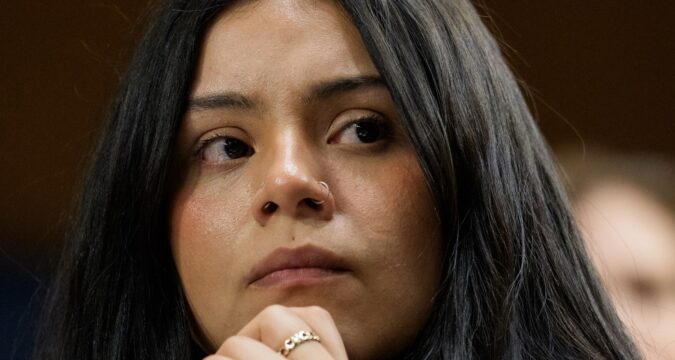
Marimar Martinez plans to attend Trump’s State of the Union speech, lawyer says
Marimar Martinez, the Chicago woman shot five times by a Border Patrol agent in October, will attend President Donald Trump’s State of the Union Speech before Congress later this month, her attorney said in a court filing Thursday.
Martinez, who was charged with assault only to have the case dismissed by the U.S. attorney’s office weeks later, will attend the address on Capitol Hill as a guest of U.S. Rep. Jesus Chuy Garcia, a Chicago Democrat, the filing stated.
Her presence in the audience will undoubtedly cause a stir. Martinez has gained national attention particularly after she told a Senate forum earlier this week that she considers herself a “voice” for Rene Good and Alex Pretti, two U.S. citizens fatally shot by immigration agents in Minneapolis in January, as well as others who have suffered abuses under the Trump administration’s aggressive deportation push.
“Presumably, (Department of Homeland Security) Secretary Kristi Noem will be present,” attorney Christopher Parente wrote in the filing. “Perhaps former Commander of the Border Patrol Gregory Bovino will also be present. There is no doubt that between now and February 24, 2026, DHS will continue to defame Marimar and continue to brand her as a ‘domestic terrorist.’”
The revelation that Martinez will attend the high-profile event came as a judge is weighing whether to release body camera footage and other evidence in her criminal case, which ended in November when all charges were dropped.
Prosecutors have said they will not oppose the request to lift the protective order on the bodycam video, which depicts the moments leading up to the Oct. 4 crash that led to Martinez’s shooting by Border Patrol agent Charles Exum, but does not show the shooting itself. Some of Exum’s text messages to co-workers bragging about his marksmanship have already been published in court.
The U.S. attorney’s office said it will oppose the release of any communications Exum sent that have not already been made public, saying in a motion last week the texts would “serve only to further sully Agent Exum, his family, and co-workers without any corresponding benefit to Ms. Martinez.”
In his response Thursday, Parente the still-sealed materials “completely undermine” what Exum claimed happened on the day of the shooting, and “topple” DHS’s narrative of Martinez as a “domestic terrorist.
Parente said the U.S. attorney’s office is no longer simply a “passive observer” to the lies of their bosses, but “are active enablers of an out-of-control client.”
“Exum’s messages contain his statements of the events that the U.S. Attorney’s Office knows is belied by the evidence in this case,” Parente wrote. “To attempt to withhold these messages the U.S. Attorney’s Office is failing in its duty to always ‘do the right thing.’”
U.S. District Judge Georgia Alexakis is set to rule on the release of the materials on Friday.
A spokesperson for the Department of Homeland Security could not immediately be reached.
At a hearing last week, Alexakis took the U.S. attorney’s office to task over the federal government’s failure to remove statements on its official websites and social media branding Martinez as a terrorist with a long history of doxing immigration agents.
“I’m hard-pressed to credit the idea that (the Department of Homeland Security) couldn’t change the narrative around this incident if they set their mind to it,” Alexakis said. “And as far as what I’ve been presented with as well, it’s not just DHS, it’s the FBI director who is also participating in this ongoing narrative.”
Alexakis also noted the government’s failure to correct the record has even seeped into decisions by the U.S. Supreme Court, where a dissenting opinion by Justice Samuel Alito used the Martinez incident as an example of the purported dangers faced by immigration agents trying to enforce the laws.
“Did they tell the Supreme Court that in their filings in the Illinois National Guard case?” Alexakis asked DeWald at the hearing last week. “Did they ask the Supreme Court to correct its opinion when Justice Alito represented these facts as found as determined? Did the government do that?”
Prosecutors said they did not believe any such ask had been made.
Parente said Thursday that if the U.S. attorney’s office will not correct the misstatements, “it is left entirely to Ms. Martinez to do so on her own.”
Prosecutors had alleged Martinez was part of a convoy of civilians who were following agents on Oct. 4 when she rammed Exum’s vehicle near 39th Street and Kedzie Avenue, prompting Exum to jump out of his Chevrolet Tahoe and fire five shots, wounding Martinez seven times.
Martinez’s attorneys argued it was Exum who sideswiped Martinez and that his extreme use of force was completely unjustified. They also alleged evidence tampering, saying Exum was inexplicably allowed to drive the Tahoe more than 1,000 miles back to his home base in Maine, where a Border Patrol mechanic attempted to “wipe off” some of the scuff marks from the crash.
After the charges against Martinez were dropped on Nov. 20, it’s since been revealed in court that Martinez’s car is part of a second, ongoing criminal investigation into the shooting, which is being handled by the U.S. attorney’s office in South Bend, Indiana.
In her testimony Tuesday before a forum organized by Sen. Richard Blumenthal, D-Connecticut, Martinez said she was speaking out in part because she saw herself as a voice for others who did not survive their encounters with federal agents. Good’s brothers and Chicago attorney Antonio Romanucci, who is representing the Good family, spoke to the forum moments before Martinez did.
“I am Renee Good, I am Alex Pretti, I am Silverio Villegas Gonzalez, I am Keith Porter,” she said. “This needs to stop now. How many more lives must be lost before meaningful action is taken?”
Martinez said her main ask of the federal government at this point is for federal officials to take back their words.
“Sorry, you’re not a domestic terrorist, that’s it,” she said. ”That’s all I’m asking for. A simple sorry. That’s it.”
jmeisner@chicagotribune.com

Review: New Edition shares the United Center stage with Boyz II Men and Toni Braxton in a gloriously traditional concert
It’s funny how music acts who have been in the game for more than 30 years are revolutionizing the concert experience. That, at least, was what I witnessed during Wednesday night’s New Edition Way Tour at the United Center. In a time when reunion shows and nostalgic retreats are a staple of the touring concert circuit, New Edition employed a different kind of production to create their show.
But if you weren’t aware of this ahead of time, or you just happened to arrive late, you would have missed out on all the fun.
The show more or less started right on time at 8 p.m., with the band jumping into “We Going Out Tonight,” a new song to kick off their tour and hype up the crowd. This is where the fun began, with both Boyz II Men and Toni Braxton appearing out of thin air on the stage to join the group for the performance of the song. Those strategically placed risers would prove to be fundamental to the production of the rest of the evening, which was sharp, tight and compelling. But importantly, it also demonstrated how the flow of the night would proceed.
Although the tour was dubbed a New Edition experience, appearances by Boyz II Men and Toni Braxton were peppered in throughout the night, giving the New Edition band members time to rest and breathe. In a traditional concert show structure, Boyz II Men and Toni Braxton would be opening acts before New Edition took the stage. But this collaborative musical experience created a three-hour spectacle quite unlike anything I had experienced before.
A regular nostalgia tour this was not.
Of course, the band’s biggest hits were present. They performed “If It Isn’t Love” early during the evening. I especially loved their medley later in the night, when they played some of their earliest ‘80s hits, including “Mr. Telephone Man” and “Can You Stand the Rain.” But they also left room for individual New Edition band members and group offshoots to get their shine during the evening as well.
Johnny Gill’s voice was strong and smooth, just as silky as it’s always been for “Fair Weather Friend” and “Rub You the Right Way.” During “My My My,” Gill went down the stage’s steps to serenade members of the audience, much to the glee of the aunties in the room. It was a climactic moment in the show. The audience also sang along and shouted “Go Bobby!” during Bobby Brown’s numerous solo performances, including “Don’t Be Cruel.”
Ricky Bell, Michael Bivins and Ronnie DeVoe, aka Bell Biv DeVoe, popped up occasionally to sing with Bobby, then performed their own hits, including the always-rapturous “Do Me Baby.” Ralph Tresvant had his moments too, including during a dancer-fueled rendition of “Sensitivity.”
From their elaborate costume changes, which always seemed to include sequins or rhinestones, to their modified dance moves that even the most casual of fans would know, the New Edition Way Tour was a loving tribute to the enduring power of R&B, all in service to their fans.
This was evident as well with the other performers during the evening. Boyz II Men danced to “Motownphilly,” got down on their knees for “On Bended Knee” and made the ladies swoon during “Water Runs Dry.” Other classic Boyz II Men elements were out in full force, including their performance of “I’ll Make Love to You,” when they threw roses to members of the audience. I almost caught one, but a woman elbowed me for it. Understandable.
Boyz II Men performs at the United Center in Chicago on Feb. 4, 2026. (Chris Sweda/Chicago Tribune)
Likewise, Braxton more or less stuck to her hits, including “He Wasn’t Man Enough,” “Breathe Again,” and “Just Be a Man About It,” among others. As a longtime Toni Braxton fan, I was disappointed to see how few songs she performed during the evening. However, longtime fans also know that Braxton has suffered from complications of lupus for decades. At one moment, she noted that doctors had said that she may not be able to perform again. Her appearances at Wednesday night’s show and as part of this tour are a testament to her strength and courage. And although she only performed a handful of tunes (and ended her evening with her mega hit, “Unbreak My Heart”), she made sure each one was immaculate. Nearly every track was accompanied by an elaborate costume change and choreography, proving that Toni still is that girl.
Toni Braxton performs at the United Center in Chicago on Wednesday, Feb. 4, 2026. (Chris Sweda/Chicago Tribune)
Not every aspect of the evening was perfect. The first third of the evening had some technical sound issues. Sometimes the backing vocals were a little too strong, and it was hard to hear the singers even though, from what I could tell, they all sounded good, just like they did at their peaks. I noticed it most during Braxton’s performances. With a voice that’s unique and strong and charismatic, it deserved to shine boldly and beautifully. But the hiccups didn’t last long.
If the traditional concert structure is a thing of the past, then I welcomed it here with open arms. All aspects of the large stage were utilized, ensuring all fans — including those with the seats behind the stage — received a 360-degree entertaining concert. This eclectically produced, round robin-style show (with no one artist on stage for too long) made for a lively, surprising evening that emphasized fun and community more than artistic hierarchy.
Britt Julious is a freelance critic.
https://www.chicagotribune.com/2026/02/05/review-new-edition-boyz-2-men/

Elgin netted $400,000 in savings last year using pandemic purchasing program
A pandemic-era policy that changed how Elgin purchases city vehicles and equipment saved the city $424,000 last year, officials said.
Implemented because of chain supply issues tied to production and shipping delays, the revised approach did away with the city’s long purchase approval process in favor of setting up a budgeted pool of money from which staff can draw to buy items.
The system allows the best deals available to be locked rather than having to wait as long as six weeks to obtain approval, during which time the price could increase or the deal be lost.
It’s become a proven and efficient model, and one the city has continued to use even though the pandemic has ended, officials said.
Last year, the council approved $4.9 million — the projected cost for all the vehicles and equipment earmarked for purchase in the 2025 budget — and ended spending $424,000 less because of deals staff members were able to negotiate or obtain, officials said. This year $4.4 million has been budgeted to buy 39 vehicles and multiple pieces of field equipment.
The purchase list is handled by the Public Works Department on behalf of all city departments, including public works, utilities, land management, parks and recreation, neighborhood services, building maintenance and the police department.
Planned purchases being made this year include a snowplow, a flatbed hauler, a street sweeper, five utility vans and 12 police vehicles, all of which are included in the 2026 budget and were approved unanimously last week by the council.
Public Works Director Aaron Neal said prior to the pandemic, the purchasing process was time-consuming. Staff wasn’t allowed to spend more than $25,000 without council approval so every large vehicle or equipment purchase required that a legal request be submitted to the city attorney and then sent on to the council.
“It was a very cumbersome process,” Neal said at a recent council meeting.
When the pandemic hit, contracts were canceled and the city forced to make purchases locally, he said. Approval under the old process could take as long as six weeks, meaning the city missed out on some items that staff wanted to buy.
Under the new method, a check can be cut within a few days of a purchase deal being made, Neal said.
“We cut out a lot of the red tape,” Neal said.
The arrangement also lets staff take advantage of joint purchasing agreements, find competitively priced contracts and make off-the-lot purchases when necessary, officials said.
While supply chain issues have largely been resolved, the system is one Elgin plans to keep using.
“It’s a lot of money (to budget in a lump sum), but there are checks and balances in place,” Neal said.
One of them is the annual report submitted to the council that documents how much each vehicle cost and where it was purchased, he said.
Councilwoman Tish Powell acknowledged at the council meeting that it might seem unorthodox to budget a pot of money for the purchases, but the savings netted makes it worthwhile.
“I definitely approve and love the innovation that continues to come from our team,” Powell said. “Things like this make it easier for you to do your job and for us to make sure you have the tools to do your job.”
Councilman Corey Dixon was so impressed with the procurement system that he said it “seems like it’s something we can bundle up and sell to other municipalities. … I’m glad we are saving money doing it this way.”
Gloria Casas is a freelance reporter for The Courier-News.
https://www.chicagotribune.com/2026/02/05/elgin-pandemic-purchasing-savings-vehicles/
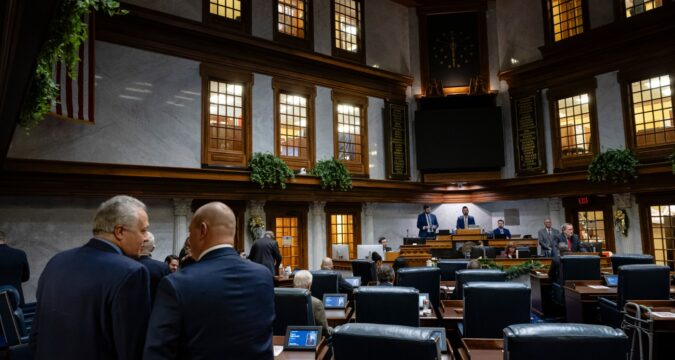
Bill aimed at curbing utility bills passes Indiana Senate committee
An Indiana House bill designed to help electric utility affordability statewide passed the Senate Utilities Committee after hearing multiple amendments and testimony on Thursday.
State Rep. Alana Shonkwiler, R-Noblesville, authored House Bill 1002, which moved to the Senate Appropriations Committee after its Thursday hearing.
“This legislation represents several years of thoughtful work by the General Assembly, Indiana Utility Regulatory Commission and stakeholders across the state, all focused on one central goal: ensuring that Hoosier families have access to reliable, affordable and transparent utility service today and in the future,” Shonkwiler said. “At its core, House Bill 1002 is about balance. It recognizes that Indiana needs strong financials to stable utilities that can invest in infrastructure, modernize the grid and meet growing demand at the same time.”
If passed, the bill would allow residential ratepayers to be placed on budget billing plans on July 1, and utilities will be prohibited from disconnecting low-income customers’ services during periods with extreme heat warnings. House Bill 1002 also ties utility profits to performance metrics, including affordability and service restoration, and utilities will use a three-year rate plan.
The bill introduces “performance-based ratemaking,” Shonkwiler said, and ensures that utilities are rewarded for delivering results that benefit Indiana residents.
During Thursday’s hearing, Shonkwiler proposed two amendments that passed the Senate Utilities Committee. One would refine language to improve “implementation, fairness and clarity,” Shonkwiler said, and would exclude municipal-owned utilities from some provisions related to reporting and assistance programs because municipal utilities are governed locally.
Another amendment would change the eligibility for budget billing, Shonkwiler said, and would exclude municipal-owned utilities from those rules and would only require those eligible for energy assistance to be placed on levelized billing plans. Other customers would opt-in for budget billing.
“I truly believe that levelized billing could help across the state,” she said. “If consumers were to be put on that, it would truly help us with the affordability conversation.”
The committee heard testimony from state energy experts Thursday, with the majority in support of the legislation.
Kerwin Olson, executive director of Citizens Action Coalition, said he appreciates multiple provisions in the bill, including its focus on vulnerable populations.
“(Citizens Action Coalition) opposed the bill as introduced, but the changes have moved us into a position of support,” Olson said. “We ask that as this bill continues to move forward, we have these conversations in future years.”
Robyn Skuya-Boss, chapter director for the Sierra Club Hoosier Chapter, testified in support of the bill Thursday, saying the organization appreciates the protections in place for Hoosier families during high heat days.
“It builds a framework for utility companies to measure and share their progress through performance-based ratemaking, and it ensures that utility companies are investing additional resources to support low income customer bill assistance programs,” Skuya-Boss said. “These provisions represent a positive step towards helping families afford their bills.”
Danielle McGrath, president of the Indiana Energy Association, testified in opposition to House Bill 1002. Her organization supports the bill as a whole, but is opposed to some language, including about affordability and reliability metrics.
McGrath also said Indiana’s rates have performed under the rate of inflation for the past five years.
“There are some cost drivers that are just non-negotiable and outside of our direct control,” McGrath said. “These include the cost of building and maintaining generation to meet resource necessary needs. … We have to comply with federal requirements. … When taking these factors into consideration, investment in electricity pricing can vary greatly depending on the region in which you’re operating, which makes it difficult to establish a baseline.”
The Senate Appropriations Committee will discuss House Bill 1002 at a later date.