Category: News

Trump Sidesteps 2028 GOP Endorsement On Vance, Rubio
Trump Sidesteps 2028 GOP Endorsement On Vance, Rubio
Authored by Naveen Athrappully via The Epoch Times (emphasis ours),
U.S. President Donald Trump opted not to choose between Vice President JD Vance and Secretary of State Marco Rubio as potential successors in the 2028 Republican presidential primary during a Feb. 4 interview with NBC News.
The president had, on earlier occasions, suggested that Rubio and Vance would be the top Republican contenders for 48th president of the United States.
In the NBC News interview, Trump was asked who should be at the top of the 2028 presidential primary ticket.
“Well, I don’t want to get into this. We have three years to go. I don’t want to, you know, I have two people that are doing a great job,” Trump said.
“I don’t want to have an argument … I don’t want to use the word fight, it wouldn’t be a fight. But look, JD is fantastic, and Marco is fantastic.
“I would say one is slightly more diplomatic than the other. I think they’re both of very high intelligence. I mean … they will do shows. They will do Joe Rogan, as opposed to the opponent not doing it because they couldn’t handle it.
“They’re both very capable. I do think this—the combination of JD and Marco would be very hard to be beaten.”
When asked whether he would endorse someone in the 2028 primaries, Trump replied he “hadn’t even thought of it” but would be inclined to do so.
Rubio ran as a Republican candidate in the 2016 presidential race, competing against Trump, who went on to win his first term. Since joining the second Trump administration, the 54-year-old has been active on multiple fronts.
In addition to serving as secretary of state, Rubio was appointed acting head of the U.S. Agency for International Development (USAID) in February 2025 and national security adviser in May 2025. In July of that year, he confirmed the shutdown of USAID, highlighting that foreign assistance provided by the agency failed to deliver results for Americans.
Earlier, in February 2025, Panama’s president said his country would not renew its Belt and Road Initiative agreement with China after a meeting with Rubio, who called on the country to address the Chinese Communist Party’s influence in the region, in what was one part of the Trump administration’s assertive moves in the Western Hemisphere.
Vance, who has been active in both domestic and international roles, was instrumental in blocking Democrats from restricting Trump’s ability to continue military action in Venezuela, casting the tiebreaking vote in the Senate that defeated the proposal. The 41-year-old has also emerged as a prominent defender and advocate of the administration’s “America First” agenda.
Both Rubio and Vance served as Republican senators prior to joining the Trump administration last year. Rubio was elected to the U.S. Senate from Florida in 2010, while Vance was elected to the U.S. Senate from Ohio in 2022.
Regarding a potential 2028 presidential ticket, Vance said in a media interview in October 2025 that he wants to perform well in the current administration before considering such a proposal.
Meanwhile, Rubio backed Vance as a great pick for the next presidential election without ruling himself out of the race.
In December, conservative organization Turning Point USA, now headed by Erika Kirk, endorsed Vance for 2028.
According to a Harvard CAPS Harris Poll fielded on Jan. 28 and 29, Vance “leads convincingly” among Republican voters as their next candidate for president. Vance got 53 percent of the polled votes, far higher than Rubio’s 17 percent, which put him in the third spot. Donald Trump Jr. took the second spot with a 21 percent share.
Tyler Durden
Thu, 02/05/2026 – 16:20
https://www.zerohedge.com/political/trump-sidesteps-2028-gop-endorsement-vance-rubio
US job openings fall to 6.5 million, fewest since 2020, as labor market remains sluggish
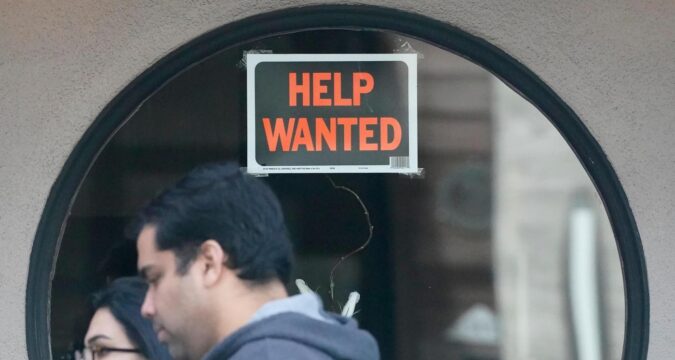
WASHINGTON — U.S. job openings fell to the lowest level in more than five years, another sign that the American labor market remains sluggish.
The Labor Department reported Thursday that vacancies fell to 6.5 million in December — from 6.9 million in November and the fewest since September 2020. Layoffs rose slightly. The number of people quitting their jobs — which shows confidence in their prospects — was basically unchanged at 3.2 million.
December openings came in lower than economists had forecast.
The economy is in a puzzling place. Growth is strong: Gross domestic product — the nation’s output of goods and services — advanced from July through September at the fastest pace in two years. But the job market is lackluster: Employers have added just 28,000 jobs a month since March. In the 2021-2023 hiring boom that followed COVID-19 lockdowns, by contrast, they were creating 400,000 jobs a month.
Drops for tech stocks and bad news on the US job market hit Wall Street as bitcoin plunges
When the Labor Department releases hiring and unemployment numbers for January next Wednesday, they are expected to show the companies, government agencies and nonprofits added about 70,000 jobs last month — modest but up from 50,000 in December.
On Wednesday, payroll processor ADP reported that private employers added just 22,000 jobs last month, far fewer than forecasters had expected. And the outplacement firm Challenger, Gray & Christmas said Thursday that companies slashed more than 108,000 jobs last month, the most since October and the worst January for job cuts since 2009.
“The hiring recession isn’t going to end anytime soon,” Heather Long, chief economist at Navy Federal Credit Union, wrote in a commentary. “Job openings in December just fell to their lowest level since September 2020. It’s yet another sign of how little hiring – or interest in hiring – is happening in this economy.”
Economists are trying to figure out if hiring will accelerate to catch up to strong growth or if growth will slow to reflect a weak labor market or if advances in artificial intelligence and automation mean that the economy can roar ahead without creating many jobs.
https://www.chicagotribune.com/2026/02/05/us-job-market-report/

Amazon Earnings Preview: All Eyes On CapEx
Amazon Earnings Preview: All Eyes On CapEx
At first, the market was happy to reward big capex forecasts (META); but just a few days later, it changed its mind and decided that the bigger the beat, the bigger the penalty (as was the case with GOOGL today). That leaves Amazon in a precarious place as it prepares to report earnings after the close today: does it project some berserk number or does it risk being conservative? After all, the only thing that will matter is the capex forecast (the earnings will likely be good enough).
Looking at the bigger picture, Bloomberg notes that it’s probably not a great sign that Amazon’s share price is down more than 4% on the day of earnings, before the first headline has even hit. After the hyperscalers Microsoft and Alphabet spooked markets with their huge spending plans — Meta seems to have got away with it — perhaps the best thing Amazon could do would be to announce that it plans only moderate capital expenditure in 2026.
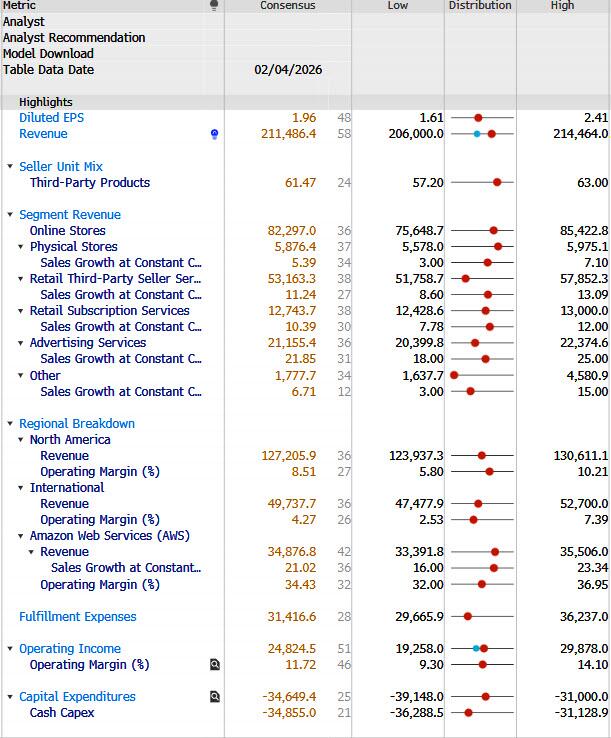
One thing in Amazon’s favor is that analysts aren’t really projecting too much growth. The consensus is that diluted earnings per share rose just a bit over 5% year-on-year to $1.96 in the fourth quarter. That’s little-changed from $1.95 in the third quarter. Revenue at Amazon Web Services is expected to have increased 21% to $34.9 billion, but that’s still less than half the revenue the company gets from its main business: online stores. Growth there is expected to be slower at roughly 9% year-on-year.
Its business mix explains why Amazon is so much less profitable than its peers and why the profitability of the cloud business will be key.
Capex aside, here is a preview of what JPMorgan’s trading desk expects:
AMZN PREVIEW – AWS Acceleration & AI Positioning
SENTIMENT – Bullish, But Concerns Remain. Conversations & focus heavily AWS-skewed, no change there. 3Q EPS & re:Invent provided clarity on capacity expansion, supply from NVDA, Trn 2/3 performance & rollout, Rainier timing & doubling. Investor focus on degree of acceleration & cloud industry $ re-capture. AWS price increases suggest strong demand. But concern remains around AMZN’s overall AI positioning/strategy, relative gap to Azure/Google Cloud growth, & Trn adoption. Strong Stores execution expected, along w/NA & Int’l margin expansion.
The stock remains a Best Idea for JPM stgrategist Doug Anmuth.” We remain bullish on AWS growth acceleration driven by core cloud growth & ramping AI contribution led by Project Rainier, Trn ramp, & new partnerships. N.America & Int’l OI margin expansion, solid AWS margins (though likely down Q/Q), & cost discipline support healthy FCF growth in ’26 even against AI-driven capex growth. Valuation attractive on GAAP P/E & FCF.
FOCAL POINTS –
Accelerating growth on: 1) Project Rainier/Anthropic ramp; 2) increased capacity doubling by 2027; 3) Tr2 performance & Tr3 ramp; 4) core workloads/tech migrations
More backlog growth in October than all of 3Q…OpenAI partnership could expand
Watching $ growth Q/Q & Y/Y
AWS pushbacks: 1) mid-20’s%+ AWS growth could come w/Azure & Google Cloud growing 2x that rate; 2) Tr chip rollout still early & needs bigger adoption beyond Anthropic; 3) Anthropic cloud/compute diversification
Stores executing well w/8% holiday e-comm growth from Visa & Adobe slightly above
Lower cost to serve on robotics/automation & inbound improvements
Takeaway from the recent JPM survey – AMZN: Favorite Mega Cap (46% of respondents)
According to UBS strategist Dwyer, the most prominent question since 3Q she has gotten is, “Why isn’t this up more?” Her response is “that was market-related exiting the year or maybe investors were waiting for one more quarter of strong execution before backing, but for a long list of reasons it’s pretty clear that it is structural reacceleration and not just a one-time event.”
Here are UBS’s buy-side Bogeys which the company will have to overcome:
Q4 AWS Growth: up 22-23% y/y
Q4 EBIT: $26.5-27 bn versus guide $21-26 bn/ around 11% margin at midpoint
Q4 Total Sales: high end of guide $206-213 bn/ around 10-13% y/y
Q1 EBIT Guide H-E: $22.5-23 bn
Q1 Total Sales Guide H-E: $176-178 bn
And the sellside consensus
Tyler Durden
Thu, 02/05/2026 – 15:45
https://www.zerohedge.com/markets/amazon-earnings-preview-all-eyes-capex

Manhattan man charged with recording children, adults in home bathroom
A Manhattan man was ordered not to have any contact with children after appearing Thursday in Will County court on allegations he recorded both children and adults in a bathroom during a New Year’s Eve party.
Manhattan police arrested Jonathan Wisniewski, 44, of the 24400 block of Arrowhead Drive, Wednesday after responding to a report that alleged a concealed camera was discovered during the party in an inconspicuous location inside the bathroom. Police search the home after obtaining a warrant last month.
Wisniewski is charged with 14 counts of unauthorized video recording of both minor children and adults without their knowledge or consent. Nine counts were related to recording children while five counts were adult victims, which are both felonies, Manhattan police said.
Manhattan police Chief Ryan Gulli said more than 20 people attended the party, but he was not sure what the age ranges of the guests were. While police do not know Wisniewski’s intent, it is presumed that Wisniewski was attempting to record anyone who was using the bathroom, Gulli said.
People who attended the party can come forward to police to help with the prosecution or to get resources and victim assistance, Gulli said. He said the Police Department offers services to help victims.
Police had not had any past contact with Wisniewski, Gulli said.
Wisniewski made a brief appearance in court Thursday. The charges are not detainable under the Illinois SAFE-T Act. At the request of prosecutors, Wisniewski was ordered not to have any contact with children or leave Illinois. A court date was set for Feb. 26.
Gulli said that he believes this is a problem with the SAFE-T Act because it can be traumatic for the victims again.
“It’s a serious crime,” he said. “This is a serious violation of people’s privacy.”
Wisniewski’s attorney, David Gaeger, declined comment.
Michelle Mullins is a freelance reporter for the Daily Southtown.
https://www.chicagotribune.com/2026/02/05/manhattan-hidden-camera-charges/
Bad Bunny toma su actuación en el Super Bowl con gratitud
Por JONATHAN LANDRUM Jr.
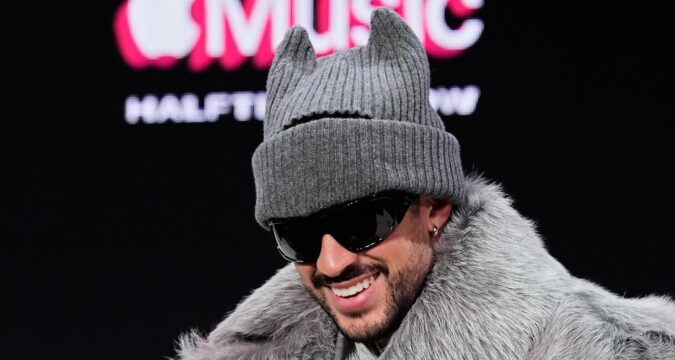
SAN FRANCISCO (AP) — Bad Bunny dice que palpita su muy anticipada actuación en el medio tiempo del Super Bowl con una mezcla de emoción, gratitud y perspectiva.
“Para ser honesto, no sé cómo me siento. Hay mucho. Todavía estoy en medio de mi gira. Estuve en los Grammy la semana pasada. Todo eso”, expresó en inglés el jueves en una conferencia de prensa organizada por Apple Music. Bad Bunny apareció en el escenario con su sencillo de 2017 “Chambea” de fondo.
“Estoy emocionado, pero al mismo tiempo, me siento más emocionado por la gente que incluso por mí, mi familia, mis amigos, las personas que siempre han creído en mí”, manifestó. “Este momento, la cultura, eso es lo que hace especiales a estos shows”.
Bad Bunny, el superastro puertorriqueño cuyo nombre de pila es Benito Antonio Martínez Ocasio, es uno de los artistas más escuchados del planeta. Subirá al escenario del Super Bowl solo una semana después de ganar el premio al álbum del año en los Grammy 2026 por “Debí tirar más fotos”. Es la primera vez que un álbum completamente en español se lleva el premio principal.
Durante la conferencia, bromeó diciendo que los fans no necesitaban aprender español para disfrutar de su presentación, pero deberían estar preparados para bailar, una referencia a su monólogo en “Saturday Night Live” de octubre pasado.
Zane Lowe y Ebro Darden de Apple Music condujeron la conversación con Bad Bunny. El evento del jueves comenzó con conversaciones con los artistas del pre-show a la 1:00 p.m. hora del Este.
Este año, se formó una larga fila mucho antes de que se abrieran las puertas, con medios acreditados, incluyendo una notable presencia de medios en español y latinoamericanos, llenando la sala casi una hora antes de que comenzara la conferencia de prensa.
Marcó un fuerte contraste con la conferencia de prensa de Kendrick Lamar en 2025, cuando la sala no se llenó hasta aproximadamente 15 minutos antes del evento.
¿Qué pueden esperar los fans del espectáculo de medio tiempo del Super Bowl?
A pesar del interés creciente, Bad Bunny ofreció pocos detalles sobre lo que los espectadores verán el domingo.
“Va a ser una gran fiesta”, dijo. “Lo que la gente puede esperar de mí… Quiero llevar al escenario, por supuesto, mucho de mi cultura. Pero realmente no quiero dar ningún spoiler. Va a ser divertido”.
Para el artista, el camino hacia el Super Bowl nunca fue impulsado por el reconocimiento o los premios. Dijo que “Debí tirar más fotos” se convirtió en su proyecto más significativo porque estaba basado en reconectar con su identidad, historia y cultura, pero no en perseguir hitos.
“No estaba buscando el álbum del año. No estaba buscando actuar en el show de medio tiempo del Super Bowl”, comentó. “Solo estaba tratando de conectar con mis raíces, conectar con mi gente, conectar conmigo mismo”.
Esa mentalidad, dijo, finalmente abrió la puerta a algo más grande: llevar una expresión profundamente personal de la cultura a uno de los escenarios más grandes del mundo.
“Siempre tienes que estar orgulloso de quién eres y de dónde vienes”, afirmó. “Pero no dejes que eso limite a dónde puedes llegar”.
Bad Bunny no es ajeno al escenario del Super Bowl. Participó como invitado durante el show de medio tiempo del Super Bowl LIV en 2020 junto a Jennifer Lopez y Shakira. Pero dijo que su enfoque ha permanecido sin cambios.
“Mi mayor placer es simplemente crear, divertirme haciéndolo y conectar con la gente”, expresó. “Eso es lo que siempre busco cada vez que estoy en el estudio”.
Cuando se le preguntó si tendrá invitados sorpresa, dijo: “Eso es algo que no te voy a decir”.
Luego comentó que en realidad tendrá muchos invitados viendo, sus amigos, familia, “la comunidad latina” y personas de todo el mundo que aman su música.
Al final de la entrevista, Bad Bunny respondió preguntas de algunos periodistas estudiantiles, incluyendo uno que le pidió nombrar a un apoyo temprano. “Mi mamá”, respondió el cantante.
“Antes de todo, ella creyó en mí como persona, como ser humano. Ella creyó en mí, en mis decisiones, en mis opiniones”, continuó. “Creo que eso es lo que me trajo aquí, ¿sabes? No porque ella creyera que yo era un gran artista, sino porque creyó que soy una gran persona”.
El Super Bowl se llevará a cabo el domingo en el Levi’s Stadium en Santa Clara, donde los Seahawks de Seattle se enfrentarán a los Patriots de Nueva Inglaterra.
¿Quién más actuará en el Super Bowl?
El espectáculo previo al Super Bowl comenzará con varios artistas destacados en el norte de California: Charlie Puth subirá al escenario para cantar el himno nacional, Brandi Carlile interpretará “America the Beautiful” y Coco Jones cantará “Lift Every Voice and Sing”.
“Quiero que se sientan inspirados. Quiero que todos sepan que la música es algo increíble”, dijo Puth sobre su actuación.
“Esto es prácticamente lo mejor de lo mejor”, añadió Jones. “Esto es lo máximo… Es difícil competir. Tal vez mi boda esté a la altura”.
El himno nacional y “Lift Every Voice and Sing” serán interpretados por el artista sordo Fred Beam en lenguaje de señas estadounidense. Julian Ortiz interpretará “America the Beautiful”.
Antes del juego, Green Day tocará un set para celebrar el 60 aniversario del Super Bowl. La banda, que tiene sus raíces en el Área de la Bahía, planea “¡hacer ruido!”, según el cantante principal Billie Joe Armstrong.
Por primera vez en la historia, el espectáculo de medio tiempo incluirá interpretación en lenguaje de señas multilingüe con lenguaje de señas puertorriqueño, dirigido por la intérprete Celimar Rivera Cosme. Ella también fue la intérprete de la histórica residencia de Bad Bunny en Puerto Rico el año pasado, que atrajo a más de medio millón de fans.
Todas las actuaciones en lenguaje de señas para los shows previos y de medio tiempo se presentarán en colaboración con Alexis Kashar de LOVE SIGN y Howard Rosenblum de Deaf Equality.
___
La periodista de The Associated Press Maria Sherman contribuyó a este despacho desde Nueva York.
https://www.chicagotribune.com/2026/02/05/bad-bunny-toma-su-actuacin-en-el-super-bowl-con-gratitud/

Tarik Skubal gana caso de arbitraje salarial y recibirá cifra récord de 32 millones de dólares
SCOTTSDALE, Arizona, EE.UU. (AP) — Tarik Skubal ganó el jueves su audiencia de arbitraje salarial con los Tigres de Detroit, y el dos veces ganador del premio Cy Young recibirá un monto récord de 32 millones de dólares este año en lugar de la oferta de 19 millones del equipo.
Jeanne Charles, Walt De Treux y Allen Ponak tomaron la decisión un día después de escuchar los argumentos.
Vladimir Guerrero Jr., el primera base de Toronto, era el dueño del récord del salario más alto en un caso de arbitraje decidido por un panel, cobrando 19,9 millones en 2024 en un caso decidido por Charles, De Treux y Scott Buchheit.
El tercera base Nolan Arenado presentó una solicitud récord de 30 millones en 2019 a Colorado y luego acordó un contrato de 260 millones por ocho años sin una audiencia.
El contrato de 31 millones de Juan Soto con los Yankees de Nueva York en 2024 había sido el acuerdo de un año más grande para un jugador elegible para el arbitraje. David Price había mantenido el salario negociado más alto en un contrato de un año para un lanzador elegible para el arbitraje, un acuerdo de 19,75 millones con Detroit en 2015.
Skubal, dos veces All-Star, será elegible para la agencia libre después de la Serie Mundial. El zurdo de 29 años tiene una foja de 54-37 con una efectividad de 3.08 en seis temporadas en las mayores.
Skubal registró una marca de 13-6 con una efectividad de 2.21, la mejor de la Liga Americana, en 31 aperturas el año pasado, con 241 ponches y 33 boletos en 195 innings y un tercio, cobrando 10,5 millones. Su WHIP de 0.891 fue el mejor entre los lanzadores calificados.
Después de la audiencia el miércoles, los Tigres acordaron un contrato de 115 millones por tres años con el zurdo dominicano Framber Valdez, un acuerdo pendiente de un examen físico exitoso.
Los jugadores han ganado las primeras tres decisiones esta temporada baja. El lanzador derecho Kyle Bradish recibió 3,55 millones en lugar de la oferta de 2.875.000 dólares de los Orioles de Baltimore, y el receptor Yainer Díaz recibió 4,5 millones en lugar de la propuesta de 3 millones de los Astros de Houston.
___
Deportes AP: https://apnews.com/hub/deportes

Hobart announces plans to demolish former Main Street Station
Hobart officials announced plans at Wednesday’s city council meeting to demolish the former Main Street Station, at 235 Main St., in the coming days.
The long-shuttered, 152-year-old building is located north of the post office and across the street from The Art Theater. Batalis and city officials fought for years over the fate of the building, according to Post-Tribune archives.
Over the summer, Hobart City Attorney Heather McCarthy issued a statement on behalf of the city, reiterating that the city held multiple talks with Batalis about renovating or rebuilding on the property because Batalis – not the city – owns it.
The city began investigating complaints that the building was unsafe in June 2022, according to that statement. In February of last year, the city’s Board of Public Works and Safety awarded a $40,631 contract to C. Lee Construction Services of Gary to complete the demolition, according to Post-Tribune archives.
Hobart resident Joseph Conn, during the meeting’s public comment, said he was saddened the building was going to be demolished in six days by the city.
Conn said he lives in a house built the same year as the former bar and he plans to continue to live in a building that dates back to when President Ulysses S. Grant was in the White House.
He said he believes the former Main Street Station could be remodeled and brought back to life.
“That building is in good shape and could be brought back,” Conn said.
The building, which has been at that location since 1874, is owned by Jimmie Batalis, who has termed it the “oldest commercial building in downtown Hobart.”
Batalis was paroled in December 2023 after serving 16.5 years of a 57-year sentence for the May 2003 murder of 28-year-old Jason Nosker. Batalis has said the property went into probate after his father and brother died while he was in prison and the unsafe building issues started during that time.
Batalis, who wasn’t at the city council meeting and couldn’t be reached for comment, has maintained the building is sound.
His plans were to remodel it and return it to a bar that would serve food.
The city council also agreed at its meeting to extend tax abatement terms on a commercial project being developed by Clay Street Devco.
The amended agreement was also approved by the Hobart Board of Public Works at its meeting earlier on Wednesday.
Attorney Richard Anderson, who represents Clay Street Devco, said the existing project is located on 12.38 acres at Clay Street and Harms Road behind the former Beer Barrel.
Plans for the site are to build five office warehouses and eight self-storage buildings containing multiple units, Anderson said.
Currently, two of the office warehouses have been built and five of the self-storage buildings.
The initial tax abatement agreement started in 2023 and ended in 2025. The new agreement has a starting date of 2025, extending to 2026.
“We’re just asking for an extension of time to complete the project so that the tax abatement agreement would match the construction,” Anderson said.
He said the entire commercial project is expected to be completed by sometime in 2027.
In other business, the city council also added a position in the city’s legal department, with a start date of Jan. 1 and an end date of Dec. 31.
Plans are to add an assistant attorney to help McCarthy with her work for the city. The salary minimum was set at $50,000 and maximum at $120,000, Mayor Josh Huddlestun said.
Deborah Laverty is a freelance reporter for the Post-Tribune.
Jennifer-Ruth Green won’t run in First Congressional District race
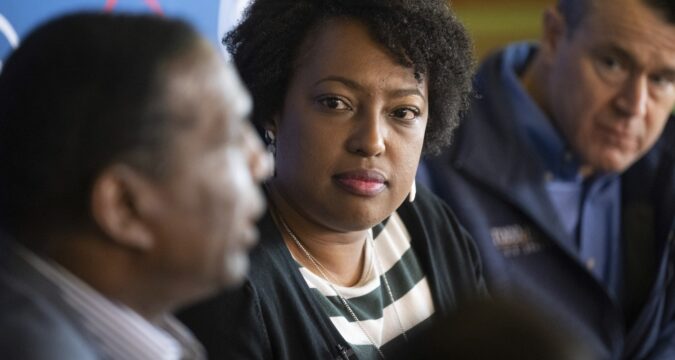
Former Indiana Secretary of Public Safety Jennifer-Ruth Green announced Thursday she will not seek the Republican nomination for Indiana’s First Congressional District in November because the Indiana legislature did not pass mid-census redistricting.
Since mid-census redistricting failed in the Indiana legislature, Green said in a statement that the First Congressional District “remains an extremely difficult seat for a Republican to compete in and win.” Green ran for the seat as the Republican candidate against U.S. Rep. Frank Mrvan, D-Highland, in 2022 and lost.
“Having been through it once, I understand the harsh reality: to win this seat, there is no margin for error. We will only win when we are unified in our vision as Republicans. We are in a midterm environment that history tells us will be challenging,” Green said.
While Green said she’s not afraid of leading or of “completing difficult tasks” or of fighting “poor ideas,” it was important to her to “act with great wisdom before leading a team into the battle for the heart of our country, when our own teammates have proverbially tied our hands behind our back.”
“We will eventually flip this seat. It will require unity and a shared vision. I am committed to developing both, as God leads,” Green said.
Mrvan, through a spokesperson, said he had no comment.
The Trump administration began pushing Republican-led states, starting with Texas, in August to take up mid-census redistricting to secure a Republican majority in the U.S. House of Representatives in the 2026 election. Typically, redistricting occurs after the release of census data.
Ultimately, after months of discussions, the Indiana legislature met in early December to vote on new congressional maps and to allow for mid-census redistricting. The House passed the measure, but it failed in the Senate.
Green announced her candidacy for the First Congressional District in October, one day after Gov. Mike Braun called for a special session to address redistricting.
Green resigned as Indiana’s Secretary of Public Safety on Sept. 5 amid an ethics probe for political activity, ghost employment, misuse of state property, and the prohibition against retaliation.
The Indiana State Ethics Commission approved a settlement agreement in Green’s ethics case in December for violating Indiana’s political activity and misuse of state property rules. With the approval, Green will have to pay the $10,000 fine.
In September, the office drafted a probable cause affidavit that listed ethics violations against Green. It alleged that she asked employees to generate content and proofread posts on the Committee to Elect Jennifer-Ruth Green Facebook account; included her state title on her Battle-Proven Leadership website; met with a member of the National Republican Congressional Committee during work hours on state property; used a state employee as a personal aide for tasks including retrieving her assigned state vehicle from Crown Point; and retaliated against an employee for providing information to the inspector general’s office.
When she learned that an employee reported her to the Office of the Inspector General, Green threatened the employee with demotion or termination and “made derogatory comments” toward the employee, according to the complaint.
With those actions, Green violated the state’s political activity rule, the ghost employment rule, the misuse of state property rule and the prohibition against retaliation, Elaine Vullmahn, chief counsel for enforcement at the inspector general’s office, said during the commission meeting.
The Marion County Prosecutor’s Office has been reviewing the materials submitted and will likely release a conclusion at the end of the review, Vullmahn said.
In a statement to the commission, Green said she has been in leadership roles in the Air Force and then Braun’s administration.
“As a leader, I know that I am responsible for what happens within the domain over which I led. I assure you, the violations of the ethics code are aberrant behavior for me. The violations were mistakes … not made with any malicious intent or for gain,” Green’s statement to the commission read.

You Don’t Own Your Stocks the Way You Think You Do
You Don’t Own Your Stocks the Way You Think You Do
Authored by Jack McPherrin via The Epoch Times (emphasis ours),
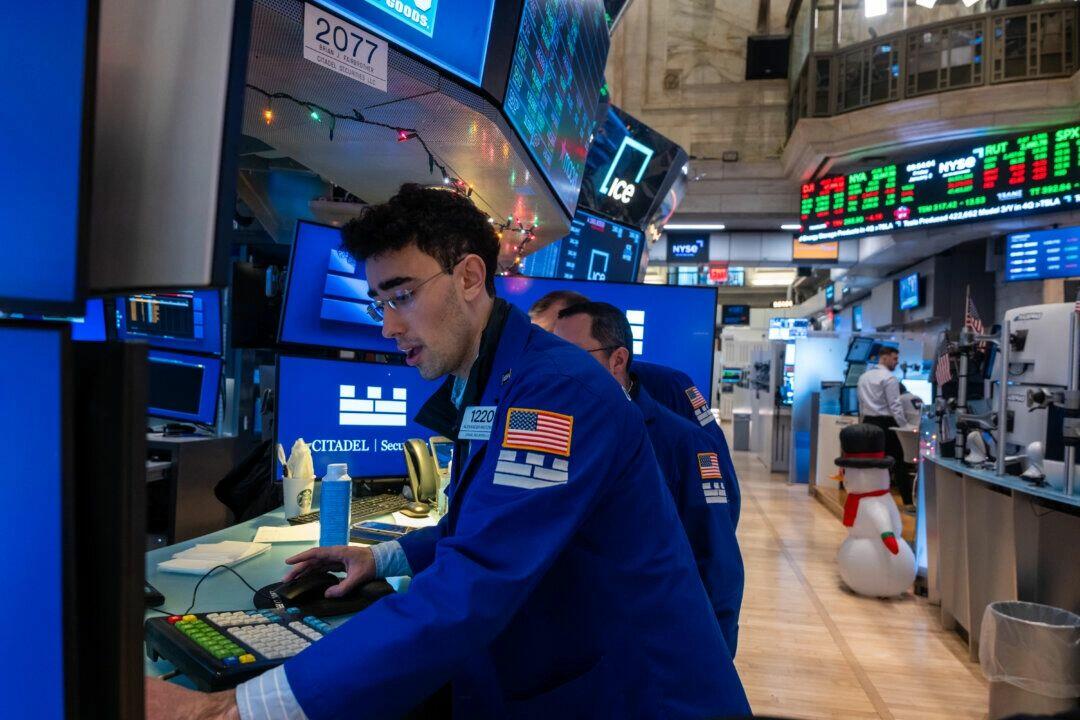
Most Americans believe that when they “buy” a stock, bond, or exchange-traded fund in a brokerage account, they become the legal owner of that security. The statement shows their name, and the shares appear as belonging to them.
Traders work on the floor of the New York Stock Exchange on Jan. 2, 2026. Spencer Platt/Getty Images
But in the modern U.S. securities system, that intuition is often wrong in the way that matters most: legal title and control. What most investors hold is not a directly owned asset recorded in their name, but a contractual claim—what the law calls a “security entitlement”—against a financial intermediary.
That may sound like semantics until one asks a simple question: In a systemic financial collapse, who is first in line to retrieve those securities? In other words, the difference between owning an asset and holding a claim can determine whether investors’ assets are legally subordinated to other claims, and whether investors recover their assets at all.
The answer depends less on what your account statement says and more on how Wall Street’s plumbing and a little-known uniform state law governing securities ownership were built to perform under stress.
The Invisible Owner of Record
For most of the history of securities markets—from English common law through much of the 20th century—investors who bought shares were recognized as their legal owners, often holding certificates in their own name. Trades were slower, more cumbersome, and paper-intensive, but ownership was straightforward. If you bought shares, you were typically the registered owner by default.
That is no longer how most securities ownership works.
The modern system is built around a centralized clearing and custody structure dominated by the Depository Trust Company (DTC), a privately owned institution controlled by the largest U.S. banks and broker-dealers. In broad terms, major brokers and banks “deposit” investors’ securities at the DTC, which holds them in pooled form. The registered owner reflected on issuer records is typically not the end investor and often not even the brokerage firm the end investor uses. It is DTC’s nominee, Cede & Co.
Here is the practical consequence: when you “own” a stock through a brokerage account, you are generally what is called a “beneficial owner” credited on your broker’s books. The owner of record is upstream, and the securities themselves sit in a centralized system designed to reduce costs and manage institutional risk—rather than to preserve clear, direct ownership for ordinary investors.
If that sounds like a technicality, think of the difference between owning a car and leasing a car. A lease can give you many of the benefits of use, but it is not the same legal relationship to the underlying property. In the same way, a security entitlement can provide financial benefits from an asset while leaving the investor multiple steps removed from legal title and direct control.
This distinction, quietly normalized over decades, has created a fragile kind of “ownership” that many investors do not understand and that policymakers have not adequately confronted. I explore these issues in greater depth in “The Next Big Crash,” a book I co-authored that examines how modern financial market structures put investors at serious risk during moments of systemic financial stress.
The Legal Structure That Decides Priority
Wall Street’s indirect holding system might be defensible if it merely replaced paper certificates with electronic records while preserving the investor’s core property rights. But that is not what happened. The deeper shift occurred in the law that governs these relationships—Article 8 of the Uniform Commercial Code (UCC)—which has been amended and adopted by every state legislature in the country.
In plain English, UCC Article 8 establishes that the securities credited to customers at a brokerage are generally not supposed to be treated as the brokerage firm’s property. That sounds comforting, until one reaches the key exception clauses in the statute, which clearly state that under certain conditions, a broker’s secured creditor gains priority over the assets of the broker’s customer.
This is not a fringe interpretation. It is explicitly stated in the law itself, which has been sharply criticized by leading securities law scholars. If a broker pledges its customers’ securities as collateral and their creditor gains legal “control,” that creditor stands ahead of the customers who bought the securities. Crucially, this applies even if brokers have acted improperly or illegally, as long as collusion with the creditor cannot be proven.
To most people, that should feel backward. If you pay for an asset, you should not lose it because your middleman used it—properly or improperly—to fund its own survival.
But under the modern regime, what many customers have is not a direct, registered ownership interest in a specific, identifiable security. Instead, they have a contractual claim defined by the intermediary system and the priority rules that put banks first during an economic crisis.
‘Customer Protection’ Is Not the Same as Ownership
Defenders of the current structure will point out that there are rules intended to protect customer assets. They are right. There are segregation requirements, reporting requirements, and oversight mechanisms. There is an entire framework that assumes customer property can be kept separate from a failing firm’s creditors.
The problem is that rules are not self-enforcing, especially in a crisis. And history shows that when financial firms face existential pressure, the temptation to treat customer property as a lifeline can become overwhelming.
The collapse of Lehman Brothers illustrates the danger. In the years leading up to its failure, Lehman routinely violated customer segregation requirements by pledging customer securities to JPMorgan Chase to secure its own borrowing. When Lehman collapsed in 2008, JPMorgan asserted secured claims over those assets, freezing large quantities of customer property inside the bankruptcy estate. Many customers did not receive their assets for nearly five years as secured creditors litigated priority over pledged customer assets.
Lehman was not an isolated case. In 2007, Sentinel Management Group commingled and pledged hundreds of millions of dollars in customer securities as collateral for a revolving credit line, triggering years of litigation over whether a bank’s secured claim could override investor rights. Most customers were not made whole for nearly a decade. And in 2011, MF Global filed false segregation reports and unlawfully tapped segregated customer accounts to meet margin calls, leaving tens of thousands of customers without access to funds they relied on for routine operations. Even when recoveries eventually occurred, the process took years.
These episodes differ in detail, but they share a theme: protections that investors assume to be absolute can fail in practice. And when they do, investors can be thrown into prolonged legal uncertainty. Even a “successful” recovery can be devastating when retirement savings, liquidity, or margin collateral are frozen for months or years.
Some readers may point to the Securities Investor Protection Corporation (SIPC) as a safeguard. SIPC does provide limited insurance when a brokerage firm fails. But like the Federal Deposit Insurance Corporation (FDIC) for banks, it was designed to manage isolated insolvencies—not systemic financial crises. Its reserves total less than $5 billion, a minuscule number compared to the tens of trillions of dollars held at major brokerage firms. More importantly, SIPC cannot prevent customer assets from being frozen or subordinated while insolvency proceedings unfold.
The uncomfortable truth is that “customer protection” in an intermediary system is not the same as being the registered owner with clear property rights. It is a set of promises and procedures that depend on compliance, monitoring, solvency, and the willingness of institutions to follow the rules when doing so is more costly than breaking them.
None of this is an argument for widespread panic, nor a claim that every investor is doomed. It is a diagnosis of a real property-rights vulnerability embedded in the architecture of modern finance.
If policymakers want markets that are resilient in the next crisis, they should start by being honest about what most investors actually “own.” Clear disclosure, access to direct ownership for those who want it, and a reexamination of legal priority rules that place intermediaries ahead of customers are not radical demands. They are basic questions of property rights, investor protection, and trust. Financial systems run on confidence, and confidence cannot rest on assumptions that quietly collapse when stress arrives.
The views and opinions expressed are those of the author. They are meant for general informational purposes only and should not be construed or interpreted as a recommendation or solicitation. The Epoch Times does not provide investment, tax, legal, financial planning, estate planning, or any other personal finance advice. The Epoch Times holds no liability for the accuracy or timeliness of the information provided.
Views expressed in this article are opinions of the author and do not necessarily reflect the views of The Epoch Times or ZeroHedge.
Tyler Durden
Thu, 02/05/2026 – 15:30
https://www.zerohedge.com/markets/you-dont-own-your-stocks-way-you-think-you-do
Homeland Security shutdown grows more likely as Republicans rebuff Democratic demands for ICE
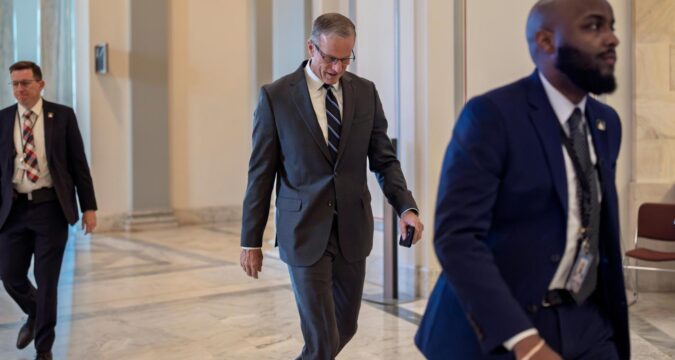
WASHINGTON — Senate Majority Leader John Thune said Thursday that demands made by Democrats for new restrictions on federal immigration officers are “unrealistic” and warned that the Department of Homeland Security will shut down next week if they do not work with Republicans and the White House.
Democrats say they will not vote for a DHS spending bill when funding runs out unless there are changes at U.S. Immigration and Customs Enforcement and other federal law enforcement agencies in the wake of the fatal shootings of two protesters in Minneapolis last month.
The Democratic leaders, Sen. Chuck Schumer and Rep. Hakeem Jeffries, released an expanded list of 10 detailed proposals on Wednesday night for restraining President Donald Trump’s aggressive campaign of immigration enforcement. Among the demands are a requirement for judicial warrants, better identification of DHS officers, new use of force standards and a stop to racial profiling.
Thune, R-S.D., said most of the demands are “very unrealistic and unserious” and he called on Democrats to negotiate.
“This is not a blank check situation where Republicans just do agree to a list of Democrat demands,” he said. “The only way to get reforms to ICE is to agree to a bill.”
Schumer, D-N.Y., said he is “astounded to hear” Republicans say his party’s proposals were political or unworkable.
“It’s about people’s basic rights, it’s about people’s safety,” Schumer said. If Republicans do not like the ideas, he said, “they need to explain why.”
As the two parties traded blame, a DHS shutdown appeared increasingly likely, starting Feb. 14. As of now, Thune said, “we aren’t anywhere close to having any sort of an agreement.”
In addition to ICE and U.S. Customs and Border Protection, the homeland security bill includes funding for the Federal Emergency Management Agency and the Transportation Security Administration. If DHS shuts down, Thune said, “there’s a very good chance we could see more travel problems” similar to the 43-day government closure last year.
Democratic demands
Schumer and Jeffries, D-N.Y., have made several demands, including no masks for officers, judicial warrants and better federal coordination with local authorities. The list they released Wednesday added several new items, including a stricter use of force policy, legal safeguards at detention centers and a prohibition on tracking protesters with body-worn cameras.
Democrats say Congress should end indiscriminate arrests, “improve warrant procedures and standards,” ensure the law is clear that officers cannot enter private property without a judicial warrant and require that before a person can be detained, it’s verified that the person is not a U.S. citizen.
They also want an end to racial profiling, saying DHS officers should be prohibited from stopping, questioning or searching people “based on an individual’s presence at certain locations, their job, their spoken language and accent or their race and ethnicity.”
For officers conducting immigration enforcement, Democrats say that in addition to officers taking off their masks and showing identification, DHS should regulate and standardize uniforms and equipment to bring them in line with other law enforcement agencies.
Republican pushback
Schumer called it a “gut check moment for Congress” as the immigration enforcement operations have rocked Minneapolis and other U.S. cities. But Republicans were dismissive.
Wyoming’s John Barrasso, the No. 2 Republican senator, said the demands are “radical and extreme” and a “far-left wish list.”
Sen. Katie Britt, who is helping lead negotiations, said it was “a ridiculous Christmas list of demands.”
“This is NOT negotiating in good faith, and it’s NOT what the American people want,” said Britt, R-Ala. “They continue to play politics to their radical base at the expense of the safety of Americans.”
Down to the last funding bill
Congress is trying to renegotiate the DHS spending bill after Trump last week agreed to a Democratic request that it be separated from a larger spending measure and extended at current levels for two weeks while the two parties negotiate. But with nearly a week gone, a shutdown is becoming increasingly likely.
Thune has encouraged Democrats and the White House to talk. It is unclear whether they are or whether Democrats would be willing to back down on any of their demands.
Some Republicans have demands of their own, including adding legislation that would require proof of citizenship before Americans register to vote and restrictions on cities that they say do not do enough to crack down on illegal immigration.
Sen. Chris Murphy, D-Conn., said it is up to Republicans to ensure the government does shut down because they are in charge.
“The American people want this abuse to stop,” Murphy said.
Some look to limit shutdown pain
Other lawmakers are searching for options to prevent another partial shutdown.
One idea being floated is to essentially fund some of the other agencies within DHS -– the Coast Guard, airport operations under TSA and disaster assistance from FEMA.
“Why not take that off the table?” said Republican Sen. Thom Tillis of North Carolina, whose state is in need of FEMA funds from recent disasters.
“If it doesn’t look like they can get it done,” he said about the immigration enforcement overhaul, “I really think they should look at a la carte funding of agencies.”
That would mean essentially cutting ICE loose by allowing it to go without its routine federal funding because the agency already has such a robust budget from Trump’s tax and spending cut bill from last year.
ICE is expected to receive about $10 billion in the annual appropriations bill, a fraction of the $175 billion-plus for homeland security for the administration’s mass deportation agenda.
https://www.chicagotribune.com/2026/02/05/homeland-security-shutdown/