
Category: News
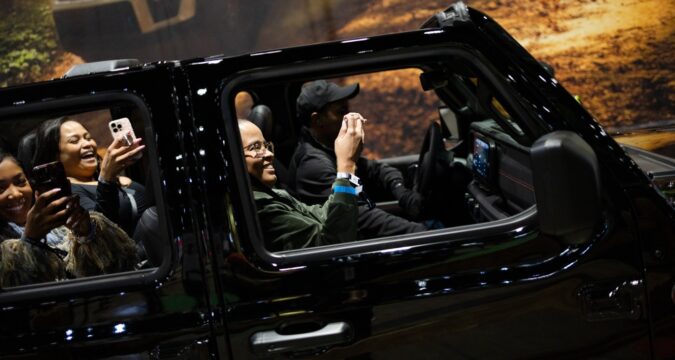
Chicago Auto Show returns with plenty of EVs and a resurgence of gas-powered muscle
In recent years, the Chicago Auto Show has been steering toward electric vehicles, following the ambitious state and national agenda to convert the industry from combustion engines to cleaner technology, incentivized by governmental tax credits and rebates.
While EVs are still center stage at the 2026 auto show, which opens today at McCormick Place, there may not be quite as much buzz this year with slumping sales and the end of federal tax credits under President Donald Trump.
In fact, some manufacturers are betting that old-school gas-burning muscle cars may steal the show.
Ford, for example, is introducing the new 2026 Mustang Dark Horse SC, which harnesses a supercharged 5.2-liter V8 and seven-speed dual-clutch transmission to create a “track-capable” supercar. No word on how many miles it gets to the gallon.
The sleek blue model on display would likely blow the doors off the 1960s muscle cars it evokes, at least on a race course, according to Ryan Shaughnessy, Mustang brand manager.
“This takes Mustang to a new level,” Shaughnessy said during the show’s Friday media preview. “This is a new performance icon for Mustang. When you compare it to cars from the ‘60s, they don’t really compare.”
Antonio Estaba, of Florida, takes a photo of the 2026 Ford Mustang Dark Horse SC during the media preview day at the 2026 Chicago Auto Show at McCormick Place on Feb. 6, 2026. (Josh Boland/Chicago Tribune)
A more apt comparison for the Michigan-built Mustang might be the racing movie “Ford v Ferrari.”
“It is intended to go after Europe’s elite sports car competition, like Porsche and Mercedes, and to beat them,” Shaughnessy said.
Closer to home, the automaker is also showcasing the Chicago-made 2026 Ford Explorer Tremor, a full-size SUV featuring a 3.0-liter EcoBoost V6 producing 400 horsepower. The Explorer is built at the century-old Chicago Assembly Plant on the city’s Southeast Side.
Stellantis, which went on hiatus in 2024 but returned last year, is back again for the 2026 Chicago Auto Show. That means the return of its Jeep, Chrysler, Dodge, Fiat and Ram vehicles and the popular Camp Jeep test track, long an auto show favorite.
One attention-grabbing model is the 2027 Ram 1500 SRT TRX, billed as the “fastest, most powerful production gas pickup truck in the world,” featuring a supercharged 6.2-liter HEMI V-8, delivering 777 horsepower and 680 pound-feet of torque.
“It’s the most powerful production gas pickup truck ever,” said Noah Thanos, a Ram spokesperson.
The display model sported a colorful red and black paint scheme dubbed Bloodshot Night, with a sticker price around $100,000. Thanos said dealers will be taking orders soon and the trucks will be delivered in the second half of the year.
While it is a fully functional pickup truck, the target customer is not likely to be hauling hay, Thanos said.
“This is the person that really craves extreme performance,” Thanos said. “I’d say, if you’re getting the Bloodshot Night edition, you’re also someone that likes to be seen. It’s not exactly a subtle vehicle in the best way possible.”
The exterior of the 2026/2027 Ram 1500 SRT TRX Bloodshot Night Edition during the media preview day at the 2026 Chicago Auto Show at McCormick Place on Feb. 6, 2026, in Chicago. (Josh Boland/Chicago Tribune)
Zach Morehouse, left, and his husband, Christopher Beale, of Georgia, look at the 2026 Jeep Cherokee Hybrid during the media preview day at the 2026 Chicago Auto Show at McCormick Place on Feb. 6, 2026. (Josh Boland/Chicago Tribune)
Stellantis is also featuring the all-new 2026 Jeep Cherokee, a model formerly built in Belvidere, Illinois. In February 2023, Stellantis idled the assembly plant near Rockford and laid off its last 1,200 workers after halting production of the Cherokee amid dwindling sales. The new Cherokee is now built in Toluca, Mexico.
Redesigned inside and out, the biggest change is under the hood, with a fully hybrid, 1.6-liter turbo four-cylinder engine. The new SUV is hitting dealerships now with a starting price of about $37,000. Down the road, the new Cherokee will once again be built in Belvidere.
In October, Stellantis announced plans to invest more than $600 million to reopen the Belvidere plant and expand production of the Jeep Cherokee and Compass, with an initial launch expected in 2027. Retooling at the plant will begin later this year, according to Kelley Enright, a Stellantis spokesperson.
Meanwhile, there are still plenty of EVs on display at the auto show, but momentum may have stalled under the Trump administration.
EV sales hit a record 1.3 million units in 2024, accounting for 8.1% of total auto sales in the U.S., according to Cox Automotive’s Kelley Blue Book. But last year, EV demand declined to 7.8% of total sales, falling off a cliff in the fourth quarter with the end of a $7,500 federal tax credit as part of Trump’s “one big beautiful bill,” which eliminated the Biden-era EV incentive.
As buyers raced to take advantage of the expiring federal tax credits, EV sales peaked at 10.5% of the total new car market in the third quarter of 2025, before plunging to 5.8% in the fourth quarter, according to Cox.
That may be the new normal as the EV market resets to a market driven by organic growth, not incentives. EV sales are expected to account for about 6% of total new car sales in 2026, according to Edmunds.
A custom plushie of Matt Conger’s 1991 Toyota MR2 Turbo sits on top of his car during the media preview day at the 2026 Chicago Auto Show at McCormick Place on Feb. 6, 2026. (Josh Boland/Chicago Tribune)
Total new car sales are expected to decline slightly from 16.3 million in 2025 to 16 million vehicles this year, Edmunds projects.
While the 2026 auto show still features an EV test track and a number of manufacturers, it is perhaps emblematic that homegrown Rivian, which made its first appearance at last year’s show, is notably absent. California-based Rivian is gearing up to begin production of its new midsize R2 SUV at its downstate Normal plant during the first half of the year.
Other highlights at this year’s auto show include the return of Ford’s Built Wild track, where Bronco SUVs are put through their paces on something resembling a roller coaster ride.
A new feature, Chi-Town Alley, is an immersive exhibit celebrating local car enthusiasts and their custom rides.
Matt Conger, 54, of West Chicago, brought his 35-year-old Toyota MR2 to the show to participate in the Chi-Town Alley display. Under his meticulous care, the gleaming red sports car has been souped up to generate 400-horsepower turbo performance, but retains much of the original features and feel.
A business analyst at Empire Carpet, Conger said it helps to be an “anal SOB” to keep his car in pristine shape for more than three decades of Chicago ownership.
“If you look at the miles, it’s got 160,000 miles on it,” said Conger. “So I do drive it. But I treat it like a motorcycle. It only comes out in good weather.”
The 118th Chicago Auto Show runs Saturday through Feb. 16 at McCormick Place.
https://www.chicagotribune.com/2026/02/07/chicago-auto-show-evs-muscle-cars/
Donald York, University of Chicago astronomer who co-founded the Sloan Digital Sky Survey, dies at 81
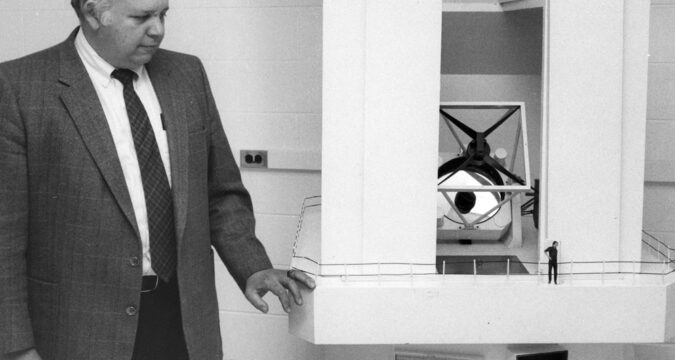
Donald G. York was a longtime University of Chicago astronomer and astronomy professor who co-founded the Sloan Digital Sky Survey, a wide-ranging mapping of the solar system that produced a three-dimensional map of a large fraction of the sky.
York, considered a visionary within his field, was behind several key innovations in the lead-up to creating the Sloan Digital Sky Survey. He helped build the Apache Point Observatory in New Mexico, and he then led the construction of a modular telescope there that enabled researchers to swap out different instruments and then to use it remotely from any location in the world.
With the Sloan Digital Sky Survey, York then marshaled forces to create one single telescope that could map hundreds of millions of objects in the sky — a central telescope systematically scanning the sky, and then releasing massive quantities of data publicly available to any scientist.
“Leading large astronomy collaborations of academics with strongly held ideas of how projects should proceed is challenging,” said Edward “Rocky” Kolb, a U. of C. professor of astronomy and astrophysics. “York was adept at herding the cats and keeping people on task.”
York, 81, died of complications from chronic diseases on Dec. 26 at his home in Ann Arbor, Michigan, said his wife of nearly 60 years, Anna. He had been a longtime Hyde Park resident before moving to Ann Arbor in 2023.
Born in Shelbyville, Illinois, in 1944 to an accountant father and a homemaker mother, York moved with his family to Terre Haute, Indiana, at age 8 to live with his grandparents after his father’s death.
After graduating from Terre Haute’s Wiley High School, where he played football for three years, York earned a bachelor’s degree in physics in 1966 from the Massachusetts Institute of Technology, where he played rugby. He then got a Ph.D. in astronomy in 1971 from the U. of C., spending 3½ years at the famed Yerkes Observatory in Williams Bay, Wisconsin.
York started his career as a research fellow at Princeton University — where he worked with noted astronomer Lyman Spitzer — and was part of a team that worked on the NASA satellite Orbiting Astronomical Observatory 3, which was launched in 1972 and known after its launch as Copernicus.
While working on Copernicus, York was the first researcher to find an isotope of hydrogen known as deuterium inside these clouds. Up to that point, deuterium had been known theoretically but never observed. That discovery was crucial in giving researchers an understanding of less-visible matter in the cosmos, known now as dark matter and dark energy.
“That helped to settle the question of whether the universe was expanding or contracting — a major scientific question at that time,” his wife said of the now-known expansion.
In 1982, York took a tenured professor job at the U. of C., working in the same department as a fellow MIT rugby player, then-University of Chicago astronomy and astrophysics department chair David Schramm. Several years later, York helped build the Apache Point Observatory in New Mexico, which was created by a consortium of universities, including the U. of C., and he also served as the 3.5-meter telescope’s founding director.
Still, York and other astronomers yearned for more. He began to develop the outlines of a project involving another telescope — also to be located at Apache Point — that would scan the sky and collect calibrated and standardized data.
The concept turned into the Sloan Digital Sky Survey, which began collecting data in 1998 and has contributed to more than 12,000 scientific papers so far. Named for the Alfred P. Sloan Foundation, the dedicated optical telescope gathered massive amounts of data during its initial 11-year collection period, including of objects from 7 billion years ago.
Publicly available, the Sloan Digital Sky Survey’s data can help any scientist at any career stage. Among its discoveries: There are black holes at the center of every massive galaxy; the Milky Way has adjoining dwarf companion galaxies around it; and galaxies have dark matter “halos” around them. The data also have allowed researchers to study supernovae and ripples from the so-called Big Bang.
Professor Don York in 2014. (Shaun Sartin/University of Chicago)
Aided by the survey, York also pursued his own research questions, including unidentified diffuse interstellar bands and cataloguing the spectra, or brightness at different wavelengths, of quasi-stellar objects to study the three-dimensional distribution of intergalactic gas.
York published about 600 peer-reviewed academic papers — drawing more than 100,000 citations — and in 2012 he co-edited the book “The Astronomy Revolution: 400 Years of Exploring the Cosmos.”
“(Don) was able to see the potential in astronomy projects far down the road, willing to invest immense effort to get there and tolerating whatever length of time it took,” said longtime U. of C. astronomy and astrophysics professor Rich Kron, a friend and fellow co-founder of the Sloan Digital Sky Survey.
“Before the Sloan Digital Sky Survey, astronomical research was pursued by small groups working independently,” Kron said. “The Sloan Digital Sky Survey demonstrated the power of large collaborations of institutions and scientists to pursue deep questions at a scale not otherwise possible. He was able to build a culture that got scientists to work together toward a single goal.”
In a 2021 interview with the U. of C.’s news office, York discussed the silo-like nature of astronomy research in the 1980s.
“At the time, you would apply for observing time at a public telescope and might get six nights a year at best,” York said. “And no two researchers would want to use their time the same way or take the same approach, so getting together a precise survey of 1 million objects was close to impossible. But our idea was that this would be a dedicated project with everyone pooling resources and all the data would be available to everyone involved.”
The success of the Sloan Digital Sky Survey “rippled through astronomy and changed how astronomy was done,” Anna York said.
A product of public schooling, York was the prime mover behind an initiative begun in 1996 to connect 24 public schools in the neighborhood around the U. of C. with the internet. York co-founded the collaboration, known as the Chicago Public Schools/University of Chicago Internet Project, with an eye toward making sure that public schoolchildren were not left behind in an increasingly technologically-oriented world.
“He believed in public education and saw schools as the key to creating more fairness, opportunity and justice in this world. Don was the greatest champion for our local schools and Chicago’s young people,” said Shaz Rasul, who worked on the project from 2001 until 2010 before working in the university’s office of civic engagement. “He wanted to make sure that there would be no digital divide and the opportunities that the Internet would create would be accessible to all.”
From 1996 until 2016, York and Rasul focused on four areas, including physical technology aspects like wiring, power, the computers themselves and keeping them working, and on helping teachers understand how to integrate such technologies into their curricula and classroom practices.
They also built a library of resources to combat misinformation, and they created partnerships with museums and other cultural centers to allow teachers and students to digitally engage with their collections.
“Don dreamed big, brought the right people together and rolled up his sleeves to make things happen,” Rasul said. “He always thought that the university had an opportunity to do great good in partnership with the community, and his work is an example of how to make that a reality.”
York retired from the U. of C. about a decade ago. Outside of work, he enjoyed camping, hiking, spending time with family and being a regular part of Ellis Avenue Church and the Hyde Park Union Church.
In addition to his wife, York is survived by four children, Sean, Maurice, Chandler and Jeremy; six grandchildren; and a sister, Diana Wortham.
A service will take place June 13 at the Hyde Park Union Church, 5600 S. Woodlawn Ave., Chicago.
Bob Goldsborough is a freelance reporter.
https://www.chicagotribune.com/2026/02/07/donald-g-york-obituary/
India y EEUU presentan un marco para acuerdo comercial provisional y reducción de aranceles
Por AIJAZ HUSSAIN
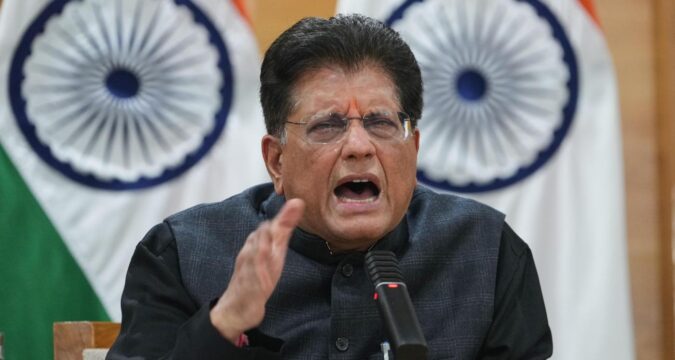
NUEVA DELHI (AP) — India y Estados Unidos han hecho público un marco para un acuerdo comercial provisional que busca reducir los aranceles sobre los productos indios, que según la oposición india favorecer a Washington.
El comunicado conjunto, publicado el viernes, se dio a conocer después de que el presidente de Estados Unidos, Donald Trump, anunciase la semana pasada su plan para reducir los aranceles de importación al país del sur de Asia, seis meses después de imponer gravámenes elevados para presionar a Nueva Delhi a reducir su dependencia del crudo ruso barato.
Bajo el acuerdo, los aranceles a los productos indios pasarán del 25% al 18% luego de que el primer ministro, Narendra Modi, acordara dejar de comprar petróleo ruso, según había indicado Trump.
Washington y Nueva Delhi calificaron el acuerdo de “recíproco y mutuamente beneficioso”, y expresaron su compromiso para trabajar hacia un acuerdo comercial más amplio que “incluirá compromisos adicionales de acceso al mercado y apoyará cadenas de suministro más resistentes”. El marco indicaba que serán necesarias más negociaciones para formalizar el acuerdo.
India también “eliminará o reducirá los aranceles” a todos los productos industriales estadounidenses y a una amplia gama de productos alimenticios y agrícolas, de acuerdo con el comunicado del viernes.
Trump señaló en su momento que India comenzaría a reducir sus aranceles a productos estadounidenses a cero y haría compras por valor de 500.000 millones de dólares en cinco años, como parte de los esfuerzos de la Casa Blanca para buscar un mayor acceso al mercado y la eliminación de las tarifas para casi todas sus exportaciones.
El presidente de Estados Unidos firmó también el viernes una orden ejecutiva que revoca otro arancel del 25% a productos indios impuesto el año pasado.
Modi dio las gracias al mandatario estadounidense “por su compromiso personal con unos lazos sólidos”.
“Este marco refleja la creciente profundidad, confianza y dinamismo de nuestra asociación”, dijo Modi en las redes sociales, añadiendo que reforzará “aún más las asociaciones de inversión y tecnología entre nosotros”.
La oposición india ha criticado en gran medida el acuerdo, alegando que favorece principalmente a Estados Unidos y tiene un impacto negativo en sectores sensibles como la agricultura. En el pasado, Nueva Delhi se había opuesto a los aranceles en sectores como la agricultura y los productos lácteos, que emplean a la mayor parte de la población del país.
India y la Unión Europea alcanzaron recientemente un acuerdo de libre comercio que podría afectar a hasta 2.000 millones de personas después de casi dos décadas de negociaciones. El pacto permitiría el libre comercio de casi todos los productos entre los 27 socios del bloque europeo e India, desde textiles hasta fármacos, y reducirá los elevados aranceles para el vino y los autos europeos.
India también firmó un acuerdo de asociación económica integral con Omán en diciembre y concluyó las conversaciones para un acuerdo de libre comercio con Nueva Zelanda.
___
Esta historia fue traducida del inglés por un editor de AP con la ayuda de una herramienta de inteligencia artificial generativa.
Today in History: Great Baltimore Fire begins
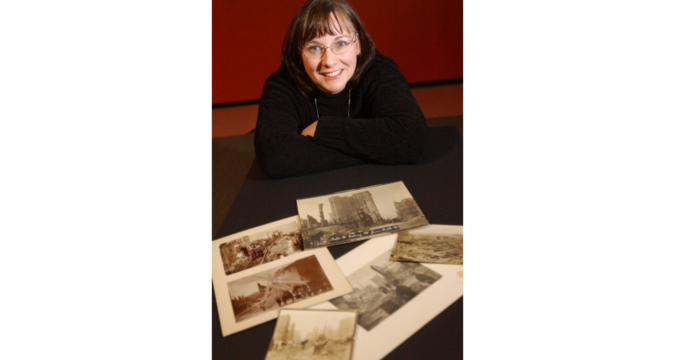
Jeannine A. Disviscour, curator at the Maryland Historical Society, sits Tuesday, Jan. 20, 2004, in Baltimore with photographs of the city’s Great Fire of 1904. (AP Photo/ Steve Ruark)
Today is Saturday, Feb. 7, the 38th day of 2026. There are 327 days left in the year.
Today in history:
On Feb. 7, 1904, the Great Baltimore Fire began; one of the worst city fires in American history, it destroyed over 1,500 buildings in central Baltimore.
Also on this date:
In 1943, the U.S. government announced that wartime rationing of shoes made of leather would soon take effect, limiting the number of pairs a person could buy each year. (Rationing was lifted in 1945 after World War II ended.)
In 1964, the Beatles were met by thousands of screaming fans at New York’s John F. Kennedy International Airport as they arrived to begin their first American tour.
In 1971, women in Switzerland gained the right to vote through a national referendum, 12 years after a previous attempt failed.
In 1984, space shuttle Challenger astronauts Bruce McCandless II and Robert L. Stewart went on the first untethered spacewalk.
In 1991, Jean-Bertrand Aristide was inaugurated as the first democratically elected president of Haiti. (He was overthrown by the military the following September.)
In 1999, Jordan’s King Hussein died of cancer at age 63; he was succeeded by his eldest son, Abdullah.
In 2013, Mississippi certified its ratification of the 13th Amendment to the U.S. Constitution, making it the last state to officially abolish slavery.
In 2021, after moving south to a new team and conference, Tom Brady led the Tampa Bay Buccaneers to a 31-9 Super Bowl victory over the Kansas City Chiefs on the Buccaneers’ home field.
Related Articles
Today in Chicago History: John Wayne Gacy ‘killed people like he was swatting flies,’ prosecutor says at trial’s opening
Today in History: Washington National Airport renamed for Ronald Reagan
Vintage Chicago Tribune: Our local Winter Olympians of Games past
New Lenox researcher highlights Lockport’s abolitionist connections
Scottie Pippen auctioning $6 million of personal memorabilia
In 2023, LeBron James passed Kareem Abdul-Jabbar to become the NBA’s all-time career scoring leader.
Today’s birthdays: Author Gay Talese is 94. Sen. John Hickenlooper, D-Colo., is 74. Actor James Spader is 66. Country singer Garth Brooks is 64. Actor-comedian Eddie Izzard is 64. Actor-comedian Chris Rock is 61. Actor Essence Atkins is 54. Basketball Hall of Famer Steve Nash is 52. Actor Ashton Kutcher is 48. Actor Deborah Ann Woll is 41. NFL quarterback Matthew Stafford is 38. NHL forward Steven Stamkos is 36. Race car driver Pierre Gasly is 30. Singer Bea Miller is 27.
https://www.chicagotribune.com/2026/02/07/today-in-history-great-baltimore-fire-begins/
Today in Chicago History: Michael Jordan signs baseball contract with White Sox
Here’s a look back at what happened in the Chicago area on Feb. 7, according to the Tribune’s archives.
Is an important event missing from this date? Email us.
Front page flashback: Feb. 8, 1968
Flames engulf the Mickelberry Food Products Co. building on Feb. 7, 1968, in Chicago. (Chicago Tribune)
1968: Nine people, including four firefighters, were killed when a series of late-afternoon explosions ripped through the general offices of Mickelberry Food Products Co. on the South Side. The fire started when a gasoline tanker truck making a delivery in the alley behind the plant started leaking. The gas flowed through a doorway and into the basement, where the building’s boiler was located.
Weather records (from the National Weather Service, Chicago)
High temperature: 59 degrees (1925)
Low temperature: Minus 10 degrees (1875)
Precipitation: 1.34 inches (1881)
Snowfall: 8.6 inches (1933)
1865: Gov. Richard J. Oglesby signed a bill repealing Illinois’ 1853 “Black Law” that prohibited Black people from coming into the state.
Su-Lin, a baby giant panda, and her captor, Ruth Harkness of New York, in 1936. Harkness sold Su-Lin to the Brookfield Zoo in Chicago for $20,000. Su-Lin died in 1938. (Chicago Tribune archive)
1937: Su-Lin, the first panda brought to the U.S. to live in captivity, arrived at Brookfield Zoo.
The animal died of pneumonia the following year. It is now part of the Field Museum’s taxidermy collection.
1969: Led Zeppelin’s Chicago debut at Kinetic Playground came less than two months after its first American gig and three weeks after its first U.S. show as a sole headliner that, of all places, happened in Iowa City, Iowa, when the band stepped up after Count Basie canceled his date at the students’ union.
The two February performances at Kinetic Playground marked the first of eight the band played in 1969 alone at the venue that stood at 4812 N. Clark St. Sandwiched in the middle of a lineup that featured headliner Vanilla Fudge and opener Jethro Tull, Led Zeppelin drew positive reviews from the Tribune in its “The Sound” column, branded “music and radio: for young listeners.”
1987: Michael Jordan soared to his first of back-to-back slam dunk-contest victories at the NBA All-Star Weekend in Seattle.
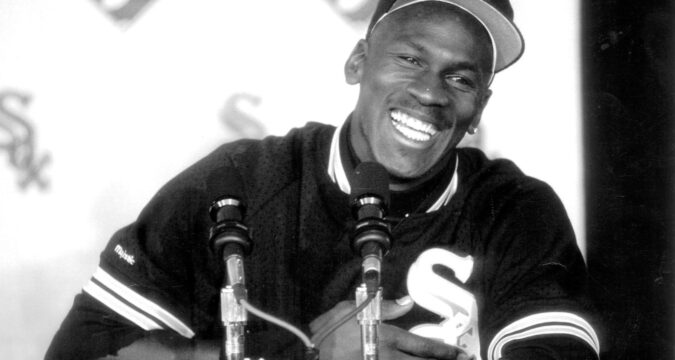
“As cameras clicked and flashed and videocams videoed, Michael Jordan signed a baseball contract,” the Tribune reported about the retired basketball player’s move to the Chicago White Sox on Feb. 7, 1994. (Chicago Tribune)
1994: Jordan signed a minor-league deal with the Chicago White Sox four months after he retired from professional basketball.
Want more vintage Chicago?
Subscribe to the free Vintage Chicago Tribune newsletter, join our Chicagoland history Facebook group, stay current with Today in Chicago History and follow us on Instagram for more from Chicago’s past.
Have an idea for Vintage Chicago Tribune? Share it with Kori Rumore and Marianne Mather at krumore@chicagotribune.com and mmather@chicagotribune.com
https://www.chicagotribune.com/2026/02/07/february-7-chicago-history/
Afiliado a Estado Islámico reivindica atentado suicida con 31 muertos en mezquita chií en Pakistán
Por MUNIR AHMED y MUHAMMAD YOUSAF
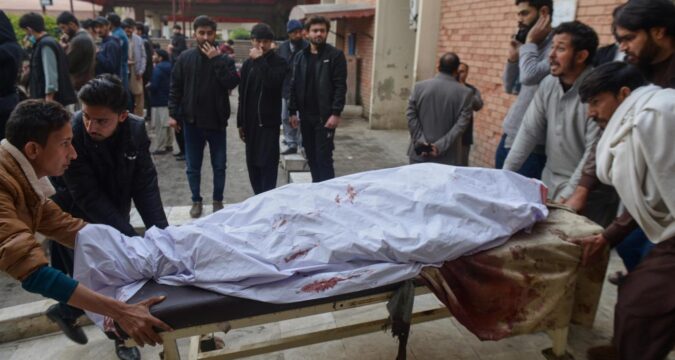
ISLAMABAD (AP) — Una filial del grupo extremista Estado Islámico se atribuyó durante la noche la autoría de un ataque suicida en el interior de una mezquita chií a las afueras de la capital de Pakistán que dejó al menos 31 fallecidos y 169 heridos, mientras los dolientes se reunían el sábado bajo estrictas medidas de seguridad en el mismo lugar para los funerales de las víctimas.
La rama regional de EI, llamada Estado Islámico en Pakistán, reclamó la responsabilidad en un comunicado publicado por su agencia noticiosa, Amaq. De acuerdo con la nota, el atacante llegó, abrió fuego contra los guardias de seguridad que intentaron detenerlo en la puerta principal y detonó su chaleco explosivo tras llegar a la puerta interior de la mezquita.
Estado Islámico sugirió que considera a los chiíes paquistaníes objetivos legítimos, calificándolos de “reserva humana” que proporciona reclutas a las milicias chiíes que combaten contra la milicia radical en Siria.
El ataque del viernes fue el más letal en Islamabad desde un atentado suicida en el Hotel Marriott que mató a 63 personas e hirió a más de 250 en 2008. En noviembre, un suicida se cobró la vida de 12 personas al inmolarse en el exterior de tribunal en la capital.
El último incidente se produce mientras el gobierno del primer ministro, Shehbaz Sharif, hace frente a un repunte de los ataques insurgentes en todo el país. Según las autoridades, el atacante era un ciudadano paquistaní que había viajado recientemente a Afganistán.
Varios sospechosos, entre los que estaban el hermano, la madre y otros familiares del suicida, fueron arrestados en redadas nocturnas en Islamabad y en el noroeste del país, y un policía murió en la operación, agregaron las autoridades.
Más de 2.000 personas se congregaron mientras los ataúdes de los fallecidos eran llevados a la mezquita para los funerales. Altos cargos del gobierno y líderes de la comunidad chií asistieron a los funerales de alrededor de una docena de víctimas. Los de las demás se celebrarán en sus ciudades natales.
Estado Islámico es una milicia radical suní que ha atacado a la minoría chií paquistaní en el pasado, aparentemente con el objetivo de avivar las divisiones sectarias en la nación de mayoría suní. En 2022 reclamó la autoría de un atentado suicida en una mezquita chií de la ciudad noroccidental de Peshawar que causó al menos 56 fallecidos y 194 heridos.
El ministro de Defensa, Khawaja Mohammad Asif, dijo a reporteros el viernes que el ataque indica que los insurgentes con base en Pakistán que operan desde Afganistán podían atacar incluso la capital.
Sus declaraciones provocaron una respuesta contundente del gobierno talibán de Afganistán.
En un comunicado, el Ministerio de Defensa afgano condenó el ataque a la mezquita en Islamabad y apuntó que el ministro paquistaní de Defensa había vinculado “irresponsablemente” el ataque a Kabul. Pakistán suele acusar a Afganistán —donde el Talibán regresó al poder en agosto de 2021— de dar cobijo a insurgentes, incluyendo a miembros del Talibán paquistaní. Kabul niega las acusaciones.
El atentado en la mezquita también fue condenado por la comunidad internacional, incluidos Estados Unidos, Rusia y la Unión Europea.
Sharif dijo que estaba agradecido por los mensajes y apoyo recibidos “de todo el mundo” tras lo que calificó como un “desgarrador ataque suicida en Islamabad”. Además, indicó que el respaldo internacional seguía siendo fundamental para los esfuerzos antiterroristas de Pakistán y prometió que los autores serían llevados ante la justicia.
Aunque la capital ha registrado relativamente pocos ataques en comparación con otras regiones, el país ha experimentado un reciente repunte de la violencia militante. Gran parte se ha atribuido a separatistas baluchis y al Talibán paquistaní, conocido como Tehrik-e-Taliban Pakistan o TTP, un grupo independiente aunque aliado del afgano.
___
Los periodistas de The Associated Press Samy Magdy en El Cairo, Egipto; Riaz Khan y Rasool Dawar en Peshawar, Pakistán, e Ishtiaq Mahsud en Dera Ismail Khan, Pakistán, contribuyeron a este despacho.
___
Esta historia fue traducida del inglés por un editor de AP con la ayuda de una herramienta de inteligencia artificial generativa.

Zelenskyy dice que EEUU dio a Ucrania y Rusia de plazo hasta junio para acordar final de la guerra
Estados Unidos ha dado a Ucrania y Rusia un plazo hasta junio para llegar a un acuerdo que ponga fin a la guerra de casi cuatro años, dijo el presidente de Ucrania, Volodymyr Zelenskyy, a reporteros.
Si no se cumple el plazo, es probable que el gobierno del presidente Donald Trumo presione a Kiev y Moscú para que lo hagan, añadió.
“Los estadounidenses proponen que las partes pongan fin a la guerra para principios de verano y probablemente ejercerán presión sobre las partes precisamente según este calendario”, afirmó Zelenskyy el viernes. Sus comentarios estaban embargados hasta el sábado por la mañana.
“Y dicen que quieren hacerlo todo antes de junio. Y harán todo lo posible para terminar la guerra. Y quieren un calendario claro de todos los acontecimientos”, indicó.
Zelenskyy apuntó que Estados Unidos propuso celebrar la próxima ronda de conversaciones trilaterales la próxima semana en el país por primera vez, probablemente en Miami. “Confirmamos nuestra participación”, manifestó el mandatario.
El anuncio del último plazo se produce tras las conversaciones trilaterales mediadas por Washington en Abu Dabi, que no lograron avances, ya que tanto el Kremlin como Kiev se aferran a exigencias que son mutuamente excluyentes. Rusia presiona a Ucrania para que se retire del Donbás, donde los combates siguen siendo intensos, una condición que Kiev dice que nunca aceptará.
___
Esta historia fue traducida del inglés por un editor de AP con la ayuda de una herramienta de inteligencia artificial generativa.
Zelenskyy dice que EEUU dio a Ucrania y Rusia hasta junio de plazo para acordar fin de la guerra de casi cuatro años
KIEV, Ucrania (AP) — Zelenskyy dice que EEUU dio a Ucrania y Rusia hasta junio de plazo para acordar fin de la guerra de casi cuatro años.
Gobierno debe pactar el derecho de detenidos en centro de ICE de Minnesota a un abogado, dice juez
Por STEVE KARNOWSKI
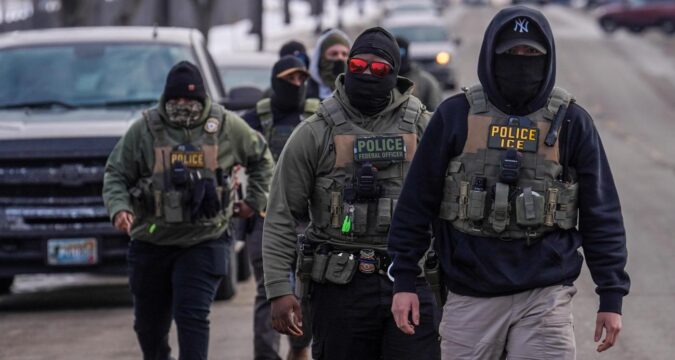
MINNEAPOLIS, Minnesota, EE.UU. (AP) — Los abogados del gobierno federal de Estados Unidos tienen hasta el jueves para llegar a un acuerdo con los abogados de derechos humanos que buscan garantizar el derecho a la representación legal de los detenidos en un centro del Servicio de Inmigración y Control de Aduanas (ICE, por sus siglas en inglés) en Minnesota, dijo una jueza el viernes.
Según activistas, a las personas retenidas en el centro ubicado a las afueras de Minneapolis y que enfrentan una posible deportación, se les niega un acceso adecuado a abogados, incluyendo reuniones presenciales. El abogado Jeffrey Dubner indicó que a los detenidos se les permite hacer llamadas telefónicas, pero el personal de ICE suele estar cerca.
La jueza de distrito de Estados Unidos Nancy Brasel dijo a la abogada del Departamento de Justicia, Christina Parascandola, que parecía haber una “gran desconexión fáctica” entre lo que alegan los abogados de derechos humanos y las afirmaciones del gobierno sobre el acceso a la representación legal en lo que ICE describe como un centro de detención temporal.
Parascandola indicó que los detenidos en el centro tienen acceso a abogados y a llamadas telefónicas no supervisadas en cualquier momento y durante el tiempo que necesiten. Admitió que nunca había estado en las instalaciones.
Brasel calificó su argumento como “difícil de vender”, y señaló que en el expediente del caso había muchas más pruebas que respaldaban las afirmaciones de los demandantes que las garantías del gobierno.
“La diferencia es tan enorme que no sé cómo la van a cerrar”, dijo la jueza.
En lugar de dictar sentencia en el momento, Brasel pidió a ambas partes que sigan reuniéndose con un juez retirado que actúa como mediador y que ya ha ayudado a reducir algunas de las diferencias. Al inicio de la audiencia, señaló que ambas partes coincidieron en que, constitucionalmente, es necesario “cierto grado de acceso razonable” a una asistencia letrada, pero que diferían en los detalles acerca de cómo debería ser.
Si no llegan al menos a un acuerdo parcial antes de las cinco de la tarde del jueves 12 de febrero, la jueza emitirá su orden. No especificó cuál sería su fallo.
Congresista denuncia las condiciones en el centro de detención
Las instalaciones están en el Edificio Federal Bishop Henry Whipple, que es un centro de operaciones del ICE y ha sido escenario de frecuentes protestas.
Kelly Morrison, diputada federal demócrata por Minnesota, afirmó en un comunicado el viernes que las condiciones en el centro de detención continúan siendo malas. Morrison, médico de profesión, explicó que durante su visita el jueves por la noche, se enteró de que no había protocolos para evitar la propagación del sarampión al estado desde Texas. Esta semana se reportaron al menos dos casos en un importante centro de detención de la agencia federal en Texas.
Algunos detenidos de Minnesota, incluyendo familias con niños, han sido enviados a las instalaciones en Texas, y algunos han regresado al estado tras la intervención de los jueves, incluyendo Liam Conejo Ramos, de cinco años, y su padre.
“Está absolutamente claro que Whipple no está en absoluto equipado para manejar lo que la administración Trump está haciendo con su cruel y caótica ‘Operación Metro Surge’”, dijo Morrison en la nota. “Estoy asombrada por la incapacidad o falta de voluntad de los agentes federales para responder algunas de las preguntas más básicas sobre sus operaciones y protocolos”.
Aunque un juez federal dictaminó el lunes que los congresistas tienen derecho a realizar visitas no anunciadas a las instalaciones del ICE, Morrison indicó en su comunicado que los agentes intentaron negarle la entrada durante casi media hora y exigieron que se fuera antes de dejarla entrar.
En su primer intento de acceder el mes pasado, Morrison y las representantes demócratas de Minnesota, Ilhan Omar y Angie Craig, fueron rechazadas.
Después de su visita del fin de semana pasado, Morrison afirmó que no se estaba ofreciendo una atención médica real a los retenidos en el centro.
Craig y la representante demócrata Betty McCollum dijeron que se les impidió el paso a pesar de la orden judicial cuando intentaron visitar la instalación durante la noche.
“Hemos escuchado innumerables reportes de que los detenidos están en condiciones insalubres en Whipple”, afirmaron las dos disputadas en un comunicado. “Tenemos todas las razones para creer que esta administración está mintiendo descaradamente una vez más y tratando de ocultar lo que todos sabemos que es cierto: que están ignorando el debido proceso y tratando a los migrantes como peones políticos, no como personas”.
Acusado de delito grave por destruir escultura contra ICE
Un partidario de la campaña migratoria que publicó un video en redes sociales en el que aparecía derribando una escultura anti-ICE frente al Capitolio estatal en St. Paul quedó en libertad el viernes tras ser acusado de un delito grave de daños a la propiedad.
El teniente Mike Lee, vocero de la Patrulla Estatal de Minnesota, dijo que la seguridad del Capitolio vio a Jake Lang, de 30 años y natural de Lake Worth, Florida, dañando la instalación el jueves por la tarde. Fue arrestado cerca del lugar. La escultura de hielo decía “Procute ICE” (“Enjuicien a ICE”).
En su primera comparecencia ante el tribunal, Lang quedó en libertad a la espera de juicio, pero se le prohibió acercarse a menos a tres cuadras del Capitolio. Los registros judiciales no mencionan a ningún abogado que pudiese realizar declaraciones en su nombre.
Lang fue silenciado por una gran multitud el mes pasado cuando intentó organizar una pequeña manifestación en Minneapolis en apoyo a la campaña gubernamental. Había sido acusado de agredir a un agente y de otros delitos antes de recibir un indulto el año pasado como parte de la intervención de Trump en nombre de los acusados por la rebelión del 6 de enero.
___
Esta historia fue traducida del inglés por un editor de AP con la ayuda de una herramienta de inteligencia artificial generativa.
Ataque de grupo paramilitar sudanés con dron deja 24 muertos, incluidos 8 niños, según grupo médico
Associated Press
EL CAIRO, Egipto (AP) — Un ataque con drones perpetrado por un conocido grupo paramilitar alcanzó el sábado un vehículo en el que viajaban familias desplazadas en el centro de Sudán y mató al menos a 24 personas, entre las que había ocho niños, según un grupo de médicos.
El operativo de las Fuerzas de Apoyo Rápido ocurrió cerca de la ciudad de Rahad, en la provincia de Kordofán del Norte, indicó la Red de Médicos de Sudán, que monitorea la guerra en la nación africana.
El vehículo llevaba a desplazados que huyeron de los combates en la zona de Dubeiker, en Kordofán del Norte, señaló el grupo en un comunicado. Entre los menores fallecidos había dos bebés, agregó.
La Red de Médicos de Sudán instó a la comunidad internacional y a las organizaciones de derechos humanos a “tomar medidas inmediatas para proteger a la población civil y responsabilizar directamente a la dirección de las FAR por estas violaciones”.
Las FAR, que llevan unos de tres años en guerra con el ejército sudanés por el control del país, no realizaron comentarios.
Sudán se sumió en el caos en abril de 2023, cuando una lucha de poder entre militares y paramilitares estalló en combates directos en la capital, Jartum, y en otras partes del país.
La devastadora guerra se ha cobrado la vida de más de 40.000 personas, según las cifras de Naciones Unidas. Pero los grupos humanitarios apuntan que el dato real podría ser muchas veces mayor.
El conflicto ha provocado la mayor crisis humanitaria en el mundo con más de 14 millones de personas obligadas a abandonar sus hogares. Además, ha alimentado brotes de enfermedades y ha empujado a partes del país a la hambruna.
___
Esta historia fue traducida del inglés por un editor de AP con la ayuda de una herramienta de inteligencia artificial generativa.


