Category: News
Watch: Comedy Writer Testifies Before US Congress On UK’s Chilling Free Speech Crackdown
Watch: Comedy Writer Testifies Before US Congress On UK’s Chilling Free Speech Crackdown
Authored by Steve Watson via Modernity.news,
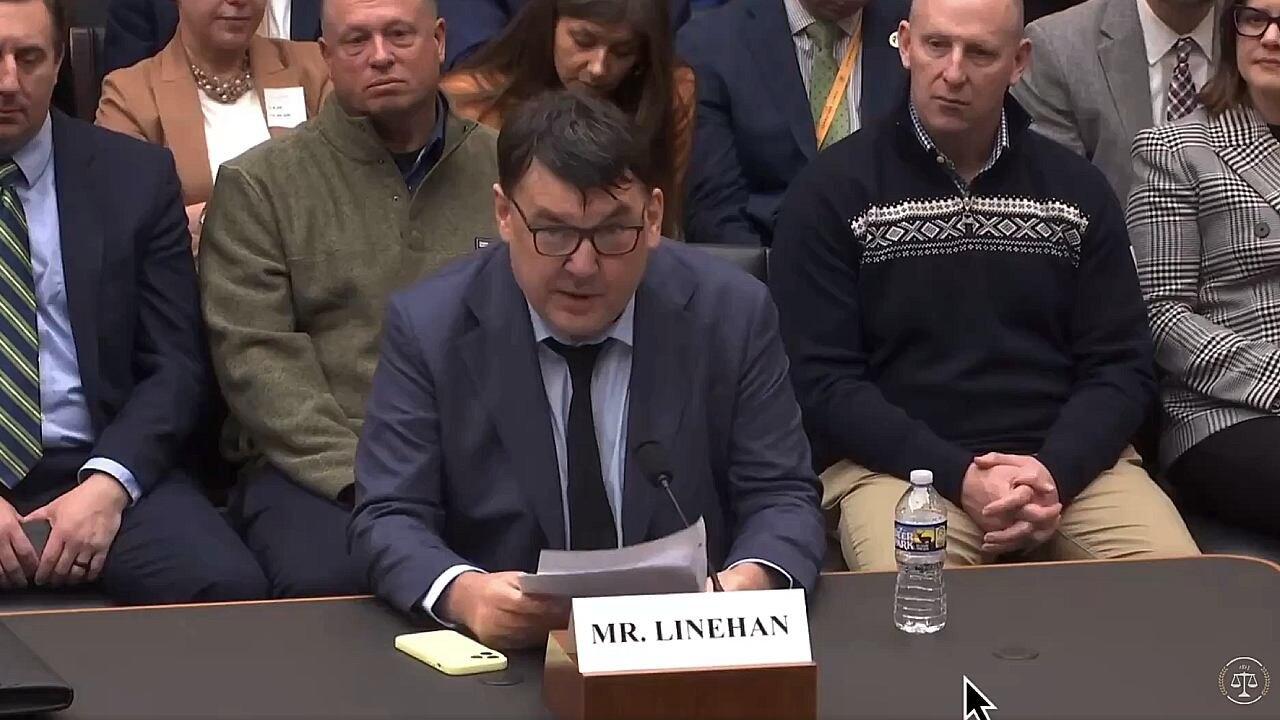
Graham Linehan, the Irish comedy writer, testified before the US House Judiciary Committee, detailing how Britain’s authorities hounded him over online posts challenging trans ideology—exposing the chilling grip of censorship under Keir Starmer’s government.
His appearance underscores America’s growing scrutiny of Europe’s speech-stifling laws, with Linehan urging lawmakers to push back against policies that silence women and crush free expression.
The hearing, titled “Europe’s Threat to American Speech and Innovation,” examined how regulations like the EU’s Digital Services Act and the UK’s Online Safety Act enable government overreach, forcing platforms to censor content globally and punishing dissenters. Chaired by Rep. Jim Jordan, it highlighted arrests for online speech, including Linehan’s own ordeal, as threats spilling over to US shores.
???British police arrested a non-UK citizen arriving from the United States for his online speech
Graham Linehan is an Irish comedy writer who tweeted jokes critical of transgender ideology while in the United States.
When he flew to London, Linehan was arrested at Heathrow… pic.twitter.com/p7vi5t7AOY
— House Judiciary GOP ?????? (@JudiciaryGOP) February 4, 2026
Linehan opened his testimony by recounting his shift from comedy to activism. “I spent 30 years writing comedy for British television. It was a career that I loved but it ended when I began noticing that women were losing their livelihoods, their social circles and even their freedom for defending rights won over 100 years ago by the suffragette movement,” he said.
He explained his views aligned with those facing backlash: “They believed as I do that single sex spaces are essential for women’s privacy, dignity and safety. They believed that children should not undergo experimental medical treatment that ravages their health and shortens their lives. They believe women have a right to fair sport.”
These stances, Linehan testified, made him a target. “For holding them I became the target of a series of harassment campaigns that cost me my career, my marriage and eventually drawn from my homeland.”
He detailed police involvement: “For a decade the British police have harassed me for expressing views that I don’t think in ten years not one person—not the police who arrested me and not the colleagues who condemned me or friends who turned away—has told any of us what we did wrong.”
Linehan stressed the ideological clash: “I want everyone to understand that gender ideology and free speech cannot coexist. You can hear the lie in the very language: trans woman meaning man, man meaning woman, health care opposite of health care. Men’s demands, ideology that tells lesbians they are bigoted for not accepting male partners is not progressive—it is homophobic.”
Bringing it stateside, he cited a US case: “Right now a man named Hobby Bingham who calls himself Princess Zoe Andromeda Love is a registered sex offender in this country. He raped a 12 year old girl, was transferred to the Washington Corrections centre where he raped a developmentally disabled female inmate. This is not happening in Britain—it’s here.”
Linehan called for action: “First, use every diplomatic lever you have to pressure the British government to implement its own Supreme Court ruling… Women just won a landmark case confirming that sex means biological sex… Please make sure to make it clear that America is watching.”
He continued, “Second, put pressure on the Irish government to reopen the conversation it never had in 2015… The Gender Recognition Act was quietly passed—no public consultation, referendum, no women’s rights organizations consulted.”
“Third, recognize free speech is not preserved simply by declining to arrest people,” Linehan urged, adding “We need new whistleblower protections for the digital age. If government will not defend dissenters from institutional retaliation and mob rule then what is the First Amendment for?”
This testimony stems from Linehan’s September 2025 arrest at Heathrow, where five armed officers detained him over three gender-critical tweets posted from the US.
The incident spiked his blood pressure to stroke levels, landing him in hospital amid what he called a “persistent harassment campaign” by trans activists and police.
The testimony arrives amid escalating revelations about Britain’s free speech erosion. As we previously highlighted, some 10,000 arrests were made in 2024 for “grossly offensive” social media posts—30 per day—under vague communications laws, outpacing even Russia’s crackdown while real crimes like knife attacks and burglaries fester unsolved.
As we have also detailed, the Trump administration has offered asylum to UK “thought criminals,” including gender-critical activists.
Sources indicated the White House eyed protections for those prosecuted over silent protests or online dissent, influenced by Elon Musk’s highlighting of such cases.
Your support is crucial in helping us defeat mass censorship. Please consider donating via Locals or check out our unique merch. Follow us on X @ModernityNews.
Tyler Durden
Sat, 02/07/2026 – 07:00

Dunn Museum’s exhibit uses art to showcase the importance of pollinators in ecosystems
Pollinators are necessary to keep our ecosystems healthy. You’ll learn why and how you can help the cause in “For the Love of Pollinators,” an exhibit at the Dunn Museum in Libertyville, Feb. 14-May 31.
Alyssa Firkus, Director of Education for the Lake County Forest Preserves, said the exhibit on pollinators was inspired when one of their exhibit designers learned about The Bee Collective of Columbus, Ohio, which creates art related to bees, in addition to educating on pollinators.
The Lake County Forest Preserves team decided that it was “a great opportunity to not only intersect both art and nature but bring in a lot of different people to learn about both,” Firkus said. “Everybody was very much in agreement that this would be aligned with the Forest Preserve’s mission.”
More than 30 sculptural works from around the world, provided by The Bee Collective in Ohio, are featured in the “For the Love of Pollinators” exhibit at the Dunn Museum in Libertyville, Feb. 14-May 31. (Lake County Forest Preserves)
A variety of people worked on this project, including pollinator experts from the Lake County Forest Preserves Natural Resources Team and the Environmental Education Team, that teaches people what they can do in their own yard, their own home to make an impact and create change,” Firkus said.
She noted that Luke Howard, founder of The Bee Collective, was enthusiastic about participating in the exhibit. He told them that one of their missions is to raise awareness about the decline of pollinators. In addition, Firkus said, “He wants to support artists and he wants to inspire people.”
Howard agreed to allow artwork from The Bee Collective in the exhibit. More than 30 of these works, created in a collaboration between people and bees, are in the exhibit.
To create unique works of art, they put sculptures into honey bee hives. “The honey bees then make the honeycomb onto the actual art pieces,” Firkus said.
The exhibit talks about honey bees, which are not native to Lake County. “We use that to teach who is native here and what is a pollinator,” Firkus explained.
She asserted that the most important aspect of the exhibit is teaching what individuals can do to help our local pollinators succeed.
The exhibit will have many interactive elements.
“People will be able to build their own bees,” Firkus said. “There’ll be videos throughout; art pieces throughout. It will be a really engaging exhibit.”
Restoration ecologist Dan Sandacz was heavily involved in the creation of the exhibit.
“I like to think of my job as making decisions to keep our preserves happy and healthy,” Sandacz said. “That ranges from monitoring our plants and animals to going out and working with my fellow colleagues to receive grants to do restoration work, and then planning and implementing the restoration on the ground.”
In 2023, Sandacz developed a plant pollinator monitoring program to increase the understanding of the relationship between plants and pollinators.
Based on the information he learned, Sandacz said, he used that to help develop general content for the exhibit on “What is pollination? Who are the native pollinators in Lake County? to help people explore the breadth of pollination in Lake County.”
Sandacz noted that one interesting aspect of the exhibit is photos throughout the exhibit of pollinators taken by volunteer Dale Shields.
“This will be a wonderful opportunity for people to explore the different pollinators,” Sandacz said. “They come in all different shapes and sizes. There’s butterflies, beetles, wasps, and flies that all do a wonderful job of pollinating and supporting our natural areas.”
Sandacz hopes that the exhibit will help people realize the importance of pollinators.
“They’re such a critical part of our ecosystem,” he said. “Pollinators support about 80 percent of the crops that we rely on and they’re also critical in keeping our natural areas happy and healthy.”
Sandacz said that there are things people can do to support pollinators. “My top recommendation is to plant native plants in your yard,” he declared.
There will be 14 events related to the Pollinators exhibition, including “Nature Storytime: Am I Even a Bee?” 6-7 p.m. March 19; “For the Love of Bumble Bees,” 1-2 p.m. April 1; and “Protecting Pollinators at Home,” 6-7 p.m. April 16. Registration is required, and there’s a small fee for some of the events. For the complete list, visit lcfpd.org/calendar/?F_c=1202.
The Dunn Museum is located at 1899 W. Winchester Road in Libertyville. The Pollinator exhibition is included in the museum’s general admission of $10 adults, $6 seniors and ages 4-17, free for ages 3 and under, for nonresidents; $6, $3, and free for residents.
For more information, call 847-968-3400 or visit lcfpd.org/museum.
Myrna Petlicki is a freelance reporter for Pioneer Press.

Consejo gobernante de Yemen nombra nuevo gabinete tras choques letales en el sur
Por SAMY MAGDY
EL CAIRO, Egipto (AP) — El jefe del consejo gobernante de Yemen nombró un nuevo gabinete semanas después de los enfrentamientos mortales en el sur del país y de la disolución de un grupo separatista.
Esos incidentes expusieron las fisuras en una coalición liderada por Arabia Saudí que lucha contra los rebeldes hutíes, respaldados por Irán.
Rashad al-Alimi, jefe del Consejo de Liderazgo Presidencial, anunció el gobierno en un decreto presidencial publicado por la agencia noticiosa estatal SABA el viernes por la noche.
El ejecutivo, que cuenta con 35 miembros, está presidido por el primer ministro, Shae’a al-Zandani, quien también se desempeña como ministro de Exteriores. Solo hay dos mujeres: Afrah al-Zouba, como ministra de Planificación y Cooperación Internacional, y Ahd Jaasous, como ministra de Estado para Asuntos de la Mujer.
El mayor general Taher al-Aqili será el ministro de Defensa, y el mayor general Ibrahim Haidan liderará el Ministerio del Interior. Ambos supervisarán los esfuerzos respaldados por Arabia Saudí para desmantelar las milicias del Consejo Presidencial del Sur, que cuenta con el apoyo de Emiratos Árabes Unidos.
Yemen lleva más de una década sumido en una guerra civil que implica una compleja interacción de agravios sectarios y tribales y la participación de potencias regionales.
Los hutíes, alineados con Irán, controlan las regiones más pobladas del norte, incluida la capital, Saná. Por otra parte, una coalición informal de potencias regionales —que incluye a Arabia Saudí y Emiratos— ha respaldado al gobierno reconocido internacionalmente en el sur.
El Consejo de Transición del Sur es parte del banco contrario a los hutíes, pero quiere establecer un estado independiente en el sur de Yemen.
En diciembre, las fuerzas del CTS avanzaron hacia las provincias de Hadramout y Mahra, donde tomaron zonas e instalaciones ricas en petróleo y el palacio presidencial en Adén, la principal ciudad del sur. Expulsaron a las fuerzas afiliadas a las Fuerzas del Escudo Nacional apoyadas por Riad, otro grupo alineado con la coalición anti-hutí.
Desde entonces, las fuerzas respaldadas por Arabia Saudí han recuperado el control de Hadramout, del palacio en Adén y los campamentos en al-Mahra. El CTS ha anunciado su disolución.
La escalada de la violencia en el sur de Yemen en los últimos dos meses ha sacudido a la coalición liderada por Riad y sacó a la luz las tensiones, silenciadas durante mucho tiempo, entre el reino y Emiratos. Arabia Saudí acusó a los Emiratos de apoyar a los separatistas y de sacar clandestinamente de Yemen al líder del CTS, Aidarous al-Zubaidi, que está buscado por traición, y llevarlo a Abu Dabi.
La coalición encabezada por Arabia Saudí, que hasta hace poco incluía a Emiratos, ha luchado para restaurar el gobierno en Yemen. La guerra está estancada y los rebeldes llegaron a un acuerdo con Riad para frenar sus ataques al reino a cambio de que finalizasen los que llevaba a cabo el país en sus territorios.
___
Esta historia fue traducida del inglés por un editor de AP con la ayuda de una herramienta de inteligencia artificial generativa.

Hinsdale High School names eighth superintendent in past three years
Hinsdale High School District 86’s new superintendent said he is hoping to “provide stability for years to come,” to a school district that has experienced much change at the top in recent years.
Within the past three years, Distinct 86 has experienced extensive turnover in administration, including seven people filling the role of superintendent, some of those on an interim basis. The district also has seen a large turnover in additional administrators, both at the district and school level.
“Yes, I’m aware there has been quite a bit of turnover in the superintendent position,” said Chip Pettit, the new top administrator, who was approved to the position Wednesday night by the District 86 board. “I don’t look at this as a short-term opportunity.”
Pettit, who was hired on a three-year contract beginning July 1, said he isn’t coming to District 86 with any agenda.
“I come with an open mind and a passion for doing what’s best for kids,” he said “I look forward to partnering with the staff and community in continuing to provide a world-class education for our students.
“I look forward to building relationships with faculty, staff, and the community as soon as possible. I’ll work to stay away from placing team members, or the community at-large, in win-lose propositions by taking the time to develop philosophical common ground and build consensus on key initiatives.”
Pettit said District 86’s long history of educational excellence was key in his interest to come.
“The well-established commitment from the community for students, teachers, and staff was certainly a highlight for me,” he said. “I look forward to embracing the traditions that are unique to the district, while seeking out new opportunities in the spirit of student achievement.”
Pettit will be coming to District 86 from Duneland School Corporation in northwest Indiana, where he has been superintendent since 2019. Along with a high school, that district consists of five elementary schools (grades K-4), two intermediate schools (grades 5-6), and two middle schools (grades 7-8).
“During his time at Duneland, Pettit significantly improved student performance, implemented a large capital improvement plan, and led two cycles of strategic planning, among other things,” the District 86 board said in a statement.
Petitt has received many awards for his leadership as a high school principal, published author, and as a superintendent, including recognition as the 2026 Indiana Association of Public School Superintendents District 1 Superintendent of the Year, according to information from District 86.
“Dr. Pettit believes in strong relationships, collaboration, and will implement a clear vision to build upon D86’s tradition of excellence for all students,” the District 86 Board said.
Brandon Kroft, president of the Duneland School Board, said in a statement to that community that he announced Petitt’s leaving with “much sadness,” and that his accomplishments were many.
“During this time, Duneland student performance continues to be the leader in Northwest Indiana and amongst the highest in the state of Indiana,” Kroft wrote in his statement.
Petitt’s District 86 contract runs through June 30, 2029. His salary for the 2026-2027 contract year of July 1, 2026 through June 30, 2027, will be $300,000.
Pettit and his wife, Karen, have two children, one a recent college graduate and the other a college senior.
Chuck Fieldman is a freelance reporter for Pioneer Press.
https://www.chicagotribune.com/2026/02/07/hinsdale-high-school-superintendent-stability/

Long-beleaguered Gary is serious about the Bears. Are the Bears serious about Gary?
On clear days the Chicago skyline is visible from Miller Beach in Gary, the skyscrapers rising above the horizon 25 miles across Lake Michigan. An enduring wall of gray clouds often obscures the view in winter, though, and on a recent February morning ice covered the dunes and the beach and extended well into the lake, small waves frozen atop each other near the shore.
Occasionally wet-suited surfers arrived in pursuit of waves that had yet to freeze, and others came to walk out onto the shelf ice. Don Plohg, who manages Gary’s parks, chases people off the ice just about every day. Until recently that was the extent of wintertime activity along the lakefront in Gary.
Now, though, it’s a place of aspiration for city leaders. A place to come and imagine possibilities.
To picture a grand if improbable vision: that of a new Chicago Bears stadium along the beach.
There is a plan, however rough or premature. However fantastical or far-fetched. There is a plan, with a Bears stadium somewhere near Miller Beach, with retail, restaurants and places of gathering: a year-round, multipurpose attraction near Indiana Dunes National Park, amid the hiking trails and kayaking spots and not far from city streets full of so much amassed heartbreak and neglect.
That it is a possibility at all, however remote and unlikely, has inspired an uncommon belief in this long-beleaguered city. Could it be Gary’s time after so many years of sorrow? Or is this nothing but a cruel dangling of possibility for a place so accustomed to loss and false hope? A group of city leaders, intent on changing Gary’s image, believe in their chances. The faith seems genuine.
Gary has gone all in on the Bears. But are the Bears serious about Gary?
“I think it’s going to be real nice on ‘Monday Night Football,’ with the aerial shots,” Carla Morgan, the city of Gary’s lead attorney, said of the lakefront site while she pulled into a parking lot just behind the dunes. She spoke as if she could already see the blimp’s view of a Bears stadium-to-be and the lake, with the lights of Chicago twinkling in the distance.
Morgan and others were prepared for an opportunity that arose quickly. On Dec. 17, a little more than three months after the Bears announced their intention to finalize Arlington Heights as “our future home,” team President Kevin Warren told the Tribune that plans had changed.
The cooperation the Bears expected from Illinois lawmakers had not materialized. The team had been waiting on that cooperation — on local and state assistance with building infrastructure in Arlington Heights, and on what Warren described as “reasonable property tax certainty” — for more than a year.
“We listened to state leadership and relied on their direction and guidance, yet our efforts have been met with no legislative partnership,” Warren wrote in an open letter to fans, before getting to the crux of it all a couple of paragraphs later: “We need to expand our search and critically evaluate opportunities throughout the wider Chicagoland region, including Northwest Indiana.”
In Illinois, Gov. JB Pritzker and state legislators have scoffed at the possibility of the Bears playing their home games across state lines. But Pritzker also recently hired outside counsel to advise his administration on the Bears’ demands of state lawmakers, while Arlington Heights Mayor Jim Tinaglia has urged the legislature to make a deal.
The state of Indiana, for its part, has appeared happy to oblige. A proposed bill with widespread support in the Indiana state legislature would create the “northwest Indiana stadium authority” to acquire land and “construct, equip, own, lease, and finance” a stadium for the Bears, who could then purchase it for $1 after a 35-year lease.
A spot in Hammond, just across the state line, immediately became a leading contender for a stadium site and Indiana Gov. Mike Braun made no secret of his desire to lure the Bears out of Chicago. And in Gary, where City Hall is surrounded by crumbling buildings and the abandoned Genesis Convention Center, elected officials and the city staff went to work.
On Dec. 18, the day after the Bears’ northwest Indiana announcement, Gary Mayor Eddie Melton promised “a comprehensive proposal” to bring the team to the city. Four weeks later, Gary released renderings for three proposed stadium sites: one near the Hard Rock casino, another close to the construction of a FedEx distribution center near Buffington Harbor and the one in Miller Beach.
The plans came in a slickly packaged press release, with a title Melton and others hope to speak into existence: “The Ultimate Comeback Story.” The Bears, though, have not necessarily singled out Gary as a contender. The franchise has chosen the words of its statements carefully, and referred to “northwest Indiana” only in the collective.
That was the wording, again, of a recent Bears statement after the Indiana stadium bill advanced out of the Senate, with the team describing it as “another positive and significant step toward building a world-class stadium in Northwest Indiana for Chicago Bears fans and all of Chicagoland.”
The intentional vagueness has hardly tempered optimism among Gary leaders.
“The day that they officially made the announcement,” Morgan said, referencing Warren’s open letter in mid-December, “I’ve been saying since that moment — it’s ours to lose.”
During a recent tour of the sites, Morgan and Chris Harris, Gary’s executive director of redevelopment, were eager to show what the city has to offer. At the lakefront site along Miller Beach, they’d arranged for heavy-duty golf carts, replete with thick tires, to provide transportation over the dunes and frozen sand.
The ride ended at the west end of the beach, in front of a rock wall that juts into the lake. The wall divides Lake Street Beach from Gary’s enormous U.S. Steel campus. For more than 100 years, Gary’s fortunes have been tied to the mill. The rise of U.S. Steel gave rise to the city. The decline of the mill, and decades of cuts, hastened Gary’s fall and made it Exhibit A of America’s Rust Belt ruin.
If there’s to be an ultimate comeback story, it’d be appropriate for it to start here. Yet there’s still that impossible-to-shake question of whether a place that’s already been through so much might just be on the other end of another indignity, with the Bears using the threat of moving as a bargaining chip to acquire what they really want.
As a Gary parks employee powered one of the carts through the dunes and onto the beach on another wind-swept and freezing February day, he posed the question that has been a lot of minds in Gary amid all the stadium talk: “You think it’s just leverage?”
In Warren’s Dec. 17 letter he denied the obvious inference.
‘We’ll gladly have them’
“This is not about leverage,” he wrote of considering sites in northwest Indiana.
Gary has been here before, though. In the mid-1990s, when the Bears were pursuing a new stadium that never came to fruition, franchise leadership expressed a willingness to consider northwest Indiana. A site in Gary, near the maze of concrete where Interstates 65 and 94 connect, was among the possibilities. Or so that’s how it was sold.
“My first impression might be that it is part of the jockeying the Bears are doing with Chicago,” then-Gary Mayor Thomas V. Barnes said at the time. Soon enough whatever hopes Gary and the region might’ve shared fizzled.
If there’s a difference now, it might just be in how optimistic Gary’s leadership is. And it might just be in how openly frustrated the Bears have grown with Illinois lawmakers.
Darren Washington, a member of the Gary Common Council, rubbed his hands together and smiled when he recalled hearing that the Bears were open to northwest Indiana. He learned about it from Warren’s December letter and he took note of the claim that Illinois’ “state leadership” informed the Bears that an Arlington Heights stadium package “will not be a priority in 2026.”
As he recited that line, Washington’s eyes widened.
Darren Washington, a member of the Gary Common Council, stands on Feb. 5, 2026, at Fifth Avenue and Broadway in downtown Gary. (E. Jason Wambsgans/Chicago Tribune)
“I was like, ‘Are you serious?’” he said of the thought of Illinois lawmakers not prioritizing a stadium deal. “I’m like, ‘OK, if you want to throw them away, we’ll gladly have them.’”
Washington is among those Gary leaders who’s a believer. On a recent snowy Thursday, he’d come to a newly opened Dunkin’ not far from Miller Beach to share his belief. He invited Kenneth Whisenton, another member of the city council, and both men laid out the vision shared by other council members and by Melton, whom Washington likes to call “Mayor Momentum.”
Melton, 45, has been Gary’s mayor since 2024. Like many among the city’s leadership, he’s a native who appears intent on guiding a rebirth. He did not make himself available to be interviewed for this story but those close to Melton, including Washington and Morgan, the city attorney, praised him for his relationship building.
Melton is a former college football player and a Democrat with a reputation for working well with Indiana’s Republican leadership. He also has built a productive relationship with Warren, the Bears’ president, Morgan said.
On the city council, Washington and Whisenton are representative of the hope in Gary. They’re both natives with deep family ties to the city. Washington, 56, grew up in a two-parent home dependent on the steel mill where both of his parents worked. His mom suffered a fate familiar to many with family who worked in the mill, and died of cancer. His father was laid off at the mill in the 1980s and then went from “job to job.”
“He always made sure that home was taken care of,” Washington said.
As Washington grew older, Gary entered into its prolonged decline. Downtown became a place of vacant storefronts and abandoned churches. The city’s reputation nosedived.
Whisenton, meanwhile, grew up in the version of Gary that was left behind. He was just a kid when the city became known as the murder capital of the USA, and though in some ways that reputation might’ve been unfair, he carries the scars of growing up in a forsaken place.
“I’ve had plenty of friends murdered,” he said. “I can’t tell you (how many). I’ve been to more funerals than weddings. It’s ridiculous. I’ve been in so many obituaries.
“I’ve got a picture of my best friend in my truck. Committed suicide.
“It’s this environment. It’s rough.”
Yet both men chose to build a life here after college and career opportunities elsewhere.
As they talked about the Bears and the city’s hopes, a woman at the next table over interjected. She said she was in the final stages of buying a house nearby. She’d found a good deal in a good neighborhood, she said. And as a Bears fan, she’d heard about the stadium possibilities. She wanted them to move to Gary, too, and hoped it wasn’t just talk.
Setting a positive image
Tyrell Anderson stood in the snow outside the long-abandoned Union Station, which for decades has slowly deteriorated near the entrance to U.S. Steel’s flagship Gary Works plant. Anderson works at U.S. Steel but is a passionate photographer who became a preservationist by accident.
Gary native and steelworker Tyrell Anderson founded the Decay Devils, a group that has done restoration work in Gary. He’s in front of Gary Union Station on Feb. 5, 2026. (E. Jason Wambsgans/Chicago Tribune)
A group he founded, the Decay Devils, now owns Union Station. For years there have been plans to revive it. To build a museum within, or maybe a coffee shop and art space. But then came the pandemic and the disruption of funding and a series of false starts with the city, and the old train station, a significant part of Gary’s history, continues to sit.
Fifty-five years after its closure it remains a metaphor. A reminder of how difficult it can be to bring a storied past back to life. Proof that in Gary, even the best intentions can take a while to become reality, if they ever do. The talk of a Bears stadium has left Anderson, 40, concerned. He’s a Gary native who returned after college at Purdue. He has heard talk of big plans before.
“I’m torn for a lot of reasons,” he said, and not just because of his affinity for the Packers. He questioned the incentives Indiana is willing to concede despite cuts in other areas, including school funding. He didn’t necessarily buy the notion that an NFL stadium attached to an entertainment district would fix Gary’s woes.
And he wondered about unintended consequences. He said his grandmother, who suffered burns when she worked in the mill, lost her house just down the street when the city seized the land to build a minor league baseball stadium. What would be disturbed or disrupted if the Bears really did pursue doing something near Hard Rock casino or Buffington Harbor or Miller Beach?
Around Gary, reactions to the prospect of a Bears stadium have ranged from a kind of show-me incredulity — “that (expletive) ain’t gonna happen,” Bruce Evans said, while manning the bar one quiet Sunday afternoon at 18th Street Brewery’s Miller Beach location — to optimism that maybe even being in the conversation is a good sign.
Cindy Klidaras, owner of Great Lakes Cafe in Gary, on Feb. 4, 2026. (E. Jason Wambsgans/Chicago Tribune)
“We need to boost some revenue around here,” said Cindy Klidaras, the owner for 32 years of the rustic Great Lakes Cafe near the U.S. Steel campus.
The diner on a recent Tuesday at lunchtime was packed, full of steelworkers and cops Klidaras knows by name. She pointed out a couple of men at a table in the back in from Japan, and Nippon Steel, which recently acquired U.S. Steel and promised to invest billions in the Gary Works plant.
That deal, which local leaders have sold as a significant win for Gary, has resulted in cautious hope. So has a partnership with the University of Notre Dame’s School of Architecture, which has joined city leaders in effort to create and execute a downtown revitalization plan.
The city has suffered so much for so long, though, that the needs are many. During the driving tour of the stadium sites, Morgan, the city’s lead attorney, and Harris, in charge of redevelopment, highlighted what each location had to offer while navigating between swaths of blight.
Harris tracks the number of properties in need of demolition on a map on his tablet, and though that number is slowly decreasing, anyone driving along Broadway and into downtown can see what remains: boarded-up building after boarded-up building; skeletons of roadside marquees for bygone businesses; blocks of ruin signifying a lost city or opportunity, depending on one’s perspective.
The city has recently demolished three buildings near downtown, Harris said, and there are plans to clear dozens more this year. The list is long, though.
“We’ve identified 2,300 structures that need to be demolished through the Indiana Unsafe Building Law,” Harris said. Between state funding and grants, the city had procured $17 million to address blight. How much of a difference could it make? And how soon?
“Within the next year and a half, you’ll see a significant difference in the amount of blight in the downtown core,” he said. “But we’re going to continue to move forward south along Broadway, into the midtown neighborhood, and clearing out blight from the viewshed of Broadway, so we can set a positive image for the city.”
As Morgan navigated back toward City Hall, she turned into a parking lot across the street from the Genesis Center. To the left stood an old brick building, several stories high, with missing windows and a crumbling exterior. It was “too far gone to save,” Morgan said, and through the Notre Dame partnership there were plans to knock it down and build new.
That has become a significant part of the calculus in Gary in recent years: Identifying places worth saving. Letting go of ones that aren’t. Fighting for what might be possible. And so city leaders are fighting, however long the odds, for a Bears stadium that they believe would accelerate a rebirth.
The land is there. The vision. The most hopeful can see it, however improbable: the Bears in Gary, maybe even right on the lake near the mill, the lights of Chicago not too far in the distance.
https://www.chicagotribune.com/2026/02/07/bears-stadium-gary-indiana/

The Tribune’s Quotes of the Week quiz for Feb. 7
Happy February, quotes readers! We’re just one month into the year and already so much has happened. This week was no different, so shall we get right into it?
The Winter Olympics officially kicked off Friday in Italy with the opening ceremony — but many events were already well underway. Curling began Wednesday, the U.S. Figure Skating team led after the first day of competition, and controversy is stirring around ski jumpers reportedly seeking a leg up when it comes to the sizing of their ski suits. Plus, several athletes from the Chicago area are participating in the Games, including a Lake County ski jumper, a four-time Olympic speedskater from Oak Park, a Palos Heights native representing Team USA in women’s hockey and a Blackhawks forward playing for defending Olympic champion Finland.
Back in Chicago, Mayor Brandon Johnson and his team revisited the city’s budget, claiming it’s still short $163 million at a South Side town hall on Tuesday. Johnson’s team shared their issues with the spending plan and signaled that it may need to be amended mid-year. The mayor also appeared to reverse course on an executive order signed at the end of last week that directed police to investigate immigration agents, saying the decision to prosecute ICE and Border Patrol would be left to the Cook County state’s attorney.
With less than 40 days until Election Day, Illinois’ primary races are heating up: Millions of dollars have been raised by the candidates running for five open congressional seats, the Democratic hopefuls for U.S. Senate duked it out in yet another debate, and a candidate for Illinois comptroller is facing scrutiny for putting campaign funds into a cryptocurrency token. Read the Tribune’s voter guide to get all the election information you need and stay up to date with the Tribune Editorial Board’s endorsements, here.
The Epstein files dominated much of the news again this week, with the latest batch of records revealing insight into convicted sex offender Jeffrey Epstein’s relationship with Bill Gates, Elon Musk, Woody Allen and the former Prince Andrew. Yet, on Sunday, a Justice Department official downplayed the likelihood of any additional criminal charges. Former President Bill Clinton and former Secretary of State Hillary Clinton also agreed to testify in a U.S. House investigation into Epstein.
In other news, a May trial date was set for the “Broadview Six,” Marimar Martinez testified in Washington on the actions of immigration agents and a 17-year-old was charged in the mass shooting outside the Chicago Theatre last November. Education Secretary Linda McMahon, meanwhile, was in town this week visiting a private Christian high school on the Near West Side as part of a national tour celebrating the 250th anniversary of the Declaration of Independence.
The NBA trade deadline was Thursday, and the Chicago Bulls front office was a flurry of action. The team executed seven trades in all, selling off some of the longest-tenured and highest-paid players, including Chicago native Ayo Dosunmu, seven-year veteran Coby White and All-Star Nikola Vučević.
Plus, the Grammys were Sunday. The night’s top winners were Billie Eilish, who took home song of the year for “Wildflower,” Kendrick Lamar and SZA, who won record of the year for their collaboration “Luther,” and Bad Bunny, who bagged the Recording Academy’s top prize for his album “Debí Tirar Más Fotos” and made history with the first Spanish-language record to win album of the year.
Bad Bunny’s history-making streak will continue this weekend. The Puerto Rican singer will headline the Super Bowl halftime show on Sunday — becoming the first Latin solo artist to do so. And if you’re still deciding where to watch the big game (or if you’re only tuning in for the star-studded commercials) check out the Tribune’s guide for restaurant and bar specials.
That’s it for this week! Now it’s time to test your knowledge with the Tribune’s Quotes of the Week quiz for February 1 to 7. Missed last week? You can find it here or check out our past editions of Quotes of the Week.
https://www.chicagotribune.com/2026/02/07/quotes-quiz-february-7/
Water correctly to keep houseplants healthy
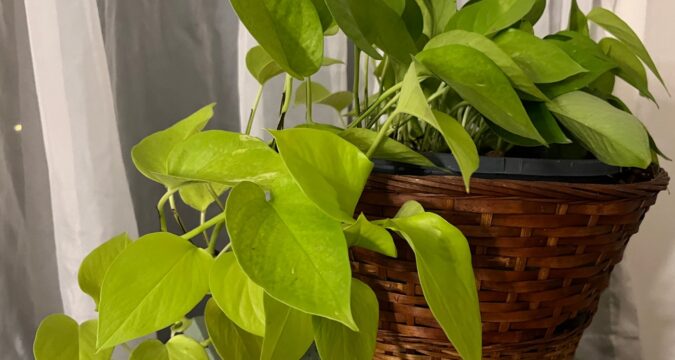
When houseplants struggle, it’s usually about water — either too much, not enough or not applied correctly.
“There’s a right way and a lot of wrong ways to water houseplants,” said Sharon Yiesla, plant knowledge specialist in the Plant Clinic at The Morton Arboretum in Lisle. “You have to apply enough water so it really soaks down through all the potting mix where the plant’s roots can get at it. And then you have to make sure that any extra water goes away.”
It helps to understand that a pot is an extremely unnatural environment for a plant. “In the ground, a plant’s roots are surrounded by thousands of square feet of soil,” Yiesla said. That soil holds water, so it’s a reservoir that the plant’s roots can tap for moisture. Because the soil goes far below the plant, excess water can drain down and away from the roots.
In a pot, by contrast, there is a tiny volume of soil that only holds a limited amount of water. The plant can easily use up that small supply. But if there’s too much water, it can be trapped around the plant’s roots and lead to rot, insects or disease.
“It’s up to us to water in a way that makes up for the difficult conditions we’re asking the plant to grow in,” she said. Here are tips for knowing when to water and doing it right.
Make sure the pot has a hole. Drainage is essential. You cannot grow a houseplant in a container that does not have a hole in the bottom.
Keep a saucer under the pot. You need something to catch the water that will drain away, and then you need to be able to easily remove the water from the saucer. “Never leave a plant’s pot sitting in a pool of water,” she said. Think twice about placing a planting pot with a hole inside a decorative container that does not have a hole and will trap water. To avoid creating a stagnant lake, you will have to remove the plant from the decorative cover every time you water and place it over a bucket or in the sink or bathtub to drain. “A deep saucer under the pot is easier,” she said.
Know your plants’ needs. Tap water is fine for most houseplants. For some delicate species, such as orchids, ferns or carnivorous plants, consider using distilled water that does not contain chlorine.
Check plants’ soil often. The best way to know whether a plant needs watering is by feeling for moisture in the soil. “It’s not enough to touch the surface,” she said. “You have to insert your finger down into the potting mix.” If the soil feels dry about an inch below the surface, it’s time to water. If it still feels moist, wait.
Water when they need it, not on a schedule. There is no set interval for watering houseplants. Each plant’s needs will vary, depending on the species, how large the plant is, whether it needs to be repotted, how close it is to a window or radiator, how much the heat has been on and many other variables. If you have several houseplants, check them all often, since they are likely to need watering at different times and different intervals. “You can’t just make a habit of watering all your plants every Thursday,” Yiesla said.
Don’t wait for plants to wilt. Wilting foliage means the plant is already stressed; some roots may have dried out. Check plants often enough so you can keep their soil from ever drying out completely. Water houseplants when you have time to do it right. You’ll need to wait for water to soak through and remove the excess.
Soak the soil thoroughly. Pour water slowly onto the soil surface until water begins to trickle out of the drainage hole into the saucer. Watch to be sure the saucer doesn’t overflow.
Remove the surplus water. If you leave water in the saucer, it will soak back up through the hole into the potting mix, keeping the plant’s soil too wet. Let the plant drain for about 20 minutes and then sop up the water from the saucer with a sponge. “I’ve also heard of people using an old-fashioned rubber-bulb turkey baster to suction up the water,” she said.
Don’t overwater plants either. Wet soil, from watering too often or letting the pot stand in water, can lead to root rot, fungus gnats and other problems. “If you see gnats, the plant starts to smell or the soil feels wet rather than moist, set the plant in the sink or bathtub for a couple of hours until it has thoroughly drained,” she said. “From then on, be careful to water properly.”
For tree and plant advice, see the online resources of The Morton Arboretum at mortonarb.org/plant-care, or submit your questions online at mortonarb.org/plant-clinic or by email to plantclinic@mortonarb.org. Beth Botts is a staff writer at the Arboretum.
https://www.chicagotribune.com/2026/02/07/houseplants-watering-care/

Editorial: Fritz Kaegi for Cook County assessor
In 1978, California voters passed Proposition 13, a state constitutional amendment known as “The People’s Initiative to Limit Property Taxation” and designed to protect older homeowners who voters believed had been hurt by increases in assessed values of homes in which they’d lived for decades.
Under Prop 13, California established “base-year values,” meaning that if nothing else changes about your home in terms of renovation or reconstruction, you are assessed on the value of your home only at the time of your purchase and that assessed value does not change. The amendment also restricted the rate of increase of that assessment to no more than 2% each year, and it limited property taxes to 1% of that assessed value (plus additional voter-approved taxes, based on that same assessment).
Illinois has a very different and far more rancorous system.
Those politics and, yes, that rancor, are very much on display in the fiercely contested race for Cook County assessor between the incumbent, Fritz Kaegi, 54, whom we have endorsed before, and his challenger, Lyons Township Assessor Patrick J. Hynes, 53, who worked for 23 years in the office of the Cook County assessor, including time under Kaegi himself, meaning that Hynes is running against his former boss. Kaegi is a man, it was clear from our joint meeting with the two candidates, the fired-up Hynes considers professionally incompetent.
The system is fraught with politics because residential and commercial spaces here are constantly reassessed: every three years within Cook County and every four years within most other Illinois counties. In Cook County, one-third of the taxable stock of property is reassessed each year, which means that a current market value has to be established for every parcel, a herculean bureaucratic task in a county as big as Cook. We’ve all learned that to our collective cost with the chaos surrounding late property tax bills and the subsequent late delivery of funds to the taxing bodies relying on them.
That’s not even the half of it. There are myriad appeals processes open to anyone who is dissatisfied with their assessment, creating a paradox with which anyone who has bought and sold property in the county is all too familiar.
When it comes to selling, say, your condo, you want to argue it is worth as much as possible, but when it comes to the assessed value of the property (easily visible in any transaction), both seller and buyer are incentivized to minimize that worth.
That’s where property tax attorneys enter the picture.
For a contingent fee (typically one-fourth or one-third of the savings), these attorneys will draft an appeal to the assessor and then also to the Cook County Board of Review, a separate elected body that theoretically oversees the assessor’s work but in our experience follows entirely different criteria. Appeals can go on for years. And believe us when we say there are some very colorful characters on the Board of Review (more to come on that).
Since lawyer fees are contingent, many residential property owners appeal every time to all hearers and usually are successful. Time after time in our residential experience, the Board of Review would knock back the assessor’s assessments (the criteria applied being different), thus rewarding the many attorneys who know how to game a system with myriad opportunities for corruption.
In 2017, this newspaper published an investigation concluding that former Assessor Joseph Berrios disproportionately penalized lower-income homeowners while rewarding wealthy property owners: “Moneyed insiders in tandem with politically connected tax appeal lawyers won favorable valuations,” this board editorialized in 2022, “as long as they kept donations coming to Berrios’ campaign coffers. Nepotism and patronage ran rampant. Ethics rules went ignored. Year after year, it was the county’s Black and Latino populations that suffered the most under Berrios’ system, through disproportionately higher property taxes.”
This is the point at which we note Hynes worked for Berrios and in our meeting left us with the sense that he preferred the way Berrios ran this office (sans the corruption) to the way it has been run by the incumbent. We can’t agree with that and it is a factor in our choice to continue to endorse Kaegi for this office, even as we acknowledge there is blame to share regarding the current property tax billing shambles, even if we landed that one primarily at the feet of Cook County Board President Toni Preckwinkle.
Here’s the other issue of interest to voters. In crude terms, Kaegi has had his thumb on the scale in favor of residential voters and Hynes clearly would favor commercial taxpayers. The endorsements and campaign war chests reflect those opposing preferences.
Related Articles
Editorial: Tribune endorsements for U.S. Congress in 13th, 14th, 15th, 17th districts
Editorial: In the 4th Congressional District, the endorsement that should have been right here
Editorial: Laura Fine for Democratic nomination in 9th Congressional District
Tribune Editorial Board endorsements for 2026 Illinois primary election
Editorial: Dr. Thomas Fisher for 7th Congressional District
This is a conflict baked into the Cook County system. Government gets its money no matter who pays what; it’s the assessor’s job to apportion the revenue fairly, with assessed values being the main variable. But assessment is as much an art as a science, and the fair value of a commercial building in particular is hard to determine, especially in the current reality where Chicago is drowning in excess office space and seeing drastic drops in the value of commercial real estate (we’ve written often about that problem and the price homeowners are paying as a result).
To Hynes’ mind, Kaegi favored homeowners at the expense of the commercial sector and the Board of Review was doing its job when it responded affirmatively to appeals. To Kaegi’s mind, his assessments were fair, transparent and accurate and the Board of Review’s both opaque and susceptible to outside influence.
Hynes argued that as assessor for Lyons Township after he ran, presumably screaming, from Kaegi’s office, he had to spend too much time correcting “garbage data.” Kaegi argued the system was broken when he started and that his work has been to correct past corruptions. He said he had run “a clean office,” was a fighter for homeowners, that the success rate of appeals was going down and that he had committed to take “no campaign fund from property tax attorneys.”
This is one of those offices that to the outside observer should not be so political (ya think?). Welcome to Cook County.
Hynes, when it came down to it, argued to us that residents should essentially get on board with the need to encourage the renewal of the commercial sector for the benefit of all. Developers are of this mind and generally so are we. Like Hynes, we’ve lamented the lack of cranes in the sky, to cite the metaphor of choice, on many occasions.
Kaegi, when it came down it, argued to us that there is an affordability crisis for homeowners and that a good assessor should be worrying about that more than the developers’ complaints. We’ve lamented that very problem, which has no need of a metaphor, on many occasions.
But we see the encouragement of the commercial sector as the job of the mayor, primarily, and the affordability problem for homeowners as emanating primarily from government entities sucking up revenues and refusing to trim their sails. The main question when it comes to the assessor is competence, or lack thereof, and their ethics, or lack thereof.
We’ve always found Kaegi to be a fundamentally fair and decent man who has genuinely managed to avoid conflicts of interest. He’s an intellectual who thinks deeply about the issues with this system, has an excellent command of his data and its implications, and who has cleaned up the office following the sordid Berrios years.
We do think, though, that commercial property owners have a point when they grumble that the brutal losses they’ve suffered have not been sufficiently acknowledged by Kaegi’s office. If he is to win another term, that should change.
That said, Hynes isn’t the solution to the problem. He has the vibe of a disgruntled ex-employee, a former Kaegi worker turned bitter rival. We found some of Hynes’ aggressive rhetoric off-putting. When it came down to it, we did not think he had a clearly articulated plan of demonstrable fairness. And we really do not want to go back to the bad old Berrios days, which would tempt us to move to California.
Kaegi is endorsed for Cook County assessor.
Submit a letter, of no more than 400 words, to the editor here or email letters@chicagotribune.com.

Letters: Blackhawks fans showed my Massachusetts family what it means to be hospitable and kind
Our son Michael, a young man with some significant intellectual disabilities, is a huge Boston Bruins fan. A couple of weeks ago, we came to Chicago for the Bruins game against the Blackhawks on a Saturday night.
While shopping in the pro shop, we were told that the store was closing for an hour. We landed at the Billy Goat Tavern nearby, which was packed with Blackhawks fans. There were no seats at the bar and no open tables. Michael was beginning to get confused over everything. He did not want to leave the United Center, and he wanted a Duncan Keith bobblehead.
I was thinking that we would need to find somewhere else to go. A Blackhawks fan approached me. He said: “You’re from Boston.” I laughed. He said: “This place is ‘seat yourself,’ so you’re in luck because we want you to sit with us.”
He pointed to a big table; the people sitting there all waved at us. They all squished over. I was blown away. This was the most welcoming group of people. It was immediately like we knew them all forever.
Michael told everyone about how much he loves hockey. He even told them that he saw Connor Bedard’s first NHL goal in Boston a couple of years ago. One of the guys said: “Michael, let’s go get us a couple milkshakes.” For an hour, we sat with this group. I didn’t want the time to come to an end.
Michael asked me about the bobblehead, and I told him that we would try. A person at the table told me quietly that she had just texted his brother and his wife. They already had two bobbleheads, and she said that one of them had Michael’s name on it if he did not get one. I said that wasn’t necessary, and she said she knew that. She whispered, “You have no idea how much I needed to meet Michael today.”
We all walked to the United Center. Michael and I got our bobbleheads. We said goodbye to all of them, and I thanked them for their hospitality. They all high-fived Michael.
It was a very incredible hour for me, strangers just being kind to one another. I got the sense that this group enjoyed it all just as much as we did.
I believe that stuff like this goes on every single day, but we don’t always see it. There are “helpers” everywhere, and they are all around us. The Billy Goat Tavern was loaded up with helpers and doers of good. I truly felt like I was in a room full of friends.
It may have been frigid outside, but Chicago was a very warm place that day.
Kudos to the Blackhawks fans!
— Richard Sawyer, Woburn, Massachusetts
Snowplow operators’ skill
I never realized the professionalism and skill of our Chicago-area snowplow operators. I got a graphic demonstration this past weekend.
In the Chicago area, typically roads are passable almost instantly, and then crews continue to touch up and perfect their work, plowing shoulders, widening radiuses, salting where needed, etc., and even that is typically complete in a day.
Louisville, Kentucky, had a 6-inch snowfall five days before my arrival this past weekend, and the incomplete plowing made an impression on me. Turn bays were only partially cleared. Periodically, curb lanes were only partially cleared, and adequate radiuses were mostly ignored. Shoulders were primary snow storage areas, unavailable to disabled or errant vehicles.
I realize our crews get more training and practice, but I was amazed at the difference.
Congratulations, professional Chicago-area snowplow drivers. A job well done!
— Robert B. Hamilton, Wauconda,
Griffin sabotaged solution
Regarding Ken Griffin hightailing it to Florida, it’s always amazing how the voters of Illinois fell for his one-person campaign against a progressive income tax. Like it or not, it was one way to solve some of Illinois’ fiscal problems, mainly overreliance on property taxes, by taxing wealthy residents at a higher rate. But we’ll never know now, will we?
— Ken Kramer, Glen Ellyn
Full truth about Chicago
I was casually watching a Wall Street Journal video when my ears perked up at hearing Citadel CEO Ken Griffin giving some reasons as to why he left Chicago.
He said: “I must tell you it’s really fun to go out with friends at night and just talk about how your kids are doing. Whereas in Chicago, you frankly often end up talking about violent crime because it touched your life in such a profound way each and every day.”
Griffin sounded sincere, but I don’t think he was telling the whole truth. The city of Chicago may not persuade Griffin to leave hot and sunny Miami Florida, but hopefully, crime will continue to decrease and inspire people and businesses to move to Chicago.
— Marc Sims, Chicago
Don’t repeal fireworks ban
I disagree with Brad Weisenstein’s proposal to repeal the Illinois Pyrotechnic Use Act of 1942 (“Let us celebrate 250th Independence Day by ending the state’s ban on fireworks,” Feb. 5).
I dread every summer holiday. Even though I live in Illinois, the proximity of easily purchased fireworks in neighboring states creates a dangerous hazard for many of us.
Homes built closely on zero lot lines with dense suburban single- and multi-family occupancies place families and homes in the path of bigger, louder and stronger fireworks.
I spend the morning after celebrations picking up debris and sweeping sidewalks, the driveway, and patio and deck areas. My outside furniture cushions and umbrella often have burn holes. Why? Because we are in very close proximity to the revelers.
I love local fireworks shows sponsored by professionals; mostly held in open areas or over our many waterways. But please keep fireworks out of our closely packed neighborhoods for the safety of families and homes.
— Sunny McGuinn, Lake Villa
Positives to end of ban
I really enjoyed Brad Weisenstein’s op-ed on why Illinois should lift the ban on fireworks. I have been an advocate for many years for the same reasons that Weisenstein cites: tax money going to border states, Illinois being only one of three states with a fireworks ban and the fact that there are more injuries from people barbecuing and playing baseball than from fireworks.
I hope the powers that be will see this op-ed and lift the ban. There are more positives then negatives to do just that.
— Harold Plucienik, Chicago Heights
Submit a letter, of no more than 400 words, to the editor here or email letters@chicagotribune.com.
https://www.chicagotribune.com/2026/02/07/letters-020726-blackhawks-fans/
Biblioracle: Ben Markovits’ Booker finalist novel ‘The Rest of Our Lives’
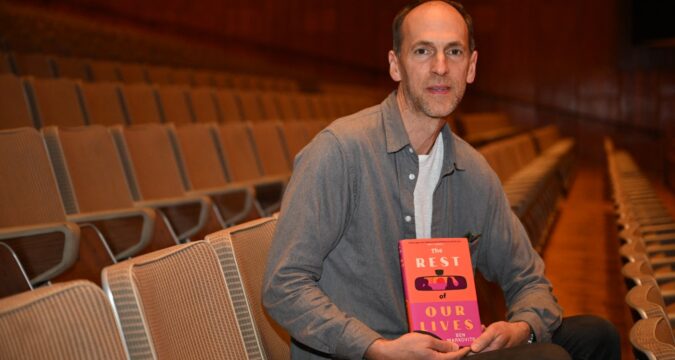
Tom Layward, the narrator of Ben Markovits’ Booker finalist novel, “The Rest of Our Lives,” doesn’t know what he’s supposed to do.
He’s middle-aged (55) and on leave from his job as a law professor because of a student complaint about some content in his hate-crime course that is not exactly meritless but also would have been shrugged off earlier in his career. His youngest child, Miriam (Miri), is imminently heading to college at Carnegie Mellon. Miri’s departure is more meaningful because a dozen years earlier when his wife Amy had a brief affair with Zach Zirsky, he told himself that when Miri was out of the house, he could leave his wife.
That choice of “could” rather than “should” or “would” is an important window into where Tom finds himself after dropping Miri in Pittsburgh, and instead of heading back home to Westchester County, he goes west. Along the way, he stops in to see various important people: his brother, a college girlfriend, an old roommate, and lastly his son.
“The Rest of Our Lives” is billed as something of a road trip novel, and while Tom does span the country from coast to coast, the main terrain covered is the interior of his own mind, the choices made, the state of his marriage, and what may wait for him in what remains of his time.
Speaking of which, there’s another complication. Mornings when he wakes, his face is filled with fluid to the point he can barely see sometimes. A doctor has suggested it might be complications of long COVID-19, but everyone he encounters throughout the novel who sees him says he needs to go to the emergency room.
This is the kind of novel I’ve been told doesn’t get published anymore, a well-off white man with so-called “first world” problems edging toward a midlife crisis. When I was in my 30s, I gobbled these novels like candy — Richard Ford, John Updike, et al. — curious about what might await me.
But now, as a 55-year-old white man who sometimes wonders about what the rest of his life has for him and who has no interest in a midlife crisis for real or vicariously, I was skeptical of “The Rest of Our Lives.”
But I’m here to testify that I was thoroughly, completely won over by this book, which is in the best tradition of those novelists I was reading in my 30s. Tom Layward is no hero, but he clearly knows this about himself, and his reflective judgment on his choices (law school over a Ph.D. in literature) and the lives of others (Amy’s lasting ties to the society of coastal wealth she grew up) provide frequent flashes of insight and make him a great companion for the duration of the trip.
Most of what he experiences when connecting with others is awkward, even unsettling. For example, his divorced brother drinks too much and makes a bit of an ass of himself in an episode that Tom recognizes he’s allowing, if not exactly encouraging.
But these incidents are not played for high drama. They are fodder for thought and attempts at understanding the mystery of Tom’s life for himself.
Close readers will find a handful of clues that help explain this perspective, why he has settled into this reflective mode in the telling of his road trip. The culmination of the trip clarifies what Tom will be doing in the near term, but the long term will remain a mystery, as it must for all of us.
John Warner is the author of books including “More Than Words: How to Think About Writing in the Age of AI.” You can find him at biblioracle.com.
Book recommendations from the Biblioracle
John Warner tells you what to read based on the last five books you’ve read.
1. “Theo of Golden” by Allen Levi
2. “I Cheerfully Refuse” by Leif Enger
3. “Sunrise on the Reaping” by Suzanne Collins
4. “The 7 1/2 Deaths of Evelyn Hardcastle” Stuart Turton
5. “Piranesi” by Susanna Clarke
— Karen W., LeRoy
A strict mystery isn’t necessarily central to this novel, but much of it is mysterious: “Fates and Furies” by Lauren Groff.
1. “Buckeye” by Patrick Ryan
2. “The Loneliness of Sonia and Sunny” by Kiran Desai
3. “The God of Small Things” by Arundhati Roy
4. “Exit Wounds” by Peter Godwin
5. “James” by Percival Everett
— JoVita B., Lindenhurst
I think JoVita will enjoy the twisty moral issues of Alexander Maksik’s “You Deserve Nothing.”
1. “Greek Lessons” by Han Kang
2. “The Other Girl” by Annie Ernaux
3. “Heart Lamp” by Banu Mushtaq
4. “Audition” by Katie Kitamura
5. “The Art Thief” by Michael Finkel
— Iva F., Evanston
An international flavor to this list, so I’m recommending a novel that is written by an American author, but is rooted elsewhere: “The Italian Teacher” by Tom Rachman.
Get a reading from the Biblioracle
Send a list of the last five books you’ve read and your hometown to biblioracle@gmail.com.
https://www.chicagotribune.com/2026/02/07/biblioracle-rest-of-our-lives-ben-markovits/