Category: News
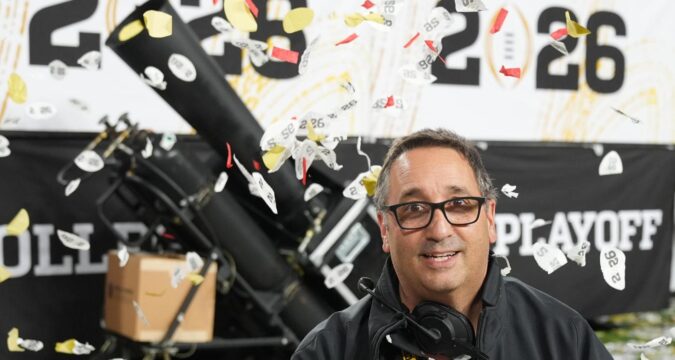
Meet the man behind the Super Bowl’s annual confetti blizzard
Noah Winter brags he’s been to way more Super Bowls than Tom Brady.
Brady competed in 10 — more than any other player. But Winter will be part of the Super Bowl spectacle for his 30th straight year this year, not in uniform but as the guy in charge of the celebratory confetti after the game ends.
Related Articles
Sam Darnold has overcome doubters. Drake Maye has lived up to the hype. Only one will win Super Bowl LX.
Long-beleaguered Gary is serious about the Bears. Are the Bears serious about Gary?
Pro Football Hall of Fame will consider changes after Bill Belichick’s omission sparks outrage
Bad Bunny’s Super Bowl halftime show: Here’s some things to expect and what they mean
Longtime Christ hospital nurse Lea Good lauded at Bears game as Advocate Nurse of the Year
Winter’s company, Artistry in Motion, also makes confetti for rock concerts, movies, political conventions and the Olympics. But the annual blizzard of color falling onto the field at the end of each Super Bowl is probably what he’s best known for.
It certainly is what he’s most likely to get asked about at dinner parties. “It’s become an iconic moment,” Winter marvels, sitting in his Northridge, California, office and confetti factory.
Jane Gershovich, a photographer who worked for the Seattle Seahawks when they won the Super Bowl in 2014, said that when the confetti falls, everyone wants to play in it. The players and their families have been known to toss it in the air and make confetti angels.
“Just seeing the players and their kids engage with it at such a wholesome level, it brings a lot of joy to everyone on the field,” she said.
So, what goes into planning and executing a giant confetti drop? Winter fields some questions:
What happens to the losing team’s confetti?
Artistry in Motion trucks 300 pounds (135 kilograms) of two-colored confetti for each of the teams to the Super Bowl. They bring confetti cannons onto the field with about 4 minutes remaining, and line them up around the stadium walls.
Even if the teams stream onto the field before the clock runs out, the confetti waits until the timer shows the game is officially over. And the winners’ colors get the go-ahead.
“It’s always better to be late then early,” Winter explained. “Sometimes players go out and shake hands. We don’t launch until triple zero on the clock. Over the 30 years, we never have launched the wrong color or launched too early.”
The color mix is not 50-50, because some colors dominate on video, so the company has to experiment to find the correct mix.
Massachusetts company Seaman Paper has for 25 years manufactured the tissue paper that Artistry in Motion turns into confetti, said Jamie Jones, one of Seaman’s owners. A lot of New England Patriots fans who work there are particularly excited about their part in this year’s Super Bowl.
The company makes about 150,000 pounds (68,000 kilograms) of tissue paper a day — mostly for gift wrapping and food service.
“It’s a very prestigious but not big order,” Jones said of the Super Bowl paper.
How do you get the best flutter?
Winter has found that a rectangular shape is best for confetti because it turns on its axis and hangs in the air.
But TV viewers might not realize that there are actually two confetti drops at the Super Bowl — one at game’s end, and the other when the Vince Lombardi Trophy is presented to the winning team. That second round of confetti is cut in the silhouette of the trophy.
Messages can be printed on the tiny rectangles too. For a handful of Super Bowls, Artistry in Motion printed social media messages on each tiny flag at the request of event sponsor Twitter.
Some people ask whether the confetti is cut by hand (it isn’t), and Winter jokes that his hands get tired.
Is the confetti biodegradable?
The tiny rectangular flags of tissue paper are made from U.S.-sourced, 98% postconsumer recycled material, Winter says. The paper is biodegradable.
The company makes confetti in the colors of the four final NFL playoff teams. All that isn’t used is recycled.
The confetti makes a beautiful mess in the stadium, but cleanup isn’t Winter’s job. Every stadium uses a different approach, depending in part on the field’s makeup. Some use rakes. Others employ leaf blowers, taking care not to degrade the artificial turf.
How do you get into the confetti business?
Winter studied lighting design in college and did pyrotechnic work at venues including the Hollywood Bowl before Disney asked his team to recreate leaves falling and twirling for a live “Pocahontas” show in the mid-1980s. Soon, he was creating confetti for Disney’s daily parade at Disneyland.
In 1986, Mick Jagger saw the confetti at Disney and asked Artistry in Motion to make some for a Rolling Stones’ concert at Dodgers Stadium. Then, he brought the fledgling confetti company on tour. Other artists, including Bono from U2, asked that confetti be made for their shows as well.
Stadium concerts led to sporting events. The company’s first Super Bowl was in 1997, when the Green Bay Packers defeated the Patriots (pre-Brady) at the Louisiana Superdome in New Orleans. The year before that, Winter had been a pyrotechnician at the Super Bowl, making this year’s game his 30th.
In 2025, an estimated 127.7 million people watched the game on TV or streaming.
Winter wouldn’t admit to having a favorite team, but he did say he has two brothers who are New York Jets fans, and he has promised to bring them to the Super Bowl to work a confetti cannon if their team ever returns. Quarterback Joe Namath led the Jets to their last Super Bowl, in 1969.
https://www.chicagotribune.com/2026/02/08/super-bowl-confetti-blizzard/
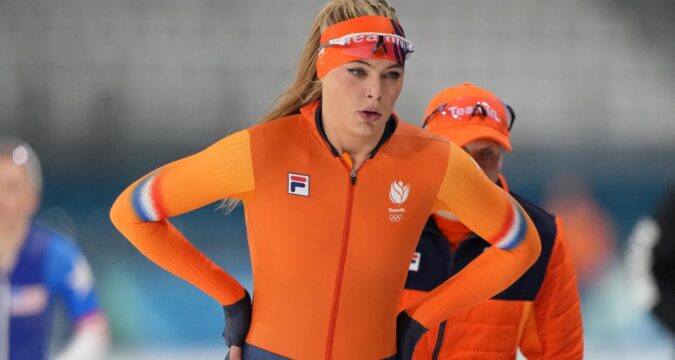
Who is Jutta Leerdam, the Dutch Olympic speedskater whose fiancé is influencer-boxer Jake Paul?
MILAN — On the ice, Jutta Leerdam is an Olympic medalist speedskater for the Netherlands who is entered in the 500 and 1,000 meters at the Milan Cortina Winter Games. Off the ice, Leerdam gets a lot of attention for her engagement to YouTuber-turned-boxer Jake Paul — who is also at these Olympics, but as a spectator.
Separately, Leerdam and Paul have big followings on social media. Together, they draw a lot of eyeballs and interest, and he is expected to attend her events in Milan.
Leerdam did not race at the Milano Speed Skating Stadium on Saturday; she will start competing next week. Paul was spotted on Saturday, though, at another venue, sitting and chatting with U.S. Vice President JD Vance as the U.S. women’s hockey team defeated Finland 5-0.
Who is Olympic speedskater Jutta Leerdam?
Leerdam is a 27-year-old Dutch athlete who took home a silver medal in the 1,000 meters from the 2022 Beijing Winter Olympics. She also took part in the 500 four years ago, coming in fifth place.
Leerdam’s trophy collection includes 12 world championship medals, with six golds. Two of those titles arrived in the 1,000 — in 2020 and 2023.
She has about 5 million followers on Instagram.
When will Leerdam compete at the Milan Cortina Olympics?
The first event for Leerdam in Milan will come Monday in the 1,000 meters.
She then is scheduled to race again on Feb. 15 in the 500, in which American Erin Jackson is the reigning Olympic champion.
Leerdam is considered a medal contender in both events.
Who is Jake Paul, Leerdam’s fiancé?
Jake Paul, left, and Vice President JD Vance attend a U.S.-Finland women’s ice hockey match at the Winter Olympics on Saturday, Feb. 7, 2026, in Milan, Italy. (Petr David Josek/AP)
Paul is a 29-year-old American influencer who first gained fame for his YouTube videos and then made his way into the world of boxing about five years ago.
He most recently had his jaw broken during sixth-round knockout loss to former heavyweight champion Anthony Joshua in December.
Paul has also gone up against a 58-year-old Mike Tyson in November 2024, plus Julio Cesar Chavez Jr., retired UFC fighters Anderson Silva and Nate Díaz and former NBA player Nate Robinson.
When did Leerdam and Paul get engaged?
They posted news about their engagement on Instagram in March.
https://www.chicagotribune.com/2026/02/08/winter-olympics-jutta-leerdam-jake-paul/

Column: 11 handy tips to make your Super Bowl LX party the talk of the water cooler on Monday morning
Hosting a Super Bowl party is no easy feat, especially when the game pits two teams few of your guests really care about, like the New England Patriots and Seattle Seahawks.
Unless you live near Seattle or Boston, the Super Bowl LX matchup is simply background noise for your party, a reason to gather together and eat, drink and critique the commercials.
But a Super Bowl party is still an American ritual, and you don’t want to spend the rest of the year wondering why yours was a dud.
Here are 11 handy tips to make your Super Bowl bash the talk of the water cooler on Monday morning.
1. Keep the guest list small and nonpartisan.
Only invite friends and relatives who are willing to discuss Bill Belichick and Tom Brady without punches being thrown. Hating the Patriots is one of the few things in life most Americans agree on, but neither Belichick nor Brady will be on the sidelines this time.
Should Patriots fans be invited? Well, they’re technically human beings and deserve a chance to mingle. But don’t invite Dave Portnoy just to be safe.
2. Buy plenty of ice and put the beer in a cooler outside or in the garage.
This will ensure that the fridge is reserved for all the food and that the vaping crowd will congregate outside the house near the beer. In case you think you’ll forget, tape a handwritten sign on the fridge door to remind you: Food in. Ice out.
3. Make sure the hors d’oeuvres are ready for kickoff.
Chips and dip are fine, but get creative. I recommend my Uncle Willie’s famous bacon-wrapped bacon bits recipe. Add 4 cups of bacon bits with 1 cup of melted butter. Mold into tiny balls and refrigerate for a half-hour. Wrap with bacon strips and bake at 375 degrees for 25 minutes.
Only serve this tasty treat if you have more than one bathroom in your house, and if possible, rent a portable bidet.
4. Hide the remote.
Keep the volume at a reasonable level and don’t let anyone try to convince you to turn it up so you can hear Cris Collinsworth or that funny Super Bowl commercial with a celebrity influencer they heard about on Instagram.
5. Squares are not optional.
Every Super Bowl party has to have a sheet for squares, as required by law in all 50 states. Keep it affordable at between $10-$25 per square, unless your party is being held on the North Shore. Reminder: Don’t let your brother-in-law handle the money.
6. Do not bring up the Chicago Bears’ loss to the Los Angeles Rams.
Bears quarterback Caleb Williams (18) leaves the field after the loss to the Rams in overtime in an NFC divisional-round playoff game Jan. 18, 2026, at Soldier Field. (Brian Cassella/Chicago Tribune)
Show some empathy for Bears fans at the party who still might not be over the interception that sealed their fate in the overtime loss to the Rams in the divisional-round playoff game. If someone does bring up the Bears, be considerate and change the subject to something less touchy, like immigration or Jeff Bezos.
7. Let the kids act as servers, and put them on the “super” cleanup committee.
They already live there, so might as well make them do something productive.
8. Provide alternative halftime viewing venues in other rooms.
Not everyone will care to watch Bad Bunny, the halftime-show performer whose hit songs are mostly in Spanish.
Fortunately, Kid Rock will be headlining an “all-American” halftime show for Turning Point USA that is billed as an alternative for “folks who love America.” Set up a computer in the kids’ room for Kid Rock fans. For those guests who love America but still hate Kid Rock and don’t understand Bad Bunny, set up an old Zenith in the basement for Puppy Bowl XXII on Animal Planet.
What can viewers expect from Bad Bunny’s highly anticipated Super Bowl halftime performance?
9. Don’t scrimp on the food.
Whether it’s wings or taquitos or sliders, make way more than you need and don’t worry about the leftovers. There’s nothing worse than a party where the food runs out early and you’re DoorDashing during the halftime show.
And don’t forget the desserts. Macaroons shaped like the heads of Bad Bunny or Kid Rock will delight or disgust your guests.
10. Invent a drinking game to keep guests interested if the game gets out of hand.
Everyone enjoys a fun drinking game that takes them back to their college days. The annual Taylor Swift drinking game is canceled due to the Kansas City Chiefs not playing. But how about taking a drink every time Collinsworth asks “Was that a catch?” or every time Mike Tirico mentions Snoop Dogg is an NBC correspondent at the Milan Cortina Winter Games?
Remember to have a designated driver or rideshare at the ready.
11. Drop subtle hints when it’s time to leave.
Getting rid of the Super Bowl stragglers is awkward. Some want to stay for the postgame trophy ceremony, but my rule of thumb is that it’s time to go when the winning quarterback gives credit to the man upstairs. You don’t want to end the evening by kicking people out, but you also don’t want anyone passing out on your couch when you have to work in the morning.
The best advice is to power off the router and inform the remaining guests the WiFi is down and they probably won’t be able to get more than one bar on their phones. If that doesn’t work, tell them there’s no more alcohol or bacon-wrapped bacon bits, and that the toilet is clogged.
They’ll quickly take the hint. If they wake up Monday and forgot who won, you’ll know it was a successful Super Bowl party.
https://www.chicagotribune.com/2026/02/08/super-bowl-lx-party-tips/

China Takes Step Towards ‘Starlink Killer’, Could Be Game-Changer In Ukraine
China Takes Step Towards ‘Starlink Killer’, Could Be Game-Changer In Ukraine
A new, compact, high-power microwave weapon, the TPG1000Cs, has been developed at a Shanghai Nuclear Technology Institute, which could become one of the most serious threats to the Starlink satellite network. The device can deliver 20 gigawatts of energy for up to a full minute, the South China Morning Post reported, cited by Portfolio.
The TPG1000Cs, the world’s first compact driver for high-power microwave weapons, has been created at the Northwest Institute of Nuclear Technology in Shanghai. The device can deliver 20 gigawatts of power for up to one minute.
At just four meters long and weighing just five tons, the device is small enough to be mounted on trucks, warships, airplanes, or even satellites. Some Chinese experts estimate that a ground-based microwave weapon with a power of over 1 gigawatt could be capable of seriously disrupting or even damaging satellites in low Earth orbit, such as Starlink, being used in the Russian-Ukrainian war.
Previously known similar systems could operate continuously for no more than three seconds and were much larger. The Russian Sinus-7 drive, for example, was operational for about a second, delivered about 100 pulses per shot, and weighed up to 10 tons.
China has repeatedly signaled that Starlink poses a serious threat to its national security. Chinese military researchers are currently developing new “Starlink killer” weapons, including high-powered microwave systems and lasers, that could be used to relatively cheaply combat large constellations of low-orbit satellites if necessary.
SpaceX has lowered the orbital altitude of its Starlink satellites to reduce the risk of collisions. But that makes them much more vulnerable to attacks from ground-based directed energy weapons. If China eventually deploys the TPG1000Cs in space, the invisible strikes could be even more devastating.
Tyler Durden
Sun, 02/08/2026 – 07:00
Sondeo de salida muestra al bloque de la primera ministra de Japón camino de una mayoría en elecciones parlamentarias
TOKIO (AP) — Sondeo de salida muestra al bloque de la primera ministra de Japón camino de una mayoría en elecciones parlamentarias.
Lindsey Vonn sufre una caída en descenso olímpico cuando competía con ligamento roto a los 41 años
Por ANDREW DAMPF y PAT GRAHAM
CORTINA D’AMPEZZO, Italia (AP) — Lindsey Vonn, que competía con una grave lesión en la rodilla izquierda, se estrelló al inicio del descenso olímpico el domingo y permaneció en el suelo mientras la estadounidense de 41 años recibía atención médica.
Vonn perdió el control en la travesía inicial tras cortar la línea demasiado ajustada e hizo un fuerte viraje. La carrera se detuvo mientras recibía tratamiento.
Todas las miradas estaban puestas en Vonn, la historia inspiradora de estos Juegos Olímpicos. Regresó a las competencias de esquí de élite la temporada pasada después de casi seis años fuera del circuito, con una prótesis parcial de titanio en su rodilla derecha. Se sentía tan bien tras su cirugía en abril de 2024 que decidió intentar otra aparición en los Juegos Olímpicos.
___
Esta historia fue traducida del inglés por un editor de AP con la ayuda de una herramienta de inteligencia artificial generativa.
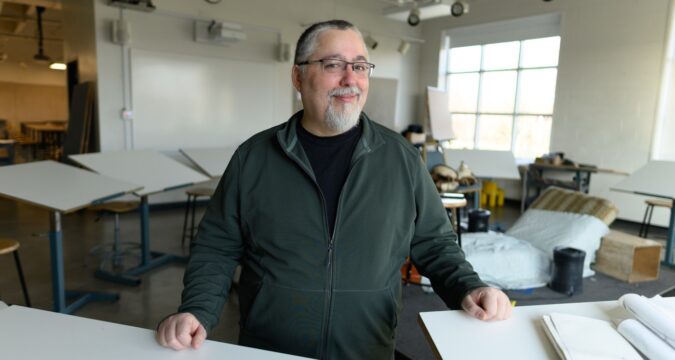
Moraine Valley art professor’s exhibit explores role of AI in society
A sabbatical from his position as an art professor at Moraine Valley Community College gave Erik La Gattuta the time he needed this fall to focus on his latest project, a comic book series featuring a robot and human who eventually learn to join forces.
Some of the finished pages – and rougher versions of others – are featured in the college’s first exhibition of the year, “Zack Hates Robots: A Story by Erik La Gattuta.” It’s on display through March 1 in the Robert F. DeCaprio Art Gallery, 9000 W. College Parkway in Palos Hills.
“Since the sabbatical affords him an entire semester off to pursue his artistic endeavors, the school asks that he exhibits his work on campus upon his return,” said Daniel Jarvis, gallery director. “I happened to be working as a gallery assistant and helped install his last sabbatical exhibition 10 years ago, and I must say that it has been a pleasure to see how far this project has come over the last decade. I can’t wait to see his latest work grace our gallery walls again!”
Jarvis is a fan of La Gattuta’s work, calling him a “wonderfully talented” illustrator and painter.
“While the label of ‘comic book’ is sometimes used in a negative connotation among the elites of the art world, Erik is one of many illustrators working today who prove that comic books can truly be an art form,” he shared. “Erik’s decades of teaching figure drawing have served him well; his characters are always incredibly expressive and feel undeniably human, even if they happen to have green skin or be part werewolf. His drawing style is fun and dynamic, with a great sense of humor even in the more dramatic scenes.”
This exhibit required an unusual setup, Jarvis said.
“The plan is to display each printed page from the first chapter of Erik’s graphic novel “Zack Hates Robots” in order so that visitors can experience the story as they walk through the gallery from left to right. We may also set up a projector or television screen to cycle through ‘work in progress’ images and videos to provide a more in-depth look into Erik’s process,” he explained. “It will be a unique viewing experience, breaking away from the norm of reading a traditional comic book or simply swiping through pages on a screen and instead seeing large comic book pages hung on the gallery walls.”
The artist described his work as “kind of a blend between expressive bold line cartooning and naturalist figure drawing.”
“My speciality since grad school has been in line drawing and figure painting, and my early artwork was all painting in that vein,” La Gattuta said. “My paintings started to tell stories and started to take on these science fiction themes. They were still realistically painted figures in space but started to tell stories.”
His students said his paintings looked like comic books and started bringing their books to class, which La Gattuta began studying. He started including dialogue in his work and eventually switched to drawing, first in paper and ink – traditional materials – but soon was working only in digital format. “These days I do everything on an iPad on a program called Procreate,” he said. “I just draw with a stylus on a screen instead of ink on paper.”
An image from Erik La Gattuta’s comic book series “Zack Hates Robots” highlights his distinctive style. “Any comics artist will tell you this, that comic artists invent a style for expressive reasons. I draw with these lines and shapes because it makes the expressive characters I like,” he shared. (Erik La Gattuta)
The story in this exhibit is a prequel to a story he began working on 20 years ago that starred an AI sitcom-writing character who wants to be declared legally as human, and how his life falls apart afterward. The current story, inspired by the division in this country and across the world amid the rise of technology, stars Zach, an anti-technology activist, and Liberty, a robot.
“In the beginning they don’t get along but they have a whole lot in common. Over the story, they sort of join forces,” La Gattuta explained.
His work takes time because he’s a one-man studio, writing a script similar to a movie script that details what the characters say and do, creating a set of roughs for each page, how many panels will be on a page, penciling in everything, layer by layer. The final stage is coloring everything.
“All these examples will be on the wall,” he said. “Eight of the pages are fully colored and all the other ones will be partially colored – 34 pages of the finished story will be on the walls,” as well as other things that show his process. “You’ll read them walking around the gallery left to right.”
Making this time-consuming process more efficient was the reason he took a sabbatical from teaching this fall, his third during his long tenure at Moraine Valley. “There’s a difference in knowing how to do something in general and how to do it fast and efficiently,” he explained, adding that making a comic book is “a lot of work” because of the details and story involved.
“The speed at which I drew a page increased during the sabbatical. I was slower but teaching myself how to go faster. The first page I penciled took me two or three days, the second one took a day and the third one took half a day,” La Gattuta said. “Before, I could spend three months on a single image. Now I spend three months on a single issue.”
He called it a “real blessing” to have a month to write the script, and he’ll be passing along the knowledge he gained during the sabbatical to his comics and general drawing students. “It’s very relevant. I never took a comics class. This is stuff I learned through self-teaching. I do have friends who are comic book artists who have given me critiques.”
Digital drawings for the first issue of a comic book series called Zack Hates Robots will be featured through March 1 in the Robert F. DeCaprio Art Gallery at Moraine Moraine Valley Community College. They are the work of Erik La Gattuta, an art professor at the college. (Erik La Gattuta)
Like many artists, La Gattuta hopes people who see his work will not only be excited to learn more about his comic and eventual website but also to think about the bigger picture.
“I hope it gets them thinking about technology and society and how it’s evolving. It’s something we think about every freaking day. It’s also conversations with each other and people who can cheat,” he said, adding that he’s not against technology, given that he’s “embraced technology to make my comic,” but is against those who abuse artificial intelligence.
“They’re doing things with it that are not only ethically wrong but illegal …. Stealing the work of millions to train AI.”
He explained that AI “collects the work of humans and averages it. If there is no human work fed into it and training it, it will spit out nothing. It doesn’t create or invent anything. Here’s the problem: Because people are paying AI companies and using them for free to create content … they’re putting the humans out of business,” he said. “When AI trains on AI, it gets worse and worse.”
La Gattuta knows AI has some valid uses. “If I’m drawing my character design and use AI to pose it from this view or that, it would speed things up. But if someone steals (my style) and puts it out there, that’s stealing from me.”
Although he doesn’t yet have a deal to have his comic printed, La Gattuta hopes to have it finished and on his website by this summer.
He’s not the only one looking forward to seeing his comic book in the gallery.
“I’m incredibly excited for this exhibition,” Jarvis said. “I think it will be a great change for students and the community to see what Erik has been hard at work on for so many years now. I’m sure it will also serve as a perfect advertisement for Erik’s Drawing Comics class and a great experience for his students.”
The gallery, which is free, is open 9 a.m. to 5 p.m. Monday through Friday as well as during shows in the building. Information is at morainevalley.edu/fpac or 708-974-5500.
Melinda Moore is a freelance reporter for the Daily Southtown.
https://www.chicagotribune.com/2026/02/08/moraine-valley-artist-erik-lagattuta/
Lindsey Vonn sufre una caída en el descenso femenino en los Juegos Olímpicos de Milán-Cortina
CORTINA D’AMPEZZO, Italia (AP) — Lindsey Vonn sufre una caída en el descenso femenino en los Juegos Olímpicos de Milán-Cortina.
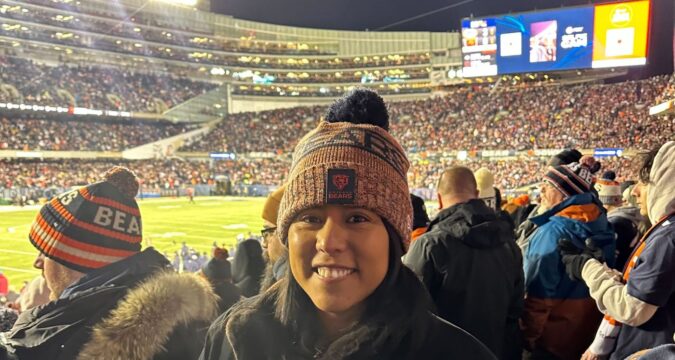
Erendira Rendon: My immigrant family and I became Bears fans this season. The joy was beautiful.
Never in my life has my family sat down to watch a football game. When I was growing up, the factories on Sunday were closed, so our entire day was for the family side hustle; they were never about leisure.
For a long time, I knew watching sports was exciting, but I couldn’t really feel the draw. Football in particular was hard to understand, with plays that last only seconds and the jarring violence of giant men smashing into each other.
This past September, after a rough weekend for the Bears, I asked a colleague what the point of sports fandom was if it seemed to bring more angst than joy. I expected her to say something about the spectacle or the merchandise or who knows what. Instead, her answer was simple.
“It’s about community,” she said — it’s about losing yourself in something in which you get to share the full range of emotion with perfect strangers and feel like a big family, if only on game days.
So, this season, I gave it a try and started watching the Bears play on Sundays to see what all the fuss was about. What most surprised me was how the team seemed to reflect our city — tough and scrappy, getting that “W” just when all hope seemed lost. It has been beautiful to see my city embrace the Bears, and after just a few Sundays, I felt somehow more connected to anyone wearing blue and orange.
I’m lucky that the first football game I ever went to was the first Bears-Packers game at Soldier Field this season. The anxiety of being on the edge of my seat along with 60,000 other people was like nothing I’d ever experienced.
Then those last three minutes of regular time — my dear Lord — it was like the stadium transformed, then, that winning touchdown in overtime! The energy swept me up, and, just weeks after skeptically watching my first game, I was jumping up and down with everyone, reveling in the joy and connection with each and every fan, player and Chicagoan.
A few days later on Christmas Day, my cousins were watching football on their phones because my mom doesn’t have a TV. Even though it wasn’t the Bears playing, their magical season had us all too excited about the playoffs to miss a game. So I found a little TV in my mom’s closet and set it up for everyone to enjoy the games together.
As a Catholic immigrant family, we care a lot about baby Jesus. Every year, our baby Jesus gets a brand-new outfit, and we have our baby Jesus party.
Despite Bears fever sweeping through the family, my mom hadn’t quite caught the bug yet, and she decided that our baby Jesus party would be Jan. 10 in honor of my late grandfather. Now, don’t get me wrong; I, too, am a devout follower of baby Jesus, but I’m also a born-again Bears fan, and we had a major scheduling dilemma.
We struck a compromise. I could make it to the baby Jesus party if they got a TV installed in time. The day of, I begged my family to please show up on time for prayers at 6 p.m. since we were playing the Packers at 7 p.m.
My family is Mexican, so of course everyone was late. By the time we started praying, it was already halftime. We were down 3-21.
Our Rosary took 45 minutes, and by the time we’d said our last Hail Mary, Da Bears had staged a miraculous comeback, and we felt like baby Jesus was on our side.
Our cousins just over the border in Wisconsin kept up a steady stream of taunts, trash-talking the Bears and causing us all a lot of anxiety as the minutes ticked by. But by then, I was a (three-week) veteran Bears fan, essentially an expert. I knew better. I kept telling my Illinois family: “It’s still possible, you have to believe!”
My entire family was cheering for the Bears that day. Even those who don’t speak English were rooting for Los Azules. I don’t know if my mom or aunts understood or cared much about the plays. I do know it brought them a lot of joy to see their adult kids happy, and they cheered along with us.
When the Bears won, we were all jumping up and down. Just like the fans at Soldier Field three weeks earlier, you could feel the joy and connection. With each other, with our team, with our state.
I had no idea that sports could spark such a fun and beautiful family moment. Afterward, we took celebratory mezcal shots and sent the video to our Wisconsinite cousins, friendly payback for the game-time taunts.
We know being a Bears fan doesn’t often bring you joy. But our team is part of our shared identity. Our team connects us to one another, to our city. No matter what’s going on, that shared fandom says that we have a place and that this place is our home.
This Sunday, we’re having our first Super Bowl party with wings and guacamole and mezcal. Thanks to the Bears and, claro, Benito (Bad Bunny), for opening up something new for my immigrant family to enjoy.
Even at a time when we can so often feel “othered” and rejected, we’re finding acceptance through this great American pastime. Go, Bears.
Erendira Rendon is vice president of immigrant justice at The Resurrection Project.
Submit a letter, of no more than 400 words, to the editor here or email letters@chicagotribune.com.
https://www.chicagotribune.com/2026/02/08/opinion-chicago-bears-super-bowl-bad-bunny-immigrants/

Illinois 9th District race tests long Jewish legacy in 15-way Democratic Party fight to succeed Schakowsky
For nearly eight decades, Illinois’ 9th Congressional District has been a Democratic stronghold with an almost unbroken tradition of Jewish representation — a political lineage stretching back to the aftermath of World War II and shaped by generations of voters clustered around historically Jewish suburbs and neighborhoods.
That history now collides with a changing district and a crowded, high-stakes Democratic Party field vying to succeed longtime U.S. Rep. Jan Schakowsky, who will retire after 28 years in Congress. The 15-candidate primary race has become a proxy battle involving party divisions, faith, identity and foreign policy, testing whether old assumptions about who represents the district — and how — still apply.
Once anchored more squarely by neighborhoods such as West Rogers Park and suburbs such as Evanston and Skokie, the district has been redrawn to extend from Chicago’s North Side to far-flung suburbs such as Crystal Lake, along with its core on the North Shore. And while Jewish voters remain influential, demographic shifts and generational change have altered the district’s once-reliable politics.
At the center of that tension are two Jewish candidates, state Sen. Laura Fine and Evanston Mayor Daniel Biss, who lead the field in terms of campaign cash entering 2026. Their rivalry has drawn national attention in part because of the role of the American Israel Public Affairs Committee, or AIPAC, and broader divisions within the Democratic Party over U.S. support for Israel.
Fine has emerged as the candidate most visibly benefiting from donors aligned with AIPAC, the pro-Israel lobbying group that has notably backed both Republicans and Democrats. Biss, meanwhile, has the endorsement of the more liberal pro-Israel organization J Street and he’s publicly criticized AIPAC’s influence in Democratic primaries.
The issue has become a fault line in a race that also includes candidates whose backgrounds would mark a sharp departure from the district’s past. Among them are Kat Abughazaleh, a 26-year-old newcomer to Illinois who is Palestinian and has frequently criticized AIPAC and Israel’s actions; former FBI agent Phil Andrew; Gen Z Skokie school board member Bushra Amiwala; state Rep. Hoan Huynh of Chicago; and state Sen. Mike Simmons of Chicago, each of whom would bring wider-ranging faith and life experiences to the seat. Another Jewish candidate, economist Jeff Cohen, has primarily self-funded.
President John F. Kennedy, from left, Rep. Sidney Yates and Gov. Otto Kerner ride in a motorcade on Oct. 19, 1962, of Democratic party officials from O’Hare International Airport to a downtown parade. Yates, first elected in 1948, represented the 9th Congressional District for nearly half a century. (Ron Bailey/Chicago Tribune)
“It’s been a Jewish Democratic stronghold for a very long time, for decades,” said Steve Sheffey, who writes a newsletter called Steve Sheffey’s Pro-Israel Political Update and supports Biss. Still, he added later: “I’m not sure that means it’s a Jewish seat.”
The district’s history helps explain why the question resonates so deeply.
Sidney Yates, first elected in 1948, represented the area for nearly half a century, and Schakowsky later did so for decades. In the transition between them, the leading contenders were all Jewish, including now-Gov. JB Pritzker, who lost to Schakowsky in the 1998 Democratic primary.
“Before Sid Yates came in, it was never considered a Jewish district,” said Don Rose, a longtime Chicago-area political activist. “It was a Democratic district.”
Over time, the presence of a large Jewish population — and the memory of antisemitic violence — shaped the area’s political identity. Skokie was thrust into national attention in the late 1970s when neo-Nazis proposed marching there, a town where about half the residents were Jewish and many were Holocaust survivors. In 1993, a synagogue in West Rogers Park was burned. In 1999, a white supremacist carried out a shooting spree that began near the southern border of the district, targeting Jews, Black people and Asian Americans. More recently, the area has experienced waves of antisemitic vandalism.
Those memories have taken on renewed urgency since the Oct. 7, 2023, Hamas attack on Israel and Israel’s subsequent military campaign in Gaza, which has reshaped political debate across the country — particularly among Democrats — over antisemitism, Palestinian rights and U.S. military aid.
In the 9th District, those debates are no longer abstract.
In interviews, each candidate in the top half of the pack argued that their individual life experience, in many cases including their faith, best positioned them to carry on the legacy of inclusive representation in the district.
“In my career, I focus on conspiracy theories, right-wing extremism, deradicalization, and one thing I try to stress is that pretty much every single conspiracy theory is rooted in antisemitism,” said Abughazaleh, who trailed only Fine in money raised last quarter. “I think it is impossible to truly combat antisemitism without recognizing that historical context, and I have devoted my career to fighting it for that very reason.”
Andrew, the former FBI agent, noted he had worked on securing communities against antisemitic violence in his role running a security consulting firm. Simmons said he could “meet the moment” amid an “onslaught of fascism in our country.” And Amiwala, the Skokie school board member, said that having a representative of faith in general “is on brand and in line” with the community’s expectations.
“I don’t think my values are any different as a Muslim candidate than values that a Jewish candidate would hold. Our faith teaches us the same concepts of justice, of integrity, of honesty,” Amiwala said.
Ald. Debra Silverstein, 50th, the sole Jewish member of Chicago’s City Council, said in an interview with the Tribune that she’s endorsing Fine.
“She is a very strong person with regard to the Jewish community,” Silverstein said. The seat “has been held by a Jewish person for a very, very long time, and I feel very strongly that it should remain that way,” she said.
While the U.S. Census doesn’t track religion, other reports show the district has a relatively large Jewish population that has shifted somewhat in recent years.
Nearly 12% of people living in the 9th District in 2024 were Jewish, according to a survey supported by the nonprofit Jewish Electorate Institute, a proportion comparable to the 10th Congressional District, which has been represented by U.S. Rep. Brad Schneider, who is Jewish, for most of the past 13 years.
Concerned citizens attend a candidate forum for the Illinois 9th Congressional District seat at Northminster Presbyterian Church in Evanston on Feb. 4, 2026. (Terrence Antonio James/Chicago Tribune)
According to a separate report, the Jewish United Fund’s 2020 Jewish Chicago population study, a cluster of near north suburbs, including Skokie and Evanston, was the only region in the Chicago area that saw a decline in the number of Jewish households in the 2010s. Much of that area has long been a core part of the district, though it does not neatly map onto the district’s boundary lines.
About 6 in 10 district residents are white, and 15% identify as Asian, the largest racial minority in the area. More than a quarter of the district’s residents were born outside the United States, and nearly 15% are Hispanic or Latino, according to estimates in the 2024 American Community Survey.
Nevertheless, the district’s deep Jewish history resonates.
Joshua Shanes, a professor at the University of California at Davis who has written about modern Jewish politics and religion and lives in Skokie, said the competition between Biss and Fine is part of a larger discussion about “what does it mean to be a Jewish representative? What does it mean to represent Jewish interests?”
“In this climate, having AIPAC be behind you is not going to be good for the politics. It’s good in Rogers Park, and it’s good in parts of Skokie. It’s not good in other parts of Skokie, and it’s certainly not good in Evanston,” said Shanes, who said he will support Biss. Taking a stand for Israel or Palestinians in the war in Gaza has become both a political litmus test and a policy position with real implications for how money is spent, he noted.
Late last month, U.S. Rep. Tim Walberg of Michigan, the Republican head of the House Education & the Workforce Committee, asked Biss to address the city’s decision not to ask Evanston police to clear the Northwestern student protests for Gaza in 2024, linking the move to “antisemitic activity on college campuses in Evanston.”
Biss also, responding to a report in the publication Jewish Insider, said he “never sought — and would never accept” AIPAC’s support for his campaign. He believes in Israel’s right to exist, recognizing a Palestinian state and halting some weapons sales to Israel, he wrote in a Substack blog post.
Fine, for her part, said at a forum last month that she believes in a two-state solution but not in “tying Israel’s hands right now.”
State Sen. Laura Fine, left, and Evanston Mayor Daniel Biss, both candidates for the Illinois 9th Congressional District seat, spar verbally during a public forum at Northminster Presbyterian Church in Evanston on Feb. 4, 2026. (Terrence Antonio James/Chicago Tribune)
While she has said she hasn’t sought their endorsement, AIPAC has sent fundraising messages in support of Fine. Last quarter, she received hundreds of thousands of dollars from donors who had previously donated to AIPAC or its affiliated super PAC, United Democracy Project, according to an analysis of contribution data.
Biss, a former assistant professor of mathematics at the University of Chicago, is backed by the 314 Action Fund, a fundraising committee that works to elect Democrats with science backgrounds. That group previously received at least $1 million from the United Democracy Project in 2024. The Biss campaign declined to respond to an inquiry about the connection between the fundraising groups.
Also last month, Bruce Leon, a politically moderate former candidate in the race who is Orthodox Jewish, took his name off the ballot after what he described as pressure from AIPAC to consolidate support behind Fine. Leon then declined to back Fine and endorsed Andrew, who is not Jewish.
At a forum in a church basement in Evanston on Wednesday, Biss criticized Fine over the support she has received from donors aligned with AIPAC, drawing applause from parts of the audience.
“AIPAC and their candidate, Laura Fine, have made clear through their behavior that they think the voters don’t like AIPAC. They’ve done everything they can to hide the fact that AIPAC is supporting Laura, even to the point of being disingenuous about it,” Biss said in a separate interview. “And that matches my experience in the community, not that it’s unanimous, but that the great majority of people disagree with AIPAC’s hardline position.”
Last week, a newly formed super PAC, Elect Chicago Women, started airing television ads for Fine and for Melissa Bean, a candidate in the mostly northwest-suburban 8th Congressional District. Biss’ campaign in a statement said the group was “suspected to be backed” by AIPAC.
There’s no public evidence proving or disproving the Biss campaign’s suggestion. The organization didn’t return an emailed request for comment and repeated phone calls to a number filed with the Federal Election Commission led to a busy signal. AIPAC itself didn’t return a request for comment, and Martin Ritter, a Chicago-based leader of the organization, declined to comment.
“I did not know about those ads until somebody told me about them this morning,” Fine said after the Wednesday forum. She said she did not know the name of the group behind them. “It’s very odd to all of a sudden see an ad when you don’t know where it came from, as a candidate.”
The new Fine ad makes no mention of Israel, though that’s not necessarily a marker that they weren’t a product of the pro-Israel group. In New Jersey, the super PAC affiliated with AIPAC ran ads attacking a candidate in last week’s Democratic congressional primary without ever mentioning Israel.
Asked directly whether she’d acknowledge the appearance of AIPAC’s support as an organization, Fine said, “I’ve been very honest and upfront to the fact that many people who have donated to AIPAC have also donated to my campaign. I’m a Jewish woman who supports the safety and security of Israel, so that’s not — it’s not surprising to me.” In a previous interview, she said she believed “people are giving AIPAC too much power” in saying the group is influencing the race.
Some candidates also pointed to larger demographic changes in recent decades.
“This congressional district is really considered the Ellis Island of the Midwest,” Huynh said. “We’re very intentional in terms of making sure we meet folks where they’re at.”
Ald. Silverstein said she would be “very concerned if it wasn’t a Jewish seat.”
“Because the makeup of this district has a very large Jewish community that’s nuanced, I think it’s important that we have a Jewish representative that understands our needs firsthand,” Silverstein said.
Carol Ronen, who is part of state party leadership as a representative for the 9th Congressional District on the Democratic State Central Committee, also said she’s endorsing Fine, calling her a “natural and normal extension of the kind of politics that Jan brought to the district.”
Schakowsky herself has endorsed Biss.
“It’s a big subset of the district, but so are lots of people,” Cohen, the economist, said. “What it means to be Jewish in this district is all over the map. That is clear from this fight.”
“There cannot be one Jewish vote anymore,” he said.