Category: News

Letters: We need permitting reform at the federal level to pave the way for clean energy projects
Recent weather extremes in the South and East are examples of what global warming can cause — a warmer Arctic that disrupts the polar vortex and pushes cold weather and snow farther south. It also changes moisture flows around the Earth, causing more rain, flooding and stronger storms in some areas and more heat waves, droughts and wildfires in other regions.
Our use of coal, oil and natural gas, which causes global warming, must be reduced quickly. One approach is to reform outdated and cumbersome permitting processes so clean energy projects, such as for solar and wind power — along with more transmission lines — can be added to our grid more quickly.
Also, permitting reform can put battery storage systems online sooner to hold excess electricity from solar and wind power plants during peak generation periods and release it when needed.
Currently, there are bipartisan efforts in Congress for reform. Email your senators and representative, or call them at 202-224-3121, to encourage them to support sensible permitting reform for clean and cheap renewable energy.
— Gary Jump, volunteer, Citizens’ Climate Lobby
Industry should pay costs
Bravo to state Sen. Graciela Guzmán (“Climate Change Superfund,” Feb. 1) for proposing the Climate Change Superfund Act. Here in California, we are working to do the same. It is unfair for billion-dollar industries that are major contributors to climate change and its disastrous and costly effects to be raking in vast profits and then leaving those costs to cities, states and consumers.
We also should urge our congressional representatives to stop providing billions of dollars in subsidies to these already-profitable industries. Let them instead share some of those profits to help pay for the damage their products are doing.
— Maggie Wineburgh-Freed, Los Angeles
Microplastic pollution
Efforts to keep microplastic pollution out of our drinking water are under way. We hear a lot about individual actions such as not using plastic containers, but drinking water is possibly our biggest source of exposure, and our individual actions are limited.
We drink water every day. It’s impossible to avoid this source of water contamination. I’m grateful that Gov. JB Pritzker joined six other governors to petition the U.S. Environmental Protection Agency to include microplastics in the renewal of its Unregulated Contaminant Monitoring Rule 6. Monitoring microplastics would help us have a better understanding of what is present in drinking water, a necessary step before regulations can be created.
I urge the EPA to include microplastics to help pave the way for regulation that would keep our drinking water safe. And I urge Pritzker to use his power to keep up the pressure.
You, too, can call on Pritzker to ensure the EPA follows through.
— Yhelena Hall, Chicago
Rules for nuclear reactors
President Donald Trump has directed the Department of Energy to review, approve, construct and operate new nuclear test reactors and have at least three operating by July 4. This is clearly not possible considering the importance of safety concerns associated with nuclear reactors, particularly new and novel designs. Careful and objective review against rigorous safety requirements and standards is essential for safe operation of reactors.
Notwithstanding, the DOE initiated the Reactor Pilot Program and is actively proceeding to achieve operation of the new test reactors by July 4. To accomplish this, DOE has worked closely with companies that design and operate test reactors to gut the requirements for reactor design and operation, including nuclear safety, security and environmental protection requirements. Many requirements were removed, and those that remain have been changed from requirements to recommendations and considerations. This was done behind closed doors with no public access to scrutinize and to provide input on DOE actions.
This is unacceptable and must be stopped.
The safety and the public acceptance of nuclear test reactor operation require careful review, approval and inspection by a credible organization against clear and rigorous safety standards by an organization independent of the industry. The DOE has clearly demonstrated that it cannot be depended on to assure the safety of the public and the environment. Public access to and scrutiny of DOE actions is essential.
Stop this cavalier approach to our safety now.
— Jack Grobe, Winfield
We deserve transparency
The U.S. is no longer leading in global efforts to reduce emissions proven to affect public health and climate change. Besides withdrawing from the Paris climate agreement agreed upon by 193 other nations and the European Union, the Donald Trump administration is clearly loosening environmental rules, putting industry interests over the health of our environment and our public.
The Department of Energy’s recent revamping of nuclear safety directives in collusion with the industry allows fast-tracking of construction and operation of experimental nuclear reactors. Changes to environmental protection requirements have been made without public input. These changes relax restrictions on radioactivity releases to groundwater, sewers, surface waters, air, soil and drinking water. Monitoring and documentation requirements of releases are merely recommended, and avoidance and minimization of adverse impacts to animals, plants and the public are left up to the industry. By stripping out detailed rules, compliance with the Clean Water Act and the Clean Air Act is not assured.
The bottom line is the current administration doesn’t want the public or nuclear and environmental experts to be barriers to corporations. The expediency and greed of the fast-moving artificial intelligence industry are the motivators, and health and safety are no longer of paramount concern. Many historical lessons about corporate carelessness and irresponsibility are being disregarded: Superfund radiation cleanup at Kerr McGee in West Chicago and polychlorinated biphenyl contamination of groundwater in private wells in DuPage County and Wayne Township.
I’m someone with two decades of professional experience in environmental protection at a DOE facility. Even with clear and enforceable regulatory requirements, contractors view these regulations as an impediment to their goals. Without clear and enforceable rules, contractors will prioritize profit over protection of the public and the environment.
The public deserves transparency — secrecy does not build trust.
— Deborah Grobe, Winfield
Bad Bunny’s Grammy win
This year’s Grammys were about more than music — they were about who we are as a country.
Bad Bunny made history by winning Album of the Year with a Spanish-language album. That matters. It shows that America is changing and that Latinos are part of the fabric of this nation.
Puerto Rico is part of the United States. Latinos are part of the United States. Our language, culture and stories are no longer on the margins; they are front and center.
I’m not from Puerto Rico, but I am a proud Latino living in the United States, and this moment felt personal. You might like Bad Bunny’s music or you might not; that’s not the point. What matters is what he accomplished without compromising who he is.
This is a powerful message for our youths and our community: Be proud of who you are, where you come from and what you bring to this country.
Last Sunday night was a proud Latino moment and a glimpse of America’s future.
— James di Paulo, president and CEO, Illinois Hispanic Chamber of Commerce
Submit a letter, of no more than 400 words, to the editor here or email letters@chicagotribune.com.
https://www.chicagotribune.com/2026/02/08/letters-020826-permitting-reform/

Edward Keegan: Will a new Chicago Bears stadium benefit northwest Indiana?
The city of Gary could use some love.
Based on what we’ve seen, the Bears are looking for a deal that’s a big win for them and a lot less for the municipality that hosts them. And Gary seems to be OK with that.
That’s unfortunate, because sports arenas, teams and cities should share in the success that big-time sports can bring. If the project revitalized one of Gary’s neighborhoods, it could be a good thing for both sides.
But that’s not what’s being proposed.
Gary has had civic dreams before. Its downtown stands as a testament to these thwarted ambitions.
Its main north-south street, Broadway, has its north terminus at the colossal lakefront Gary Works. Dual domed structures housing City Hall and the Lake County Superior Court sit astride the main thoroughfare as part of a never-completed 1920s urban plan to create a grand civic space as a gateway for the city. The elevated east-west Indiana Toll Road separates the U.S. Steel complex from this underused space.
This area has seen previous efforts at revival. The now-vacant Genesis Convention Center was built in 1981 and operated as recently as 2020. Since 1984, the Gary Metro Center Station connects Greyhound bus service with the South Shore Line, the convention center and downtown. And the U.S. Steel Yard, home to the minor league team Gary SouthShore RailCats, is just three blocks east. It opened in 2003 and has provided a seasonal injection of energy into the area. But neither the convention center nor the multimodal station provides much architectural interest and need to be redeveloped. While Gary has proposed three distinct sites for the Bears, none of them would affect the downtown area that could be key to the city’s rebirth.
When the Bears purchased the old Arlington Park racing site, they acquired 326 acres in Arlington Heights. Gary is offering three possible sites for what it calls the Bears Stadium District, varying in size from 145 to 760 acres.
The Buffington Harbor site is the closest to Chicago with 145 acres immediately north of Gary/Chicago International Airport. It’s expressway- and lakefront-adjacent, but would create a little urban island on a tract of land that offers no connections to the city’s fabric.
The Gary West End site is a 400-acre tract along Interstate 80/94 and immediately east of the Hard Rock Casino Northern Indiana and the forthcoming Lake County Convention Center. The casino is bereft of any architectural aspiration; many new warehouses along the interstate are more interesting. And this is likely Gary’s preferred site since it will add to these other entertainment uses. It’s also the only one of the three sites for which Gary has shown conceptual plans. But while the plans show an enticing mixed-use district with considerable density, there’s no connection to the existing portions of the city — and the interstate is likely to maintain that separation for decades to come.
The Miller Beach site is touted for developing as much as 760 acres along the lakefront, but that includes about 100 acres that are part of Indiana Dunes National Park and should be untouchable for any development uses. This site might best re-create the sort of lakefront entertainment district that the Bears have previously proposed for the area near Soldier Field. But while Gary’s lakefront has long been the home of U.S. Steel’s Gary Works and other commercial ventures, it would be misguided to use this area for a stadium and associated amenities. As Chicagoans, we cherish our public lakefront, and we should encourage similar lakefront protections for future developments in Gary.
The problem with the three peripheral sites is that there’s no there there. Gary should build on its urban strengths as a critical part of the city’s revival. The city is proposing a series of soulless and placeless places.
Based on what it has shown to date, Gary seems uninterested in leveraging this project for any goal other than money. None of the sites create connections between Gary and the city’s existing and potential amenities; they are all chosen and presented as isolated locales where some nice 1960s-era stadium development is welcomed. These are pop-up mini insta-cities that have little to do with where they are and promote a moated/gated community for sports. And a full stadium will have an impact, approximately doubling the city’s population on a game day.
Good urban development is about making connections, working with the fabric of what’s existing to extend the cityscape. What Gary needs is a revitalization of its urban core, centered around Broadway south of the Indiana Toll Road.
Related Articles
Edward Keegan: West Side fresh market asks, ‘What would it look like if we actually got our 40 acres?’
Edward Keegan: Bruce Goff was not your typical architect
Edward Keegan: This year in Chicago architecture wasn’t on anyone’s bingo card
Edward Keegan: Robert A.M. Stern wrote 7,000 pages about New York architecture. Who can write Chicago’s tome?
Edward Keegan: Frank Gehry’s generous and democratic architecture
It’s fair to ask whether architecture or urban design is even part of the equation that the Bears are considering. The schemes we’ve seen so far for the stadium itself — and this includes Arlington Heights and the area adjacent to Soldier Field — are placeless and unlikely to change much regardless of the site eventually chosen.
This is not how major projects — public or private — should be developed, whether it’s in Chicago, Gary or Arlington Heights.
Is it too much to ask that the Bears be interested in the public good that architecture and urbanism can and should be? What, other than money, interests the Bears? Now 40 years removed from their last championship, it’s easy to argue that the franchise isn’t even all that interested in football.
Gary needs investment and development, but none of the three Bears schemes promise more than isolated cash machines. The city needs to create economic activity at its urban core. This was a bustling and successful city in the middle years of the 20th century, before disinvestment and a post-industrial economy depleted the population. A new “entertainment district” including an NFL stadium could help revive the city’s fortunes, but as it stands, it’s looking in all the wrong places.
Edward Keegan writes, broadcasts and teaches on architectural subjects. Keegan’s biweekly architecture column is supported by a grant from former Tribune critic Blair Kamin, as administered by the not-for-profit Journalism Funding Partners. The Tribune maintains editorial control over assignments and content.
Submit a letter, of no more than 400 words, to the editor here or email letters@chicagotribune.com.
https://www.chicagotribune.com/2026/02/08/column-chicago-bears-northwest-indiana-gary-keegan/

Chicago Black Restaurant Week returns for its 11th year, celebrating Black culinary excellence
Chicago Black Restaurant Week returns for its 11th year, spotlighting Black-owned restaurants and businesses across Chicago and the surrounding suburbs. Running from Feb. 8 through Feb. 22, the annual event follows Chicago Restaurant Week and invites diners to support local Black-owned establishments through curated food and drink specials.
“As long as I’m serving my community, I feel like I’m doing my part,” said Lauran Smith, founder of Chicago Black Restaurant Week.
Smith launched CBRW in 2015 to uplift Black-owned businesses and highlight Black entrepreneurship in Chicago’s food scene. She intentionally scheduled the event during the second week of February to honor the legacy of Carter G. Woodson, who established “Negro History Week” in 1926 — a celebration that later evolved into what is now known as Black History Month. This year marks the 100th anniversary of that original observance.
“One year, I want President Obama to be home, and he and Michelle can come to some of the restaurants,” Smith said.
The 2026 edition of Chicago Black Restaurant Week features 39 participating businesses throughout Chicagoland, representing a wide range of cuisines and dining experiences. In the city, highlights include neighborhood staples like Sanders BBQ Supply Co. in Beverly and Soul Prime in Lincoln Park, while suburban participants include D’s Cookie Dough Co. in Flossmoor and the smoothie bar Juiced BY SHIC! in Midlothian.
For some businesses, this will be their first year participating, like Strugglebeard Bakery or African restaurant Mahari, while others have made the event a yearly tradition.
Erik “Rico” Nance is the owner of several businesses in Hyde Park and has been a part of CBRW since the beginning. This year, he chose to include Litehouse Whole Food Grill, Stussy’s Diner, Soul Shack and Chemistry.
“Black Restaurant Week means the world to us because it puts a spotlight on what we’ve accomplished as Black entrepreneurs,” Nance said. “These restaurants are part of the fabric of our city, that’s why people say Chicago has amazing food.”
During the week, customers visiting Nance’s participating restaurants will receive 20% off their final bill. He said the discount is especially significant at Chemistry, a fine-dining steakhouse, because it makes the menu more accessible to diners who may not typically be able to afford its regular prices. The offer applies to the entire menu, including hand-crafted cocktails, signature steaks, fish entrées and the restaurant’s popular butter cake.
“It’s a family environment,” Nance said. “People come dressed to the nines, hearing beautiful music, seeing Black excellence.”
Beyond the dining room, Nance said community support has always been central to his work. Across his restaurants, he offers free meals to people in need and mentors fellow entrepreneurs opening their own businesses.
“This was a very tough world and we are products of that tough world,” Nance said. “I’m thankful for any spotlight that we can get because, you know, it means more revenue, continued jobs and continuing to give back to our community. And that means the world to us.”
Taste 222, owned by Don Thompson, is another restaurant participating in CBRW. As a contemporary American eatery with a Southern twist, they have been a part of the promotion since 2021.
“It’s a nice way to kind of extend our awareness of people getting in the restaurant during some colder months and puts us in front of some new faces, which is always great,” said Dillon Kelley, Taste 222’s beverage and hospitality director.
Unlike Chicago Restaurant Week, which requires set-price menus, CBRW allows each restaurant to create its own specials.
For the promotion, Taste 222 will offer all entrées at reduced prices ending in 26 cents for 2026. Dishes like steak frites, chicken and waffles, blackened catfish, and shrimp and grits will be available all day, while linguini de mar, steak au poivre, ancho-glazed salmon and lamb loin chops will be discounted from 3 p.m. to 7 p.m. Desserts, including red velvet cake and Somrus mocha ice box cake, along with cocktails, beer, wine and Black-owned spirits, will also be offered at reduced prices.
Taste 222’s Chicago Black Restaurant Week offerings include blackened catfish. (Crystal Jackson)
“Some people don’t even realize we’re a Black-owned restaurant, so this helps solidify our identity,” Kelley said.
The West Loop restaurant will also host a Black History Month-themed trivia night on Feb. 23 as an informal wrap-up to CBRW. The event, held in partnership with Smith, will be open to the public and staff, chefs and owners from participating restaurants are all invited to compete.
“Black Restaurant Week gives us a network, a way to keep our people’s doors open and open more doors,” Nance said. “I just salute every restaurant that has the faith to step out and try to change their generational outlook.”
Chicago Black Restaurant Week runs through Feb. 22. For participating restaurants and menus, go to chiblackrestaurantweek.com
Big screen or home stream, takeout or dine-in, Tribune writers are here to steer you toward your next great experience. Sign up for your free weekly Eat. Watch. Do. newsletter here.
https://www.chicagotribune.com/2026/02/08/chicago-black-restaurant-week-2026/

Condo Adviser: Chicago’s municipal code requires inspections of elevators, escalators in central business district
Q. I was elected to the board of directors of my self-managed condominium association in the Chicago Loop. I have been advised by the other board members that the association must comply with an annual inspection for the elevators pursuant to the city’s specific annual inspection certification (AIC) program, rather than a typical elevator inspection. Is our condominium association required to comply with the AIC program or is it optional?
A. Chapter 9-4-010 of the City of Chicago Municipal Code requires annual inspections of elevators, escalators and other conveyance devices for all buildings located in the central business district. The geographical boundaries of the central business district are defined in Chapter 9-4-010 and do include the Chicago Loop. For buildings that fall within the central business district, Chicago’s annual AIC program requires property owners to (i) hire an independent third-party inspection company to inspect their elevators and other conveyance devices annually and (ii) maintain an online account with the city for reporting inspection results.
Q. I am a prospective purchaser of a residential cooperative in Chicago. I understand the general difference between a condominium unit and a residential cooperative apartment. I have been told that if I want to purchase a residential cooperative apartment, my lender will require a recognition agreement and if I want to hold title to my shares in a revocable trust for estate planning purposes, I have to execute a trust guaranty. What is a recognition agreement and a trust guaranty?
A. Regarding a condominium unit, a purchaser will purchase a piece of real estate in a condominium building that has been subdivided pursuant to the Condominium Act. Regarding a cooperative apartment, the purchaser is not purchasing real estate, but purchasing shares of a corporation because a corporation owns the building and the purchaser is purchasing shares to be entitled to lease a residential apartment pursuant to a proprietary lease document.
Since a residential cooperative is merely a purchase of shares, and not real estate, a recognition agreement is a document requested by lenders relating to the residential cooperative loan where the lender requires the corporation that owns the building to recognize the lender’s rights including imposing certain obligations on the corporation, notice to the lender and rights to cure defaults by the shareholder. A trust guaranty document is a document where an individual person guarantees the payment obligations of the trust that intends to be the shareholder of the corporation.
Q. I live in a townhome association of approximately 50 townhome units, which is incorporated as an Illinois not-for-profit corporation. Several of the association’s board members contend that since the townhome association is a not-for-profit corporation, the townhome association is not subject to the terms and requirements of the Common Interest Community Association Act (CICAA). Is this accurate?
A. Common interest communities involve real estate other than a condominium or residential cooperative and possess the obligation to pay for the maintenance, improvement, insurance premiums or real estate taxes of common areas described in a declaration that is administered by an association. Common interest communities in Illinois are subject to CICAA unless an exemption for a small common interest community applies. The criteria to qualify for the exemption is (i) 10 units or less or (ii) an annual budget of $100,000 or less. Since a 50-unit townhome association is more than 10 units, unless the annual budget of the townhome association is $100,000 or less, a 50-unit townhome association is subject to CICAA.
Got a question for the Condo Adviser? Email ctc-realestate@chicagotribune.com.
https://www.chicagotribune.com/2026/02/08/condo-adviser-municipal-code-elevators/
Robert Pape: Why Tucker Carlson’s civil war narrative is dangerous for America
Tucker Carlson says liberal cities such as Minneapolis are pushing America toward disaster and civil war. The uncomfortable truth is that his argument helps normalize the very use of federal force that makes democratic breakdown more likely.
Carlson’s narrative is emotionally charged — warning of spiraling “chaos” if the liberal cities are not reined in. However, it is empirically false and assumes that local disorder precedes state force and that resistance morally and politically justifies federal escalation.
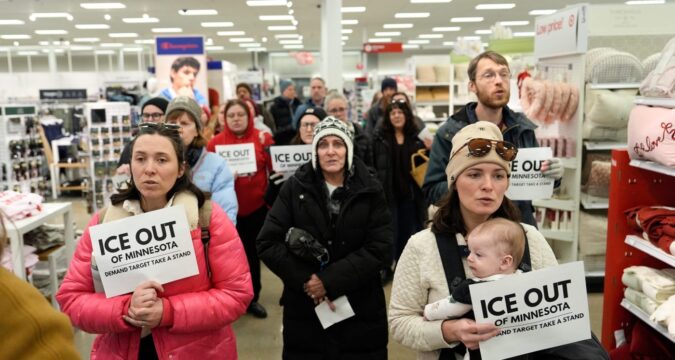
But the evidence from Minneapolis (and from Chicago months earlier) shows the opposite: Protest followed aggressive federal enforcement, not the reverse.
In Minneapolis in January, a dramatic deployment of federal agents into residential neighborhoods was followed by the fatal shooting of a civilian, Renee Good, during an operation. (The fatal shooting of another civilian, Alex Pretti, followed two weeks later.) Conflicting official accounts and the federal government’s refusal to submit the investigation to independent local oversight created a legitimacy crisis. Only then did large-scale protests unfold.
That pattern matters in democracies because coercive power must be perceived as legitimate to be accepted. When it is interpreted as selective, partisan or punitive, it produces resistance, not compliance.
New national survey data collected by the University of Chicago-based Chicago Project on Security & Threats, or CPOST, from Jan. 22 to 26 underscores why Carlson’s false narrative is dangerous.
Nearly one-third of Republicans (31%) already say they support President Donald Trump “using the U.S. military to stop protests against the Trump agenda,” and most (59%) “approve of the way President Trump is handling immigration enforcement, including deportations.” Carlson’s narrative already has a willing audience.
At the same time, nearly three-quarters of Democrats (74%) view federal forces — including Immigration and Customs Enforcement operations — in liberal cities as a “hostile military occupation,” and the same share believe deployments are meant “to impose new political leadership on liberal cities.” So, both Democrats and Republicans see federal enforcement not as protection but as an occupying force to compel liberals to bow to Republican political goals.
Related Articles
Elizabeth Shackelford: What history tells us about fighting the repression we are seeing here
64 days in Chicago: The story of Operation Midway Blitz
That snapshot reveals both the power and peril of elite narratives: They shape not just what people think, but also how they interpret force itself.
Importantly, the survey also points to a potential de-escalator that Carlson ignores. Solid majorities of both Democrats (71%) and Republicans (63%) agree that a “reasonable compromise on immigration would be to work together to deport undocumented immigrants with felony convictions.”
That suggests there are areas of bipartisan agreement on targeted enforcement — but only if the conversation shifts away from existential framing and toward practical policy.
Carlson’s framing collapses the causal sequence and recasts resistance as evidence of failure, rather than as a reaction to state-initiated escalation. In Chicago, hundreds of immigration raids — most targeting immigrants who have no criminal record — disrupted schools, businesses and entire neighborhoods. A civilian, Silverio Villegas-Gonzalez, was killed during a traffic stop. Protest followed. Federal officials described dissent as disorder. Enforcement intensified. The cycle repeated. These cases do not prove urban collapse. They illustrate how state action without shared legitimacy transforms routine policy into political confrontation.
In democratic systems, coercive force does not generate obedience through strength alone. It does so through perceived neutrality, restraint and shared purpose. Force interpreted as partisan or punitive erodes legitimacy and invites resistance.
Carlson’s insistence that unrest in cities is the cause rather than the consequence of escalation absolves decision-makers of responsibility for that collapse — and provides a moral rationale for expanding force.
This framing is not abstract. It shifts public expectations and lowers the threshold for the acceptability of coercion against fellow citizens.
America is a long way from a civil war. But one does not begin when citizens protest; it begins when leaders and influential voices convince the public that coercion against political opponents is governance rather than failure.
If Americans want to avoid that future, we must stop misdiagnosing the source of conflict — and stop celebrating the escalation that creates it.
Robert Pape is a professor in the political science department and director of the Chicago Project on Security and Threats at the University of Chicago.
Submit a letter, of no more than 400 words, to the editor here or email letters@chicagotribune.com.
https://www.chicagotribune.com/2026/02/08/opinion-tucker-carlson-donald-trump-civil-war-minneapolis/
Palestinos intentan cruzar la frontera entre Gaza y Egipto pese a los retrasos
Por SAMY MAGDY y MELANIE LIDMAN
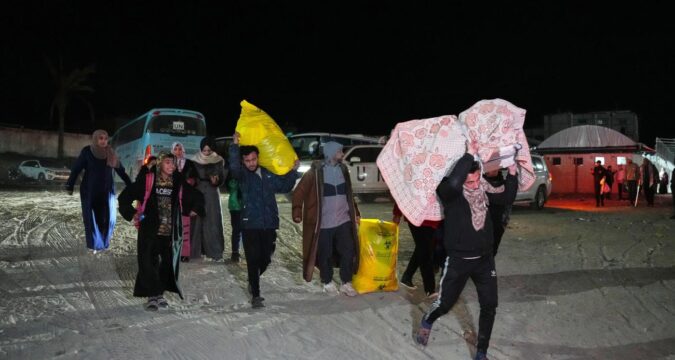
EL CAIRO, Egipto (AP) — Palestinos a ambos lados del cruce entre Gaza y Egipto, que abrió la semana pasada por primera vez desde 2024, se dirigían el domingo hacia la frontera con la esperanza de cruzar, en uno de los principales requisitos para el alto el fuego respaldado por Estados Unidos. La apertura se produce mientras se espera que el primer ministro israelí, Benjamin Netanyahu, viaje a Washington esta semana, aunque el principal tema de discusión será Irán, dijo su oficina.
El cruce de Rafah se abrió para unos pocos palestinos en cada dirección la semana pasada, después de que Israel recuperara el cuerpo del último rehén retenido en Gaza y varios funcionarios estadounidenses visitaran Israel para presionar por la apertura. Durante los primeros cuatro días de la apertura del cruce, apenas 36 palestinos que requerían atención médica pudieron salir hacia Egipto, además de 62 acompañantes, según datos de las Naciones Unidas.
Funcionarios palestinos dicen que casi 20.000 personas en Gaza buscan salir para recibir atención médica que, según ellos, no está disponible en el territorio devastado por la guerra. Los pocos que han logrado cruzar describieron retrasos y denunciaron maltrato por parte de las fuerzas israelíes y otros grupos involucrados en el cruce, incluido un grupo armado palestino respaldado por Israel, Abu Shabab.
Un grupo de pacientes y heridos palestinos se reunió el domingo por la mañana en el patio de un hospital de la Media Luna Roja en la ciudad de Jan Yunis, en el sur de Gaza, antes de dirigirse al cruce de Rafah con Egipto para recibir tratamiento en el extranjero, dijeron familiares a The Associated Press.
Amjad Abu Jedian, quien resultó herido en la guerra, tenía previsto salir de Gaza para recibir tratamiento médico el primer día de la reapertura del cruce, pero solo se permitió viajar a cinco pacientes ese día, dijo su madre, Raja Abu Jedian. Abu Jedian fue herido por un francotirador israelí cuando construía baños tradicionales en el campamento de refugiados central de Bureij en julio de 2024, dijo ella.
El sábado, su familia recibió una llamada de la Organización Mundial de la Salud notificándoles que él está incluido en el grupo que viajará el domingo, dijo ella.
“Queremos que cuiden a los pacientes (durante su evacuación)”, dijo. “Queremos que el ejército israelí no los agobie”.
La división de defensa israelí que supervisa la operación del cruce no confirmó de inmediato la apertura.
Un grupo de palestinos también llegó el domingo por la mañana al lado egipcio de la frontera del cruce de Rafah para regresar a la Franja de Gaza, informó la televisión satelital estatal Al-Qahera News de Egipto.
Los palestinos que regresaron a Gaza en los primeros días de la operación del cruce describieron horas de retrasos y registros invasivos por parte de las autoridades israelíes y Abu Shabab. Una misión de la Unión Europea y funcionarios palestinos gestionan el cruce fronterizo, e Israel tiene su instalación de control a cierta distancia.
El cruce fue reabierto el 2 de febrero como parte de un frágil acuerdo de alto el fuego que detuvo la guerra entre Israel y Hamás. En medio de la confusión en torno a la reapertura, el cruce de Rafah estuvo cerrado el viernes y el sábado.
El cruce de Rafah, una línea de vida esencial para los palestinos en Gaza, era el único paso no controlado por Israel antes de la guerra. Israel tomó el lado palestino de Rafah en mayo de 2024, aunque el tráfico a través del cruce estaba fuertemente restringido incluso antes de eso.
Las restricciones negociadas por funcionarios israelíes, egipcios, palestinos e internacionales suponían que apenas 50 personas podrían regresar a Gaza cada día y 50 pacientes médicos, junto con dos acompañantes para cada uno, podrían salir, pero muchas menos personas de las esperadas han cruzado en ambas direcciones.
___
Lidman informó desde Tel Aviv, Israel.
___
Esta historia fue traducida del inglés por un editor de AP con la ayuda de una herramienta de inteligencia artificial generativa.
Today in History: First US execution using lethal gas takes place
Today is Sunday, Feb. 8, the 39th day of 2026. There are 326 days left in the year.
Today in history:
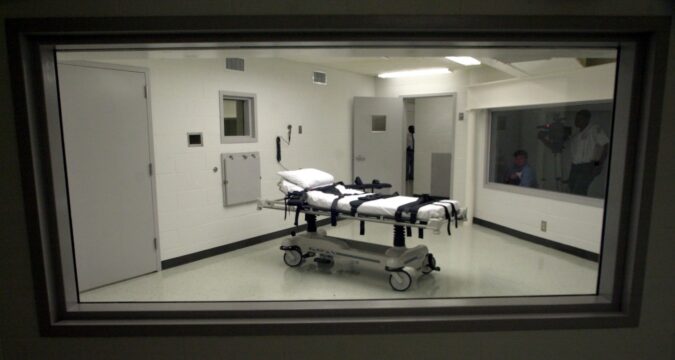
On Feb. 8, 1924, the first U.S. execution using lethal gas took place at the Nevada State Prison in Carson City as Chinese immigrant Gee Jon was put to death for a murder conviction.
Also on this date:
In 1587, Mary, Queen of Scots was beheaded at Fotheringhay Castle in England after she was implicated in a plot to murder her cousin, Queen Elizabeth I.
In 1693, a charter was granted for the College of William and Mary in Williamsburg in the Virginia Colony.
In 1904, Japan launched a surprise attack on the Russian Navy at Port Arthur (now Dalian, China), marking the start of the Russo-Japanese War.
In 1910, the Boy Scouts of America organization was incorporated by William D. Boyce, who drew inspiration from the British Boy Scout movement.
In 1936, the first NFL draft was held at the Ritz-Carlton Hotel in Philadelphia.
In 1949, Roman Catholic Cardinal József Mindszenty was sentenced to life in prison for his opposition to the fascist and later communist Hungarian governments; released during the 1956 Hungarian Revolution, he sought asylum at the U.S. Embassy when the Soviet Union invaded, living there for 15 years. Mindszenty left Hungary in 1971 and died in exile in Vienna in 1975.
In 1960, work began on the Hollywood Walk of Fame, located on Hollywood Boulevard and Vine Street in Los Angeles.
In 1968, three Black students were killed and 28 wounded as state troopers opened fire on demonstrators at South Carolina State College in Orangeburg in the aftermath of protests over a whites-only bowling alley. The event would become known as the Orangeburg Massacre.
In 1971, NASDAQ, the world’s first electronic stock exchange, held its first trading day.
In 1993, an Iranian airliner with 132 people on board collided with an air force jet after takeoff from Tehran and exploded, leaving no survivors.
In 2013, a massive two-day snowstorm began dumping up to 3 feet of snow around the U.S. Northeast, causing widespread power outages and leavening several people dead. The storm struck some areas with hurricane-force winds and coastal flooding.
Related Articles
Today in History: Great Baltimore Fire begins
Today in Chicago History: Michael Jordan signs baseball contract with White Sox
Today in Chicago History: John Wayne Gacy ‘killed people like he was swatting flies,’ prosecutor says at trial’s opening
Today in History: Washington National Airport renamed for Ronald Reagan
Vintage Chicago Tribune: Our local Winter Olympians of Games past
In 2020, a soldier angry about a land dispute went on a 16-hour shooting rampage in Thailand, killing at least 29 people and wounding dozens. Police and military personnel hunted the gunman overnight and shot him dead.
Today’s birthdays: Composer-conductor John Williams is 94. Broadcast journalist Ted Koppel is 86. Actor Nick Nolte is 85. Comedian Robert Klein is 84. Actor-rock musician Creed Bratton is 83. Actor Mary Steenburgen is 73. Author John Grisham is 71. Hockey Hall of Famer Dino Ciccarelli is 66. Rock singer Vince Neil (Mötley Crüe) is 65. Basketball Hall of Famer Alonzo Mourning is 56. Actor Seth Green is 52. Actor William Jackson Harper is 46. Actor-comedian Cecily Strong is 42. Hip-hop artist Anderson Paak is 40. Professional surfer Bethany Hamilton is 36. Actor Kathryn Newton is 29.
Today in Chicago History: WGN-AM’s Bob Collins killed in midair plane collision in Zion
Here’s a look back at what happened in the Chicago area on Feb. 8, according to the Tribune’s archives.
Is an important event missing from this date? Email us.
Front page flashback: Feb. 9, 2000
The National Transportation Safety Board said a plane piloted by WGN radio host Bob Collins and an aircraft flown by a student pilot were in the same crowded airspace approaching the same runway at Waukegan Regional Airport around 3 p.m. on Feb. 8, 2000. All three people aboard the two aircraft were killed when they collided. (Chicago Tribune)
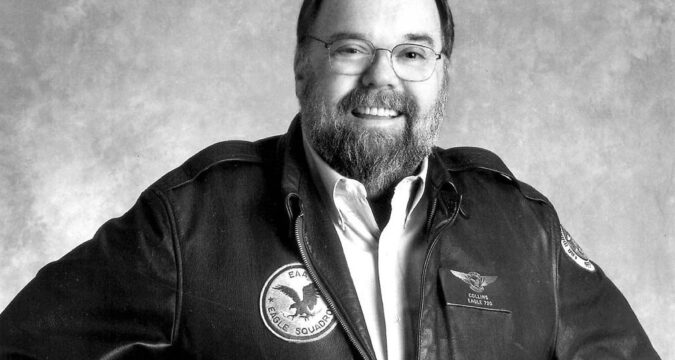
2000: WGN-AM 720 morning host Bob Collins was among three people killed in a midair collision of two small planes in Zion, about 45 miles north of Chicago. Investigators concluded a chain of miscalculations that began with an inaccurate position estimated by Collins.
Weather records (from the National Weather Service, Chicago)
High temperature: 62 degrees (1925)
Low temperature: Minus 17 degrees (1899)
Precipitation: 1.1 inches (1887)
Snowfall: 3.9 inches (2021)
1896: The Big Ten Conference was organized at the Palmer House. One faculty member from each of seven schools — Purdue University, University of Chicago, University of Illinois, University of Michigan, University of Minnesota, Northwestern University and University of Wisconsin — established the fundamentals of the conference, which was officially incorporated as the “Intercollegiate Conference Athletic Association” in 1905.
1921: Medill School of Journalism opened at Northwestern University.
University of Chicago football player Jay Berwanger in 1936. (Chicago Tribune historical photo)
1936: Jay Berwanger, University of Chicago running back and Tribune Silver Football winner, became the first pick by the Philadelphia Eagles in the very first NFL draft at Philadelphia’s Ritz-Carlton.
Two months earlier, New York’s Downtown Athletic Club named Berwanger, nicknamed “Genius of the Gridiron,” the “most valuable football player east of the Mississippi River.” The trophy was named for club athletic director John W. Heisman the following year after Heisman died.
Chicago Tribune Silver Football: What to know about the Big Ten’s highest honor
“It was to be my first airplane ride, and that was a bigger thrill than getting the trophy! They treated us royally in New York,” Berwanger recalled in 1992.
Jay Berwanger, shown here on Nov. 12, 1996, is the winner of the first Heisman Trophy and played football for the University of Chicago. (Ovie Carter/Chicago Tribune)
The trophy sat in the home of Berwanger’s Aunt Gussie for years, and she used it as a doorstop. Berwanger later donated it to his high school in Dubuque, Iowa. The Heisman committee later created a duplicate, which he donated to the University of Chicago, where it resides in the Gerald Ratner Athletics Center.
Berwanger never played in the NFL. He died in 2002.
1974: “Good Times,” a weekly comedy about a fictional Chicago family that lived in Cabrini-Green (though the development was never mentioned during the show), premiered on CBS. Esther Rolle starred as Florida Evans, the family matriarch, who returned to Chicago after previously working as the housekeeper on “Maude.” The show aired for six seasons.
The painting shown during the show’s closing credits was “The Sugar Shack” by Ernie Barnes. It sold at auction in 2022 for $15.3 million.
Chicago weather: A look back at our coldest recorded temperatures
1977: Chicago emerged from a 43-day streak of temperatures below freezing — the longest in city history.
The marquee on the Oriental Theatre is partially changed to the new name, the Nederlander Theater, on Feb. 3, 2019. (Brian Cassella/Chicago Tribune)
2019: Chicago’s Oriental Theatre, 24 W. Randolph St. was renamed in honor of James M. Nederlander, the former chairman of the theater-owning Nederlander Organization and a famous Broadway character, who died in 2016 at the age of 94.
Want more vintage Chicago?
Subscribe to the free Vintage Chicago Tribune newsletter, join our Chicagoland history Facebook group, stay current with Today in Chicago History and follow us on Instagram for more from Chicago’s past.
Have an idea for Vintage Chicago Tribune? Share it with Kori Rumore and Marianne Mather at krumore@chicagotribune.com and mmather@chicagotribune.com
https://www.chicagotribune.com/2026/02/08/february-8-chicago-history/
Moscú anuncia la detención de un sospechoso por el tiroteo contra un alto general ruso
Associated Press
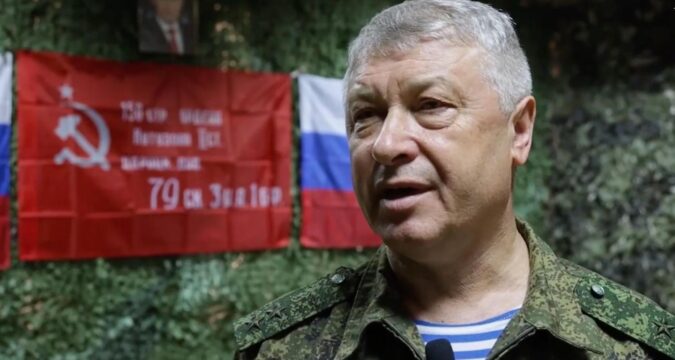
MOSCÚ (AP) — El Servicio Federal de Seguridad de Rusia informó el domingo que el hombre sospechoso de disparar contra un subdirector de la agencia de inteligencia militar rusa en Moscú fue detenido en Dubái y entregado a Rusia.
El teniente general Vladimir Alekseyev fue hospitalizado después de recibir varios disparos el viernes de un agresor en un edificio de apartamentos en el noroeste de Moscú, según la portavoz del Comité de Investigación, Svetlana Petrenko. El ataque siguió a una serie de asesinatos de altos mandos militares que Rusia ha atribuido a Ucrania.
El Servicio Federal de Seguridad (FSB) dijo que un ciudadano ruso, Lyubomir Korba, fue detenido en Dubái bajo sospecha de llevar a cabo el tiroteo. En un comunicado en su sitio web, el FSB dijo que también había identificado a dos “cómplices”, uno de los cuales fue detenido en Moscú y otro que “se fue a Ucrania”.
Preguntado sobre el tiroteo, el ministro urso de Exteriores de Rusia, Serguéi Lavrov, dijo el viernes que la investigación correspondería a las agencias de seguridad, pero lo describió como un aparente “acto terrorista” por parte de Ucrania destinado a descarrilar las conversaciones de paz.
No hubo una respuesta inmediata de Kiev a una solicitud de comentarios sobre las acusaciones rusas.
El tiroteo ocurrió al día siguiente de que negociadores rusos, ucranianos y de Estados Unidos concluyeran dos días de conversaciones en Abu Dabi, Emiratos Árabes Unidos, destinadas a poner fin al conflicto de casi cuatro años en Ucrania. La delegación rusa fue liderada por el jefe de inteligencia militar, el almirante Igor Kostyukov, superior de Alekseyev.
Alekseyev, de 64 años, ha servido como primer subdirector de la agencia de inteligencia militar de Rusia, conocida como el GRU, desde 2011.
Fue condecorado con la medalla de Héroe de Rusia por su papel en la campaña militar de Moscú en Siria. La televisora estatal emitió imágenes en junio de 2023 en las que hablaba con el líder mercenario Yevgeny Prigozhin, cuando su Grupo Wagner tomó el cuartel general militar en la ciudad sureña de Rostov del Don durante su breve motín.
Desde que Moscú envió tropas a Ucrania en 2022, las autoridades rusas han culpado a Kiev de varios asesinatos de oficiales militares y personas conocidas en Rusia. Ucrania ha reivindicado la responsabilidad de algunos de ellos.
En diciembre, una bomba en un auto mató al teniente general Fanil Sarvarov, jefe de la Dirección de Entrenamiento Operacional del Estado Mayor de las Fuerzas Armadas de Rusia.
En abril, otro militar ruso de alto rango, el teniente general Yaroslav Moskalik, subdirector del departamento operativo principal en el Estado Mayor, fue asesinado por una bomba colocada en su auto estacionado cerca de su edificio de apartamentos a las afueras de Moscú.
Un hombre ruso que anteriormente vivía en Ucrania se declaró culpable de llevar a cabo el ataque y dijo que los servicios de seguridad de Ucrania le habían pagado.
Días después del asesinato de Moskalik, el presidente ucraniano Volodymyr Zelenskyy dijo que recibió un informe del jefe de la agencia de inteligencia exterior de Ucrania sobre la “liquidación” de altos mandos militares rusos, añadiendo que “la justicia inevitablemente llega”, aunque no mencionó el nombre de Moskalik.
En diciembre de 2024, el teniente general Igor Kirillov, jefe de las fuerzas de protección nuclear, biológica y química del ejército, fue asesinado por una bomba escondida en una patineta eléctrica ante su edificio de apartamentos. El asistente de Kirillov también murió. El servicio de seguridad de Ucrania reclamó la autoría del ataque.
___
Esta historia fue traducida del inglés por un editor de AP con la ayuda de una herramienta de inteligencia artificial generativa.
Tailandia empieza a votar en comicios generales con 3 grandes partidos compitiendo por el poder
Por GRANT PECK y JINTAMAS SAKSORNCHAI
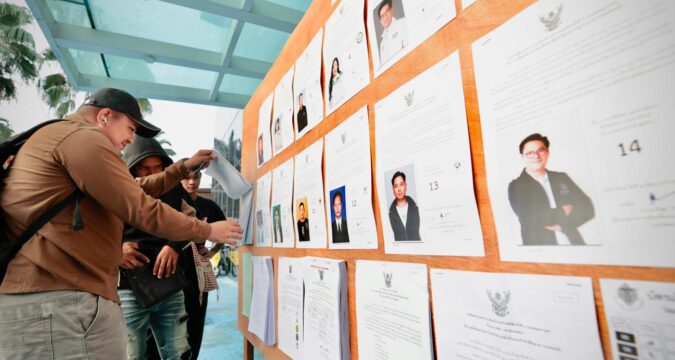
BANGKOK (AP) — Los votantes en Tailandia acudieron a las urnas el domingo en unas elecciones generales anticipadas consideradas como una carrera a tres bandas entre visiones políticas progresistas, populistas y de clientelismo tradicional.
La batalla por el apoyo de 53 millones de votantes registrados se desarrolla en un contexto de lento crecimiento económico y sentimiento nacionalista en aumento. Aunque más de 50 partidos se presentan a las elecciones, sólo tres —el Partido Popular, Bhumjaithai y Pheu Thai— tienen la organización y popularidad a nivel nacional para obtener un mandato ganador.
El próximo primer ministro se elegirá por mayoría simple en una votación de los 500 legisladores electos.
No se espera un ganador absoluto
Las encuestas locales proyectan consistentemente que ningún partido obtendrá una mayoría, lo que requerirá formar un gobierno de coalición.
Aunque se considera que el progresista Partido Popular es el favorito por número de votos, su política reformista no es compartida por sus principales rivales, quienes podrían excluirlo al unirse para formar un gobierno.
El Partido Popular, liderado por Natthaphong Ruengpanyawut, es el sucesor del Partido Avanzar, que ganó la mayoría de los escaños en la Cámara de Representantes en 2023, pero fue bloqueado para formar un gobierno por legisladores conservadores y luego obligado a disolverse.
“Creo que obtendremos el mandato del pueblo, y prometimos al pueblo que formaremos el gobierno del pueblo para llevar políticas que beneficien a todos, no a unos pocos en el país”, afirmó a la prensa Natthaphong tras votar en Bangkok poco después de la apertura de urnas a las 8 de la mañana.
El partido reformista suaviza su discurso
La plataforma de su partido sigue prometiendo reformas radicales del ejército, la policía y el poder judicial, atrayendo a votantes jóvenes y urbanos. Las restricciones legales lo han llevado a dejar de lado las demandas de reforma de una ley que impone duras penas por criticar a la monarquía, y hacer hincapié en los temas económicos.
Suavizar su política corre el riesgo de debilitar su base de apoyo, ya en riesgo porque las últimas elecciones lo posicionaron claramente como la alternativa a nueve años previos de gobierno liderado por militares, una situación que no puede explotar fructíferamente esta vez.
Al mismo tiempo, sus posiciones críticas hacia el ejército pueden ser una desventaja política ante el aumento del patriotismo registrado durante los enfrentamientos fronterizos del año pasado con Camboya, dijo Napon Jatusripitak, director del Centro para la Política y Geopolítica en Tailandia Futuro, un grupo de expertos con sede en Bangkok.
El Partido Bhumjaithai, encabezado por el actual primer ministro, Anutin Charnvirakul, está considerado como el principal defensor y la opción preferida de la corriente tradicional monárquica-militar.
Anutin ha sido primer ministro apenas desde septiembre pasado, después de servir en el gabinete de su predecesora inmediata, Paetongtarn Shinawatra, quien fue destituida del cargo por una violación ética relacionada con el manejo de las relaciones con Camboya. Disolvió el parlamento en diciembre para convocar nuevas elecciones después de ser amenazado con una moción de censura.
Los posteriores enfrentamientos fronterizos con Camboya permitieron a Anutin presentarse como un líder en tiempos de guerra después de que su popularidad inicialmente disminuyera debido a inundaciones y escándalos financieros. Su campaña se centra en la seguridad nacional y el estímulo económico.
“Hemos hecho todo lo que teníamos que hacer, pero no podemos forzar la mente del pueblo. Sólo podemos presentarnos y esperar que el pueblo tenga fe en nosotros”, dijo Anutin después de votar en la provincia nororiental de Buriram, bastión de su partido.
Bhumjaithai, considerado como el partido con más opciones de formar el próximo gobierno, se beneficia de una estrategia electoral que emplea políticas de clientelismo tradicionales y una maquinaria hábil en la organización de base en el noreste rico en votos.
La maquinaria política de Thaksin
El Partido Pheu Thai es una nueva plataforma política del ex primer ministro multimillonario Thaksin Shinawatra. Otros partidos respaldados por Thaksin lograron repetidos regresos electorales, sólo para ser derrocados por tribunales de tendencia conservadora y agencias de vigilancia estatal.
Suavizó su política lo suficiente para las elecciones de 2023 para regresar al poder después de que la antes hostil clase dirigente monárquica-militar le considerase como una alternativa aceptable al partido más progresista Avanzar.
El sistema judicial conservador se volvió contra él de todos modos, destituyendo a dos de sus primeros ministros en dos años y ordenando el encarcelamiento de Thaksin por cargos antiguos. El partido ahora hace campaña por la revitalización económica y promesas populistas como repartos de efectivo, nominando al sobrino de Thaksin, Yodchanan Wongsawat, como su principal candidato a primer ministro.
“Estoy emocionado, porque creo que hoy será otro día ocupado para la democracia del país”, dijo Yodchanan a los periodistas después de votar.
La votación del domingo incluye un referéndum que pregunta a los votantes si Tailandia debería reemplazar su Constitución redactada por militares en 2017.
La votación no es sobre un borrador propuesto, sino más bien para decidir si se autoriza al parlamento a comenzar un proceso formal de redacción, lo que requeriría muchos pasos adicionales antes de concretarse.
Los grupos prodemocracia ven una nueva carta como un paso crítico para reducir la influencia de instituciones no electas como el ejército y el poder judicial, mientras que los conservadores advierten que podría causar inestabilidad.
___
Esta historia fue traducida del inglés por un editor de AP con la ayuda de una herramienta de inteligencia artificial generativa.


