Category: News

Indiana House committee hears testimony, debates township mergers bill
After lengthy discussion Tuesday, the Indiana House Local Government Committee will hear a Senate bill that aims to merge the state’s townships another time before its final approval.
State Sen. Rick Niemeyer, R-Lowell, authored Senate Bill 270, which would require the Indiana Department of Local Government Finance to compile data on each township, except those in Marion County, by Dec. 31.
According to the bill, the department will assign points to each township, and one with at least four points would merge with one that has fewer than four points. The department will assign points for various reasons, including if a township did not provide assistance in 2023 or 2024, if it didn’t manage fire protection or emergency medical services on Jan. 1, 2025, or if it didn’t file an annual finance report to the State Board of Accounts in 2023 or 2024.
Niemeyer spoke on the bill before it was discussed and testimonies were heard. Townships that merge would work together to figure out leadership.
Townships can appeal to the Department of Local Government Finance on any points received, and the department has 30 days to act on the appeal.
“This is the dialogue that I’ve had in the last four or five years on this issue: you can’t survive with 999 trustees,” Niemeyer said. “You’ve got to look at merging, and this bill does this. It’s going to take out a lot of the small ones.”
With the legislation’s setup, Niemeyer estimates that between 310 and 325 townships will merge.
“It’s a bill that really (prioritizes) efficiency in government,” he said. “It leaves townships as a form of government that’s there for your assistance, your fire protection, your cemetery care, your referrals to every agency that’s out there when you have a recipient come in and needs to figure out what they’re going to do.”
The committee wants to make amendments to the bill before it moves to the House floor, said Committee Chair and state Rep. Chris May, R-Bedford. May did not say what the amendments might be, but they will “help clean up the bill.”
Some state representatives — including state Rep. Vernon Smith, D-Gary — said the bill is similar to House Bill 1315, authored by state Rep. Alaina Shonkwiler, R-Noblesville, which would dissolve certain townships statewide by Jan. 1, 2028, and transfer powers, duties, offices and properties to a municipality or county.
Shonkwiler’s bill passed the House in a 55-44 vote on Feb. 2 and is in the Senate Local Government Committee. Shonkwiler testified on the bill Tuesday, saying that it’s important not to pit the two bills against each other, and their work can be complementary.
“We’ve had conversations even as recently as yesterday with the Senate Local Government Committee on what that could potentially look like going forward,” Shonkwiler said Tuesday. “I commend both chambers of the House and Senate for moving thoughtful reform of township government forward. … Whether we want (House Bill) 1315, or whether we want (Senate Bill) 270, or some happy marriage of the two, we can discuss that in the future.”
Before the committee agreed to hear the bill again, six people testified on behalf of the bill Tuesday, all in support of the legislation’s intended actions.
Larry Curl, vice president of the Indiana Volunteer Firefighters Association, said Senate Bill 270 addresses concerns the organization has with township governments. He believes that it will help provide quality service in a more efficient manner statewide.
“We have taken oaths to serve and provide for our communities,” Curl said. “And we believe that Senate Bill 270 will provide much-needed oversight to assure that those who live in the townships receive the best care possible. We believe Senate Bill 270 will be a fair and balanced approach to such service, holding us all accountable to the (community) we have been sworn to protect.”
Lydia Wales, trustee for Franklin Union Needham Township, also testified in support of the bill. Wales has been trustee for three terms, and the township is a merger of Franklin, Union and Needham townships, which occurred on Jan. 1, 2022.
“In many ways, we followed the same process outlined in this bill,” Wales said. “We evaluated ourselves, identified what served our residents best and made a local decision on how we should merge.”
Through the merger, the townships eliminated duplicate services and created a system that works best for area residents. The merger has been successful thus far, Wales said, and Senate Bill 270 would allow the same kind of success statewide.
During the 2025 legislative session, state Rep. Karen Engleman, R-Georgetown, authored House Bill 1233, which aimed to dissolve township government and give an elected county trustee powers and duties regarding township trustees, fire protection and emergency services, according to Post-Tribune archives. The bill also said that on Jan. 1, 2027, all fire protection districts and territories would dissolve, and fire services would be provided in accordance with a county plan.
The bill was sent to the House Local Government Committee but was never heard further.
In 2011, former Gov. Mitch Daniels and the Kernan-Shepherd report called for the complete elimination of township government, spotlighting ways to make government more cost-effective and efficient, according to Post-Tribune archives. The proposal was never passed by the legislature.
mwilkins@chicagotribune.com

Obamacare Fraud Targeted By New Federal Rule
Obamacare Fraud Targeted By New Federal Rule
Authored by Lawrence Wilson via The Epoch Times,
The Centers for Medicare and Medicaid Services has unveiled new regulations to strengthen the integrity of the Obamacare insurance exchanges and promote innovation.
The new federal rule, released for comment on Feb. 9, will lower the cost of health care, according to Secretary of the Department of Health and Human Services Robert F. Kennedy Jr.
“At President [Donald] Trump’s direction, [this agency] is driving down costs and rooting out fraud across our health insurance programs,” Kennedy said in a statement, predicting that the policy changes overall will reduce premiums and increase consumer choice.
Eligibility Verification
New anti-fraud regulations will require stronger enforcement of eligibility and income verification, correcting a situation that some observers say allowed unscrupulous insurance brokers to sign up millions of people for the program without their knowledge, particularly in plans with no premiums.
America’s Health Insurance Plans, the trade association for health insurance companies, has disputed that claim. However, 24 had more enrollees in Obamacare zero-premium plans in 2024 than they had qualifying residents, according to data from the think tank Paragon Health Institute.
The new regulations, once finalized, will require agents and brokers to use federally-approved forms for verifying enrollee eligibility and to obtain their consent for enrollment.
The regulations also make it clear what action a consumer must take to review and affirm their personal and eligibility information, and to signify their consent.
The rule would clarify which individuals qualify for Obamacare subsidies as “eligible noncitizens,” and would deny subsidies to those who are ineligible for Medicaid due to their immigration status.
Marketing Practices
A second program change prohibits certain marketing practices for agents and brokers who help customers sign up for Obamacare through the federal and state marketplaces.
Providing cash, cash equivalents, or monetary rebates to influence customers to enroll would be prohibited.
Also prohibited are falsely suggesting that customers would qualify for a zero-premium plan and misleading customers about enrollment deadlines.
“This proposal would ensure consumers are provided accurate information about the Exchange prior to enrollment, maintain the integrity of the exchanges, and foster trust between consumers and agents, brokers, and web-brokers,” according to the Centers for Medicare and Medicaid Services.
Payment Tracking
The new rule seeks to create an information security protocol for enrollees of the program as of 2024 to measure improper payments in the state-based exchanges.
Fraud, waste, and abuse costs the program up to $27 billion annually by some estimates, said Chairman of the House Ways and Means Committee Rep. Jason Smith (R-Mo.).
“This fraud can directly impact the legitimate needs of patients, who may face denied claims or delayed care when their providers struggle to verify which insurance is valid due to the chaos created by schemes like people using stolen identities to sign up for multiple plans,” Smith said in November.
Consumer Choice
Other provisions of the rule aim to expand consumer choice and bring down prices.
The draft of the policy permits insurance companies to offer catastrophic plans with terms from one to 10 years. Currently, customers must be either under 30 years old, ineligible for a subsidy for a marketplace plan, or have a hardship or affordability exemption.
The rule would expand hardship exemptions for people aged 30 and above to make catastrophic plans more accessible.
Also, insurers would be allowed to offer Obamacare plans that do not meet the standard plan requirements. Standardized plans have the same deductibles and cost-sharing, which makes it easier to compare various plans based on price and other factors.
The change aims to give issuers more flexibility to tailor plan options to their marketplaces.
“The goal is simple: lower costs, more choice, and exchanges that work as intended,” Dr. Mehmet Oz, administrator of the Centers for Medicare and Medicaid Services, said in a Feb. 9 statement.
The proposed regulations will be published in the Federal Register on Feb. 11 and open for comment for 30 days.
Tyler Durden
Tue, 02/10/2026 – 17:00
https://www.zerohedge.com/political/obamacare-fraud-targeted-new-federal-rule
Indiana House passes nuclear facility permits bill
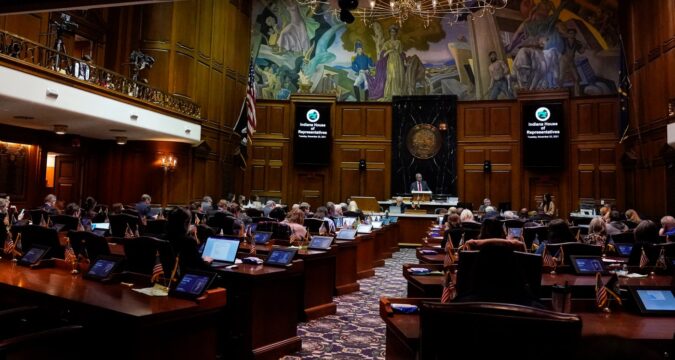
The Indiana House, on Monday, passed a bill that would shape how nuclear facilities receive permits, and it now moves onto Gov. Mike Braun’s desk.
The bill passed in a 64-28 vote. Braun is expected to sign the legislation into law.
State Sen. Eric Koch, R-Bedford, authored Senate Bill 258, which would make changes to the Indiana Code about how the Indiana Department of Environmental Management issues permits to nuclear facilities. Changes include repealing a prohibition from constructing or operating a nuclear facility without an IDEM permit and repealing the authorization for the commissioner to conduct a public hearing on the environmental effects.
The legislation would also require a nuclear facility operator to file an environmental feasibility report to IDEM, according to the Indiana General Assembly website. Before its House approval, the Indiana Senate passed the bill in a 36-9 vote in late January.
State Rep. Ed Soliday, R-Valparaiso, sponsored the bill and showed his support on the House floor Monday. Soliday believes the bill is something that “should’ve been done years ago,” but nuclear reactor certification activity slowed down.
The federal government maintains exclusive authority over radiological safety in the construction of nuclear power facilities under the Atomic Energy Act of 1954, Koch previously told the Indiana Senate. The U.S. Supreme Court has also upheld the belief that the federal government maintains complete control of the safety and nuclear aspects of energy generation, he added. The court ruled that state laws that infringed on federal power — even if enacted because of safety concerns — would conflict with the Nuclear Regulatory Commission’s duties.
“Unfortunately, in Indiana, we have a number of statutes in place that seem to give IDEM the authority to certify a nuclear reactor,” Soliday said. “What this does is parse those out.”
Soliday said that during the Indiana House Utilities, Energy and Telecommunications Committee meeting, multiple people had concerns that this would mean fewer public hearings. He doesn’t believe that would happen because the Nuclear Regulatory Commission would also have hearings.
State Rep. Matt Pierce, D-Bloomington, opposed the bill on Monday as well as when he heard it in committee.
“I think that rather than this legislation, which seems to have us basically completely back out of this area,” Pierce said, “we would be better served to have legislation that says what is the maximum amount of involvement and protection that we can give our citizens that fits within the preemption requirement.”
Braun has been dedicated to bringing nuclear power to the state. In November 2025, Braun announced that First American Nuclear would bring its headquarters, manufacturing facilities and an energy park to Indiana, according to Post-Tribune archives.
First American Nuclear is dedicated to building small modular reactors, or SMRs, which are advanced nuclear reactors that have about one-third the generating capacity of traditional nuclear reactors, according to the International Atomic Energy Agency.
A First American Nuclear spokesperson told the Post-Tribune in November that the company is looking for sites for its corporate headquarters, manufacturing facility and energy park, but none have been decided yet. Construction for the manufacturing and energy park sites is expected to start in 2028.
https://www.chicagotribune.com/2026/02/10/indiana-house-passes-nuclear-facility-permits-bill/
Annual governors’ gathering with White House unraveling after Trump excludes Democrats
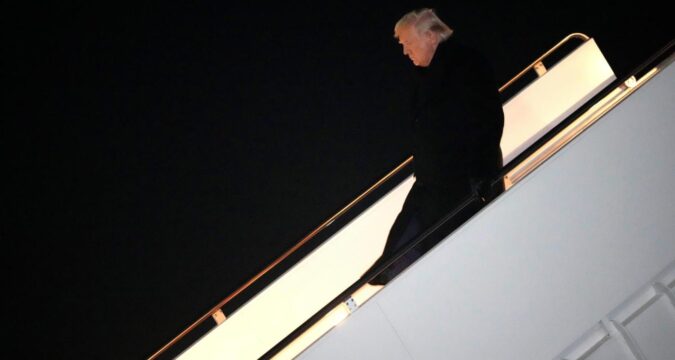
WASHINGTON — An annual meeting of the nation’s governors that has long served as a rare bipartisan gathering is unraveling after President Donald Trump excluded Democratic governors from White House events.
The National Governors Association said it will no longer hold a formal meeting with Trump when governors are scheduled to convene in Washington later this month, after the White House planned to invite only Republican governors. On Tuesday, 18 Democratic governors also announced they would boycott a traditional dinner at the White House.
“If the reports are true that not all governors are invited to these events, which have historically been productive and bipartisan opportunities for collaboration, we will not be attending the White House dinner this year,” the Democrats wrote. “Democratic governors remain united and will never stop fighting to protect and make life better for people in our states.”
Oklahoma Gov. Kevin Stitt, a Republican who chairs the NGA, told fellow governors in a letter on Monday that the White House intended to limit invitations to the association’s annual business meeting, scheduled for Feb. 20, to Republican governors only.
“Because NGA’s mission is to represent all 55 governors, the Association is no longer serving as the facilitator for that event, and it is no longer included in our official program,” Stitt wrote in the letter, which was obtained by The Associated Press.
The governors’ group, which is scheduled to meet from Feb. 19-21, is one of the few remaining venues where political leaders from both major parties gather to discuss the top issues facing their communities. White House press secretary Karoline Leavitt said on Tuesday that Trump has “discretion to invite anyone he wants to the White House.”
“It’s the people’s house,” she said. “It’s also the president’s home, so he can invite whomever he wants to dinners and events here at the White House.”
Representatives for Sitt and the NGA didn’t comment on the letter. Brandon Tatum, the NGA’s CEO, said in a statement last week that the White House meeting is an “important tradition” and said the organization was “disappointed in the administration’s decision to make it a partisan occasion this year.”
In his letter to other governors, Stitt encouraged the group to unite around common goals.
“We cannot allow one divisive action to achieve its goal of dividing us,” he wrote. “The solution is not to respond in kind, but to rise above and to remain focused on our shared duty to the people we serve. America’s governors have always been models of pragmatic leadership, and that example is most important when Washington grows distracted by politics.”
Signs of partisan tensions emerged at the White House meeting last year, when Trump and Maine’s Gov. Janet Mills traded barbs.
Trump singled out the Democratic governor over his push to bar transgender athletes from competing in girls’ and women’s sports, threatening to withhold federal funding from the state if she did not comply. Mills responded, “We’ll see you in court.”
Trump then predicted that Mills’ political career would be over for opposing the order. She is now running for U.S. Senate.
The back-and-forth had a lasting impact on last year’s conference and some Democratic governors did not renew their dues last year to the bipartisan group.
Peoples reported from New York.
https://www.chicagotribune.com/2026/02/10/governors-gathering-trump-excludes-democrats/

FBI search of Georgia offices tied to probe of possible 2020 election ‘defects,’ affidavit says
ATLANTA — The FBI obtained a search warrant to seize hundreds of boxes of ballots from election offices in Fulton County, Georgia, as part of a criminal investigation into possible “deficiencies or defects” in the vote count in the 2020 contest lost by President Donald Trump, according to an affidavit unsealed Tuesday.
The affidavit provides the first public justification for an FBI search last month that targeted a county that Trump and allies have long seen as central to their false claim that the 2020 election was stolen. The investigation, based on a referral from a Trump administration official, rests on claims that have long been made by people who assert widespread fraud in the contest even though audits, state officials, courts and Trump’s own former attorney general have all rejected the idea of widespread problems that could have altered the outcome.
The investigation began with a referral from Kurt Olsen, who served as Trump’s 2020 campaign lawyer when it lost dozens of lawsuits challenging the election and now serves as an administration official overseeing the attempt to investigate Trump’s loss, according to the affidavit.
The search of the heavily Democratic county stirred immediate concerns among Democrats that Trump was marshaling the powers of the FBI and Justice Department to pursue retribution over his persistent claims of a stolen election and because of the unusual presence of Tulsi Gabbard, the country’s director of national intelligence. The affidavit makes no mention of any evidence of foreign interference in the 2020 election even though the possibility of such meddling has been a longstanding conspiracy theory among Trump supporters who question the 2020 vote count.
Democrat Joe Biden won Georgia by about 11,800 votes in an election overseen by a Republican secretary of state and certified by a Republican governor.
Among the “deficiencies or defects” investigators are looking at is Fulton County’s admission that it does not have scanned images of all the ballots counted during the original count or the recount, according to the affidavit. Fulton County has also confirmed that some ballots were scanned multiple times during the recount, the affidavit says.
“If these deficiencies were the result of intentional action, it would be a violation of federal law regardless of whether the failure to retain records or the deprivation of a fair tabulation of a vote was outcome determinative for any particular election or race,” the document says.
The affidavit says seizures of the election records was necessary to determine whether election records were destroyed and or the tabulation of votes included materially false votes.” It cites potential violations of a law regarding the preservation and retention of election records, a misdemeanor. It also cites a law that makes it a crime to “knowingly and willfully” deprive residents of a “fair and impartially conducted election process,” which is a felony.
But the document also expresses uncertainty about whether the potential defects constitute a crime, noting that elections in Fulton County has already been the subject of multiple reviews.
After a particularly disastrous primary election in 2020, an independent monitor was hired to observe the general election that year as part of an agreement between the county and the State Election Board. He documented “sloppy processes” and “systemic disorganization” but found no evidence of illegality or fraud.
State lawmakers in 2021 used a provision of a new law to initiate a performance review of the county’s election practices. That review found that the county’s elections had been characterized by “disorganization and a lack of a sense of urgency in resolving issues.” But it also found the county had shown marked improvement.
An investigation by the secretary of state’s office and a performance review by the state elections board, which came at the urging of the Republican-controlled legislature, came to similar conclusions.
According to the affidavit, the review board stated, “we do not see any evidence of fraud, intentional misconduct, or large systematic issues that would have affected the result of the November 2020 election.”
Agents armed with a warrant spent hours on Jan. 28 at the country elections hub, just sought of Atlanta, before driving off with trucks loaded with hundreds of cartons of election materials.
A week after the seizure, Fulton County officials filed a motion seeking the return of the materials that had been taken and the unsealing of the sworn statement presented to the judge who signed off on the search. The warrant sought the seizure of the following documents related to the 2020 election in the county: all ballots, tabulator tapes from the scanners that tally the votes, electronic ballot images created when the ballots were counted and then recounted, and all voter rolls.
“Claims that the 2020 election results were fraudulent or otherwise invalid have been exhaustively reviewed and, without exception, refuted,” the county argued in a court filing, noting that numerous lawsuits, as well as state and federal investigations, had found no evidence of fraud.
Associated Press writer Nicholas Riccardi in Denver contributed to this report.
https://www.chicagotribune.com/2026/02/10/fbi-georgia-election-offices/
Autoridades de Perú rescatan a casi 500 aves halladas en cautiverio en una casa de la Amazonía
Associated Press
LIMA (AP) — Casi medio millar de aves silvestres en cautiverio que iban a ser vendidas dentro y fuera de Perú fueron rescatadas por la fuerza pública de una casa al pie de una carretera en la Amazonía, informaron el martes las autoridades.
Las aves —conocidas como pihuichos, periquitos o catitas, pero cuyo nombre científico es brotogeris versicolurus— estaban en tres jaulas. Los animales fueron trasladados a una dependencia del gobierno regional de Ucayali para que luego sean devueltas a los bosques, informó la fiscalía ambiental en un comunicado.
Estas aves de la Amazonía se alimentan de gusanos, frutas, semillas y flores. Miden alrededor de 25 centímetros y tienen franjas de plumas de colores amarillo y blanco en las partes externas de sus alas, según el estatal Instituto de Investigaciones de la Amazonía Peruana.
La fiscalía no reportó detenidos. En Perú el delito de tráfico ilegal de flora o fauna silvestre se castiga con entre 3 y 5 años de cárcel. Estas aves se venden para ser criadas en las casas de la Amazonía o incluso en otros países como mascotas, según las autoridades
Según expertos, los impactos del tráfico ilegal de fauna silvestre provocan la disminución de las poblaciones de aves y desequilibrios en los ecosistemas. Entre enero y octubre de 2025 las autoridades han rescatado a 3.710 animales silvestres, la mayoría aves, pero también reptiles y mamíferos, de acuerdo con datos oficiales.
Cada cierto tiempo, las autoridades hallan cajas repletas de aves capturadas para ser traficadas. En 2018 más de 480 aves —conocidas como botones de oro y cuyo nombre científico es Sicalis flaveola— murieron de hambre y sed luego de ser rescatadas por autoridades peruanas en una zona cercana a Bolivia.

Trump Threatens To Send Second Carrier Near Iran
Trump Threatens To Send Second Carrier Near Iran
For the past week, the Pentagon’s ongoing military build-up in the Middle East has grabbed world headlines amid fears President Trump is ready to do another Venezuela – but this time targeting a much bigger and more formidable country and its army – the Islamic Republic of Iran.
US officials have lately made clear that Trump favors a negotiated solution where the Iranians would give up their nuclear program, dilute enrichment, as well as significantly curb their long and medium-range ballistic missile arsenal.
But already by Tuesday, Trump himself is waving the big stick again, threatening to deploy a second aircraft carrier near Iran if Oman talks don’t bear fruit.
The president told Axios in a newly published interview:
“We have an armada that is heading there and another one might be going,” Trump said, adding that he’s “thinking” about sending another aircraft carrier strike group.
Two carriers would definitely signal ‘game on’ for conflict with Iran.
The USS Abraham Lincoln and its strike group is already poised for action in regional waters just south of Iran, and this involves dozens of fighter jets, Tomahawk missiles, along with several support warships.
Trump took the opportunity to repeat a US ultimatum to Tehran: “Either we will make a deal or we will have to do something very tough like last time,” he told Axios. The Iranians will no doubt have this ringing in their ears headed into a planned second round of talks next week.
But Trump still claimed that Iran “wants to make a deal very badly” and is engaging much more seriously than in the past. There are signs that this is accurate, given the latest offer to dilute its enriched uranium in exchange for the lifting of all sanctions.
The US president articulated his view that the June war taught the Iranians a huge lesson: “Last time they didn’t believe I would do it,” Trump said. “They overplayed their hand.”
But of course, at that very moment just before Israel attacked (followed by the US bombing three nuclear sites by the close of the 12-day conflict), Iran thought it was engaged in good faith talks. Trump is still holding out hope that “We can make a great deal with Iran.”
Trump reportedly said he is considering sending a second aircraft carrier near Iran.
*It would take 15-20 days for a second aircraft carrier to get ready to deploy and arrive in the region. https://t.co/gKuuPWN53C pic.twitter.com/A0xP56c9gH
— MenchOsint (@MenchOsint) February 10, 2026
Meanwhile, Israel’s Benjamin Netanyahu is due in Washington Wednesday. It’s something like Bibi’s seventh visit, and without doubt he will push Trump for maximum force and threats against the Ayatollah. Some pundits have warned that Israel is leading the way on Iran policy, but Trump has at times shown willingness to put Netanyahu in his place – so the Israeli prime minister will have to tread carefully.
Meanwhile all the obvious things remain in Washington’s max etc tool kit: the WSJ reports Tuesday the US is weighing seizing tankers (again) carrying Iranian oil in order to pressure Tehran.
Tyler Durden
Tue, 02/10/2026 – 16:40
https://www.zerohedge.com/geopolitical/trump-threatens-send-second-carrier-near-iran

Mayor Brandon Johnson will not direct ICE misdeeds for charges, following prosecutor criticism
Mayor Brandon Johnson on Tuesday said he will not refer alleged cases of misconduct by federal immigration agents to the Cook County state’s attorney’s office, following criticism by the top prosecutor that his “ICE on notice” executive order would politicize investigations.
Cook County State’s Attorney Eileen O’Neill Burke released a memo last week saying Johnson’s decree would jeopardize her office’s ability to secure convictions.
Johnson told reporters his order will nonetheless remain as-is, arguing the text “does not necessarily” involve his office in any potential charges against federal immigration agents despite saying “CPD Supervisors must … at the direction of the Mayor’s Office, make a referral of felony matters to the Cook County State’s Attorney.”
“The direction is to the Police Department, not to the state’s attorney,” Johnson said when asked how the “direction” language in the order should be interpreted. “I direct the Police Department all the time … The reason why that direction had to be codified is so that there is no ambiguity around how the Police Department can engage when they’re on site and if they’re witnessing abusive behavior.”
The state’s attorney’s office did not immediately respond to request for comment on Tuesday.
After the mayor’s City Hall news conference, Johnson spokesperson Cassio Mendoza clarified the mayor’s office would not be reviewing individual cases. Usually, law enforcement makes referrals to prosecutors asking them to approve felony charges, so involvement from the mayor’s office would not be typical.
Johnson told reporters “we are having conversations” in the wake of a memo disseminated by Burke’s team on Friday that was critical of his order. But he said work will continue on the 30-day “rule-making process” set out in the order to clarify how it will be implemented.
Johnson’s remarks were the latest volley in the public back-and-forth between the two officials who are at odds over how to respond to federal immigration raids.
And with their offices far from aligned on this issue, the prospects of federal agents facing criminal charges in Cook County Circuit Court for alleged on-duty abuses appear thin.
Johnson has positioned himself as a progressive bulwark against President Donald Trump while navigating a rocky first term. With most Chicago residents opposed to the federal immigration raids dubbed “Operation Midway Blitz” in the city last fall, the mayor has found a point of relative consensus locally by speaking out against the aggressive tactics endorsed by the White House.
Burke, elected in 2024 after running as the moderate candidate in the Democratic primary, has also condemned the mass deportation campaign. But she has cautioned that her office’s scope in bringing charges against on-duty agents would be narrow.
Cook County State’s Attorney Eileen O’Neill Burke speaks at a City Club of Chicago luncheon, Dec. 2, 2025. (E. Jason Wambsgans/Chicago Tribune)
Johnson signed the executive order at the end of last month directing Chicago police to collect evidence, investigate and potentially refer for felony prosecution criminal charges against federal immigration agents accused of misconduct. The freshman mayor had touted it as a first-of-its-kind effort to reign in Trump’s administration that has zeroed in on Chicago and other Democratic-led cities for an aggressive deportation campaign.
But his announcement faced pushback from Burke that afternoon despite the mayor telling reporters she was in “complete support” of the measure. Since then, the temperature has only gone up as Burke wrote in the staff email memo Friday night that the order was “wholly inappropriate” and “jeopardizes our ability to effectively prosecute and secure convictions” against federal agents.
Burke’s email said she was worried that in cases where Johnson’s office was involved in referring a case for potential prosecution, the defense could point to the unusual approach as evidence that Chicago police officers called as witnesses were “directed” by a politically motivated mayor’s office.
The memo also warned that any Johnson staffers issuing directives to law enforcement for case referral could also be called to the witness stand, “creating serious litigation issues.”
If Johnson’s administration will not in fact oversee referring cases to Burke’s office, the most concrete changes from his decree appear to be requiring Chicago police to record federal immigration activity.
The order requires police to verify the names and badge numbers of immigration agents in leadership roles when responding to the scene of immigration enforcement actions. If federal agents do not comply, police should capture that denial with their body cameras, the order states.
It also directs police to preserve and document body-camera footage, notify supervisors if people on site allege immigration agents broke the law and complete more reports that Johnson’s team says would build a foundation for prosecution.

Venezolano Luis Arraez firma contrato de un año y 12 millones con los Gigantes
SAN FRANCISCO (AP) — El tres veces campeón de bateo Luis Arraez finalizó el martes un acuerdo de un año y 12 millones de dólares con los Gigantes de San Francisco.
El infielder venezolano de 28 años lideró la Liga Nacional en hits las últimas dos temporadas y se espera que sea el segunda base de San Francisco bajo la dirección del nuevo manager Tony Vitello.
Arraez, un bateador zurdo, tuvo un promedio de bateo de .292 con ocho jonrones, 61 carreras impulsadas, 181 hits y 11 bases robadas para los Padres de San Diego el año pasado. El tres veces All-Star pasó sus primeras cinco temporadas en las Grandes Ligas con los Mellizos de Minnesota antes de que lo enviaran a los Marlins de Miami en enero de 2023. San Diego lo adquirió en mayo de 2024.
El lanzador derecho dominicano Randy Rodríguez ingresó a la lista de lesionados por 60 días para abrir un espacio en el roster.
___
Deportes AP: https://apnews.com/hub/deportes

Chicago man could face 16 years in ex-girlfriend’s Hammond shooting death
A Chicago man could face 16 years in his ex-girlfriend’s shooting death in Hammond.
Hector Delgado, 24, pleaded guilty in documents filed Feb. 5 to voluntary manslaughter.
A judge would have to accept the plea deal. His sentencing hearing is April 7.
He was originally charged with two counts of murder, burglary, one count of domestic battery, and strangulation in the Oct. 18, 2021 death of Alyssa Flores, 18.
Court records allege he broke into a house where she lived, beat, strangled and shot her to death in her bedroom.
Hammond Police responded on Oct. 18, 2021 to the 4000 block of Towle Avenue. A door was broken open. There was broken glass and blood on the door.
A relative said he found Flores covered by a blanket. She was beaten so badly, he didn’t recognize her. He was at work when Flores’ boss at a dentist office said she hadn’t arrived for work.
She and Delgado met at a Chicago high school and dated for 3-4 years, relatives said. He was full of “jealousy” and had been “abusive” for years, according to court documents.
Post-Tribune archives contributed.