Category: News

Con 26 puntos de Durant, Rockets derrotan 102-95 a Clippers
HOUSTON (AP) — Kevin Durant anotó 26 puntos y Alperen Sengun agregó 22 para ayudar el martes a que los Rockets de Houston vencieran 102-95 a los Clippers de Los Ángeles.
Houston ganaba por seis puntos al inicio del último período y anotó los primeros siete de ese cuarto para extender su ventaja a 85-72 con 10 ½ minutos restantes. Kawhi Leonard convirtió dos tiros libres, pero los Rockets anotaron los siguientes cuatro puntos para ampliar la ventaja.
Los Rockets estaban arriba por 12 más tarde en el periodo cuando Durant robó el balón a Brook López. Reed Sheppard hizo un triple a punto de perder el equilibrio para poner el marcador en 92-77 con aproximadamente 6 ½ minutos por jugar.
Houston se mantenía arriba por 15 unidades aproximadamente un minuto después, cuando el entrenador de Los Angeles, Tyronn Lue, vació su banca.
Leonard lideró a los Clippers con 24 puntos después de anotar 41 durante una victoria aplastante en diciembre, en el encuentro anterior entre estos equipos. Los Ángeles atinó 20 triples en esa victoria por 128-108, pero sólo acertó ocho de 30 desde larga distancia el martes.
Jabari Smith Jr. sumó 13 puntos y 11 rebotes, y Amen Thompson agregó 16 tantos por los Rockets en su regreso después de perderse la victoria del sábado sobre Oklahoma City debido a una enfermedad.
_____
Deportes AP: https://apnews.com/hub/deportes

Your Body Clocks Could Predict Dementia Decades Later
Your Body Clocks Could Predict Dementia Decades Later
Authored by George Citroner via The Epoch Times (emphasis ours),
A December study suggested that disruptions in the body’s natural 24-hour cycle, known as circadian rhythm, may increase the risk of developing dementia.
The study, published in Neurology, tracked more than 2,000 adults, with a mean age of 79, using wearable heart monitors, and found that people with irregular sleep-wake patterns faced up to a 50 percent higher risk of developing dementia than those with consistent daily rhythms. Of the participants, 176 were later diagnosed with dementia.
“Changes in circadian rhythms happen with aging, and evidence suggests that circadian rhythm disturbances may be a risk factor for neurodegenerative diseases like dementia,” study author Wendy Wang, of the Peter O’Donnell Jr. School of Public Health at UT Southwestern Medical Center, said in a statement.
3 Types of Unhealthy Sleep Rhythms
Circadian rhythm helps regulate sleep, hormones, body temperature, and digestion. People with a strong, well-aligned circadian rhythm tend to follow consistent sleep and activity patterns, despite seasonal changes or schedule disruptions. Conversely, those with a weaker, fragmented, and delayed rhythm often experience irregular sleep and activity times.
A weaker circadian rhythm means that there is less of a difference between active daytime and restful nighttime. A person with a weaker circadian rhythm may not feel fully awake during the daytime and not sleepy at night.
People with fragmented circadian rhythms may have fragmented wakefulness and sleepiness. They may experience daytime wakefulness and fragmented sleep at night.
Beyond rhythm strength, the researchers found that timing also played a role.
Most people experience their peak circadian activity at midday, but those whose peak activity occurred later in the day—from 2:15 p.m. onward, faced a 45 percent higher risk of dementia than those whose activity peaked earlier, between 1:11 p.m. and 2:14 p.m.
A delayed circadian rhythm peak typically causes being most alert and active late at night, feeling sleepy or waking up late, and having difficulty aligning with conventional daytime schedules.
Seven percent of participants with early activity peaks developed dementia, compared to 10 percent of those with later peaks.
The researchers believe that a later activity peak may indicate a misalignment between the body’s internal clock and environmental cues such as exposure to darkness.
Why Circadian Rhythm Matters for Brain Health
The study found that certain changes in sleep or activity patterns were associated with increased risk of developing dementia. Disruptions and changes to circadian rhythm increased the risk of developing dementia by roughly 19 to 54 percent, according to the findings.
Circadian rhythm disruption can affect health in many ways that could impact cognition, and influences multiple organ systems simultaneously, not just the brain, Dr. Rebecca Spiegel, director of Sleep Neurology at Stony Brook Medicine in New York, and not involved in the study, told The Epoch Times.
“It has been linked to cardiovascular disease, metabolic disorders such as diabetes and obesity, mood disorders, poor immunity, and increased mortality risk,” she noted. “In the elderly, weaker circadian rhythms have also been linked to falls, reduced physical function, and poorer quality of life.”
Wang noted that disruptions in circadian rhythms may alter processes such as inflammation and interfere with sleep, possibly increasing amyloid plaques linked to dementia or reducing amyloid clearance from the brain.
However, it’s important to note that the study did not account for sleep disorders, which could influence the results, and the research shows correlation rather than direct causation.
What Disrupts Your Circadian Rhythm
Dr. William Lu, sleep medicine specialist and medical director at Dreem Health, and not involved in the study, told The Epoch Times that some common factors that can weaken or disrupt a person’s circadian rhythm include:
Going to bed and waking up at different times each day
Spending too much time on screens at night
Not getting enough sunlight in the morning
Being under consistent stress
Late-night eating, or caffeine/alcohol intake
“Consistency matters most for maintaining a healthy circadian rhythm. That means going to bed and waking up around the same time every day, even on weekends.”
Limiting screen time and caffeine intake while increasing exposure to natural light is also important, he said. “Additionally, physical activity throughout the day can help.”
Dementia Cases Expected to Spike
Dementia cases are expected to increase sharply in the coming decades, with projections reaching 1 million new cases annually by 2060 if no significant interventions are made.
A “strong association” exists between reduced deep sleep and an increased risk of dementia. “Deep sleep is crucial for the clearing of toxins and memory consolidation, Lu said. “It is unsurprising that a disruption to the circadian rhythm can, in turn, disrupt both metabolic and neurological processes.”
While the connection between sleep and cognitive function is well understood, research into the role of circadian rhythm in dementia is still emerging. Earlier studies have linked sleep patterns and cognitive decline, such as one last year that found night owls may experience faster decline than early risers.
Other research suggests that sleep habits influence dementia risk, such as a 2022 study that found that seniors who nap more than an hour daily have a 40 percent higher risk of Alzheimer’s disease.
Hope for Prevention
Wang expressed optimism about the findings and said they could lead to new preventive strategies. “Future studies should examine the potential role of circadian rhythm interventions, such as light therapy or lifestyle changes, to determine if they may help lower a person’s risk of dementia.”
The UT Southwestern study is important because it linked real-world activity patterns, measured through wearable devices, to future dementia risk in a diverse group of older adults, Spiegel said.
“Although causality cannot be determined from this study, the findings encourage further research into circadian regulation as a potentially modifiable factor in brain health,” she said.
* * *
Please consider supporting ZeroHedge with the purchase of IQ Sleep Formula – which has Tryptophan, Lycium, L-Taurine, L-Theanine, Chinese Skullcap, 5-HTP, Ashwagandha, Chamomile and more. It really does work!
Tyler Durden
Tue, 02/10/2026 – 22:35
https://www.zerohedge.com/political/your-body-clocks-could-predict-dementia-decades-later

Anthony Santander se perderá gran parte de la temporada con Azulejos por lesión de hombro
DUNEDIN, Florida, EE.UU. (AP) — El jardinero Anthony Santander se perderá gran parte de la próxima temporada con los Azulejos de Toronto, debido a una lesión de hombro, anunció el martes el manager John Schneider durante el entrenamiento de pretemporada.
Schneider afirmó que Santander se someterá a una cirugía de labrum en su hombro izquierdo este miércoles y se espera que esté fuera de actividad durante cinco a seis meses.
Se trata de una nueva decepción para Santander, quien bateó 44 jonrones y produjo 102 carreras con Baltimore en 2024. El venezolano firmó un contrato de cinco años por 92,5 millones de dólares como agente libre para unirse a los Azulejos en el receso previo a la campaña anterior, pero acusó dificultades en el plato y jugó apenas en 54 duelos durante un debut plagado de lesiones en Toronto.
“Tuvo un contratiempo a principios de enero, cuando comenzó a intensificar su bateo. Vino al complejo, lo revisamos, e hicimos todo lo posible para evitar esto”, expresó Schneider.
Hubo más malas noticias para los Azulejos el martes: el lanzador derecho Shane Bieber, ganador del premio Cy Young de la Liga Americana en 2020, tiene fatiga en el antebrazo y no estará listo para el día inaugural.
Schneider comentó que el equipo es extremadamente cauteloso con Bieber y espera que sea un contribuyente importante esta temporada.
Bieber estaba rehabilitándose de una cirugía de Tommy John el 31 de julio, fecha límite de canjes, cuando fue adquirido de Cleveland. Debutó en la temporada el 22 de agosto y lanzó 40 entradas y un tercio por Toronto durante la temporada regular, con un récord de 4-2 y una efectividad de 3.57 en siete aperturas.
Pero cubrió 18 innings y dos tercios en la postemporada con una efectividad de 3.86 y ayudó a que los Azulejos se quedaran a una victoria de un campeonato de la Serie Mundial.
_____
Deportes AP: https://apnews.com/hub/deportes

EEUU: Rechazan cargos formales contra demócratas que pidieron al ejército ignorar órdenes ilegales
Por ALANNA DURKIN RICHER y ERIC TUCKER
WASHINGTON (AP) — Un jurado investigador en Washington se negó el martes a acusar formalmente a un grupo de legisladores demócratas en relación a un video en el que hacían un llamado a miembros del Ejército de Estados Unidos a ignorar “órdenes ilegales”, según una persona al tanto del asunto.
El Departamento de Justicia abrió una investigación sobre el video en el que aparecen los senadores Mark Kelly y Elissa Slotkin y otros cuatro legisladores demócratas haciendo un llamado a los miembros de las fuerzas armadas de Estados Unidos a apegarse a los protocolos militares establecidos y rechazar órdenes que consideren ilegales. Todos los legisladores que fueron parte de la pesquisa tienen antecedentes militares o en agencias de inteligencia.
Los miembros del jurado investigador en Washington se negaron a aprobar los cargos formales, en el más reciente de una serie de reprimendas de los habitantes de la capital del país hacia la fiscalía, de acuerdo con la persona, quien habló bajo condición de anonimato al no estar autorizada a discutir el asunto públicamente. De momento no está claro si los fiscales intentaron acusar formalmente a los seis legisladores y bajo qué cargos.
El FBI comenzó a ponerse en contacto con los legisladores en noviembre para programar entrevistas, un acercamiento que se produjo en el contexto de los esfuerzos más amplios del Departamento de Justicia por castigar a los opositores políticos del presidente Donald Trump.
Además de Slotkin y Kelly, los otros demócratas que aparecieron en el video fueron los representantes federales Jason Crow, Chrissy Houlahan, Maggie Goodlander y Chris Deluzio.
Slotkin se ha referido a la investigación del Departamento de Justicia como un esfuerzo por intimidarla, mientras que Kelly ha calificado otra pesquisa del Pentágono como parte de un esfuerzo para silenciar a la disidencia al interior de las fuerzas armadas.
Los portavoces de la fiscalía federal y del Departamento de Justicia no respondieron de momento a solicitudes de comentarios.
___
Esta historia fue traducida del inglés por un editor de AP con la ayuda de una herramienta de inteligencia artificial generativa.

10 Dead, 25 Injured After School Shooting In Canada
10 Dead, 25 Injured After School Shooting In Canada
At least 10 people are dead and 25 injured after a mass shooting in northeastern British Columbia, according to police.
Six people were found dead inside Tumbler Ridge Secondary School, one died on the way to the hospital and two more were found dead in a residence.
Police said the suspect was also found dead inside the school from “a self-inflicted injury.”
Police believe they have identified the shooter, but would not be releasing details at this time for privacy reasons, and to protect the integrity of the investigation.
“This was a rapidly evolving and dynamic situation, and the swift co-operation from the school, first responders, and the community played a critical role in our response,” North District Chief Supt. Ken Floyd wrote in a statement.
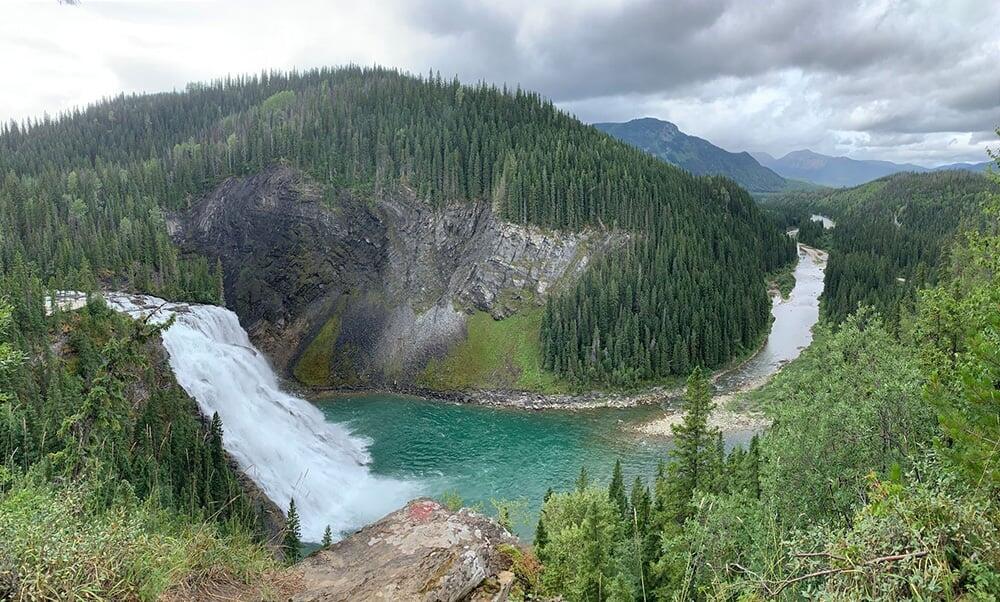
Tumbler Ridge is one of the most distinct communities in B.C. and is extremely remote: more than 1,100 kilometers (683 miles) northeast of Vancouver by road.
In the late 1970s the population rapidly boomed with the discovery of coal deposits in the area and it became a classic company town throughout the 1980s. A near-collapse followed in the 2000s when those mines shut down.
It was during this time that the community pivoted to tourism, marketing itself as the land of dinosaurs and waterfalls — a place where you can hike to see ancient footprints in the wilderness.
In a statement, the District of Tumbler Ridge said its community experienced a “deeply distressing incident” today and asked residents to rely on official updates from the RCMP and other authorities.
It added that the situation was still unfolding and said additional supports were on their way to assist.
“In the days ahead, we know this will be difficult for many to process,” the statement reads.
“Please check in on one another, lean on available supports, and know that Tumbler Ridge is a strong and caring community. We will get through this together.”
Police said they don’t believe there are any other suspects, or any ongoing risk to the public.
They said they are searching other homes and properties in the community to find anyone else who may be injured or linked to today’s incident, which appears to rank as one of the deadliest mass shootings in Canadian history.
Tyler Durden
Tue, 02/10/2026 – 22:03
https://www.zerohedge.com/geopolitical/10-dead-25-injured-after-school-shooting-canada

California Refinery Closures Spell Trouble For Fuel Prices, Supply: Experts
California Refinery Closures Spell Trouble For Fuel Prices, Supply: Experts
Authored by Rob Sabo via The Epoch Times,
Several energy companies have announced the closure of some of their refineries in California in recent months, citing the regulatory environment and operational losses.
Multiple experts in the state’s oil and gas industry recently spoke with The Epoch Times about the closures and their potential impacts on fuel prices and fuel availability in the Golden State.
Refinery Closures
Valero Energy Corporation announced in April 2025 that it would shutter its refinery operations in Benicia, in the San Francisco Bay area. The company also said that it had evaluated the refinery assets in Benicia and Wilmington, near the Port of Long Beach, and concluded that the carrying values of both assets were not recoverable.
Valero said it would continue serving the Golden State’s oil needs through existing inventories and oil imports.
The Wilmington refinery produced 15 percent of the asphalt supply for the entire Southern California region and had a capacity of 135,000 barrels per day. The Benicia refinery on the Carquinez Straits of San Francisco Bay, meanwhile, produced as much as 170,000 barrels per day and employed more than 400.
While the Benicia refinery was originally slated to cease production in April 2026, it actually ceased production in late January. The closure comes on the heels of Phillips 66 ending operations at its Los Angeles refineries in the fourth quarter of 2025.
Phillips 66 operated refineries in Wilmington and Carson that distributed fuel throughout California, as well as to Nevada and Arizona. The dual sites spanned 650 acres and employed about 600.
Chevron, meanwhile, announced in August 2024 that it was relocating its headquarters from San Ramon to Houston, Texas. The company had operated in the Golden State since 1879 and employed more than 2,000 people in San Ramon. Its refineries in Richmond and El Segundo supply more than 1,800 retail locations in the state.
Key factors
Michael Mische, a professor at the University of Southern California’s Marshall School of Business, told Siyamak Khorrami, host of The Epoch Times’s “California Insider,” that Valero’s and Chevron had incurred heavy asset write-offs before they made those decisions.
Valero said in the April 2025 announcement that it had written off a combined $1.1 billion of assets in Benicia and Wilmington in the first quarter of the year.
Chevron revealed in a January Securities and Exchange Commission filing that it had recorded after-tax charges of $3.5 billion to $4 billion in the fourth quarter of 2023, including asset write-offs and impairment charges, primarily in California.
“Of course, they vacated California. Their corporate headquarters is now in Houston,” Mische said, referring to Chevron.
In responding to the company’s Benicia refinery-closure decision during an April 2025 earnings call, Valero CEO Lane Riggs cited California’s regulatory environment as the primary reason.
“California has been pursuing policies to move away from fossil fuels for the past 20 years,” he said.
“The consequence is that the regulatory and enforcement environment is the most stringent and difficult in North America.”
Phillips 66 also cited “changes in governmental policies or laws that relate to our operations, including regulations that seek to limit or restrict refining” as a reason for its decision to cease operations in its announcement.
California Gov. Gavin Newsom signed Assembly Bill AB X2-1 on Oct. 14, 2024, which became effective on Jan. 13, 2025. The bill allows the California Energy Commission to regulate refiners by enforcing minimum inventory levels to prevent spikes in price, effectively capping their profit margins.
“That piece of legislation (was) one of the primary last factors that went into decisions to close these refineries down,” Mische said.
Additional regulations enacted in the state have led to increased production and operating costs for oil refiners.
In 2020, Newsom issued an executive order requiring all new passenger vehicles to have zero emissions by 2035. In 2022, the California Air Resources Board (CARB) adopted new regulations to pave the way for the state’s zero-emission standards.
The state’s Cap-and-Invest Program, meanwhile, has a goal of carbon neutrality by 2045 and requires increasingly stricter standards for carbon emissions.
Mische said that without a significant change in policy and stance toward the oil industry, the state may lose another one or two refineries by 2032.
Potential Impact
Mike Ariza, former senior refinery technician and control board supervisor at the Benicia refinery, told Khorrami that Valero’s refinery operations in Benicia were the most complex and efficient in the state.
The refinery produced between 4.5 million and 4.7 million gallons of gasoline per day, as well as about 600,000–700,000 gallons of jet fuel and diesel fuel, he said.
A bad storm or major problem at one of California’s ports could have huge ripple effects across the state’s fuel supply, Ariza said.
“If something like that happens, we will very quickly run out of gasoline,” he said.
“We don’t have a lot of inventory—14 days, we will run out of supplies. Not only will prices go through the roof, but you will end up having shortages.”
Mische said that 85 percent of all light-duty vehicles in California use gasoline or diesel fuel, and airplanes require “jet fuel”—gasoline or diesel fuel specially refined for jet engines.
“These refineries, as they’re shutting down, place greater and greater pressure, not only on prices but on the supply chains themselves,” he said. “It’s quite possible that you’ll have supply disruptions.”
Californians pay the second-highest average gas prices in the United States, behind Hawaii. Gasoline averaged $4.38 a gallon on Jan. 4, the American Automobile Association reported. The national average was $2.88 per gallon. Fuel prices in remote Mono County along the Eastern Sierra Nevada mountains averaged $5.56 per gallon.
Meanwhile, California Assembly member Stan Ellis, a Republican representing Kern and Tulare counties, expressed concerns about the impact of Valero’s refinery closure on the U.S. military installations in the state.
“Forty-some bases, counting National Guard and … the Marines, and all the bases, naval stations, in California. Where are they going to get their fuel?” he said.
A November 2025 Institute for Energy Research (IER) report warned that several U.S. military installations in California could face jet fuel supply challenges if the state’s refinery capacity declines due to closures.
The state has the nation’s largest concentration of military personnel and national security activity.
According to a 2022 California Research Bureau report, California had more than 30 military installations, including facilities for the Army, Navy, Air Force, Coast Guard, and National Guard.
Ellis said India is a supplier of California’s imported crude, but there are few options to refine it outside of the state.
“This is serious business, and these are facts,” he said. “We’re simply trying to bring awareness to the fact that we have an issue and we need to address it.”
He calls for existing oil fields to be exempt from the California Environmental Quality Act (CEQA), passed in 1970, which requires environmental review and public disclosure for projects that could significantly impact the environment, including refineries, roads, and large buildings.
Separately, Mische is calling on Congress to repeal or modify California’s restrictive policies through the legislative process to support refiners.
“That probably won’t be very successful, but nonetheless, we’re going to give it a good shot this legislative session,” he said.
Tyler Durden
Tue, 02/10/2026 – 21:45

Stephenson gana arbitraje salarial contra Rojos. Angelinos vencen a Detmers
SCOTTSDALE, Arizona, EE.UU. (AP) — El receptor Tyler Stephenson venció a los Rojos Cincinnati el martes en el arbitraje salarial, en tanto que el lanzador Dylan Lee se impuso a los Bravos de Atlanta.
En cambio, los Angelinos de Los Ángeles vencieron al zurdo Reid Detmers, dejando a los peloteros con ventaja de 7-2 este invierno con cuatro casos restantes.
Stephenson devengará 6,8 millones de dólares en lugar de los 6,55 millones ofrecidos por los Rojos, tras el fallo emitido por Josh Gordon, Allen Ponak y Chris Cameron, quienes escucharon los argumentos el lunes.
Lee recibirá un salario de 2,2 millones en lugar de la oferta del club de 2 millones. Su caso fue atendido por Jeanne Vonhof, Paul Radvany y Margie Brogan el 30 de enero.
Detmers recibirá los 2.625.000 dólares propuestos por los Angelinos en lugar de su solicitud de 2.925.000 en un caso decidido por Robert Herman, Samantha Tower y Scott Buchheit.
Stephenson bateó para .239 con 13 jonrones y 50 carreras impulsadas en 88 juegos el año pasado. Estuvo fuera de actividad desde mediados de marzo hasta el 2 de mayo por una distensión en el oblicuo izquierdo y entre el 15 de agosto y el 5 de septiembre por una fractura en el pulgar izquierdo sufrida al atrapar un lanzamiento de Hunter Greene durante un juego contra Milwaukee.
Stephenson, quien ganó 4.925.000 dólares el año pasado, cumplirá 30 años en agosto y puede convertirse en agente libre después de la Serie Mundial de este año. Tiene un promedio de bateo de .261 con 63 jonrones y 258 carreras impulsadas en seis temporadas dentro de las Grandes Ligas, todas con los Rojos.
Lee, de 31 años, tuvo una foja de 2-4 con una efectividad de 3.29 y dos salvamentos en 74 apariciones como relevista la temporada pasada, cuando el zurdo ganó 1.025.000 dólares.
Detmers, de 26 años, fue trasladado al bullpen el año pasado y registró una marca de 5-3 con una efectividad de 3.96 y tres salvamentos en 61 apariciones como relevista. Ganó 1.825.000 dólares.
Lanzó un juego sin hit contra Tampa Bay el 10 de mayo de 2022, en su undécima apertura en las Grandes Ligas. Tiene un récord de 21-31 con una efectividad de 4.77 en cinco temporadas en las Grandes Ligas con los Angelinos.
El zurdo Kris Bubic, elegido al Juego de Estrellas con Kansas City, vio realizada su audiencia el martes. Solicita 6,15 millones en lugar de la oferta de 5,15 millones planteada por los Reales.
Se espera una decisión de Margaret Brogan, Brian Keller y Janice Johnston este miércoles, junto con el fallo de un caso previamente argumentado que involucra al zurdo de Toronto, Eric Lauer (5,75 millones contra 4,4 millones).
Bubic, de 28 años, obtuvo un récord de 8-7 con una efectividad de 2.55 en 20 aperturas el año pasado, estableciendo récords personales en victorias y efectividad. No lanzó después del 26 de julio debido a una distensión en el manguito rotador del codo izquierdo.
Percibió un salario de 3 millones el año pasado y puede convertirse en agente libre después de la Serie Mundial de este año. Tiene un récord de 19-36 con una efectividad de 4.14 en seis temporadas en las Grandes Ligas, todas con los Reales.
Dos jugadores permanecen programados para audiencias esta semana: el receptor venezolano de Milwaukee, Willson Contreras (9,9 millones contra 8,55 millones) y el derecho de Miami, Calvin Faucher (2,05 millones contra 1,8 millones).
_____
Deportes AP: https://apnews.com/hub/deportes

Muere niño de 8 años por sarampión en el norte de México; hay 29 fallecidos en el último año
Associated Press
CIUDAD DE MÉXICO (AP) — Un niño de 8 años murió el martes en el norte de México después de contraer sarampión, parte de un marcado incremento en el número de casos que ha obligado a las autoridades a intensificar los controles sanitarios y las campañas de vacunación para contener los contagios. El país reportó 2.467 infecciones, una cifra 10 veces mayor que hace un mes.
El menor, que pertenecía a una familia de agricultores, falleció en un hospital de la capital del estado de Durango luego de contraer la enfermedad en el estado vecino de Sinaloa, anunció el secretario de Salud estatal, Moisés Nájera.
Con el deceso del menor ya suman 29 fallecidas por sarampión en México desde que se reportó el primer caso, en el estado norteño de Chihuahua, en febrero del 2025. El virus cobró 26 vidas en todo 2025, mientras que otras tres personas han perdido la vida en lo que va del año.
El sarampión es una enfermedad altamente contagiosa y particularmente grave en niños. El virus se transmite por gotículas procedentes de la nariz, boca y faringe de las personas infectadas, y suele ocasionar fiebre, rinorrea, y sarpullido en el cuerpo.
Según la Organización Panamericana de la Salud (OPS), el sarampión puede causar complicaciones graves, como ceguera, encefalitis, diarrea intensa, infecciones del oído y neumonía, particularmente en niños malnutridos y pacientes inmunodeprimidos, lo que puede ocasionarles la muerte.
Ante la propagación de la enfermedad en México y otros países de la región, como Canadá y Estados Unidos, la OPS declaró una alerta epidemiológica la semana pasada.
El brote se produce cuatro meses antes del inicio de la Copa del Mundo en la que México, Canadá y Estados Unidos compartirán las 16 sedes del torneo, generando preocupación entre especialistas que temen que la enfermedad se propague a gran escala durante la justa mundialista —que atraerá millones de turistas.
Casos en aumento
México ha reportado 6.682 casos sospechosos y 2.467 contagios en lo que va del año, 16 veces más el número de casos reportados hace un mes, según cifras del gobierno federal. La enfermedad se ha expandido por los 32 estados del país.
El epicentro del brote es el estado occidental de Jalisco, donde se registran el 58% de los casos del país: 1.432 contagios y 2.711 casos sospechosos.
Las autoridades de Jalisco decidieron intensificar la semana pasada los controles sanitarios e impusieron el uso obligatorio del cubrebocas en los centros educativos de Guadalajara, capital del estado, donde se han reportado casos en 43 escuelas, algunas de las cuales suspendieron actividades y pasaron a clases virtuales.
De igual forma, en el Estado de México – el más poblado del país – se acordó el lunes reforzar los controles sanitarios en escuelas con campañas de vacunación, toma diaria de temperatura, y el uso opcional de cubrebocas en espacios cerrados.
En el caso de la Ciudad de México, donde hay 140 casos activos, las autoridades locales decidieron la semana pasada ampliar los planes de vacunación para evitar la propagación de la enfermedad en la metrópolis de nueve millones de habitantes.
La jefa de gobierno de la Ciudad de México, Clara Brugada, dijo el martes que se instalaron 124 centros de vacunación en puntos estratégicos, aunque de momento descartó que se vaya a imponer el uso del cubrebocas en las escuelas de la capital.
Este año se han aplicado 14 millones de dosis de vacuna contra el sarampión en todo el país en lo que va del año, según datos del gobierno federal.

Video in investigation into Nancy Guthrie’s abduction raises questions about surveillance technology
Tuesday’s release of video surveillance footage showing an armed, masked person at Nancy Guthrie’s doorstep on the night she was abducted has raised a host of questions about why it took so long to publicly release, how it was retrieved and what it means for privacy.
The process involved days of searching, the FBI said, after law enforcement initially believed the footage was lost because the camera was disconnected and Guthrie didn’t have a subscription to the camera company.
FBI releases first surveillance images of masked person on Nancy Guthrie’s porch
The surprising emergence of the video footage has resurrected questions about digital content’s long afterlife, as billions of people increasingly entwine their lives with mishmash of internet-connected devices, making it possible to retrieve snapshots from their past like old photos stored in an attic.
Unclear reasons for delay
In the days after her apparent abduction, Pima County Sheriff Chris Nanos initially said that a camera attached to Nancy Guthrie’s door was disconnected just before 2 a.m. on the night she disappeared. Minutes later, the camera’s software detected movement, but no footage was preserved, he said.
At the time, Nanos said that there was no video available in part because Guthrie didn’t have an active subscription to the company. But unexpectedly, FBI Director Kash Patel said on Tuesday that investigators kept working for days to pull the videos from “residual data located in backend systems.”
It was not immediately clear why it took so long to retrieve the video. The delay could, in part, be a law enforcement strategy, according to Joseph Giacalone, a retired New York police sergeant who managed hundreds of homicide and missing person cases.
Giacalone said the FBI likely tried to quietly identify the person on Guthrie’s porch before releasing the images.
“You’re trying to keep these things close to the vest. I think they worked this angle for a couple days,” Giacalone said.
Always recording
Local and federal law enforcement didn’t respond to questions clarifying what they meant by “disconnected” or who was working on recovering the data.
The footage appears to have come from a Nest camera fastened on or near Guthrie’s door. Google, which has owned Nest since 2014, is among numerous companies that operates private surveillance cameras used in and around homes. Because common doorbell cameras aren’t equipped with the memory cards required for vast amounts of on-device storage, the video recorded on them is routinely transmitted to data centers scattered around the U.S. and other countries.
Google didn’t immediately respond to questions from The Associated Press about how the footage of the masked person was captured while the camera was apparently disconnected. They also didn’t clarify how the footage was extracted from “backend servers” even though law enforcement said Guthrie didn’t have a subscription.
However, Google’s privacy policy — a document that users often blindly agree to after purchasing a device — makes it clear that videos can be captured when a device is offline.
“That means you may not see a visual indicator when your camera is sending the video footage to our servers,” the policy states.
Data on the cloud doesn’t disappear
The policy also makes clear that footage can stay on cloud servers for varying amounts of time, but also gives users the right to view and delete video at their discretion.
Unless a Nest user subscribes to a service that allows for quick access to review footage recorded on a device, Google routinely purges the footage rather than retain it indefinitely, said Stacey Higginbotham, a policy fellow at Consumer Reports who specializes in cybersecurity issues.
But if law enforcement agencies such as the FBI reached out to Nest for the footage before it was overwritten, the video could still be retrieved and watched, Higginbotham said. “It’s basically like when you send an email to the trash. It’s still accessible,” depending on a provider’s retention policies.
Tensions with privacy concerns
There are ostensibly legal guardrails that are supposed to dictate how companies like Google access and share footage collected on cameras in and around people’s homes.
Under many user agreements, camera companies need a warrant or consent from the camera owner to share footage with law enforcement, according to Michelle Dahl, the executive director at the Surveillance Technology Oversight Project.
But there are plenty of legal loopholes that would allow a company like Google to share data directly with law enforcement without either of those things, Dahl said.
“Our hearts are on her family and what they are going through, and we are glad for any information that can lead to her being found,” she said. At the same time, Dahl added, “We should absolutely be alarmed over the privacy implications that are at stake with this video that was recovered by the Nest camera.”
Dahl said she doesn’t know about Nest cameras specifically. But she said that some user agreements specify that the data collected on cameras belong to the camera company, not the private camera owner. In those cases, a company like Google can share footage with law enforcement at its own discretion, without even notifying its users.
Dahl, who litigates about privacy and surveillance, said that practice is becoming more common, making it harder for consumers to balance the security a camera provides with constitutional protections against surveillance.
“I think the public has gotten too comfortable with surveillance cameras in not only public spaces, but also their private homes, without thinking about the consequences of where that data ends up,” Dahl said. “If a camera is absolutely necessary for your security, look into options where that data is not transmitted off to a cloud.”
Associated Press writer Ed White contributed reporting.
https://www.chicagotribune.com/2026/02/10/video-nancy-guthrie-investigation/
Tiroteos en escuela y vivienda en Canadá dejan 10 muertos
Por JIM MORRIS y ROB GILLIES
TUMBLER RIDGE, Canadá (AP) — Un tiroteo en una escuela de Columbia Británica dejó ocho personas muertas, incluido el sospechoso, mientras que otros dos cadáveres fueron hallados en una casa que se cree está relacionada con el incidente, informaron las autoridades canadienses el martes.
La Real Policía Montada de Canadá dijo que más de 25 personas resultaron heridas, incluidas dos con heridas que ponen en riesgo su vida, tras el tiroteo en la Escuela Secundaria de Tumbler Ridge.
Los tiroteos en escuelas son raros en Canadá.
La localidad de Tumbler Ridge, que tiene una población de aproximadamente 2.400 personas, está a más de 1.000 kilómetros (600 millas) al norte de Vancouver, cerca de la frontera con Alberta.
“Como parte de la respuesta inicial al tiroteo activo, la policía ingresó a la escuela para localizar la amenaza. Durante la búsqueda, los agentes hallaron a múltiples víctimas. Un individuo que se cree que es el tirador también fue encontrado muerto con lo que parece ser una herida autoinfligida”, dijo la policía en un comunicado.
“Otras seis personas, sin incluir al sospechoso, han sido encontradas muertas dentro de la escuela. Dos víctimas han sido trasladadas en avión al hospital con heridas graves o que amenazan su vida. Una tercera víctima murió mientras era transportada al hospital”.
El Distrito Escolar de Peace River South dijo el martes que hubo un “cierre de emergencia” tanto en la escuela secundaria como en la escuela primaria de Tumbler Ridge.
El sitio web del gobierno provincial indica que la Escuela Secundaria Tumbler Ridge tiene 175 estudiantes desde el 7mo hasta el 12mo grados.
https://www.chicagotribune.com/2026/02/10/tiroteos-en-escuela-y-vivienda-en-canad-dejan-10-muertos/